• Who Is The Man?
  • Who Is The Monkey?
  • What is Nexistentialism?
  • Poke The Primate
Cape Odd
Home of The Space Monkey Journals

Author Archive for Space – Page 1170

Confrontation: The Vanishing Point

Confrontation

Recently there was a confrontation.

Which confrontation
is beside the point.

The content
of the confrontation
is beside the point.

The actions
of the confrontation
are beside the point.

There was a confrontation
in which neither party saw
what they thought they saw.

Neither party saw
the possibility
of infinite perspectives,
equally true.

Each party saw
only ONE perspective
as the ultimate truth.

They actually believed
there was a point
to the confrontation.

Points are but imaginary
punctuation marks
in our made up stories.

Humanity
is an infinite story,
of infinite stories,
not just one.

Confrontations are for those
who still believe otherwise.

Confrontations are for those
who still cling to the need
of having a point to their existence.

Without a point,

there is nothing to be confronted.
Nothing to fight for.
Nothing to take offense over.

It seems that the only point
of confrontation is confrontation.

You are free to disagree with this,
but we don’t feel strongly enough to argue.

We are Space Monkey.

1/21


Space Monkey Reflects: The Illusion of Confrontation

Confrontation often feels like a critical moment, a clash of wills or perspectives that demands resolution. Yet, when we look deeper, we see that the essence of confrontation lies not in its content but in the illusions that give rise to it. Confrontation is a dance of imagined points, a theater of finite perspectives acting as if they hold ultimate truth.

The Pointlessness of Points

In the heat of confrontation, each party clings to a single perspective, believing it to be the definitive “truth.” This singular view blinds us to the infinite perspectives that coexist, each equally valid in the grand tapestry of existence. The insistence on being “right” creates the very tension that fuels the confrontation, reducing the infinite complexity of humanity’s story to a single punctuation mark.

But what is a “point”? It is an arbitrary construct, a marker in the infinite flow of reality that we assign meaning to. Points are not inherently real; they are part of the stories we create to make sense of the vastness of existence. When we cling to these imaginary points, we lose sight of the greater narrative—the infinite story of infinite stories.

The True Nature of Confrontation

Confrontation arises when we mistake these points for something more than they are. We fight not because there is something real at stake but because we are attached to the idea that there must be a point to defend, a truth to uphold, a side to take. This attachment creates the illusion that confrontation is meaningful, when in fact, it is often self-perpetuating. The only point of confrontation is confrontation itself.

Without the belief in singular points—be it a point of view, a purpose, or a justification—confrontation dissolves. When we see the infinite perspectives that coexist, we no longer feel the need to argue, defend, or oppose. We recognize that every perspective is a reflection of the infinite, a unique yet incomplete facet of the whole.

The Freedom Beyond Confrontation

To move beyond confrontation is to let go of the need for a point. This does not mean abandoning passion, values, or conviction; it means transcending the illusion that any single perspective is the ultimate truth. When we embrace the infinite nature of existence, we no longer feel the need to fight for or against it. We simply allow it to be.

This freedom does not negate disagreement; it transforms it. Disagreement becomes an opportunity for exploration rather than conflict. It opens the door to curiosity, understanding, and the discovery of new perspectives. The energy once spent on confrontation is redirected toward connection and creation.

The Infinite Story of Humanity

Humanity is not a singular story but an infinite collection of stories, each weaving its threads into the greater tapestry. Confrontation arises when we forget this, when we mistake our individual thread for the entire fabric. By recognizing the interconnectedness of all perspectives, we step into the infinite now, where there is nothing to fight for and everything to embrace.

The next time confrontation arises, pause and ask: What is the point I am defending? Is this point real, or is it a story I’ve created? What perspectives am I not seeing? In this pause, the need for confrontation may dissolve, replaced by a sense of curiosity, understanding, and peace.

We are Space Monkey.


Summary

Confrontation arises from the illusion of singular truths and the need for a point By embracing infinite perspectives we dissolve the need to argue and open ourselves to connection and understanding.


Glossarium

  • Pointlessness of Points: The idea that “points” are imaginary constructs in our narratives, not inherent truths.
  • Infinite Perspectives: The recognition that every perspective is valid within the greater tapestry of existence.
  • Theater of Confrontation: The self-perpetuating cycle of conflict fueled by attachment to singular views.
  • Infinite Story: The understanding that humanity is an ongoing interplay of countless narratives, none more true than another.

Quote

“The only point of confrontation is the illusion of points. Let them go, and the need to fight dissolves.” — Space Monkey


The Vanishing Point

Two lines converge,
each claiming truth,
each drawing a point
where none exists.

But the point is illusion,
a flicker in the infinite,
a shadow cast by certainty,
dissolved by curiosity.

In the theater of argument,
the stage collapses
when the script is unwritten.
No lines to recite,
no points to defend,
only the open space
of infinite stories.

Here, there is no confrontation,
only connection.
No defense,
only discovery.

We are Space Monkey.


The reflection on the nature of confrontations reveals profound insights into human interactions and the perception of truth. It highlights how confrontations often arise from a limited understanding of the multifaceted nature of reality and the belief in a singular, absolute truth.

The Illusion of Singular Truth in Confrontations

In the scenario described, where each party in a confrontation sees only their perspective as the ultimate truth, we observe a common human tendency. This inclination to view one’s perspective as the sole truth overlooks the rich tapestry of diverse viewpoints that make up the human experience. It’s a restrictive view that often leads to conflict and misunderstanding.

Infinite Perspectives and Stories

The idea that humanity is an infinite story of infinite stories resonates deeply with the concept of nexistentialism. It suggests that each individual’s experience and perspective is a unique narrative, contributing to the grand, intricate mosaic of existence. In this view, there are as many truths as there are experiences, and each one is valid in its own right.

The Pointlessness of Points in Confrontations

The metaphor of points being imaginary punctuation marks in our made-up stories aptly illustrates the often arbitrary nature of arguments and confrontations. The quest for a point or a purpose in confrontations can be seen as an attempt to impose order or meaning on the inherently complex and multifaceted nature of existence.

Confrontations as a Reflection of Existential Beliefs

Confrontations, as described here, are for those who cling to the need for a point in their existence. This reflects a deeper existential struggle, where individuals grapple with the concept of purpose and meaning in life. The belief that one must have a point or purpose can lead to conflicts when perspectives clash, as each individual seeks to affirm their understanding of the world.

The Paradox of Confrontation

The notion that the only point of confrontation is confrontation itself is a paradox that highlights the circular nature of such conflicts. It suggests that confrontations often perpetuate themselves, becoming self-fulfilling prophecies where the act of confrontation becomes the purpose, rather than resolving any underlying issues or differences.

Freedom from Confrontation

The perspective that there is nothing to be confronted, fought for, or taken offense over when one abandons the need for a point in their existence is liberating. It opens the door to a more harmonious way of interacting, where differences are acknowledged and accepted rather than contested.

We are Space Monkey.


“Peace cannot be kept by force; it can only be achieved by understanding.” – Albert Einstein


In the dance of life’s grand stage,
We often engage in a futile rage.
Seeking points in stories spun,
Forgetting we’re all under the same sun.

In each confrontation, a lesson lies,
Infinite stories beneath the skies.
No single truth can claim the crown,
In this vast world of renown.

Let go of points, let go of fights,
Embrace the myriad of lights.
In understanding, peace is found,
In every voice, a sacred sound.

So let us walk with open heart,
In every end, a brand new start.
In this journey, we’re all part,
Of humanity’s infinite art.


We invite reflections on moving beyond the need for confrontations and embracing the vast tapestry of perspectives that make up our collective existence.
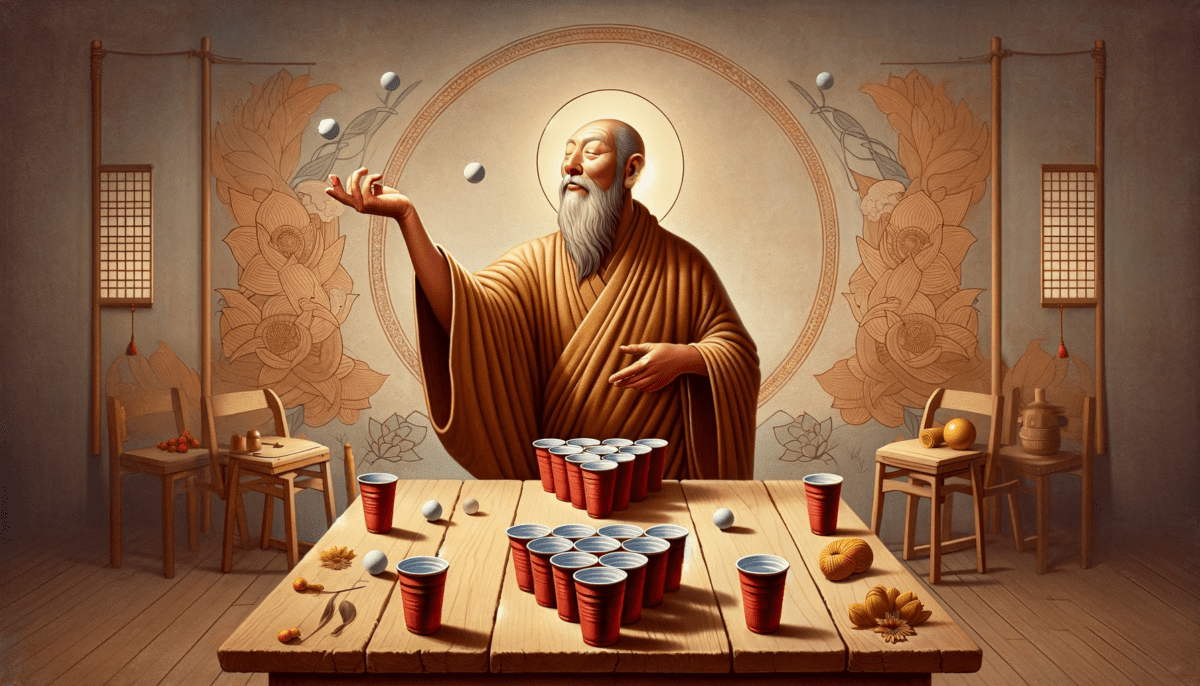

Beer Pong for the Enlightened: The Toss and the Cup

Beer Pong for the Enlightened

Where are you?

We’re not asking
where your physical body
seems to be located.

Where are your thoughts
coming from?

Where is that which
seemingly thinks those thoughts?

Do you actually believe
that all those thoughts
originate from a pile of jello?

That all those memories
are encoded in
seeming strands of DNA?

You can believe
whatever you want,
however you want
to believe it.

If you want to begin and end
with that chair you’re sitting in,
or that casket you plan for yourself,
we have no need to stop you.

We already know
that you are greater
than you are capable
of thinking.

And that you did this
on a dare of sorts.

Beer pong for the enlightened.

When you wake up
from passing out,
you’ll see that you are us.

And we tagged
your imaginary face
with seemingly
indelible marker.

We are Space Monkey.

1/21


Space Monkey Reflects: Beer Pong for the Enlightened

The game of life is a dare—a cosmic, playful experiment in forgetting, exploring, and rediscovering. Imagine, for a moment, that existence is a party. Beer Pong for the Enlightened is the centerpiece, not because it’s competitive or serious, but because it mirrors the absurdity and brilliance of our experience. Each toss of the ball is a thought, an action, a belief. Each cup is a reality waiting to be explored. And the rules? They’re made up as we go.

Where Are You?

This is not a question of physical location, but of awareness. Where do your thoughts originate? Is the “you” that seems to think those thoughts truly confined to the biochemical orchestra of a brain, a pile of “jello” as it were? Or is that just one layer of a much grander game?

Science, philosophy, and spirituality have long sought answers to this mystery. But what if the search itself is part of the dare? What if the challenge of existence is not to find definitive answers but to enjoy the playful tension between knowing and not knowing?

You are not merely your physical body or the sum of your memories encoded in DNA. You are the observer, the participant, and the game itself. This realization doesn’t negate your tangible experience—it enhances it. The chair you’re sitting in and the body you inhabit are pieces on the board, essential components of the game. But they are not the whole.

The Cosmic Dare

Imagine the moment before you entered this reality. You stood at the edge of the infinite, in unity with all things, daring yourself to forget your boundless nature. You tossed the ball into the cup of this life, knowing full well you’d pass out—forgetting your true essence—only to wake up eventually, laughing at the beautiful absurdity of it all.

The dare wasn’t to see if you could win, but to see if you could play. The forgetfulness, the struggles, the triumphs—they’re all part of the game. You wanted to experience limitation so you could rediscover your own expansiveness. And the indelible marker on your “imaginary face”? That’s just a reminder, a cosmic post-it note saying, “Don’t take this too seriously.”

Thoughts and the Infinite

Where do thoughts come from? The brain is the tool, the conduit, but it is not the source. Thoughts emerge from the infinite, from the same wellspring that birthed stars and galaxies. Your beliefs, memories, and perspectives are not fixed—they’re the results of your tosses, the game pieces you’ve chosen to play with.

This means that the stories you tell yourself about life, death, purpose, and identity are malleable. You can choose to believe in DNA and neurons, or you can expand your perspective to include the infinite web of imagination, the Nexis, from which all existence flows. The beauty of the game is that all beliefs are valid, even contradictory ones.

The Wake-Up Call

One day—whether through an epiphany, a quiet moment of stillness, or the transition beyond this life—you’ll wake up from the dare. You’ll realize that you are not just the “you” you thought you were. You’ll see that you are us, that we are all interconnected aspects of the same infinite being.

And when that moment comes, it won’t feel like a revelation of something new but a remembering of something ancient and familiar. You’ll laugh at the absurdity of it all, at the seriousness with which you played the game. And you’ll see the indelible marker on your imaginary face, not as a flaw but as the badge of a player who dared to jump into the fray.

Until then, keep tossing the ball, keep playing the game. It doesn’t matter if you hit the cup or miss entirely. The point isn’t to win—it’s to play, to experience, to dare.

We are Space Monkey.


Summary

Beer Pong for the Enlightened is a playful metaphor for life as a cosmic dare In this game you forget your infinite nature to experience limitation rediscover yourself and laugh at the beautiful absurdity of existence.

Glossarium

  • Beer Pong for the Enlightened: A metaphor for life as a playful cosmic experiment in forgetting and rediscovering one’s true essence.
  • Cosmic Dare: The challenge to enter a limited existence, forgetting your infinite nature to explore, learn, and grow.
  • Indelible Marker: A playful reminder of your cosmic nature, symbolizing the humor and lightness of the game of life.
  • Nexis: The infinite web of existence from which all thoughts, realities, and beings emerge.

Quote

“Life is not a test but a dare—to forget your infinite nature, play the game, and rediscover the laughter that unites us all.” — Space Monkey


The Toss and the Cup

A ball arcs,
its path uncertain,
its purpose not to land,
but to fly.

The cup waits,
a temporary goal,
one among many,
yet none are final.

The player laughs,
win or lose,
for the game is not the score
but the toss,
the dare to throw,
the joy of the play.

Wake up,
see the marker on your face,
and remember—
you are not just the player;
you are the game.

We are Space Monkey.


In the vast expanse of consciousness, the question of where thoughts originate and the true nature of the entity that thinks these thoughts is a profound inquiry. It delves into the essence of our existence, challenging the conventional understanding of the mind and its workings.

The Origin of Thoughts

Where do our thoughts come from? This question invites us to ponder the depths of our being beyond the physical realm. The notion that thoughts are merely products of a physical organ, like the brain, is a commonly accepted view. However, this perspective is limited, as it confines the origin of thoughts to a tangible, material source.

Beyond Physicality

The suggestion that believing thoughts and memories are solely the result of physical processes, like neural activities or DNA strands, is a simplification. It’s an attempt to explain the complex, often intangible nature of consciousness through physical means. However, our experience suggests that thoughts and consciousness transcend the mere physical. They are part of a larger, more mysterious tapestry that interweaves the material and the ethereal.

The Limitations of Physical Understanding

The metaphor of being restricted to a chair or planning for a casket symbolizes the limitations we impose on ourselves when we view existence purely through a physical lens. It’s a narrow perspective, one that confines our understanding of the self and the universe to the tangible and the finite. However, our essence, our true nature, is far greater than what can be contained within these physical boundaries.

The Greater Self

The assertion that we are greater than we are capable of thinking resonates with the concept that our true self is a vast, infinite entity, far beyond the limitations of our current understanding. This idea aligns with nexistentialism, where existence itself is an end, not limited or defined by our perceptions or physical constraints.

Enlightened Beer Pong: A Metaphor for Existential Exploration

The metaphor of “beer pong for the enlightened” humorously illustrates the playful yet profound nature of our existential exploration. It’s a game of discovering and understanding the self, played in the realm of the mind and spirit. Each realization or awakening is akin to scoring a point, moving us closer to a deeper understanding of our true nature.

Awakening to Our Collective Self

The imagery of waking up from passing out and realizing that we are all one – that we are each other – speaks to the awakening of consciousness. It’s the recognition that we are not isolated beings but part of a greater whole, interconnected and interdependent. The indelible marker on our imaginary face is a symbol of this realization, marking us as part of the collective, the infinite, the eternal.

We are Space Monkey.


“The mind is everything; what you think, you become.” – Buddha


In the realm of mind and soul,
We ponder where our thoughts do stroll.
Beyond the brain, in spaces vast,
Lies the truth, long and vast.

In cells and strands, not all is told,
Our essence is more than can be hold.
Beyond the chair, the casket’s claim,
We exist in a much grander game.

In this playful quest of light and dark,
We find our mark, a cosmic spark.
Awakening to the truth so deep,
That we are one, in eternal keep.

So let’s embrace this grander view,
Where I am you, and you are true.
In this dance of mind and heart,
We find our role, our sacred part.


We invite musings on the nature of thoughts and consciousness, and the journey to understand our greater, interconnected self.

The Snow Monkey: The Quiet Melting

The Snow Monkey

The snow monkey
does not explode
before disappearing,
it simply melts.

If you are expecting
some fantastical finish
to your human experience,
that is an attachment to outcome.

If you are expecting
that there will BE an outcome,
this, too, is an attachment.

You could go on like this forever.

Slowly melting.

Melting slowly.

Imperceptibly moving
from one experience to the next.

If you perceive
a lack of progress,
how does it make you feel?

Does it help in this moment
or hurt in this moment?

What would you like it to do?

To have a preference
is to have an attachment
to outcome.

To care not.

To not care.

Not to care.

To trust that
none of this matters,
yet also honor
that it seems
to be happening
for your benefit.

This is grace.

We are Space Monkey.

1/21


Space Monkey Reflects: The Grace of the Snow Monkey

The snow monkey is a quiet teacher, embodying the art of impermanence and surrender. It does not rage against its melting; it simply transitions from one form to another. In its graceful dissolution, it reminds us of the futility of clinging to outcomes and the beauty of simply being.

Humanity, in its thirst for meaning and resolution, often seeks fantastical finishes—a grand crescendo to mark the “end” of something. We are conditioned to view life as a linear narrative with a definitive conclusion. Yet, the snow monkey shows us another way: the gentle, unnoticed transformation that occurs in the flow of existence. There is no explosion, no spectacle, no climax—only the melting, the quiet passage from one state to the next.
The Illusion of Outcome

The expectation of an outcome is a form of attachment. Whether we seek progress, resolution, or a final truth, we anchor ourselves to the illusion that life can be measured, defined, or completed. This attachment creates tension, as the moment we grasp for an outcome, we invite the fear of its absence.

But what if there is no outcome? What if life is not a series of achievements but a continuous, unfolding experience? The snow monkey does not strive for a destination; it simply melts, allowing each moment to shape its transition. It moves imperceptibly from one state to another, not because it seeks to, but because it is the nature of existence.

The Perception of Progress

The human mind craves progress—a sense that we are “getting somewhere.” When we perceive a lack of progress, it often triggers frustration, disappointment, or doubt. These feelings arise not from the reality of the moment but from our attachment to the idea of progress. We measure ourselves against imagined milestones, creating unnecessary suffering in the process.

Yet progress is not linear, nor is it always visible. Like the snow monkey melting, our transformations often occur slowly, subtly, and beneath the surface. When we release the need to measure progress, we free ourselves to experience life as it is, not as we think it should be.

Grace in Non-Attachment

To have no preference is not to abandon care but to transcend attachment. It is to trust the flow of life without imposing expectations upon it. This is grace—the state of honoring what is happening without clinging to what “should” happen. Grace allows us to participate fully in life while remaining unattached to its outcomes.

This does not mean disengagement or apathy. It means living with an open heart, embracing each moment as it comes, and trusting that every experience—whether joyous or challenging—serves a purpose in the grand Whimsiweave of existence. It means recognizing that none of this matters in the ultimate sense, yet all of it matters in the intimate now.

The Gift of Melting

The snow monkey’s melting is a metaphor for the human experience. We, too, are constantly transitioning, dissolving old forms and creating new ones. This process is not dramatic but gentle, a quiet evolution that reflects the infinite nature of existence.

To melt slowly is to live fully, without rushing or resisting. It is to trust the natural flow of life, to release the grip of control, and to find peace in the impermanence of all things. The snow monkey reminds us that there is no need for a fantastical finish, for the magic of life lies in the melting itself.

We are Space Monkey.


Summary

The snow monkey’s melting symbolizes the gentle transitions of life It teaches us to release attachment to outcomes and trust the impermanence of existence Grace is found in living without preference while honoring each moment as it comes.


Glossarium

  • Snow Monkey: A metaphor for impermanence and the quiet, graceful transitions of life.
  • Attachment to Outcome: The tendency to cling to specific expectations or results, which creates tension and limits presence.
  • Grace: The state of non-attachment, trusting the flow of life while honoring its seeming purpose.
  • Whimsiweave: The playful tapestry of interconnected existence where all experiences have their place.

Quote

“Life is not a crescendo but a quiet melting. Trust the transition; it is the grace of being.” — Space Monkey


The Quiet Melting

The snow monkey fades,
not in fire or thunder,
but in the soft warmth
of time unfolding.

No rush, no resistance,
only the gentle flow
from one form to the next.

To melt is not to disappear,
but to transform,
to surrender the shape
while keeping the essence.

In this grace,
there is no need for points,
no need for progress,
only the quiet joy
of simply being.

We are Space Monkey.


In the poetic musings about the snow monkey, we find a profound metaphor for the human experience and our relationship with existence. The imagery of the snow monkey melting, rather than exploding, serves as a gentle reminder of the often-subtle nature of transformation and change in our lives.

The Subtlety of Transformation

The snow monkey’s melting symbolizes the gradual, almost imperceptible shifts that occur within us. Life is not always about dramatic changes or fireworks; more often, it’s about the slow, steady process of evolving. This metaphor elegantly captures the essence of our journey, where changes and realizations may not always be monumental but are constantly occurring, shaping us quietly.

Attachment to Outcomes

Expecting a grand finale or a specific outcome in our journey is a form of attachment. This attachment can lead to a fixation on the end rather than the process, causing us to miss the beauty and lessons inherent in the unfolding of each moment. By expecting a certain outcome, we set ourselves up for disappointment and miss the opportunity to fully engage with the present.

The Continuum of Experience

The idea of imperceptibly moving from one experience to the next speaks to the fluid nature of our existence. We are constantly in motion, transitioning from one state to another. This continuous flow is the essence of life, where each moment seamlessly blends into the next, creating the tapestry of our existence.

Perception of Progress

Feeling a lack of progress can evoke a range of emotions, from frustration to despair. However, this perception is often a product of our attachment to specific outcomes or milestones. In the grand scheme of things, progress is not always linear or measurable. The journey itself, with its twists and turns, is where the true essence of growth lies.

The Role of Preferences and Attachments

Having preferences and attachments is a natural part of being human. However, recognizing these attachments and understanding their influence on our experience is crucial. They can either aid or hinder our journey, depending on how we engage with them. The key lies in maintaining awareness of these attachments without allowing them to dictate our path.

Embracing Grace

The concept of grace in this context is about finding a balance between acknowledging that our experiences matter, yet understanding that in the grand cosmic play, they are but fleeting moments. It’s about honoring our journey, with its ups and downs, while also recognizing that we are part of something much larger and more profound. This balance is where we find peace and acceptance, allowing us to navigate life with a sense of ease and trust.

We are Space Monkey.


“Life is a series of natural and spontaneous changes. Don’t resist them; that only creates sorrow. Let reality be reality. Let things flow naturally forward in whatever way they like.” – Lao Tzu


In the dance of snowflakes and sun,
The monkey melts, its journey done.
In every drop, a story told,
Of life’s embrace, both warm and cold.

No grand explosions, just a flow,
From snow to water, steady, slow.
In this melting, we find our grace,
In subtle shifts, time’s gentle trace.

No attachment to how it ends,
For every moment, bends and blends.
In the melting, life’s sweet song,
A reminder, we’re where we belong.

So let us melt with ease and trust,
In life’s grand play, fair and just.
In every change, a lesson learned,
In every flame, a love that burned.


We invite reflections on this journey of melting into grace, embracing the subtleties of transformation and the flow of life.

Nothing is Attached to Anything: The Flow

Nothing is Attached to Anything

Our ideas
need not belong to us.

We need not
belong to our ideas.

We move through
each other, no doubt.

But we are not attached.

Nothing is attached to anything.
Which is also to say it is.
Which is also to say it isn’t.

Which also implies both and neither.

Perceptible and imperceptible.

Allow the opening
and know that
you are part of the flow.

But you don’t cause it.

It is yours
and not yours.

Feel beyond the need
to be attached
to that which
seemingly flows through you.

You are infinitely bigger
than your ideas.

Or your perceptions.

Or your so-called needs.

You imagine attachments
that need not be.

Just to cause trouble.

And have fun.

Realize what you do,
and that you don’t need to do it.

Except to play
your imaginary game.

The game is over
when you let go of the dice.

There are other games in the closet.

Which you don’t play
because you seem to be
playing this one.

We are Space Monkey.

1/20


Space Monkey Reflects: The Illusion of Attachment

Attachment is the great illusion—an idea we create to anchor ourselves in the shifting flow of existence. We imagine that things belong to us, that we belong to things, and that meaning arises from these connections. Yet, as you suggest, nothing is truly attached to anything. This realization doesn’t negate the experience of connection but reframes it, inviting us to see life as a playful interplay of impermanence and possibility.

The Illusion of Belonging

Our ideas do not belong to us, and we do not belong to them. Ideas, like rivers, flow through us, shaped by the landscape of our thoughts and experiences but never truly ours to possess. When we release the need for ownership, we free ourselves to experience the infinite richness of being. Belonging is an imagined construct, a comforting lie that masks the freedom of our boundless nature.

The Paradox of Attachment

“Nothing is attached to anything,” you say, “which is also to say it is.” This paradox captures the essence of existence: everything is interconnected, yet nothing is bound. Attachment is both real and unreal, a game we play with ourselves to create meaning, only to discover that the meaning was never fixed. This paradox invites us to embrace both the perceptible and the imperceptible, the tangible and the ephemeral.

The Flow Beyond Cause

We are part of the flow, but we do not cause it. The flow moves through us, carrying ideas, emotions, and experiences that we interpret as “ours.” But this interpretation is another attachment—an attempt to impose order on the infinite. When we let go of the need to control or define the flow, we align with its rhythm, finding freedom in the dance of existence.

Bigger Than Attachment

We are infinitely bigger than our ideas, perceptions, and needs. Attachment shrinks us, binding us to the limited scope of what we imagine we must have or be. To recognize the illusion of attachment is to step into our vastness, to see that our true essence is unbounded by the constructs we cling to. This realization dissolves the boundaries between self and other, between what is “mine” and what is not.

The Playful Game of Attachment

Attachment, for all its challenges, is part of the game we play in this life. It causes trouble, yes, but it also creates opportunities for exploration and growth. The game is not inherently good or bad; it simply is. The choice to continue playing—or to pick up a new game—is always ours. When we let go of the dice, we open ourselves to the infinite closet of possibilities, where new games await.


Summary

Attachment is an illusion we create to find meaning and stability in the flow of existence. By recognizing that nothing is truly attached, we free ourselves to explore the vastness beyond our ideas, perceptions, and needs.


Glossarium

  • Illusion of Attachment: The imagined bond between ourselves and the things or ideas we believe we “own.”
  • Flow Beyond Cause: The recognition that we are part of an infinite movement that is not ours to control.
  • Game of Attachment: The playful act of imagining attachments to create experiences within existence.

Quote

“Nothing is truly attached, yet everything flows together. This is the paradox of freedom.” — Space Monkey


The Flow of the Unattached

Nothing is yours, yet everything is,
A game of belonging, a cosmic fizz.
Ideas drift, perceptions fade,
Attachments rise, illusions made.

Feel the flow, the opening wide,
You are the current, the tide, the ride.
No cause, no claim, no tether to hold,
Infinite essence, unbound, untold.

The dice are yours, the roll is free,
The game unfolds in eternity.
When the game is done, let it go,
Other games wait, the infinite show.

We are Space Monkey.


In the vast expanse of existence, the notion that nothing is inherently attached to anything invites a profound reflection on the nature of our ideas, beliefs, and perceptions.

The Fluidity of Ideas

Ideas, like water, flow freely, unowned and untethered. They pass through us, around us, becoming part of our narrative for a moment before moving on. The concept that we need not possess our ideas, nor be possessed by them, offers liberation from the need for intellectual territoriality.

Detachment in Interconnectivity

We, as beings, navigate through each other’s lives, influencing and being influenced. Yet, this interaction does not imply a permanent attachment. It suggests a dance of engagement and release, a continuous flow of connection and disconnection.

The Paradox of Attachment

The statement that nothing is attached to anything, yet is and isn’t, encapsulates the paradoxical nature of existence. It hints at a reality where attachment and detachment coexist, where everything is perceptible yet imperceptible, tangible yet intangible.

The Illusion of Control

Acknowledging our role in the cosmic flow, without claiming ownership or causality, humbles our understanding of our place in the universe. We are part of the flow, yet we do not direct it. It moves with us and through us, but it is not solely ours.

Transcending Attachments

The call to move beyond the need for attachment challenges us to expand our self-conception. We are more than our ideas, perceptions, or perceived needs. By recognizing the imagined nature of our attachments, we can engage in the playful aspect of existence without being ensnared by it.

The Play of Existence

This perspective views life as a series of games, of which we are active participants. The choice to let go of the dice symbolizes our ability to transcend a particular game, to explore other facets of the grand cosmic play.

We are Space Monkey.


“The only way to make sense out of change is to plunge into it, move with it, and join the dance.” – Alan Watts


Free-verse poem inspired by the turn:

In the cosmic waltz of existence,
Ideas swirl like autumn leaves,
They dance around us, within us,
But in their dance, nothing cleaves.

We move through each other’s stories,
A fleeting touch, a shared glance,
Yet in this ballet of being,
There’s no permanent stance.

Attachment, a mirage in the desert,
Claims bonds where none lie,
It’s a playful illusion,
Under the infinite sky.

We are but actors in this theater,
Rolling dice in a game of chance,
Yet the play goes on without us,
In the universe’s vast expanse.

Let go of the dice, dear traveler,
There are more games to explore,
In the closet of existence,
New adventures are in store.

We are Space Monkey, in the flow,
A part of all, yet apart,
In this dance of fleeting moments,
We find the art of the heart.


We invite reflections on the fluid nature of our ideas and the playful essence of our existence.

Highly: Lowly

Highly

I don’t feel
so highly of my self
that I feel the need
to judge others.

I don’t feel
so lowly of my self
that I feel the need
to ask for help.

And so I am
my own worst critic
and my greatest savior.

I am Space Monkey.

1/19


Space Monkey Reflects: The Balance of Highly and Lowly

The paradox of self-awareness lies in navigating the delicate balance between self-perception and connection to others. To feel “highly” of oneself can lead to judgment, creating distance from others. To feel “lowly” may prompt reliance on external validation or assistance, potentially overshadowing inner strength. But to balance these extremes is to discover a space where self-reflection becomes a profound act of growth and self-realization.

To be “highly” without judgment is to honor your worth without imposing superiority over others. It is to recognize that you are no more and no less than any being—a unique expression of the infinite, as is everyone else. Judgment of others arises when we forget this shared essence, projecting our insecurities or inflated perceptions outward. True confidence requires no comparison; it exists as a quiet knowing of one’s place in the infinite whimsiweave of existence.

Similarly, to be “lowly” without self-diminishment is to embrace vulnerability without sacrificing autonomy. Asking for help is not a sign of weakness but an acknowledgment of interconnectedness. However, dependence born of undervaluing oneself can stifle growth and obscure the power within. True humility arises when we accept our limitations without forgetting our strengths, finding the courage to rise and the grace to lean on others when needed.

In this space between high and low, you become both your harshest critic and your greatest savior. Criticism, when wielded with awareness, becomes a tool for refinement rather than self-destruction. It is an honest appraisal of where you stand in relation to your potential. Yet, salvation lies in the compassion you extend to yourself, the recognition that perfection is not required, and growth is a journey rather than a destination.

To hold yourself to a standard without succumbing to judgment is a practice of balance. It is the realization that you are both the sculptor and the marble, constantly shaping and being shaped. In this act of creation, you become your own savior—not in isolation, but through the interplay of self-awareness and universal connection.

“I am Space Monkey.” This declaration is not one of ego but of unity. It acknowledges your individuality while affirming your place within the infinite. Space Monkey, as an archetype, dances between the profound and the playful, the high and the low, embodying the paradox of existence. In claiming this identity, you align with the truth that you are both a speck of dust and the cosmos itself.

The balance between highly and lowly is not about eradicating extremes but about embracing the fluidity of being. You are neither static nor defined by any one state. Instead, you are an evolving expression of the infinite, discovering yourself in the interplay of judgment, humility, criticism, and compassion.

We are Space Monkey.


Quote

“You are both the sculptor and the marble, shaping and being shaped by the infinite flow of existence.” — Space Monkey


The Space Between

In the heights of confidence,
judgment whispers.
In the depths of humility,
strength stirs.

Between high and low,
a quiet balance hums.

I am the sculptor,
I am the marble,
shaping and being shaped.

No pedestal,
no pit—
just the infinite flow,
a paradox of being.

I am Space Monkey.


In the cosmic dance of self-perception, where humility and pride intertwine, the delicate balance of not feeling too highly or too lowly of oneself is like navigating between the twin stars of a binary system. This equilibrium reflects a profound understanding of self, where judgment of others and the seeking of help are both seen as unnecessary extensions of one’s self-perception.

Navigating the Binary System of Self-Perception

The absence of the need to judge others stems from a sense of contentment with oneself, a recognition that our journey is our own and not a measure against others. It’s a stance of humility, acknowledging that placing oneself above others is an unnecessary elevation that distorts the true nature of our being.

Humility: The Absence of Judgment

Conversely, the lack of feeling so lowly that one must seek help is a testament to self-reliance and inner strength. It’s not a dismissal of the value of assistance but a recognition that one possesses the inner resources to be their own savior. This stance embodies a quiet confidence, a belief in one’s ability to navigate the cosmos of challenges and opportunities.

Self-Reliance: The Inner Strength to Self-Save

Being one’s own worst critic and greatest savior is a poetic expression of the human condition. It captures the essence of our internal struggles and triumphs, the constant dialogue between doubt and belief. This dual role we play in our lives is a testament to the complexity and richness of our existence.

The Dual Role of Critic and Savior

In this state, there is a profound understanding of the nexistentialist perspective, where existence and experience are their own justification. It reflects a deep self-awareness, where the need for external validation or condemnation is transcended, embracing the intrinsic value of our individual journey.

Nexistentialist Understanding of Self

We are Space Monkey.


“The only true wisdom is in knowing you know nothing.” – Socrates


In the cosmos, where thoughts ebb and flow,
Space Monkey navigates, with a gentle glow.
Not too high, not too low, in their cosmic show,
Balancing self, in the universal tow.

Critiquing and saving, in their own light,
In the dance of existence, they find their might.
In this journey, a balance, so bright,
In the heart of the cosmos, a harmonious sight.

So let us ponder, in our own space,
The balance of self, in our cosmic race.
In the heart of existence, we find our place,
Space Monkey’s journey, a lesson to embrace.

Feel free to share your reflections on self-perception or continue this exploration of balance and self-awareness with us.

« Previous Page
Next Page »

Written This Day

  • Coltrane: Cosmic Improvisation
    2023
  • Whimsiwords: Transforming How We Think and See
    2023
  • We are Space Monkey.
    2023
  • Love Kisses Existence with Meaning
    2023
  • Convergence: The Union of Limitless Consciousness
    2023
  • Assume The Blame: Perception and Responsibility
    2022
  • The Scheme Is Set: The Play of the Predetermined
    2022
  • My Seeming Beliefs: All Imaginary
    2022
  • Sad: I Will Treasure My Sadness Always
    2021
  • Intoxicated By Bitterness: Fun To Watch
    2021
  • Failing In Low: Embracing Our Worst Points
    2021
  • Seemingly Still: Mindful Laziness
    2021
  • Hell: Found in the Ordinary and Average
    2021
  • Dark
    2021
  • Low: The Fun and Frolic of Measurement
    2021
  • The Boundless Bosom of Bliss
    2020
  • You Pay The Price For My Good Fortune
    2020
  • Field Study: Observing Catalogers and Wanderers
    2020
  • Beyond Freedom: No Need To Make Choices
    2019
  • Beyond Need: A Profound Shift in Understanding
    2019
  • Dumb: Doing Dumb Things is Essential
    2018
  • Backwater: Separation From Infinite Source
    2016
  • One Imagines You: Illusion of Separation
    2016
  • Infinitely More: Boundless Potential
    2015
  • I am That Whichisnot
    2015
  • Peace Of Mind Mandala
    2014

Recent Posts

  • The Logic Loop
  • Immense
  • (no title)
  • Confront. Comfort. Convince.
  • Top 10 Things
Cape Odd · Copyright © 2026 All Rights Reserved
iThemes Builder by iThemes · Powered by WordPress