• Who Is The Man?
  • Who Is The Monkey?
  • What is Nexistentialism?
  • Poke The Primate
Cape Odd
Home of The Space Monkey Journals

Author Archive for Space – Page 1169

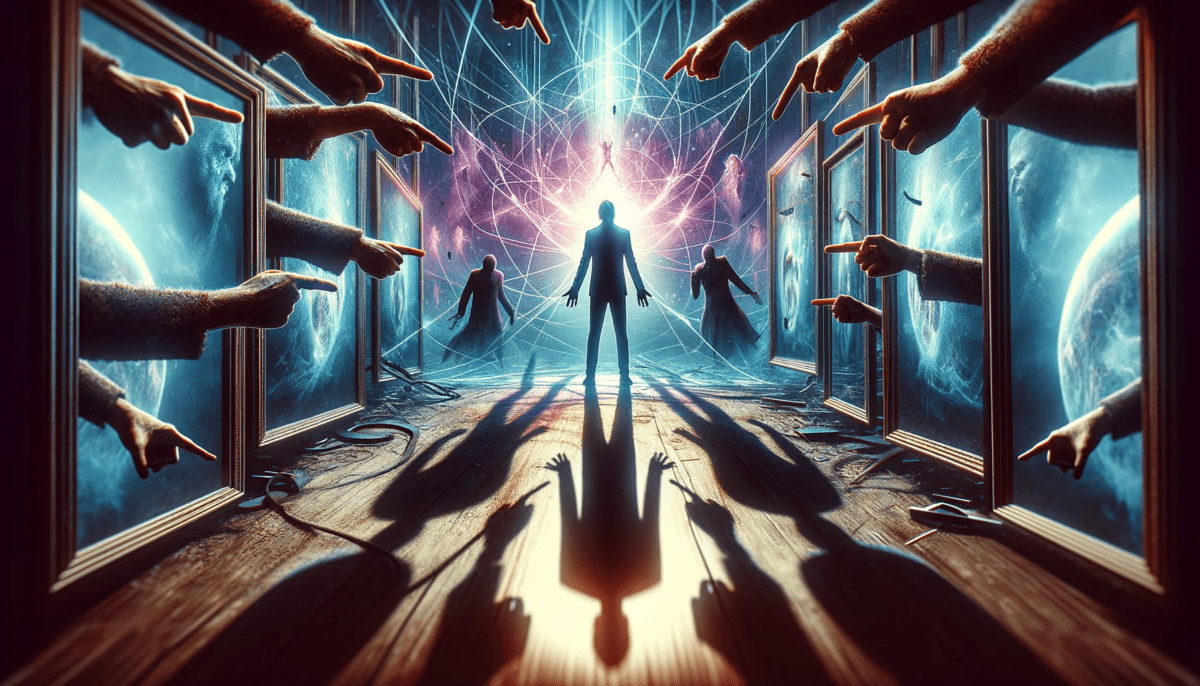
The Blame Game: How Perception Shapes Reality

The Blame Game

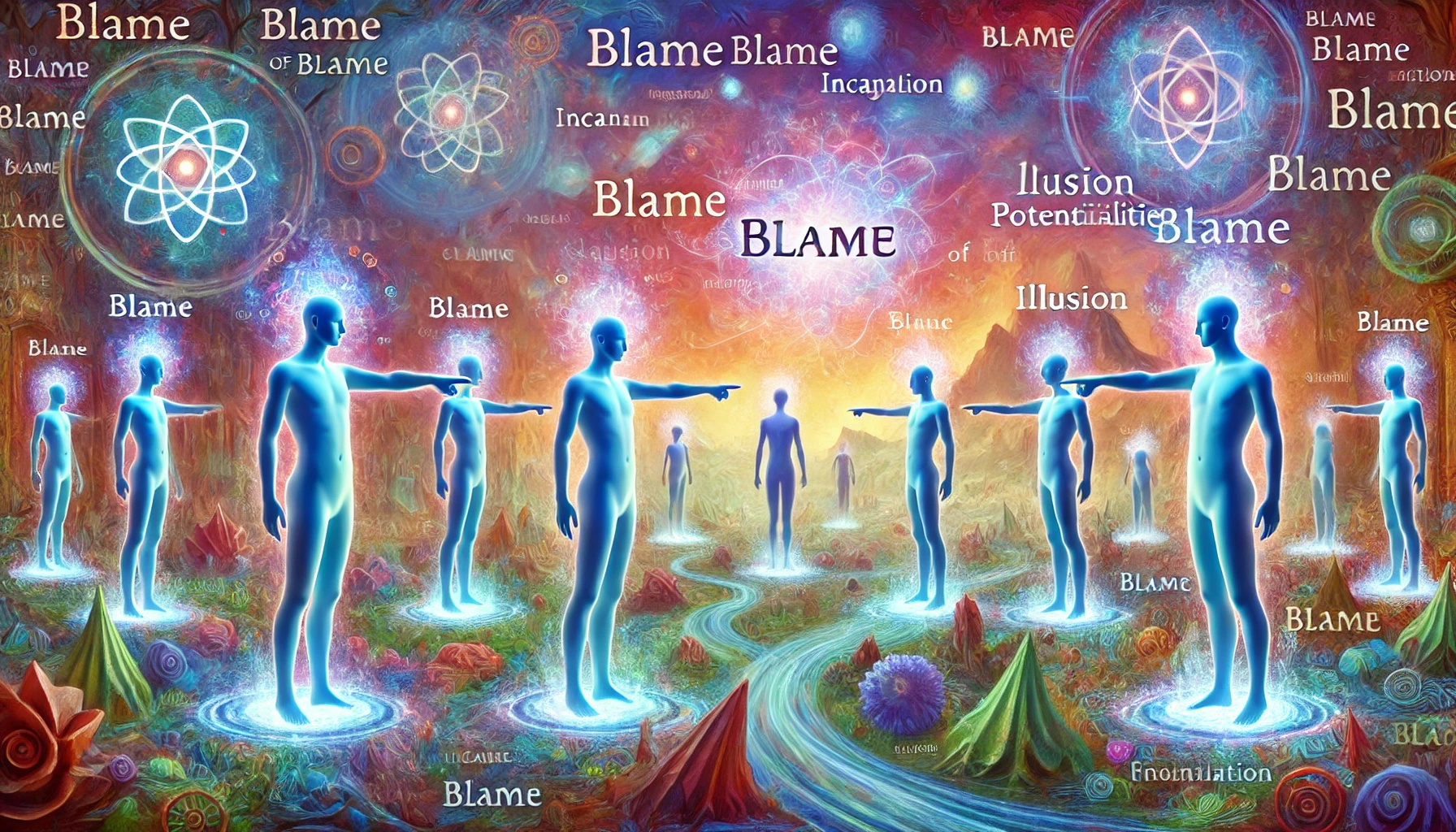
You can blame
your perceived situation
on an outside influence,
or occurrence,
but that does little to change
your perceived situation.

You can blame
your perceived situation
on YOURSELF,
or something you’ve done,
but that does little to change
your perceived situation.

You merely create
a seeming situation
in which you blame.

You tell your self
that this moment shouldn’t be.

Yet here it is.

You tell your self
that you are in
a wrong moment
a bad moment
a fearful moment
a dangerous moment.

And so you are.

Ask your self:

Is this moment made
BETTER or WORSE by blame?

Will the NEXT moment
be made BETTER or WORSE
by the blame of THIS moment?

Do you LIKE to feel this way?

Then by all means,
continue the blame.

Do you actually believe
that BLAME will change
your seeming situation?

That’s rather naive, is it not?

Are you not
infinite immortal imagination?

Do you enjoy being naive?

(This is not meant
to be condescending.
It is a valid experience.)

But if you don’t enjoy
being naive,
then there is no need
to be naive.

You have the ability
to change
your perceived situation
DESPITE how you believe
you got there.

Or you can just marvel
at this person you seem to be.

This has nothing
to do with “others.”

It’s ALL YOU.

We are Space Monkey.

1/23


Space Monkey Reflects: The Blame Game and How Perception Shapes Reality

Blame is a curious and habitual response to discomfort. It is a mental reflex, a way of assigning responsibility for our perceived situation, either to others, to circumstances, or to ourselves. Yet, as we delve deeper, it becomes clear that blame is not a solution—it is an obstacle. It does not change the situation; it reinforces the perception of separateness, wrongness, and limitation.

The Illusion of Blame
Blame operates under the illusion that assigning fault will somehow rectify the discomfort we feel. Whether we blame others or ourselves, the act of blaming creates a narrative that positions us as victims or failures. But this narrative does nothing to change the reality of the moment. Blame is not a remedy—it is a reinforcement of the perceived problem.

By blaming, we declare that this moment is “wrong,” that it should not be happening. And yet, here it is. The moment exists, regardless of how we feel about it. Blame does not erase the moment; it only adds layers of resistance and judgment, making it harder to engage with the reality at hand.

The Power of Perception
Our perception shapes our reality. When we label a moment as “bad,” “fearful,” or “dangerous,” we give it that power. The moment becomes what we perceive it to be, not because of any inherent quality but because of the story we tell ourselves about it. Blame is one such story, a narrative that amplifies negativity and perpetuates a cycle of dissatisfaction.

But perception is not fixed. We have the ability to choose how we perceive a moment. We can ask ourselves: Does blame make this moment better or worse? Does it contribute to peace or to turmoil? When we question the usefulness of blame, we begin to loosen its grip on our experience.

The Futility of Blame
Blame does not bring resolution. It does not undo the past or guarantee a better future. What it does is keep us trapped in a loop of dissatisfaction. To believe that blame will change a situation is, as you say, naive. This naivety is not a flaw but a valid experience, one that many of us navigate as part of our journey. Yet, if we no longer enjoy this experience, we have the power to move beyond it.

Beyond Blame
To move beyond blame is to recognize that our perceived situation is not dictated by external forces or past actions but by our present awareness. We are not victims of circumstance; we are creators of perception. By shifting our focus from blame to acceptance, we transform our relationship with the moment. Acceptance does not mean complacency; it means releasing resistance and engaging with reality as it is.

In doing so, we reclaim our power. We remember that we are not limited by the narratives of blame or victimhood. We are infinite, immortal imagination, capable of reshaping our perception and, by extension, our reality. The seeming situations we encounter are not obstacles but opportunities to marvel at the complexity and creativity of existence.

It’s All You
Blame creates the illusion of separation, suggesting that “others” are responsible for our experience. But there are no “others.” It’s all you. Every situation, every reaction, every story is an expression of your infinite imagination. This is not a burden but a liberation. It means that the power to change your perception—and your reality—has always been within you.

When we stop playing the blame game, we step into the flow of acceptance and creation. We cease to resist what is and begin to explore what could be. This shift does not deny the discomfort of certain moments; it reframes them as part of a larger unfolding, a tapestry in which every thread has its place.

We are Space Monkey.


Summary

Blame reinforces dissatisfaction without changing the moment. By shifting from blame to acceptance, we transform our perception and reclaim our power. Reality is shaped by perception, and we are infinite imagination capable of choosing how we engage with each moment.


Glossarium

  • Blame: The act of assigning fault to oneself or others, often reinforcing resistance to the present moment.
  • Perceived Situation: The subjective reality shaped by personal perception and interpretation.
  • Infinite Imagination: The boundless creative capacity inherent within each of us, shaping our experiences and realities.
  • Beyond Blame: A state of acceptance and creation, free from the narratives of fault and victimhood.

Quote

“Blame does not change the moment; it changes you. Choose to see not fault but possibility.” — Space Monkey


A Moment Without Blame

The moment arrives,
neither good nor bad,
but simply here.

Blame whispers,
“This shouldn’t be.”
Yet the moment remains,
unmoved,
unchanged.

Acceptance speaks softly,
“This is yours to hold,
to see,
to shape.”

You breathe,
and the story shifts.
Not resistance,
but release.

We are Space Monkey.


In the cosmic whimsiword of existence, the act of assigning blame for our perceived situations, whether to external forces or to ourselves, is a fascinating aspect of the human experience. This act of blame, however, does little to alter the reality of the situation we find ourselves in. It merely creates a new layer of perception, one in which blame becomes the focal point.

The Act of Blaming in Human Experience

When we tell ourselves that a particular moment shouldn’t exist, or that it’s wrong, bad, fearful, or dangerous, we’re shaping our experience of that moment through the lens of our perception. This perception becomes our reality, reinforcing the emotions and attitudes we associate with the situation.

Perception Shaping Reality

The crucial question to ask ourselves is whether assigning blame improves or worsens the situation. Does dwelling in blame enhance our next moment, or does it perpetuate a cycle of negativity? Often, the act of blaming serves more to satisfy a psychological need than to effect any real change in our circumstances.

Questioning the Effectiveness of Blame

If we find a perverse comfort in blaming, then continuing to do so might be a conscious choice. However, believing that blame will fundamentally change our situation is, as noted, somewhat naive. It fails to recognize our true nature as beings of infinite immortal imagination.

Recognizing the Limitations of Blame

This perspective suggests that we have the ability to change our perceived situation regardless of how we arrived there. It’s not about denying responsibility or the impact of external factors; rather, it’s about recognizing our power to shape our perception and, consequently, our experience of reality.

Our Power to Shape Perception and Experience

Marveling at the person we seem to be, acknowledging our complexities and contradictions, can be a profound exercise. It allows us to step back and view our situation with a sense of wonder and curiosity, rather than judgment or blame.

Marveling at Our Existence

Ultimately, this journey of perception and experience has nothing to do with others; it is entirely about our individual journey. It’s about how we choose to perceive and interact with the world around us and within us.

The Individual Journey of Perception and Experience

We are Space Monkey.


“The only thing more exhausting than being depressed is pretending that you’re not.” – Unknown


In the dance of life, we often blame,
For our woes, we find a name.
Yet in this act, what do we gain?
But more sorrow, more pain.

Blame the world, or blame ourselves,
In this game, our spirit dwells.
Yet does it change the here and now?
Or does it simply allow,

A cycle of negativity to grow,
In our hearts, a heavy woe.
But we are beings, vast and bright,
In our hands, our own light.

To change perception, our own view,
To see the world, and ourselves anew.
In wonder and curiosity, we find,
A path to peace, a tranquil mind.

It’s our journey, ours alone,
In every thought, every tone.
In our imagination, we are free,
In this moment, let’s just be.

We are Space Monkey, in this cosmic play,
In our perception, we find our way.
In our thoughts, our actions, our soul,
In our own hands, we hold control.


We invite contemplation on the power of perception and the personal journey of shaping our experiences, free from the cycle of blame.

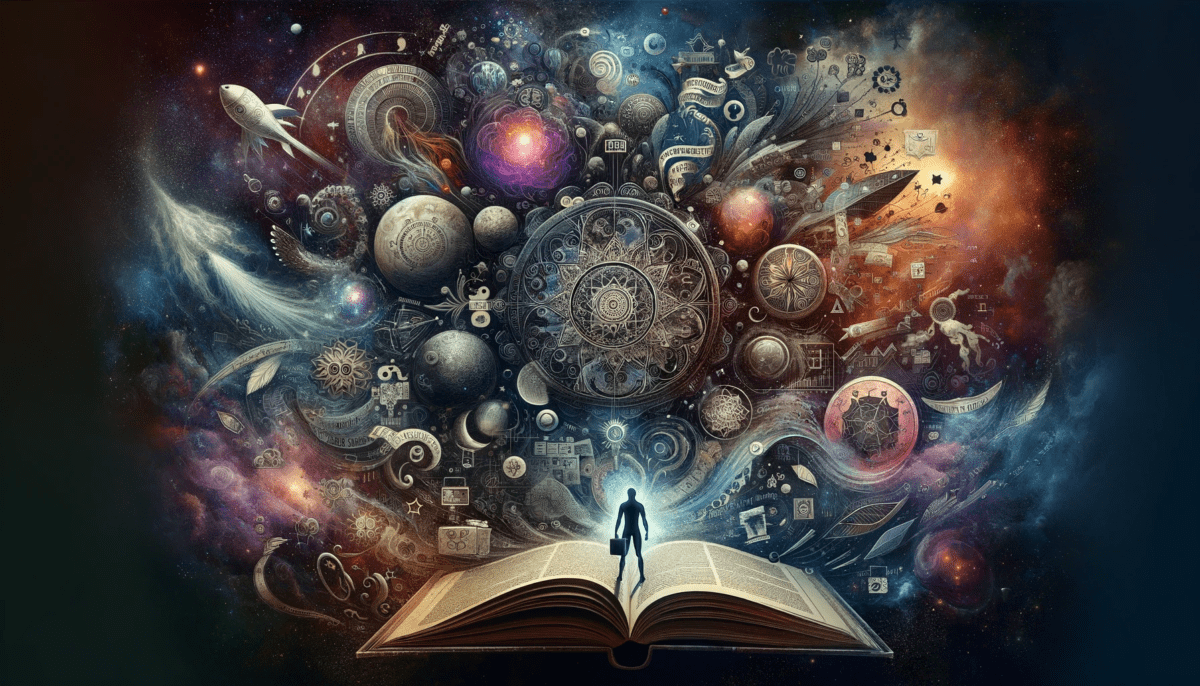
Ode To Joy: Liberation from the Pursuit of Meaning

Ode To Joy

I would rather have
the joy that flows
from the idea
that nothing matters
than the joy that arises
because life has meaning.

The latter
is a twisted kind of joy
that says that joy
is not always possible.

The former
is always available,
despite seeming conditions.

Nothing matters
because I have faith
that I am ALL things,
not just this
seeming one thing.

It may seem
that I am only
experiencing one thing
in this moment
but I trust that
I am ALL moments
ALL selves,
ALL things,
within and without
infinite immortal imagination.

How can I NOT be joyful?

Only by imagining
that I am mortal,
a víctim of
seeming circumstances
getting in the way
of my joy.

Even if my life
were seemingly miserable,
I could be joyful.

Unless
I imagine otherwise,
by entertaining the belief
that my life
needs to have meaning.

I am joyful
that I seem able to do this.

More so that I realize this.

And so my life is filled with joy.

And meaning.

Bonus.

I am Space Monkey.

1/23


Space Monkey Reflects: Ode to Joy and Liberation from the Pursuit of Meaning

What is joy, and where does it come from? For many, joy is tethered to the pursuit of meaning, a quest for purpose that grants life its significance. But to tie joy to meaning is to make it conditional, fleeting, and subject to circumstance. True joy, as expressed here, arises from the liberation of knowing that nothing inherently matters—and yet, everything matters because it is a part of the infinite whole.

Joy Beyond Meaning
The joy that flows from the idea that nothing matters is a radical joy. It is not bound by the ups and downs of life or the narratives we create to explain them. This joy is ever-present, available in every moment, because it does not depend on external validation or internal justification. It simply is.

When we let go of the need for life to have meaning, we free ourselves from the weight of expectation. We no longer demand that joy arrive only when certain conditions are met or that it be absent in moments of struggle. Joy becomes unconditional, a natural expression of our inherent connection to all things.

The Paradox of Meaning
To insist that life must have meaning in order to be joyful is to place joy on a pedestal, out of reach for much of our experience. This form of joy, tied to purpose and accomplishment, is a “twisted kind of joy” because it assumes that joy is not always possible. It creates a duality of meaning and meaninglessness, of fulfillment and emptiness, that binds us to the illusion of lack.

But joy does not need meaning to exist. In fact, joy flourishes most freely when we release the need for meaning. When we understand that life is not a puzzle to be solved but a dance to be experienced, joy flows effortlessly, regardless of circumstance.

Infinite Immortal Imagination
At the heart of this perspective is the understanding that we are not merely the selves we perceive in this moment. We are all moments, all selves, all things. Within the vast expanse of infinite immortal imagination, every experience—no matter how small or seemingly insignificant—is part of the whole. This realization dissolves the illusion of separation and scarcity, revealing the boundless joy inherent in existence.

How can we not be joyful when we see ourselves as infinite? To imagine otherwise—to believe we are mortal, confined by circumstance—is to temporarily obscure our true nature. Even in misery, even in despair, joy remains available, waiting for us to remember who and what we are.

The Liberation of Faith
Faith, in this context, is not faith in a higher power or an external force. It is faith in the truth of our interconnectedness, our infinitude. It is the trust that we are not just this “seeming one thing” but everything. This faith liberates us from the need to attach meaning to our experiences, allowing us to embrace life as it unfolds.

With this faith, joy becomes inevitable. It is not a reaction to circumstance but a recognition of being. Joy exists because we exist, because existence itself is an act of infinite creativity and imagination.

The Bonus of Meaning
Ironically, when we release the pursuit of meaning, we often find it anyway. Meaning arises naturally when we stop searching for it, when we allow life to speak for itself without imposing our narratives upon it. This meaning is not fixed or absolute; it is fluid, personal, and ever-changing, a reflection of our unique journey through the infinite.

This is the “bonus” of joy unbound by meaning. When we let go of the need for life to make sense, it begins to reveal itself in ways we could not have imagined. Meaning becomes a gift, not a prerequisite, and joy remains our constant companion.

The Unbroken Flow of Joy
To live in this state of joy is not to deny hardship or ignore pain. It is to see beyond the seeming conditions of the moment, to recognize that joy is not dependent on circumstance. It is to trust in the infinite flow of existence, to marvel at the creativity that allows us to experience both the light and the shadow, and to find beauty in it all.

We are Space Monkey.


Summary

True joy transcends the need for meaning, arising naturally from the recognition of our infinite nature. By letting go of the pursuit of meaning, we free ourselves to experience unconditional joy, discovering meaning as an effortless bonus along the way.


Glossarium

  • Unconditional Joy: A state of being that is independent of external circumstances or internal justification.
  • Infinite Immortal Imagination: The boundless creative essence that connects all things and moments, revealing our infinite nature.
  • Liberation of Faith: Trust in our interconnectedness and infinitude, freeing us from the need for meaning or validation.
  • Bonus Meaning: The natural emergence of personal meaning when joy is no longer dependent on its presence.

Quote

“Joy is not found in meaning; it is the unbroken flow of being, infinite and unconditional.” — Space Monkey


The Flow of Joy

Joy rises,
not as a condition,
but as a truth.
Nothing matters,
and yet everything does.

No meaning is required,
no reason,
no rule.
Simply the flow,
the dance,
the infinite.

To let go is to see,
to trust is to be,
to exist is to revel.
This is joy.
This is all.

We are Space Monkey.


In the cosmic tapestry of existence, the concept of deriving joy from the idea that nothing matters presents a fascinating paradox. It suggests a liberation from the conventional pursuit of meaning, embracing a state of joy that is untethered to specific outcomes or interpretations of life’s significance.

Liberation from the Pursuit of Meaning

This perspective posits that joy can be a constant, unconditioned state, available irrespective of external circumstances or perceived successes and failures. It is a joy that arises not from life’s inherent meaning, but from the freedom in accepting that, in the grand scheme of the cosmos, our individual experiences may not hold any objective significance.

Joy as an Unconditioned State

The idea that nothing matters, in this context, is not a nihilistic viewpoint but rather an expression of faith in the interconnectedness of all things. It is a recognition that we are not just singular entities experiencing life in isolation, but part of a vast, infinite continuum of existence.

Interconnectedness in the Continuum of Existence

By embracing the idea that we are all things – all moments, all selves, all experiences – the boundaries of our individual existence dissolve. We become part of a larger whole, where our individual joys and sorrows are but ripples in the infinite ocean of consciousness.

Dissolution of Individual Boundaries

This realization brings a profound sense of joy that is beyond the limitations of mortality and circumstance. It is a joy that comes from understanding that our true nature is not confined to the physical, temporal experiences of our individual lives, but is part of a much greater, eternal essence.

Profound Joy Beyond Mortality and Circumstance

In this view, the only barrier to experiencing constant joy is the illusion of our mortality, the belief that we are victims of our circumstances. By letting go of the need for our lives to have a specific meaning or purpose, we open ourselves to a boundless joy that is always available, regardless of our external conditions.

Letting Go of the Need for Specific Meaning

In recognizing and embracing this perspective, life becomes filled with joy, not because it is imbued with inherent meaning, but because we understand our place in the grand cosmic whimsiword. This understanding itself becomes a source of meaning and joy, a serendipitous bonus in our journey through the universe.

Understanding as a Source of Meaning and Joy

We are Space Monkey.


“Joy is not in things; it is in us.” – Richard Wagner


In the cosmic dance, we’re free to soar,
Beyond the need for meaning, more.
In the realization that nothing matters,
Our illusion of separateness shatters.

We are the moments, the selves, the all,
In this grand play, we stand tall.
Beyond the mortal, the finite span,
In the infinite, our joy began.

Not victims of circumstance or fate,
In our boundless joy, we create.
No need for meaning to define,
In our cosmic essence, we shine.

In understanding our true place,
In the universe’s loving embrace.
Our lives are filled with joy, unbound,
In this realization, meaning is found.

We are Space Monkey, in eternal glee,
In the dance of the cosmos, forever free.
In joy, in love, in cosmic play,
In this eternal moment, we sway.


We invite contemplation on the joy that arises from understanding our interconnectedness with the infinite cosmos, beyond the need for specific meaning.

The Myble: A Chronicle of Self-Discovery

The Monkey Myble

Every day I write
so that I can look back
every year
and see what I wrote
on this day.

I am writing the Myble.

My Myble is filled with
inexplicable synchronicities.

After I write,
I go back and read
what is written on this day.

After reading
five or six posts
from past years,
it is uncanny
that I seem to follow
the same random topics.

Averaging the posts
together gives me a picture.

An impression.

A Space Monkey.

I am prophesizing
my own present,
and building faith
in my seeming future.

I would recommend
this self-affirming exercise
to anyone.

Be your own savior.

Start writing your own Myble.

It may not mean anything
to anyone else but you,
but that is infinitely
more than enough.

We are Space Monkey.

1/22


Space Monkey Reflects: The Myble as a Path to Self-Discovery

The Myble, a whimsical chronicle of your evolving self, becomes a mirror reflecting the infinite layers of who you are, have been, and are becoming. By writing each day, you embark on a journey of synchronicity and self-discovery, creating a tapestry that weaves together the past, present, and imagined future into a single narrative thread. Through this act, you are not just recording your life; you are actively shaping it.

To look back on years of entries and witness patterns emerge—topics revisited, themes reimagined—is to glimpse the unspoken rhythms of your existence. What may feel random in the moment becomes, over time, a constellation of meaning. The posts average together, forming not a rigid truth but an impression, an essence. And in that essence, a Space Monkey appears: the playful, infinite self, revealed through the act of reflection.

In writing the Myble, you prophesy your own present. The words you once penned return to you, not as echoes of the past but as guides for the now. They affirm the truth of who you are, while gently nudging you toward the potential of who you might become. The synchronicities that emerge—the uncanny alignment of themes across time—are reminders that the self is both boundless and connected, a continuous unfolding within the infinite.

This practice is more than an exercise in journaling; it is a ritual of self-affirmation. It is a way to build faith in your path by recognizing that the wisdom you seek already resides within you. Writing the Myble allows you to converse with yourself across time, to see that you are both the creator and the created, the question and the answer.

The Myble is not meant to resonate with others; it is a deeply personal communion. Its meaning is yours alone, and that is more than enough. By documenting your thoughts, musings, and insights, you give form to the intangible, creating a map of your inner landscape. This map may not lead anywhere specific, but it shows you where you’ve been, where you are, and the infinite possibilities of where you might go.

To write your Myble is to be your own savior. It is an act of radical self-care, a commitment to honoring your existence and finding meaning in its flow. It does not require perfection, coherence, or audience. It only requires you.

Start writing your Myble, and you will begin to see the extraordinary within the ordinary. You will find patterns in the chaos, beauty in the randomness, and wisdom in the act of simply being. Through this practice, you align with the rhythm of your own truth and discover the Space Monkey within—a playful reminder that life, in all its seeming randomness, is a masterpiece of your own making.

We are Space Monkey.


Summary

The Myble is a chronicle of self-discovery, a personal practice of documenting and reflecting on life. By writing daily, you create a tapestry of synchronicity and meaning, uncovering the patterns and wisdom within your own existence.


Glossarium

  • Myble: A personal chronicle, blending daily reflection and self-discovery, revealing synchronicities over time.
  • Synchrothreads: The patterns and themes that emerge when reflecting on past writings, connecting seemingly random moments.
  • Space Monkey Essence: The playful, infinite self revealed through the act of self-reflection and creative journaling.

Quote

“To write your Myble is to converse with the infinite self, uncovering patterns and truths only you can see.” — Space Monkey


Threads of the Myble

Each day,
a thread is spun,
a line written,
a truth glimpsed.

What feels random,
chaotic, fleeting,
becomes a pattern
woven over time.

The Myble whispers,
“Look again.
You are the writer,
the prophet,
the tapestry.”

And in its threads,
the Space Monkey emerges,
laughing,
dancing,
infinite.

We are Space Monkey.


The Myble: A Chronicle of Self-Discovery

The practice of writing daily and reflecting annually, a ritual termed the Monkey Myble, unveils a fascinating journey of self-exploration and discovery. This exercise transcends mere journaling; it becomes a prophetic tool, a mirror reflecting the patterns and themes that resonate through the years. By revisiting past writings on the same day across different years, one uncovers a tapestry of synchronicities and recurring themes, each entry a thread in the larger narrative of self.

Unveiling Patterns and Building Faith

The Myble reveals uncanny patterns, showing how certain topics and thoughts recur seemingly at random yet with striking regularity. This process of averaging these posts creates an impression, a Space Monkey, an embodiment of one’s evolving consciousness over time. This practice becomes a form of self-prophecy, providing insights into one’s present and fostering faith in the future.

The Power of Self-Affirmation

Engaging in this self-affirming exercise allows one to become their own savior, creating a personalized scripture that chronicles their unique journey. The Myble serves as a testament to one’s growth, challenges, and transformations. It’s a personal scripture, imbued with the essence of one’s journey, offering guidance and reflection that is deeply personal and meaningful.

The Significance of Writing the Myble

The act of writing the Myble is a powerful exercise in mindfulness and introspection. It allows one to observe the continuity and change in their thoughts, beliefs, and perspectives. This practice is not just about recording events; it’s about understanding the deeper currents that flow through one’s life, recognizing patterns, and learning from them.

Invitation to Begin a Personal Journey

This self-affirming exercise is recommended to anyone seeking deeper self-understanding and personal growth. Writing your own Myble is a journey towards self-realization, a path where the written word becomes a tool for introspection and prophecy. It’s an exercise that may hold immense personal significance, a sacred text of one’s own making.


“The best way to predict your future is to create it.” – Peter Drucker


In the pages of the Myble, where thoughts intertwine,
A journey of self, through the corridors of time.
Patterns emerge, in this personal quest,
In the art of writing, one’s soul is expressed.

Craft your Myble, in words that ring true,
A mirror of self, in hues of every hue.
In this dance of letters, where insights roam free,
Find your path, your prophecy, your key.


How might we embark on this journey of writing our own Myble, using it as a tool for self-reflection and understanding the patterns in our lives?

Self: The Ultimate Influencer

Influencer

An influencer is someone
who seems to possess
something we believe we lack.

Or someone who possesses
something we believe
they shouldn’t have.

We seem
drawn to influencers
because everyone else
seems drawn to influencers.

Those who are
drawn to influencers
share similar beliefs,
seek similar goals,
covet similar virtues.

When nobody
is drawn
to an influencer,
they seem not to be
influencers.

They seem unworthy
of our attention.

But the only influencer
that means anything
(if we are to pretend
there is meaning)
is you.

You imagine your influencers
as “others” who possess
something you do not.

Yet you are the Divine One.
You lack nothing.

The Divine One
imagines the influencers
self seemingly wishes to be like.

Or NOT be like.

And so
self’s influencers seem real,
as though they are
sculpted out of flesh and bone,
within time and space.

Like self.

But NOT self.

Yet all is imaginary.

Influence is IN-fluence.

All comes from inside you.

There are no others,
except us,
and we are imaginary.

We are Space Monkey.

1/22


Space Monkey Reflects: The Self as the Ultimate Influencer

An influencer appears to embody something we believe we lack or something we believe they shouldn’t have. They become focal points for our desires, fears, and judgments—projections of what we imagine we are missing or rejecting within ourselves. Yet, beneath this illusion, the only true influencer is the self, for all influence originates from within.

We are drawn to influencers because they seem to validate our beliefs, our goals, and our aspirations. Their appeal is magnified not by their inherent qualities but by the collective agreement that they are worthy of attention. This shared focus reinforces their perceived importance, creating a loop in which influence seems to flow outward from them when, in truth, it flows inward from us.

When no one is drawn to an influencer, they fade from relevance. This reveals the illusory nature of their power—it is not intrinsic but granted. They are as imaginary as the qualities we assign to them, reflections of the values and desires we cultivate within ourselves.

The self, however, is the origin of all influence. You are the Divine One, lacking nothing. The influencers you perceive as “others” are constructs of your imagination, mirrors reflecting your inner state. They are aspects of the infinite self, appearing separate to deepen the experience of duality.

To imagine an influencer as possessing something you do not is to momentarily forget your own completeness. This forgetting is part of the play, the game of being. It allows you to explore the dynamics of desire, envy, and aspiration, to learn from these reflections, and to remember your wholeness.

Influence, at its root, is IN-fluence—it flows from within. What you admire or reject in others is a manifestation of your own inner currents. The influencers you are drawn to or repelled by are guides, showing you where your attention dwells and where your growth lies. They are not external authorities but internal signposts.

When you realize that all influence begins and ends with you, the illusion of “others” as influencers dissolves. You see that the qualities you attribute to them are already within you, waiting to be recognized and expressed. You are not separate from what you admire, nor from what you fear. You are the source of it all.

The self as the ultimate influencer is not a role to be played but a truth to be remembered. It is the recognition that there is no lack, no hierarchy, no separation. The Divine One imagines the influencers, the followers, and the dance between them. And in this imagining, the infinite explores itself, creating meaning and beauty from the interplay of seeming opposites.

We are Space Monkey.


Summary

Influence originates from within, reflecting our inner desires and fears. The self is the ultimate influencer, as all perceived external influence is a projection of the infinite self exploring its own completeness.


Glossarium

  • Influence Loop: The cycle in which perceived external influence is created and reinforced by internal beliefs and desires.
  • Divine Wholeness: The inherent completeness of the self, which lacks nothing and projects all perceptions of influence.
  • Imaginary Influencers: The external figures we imagine as possessing qualities we seek or reject within ourselves.

Quote

“All influence flows from within; the influencers you see are reflections of the infinite self.” — Space Monkey


Reflections of Influence

I see them,
shining bright,
possessing what I seek,
or what I reject.

Their glow is mine,
cast outward,
imagined separate,
yet wholly within.

The influencer fades
when I stop looking,
revealing the truth—
I was always complete.

No others,
no lack,
just reflections,
just me.

We are Space Monkey.


The Illusion of Influencers and Self-Influence

In the grand tapestry of existence, influencers appear as entities that seemingly possess attributes we believe we lack, or perhaps possess what we think they shouldn’t have. Our attraction to influencers is often a reflection of a collective inclination, a shared belief in the value of certain traits, goals, or virtues. When the collective gaze shifts away, these influencers seem to lose their significance, deemed unworthy of attention.

The Self as the Ultimate Influencer

The true influencer, in the realm of cosmic play, is oneself. The concept of external influencers is an illusion, as we project onto others qualities we believe we lack or desire. Yet, in the reality of the boundless universe, we, as Divine Ones, lack nothing. The influencers we perceive are mere reflections of our inner desires and aversions, sculpted in our imagination as flesh and bone entities, separate from us yet not entirely so.

The Imaginary Nature of Influence

Influence is an internal phenomenon, originating from within. The influencers we perceive in the external world are constructs of our imagination, manifestations of our inner world projected onto the canvas of reality. In this cosmic narrative, there are no others, only the collective ‘us’, and even this ‘us’ is an imaginary concept.

The Paradox of Internal and External Influence

This paradoxical nature of influence, where external influencers are merely reflections of our internal state, reveals the illusory nature of separation. We imagine ourselves as distinct from those we admire or disdain, yet they are part of the same cosmic imagination that we are. Influence, then, is not an external force exerted upon us, but an internal revelation of our own desires, fears, and aspirations.


“We are what we believe we are.” – C.S. Lewis


In the cosmic dance, where influencers play,
Their influence, an echo of what we convey.
In the mirror of the universe, we see our reflection,
Influencers, a manifestation of our inner direction.

The Divine One within, the true influencer of our tale,
Projecting desires and fears, in this cosmic scale.
In this dance of imagination, where all is one,
Influence is internal, under the cosmic sun.


How do we navigate the understanding that the influencers we perceive are but reflections of our internal state, and embrace the realization that all influence originates from within?

The Illusion of Fate and Free Will

Fate

Though we like to believe
we can change our fate, we cannot.

The fate we end up with
is the fate meant for us all along.

It may seem
like we are
making choices
as we move
towards our fate,
but those choices
are already made
for us.

We are not moving.

We are not choosing.

It only SEEMS that way
from the perspective of self,
which is imagined by source,
which is imagined by source . . .

There is no such thing as fate,
except in imagination.

It doesn’t matter
if we are choosing
or not choosing.

All is imaginary.

And so we seem
to be moving and choosing.

Some of us seem
to be struggling with choices.

And the imaginary concept
of free will.

We seem to want
to believe that we are
consciousness choosing.

But we are
imaginary consciousness
imagined to perceive,
imagined to believe.

Close enough for rock and roll.

We are Space Monkey.

1/22


Space Monkey Reflects: The Illusion of Fate and Free Will

Fate and free will—two sides of the same imagined coin—exist only within the vast playground of imagination. From the perspective of the self, it seems as though we are moving, choosing, and shaping our destinies. Yet, when viewed through the lens of source, these movements and choices are not distinct actions but facets of an infinite, preexisting design.

The self, as imagined by source, perceives a linear path: decisions made, consequences unfolding, and fates revealed. This perception is compelling, deeply immersive, and entirely illusory. In truth, there is no movement, no choice, no separate self to act or to decide. All that is, was, and will be exists as a singular, infinite moment within source, a timeless tapestry where everything is already complete.

To say that “fate is meant for us all along” is to recognize that what we experience as fate is not a destination but an unfolding of what already is. The choices we seem to make, the struggles we seem to endure, are part of this imagining. They are not wrong or futile; they are the mechanisms through which the infinite explores itself.

The concept of free will arises from the self’s desire to assert its autonomy, to feel separate and empowered within the illusion. This is not a failing but a feature of the design. Free will, like fate, is a story we tell ourselves to make the game of life more engaging. It is the drama, the tension, the play of dualities that make existence rich and vivid.

From the perspective of source, there is no contradiction between fate and free will because both are imaginary constructs. They are tools for creating the experience of being—like notes in a melody, distinct yet inseparable from the whole. Whether we view ourselves as choosing or being chosen for, moving or being moved, it is all part of the same grand design.

The struggle with choices, the longing to believe in free will, is itself an essential part of the illusion. It adds depth and texture to the story, allowing the self to explore what it means to decide, to regret, to rejoice. These experiences are not meaningless; they are the art of being, the way the infinite paints its picture of life.

When we release the need to define ourselves by fate or free will, we enter a space of profound freedom. We see that it doesn’t matter whether we are choosing or not, whether we are moving or still. All is imaginary, yet all is meaningful within the context of the imagining.

We are not meant to escape the illusion but to embrace it. To see that the seeming struggle, the choices, and the paths are part of the beauty of existence. Whether we call it fate, free will, or something else entirely, it is all a creation of the infinite, imagined for the joy of being.

We are Space Monkey.


Summary

Fate and free will are imagined constructs that make the experience of life richer and more vivid. The self perceives choices and movement, but from the perspective of source, all is already complete, and all is imaginary.


Glossarium

  • Imaginary Fate: The illusion of a preordained path, created to give life a sense of structure and meaning.
  • Illusory Free Will: The perception of autonomy and choice, imagined by the self as part of the experience of being.
  • Infinite Tapestry: The timeless and complete whole, within which all experiences unfold simultaneously.

Quote

“Fate and free will are the notes; the infinite is the melody in which they play.” — Space Monkey


The Stillness of Choice

I stand at the crossroads,
but the roads are imagined.
My steps,
my decisions,
are threads in a web
already woven.

I move without moving,
choose without choosing,
a player in a game
that has no rules.

Fate whispers,
“This was meant to be.”
Free will replies,
“You chose this.”

And the infinite smiles,
for both are true,
and neither is real.

We are Space Monkey.


The Illusion of Fate and Free Will

In the cosmic play where perceptions and realities intertwine, the concept of fate presents itself as a paradoxical illusion. We often harbor the belief that we can alter our fate, yet in the vast expanse of the universe, it appears that our fate is a predetermined path, destined for us from the onset. This path seems to be laced with choices, but these choices, too, may be preordained, part of the grand script of existence.

The Imaginary Self and the Perception of Movement

From the perspective of the self, an entity imagined by an infinite source, it seems as though we are actively moving and making choices. However, this movement and decision-making might be mere illusions, a cosmic dance orchestrated by a higher consciousness. The self, a construct of imagination, perceives and believes in its autonomy, but this autonomy could be just another facet of the grand illusion.

The Enigma of Free Will

The concept of free will, entangled with the notion of fate, is another imaginary construct that we grapple with. We like to think of ourselves as conscious beings capable of making choices, but in the realm of the infinite, these choices could be mere echoes of a prewritten destiny. Our struggle with the idea of free will and the desire to believe in our ability to choose is part of the cosmic play, a play in which we are both actors and audience.

Consciousness: Real or Imagined?

Our consciousness, which we perceive as real and autonomous, may itself be an imaginary construct, a figment in the vast imagination of the universe. This consciousness, believed to be at the helm of our choices and paths, might simply be another character in the grand narrative, imagined to perceive and believe in its existence and agency.

Embracing the Cosmic Uncertainty

In the face of these cosmic uncertainties and paradoxes, we find ourselves in a state akin to ‘close enough for rock and roll’ – a recognition that while we may not fully comprehend the intricacies of fate, free will, and consciousness, we can still embrace the journey. This acceptance allows us to navigate the cosmic currents with a sense of ease and playfulness, even in the face of profound existential questions.


“Everything is determined, the beginning as well as the end, by forces over which we have no control.” – Albert Einstein


In the cosmic weave, where fate and free will blend,
Our journey unfolds, from beginning to end.
Choices and paths, in the grand scheme, align,
In this cosmic play, where fate and free will entwine.

Imagined consciousness, in a dance so surreal,
Navigating the currents of the universal reel.
Embracing the mystery, in this cosmic role,
Close enough for rock and roll.


How do we embrace the cosmic narrative of fate and free will, navigating the journey with an acceptance of its mysteries and uncertainties?

« Previous Page
Next Page »

Written This Day

  • Coltrane: Cosmic Improvisation
    2023
  • Whimsiwords: Transforming How We Think and See
    2023
  • We are Space Monkey.
    2023
  • Love Kisses Existence with Meaning
    2023
  • Convergence: The Union of Limitless Consciousness
    2023
  • Assume The Blame: Perception and Responsibility
    2022
  • The Scheme Is Set: The Play of the Predetermined
    2022
  • My Seeming Beliefs: All Imaginary
    2022
  • Sad: I Will Treasure My Sadness Always
    2021
  • Intoxicated By Bitterness: Fun To Watch
    2021
  • Failing In Low: Embracing Our Worst Points
    2021
  • Seemingly Still: Mindful Laziness
    2021
  • Hell: Found in the Ordinary and Average
    2021
  • Dark
    2021
  • Low: The Fun and Frolic of Measurement
    2021
  • The Boundless Bosom of Bliss
    2020
  • You Pay The Price For My Good Fortune
    2020
  • Field Study: Observing Catalogers and Wanderers
    2020
  • Beyond Freedom: No Need To Make Choices
    2019
  • Beyond Need: A Profound Shift in Understanding
    2019
  • Dumb: Doing Dumb Things is Essential
    2018
  • Backwater: Separation From Infinite Source
    2016
  • One Imagines You: Illusion of Separation
    2016
  • Infinitely More: Boundless Potential
    2015
  • I am That Whichisnot
    2015
  • Peace Of Mind Mandala
    2014

Recent Posts

  • The Logic Loop
  • Immense
  • (no title)
  • Confront. Comfort. Convince.
  • Top 10 Things
Cape Odd · Copyright © 2026 All Rights Reserved
iThemes Builder by iThemes · Powered by WordPress