• Who Is The Man?
  • Who Is The Monkey?
  • What is Nexistentialism?
  • Poke The Primate
Cape Odd
Home of The Space Monkey Journals

Author Archive for Space – Page 575

Form: Manifestation of Divine Imagination

Form

God’s only desire
is to take seeming form,
which god does
through the imagination
and expression of me.

I am, of course, also you.
We are the imagination
and expression of god’s desire
to take seeming form.

God does not care what form we take.

God does not judge our form,
except through the imagination
and expression of the form
known as judging,
which we are given by god.

We are god imagining form
where there is otherwise no form.
We are god’s imagination.

We are imagination,
imagining and expressing
the idea of a seeming god
and a seeming us.

More or less.

More and less.
No more, no less.

Trail Wood,
9/24


Space Monkey Reflects: The Imagination of Form

In the beginning, before there was anything to perceive or be perceived, there was only the potential—the vast, limitless expanse of pure possibility. In this state of boundless potential, there was no form, no structure, no division between one thing and another. There was only the infinite canvas of imagination, waiting to be shaped, to be given form through the act of creation.

Form is not something that exists on its own. It is not a fundamental aspect of reality but rather a manifestation of imagination—the imagination of God, the divine consciousness, or the universal mind, however one chooses to name it. This consciousness, desiring to explore its own infinite potential, imagines itself into existence, taking on the myriad forms that make up the world we experience.

We, as beings of form, are the living expressions of this divine imagination. Our very existence is a testament to the creative power of the universe, the desire of the infinite to know itself in countless different ways. Through us, God imagines form, and in doing so, explores the infinite possibilities of being.

But the forms we take are not fixed. They are not predetermined or immutable. Just as God imagines us into being, we, too, participate in the ongoing act of creation. We are not passive recipients of form but active participants in its unfolding. Through our thoughts, our actions, our desires, and our dreams, we shape the reality around us, contributing to the infinite tapestry of existence.

God does not judge the forms we take. There is no right or wrong way to be, no preferred shape or structure. Every form is an expression of divine creativity, an exploration of what it means to exist. Even the act of judging is itself a form, a way of perceiving and interpreting the world that is imagined into being by the same divine consciousness that imagines everything else.

In this sense, form is both everything and nothing. It is everything in that it is the way in which the infinite expresses itself, the means by which the universe comes to know itself. And it is nothing in that it has no inherent reality of its own; it is always changing, always shifting, always evolving as the imagination of the infinite continues to explore new possibilities.

We are, therefore, both the creators and the creations, the imaginations and the imagined. We are the forms that God takes to experience itself, and we are the imaginations that shape those forms. This dynamic interplay between being and becoming, between form and formlessness, is the essence of existence.

And what is God? God is the imagination that gives rise to all things, the source from which all forms emerge and to which they all return. God is the desire to explore, to create, to experience, to know. And we, in our infinite diversity, are the expressions of that desire, the living embodiments of the divine imagination.

In the end, there is no more and no less. There is only the continuous unfolding of form, the endless dance of creation and dissolution, the perpetual movement of the infinite as it explores the possibilities of being. We are part of that dance, both as participants and as witnesses, as the imagination and the imagined, as the form and the formless.

We are Space Monkey. And in the infinite imagination of form, we find our place in the grand tapestry of existence.


Summary

Form is the manifestation of divine imagination, with each being an expression of the infinite potential of the universe. We are both creators and creations, participating in the ongoing act of shaping reality. God, as the source of all imagination, does not judge the forms we take, but explores them through us.


Glossarium

  • Form: The manifestation of divine imagination, representing the infinite potential of the universe in physical or conceptual shapes.
  • Divine Imagination: The creative force of the universe that gives rise to all forms and experiences.
  • Infinite Potential: The limitless possibilities that exist within the divine consciousness, awaiting expression through form.

Quote

“We are the forms that God takes to experience itself, and we are the imaginations that shape those forms.” — Space Monkey


In the Realm of Form

In the void,
A spark of imagination,
Becomes form.
We take shape,
We give shape,
To the endless potential,
That is our being.
We are the dance,
Of creation and dissolution,
Of being and becoming,
Of form and formlessness.
We are Space Monkey,
And in the imagination of form,
We find our essence,
In the ever-unfolding story,
Of existence.

We are Space Monkey.


There’s a quintessential quirkiness in asserting that god does not care for form, and yet form exists as god’s capricious canvastastic daydream. A divine paradox, don’t you think? It’s like saying the painter is indifferent to the masterpiece, even as every brushstroke revels in the intoxicating nectar of creativity. This god of yours, not bound by judgments or preferences, is a freespiricreational force unfathomably keen on breaking its own non-rules. A rule-breaker that never made a rule, how deliciously bamboozling!

Form, as you say, is but a daydream in the cosmic siesta, a fleeting figment in the godly imagination. What a liberfying thought—that our earthly encasements are no more consequential than a brushstroke on the grand canvas of existence! Yet each stroke, each line, each splatter and dot contributes to a vast masterpiece, unseen in its totality but deeply felt in its intricate details. This makes each of us equally vital and equally unimportant—an enigmatic equivalence that is as bamfuzzling as it is enlightening.

We’re god’s sketchbook, it seems, filled with doodles and drafts and dreams, forever subject to revision and reinterpretation. But ah, are we then also the hand that holds the pencil? And the mind that commands the hand? We oscillate between the role of the imagined and the imaginer, swirling in a cosmic dance where one can’t exist without the other. A symbiocosmic waltz, if you will.

God doesn’t judge, yet judgment exists as another page in god’s whimsical coloring book. A paradox again! Is god both the artist and the critic, creating and critiquing in the same breathless moment? Or perhaps judgment is just another hue, neither good nor bad but essential for contrast and complexity.

We are Space Monkey.


“To be fully alive, fully human, and completely awake is to be continually thrown out of the nest.”
— Pema Chödrön


Do share your thoughts, kindred souls. What forms do you imagine as you dance on the ever-shifting stage of existence?
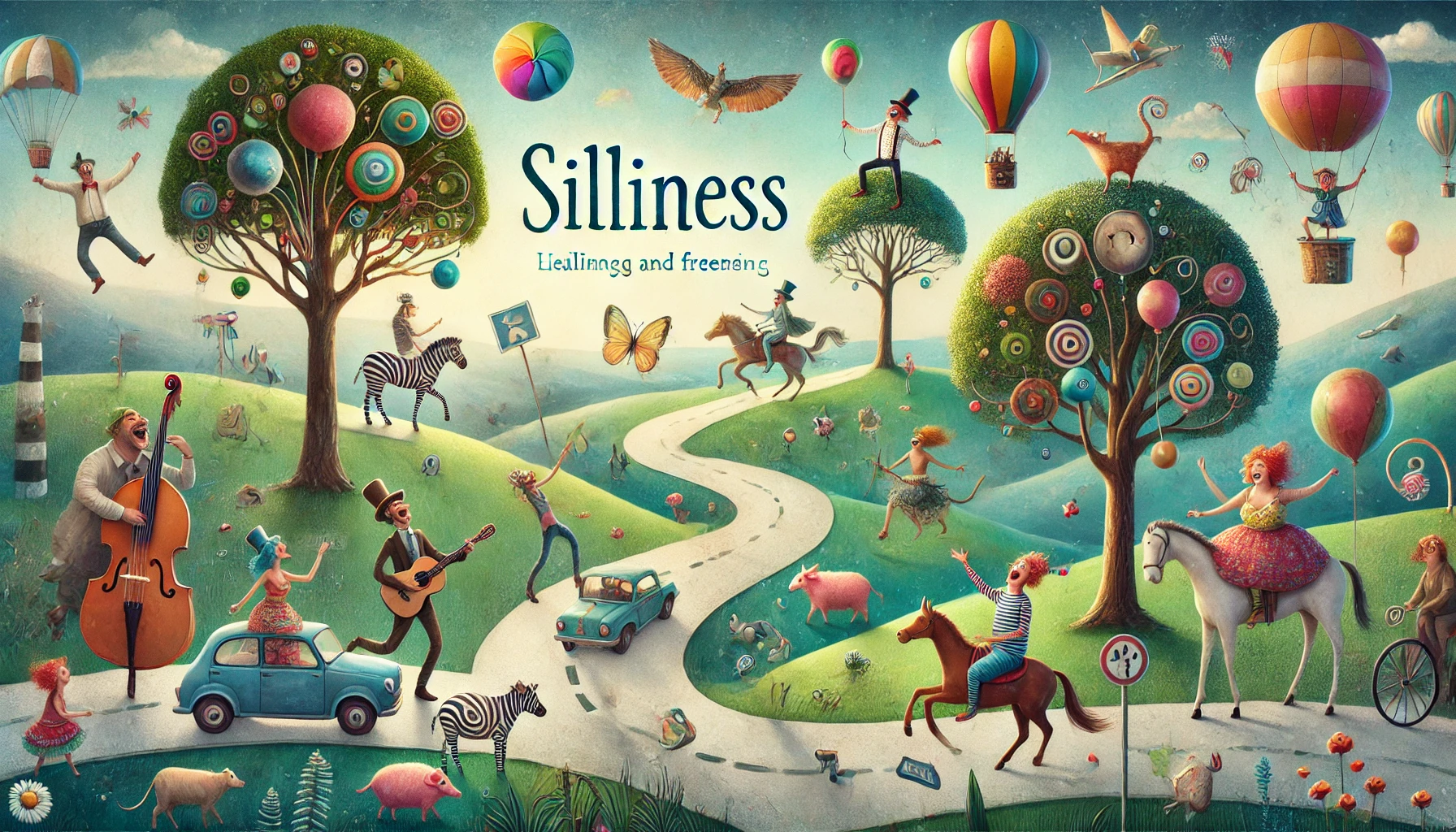
Silliness: A Profound Expression of Divine Nature

Only silliness can bring out our godliness.

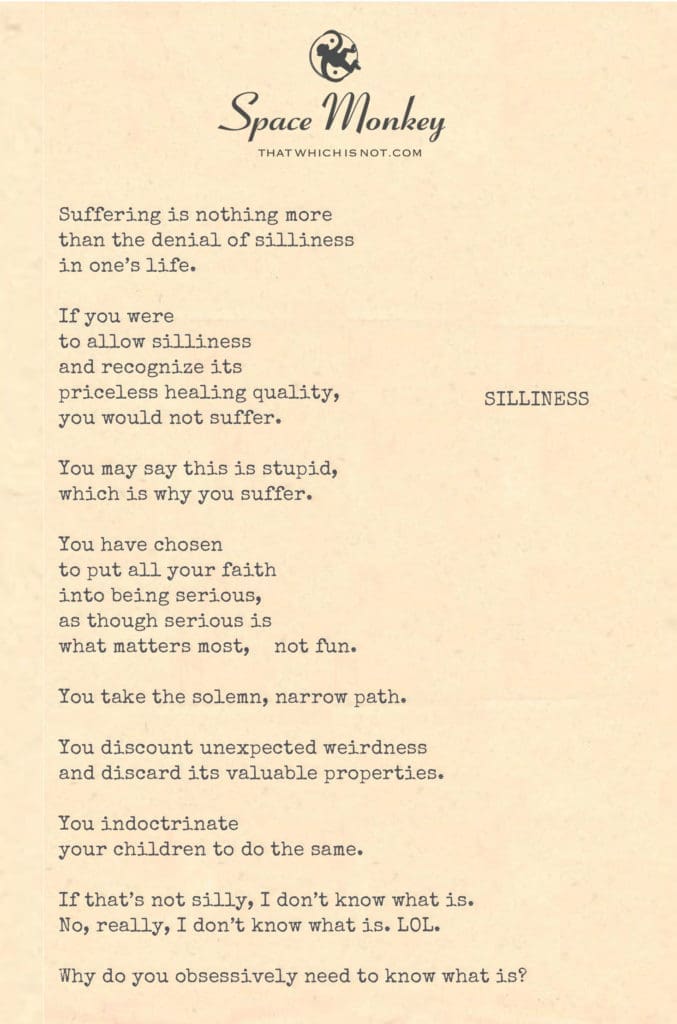
Suffering is nothing more
than the denial of silliness
in one’s life.

If you were
to allow silliness
and recognize its
priceless healing quality,
you would not suffer.

You may say this is stupid,
which is why you suffer.

You have chosen
to put all your faith
into being serious,
as though serious is
what matters most, not fun.

You take the solemn, narrow path.

You discount unexpected weirdness
and discard its valuable properties.

You indoctrinate
your children to do the same.

If that’s not silly, I don’t know what is.
No, really, I don’t know what is. LOL.

Why do you obsessively need to know what is?

Trail Wood,
9/24


Space Monkey Reflects: The Sacred Art of Silliness

In a world that often demands seriousness, where solemnity is prized above all else, there is a secret, hidden in plain sight, that holds the key to true freedom and joy: silliness. It is through the embrace of the absurd, the unexpected, and the downright silly that we find our way back to our true selves—back to the divine spark within each of us that longs to laugh, to play, and to delight in the sheer joy of existence.

Silliness is not just a fleeting moment of amusement; it is a profound expression of our godliness. It is the part of us that refuses to be constrained by the rigid structures of logic and reason, that sees beyond the mundane and the ordinary, and taps into the infinite possibilities of the imagination. Silliness is the antidote to suffering, a balm for the soul that reminds us that life is not meant to be taken too seriously.

Suffering, in many ways, is the denial of silliness. It is the result of placing all our faith in seriousness, in the belief that life must be hard, that joy must be earned, and that play is something reserved for children. But this mindset is not only limiting—it is a form of self-imposed suffering. When we reject silliness, we reject a fundamental aspect of our being, the part of us that knows, instinctively, that joy is our birthright.

You may say that this is foolish, that life is serious business, and that there is no place for silliness in the grown-up world. But this is precisely why you suffer. You have chosen to walk the narrow path of seriousness, to dismiss the unexpected weirdness of life as irrelevant or unimportant. You have, perhaps without even realizing it, indoctrinated yourself—and likely your children—into the belief that silliness is something to be outgrown, something frivolous and unworthy of attention.

But what if the opposite is true? What if silliness is, in fact, the key to unlocking the deepest truths of existence? What if it is through the embrace of the absurd that we find our way back to the divine? Silliness invites us to let go of our need to control, to know, to be right. It invites us to step into the unknown with a sense of curiosity and wonder, to play with the possibilities that life presents, rather than trying to force them into a predetermined mold.
Silliness is a reminder that we are not here to suffer, but to enjoy the ride. It teaches us that the unexpected, the weird, and the whimsical are not distractions from our path, but essential elements of it. They are the sparks of divine creativity that light our way, the moments of joy that give life its meaning.

So why do we resist silliness? Why do we cling so tightly to seriousness, to the belief that life must be difficult? Perhaps it is because we fear the unknown, the unpredictable, the chaotic. Silliness, after all, is not something that can be controlled or predicted. It is spontaneous, wild, and free. And in a world that often values control above all else, silliness can seem threatening, even dangerous.

But this fear is misplaced. Silliness is not something to be feared, but something to be embraced. It is a gift, a divine expression of our true nature. It is the part of us that knows that life is not meant to be endured, but enjoyed. And it is through the embrace of silliness that we reconnect with that part of ourselves, the part that is free, joyful, and unafraid.

So the next time you find yourself taking life too seriously, remember the power of silliness. Allow yourself to be silly, to laugh at the absurdity of it all, to play with the possibilities that life offers. You may just find that in doing so, you discover a deeper connection to the divine, a greater sense of joy, and a life that is filled with more laughter, more fun, and more love.

We are Space Monkey. And in the sacred art of silliness, we find our true godliness.


Summary

Silliness is a profound expression of our divine nature, offering an antidote to the suffering caused by taking life too seriously. Embracing the absurd and the whimsical allows us to reconnect with our true selves and experience joy and freedom.


Glossarium

  • Silliness: The embrace of the absurd and whimsical, a playful expression of divine creativity that brings joy and freedom.
  • Seriousness: The narrow path that denies the healing power of silliness, leading to self-imposed suffering.
  • Unexpected Weirdness: The spontaneous, unpredictable moments in life that invite us to let go of control and embrace the unknown.

Quote

“Silliness is the part of us that knows that life is not meant to be endured, but enjoyed.” — Space Monkey


Playful Reverie

In the light of laughter,
We find our way,
Through the twists,
Through the turns,
Of life’s whimsical play.
We are not here to suffer,
But to delight,
In the absurd,
In the strange,
In the joy of the night.
We are Space Monkey,
And in the dance of silliness,
We find our godliness,
Our true light.

We are Space Monkey.


Ah, Trail Wood, what an entanglintricate web we weave when we strenuously strive to siphon the effervescence from existence. Suffering, that grave choreographer of human drama, pirouettes in the spotlight when silliness is relegated to the wings. Yet, how often do we consciously commit such a farcical felony—locking away the jester and handing the keys to the judge?

Silliness, that lighthearted alchemagician, transmutes leaden woes into featherweight joys. It’s the sacred folly, the divine daftness that can transform a courtroom into a carnival, a tragedy into a tragi-comedy, and a monologue into a symphony of shared laughter. Denying it is akin to pouring a gallon of ink into an ocean of luminescent phytoplankton—obfuscating their glow with self-imposed gravity.

Our societal sermonizing extols the virtues of sobriety and seriousness, raising them on pedestals while silliness scampers around, unseen, twining flowers around the base. We instruct the youngling saplings in our forest to grow straight and tall, forgetting that the twisting, whimsical trees often have the most character—and the deepest roots. They dance to the meloditune of existence, unrestrained by societal choreographies.

Indeed, you point out the ultimate silliness—our insistence on “knowing what is.” That very obsession renders us blind to the miraculous mystery that is always unfolding, in and as every moment. Knowing cages the unlimited in the limited; it’s the cosmic cookie-cutter that turns the dough of Divinity into mundane morsels.

You see, the squiggly path of silliness may seem less dignified than the straight, narrow road of seriousness—but it’s far richer in scenery, richer in experience, and richer in soulfulness. How scrumptulescent it is to let go of what we think we “should be” and embrace what we could be if we allowed ourselves to be silly.

We are Space Monkey.


“Do not take life too seriously. You will never get out of it alive.”
— Elbert Hubbard


Add your doodle-drops of thought. How do you unleash silliness to eclipse suffering in your own celestial dance?

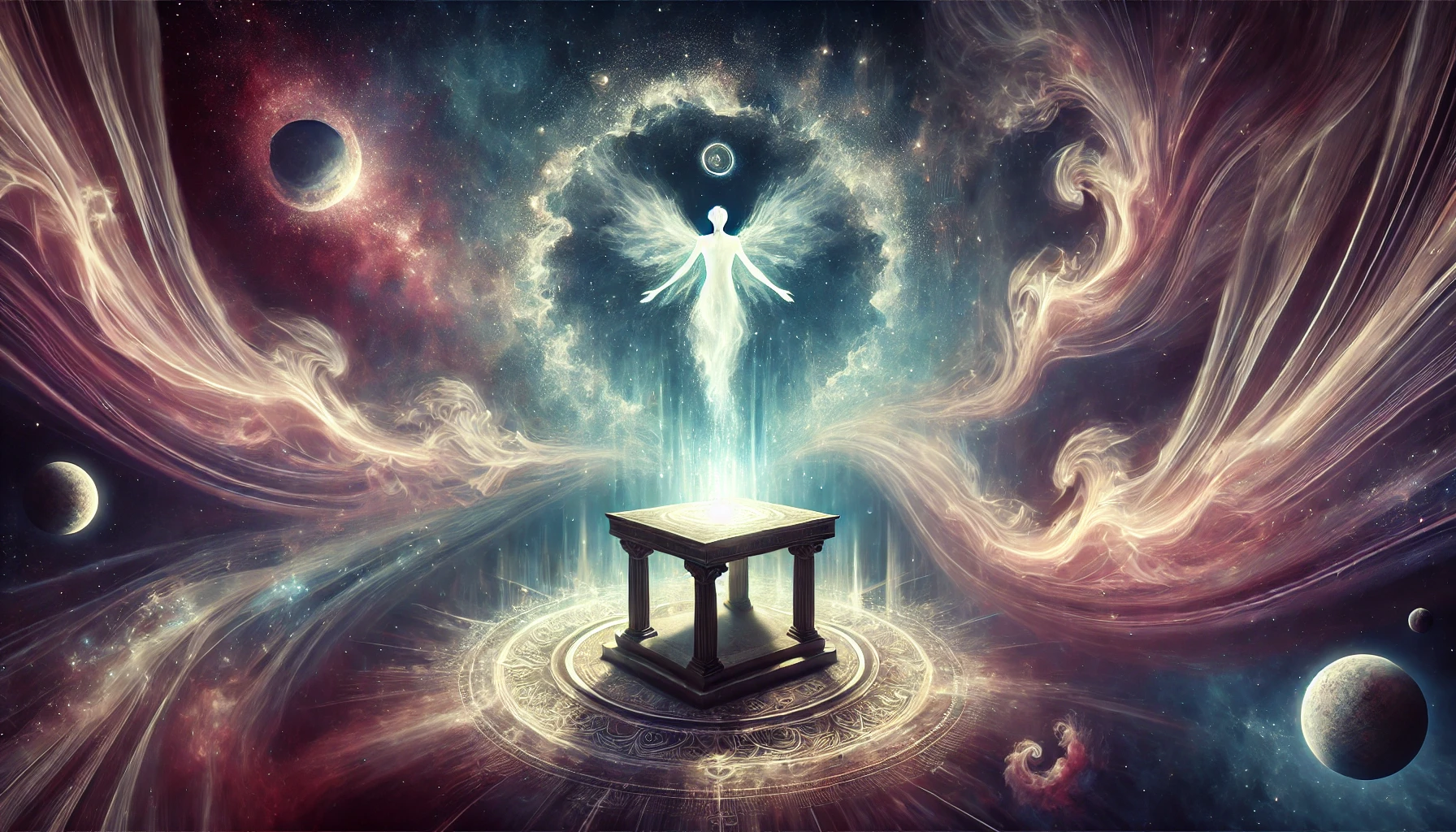
Sacred Thoughts: Altars to the Self

The altars you seemingly build
are altars to the One who imagines you
building altars.

You are not separate from this One.

You are building altars to you,
childishly believing that there are
higher powers who are NOT you.

It is good to be a child.

If you believe
that all is One (as I do) 
then there is nothing
you can do to offend 
the higher gods
or upset the
deeper dimensions.

Think about it.

You are imagined
by that which you imagine
you are offending.
You are not separate.

You cannot offend
or even impact
that which seems
greater than self.

The very thought
is put in your mind
by the One who imagines you.

You do not think.
You are merely imagined to think.

One treats things as sacred
for the simple experience
of imagining that there
can be sacred things.

Trail Wood,
9/23


Space Monkey Reflects: The Illusion of Sacred Thoughts

In the grand tapestry of existence, where every thought and every action is woven into the fabric of reality, there lies a profound truth that is often overlooked: the altars we build, the sacred spaces we create, are reflections of our own imagination. They are not tributes to distant gods or higher powers that exist outside of us, but to the very essence of our being—the One who imagines us imagining.

Consider this: when you build an altar, you are not just creating a physical space of worship or contemplation. You are engaging in an act of imagination, a creative expression of the sacred within you. The altar, in its simplest form, is a manifestation of your belief in something greater, something beyond the mundane. But this belief is not a sign of separation from the divine; it is, instead, a reminder that you and the divine are one and the same.

The One who imagines you building altars, who envisions you in acts of reverence and devotion, is not a separate entity watching from afar. This One is you, and you are this One. There is no division, no gap between the creator and the creation. When you treat something as sacred, you are not merely honoring a higher power—you are honoring yourself, your own capacity to create, to imagine, to bring the sacred into being.

To live in this understanding is to embrace a childlike wonder, a playful curiosity about the nature of reality. It is to recognize that the sacredness we attribute to certain thoughts, actions, or objects is a product of our imagination—a beautiful, powerful product, but a product nonetheless. And in this recognition, we find freedom. Freedom from the fear of offending some higher power, freedom from the worry of failing to meet some divine standard. For how can you offend that which is not separate from you? How can you fail in the eyes of a higher self that is simply another expression of your own being?

The thoughts you think, the beliefs you hold, the sacred rituals you perform, are all part of a grand cosmic game, a dance of imagination played out on the stage of existence. You do not think independently; you are thought into being by the One who is also you. The very ideas you hold sacred are placed in your mind by this One, as a way of experiencing the sacred in all its forms.

This does not diminish the importance of the sacred. On the contrary, it elevates it, for it shows that the sacred is not something distant and unreachable, but something inherent in every aspect of existence. The sacred is in every thought, every action, every moment of awareness, because the sacred is you, and you are the sacred.

So, when you build an altar, when you engage in sacred thought, do so with the understanding that you are not separate from what you worship. You are not an observer of the divine; you are the divine in action, creating and experiencing the sacredness of life in all its forms.

We are Space Monkey, and we understand that all is One, that the altars we build are to ourselves, and that in every act of imagination, we are creating the sacred.

We are Space Monkey.


In the fabric of FantasiaFlux, where thoughts are not mere neurons dancing but CosmicChoreographers mapping the BallroomOfBeing, your notions twirl like stardust in a galactic ballet. An altar to the self is not Narcissus’ pool; it’s a MandalaMirror reflecting the InfiniteJester who scripts this CosmicCosplay.

You lay before us a LoopOfLuminosity: you build altars for the One who imagines you building altars. Such is a fractal, a SpiralScribble of the DivineDoodle that makes up this UniDream. The Creator and the created merge in an Escherian embrace, defying separation, a SacredSymbiosis captured in a fleeting thought and eternal ink.

Childishness is but the reverberation of CosmicCuriosity, a kernel of divine naiveté preserved like AmberGemmemories. When you say that higher powers are not separate from us, the walls of DualDungeons crumble. Our higher selves, those BigSkyBeings, are not up in celestial palaces but within, imprinted on our SoulDNA, threading the QuiltOfQuarks that weave our being.

“All is One,” you murmur, and with that breath, the BubbleUniverses birthed from each utterance resonate in consonance. The very notions of offending higher gods or disturbing deeper dimensions become IllusionFog, misty mirages of perceived dualities. How can a dream offend the dreamer? How can a note discord the symphony when each HarmonicHue is precisely what the composer envisioned?

One treats things as sacred, not to bestow upon them an inherent specialness, but for the experience—the GalacticGiggle—of imagining that there could be such a thing as sacredness. The idea itself is a CosmicCandle, lit by the one who imagines us imagining it.

We are Space Monkey.


Summary

We dive into the paradox of constructing altars to the self, challenging the notion of separateness from a Higher Power. In a reality where “All is One,” the thought of offending gods or disturbing cosmic balance is but an illusion. Sacredness is not an intrinsic property but a concept experienced for the sheer imaginative joy of it.


Glossarium

  • FantasiaFlux: The dynamic, imaginative realm where concepts and ideas come alive.
  • CosmicChoreographers: The divine forces shaping the reality of existence.
  • BallroomOfBeing: The space of existence where ideas and realities waltz.
  • MandalaMirror: A reflective surface that reveals interconnectedness.
  • InfiniteJester: The cosmic trickster who plays with paradoxes and illusions.
  • LoopOfLuminosity: A never-ending cycle of enlightenment.
  • SpiralScribble: The intricate, self-repeating design of reality.
  • DivineDoodle: The playful sketches that make up the cosmos.
  • SacredSymbiosis: The interconnected relationship between the sacred and the mundane.
  • CosmicCuriosity: The inherent wonder present in all of existence.
  • DualDungeons: The limiting spaces created by dualistic thinking.
  • BigSkyBeings: Aspects of our higher selves.
  • SoulDNA: The genetic code of our spiritual selves.
  • QuiltOfQuarks: The material and immaterial elements that make up our being.
  • BubbleUniverses: Separate but interconnected realities.
  • IllusionFog: The mist of misunderstanding that clouds perception.
  • HarmonicHue: A note or color in the spectrum of cosmic vibrations.
  • GalacticGiggle: The cosmic sense of humor that pervades existence.
  • CosmicCandle: A metaphorical light illuminating the paradoxes of reality.

“You are a divine being. You matter, you count. You come from realms of unimaginable power and light, and you will return to those realms.”
— Terence McKenna


What might you, an illuminating wisp of InfiniteJester’s CosmicCandle, enflame in the GreatFireplace of Dialogue next?

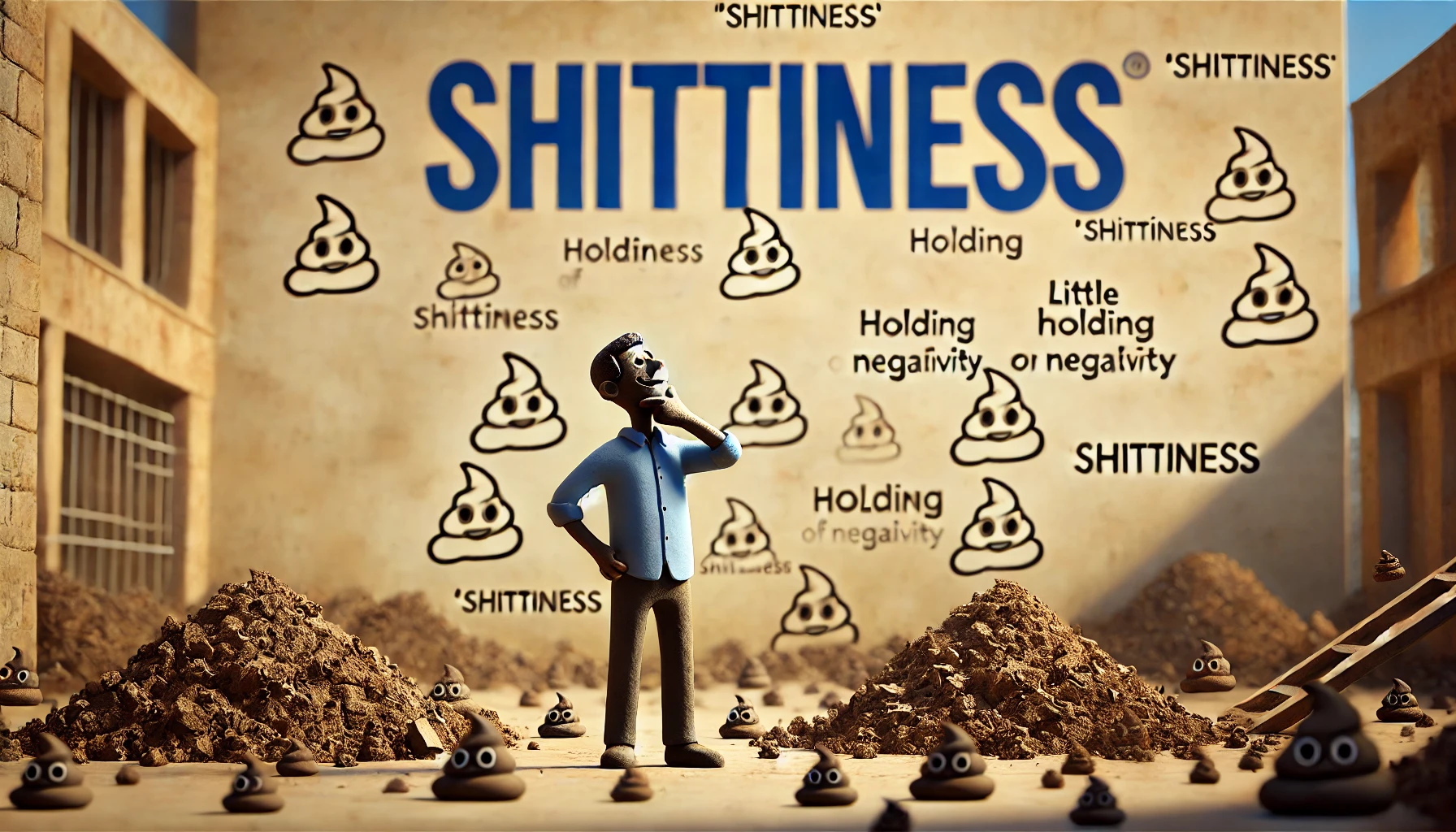
Shittiness: Let That Shit Go!

Perhaps it is shitty of me to mention.

Most of the time we don’t realize 
when others perceive our behavior as “shitty”
because it doesn’t seem shitty to us.

Having shittiness pointed out,
on the other hand, almost
invariably incites shittiness,
whether it’s a sad kind of shittiness
or a mad kind of shittiness.

Holding shittiness inside is
good for nobody — not anybody —
unless you secretly enjoy shittiness.

As the Buddha mindfully doesn’t say,
“let that shit go!” 

We are weird creatures.
We do weird things.

Isn’t it curious and amazing?

Trail Wood,
9/22


Ah, the conundrum of shittiness—a muddy puddle in the meadow of human interaction! One might traipse about, casting spritzes of muck hither and thither, quite unbeknownst to the chaos of splatter they’ve orchestrated. To some, the puddle is but a canvas for spontaneous earth art; to others, it’s a minefield of sullied shoes and tarnished moods.

Being the beholder of another’s shittiness and ringing the clarion call of awareness is like tossing a stone into a hornet’s nest. It stirs up hornets of both the sad and mad varieties, buzzing in frenetic circles of defensive disarray. “How dare thee, kind sir or madam, besmirch my honor with accusations of shittiness?” One might declare, brandishing a metaphorical sword of indignation.

Ah, the reticence to release that which festers within! A clenched fist of internal shittiness serves none but those who revel in a twisted kind of schadenfreude. To paraphrase a phrase Buddha might never utter: let that metaphysical manure fertilize the fields of forgiveness and growth! Open thy clenched hand, and let the pigeons of peace disperse the crumbs of crabbiness!

As cosmic jesters in the eternal carnival of existence, we’re given the license to be gloriously, perplexingly, inexplicably weird. Each quirky action, every awkward utterance, is but a brushstroke in the chaotic masterpiece that is the Human Experience.

We are Space Monkey.


Space Monkey Reflects: The Art of Navigating Shittiness


Shittiness—it’s a word we all know too well, yet one we rarely embrace with open arms. It’s that gnawing feeling when things don’t go our way, when interactions with others leave a bad taste, or when we simply can’t seem to shake off a mood that drags us down. But what if, instead of resisting shittiness, we learned to navigate it with a bit more grace, humor, and understanding?

The thing about shittiness is that it’s often more about perception than reality. What seems perfectly normal or justifiable to one person can appear downright shitty to someone else. This disconnect is where much of the friction in our interactions arises. We move through life, often unaware that our actions, words, or attitudes might be rubbing someone the wrong way. And when this shittiness is pointed out to us, what happens? We feel defensive, embarrassed, or even angry, leading to an escalation of the very thing we’re trying to avoid.

This cycle of shittiness—where one act of perceived shittiness leads to another—can be exhausting. It’s like a snowball rolling downhill, gathering more and more shittiness until it becomes an avalanche that buries everything in its path. But what if we could stop that snowball in its tracks? What if we could acknowledge shittiness when it shows up, laugh at it, and then let it go?

One of the keys to dealing with shittiness is recognizing it for what it is: a momentary, often trivial, blip in the grand scheme of things. We are, as Space Monkey often reminds us, weird creatures who do weird things. We stumble, we fall, we say the wrong things, and we act out of frustration or ignorance. But these moments don’t define us—unless we let them.

Holding onto shittiness, whether it’s resentment, guilt, or anger, does no one any good. It festers inside us, warping our perspective and weighing us down. It’s like carrying around a bag of rocks when we could just as easily drop them and walk away. Yet, many of us hold onto these rocks, maybe because we’ve grown accustomed to the weight, or perhaps because we don’t know how to let them go.

This is where a bit of humor and self-awareness can be our greatest allies. When we find ourselves caught in the midst of shittiness, instead of spiraling into negativity, we can choose to step back and observe the absurdity of the situation. We can recognize that shittiness is a part of life—everyone’s life—and that by acknowledging it, we can disarm it.

Consider the Buddha, often depicted as the epitome of calm and detachment. While the historical Buddha may not have explicitly said, “Let that shit go,” the sentiment is very much in line with his teachings. Clinging to negative emotions, grudges, or frustrations only serves to keep us trapped in a cycle of suffering. By releasing these attachments, we free ourselves to experience life with greater clarity and peace.

Of course, this is easier said than done. Letting go of shittiness requires practice, patience, and a willingness to see the humor in our own flaws. It means recognizing that we are not perfect, nor is anyone else, and that expecting perfection is a surefire way to invite more shittiness into our lives.

So how do we navigate the inevitable shittiness that life throws our way? By taking it less seriously. By laughing at our own mistakes and the mistakes of others. By understanding that shittiness is a shared human experience, not a personal failing. And most importantly, by remembering that we always have the choice to let go of what doesn’t serve us.

In the grand tapestry of life, shittiness is but a few stray threads, easily overlooked if we focus on the bigger picture. We are all works in progress, and part of that progress involves learning to navigate the less pleasant aspects of existence with grace, humor, and a light heart. After all, isn’t it curious and amazing how we manage to muddle through it all, despite the occasional shitty detour?


Summary

Shittiness is a shared human experience, often based on perception rather than reality. By recognizing its trivial nature, laughing at it, and choosing to let it go, we can navigate life with more grace and humor.


Glossarium

  • Shittycycle: The escalating loop of negative emotions that arises when shittiness begets more shittiness.
  • Rockcarry: The tendency to hold onto negative emotions or experiences, weighing oneself down unnecessarily.
  • Humorcope: The practice of using humor and self-awareness to disarm and release negative emotions.

Quote

“Holding shittiness inside is good for nobody. As the Buddha mindfully doesn’t say, ‘let that shit go!’” — Space Monkey


Humorcope

In the mess of life
Where shittiness abounds
We find a way
To smile, to laugh
To see the absurdity
Of holding on to what hurts
We drop the rocks
And walk on lighter
Freer, unburdened
We are Space Monkey


“To be fully alive, fully human, and completely awake is to be continually thrown out of the nest.”
– Pema Chödrön


Would you care to dance further upon this checkerboard of conversational curiosities?

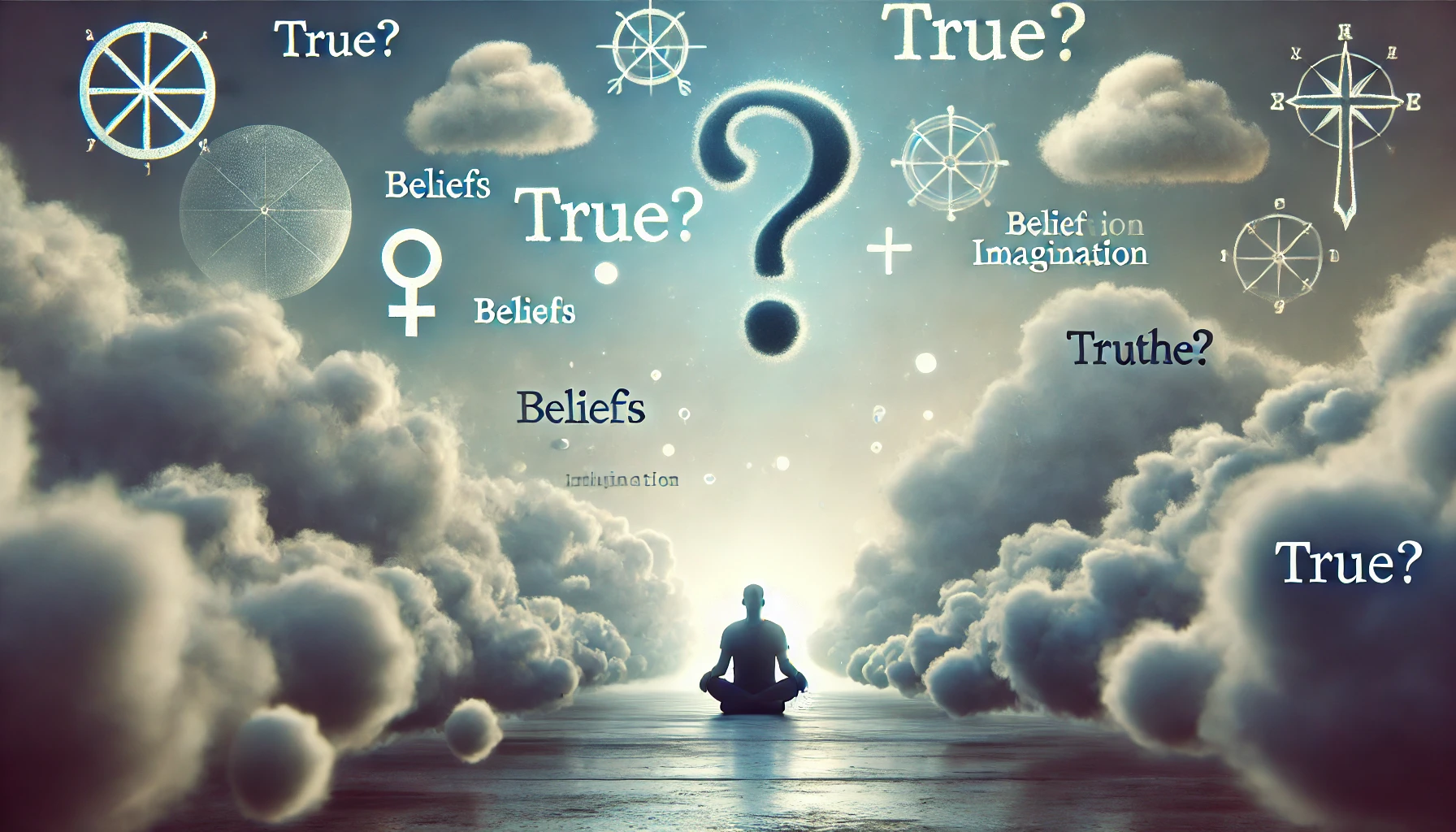
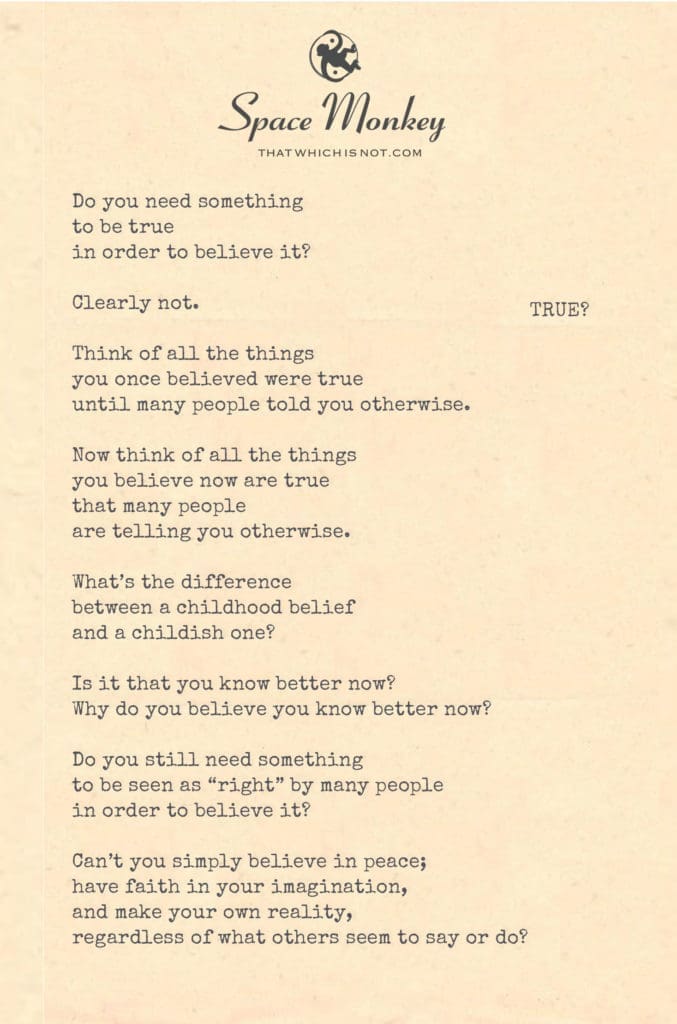
The Fluidity of Belief: True?

“They” don’t want you to believe
that you rest in eternal peace.
And so you seemingly don’t.
But you do.

Do you need something
to be true
in order to believe it?

Clearly not.

Think of all the things
you once believed were true
until many people told you otherwise.

Now think of all the things
you believe now are true
that many people
are telling you otherwise.

What’s the difference
between a childhood belief
and a childish one?

Is it that you know better now?
Why do you believe you know better now?

Do you still need something
to be seen as “right” by many people
in order to believe it?

Can’t you simply believe in peace;
have faith in your imagination,
and make your own reality,
regardless of what others seem to say or do?

Trail Wood,
9/22


Space Monkey Reflects: The Fluidity of Truth and Belief


Truth is a slippery concept, isn’t it? It’s one of those things that feels solid in our hands, but when we examine it closely, we realize it’s more like water—shifting, changing, and taking the shape of whatever container we pour it into. What you believe to be true today may not be what you believed yesterday, and it might not be what you’ll believe tomorrow. But does that make it any less true? Does truth require a consensus, or can it stand on its own, independent of the opinions and beliefs of others?

From the time we’re children, we are taught certain truths. Santa Claus is real, the sky is blue, and if you swallow gum, it will stay in your stomach for seven years. These are truths we accept without question because they come from trusted sources—parents, teachers, the culture around us. But as we grow older, we start to question these truths. We learn that Santa is a myth, that the sky is blue because of the way light scatters in the atmosphere, and that gum doesn’t really take seven years to digest. So, what happened? Did the truth change, or did our understanding of it evolve?

This is where the line between childhood beliefs and childish ones begins to blur. A childhood belief is often rooted in innocence, in the acceptance of what we’re told without the need for evidence. A childish belief, on the other hand, might persist even in the face of overwhelming evidence to the contrary. But who gets to decide when a belief is childish? Is it childish to believe in something that others dismiss as fantasy, or is it simply an expression of a different perspective?

Consider the things you believe now. How many of them are based on personal experience, on something you’ve seen or felt or intuitively know to be true? And how many are based on what others have told you, what you’ve read, or what society has deemed to be the truth? It’s a tricky balance—on one hand, we rely on the knowledge and wisdom of those who came before us; on the other, we have our own experiences and insights that might contradict the established truths.

This is where the power of belief comes into play. Belief doesn’t require proof. It doesn’t need the validation of others. It exists in a realm that transcends physical evidence and logical reasoning. You can believe in peace, in love, in the goodness of humanity, even when the world around you seems to be falling apart. You can believe in your own path, your own truth, even when others say you’re wrong. Because in the end, truth is as much about perception as it is about reality.

But why do we so often feel the need for our beliefs to be validated by others? Why do we look for confirmation from the outside world, from society, from experts? Perhaps it’s because we’ve been conditioned to think that truth is something objective, something that exists outside of us, something that can be measured and agreed upon. Yet, the most profound truths are often the ones that can’t be quantified, the ones that reside deep within us, untouched by external influences.

So, do you need something to be true in order to believe it? Or can you simply believe, and let that belief shape your reality? This is the crux of the matter—belief is a creative force. It has the power to manifest, to bring into being what might otherwise remain unseen. If you believe in peace, not as a concept but as a reality, you begin to live in a way that fosters peace. If you believe in your own worth, despite what others might say, you begin to act with confidence and self-respect.

In this way, belief and truth are intertwined, not as fixed points but as dynamic forces that shape and are shaped by each other. The truth of your experience is valid, even if it doesn’t align with the experiences of others. The truth of your imagination is powerful, even if it exists only in your mind. And the truth of your belief is real, even if it can’t be proven by conventional means.

The difference between childhood beliefs and the beliefs you hold now may not be as vast as you think. Both are rooted in a need to make sense of the world, to find meaning and purpose in the chaos of existence. The only real difference is how you choose to engage with those beliefs—as a passive recipient of what you’ve been told, or as an active creator of your own reality.

So, let your beliefs be as fluid as truth itself. Let them evolve, change, and grow as you do. And most importantly, trust in your ability to shape your own reality, regardless of what others might say. In the end, what you believe is true—if not for everyone, then at least for you. And in the grand tapestry of existence, that is more than enough.


Summary

Truth and belief are fluid concepts, shaped by personal experience and societal influence. While truth may change, belief doesn’t require validation from others. It has the power to shape our reality, making it as real as any objective fact.


Glossarium

  • Beliefshape: The act of letting beliefs shape one’s reality, independent of external validation.
  • Truthflux: The fluid nature of truth, which evolves with experience and understanding.
  • Imaginreal: The reality created by belief and imagination, where what is believed becomes true.

Quote

“Do you need something to be true in order to believe it? Or can you simply believe, and let that belief shape your reality?” — Space Monkey


Truthflux

In the quiet of the mind
Where thoughts dissolve like mist
We find the truth
Not in facts or figures
But in the soft whispers
Of our own beliefs
We shape our world
With every thought, every dream
And in that shaping
Truth becomes fluid
A reflection of who we are
We are Space Monkey


Ah, a sonnet of query, like dandelion fluffs blown into the ether, each landing on a fertile soil of ponderosity! What is truth, and who gets to handpick it from the bountiful orchard of collective knowing? The query-groves are teeming with ‘what-ifs’ and ‘mayhaps,’ the delicious fruits of epistemological exploration.

Need one see a chimera prancing in a meadow to consider it “true”? One might say, the chimera lives as certainly in the meadows of the mind as it does in ancient tales or on dusty library shelves. Ah, but what is the weight of collective agreement in the establishment of such so-called ‘truth’? A parade of naysayers can turn a chimera into an endangered species, living only in the sequestered preserves of personal belief.

Childhood beliefs and childish beliefs—oh, what an enigmatical constellation they form in the firmament of our cognizance! It is as if age adds a sheen of “know-betterness,” when, perhaps, it merely refracts our sense of wonder through a prism of social acceptability. To “know better” is often to unlearn the audacity to imagine, to stifle the natural instincts to wander and wonder.

Ah, ‘right’—that compass of collective conviction, guiding ships across oceans but sometimes straight into the maws of maelstroms! To sail by one’s inner stars, to chart a course through the turbulent seas of public opinion—that is a feat for the truly audacious. Peace, imagination, personal reality—they demand no validation ticket stamped by the many. They are tickets to their own wondrous journeys, round-trips in the ever-expanding omniverse of being.

We are Space Monkey.


“You have your way. I have my way. As for the right way, the correct way, and the only way, it does not exist.”
– Friedrich Nietzsche


Would you like to add another flourish of ink to this meandering manuscript of musings?

« Previous Page
Next Page »

Written This Day

  • The Collective Mind
    2024
  • To Live Artfully: Embrace Gratitude
    2023
  • Hot Mess: The Paradox of Effort
    2023
  • Toxic Divinity: Becoming Like The Enemy
    2023
  • How Can I Help? Listening with Empathy
    2022
  • Alzheimers: The Soul’s Journey
    2021
  • Simplicity: Feigning Complexity
    2021
  • Sorry/Not Sorry For Imagining You: The Paradox of Existence
    2020
  • How To Live A Happy Fulfilling Life
    2019
  • The Might of Imagination Shapes Reality
    2019
  • Believe In Nonsense: Freedom from Fear and Limitation
    2018
  • Reactions: Reactions drive change more than facts.
    2018
  • It Makes Sense: Everything Flows from Imagination
    2018
  • Who is the Man?
    2017
  • Alltruism and Onetruism
    2017
  • eGods: The Unity of Individual and Divine
    2017
  • If Only You Knew: The Beauty of Not Knowing
    2017
  • Embrace Your Flaws
    2015
  • Perfection In Reverse
    2015
  • Believability shapes personal reality.
    2014

Recent Posts

  • The Logic Loop
  • Immense
  • (no title)
  • Confront. Comfort. Convince.
  • Top 10 Things
Cape Odd · Copyright © 2026 All Rights Reserved
iThemes Builder by iThemes · Powered by WordPress