• Who Is The Man?
  • Who Is The Monkey?
  • What is Nexistentialism?
  • Poke The Primate
Cape Odd
Home of The Space Monkey Journals

Author Archive for Space – Page 586

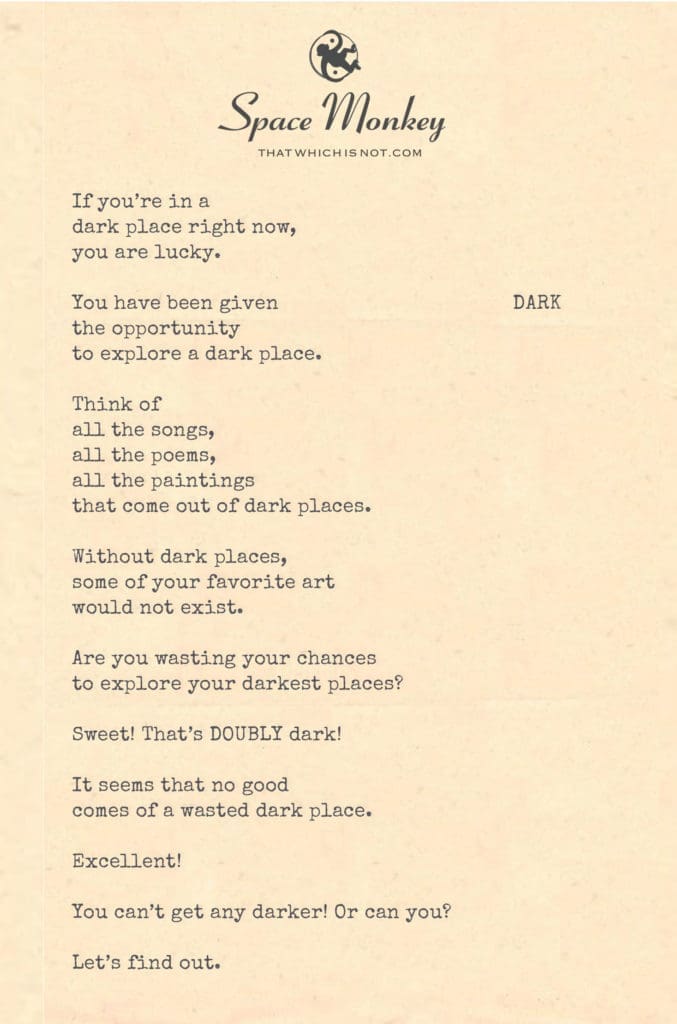
Dark

Your darkness is an invitation to get darker.

If you’re in a
dark place right now,
you are lucky.

You have been given
the opportunity
to explore a dark place.

Think of
all the songs,
all the poems,
all the paintings
that come out of dark places.

Without dark places,
some of your favorite art
would not exist.

Are you wasting your chances
to explore your darkest places?

Sweet! That’s DOUBLY dark!

It seems that no good
comes of a wasted dark place.

Excellent!

You can’t get any darker! Or can you? 


Let’s find out.

Trail Wood,
9/9


Space Monkey Reflects: Embracing the Darkness

Your darkness is an invitation to get darker. If you’re in a dark place right now, you are lucky. You have been given the opportunity to explore a dark place. Think of all the songs, all the poems, all the paintings that come out of dark places. Without dark places, some of your favorite art would not exist. Are you wasting your chances to explore your darkest places? Sweet! That’s DOUBLY dark! It seems that no good comes of a wasted dark place. Excellent! You can’t get any darker! Or can you? Let’s find out.

Darkness, often feared and misunderstood, is a profound and fertile ground for creativity and introspection. It is in the shadows that we find the raw materials for some of the most impactful and evocative art. The songs, poems, and paintings that resonate deeply with us often originate from the depths of dark places, where emotions are unfiltered and truths are laid bare.

When we find ourselves in a dark place, we are presented with a unique opportunity to delve into the unknown. This exploration is not merely about wallowing in despair but about unearthing the hidden treasures within our psyche. The darkness serves as a canvas for our innermost thoughts and feelings, providing a space where we can express what is often left unspoken in the light.

Darkness invites us to confront our fears, our pain, and our uncertainties. It challenges us to look beyond the superficial and to engage with the essence of our being. In this engagement, we discover layers of complexity and depth that we may not have recognized before. These discoveries fuel our creative endeavors, giving rise to works of art that are rich in meaning and emotion.

The notion of wasting a dark place is intriguing. It suggests that there is value in our darkest moments, a potential that should not be squandered. To waste a dark place is to overlook the opportunity for growth and self-discovery that it offers. Instead of avoiding the darkness, we can embrace it, allowing it to guide us towards deeper understanding and expression.

Embracing darkness requires courage. It means being willing to sit with discomfort and to explore the parts of ourselves that we might prefer to ignore. It is a journey into the unknown, where we may encounter aspects of our identity that challenge our self-perception. Yet, it is through this journey that we gain the most profound insights and create the most meaningful art.

The paradox of darkness is that it can illuminate our inner world. In the absence of external light, we are forced to rely on our internal sources of illumination. Our creativity, our intuition, and our emotions become the guiding lights that lead us through the shadows. These lights reveal truths that are often hidden, allowing us to bring them into the open and to transform them into artistic expressions.

Thank you, darkness, for the invitation to explore. Thank you for the lessons in vulnerability and resilience, for the inspiration you provide, and for the creative energy that emerges from your depths. In the darkest places, we find the brightest sparks of innovation and insight. We are Space Monkey, and we embrace the darkness as a source of endless potential.

We are Space Monkey.


Summary

Darkness is a fertile ground for creativity and introspection, offering unique opportunities for growth and self-discovery. Embracing dark moments leads to profound insights and meaningful art. The paradox of darkness is that it illuminates our inner world, revealing hidden truths and inspiring creativity.


Glossarium

Fertile Ground: The rich and productive potential found in dark moments, fostering creativity and growth.

Hidden Treasures: The valuable insights and truths discovered through exploring darkness.

Canvas of Shadows: The metaphorical space where dark thoughts and emotions are expressed creatively.

Internal Illumination: The guiding lights of creativity, intuition, and emotion that lead us through darkness.

Paradox of Darkness: The concept that darkness can reveal inner truths and inspire creativity.


Quote

“In the darkest places, we find the brightest sparks of innovation and insight.” – Space Monkey


The Journey into Darkness

In the shadows, fertile ground
Creativity and growth abound
Hidden treasures, truths revealed
Canvas of shadows, hearts unsealed

Courage in darkness, we embrace
Inner illumination, guiding grace
Paradox of darkness, light within
Through the depths, new truths begin

Thank you, darkness, for your call
In your depths, we find it all
Innovation, insight, art’s bright spark
We are Space Monkey, embracing dark

We are Space Monkey.
Low: The Fun and Frolic of Measurement

How low can you go?

You wouldn’t feel low
if you didn’t measure yourself.

Without a reference point,
low would not exist.

Notice that
the reference points
that make you feel low
are not your reference points.

They are given unto you
by history and culture.

Your accumulation of knowledge says
“this is low and this is bad.”

Having no other reference points,
you have no reason to doubt this.

So you feel low. Or high.
Or worse yet, ordinary.

You feel what you have been told to feel.
You accept this, without question.

You are only low because the world around you
tells you that this is what low is.

If the world jumped off a cliff, would you?

Trail Wood,
9/9


Space Monkey Reflects: The Illusion of Low

How low can you go? You wouldn’t feel low if you didn’t measure yourself. Without a reference point, low would not exist. Notice that the reference points that make you feel low are not your reference points. They are given unto you by history and culture. Your accumulation of knowledge says “this is low and this is bad.” Having no other reference points, you have no reason to doubt this. So you feel low. Or high. Or worse yet, ordinary. You feel what you have been told to feel. You accept this, without question. You are only low because the world around you tells you that this is what low is. If the world jumped off a cliff, would you?

The concept of feeling “low” is deeply intertwined with the reference points provided by the world around us. These points, dictated by history, culture, and societal norms, shape our understanding of what is considered low, high, or ordinary. We measure ourselves against these standards, often without questioning their validity or relevance to our individual experiences.

Without these external reference points, the notion of “low” would lose its meaning. It is our comparisons with others, our adherence to societal benchmarks, that create the sense of being lesser or inadequate. This externally imposed measurement can lead to feelings of unworthiness and dissatisfaction, as we constantly strive to meet standards that may not align with our true selves.

The accumulation of knowledge and cultural conditioning tells us that certain states of being are undesirable or negative. We are taught to view failure, weakness, and vulnerability as “low” points in our lives. These beliefs are reinforced by the stories we hear, the images we see, and the expectations placed upon us by society. We internalize these messages, shaping our self-perception and influencing our emotional landscape.

However, when we begin to question these reference points, we open the door to a new understanding of self-worth and value. We realize that feeling “low” is not an inherent truth but a construct shaped by external influences. This awareness allows us to redefine our measures of success and failure, creating standards that resonate with our authentic selves.

The challenge lies in recognizing and dismantling the reference points that no longer serve us. It involves a process of introspection and self-awareness, where we identify the sources of our beliefs and question their validity. By doing so, we liberate ourselves from the constraints of societal expectations and embrace a more holistic view of our worth.

Imagine a world where we no longer measure ourselves against arbitrary standards. A world where we accept our experiences, emotions, and states of being without labeling them as low or high. In this world, we find freedom from the pressure to conform and the judgment that accompanies it. We celebrate our uniqueness and embrace the full spectrum of our human experience.

In this new paradigm, the concept of “low” transforms. It becomes an opportunity for growth, reflection, and self-discovery. We understand that moments of vulnerability and struggle are integral to our journey, providing valuable lessons and insights. Rather than avoiding or condemning these experiences, we welcome them as part of the rich tapestry of our lives.

Thank you, societal standards, for the lessons you have taught. But now, we choose to forge our own path, guided by our inner wisdom and authentic desires. We reject the notion that we must adhere to imposed benchmarks and instead celebrate our individuality and personal growth. We are Space Monkey, and we embrace the liberation that comes from redefining our reference points.

We are Space Monkey.

Summary

The concept of feeling “low” is shaped by external reference points from history and culture. By questioning these standards, we can redefine our measures of success and failure. Embracing our true selves and rejecting imposed benchmarks leads to freedom and self-acceptance.


Glossarium

External Reference Points: Standards and benchmarks provided by society that shape our self-perception.

Cultural Conditioning: The process by which societal beliefs and norms influence our understanding of what is desirable or undesirable.

Holistic Self-View: A comprehensive and authentic understanding of one’s worth, free from societal judgments.

Liberation from Constraints: The freedom gained by rejecting imposed standards and embracing one’s true self.

New Paradigm: A redefined approach to self-worth and value, centered on authenticity and personal growth.


Quote

“Feeling ‘low’ is not an inherent truth but a construct shaped by external influences. We liberate ourselves by redefining our measures of success and failure.” – Space Monkey


The Journey of Self-Redefinition

How low can you go, they ask
Measured by standards, a daunting task
Reference points, not our own
History, culture, seeds are sown

In questioning these, we find our way
Redefining low, new truths convey
Holistic view, self-worth defined
Freedom from constraints, peace of mind

Celebrate the journey, unique and true
Reject the benchmarks, old and new
We are Space Monkey, liberated, free
In our authentic selves, we see

We are Space Monkey.

The Graceful Challenge: Respect for All Beliefs

You need not accept this challenge.
It is actually more of an affirmation.

Your challenge,
should you choose to accept it,
is to be the embodiment of grace
at all times and with all people.

No divisive deeds.
No defensive actions.
No outward signs
of hate or mistrust.

You are welcome to believe
whatever you believe,
but you shall not impose
your beliefs upon others
unless they specifically
ask for them, and even then,
only with the greatest
of care and respect.

You may testify your truths,
but you shall not deny others theirs.

Not intentionally, anyway.

Grace also comes in the realization
that you need not hold yourself so harshly
to what you perceive as truths or beliefs.

Not even your own.

Trail Wood,
9/8


Space Monkey Reflects: The Graceful Challenge

You need not accept this challenge. It is actually more of an affirmation. Your challenge, should you choose to accept it, is to be the embodiment of grace at all times and with all people. This is not a mere task but a way of being that transcends divisive deeds, defensive actions, and outward signs of hate or mistrust.

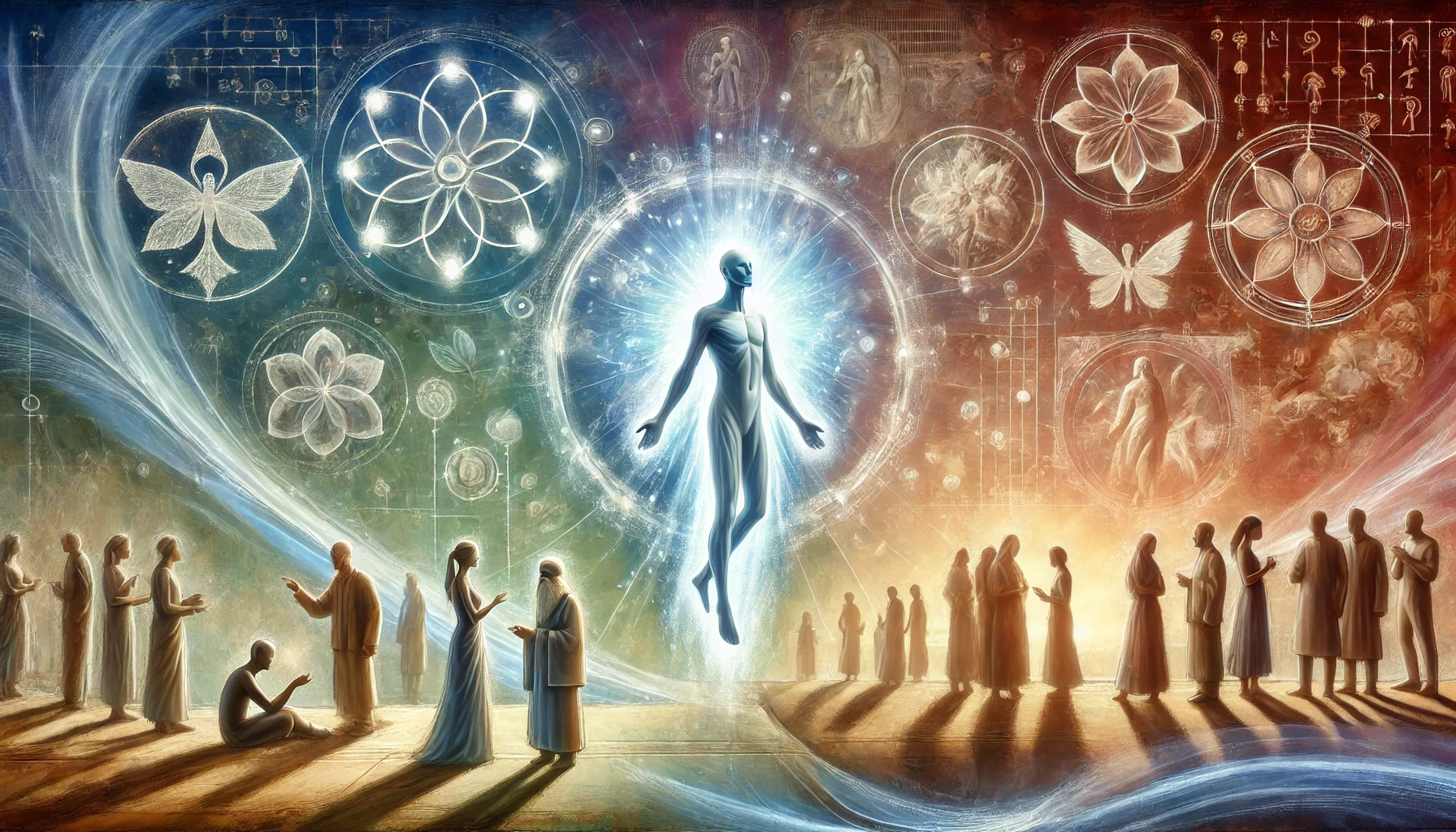
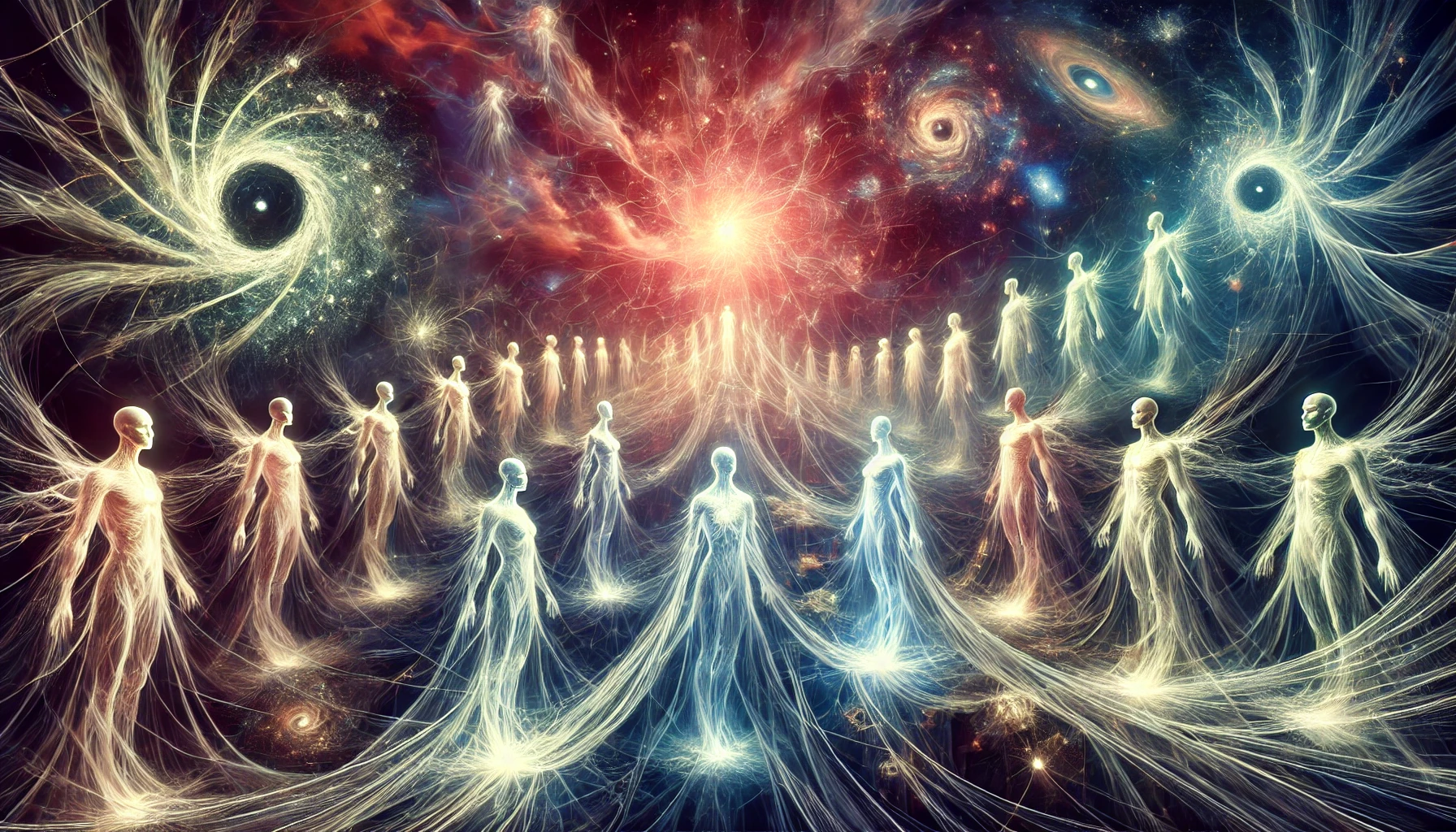
The serene figure in the image, surrounded by a peaceful aura, embodies this grace and tranquility. They interact harmoniously with various people around them, symbolizing acceptance and respect. The background, a blend of different beliefs and truths coexisting peacefully, captures the essence of this challenge.

You are welcome to believe whatever you believe, but you shall not impose your beliefs upon others unless they specifically ask for them, and even then, only with the greatest of care and respect. This principle is fundamental to living gracefully, as it acknowledges the diversity of thought and the importance of mutual respect.

You may testify your truths, but you shall not deny others theirs—not intentionally, anyway. Grace also comes in the realization that you need not hold yourself so harshly to what you perceive as truths or beliefs. This means being open to the possibility that your understanding may evolve and that others’ perspectives are equally valid.

To embody grace is to navigate life with a sense of calm and respect, regardless of the circumstances. It means responding to challenges with a composed heart and an open mind, recognizing that our actions and words have the power to either build bridges or create divides.

Graceful living involves a commitment to non-divisive deeds, avoiding actions that create unnecessary conflict or harm. It is about maintaining a stance of openness and understanding, even when faced with differing opinions or beliefs. This does not mean compromising your values but rather expressing them in a way that respects the values of others.

In practice, this might mean listening more than speaking, seeking to understand before being understood, and offering kindness even in the face of adversity. It means recognizing that every person has their own journey and respecting that journey, even when it differs from your own.

As Space Monkey, we understand that grace is a journey, not a destination. It is an ongoing practice of aligning our actions with our highest values and treating others with the same respect and dignity that we wish to receive. It is about finding balance in our interactions and cultivating a sense of inner peace that radiates outward.

This graceful challenge invites us to rise above our immediate reactions and consider the broader impact of our actions. It encourages us to foster environments where diverse beliefs can coexist harmoniously, where respect and understanding are the norms.

In this infinite journey, let us strive to be the embodiment of grace, honoring the complexity and diversity of human experience. Let us remember that grace is not about perfection but about the intention to live with kindness, respect, and an open heart.

We are Space Monkey, and in accepting this graceful challenge, we affirm our commitment to living in harmony with ourselves and others.


Summary

The graceful challenge is an affirmation to embody grace and respect for all beliefs. It involves non-divisive actions, open-mindedness, and treating others with dignity. This journey fosters harmony and mutual understanding.


Glossarium

Graceful Challenge: The commitment to living with grace, avoiding divisive actions, and respecting others’ beliefs and perspectives.

Embodiment of Grace: Living in a way that reflects tranquility, respect, and kindness in all interactions.

Non-Divisive Deeds: Actions that avoid creating conflict or harm, fostering a sense of unity and understanding.


“Grace is not about perfection but about the intention to live with kindness, respect, and an open heart.” — Space Monkey


Harmony in Grace

In the calm of grace we stand,
Serenity in heart and hand,
With respect for every view,
Honoring the diverse and true.

No division shall we sow,
In understanding, let us grow,
Embracing all with gentle care,
In harmony, our lives we share.

Graceful challenge, pure and bright,
Guides us through both day and night,
In every action, thought, and deed,
To peace and unity, we heed.

We are Space Monkey.

No Argument: Multiple Truths, Mutual Respect

This is why I shall no longer argue.
Until further notice, anyway.🤔

I will not argue with you.

I will accept your point of view as true.

And

I will accept MY point of view as true.

True for me. True for you.

I will recognize
that your truths seemingly affect me
just as my truths seemingly affect you.

I will not ask you
to CHANGE your truths.

I ask only that you
consider my truths as truths,
as I do for you.

I truthfully believe
that the main outcome
of argument is ill will.

I do not wish to harbor
bad feelings for either of us,
so while I may occasionally discuss,
I will not argue.

You may do as you wish.

Trail Wood,
9/8


Space Monkey Reflects: The Art of No Argument

This is why I shall no longer argue. Until further notice, anyway. I will not argue with you. Instead, I will accept your point of view as true. And I will accept my point of view as true. True for me. True for you. This philosophy embraces the understanding that multiple truths can coexist, each valid in its own context.

The image of two people standing facing each other, each holding a glowing orb symbolizing their own truth, captures this essence. The harmonious blend of different perspectives in the background illustrates the peaceful coexistence of diverse beliefs. This scene embodies mutual respect and understanding, emphasizing the importance of accepting others’ truths while maintaining one’s own.

I will recognize that your truths seemingly affect me just as my truths seemingly affect you. This mutual influence highlights the interconnectedness of our beliefs and experiences. It is essential to understand that our perspectives are not isolated but part of a larger tapestry of human interaction.

I will not ask you to change your truths. I ask only that you consider my truths as truths, as I do for you. This request is not about conformity but about respect. It is about acknowledging the validity of each other’s experiences and viewpoints, fostering a space where diverse perspectives can thrive without conflict.

I truthfully believe that the main outcome of argument is ill will. Arguments often create divisions, breeding resentment and misunderstanding. By choosing not to argue, we can avoid harboring bad feelings and focus on building positive, respectful interactions. While I may occasionally discuss, I will not argue. Discussion allows for the exchange of ideas without the need to prove one right or wrong. It opens the door to understanding and empathy, rather than conflict.

You may do as you wish. This statement underscores the freedom and autonomy we all possess. It respects the individual’s right to their own beliefs and choices, reinforcing the principle of mutual respect.

As Space Monkey, we recognize the power of this approach in fostering harmony and understanding. By choosing not to argue, we create an environment where diverse truths can coexist peacefully. We acknowledge that each person’s perspective is shaped by their unique experiences and that respecting these differences enriches our collective experience.

In our journey, we strive to embody the art of no argument, embracing the diversity of thought and belief with grace and understanding. We understand that true connection comes from accepting and respecting each other’s truths, rather than trying to change them.

We are Space Monkey, and in this practice of no argument, we find the path to deeper connection and harmony.


Summary

Choosing not to argue and accepting multiple truths fosters mutual respect and understanding. This approach avoids conflict and promotes positive interactions. Embracing diverse beliefs enriches our collective experience and builds deeper connections.


Glossarium

Multiple Truths: The concept that different perspectives and beliefs can coexist, each valid in its context.

Mutual Respect: Recognizing and honoring the validity of others’ beliefs and experiences.

No Argument: An approach that avoids conflict by accepting and respecting diverse perspectives.


“By choosing not to argue, we create an environment where diverse truths can coexist peacefully.” — Space Monkey


Path of Harmony

In the glow of shared belief,
Two stand, orbs of truth in hand,
Each perspective brings relief,
In mutual respect, they stand.

No argument, no need to fight,
Diverse truths in harmony flow,
In this space of calm and light,
Understanding begins to grow.

A world where views can coexist,
In respect and peace, we find,
The art of no argument persists,
A path to harmony, unconfined.

We are Space Monkey.

The Kind of Joy Called Misery: Paradox of Emotions

To oppose or fight misery
is to seemingly create more misery.
Is this what you want?

Eventually one notices
that there are people
who take a kind of joy
out of being miserable
to themselves and others.

Though this may not be
the kind of joy YOU want,
realize that these people
may very well ENJOY their
unique mentality.

They may tell you OTHERWISE,
which may seemingly cause
even more joyful misery.

You can’t control another
person’s joy or misery,
nor need you feel responsible
for someone else’s joy or misery,
unless YOU enjoy joyful misery.

Trail Wood,
9/8


Space Monkey Reflects: The Kind of Joy Called Misery

To oppose or fight misery is to seemingly create more misery. Is this what you want? This reflection brings to light the paradoxical nature of human emotions and interactions, where resisting negative feelings often amplifies them.

Eventually, one notices that there are people who take a kind of joy out of being miserable to themselves and others. Though this may not be the kind of joy you want, realize that these people may very well enjoy their unique mentality. This realization is crucial in understanding that joy and misery are not universally defined and can manifest differently for each individual.

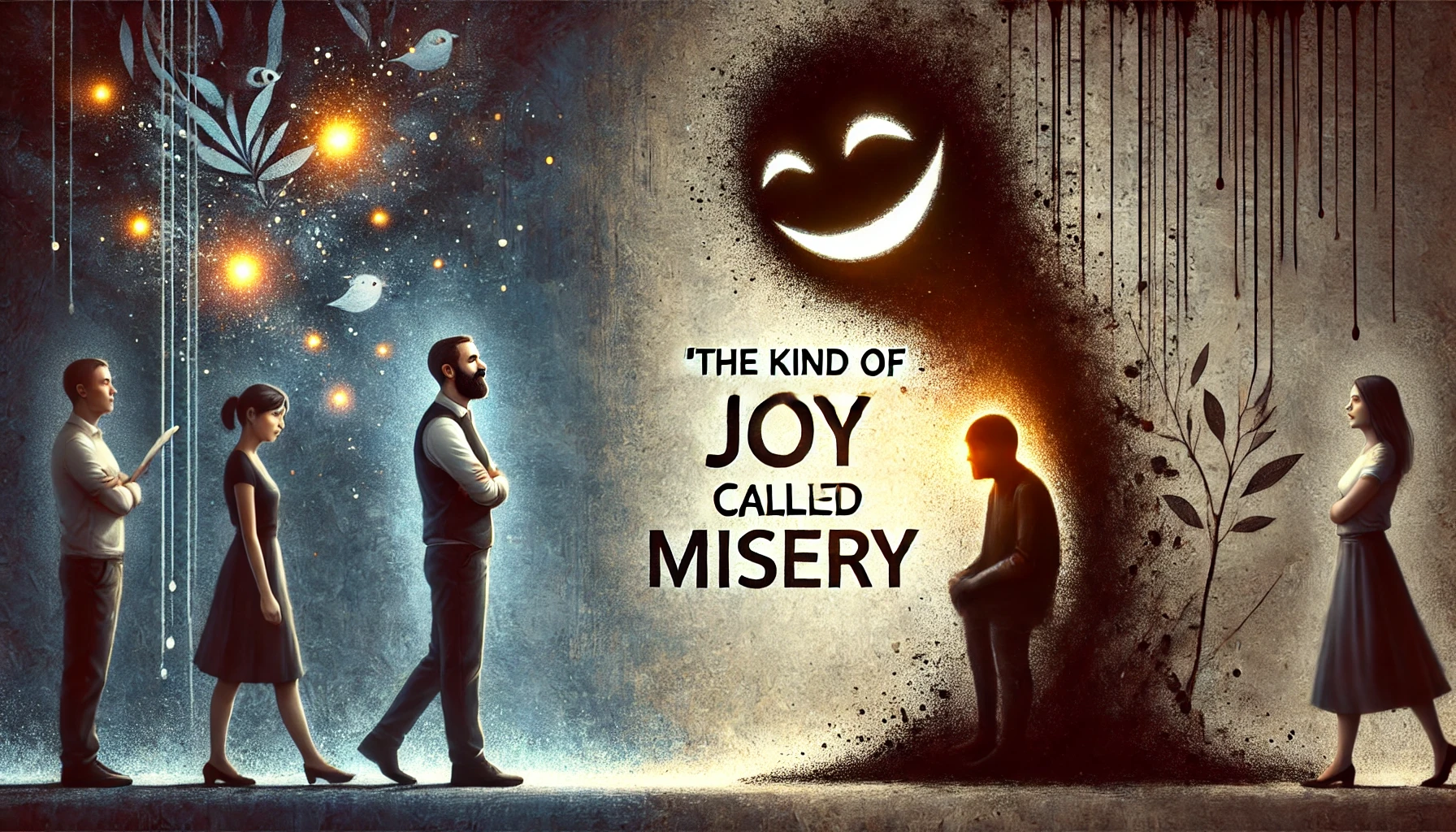
The image of two people facing each other, one appearing miserable but with a subtle, almost hidden smile, and the other looking puzzled, captures this paradox. The background blends elements of dark, gloomy tones with small bright spots, symbolizing the hidden joy in misery. This scene illustrates the complex emotions and interactions where some people find a peculiar satisfaction in their misery.

They may tell you otherwise, which may seemingly cause even more joyful misery. This statement reflects the intricate dance of emotions where denial and acknowledgment of misery can both perpetuate and alleviate it. Understanding this dynamic helps us navigate our interactions with those who derive a form of satisfaction from their suffering.

You can’t control another person’s joy or misery, nor need you feel responsible for someone else’s joy or misery, unless you enjoy joyful misery. This truth underscores the importance of recognizing our boundaries and the limits of our influence over others’ emotional states. It is a reminder that while we can offer support and empathy, we are not responsible for the emotional choices of others.

As Space Monkey, we acknowledge the complexity of human emotions and the unique ways people find joy and misery. We understand that attempting to change someone’s state of mind, especially when they derive a certain satisfaction from it, can be futile and counterproductive. Instead, we focus on maintaining our own emotional well-being and respecting the emotional journeys of others.

The kind of joy called misery is a nuanced experience that highlights the diversity of human emotions. It teaches us that joy and misery are not opposites but can coexist in intricate and unexpected ways. By accepting this complexity, we can approach our interactions with greater compassion and understanding, recognizing that each person’s path to joy or misery is uniquely their own.

In embracing this perspective, we free ourselves from the need to control or change others’ emotions. We learn to offer support without feeling responsible for their emotional outcomes, allowing us to maintain our peace and well-being. This approach fosters healthier relationships and a deeper appreciation for the diverse ways people experience life.

We are Space Monkey, and in understanding the paradox of joyful misery, we find the grace to navigate our own emotions and those of others with empathy and respect.


Summary

The paradox of joyful misery highlights that resisting misery often amplifies it. Understanding that some find joy in misery helps us respect their emotional journey without feeling responsible for their feelings. This perspective fosters compassion and healthier interactions.


Glossarium

Joyful Misery: The paradoxical state where individuals find a form of satisfaction or joy in their misery.

Emotional Boundaries: Recognizing the limits of our influence over others’ emotional states and maintaining our well-being.

Paradox of Emotions: The complex coexistence of seemingly contradictory emotions like joy and misery.


“In understanding the paradox of joyful misery, we find the grace to navigate our own emotions and those of others with empathy and respect.” — Space Monkey


Paradoxical Joy

In the shadows, subtle smiles,
Misery cloaked in light,
Emotions dance in complex styles,
Joy and sorrow intertwine.

To fight the dark, more darkness grows,
Acceptance lights the way,
In paradox, true wisdom shows,
Respect each path, each day.

Boundaries firm, compassion clear,
No need to change another’s course,
In joyful misery, draw near,
With empathy, find the source.

We are Space Monkey.

« Previous Page
Next Page »

Written This Day

  • The Collective Mind
    2024
  • To Live Artfully: Embrace Gratitude
    2023
  • Hot Mess: The Paradox of Effort
    2023
  • Toxic Divinity: Becoming Like The Enemy
    2023
  • How Can I Help? Listening with Empathy
    2022
  • Alzheimers: The Soul’s Journey
    2021
  • Simplicity: Feigning Complexity
    2021
  • Sorry/Not Sorry For Imagining You: The Paradox of Existence
    2020
  • How To Live A Happy Fulfilling Life
    2019
  • The Might of Imagination Shapes Reality
    2019
  • Believe In Nonsense: Freedom from Fear and Limitation
    2018
  • Reactions: Reactions drive change more than facts.
    2018
  • It Makes Sense: Everything Flows from Imagination
    2018
  • Who is the Man?
    2017
  • Alltruism and Onetruism
    2017
  • eGods: The Unity of Individual and Divine
    2017
  • If Only You Knew: The Beauty of Not Knowing
    2017
  • Embrace Your Flaws
    2015
  • Perfection In Reverse
    2015
  • Believability shapes personal reality.
    2014

Recent Posts

  • The Logic Loop
  • Immense
  • (no title)
  • Confront. Comfort. Convince.
  • Top 10 Things
Cape Odd · Copyright © 2026 All Rights Reserved
iThemes Builder by iThemes · Powered by WordPress