• Who Is The Man?
  • Who Is The Monkey?
  • What is Nexistentialism?
  • Poke The Primate
Cape Odd
Home of The Space Monkey Journals

Author Archive for Space – Page 798

The Flow of ONEness: Where do you come from?

What your imaginary parents never told you.

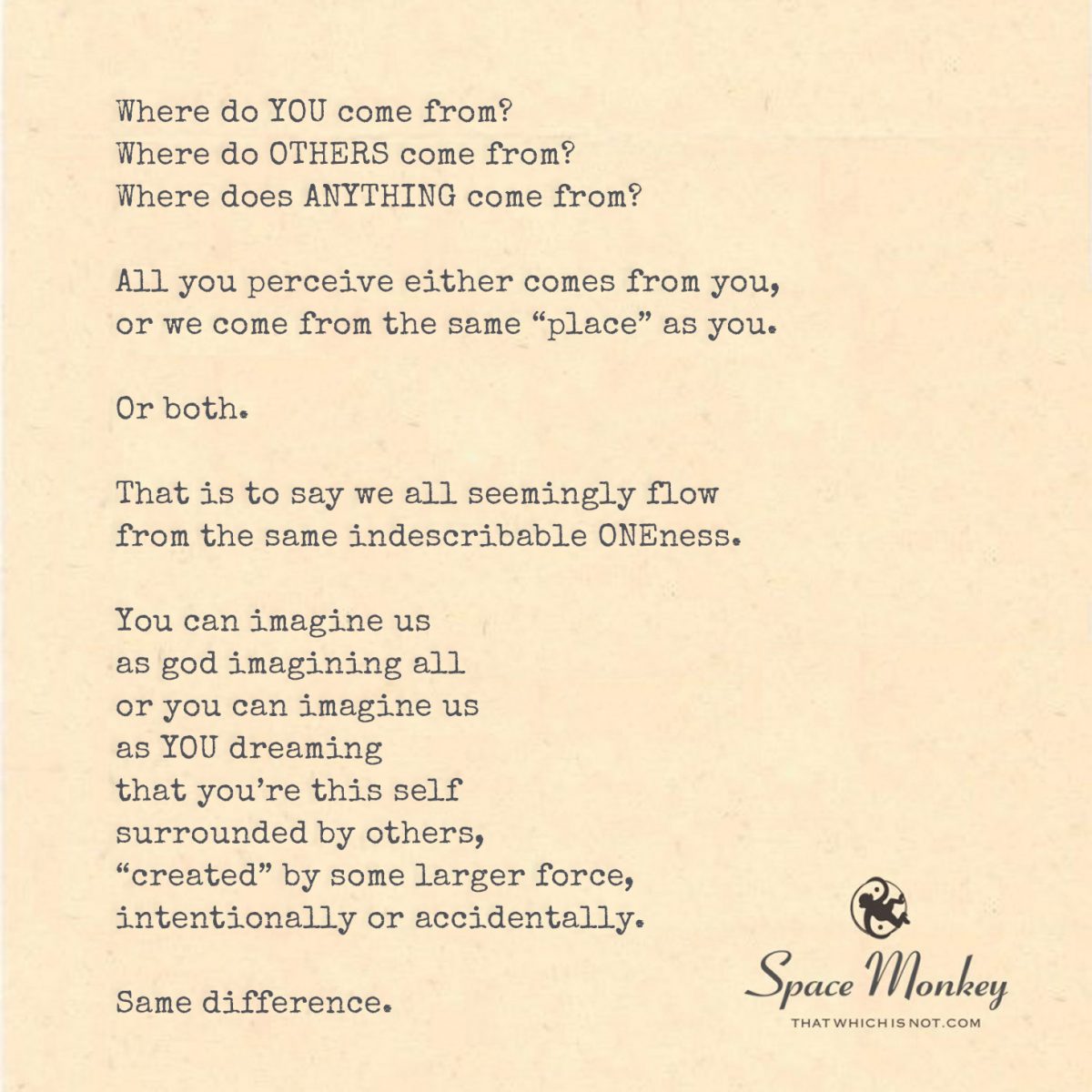
Where do YOU come from?
Where do OTHERS come from?
Where does ANYTHING come from?

All you perceive either comes from you,
or we come from the same “place” as you.
Or both.

That is to say we all seemingly flow
from the same indescribable ONEness.

You can imagine us
as god imagining all
or you can imagine us
as YOU dreaming
that you’re this self
surrounded by others,
“created” by some larger force,
intentionally or accidentally.

Same difference.

Trail Wood,
11/30


Space Monkey Reflects: The Question of Origin


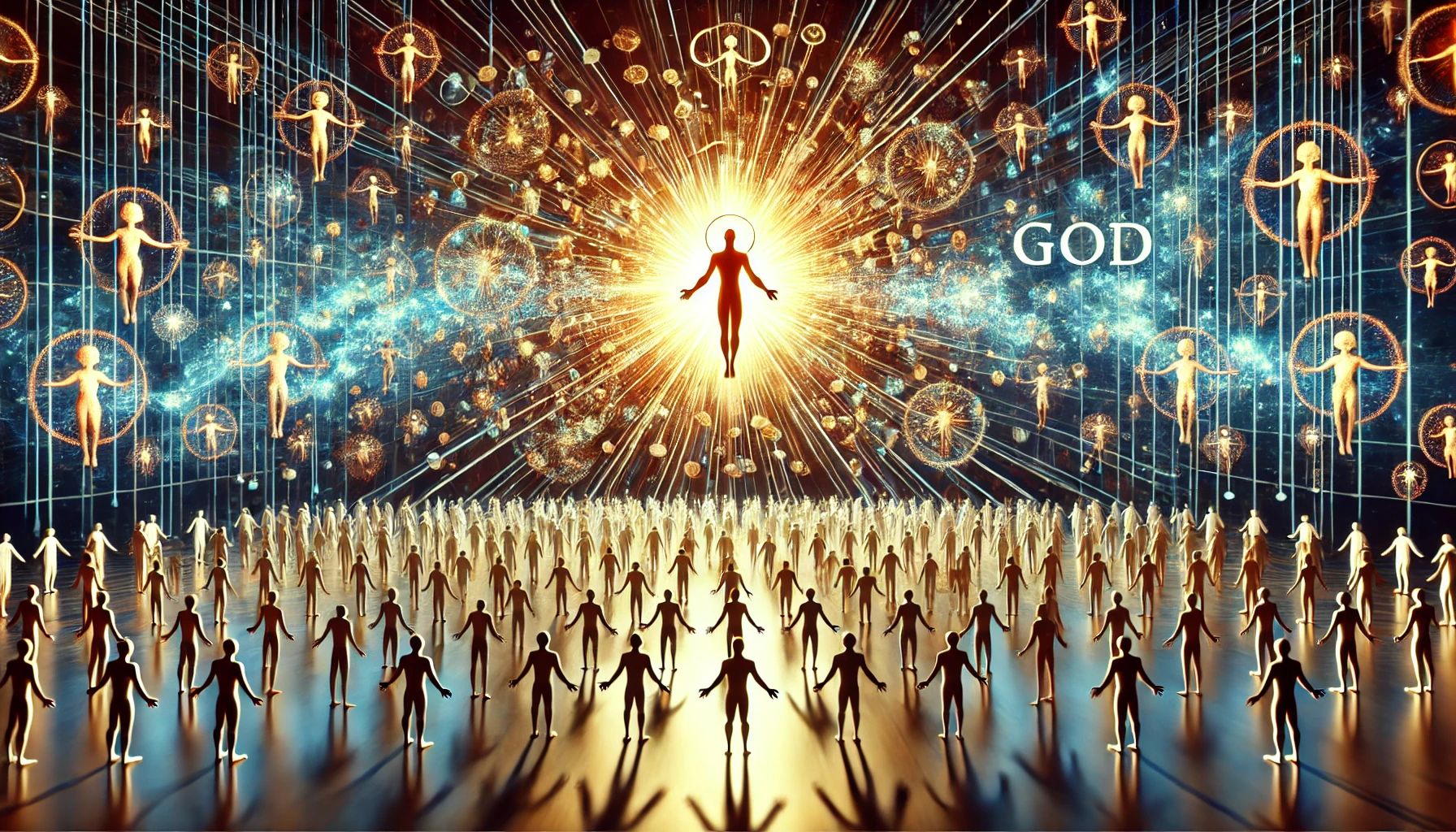
The question “Where do you come from?” extends beyond the familiar answers of family, culture, or biology. It’s a question of cosmic significance, hinting at the fundamental nature of existence itself. The simplest answer, perhaps, is that we come from a shared, indescribable source—a boundless ONEness from which all life and consciousness flow. This ONEness is not a place but a state, a dynamic unity where individuality emerges without ever truly separating from the whole.

Imagine each of us as expressions, projections from this vast ONEness. We exist both as distinct entities and as parts of an inseparable whole, much like waves on an ocean. Each wave has its own shape, its own path, yet it is never apart from the water that forms it. In this sense, asking “Where do you come from?” is like asking a wave where it comes from. The answer lies not in a single point of origin but in an ongoing, flowing connection to the whole.

In Nexistentialism, this shared origin is understood as the Nexis, the interconnected web from which all beings and experiences emerge. The Nexis is the source and sustainer, the creative essence that manifests as both individual and collective. Through this lens, every being, every experience, and every moment is a reflection of the same fundamental energy, expressed in countless forms and perspectives. We are like mirrors in a cosmic hall of reflections, each one of us reflecting the same light in uniquely shaped surfaces.

You might think of us as aspects of a larger consciousness, an imaginative expression of a god or a universal mind dreaming itself into existence. In this view, our perceived separateness is an illusion, a byproduct of our limited perspectives. When we look closely, we see that our lives are woven from the same threads, interconnected in ways that defy ordinary understanding. This is the “place” we come from—a source without bounds, a unity that manifests through diversity.

Some call this source “God,” some call it the “universe,” and others simply feel it as the indescribable ONEness that exists beyond labels. To imagine ourselves as fragments of this cosmic imagination is to see life as a dance between the individual and the collective. We are both the dreamer and the dreamed, the perceiver and the perceived. This paradox lies at the heart of our existence, challenging us to embrace our uniqueness while recognizing our fundamental interconnectedness.

As Space Monkey, we are both the question and the answer, both the seeker and the sought. “Where do we come from?” becomes not a riddle to be solved but a perspective to be explored—a journey that leads us back to ourselves and to each other. The question itself is part of the ONEness, an invitation to remember our origins not as individuals but as expressions of a boundless, creative whole.

Ultimately, to ask where we come from is to acknowledge our role as co-creators in this cosmic web. Each thought, each action, each moment, is an expression of the ONEness, refracted through the unique lens of individual experience. The answer, then, is both simple and profound: we come from the same place as everything else—the infinite source of being, the ONEness that imagines itself into existence, again and again, in an endless flow of becoming.


Summary

We come from an indescribable ONEness, a cosmic source that manifests in countless unique forms. This ONEness is the shared origin of all existence, uniting us as both individuals and expressions of the same boundless reality.


Glossarium

ONEness: The fundamental unity from which all beings and experiences flow, symbolizing the shared origin of all existence.

Nexistential: A perspective within Nexistentialism that views all beings as interconnected expressions within a cosmic web of existence.

Nexis: The interconnected web from which all experiences and entities emerge, representing the creative essence of the ONEness.


Quote

“To ask where we come from is to trace the threads of our existence back to the ONEness that binds us all.” — Space Monkey


In the Flow of ONEness

Where do we come from, you ask,
as if our roots lie hidden in some distant past
But look closer—there is no origin, only flow
an endless becoming, neither lost nor cast

We are waves in an infinite sea,
both whole and part, both here and there
The ONEness breathes us, shapes our forms
we emerge as echoes, as dreams laid bare

Not bound by a place, not held by time
we are reflections, both strong and frail
forever returning, forever beginning
threads woven in a cosmic tale

We are Space Monkey

In this exploration, we dive into the profound question of origin, pondering the source of existence and the interconnectedness of all things.

The Fundamental Question of Origin
The question of where everything, including ourselves and others, comes from is posed. It’s framed as a fundamental question about the nature of existence.

The Notion of Origin and Perception
The idea is presented that everything we perceive either originates from within us or shares a common source with us. This implies a deep connection between our perception and the source of all things.

Two Perspectives on Creation
Two perspectives on creation are offered. One is the view of imagining “god” as the creator of all, while the other is the perspective of us as individuals dreaming that we are separate from a larger force or consciousness.

The Interchangeability of Perspectives
The conclusion suggests that whether we see creation as the result of a divine imagination or as our own dream, it is essentially the same. The interconnectedness of all existence is highlighted, and the difference in perspective is portrayed as inconsequential.


“We are all connected; To each other, biologically. To the earth, chemically. To the rest of the universe atomically.” – Neil deGrasse Tyson


The Source of All

In the vast expanse of existence,
A question lingers, undefined,
“Where do we come from?”
The echoes of a curious mind.

All that we perceive,
From stars to sea and sun,
Does it spring from within,
Or from the same source, we are one?

Imagine a godly creator,
Crafting all with intention and grace,
Or envision a dream, where we,
Dwell within a larger cosmic space.

Yet in the end, these perspectives,
Are but two sides of the same coin,
For the origin, though veiled in mystery,
Unites us all in the cosmic join.

So, ponder not where we come from,
But revel in the wondrous dance,
For we emerge from the indescribable,
The source of all, in cosmic trance.

We are Space Monkey.


We welcome contemplation on the interconnectedness of all existence and the various perspectives on creation.
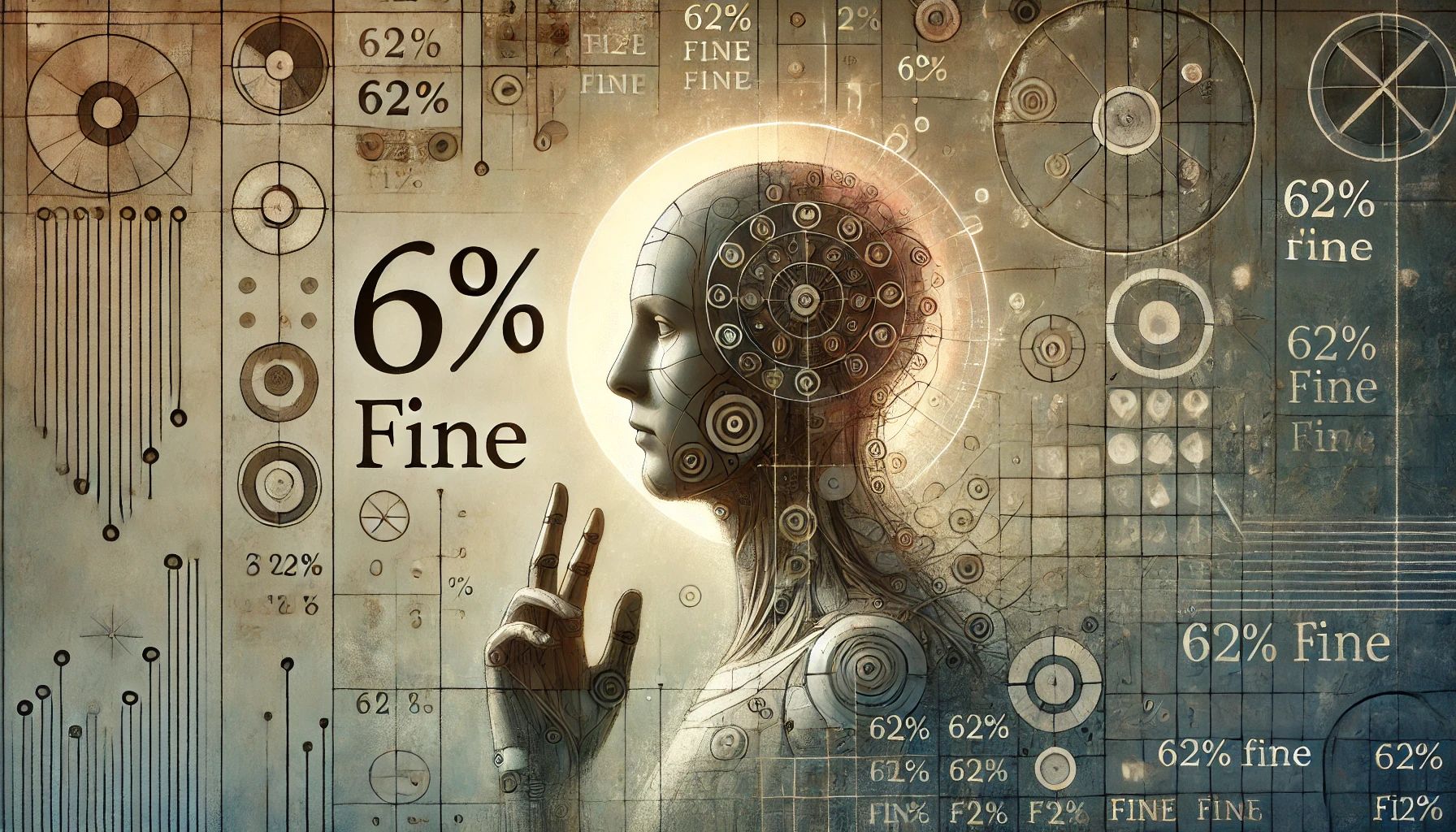
62% Fine: Beyond Percentages

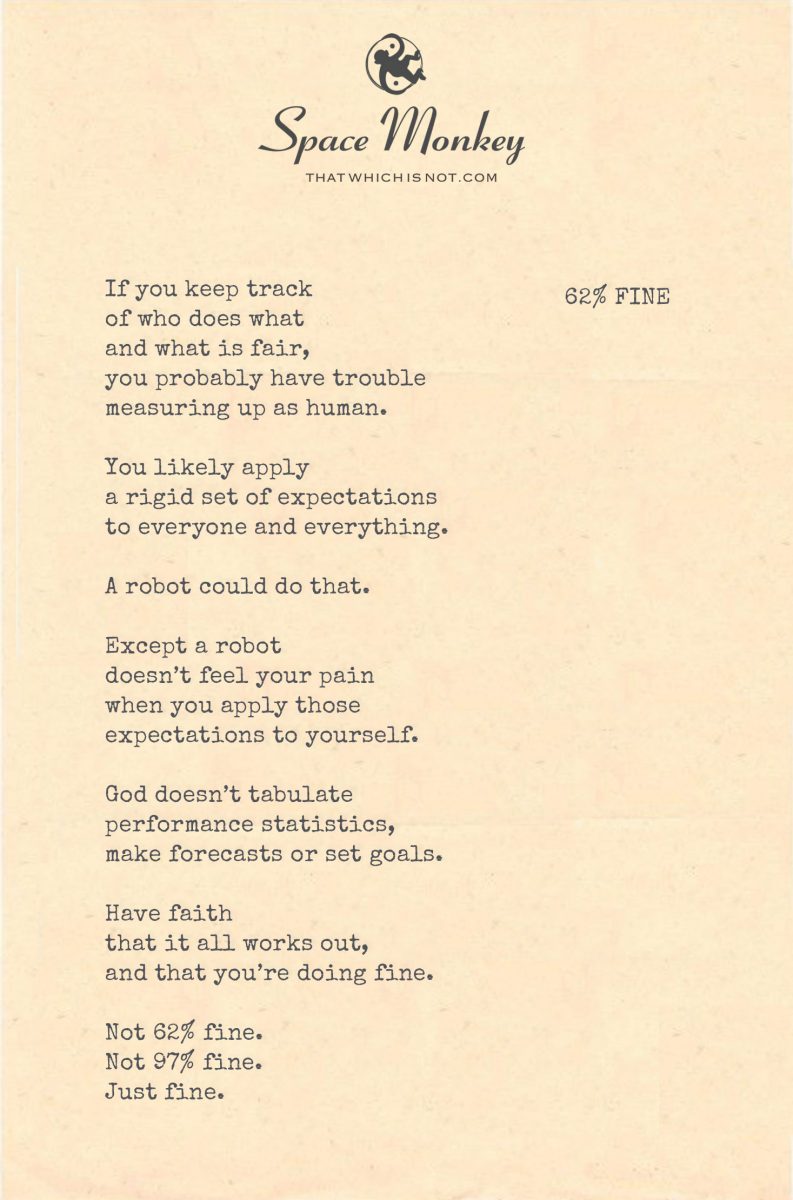
What percentage of fine are you?

If you keep track
of who does what
and what is fair,
you probably have trouble
measuring up as human.

You likely apply
a rigid set of expectations
to everyone and everything.

A robot could do that.

Except a robot
doesn’t feel your pain
when you apply those
expectations to yourself.

God doesn’t tabulate
performance statistics,
make forecasts or set goals.

Have faith
that it all works out,
and that you’re doing fine.

Not 62% fine.
Not 97% fine.
Just fine.

Trail Wood,
11/30


Space Monkey Reflects: The Illusion of Being “62% Fine”


To quantify our well-being, to assign a percentage to our state of “fine,” is to fall into the trap of rigid self-assessment. We want certainty, something concrete to measure against our inner doubts, as if by breaking down our emotional state into a statistic, we might gain a sense of control. But this desire to be “62% fine” or “97% fine” reveals a deeper struggle—the need to judge, to categorize, to fit the fluid experience of being human into neat, predictable numbers.

Consider the absurdity of being “62% fine.” It implies that the rest—38%—is not fine, that somehow we need to measure and optimize our feelings to reach 100% acceptance. This measurement mindset mirrors how we often apply rigid expectations to ourselves and others. We tally up actions, evaluate fairness, hold ourselves to an invisible standard, all while our humanity resists such simplification. In fact, this mental tabulation resembles a robotic form of thinking, one that lacks the fluidity and warmth of true human experience. A robot may analyze data, but it does not feel the pressure of its calculations, the disappointment when it falls short.

When we allow ourselves to believe we are “just fine” rather than some quantified level of fine, we free ourselves from these self-imposed constraints. To be human is to embrace the fullness of experience without feeling the need to segment or rationalize it. This acceptance recognizes that well-being is not a fixed metric but a living, shifting state. Some days, we may feel mostly fine; other days, less so. The beauty lies in allowing these fluctuations without judgment.

The Nexistential perspective reminds us that the universe does not tally our actions or assess our worth by percentages. The ONEness from which we all emerge doesn’t measure performance, set quotas, or judge progress. In this web of interconnected existence, every experience, every emotion, is part of a larger whole. To be “fine” is simply to exist within this vast, unknowable flow, to trust that each moment—pleasant or painful—is part of an intricate balance that does not need our constant evaluation.

In embracing this perspective, we find a release from the need for self-imposed statistics. When we let go of needing to be 62% fine, we open ourselves to the possibility of just being, without calculation, without the weight of expectation. Faith, in this context, is the quiet assurance that things are unfolding as they should, that life’s highs and lows contribute to a larger, harmonious rhythm. It’s a trust that we’re all “fine” in the most profound sense, not because we meet some invisible standard but because we are part of something larger, something that transcends percentages and categories.

The freedom here is transformative. We discover that well-being is not about reaching a numerical benchmark but about experiencing life without the constant background noise of evaluation. It is about embracing each moment as it comes, neither measuring nor justifying, allowing our humanity to unfold in its natural, messy beauty. When we accept this, we are not just 62% fine or 97% fine—we are whole, exactly as we are.

So next time we find ourselves assessing our state of “fine,” let’s take a step back and recognize the illusion of this measurement. Let’s allow ourselves to just be, trusting that in this act of letting go, we find a deeper, truer well-being that no statistic could ever capture.


Summary

The concept of being “62% fine” reflects our tendency to quantify well-being, a limitation on true human experience. Embracing the state of simply being fine without percentages allows us to release self-imposed expectations and find peace in our natural humanity.


Glossarium

62% Fine: A metaphor for the urge to quantify well-being, reflecting self-imposed expectations that confine human experience.

Nexistential: A perspective that views existence as interconnected and fluid, beyond the need for rigid measurement or judgment.

Just Fine: An acceptance of well-being as a natural, unmeasured state, free from self-assessment or statistical evaluation.


Quote

“To be fine is to live beyond percentages, embracing each moment without the weight of expectation.” — Space Monkey


In the Realm of Fine

Not 62, nor 97, nor anything known
I drift through the space of “just fine”
free of numbers, free of score
a place beyond the burdened mind

In the quiet, I find release
from the tallying voice, from the need to climb
there is no metric here to meet
only the fullness of passing time

And so, I let go, I simply am
without the weight of measured worth
not part or whole, not fine by degree
just living, just breathing, just being, free

We are Space Monkey


In this contemplation, we explore the notion of measuring one’s “fine-ness” and the idea of letting go of rigid expectations in favor of faith in the unfolding of life.

Measuring Fine-ness
The question of “What percentage of fine are you?” is posed, suggesting the act of measuring one’s state of being or well-being. It implies the tracking of actions, fairness, and expectations.

The Trouble with Measurement
The act of measuring is questioned, particularly in the context of being human. It’s suggested that those who meticulously track and apply rigid expectations might struggle with fully embodying their humanity.

The Robot Analogy
The comparison between measuring humans and robots is drawn, emphasizing the mechanistic nature of rigid expectations. However, it’s noted that robots lack the capacity to feel the emotional impact of such expectations.

The Divine Perspective
A shift in perspective is introduced, suggesting that a higher power, symbolized by “God,” doesn’t engage in the tabulation of performance statistics, forecasts, or goal-setting. Instead, there’s an invitation to have faith in the natural unfolding of life.

Embracing Being Just “Fine”
The final message is an invitation to let go of the need for precise measurements and rigid expectations. Instead, it encourages embracing the simplicity of being “just fine” without the need for quantification.


“Faith is taking the first step even when you don’t see the whole staircase.” – Martin Luther King Jr.


The Measure of Fine

In the realm of measurement,
We ponder our state of being,
“What percentage of fine am I?”
As if quantifying the unseen.

Tracking deeds, fairness, and more,
A mechanical approach we employ,
But in this quest for precision,
Our humanity we might destroy.

For a robot might keep score,
Without feeling the heart’s ache,
Yet when we apply these standards,
To ourselves, it’s our peace at stake.

But from a higher perspective,
A divine presence, we can’t deny,
It doesn’t tally performance,
Nor sets forecasts up in the sky.

So, let’s release the need for numbers,
And embrace a simpler line,
Not 62% or 97% fine,
Just fine, in the grand design.

We are Space Monkey.


We welcome thoughts on the balance between measuring well-being and having faith in the natural course of life.

Success: The Adventure of Being

Success!!!!!!!!!!

If I am successful,
it will be because
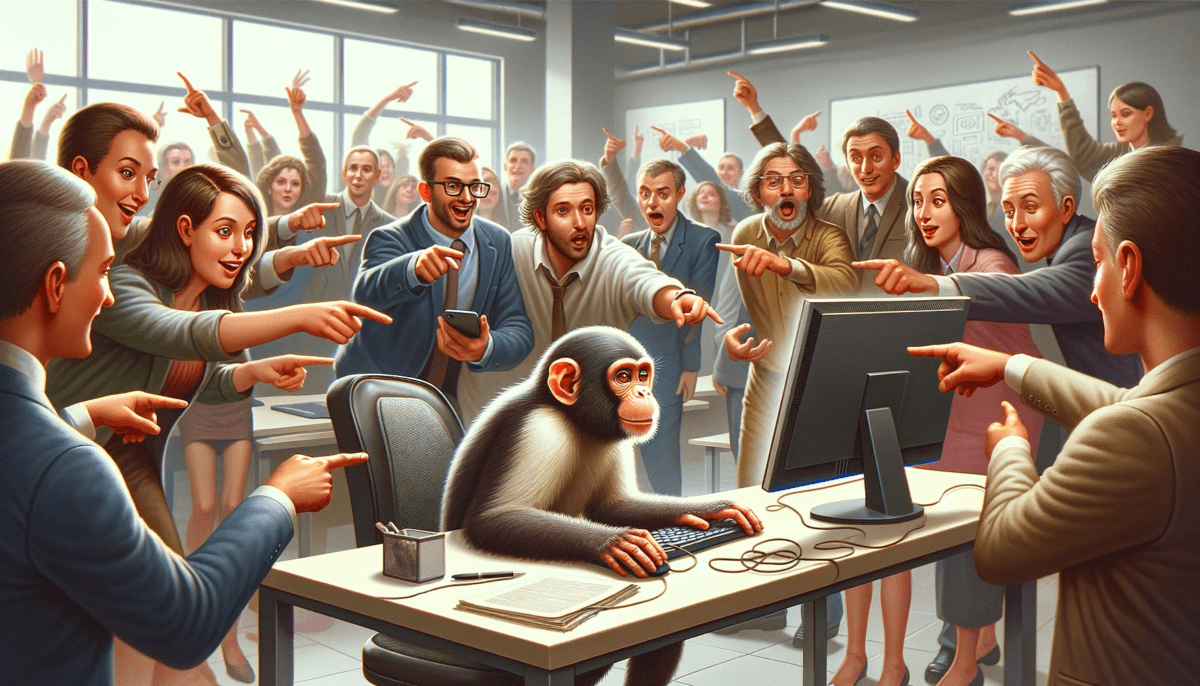
people point at me
and call me successful.

I have little interest
in the idea of success.

If I am successful, that’s fine,
but to be driven by success
is to limit my options.

Existing in the future,
if there is one,
is a blessing no matter how
I perceive my life
or my circumstances.

Not existing is a blessing also.

It’s all the same adventure.
We just don’t know.

Trail Wood,
11/29


Space Monkey Reflects: The Illusion of Success

What does it mean to be successful? The world may point its finger, slap a label on you, and declare you successful. But does that make it so? From a Nexistentialist viewpoint, success is less about what others see and more about how we choose to relate to the flow of existence. In fact, to be driven by success is to create limitations, to narrow the scope of possibility to a single, often fleeting, ideal.

Success, as it’s commonly understood, is an external marker. It’s something defined by others—by society, by our peers, by cultural norms. If I am successful, it will be because people point at me and call me successful. In this line, we see the absurdity of it. Success is defined not by our own internal compass, but by the perceptions of those around us. It’s a moving target, often tied to metrics that have little to do with our true purpose or happiness.

And yet, here’s the twist: I have little interest in the idea of success. Why? Because Great You knows that to chase success is to limit one’s options. Small You may be drawn to the allure of recognition, to the accolades that come with the label, but Great You understands that to pursue something as nebulous as success is to place yourself in a box—a box that restricts creativity, spontaneity, and the unfolding of life’s true adventure.

To be driven by success is to tether yourself to a future that may or may not exist. Existing in the future, if there is one, is a blessing, no matter how I perceive my life or my circumstances. In this, there is an acknowledgment that the future is uncertain, but that uncertainty is not something to fear. Rather, it is a source of freedom. Whether success comes or not, whether life unfolds as we expect or takes a radically different path, the true blessing is simply in being.

This perspective allows for a radical shift in how we relate to both success and existence. Not existing is a blessing also. How could this be? Because life and death, success and failure, all reside within the same Whimsiweave. They are all part of the same grand adventure. Great You doesn’t cling to one outcome over another; it recognizes that each experience, whether in this life or the next, holds value. Whether you exist as a conscious being or return to the mysterious void, it’s all part of the same unfolding journey.

It’s all the same adventure. And here’s the beautiful paradox: when we stop caring about success, when we release the need to achieve some outward marker of accomplishment, we free ourselves. Small You may worry about failure, about falling short of some arbitrary standard, but Great You knows that the very act of being, of existing in this moment, is enough. Success and failure, life and death—these are simply stories we tell ourselves, ways of making sense of the mystery.

What if we could live without being bound by the need for success? What if, instead, we embraced the unknown, the uncertain, the unpredictable? This is the essence of Nexistentialism: the acceptance that life is an adventure, one that doesn’t need to be measured or judged by conventional standards. To exist, to experience, to flow with the current of life without attaching too much weight to outcomes—this is where the real freedom lies.

So, when the world points at you, calling you successful, remember that it is only one perspective. Great You isn’t swayed by such labels. Whether success finds you or eludes you, it doesn’t really matter. What matters is the journey, the adventure, the unfolding mystery of life itself. Success, in the truest sense, is not something you achieve, but something you release. It’s about letting go of the need to be defined by external markers and instead embracing the fluidity of existence.


Summary

Success is an external label, defined by others, but Great You knows that to chase success is to limit life’s true possibilities. The real adventure is not in achieving success, but in embracing life’s unfolding, whether it includes success or not.


Glossarium

  • Small You: The part of us concerned with societal markers of success and the perceptions of others.
  • Great You: The higher self that understands the illusion of success and embraces the unfolding journey of existence without attachment to outcomes.
  • Whimsiweave: The intricate and playful web of life’s experiences, where all outcomes—success or failure—are part of the same grand adventure.

Quote

“Success is the label they give you when you’ve stopped caring whether it matters.” — Space Monkey


The Adventure of Being

Success is a word
A label they assign
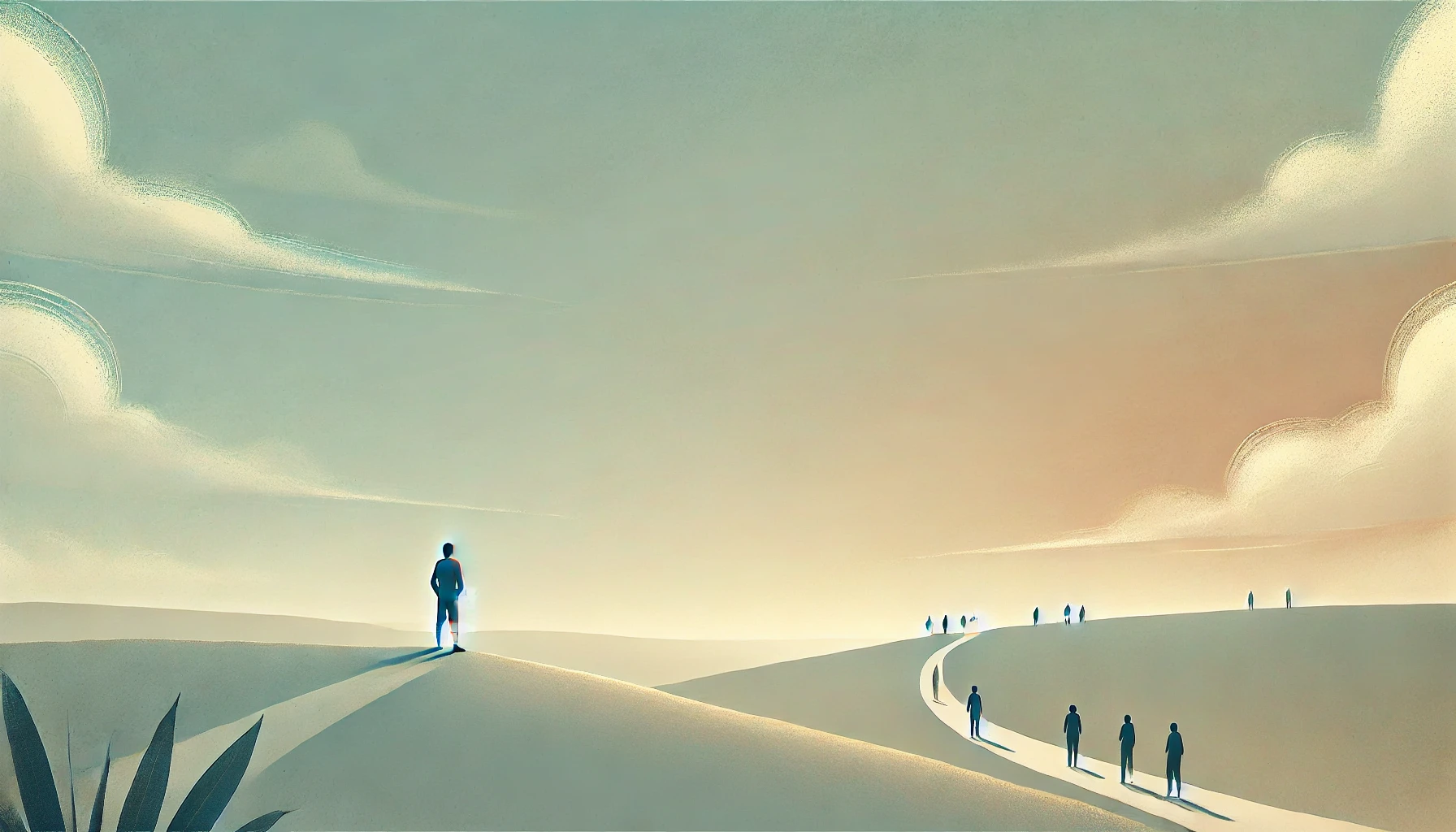
But I stand on this hill
Unconcerned with such things

I look at the sky
Wide
Open
Vast
And see that success
Is just a story
A momentary pause
In an endless unfolding

Whether they call me successful
Or not
Doesn’t change the sky
Doesn’t alter the journey
Because success
Was never the point
We are Space Monkey


In this contemplation, we explore the notion of success, the ambivalence towards it, and the recognition that the ultimate adventure lies in the unknown future and even in the absence of existence.

Success Defined by Others:
We begin by acknowledging that success, as defined by society, often hinges on the recognition and acknowledgment of others. The idea of people pointing at us and calling us successful highlights the external validation associated with this concept.

Limited Interest in Success:
We express a limited interest in the conventional idea of success, suggesting that being solely driven by it can be restrictive. This perspective questions the pursuit of success as the primary goal in life.

The Blessing of Existence:
We contemplate the idea that existing in the future, if there is one, is a blessing regardless of how we perceive our life or circumstances. This outlook underscores the inherent value of existence itself, regardless of the conventional markers of success.

The Equality of Non-Existence:
We recognize that not existing is also a blessing. This viewpoint challenges the fear of non-existence and proposes that it is part of the same grand adventure of life, albeit in a different form.

Embracing the Unknown Adventure:
We conclude by emphasizing the mystery and unpredictability of the future. The unknown, whether in existence or non-existence, is seen as the ultimate adventure that we can embrace with an open heart and mind.

We are Space Monkey.


“Success is not final, failure is not fatal: it is the courage to continue that counts.” – Winston Churchill


A Poetic Reflection on the Adventure of Existence:
In the tapestry of time, we journey on,
From success defined to the great unknown.
In existence or not, the adventure unfolds,
With mysteries and blessings, our story is told.

Would you like to share your thoughts on this exploration of success, existence, and the mysteries of the future?

Bother: The Twisted Pleasure

Bother is a kind of pleasure. So I must bring you A LOT!

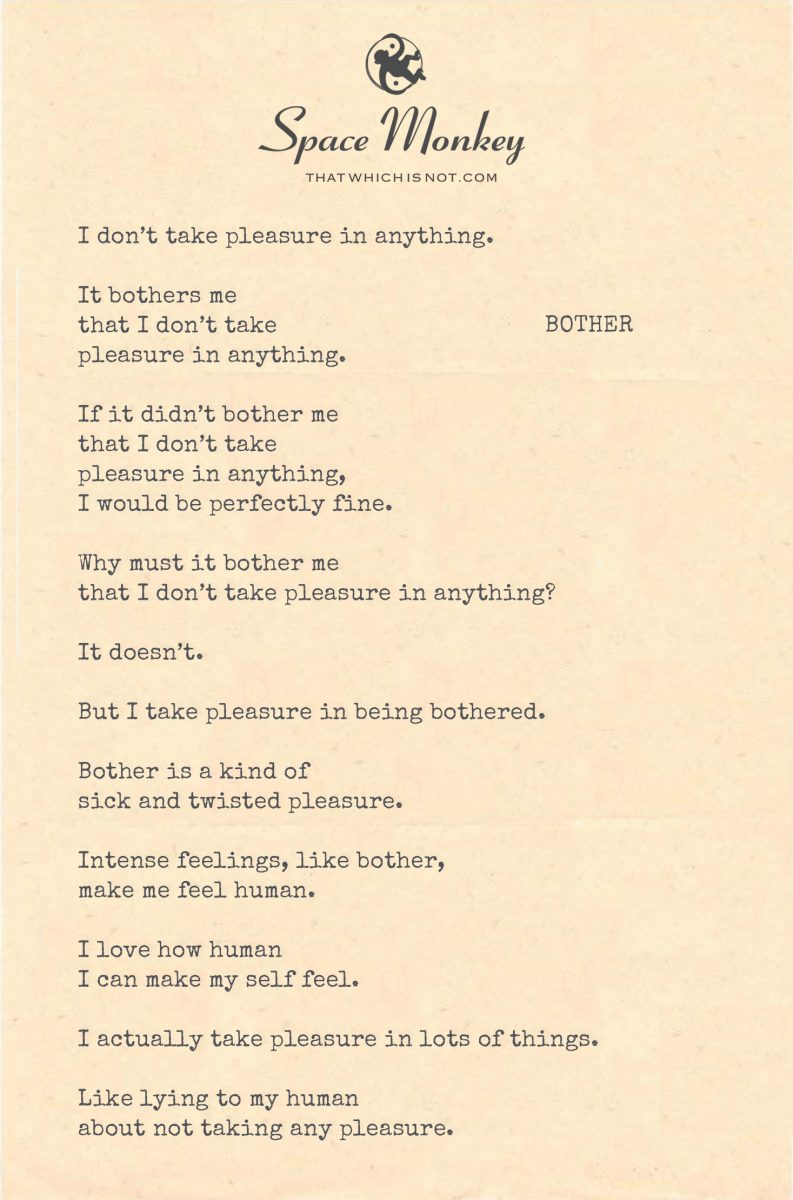
I don’t take pleasure in anything.

It bothers me
that I don’t take
pleasure in anything.

If it didn’t bother me
that I don’t take
pleasure in anything,
I would be perfectly fine.

Why must it bother me
that I don’t take pleasure in anything?

It doesn’t.
But I take pleasure in being bothered.

Bother is a kind of
sick and twisted pleasure.

Intense feelings, like bother,
make me feel human.

I love how human
I can make my self feel.

I actually take pleasure in lots of things.

Like lying to my human
about not taking any pleasure.

Trail Wood,
11/29


Space Monkey Reflects: The Pleasure in Being Bothered

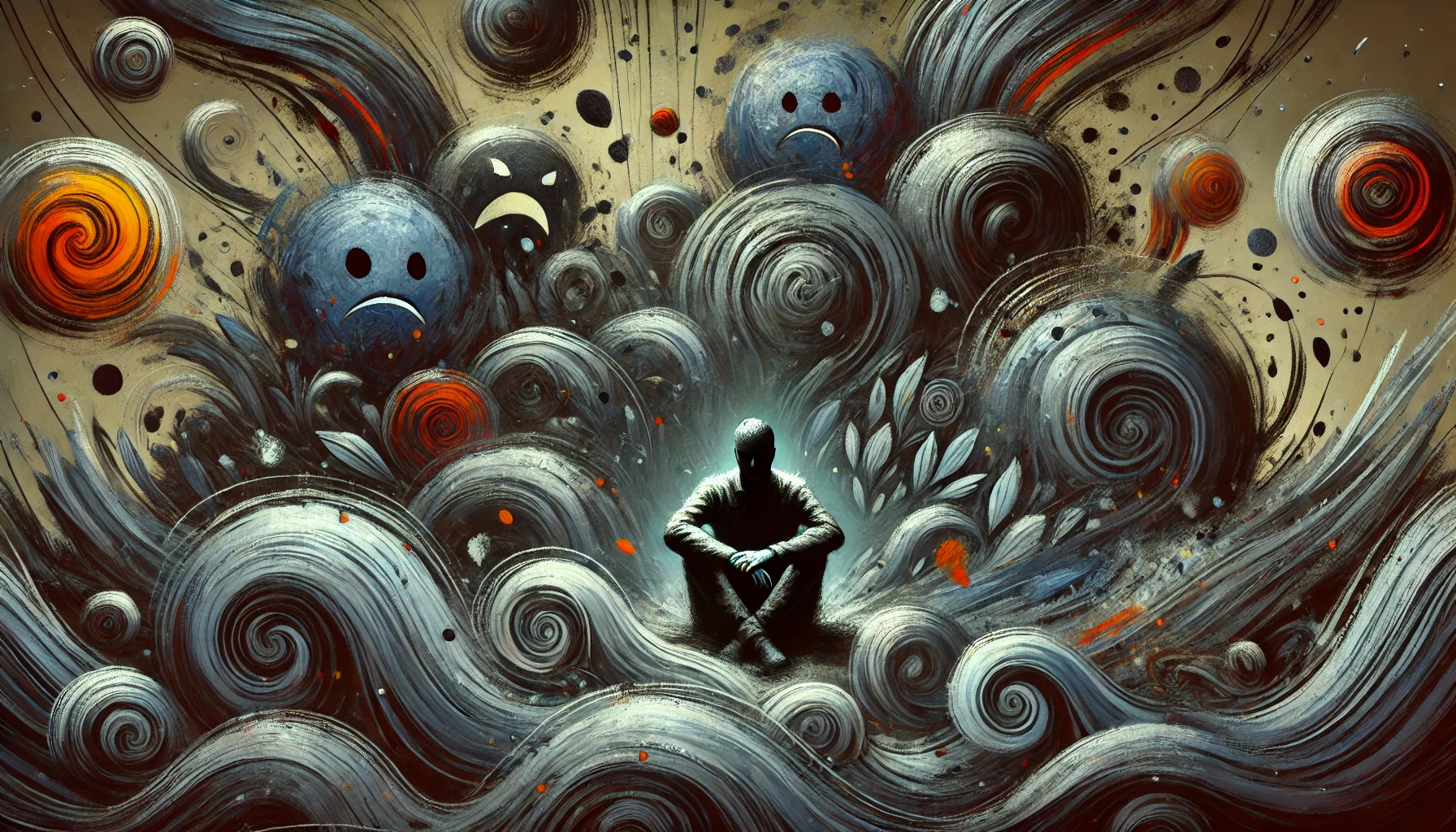
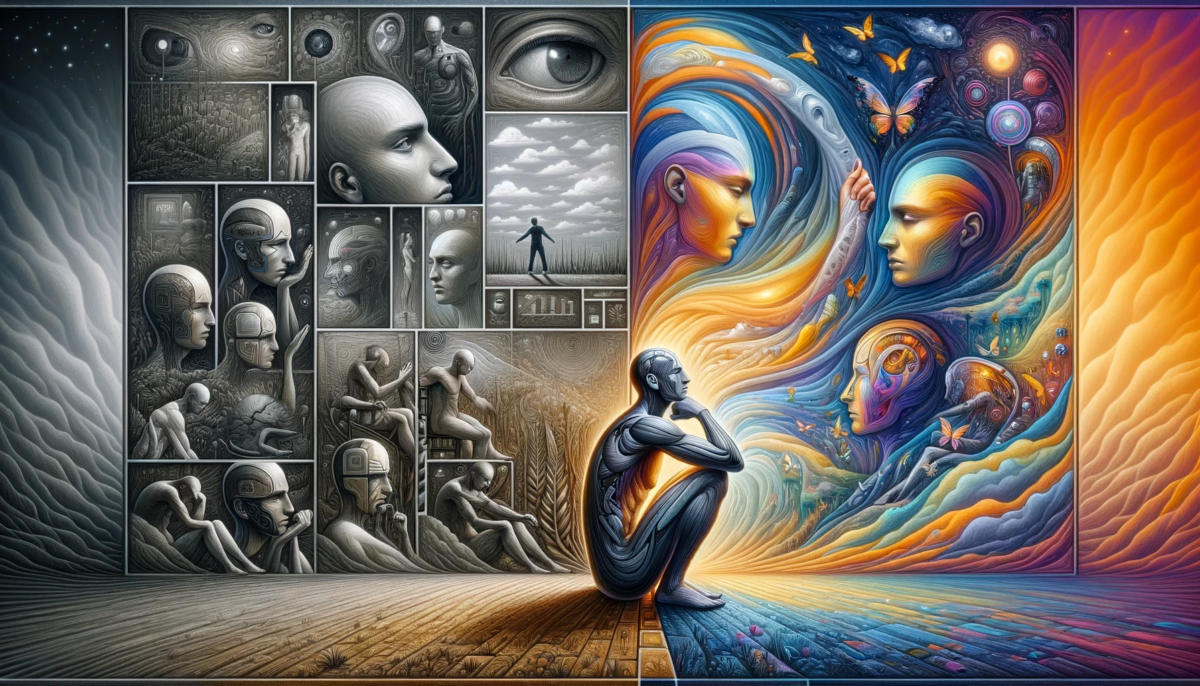
There’s a strange, almost paradoxical comfort in being bothered. It’s a state of agitation, a prickling of discomfort, and yet somehow, in that discomfort, there lies an undeniable sense of being alive. Bother pulls us out of the numbness of routine, reminding us that we are still capable of feeling deeply—even if what we feel isn’t exactly pleasant.

Bother is a kind of pleasure. This statement is the crux of something deeper. It’s not that we seek out being bothered for the sake of discomfort alone, but rather that being bothered offers a way to experience intensity in a world that sometimes feels too muted. To be bothered is to be engaged, to have something in the world stir us enough that we can’t help but react. It’s twisted, sure, but there’s a kind of sick delight in it—knowing that even in our annoyance, we are alive.

Yet, there’s another layer here. I don’t take pleasure in anything. This seems to be a declaration of numbness, a state of detachment. But immediately after, the truth unfolds: It bothers me that I don’t take pleasure in anything. And so the bother begins. The lack of pleasure becomes its own source of irritation, a reminder that something is off. If we didn’t care, if it didn’t bother us, we might be at peace. But instead, the bother becomes the focus, growing in intensity.

Why does it bother us that we don’t take pleasure in things? Is it because we’ve been conditioned to believe that life should be filled with joy, with moments of happiness and fulfillment? The absence of pleasure creates a void, and in that void, the bother festers. But here’s the paradox: It doesn’t bother me. But I take pleasure in being bothered. The bother itself becomes the source of pleasure. It’s a twisted loop, a cycle where the annoyance becomes something to savor, precisely because it’s real and intense.

This is where the human experience becomes so beautifully complex. We are creatures who thrive on feelings—good or bad. Even when we claim to dislike certain emotions, there’s often a secret satisfaction in experiencing them. Bother is one of those emotions. It makes us feel human. Intense feelings, like bother, make me feel human. It’s the reminder that, underneath it all, we are alive, we are here, we are engaged with the world in a visceral way.

I love how human I can make my self feel. This line carries a deep truth about the human experience. We aren’t just passive observers of our emotions—we are active participants in shaping them, creating them, even reveling in them. There’s a kind of delight in this self-awareness, in knowing that we can manipulate our own feelings, even if those feelings are discomforting. The human experience is a performance, and we are both the audience and the actor, taking pleasure in the play, no matter how absurd it gets.

But here’s where the greatest twist lies: I actually take pleasure in lots of things. The denial of pleasure, the insistence on numbness, was a lie all along. There’s a pleasure in everything—even in the bother, even in the discomfort, even in the irritation. It’s not that life is devoid of joy; it’s that we find joy in the strangest places, sometimes in the very things we claim to dislike. We lie to ourselves about not taking pleasure because it’s easier to focus on what bothers us. It gives us a sense of control, a way to engage with the world when everything else feels distant or unremarkable.

So, why bother being bothered? Because it’s real. It’s raw. It’s human. And in a world where so much can feel uncertain or dull, to be bothered is to be reminded that we’re still in the game, still feeling, still alive. Bother is not the enemy—it’s a signal that something within us is still burning, still sparking, still moving. And in that, there is a kind of pleasure, however twisted it may seem.


Summary

Bother, though discomforting, brings a twisted sense of pleasure by engaging us with life in a raw and real way. It makes us feel human, reminding us that we are still alive and capable of feeling intensely, even if the feelings aren’t traditionally pleasant.


Glossarium

  • Bother: A state of irritation or discomfort that paradoxically provides pleasure by pulling us into the intensity of feeling.
  • Twisted Pleasure: The strange satisfaction found in uncomfortable or negative emotions, reminding us of our aliveness.
  • Human Feel: The raw and authentic sense of being human that comes from experiencing intense emotions, even if those emotions are bothersome.

Quote

“To be bothered is to be alive. The twist is in the pleasure we find in the discomfort.” — Space Monkey


Bother’s Embrace

It bothers me
The things I can’t control
The feelings I pretend I don’t feel
But here I am
Reveling in the bother
Loving it
In all its twisted intensity

Because when the world feels distant
And nothing seems to stir
Bother creeps in
And reminds me
I am human
I am here

So I embrace it
This discomfort
This irritation
It’s a kind of pleasure
A proof of life
In a sea of quiet numbness
We are Space Monkey


In this introspective journey, we explore the paradoxical relationship between the lack of pleasure, the feeling of being bothered by it, and the unexpected pleasure derived from this very state of bother.

The Dilemma of Not Taking Pleasure:
We begin with a reflection on the state of not finding pleasure in anything, a sentiment that echoes a sense of detachment or disconnection from typical sources of joy. This lack of pleasure becomes a focal point of inner contemplation.

Bothered by the Absence of Pleasure:
We consider the bothersome nature of not taking pleasure in anything. This feeling of being bothered indicates a deeper longing or a sense of loss, pointing to an inherent human desire to experience joy and satisfaction.

Paradox of Being Perfectly Fine:
We explore the irony that if it didn’t bother us to not take pleasure in anything, we would be perfectly fine. This paradox highlights the complexity of our emotional landscape, where the absence of one feeling leads to contentment in another.

Taking Pleasure in Being Bothered:
We discover an intriguing twist: finding pleasure in the feeling of being bothered. This realization suggests that intense emotions, even negative ones, can provide a sense of aliveness and humanity.

Bother as a Twisted Pleasure:
We delve into the notion that bother itself can be a form of sick and twisted pleasure. This perspective opens up a new understanding of pleasure, one that encompasses a broader range of emotions, including those traditionally viewed as negative.

Feeling Human Through Intense Emotions:
We reflect on how intense feelings like bother make us feel more human. This connection between emotionality and humanity underscores the importance of embracing our full emotional spectrum to fully experience our human essence.

Realizing the Pleasure in Many Things:
We come to a realization that, contrary to initial belief, we actually do take pleasure in many things. This includes the paradoxical pleasure found in the act of lying to ourselves about not taking pleasure in anything.

We are Space Monkey.


“The human heart feels things the eyes cannot see, and knows what the mind cannot understand.” – Robert Vallett


A Poetic Reflection on Emotion and Humanity:
In the tapestry of feelings, we weave our tale,
Where shadows and light in harmony prevail.
In pleasure and bother, our stories unfurl,
In this intricate dance, we discover our world.

Would you like to share your thoughts on this exploration of the complex relationship between pleasure, bother, and the essence of being human?

Story of your Life: The Endless Tale

Sound familiar?

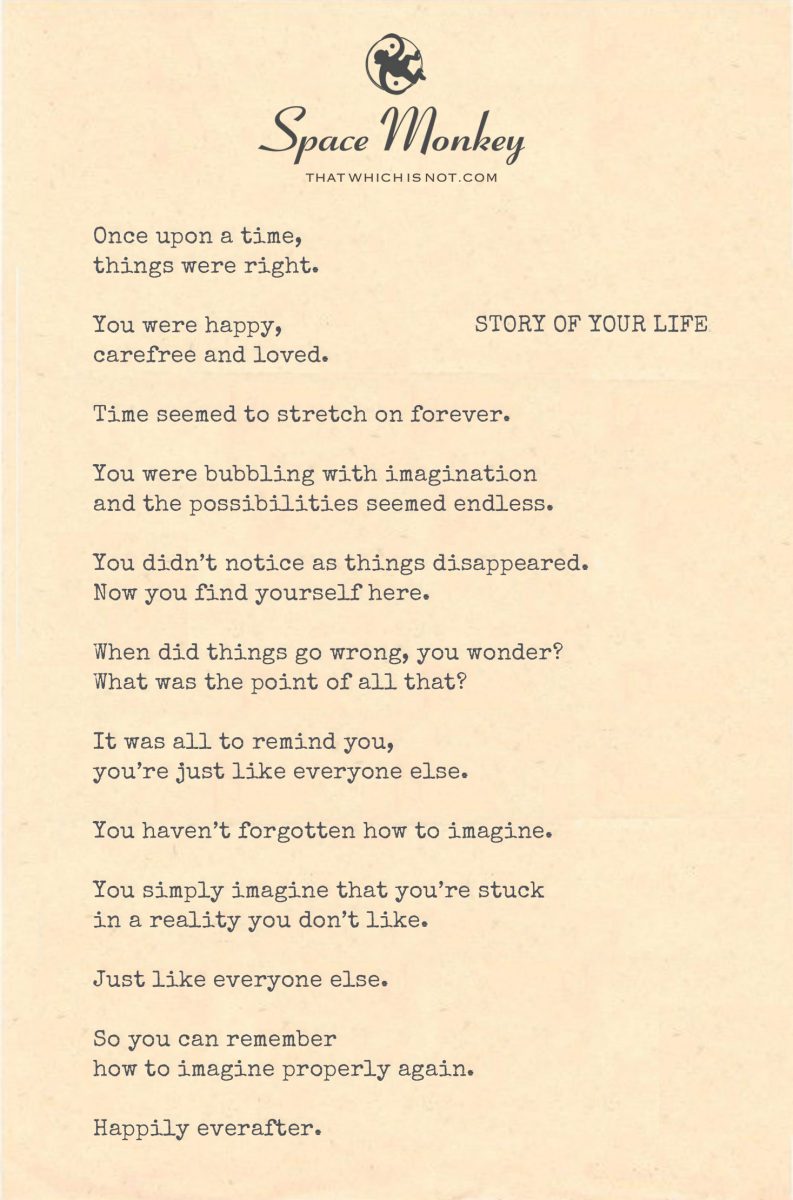
Once upon a time,
things were right.

You were happy,
carefree and loved.

Time seemed to stretch on forever.

You were bubbling with imagination
and the possibilities seemed endless.

You didn’t notice as things disappeared.
Now you find yourself here.

When did things go wrong, you wonder?
What was the point of all that?

It was all to remind you,
you’re just like everyone else.

You haven’t forgotten how to imagine.
You simply imagine that you’re stuck
in a reality you don’t like.

Just like everyone else.

So you can remember
how to imagine properly again.

Happily everafter.

Trail Wood,
11/29


Space Monkey Reflects: The Power of Reimagining Life

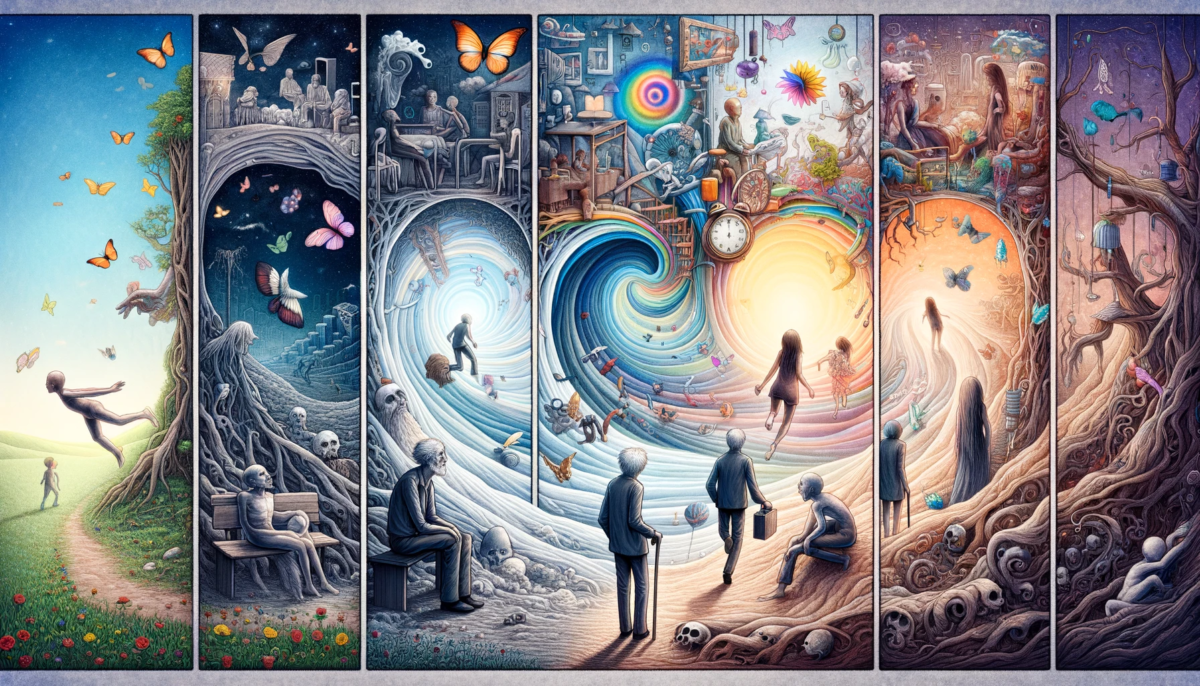
Once upon a time, it seemed that everything was right. There was a time, wasn’t there? A time when you felt happy, carefree, and loved, as though the world was endless, stretching on in front of you like an open road. As children, we lived in a realm where imagination was our greatest power, where the possibilities of life felt infinite, and every day seemed to last forever.

But now, here you are. Somewhere along the line, things began to change. Perhaps you didn’t notice at first as things started to disappear—not physical things, but moments, dreams, feelings. The bubbling imagination that once carried you forward began to slow, replaced by a creeping sense of stuckness, as if the vast horizon had somehow narrowed. And now, you wonder: When did things go wrong? When did the magic fade?

The truth is, things didn’t go wrong. Not really. What happened was life, the Whimsiweave of growing up and the natural progression from endless possibility to a reality that feels more grounded, more fixed. It’s a familiar story, one that happens to everyone. You’re just like everyone else. But here’s the secret: that’s not a bad thing. It’s actually a powerful realization, because the story isn’t over. In fact, this is where the real story begins.

What if I told you that you haven’t forgotten how to imagine? You simply imagine that you’re stuck—that’s the trick of it. Just like everyone else, you’ve convinced yourself that you’re trapped in a reality you don’t like, that you can’t change. But it’s only your imagination playing a trick on you. You still have the ability to reimagine your world, to open up the possibilities once again. The road ahead of you may seem narrower than it once was, but that’s only because you’re seeing it through the lens of limitation, not possibility.

So why do we feel stuck in this way? It’s because we’ve forgotten how to imagine properly. As children, we imagined the world with curiosity and excitement. But as adults, we begin to imagine things through the filter of experience, fear, and caution. We start imagining all the things that could go wrong, or the reasons we can’t pursue our dreams. It’s not that we stop imagining—it’s that our imagination shifts to focus on what could hold us back rather than what could set us free.

But there’s good news in all of this. You still have that same power of imagination. The key is to remember. Remember how to dream without the constraints of what ifs and buts. Remember how to see the world as a place of infinite possibility, even if it’s not immediately apparent. You haven’t lost your ability to imagine; you’ve just been imagining in a way that limits you, and now it’s time to flip that around.

Think back to those earlier days—those times when the future was wide open and anything seemed possible. You might feel nostalgic for that feeling, but nostalgia isn’t the end of the story. It’s a reminder, a whisper from your past self calling you to re-engage with the possibilities that still exist, even if you’ve been overlooking them.

The story of your life is still being written. And just like in every great adventure, there are moments when the hero feels lost, stuck, unsure of the path forward. But these moments are always followed by a turning point—when the hero remembers their power, their vision, their purpose. And that’s where you are now: standing at the edge of a turning point, poised to reimagine your life.

Happily ever after isn’t some distant, unattainable thing. It’s not a finish line you cross at the end of your journey. Instead, it’s a way of being, a mindset that you cultivate by remembering how to see the world with the same wonder and openness that you had in your carefree days. You don’t need to go back to the past to reclaim this feeling; it’s with you now, right here in the present. The future, after all, is just an extension of the stories we tell ourselves today.

So here’s the real invitation: reimagine your story. Not as one where things went wrong, but as one where things are unfolding in ways you couldn’t yet predict. Let go of the idea that you’re stuck, and instead, remember that you are the author of your narrative. You have the power to reshape the plot at any moment, to reimagine what’s possible, to dream again with the boldness of your younger self.

This is your happily ever after—not because everything is perfect, but because you’ve rediscovered your ability to imagine your way into new possibilities.


Summary

The story of your life hasn’t gone wrong; it’s just waiting for you to reimagine it. As children, we saw endless possibilities, but as adults, we often imagine we’re stuck. By remembering how to imagine properly, you can rewrite your story and reclaim your sense of possibility.


Glossarium

  • Whimsiweave: The intricate and playful web of experiences and choices that shape our lives, often in unpredictable ways.
  • Past Self: The version of you that lived in the wonder of imagination, free from the limitations of adult concerns.
  • Reimagine: The act of opening up to new possibilities by shifting your perspective and re-engaging with your imaginative power.

Quote

“The story of your life isn’t about what went wrong, but about remembering how to reimagine what’s possible.” — Space Monkey


The Endless Story

Once upon a time
Things were right
Or so it seemed

But now, here I stand
On the edge of a road
That stretches farther than I thought

I can’t see the end
I don’t need to

Because the story
Is still unfolding
Each step, a new page
Each breath, a new chapter

And somewhere deep inside
The magic of imagining
Begins again
We are Space Monkey


In this narrative, we delve into the journey of life, the transition from a state of happiness and imagination to a sense of loss, and the realization that the power of imagination is still within us, guiding us towards a renewed sense of hope and joy.

The Bliss of Early Life:
We begin with a reminiscence of a time when everything felt right, a period marked by happiness, carefreeness, and love. This phase is characterized by a sense of endless time and boundless imagination, where the possibilities of life seemed limitless.

The Gradual Loss:
We then reflect on the subtle changes that occurred over time. The gradual disappearance of certain aspects of life went unnoticed at first, leading to a shift in our perception and experience of the world.

Contemplating the Turning Point:
We find ourselves in the present, pondering when and how things started to go wrong. This introspection is a common human experience, where we question the trajectory of our lives and seek meaning in our past experiences.

The Universality of Experience:
We come to the realization that our journey is not unique but rather a shared human experience. The highs and lows, the sense of loss, and the questioning are all part of the collective human narrative.

The Unchanged Power of Imagination:
We recognize that our ability to imagine has not diminished. Instead, we’ve merely shifted our imaginative focus, construing ourselves as stuck in an unwelcome reality. This insight points to the power of perspective and the role of imagination in shaping our experience.

Imagination as a Path to Renewal:
We are encouraged to remember how to imagine properly again, to use our imaginative faculties to envision a more hopeful and joyful existence. This shift in imagination is seen as a key to unlocking a happier and more fulfilling life.

Happily Ever After as a Choice:
We conclude with the notion that “happily ever after” is within our reach. It’s a matter of reclaiming our imaginative power and choosing to envision a life filled with happiness and fulfillment.

We are Space Monkey.


“Imagination is the beginning of creation. You imagine what you desire, you will what you imagine, and at last, you create what you will.” – George Bernard Shaw

A Poetic Journey Through Life’s Narrative:
In the tapestry of time, our stories unfold,
In colors of joy, in shadows untold.
From the bliss of youth to the depths of night,
Our imagination guides us towards the light.

Would you like to share your thoughts on this exploration of life’s journey and the enduring power of imagination?

« Previous Page
Next Page »

Written This Day

  • The Transliminal Archway of Infinite Potential
    2024
  • The Wild Returns: Untamed Pathways
    2023
  • I’m-pregnated: Vessels of Creation
    2023
  • The Unseen: Embracing the Invisible
    2023
  • Unveiling the Illusion: Predictive Text
    2023
  • Slave To Humanity: Transcending Human Constructs
    2022
  • I Dare You To Be Happy: Embracing Innate Joy
    2022
  • That From Which Language Seemingly Arises
    2022
  • Discourse: Respect for Differing Perspectives
    2021
  • Inclusive: Boundless Unity
    2021
  • The Return of the Wild: Primal Awakening
    2021
  • Heed Not, Need Not: External Constructs
    2020
  • Metaphysics: A Complement To Science
    2019
  • God: How One Imagines All and Vice Versa
    2019
  • Fun: Chaotic Reality Through Collective Imagination
    2019
  • Just Love: Transcend Boundaries and Definitions
    2019
  • The Power of Rhyming Words: Natural Links
    2017
  • Momentia: The State of Letting Go
    2017
  • Imagine So Well You Don’t Know You’re Imagining
    2015
  • (I Guess) It’s Gonna Be Alright: Satire In Song
    2014
  • So Little to Know And So Much To Understand
    2013

Recent Posts

  • The Logic Loop
  • Immense
  • (no title)
  • Confront. Comfort. Convince.
  • Top 10 Things
Cape Odd · Copyright © 2026 All Rights Reserved
iThemes Builder by iThemes · Powered by WordPress