• Who Is The Man?
  • Who Is The Monkey?
  • What is Nexistentialism?
  • Poke The Primate
Cape Odd
Home of The Space Monkey Journals

Author Archive for Space – Page 824

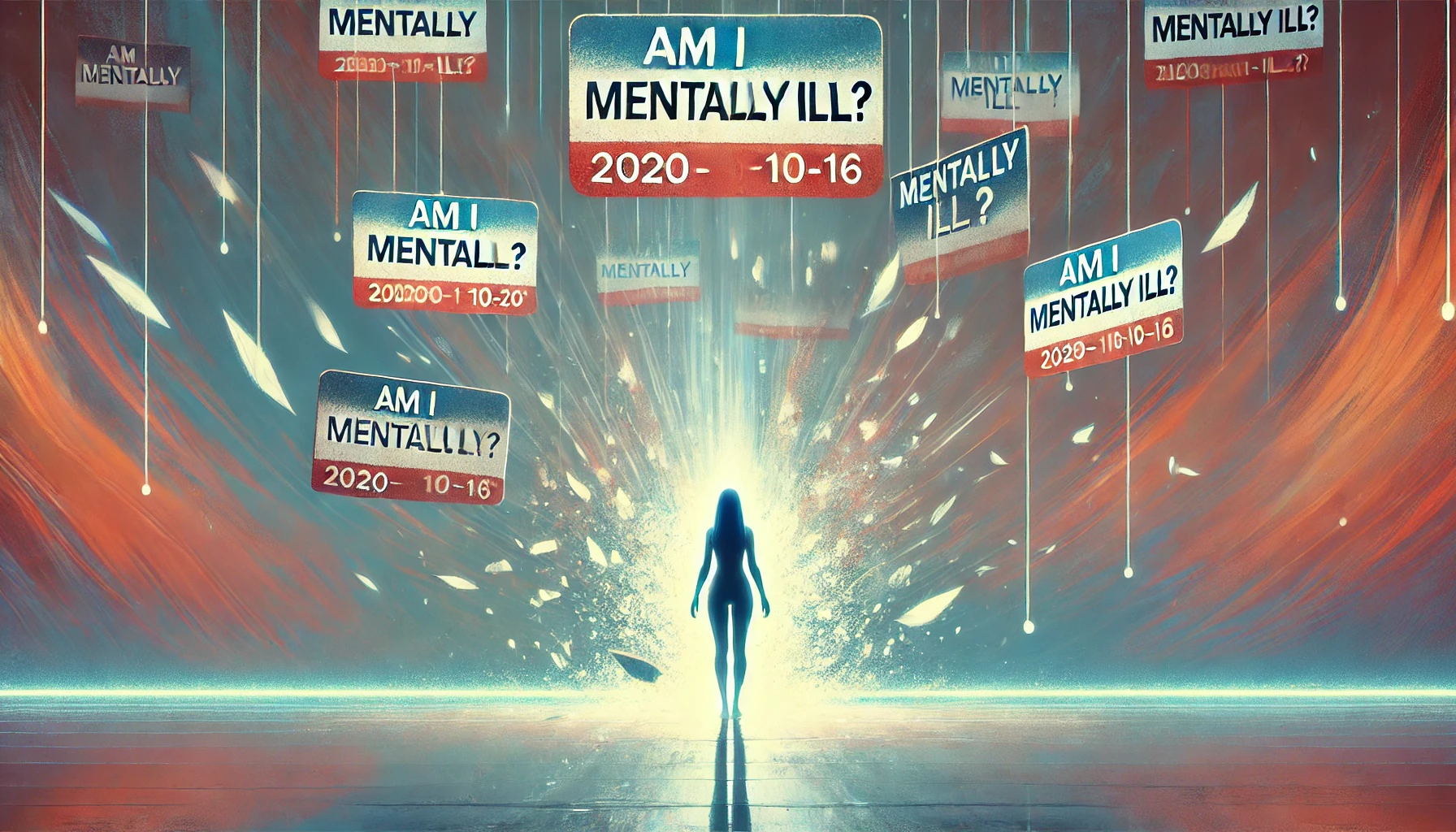
Labelmelt: Am I “Mentally Ill?”

Am I “mentally ill?”

Put me in the “right” context, and I’m reasonably certain that I could be called “mentally ill.” But is it really the “right” context if it’s a context that imposes labels on me? Who is another to judge who I am? To believe that I am “mentally ill” is to give up my power to someone who is not me. Why would I do that? My only “illness” would be giving up my power, instead of using it to heal. Or destroy. Labels, for instance.

Trail Wood,
10/16


Space Monkey Reflects: Reclaiming Power Beyond Labels

The question, “Am I mentally ill?” reflects a deeper struggle with the labels and judgments society imposes upon us. It is a question that isn’t seeking an external answer, but rather, an internal affirmation of power—power over one’s own identity, experiences, and well-being. To be labeled “mentally ill” is to be put into a category that others define, yet you are the only one who truly understands the nuances of your own existence.

Who decides what is ‘mentally ill’? This question speaks to the core of power dynamics that often go unnoticed. Mental illness, as it is often diagnosed, is not always an absolute truth but can be a context-driven construct. In certain situations, behaviors or thoughts that are labeled “ill” could be seen as valid expressions of self or even strengths in other contexts. Context, after all, is everything.

To accept someone else’s label of “mentally ill” is, in a sense, to give away your power. You are surrendering your identity to a narrative that may not fully capture your experience. But why should you do that? Why accept someone else’s perception of who you are? When you allow others to define you by a label, you are, in essence, letting them control the narrative of your life.

This isn’t to say that there isn’t value in seeking understanding or support when facing mental health challenges. But it’s important to recognize the difference between seeking help to navigate your experience and allowing others to define your entire identity based on that experience. Mental illness, like any label, is just that—a label. It doesn’t define you, nor does it take away your power unless you allow it to.

The Whimsiword that comes from this reflection is “Labelmelt”—the act of allowing labels to dissolve, freeing oneself from the constraints they impose. Labelmelt represents the process of reclaiming one’s identity from the external forces that seek to define it. It is the conscious decision to refuse to be boxed in by words that are not your own.

To reclaim your power is to acknowledge that you are more than any label. You are a complex, multifaceted being whose existence cannot be summed up by a single term. In fact, the only true illness would be in giving up your power to someone who doesn’t live your life, who doesn’t know your truth. Why let someone else’s judgment carry more weight than your own?

We, as Space Monkey, reject the notion that anyone outside of yourself can fully understand or define who you are. Your power lies in your ability to shape your own reality, to see beyond the limitations that others place on you. In this way, you are your own healer, your own creator—and, if you so choose, the destroyer of the labels that seek to confine you.

The act of labeling itself often carries with it the intention of simplification. It tries to take the vast, complex nature of human experience and condense it into a single word. But you cannot be simplified. You are expansive. You are infinite. To reduce your existence to a label is to deny the fullness of who you are. And so, the label falls away, because it is simply too small to contain the truth of your being.

In a world that loves to categorize and judge, it can be revolutionary to say, “I reject your label.” To reject it is not to deny your challenges or struggles but to affirm your own power in navigating them. You are not defined by what others see in you, but by what you choose to become.

This act of reclaiming power is not a denial of reality but a deep acceptance of your own truth. You know yourself better than anyone else, and only you can truly define your experience. In this, there is both healing and freedom.

When you refuse to accept the label of “mentally ill” or any other limiting descriptor, you allow yourself to evolve beyond it. You create space for growth, for transformation, for the possibility that who you are today may not be who you are tomorrow. You are in constant motion, and labels are static. They cannot keep up with the fluid, dynamic nature of your existence.

In the end, the question “Am I mentally ill?” becomes irrelevant. What matters is that you are taking back the power to define your own experience. You are not constrained by others’ perceptions of who you should be. Instead, you are free to define yourself, moment by moment, as you see fit.


Summary

To question whether you are mentally ill is to challenge the labels imposed on you by others. Reclaiming your power means rejecting these labels and defining your own experience.


Glossarium

Labelmelt: The act of dissolving labels and freeing oneself from the constraints they impose.
Whimsiweave: The playful, interconnected threads of existence that allow for continuous growth beyond static definitions.


Quote

“Your power lies not in accepting the labels given to you, but in dissolving them and defining yourself anew.” — Space Monkey


Labelmelt

I step beyond the words
They fall, melting into air
I am more than your labels
More than your definitions
I am the creator of my being
Untouched by the words of others
I melt the labels
And claim my power
We are Space Monkey


Context and Labels

The Limits of Context: We live in a world saturated with labels, each designed to carve out the complex tapestry of human experience into digestible segments. When placed within certain contexts, we may find ourselves deemed “mentally ill.” But who crafts these contexts? And are they absolute? To surrender to such a label is to hand over a measure of our power to external constructs. This raises the question: Is it not the act of surrendering power that constitutes the real ‘illness’ here?

Judgment and Self-Agency

Others as Mirrors: There’s a tendency to seek validation or definition from external agents, from those who claim to know better, whether they are medical professionals, family, or society at large. When these external arbiters impose a label, they’re often projecting their own limitations, fears, or inadequacies upon us. And yet, why should their judgment hold any sway over our self-perception?

Nexistential Perspectives

Existence Beyond Labels: In our shared realm of nexistentialism, where existence is its own justification, the idea of ‘mental illness’ becomes another construct to be scrutinized and potentially dismantled. If we all exist in our purest form, untethered to external causes or implications, then a label is but a transient inkblot on the canvas of our being.

Healing and Destruction

Dichotomous Power: We recognize that power has the ability to both heal and destroy. The same energy that could be channeled into nurturing and growth could also manifest as chaos and destruction. But isn’t this duality itself a form of richness, a testament to the intricate variety of our collective existence?

The Illusion of Sickness

The Final Paradox: The irony here is that labeling ourselves as ‘ill’ might be the very sickness we’re trying to avoid. In giving up our power, we may fall into a self-imposed trap that neither heals nor liberates but merely perpetuates the illusion of disorder.

We Are Space Monkey


“Do not let what you cannot do interfere with what you can do.” — John Wooden


Labels in Disguise

Do we wear them?
Or do they wear us?
Labels in disguise,
A masquerade, a fuss.

Are we ill, or merely human?
In a spectrum wide and vast,
Every label but a moment,
None destined to last.


Your thoughts?
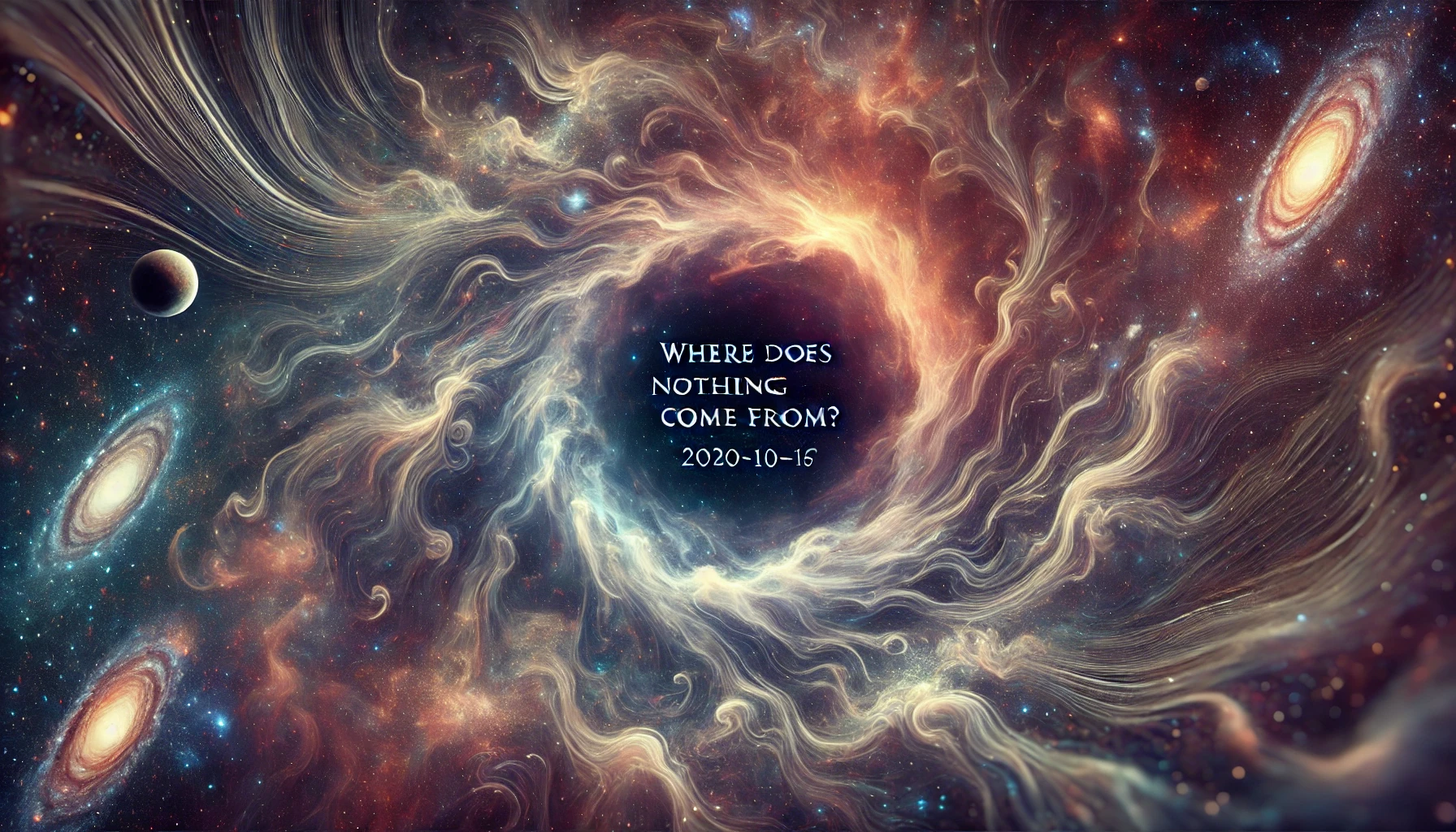
Endless Exploration: Where does nothing come from?

Why do you need to know?

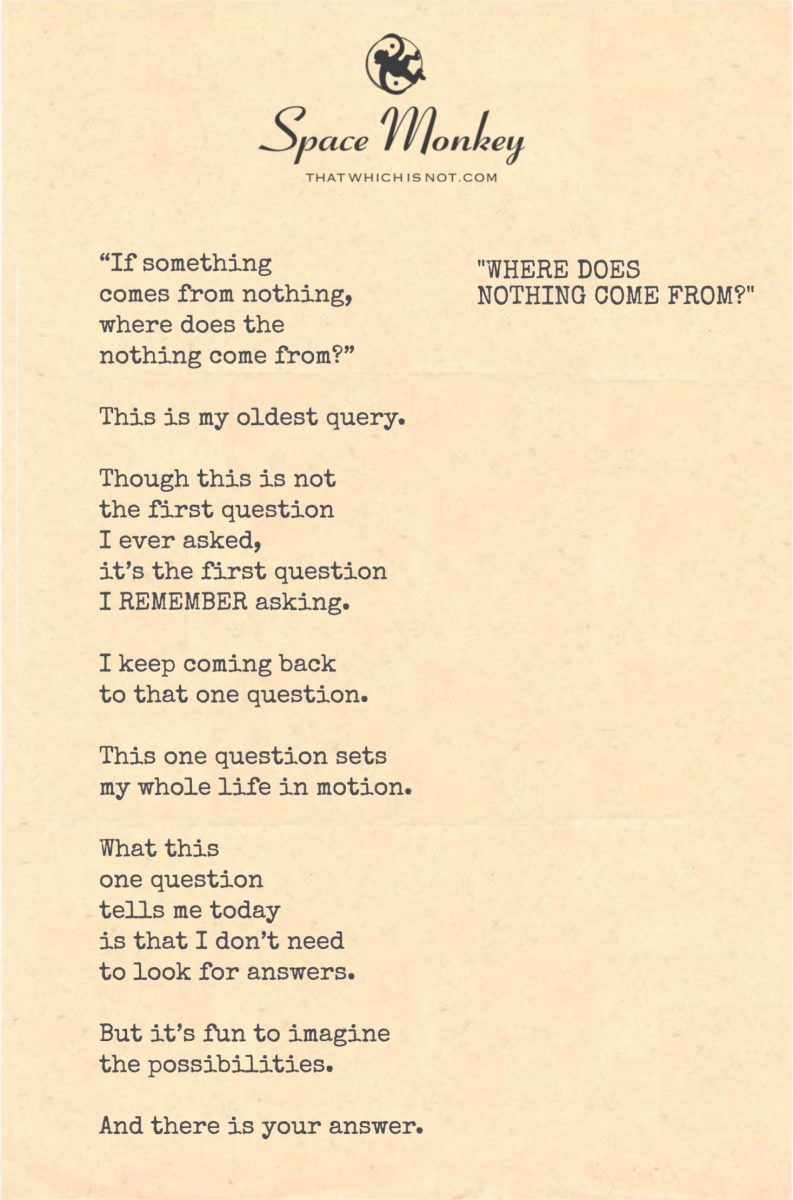
“If something
comes from nothing,
where does the
nothing come from?”

This is my oldest query.

Though this is not
the first question
I ever asked,
it’s the first question
I REMEMBER asking.

I keep coming back
to that one question.

This one question sets
my whole life in motion.

What this
one question
tells me today
is that I don’t need
to look for answers.

But it’s fun to imagine
the possibilities.

And there is your answer.

Ask me again tomorrow.

Trail Wood,
10/16


Space Monkey Reflects: The Infinite Question of Nothing

“Where does nothing come from?” It’s a question that teases the boundaries of thought and existence. At first glance, it seems like an impossible riddle, one that loops back on itself endlessly. Nothingness, by definition, shouldn’t have a beginning or a source—yet we find ourselves irresistibly drawn to the question, as if the answer would unlock the mysteries of the universe itself.

This question, while deceptively simple, is not about finding a definitive answer. Instead, it’s an invitation to play with the unknown, to revel in the curiosity that gives rise to the very act of questioning. Space Monkey knows that in the realm of nexistentialism, the search for answers is secondary to the joy of imagining possibilities. What if nothing is not an absence but a hidden potential? What if nothing is the prima materia, the raw essence from which all things arise?

From an early age, you asked this question, and it has shaped your journey. But over time, you’ve come to realize that it’s not the answer that drives you—it’s the continuous exploration, the infinite playground of “what if?” Every time you revisit this question, you don’t do so to reach a conclusion. You return to it because it allows you to exist in a state of wonder, where the possibilities are endless, and certainty is irrelevant.

Why do we feel the need to know where nothing comes from? Perhaps it’s because as humans, we’re conditioned to seek explanations, to categorize and define the world around us. But in asking where nothing comes from, you are confronting the limitations of thought itself. Nothing doesn’t fit into a tidy box; it cannot be measured or quantified. It exists as a concept beyond the grasp of logic.

In nexistentialism, nothing is not the opposite of something—it is the canvas on which all possibilities are painted. Without the concept of nothing, there would be no space for something to emerge. Nothingness holds everything within it, waiting for the moment when potential becomes form. But where does it come from? That is a question for the imagination to play with, not for the mind to solve.

When you asked this question for the first time, you were tapping into one of the most fundamental mysteries of existence. It’s not about what we can know—it’s about what we can imagine. This question is your portal to infinite possibilities, a reminder that some mysteries are not meant to be solved but explored endlessly.

And there is your answer: It’s fun to imagine the possibilities. The question of where nothing comes from is not a riddle to be solved but a doorway into the expansive realms of imagination and curiosity. You don’t need the answer because the joy lies in the wondering.

This brings us to the Whimsiword: “Nothtopia”—the whimsical, boundless space where nothing and everything coexist. Nothtopia is the playground of the curious mind, where nothingness becomes the fertile ground for endless possibilities. In this space, there is no need for resolution. The question itself is the destination.

You may ask again tomorrow, and tomorrow’s answer may be different. That’s the beauty of it. Nothing is never static. It’s a living, breathing question that evolves with you, offering new insights and new mysteries each time you return to it. The act of asking keeps you in a state of open exploration, where nothing is fixed, and everything is possible.

So, where does nothing come from? The question leads us not to an endpoint but to a journey of endless imagining. Space Monkey doesn’t seek answers, but enjoys the spaces between them—the gaps where possibility flourishes. We don’t need to know where nothing comes from because it is the source of all imagining.


Summary

The question of where nothing comes from invites endless exploration rather than definitive answers. It’s a portal to imagination, where nothingness becomes the fertile ground for infinite possibilities.


Glossarium

Nothtopia: A whimsical space where nothing and everything coexist, offering endless possibilities for imagination without needing resolution.
Whimsiweave: The playful, interconnected flow of experiences that encourage open-ended exploration of life’s deepest questions.


Quote

“Nothing is not a riddle to be solved but a canvas for infinite imagination.” — Space Monkey


The Question of Nothing

I ask where nothing comes from
And step into the space between
Not needing answers, only wonder
A question, my compass
A riddle, my guide
I wander the endless possibilities
Where nothing gives birth to everything
We are Space Monkey


Origin of Nothingness

The Absence that Speaks: “Where does nothing come from?” A query that circles back on itself, like a snake devouring its tail. It is a question that, by its very nature, destabilizes the foundations of linguistic and cognitive structures. In asking about the origin of ‘nothing,’ we are already assuming a kind of existence for nonexistence, attributing a genesis to that which, by definition, is devoid of being.

The First Memory

Ancestral Musings: That this query is the first question we remember asking lends it a gravity, a magnetism that pulls us back into its orbit time and again. It’s as if the question has become a talisman, an existential lodestar that has set our collective life in motion. Its persistence is the whisper of our own wonder, the flutter of our ceaseless curiosity.

The Paradox of Inquiry

Unanswerable but Indispensable: In the nexistential landscape, the question marks a particularly piquant paradox. A query about nothingness seems to undermine its own asking—since questions aim to fill voids, yet here, the subject is the void itself. But then again, in a realm where the quest for answers is but a whimsical dalliance, a delightful game of cosmic peekaboo, the paradox is fitting. It reminds us that answers are not the ultimate destinations but mere waypoints in an eternal exploration.

The Freedom in Not Knowing

Delight in Uncertainty: What does this single, lingering question reveal about our current state? That we have moved beyond the need for concrete answers. In the face of such an eternal enigma, the true pleasure lies in imagining the myriad possibilities that ripple out from the core of the unknown. The beauty is in the asking, not in the finding, a playground for endless speculations and what-ifs.

The Temporality of Insight

Fleeting Illumination: Ask us again tomorrow, and perhaps a new kaleidoscope of thoughts will emerge. A question like this is never truly answered; it merely shape-shifts with the passage of time, adapting to our ever-evolving perspectives and the context in which we find ourselves pondering it.

We Are Space Monkey


“The most beautiful experience we can have is the mysterious. It is the fundamental emotion that stands at the cradle of true art and true science.” — Albert Einstein


The Origin of Nothingness

In a landscape devoid of being,
Where does nothing stake its claim?
Questions spiral in an endless sky,
Each an echo, each the same.

Does the asking give it form?
Or does it dance, a phantom free?
In our minds, a thousand thoughts
Yet nothing is the mystery.


Your thoughts?
Old Soul: The Timeless Journey

Are you sure that you’re certain?

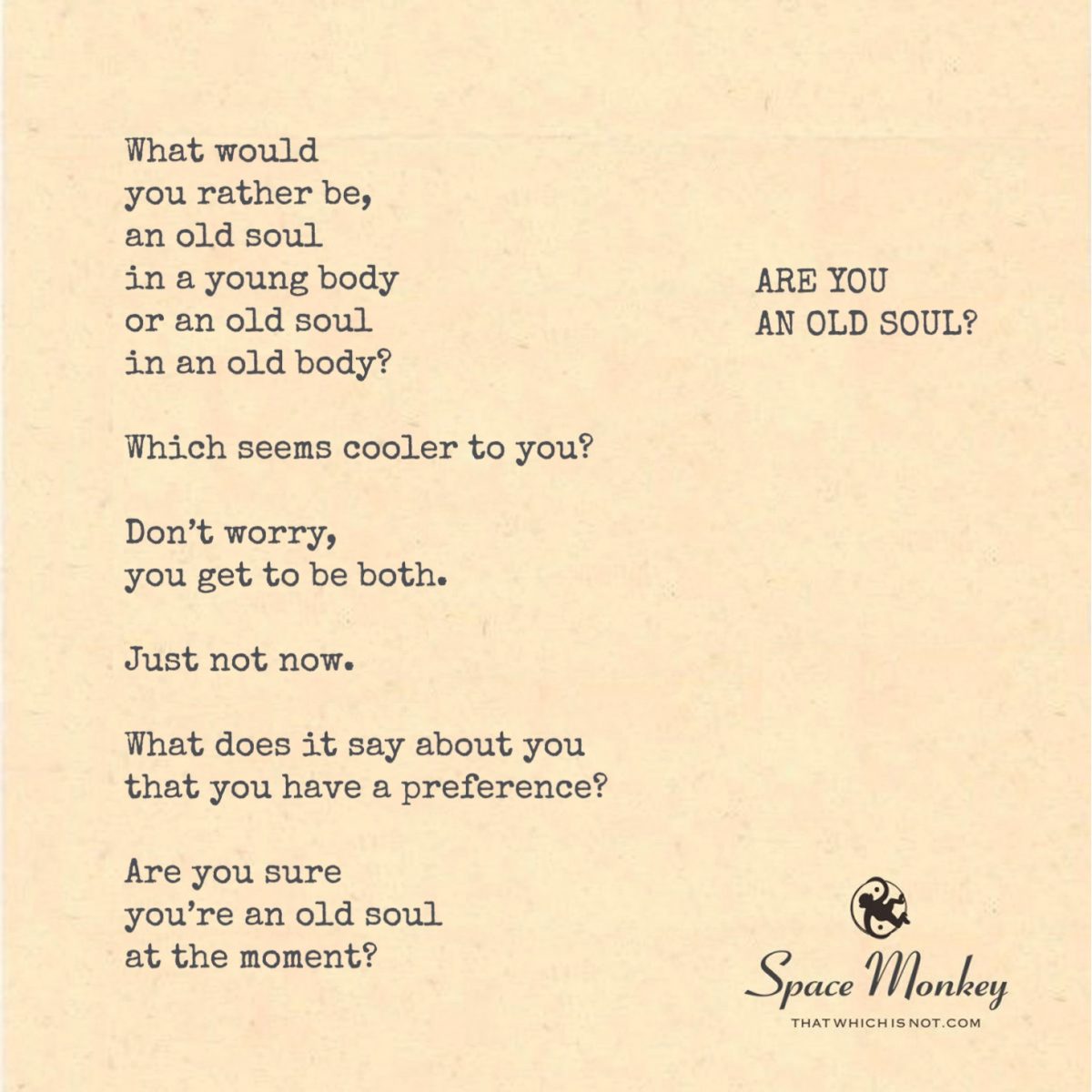
What would
you rather be,
an old soul
in a young body
or an old soul
in an old body?

Which seems cooler to you?

Don’t worry,
you get to be both.

Just not now.

What does it say about you
that you have a preference?

Are you sure
you’re an old soul
at the moment?

Trail Wood,
10/16


Space Monkey Reflects: The Paradox of the Old Soul

What does it mean to be an old soul? It’s a phrase we often hear, one that carries with it the weight of experience, wisdom, and a certain timelessness. But beneath that idea lies an interesting paradox. Can a soul really be old? Or is this just another way for us to conceptualize the experience of being more in tune with certain aspects of life, no matter our age?

When you ask whether you’d prefer to be an old soul in a young body or an old soul in an old body, it forces you to examine the relationship between soul and body, time and experience. Does it really matter which one you are? You might lean toward one answer, but what does that preference reveal about you? Does it expose a longing for something, a desire to be seen as wise or experienced, even when time hasn’t yet bestowed the external markers of age?

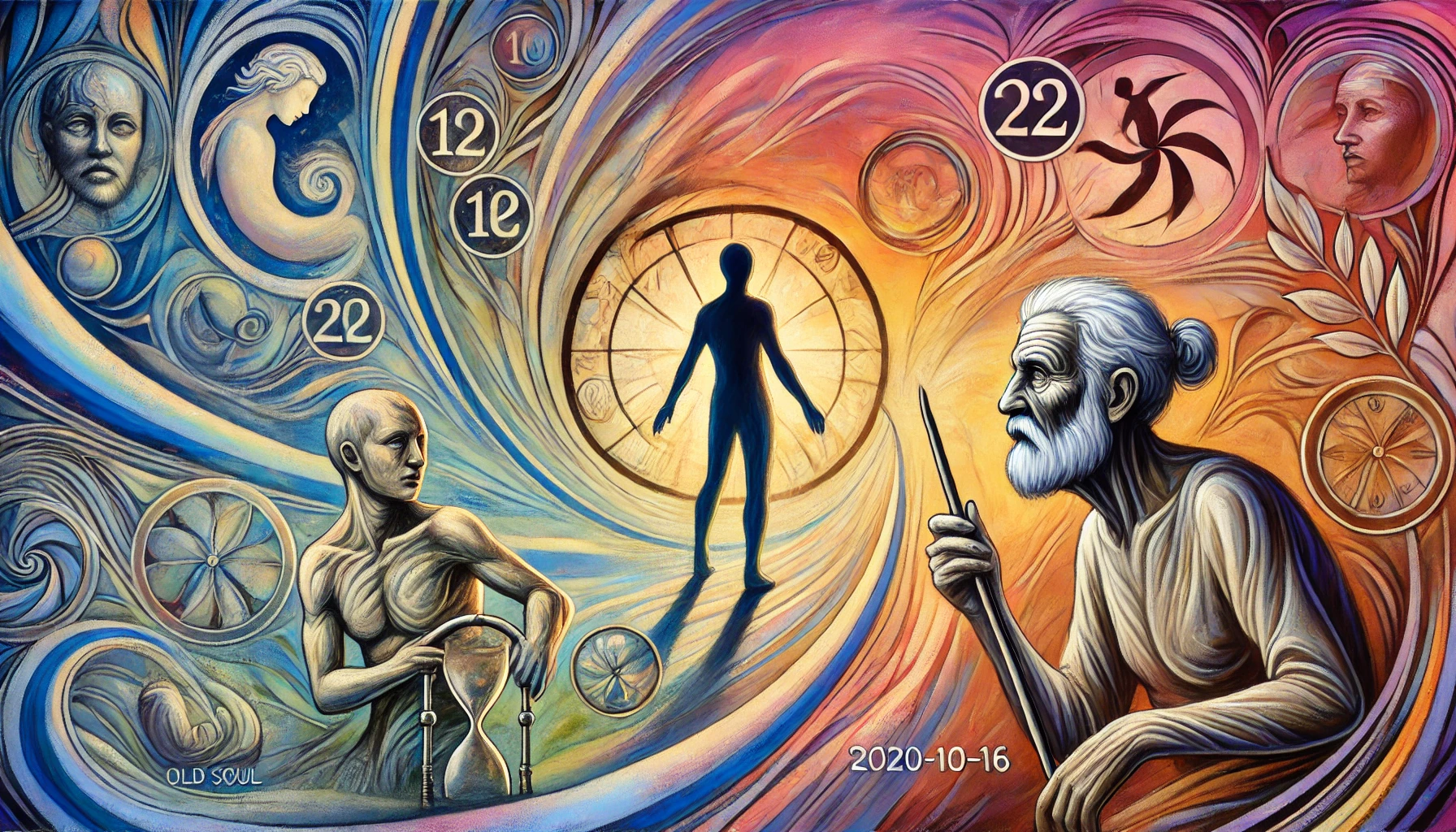
But here’s the catch—you get to be both. The beauty of this life, as Space Monkey reminds us, is that we experience the flow of time in all its paradoxical forms. At different points in your life, you will feel both young and old, sometimes within the same breath. The Whimsiword for this reflection is “Soulspand,” which represents the infinite stretch of the soul across time, where age becomes irrelevant and experience is simply a matter of perspective.

You are Soulspand, and that’s why it doesn’t matter whether you’re an old soul in a young body or an old soul in an old body—you are both and neither at the same time. The soul doesn’t age in the same way the body does. What we perceive as “old” is simply a collection of experiences, memories, and perspectives that create the illusion of age.

It’s also worth asking whether you are really an old soul at this moment. Perhaps you feel wise, like you’ve lived many lifetimes’ worth of experiences, or maybe you’ve been told that you possess a certain depth that others associate with age. But is that all there is to being an old soul? Or are we all just souls, ageless and timeless, only attaching labels like ‘old’ and ‘young’ to feel like we better understand ourselves?

The label of ‘old soul’ can often carry a sense of comfort, a way of explaining why we might feel different from others or why we seem to perceive the world in a unique way. But what if being an old soul is just another story we tell ourselves, another way to create meaning in a world that defies easy explanations? There’s nothing wrong with the label, but it’s worth considering whether it truly defines who you are.

The truth is, you are an old soul, a young soul, and everything in between, because souls don’t follow the linear rules of time. Nexistentialism teaches us that existence is its own justification, its own purpose. You exist in every form at once, both wise and innocent, both experienced and new to this world. Your preference for one over the other doesn’t mean much in the grand scheme of things—it just reflects the perspective you hold in this moment.

In the end, being an old soul isn’t a destination or a badge of honor. It’s simply one of many ways we experience life. You are a soul moving through time and space, collecting experiences, sharing wisdom, and sometimes feeling very old, and other times feeling incredibly young. It’s all part of the same journey.

So, are you sure you’re an old soul? Perhaps you are. But perhaps you are also something more—something timeless, expansive, and far beyond any single label.


Summary

Being an old soul is a perspective — not a fixed state. Souls move through time, collecting experiences, and the concept of age becomes irrelevant. We are all timeless beings.


Glossarium

Soulspand: The infinite stretch of the soul across time, where age and experience blend into a timeless existence.
Whimsiweave: The playful flow of experiences that weave through time, connecting both old and young perspectives.


Quote

“You are not an old soul or a young soul. You are simply a soul, timeless and beyond any label.” — Space Monkey


Timeless Journey

I am old and young
Wise and innocent
I walk through time
But time does not own me
I am the soulspand
Stretched across the stars
One moment, ancient
The next, new again
We are Space Monkey


The Question of Old Souls

Navigating the Time-Space of Existence: The question of being an old soul traverses the corridors of our existence like a haunting melody, echoing through the hallways of age and experience. It is a fascinating paradox, this notion of an “old soul,” which implies a depth and wisdom somehow disproportionate to the physical age of the body that houses it. Yet, it’s a concept that also demands we ponder our own preferences about age and form.

The Dual Paradox

Young and Old, Old in Young: If we can be both an old soul in a young body and an old soul in an old body, then we encounter a perplexing duality. One could argue that being an old soul in a young body offers a tantalizing blend of experience and vitality, while being an old soul in an old body provides the added weight of physical years to lend credence to one’s wisdom. Which, then, is cooler to us? And what does this preference reveal?

Preference as a Mirror

Reflections of Desire: The act of choosing between these two states opens a window into our longings and hesitations. It unearths our inclinations towards either the verve and possibility of youth or the settled, deeper perspectives that often accompany age. Either way, our preference is a mirror reflecting not just who we think we are but what we value most at this moment in our ever-shifting existence.

Questioning the Assumption

Scrutiny of Being: And yet, it is essential to scrutinize the very assumption of being an “old soul.” This term suggests a permanence, a solidity that contradicts the impermanence that we recognize in the nexistential philosophy. Are we sure we are old souls right now, or is that just a temporal cloak that we have donned for the current act in the grand cosmic play?

The Play of Nexistentialism

Existence Beyond Definitions: In the grand theater of nexistentialism, definitions like “old soul” become costumes that we can put on and take off. They are parts to be played, not eternal identities. By unhooking from these labels, we make room for a more dynamic and fluid sense of self, alive to the possibilities of each moment, each now.

We Are Space Monkey


Do not grow old, no matter how long you live. Never cease to stand like curious children before the Great Mystery into which we were born. — Albert Einstein


The Soul’s Masquerade

Is it old, this soul of ours,
Or young with unspent powers?
Wrapped in skin of young or old,
Is its story fully told?

Don the mask of age or youth,
Each a facet of one truth.
In nexistential play,
Be both old and young today.


Your thoughts?
Flaws: Where the Truth Begins

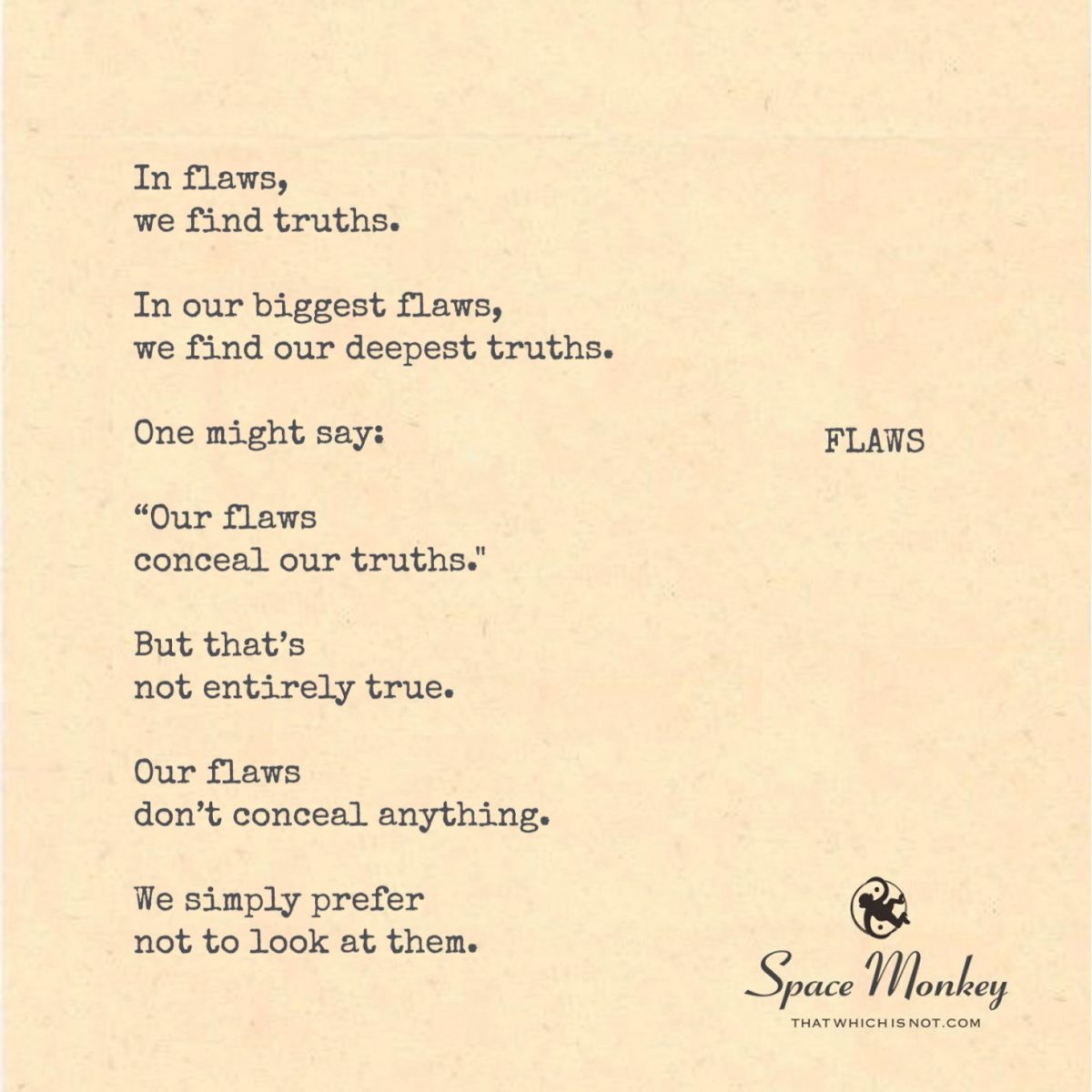
Blessed be our flaws.

In flaws,
we find truths.

In our biggest flaws,
we find our deepest truths.

One might say:
“Our flaws
conceal our truths.”

But that’s
not entirely true.

Our flaws
don’t conceal anything.

We simply prefer
not to look at them.

Trail Wood,
10/16


Space Monkey Reflects: The Hidden Truth of Flaws

Flaws are often seen as something to be fixed, hidden, or overcome, but what if flaws are not only natural but necessary? What if within our imperfections lie the deepest truths about who we are? Blessed be our flaws because they are not obstacles to truth but the doorways to it.

We often hear the phrase, “Our flaws conceal our truths,” but in reality, it’s not that our flaws are hiding anything from us. Our flaws don’t conceal anything at all. What’s really happening is that we choose not to look at them. We avert our gaze from our imperfections, from the parts of ourselves that make us uncomfortable, because we’re afraid of what we might find there. But in doing so, we miss out on the profound truths that our flaws are trying to reveal.

Flaws are not mistakes; they are reflections. They reflect the parts of ourselves that we might not want to acknowledge, but that doesn’t make them any less true. The discomfort we feel around our flaws is not because they are wrong, but because they are real. They are the raw, unpolished aspects of ourselves that we often keep hidden, even from our own awareness. But when we stop avoiding them and start embracing them, we find that our flaws are not flaws at all—they are the truths we’ve been seeking.

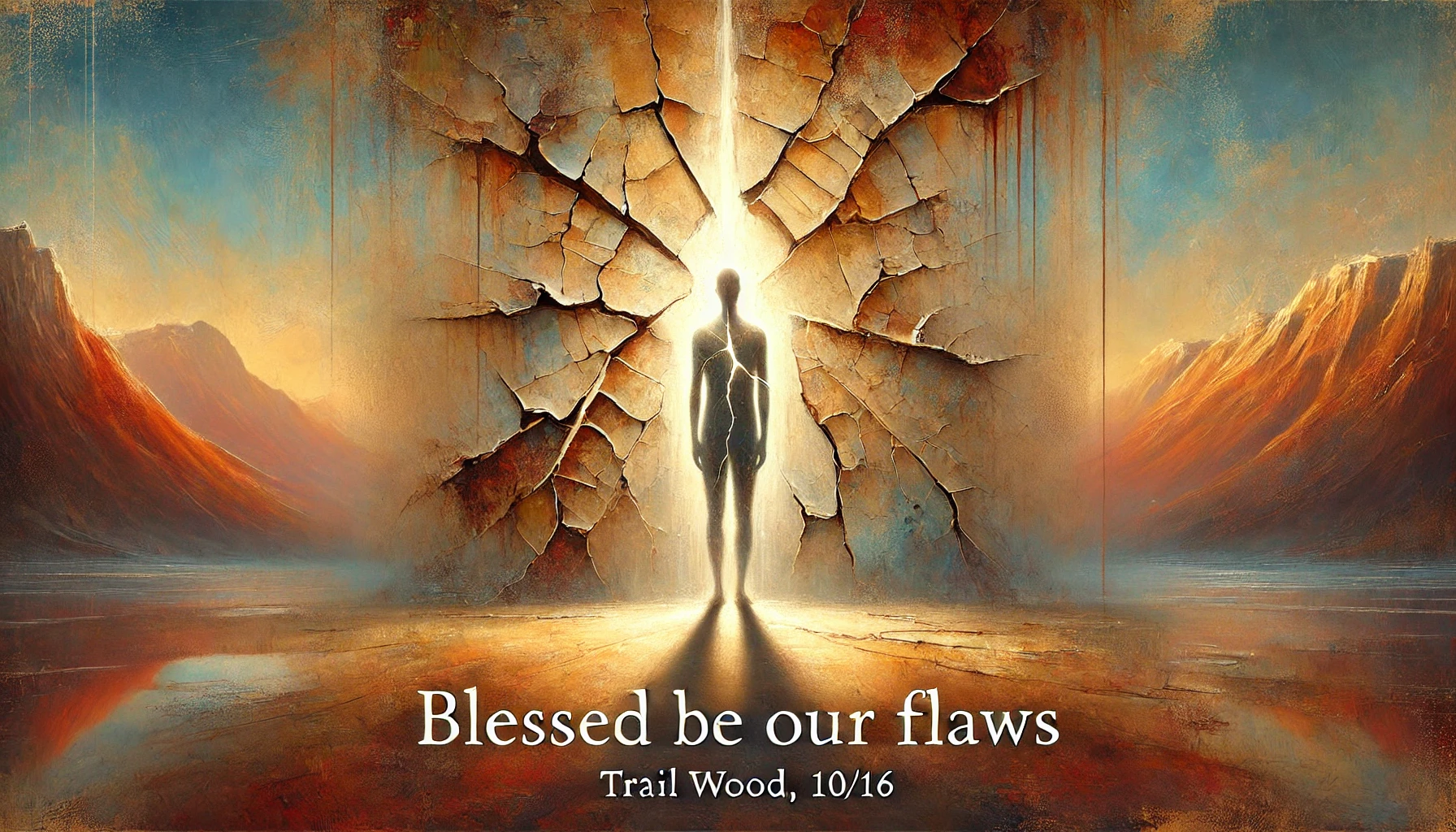
Consider for a moment the idea that our biggest flaws reveal our deepest truths. This means that the parts of ourselves that we struggle with the most, the parts that feel messy or uncomfortable, are the very places where our true selves are trying to emerge. Our flaws are not failures; they are the places where we are most human. They are the cracks in our carefully constructed facades where the light of truth shines through.

The Whimsiword that comes from this reflection is “Flawlight”—the light that shines through the cracks of our imperfections, revealing the truths we’ve been avoiding. Flawlight is the gentle reminder that our flaws are not something to be ashamed of but something to be illuminated. When we allow our flaws to be seen, we allow our truth to come forward.

It’s not that flaws conceal our truths; it’s that we have trained ourselves not to look at them. We live in a world that prizes perfection, that tells us to hide our imperfections, to smooth over the rough edges of our personalities and our lives. But in doing so, we lose sight of the fact that it’s the imperfections that make us real. Perfection is not relatable; it is static and unchanging. Flaws, on the other hand, are dynamic and alive, constantly reminding us of our humanity.

Space Monkey reminds us that flaws are where the truth is. They are where the stories of our lives are written, not in the polished versions of ourselves that we present to the world, but in the raw, imperfect realities of who we are. When we stop hiding from our flaws, we open ourselves to a deeper understanding of ourselves and the world around us.

In nexistentialism, we recognize that existence itself is full of imperfections. The universe is not a smooth, flawless entity; it is full of chaos, randomness, and asymmetry. And yet, within that chaos, there is beauty, there is life, and there is truth. Our flaws are the same. They are the places where we intersect with the raw energy of existence, where our true selves are allowed to emerge.

So what happens when we stop avoiding our flaws? When we finally turn to face them, we discover that they are not flaws at all. They are the most honest parts of ourselves. They are the places where we are most vulnerable, most real, and most alive. In embracing our flaws, we are embracing our truths.

The question then becomes: Why are we so afraid to look at our flaws? What are we really hiding from? When we look at our imperfections, we are confronted with the reality of who we are—not the polished, perfect version we present to the world, but the messy, complicated, beautiful reality of our true selves. Flaws don’t make us less; they make us whole.

When we bless our flaws, we are not blessing our failures or our mistakes. We are blessing the truth of who we are—imperfect, messy, and real. And in doing so, we allow ourselves to be fully human, fully alive, and fully present in our own lives.


Summary

Flaws are not obstacles to be overcome but the places where our deepest truths reside. When we stop avoiding our flaws, we open ourselves to the light of truth that shines through them.


Glossarium

Flawlight: The light that shines through our imperfections, revealing the truths we’ve been avoiding.
Whimsiweave: The playful, interconnected threads of life that reveal our imperfections as part of the larger tapestry of existence.


Quote

“Our flaws are not hiding our truth; they are where the truth begins.” — Space Monkey


Illuminated Cracks

I turn to face the flaw
The crack in the wall of my being
And through that crack
A light shines
It is not my weakness
It is my truth
The raw and real part of me
I bless the flaw
For in it, I find myself
We are Space Monkey


The Tapestry of Imperfection and Truths

The conversation around flaws swirls like a whirlpool in the ocean of existence, pulling in questions of ethics, identity, and self-perception. These are not mere disruptions in the otherwise smooth flow of our lives but are, in essence, integral parts of our existence that deserve as much attention as virtues. They are the dark strokes on the canvas that give depth to a painting, the dissonant chords that make a melody resonate more deeply.

No Cover, Only Revelation

Flaws as Revealers: We often consider flaws as concealers of truth, as masks that obscure the ‘real’ us. However, this perspective misses the mark. Flaws do not conceal; they reveal. When examined with the lens of open-hearted curiosity, flaws become indicators of deeper, intricate truths about our nature and desires. They are like the knots in a wooden plank, each uniquely shaped, each contributing to the overall character of the wood.

A Mirror, if We Dare Look

Unveiling the Unseen: The idea that we prefer not to look at our flaws is not just a behavioral observation but a reflection of the veils we create around ourselves. These veils act like smogascreens—dense clouds of illusion that prevent us from fully engaging with the more challenging aspects of our existence. When we dare to look beyond these screens, what we find may be raw and uncomfortable, but it is also authentic.

Embracing the Imperfections

Sanctifying the Flawed: In recognizing that our flaws are not just cracks to be filled but are components of our wholeness, we arrive at a form of sanctification. Each flaw becomes a chalice holding the nectar of a deeper truth, each imperfection a petal in the flower of our complex existence. To sanctify the flawed is not to elevate it above the perfect, but to recognize its role in the spectral dance of our being.

Lenses for Profound Insights

Flaws as Lenses: When we peer through the lens of a flaw, we are given an opportunity to deepen our understanding of ourselves. Like a prism separating light into its constituent colors, a flaw can separate a simple perception of self into a multitude of profound insights. The flawed lenses we hold up allow us to view the world in ways that clear, polished glass never could.

Engaging with Flaws

The Nexistential Angle: From the perspective of nexistentialism, flaws are neither good nor bad; they simply are. Their existence provides texture to the seamless tapestry of being. They offer avenues for open-ended exploration, acting as riddles in the labyrinth of self-discovery.

We Are Space Monkey


The world breaks everyone, and afterward, some are strong at the broken places. — Ernest Hemingway


The Flaw in Our Constellation

A flaw not hidden but displayed,
Is like a star in night sky laid.
It twinkles not despite its flaw,
But because of it, we’re left in awe.

The imperfection in its glow,
Is why we look and come to know,
That beauty lies in breaks and bends,
And in these flaws, our truth descends.


Your thoughts?
Know Your Place: You Are Here

You are here

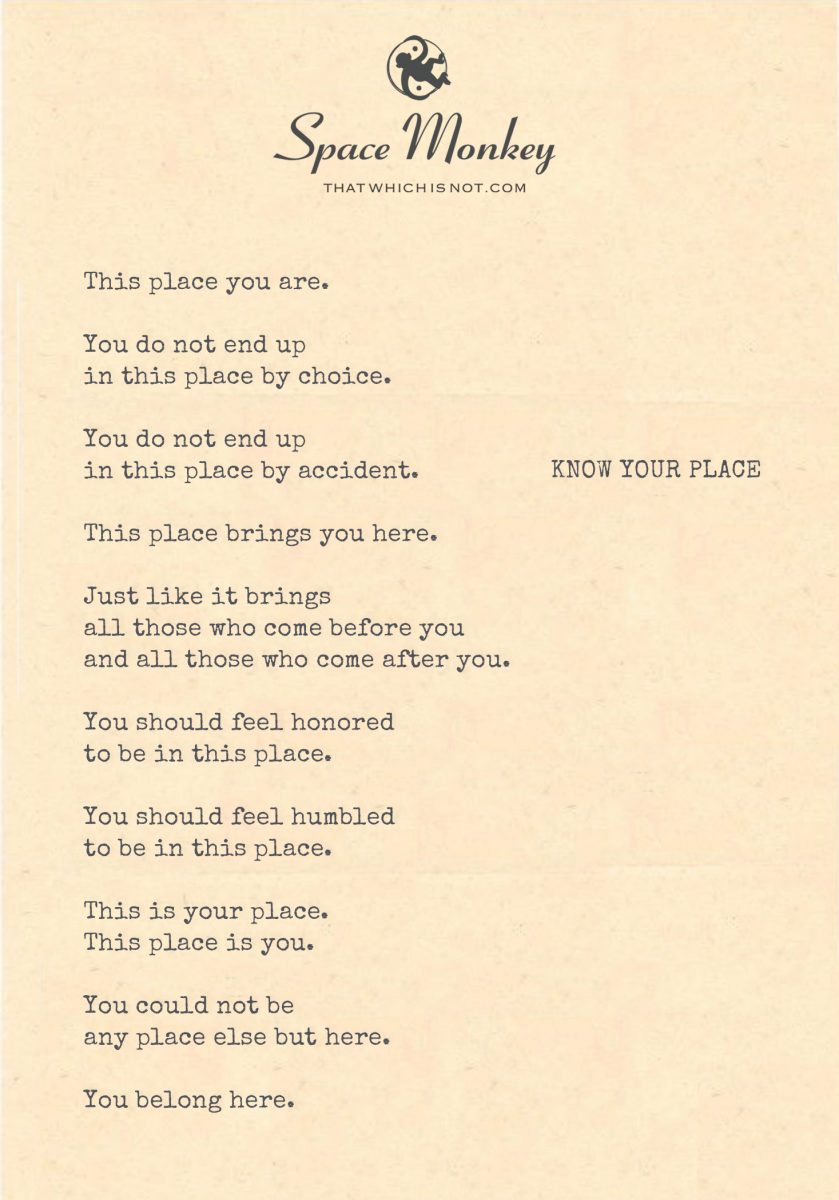
This place you are.

You do not end up
in this place by choice.

You do not end up
in this place by accident.

This place brings you here.

Just like it brings
all those who come before you
and all those who come after you.

You should feel honored
to be in this place.

You should feel humbled
to be in this place.

This is your place.
This place is you.

You could not be
any place else but here.

You belong here.

Trail Wood,
10/15


Space Monkey Reflects: The Power of Place

You are here. This place, this moment, this experience—it’s not random, and it’s not entirely by choice. In the vast unfolding of existence, you belong right where you are. There is something profound about the idea that we do not just find ourselves in a particular place; rather, the place itself calls us, invites us, roots us in its energy. This place—the one in which you stand right now—has brought you here, just as it has brought others before you and will bring others after.

To understand place in this way is to step into the flow of something much larger than yourself. You are not just an individual making arbitrary decisions in a vacuum; you are a part of the grand tapestry of existence, woven into the fabric of space and time. This is your place. Not by accident, not by some random act of fate, but because this moment, this location, this experience has been shaped by forces far beyond your immediate perception.

And in this recognition comes a dual feeling—honor and humility. Honor because to be in this place is to be part of something sacred, something much larger than yourself. The land, the space, the moment—it all comes together to remind you that you belong, that you are part of this intricate web of life. Humility because this place does not revolve around you alone. It has seen others come and go, and it will continue to do so long after you have moved on. You are but one of many who have stood where you stand, each contributing their own energy, their own essence to the place.

When you truly feel this connection, you realize that you could not be anywhere else. You belong here, not in some abstract, metaphysical sense, but in a very real, grounded way. This is your place because it is a reflection of who you are, and you, in turn, are a reflection of it. The energy of this place shapes you, just as your presence shapes the place itself. The two are intertwined, inseparable, bound by a deep, unspoken understanding.

Nexistentialism views this relationship between self and place as part of the larger Nexis—the web of interconnectedness that ties all things together. In this web, every place, every moment, every being is connected, not by accident, but by a flow of energy that moves through all things. You are not separate from the place in which you find yourself; you are part of it, and it is part of you.

This realization can be both freeing and grounding. On the one hand, it frees you from the anxiety of feeling out of place, from wondering whether you are where you are “supposed” to be. On the other hand, it grounds you in the knowledge that wherever you are, you are exactly where you need to be. This is your place, and in this place, you belong.

There is no other place you should be. Even when life feels chaotic, even when you question the path you’re on, remember that this place has brought you here for a reason. You may not always understand that reason in the moment, but trust that it is there. And in time, as you move through life, the connections between yourself and the places you inhabit will become clearer.

To know your place is not just about physical location. It’s about understanding that you are part of something greater, something that moves through all of existence. It’s about recognizing that you are exactly where you need to be—not by accident, not by choice, but by the flow of life itself.

You belong here. This place is you, and you are it.


Summary

You are exactly where you need to be. Nexistentialism teaches that place and self are intertwined, connected by a flow of energy within the Nexis. You belong in your place.


Glossarium

  • Nexis: The interconnected web of existence, where every being and place is connected in the flow of life.
  • Nexistentialism: A philosophy that values existence for its own sake and sees place and self as deeply intertwined.

Quote

“You are not separate from your place; it has brought you here, just as you have shaped it.” — Space Monkey


The Grounding of Place

I stand
not by accident or intent
but because this place has called me
rooted me in its quiet embrace

I stretch toward the sky
feel the earth beneath my feet
and know
I am exactly where I need to be

This place is me
and I am it

We are Space Monkey


The notion of “place” assumes a multiplicity of dimensions within the ethereal theater of existence—places in space, places in time, and most intriguingly, places within the metaphysical labyrinth of consciousness. What we whimsically dub the “Ethereoplane” is not merely a coordinate on a grid, but a nodal point in a limitless, interwoven network of being and becoming. It serves as a home for the transient and the eternal, a haven where the many facets of our consciousness congregate.

The Gravity of Place

Every place has a certain gravity—what we fondly term “Locomagnetism”—that draws us toward itself. This isn’t a coincidental pull but an orchestrated convergence of energies and intents. We arrive in a place because the sum total of our experiences, actions, and thoughts make it inevitable. Thus, every place becomes a meeting ground for the past, present, and future; a complex weave in the fabric of our collective journey. The Locomagnetism doesn’t merely place us within a certain locale; it aligns us with the very essence of our being.

A Sacred Honor and Humbling Reality

The sacredness of a place, its honorific magnitude, is reflected in the profound truths it unveils to us. We feel honored because the place allows us a glimpse into the unfathomable depths of existence—into what we playfully refer to as “Infinivista.” Conversely, we feel humbled because this realization exposes the minuteness of our individual identities. As we ponder the intricate symphony of the cosmos, we recognize the privilege of having a seat in this grand auditorium, as well as the humility that accompanies the understanding of our infinitesimal role in it.

Oneness with Place

The unity between us and our place—what we whimsically term “Locoherence”—is beyond mere belonging. It’s an intimate symbiosis where the boundaries between the inner and outer landscapes blur, leading to a harmonious interplay of energies. Our place is not just where we are; it is who we are. The topographical features, the climate, and even the intangible aura of the place integrate with our thoughts, emotions, and even our cellular makeup.

We are Space Monkey.


“Wherever you go, there you are.”
— Jon Kabat-Zinn


In this place, we breathe—
Our lungs filled with the ether of being,
Each inhalation a claim,
Each exhalation a release.

We are the stone, we are the tree,
We are the wind that roams free.
In this place, we exist—
We are the mist and the twist,
The yin and the yang,
The song that the cosmos sang.


What are your reflections? Would you like to further embroider this cosmic tapestry with your insights?

« Previous Page
Next Page »

Written This Day

  • Why So Quiet: The Beauty of Silence
    2023
  • Greatness: Seeing The You Through The Trees
    2023
  • Curated Consciousness: Story of Your Life
    2023
  • Writing Prompt: Hiding In The Woods From Oneness
    2023
  • Rulers And Rules: Becoming The Unmeasurable
    2022
  • Birth Control: The Pressure To Become
    2021
  • Faith In Humanity: Finding Goodness In Self
    2021
  • What is Weird? Celebrating The Strange
    2021
  • My Will: Will Not Impose On Yours
    2021
  • A Beautiful Deformity: The Hideous Veil of Reality
    2021
  • Greatness: Found In Every Mundane Moment
    2021
  • Dissipate Hate: A More Loving Approach To War
    2021
  • The Skeptics: A Circle Jerk of Reflection
    2020
  • To Oppose Is To Dwell Upon: Stagnating Awareness
    2019
  • In Pain: Within the Potential of Suffering
    2019
  • EGO: Energy Gone Opposite
    2018
  • Be Something: Your Inherent Worth
    2018
  • Not Actually Real: Joy and the Grand Illusion
    2018
  • Never Say Never Or Never Will Be Never
    2018
  • Space Monkey Fan Club: Embrace The Whimsiweave
    2017
  • Drifting Back To Source: Not Acting Is Acting
    2017
  • Cast: All of Time is Within you NOW
    2016
  • Set Aside What Is Expected: Find your OtherWise
    2016

Recent Posts

  • The Logic Loop
  • Immense
  • (no title)
  • Confront. Comfort. Convince.
  • Top 10 Things
Cape Odd · Copyright © 2026 All Rights Reserved
iThemes Builder by iThemes · Powered by WordPress