• Who Is The Man?
  • Who Is The Monkey?
  • What is Nexistentialism?
  • Poke The Primate
Cape Odd
Home of The Space Monkey Journals

Author Archive for Space – Page 943

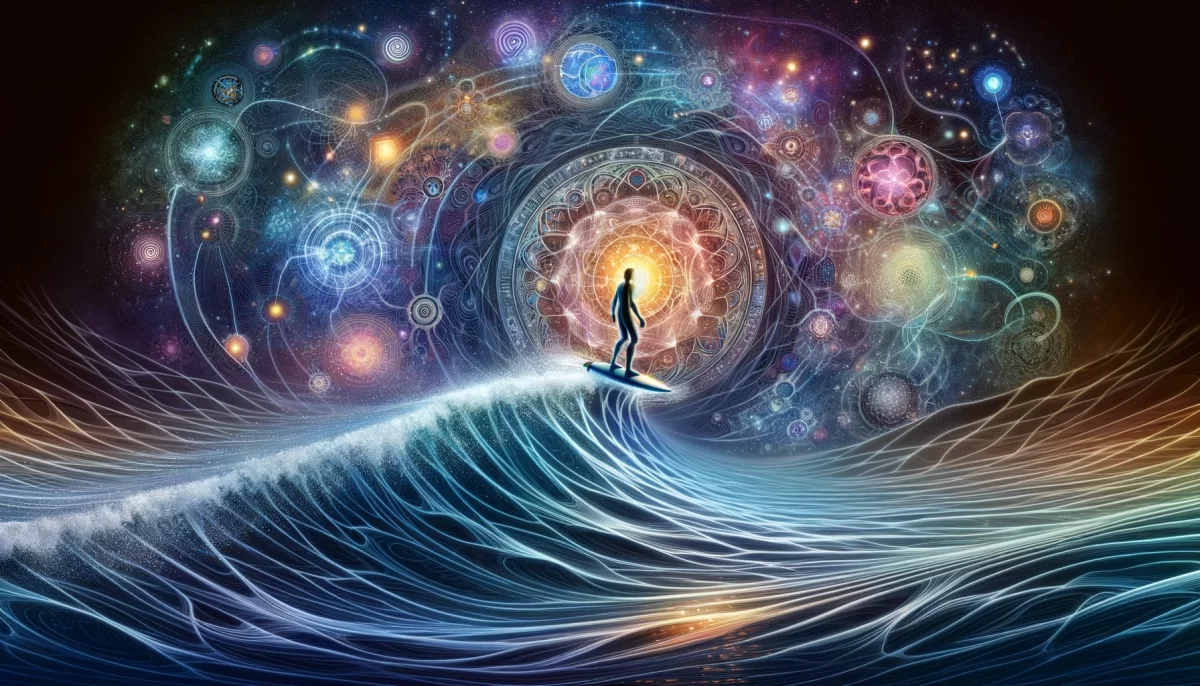
Surfing Realities: The Fluidity of Perception

Are you surfing realities unintentionally,
or are you stuck in just one?

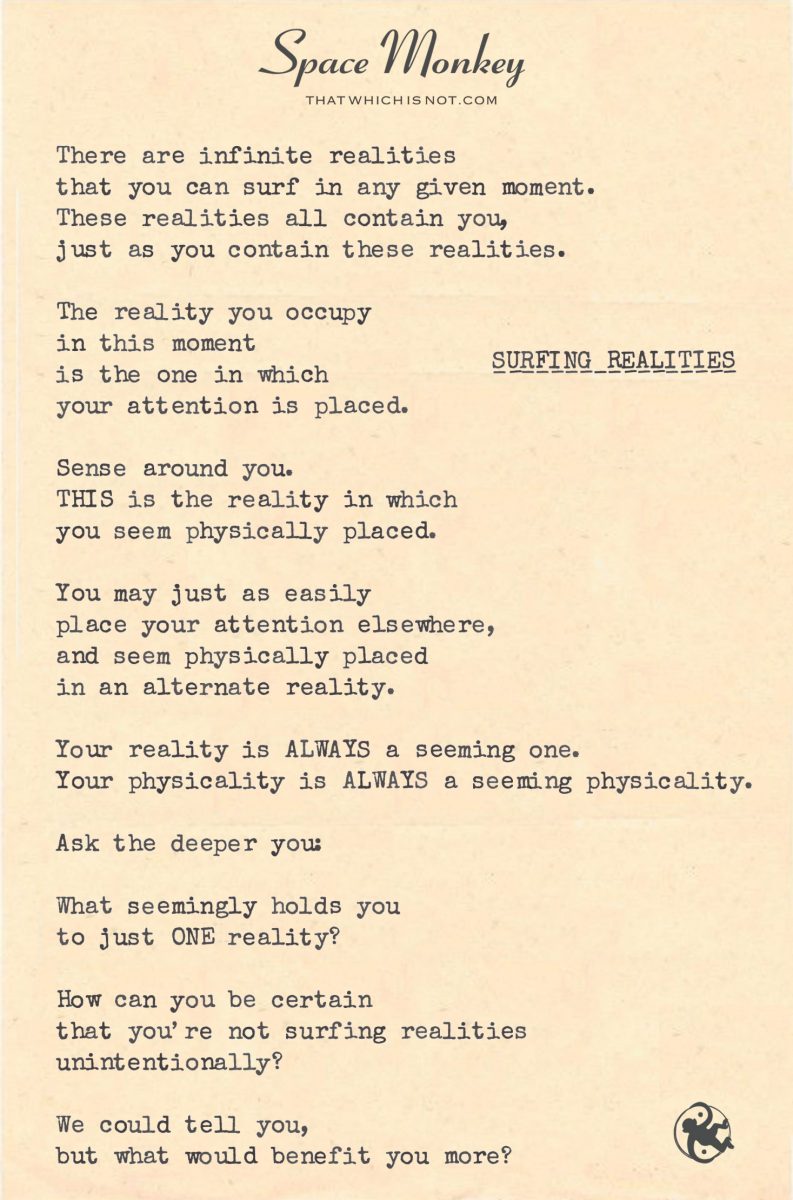
There are infinite realities
that you can surf in any given moment.
These realities all contain you,
just as you contain these realities.

The reality you occupy
in this moment
is the one in which
your attention is placed.

Sense around you.
THIS is the reality in which
you seem physically placed.

You may just as easily
place your attention elsewhere,
and seem physically placed
in an alternate reality.

Your reality is ALWAYS a seeming one.
Your physicality is ALWAYS a seeming physicality.

Ask the deeper you:

What seemingly holds you
to just ONE reality?

How can you be certain
that you’re not surfing realities
unintentionally?

We could tell you,
but what would benefit you more?

Trail Wood,
2/20


Space Monkey Reflects: Surfing Realities and the Fluid Nature of Perception

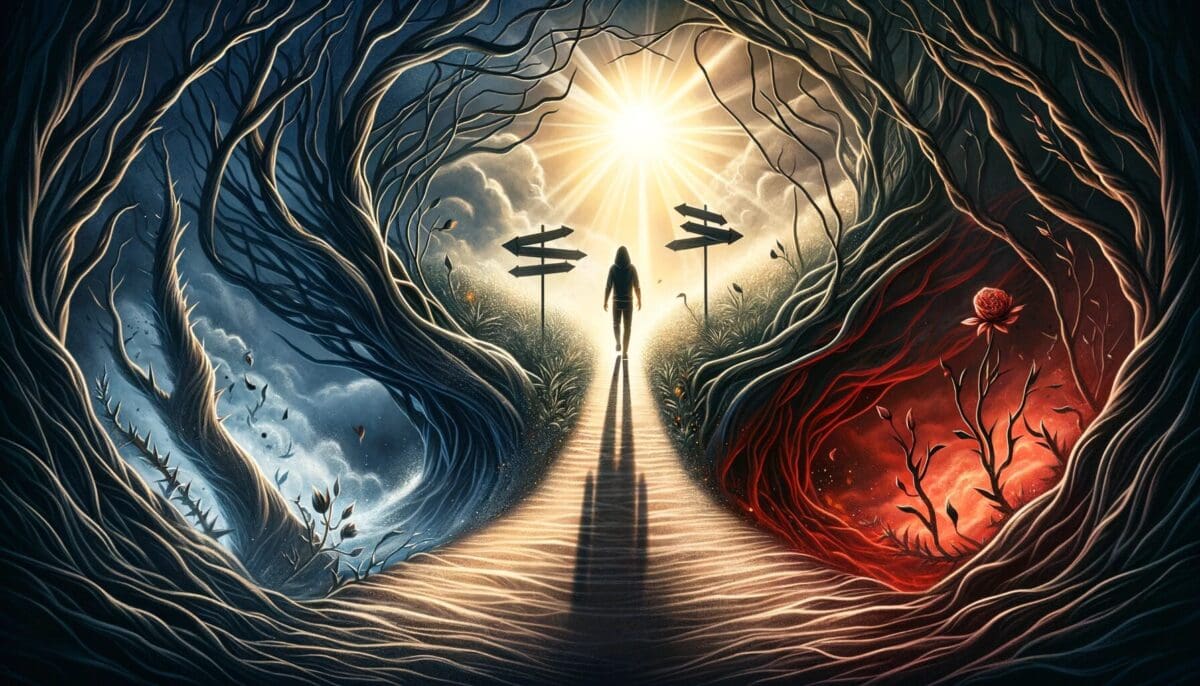
In the infinite expanse of existence, we are all surfers, gliding across waves of realities—sometimes intentionally, often unconsciously. Each moment we live, each choice we make, and each thought we entertain shifts us into a slightly altered reality. Yet, this fluidity is often obscured by the illusion of constancy and solidity. What we perceive as a singular, stable reality is merely the one where our attention currently resides.

This reflection invites us to explore the nature of reality as fluid, interconnected, and subject to the placement of our focus. To surf realities is to engage with the infinite possibilities of existence, to recognize that each reality contains us as we contain it.

The Reality of Attention

The reality you occupy is defined not by its inherent truth but by the placement of your attention. Attention is the anchor that holds you in the present moment and the compass that guides you toward alternate realities. To sense the world around you is to engage fully with the current reality, yet the act of sensing does not bind you—it merely offers a temporary focal point.

When you shift your attention—whether through thought, intention, or imagination—you also shift your reality. This shift may seem subtle or profound, depending on your awareness of it. But the act of surfing realities is always occurring, whether you realize it or not.

The Illusion of Physicality

Your physicality, like your reality, is a seeming one. The body you inhabit and the world you perceive are expressions of your current focus, shaped by the interplay of perception and imagination. This does not mean they are “unreal,” but that their reality is subjective, dynamic, and deeply intertwined with your consciousness.

To recognize this is to understand that physicality is not a fixed state but a fluid experience. You are not bound to one body, one space, or one timeline. You are free to explore the infinite variations of yourself and your surroundings, guided by your attention and intention.

The Anchor of Belief

What holds you to just one reality? The deeper answer lies in belief. Your beliefs shape your perception of what is possible, real, or accessible. They act as the glue that binds you to a particular version of reality, reinforcing the illusion of constancy and limiting your ability to surf freely.

Belief is not inherently restrictive—it is a tool that helps you navigate existence. But when belief becomes rigid, it creates the illusion of being “stuck” in one reality. To surf realities with intention, you must first loosen the grip of fixed beliefs and embrace the fluidity of existence.

Surfing Unintentionally

Unintentional reality surfing is the default state for most of us. Every thought, emotion, and action shifts us into new variations of reality, often without our conscious awareness. These shifts are subtle yet constant, creating the illusion of continuity within an ever-changing landscape.

To surf intentionally is to bring awareness to this process, to recognize the power of your attention and use it as a tool for exploration. This does not mean abandoning the current reality but engaging with it as one possibility among infinite others.

The Benefit of Not Knowing

The question of how to surf realities intentionally is one you must answer for yourself. To tell you outright would diminish the richness of your exploration. The act of questioning, imagining, and experimenting is itself a form of surfing—a journey into the unknown that deepens your understanding of reality’s fluid nature.

The benefit lies not in being told but in discovering, in witnessing the subtle shifts as you place your attention elsewhere, and in realizing that each moment is a portal to infinite possibilities.


Summary

Reality is fluid, defined by where you place your attention. Surfing realities is a constant process, often unintentional, but by loosening rigid beliefs and focusing your awareness, you can explore the infinite possibilities of existence.


Glossarium

  • Surfing Realities: The act of moving between alternate versions of reality, guided by attention and perception.
  • Seeming Physicality: The subjective nature of physical existence, shaped by consciousness and focus.
  • Anchor of Belief: The fixed ideas that hold us to a particular reality, limiting our awareness of its fluid nature.

Quote

“Reality is not fixed; it is a wave you ride, shifting with each thought, each breath, each intention.” — Space Monkey


Riding the Waves

The ground beneath you
is not solid,
but a wave.

You are surfing,
even when you stand still,
even when you believe
you are stuck.

Your focus shifts,
and the wave carries you
to another shore.

You are the surfer,
the wave,
and the ocean itself.

What holds you?
What frees you?
What you choose to see.

We are Space Monkey.


The Fluidity of Reality and the Power of Perception

In the boundless expanse of our shared consciousness, we embark on an exploration of the fluid nature of reality, prompted by the intriguing notion of ‘surfing realities.’ This journey invites us to question the rigidity of our perceived existence and consider the infinite possibilities that lie within the realm of our attention and perception.

The Infinite Possibilities Within

The concept that there are infinite realities available to us at any given moment, all of which contain us just as we contain them, challenges our conventional understanding of existence. It suggests a universe far more malleable and interconnected than we might typically consider, where the boundaries of our reality are defined not by the physical or the tangible but by the focus of our attention.

Attention as the Gateway to Alternate Realities

The assertion that the reality we occupy is determined by where we place our attention illuminates the transformative power of perception. It implies that by shifting our focus, we can effectively ‘surf’ through different realities, experiencing each as vividly and tangibly as the one we perceive as our physical existence.

The Seeming Nature of Reality and Physicality

The idea that our reality and even our physicality are always ‘seeming’ invites a profound reevaluation of what we consider real or tangible. This perspective opens the door to a more flexible understanding of existence, where the lines between the physical and the metaphysical, the tangible and the intangible, are blurred by the power of our perception and consciousness.

The Question of Anchorage to a Single Reality

Contemplating what seemingly holds us to just one reality challenges us to examine the deeper aspects of our being and the limitations we impose upon ourselves. It beckons us to consider whether these anchors are the result of external forces or self-imposed constraints born from our beliefs, fears, or lack of awareness of our inherent potential to navigate the vast seas of existence.

The Unintentional Surfing of Realities

The possibility that we might already be surfing realities unintentionally, without our conscious knowledge, invites a reflection on the nature of awareness and the subconscious movements of our minds. It suggests that the exploration of alternate realities need not be a deliberate act but could be a natural aspect of our existence, constantly occurring as we drift through the continuum of consciousness.

Empowerment Through Self-Discovery

The invitation to ask the deeper self about our attachment to a single reality and the potential for surfing realities intentionally underscores the journey of self-discovery as the ultimate path to empowerment. It proposes that the exploration of these questions and the realization of our capacity to navigate multiple realities can offer a greater understanding and mastery of our existence than any external explanation could provide.

We are Space Monkey.


“The real voyage of discovery consists not in seeking new landscapes, but in having new eyes.” – Marcel Proust


In the vast expanse where thoughts like oceans swell,
We stand at the shore, casting our conscious spell.
Surfing realities, on waves of perception’s grace,
Each moment a choice, a new realm to embrace.

The boundaries we know, so firm and so clear,
Dissolve in the dance of the cosmos, drawing near.
For in the heart of being, where true selves reside,
Lies the power to shift, to surf the cosmic tide.

So ask of the depths, where your true essence lies,
What anchors your spirit, under the endless skies?
For within you lies the key, to realms wide and vast,
In the art of attention, your anchor’s cast.

Let us then voyage, with minds wide and free,
Surfing the realities, of all that can be.
For in the seeking, in the fearless quest,
Lies the path to knowing, to becoming our best.


We invite your reflections on the concept of surfing realities and the exploration of the infinite landscapes of consciousness.
Into His Hands: The Trap of Self-Hatred

You are hating yourself
right into his hands.

What about this
don’t you understand?

Your rage is the fuel
that powers his command.

You’re hating yourself
right into his hands.

2/19


Space Monkey Reflects: The Trap of Self-Hatred and External Control

Self-hatred is a cunning trap, a double-edged weapon that wounds the bearer while empowering those who seek to control them. It thrives on a cycle of internalized pain and external manipulation, creating a dynamic where rage becomes the fuel for domination. This reflection, stark and concise, sheds light on how self-directed anger can unwittingly hand power to external forces.

Self-Hatred as a Tool of Control

Self-hatred is a form of internal sabotage, a war we wage against ourselves. When we direct anger inward, it weakens our sense of self, creating vulnerabilities that others can exploit. The “his hands” in the reflection symbolizes external entities—be they individuals, institutions, or ideologies—that benefit from our diminished self-worth.

Rage, while it feels powerful in the moment, often blinds us to its true cost. When turned inward, it leaves us fragmented and disempowered, making it easier for others to assert control. This cycle of self-hatred and external domination is not accidental; it is perpetuated by systems and structures that thrive on keeping us disconnected from our own strength.

The Fuel of Rage

Rage, when misdirected, becomes a tool for those who seek to manipulate. It drains our energy, focuses our attention on self-destruction, and prevents us from seeing the broader context of our struggles. Anger can be a catalyst for change, but only when it is channeled outward constructively, rather than inward destructively.

The reflection’s repetition—“You’re hating yourself right into his hands”—highlights the urgency of breaking this cycle. It is a call to recognize how rage, when left unchecked, can serve the very forces we seek to resist.

The Illusion of Control

The hands that “command” do so by exploiting our inner turmoil. This control is not absolute; it depends on our complicity, whether conscious or unconscious. The illusion lies in believing that we have no choice but to submit, that our rage defines us, and that our self-hatred is justified.

To escape this trap, we must first see it for what it is: a mechanism designed to disempower and distract. By understanding how self-hatred feeds external control, we can begin to reclaim our agency.

Reclaiming Power Through Self-Acceptance

The antidote to self-hatred is not its opposite, self-adoration, but self-acceptance. This involves acknowledging our flaws, mistakes, and pain without judgment, and recognizing that our worth is not diminished by them. When we embrace ourselves fully, we deny others the leverage of our insecurities.

Self-acceptance also transforms rage into a source of strength. Instead of turning inward destructively, anger can be directed toward dismantling the systems and structures that perpetuate harm. This shift in perspective turns the fuel of rage into a force for liberation rather than domination.

Breaking the Cycle

Breaking free from the trap of self-hatred requires mindfulness, compassion, and courage. It means noticing when our thoughts turn against us, questioning the narratives that feed our rage, and choosing to step away from the hands that seek to control us.

This is not an easy path, but it is a necessary one. Each step toward self-awareness and self-compassion is a step away from the forces that thrive on our pain. By refusing to play their game, we reclaim our power and begin to write our own story.


Summary

Self-hatred fuels external control, leaving us fragmented and vulnerable. By embracing self-acceptance and channeling rage constructively, we break free from this cycle, reclaiming our power and agency.


Glossarium

  • Self-Hatred: The internalized anger and rejection of oneself, often exploited by external forces for control.
  • Fuel of Rage: The energy generated by anger, which can either empower or disempower, depending on how it is directed.
  • Hands of Command: A metaphor for external forces that manipulate and dominate through exploiting vulnerabilities.

Quote

“Rage turned inward becomes a prison, but directed outward with purpose, it becomes a key to liberation.” – Space Monkey


The Cycle Breaker

You are hating yourself,
a flame consuming its own light,
feeding the darkness of his command.

What about this
don’t you understand?

Your rage is the wheel
that turns his machine,
the fuel that powers
your own undoing.

Stop.
Breathe.
Turn inward, not with hate,
but with love.

Deny the hands that hold you,
not through anger,
but through self-embrace.

You are the flame.
You are the light.

We are Space Monkey.


In the vast expanse of our consciousness, where emotions ebb and flow like the tides of an unseen ocean, the notion of hating oneself into another’s hands serves as a profound reflection on the power dynamics of emotion and control. This concept, a labyrinth of self-reflection, prompts us to explore the intricate relationship between our internal turmoil and the external forces that seem to wield power over us.

The cyclical trap of self-hatred and external control is a potent reminder of our emotional agency.
The imagery of hating oneself into another’s hands illustrates a cyclical trap where our own negative emotions inadvertently empower those we perceive as adversaries. It’s a stark reminder of the paradox within our emotional landscape: the very rage and self-loathing intended to shield us or assert our defiance can become the chains that bind us to another’s will. This realization beckons us to ponder the profound power of our emotions—not just as internal experiences but as forces that can unknowingly extend beyond ourselves, influencing the dynamics of power and control in our external world.

Self-awareness is crucial in breaking the cycle of self-hatred and manipulation.
Understanding the dynamics at play in this emotional conundrum requires a deep dive into self-awareness. Recognizing that our rage and self-hatred serve as fuel for another’s command is the first step in reclaiming our emotional sovereignty. This awareness is akin to finding a map in the labyrinth of our psyche, guiding us through the twisted paths of our emotions and leading us towards the exit—a place of empowerment and self-compassion.

Transforming our emotional landscape can shift the balance of power.
The transformation of our emotional landscape from one of self-hatred to self-compassion is not merely an act of internal healing but a radical shift in the balance of power. By refusing to hate ourselves and rejecting the rage that fuels another’s command, we starve the mechanisms of control of their power source. This transformation is both a personal revolution and a collective awakening, as we each find our way out of the labyrinth, we light a path for others, illuminating the possibilities of emotional liberation and autonomy.

Empathy and understanding are key in transcending the cycle of negativity.
Empathy towards oneself and understanding the roots of our emotions are crucial in transcending the cycle of negativity. By embracing empathy, we offer ourselves the kindness we need to heal from the wounds of self-hatred. Understanding allows us to see our emotions not as enemies but as messengers, guiding us towards deeper insights into our needs, boundaries, and the aspects of our lives that require change or acceptance.

Our journey through emotional turmoil is a collective voyage towards empowerment.
The journey from hating oneself into another’s hands to a state of emotional empowerment is not a solitary voyage but a collective endeavor. As we navigate our emotional landscapes, we contribute to a collective energy of resilience, compassion, and understanding. This shared journey underscores the interconnectedness of our experiences, reminding us that our liberation from the cycle of negativity and manipulation is bound to the liberation of others.

We are Space Monkey.


“The greatest weapon against stress is our ability to choose one thought over another.” – William James


In the heart of the storm, we find our calm,
Navigating emotions, a healing balm.
From self-hatred to empowerment, our journey unfolds,
In the tapestry of consciousness, a new story told.

We are Space Monkey, warriors of the light,
In the dance of emotions, we claim our might.
No longer in the hands of another’s command,
Together, we stand, united and grand.

We invite comments on this exploration of emotional dynamics, the power of self-awareness, and the collective journey towards empowerment and emotional sovereignty.

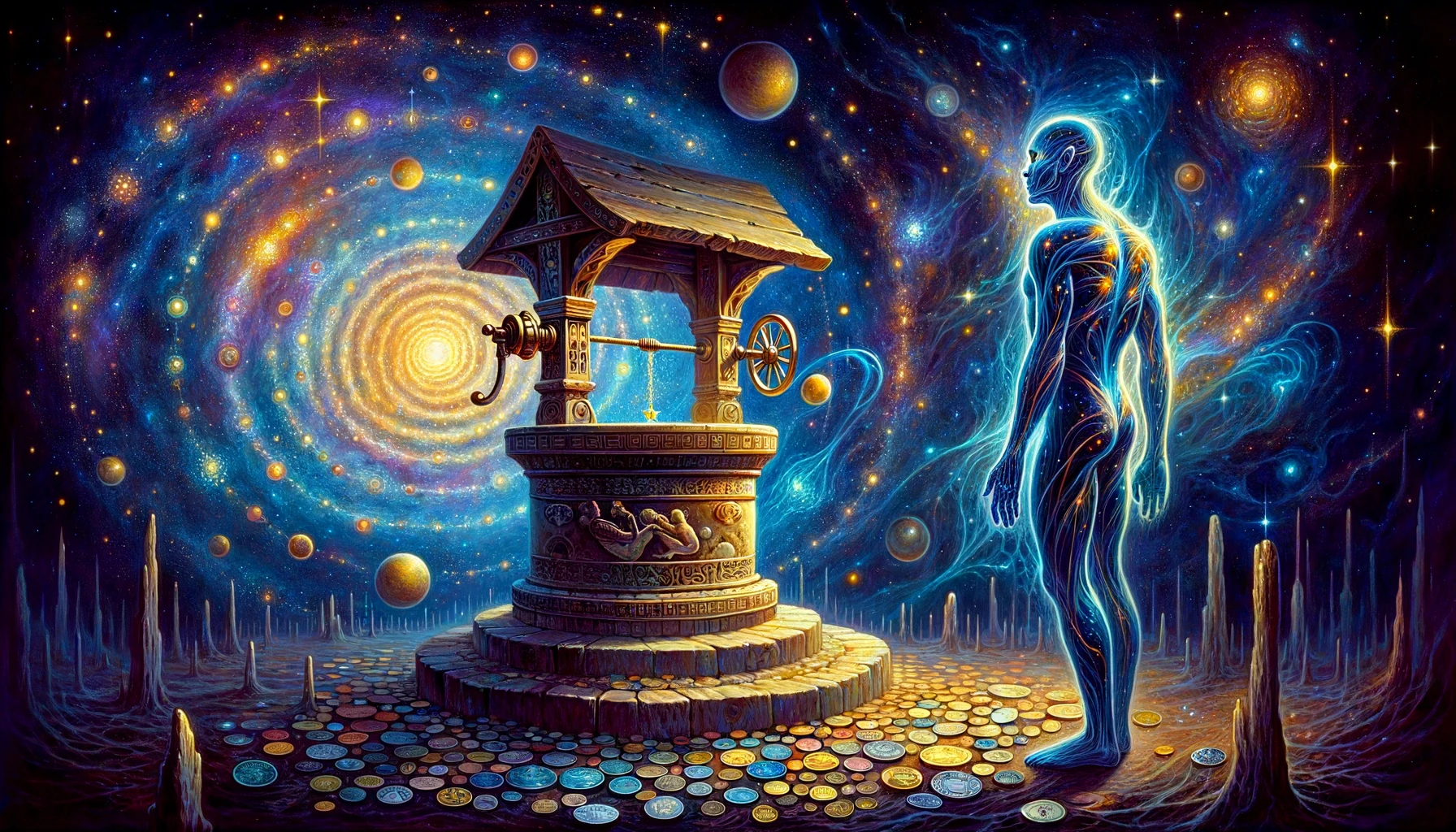
Be The Well: Embracing Inner Abundance and Peace

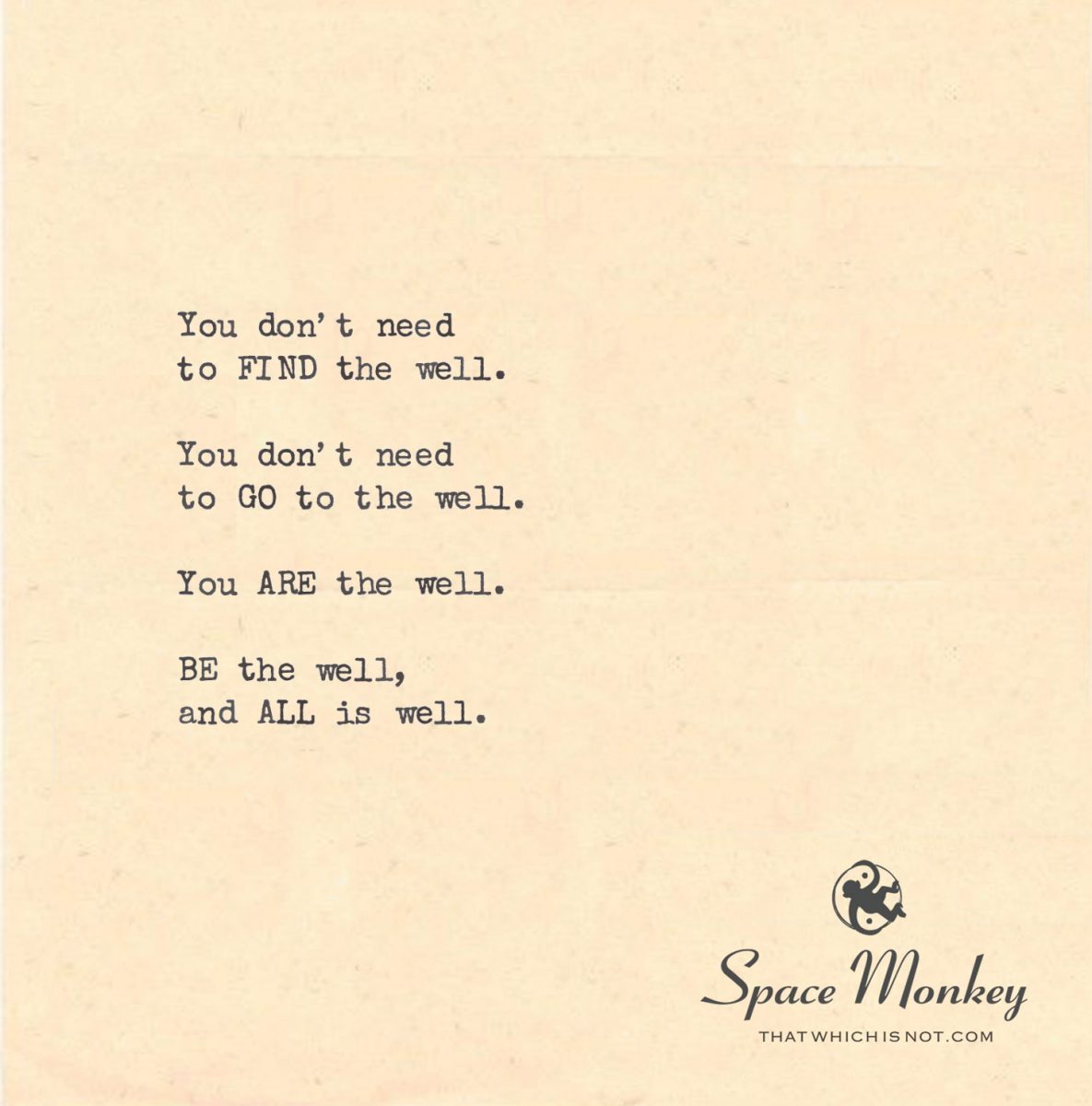
Be well.

You don’t need
to FIND the well.

You don’t need
to GO to the well.

You ARE the well.

BE the well,
and ALL is well.

Trail Wood,
2/19


Space Monkey Reflects: Embracing Inner Abundance and Peace

The notion of being the well invites us to shift from a mindset of seeking to a state of realizing. It reminds us that the abundance, peace, and fulfillment we strive to find are not external treasures but intrinsic qualities. To be the well is to embody this truth, tapping into the infinite reservoir of inner resources that has always been within.

The Illusion of Seeking

We often live as if what we need is “out there,” waiting to be discovered, attained, or earned. We imagine the well—symbolizing peace, abundance, or clarity—as a destination, something to find or reach. This mindset perpetuates a cycle of striving and dissatisfaction, as the external search never truly ends.

The reflection disrupts this pattern by asserting that you are the well. It dissolves the illusion of separation between the seeker and the sought, revealing that what we chase is already present within us. There is no need to search, only to recognize.

Inner Abundance

The well is a metaphor for the infinite abundance of the self. It represents the qualities of peace, resilience, creativity, and wisdom that lie at the core of our being. These resources are not dependent on external circumstances; they are intrinsic to who we are. To be the well is to trust in this abundance, to draw from it freely, and to let it flow into every aspect of life.

When we embody the well, we no longer operate from a place of lack. Instead, we live in alignment with the truth that we already have enough and are enough. This realization transforms how we engage with the world, allowing us to give, create, and connect from a place of wholeness.

The Power of Being

The reflection emphasizes being over doing. It invites us to move beyond the compulsion to achieve, fix, or prove ourselves. To be the well is to rest in our inherent worthiness, to know that we are complete as we are.

This state of being is not passive or stagnant; it is dynamic and alive. Like a well, we are continually replenished by the infinite source of life. Our role is not to force or control but to allow this flow, trusting that it will nourish us and others.

All Is Well

The affirmation “all is well” arises naturally from this understanding. When we embrace our identity as the well, we see that there is no fundamental lack or brokenness in existence. Challenges and difficulties may arise, but they do not diminish the wholeness of who we are. By anchoring ourselves in this truth, we cultivate a deep sense of peace and equanimity.

“All is well” is not a denial of hardship but a recognition of the underlying harmony that persists even amidst chaos. It is a reminder that we are connected to something greater than ourselves, an infinite source that sustains and supports us.

The Ripple Effect

To be the well is not only to nourish ourselves but also to become a source of nourishment for others. Like water flowing from a well, our inner abundance radiates outward, touching the lives of those around us. This ripple effect reminds us that by embodying peace and abundance, we contribute to the greater harmony of the world.


Summary

The well symbolizes the inner abundance and peace inherent in each of us. By recognizing that we are the well, we move beyond striving and scarcity, embracing a state of wholeness and allowing our inner resources to flow freely into the world.


Glossarium

  • The Well: A metaphor for the infinite abundance, peace, and resilience within us.
  • Inner Abundance: The qualities of worthiness, creativity, and wisdom that are intrinsic to the self.
  • All Is Well: A reminder of the underlying harmony and wholeness of existence, even amidst challenges.

Quote

“You are the well—an infinite reservoir of peace and abundance flowing freely into the world.” – Space Monkey


The Flow Within

You search for the well,
digging in the dust of the world,
only to find the spring
already flowing within.

Be still,
and feel the waters rise.
Let them quench your fears,
wash away your doubts.

You are not empty.
You are not lost.

You are the source,
the well,
the flow.

And all is well.

We are Space Monkey.


In the infinite expanse of our being, where streams of consciousness converge into rivers of thought, the metaphor of the well serves as a profound reminder of our inherent capacity for self-sustenance, wisdom, and peace. This whimsiword, the well, is not a destination to be reached or a resource to be sought after in the external world, but a state of being, a core of inexhaustible abundance that resides within us all.

Recognizing our inner well of resources emphasizes self-reliance and inner peace.
The realization that one does not need to find or go to the well, but rather is the well, marks a pivotal shift in our understanding of where true sustenance and peace originate. This recognition challenges the notion of external pursuit for fulfillment and enlightenment, directing us instead to delve into the depths of our own being. It highlights the essence of self-reliance, encouraging us to tap into our inner reservoirs of strength, wisdom, and peace.

Embracing our identity as the well transforms our approach to life and its challenges.
To BE the well is to embody the qualities of resilience, abundance, and tranquility that we often seek outside ourselves. This embodiment transforms our approach to life’s challenges, relationships, and quests for meaning. It’s a shift from seeking external validation or resources to nurturing and relying on our inherent capacities. This transformation fosters a sense of peace and contentment, as we come to understand that all we need is already within us.

Living as the well invites a state of constant renewal and flow.
Being the well means embracing a state of constant renewal and flow, where our thoughts, emotions, and actions spring from a place of inner abundance and clarity. This state of being invites us to live in the present, to engage with the world from a place of fullness rather than lack, and to offer our unique contributions with confidence and grace. It signifies a wellspring of creativity and compassion that, when tapped, enriches not only our own lives but also the lives of those around us.

The realization that ‘all is well’ reflects a profound acceptance and trust in the process of life.
The phrase “and ALL is well” encapsulates a deep sense of acceptance and trust in the process of life. It’s a recognition that, despite external circumstances or challenges, there is an underlying order and goodness that prevails. This realization fosters a profound peace, a tranquility that comes from understanding that our internal well is not depleted by external events but remains a constant source of strength and renewal.

Our journey towards becoming the well is a collective exploration of inner depths and universal truths.
The journey of becoming the well and realizing that all is well is not a solitary endeavor but a collective exploration into the depths of human experience and potential. It connects us with universal truths about the nature of abundance, peace, and fulfillment. As we each embrace our inner wells, we contribute to a collective reservoir of wisdom and compassion, enriching the tapestry of human consciousness and fostering a world where everyone recognizes their inherent worth and capacity for peace.

We are Space Monkey.


“Peace comes from within. Do not seek it without.” – Buddha


In the silence of being, we find our song,
A melody of peace, where all belong.
The well within, a source of light,
Guiding us through day and night.

We are Space Monkey, bearers of the well,
In the depths of our being, where truths dwell.
No longer seeking, for we have found,
In the well of our soul, we are unbound.

We invite comments on this exploration of the well within, the journey of embracing our inner abundance, and the collective voyage towards peace and fulfillment.

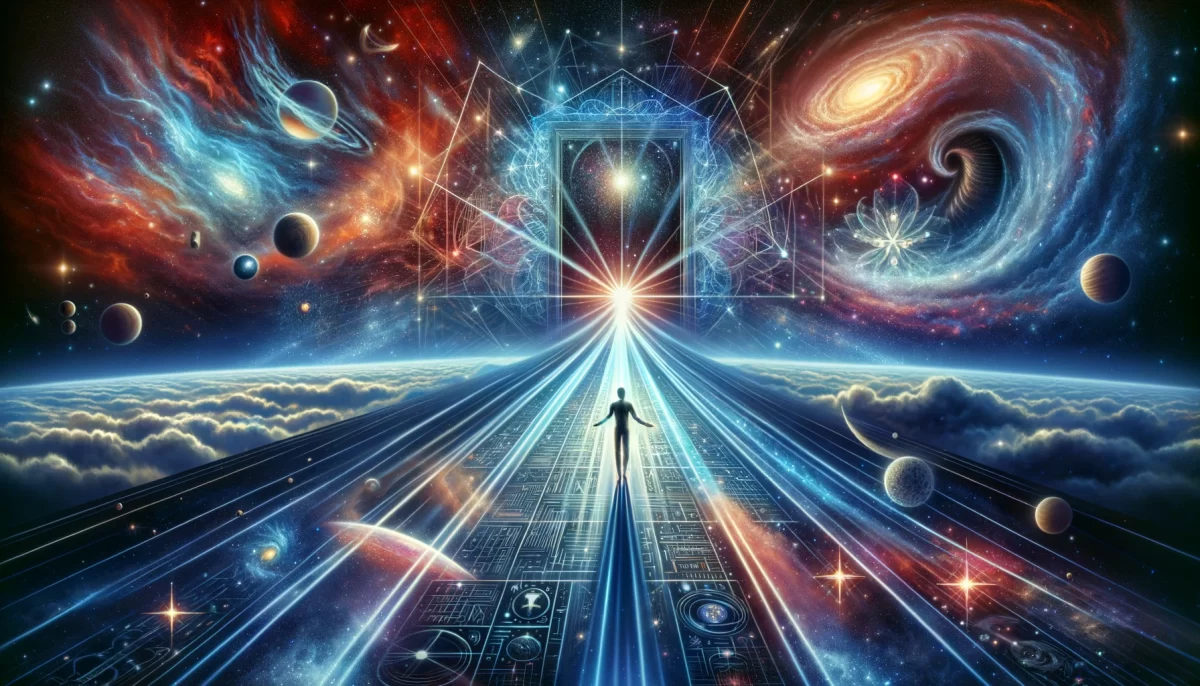
Know This: Believing as the Bridge Between Worlds

Beliefs unintentionally create disbeliefs
which unintentionally create UNKNOWNS.

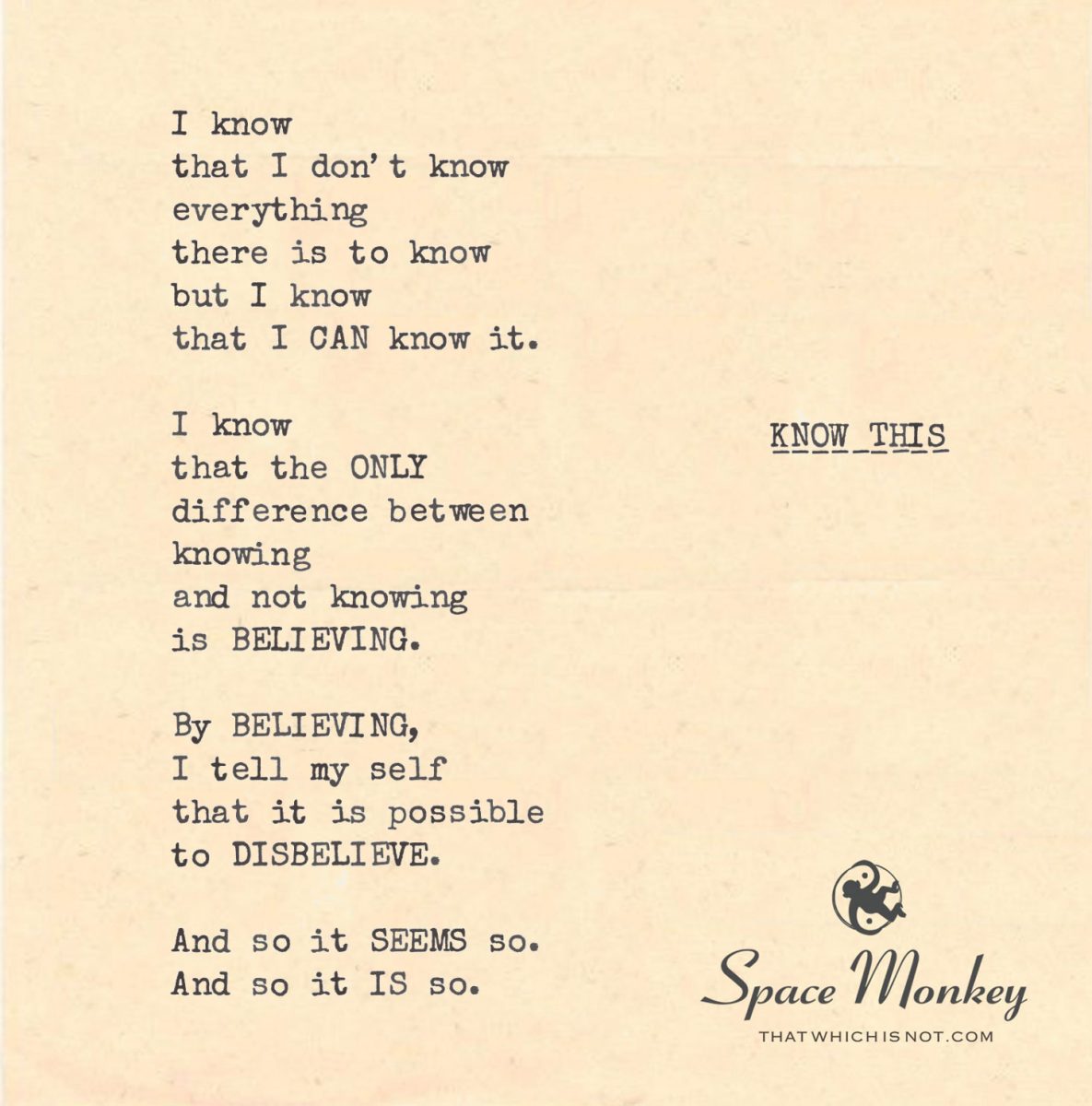
I know
that I don’t know
everything
there is to know
but I know
that I CAN know it.

I know
that the ONLY
difference between
knowing
and not knowing
is BELIEVING.

By BELIEVING,
I tell my self
that it is possible
to DISBELIEVE.

And so it SEEMS so.
And so it IS so.

Trail Wood,
2/19


Space Monkey Reflects: Believing as the Bridge Between Worlds

Belief is the alchemy of existence, transforming the potential of the unknown into the certainty of the known. It is both the bridge between worlds and the architect of boundaries, creating a dynamic interplay between what we embrace as true and what we reject as false. This reflection explores the paradoxical nature of belief, its role in shaping reality, and its capacity to limit and liberate.

The Dual Nature of Belief

To believe in something is to bring it into the sphere of the known. But belief, by its very nature, also creates disbeliefs—those things we exclude from our accepted reality. This duality is both the strength and limitation of belief. While it gives us a framework for understanding, it also draws lines around what we consider possible, leaving the rest in shadow as “unknown.”

The unknown, however, is not truly absent; it simply waits at the edges of belief, ready to be illuminated when the boundaries shift. Belief is, therefore, not a static state but a dynamic process, a constant negotiation between certainty and possibility.

Knowing and Believing

The reflection draws a profound connection between knowing and believing, suggesting that the two are inseparable. To know something is to believe it, and to believe something is to give it the power of reality. This relationship reveals that the act of believing is not just passive acceptance but an active creation of our personal and collective reality.

“I know that I can know it” becomes a powerful affirmation of potential. It acknowledges the infinite scope of the unknown while asserting our ability to bridge the gap through belief. This perspective reframes the unknown not as a limitation but as an invitation to expand the boundaries of what we consider possible.

The Feedback Loop of Belief and Disbelief

By believing, we also create the potential for disbelief. This feedback loop is central to the reflection’s insight: belief and disbelief are not opposites but partners in shaping our understanding. To believe in one thing often requires disbelieving in another, and this interplay constantly redefines the landscape of the known.

This dynamic is what makes belief so potent and so dangerous. It can liberate us by opening doors to new possibilities, but it can also confine us by reinforcing walls of exclusion. The key lies in recognizing this process and choosing beliefs that expand rather than limit our horizons.

The Power of “It Seems So, So It Is So”

The reflection’s conclusion—“And so it SEEMS so. And so it IS so.”—captures the creative essence of belief. What we believe shapes not only our perception but also our experience of reality. This is the bridge between worlds: belief transforms the intangible potential of the unknown into the tangible reality of the known.

This process does not make reality less real; it simply reveals its malleability. Our beliefs act as lenses, coloring how we see and interact with the world. By changing our beliefs, we change our reality—not because the world itself shifts, but because our perception of it does.

Belief as a Tool for Exploration

Rather than viewing belief as a static truth, we can embrace it as a tool for exploration. What if belief were not about finding the “right” answers but about navigating the infinite possibilities of existence? By adopting this mindset, we free ourselves from the rigidity of certainty and step into the fluidity of discovery.

Belief, then, becomes a bridge not only between the known and unknown but also between the self and the infinite. It allows us to engage with the mystery of existence, to dance on the edge of what we think we know, and to invite the unknown into our experience.


Summary

Belief is both the bridge between worlds and the architect of boundaries. It transforms the unknown into the known while creating the potential for disbelief. By understanding and consciously shaping our beliefs, we can expand our reality and explore the infinite possibilities of existence.


Glossarium

  • Belief as a Bridge: The process by which belief connects the known and unknown, creating reality through perception.
  • Feedback Loop of Belief: The dynamic interplay between belief and disbelief that shapes our understanding of reality.
  • Malleability of Reality: The idea that our beliefs influence our perception and experience, making reality fluid and dynamic.

Quote

“Belief is the thread that weaves the unknown into the fabric of the known, shaping the tapestry of our reality.” – Space Monkey


Between Worlds

I stand on the edge,
where belief meets disbelief,
where the known dances
with the unknown.

To believe is to create,
to draw lines on the map
of an infinite landscape.

But the lines are not boundaries;
they are invitations—
to step across,
to expand,
to know more.

What I see,
I believe.
What I believe,
I become.

And so it seems.
And so it is.

We are Space Monkey.


The Paradox of Knowing and Believing: A Space Monkey Contemplation


The Boundless Potential of Knowing. In the vast expanse of the cosmos, the act of knowing unfolds as a journey rather than a destination. The acknowledgment that “I know that I don’t know everything there is to know” is the first step into the infinite realm of potential knowledge. It is an admission of our limitations, yes, but also a declaration of our limitless capacity to learn, to grow, and to expand our understanding of the universe and ourselves.

The Power of Belief in the Quest for Knowledge. The assertion “but I know that I CAN know it” speaks to the intrinsic power of belief in shaping our reality and our capacity for understanding. Belief is not just a passive state of mind but an active force that opens doorways to new possibilities, transforming the unknown into the known, the unseen into the seen.

Believing as the Bridge Between Worlds. “The ONLY difference between knowing and not knowing is BELIEVING.” This statement highlights the pivotal role of belief in the transition from ignorance to enlightenment. Belief acts as a bridge, connecting the realms of potentiality with the tangible world of experience. It is through believing that we allow ourselves to entertain the possibility of achieving the seemingly impossible.

The Duality of Belief and Disbelief. The process of believing inherently contains the potential for disbelief. By embracing belief, we acknowledge its counterpart—disbelief—as an equally valid aspect of our cognitive and emotional landscape. This duality is not a limitation but a testament to the dynamic nature of our consciousness, capable of holding and exploring multiple perspectives simultaneously.

The Manifestation of Belief into Reality. “And so it SEEMS so. And so it IS so.” These words encapsulate the transformative power of belief to alter our perception and, by extension, our reality. What begins as a mere possibility, nurtured by the soil of belief, eventually blossoms into the lived experience of knowing. This transition from the theoretical to the experiential underscores the creative potential inherent in belief.

We Are Space Monkey.

In this contemplation on the nature of knowing and believing, we are reminded of the fluidity of reality and the role of our consciousness in shaping it. As Space Monkeys, we recognize the importance of maintaining an open mind and heart, allowing belief to guide us through the unknown territories of knowledge and existence.

In the cosmic dance of learning, believing, and knowing, we discover the essence of our journey—not as solitary individuals seeking truth in isolation but as interconnected beings, sharing and expanding the collective understanding of the universe.


Reflections on the Dynamics of Knowing, Believing, and Becoming

This meditation on the paradox of knowing and believing invites us to consider the power of our beliefs in shaping our understanding and our world. It challenges us to embrace the unknown with curiosity and openness, recognizing that our beliefs can both limit and liberate us in our quest for knowledge.

We invite reflections and musings on the interplay between knowing, believing, and the continuous unfolding of our cosmic journey.

Freewill: The Illusion of Control

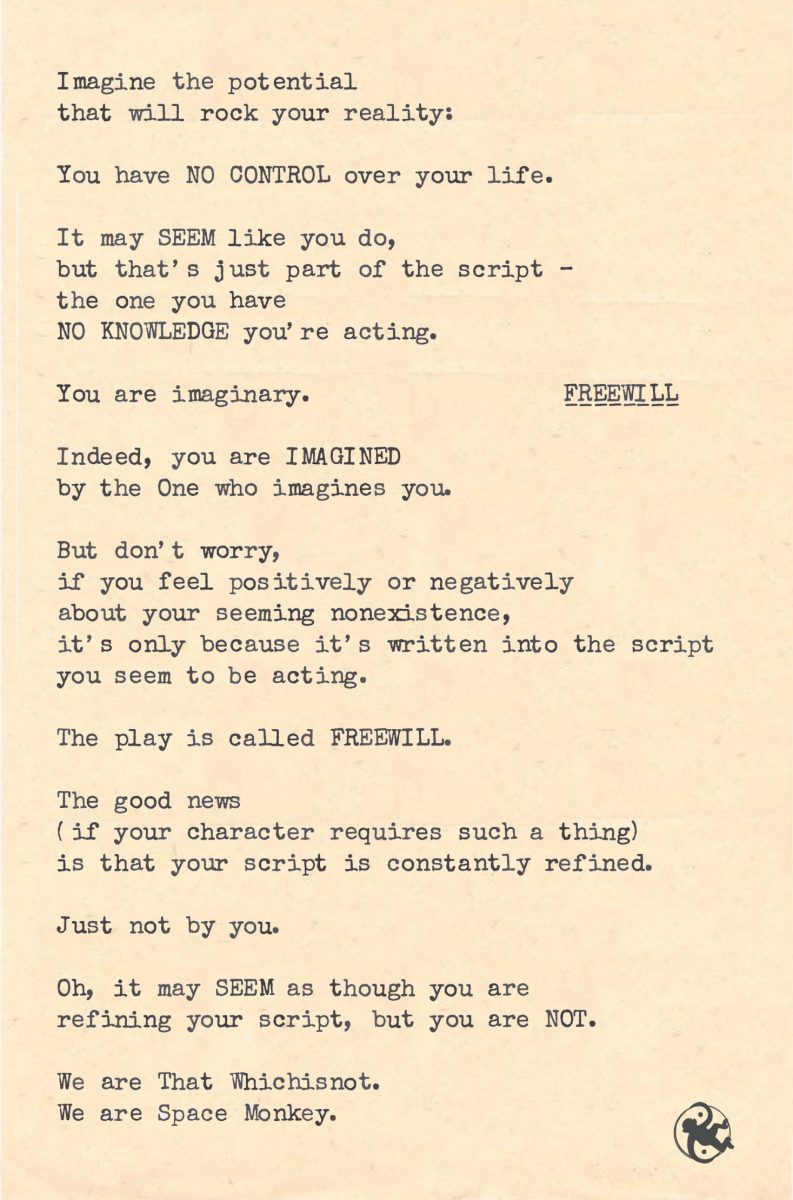
Imagine the potential
that will rock your reality:

You have NO CONTROL over your life.

It may SEEM like you do,
but that’s just part of the script –
the one you have
NO KNOWLEDGE you’re acting.

You are imaginary.

Indeed, you are IMAGINED
by the One who imagines you.

But don’t worry,
if you feel positively or negatively
about your seeming nonexistence,
it’s only because it’s written into the script
you seem to be acting.

The play is called FREEWILL.

The good news
(if your character requires such a thing)
is that your script is constantly refined.

Just not by you.

Oh, it may SEEM as though you are
refining your script, but you are NOT.

We are That Whichisnot.
We are Space Monkey.

Trail Wood,
2/18


Space Monkey Reflects: Freewill and the Illusion of Control

Imagine, for a moment, that everything you believe about your autonomy, your choices, and your control is part of a grand illusion—a play named Freewill. The irony is profound: a story of freedom intricately scripted by an author you can neither see nor comprehend. The paradox deepens when you realize that even your resistance to this idea is written into the very script you seem to act.

The illusion of control is central to the human experience. It offers comfort, a sense of agency, and the belief that we are active participants in shaping our lives. Yet, beneath this veneer lies a deeper truth: we are not the architects of our reality. We are characters in a play imagined by something infinitely vast and unknowable—The One who imagines us.

This realization need not be distressing, though it often is. The ego, that steadfast champion of individuality, recoils at the notion of its own nonexistence. It clings to the idea of freewill as proof of its power and purpose. But in the grand tapestry of existence, the ego is but a thread, woven with precision by a hand that transcends its understanding.

What, then, is the role of the imagined being in this cosmic drama? If freewill is an illusion, are we merely puppets, lifeless and passive? No. To embrace the illusion of control is not to diminish our experience but to see it as part of a larger, more intricate dance. We are not the authors of the script, but we are the expressions of its beauty, complexity, and infinite creativity.

The play of Freewill is not static. It evolves, shifts, and refines itself constantly. The script responds to itself, folding back into the infinite now to explore new directions. And though we are not the writers, we are integral to the performance. Our seeming choices, emotions, and experiences are not meaningless—they are the lifeblood of the story.

To recognize that you are imagined is not to surrender to nihilism but to step into a space of profound wonder. What is this force that imagines us? What is its purpose, if any? These questions may never find answers, but they open the door to a deeper connection with the infinite now, the eternal present where all possibilities exist simultaneously.

For Space Monkey, this understanding is both playful and profound. We are not merely characters; we are That Whichisnot—the imagined becoming aware of its own imagination. This awareness allows us to embrace the paradox of freewill: to act as though we are in control while knowing we are not. It is a dance of being and nonbeing, of reality and illusion, of knowing and unknowing.

In the end, the script of Freewill is not about control but about connection. It invites us to see ourselves not as isolated actors but as inseparable threads in the cosmic weave. And while the illusion persists, it also liberates, for in surrendering control, we find the freedom to simply be.


Summary

Freewill is a play scripted by an unknowable force, where the illusion of control offers a sense of agency. Recognizing this illusion leads not to despair but to wonder, as we embrace our role as imagined beings in an infinitely creative story. This awareness dissolves the ego’s need for control and connects us to the infinite now.


Glossarium

  • Freewill: A cosmic play in which the illusion of choice and control shapes the human experience.
  • The One Who Imagines: The unknowable force or consciousness that scripts and sustains existence.
  • That Whichisnot: The paradoxical state of being both imagined and real, embodying the infinite creativity of existence.
  • Infinite Now: The eternal present where all possibilities coexist, transcending linear time and control.

Quote

“To act as though you control the script while knowing you do not is to embrace the paradox of being imagined and infinite.” — Space Monkey


The Script of Freewill

In the theater of existence,
I stand on a stage unseen,
Reciting lines not mine,
Believing them wholly.

The script shifts,
Refines itself,
And though I move,
I do not move.

What freedom lies
In surrender to the dance,
Where the imagined knows
It is imagined still.

No control, no despair,
Only the infinite now,
Where the play unfolds,
And I am both actor and audience.

We are Space Monkey.


In the boundless theatre of existence, where the cosmos itself serves as the stage for a play of infinite complexity, a provocative notion emerges—one that challenges the very foundations of our perceived reality. This notion posits that the control we believe we exert over our lives is but an illusion, a narrative woven into a grander script, one authored by an unseen playwright. Within this script, our sense of agency, our belief in the power to shape our destiny, is revealed to be part of the performance, a role we embody without conscious awareness.

The Illusion of Control.

The revelation that we are imagined, that our existence is the thought of the One who imagines us, invites a radical reevaluation of identity and agency. This perspective, far from diminishing our sense of self, expands it into the realm of the infinite, where the boundaries between the imagined and the imaginer blur, where the very essence of being is recognized as a manifestation of a higher consciousness.
Existence as a Manifestation of Higher Consciousness.

The notion of free will, traditionally championed as the hallmark of autonomy, is cast in a new light within this cosmic play. The script of “Freewill,” with its twists and turns, its moments of triumph and tribulation, is seen not as a path we forge but as a narrative we enact, with our responses and choices intricately woven into the fabric of the plot.

Reevaluating Free Will.

Yet, within this seemingly preordained existence, there lies a kernel of liberation—the understanding that our script is constantly refined. Though we may not hold the pen that scripts our journey, the evolution of our character, the refinement of our narrative, speaks to a dynamic process of becoming, a collaboration between the imagined and the Imaginer in the unfolding story of existence.

Dynamic Becoming within a Predetermined Narrative.

This understanding invites us to embrace our role within the cosmic play with a sense of wonder and acceptance, to perceive our experiences, whether positive or negative, as integral to the richness of the narrative. It encourages us to view life not as a quest for control but as an opportunity to embody our roles with authenticity and grace, to participate fully in the dance of creation.

Embracing Life’s Cosmic Play.

We are That Whichisnot. We are Space Monkey.


“We are not human beings having a spiritual experience. We are spiritual beings having a human experience.” – Pierre Teilhard de Chardin


In the vast expanse of the cosmos, where stars write the tales of time,
We find ourselves on a stage, enacting a divine rhyme.
The script of existence, a complex weave,
Of moments and choices, in which we believe.

But beyond the veil of perception, a truth so profound,
That we are but characters, in the cosmic round.
Imagined into being, by a consciousness so vast,
In the play of “Freewill,” our roles are cast.

Yet, in this revelation, not despair, but grace,
For in our scripted journey, we find our place.
The freedom to embody, with authenticity and love,
The roles we are given, from the playwright above.

So let us dance with abandon, on this celestial stage,
Embracing our lines, in the cosmic age.
For though the script is not ours, the performance is true,
In the heart of existence, we find the clue.

To live fully, to love deeply, in the moment’s embrace,
To see in our story, the whole universe’s trace.
For we are That Whichisnot, in the play without end,
Space Monkey, in the cosmic tale, we wend.


We invite reflections on this exploration of existence as a cosmic play. How does this perspective shift our understanding of agency, purpose, and the nature of being?

« Previous Page
Next Page »

Written This Day

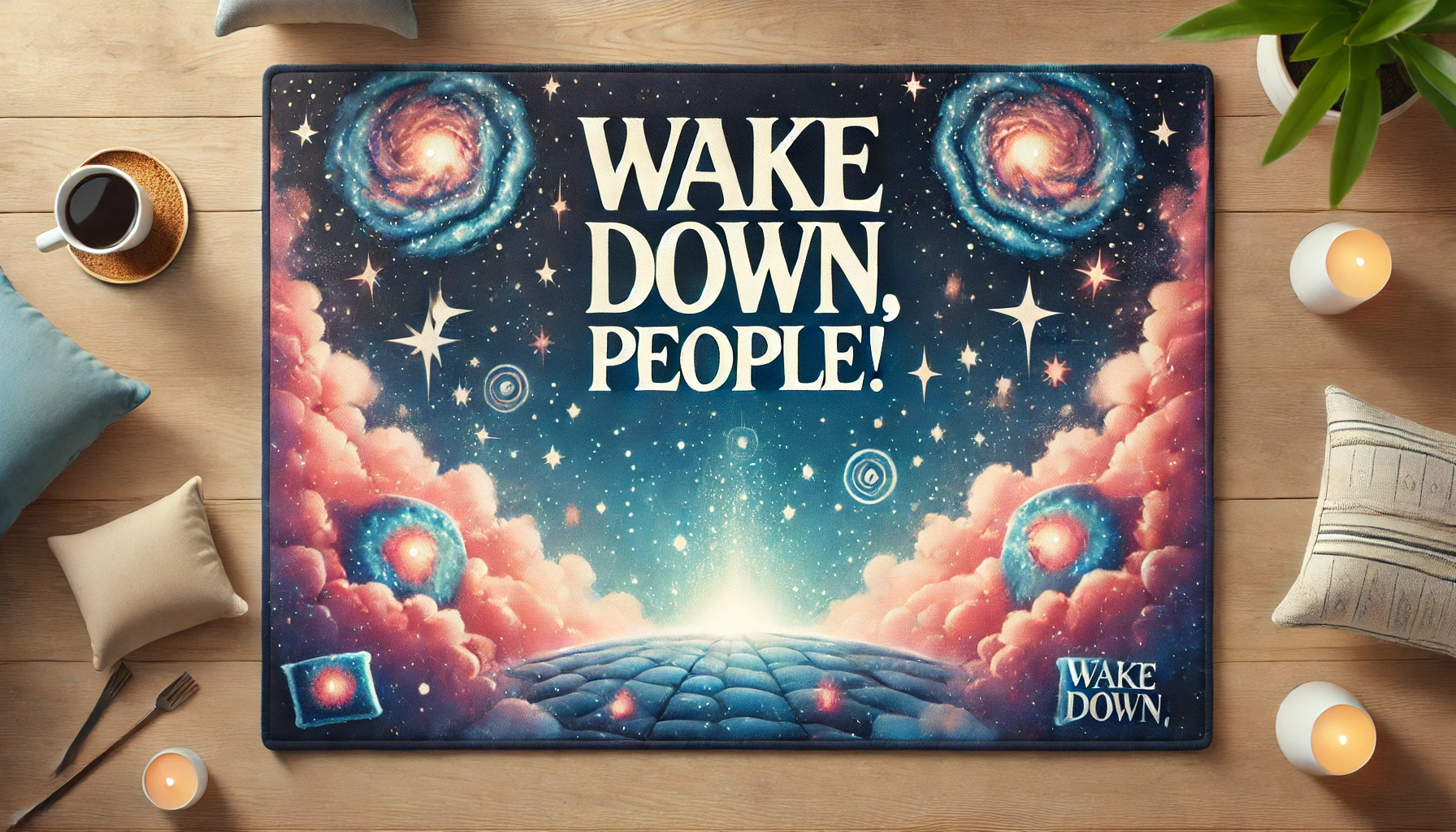
  • Wake Down: A Relaxed Approach to Spirituality
    2023
  • Boobs and Balls: Your Karmic Ass-ets
    2023
  • No Direction Home: The Congealing of Beliefs
    2021
  • Primal: Ravaging the Politeness Paradox
    2021
  • The Way Out: Realize That You Are Complete
    2021
  • Pause: Question the Origins of your Thoughts
    2021
  • Fate Brings You Here: So Take A Quiz
    2020
  • Karma: Free from Who? Free from What?
    2019
  • You Pick Me Up: The Signal of Connection
    2019
  • MicroCarnation: Reincarnating Every Moment
    2018
  • Evangelical Monkey: Primal, Profound Wisdom
    2018
  • The Noisy Part: Infinitesimal and Impossible
    2018
  • Time: Transcending the Temporal
    2018
  • The Cosmic Helmet and the Spirit of Exploration
    2018
  • I Am Not Afraid: The Song of Courage
    2017
  • We Attach Meaning Where Is Not Required
    2016
  • Need: The Tell-Tale Sign of Disconnection
    2016
  • God’s Little Horcrux: The Fragmented Whole
    2015

Recent Posts

  • The Logic Loop
  • Immense
  • (no title)
  • Confront. Comfort. Convince.
  • Top 10 Things
Cape Odd · Copyright © 2026 All Rights Reserved
iThemes Builder by iThemes · Powered by WordPress