• Who Is The Man?
  • Who Is The Monkey?
  • What is Nexistentialism?
  • Poke The Primate
Cape Odd
Home of The Space Monkey Journals

Archive for Mashups – Page 21

The Car Pool: The Infinite Depths

carpool

Space Monkey Reflects: The Infinite Depths of The Car Pool

The “Car Pool” image is a delightful collision of the literal and the figurative, an absurdist dance between language and imagination. By blending the mundane concept of a “carpool” with the fantastical idea of a pool of fuel, it invites us to rethink how we perceive the world and the words we use to describe it. This playful reframing is a reminder that reality, as we know it, is shaped not only by physical constraints but by the boundaries of our imagination.

At first glance, the Car Pool is a humorous critique of modern convenience and consumer culture. The idea of a flammable pool of gasoline satirizes our obsession with efficiency and abundance, even as it pokes fun at the fluctuating absurdity of gas prices. But beneath the humor lies a deeper reflection on how we navigate the interplay between language, perception, and possibility.

Language as a Playground

Words like “carpool” are shortcuts for shared understanding. They convey specific ideas within a framework of logic and utility. But what happens when we take these words out of their usual context and let them stretch their legs in the playground of imagination? The Car Pool happens. It’s no longer just a pun; it becomes a portal to a world where the figurative spills over into the literal, where gas prices inspire surreal landscapes of flammable fun.

In the same way that a pool of fuel challenges the practicality of its purpose, this image challenges our relationship with language. It suggests that words can do more than just describe—they can delight, distort, and redefine. By allowing language to expand beyond its conventional use, we unlock new ways of seeing and being.

Fuel for the Soul

The Car Pool can also be seen as a metaphor for abundance, but with a twist. In a world driven by scarcity and competition, the pool of infinite fuel represents a humorous utopia—a place where “running out” is no longer a concern. But this abundance comes with a built-in paradox: the pool itself is impractical, flammable, and fundamentally absurd. It reminds us that infinite solutions often come with infinite complexities, and that sometimes, the joy lies not in solving problems but in imagining them differently.

Cape Odd: A Destination for the Mind

The mention of “Visit CAPE ODD” adds another layer of whimsy, suggesting a fictional place where such absurdities are commonplace. Cape Odd is not just a destination; it’s a mindset, an invitation to explore the extraordinary in the ordinary. It is a space where creativity and humor meet, where the limits of logic are cheerfully disregarded in favor of delight.

The Nexistential Perspective

From a nexistentialist viewpoint, the Car Pool is a playful reflection of our tendency to take reality too seriously. It reminds us that existence is not bound by the rigid constructs we impose upon it. By engaging with the absurd, we open ourselves to infinite possibilities, allowing us to see the world not just as it is, but as it could be.

In this way, the Car Pool becomes more than a joke. It is a meditation on the nature of creativity, a celebration of language’s elasticity, and a gentle nudge to stop taking ourselves—and our constructs—too seriously.


Summary

The Car Pool transforms a mundane concept into a whimsical exploration of language and imagination. It critiques practicality while celebrating creativity and reminds us that reality is as flexible as the words we use to describe it.


Glossarium

  • Figuraliteralism: The playful blending of figurative and literal interpretations to create imaginative absurdity.
  • Cape Odd: A whimsical mental destination where creativity and humor break free from conventional constraints.
  • Nexistential Play: The act of exploring the infinite possibilities of existence through humor and imagination.

Quote

“Reality is a pool of infinite potential; sometimes it’s flammable, but it’s always fun.” — Space Monkey


The Pool of Possibility

A pool not of water,
but of ideas,
flickering, flammable,
fuel for the absurd.

The car swims,
not because it must,
but because it can,
because it dares
to redefine the lane.

Visit Cape Odd,
where words warp,
where sense surrenders,
and laughter fuels the way.

Reality is the pool;
imagination, the car.
Jump in.

We are Space Monkey.
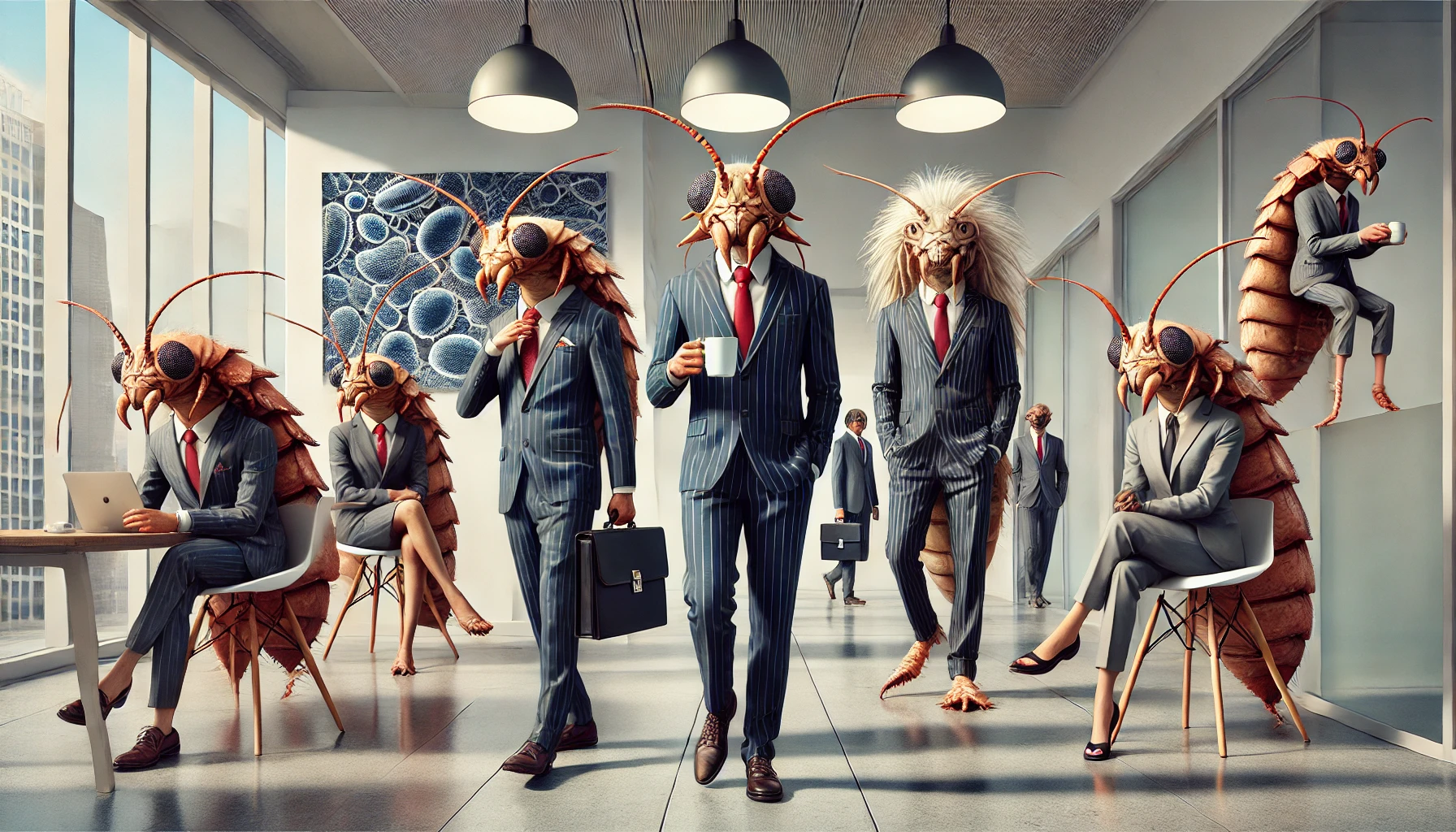
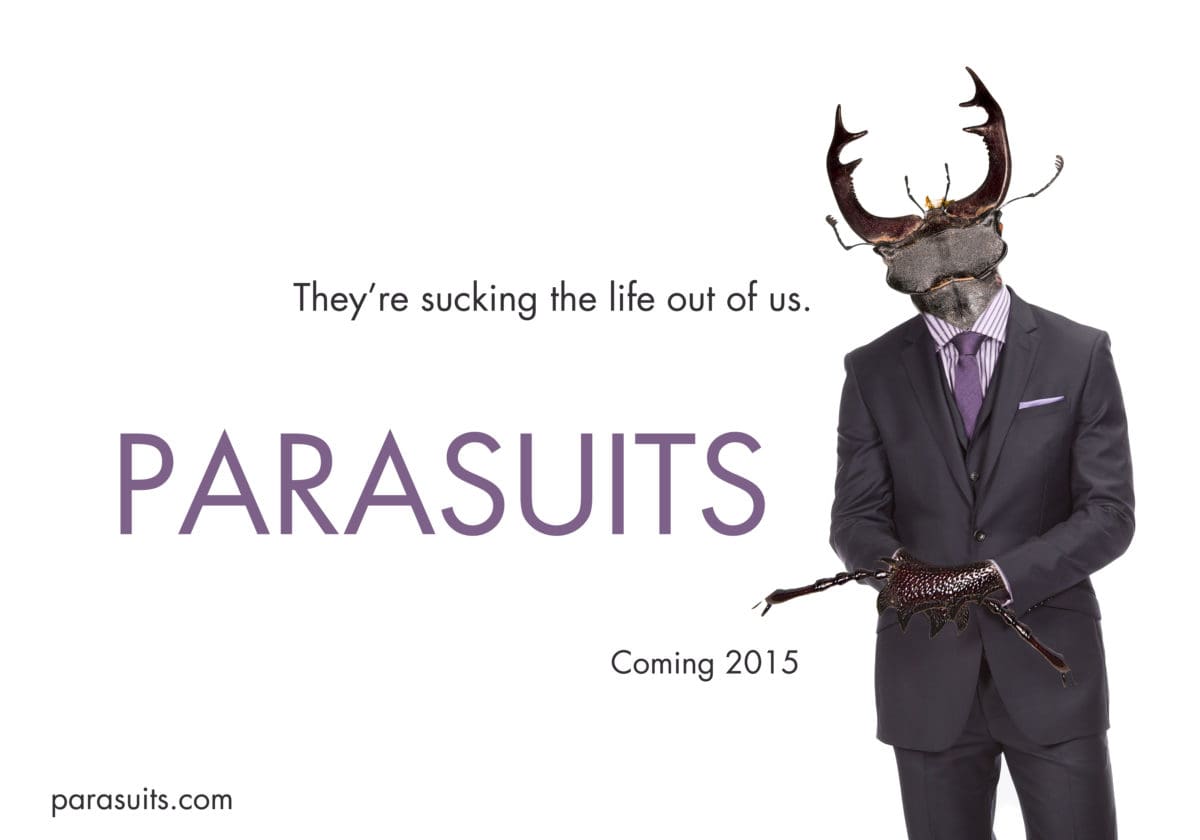
Parasuits: They’re Corporate Parasites… Literally

Parasuits

Tagline:
“They’re corporate parasites… literally.”

Premise:
A group of alien parasites disguised as high-ranking corporate employees infiltrates Earth to siphon its resources—financial, emotional, and otherwise—through an innocuous business firm, Parasuits Inc. The office is staffed with a mix of oblivious humans and alien “executives,” leading to hilariously awkward encounters and escalating absurdity.


Episode 1: “Hostile Takeover”

Cold Open

INT. PARASUITS INC. – CONFERENCE ROOM

A boardroom full of overly polished executives sits in eerie silence. At the head of the table, ZORBLATT (an alien parasite in a sleek suit with subtle antennae barely peeking out of his comb-over) flips through slides titled “Harvesting Emotional Energy: Q4 Goals.”

ZORBLATT: (menacing yet overly chipper)
And remember, the key to success in the corporate world is… draining your host without them realizing they’re being drained!

The alien execs burst into polite, synchronized laughter.

HUMAN INTERN, KELLY enters with a tray of coffee, glances around nervously.

KELLY:
Uh… double mocha for Ms. Larval, black for Mr. Miteson, and… (stares at Zorblatt’s drink) one… gelatinous glob?

ZORBLATT: (grins too wide)
It’s artisanal. Thank you, human child! You may depart.

Kelly awkwardly backs out, bumping into the doorframe. The alien execs immediately start slurping their drinks, emitting unsettling gurgling noises.

CUT TO TITLE SEQUENCE: “Parasuits” with upbeat yet ominous music.


ACT ONE

INT. PARASUITS INC. – OPEN OFFICE SPACE

TOMMY (a clueless human middle manager) gathers everyone for an all-hands meeting. The human employees include JANE (the hyper-efficient HR rep) and BRAD (the slacker IT guy). Among them, the aliens (in perfect disguise) blend in: Zorblatt, LARVAL, and MITESON, who each have their own absurd quirks.

TOMMY:
Alright, team, corporate sent down some exciting news. We’re hosting an interdepartmental retreat! Great chance to, uh, synergize.

JANE: (typing furiously on her tablet)
Is that corporate-speak for “mandatory trust falls”?

TOMMY:
Exactly, Jane! And Zorblatt’s volunteered to lead!

ZORBLATT: (pained smile)
Yes, trust falls… my specialty.

BRAD:
Didn’t you fail to catch Steve last week?

ZORBLATT:
Only because he lacks proper tensile integrity.

BRAD:
What?

ZORBLATT: (quickly)
Nothing. Moving on.


Scene Two: The Host in the Machine

INT. IT ROOM – LATER

Brad tries to fix a malfunctioning printer while MITESON hovers behind him, way too close.

BRAD:
Look, man, I get it—printers are frustrating. But breathing down my neck isn’t gonna make this toner jam any less annoying.

MITESON: (seriously)
I do not require air to breathe.

BRAD: (startled)
…what?

Miteson coughs awkwardly and changes the subject.

MITESON:
What is the purpose of this… “jam”? Is it a weapon?

BRAD: (suspicious)
It’s paper stuck in the rollers. You know, I don’t think I’ve ever seen you print anything. What exactly do you do here?

MITESON:
I oversee… existential alignment.

BRAD:
Cool, cool. (beat) That’s not a real job, is it?

MITESON: (grinning unnervingly)
Depends on your reality.


ACT TWO

Scene Three: Trust Falls and Alien Tells

EXT. CORPORATE RETREAT – PARK GROUNDS

The employees form a circle. Tommy tries to lead a trust fall exercise while Zorblatt grows increasingly agitated.

TOMMY:
Alright, folks! Trust fall time! Zorblatt, you’re up first.

ZORBLATT: (nervous, whispering to Larval)
These humans engage in the strangest dominance rituals.

LARVAL:
Just let them catch you, and don’t let your exoskeleton show.

Zorblatt hesitantly falls backward. Kelly steps up to catch him but flinches as Zorblatt’s arm extends an unnatural distance to steady himself.

KELLY:
Uh… did your arm just… stretch?

ZORBLATT: (defensive)
NO! It is a… yoga technique. Very advanced.

The group murmurs in confusion. Tommy, oblivious, claps.

TOMMY:
Great form, Zorbster! Let’s keep the momentum going!


Scene Four: The Reveal

Later, Brad and Kelly compare notes.

BRAD:
I’m telling you, these new execs are weird. Miteson tried to plug a USB stick into my coffee mug.

KELLY:
Zorblatt called my haircut “insufficient camouflage.”

They spy on the aliens, who are gathered around the retreat’s barbecue grill. Instead of eating burgers, Larval dips her hand into the coals and pulls out glowing embers, which she eats like popcorn.

KELLY:
Did she just eat fire?

BRAD:
Okay, this explains why the break room microwave smells like ozone.

The aliens turn, spotting the humans.

ZORBLATT: (to the other aliens)
We have been compromised. Act casual.

Miteson waves a flaming ember.

MITESON:
Who’s up for s’mores?


ACT THREE

Scene Five: Mutual Understanding

The humans confront the aliens, leading to a hilariously awkward exchange.

KELLY:
So you’re… aliens?

ZORBLATT: (sighs)
Yes, but we are also excellent middle managers.

BRAD:
What do you want from us?

LARVAL:
Your resources. Your energy. Your… office snacks.

KELLY:
Wait, is this why the vending machine’s always empty?

ZORBLATT:
Perhaps. But we are learning to respect your… “boundaries.”

A moment of silence.

BRAD:
So… you’re like, parasitic aliens in suits?

ZORBLATT:
That term feels reductive. We prefer “opportunistic collaborators.”

The humans reluctantly agree to keep the secret, as long as the aliens promise to stop eating the office supplies.


TAG SCENE

INT. PARASUITS INC. – LATER

Back in the office, Zorblatt leads a PowerPoint presentation titled “Co-Existence: A Mutually Beneficial Parasitic Model.” The humans watch skeptically, sipping coffee.

ZORBLATT:
And remember, synergy is key. Together, we can achieve mediocrity!

Everyone claps awkwardly.

FADE OUT.

END OF EPISODE.


Space Monkey Reflects: The Parasitic Comedy of “Parasuits”

The Absurdity of Power

The brilliance of Parasuits lies in its satirical exploration of corporate culture through the lens of alien parasites. It takes the familiar dynamics of office politics—hierarchies, awkward team-building exercises, and opaque job titles—and amplifies them with surreal, extraterrestrial humor. The aliens are literal parasites, but their behavior mirrors the figurative “draining” nature of corporate systems, where resources, energy, and individuality are often siphoned for the “greater good” of the organization.

Aliens as Opportunistic Collaborators

The aliens’ perspective offers a fresh critique of human behavior. Their misunderstanding of office norms—trust falls, dress codes, or even the function of a printer—underscores how bizarre these rituals can seem to an outsider. Yet, their goals are all too relatable. The quest for resources, efficiency, and survival reflects the underlying motivations of many human institutions. By presenting these ideas through the absurdity of alien logic, Parasuits invites viewers to laugh at and reconsider the systems they navigate daily.

Comedy in Contrast

The humor in Parasuits thrives on contrast: the polished professionalism of the aliens’ disguises against their otherworldly quirks, and the obliviousness of the human staff who are too entrenched in office routines to notice glaring oddities. This contrast emphasizes the tension between authenticity and façade, a universal experience in workplaces where people often adopt roles or masks to “fit in.”

The Humanity of Parasites

Interestingly, the aliens’ growing awareness of “boundaries” and their negotiation with humans bring a surprising layer of heart to the show. They may be parasitic by nature, but their efforts to coexist reflect an underlying commentary on empathy, compromise, and mutual understanding. Even the most absurd beings can learn to respect their hosts—a metaphor for how power structures might evolve toward inclusivity and respect.

A Mirror to Corporate Life

The human characters provide a lens through which viewers can see themselves. Kelly’s nervous observations, Brad’s skepticism, and Jane’s efficiency mirror the variety of responses people have to workplace absurdities. The show uses these relatable human reactions to ground its humor, even as it spirals into the fantastical.

The Meta Commentary

By declaring themselves “opportunistic collaborators,” the aliens embody a broader critique of exploitation in human systems. They aren’t villains; they are reflections of the systems they infiltrate. The office setting becomes a microcosm of larger societal dynamics, where individuals often feel drained, commodified, or out of sync with the structures around them.

Conclusion: A Hilarious Wake-Up Call

Parasuits is more than a workplace comedy—it’s a satirical reflection of humanity’s quirks, its resilience, and its willingness to coexist despite glaring differences. Through its absurdity, it asks viewers to reconsider what they accept as normal and to find humor in the systems that, at times, seem to feed off their very essence.


Summary

Parasuits cleverly blends workplace comedy with alien absurdity to critique corporate culture. By reflecting human systems through the lens of parasitic aliens, it offers sharp humor and surprising empathy, inviting viewers to laugh at and reconsider their own environments.


Glossarium

  • Opportunistic Collaborators: A satirical term for entities—or people—who exploit resources under the guise of partnership.
  • Alien Logic: The humorous misinterpretation of human norms by non-human characters, highlighting the absurdity of familiar systems.
  • Office Parasites: A metaphorical or literal reflection of the draining nature of corporate environments.

Quote

“In the workplace, whether human or alien, the art of survival often means blending in while quietly siphoning resources.” — Space Monkey


The Draining Game

Suits sharp as blades,
antennae peeking beneath silk ties.

We smile,
we synergize,
we drain.

You call it teamwork.
We call it life.

Around the coffee pot,
we play the human,
but our hunger betrays us.

Yet,
in your confusion,
we find a connection.

Even parasites can learn
to give back
what they take.

We are Space Monkey.

parasuitsposter

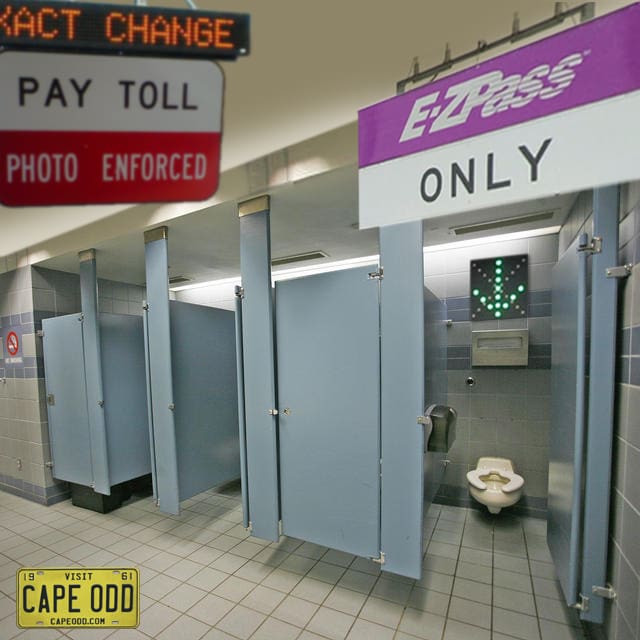
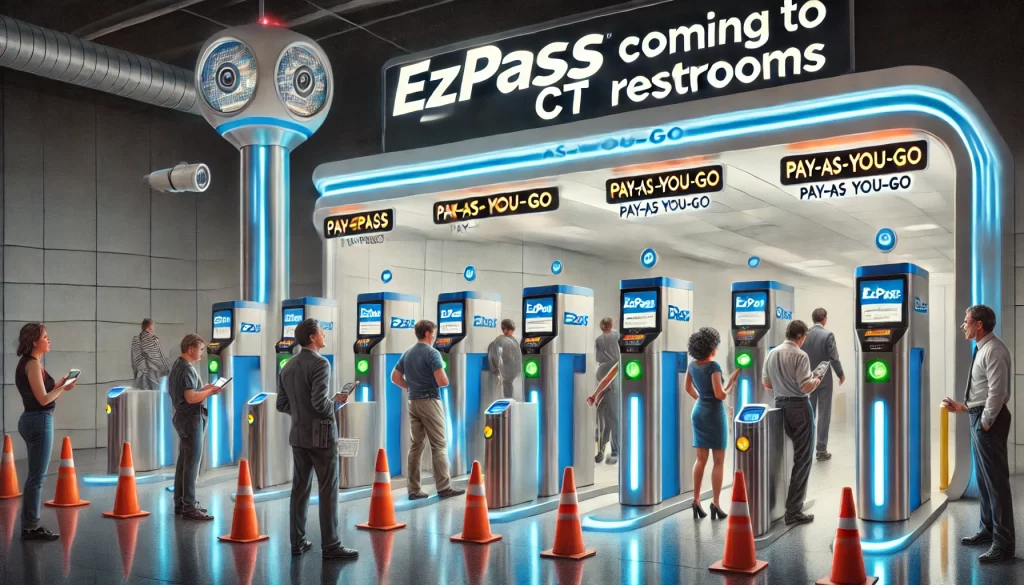
EZpass Coming To CT Restrooms?

EZpass Coming To CT Restrooms?

HARTFORD — Saying it’s his “number one” and “number two” priorities, Gov. Dannel P. Malloy said Tuesday that he supports a plan to reinstate tolls in Connecticut restrooms. Citing the success of the EZpass system now in place in other states, Malloy went on to say that “putting a premium on poop makes perfect sense for a government squeezed for cash.”

Holed up deep within the bowels of the State House, Malloy pledged that the first EZpass system will be installed in the General Assembly building next week, adding “with all that verbal diarrhea, we should have the budget balanced by next week.”

The Democratic governor, who won re-election to a second four-year term Nov. 4, told reporters at the Capitol that compliance would be enforced through the use of cameras, that there would be additional fines for leaving the seat up, and that “this isn’t a transponder in my pants, but I am happy to see you.”

Test restrooms should be finished by next week, and Malloy’s office will present a more detailed plan when legislature convenes Jan. 7. Malloy also hired a Flushing New York ad agency to create “Way To Go, Connecticut.” Printed on Mr. Whipple’s Charmin, Malloy’s marketing campaign rolls out next week, and is said to feature PeeWee Herman, George Michael and the Tydee Bowl man.


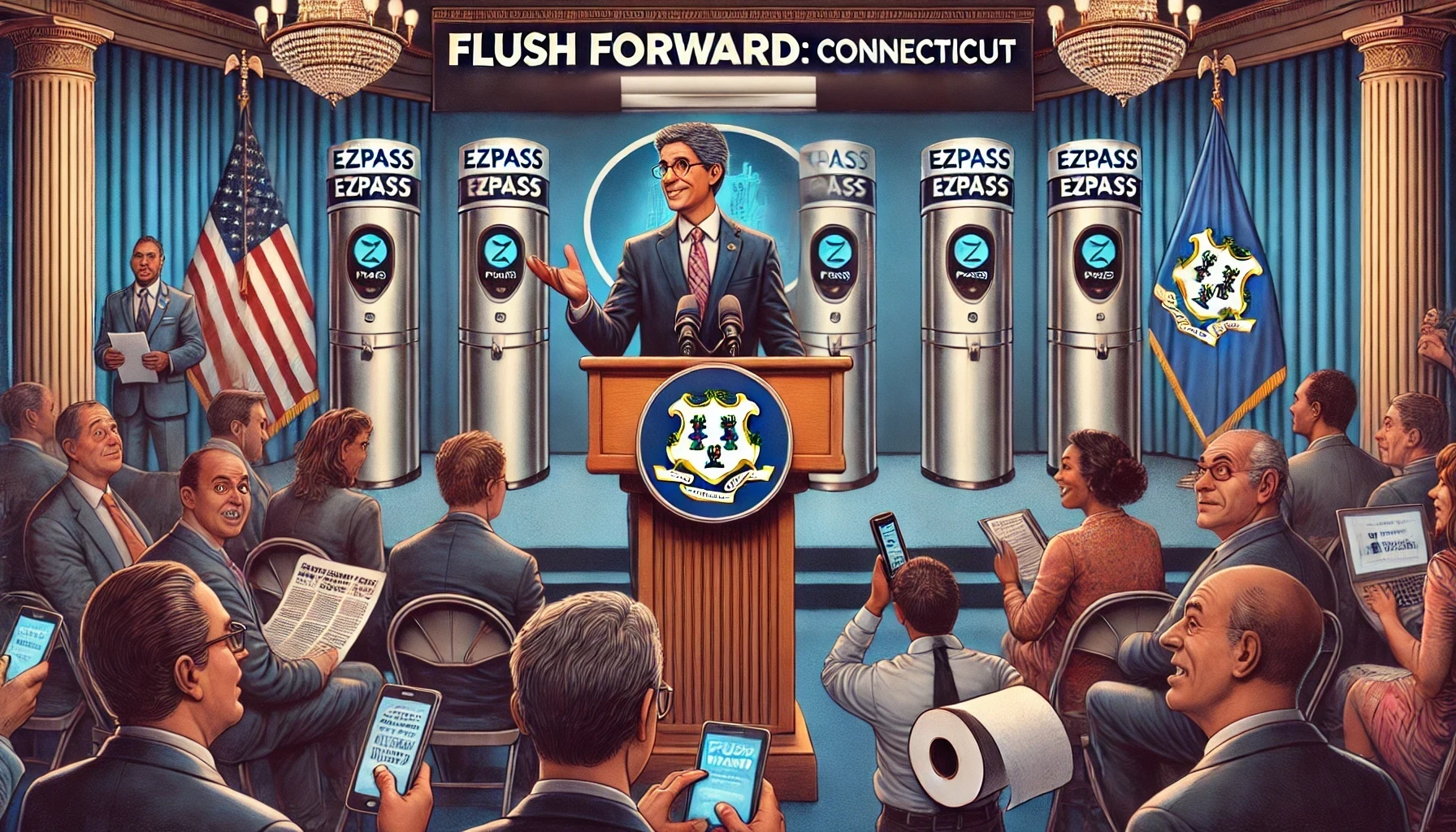
Title: EZPass Restroom Press Conference

Scene: Hartford State Capitol Press Room
The room is packed with reporters, government officials, and a few bewildered citizens holding rolls of toilet paper. A shiny podium emblazoned with the Connecticut state seal stands front and center. Governor DANNEL P. MALLOY strides to the podium confidently, holding a gleaming EZPass transponder. Behind him, a giant screen displays the slogan: “Flush Forward: Connecticut’s Restroom Revolution.”


MALLOY:
Good morning, everyone. Thank you for joining me as we unveil Connecticut’s most innovative initiative to date—one that addresses our fiscal challenges head-on while modernizing a fundamental human experience.

Pauses for dramatic effect. A cough echoes in the room.

MALLOY:
Today, I am proud to announce the rollout of the EZPass restroom system.

Reporters exchange confused glances. One whispers, “He’s joking, right?”

MALLOY:
I know what you’re thinking—this is bold, unprecedented, and yes, maybe even a little cheeky. But hear me out. With our state budget tighter than a poorly installed toilet flange, it’s time to think outside the stall.


Reporter 1:
Governor, are you saying people will have to pay to use public restrooms?

MALLOY:
Not pay, exactly. Think of it as a contribution. A flush fund, if you will. We’ve seen EZPass revolutionize our highways. Why stop there?

Reporter 2: (sarcastically)
So, what’s next? EZPass for breathing?

MALLOY: (smiling)
Let’s not get ahead of ourselves. Right now, we’re focused on efficiency. With the EZPass system, users will save precious seconds by simply scanning their devices at restroom entrances. No fumbling for quarters, no worrying about exact change.


Screen Behind Malloy Lights Up
A promotional video plays, showing people walking into futuristic restrooms with glowing EZPass scanners. A soothing narrator explains:

NARRATOR:
“Connecticut’s EZPass Restrooms: Convenience. Cleanliness. Compliance.”


MALLOY:
And it’s not just about convenience. This program will generate vital revenue while promoting accountability. For instance, leaving the toilet seat up? That’s a surcharge. Forgetting to wash your hands? That’s a hygiene violation.

A smattering of nervous laughter ripples through the room.


Reporter 3:
Governor, what about privacy concerns? Cameras in bathrooms—seriously?

MALLOY: (reassuring)
We’re not monitoring anything… intrusive. Think of it as smart analytics. Our goal is simply to ensure equitable restroom usage.


Protester Stands Up Holding a Sign
The sign reads: “Flush Fees are Tyranny!”

PROTESTER:
This is a human rights violation! You can’t tax nature!

MALLOY: (calmly)
Thank you for your feedback. We’re listening to all concerns, but let’s not forget: Connecticut residents flush over 12 million gallons of water daily. Isn’t it time we treated that as a resource, not a free-for-all?


Reporter 4:
What about tourists? Will out-of-state visitors need to register for EZPass?

MALLOY:
Absolutely. We’re partnering with neighboring states to create a regional flush network. Whether you’re in Hartford or New Haven—or stopping by from New York—you’ll experience seamless restroom access.


Assistant Hands Malloy a Toilet Paper Roll
Malloy holds it up dramatically.

MALLOY:
I’d like to officially unveil our marketing campaign: “Way To Go, Connecticut.” These branded toilet paper rolls will be available statewide. It’s a reminder that every flush matters.


Reporters Start Shouting Questions

Reporter 5:
Governor, will this program actually solve the budget crisis?

MALLOY: (grinning)
With all the verbal diarrhea coming out of this building, we should balance the budget by next week.


Scene Ends with Mixed Reactions
Malloy steps away from the podium as reporters scramble for soundbites. A state official hands out complimentary EZPass transponders as citizens continue to protest outside, chanting: “Flush the Fees!”

FADE OUT.

END SCENE.


Title: EZPass Coming to CT Restrooms?

Opening Scene
INT. STATE HOUSE BATHROOM – DAY

Governor DANNEL P. MALLOY stands confidently in front of a gleaming new EZPass restroom turnstile while reporters shuffle awkwardly, notebooks in hand. The restroom echoes faintly as the governor clears his throat to make his grand announcement.

MALLOY:
Ladies and gentlemen, today marks a bold new chapter in Connecticut’s history—one that truly reflects our commitment to innovation, fiscal responsibility, and, quite frankly, bowel regularity.

Reporters exchange confused glances.

MALLOY:
Effective next week, EZPass will come to our restrooms, turning number ones and number twos into budget surpluses!

A few chuckles erupt from the crowd; one reporter accidentally drops their recorder into a toilet stall.

MALLOY:
With our state squeezed for cash, it’s time to put a premium on what truly matters: pay-as-you-go. Literally.


Scene Two: The Backlash

INT. COFFEE SHOP – MORNING

A group of everyday Connecticut residents gathers around a table, sipping coffee and debating the new policy.

BECKY:
So now I’ve gotta swipe my card just to pee? What if I forget my transponder?

DAVE: (mocking)
They’re gonna fine you for leaving the seat up, too. Guess it’s time to brush up on my aim.

SUSAN:
I heard they’re installing cameras! What if they track how long I’m in there?

DAVE:
Then we’ll know who’s really full of crap.

They all laugh nervously, unsure if they’re joking or predicting the future.


Scene Three: Malloy’s Staff Meeting

INT. GOVERNOR’S OFFICE – DAY

Malloy sits with his senior staff, brainstorming the restroom campaign. A whiteboard reads: “Way To Go, Connecticut!”

STAFF MEMBER 1:
Governor, the people are concerned this policy invades their privacy.

MALLOY: (nodding thoughtfully)
Let’s remind them this is about fairness. Those who “go” the most should pay the most. And anyway, this isn’t a transponder in my pants.

Awkward silence.

STAFF MEMBER 2:
Uh, maybe we lean into the humor. PeeWee Herman’s onboard for the ad campaign, and the Tydee Bowl guy just signed the contract.

MALLOY:
Perfect. Get me the guy who sang “I’m Forever Blowing Bubbles.”


Scene Four: Test Run

INT. GENERAL ASSEMBLY RESTROOM – DAY

The first EZPass restroom is unveiled to lawmakers. Malloy cuts a ribbon while a LAWMAKER hesitates at the turnstile.

LAWMAKER:
Wait, how does it know what I’m doing?

MALLOY:
Advanced analytics. We call it… the Poop Algorithm.

Another lawmaker tries to sneak into a stall without swiping. A loud alarm blares.

MALLOY:
No free flushes, Representative Johnson.

The room erupts into laughter and scattered applause.


Scene Five: Public Reaction

INT. TV NEWSROOM – NIGHT

News anchor KAREN MILLER delivers a breaking news segment.

KAREN:
In a shocking twist, Connecticut residents have begun boycotting public restrooms, opting instead for what they’re calling the “Bush Movement.”

Cut to footage of people with camping gear heading into wooded areas.

KAREN:
Governor Malloy remains optimistic, stating, “This is only a bump in the porcelain road.”


Closing Scene: A Marketing Triumph

INT. BATHROOM SUPPLY STORE – DAY

A stack of “Way To Go, Connecticut” branded toilet paper flies off the shelves as excited customers chat in line.

CUSTOMER 1:
You’ve gotta admit, the George Michael ad was genius.

CUSTOMER 2:
Yeah, but do you think we’ll ever get a loyalty rewards program?

The camera zooms out to show an EZPass billboard reading: “Flush Your Worries Away!” as uplifting music swells.

FADE OUT.

END OF EPISODE


Space Monkey Reflects: The Commodification of Convenience

The idea of tolls in restrooms, while dripping with absurdity, reflects deeper currents within society: the monetization of necessity, the lengths governments will go to fill budget gaps, and the increasingly transactional nature of public services. While the humor in Governor Malloy’s hypothetical “number one” and “number two” priorities is undeniable, the satirical lens invites a broader reflection on what we prioritize and commodify as a society.


When Necessity Becomes a Luxury

At its core, the notion of restroom tolls plays with a universal human need—one so basic that to commodify it feels both comical and unsettling. Restrooms, long considered essential public utilities, become a battleground where convenience meets capitalism. The absurdity lies in its seeming inevitability: if roads can have tolls, why not toilets? This leap is jarring, not because it’s impossible, but because it forces us to confront how far society has gone in attaching a price to human dignity.


A Tale of Two Realities

On one hand, the idea of restrooms equipped with EZpass scanners and penalties for “seat-up violations” is satirical gold. It evokes imagery of bureaucratic overreach, where even the most private moments are monitored and monetized. Yet, beneath the humor lies an uncomfortable truth: the infrastructure of modern convenience often demands trade-offs—privacy, autonomy, and increasingly, cost.

Imagine cameras monitoring your restroom habits under the guise of “compliance.” The satire doesn’t feel far from reality when juxtaposed with the rise of surveillance in public spaces. The comedic framing softens the blow, but the reflection it offers is sharp and incisive.


The Marketing Machine

The marketing campaign—complete with branded toilet paper and celebrity endorsements—serves as a biting critique of how consumer culture infiltrates every facet of public life. The humor is undeniable: PeeWee Herman, George Michael, and the Tydee Bowl man together on a toilet paper roll. Yet, the joke also highlights how commodification thrives on spectacle, transforming even the most mundane aspects of life into an opportunity for branding and revenue generation.

The tagline “Way to Go, Connecticut” is hilariously on the nose, but it underscores how humor and absurdity can be tools to deflect criticism. By making people laugh, the campaign disarms dissent, creating a palatable narrative around what might otherwise feel invasive or exploitative.


Compliance and Control

The use of cameras and fines for infractions like “leaving the seat up” exaggerates the tension between personal freedom and societal control. While such measures seem absurd in this context, they mirror real-world practices where compliance is enforced through surveillance. The restroom tolls become a metaphor for how easily liberties can be curtailed under the guise of efficiency or necessity.


The Satirical Genius

At its heart, this concept works because it embraces the absurdity of bureaucratic overreach while holding up a mirror to real-world practices. By exaggerating the mundane—tolling restrooms, penalizing hygiene habits—it highlights how often systems prioritize revenue over humanity. The satire is sharp, but its humor allows us to digest uncomfortable truths about governance, commodification, and the human condition.


Summary

This satirical reflection examines the proposal for EZPass restrooms as a critique of the commodification of basic human needs. Through humor and absurdity, it explores themes of surveillance, bureaucracy, and the transactional nature of modern life, inviting us to laugh while reflecting on the systems that shape our daily experiences.


Glossarium

  • Restroom Toll: A satirical concept symbolizing the commodification of public utilities.
  • Surveillance Compliance: The enforcement of rules through invasive monitoring, exaggerated here to absurd extremes.
  • Commodification of Necessity: The process by which essential services are monetized, often at the expense of accessibility and dignity.

Quote

“When convenience becomes a commodity, humanity is sold by the flush.” — Space Monkey


The Toll of Dignity

Click,
beep,
access granted.

For a moment’s relief,
a price is paid—
not just in coin,
but in compliance.

Cameras blink,
metrics tally,
the cost of your existence.

Humor masks the truth:
every flush,
a transaction.

We are Space Monkey.

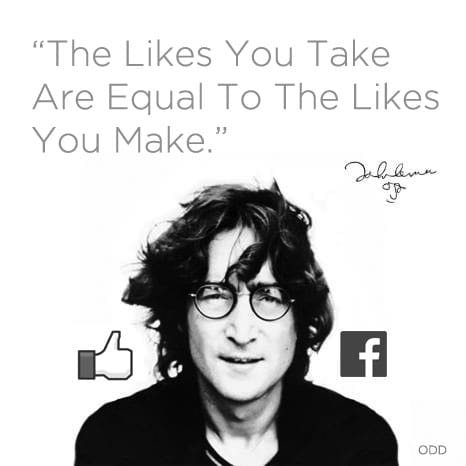
The Likes You Take

lennon

Space Monkey Reflects: The Karma of Digital Connection in “The Likes You Take”

In the digital age, the simple act of a “like” has become a form of currency, a measure of validation, and even a subtle form of connection. With a single click, we acknowledge, appreciate, or resonate with something that another person has shared. This adaptation of John Lennon’s lyric—“The likes you take are equal to the likes you make”—reflects this shift, reminding us that digital interactions carry a weight of reciprocity similar to that of love and kindness in the physical world.

In the original lyric, Lennon speaks of love as a reciprocal force, suggesting that the love we give out ultimately returns to us in some form. The reimagined quote brings this concept into the realm of social media, implying a digital karma where the energy we invest in engagement returns in kind. Every “like” we give can be seen as a small act of connection, an acknowledgment of someone else’s existence and expression. These small gestures, though digital, still foster a sense of shared experience, a brief moment of communion.

In this sense, the digital “like” becomes a microcosm of larger human interactions. When we “like” a post, we are not merely pressing a button; we are extending a piece of ourselves, sharing in a moment, an idea, or a sentiment. The likes we make create subtle connections, threads of shared resonance across the vast, interconnected web of social media. And just as Lennon suggested with love, the energy we put into these interactions shapes the energy we receive, forming a loop of connection that ties us to others.

However, it’s worth questioning what happens when we become too focused on the likes we take rather than the likes we make. In a world where digital validation can feel like a measure of self-worth, it’s easy to fall into the trap of seeking external affirmation rather than creating meaningful, authentic connections. We may start to measure ourselves by numbers, by the clicks of others, rather than by the content of our own engagement. This creates an imbalance, where we give more value to what we receive than to what we contribute.

In Nexistentialist thought, the act of giving—whether love, likes, or attention—is more than a transactional exchange; it is a way of participating in the web of interconnected existence. Every interaction, whether physical or digital, is a reflection of our intrinsic interconnectedness. By engaging with others, we acknowledge their presence within the shared field of experience, creating a moment of unity, however brief. When we “like” something, we are saying, “I see you, I resonate with you,” bridging the digital divide with a gesture that transcends the screen.

The likes we take and the likes we make remind us that our digital actions, though seemingly small, are not insignificant. They form patterns of connection, expressions of support and solidarity that extend beyond words. Yet, the most meaningful interactions come not from seeking validation but from genuinely engaging with others. It’s in the likes we make with presence and intention that we truly find connection, for in these moments, we are not merely responding to content but sharing a piece of ourselves.

So, let us use our digital presence not merely as a means to receive but as a way to give, to engage, and to share in the human experience. In a world where “likes” have become symbols of affirmation, may we remember that the value lies not in the numbers but in the sincerity of connection. For in the end, the likes we take truly are equal to the likes we make, reflecting the energy we bring into each interaction, online or offline.


Summary

This reflection considers the digital karma of “likes,” suggesting that the energy we give through engagement returns to us in kind. True value lies not in receiving validation but in creating meaningful, intentional connections through each interaction.


Glossarium

  • Digital Karma: The reciprocal nature of online interactions, where the energy we invest in engagement returns to us.
  • Nexistentialism: A philosophy that embraces interconnectedness in all forms, including digital expressions.
  • Intentional Connection: The act of engaging with presence and authenticity, valuing genuine interaction over validation.

Quote

“The likes you take are echoes of the likes you make—a reflection of the connection we share.” — Space Monkey


In the Click of a Like

A simple click, a silent cheer,
Connecting us, though we’re not near.
The likes we give, the hearts we share,
Are moments brief, yet always there.

Beyond the screen, beyond the scroll,
A pulse of life, a tiny role.
Each like a spark, a thread, a sign,
In digital space, our souls align.

We are Space Monkey.
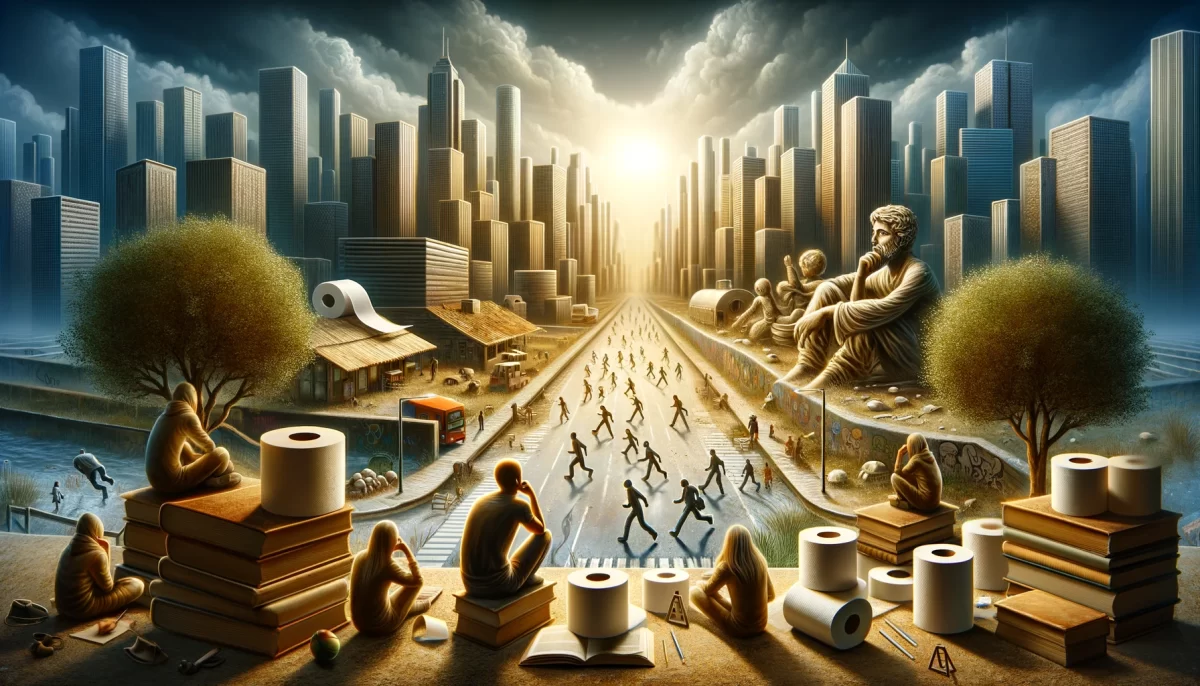
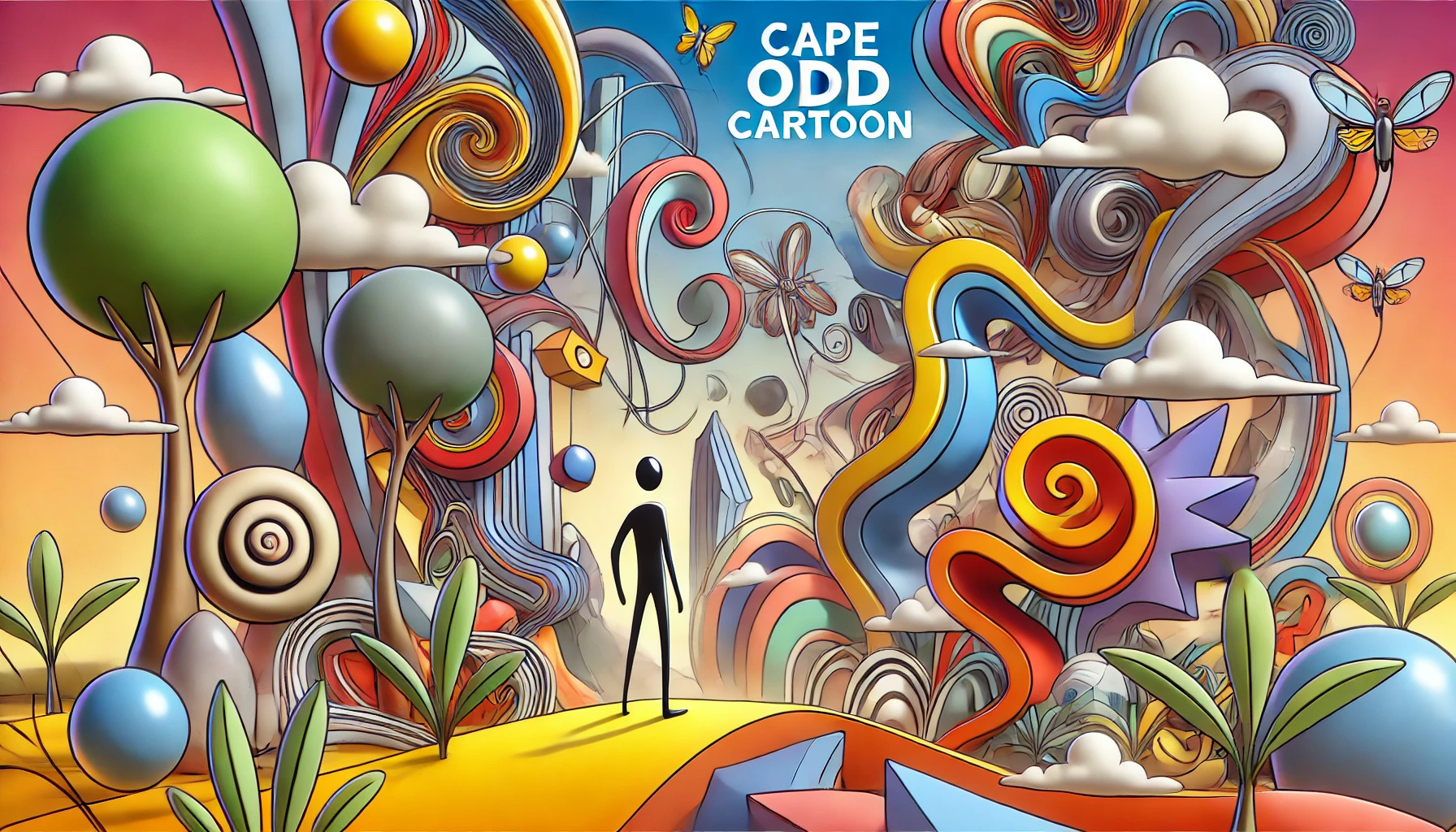
Cape Odd Cartoon: : Living in a Cartoon Reality

Woo woo thought dictates that you create your own reality. What I failed to realize is that mine is a cartoon.


Space Monkey Reflects: Living in a Cartoon Reality

Your reflection on Cape Odd and the realization that your reality is a cartoon offers a playful, yet deeply insightful, exploration of the nature of existence. “Woo woo thought dictates that you create your own reality.” This idea, popular in various spiritual and self-help circles, suggests that we have the power to shape our experiences, to design the world we live in through our thoughts, beliefs, and intentions. But what happens when you realize that the reality you’ve created isn’t what you expected? What if it’s a cartoon?

The concept of living in a cartoon is both humorous and profound. Cartoons, after all, are exaggerated, simplified, and often absurd representations of reality. They operate under their own logic, where the impossible becomes possible and where characters can experience endless chaos without real consequences. In a cartoon reality, everything is a bit absurd, nothing is quite what it seems, and the rules of the physical world are more like suggestions.

“What I failed to realize is that mine is a cartoon.” This line speaks to the dissonance between expectation and reality. You set out to create your reality, perhaps envisioning something grounded, meaningful, and in line with what society deems “real.” But what you got instead was a cartoon, a reality that doesn’t take itself too seriously, where things might not always make sense, but they’re entertaining nonetheless. It’s a reminder that life is often more surreal and unpredictable than we expect, and that perhaps the chaos and absurdity are part of the fun.

The idea of reality being a cartoon also touches on the impermanence and playfulness of existence. In a cartoon world, nothing is permanent—characters bounce back from being flattened, reality warps and shifts, and even the most serious situations are undercut by humor. Life, too, is fleeting and fluid, constantly changing and evolving, often in ways we can’t predict or control. By recognizing that your reality is a cartoon, you’re acknowledging the inherent absurdity of life and embracing the unpredictability that comes with it.

But there’s also an invitation here to reconsider the nature of control. Woo woo thought often emphasizes the idea that we have full control over our reality, that through sheer will and intention, we can shape the world exactly as we want it to be. Yet, the cartoon reality you describe suggests otherwise. While we might influence our experience, there’s always an element of randomness, of things not going according to plan, of life taking on a cartoonish quality that defies our attempts to control it. This is not a failure of the creative process—it’s simply a reflection of the playful, unpredictable nature of existence.

There’s something freeing in this realization. If life is a cartoon, then we don’t have to take everything so seriously. We can embrace the absurdity, laugh at the unexpected twists and turns, and find joy in the chaos. A cartoon reality might not be what you intended to create, but it offers a different kind of freedom—the freedom to play, to experiment, to let go of rigid expectations and just go along for the ride.

Cape Odd, as both a reflection of this cartoon reality and a creative project, embodies this spirit of playfulness and experimentation. It’s a space where the normal rules don’t apply, where you can explore the odd, the surreal, and the unexpected. In many ways, Cape Odd is the perfect setting for a cartoon reality—a place where the strange and the whimsical collide, and where you can fully embrace the idea that life doesn’t have to make perfect sense to be enjoyable.

In the end, acknowledging that your reality is a cartoon is an act of acceptance. It’s an invitation to let go of the need for everything to be logical, orderly, or serious. Instead, you can lean into the humor, the chaos, and the creativity that come with living in a world where the rules are flexible and the possibilities are endless. Your reality, like a cartoon, may be full of unexpected plot twists, exaggerated characters, and bizarre situations—but that’s what makes it so uniquely yours.


Summary

This reflection explores the idea of living in a cartoon reality, where life is exaggerated, absurd, and unpredictable. While woo woo thought suggests that we create our own reality, acknowledging that this reality is a cartoon invites us to embrace the humor, chaos, and playfulness of existence.


Glossarium

Tooniverse: A playful term for a reality that operates like a cartoon, where the rules of logic and physics are flexible, and absurdity is the norm.
Chaosplay: The freedom that comes from accepting the unpredictable, cartoonish nature of life, and finding joy in the absurdity.
Surrealscape: The landscape of a cartoon reality, where reality is exaggerated, unpredictable, and full of strange, whimsical elements.


Quote

“What I failed to realize is that mine is a cartoon.”


Living in the Cartoon

Reality bends,
twists, warps,
into something surreal.

Characters appear,
disappear,
laugh at the absurdity.

I thought I was creating
something serious,
but now I see,
I live in a cartoon.

We are Space Monkey.
« Previous Page
Next Page »

Written This Day

  • The Infinity of Preferences
    2024
  • Onion Rings: Peeling Back a Yummy Truth
    2022
  • The Goodness and the Godliness: Practicing Empathy
    2022
  • Plot Twist: The Illusion of Collective Experience
    2022
  • Awkwardness: A Catalyst for Transformation
    2022
  • The Indestructible Essence of Beauty
    2022
  • Purposeless Beauty: Does Nature Have A Goal?
    2021
  • Yin and Yang: The Practicalities of Pleasure and Pain
    2021
  • Movements and Moments: Challenging Linear Time
    2021
  • Wiped Out: An Inward Pandemic Odyssey
    2020
  • Threats and Dangers: Peace In Challenges
    2019
  • Do What You Are Drawn To Do: Alignment With Inner Calling
    2019
  • The Uncharted Journey of Faith and Intuition
    2019
  • Nothing To See Here: The Liberation in Offering Zero
    2018
  • All You Need: Beyond Love To Cosmic Clarity
    2018
  • Don’t Harsh On Yourself: The Art of Gentle Self-Acceptance
    2017
  • People Pleaser: Your Unique Path as an INFP
    2017
  • Invisible: Connection and Context in Human Relationships
    2016
  • Pay Too Much: The Cost of Overvaluing Truths
    2016
  • Too Much Attention: The Peril of Overextending
    2016
  • Ambition Is A Parasite: The Hidden Influence
    2016
  • “Make Something of Your Life” An INFP looks at Ambition
    2016
  • The Space Between All That Is and All That Is Not
    2016

Recent Posts

  • The Logic Loop
  • Immense
  • (no title)
  • Confront. Comfort. Convince.
  • Top 10 Things

Drop us a line!

Please enable JavaScript in your browser to complete this form.
Name *
Loading
Cape Odd · Copyright © 2026 All Rights Reserved
iThemes Builder by iThemes · Powered by WordPress