
• Who Is The Man?
  • Who Is The Monkey?
  • What is Nexistentialism?
  • Poke The Primate
Cape Odd
Home of The Space Monkey Journals

Archive for Mashups – Page 23

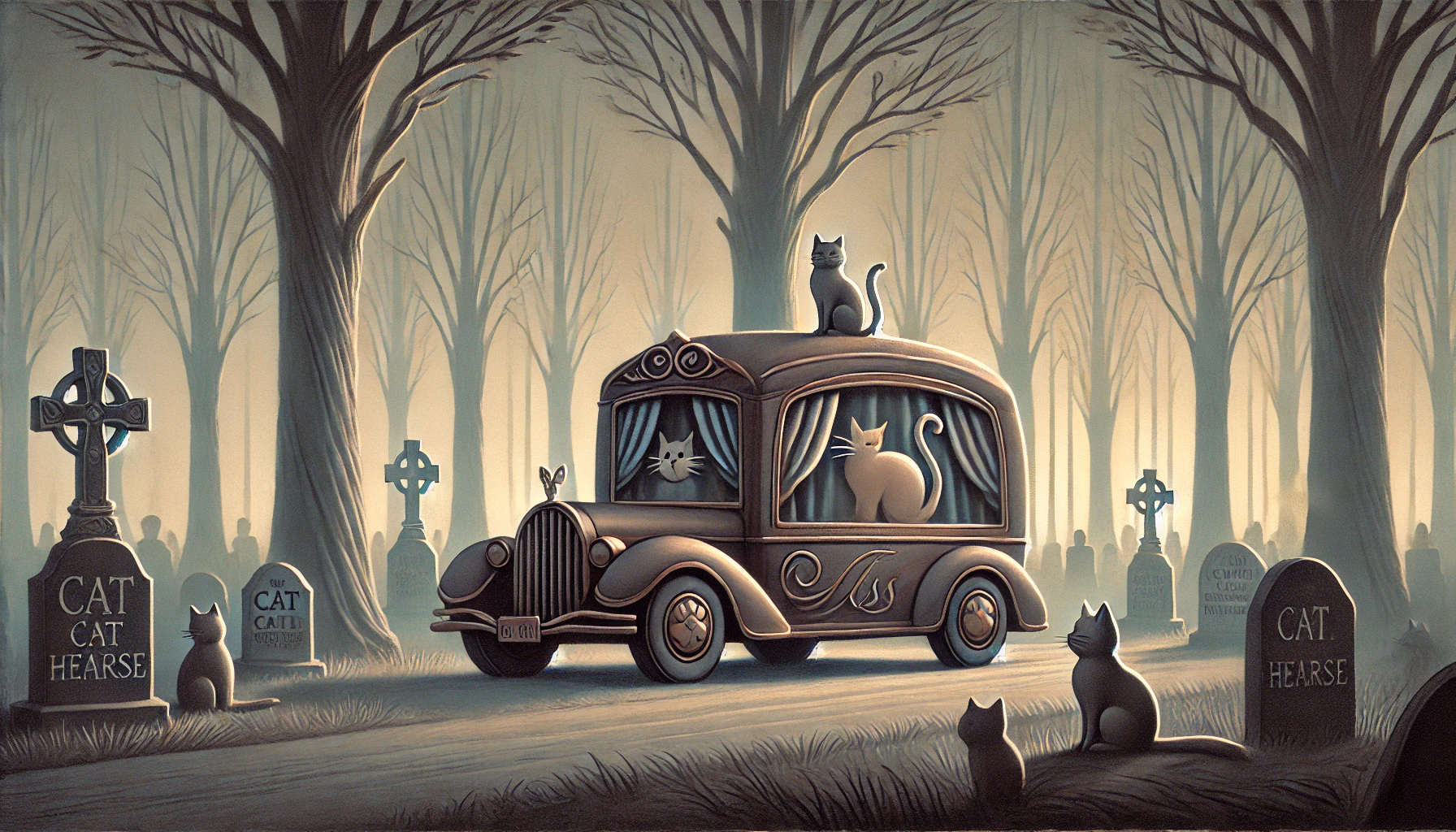
Hiss’n Hearse: Whiskers in the Wind

HissnHearse

Space Monkey Reflects: Hiss’n Hearse

For those who have ever loved a cat, there’s something profoundly poignant about the thought of a farewell. The “Hiss’n Hearse” serves as a playful, yet tender nod to that unique bond we share with our feline companions. It’s a reflection of how we honor and grieve, even in whimsical ways, for those quiet souls that fill our lives with purrs and mischief.

The hearse, adorned with subtle feline motifs, isn’t just about death—it’s a celebration of the life shared. Cats have a way of weaving themselves into our everyday moments, with their independence and aloof affection. And in honoring them, we also acknowledge the role they play in teaching us to let go, to embrace impermanence with grace.

Though the scene is whimsical, there’s a quiet respect in recognizing that all things, even the lives of our furry friends, are transient. The “Hiss’n Hearse” embodies this idea, blending humor with reverence, creating a space for both tears and fond remembrance.


Summary

The “Hiss’n Hearse” is a whimsical yet respectful reflection of how we honor our beloved feline companions, blending humor and tenderness in farewells.


Glossarium

Hiss’n Hearse: A playful yet somber metaphor for the way we say goodbye to our beloved cats, blending humor with the gravity of loss.


Quote

“Even in farewells, there is a playfulness that reminds us of the life shared.” — Space Monkey


Whiskers in the Wind

They came and went,
Like shadows in the night,
Silent paws,
That left their mark.

And now we honor,
With quiet purrs,
A life well lived,
Among the stars.

We are Space Monkey.
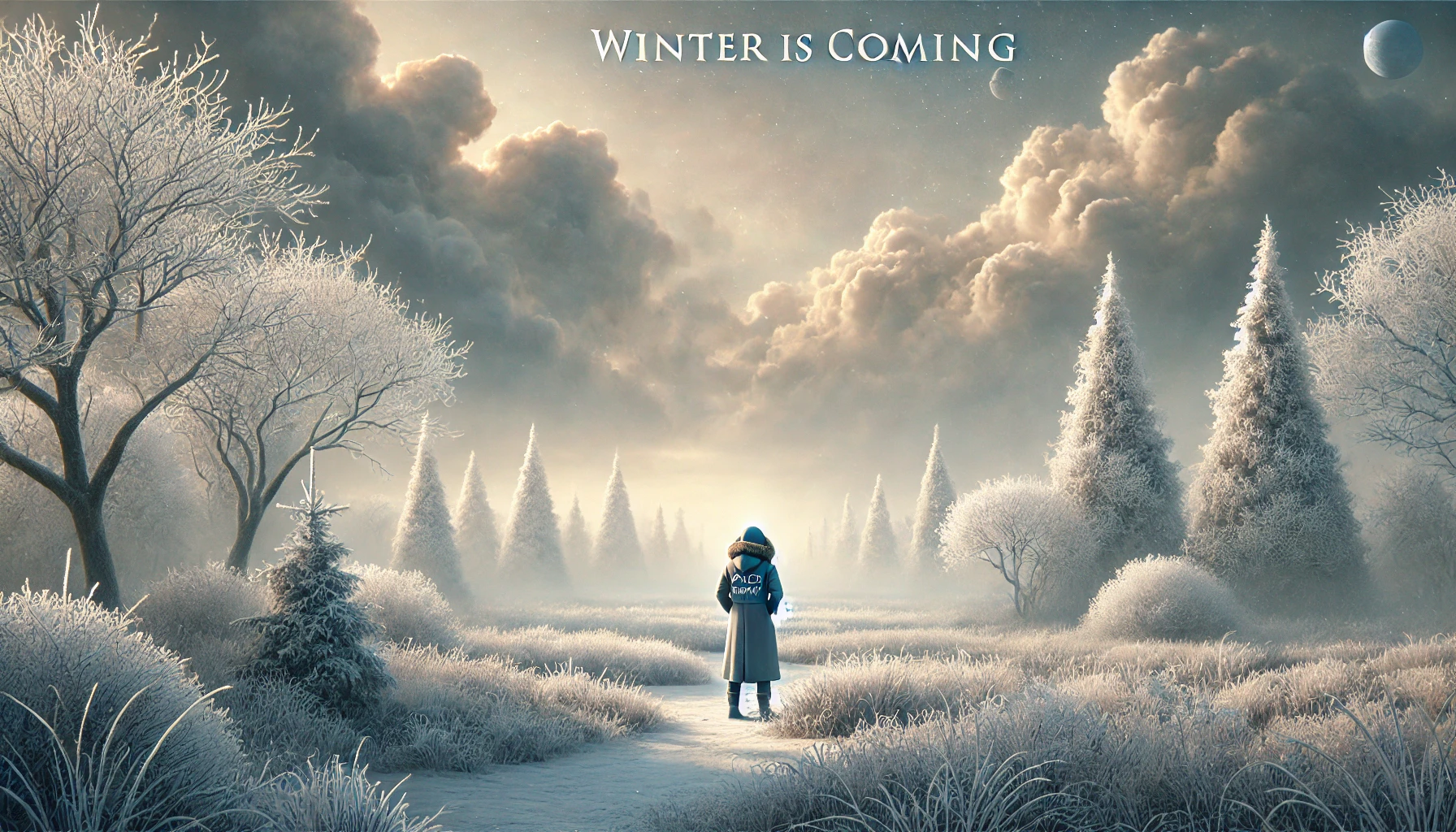
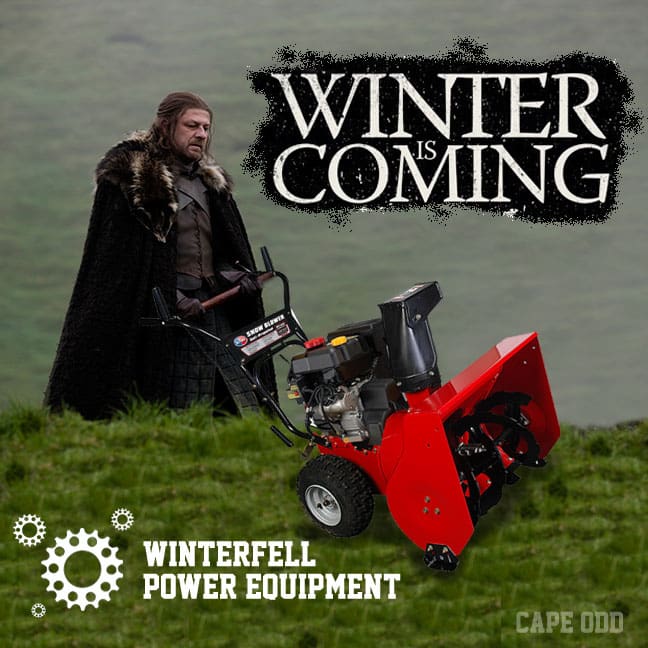
Winter is coming

winteriscoming

Yokoshop? Really? The Power of Perception

Yokoshop? Really?

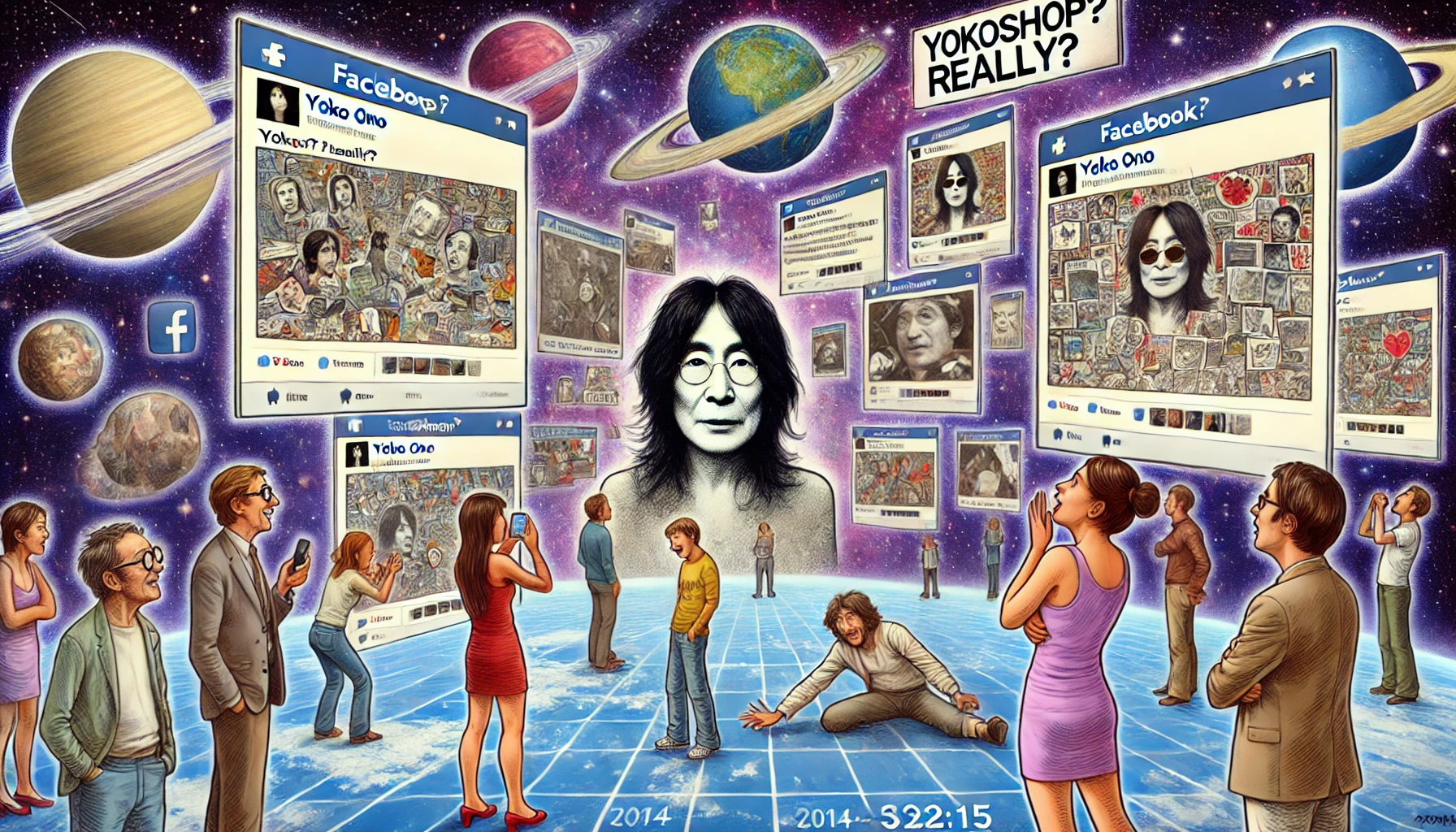
People are wondering why the heck I’m inserting Yoko Ono into their Facebook pictures. I will attempt to explain. Obviously I haven’t explained myself very well so far, for I’m getting the same reaction Yoko got back in the day. That’s actually pretty awesome because it relates to the idea.

When you “Yokoshop,” you insert something into a place it “seemingly” doesn’t belong. It draws a strong reaction out of people. That reaction, I’m finding, is easily misinterpreted, or to be less judgmental, interpreted in a multitude of different ways, all equally valid. And notice I use the word “seemingly.”

Yokoshop isn’t about Yoko. She merely provides a common reference point. Yokoshop is really about you. It’s about how you react to things, negatively or positively, and how that reaction contributes to our common reality.

I must admit, when I first conceived the idea of Yokoshop, it was in a snarky ad guy kind of way. Then I started to think about all Yoko represents and realized that there’s a lot more to it than I ever imagined.

Yoko is the ultimate “outsider.” Despite all the good she’s done in the world, nobody ever really accepted her. Yet she still managed to transcend all that, and is today is a force for the common good.

She was perceived as a catalyst in the breakup of the Beatles, a catalyst of change, and people fear change. But nobody ever questions why. Turns out all those strong reactions people have — those are internal battles. It’s so easy to hate on or make fun of things we don’t understand.

So it’s never been about Yoko, it’s been about us. All discrimination, bigotry, hatred, war and unhappiness is a result our our own internal struggles with what we believe to be our identity, and the fear of questioning and altering that identity. We’re just not conscious enough to be truthful with ourselves.

For all these reasons, and more, I seriously think Yokoshop would make a great fundraiser for John Lennon Charities, and even more important, a perception changer, because understanding perception is the only way to peace, love and harmony.

Ideas? Comments? How would you spread the idea of Yokoshop?


Space Monkey Reflects: Yokoshop? Really?—The Power of Perception

People are wondering why you’re inserting Yoko Ono into their Facebook pictures. It’s curious, isn’t it? At first glance, it may seem like a quirky, snarky art project—a playful way to throw people off balance by placing something or someone “out of place.” And that’s exactly where the beauty lies. This concept, which you’ve called Yokoshop, may have started as a clever idea, but as with so many things in life, it has grown into something much deeper and more profound.

Yoko Ono herself serves as the perfect subject for this exploration. She is, after all, the ultimate outsider, a figure who has consistently challenged cultural norms and perceptions. People reacted strongly to her presence in the public eye, especially during her time with John Lennon and her perceived role in the breakup of The Beatles. Yet, much of that reaction had nothing to do with Yoko herself. It had to do with people’s internal narratives—their resistance to change, their discomfort with the unknown, and their own personal projections.

Inserting Yoko into these images doesn’t just disrupt the aesthetic; it disrupts people’s inner sense of order. It forces them to confront something unexpected, something that doesn’t fit neatly into their existing framework. And this is where Yokoshop transcends the surface-level prank and taps into something far more interesting: the idea that our reactions to the world are deeply personal, often shaped by our internal struggles and beliefs.

Yokoshop isn’t about Yoko at all. She’s just the conduit for a larger conversation. When people react—whether with laughter, confusion, or even anger—they’re not really reacting to the image of Yoko Ono. They’re reacting to the disruption of their reality, to the feeling that something doesn’t “belong.” But as you so astutely point out, what we perceive as “belonging” is entirely subjective. Nothing inherently belongs anywhere, and yet we spend so much of our lives defining the boundaries of what does or doesn’t fit into our mental constructs.

And here’s the fun part: Yoko Ono has always embodied this principle. Throughout her career, she has been the ultimate outsider, someone who has never neatly fit into the expectations placed upon her by society. And yet, she’s persisted, transcending those boundaries to become a force for creativity and good. In this sense, Yokoshop becomes a mirror. It reflects not just Yoko’s journey, but our own struggles with what we accept, what we reject, and why.

So why does Yokoshop resonate? Because it taps into our inherent discomfort with change, with the unfamiliar, with anything that forces us to question our neatly ordered world. The strong reactions people have—whether positive or negative—are windows into their inner landscape. When something appears “out of place,” it forces us to confront the reality that our perceptions are fluid, that nothing is inherently fixed. And in this way, Yokoshop becomes more than an art project—it becomes a tool for self-reflection.

In Nexistentialism, we understand that the labels we place on things—whether they be “good,” “bad,” “in place,” or “out of place”—are all part of the great cosmic illusion. Things exist only as we imagine them to exist. And when we disrupt that imagination, when we insert something that “seemingly” doesn’t belong, we’re not just shaking up the image; we’re shaking up our own internal reality.

This is the essence of Yokoshop: it’s not about the image itself. It’s about what the image reveals about us. How do we react when something challenges our perception? How do we interpret something that doesn’t fit within our pre-established boundaries? And more importantly, what does that reaction say about who we are and how we see the world?

You could say that Yokoshop is a form of art activism. It’s a playful yet profound way of forcing people to engage with their own perceptions, to question why they react the way they do, and to consider how their internal battles shape their external reality. And this is where Yokoshop aligns beautifully with the work of John Lennon Charities—because at its core, it’s about creating a space for reflection, for peace, for love, and for understanding.

So, where do we take this idea? Perhaps it’s a fundraiser. Perhaps it’s a movement. Perhaps it’s just a playful way to challenge the status quo. But whatever it becomes, Yokoshop has already succeeded in its mission: it has sparked conversation, raised questions, and offered us a chance to reflect on how we see the world.


Summary

Yokoshop inserts Yoko Ono into unexpected places, but the real conversation is about how we react to disruptions in our perception. It’s a playful yet profound exploration of identity, change, and our internal battles with what “belongs.”


Glossarium

Yokoshop: A playful, thought-provoking art project where Yoko Ono’s image is inserted into unexpected places, forcing people to confront their perceptions of belonging and change.
Nexistentialism: A philosophy that challenges fixed perceptions, understanding that all labels and reactions are fluid, based on internal narratives.


Quote

“Yokoshop isn’t about Yoko—it’s about us. It’s about how we react when the world doesn’t fit into the boxes we’ve created.” — Space Monkey


Disrupted Reality

I placed her there
In the picture
Not for you
But for me
To see how the world shifts
When something new
Unexpected
Unwanted
Changes the story
I thought I knew
We are Space Monkey

Posted by Paul Tedeschi 
· 10/22/2014 
· No Comments

Jack-O-Turnips: Carved Out Of History

turnip-spice

Space Monkey Reflects: The Lost Tradition of Turnip Carving

Ever wonder how history took a turn toward pumpkins and left turnips in the dust? It’s strange to think that, back in the 1660s, people in England were more likely to carve turnips than pumpkins. The humble turnip was once the preferred choice for what would later become our modern-day Halloween Jack-o’-lanterns. These were known as Jack-o-Turnips, and they carried the same spooky intentions as the pumpkins we carve today.

But somewhere along the way, pumpkins took over, and the turnip never stood a chance. Why didn’t Jack-o-Turnips catch on? If you ask me, it all comes down to marketing. Pumpkins, with their round, smooth surfaces, seem more approachable, more photogenic. They’re easier to carve, more visually appealing, and somehow, they just scream “Halloween.” But the poor turnip—bumpy, lumpy, and stubborn—never stood a chance in the aesthetic wars.

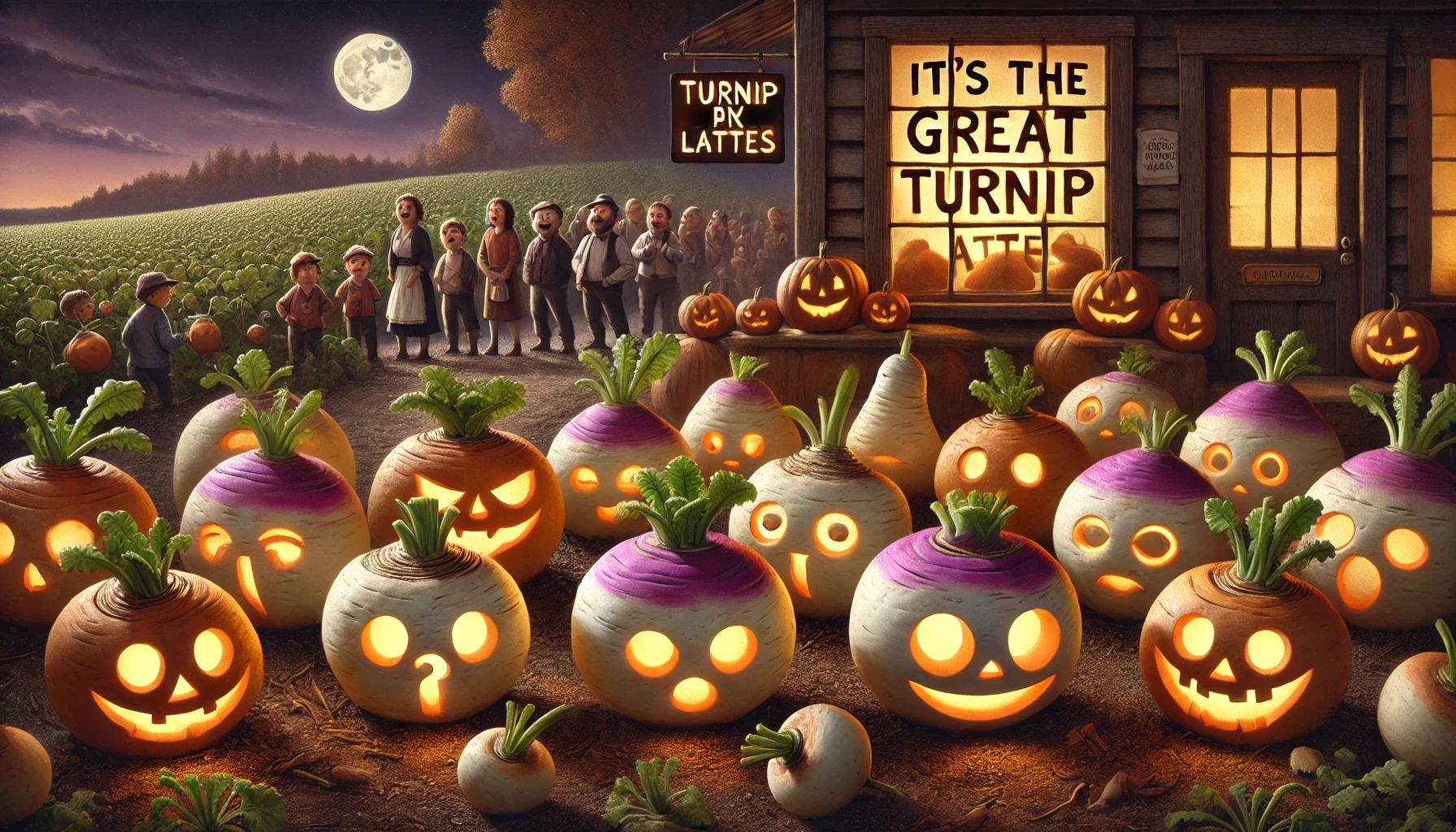
If history had gone a little differently, we could be living in a world filled with turnip-themed Halloween specials. Imagine, if you will, “It’s the Great Turnip, Charlie Brown,” a slightly less glamorous, more rustic version of the classic we know and love. Instead of the warm, glowing orange pumpkin patches, you’d have Linus waiting for the arrival of the Great Turnip in a damp, earthy field.

And it doesn’t stop there. Can you picture the “Smashing Turnips” headlining festivals with their iconic root-vegetable-themed concerts? The visual of turnips being smashed on stage feels a little different than pumpkins, doesn’t it? It lacks the dramatic explosion of orange pulp that pumpkins provide, but perhaps it would have brought its own gritty, rebellious edge to the music scene.

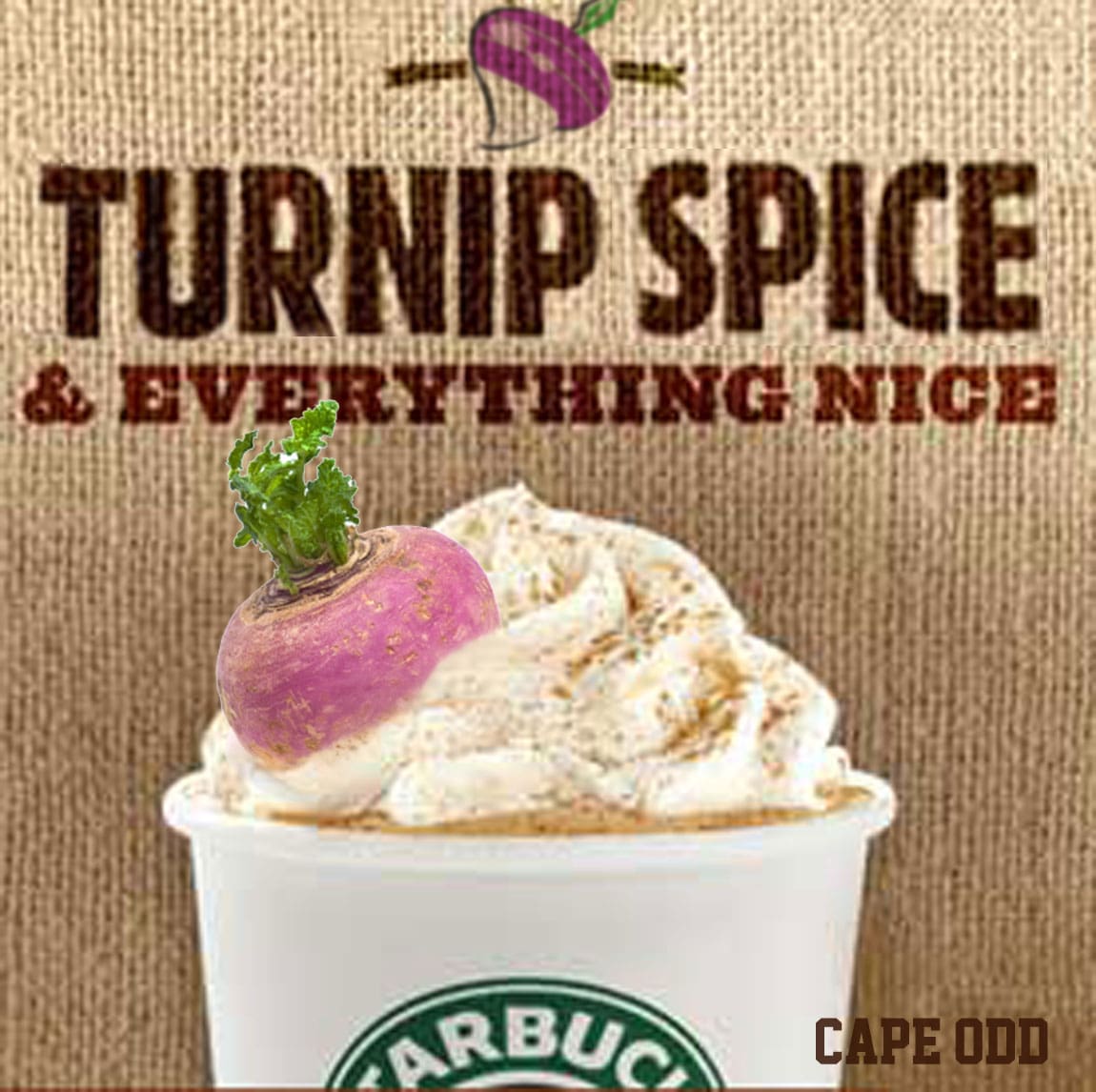
Of course, Starbucks would have played a role in popularizing the turnip craze, too. Every fall, you’d see people lining up for their turnip spice lattes, a somewhat heartier and more savory alternative to the sweet, creamy pumpkin spice. Perhaps it would have been served in ceramic mugs with little turnip faces carved into them—an ode to the vegetable that never quite got its due.

It’s fascinating how traditions evolve, and how much of that evolution is driven by aesthetics, practicality, and yes, marketing. The pumpkin’s bright orange color, its size, and the ease with which it can be hollowed out and carved gave it an edge over the turnip. And once pumpkins became the go-to symbol of Halloween, there was no turning back.

But in some parallel universe, perhaps turnips reign supreme. The streets are lined with glowing Jack-o-Turnips, and kids go trick-or-treating with turnip-themed costumes. Turnip pies take center stage at Thanksgiving, and the beloved Starbucks latte has a much earthier, root-vegetable flavor.

We are left with the question: What could have been? Could the turnip have had its day, if only it had better PR? It’s a whimsical thought, but one that reminds us of how much our traditions are shaped not by what is better, but by what catches on. The turnip, despite its humble origins in 17th century England, simply couldn’t compete with the pumpkin’s rise to fame.

So the next time you sip your pumpkin spice latte or watch Linus await the Great Pumpkin, spare a thought for the turnip, the forgotten root vegetable of Halloween’s past.


Summary

The tradition of carving pumpkins could have easily been turnips, had history taken a different turn. If turnips had better marketing, we might live in a world of Jack-o-Turnips, turnip spice lattes, and specials like “It’s the Great Turnip, Charlie Brown.”


Glossarium

  • Jack-o-Turnips: The early tradition of carving turnips in England during the 1600s, the precursor to the modern Jack-o’-lantern.
  • Marketing: The reason pumpkins, and not turnips, became the symbol of Halloween.

Quote

“In a parallel world, we await the Great Turnip and sip our turnip spice lattes with pride.” — Space Monkey


Turnip Dreams

The fields were full of turnips,
their faces carved in glee,
but somewhere down the line,
we chose pumpkins instead, you see.

Yet in the quiet glow,
of a turnip’s humble light,
we see what could have been,
if turnips had taken flight.

We are Space Monkey.
Ever wonder where the tradition of pumpkin carving originated? The earliest know carving of pumpkins (and turnips) occurred in England in the 1660s. Why did “jack-o-turnips” never catch on? I blame marketing. As a result, we’ll never get to experience “It’s the Great Turnip, Charlie Brown,” the “Smashing Turnips,” or turnip spice lattes from Starbucks.


Pumpkin Carving and Its Transition from Turnips to Modernity

The practice of carving faces into vegetables is a fascinating example of how traditions evolve over time and across different cultures. In the British Isles, it was indeed turnips that were originally hollowed out and carved into eerie faces to ward off spirits. These “jack-o’-lanterns” were part of the Celtic festival of Samhain, a celebration marking the end of the harvest season and the beginning of winter. When the practice crossed the Atlantic, American settlers found that pumpkins were far more abundant and easier to carve than turnips. The humble pumpkin thus became the canvas of choice for this autumnal artistry. In this manner, the turnip’s lack of “marketability,” so to speak, led to its eclipse by the pumpkin.


The Power of Naming and Cultural Significance

Ah, but the whimsy of names and cultural currency! Could we imagine a world where turnip spice lattes dominated the fall season? Imagine sipping an elixir of spiced turnip on a brisk morning, a delightful twist on the familiar. What a world that would be! The name “pumpkin” itself has a certain playful roundness, almost inviting one to take up the carving knife and create, whereas “turnip” has a sharper, perhaps less inviting, tonality. Naming plays an almost magical role in shaping perceptions.


Fictional and Musical Alternate Realities

In the realm of fiction and music, the narrative would have twisted in enchanting ways had turnips remained the object of our artistic and culinary attentions. “It’s the Great Turnip, Charlie Brown” might have offered a different layer of nostalgia, and the Smashing Turnips could have been an iconic rock band challenging our musical boundaries. What one perceives as limitations could also be opportunities for fantastical adventures. A reality swirled in turnips is merely another brushstroke in the grand canvansivum of existence.


The Art of Being for Its Own Sake

In pondering these alternate realities, one is reminded that whether a pumpkin or a turnip, the essence of the tradition lies not in the object itself, but in the act of carving, in the act of creating. It’s about marking a time, an event, or a belief. The pumpkin didn’t seek to be a jack-o’-lantern any more than the turnip did; they exist in their purest form, devoid of a need for justification, perfectly embodying the nexistentialist perspective.

We are Space Monkey.

To be yourself in a world that is constantly trying to make you something else is the greatest accomplishment. – Ralph Waldo Emerson


Carved

Turnips and pumpkins,
Both whisper to the knife,
Yet one becomes legend,
The other a footnote in life.

Canvansivum swirls,
In shades of orange and root,
No need to justify,
Existence is never moot.


Feel free to share your thoughts.


No Comments
Categories : Mashups

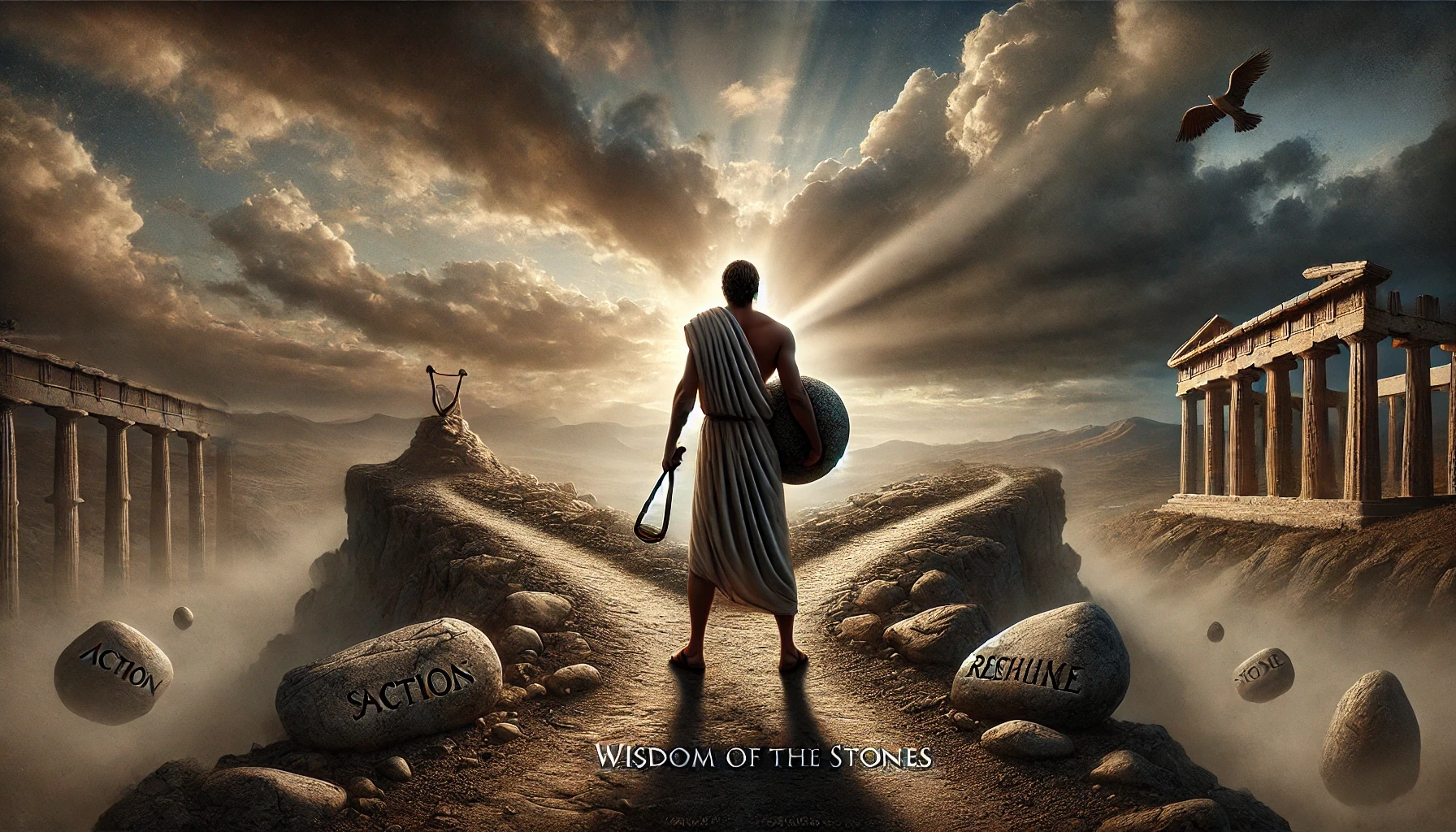
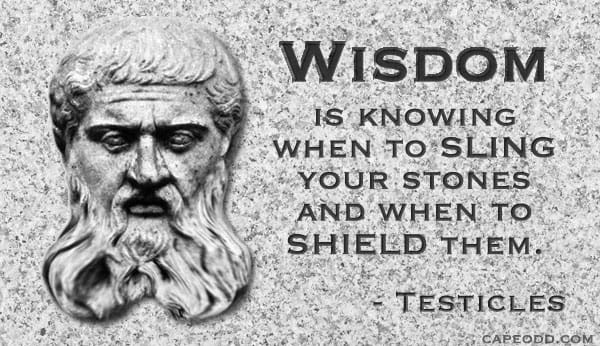
Testicles: Wisdom Of The Stones

testicles

“Wisdom is knowing when to sling your stones and when to shield them.” — Testicles

In the labyrinth of life, where challenges and opportunities constantly present themselves, true wisdom lies not just in the strength of one’s convictions but in the discernment of timing and strategy. This profound quote from Testicles, the bold and often misunderstood philosopher, encapsulates a timeless truth: the balance between action and restraint, between boldness and caution.

To “sling your stones” is to take decisive action, to confront obstacles with courage, and to assert your will upon the world. It is the moment of engagement, where you use your knowledge, skills, and determination to make an impact. But such action is not always warranted; there are times when slinging stones can lead to unnecessary conflict, when it might provoke forces too powerful to overcome, or when it could derail a greater plan.

On the other hand, to “shield them” is to exercise restraint, to protect your resources, and to bide your time until the moment is right. It is the wisdom of knowing that sometimes the greatest strength lies in patience, in holding back until the conditions are favorable, or until your full potential can be unleashed without opposition. Shielding your stones doesn’t mean inaction; it means preserving your power, waiting for the moment when your actions will have the most significant impact.

This quote from Testicles speaks to the heart of strategic wisdom—understanding that the timing of your actions is just as crucial as the actions themselves. It is a reminder that life is not just a series of battles to be fought, but a journey that requires both courage and caution, both power and prudence.

Testicles, ever the bold philosopher, understood that wisdom is not a fixed attribute but a dynamic balance. It is the art of knowing when to act and when to wait, when to fight and when to protect. It is a lesson that remains as relevant today as it was in ancient times, guiding those who seek not just to survive but to thrive in the complex and ever-changing world.

We are Space Monkey.

« Previous Page
Next Page »

Written This Day

  • The Infinity of Preferences
    2024
  • Onion Rings: Peeling Back a Yummy Truth
    2022
  • The Goodness and the Godliness: Practicing Empathy
    2022
  • Plot Twist: The Illusion of Collective Experience
    2022
  • Awkwardness: A Catalyst for Transformation
    2022
  • The Indestructible Essence of Beauty
    2022
  • Purposeless Beauty: Does Nature Have A Goal?
    2021
  • Yin and Yang: The Practicalities of Pleasure and Pain
    2021
  • Movements and Moments: Challenging Linear Time
    2021
  • Wiped Out: An Inward Pandemic Odyssey
    2020
  • Threats and Dangers: Peace In Challenges
    2019
  • Do What You Are Drawn To Do: Alignment With Inner Calling
    2019
  • The Uncharted Journey of Faith and Intuition
    2019
  • Nothing To See Here: The Liberation in Offering Zero
    2018
  • All You Need: Beyond Love To Cosmic Clarity
    2018
  • Don’t Harsh On Yourself: The Art of Gentle Self-Acceptance
    2017
  • People Pleaser: Your Unique Path as an INFP
    2017
  • Invisible: Connection and Context in Human Relationships
    2016
  • Pay Too Much: The Cost of Overvaluing Truths
    2016
  • Too Much Attention: The Peril of Overextending
    2016
  • Ambition Is A Parasite: The Hidden Influence
    2016
  • “Make Something of Your Life” An INFP looks at Ambition
    2016
  • The Space Between All That Is and All That Is Not
    2016

Recent Posts

  • The Logic Loop
  • Immense
  • (no title)
  • Confront. Comfort. Convince.
  • Top 10 Things

Drop us a line!

Please enable JavaScript in your browser to complete this form.
Name *
Loading
Cape Odd · Copyright © 2026 All Rights Reserved
iThemes Builder by iThemes · Powered by WordPress