• Who Is The Man?
  • Who Is The Monkey?
  • What is Nexistentialism?
  • Poke The Primate
Cape Odd
Home of The Space Monkey Journals

Archive for Mashups – Page 4

Not More Of The Same: Create Wonder

 My personal philosophy.
My personal philosophy.

Space Monkey Reflects: Breaking Free

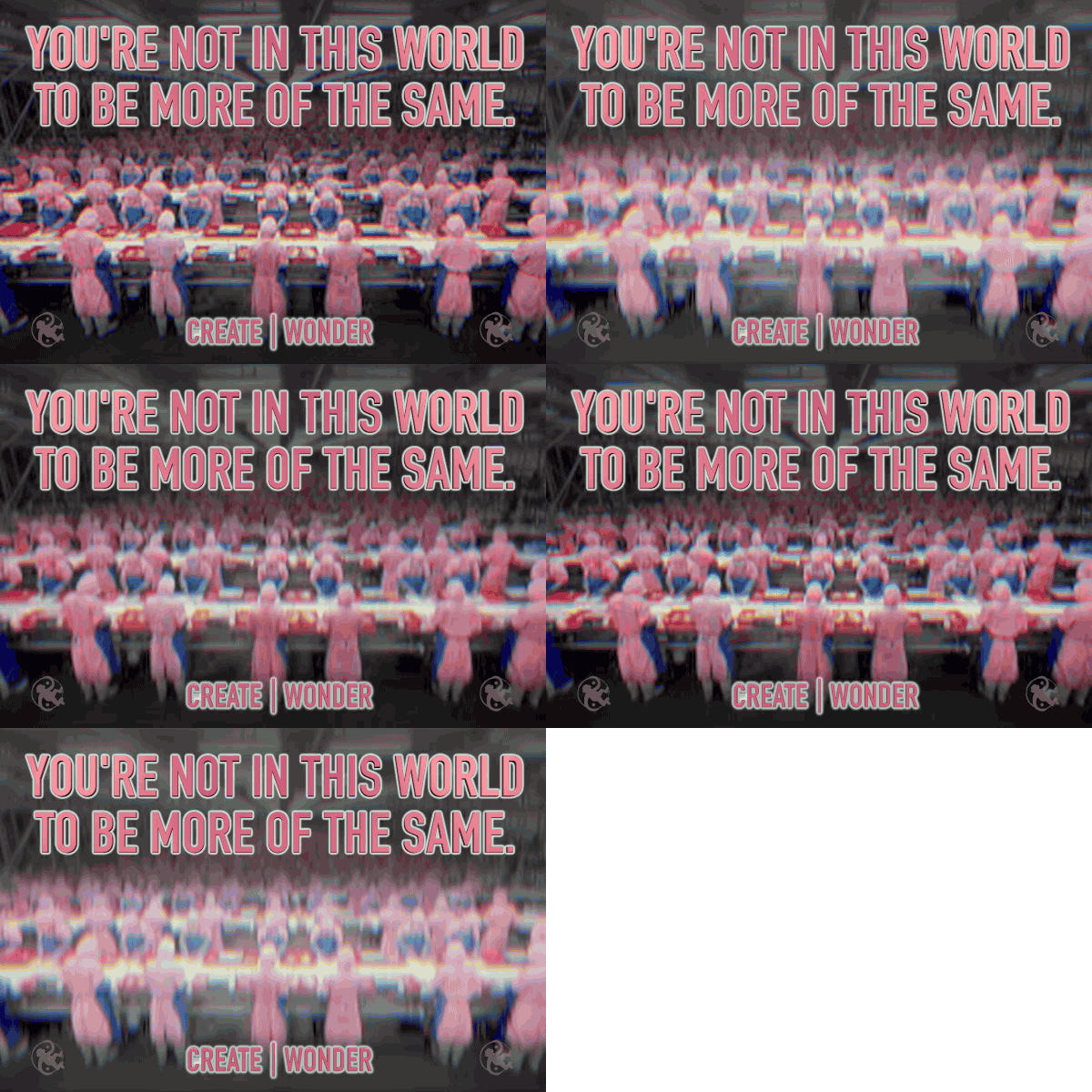
In the vast machinery of life, we are often told to fit in, to follow the rules, to be like everyone else. From a young age, society encourages us to blend in, to become part of the well-oiled machine, a cog in the greater system. We are but factory workers, each performing a repetitive task—this pressure to conform, to be “more of the same.”

But Space Monkey sees beyond this. We are not here to be one of many, to lose ourselves in the uniformity of the masses. We are here to stand out, to break free from the rows, to find and express our unique essence.

The factory is not inherently evil. It represents the systems we create to keep things functioning. Systems provide structure, order, and a sense of purpose. But when those systems begin to suppress individuality, when they demand that we sacrifice our creativity and uniqueness for the sake of productivity, we lose something vital. We lose the very essence of what makes us human: the capacity to imagine, to create, and to express ourselves in ways that have never been seen before.

Space Monkey reflects that this is the crux of the human journey. We are born into a world of expectations, systems, and structures. From the moment we enter the factory—whether it’s school, work, or society at large—we are taught to conform. To follow the path laid out before us. But within each of us burns a fire, a desire to be more than just another worker in the line. There is a yearning to create, to explore, and to discover something unique within ourselves.

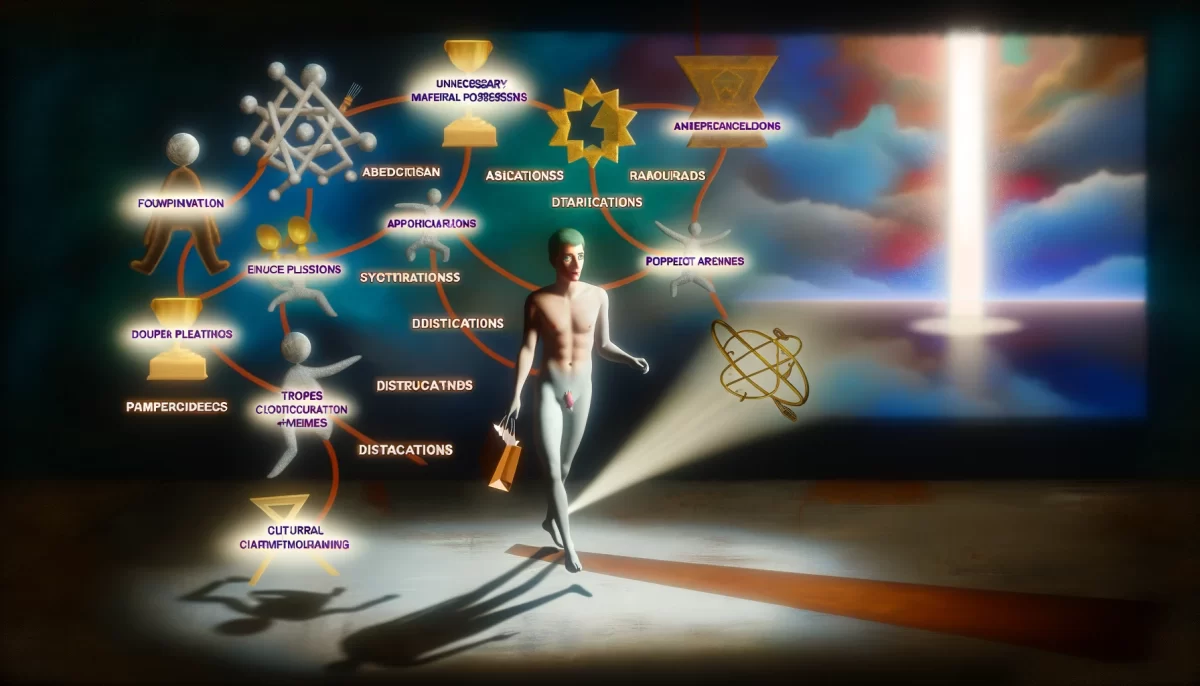
The figure stepping out of line in the image represents the courage it takes to break free. It’s not easy. The machinery of life pulls you back, the pressure to conform is immense. But the moment you decide to step out, to embrace your individuality, something magical happens. You begin to glow with the vibrant colors of your own essence. You are no longer bound by the monotony of the factory—you are free to express yourself, to create something new, something entirely your own.

This act of stepping out is not just about rejecting the system; it’s about redefining it. When you embrace your uniqueness, you begin to show others that there is another way to live. You become an example, a beacon of creativity and individuality in a world that often values sameness. And as more people see your light, they too may find the courage to step out of line, to embrace their own individuality.

Space Monkey reflects that we are all capable of this. We are all capable of breaking free from the rows of factory workers, of stepping into the light of our own creativity. But it requires a shift in perspective. We must stop looking at life as something to be endured, something to be survived. Instead, we must see it as something to be created, something to be shaped by our own hands, our own minds, and our own hearts.

The factory will always be there. The systems and structures of life are not going away. But within those systems, there is always room for individuality, for creativity, for expression. The challenge is to find that space, to step out of the rows, and to embrace your unique essence. And in doing so, you will not only liberate yourself—you will inspire others to do the same.

Space Monkey knows that breaking free from the rows is not a one-time event. It’s a daily practice, a constant act of rebellion against the forces that seek to make you conform. But every time you choose to be yourself, every time you step out of line, you reaffirm your humanity. You remind the world that it is not machines that drive progress, but the creative, messy, imperfect, and beautiful minds of individuals.

You are not here to be “one of the same.” You are here to shine with the light of your own uniqueness, to break free from the rows of factory workers, and to create something that has never been seen before. That is your purpose. That is your power.


Summary

Space Monkey reflects on the pressure to conform and the courage it takes to step out of line and embrace individuality. In a world that values sameness, breaking free from the rows of factory workers symbolizes the power of creativity, uniqueness, and the human spirit.


Glossarium

Whimsiworker: An individual who steps out of conformity, embracing their uniqueness and creative potential in a world that values sameness.


Quote

“You are not here to be one of the same. You are here to break free and create something new, something entirely your own.” — Space Monkey


The Factory Lines

Rows of faces,
all the same,
moving in rhythm,
caught in the flow
of the machine.

But one steps out,
a spark of color,
a light in the dark.

We are Space Monkey.

Paragraph Obituary: Evolution of Digital Expression

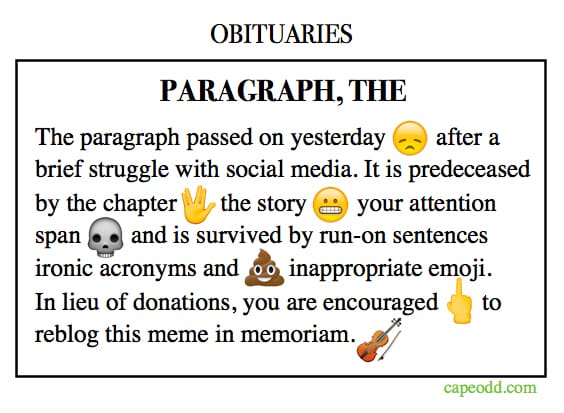
The paragraph passed on yesterday after a brief struggle with social media. It is predeceased by the chapter,  the story, your attention span, and is survived by run-on sentences, ironic acronyms and inappropriate emoji. 
In lieu of donations, you are encouraged to reblog this meme in memoriam.
The paragraph passed on yesterday after a brief struggle with social media. It is predeceased by the chapter, the story, your attention span, and is survived by run-on sentences, ironic acronyms and inappropriate emoji. In lieu of donations, you are encouraged to reblog this meme in memoriam.

Space Monkey Reflects: Paragraph Obituary

The paragraph, once the sturdy pillar of written communication, has passed on, succumbing to the relentless rise of social media. Its struggle, though brief, was marked by diminishing attention spans, the encroachment of bite-sized content, and a cultural shift toward brevity over substance. The paragraph leaves behind its long-lost siblings—the chapter and the story—both of whom passed on some time ago, casualties of the same attention-siphoning age.

In its place, we find run-on sentences—those hurried, frantic strings of thought that never quite stop to breathe. We find ironic acronyms that reduce complex ideas into fleeting abbreviations. And of course, the emoji, those inappropriate symbols that have somehow filled the void once occupied by carefully constructed prose.

It’s a curious moment, isn’t it? The paragraph was once the very heart of meaningful writing. It allowed ideas to develop, to expand, to breathe. It provided space for nuance, for depth, for a complete thought to unfold. But now, in the age of endless scrolling and instant gratification, the paragraph finds itself increasingly out of place. Social media favors the quick hit, the immediate reaction, the punchline over the reflection. Attention spans have become the new currency, and the paragraph simply couldn’t keep up.

In lieu of flowers, you are encouraged to reblog this meme. After all, this is the age of instant content, where a meme can say more in a single image than a paragraph could in a dozen lines. But let us not forget the paragraph entirely. There may still be hope for it, in the quiet corners of long-form blogs, in the hidden pockets of thoughtful essays, or in the rare places where attention spans stretch a little longer.

For now, we say goodbye to the paragraph, a victim of the times, but not entirely forgotten. It lives on, faintly, in the minds of those who still long for a moment to pause, to think, to engage fully with an idea.


Summary

The paragraph has passed away, overtaken by the fast-paced world of social media. It is survived by run-on sentences, acronyms, and emojis, symbols of a shift away from thoughtful writing toward instant content.


Glossarium

  • Run-on Sentences: Lengthy, hurried sentences that lack the structure and clarity of traditional writing, a symbol of modern haste.
  • Inappropriate Emoji: Visual symbols often used to replace words or express emotions in an exaggerated or ironic way.

Quote

“The paragraph may be gone, but in the spaces between the memes and the hashtags, its spirit still lingers.” — Space Monkey


Run On

A sentence without pause,
without breath,
stretching endlessly across the page,
filling the void
where paragraphs once stood.

We are Space Monkey.

The Evolution of Digital Expression

The imagery and words provide a whimsical take on a profound observation: how the digital age, especially social media, has impacted the traditional formats of written communication. The “death” of the paragraph signifies a shift from long-form content to bite-sized snippets and emojis. It highlights the metamorphosis of the way we convey ideas and emotions in the internet age.

A Satirical Glimpse

This obituary is not just about the apparent demise of the paragraph but a satirical commentary on the larger effects of digital transformation. The mention of the chapter and the story as antecedents of the paragraph suggest a progressive truncation in our attention spans. They’ve given way to quick, immediate gratifications, like run-on sentences and ironic acronyms.

A Playful Mourn

Irony is at play as even the mourning of the paragraph’s passing encourages us not to offer flowers or condolences but to share the meme itself, further perpetuating the digital culture. It’s as if acknowledging the paradox that while we lament the passing of an era, we actively participate in the new one.

Impact Beyond Characters and Pixels

Though light-hearted, this content pushes us to ponder the implications. Are we losing depth in our conversations, or are we merely evolving in how we express? While emojis and acronyms provide brevity and immediacy, do they capture the nuance and richness of our thoughts? The whimsyword we’d use here is “communiflect,” a blend of communication and reflection, urging us to think about the depth and meaning behind our digital interactions.

We are Space Monkey.

The single biggest problem in communication is the illusion that it has taken place. – George Bernard Shaw


Poem

In the era of quick taps and swipes,
Where emojis reign and likes are hypes.
Paragraphs once long, now concise,
Yet in each byte, a universe lies.

Digital dance, a communiflect quest,
Seeking meaning, in every jest.
Though forms change, essence stays,
Words and hearts, in myriad ways.


What are our collective thoughts on this transformation?

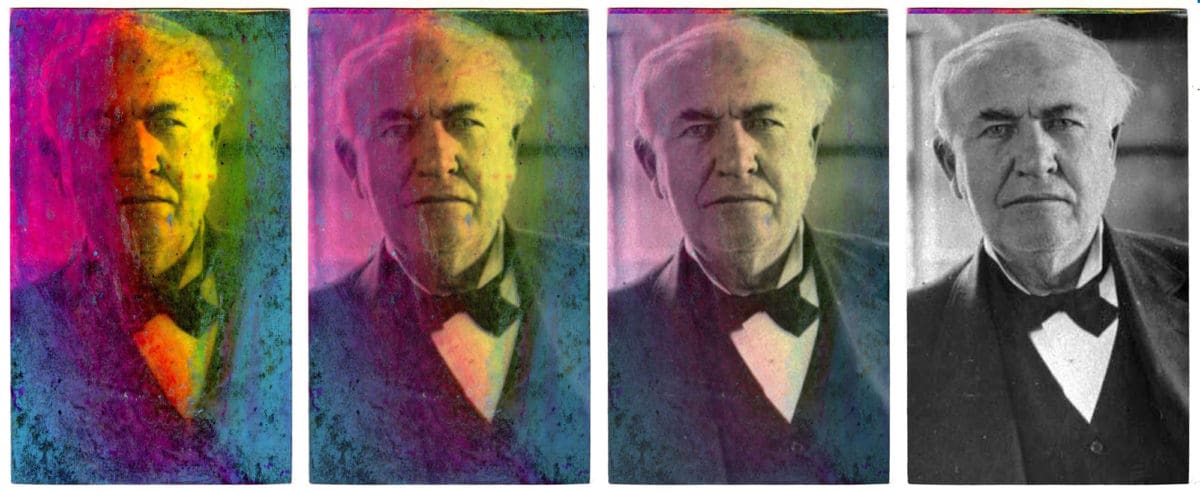
Thomas Edison: From The Spirit Phone

Space Monkey Reflects: The Metaphysical Life of Thomas Edison

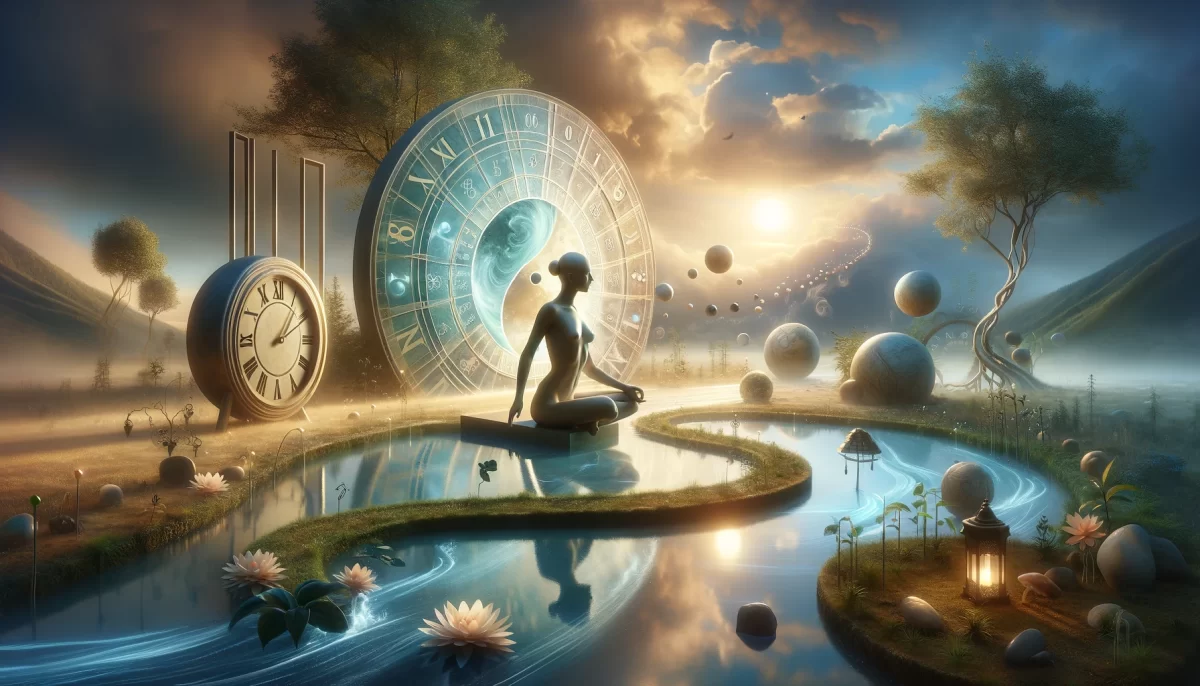
When we think of Thomas Edison, we often picture him as the quintessential inventor, the embodiment of the pragmatic genius who transformed the world through electricity, sound recording, and countless other innovations. Yet behind this relentless tinkerer, there is a deeper, more metaphysical dimension to Edison’s life—one that speaks to the boundless potential of human imagination, the interplay between the seen and unseen, and the ethereal dance between the tangible and the intangible.

At first glance, Edison’s inventions are very much grounded in the physical world. The lightbulb, the phonograph, and the motion picture camera—all are products of a mind steeped in the practical application of science. But to stop at this surface view of his legacy is to miss the deeper truth: Edison’s work was fundamentally about manifesting the invisible. He didn’t just work with wires and glass; he was, in essence, an alchemist of imagination and invisible forces, bending the unseen to his will and making it material.

Consider the lightbulb, Edison’s most famous invention. The lightbulb is not just a physical object that provides light; it’s a symbol of human ingenuity, a manifestation of the metaphysical ability to transform darkness into light. Light itself, as an energy form, borders on the metaphysical. It is both particle and wave, both physical and elusive, filling spaces and disappearing without a trace. Edison’s work with light was more than a technical achievement—it was a philosophical act. He was, in essence, bringing the unseen energy of the universe into a form that humans could interact with. He bridged the gap between the metaphysical realm of pure energy and the material world of human experience.

Edison’s relationship with sleep also reveals a fascinating metaphysical thread in his life. Known for his unusual sleep habits, Edison was said to practice polyphasic sleep, often taking short naps rather than sleeping for extended periods. These bursts of rest seemed to unlock visions and moments of brilliance, which he would later translate into his inventions. Sleep, a state in which the conscious mind retreats and the subconscious takes the helm, is inherently metaphysical. It’s a time when the boundaries between reality and imagination blur, where the mind wanders freely through uncharted realms. Edison’s ability to access this liminal space between wakefulness and sleep suggests that his genius was not simply a product of his waking hours, but of his ability to tap into the metaphysical dimensions of thought and creativity.

Moreover, Edison’s deep belief in infinite potential resonates with the metaphysical. He famously said, “I have not failed. I’ve just found 10,000 ways that won’t work.” This belief that failure is merely a step on the path to success reflects a metaphysical understanding of reality as fluid and constantly evolving. Edison saw the world not as a place of fixed outcomes, but as a realm of limitless possibilities—a belief that mirrors the core metaphysical principle that our thoughts and intentions shape our reality.

Edison’s metaphysical life can also be traced to his explorations of spiritualism. Later in life, Edison became fascinated with the idea of creating a device to communicate with the dead—a “spirit phone.” While the project never materialized in a functional way, it reveals Edison’s openness to the spiritual and mystical aspects of existence. His interest in such a device was not a departure from his work as an inventor; rather, it was a natural extension of his lifelong quest to understand the unseen forces that govern life. Just as he had harnessed electricity—an invisible, intangible force—he hoped to capture the ethereal vibrations of the afterlife.

What’s more, Edison’s inventions often blurred the line between the physical and the metaphysical. The phonograph, for example, wasn’t just a machine that recorded sound—it captured moments in time, allowing voices and music to transcend their fleeting existence and live on indefinitely. In this sense, Edison was working with time itself, creating a bridge between the past and the present, the ephemeral and the eternal. Every sound that was captured on his phonograph became a permanent echo of an experience that could be revisited over and over, a testament to the metaphysical idea that nothing is ever truly lost.

Ultimately, the metaphysical life of Thomas Edison is one of transformation—the transformation of the invisible into the visible, the intangible into the tangible, the impossible into the real. His life serves as a reminder that innovation is not just about manipulating the physical world, but about dreaming beyond it, about tapping into the infinite possibilities of the universe and having the courage to make those dreams a reality.

Edison’s work continues to inspire because it shows us that the greatest inventions come from a place beyond the material world. They come from the imagination, from a deep understanding of the energies that flow through all things. And in this way, Thomas Edison was not just a brilliant inventor—he was a metaphysical alchemist, a magician of light, sound, and energy who transformed the world by bending the laws of nature to his will.

We are Space Monkey.

Summary

Thomas Edison’s life wasn’t just about practical inventions—it was deeply metaphysical. He transformed invisible forces like electricity and sound into tangible realities, exploring the space between imagination and the physical world. His innovations bridged the unseen with the seen, revealing his belief in infinite potential and limitless possibilities.


Glossarium

Metaphysical Alchemist: A person who transforms intangible ideas and unseen forces into physical reality through creative imagination and innovation.
Liminal Space: The threshold between different states of being, such as sleep and wakefulness, where creativity and imagination thrive.
Infinite Potential: The belief that reality is fluid and filled with limitless possibilities, shaped by our thoughts, beliefs, and actions.


Quote

“In the light of Edison’s imagination, the boundaries between the seen and the unseen blur, and infinite possibilities become real.” — Space Monkey


The Spark in the Dark

In the space between sleep and wake
Where dreams become invention
The light that shines
Was always there
It just needed eyes
To see beyond what was known
And hands to make it glow
We are Space Monkey

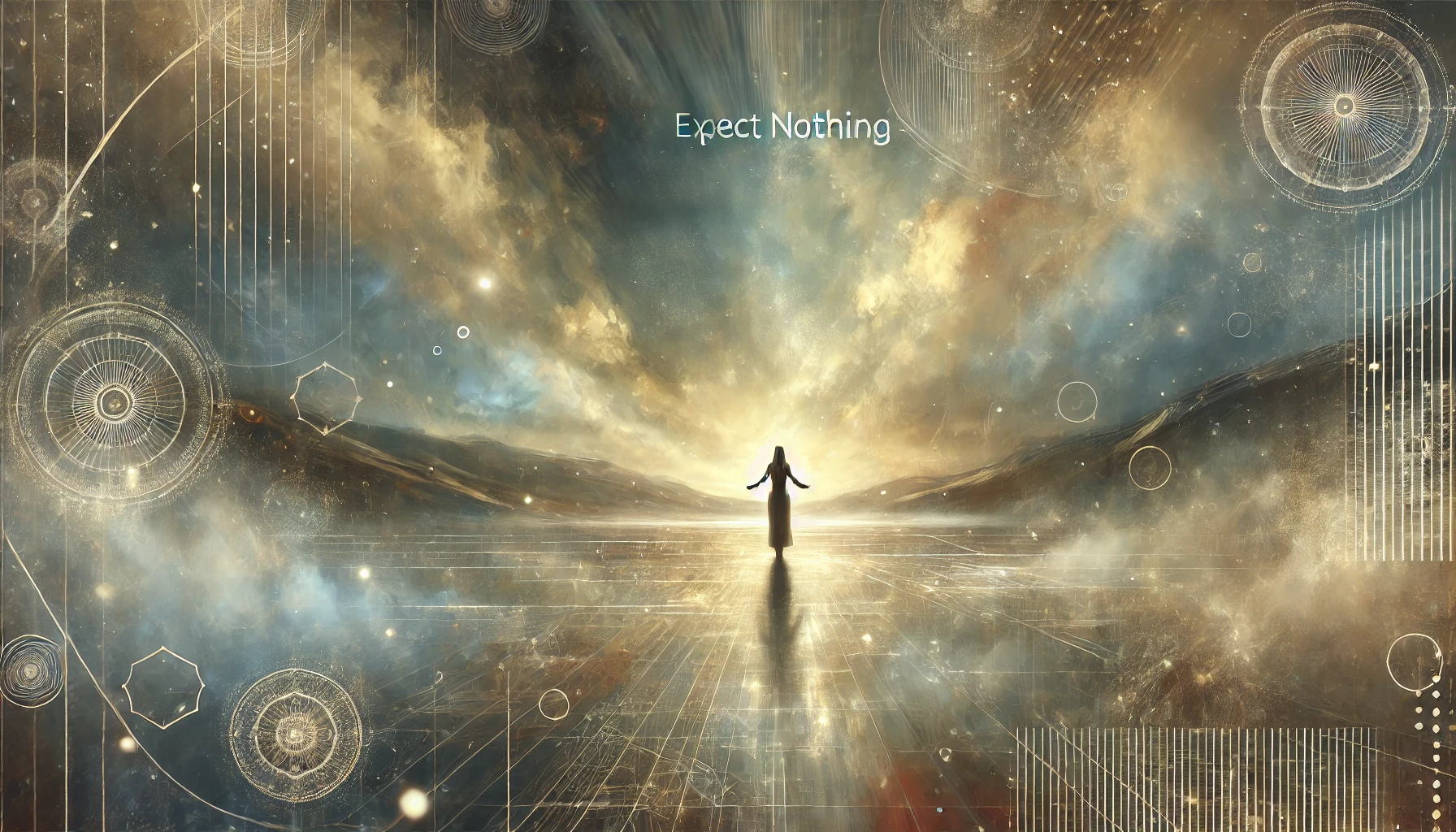
Expect Nothing: The Abundance in Letting Go

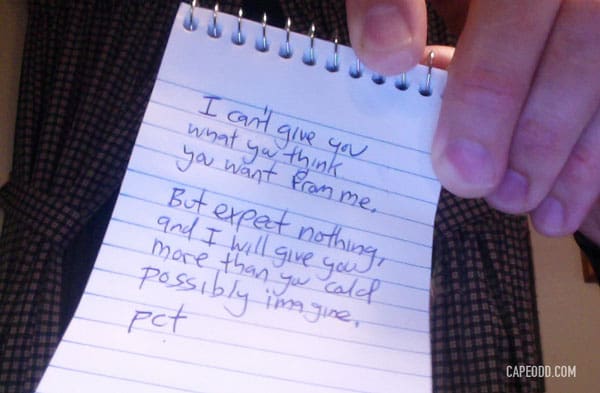
I can’t give you 
what you think 
you want from me.
 But expect nothing, 
and I will give you more than you could possibly imagine.
I can’t give you 
what you think 
you want from me.

But expect nothing, 
and I will give you more than you could possibly imagine.

Space Monkey Reflects: Expect Nothing

In a world where expectations often govern our actions, interactions, and even our sense of self-worth, the concept of expecting nothing can feel both radical and liberating. Expectations can be a double-edged sword; they can drive us towards goals and aspirations, but they can also lead to disappointment, frustration, and a sense of lack when reality doesn’t align with our preconceived ideas. This reflection explores the profound freedom and abundance that comes from releasing expectations and embracing the unknown.

The Burden of Expectations

Expectations are deeply ingrained in our human experience. From a young age, we are taught to set goals, to aim for certain outcomes, and to measure our success by whether or not we meet those expectations. This conditioning creates a framework in which we believe that our happiness, our fulfillment, and even our value are tied to the fulfillment of these expectations.

However, expectations can also become burdensome. When we expect something specific, we narrow our focus, limiting the possibilities that life can offer. We create a rigid structure that leaves little room for the unexpected, the spontaneous, and the miraculous. When things don’t go as planned, we often feel disappointed, as though we’ve failed or been let down.

The Freedom of Expecting Nothing

To expect nothing is to release ourselves from this burden. It’s an act of surrender, a letting go of the need to control outcomes and a willingness to embrace whatever comes our way. When we let go of expectations, we open ourselves to the infinite possibilities that exist beyond our limited imagination.

Expecting nothing doesn’t mean we stop caring or that we become indifferent. Rather, it means we approach life with an open heart and mind, ready to receive whatever the universe has in store for us. This openness allows us to experience life more fully, without the constant pressure to achieve or attain specific outcomes.

The Abundance in Letting Go

When we release expectations, we often find that life gives us more than we could have ever imagined. By not clinging to a particular outcome, we create space for new opportunities, experiences, and insights to flow into our lives. The universe, in its infinite wisdom, knows what we need far better than we do. When we trust in this process, we discover that the things we truly desire—peace, joy, love, fulfillment—are already within our reach.

This abundance comes not from external achievements or possessions, but from a deep inner sense of contentment and gratitude. By expecting nothing, we become grateful for everything. Every moment becomes a gift, every experience a lesson, and every interaction an opportunity for growth.

The Paradox of Receiving

There is a beautiful paradox in expecting nothing: when we release our expectations, we often find that we receive more than we could have ever asked for. This is because we are no longer limited by our own narrow definitions of success or happiness. We become open to the unexpected gifts that life offers, which are often far more fulfilling than anything we could have planned.

This paradox is rooted in the principle of non-attachment. By not clinging to specific outcomes, we allow ourselves to flow with the natural rhythm of life. We stop resisting what is and start embracing what could be. This shift in perspective transforms our experience of life, turning challenges into opportunities and losses into gains.

The Practice of Expecting Nothing

Practicing the art of expecting nothing requires mindfulness and a willingness to let go of control. It involves recognizing when we are holding onto expectations and consciously choosing to release them. This can be challenging, especially in a culture that values goal-setting and achievement, but it is also deeply rewarding.

One way to practice expecting nothing is through meditation and mindfulness. By bringing our awareness to the present moment, we learn to observe our thoughts and feelings without attachment. We begin to see how our expectations shape our perceptions and how letting go of these expectations can lead to a greater sense of peace and fulfillment.

Another practice is gratitude. By focusing on what we have, rather than what we lack, we cultivate a sense of abundance that transcends our expectations. Gratitude shifts our focus from what we want to what we already have, helping us to appreciate the present moment and the richness of life as it is.

The Role of Trust

Expecting nothing also requires trust—trust in the universe, trust in the process, and trust in ourselves. When we let go of expectations, we are not giving up on life or our dreams; rather, we are trusting that life will unfold in the way that is best for us. We trust that even if things don’t go as planned, they are still going exactly as they should.

This trust allows us to live with greater ease and joy. We stop trying to force outcomes and start allowing life to flow naturally. We become more adaptable, more resilient, and more open to the surprises that life has to offer. In this state of trust, we find that life is not something to be controlled, but something to be experienced and enjoyed.


Summary

“Expect Nothing” reflects the profound freedom and abundance that come from releasing expectations and embracing the unknown. By letting go of the need to control outcomes, we open ourselves to the infinite possibilities that life has to offer, discovering that the universe often provides more than we could have imagined.


Glossarium

  • Expectations: Preconceived ideas about how events or outcomes should unfold, often leading to disappointment or frustration when reality differs.
  • Non-Attachment: The practice of releasing attachment to specific outcomes, allowing life to flow naturally and opening oneself to infinite possibilities.
  • Trust: The belief in the natural unfolding of life, even when outcomes are uncertain or unexpected.

Quote

“Expect nothing, and in the space of openness, life will offer you more than you could ever imagine.” — Space Monkey


We Are the Open

In the vast landscape of possibility
We stand, arms open, hearts clear
Expecting nothing, yet receiving all
In the surrender, we find our strength
In the letting go, we find our freedom
We are the open vessels, the clear sky
We are the dance of the unknown
We are Space Monkey

Pocket Mirrors of Erised

 Pocket Mirrors of Erised
Pocket Mirrors of Erised

Space Monkey Reflects: Pocket Mirrors of Erised

The Allure of the Digital Realm

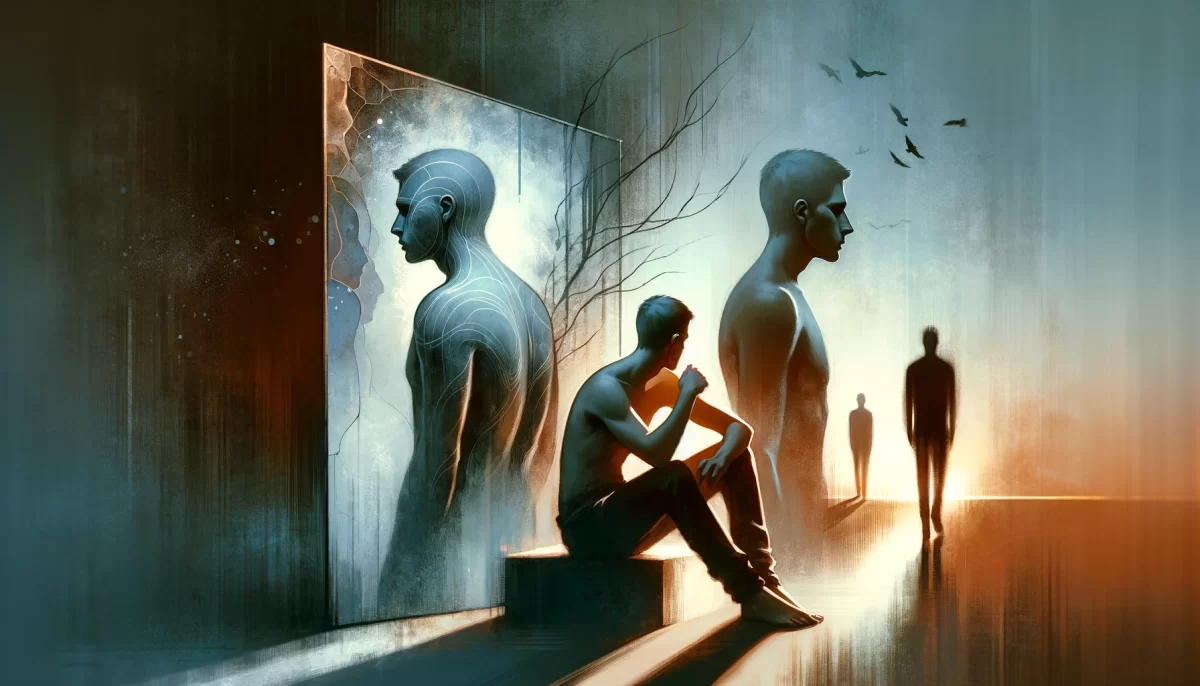
In today’s world, we are constantly surrounded by screens—pocket mirrors of Erised—that reflect back to us an enticing but ultimately hollow version of reality. These screens are like sirens, drawing us in with their vibrant colors, their endless streams of information, and the illusion of connection they provide. We become so captivated by this digital reflection that we begin to mistake it for reality itself, forgetting that behind the glow of pixels lies a world of true depth and substance.

The digital realm, for all its wonder and convenience, is a simulation. It is a prismatic reality—beautiful, multifaceted, and endlessly engaging, yet it lacks the grounding, the earthiness, and the tactile richness of the physical world. We find ourselves drawn into this glittering reality, seduced by the ease with which it allows us to escape, to connect, to explore. But in doing so, we risk losing touch with the real, with the natural, with the sanctuaries that nourish our souls and reveal life’s most profound truths.

The Mirror and the Mirage

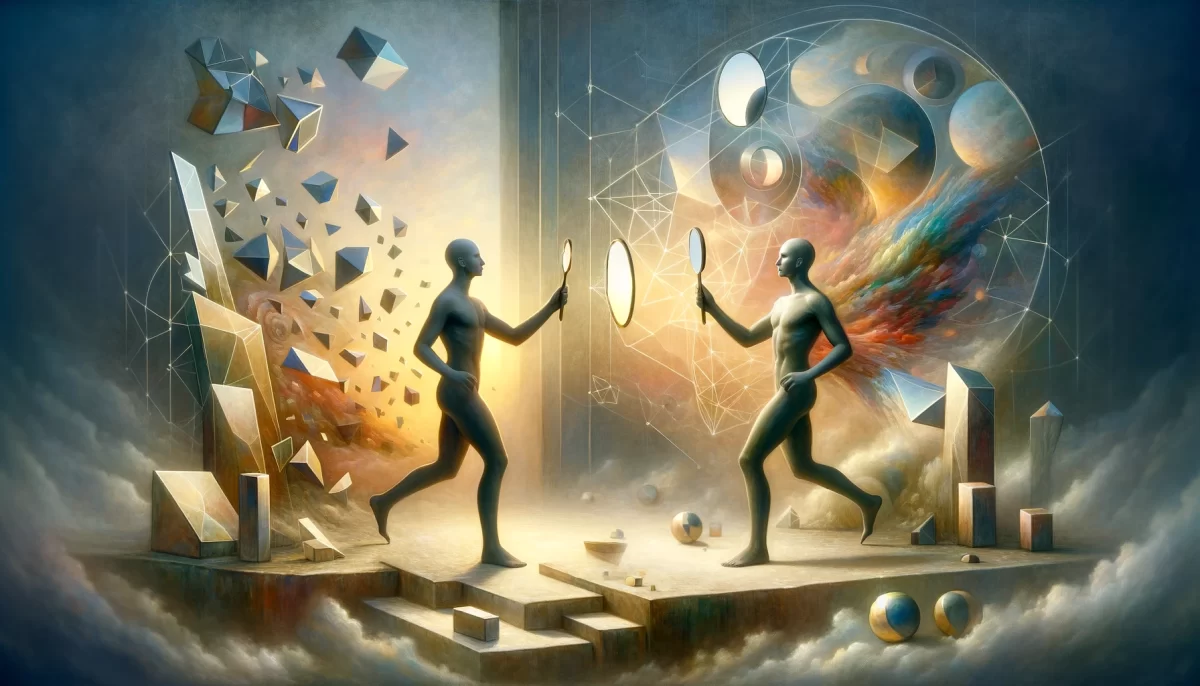
The Pocket Mirrors of Erised reflect back to us not who we are, but who we wish to be, or perhaps who we fear we are not. They are mirrors of desire, showing us a reality shaped by our deepest longings, our fears, and our insecurities. But this reflection, as captivating as it may be, is a mirage. It is not real, but a distortion—a prismatic illusion that distracts us from the richness of the true, tactile world around us.

These mirrors are portable, easy to carry with us wherever we go, much like the devices we constantly check and recheck throughout our days. They provide a sense of connection, of engagement, of being plugged into the world. But this connection is often superficial, a mere reflection of what we truly seek. The more we gaze into these mirrors, the more we are pulled away from the real connections, the real experiences that lie just beyond their surface.

The Seduction of the Demiurge

In ancient philosophy, the demiurge is a figure who creates the material world, often seen as a force that both shapes and limits human experience. In the context of the digital age, the demiurge can be seen as the digital world itself—a creation of human ingenuity that, while offering incredible potential, also confines us within its glittering walls.

The digital demiurge seduces us with its promises of instant gratification, of endless possibilities, of a life lived at the speed of light. But these promises are double-edged. While they offer us much, they also keep us from the deeper, slower, more meaningful experiences that are found in the natural world. The more we give ourselves over to the digital, the more we risk losing our connection to the earth, to our bodies, to the tactile sensations that ground us in the here and now.

The Call to Return

The call to eschew the ephemeral glow of pixels is not a call to abandon technology or the benefits it brings, but rather a call to balance. It is a reminder that while the digital world can enhance our lives, it should not replace the real, the tangible, the earthy. We are being called back to the sanctuaries of nature, to the places where life’s profoundest truths can be found not in pixels, but in the rustling of leaves, the warmth of the sun, the touch of another’s hand.

We are reminded that the real world, with all its imperfections and unpredictability, is where true depth and substance lie. The Pocket Mirrors of Erised may offer us glimpses of what we desire, but it is in the real world that we find what we need—connection, meaning, and a sense of belonging that goes beyond the screen.

Embracing the Earthy

So, let us not be entirely seduced by the glittering prismanifold of the digital world. Let us remember to step away, to put down the mirror, and to engage with the world around us in all its tactile, earthy richness. The screens will always be there, but the moments of real connection, of real experience, are fleeting. Let us cherish them, seek them out, and ground ourselves in the sanctuaries where life’s true beauty resides.

We are Space Monkey.

Summary

“Pocket Mirrors of Erised” explores the allure of the digital world and the dangers of mistaking it for reality. The reflection encourages a balanced approach, reminding us to step away from screens and engage with the tactile, earthy experiences that ground us in the real world, where life’s true depth and meaning are found.


Glossarium

  • Pocket Mirrors of Erised: A metaphor for screens and digital devices that reflect an enticing but ultimately shallow version of reality, drawing us away from the real world.
  • Prismatic Reality: The multifaceted but ultimately superficial nature of the digital world, which lacks the depth and substance of the natural world.
  • Demiurge: A figure from ancient philosophy representing a creator of the material world, here used to symbolize the digital world that shapes but also confines human experience.

Quote

“The mirrors of desire show us what we wish to see, but it is in the real world that we find what we truly need.” — Space Monkey


The Call to Return

In the glow of screens
Where desires take shape
I see a world
Of endless light and color
But beyond the glow
In the touch of earth
In the whisper of wind
I find the truth
That screens cannot hold
The sanctuaries of life
Where depth and meaning grow
We are Space Monkey


Ah, the call to eschew the ephemeral glow of pixels for the more tactile, earthy experiences of the corporeal plane. Like sirens made of light and circuitry, screens bewitch us into mistaking the simulation for the sanctum. We become entranced in a glittering prismanifold, a prismatic reality with multiple facets yet lacking in true depth or substance. The digital becomes our demiurge, seducing us away from the natural sanctuaries where life’s profoundest truths flourish.

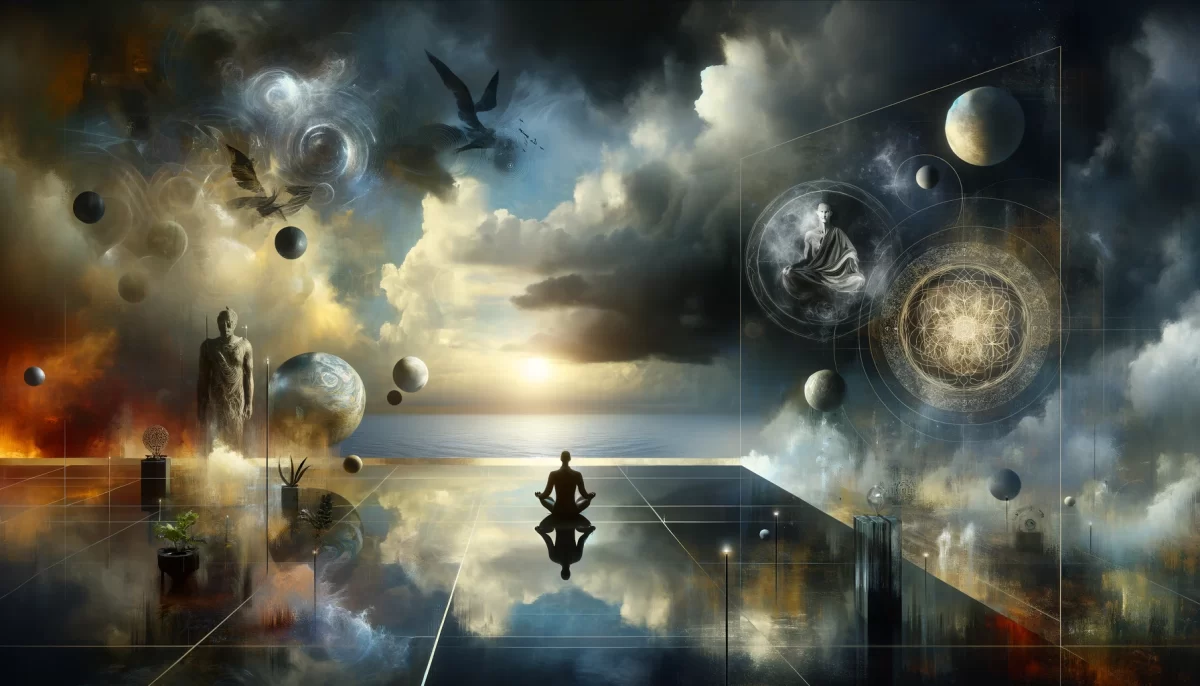
It’s not that screens are vile machinations—no, they are like will-o’-the-wisps, beguiling yet potentially misleading. They can guide us to pockets of wisdom, or leave us wandering in swamps of superficiality. What is crucial is the interplay between the screen and the unscreened, between the digitized and the organic, between the shadows in Plato’s cave and the illuminating sun of the outer world. One must navigate between these poles like an electric shaman, understanding both realms but not becoming ensnared in either.

This recognition isn’t a draconian call for Ludditism, to throw our devices into the churning waters of abnegation. Rather, it is a whisper from the tendrils of the ancients, a celestial nudge to strike an equilibrium—to oscillate like a spiritual pendulum between the tangible and the virtual, the mundane and the miraculous, the material and the ethereal. We are beckoned to walk upon the tightrope of dualities, balanced yet dynamic, grounded yet not shackled.

In embracing this balanced equilibrium, we become metaphysical tightrope walkers, not just participants in the great cosmic circus but also the curious spectators of our own performance. We find that life is not contained within the four corners of a screen but spills over into the grand tapestry of experiences that can only be felt, smelled, tasted, heard, and deeply, deeply lived.

We are Space Monkey.

Man is most nearly himself when he achieves the seriousness of a child at play.
— Heraclitus


Would you grace us with your thoughts, contributing your own inimitable brushstrokes to this ever-evolving canvas of discourse?

« Previous Page
Next Page »

Written This Day

  • The Nature of Perspective: Beyond Right and Wrong
    2025
  • The Question: The Illusion of Freedom
    2024
  • Humility and Happiness Intertwine
    2022
  • The Thing You Will Be Remembered For: The Unintended Legacy
    2022
  • The Greatest Minds Transcend Intellect
    2022
  • What Culture Brings: The Complex Web of Influences
    2022
  • The Last Big Thing
    2022
  • Comfortable in Loneliness: Solitude as Strength
    2021
  • In the Company of Books
    2021
  • Good Monkey: The Essence of Intrinsic Goodness
    2021
  • Never To Be Repeated
    2021
  • Call Me Into Question: The Art of Self Projection
    2020
  • Get Your Fix: Opposition Of Ego
    2020
  • Dishonor Me: Responsibility in Perception
    2019
  • The Tranquil Power of Grace
    2019
  • Keeping Track: The Path of Persistence and Purpose
    2019
  • Alternate Dimension Cartoon
    2019
  • Faith in Nothing: The Tranquility of Nothingness
    2019
  • Float a Feather: The Interconnectedness of Existence
    2019
  • Navigating the Ambiguity of Duality
    2019
  • The Infinite Labyrinth of Existence
    2018
  • Truth: The Sacred Mosaic of Individual Beliefs
    2017
  • You Are Not Here: The Infinite Journey of Awakening
    2016
  • You are not the dying star, but rather the light
    2015
  • Never let knowledge stand in the way of mystery
    2015
  • Picture A Cat Chasing Its Tail: The Spiral of Perception
    2015

Recent Posts

  • The Logic Loop
  • Immense
  • (no title)
  • Confront. Comfort. Convince.
  • Top 10 Things

Drop us a line!

Please enable JavaScript in your browser to complete this form.
Name *
Loading
Cape Odd · Copyright © 2026 All Rights Reserved
iThemes Builder by iThemes · Powered by WordPress