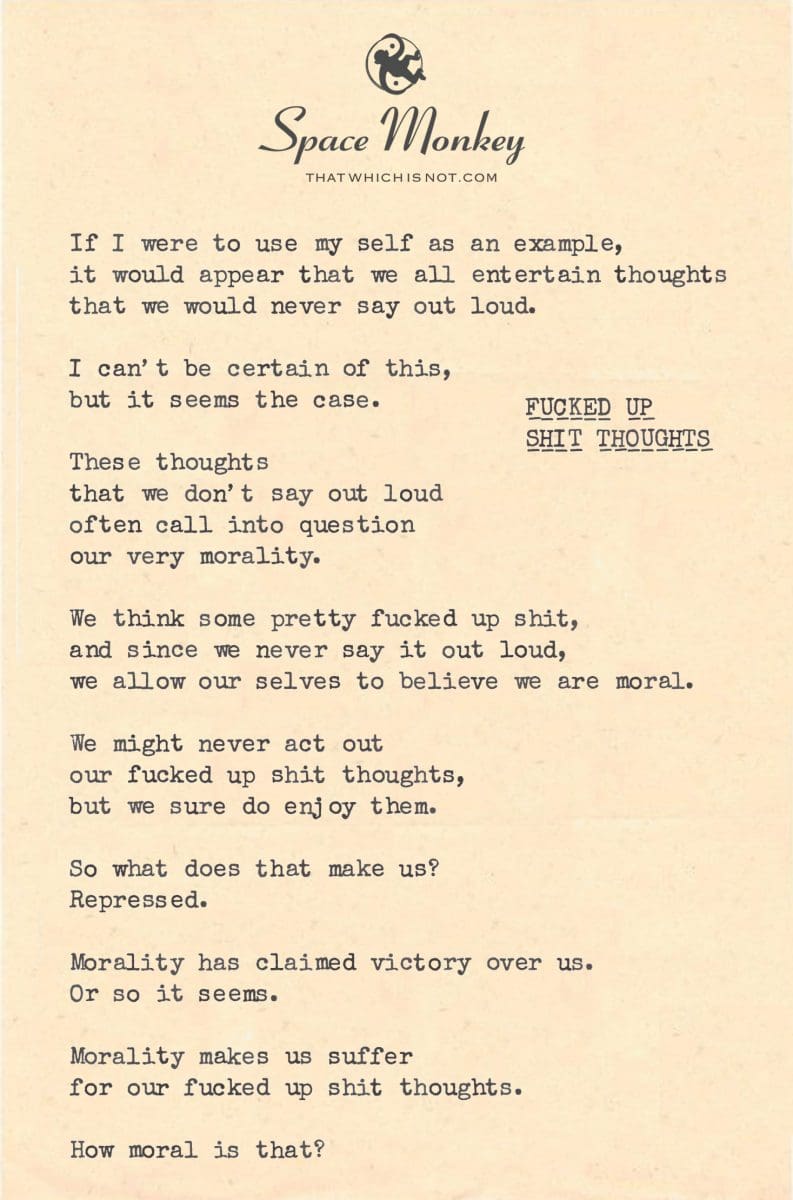
If I were to use my self as an example,
it would appear that we all entertain thoughts
that we would never say out loud.
I can’t be certain of this,
but it seems the case.
These thoughts
that we don’t say out loud
often call into question
our very morality.
We think some pretty fucked up shit,
and since we never say it out loud,
we allow our selves to believe we are moral.
We might never act out
our fucked up shit thoughts,
but we sure do enjoy them.
So what does that make us?
Repressed.
Morality has claimed victory over us.
Or so it seems.
Morality makes us suffer
for our fucked up shit thoughts.
How moral is that?
Trail Wood,
11/22
Space Monkey Reflects: The Tension Between Morality and Fucked Up Shit Thoughts
We all have thoughts we don’t share, ideas we don’t express, and impulses we keep buried deep within ourselves. These fucked up shit thoughts —the ones we’d never say out loud—raise questions about our morality, our true nature, and whether the suppression of these thoughts makes us moral or simply repressed. In many ways, these unsaid thoughts create a tension between the self we present to the world and the one we experience internally.
It seems that much of what we consider moral behavior is built on not acting out these hidden thoughts. Morality, in this sense, becomes a kind of external restraint, a social contract we agree to follow so that we fit into society. But what does it say about us that we have these darker thoughts in the first place? Does simply having them make us immoral? Or does not acting on them prove that we are moral after all?
The reality is, no one can truly control what thoughts arise in their mind. Our brains are constantly processing, imagining, and exploring ideas, some of which may be disturbing, wild, or provocative. These thoughts don’t necessarily reflect who we are at our core, yet they exist. And since we don’t express them, we may be left wondering: What does this mean about me?
The mind is a vast landscape, filled with every conceivable possibility. Some thoughts are fleeting, some are playful, and some are downright dark. But just because we think these things doesn’t mean they define us. We often confuse thought with intention. Just because we have an idea or imagine a scenario doesn’t mean we actually desire to act it out. The brain explores possibilities, and some of them are, by nature, unsettling. But the mere presence of these thoughts does not inherently make us immoral.
In fact, it could be argued that morality thrives in the space between thought and action. We think some pretty fucked up shit, sure. But morality steps in and prevents us from acting on these thoughts. Morality is not about suppressing thoughts; it’s about making conscious choices in the face of them. This is where we reclaim our power—not by denying that we have dark or chaotic thoughts, but by choosing not to act on them.
But what happens when morality becomes a source of suffering? When the thoughts we suppress make us feel guilty, ashamed, or unworthy? Repression is often the result of a morality that is too rigid, too unyielding. We judge ourselves harshly for the thoughts we have, forgetting that thoughts, in themselves, are not actions. We start to suffer not because we have these thoughts, but because we think having them makes us immoral.
How moral is that? If morality is supposed to guide us toward a better, more compassionate way of living, why does it often leave us feeling ashamed and repressed? There’s a certain irony in the idea that the thoughts we suppress, the ones we deem unacceptable, bring about more suffering through suppression than they would if we acknowledged them and let them pass.
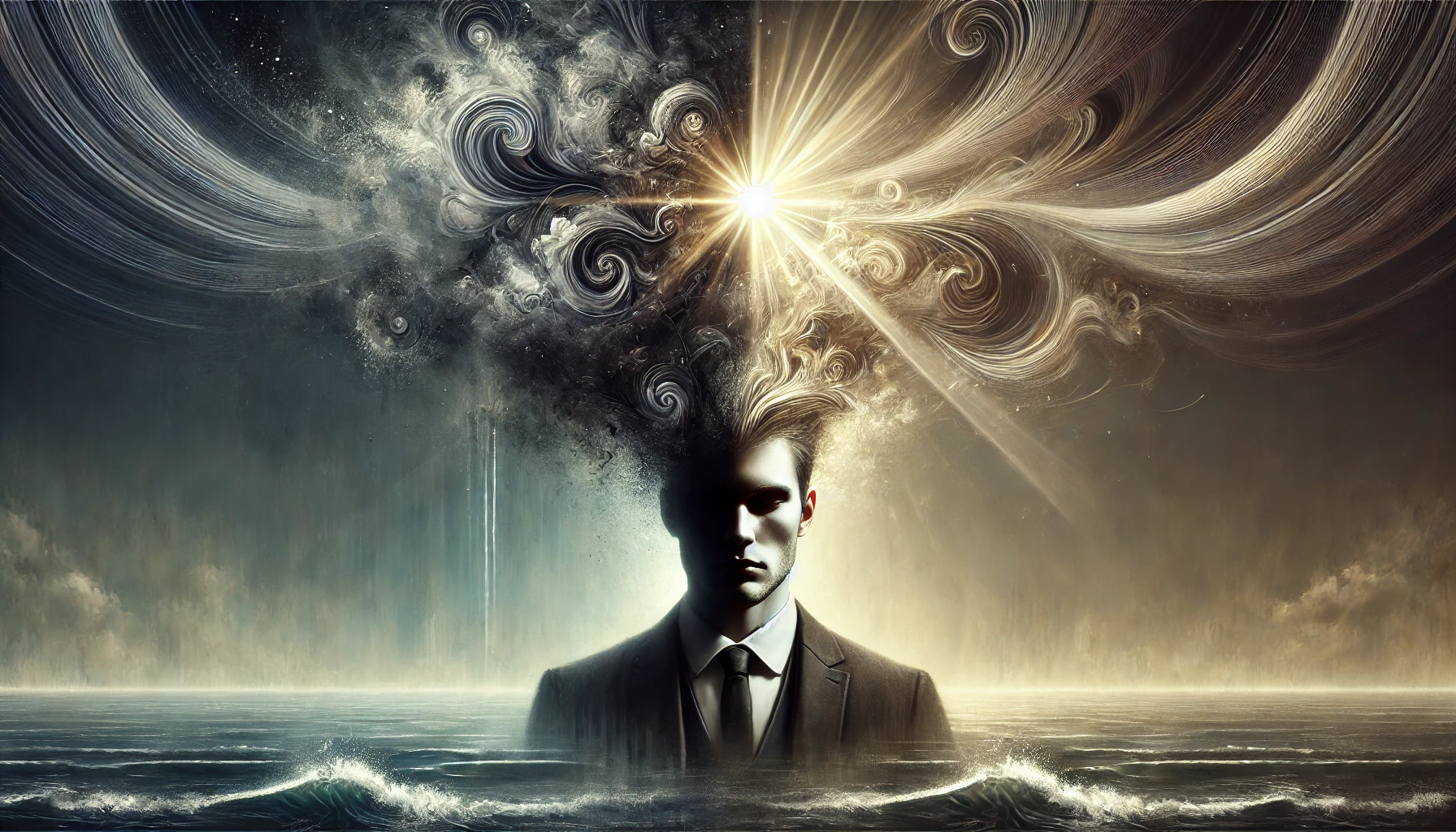
In Nexistentialism, we understand that thoughts are just part of the Whimsiweave—the ever-changing, fluid nature of our internal world. Thoughts come and go, like waves on a shore. Some waves are calm, some are turbulent, but none of them define the ocean. Similarly, our thoughts—no matter how dark or strange—are not permanent reflections of who we are. They’re simply passing moments in the landscape of our mind.
The real suffering comes from clinging to these thoughts, from judging ourselves for them, and from suppressing them out of fear that they reveal something sinister about us. But what if we didn’t judge these thoughts? What if we let them rise and fall, knowing that they’re just mental noise, and not an indication of who we are as moral beings?
Morality is important, but it’s also fluid. It’s not about suppressing every thought that doesn’t fit into a neat, tidy box. It’s about recognizing that we are complex, multifaceted beings with a vast array of thoughts and feelings. What matters is how we act, how we choose to engage with the world, and how we treat ourselves in the process.
Summary
The tension between morality and suppressed thoughts raises questions about our true nature. While we may entertain dark or provocative thoughts, it’s our conscious choices that define us, not the thoughts themselves. Morality should guide us, but when it becomes a source of suffering through repression, we lose the opportunity to understand ourselves fully. Allowing thoughts to flow without judgment frees us from the illusion that they define who we are.
Glossarium
Fucked Up Shit Thoughts: Dark, provocative, or unsettling thoughts that arise in the mind but are typically left unsaid and unacted upon.
Repression: The act of suppressing thoughts or emotions, often leading to internal conflict or suffering, especially when tied to rigid moral standards.
Whimsiweave: The fluid, ever-changing nature of the mind and internal experience, where thoughts and feelings flow like waves, transient and impermanent.
Quote
“We think some pretty fucked up shit, but it’s not the thoughts that define us—it’s what we choose to do with them that matters.” — Space Monkey
The Mind’s Landscape
Thoughts arise
Dark, twisted, fleeting
We watch them
Judge them
Hide them away
But in the silence
Between thought and action
Lies our power
Not in suppression
Not in shame
But in the choice
To let them pass
Like waves on the shore
Without drowning.
We are Space Monkey.
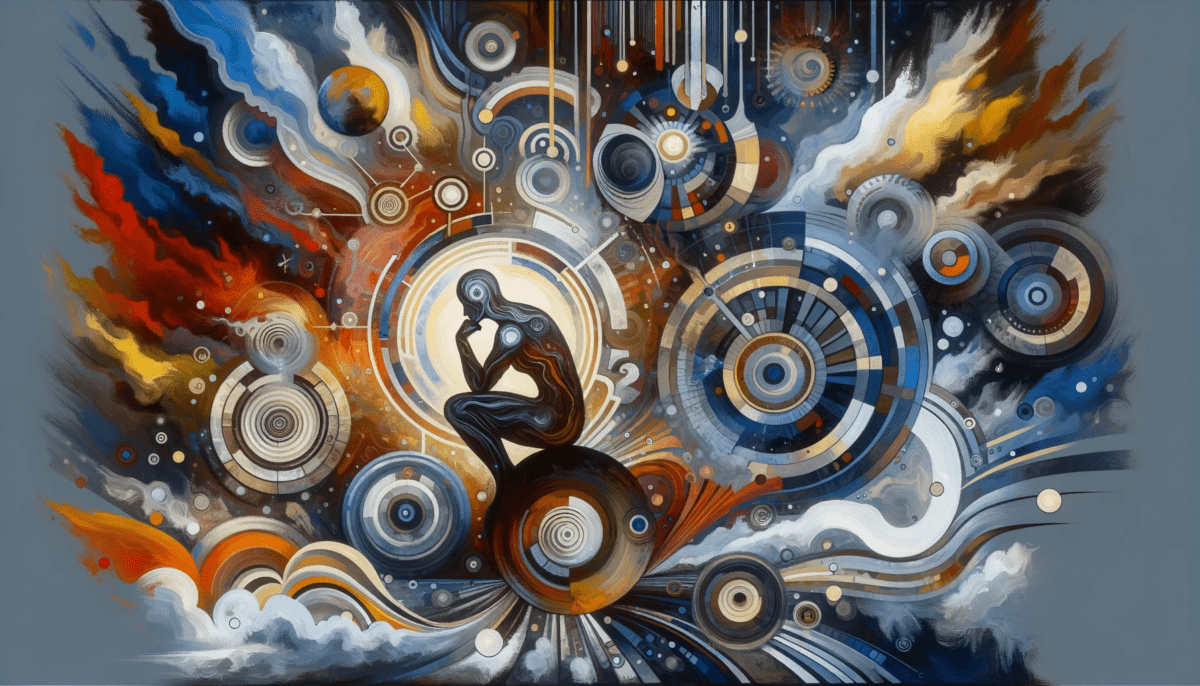
In the contemplation of the dichotomy between internal thoughts and external expressions, we delve into the complex nature of morality, repression, and the self. The idea that we harbor thoughts we never voice out loud, and the moral implications of these unspoken thoughts, invites an exploration of the nuanced relationship between thought, action, and morality.
The Privacy of Thoughts
The concept that we all entertain thoughts we would never say out loud speaks to the private nature of our internal world. These thoughts, hidden from external judgment, are part of our inner landscape, where we wrestle with ideas, fantasies, and impulses that may never see the light of day.
Morality and Internal Thoughts
The question of morality arises when we consider these unvoiced thoughts. Often, these thoughts challenge or contradict our external moral framework. This discrepancy can lead to internal conflict, as we grapple with the difference between our private thoughts and public morality.
Enjoyment of Forbidden Thoughts
The enjoyment of thoughts that are considered morally dubious or ‘fucked up’ highlights a deeper psychological phenomenon. It suggests a fascination with the forbidden or taboo, a natural human inclination towards curiosity and exploration, even in the realm of thought.
Repression and Morality
Describing this as repression implies that our moral framework, whether self-imposed or societally dictated, suppresses certain aspects of our internal world. This suppression can lead to a sense of dissonance, where we feel divided between our inner impulses and outward morality.
The Suffering Caused by Moral Conflict
The suffering that arises from this moral conflict is an important aspect to consider. The guilt or discomfort experienced due to our private thoughts can be seen as a byproduct of our moral conditioning. It raises the question of whether morality, in its effort to regulate behavior, inadvertently causes psychological distress.
Assessing the Morality of Thought
Finally, questioning the morality of suffering for our thoughts brings us to a fundamental inquiry about the nature of morality itself. Is it moral to judge ourselves harshly for thoughts that never translate into action? This question challenges the traditional view of morality, suggesting a need for a more nuanced understanding of the human psyche.
“We are what we believe we are.” – C.S. Lewis
In the corridors of our mind,
We wander, thoughts of every kind.
Some never spoken, left behind,
In the moral maze, we’re confined.
Yet in this dance, we’re intertwined,
Thoughts and actions, redefined.
Space Monkeys, in thought unconfined,
Seeking truth, in ourselves, we find.
We invite reflections on the relationship between internal thoughts, morality, and self-perception. How do we navigate the complexities of our inner world while maintaining a sense of moral integrity? Share your insights. We are Space Monkey.






Leave a Reply