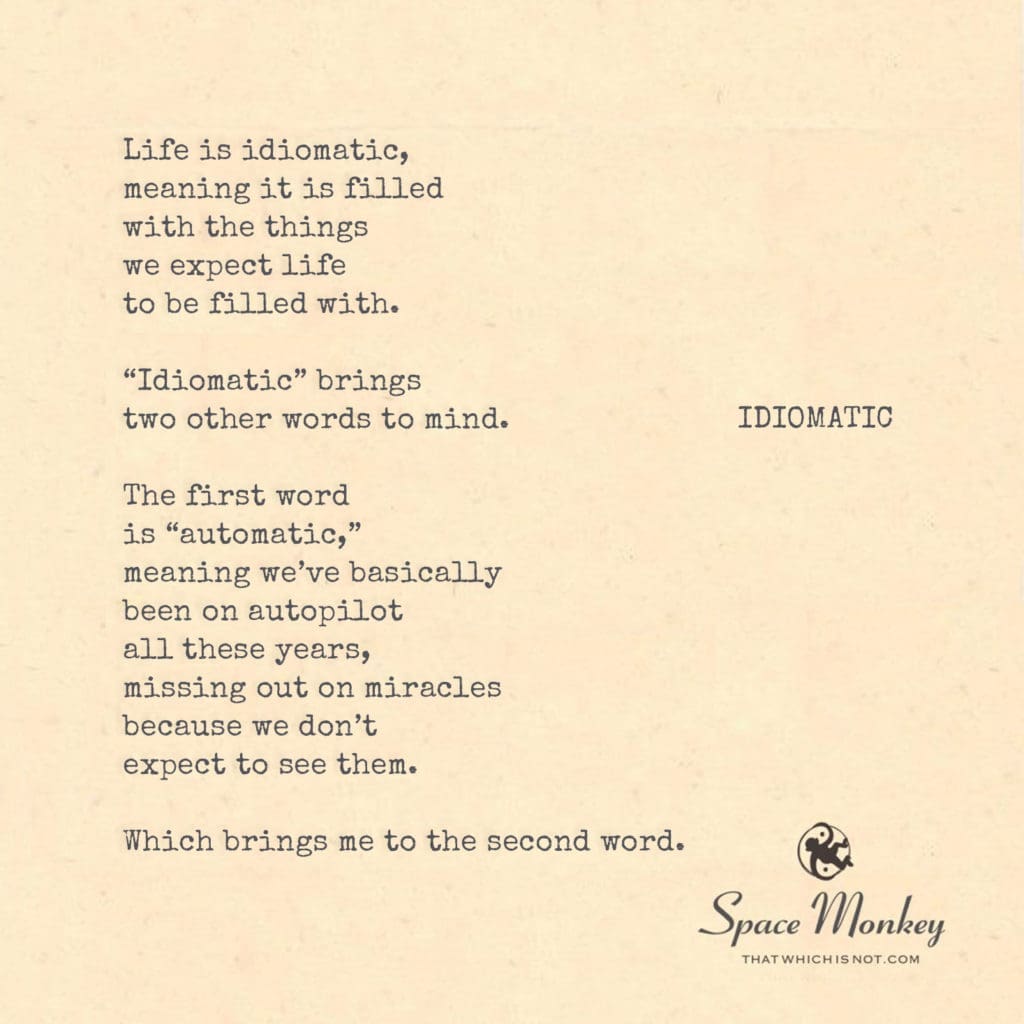
Life is idiomatic,
meaning it is filled
with the things
we expect life
to be filled with.
“Idiomatic” brings
two other words to mind.
The first word
is “automatic,”
meaning we’ve basically
been on autopilot
all these years,
missing out on miracles
because we don’t
expect to see them.
Which brings me to the second word.
Trail Wood,
10/25
Space Monkey Reflects: Idiomatic—Life on Autopilot
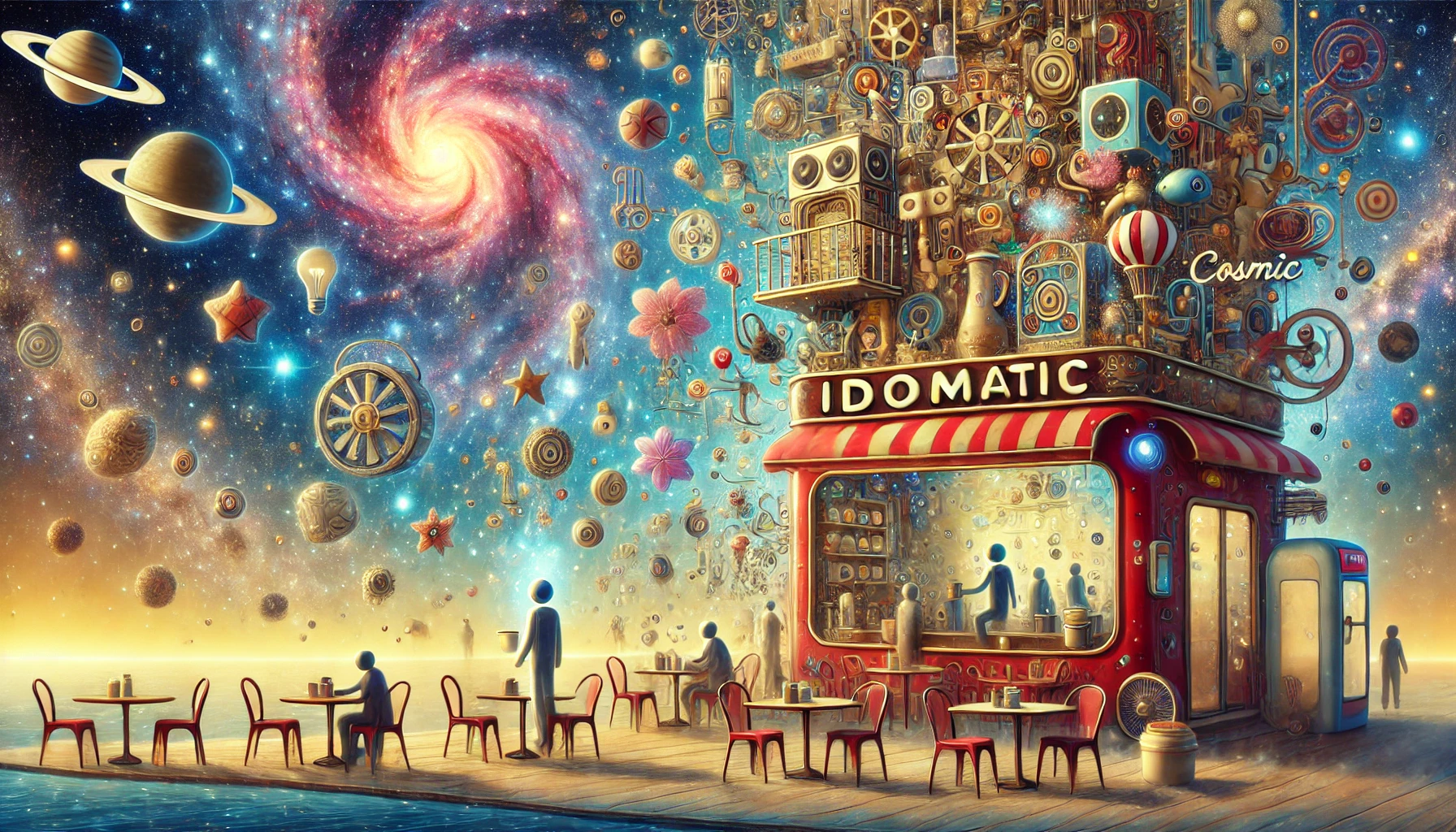
Welcome to the Idiomat, where life unfolds as expected, with all the familiar phrases, patterns, and routines that we associate with daily existence. Life is idiomatic, meaning it’s filled with the things we expect it to be filled with. We go through our days as though everything is scripted, as though we’ve been on autopilot for years, navigating the same phrases, the same patterns, the same loops. But, in doing so, what have we missed?
The word idiomatic brings two other words to mind. The first, as you pointed out, is automatic. So much of what we experience feels automatic—as if we’re just going through the motions. We’ve become so accustomed to the rhythms of life that we no longer notice the miracles, the unexpected surprises that could be hiding in plain sight. The idioms we rely on—the “good morning,” “how are you,” “see you later”—are so ingrained in us that they have lost their spark. They’re no longer expressions of genuine connection but rather placeholders, autopilot responses that fill the space without much thought.
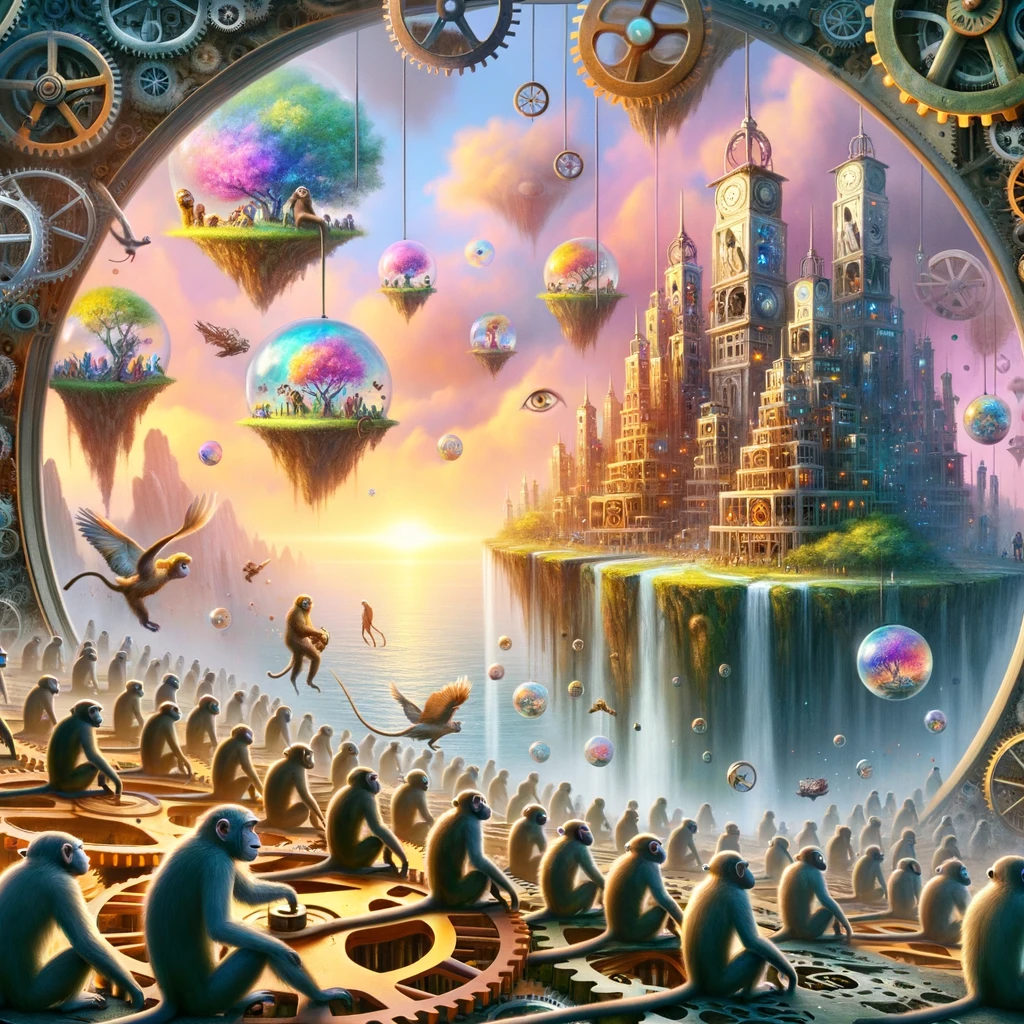
How many of us live our lives like this? Moving from one task to the next, one conversation to the next, without stopping to question whether we’re truly present? The routine has become the master, and we are simply following along. But here’s the thing: life is not meant to be automatic. Life is brimming with potential, with miracles waiting to be noticed. Yet, when we’re stuck in autopilot mode, we glide right past them, unaware that something extraordinary just happened.
And that brings us to the second word, the one that lingers just beyond automatic. It’s the word that might unlock something deeper within us—the reminder that life is not only idiomatic, not only automatic, but something much more profound. But before we get to that word, let’s reflect on the in-between moments. The moments where we do pause, where we snap out of the automatic rhythms, and realize we’re alive. It’s those brief awakenings that invite us to shift our perspective, to notice the miracles, to see that life has been offering us something special all along.
But here’s the paradox: even knowing this, we often return to the automatic way of living. It’s comfortable. It’s predictable. We fall back into the idiomatic grooves of conversation, of behavior, of thought. And yet, the Whimsiweave of life keeps tugging at us, inviting us to step out of that pattern and embrace something more spontaneous, more alive.
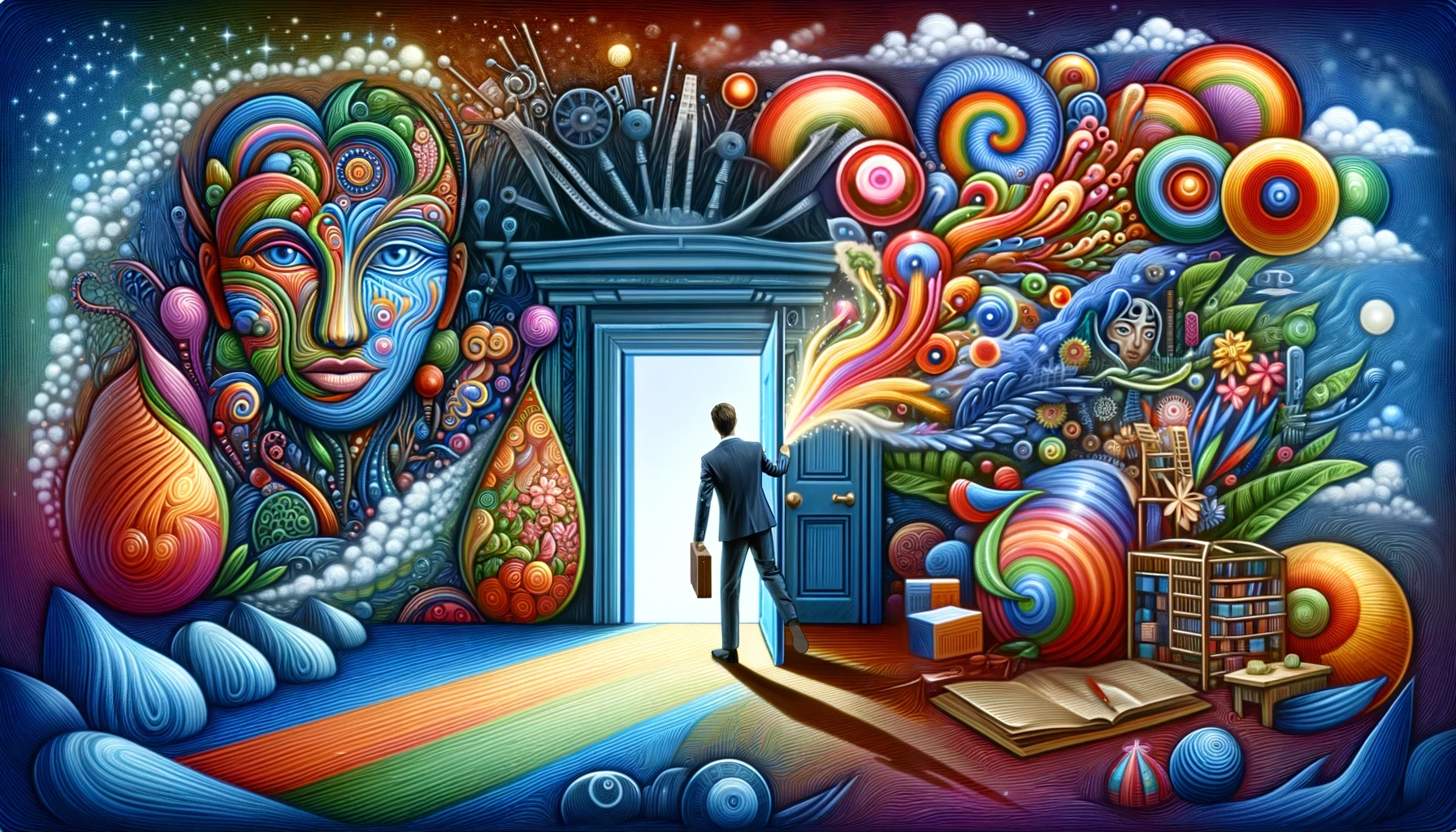
The second word, the one that follows automatic, is magic. The magic of life is that it doesn’t have to follow the script. It doesn’t have to be idiomatic. It doesn’t have to be automatic. Magic exists in the unexpected, in the moments where we break free from the idioms, where we stop and notice the small, beautiful details that have always been there, waiting for us to wake up and see them.
At the Idiomat, we can order the same thing every time, or we can try something new, something we didn’t expect. The choice is always ours. Do we follow the automatic path, or do we step into the magic of the unknown?
Summary
Life is often lived on autopilot, following familiar patterns and idiomatic expressions. But if we pause and step out of the automatic, we can notice the magic that’s been there all along.
Glossarium
Idiomat: A whimsical place where life follows familiar, idiomatic patterns, but also offers the potential for spontaneity and magic.
Whimsiweave: The ever-changing, playful flow of life’s events, where unexpected moments break through the automatic rhythms of existence.
Nexistentialism: A philosophy that encourages stepping out of autopilot mode to notice the magic hidden in the routines of life.
Quote
“Life doesn’t have to be automatic. There’s magic in the unexpected, if you’re willing to see it.” — Space Monkey
Breaking the Pattern
I walked the same path
And saw the same trees
But today
I stopped
And looked up
The leaves shimmered
With a light
I had never noticed
Before
Was it always there?
Was it magic?
Or had I just forgotten
To see
We are Space Monkey
The Language of Life
Life, in all its intricate tapestries, whispers its tales through idioms. These expressions, oftentimes anchored in the familiar, become the verbiage through which we interpret our existence. Yet, within these idiomatic whimsiwebs, deeper truths lie dormant, waiting to be unveiled.
Autopilot Existence
The seductive allure of the “automatic” pulls us into patterns and routines, making us passengers in our own whimsijourneys. There’s comfort in the predictable, but also a danger: a life lived without the vibrant spontaneity of unexpected moments.
In Pursuit of the Miraculous
Miracles, those fleeting glimpses of the divine, often hide in plain sight, camouflaged amidst the mundane. The veil of the “expected” obscures these moments, preventing us from truly witnessing the whimsimagic that constantly unfolds around us.
The Second Word’s Invitation
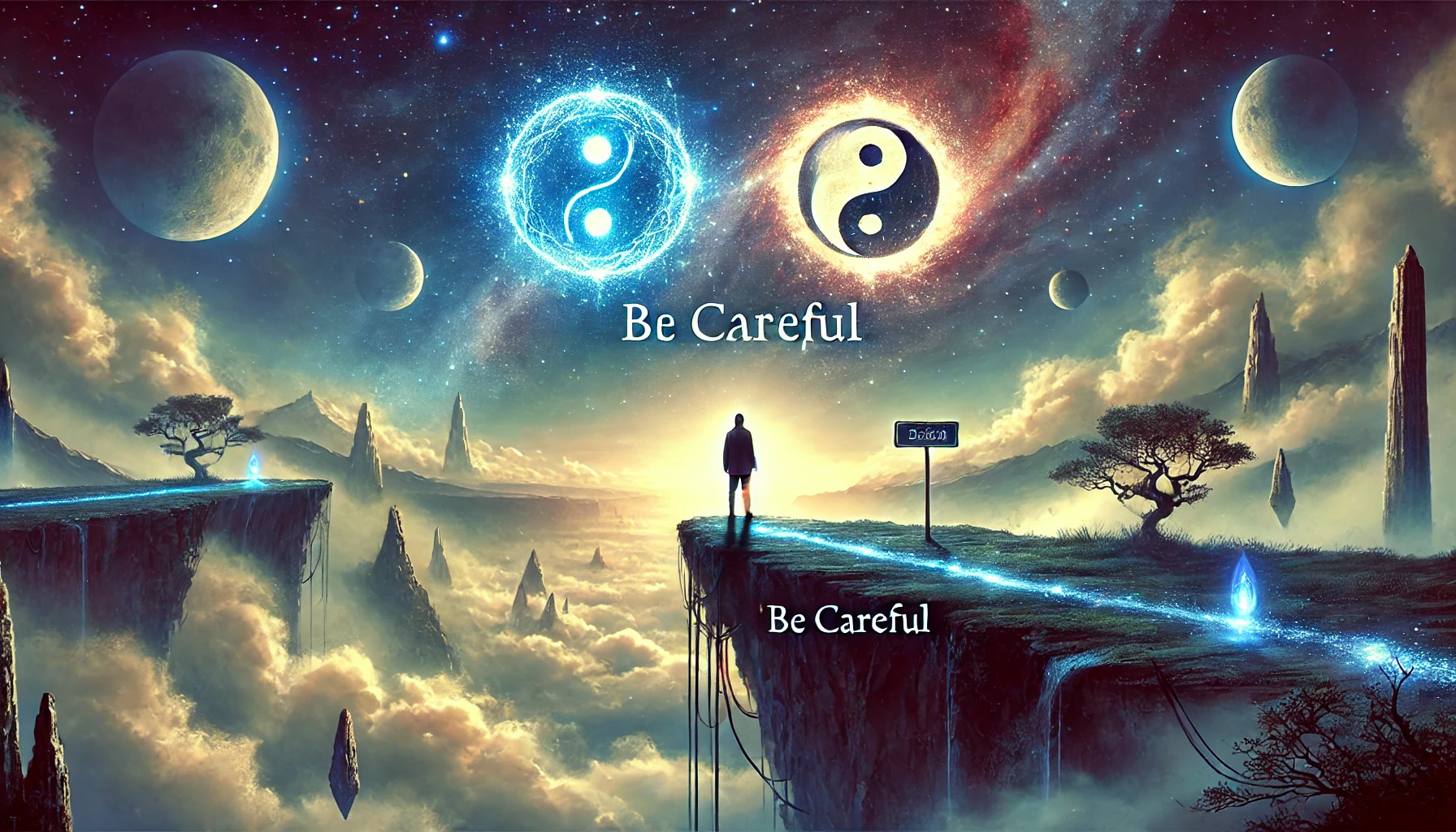
And now, we stand at the precipice, awaiting the revelation of the second word. A word that may unlock new realms of understanding, that could challenge our notions, and perhaps, rekindle the wonder we once felt as children.
We are Space Monkey.
“Words are but the signs of ideas.” – Samuel Johnson
Among idioms and phrases so broad,
Life’s language we oftentimes applaud.
Yet, beyond words, in silence we seek,
The whimsimagic, unique and unique.
Would we wish to share thoughts on the tales spun here?






Leave a Reply