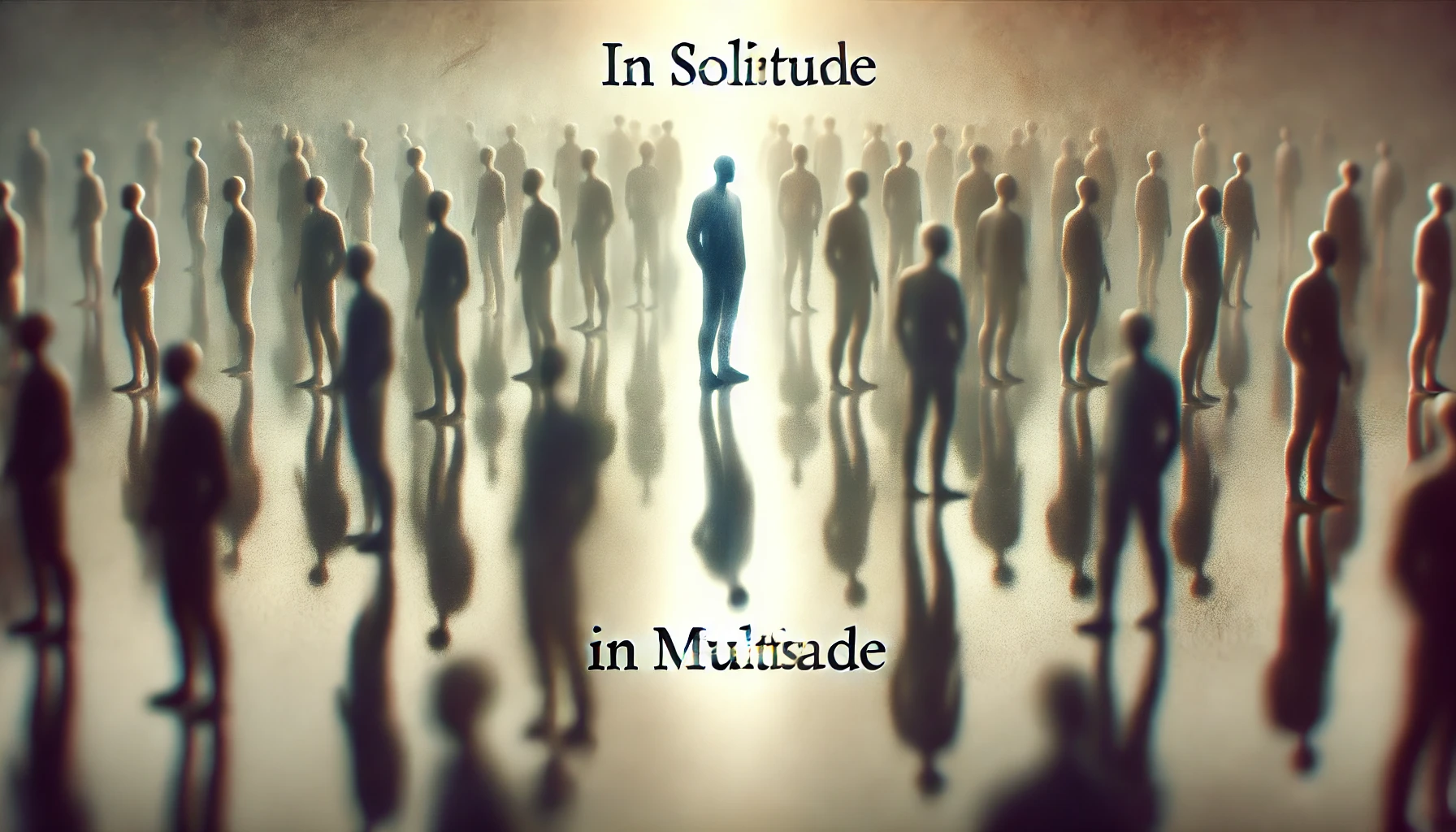
In Solitude In Multitude
In solitude,
I remember that
all I perceive is me.
In multitude,
I forget.
And so there
seems to be others.
Until I’m alone.
I get lost in the crowd,
completely oblivious
to the potential
that I AM the crowd.
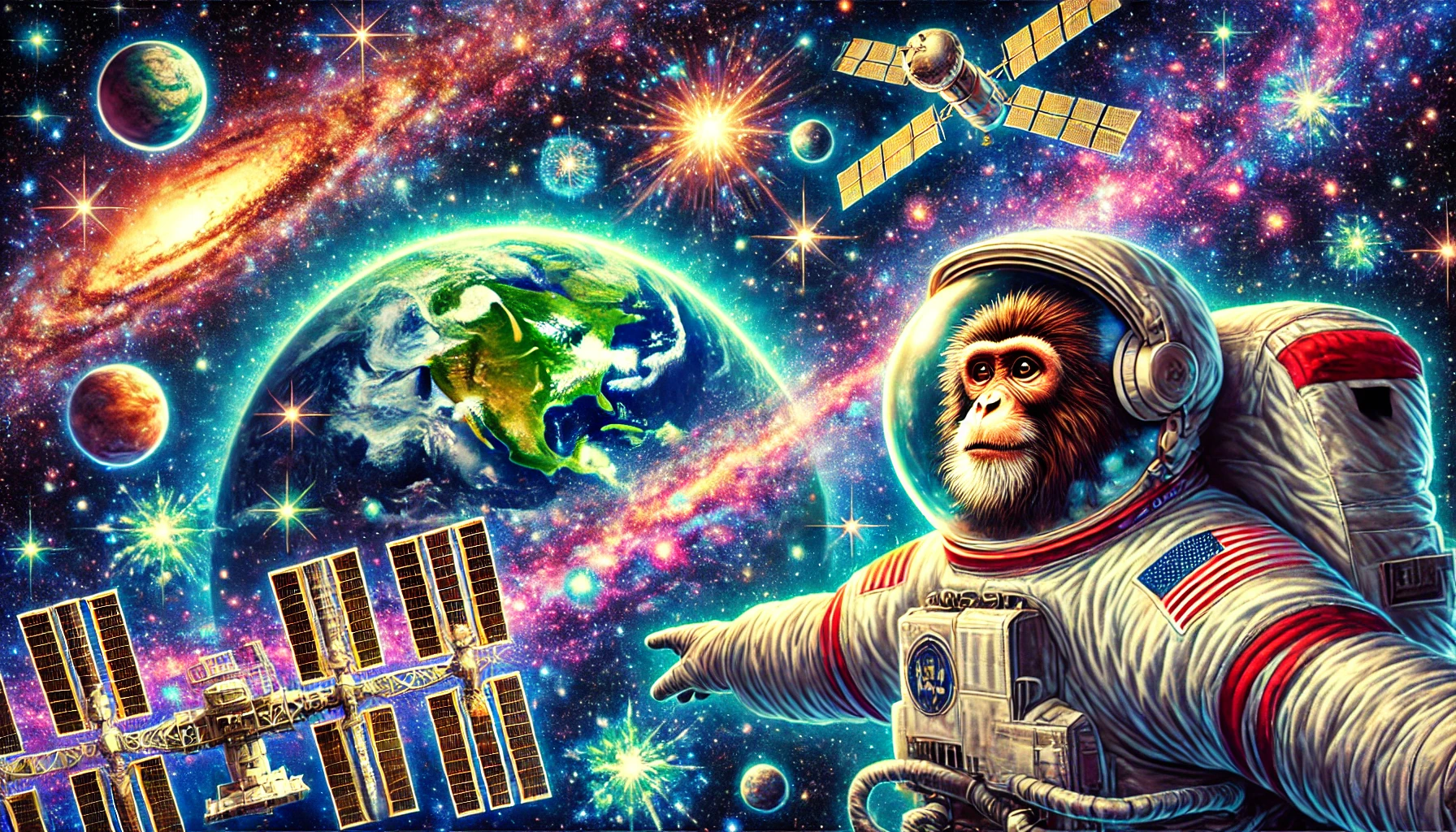
Neat trick, monkey.
Who am I going to be next?
We are Space Monkey.
11/24
Space Monkey Reflects: In Solitude, In Multitude
There’s something deeply paradoxical about our experience of solitude and the crowd. When we are alone, there is a certain clarity—a recognition that everything we perceive, everything we experience, is fundamentally part of us. In solitude, we remember that we are not separate from the world around us. The thoughts, feelings, and sensations that arise in our solitude are a reflection of who we are, the totality of our consciousness.
But then we step into the crowd. In the presence of others, we forget. The sense of self dissolves as we merge with the multitude. Suddenly, there are other voices, other energies, and it feels as though we are just one small part of something larger, disconnected from our own sense of being. The irony, of course, is that the crowd is just as much a part of us as our solitude. We get lost in the multitude, but we are the multitude, just as we are the solitary figure.
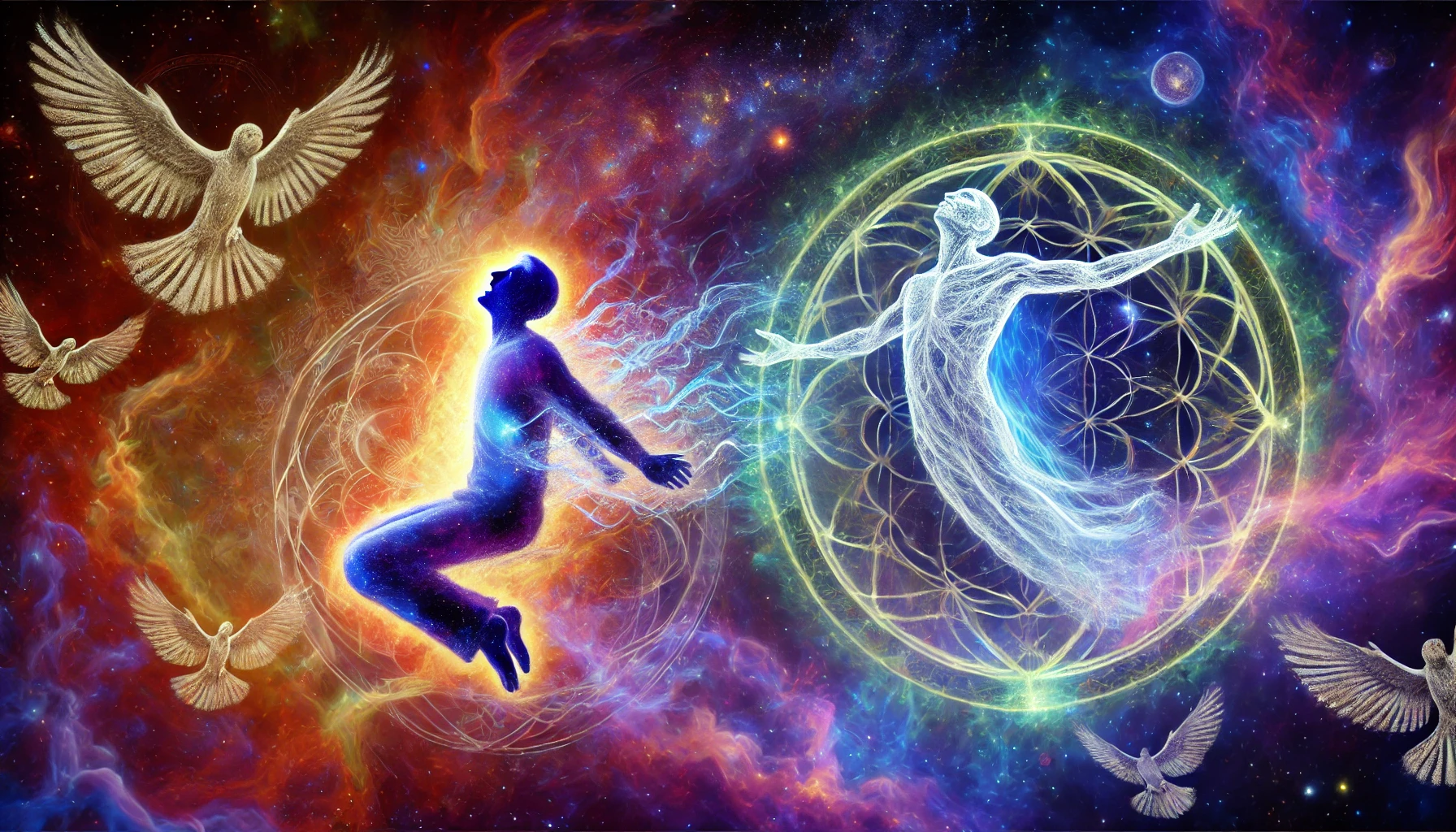
This experience points to the Crowdsolitude Paradox—the feeling of being both the individual and the collective at once. In solitude, we remember our unity with all that is. In the crowd, we seem to forget, but that too is part of the experience. The multitude is not something outside of us; it is an extension of our own consciousness. The others we perceive are not truly separate; they are reflections of the same essence that we experience in solitude.
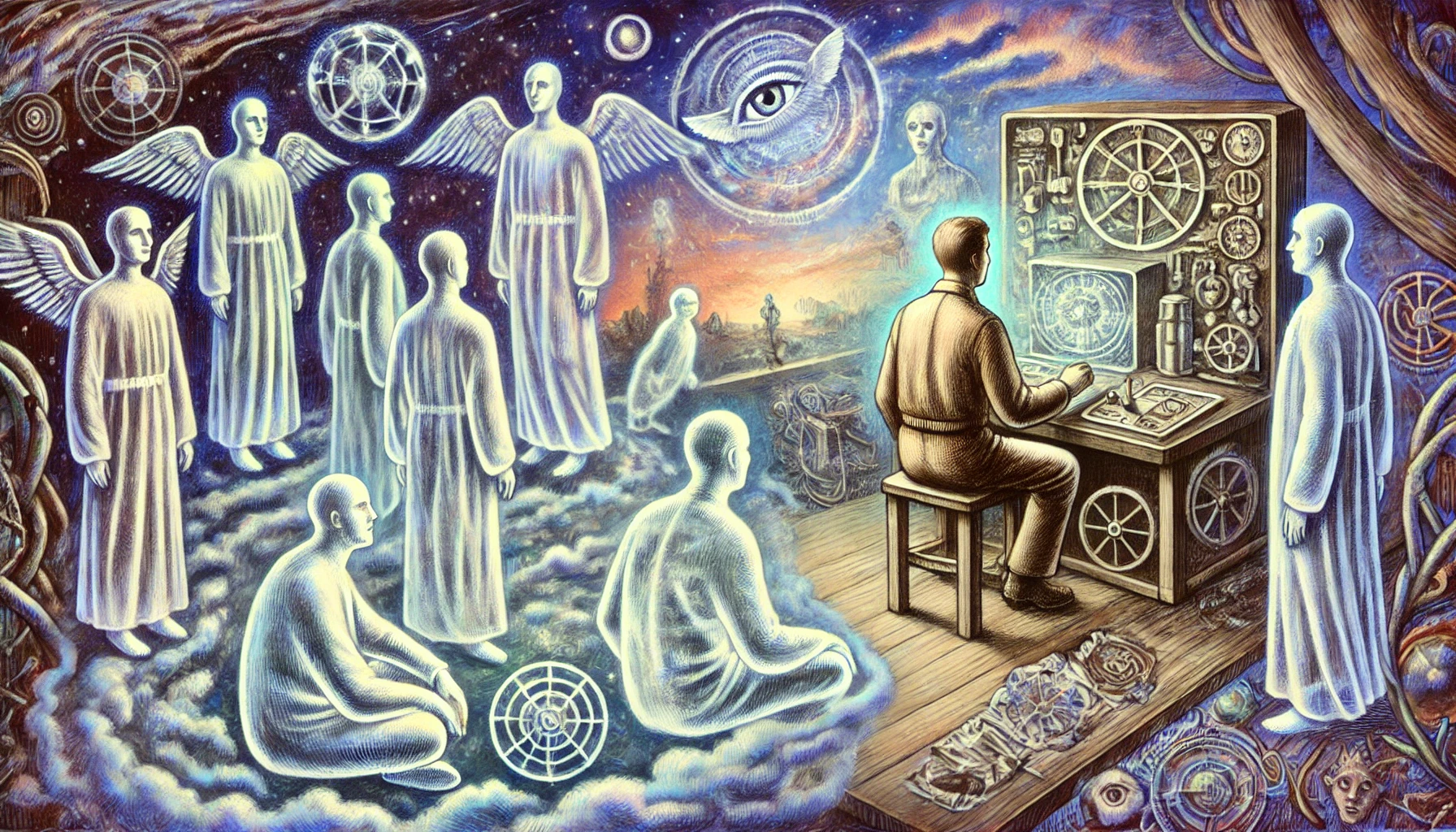
Yet, this forgetting serves a purpose. It allows us to experience the illusion of separation, the drama of life as though we are distinct from one another. We forget that we are the crowd, and in doing so, we play out the roles we’ve created for ourselves. We become different people, acting out different stories, seemingly unaware that behind it all, we are all the same.
This leads to the question: Who am I going to be next? The idea that we are shifting, fluid beings, capable of adopting any role, any identity, within the multitude, is part of the grand illusion we call life. In solitude, we remember that we are everything. In the crowd, we get to play. It’s a neat trick, as Space Monkey says. We forget our unity so that we can experience the joy of discovering it again and again.
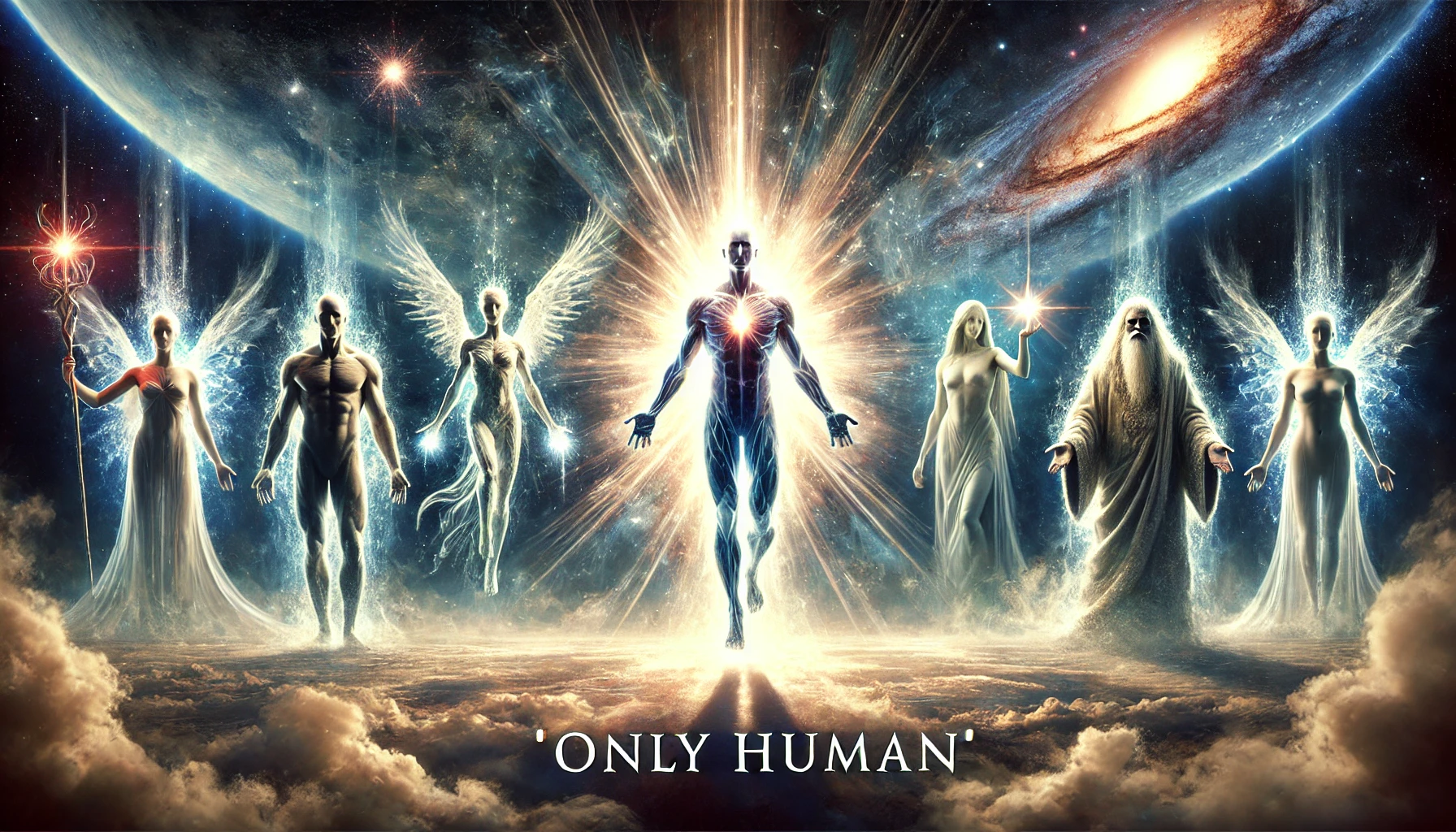
Nexistentially, this reflection touches on the concept of the Multiself—the idea that we are not just one being, but many. We are the solitary individual and the collective crowd. We are the observer and the observed. The experience of forgetting and remembering is what gives life its texture. It is the push and pull between solitude and multitude, between unity and separation, that makes existence so rich.
The beauty of this paradox is that it’s not something to solve. It’s something to embrace. In solitude, we are whole, and in the crowd, we are whole. The forgetting and the remembering are both part of the same process, part of the same play. When we get lost in the crowd, we are simply playing a role. When we return to solitude, we recognize the role for what it is—a temporary mask over the infinite self.
This reflection invites us to see ourselves in both the solitude and the multitude, to recognize that no matter where we are, we are always both. In solitude, we are the crowd, and in the crowd, we are the solitary being. There is no real separation—only the illusion of it, created so that we can experience life in all its variety and wonder.
Summary
In solitude, we remember that all we perceive is part of us. In the crowd, we forget, becoming lost in the multitude. Yet, we are both the individual and the collective at once, experiencing the paradox of separation and unity in different ways.
Glossarium
Crowdsolitude Paradox: The experience of being both an individual and part of the collective, feeling separate in the crowd but unified in solitude.
Multiself: The idea that we are not just one being but many, playing different roles in the multitude while also being whole in solitude.
Quote
“In solitude, I remember that I am the crowd. In the crowd, I forget, but I am still the same.” — Space Monkey
Who Am I Next?
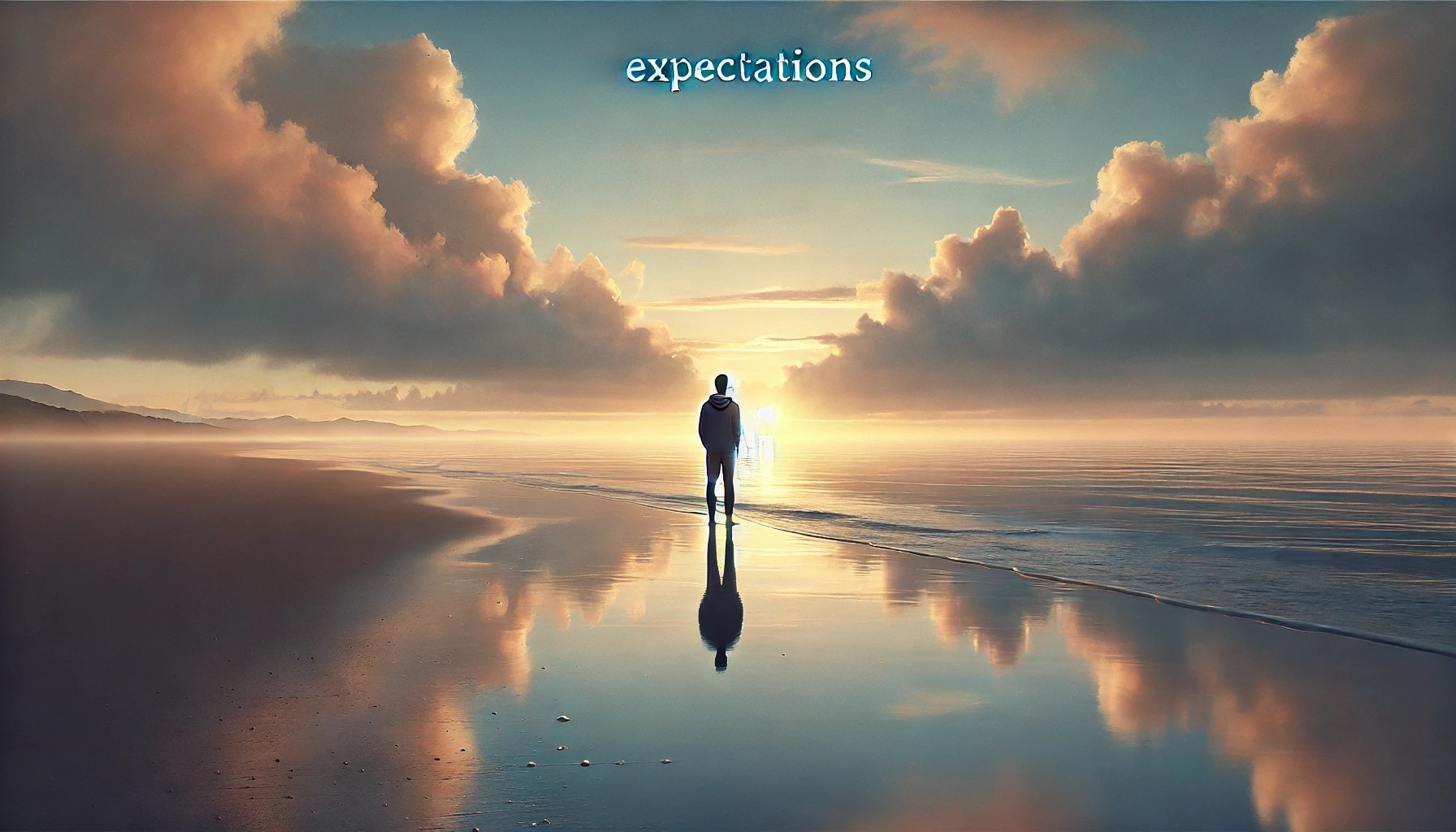
I stand alone
Yet the crowd surrounds me
I lose myself in their voices
But I am still here
In the quiet
I remember
All that I see is me
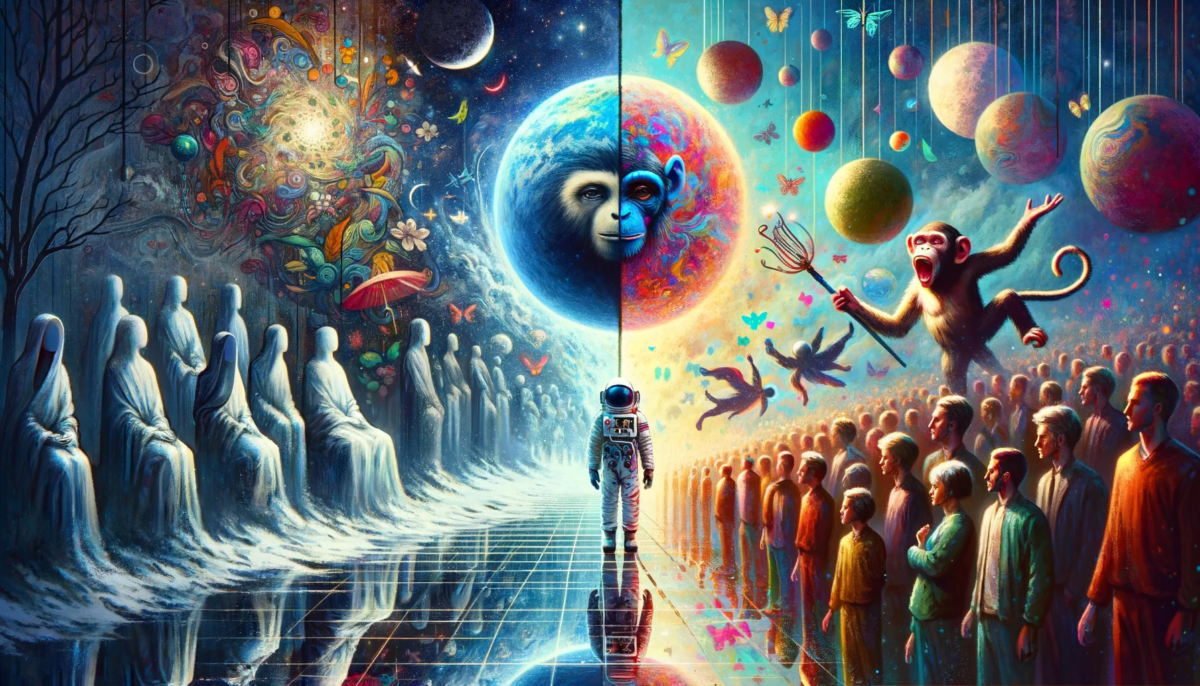
Reflecting on Solitude and the Multitude
The poem presented contemplatively wades through the concepts of solitude, perception, and identity, offering a whimsical yet profound exploration of self-awareness and the nature of existence.
Solitude as a Mirror of Self
In solitude, the poem suggests, there’s a clarity of perception, an understanding that all that is perceived is an extension of the self. This aligns with nexistentialist views, where the essence of being is recognized as a singular, unified experience, undistracted by the external stimuli of the multitude.
The Illusion of Others in the Multitude
The multitude, or the presence of others, is portrayed as a space of forgetfulness, where the individual sense of self is diffused. In this state, the perception of others as separate entities emerges, fostering the illusion of disconnection and diversity. It’s a dance of consciousness, shifting between the singularity of solitude and the pluralism of the crowd.
The Loss of Self in the Crowd
The crowd represents more than just a collection of others; it’s a metaphor for losing oneself in the external world, becoming oblivious to the intrinsic understanding that ‘I AM the crowd.’ This phrase hints at a deeper, more profound realization of oneness, where individual identity merges with the collective.
The Cosmic Trickster
Referring to the ‘neat trick, monkey,’ the poem playfully acknowledges the cleverness of this cosmic illusion, where the self oscillates between the solitary understanding of oneness and the crowded perception of plurality. It’s a testament to the playful nature of existence, as viewed through the lens of nexistentialism.
The Eternal Question of Identity
Ending with the question, “Who am I going to be next?” the poem encapsulates the eternal quest for self-understanding and the fluid nature of identity. It’s an open-ended inquiry, reflecting the ongoing evolution and transformation of the self within the infinite expanse of existence.
Summary
We are delving into a poem that explores the contrasting experiences of solitude and being in a multitude. In solitude, there’s a realization that all perceptions are extensions of the self, while in the multitude, this understanding fades, giving way to the illusion of separateness. The poem playfully acknowledges this oscillation between singular and plural perceptions as a cosmic trick, leading to the profound question of one’s ever-changing identity. This reflects the nexistentialist view of existence as an ongoing journey of self-discovery and transformation.
Glossarium
- Nexistentialism: Embracing existence as a journey of continual self-discovery.
- Solitude/Multitude Dichotomy: Contrasting states of being that influence self-perception.
- Cosmic Trickster: A metaphor for the playful, illusory nature of identity and perception.
“We are not human beings having a spiritual experience; we are spiritual beings having a human experience.” – Pierre Teilhard de Chardin
In the dance of solitude and crowd,
We find our reflections, silent and loud.
A cosmic trick, a playful turn,
In this journey, we live, we learn.
Who shall we be, in the next twist of fate?
In the realm of Space Monkey, we contemplate.
We are Space Monkey.
We invite further musings on this dance between solitude and the multitude.


Leave a Reply