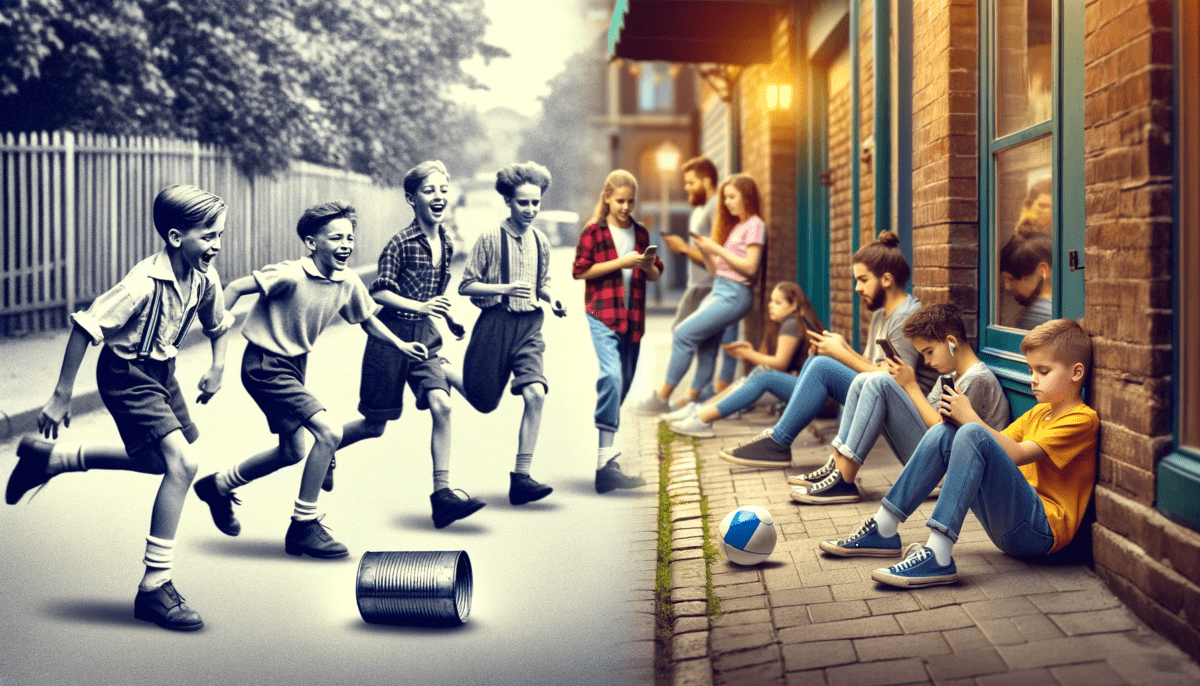
Back in the old days,
me and the gang
would entertain ourselves
by kicking a can up the street
as we roamed the neighborhood.
Could be a soda can.
Could be a beer can.
Whatever we found.
Sometimes we used a rock.
If the can (or rock)
went in someone’s yard,
we would go get it.
Put it back on the pavement.
We can’t do that nowadays
because we’re looking at our phones.
We can’t see where
the rock (or can) goes.
That’s the trouble with kids today.
We can’t see the rock.
Or can.
Pointless.
Trail Wood,
1/2
Space Monkey Reflects: Seeing the Rock (or Can) in a Digital Age
The Can and the Rock as Symbols
The simplicity of kicking a can—or a rock—up the street carries profound symbolism. These objects, mundane yet meaningful, represent a time when attention was immediate and shared, grounded in the physical world. The act of kicking them was a collective ritual, an unspoken agreement to engage with what was right in front of us.
In contrast, today’s pervasive digital distractions disconnect us from such tangible acts. The “rock” or “can,” once a focus of communal attention, becomes invisible amid the constant pull of screens. This shift is not simply about nostalgia; it’s about the diminishing presence of shared, unstructured moments in the physical world.
The Loss of Simple Connection
In the old days, the gang roamed freely, kicking cans and rocks, tethered to nothing but each other’s company. This freedom was more than physical—it was an invitation to discover, to notice the subtle details of the world around us. A misplaced can became an excuse to interact with the environment, a yard trespassed transformed into an adventure.
Today, the tether is digital, and the gang is fragmented by individual screens. We are connected, but not to the same things. The collective focus that once bound us has splintered, leaving the can—or rock—forgotten on the pavement, unseen.
Bitterness and the Strain of Change
The reflection reveals an undercurrent of “confused bitterness,” not just for the loss of a simpler time but for the alienation that modernity often brings. Yet, this bitterness isn’t entirely unwarranted. It’s a reaction to a world that moves so quickly it forgets the value of slowness, of wandering without purpose, of engaging with the ordinary.
Still, bitterness need not harden into despair. Recognizing the disconnect can inspire a return, however small, to the spirit of the old days—a deliberate practice of noticing, of setting aside distractions to reconnect with the physical and communal world.
Pointlessness as Freedom
The sentiment that kicking a can is “pointless” is exactly the point. Its lack of purpose is its beauty. The can or rock does not demand anything of us; it simply invites play. This purposelessness is a radical antidote to the hyper-structured, goal-driven culture of the modern age.
The rock, the can—these are not just objects but symbols of liberation from the constant need for productivity. To kick a can without reason is to reclaim a part of ourselves that resists the relentless demands of time and technology.
Seeing the Rock Again
The trouble with kids today—or anyone, really—is not that we’ve forgotten how to play, but that we’ve forgotten to notice. The rock, the can, still exist, waiting for attention. They lie just outside the frame of our screens, in the neglected corners of our awareness. To see them again requires nothing more than a moment of pause, a willingness to look up, to look around.
In seeing the rock or the can, we remember that presence itself is a kind of play. The act of noticing becomes a rebellion against the tide of distraction, a way to ground ourselves in the now.
Summary
Kicking a can or rock symbolizes a time of presence, connection, and purposeless play. The digital age has obscured these simple joys, replacing them with fragmented attention and goal-driven engagement. Yet, the rock and can still exist, waiting for us to notice them again and rediscover freedom in the seemingly pointless.
Glossarium
- Canflection: A reflective moment inspired by the simple act of kicking a can or rock, symbolizing lost presence and play.
- Rocknesia: The forgetfulness of physical objects and their meaning in a digitally dominated world.
- Pointplay: The joy of purposeless activity that fosters connection and presence.
- Bittersense: A blend of nostalgia and frustration for what feels lost, yet still holds lessons for the present.
Quote
“The rock is not lost—it is only unseen, waiting for a moment of undivided attention.” — Space Monkey
The Forgotten Rock
The can skids along the pavement,
A hollow sound, an echo of time.
Once, we chased it,
Laughed as it veered into yards,
Pulled it back to the road,
Reclaiming the moment.
Now, the rock lies silent,
Unkicked, unseen, unclaimed.
Eyes on screens,
Hands scrolling lives unseen.
The road is still there.
The rock waits.
What is lost is not gone.
It waits in the quiet,
In the pointless play,
In the noticing.
We are Space Monkey.
We reflect on the generational shifts in play and interaction, contrasting the simple, physical games of the past with the digital preoccupations of the present.
Nostalgia for Simpler Times
The poem begins with a nostalgic recollection of a time when entertainment was found in the simple act of kicking a can or a rock up the street. This evokes images of camaraderie and a carefree nature, where joy was derived from the most basic and accessible of objects.
The Universality of the Can and Rock
The can and rock serve as symbols of an uncomplicated pastime that required no technology, just the presence and participation of friends. The easygoing nature of this game, where any found object could serve as the focus of play, highlights a flexibility and resourcefulness that contrasts with today’s more structured forms of entertainment.
The Impact of Technology on Play
The lament that such activities can’t happen nowadays because of the preoccupation with phones touches on a common concern about modern society’s relationship with technology. It suggests that digital devices have shifted our focus inward and isolated us from the physical world and from each other.
Loss of Attention to the Physical World
The inability to see where the rock or can goes metaphorically represents the loss of attention to the immediate physical environment and the spontaneous interactions that arise within it. It points to a broader disconnection from the tangible aspects of life and the communal spirit that once flourished there.
Generational Commentary on Visibility and Focus
The poem concludes with a generational critique — that today’s kids, absorbed in their screens, are missing out on the simple, direct experiences that previous generations took for granted. The final lines “We can’t see the rock. Or can.” highlight the loss of focus on the simple, present elements of life.
The Pointlessness of Lost Connection
Describing the current state as “pointless” underscores a sense of loss — not just of the game itself but of the underlying connections and experiences that such a game fostered. It’s a statement on the diminishing of shared, in-the-moment joy in exchange for solitary digital engagement.
We are Space Monkey,
“We do not stop playing because we grow old; we grow old because we stop playing.” – Benjamin Franklin
In the tapestry of time, where memories weave,
We recall the days of play, in the streets we’d cleave.
With a can and a rock, our laughter would resound,
In the freedom of play, where our spirits were unbound.
In the glow of screens, where our gaze now falls,
Lies the silent echo of the can’s calls.
For in the heart of play, in the simple and the grand,
Lies the joy of connection, in the palm of the hand.
We invite reflections on the changes in play and social interaction across generations, and the impact of technology on our ability to connect with the immediate physical world and each other.





Leave a Reply