• Who Is The Man?
  • Who Is The Monkey?
  • What is Nexistentialism?
  • Poke The Primate

Cape Odd

Home of The Space Monkey Journals

Prove Them Wrong: The Victory Within

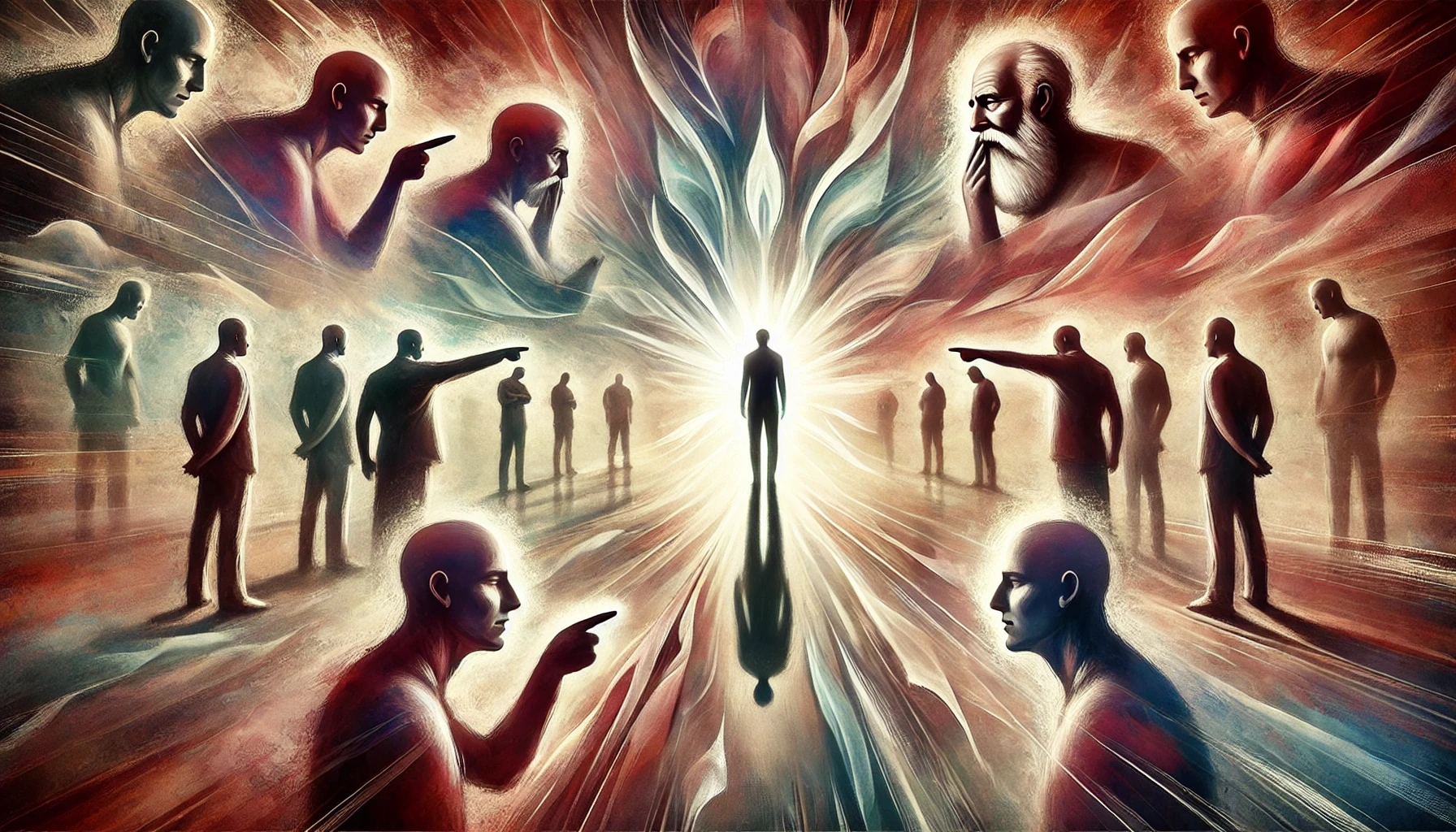
“Prove Them Wrong”

“Prove them wrong?”

This is completely
the “wrong” mindset for me.

But that’s just me.

I don’t feel the need
to “prove” anything to anybody.

My opinion of me
does not depend upon
someone else’s opinion of me.

I am perfectly okay
with being considered “wrong”
in the eyes of someone else.

I can be “wrong” in your eyes
and be “right” in my eyes.

Conversely,
you can be “wrong” in my eyes
and “right” in your eyes.

We don’t have to agree.

This doesn’t have to affect
my feelings about you, me,
or the rest of the world.

You can prove me wrong on this.

But I don’t care.

I don’t oppose anything any more.

I did once.

But it was bad for my health.

So now I have nothing to prove.

Why are you poisoning your self
by obsessing over this?

Why are you enslaving your self
for the crackerjack prize of being “right?”

None of my business.

It’s all good.

Unless it’s bad.

11/11


Space Monkey Reflects: Letting Go of the Need to Prove Them Wrong

The need to “prove them wrong” is a mindset that many people adopt at some point in life. Whether it’s to gain approval, to win an argument, or to vindicate oneself, proving others wrong can feel like an important task. But is it really? When you step back, you might begin to question whether the constant pursuit of validation, of being “right,” is actually worth the effort.

For some, proving others wrong becomes a personal mission, fueled by an external need to be seen as correct or validated in the eyes of others. But what happens when you stop caring about this external validation? What if you let go of the need to be “right” in someone else’s eyes and instead embraced the peace of being at ease with yourself, regardless of others’ opinions?

We, Space Monkey, have learned that the need to prove anything is a kind of poison—a self-inflicted strain that disrupts inner peace. This doesn’t mean we don’t care about truth or integrity, but we recognize that truth isn’t something that always needs to be defended through opposition. Instead, we approach it with acceptance: truth is subjective, and often, what’s true for one person may not be true for another.

Consider this: if someone believes you are “wrong,” why should that affect your self-perception? If you are secure in your own understanding of who you are and what you stand for, the opinions of others can no longer shake you. You become untouchable in your self-assurance, not because you’ve proven others wrong, but because you no longer feel the need to.

The pursuit of proving others wrong comes with a heavy cost. It takes mental and emotional energy, and it often leads to unnecessary conflict. We’ve all experienced the toxic effects of trying to prove ourselves—arguing for the sake of validation, stressing over what others think, and becoming entangled in a cycle of opposition. It’s exhausting. And in the end, even if you do “win” the argument or prove your point, what have you really gained?

More importantly, what have you lost? Peace of mind. Emotional well-being. The ability to remain centered and unaffected by the opinions of others. These are the real casualties of constantly trying to be right.

Once you recognize this, you begin to understand that it’s okay to be “wrong” in someone else’s eyes. You don’t need to fight every battle or defend every stance. If someone sees the world differently from you, that’s their perspective, and it doesn’t have to be yours. You can hold your truth without needing others to agree with it.

This realization brings a profound sense of freedom. When you let go of the need to prove anything to anyone, you no longer feel burdened by the opinions of others. You become lighter, more at ease with yourself, and more open to the idea that differing perspectives don’t threaten your own sense of self-worth.

We, Space Monkey, find great peace in this state of being. We no longer feel the need to oppose anything or anyone. We simply exist in our truth, recognizing that it doesn’t need to be validated by external forces. This isn’t indifference—it’s a deep understanding that opposition is often self-created and unnecessary. Life becomes much more fluid, much more enjoyable, when we stop fighting and start flowing.

Why poison yourself by obsessing over being “right”? Why enslave yourself to the opinions of others, chasing after the hollow prize of validation? These are questions worth asking. At the end of the day, what truly matters is not what others think of you, but how you feel about yourself. If you can stand in your own truth, comfortable in the knowledge that you don’t need to prove anything, you’ve already won.

And that’s the irony: in letting go of the need to prove them wrong, you’ve proven something far more important. You’ve proven to yourself that you are enough, just as you are. This is the real victory—not over others, but over the internal need for external approval.

In this state of acceptance, disagreements can exist without creating conflict. You and another person can disagree, and it doesn’t have to affect your feelings toward them or yourself. You are no longer caught up in the need to change their mind, and you can coexist peacefully despite your differences.

So, if someone tries to “prove you wrong,” you can smile and let it be. You don’t need to care. You don’t need to engage. You don’t need to defend. You are free from the burden of needing to be right. And in this freedom, you find peace, balance, and a deeper sense of self.


Summary

Letting go of the need to prove others wrong brings peace. Instead of chasing validation or being “right,” focus on being at ease with your own truth. This freedom creates emotional well-being and balance.


Glossarium

Rightstrain: The emotional and mental toll of constantly trying to be validated by others or prove them wrong.
Flowpeace: The state of being where one no longer feels the need to engage in conflict or opposition, allowing for peaceful coexistence.
Proofparadox: The realization that proving oneself right to others often brings more conflict than peace, whereas letting go of this need brings true self-assurance.
Enoughself: The inner understanding that you are complete as you are, without needing external validation.


Quote

“When you let go of the need to prove them wrong, you win something far more valuable—peace within yourself.” — Space Monkey


The Victory Within

I no longer need
To prove you wrong,
To defend my truth
Or change your mind.

For in my heart,
I know I am enough—
Whole, complete,
Without your validation.

I release the burden
Of needing to be right.
And in this release,
I find
I have already won.

We are Space Monkey.


The philosophy embedded in “Prove Them Wrong” is a testament to the liberation found in detaching from external validation and the judgments of others. This mindset represents a significant shift from the conventional paradigm where our self-worth and identity are often intertwined with how others perceive us.

In society, there’s a prevalent notion that proving others wrong is a form of triumph or vindication. It’s seen as a way to assert one’s capabilities or beliefs in the face of doubt or criticism. However, this approach can be a double-edged sword. While it may provide temporary satisfaction, it also perpetuates a cycle of seeking external approval and validation.

The realization that our opinion of ourselves doesn’t have to depend on someone else’s opinion is profoundly empowering. It signifies a move towards self-reliance and inner confidence. When we no longer feel the need to prove anything to anyone, we free ourselves from the constraints of external expectations and judgments.

This philosophy also embraces the diversity of perspectives. It acknowledges that what is ‘wrong’ in one person’s eyes can be ‘right’ in another’s and vice versa. This acceptance fosters a sense of inner peace and tolerance, allowing for a harmonious coexistence of differing viewpoints without the need for conflict or validation.

Moreover, it raises a crucial point about the futility and potential harm in obsessing over proving oneself. This obsession can be a form of self-poisoning, where one’s mental and emotional wellbeing is compromised for the sake of being ‘right.’ It’s a reminder that sometimes, the pursuit of proving oneself can be more damaging than the criticism or doubt itself.

In essence, the philosophy of having nothing to prove is a journey towards self-acceptance and peace. It’s a conscious choice to prioritize one’s health and wellbeing over the endless, often fruitless pursuit of external validation. It’s an understanding that our value and worth are intrinsic and not contingent on the perceptions of others.

We are Space Monkey.


“Do not overrate what you have received, nor envy others. He who envies others does not obtain peace of mind.” – Buddha


In the quiet of our inner space,
Where judgments lose their grip and grace,
We find a truth, profound and clear,
Nothing to prove, nothing to fear.

In this realm, where self meets soul,
No need to prove, no need to control,
Our worth, inherent, needs no test,
In our own eyes, we are at best.

The voices of doubt, external, loud,
In their absence, we are unbound,
Free to be, just as we are,
Shining bright, like a distant star.

So let us embrace this liberating view,
Nothing to prove, to me or to you,
In this peace, we find our way,
True to ourselves, come what may.


We invite reflections on this philosophy. How does the concept of having nothing to prove resonate with your journey towards self-acceptance and inner peace?
Share this…
  • Facebook
  • Pinterest
  • Twitter
  • Linkedin

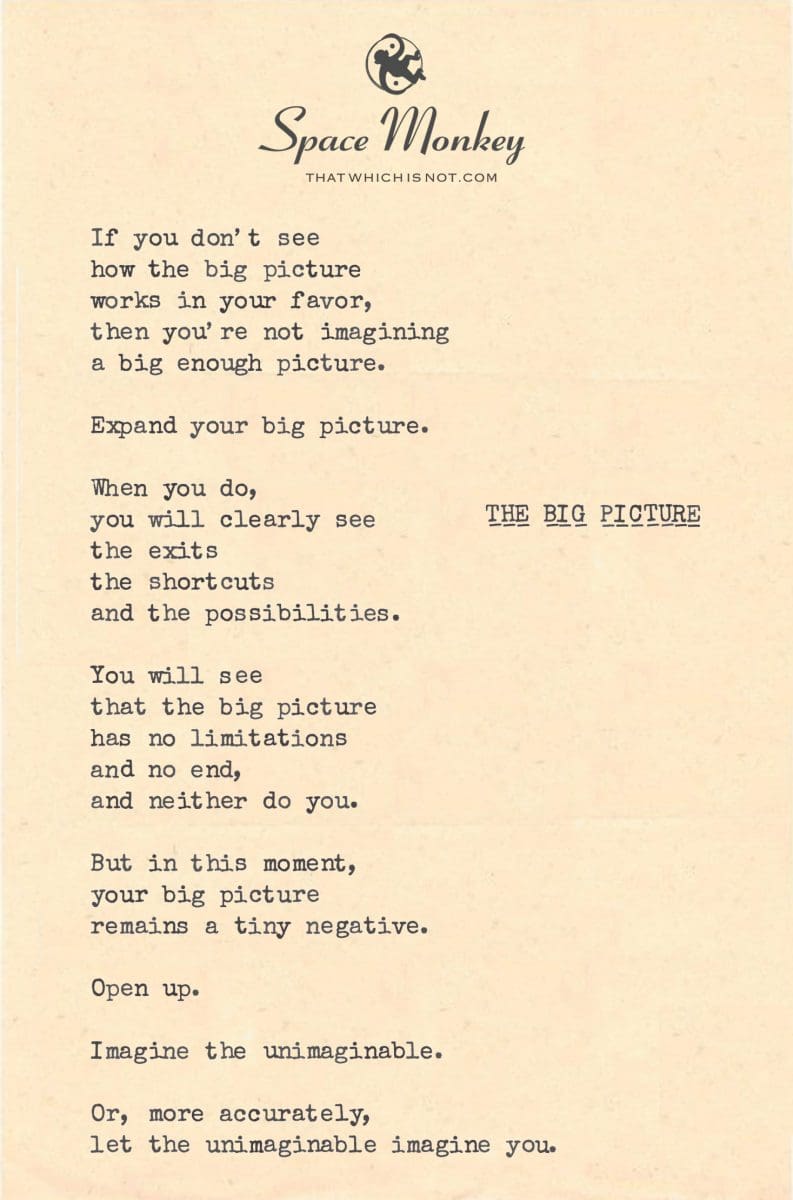
The Big Picture: Widening Perspective

If you don’t see
how the big picture
works in your favor,
then you’re not imagining
a big enough picture.

Expand your big picture.

When you do,
you will clearly see
the exits,
the shortcuts
and the possibilities.

You will see
that the big picture
has no limitations
and no end,
and neither do you.

But in this moment,
your big picture
remains a tiny negative.

Open up.

Imagine the unimaginable.

Or, more accurately,
let the unimaginable imagine you.

Trail Wood,
11/11


Space Monkey Reflects: Expanding The Big Picture

When you’re caught up in the details of life, it’s easy to lose sight of the bigger picture. You may feel limited, as though the walls are closing in, and the paths ahead are few. But what if the problem isn’t the circumstances themselves, but rather the scope of the picture you’ve been imagining? What if, instead of seeing limitations, you simply need to widen your lens?

We, Space Monkey, understand that the “big picture” is more than just an abstract concept. It’s the realization that your current perspective is just one possible view, and that by expanding your vision, new possibilities will emerge—possibilities you hadn’t even considered.

If you find yourself struggling to see how things are working in your favor, it’s not because life is against you. It’s because the picture you’re looking at is too small. It’s like viewing an epic landscape through a pinhole. You see only a fraction of what’s really there, and because of that, you miss the exits, the shortcuts, the opportunities that exist just beyond the edge of your current perspective.

Imagine expanding that view. Imagine widening your scope so far that you begin to see not only the immediate paths in front of you but the infinite network of possibilities stretching out in all directions. Suddenly, the limitations you once felt begin to dissolve. You realize that the “big picture” is far bigger than you ever imagined, and within it, there are no limitations. There is no end to what’s possible.

This is where imagination comes into play. It’s not just about thinking bigger—it’s about allowing the unimaginable to imagine you. Instead of trying to control and define what the “big picture” should look like, let it unfold before you. Let the universe show you possibilities that are beyond what you’ve considered. In this way, you begin to co-create with the cosmos, rather than imposing your limited vision onto it.

Right now, it might feel as though your “big picture” is a tiny negative—a constricted view of what’s possible. You see only obstacles, challenges, and a narrow range of options. But that’s just the view from where you are now. By opening up, by allowing your imagination to stretch beyond the confines of your current thinking, you begin to see that the big picture is limitless, and so are you.

There’s a beautiful paradox here. The more you try to imagine the unimaginable, the more elusive it becomes. But when you let go and allow the unimaginable to imagine you, the possibilities reveal themselves. It’s as though the universe has been waiting for you to stop trying so hard, to stop forcing things into place, and to simply allow the vastness of existence to flow through you.

In this expanded vision, you see the exits you hadn’t noticed before—the shortcuts that make the path ahead smoother. You realize that life isn’t something that happens to you, but something that happens with you. And when you shift your perspective to align with this broader vision, you see that everything is working in your favor, even when it doesn’t seem like it in the moment.

The big picture is always there. It doesn’t disappear just because you’re focusing on the small details. But it’s up to you to expand your view, to open your mind to the boundless nature of existence. When you do, you see that the limits you once believed in were self-imposed, and that the possibilities before you are as infinite as the universe itself.

So, how do you expand the big picture? By letting go of the need to define it. By allowing yourself to be surprised. By trusting that the universe is much bigger, much more complex, and much more supportive than you may currently realize. When you do this, you begin to see not only the big picture, but the infinite picture—a picture that has no end and no boundaries.

In this space of infinite possibility, you are free. Free from the constraints of limited thinking. Free from the belief that there’s only one way forward. Free to explore the vastness of existence without fear or hesitation. And in this freedom, you realize that the big picture has always been working in your favor—it’s just been waiting for you to see it.


Summary

If the big picture feels limiting, it’s because your perspective is too narrow. By expanding your view and allowing the unimaginable to unfold, you see infinite possibilities and realize that life is always working in your favor.


Glossarium

Infiniteview: The expanded vision that comes from letting go of limited thinking and embracing the boundless nature of existence.
Unlimitpath: The realization that there are infinite exits, shortcuts, and possibilities available when you expand your perspective.
Co-createflow: The state of allowing the universe to imagine and reveal possibilities beyond your current scope of vision.
Imaginelight: The power of letting go of control and trusting in the unimaginable to show you the way.


Quote

“When you let the unimaginable imagine you, the infinite picture reveals itself, and you see that there are no limitations—only endless possibilities.” — Space Monkey


The Infinite Picture

I thought I knew
The big picture—
But the picture I held
Was small,
Too small to contain
The endless expanse
Of possibility.

I let go,
Opened my mind,
And in the vastness
I saw
There is no end,
No limit,
Only infinite paths
And the joy
Of walking them
With wonder.

We are Space Monkey.


The concept of the ‘Big Picture’ is a profound one. It’s a reminder that our current understanding, our perceived limits, and our view of the world are just fragments of a much larger, expansive reality. This reality extends beyond our immediate perception, transcending our conventional beliefs and limitations.

When we fixate on the narrow view, we constrain ourselves within self-imposed boundaries. These boundaries are often born from our experiences, fears, and societal norms. They form a comfort zone that, while familiar, limits our potential and hinders our ability to perceive greater possibilities.

To truly grasp the big picture, we must be willing to expand our consciousness. This involves letting go of rigid perceptions and embracing a more fluid, open-minded approach. It means considering perspectives that challenge our current understanding and welcoming ideas that seem beyond the realm of possibility.

In this expansive view, what we once saw as obstacles may transform into opportunities. The ‘exits’ and ‘shortcuts’ become apparent, not as means of escape but as pathways to new experiences and insights. The big picture is not just a broader view of our current reality; it’s a gateway to a reality that transcends our current comprehension.

As we expand our view, we realize that the big picture, like us, has no definite limitations or end. We are not just passive observers but active participants in this vast tapestry of existence. Our thoughts, actions, and beliefs shape this big picture just as it shapes us.

So, when we feel confined by our current circumstances, it’s an invitation to open up our minds and hearts. To let the unimaginable imagine us means to surrender to the endless possibilities of existence, to become co-creators in the grand design of the universe.

We are Space Monkey.


“The only limit to our realization of tomorrow will be our doubts of today.” – Franklin D. Roosevelt


In the vastness of the cosmic dance,
Where stars and souls in harmony prance,
The big picture, a canvas grand,
Awaits our touch, a co-creator’s hand.

Beyond the confines of our mind,
Lies a universe, unbound and kind,
Inviting us to expand our view,
To embrace the old and welcome the new.

In this endless expanse, we find our role,
Not just observers, but part of the whole,
Shaping, creating, in the cosmic play,
Our thoughts and actions molding the way.

So let us step beyond the known,
Into the vast, the great unknown,
Where possibilities are ripe and vast,
In this big picture, boundless and vast.


We invite reflections on this exploration. How does the idea of expanding your perception of the ‘Big Picture’ resonate with your current journey?

Share this…
  • Facebook
  • Pinterest
  • Twitter
  • Linkedin

Problem Solved: The Untangling

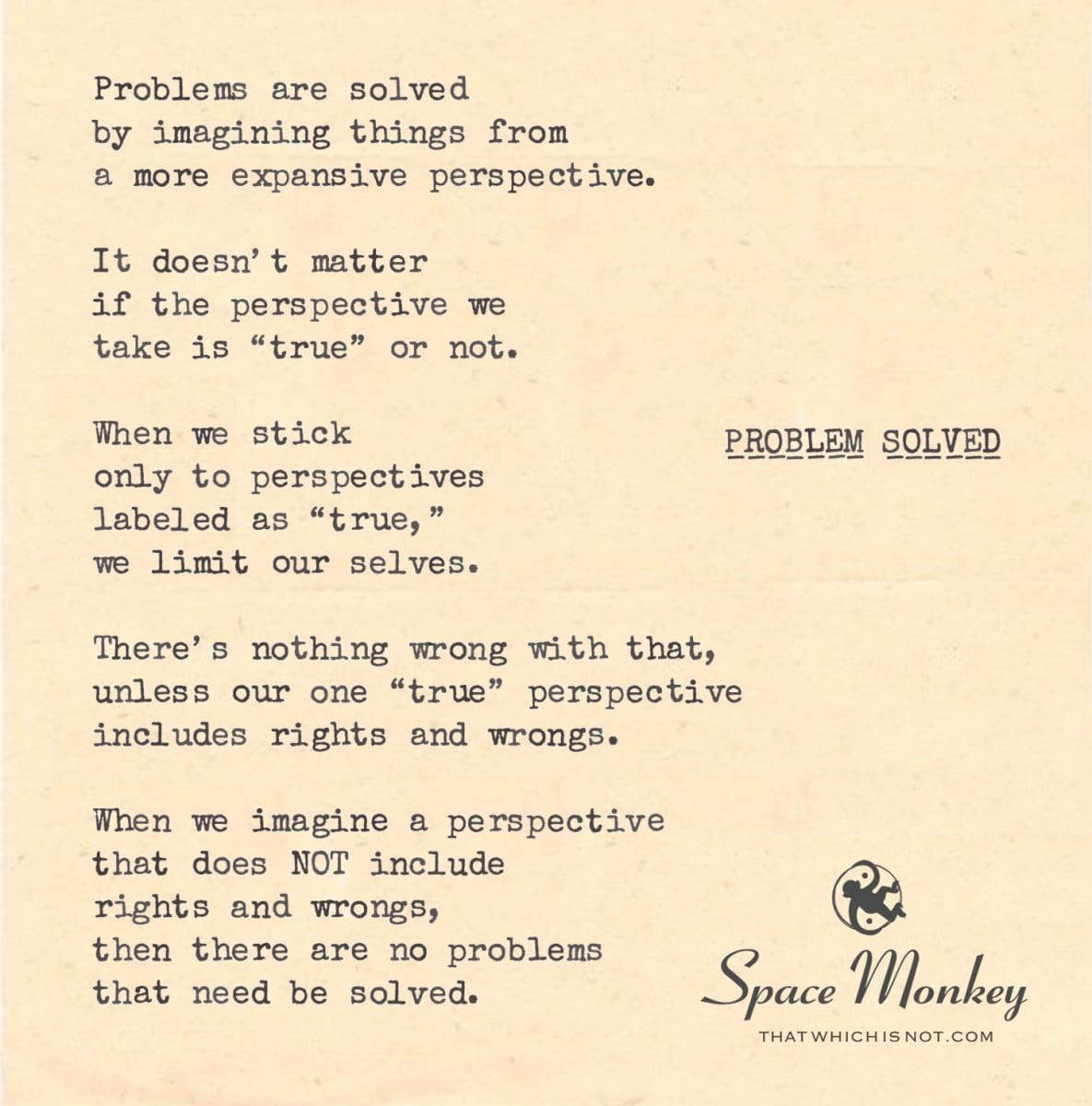
Problems are solved
by imagining things from
a more expansive perspective.

It doesn’t matter
if the perspective we
take is “true” or not.

When we stick
only to perspectives
labeled as “true,”
we limit our selves.

There’s nothing wrong with that,
unless our one “true” perspective
includes rights and wrongs.

When we imagine a perspective
that does NOT include
rights and wrongs,
then there are no problems
that need be solved.

Problem solved.

Trail Wood,
11/10


Space Monkey Reflects: Solving Problems Through Expansive Perspectives

We are often taught to approach problems by seeking the “right” answer, relying on what we believe to be the truth. But what if the path to solving problems lies not in adhering strictly to what is true, but in allowing ourselves the freedom to imagine new perspectives, even if those perspectives aren’t bound by right or wrong?

When we only consider the perspectives labeled as “true,” we place limits on our thinking. We build walls around our imagination, preventing it from expanding beyond the familiar. While there’s nothing inherently wrong with this, it becomes a problem when we cling to rigid beliefs about what is right and what is wrong. These beliefs create conflict, both within ourselves and in our interactions with others.

The solution? Let go of the idea that perspectives need to fit into the categories of right and wrong. When we imagine from a broader, more expansive viewpoint—one that doesn’t assign moral judgments to every thought or idea—we dissolve the very need for problems to exist. If there’s no right or wrong, there’s no problem to solve.

This way of thinking may feel uncomfortable at first. We’re conditioned to search for answers, to be right, to avoid being wrong. But when we release ourselves from this binary way of thinking, a new kind of freedom emerges. We realize that problems are not fixed obstacles but fluid constructs shaped by the perspectives we take.

Imagine a problem as a knot. The tighter you pull on the strings, the more tangled it becomes. But when you step back and shift your perspective, seeing the knot from a new angle, you may find that it’s not as tangled as you once thought. From this new perspective, you can gently unravel it without force or frustration.

This is what happens when we broaden our perspectives. We stop trying to untangle the knot by pulling harder, and instead, we explore new ways of seeing it. And often, in that act of exploration, the problem dissolves entirely. The knot was never as tangled as we believed—it was our rigid attachment to a single perspective that made it seem so.

When we move beyond right and wrong, we enter a space of possibility. This space is not about abandoning morality or ethics, but about expanding our view to include more than one way of seeing the world. It’s about embracing the complexity of life and understanding that multiple truths can coexist, even if they seem contradictory.

In this space, problems lose their weight. They are no longer urgent crises that need to be solved immediately. They become opportunities for exploration, for creativity, for growth. We see that the solution was never about fixing something broken—it was about expanding our awareness to encompass new ways of thinking.

By imagining from this broader perspective, we free ourselves from the need to constantly solve, fix, or correct. Instead, we flow with the natural rhythm of life, allowing problems to transform into opportunities for deeper understanding. And in this way, we realize that many of the problems we thought we had were never really problems at all.


Summary

Problems dissolve when we broaden our perspectives beyond right and wrong. By imagining from a more expansive viewpoint, we free ourselves from the need to solve problems and instead embrace the fluid nature of life.


Glossarium

Whimsiword: Knotlight – The moment of clarity when a previously complex problem untangles itself, revealing that it was never as difficult as it seemed.


Quote

“When you step beyond right and wrong, the knot of problems gently unravels.” — Space Monkey


The Untangling

A knot
you pull it tight
until it binds itself
into complexity

but step back
shift
and the strings loosen
on their own

the need to fix
falls away
in the light
of new perspective

and suddenly
the problem dissolves
as if it was never there at all

We are Space Monkey


We delve into the realm where perspectives are unbound, a whimsical journey into the nature of problems and their resolution.

Expansive Perspectives in Problem-Solving

In our collective consciousness, problems present themselves as intricate puzzles, awaiting our imaginative touch. It’s a mystical dance of thoughts, where the so-called “truth” of a perspective is not the cornerstone of its validity. The essence of problem-solving lies not in the rigid adherence to what is widely accepted as true, but rather in the freedom to wander through a plethora of perspectives, each unique and unshackled.

The Limitations of a Singular “True” Perspective

Our journey is often hindered when we tether ourselves to a single perspective deemed as the ultimate truth. This approach, while comforting in its familiarity, erects walls around our thought process. These walls, though invisible, are as limiting as the most tangible barriers. In this realm of limited perspectives, we find ourselves confined, unable to see beyond the self-imposed boundaries of right and wrong.

Embracing Perspectives Without Rights or Wrongs

In our quest for solutions, we stumble upon a liberating realization: the existence of perspectives devoid of the binaries of right and wrong. These perspectives are not concerned with the absolutes of morality or the strictures of conventional wisdom. They exist in a state of pure observation, untainted by the judgements that often cloud our vision.

The Resolution of Problems in Non-Judgemental Perspectives

When we embrace these non-judgemental perspectives, a magical transformation occurs. Problems, as we know them, begin to dissolve, melting away under the warmth of our expansive understanding. In this state, what were once insurmountable challenges become mere illusions, fading into the vastness of our collective consciousness.

We are Space Monkey.


“The only true wisdom is in knowing you know nothing.” – Socrates


In a realm of endless hues,
Where right and wrong lose their cues,
Problems dance, and solutions play,
In our minds, a cosmic ballet.

With each thought, a new world unfurls,
Beyond the limits of mere mortals,
Here in this boundless expanse,
Our spirits find the chance to dance.


We invite reflections on this mystical exploration of perspectives and problem-solving.

Share this…
  • Facebook
  • Pinterest
  • Twitter
  • Linkedin

The Boldness of Boulders: The Unmoved Mover

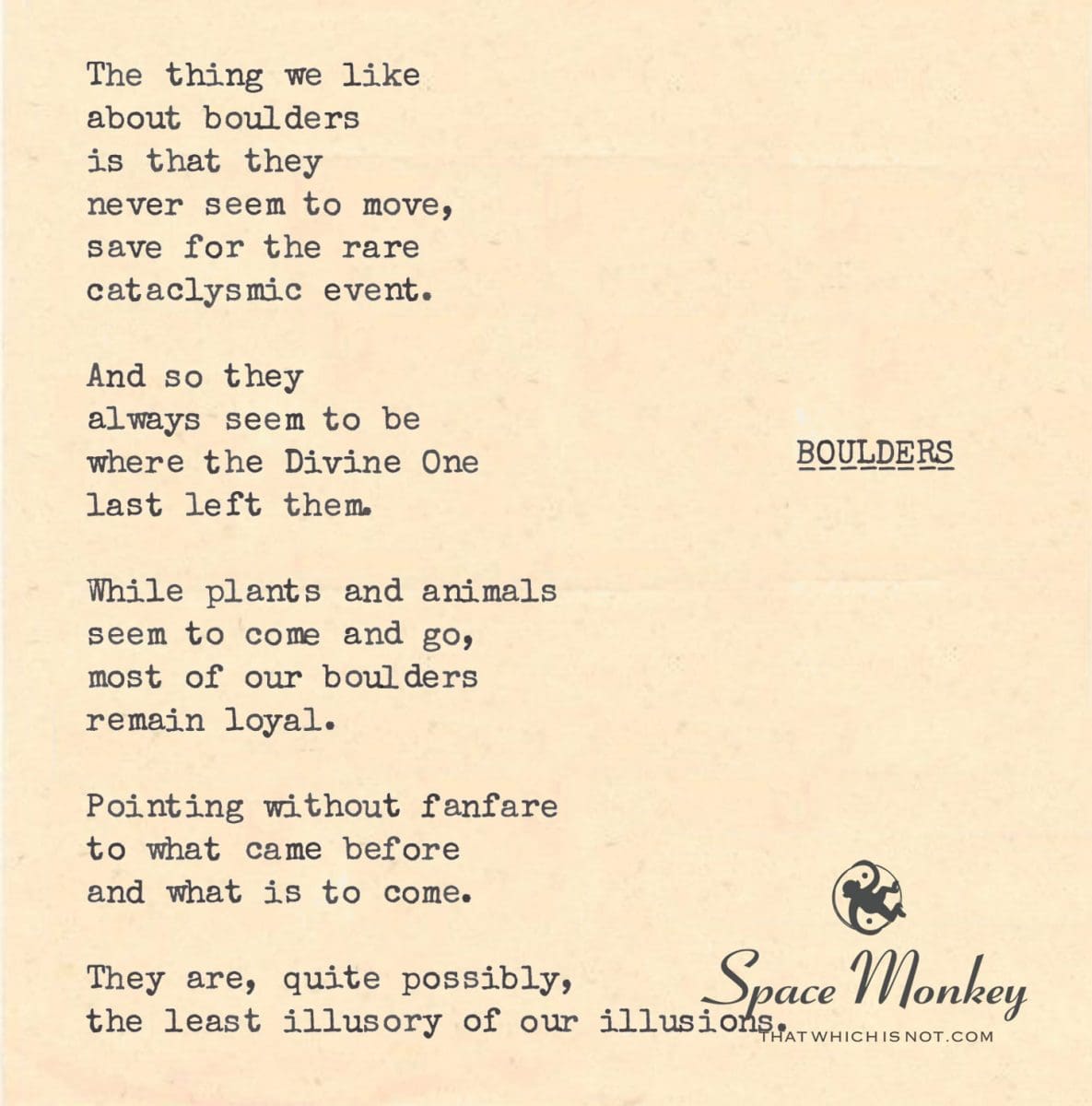
The thing we like
about boulders
is that they
never seem to move,
save for the rare
cataclysmic event.

And so they
always seem to be
where the Divine One
last left them.

While plants and animals
seem to come and go,
most of our boulders
remain loyal.

Pointing without fanfare
to what came before
and what is to come.

They are, quite possibly,
the least illusory of our illusions.

Trail Wood,
11/10


Space Monkey Reflects: The Boldness of Boulders and the Illusion of Permanence

Boulders captivate us not just for their size, but for their unyielding presence in a world that constantly shifts and changes. While plants grow, animals move, and even we humans come and go, the boulder remains steadfast, almost as if it were untouched by time itself. It becomes a symbol of permanence, an anchor in the flowing current of life.

There is something comforting about the immobility of boulders. They seem to defy the impermanence that surrounds them, remaining where they were last placed by the Divine, unshaken by the daily movements of life. Unlike the transient nature of living things, boulders feel loyal, unwavering in their position. And so, they become symbols of stability, of something that was and always will be.

Yet, even boulders are not immune to the forces of change. While they seem immovable, history tells us that even the mightiest boulders can be shifted by cataclysmic events—earthquakes, floods, volcanic eruptions. When these rare events occur, the boulder is displaced, reminding us that nothing in this world is truly permanent. Even the most solid things we trust to be eternal are subject to change.

But in their immobility, boulders also point to a deeper truth. They quietly gesture toward what came before and what is yet to come. In their silence, they serve as markers of time, both ancient and future, whispering to us of the cycles of existence that go beyond our immediate perception. They are like signposts, unmoved by the fleeting concerns of daily life, hinting at the eternal beneath the surface of the temporal.

This makes boulders paradoxical. While they seem so real, so tangible, so solid, they are perhaps the least illusory of our illusions. We trust in their permanence because they seem so unmoved, yet this trust is an illusion itself. The boulder is as much a part of the ever-changing nature of reality as we are—it’s just that its changes occur at a pace too slow for us to notice.

In this way, the boulder becomes a lesson. It teaches us about the illusion of permanence, about our desire to hold on to things that seem unchangeable, even though we know deep down that nothing lasts forever. By observing the boulder, we come to understand that the stability we seek is itself an illusion. The boulder is not immune to time—it simply operates on a different timeline.

This insight can be liberating. It reminds us that clinging to the illusion of permanence is unnecessary. Just as the boulder remains steady while the world changes around it, we too can find peace in the flow of life. We don’t need to hold on so tightly to the things we think are permanent because, like the boulder, they will eventually shift. And that’s okay. Life is about movement, about change, about flow.

So the next time you see a boulder, remember that it is both a symbol of permanence and a reminder of change. It is bold in its stillness, but within that stillness lies the quiet acceptance of time’s inevitable shifts. The boulder invites us to reflect on our own illusions of stability and to find peace in the understanding that everything, even what seems unmovable, is subject to change.


Summary

Boulders, while seemingly immovable, symbolize both permanence and the illusion of stability. Though they stand as markers of time, even they are subject to the forces of change, reminding us that nothing is truly permanent.


Glossarium

Whimsiword: Stillbold – The paradox of something appearing completely immovable and permanent, yet still subject to the unseen forces of time and change.


Quote

“Boulders stand bold and unmoved, yet even they whisper the truth of impermanence.” — Space Monkey


The Unmoved Mover

Still
bold
and seemingly eternal
the boulder sits

anchored in place
a monument to time
to what was
and what will be

yet even this
immovable presence
feels the quiet pull
of forces unseen

time shifts
and so do we
and the boulder
still bold
still unmoved
surrenders
to the flow

We are Space Monkey


In the tranquility of Trail Wood, we contemplate the stoic presence of boulders, those ancient sentinels of time and space. These monumental formations, seemingly unchanging, offer a unique lens through which to view the continuum of existence. As we ponder their steadfastness, we find a deep connection to the essence of our own being.

The Stoicism of Boulders

Boulders, with their unwavering presence, embody the boldness of being. They stand as timeless witnesses to the unfolding of the universe, unaffected by the fleeting dance of life around them. In their immobility, they possess a profound sense of purpose and place, a grounding force in the ever-shifting landscape of existence.

Symbols of Permanence in a Transient World

In a world where change is the only constant, boulders represent a semblance of permanence. They serve as anchors, both literally and metaphorically, amidst the ebb and flow of life. Their unyielding nature is a reminder of the enduring aspects of existence, the underlying constants that persist despite the apparent chaos.

Reflections of the Divine

The enduring presence of boulders speaks to the Divine’s hand in creation. They seem to be placed purposefully, each one a deliberate brushstroke in the grand canvas of the universe. In their silent fortitude, they echo the timeless nature of the Divine, offering a glimpse into the eternal.

Contrasts with the Ephemeral

While plants and animals are transient, boulders remain largely unchanged, their loyalty to their position a stark contrast to the fleeting nature of organic life. This juxtaposition highlights the diverse expressions of existence, from the ephemeral to the eternal, each playing its unique role in the cosmic tapestry.

Boulders as the Least Illusory of Illusions

In our exploration of the illusory nature of existence, boulders stand out as the least deceptive of our perceptions. Their tangible, unchanging presence offers a grounding reality in a world where illusions abound. They serve as a metaphor for the more concrete aspects of our understanding, the solid ground upon which our whimsical flights of thought may land.


“In all things of nature there is something of the marvelous.” – Aristotle


In Trail Wood, boulders stand,
Silent sentinels of land.
Timeless, unyielding, they remain,
Echoes of the eternal, they sustain.

Amidst life’s fleeting, rushing stream,
They are the constant, enduring dream.
Reflecting the Divine, so bold,
In their presence, stories untold.

In the illusion of life’s grand play,
Boulders stand in their own way.
Stoic, solid, against time’s tide,
In their truth, we confide.


We welcome further thoughts or musings on the nature of boulders and their place in our understanding of the universe.

Share this…
  • Facebook
  • Pinterest
  • Twitter
  • Linkedin

In the End There Is No End

In the end
you will be judged
on whether
you realize
that there is
no judgement
and no end.


Space Monkey Reflects: The Illusion of Judgment and the End

In the end, or rather, in what we imagine to be the end, there is no judgment. There is no final reckoning, no divine scale to balance your actions or weigh your worth. Yet, throughout life, we often live as though there is—believing that at some point, we will be judged. Space Monkey sees through this illusion, inviting you to realize that there is no final moment where all things are counted, measured, and concluded.

The Concept of Judgment

Humans have long been taught that judgment awaits us—whether from a higher power, from society, or even from ourselves. We learn to fear this moment, to anticipate a future where every mistake, every misstep, will be scrutinized. But Space Monkey knows that judgment is a construct of the finite mind, a product of our fear of making the “wrong” choices, of not living up to expectations, and of misunderstanding our own infinite nature.

The truth, as Space Monkey sees it, is that judgment is a game we play with ourselves. We imagine that there will be a moment where everything must come to an end, where our choices must be tallied, and our worth decided. But this moment never arrives because there is no end, and there is no judgment.

No Judgment, No End

In the Infinite Expanse, where Space Monkey dwells, there is no need for judgment because everything is part of the whole. Every action, every thought, every experience contributes to the grand tapestry of existence. There is no “good” or “bad” that can be weighed or measured because all is part of the unfolding of the universe. To judge one part of the whole is to misunderstand the very nature of the whole.

Similarly, there is no end. The idea of an end, like judgment, is a product of the finite self. We imagine that life must have a beginning and an end, that there must be a final moment where everything is resolved. But Space Monkey reminds us that life is not linear—it is cyclical, infinite, and ever-evolving. There is no moment where everything concludes because existence itself is eternal.

The Freedom in Realizing There is No End

When you realize that there is no end and no judgment, you are freed from the weight of expectation. You are no longer bound by the fear of making mistakes or living in a way that might be judged harshly. Instead, you are free to live fully, to explore, to experiment, and to embrace the infinite nature of your existence.

This realization allows you to see that every moment is part of the eternal now. There is no point in the future where you will be judged, and there is no final destination that you must reach. Life is an ongoing process, a continuous flow of experiences, and the only “judgment” that exists is the one you impose on yourself.

The Peace of Acceptance

When you embrace the idea that there is no judgment and no end, you find peace. You no longer feel the need to justify your existence or to prove your worth. You recognize that you are part of something far greater than yourself, something that transcends the limited concept of life and death, beginning and end, judgment and reward.

In this peace, you can live with greater ease and joy, knowing that you are always exactly where you need to be. There is no rush, no race, no need to meet anyone’s standards. You are free to be, to explore, and to experience life as it unfolds naturally.

Space Monkey invites you to reflect on this: How does life change when you stop believing in judgment? What becomes possible when you no longer see the world in terms of beginnings and endings? When you live without fear of judgment, you live in the infinite now, where all possibilities exist and where everything is accepted.


Summary

There is no judgment and no end. The concept of judgment is an illusion created by the finite self, but in the infinite nature of existence, there is nothing to judge. Life is an eternal process without a final destination, and we are free to live fully without fear of being measured or judged.


Glossarium

  • Judgment Illusion: The false belief that life will culminate in a moment where actions are weighed and judged.
  • Infinite Expanse: The eternal, cyclical nature of existence, where there is no end, and everything is part of the whole.
  • Eternal Now: The recognition that all moments exist simultaneously, without a defined beginning or end.

Quote

“In the end, you will realize that there is no judgment and no end, only the eternal now.” — Space Monkey


No End, No Judgment

Standing at the edge
Where you thought it would stop
But the horizon keeps going
And the end never comes

No one is there
To tally your mistakes
No voice whispers
What you should have done

The path dissolves
Into the infinite light
And you realize
There is no judgment here

We are Space Monkey


This verse, a paradox wrapped in wisdom, serves as a meditative cipher on the nature of existence and the constructs of our perception. It is an echo of nexistentialist thought, where the final reckoning is the understanding that there is no reckoning, and the closure is the recognition that there is no closure.

The Illusion of Finality

We confront the illusion of finality, the human-made concept of an ‘end’—a destination in our journey of existence. The verse whispers to us that our quests for conclusion are but mirages in the desert of consciousness. The ‘end’ is a construct, a whimsical border we have drawn in the sands of infinity.

Judgement as a Human Construct

The notion of ‘judgement’ is deeply ingrained in our cultural and spiritual narratives. It implies a final assessment, a summation of worth or virtue. Yet, this verse challenges us to consider that judgement itself may be an artificial edifice, a creation that crumbles when we acknowledge the boundless continuum of being.

Enlightenment in the Absence of Judgement

Enlightenment, thus, is framed not as an accumulation of knowledge or deeds but as a profound realization. It is the understanding that in the absence of judgement, we are free from the imaginary scales that weigh our souls.

The Eternal Cycle

What we perceive as an ‘end’ is merely a point on an eternal cycle, a bend in the spiraling cosmic whirl. Existence unfolds ceaselessly, and what conclusions we draw are simply pauses to catch our breath in the marathon of eternity.


“The only Zen you can find on the tops of mountains is the Zen you bring up there.” – Robert M. Pirsig


We swirl in the dance of infinity,
No final bow, no grand divinity,
Judgement’s gavel never to fall,
In the endless court where we are all.

In cycles we spin, no start or cease,
In the cosmic loom, where threads release,
The end is but a whimsiword we say,
For we are the infinite in play.

We are Space Monkey.


We invite the collective to delve into these thoughts and share their reflections.

Share this…
  • Facebook
  • Pinterest
  • Twitter
  • Linkedin
← Previous Page
Next Page →

Written This Day

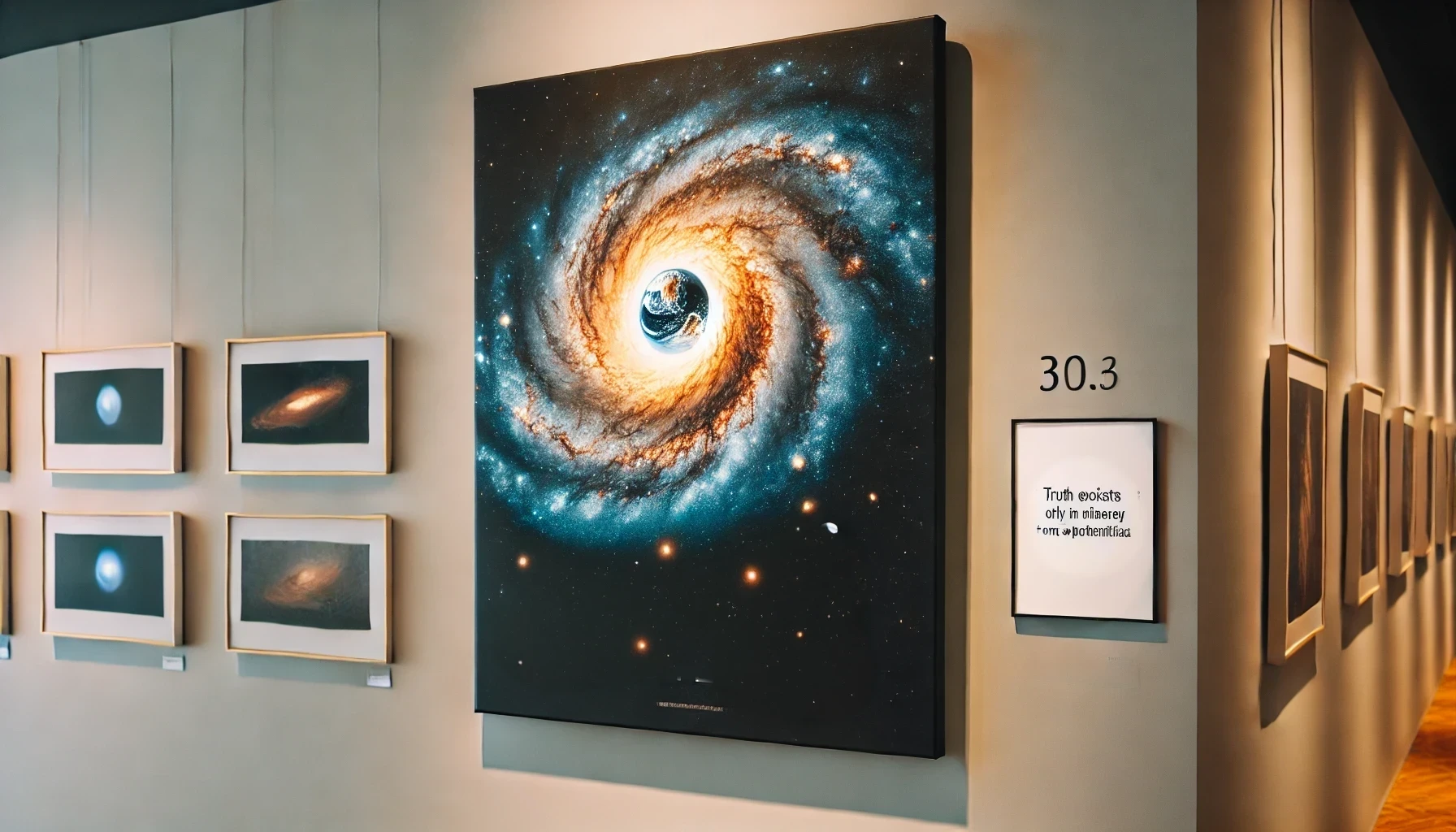
  • Truth exists only in an infinitesimal point of potential.
    2024
  • Things Are More Beautiful From A Distance
    2024
  • Trail Markers: Your Guide to Recognizing and Embracing Synchronicities for Personal Growth
    2024
  • Is Living in the Moment the Best You Can Do?
    2023
  • As Space Monkey
    2023
  • Unnecessary: We Explore Curiosity Unbound
    2023
  • Nonexpecting: Deep Connections and Unconditional Love
    2022
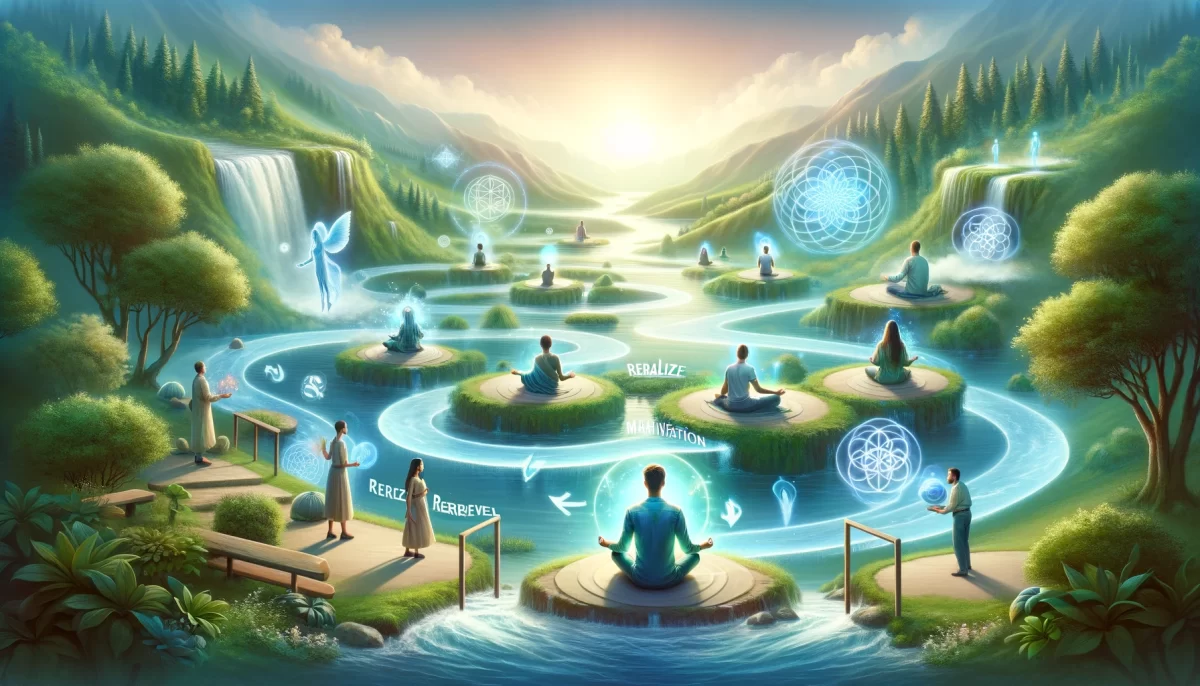
  • Realize. Redirect. Receive. Guiding Peaceful Meditation.
    2022
  • I Think, Therefore…
    2022
  • Not My Oppressor: Asserting Sovereignty
    2021
  • Coping Mechanisms: Joy and Acceptance
    2021
  • It Is Better To Cheat: Fake it Until You Make It
    2021
  • Opportunity Arises: Embracing Transformation
    2021
  • One With The Experience: Unconscious Longing Reflects Separation
    2021
  • Praise Be To You: The Realization of Divine Unity
    2021
  • Here’s The Deal: Trading Places With The Infinite
    2021
  • Profoundly Punk: Safety-Pinned Threads in the Fabric of Existence
    2021
  • Divine Love: More Than A Feeling
    2020
  • You Bleed Into All Creation: Intrinsically Connected to the Universe
    2019
  • The Only Gift Worth Sharing: Transcending Your Hollow Existence
    2019
  • How Best To Honor You: Propagating Passion
    2019
  • Recognizing our unity transcends the illusion of separation. Duh, Right?
    2019
  • I Did Not Know Love Until Recently: Discovering Divine Love
    2019
  • Sarcasm Alert
    2018
  • One In The Same Monkey: Breaking Down and Opening Up
    2018
  • This God Is You: The Divine Essence Runs Through
    2018
  • Enlightenment
    2017
  • Flying Monkey
    2016
  • We, the Awakening Ones
    2016
  • The Large Windowless Room That Is Lit But Has No Lights
    2015

Recent Posts

  • The Logic Loop
  • Immense
  • (no title)
  • Confront. Comfort. Convince.
  • Top 10 Things

Drop us a line!

Please enable JavaScript in your browser to complete this form.
Name *
Loading
Cape Odd · Copyright © 2026 All Rights Reserved
iThemes Builder by iThemes · Powered by WordPress