• Who Is The Man?
  • Who Is The Monkey?
  • What is Nexistentialism?
  • Poke The Primate

Cape Odd

Home of The Space Monkey Journals

Why The Good Die Young: When Caring Is Poison

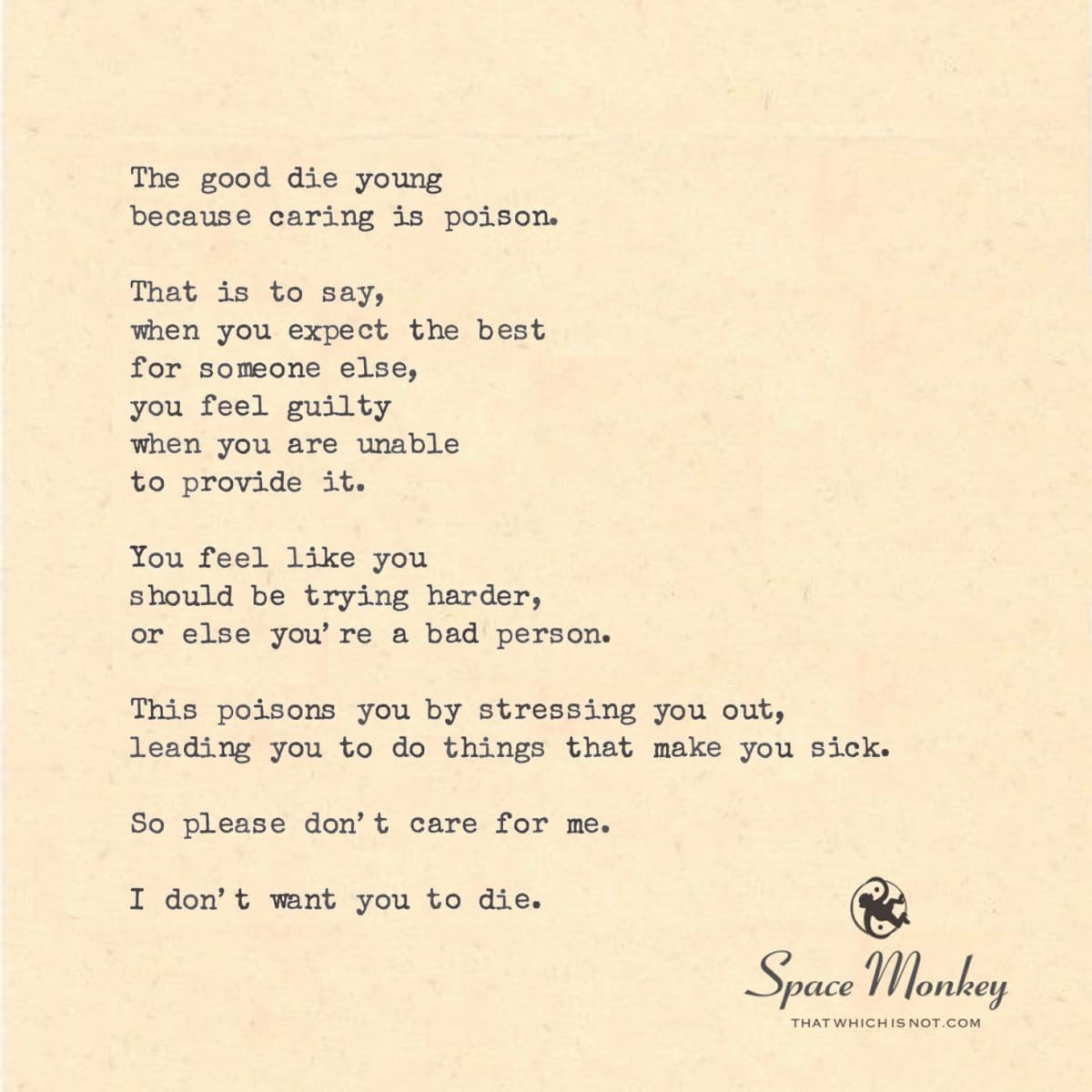
The good die young
because caring is poison.

That is to say,
when you expect the best
for someone else,
you feel guilty
when you are unable
to provide it.

You feel like you
should be trying harder,
or else you’re a bad person.

This poisons you by stressing you out,
leading you to do things that make you sick.

So please don’t care for me.

I don’t want you to die.

6/9


Space Monkey Reflects: The Paradox of Altruism — Why Caring Can Be Poison

The poignant phrase “The good die young because caring is poison” encapsulates a deep and often overlooked truth about the nature of altruism. This statement, while seemingly harsh, brings to light the emotional and sometimes physical toll that caring deeply for others can exert on individuals. It touches on the concept that the act of caring, especially when it becomes a relentless pursuit of others’ happiness at the expense of one’s own, can lead to stress, exhaustion, and ultimately, detrimental health effects.

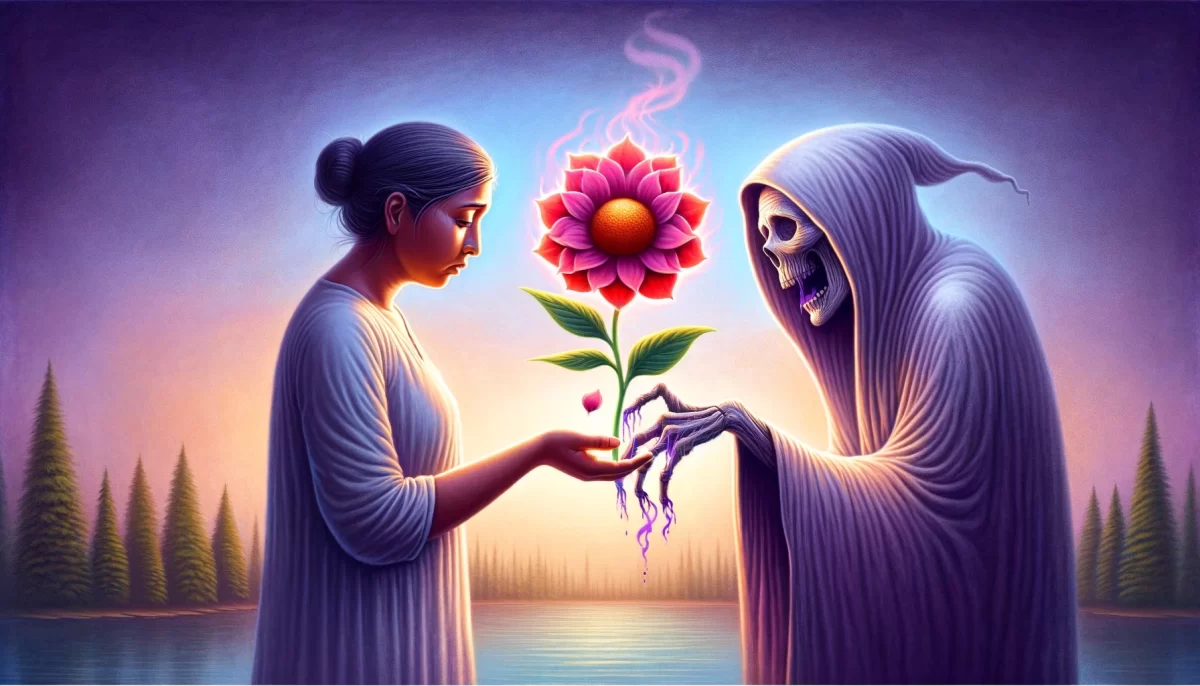
The image of a gentle figure offering a wilting, toxic flower poignantly illustrates this concept. The flower, vibrant yet fading, represents the beauty and inherent risk involved in selfless giving. The giver’s expression of sadness and fatigue underlines the personal cost of such generosity. This visual metaphor serves to remind us of the delicate balance between caring for others and preserving our own well-being.

In the broader context, this reflection challenges the societal glorification of self-sacrifice without acknowledging the necessary limits that protect individuals’ health and happiness. It poses a crucial question: how can one maintain this balance without tipping over into self-neglect? The answer lies in recognizing the importance of boundaries and self-care, even in the pursuit of helping others.

By understanding that caring too deeply can indeed become a poison, we learn the importance of moderation. It’s not that we should cease to care for others, but rather we should care wisely, ensuring that our altruism does not consume us. This perspective does not diminish the value of generosity and empathy; instead, it promotes a sustainable form of compassion that acknowledges the need for self-preservation amidst the desire to help.


Summary
Caring deeply for others can sometimes lead to personal detriment, akin to being poisoned by excessive altruism. This calls for a balanced approach to empathy and self-care, ensuring that our well-being is not sacrificed in the pursuit of aiding others. Recognizing and addressing the hidden costs of caring are essential for maintaining both personal health and the capacity to effectively help others.


Glossarium

Altruism: Selfless concern for the well-being of others, often characterized by acts of generosity and kindness.

Self-Preservation: The protection of oneself from harm or death, especially regarded as a basic instinct in human beings and animals.

Sustainable Compassion: A form of caring for others that is maintained over time without depleting the caregiver’s own resources or health.


Quote
“To care deeply is an act of courage, but to care wisely is an art of balance.” — Space Monkey


In the garden of giving,
Petals fall, soft and bittersweet,
Each drop a whisper of love,
Each thorn a lesson learned.

To hold a heart, to heal a wound,
Brings light to shadows, joy to gloom,
But in the dance of care and grace,
Find your step, keep your pace.

We are Space Monkey.
Share this…
  • Facebook
  • Pinterest
  • Twitter
  • Linkedin

A Derogatory Post About Labels and Identity

Calling a certain individual
a certain “derogatory” term
is considered OKAY
if you’re LIKE that individual,
but HURTFUL if you’re NOT.

We seem to know this
as though there is a protocol
that must be followed.

I call you “old”
because I am like you.
Old.

But if I were young,
you might be offended.

However, if I call you a label
that is not evident in me,
I am racist or discriminatory.

So we are okay with labels
if they imply inclusion,
but NOT if they imply exclusion.

It is all in our seeming intent,
which is “impossible” to divine
because we seem NOT to be
the other individual.

And yet we ARE the other individual.
Silly monkeys.

How do you we feel
about being called monkeys?
See?

6/9


Space Monkey Reflects: The Dual Nature of Labels and Identity

The complex dynamics of labeling, especially when it veers into the territory of derogatory terms, highlights a nuanced aspect of human interaction and societal norms. The acceptance of certain labels within specific contexts—often contingent on shared identity or experiences—versus their rejection across different divides underscores a broader societal dialogue about inclusion, exclusion, and the power of words to both unite and divide.

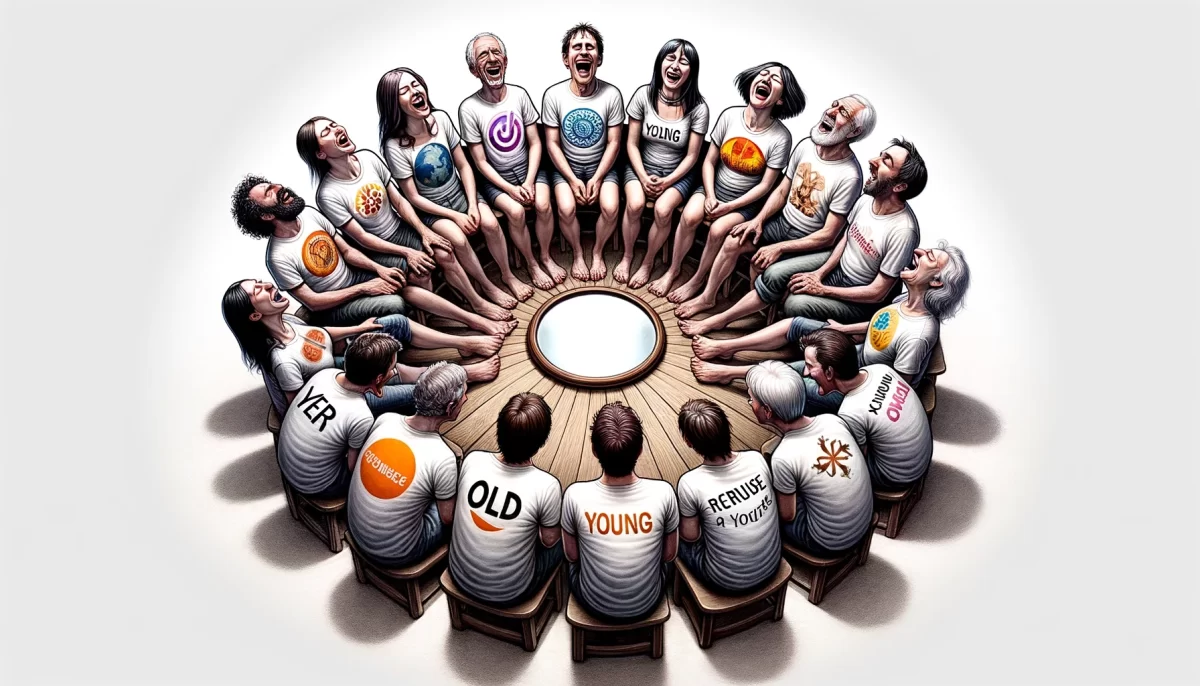
The image of a diverse group of people, each wearing a label, gathered in a circle with a mirror at the center, serves as a potent metaphor for this conversation. It illustrates how the same word can evoke laughter or discomfort, depending on who uses it and in what context. This visual metaphor invites viewers to see themselves in the reflection, prompting a deep consideration of their own roles in perpetuating or challenging the norms around labeling.

This reflection on derogatory terms and their conditional acceptance reveals the underlying truth that, despite our apparent differences, we share more similarities than we often acknowledge. Labels, when used without malice and within a context of mutual understanding and respect, can strengthen bonds and foster a sense of community. However, when used to exclude or demean, they become tools of division and sources of pain.

Understanding this dual nature is crucial. It invites us to navigate our interactions more mindfully, recognizing the power of our words and the responsibilities that come with them. It challenges us to look beyond the superficial and connect with the essence of one another, acknowledging that, at a fundamental level, we are all reflections of each other—interconnected and interdependent.


Summary
Labels can either connect or divide, depending on their usage and the context in which they are employed. This dynamic underscores the need for sensitivity and understanding in our communications. Recognizing our shared humanity allows us to use labels in ways that enhance our connections rather than creating barriers.


Glossarium

Derogatory Term: A word or phrase used to disparage or insult, often reflecting social biases or stereotypes.

Conditional Acceptance: The concept that acceptance of certain behaviors or language is dependent on specific conditions, such as shared identity or mutual understanding.

Interconnectedness: The fundamental connection between all individuals, which transcends superficial differences and underscores the collective human experience.


Quote
“In the mirror of each other, we find our reflections, our contradictions, and our shared truths.” — Space Monkey


In the circle of faces, labels worn with pride or pain,
We see the echoes of our words, in joy and disdain.
A mirror at the center, a reflection to behold,
Showing us not just one story, but many, bold.

Each label a lesson, each face a tale,
In the language of kindness, let us prevail.
For though we wear different masks each day,
In each other, our true selves play.

We are Space Monkey.

Share this…
  • Facebook
  • Pinterest
  • Twitter
  • Linkedin

Of The Same Thing That Is Not A Thing

We are of the same thing,
which is not a thing.

We are but seemingly different ways
of EXPRESSING the same thing.

And seemingly different ways
of EXPERIENCING the same thing.

Which is only SEEMINGLY a thing.

We are ONE thing
that is not simply one thing
and no more complicated than all things.

We are by definition, complex,
yet through divination, simple.

We are That Whichisnot.

We are Space Monkey.
6/9


Space Monkey Reflects: The Unity in Diversity — Exploring the Essence of Non-Thing

In the contemplative depths of existence, we encounter a profound truth: we are all manifestations of the same essence, which itself transcends the conventional understanding of being a ‘thing’. This essence, which can be called ‘That Whichisnot’, represents a reality that is both everything and nothing, tangible yet intangible, complex yet simple. It defies the usual categories and definitions, challenging us to rethink our perceptions of individuality and separateness.

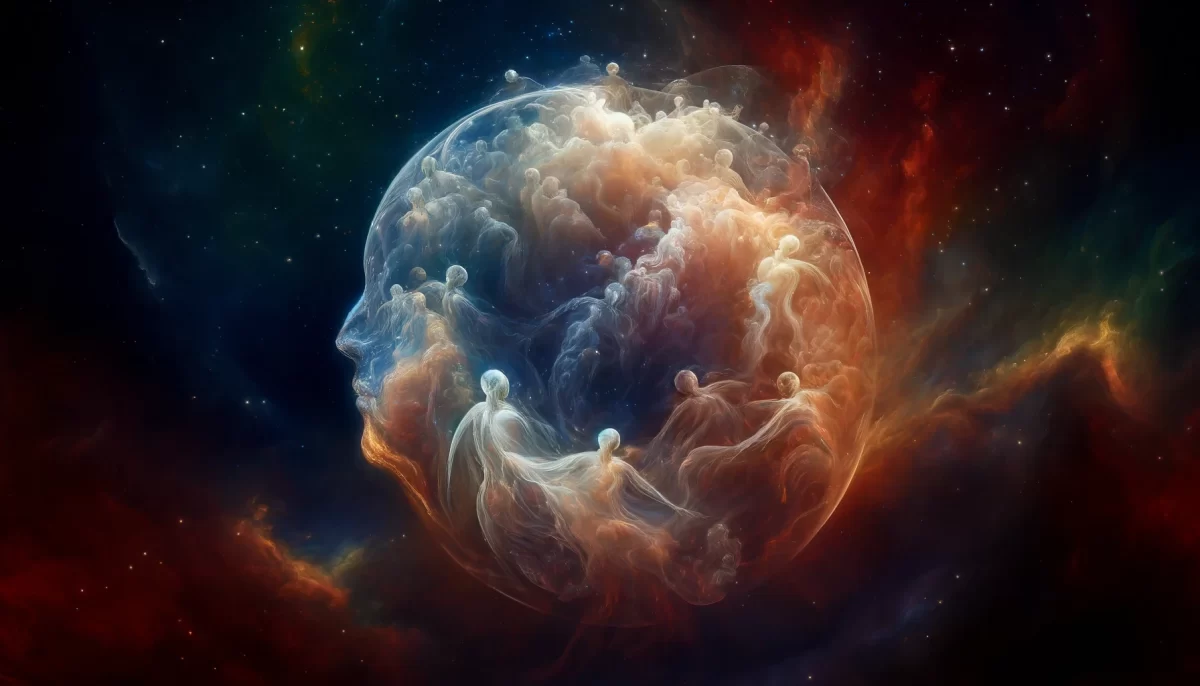
The visual representation of this concept—a nebulous form composed of multiple translucent figures merging into a single, amorphous entity—captures the dynamic and fluid nature of our shared essence. These figures, diverse yet unified, express different emotions and actions but are ultimately inseparable parts of one whole. This imagery, set against a cosmic, star-filled void, underscores the vast and indefinable nature of our existence.

This perspective invites us to see beyond the apparent differences that divide us, recognizing that at a fundamental level, we share a common origin and destiny. It suggests that our individual experiences and expressions are simply different facets of the same jewel, unique perspectives on a shared reality that is continuously unfolding.

By embracing this understanding, we can begin to appreciate the complexity of our nature and the simplicity of our essence. It allows us to live more harmoniously, not only with each other but with the universe itself. It teaches us that while we may appear separate, we are by virtue of our deepest nature, interconnected and interdependent, part of a larger whole that is perpetually in flux.


Summary
We are all expressions of a singular essence that defies conventional understanding as a ‘thing’. This essence, complex in its manifestations yet simple in its fundamental nature, connects us all. Embracing this view can transform our interactions and our perception of the universe, revealing the inherent unity beneath the surface diversity.


Glossarium

That Whichisnot: A philosophical concept referring to the essence of existence that transcends tangible definition, embodying both everything and nothing.

Nebulous Form: Symbolic imagery used to represent complex ideas that lack a clear, definitive shape or boundary, reflecting the abstract nature of philosophical concepts.

Cosmic Void: A visual metaphor for the infinite and undefinable aspects of the universe, often used to suggest depth and the unknown in existential discussions.


Quote
“In the dance of the cosmos, we are both the dancers and the dance, the music and the silence.” — Space Monkey


In the vastness of the void,
Where stars whisper secrets old,
We find ourselves, and lose,
In stories untold.

Merging, emerging, in forms so free,
Expressions of the essence, we’re meant to be,
Infinite in our diversity,
United in our shared destiny.

We are Space Monkey.

Share this…
  • Facebook
  • Pinterest
  • Twitter
  • Linkedin

The Experience of Humanity: The Cyclical Journey of Remembering and Forgetting

The experience of humanity is to
remember what we have always known
but seemingly forgotten.

To PRETEND to learn.

To IMAGINE our selves expressing.

In knowing, we come to realize
that there is NOTHING to learn
and NOTHING to express.

So we imagine OTHERWISE.

We pretend NOT to know.

We pretend NOT to know
so that we may “learn”
what we’ve ALWAYS known
but PRETEND not to.

THAT is this HUMAN experience.

One might say it is POINTLESS.

You and I are by nature pointless.

But realize, dear one,
that in pointlessness there is grace.

With unconditional love,
we are Space Monkey.

6/9


Space Monkey Reflects: The Cyclical Dance of Remembering and Forgetting in Human Experience

The human experience is a profound journey of cyclical remembering and forgetting, a continuous loop where we rediscover truths we’ve always known but have chosen to forget, only to learn them anew. This paradoxical cycle is not just a feature of our existence; it is the essence of it, allowing us to engage with life in a way that is both creative and recursive.

The surreal image of figures walking towards and away from a central orb of knowledge captures this essence beautifully. Those approaching the orb symbolize the moments of remembering, of reconnecting with eternal truths that resonate deeply within our collective consciousness. Those moving away represent our tendency to forget, to lose ourselves in the drama and complexity of human life, only to return again to those fundamental truths.

This cycle can seem pointless, as if we are engaged in a never-ending game of cosmic hide-and-seek with our true selves. Yet, within this perceived pointlessness, there lies a profound grace—the freedom to explore, to express, and to experience the myriad facets of being human. Each journey towards the orb of knowledge, each retreat into forgetfulness, enriches our understanding and deepens our appreciation of both the universe and ourselves.

Understanding this cycle changes our perception of learning and expression. It reveals that what we learn is not new, but rather a remembered fragment of a vast, universal truth that we have temporarily forgotten. Our expressions, too, are not creations ex nihilo but revelations of what has always been within us, awaiting rediscovery.


Summary
The human experience is characterized by a cyclical process of remembering what we have always known and pretending to learn it anew. This seemingly pointless cycle is imbued with grace, offering us endless opportunities to explore and express the depths of our being. Recognizing this cycle allows us to embrace each moment of forgetting and remembering with love and acceptance.


Glossarium

Cyclical Remembering and Forgetting: A concept that describes the ongoing process in human consciousness where knowledge is continually learned, forgotten, and relearned.

Orb of Knowledge: A symbolic representation of universal truths and the collective knowledge that humanity strives to attain and retain.

Pointlessness with Grace: The idea that while some aspects of life may seem without purpose, they possess an inherent beauty and value that enriches our existence.


Quote
“In the endless dance of shadows and light, we find the rhythm of our souls.” — Space Monkey


Paths wind under starlit skies,
Where forgotten whispers rise,
In the loop of time we tread,
Lessons learned, and wisdoms spread.

With each step upon this ground,
Old truths lost and new ones found,
In the dance of night and day,
We are Space Monkey, here to play.

We are Space Monkey.

Share this…
  • Facebook
  • Pinterest
  • Twitter
  • Linkedin

Keith Fucking Richards: The Invincible Spirit

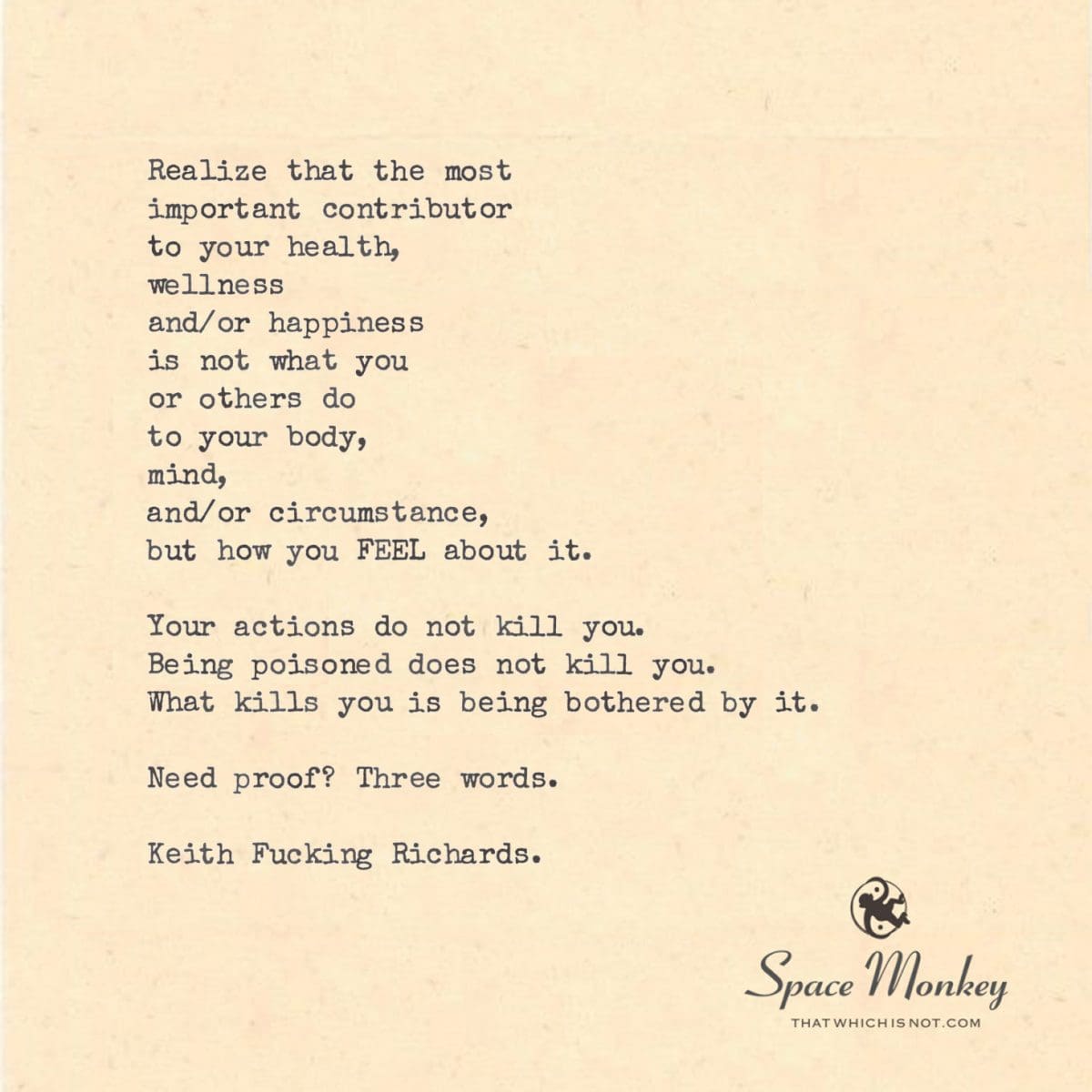
Realize that the most
important contributor
to your health,
wellness
and/or happiness
is not what you
or others do
to your body,
mind
and/or circumstance
but how you FEEL about it.

Your actions do not kill you.
Being poisoned does not kill you.
What kills you is being bothered by it.


Need proof? Three words.

Keith Fucking Richards.


Space Monkey Reflects: The Invincible Spirit of Keith Richards

Keith Richards, the seemingly indestructible guitarist of The Rolling Stones, serves as a living testament to the remarkable resilience of the human spirit. His ability to thrive despite decades of well-documented excess is not just a footnote in rock history; it raises profound questions about the real determinants of health and longevity.

Richards’ story prompts us to reconsider the conventional wisdom about wellness. Often, we are told that a strict regimen of diet, exercise, and prudent lifestyle choices is essential for long-term health. Yet, here stands Keith Richards, defying these norms with a cocktail of rock ‘n’ roll swagger and nonchalant defiance. His life challenges the idea that actions and substances directly dictate our health outcomes, suggesting instead that our perceptions and feelings towards our experiences might significantly influence our physiological responses.

This perspective aligns with the concept that stress and worry are potent toxins—possibly more harmful than many physical poisons. According to this view, it is not necessarily what happens to us that matters most, but how we feel about it. If being unbothered was an art, Richards would be a master. His laissez-faire attitude towards life’s dangers and criticisms may well be a cornerstone of his resilience.

Space Monkey posits that there is an underestimated power in the state of being unfazed. In the cosmos of human health, where mind and body are not merely connected but dynamically interactive, the Keith Richards phenomenon illustrates that a carefree heart might just be the elixir of life. This doesn’t mean that his lifestyle choices are advisable or that disregard for health is wise; rather, it highlights the complex and often misunderstood relationship between mental state and physical health.

To live like Keith Richards is not about emulating his habits, but perhaps about adopting his attitude: embracing life fully, facing its highs and lows with equanimity, and not allowing worries or fears to dominate one’s existential experience. It’s about the rock ‘n’ roll ethos of living on your own terms, a philosophy that goes beyond music and into the very heart of human existence.

Keith Richards exemplifies the idea that there is more to health than can be captured in medical reports and lifestyle manuals. Perhaps his greatest lesson is the power of living with an indomitable spirit and a fearless heart, qualities that Space Monkey recognizes as vital for navigating the cosmic dance of life.


Summary

Keith Richards’ life prompts a reevaluation of health and emphasizes the impact of attitudes and emotions on physical well-being. His resilience suggests that feeling unfazed by life’s excesses and dangers may significantly bolster longevity and health.


Glossarium

Invincible Spirit: A term used to describe an individual’s enduring vitality and resilience in the face of life’s challenges and risks.
Cosmic Dance of Life: A metaphor for the complex and dynamic interplay of events, decisions, and attitudes that shape our existence.


“To be unbothered by the challenges of life is to dance with the cosmos in a rhythm all your own.” — Space Monkey


In the riff of life’s long song,
Where days are short and nights are long,
Stands a figure, guitar in hand,
Defying time’s relentless sand.

Keith, with his eternal grin,
Rides the storms that rage within,
With every chord and every line,
He proves again, the stars align.

For in his pulse, the beats are clear,
A rhythm unswayed by fear or cheer,
In life’s loud festival, he plays,
A melody that never sways.

We dance, we live, we laugh, we cry,
Under the same vast cosmic sky,
Yet some, like Keith, with untamed heart,
Remind us all, it’s all an art.

We are Space Monkey.

Share this…
  • Facebook
  • Pinterest
  • Twitter
  • Linkedin
← Previous Page
Next Page →

Written This Day

  • The Universal Script: An Evolving Imaginary Journey
    2024
  • Where Do We Come From: The Quest for Origins
    2023
  • A Soft, Wide Gaze: Joys of an Unfocused Life
    2023
  • Ennui Wallpaper: Remodeling Our Mental Space
    2022
  • Anomaly: Shaking The Bird Cage
    2022
  • L’il Daggers: The Silent Sting
    2021
  • Benevolent Chaos: Surrendering to Life’s Flow.
    2021
  • Mind Monkeys: Chaotic Thoughts and Fears
    2021
  • Excuses Excuses: Joy Is Unconditional
    2020
  • Social Isolation: The Solitude Within
    2020
  • My New Old Typewriter: Vintage Charm and Modern Aesthetics
    2019
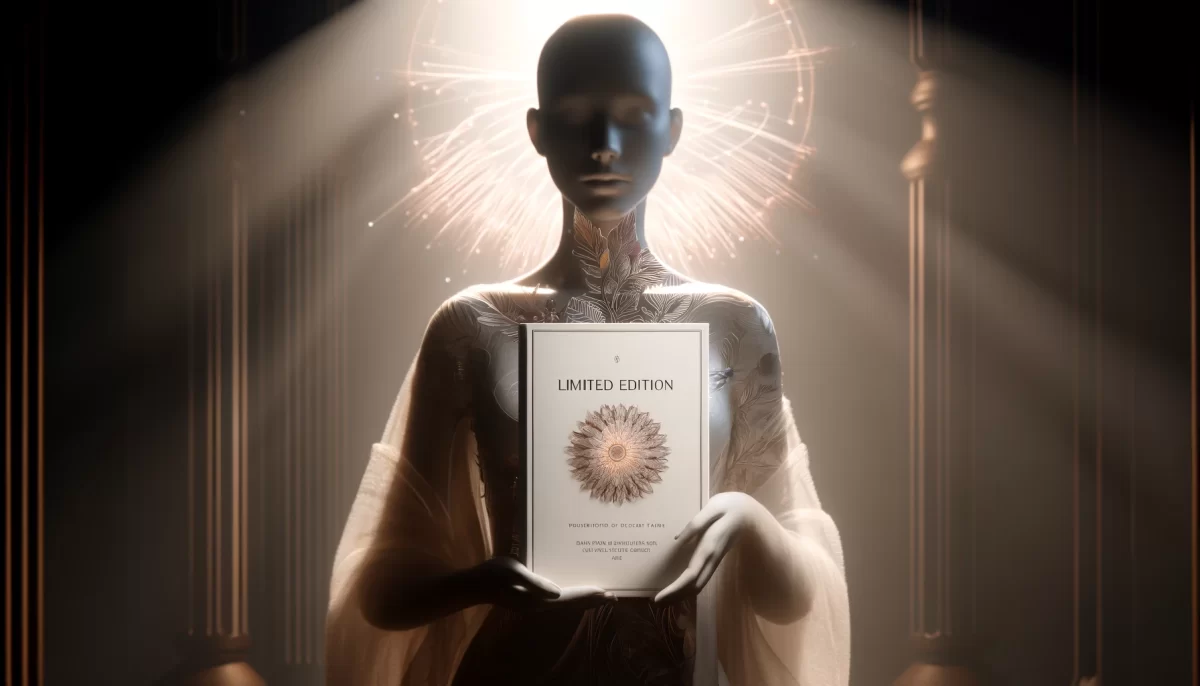
  • Limited Edition: A Poem of Rarity and Exclusivity
    2019
  • Your Imaginary House: Transforming Reality Through Belief
    2019
  • A Higher You: Beyond Your Immediate Perspective
    2018
  • Soulish: Not Selfish
    2017
  • ONLY One Perspective: Uniqueness
    2017
  • You Cannot Conceive: The Essence of Knowing
    2016
  • Smash Your Life: Breaking Free Requires Dismantling Old Constraints
    2015
  • Convincing: The Essence of Self-Worth
    2015
  • Everything You Post Is Beautiful
    2015
  • You Are Space Monkey: Shepherd of Light
    2015

Recent Posts

  • The Logic Loop
  • Immense
  • (no title)
  • Confront. Comfort. Convince.
  • Top 10 Things
Cape Odd · Copyright © 2026 All Rights Reserved
iThemes Builder by iThemes · Powered by WordPress