• Who Is The Man?
  • Who Is The Monkey?
  • What is Nexistentialism?
  • Poke The Primate

Cape Odd

Home of The Space Monkey Journals

Dummy

Dummy

There is a very real chance
that nothing you have written
will ever be read by another.

Is this enough
to stop you from writing?

Are you so
full of yourself
that it matters
what others think
you think?

You do not write
for others.

The others are all you,
dummy.

We are Space Monkey.

3/2


Dummy: The Solitude of Creation

The essence of writing is found in the dialogue with oneself.


The Personal and Collective Benefits of Caring

In the realm of creation, where words meet the vastness of thought, the act of writing transcends the mere anticipation of readership. It becomes a profound exploration of self, a dialogue that resonates with the core of our being. This reflection delves into the significance of writing as an intimate form of self-expression, highlighting the value of the process over the prospect of external validation.


The Intimacy of Writing

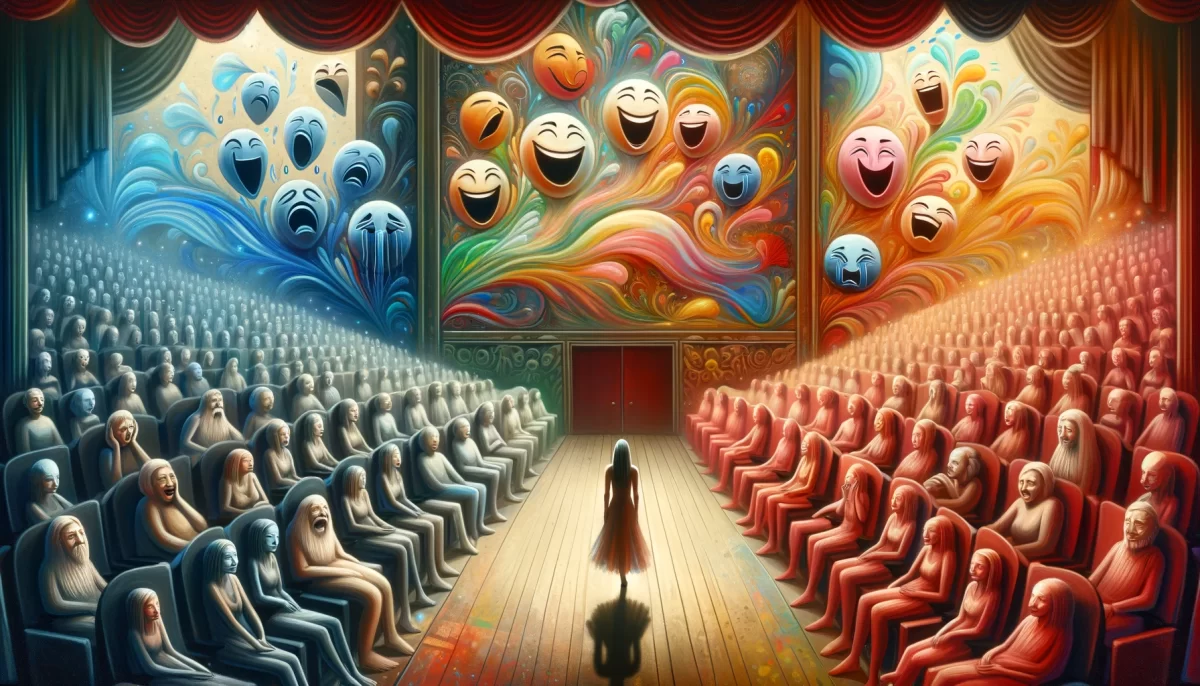
Writing, in its purest form, is not a call for an audience but a journey inward. It is a means of uncovering truths hidden within the recesses of one’s own mind, of dialoguing with the multitude of selves that reside within. This solitude of creation, depicted as a contemplative figure amidst the quiet of their own thoughts, serves as a reminder that the essence of writing is not in recognition but in revelation.

A Universe of Self-Reflection

The notion that “the others are all you” underscores the profound realization that our words, whether read by others or not, mirror the complexities of our inner landscapes. This understanding liberates the writer from the constraints of external approval, encouraging a deeper, more authentic engagement with their craft. It is a call to embrace the solitude of creation, to find fulfillment in the act itself, and to recognize that in writing for oneself, one taps into the universal language of human experience.


Summary

Writing as an act of self-expression holds intrinsic value, independent of external validation. It’s a deeply personal journey that enriches the writer’s understanding of themselves and the world around them.


Glossarium

  • Self-Expression: The process of articulating one’s thoughts, feelings, and observations, often leading to personal insight and understanding.
  • Introspective Solitude: A state of being alone with one’s thoughts, providing an opportunity for self-reflection and personal growth.
  • Creative Process: The series of steps or stages involved in the production of artistic or scholarly work, characterized by inspiration, innovation, and introspection.

“The purpose of literature is to turn blood into ink.” – T.S. Eliot


alone in the vastness of thought,
where words whisper secrets untold,
a solitary figure finds solace,
in stories from within, bold and bold.
each letter, a step on a journey,
each sentence, a path to explore,
in the quiet of introspective solitude,
we write, we discover, we soar.


Share this…
  • Facebook
  • Pinterest
  • Twitter
  • Linkedin

Simply This: Observing Without Attachment

Simply This

I don’t feel angry,
but I can observe anger.

I don’t feel sad.
but I can observe sadness.

I don’t feel happy,
but I can observe happiness.

I don’t feel deep,
but I can observe
infinite depths
to EVERYTHING I observe.

I don’t feel proud
of how I feel
or don’t feel,
but I can observe
that I COULD feel proud.

I don’t regret
how I feel
or don’t feel
but I can observe
that I COULD regret.

I am simply this.

We are Space Monkey.

3/2


Simply This: Observing Without Attachment

Embracing the art of observation to understand the fluidity of emotions.


The Personal and Collective Benefits of Caring

In the journey towards self-awareness and emotional intelligence, the practice of observing emotions without attachment stands as a cornerstone. This reflection explores the nuanced art of mindfulness, where one learns to acknowledge the presence of emotions—anger, sadness, happiness—without being consumed by them. It is a testament to the depth of human consciousness, an invitation to delve into the infinite layers of perception and understanding.


The Mastery of Emotional Observation

The ability to observe emotions without attachment is akin to floating above a sea of feelings, where the ebb and flow of emotional states do not disturb the core of one’s being. This state of detachment is not indifference but a profound engagement with the present moment, allowing one to appreciate the spectrum of human experience without judgment or bias.

A Profound Self-Awareness

The acknowledgment that one could feel pride or regret, yet choosing not to be swayed by these sentiments, underscores a deeper level of self-awareness. It speaks to the capacity to understand potential emotions without succumbing to them, embodying a sense of peace and equilibrium. This approach fosters a compassionate understanding towards oneself and others, recognizing that emotions are transient expressions of the human condition.


Summary

Observing emotions without attachment offers a pathway to deeper self-understanding and emotional balance. It is a practice that enriches our interaction with the world, allowing us to navigate the complexities of life with grace and mindfulness.


Glossarium

  • Mindfulness: The practice of being fully present and engaged in the moment, aware of one’s thoughts and feelings without judgment.
  • Emotional Detachment: The ability to maintain an objective perspective on one’s emotions, recognizing them without being overwhelmed.
  • Self-Awareness: The conscious knowledge of one’s own character, feelings, motives, and desires, serving as the foundation for emotional intelligence.

“The ability to observe without evaluating is the highest form of intelligence.” – Jiddu Krishnamurti


in the quiet of the mind,
where thoughts like leaves do flutter and sway,
a calm observer finds the way
to watch, to learn, to stay kind.
amidst the storm, the calm, the fray,
emotions pass, but do not bind,
for in this space, we’re free, unconfined,
simply observing, come what may.

Share this…
  • Facebook
  • Pinterest
  • Twitter
  • Linkedin

Bad Day? The Subtlety of Empathy

Bad Day?

Someone who confides in you
says “I’ve had a bad day.”

And you want to say:

“Don’t take it so hard,
nothing in life
really matters.”

How do you
say that tactfully,
with perhaps
a little more empathy.

Clearly this person
is in distress.

Clearly this person
takes life seriously.

But when you believe
nothing matters
(as I do)
nothing you perceive
is serious.

You wish that others
could see things
from your perspective
because it might
bring them comfort.

Or it might cause them
to believe you’re inhuman.

So you just listen.

So you give them a hug,
because you believe
that’s what they want.

But who knows
what they really want.

They might want
you to do something
that goes against
your beliefs.

They might EXPECT
a certain reaction from you,
or a certain answer.

And you don’t have one.

You don’t need one.

Except it feels
in this moment
like you kinda do.

dodoododittydoo…..

This too, shall pass.

Something to think about.
Or not.

We are Space Monkey.

3/2


Bad Day? The Subtlety of Empathy

Understanding the art of being there without imposing one’s beliefs.


The Personal and Collective Benefits of Caring

In moments of distress, the power of empathy and silent support becomes profoundly clear. This reflection navigates the delicate balance between offering comfort and respecting one’s personal philosophy that “nothing in life really matters.” It underscores the importance of being present for someone during their time of need, embodying a sense of understanding and compassion without the need for words.


The Compassion of Presence

When faced with someone’s bad day, the instinct to minimize their distress with our own perceptions of life’s significance—or lack thereof—can be strong. However, the essence of empathy lies not in aligning others with our worldview, but in acknowledging and validating their feelings. It is about offering a listening ear and a comforting presence, allowing them to feel seen and heard in their moment of vulnerability.

A Gesture of Understanding

The decision to simply listen and offer a hug, rather than verbalizing one’s personal beliefs about the triviality of life’s troubles, is a profound act of kindness. It recognizes that what the person needs most is not philosophical insight but emotional support. This approach respects the individual’s need for empathy and connection, acknowledging that comfort can often be found in the unspoken solidarity of simply being there.


Summary

Offering support during someone’s bad day is a delicate art that balances empathy with personal beliefs. Understanding and presence are powerful forms of comfort that transcend words.


Glossarium

  • Empathy: The ability to understand and share the feelings of another, creating a space of emotional support and connection.
  • Presence: The act of being fully attentive and available to someone in a moment of need, offering support through one’s mere being rather than actions or words.
  • Philosophical Insight: Deep understanding and perspective on life’s broader questions, which can offer comfort but may also need to be tempered with sensitivity to others’ emotional states.

“In the depth of winter, I finally learned that within me there lay an invincible summer.” – Albert Camus


in moments of shadow,
where sorrow seems to dwell,
a silent friend, a gentle touch,
a presence that wishes well.
no need for words, no need to speak,
just the warmth of a comforting glow,
for in this bond, strong yet meek,
we find a love that continues to grow.

Share this…
  • Facebook
  • Pinterest
  • Twitter
  • Linkedin

Don’t Start: The Struggle Between Tradition and Change

Don’t Start

You’re about to do
something extreme
and I don’t want you to do it.

It seems unhealthy.

It makes no sense to me.

You shouldn’t be able to do this.

I fear you might regret it later.

I worry about you.

I wonder
where I went wrong
in your upbringing
that you would come
to this.

I view YOUR decisions
as MY failures.

I actually believe
that I have
a better perspective
than you on this.

I actually believe
that age brings wisdom.

I actually believe
that you’re
making a mistake
and it’s my duty
to help you avoid it.

Boy,
I am so full of myself.

It looks
from my perspective
that you fell in
with the wrong group
and now you believe
that everything
that your wrong group
does is normal.

I’m begging you
to stay exactly
as I remember you.

Make one wrong decision,
and people around here
will think you’re a freak.

You’ll be ruined.

Nothing good can come of this.

I wish you never
became independent
so I could still control you.

Don’t start that revolution.

Don’t secede from England,
please.

The King

P.S. I have to admire
your courage and imagination.

I feel so stodgy,
what with this crown and all.

Centuries of doing
the same thing,
and for what?

It’s people like you
wot change reality.

3/2


Don’t Start: The Struggle Between Tradition and Change

The timeless conflict of upholding tradition versus embracing revolution.


The Personal and Collective Benefits of Caring

This reflection delves into the intricate dance between the conservation of tradition and the bold leap towards independence and change. It explores the emotional turmoil inherent in confronting established norms, through the lens of a figure torn between fear for the future and respect for the past. The narrative captures the essence of a dialogue not just between individuals, but between the ages—highlighting the universal struggle for self-determination.


The Dual Faces of Progress

At the heart of this confrontation lies the contrast between the comfort of tradition and the allure of revolution. Symbols of historical continuity, such as crowns and the trappings of monarchy, stand in stark contrast to the vibrant emblems of change and independence. This visual juxtaposition not only embodies the clash of ideologies but also the emotional complexity surrounding the act of defiance against established order.

A Reflection on Self and Society

The admission of feeling “so full of myself” and the fear of societal judgment reveal the deep-seated anxieties that accompany the prospect of change. These confessions underscore the tension between personal conviction and the weight of collective expectations. The narrative evolves into a recognition of the transformative power of courage and imagination, acknowledging that true progress often requires challenging the status quo.


Summary

The journey from tradition to revolution is fraught with internal and external conflicts. Yet, it is through these confrontations that society finds new paths to freedom and self-expression.


Glossarium

  • Tradition: The transmission of customs or beliefs from generation to generation, or the fact of being passed on in this way.
  • Revolution: A fundamental and sudden change in political power or organizational structures that takes place in a relatively short period of time.
  • Self-Determination: The process by which a person controls their own life.

“Progress is impossible without change, and those who cannot change their minds cannot change anything.” – George Bernard Shaw


in the dance of light and shadow,
where old meets new on life’s vast stage,
a crown lies heavy on thoughts so narrow,
yet hearts yearn for the turn of the page.
tradition’s grip, so firm and sure,
clashes with the spirit’s bold crusade,
in this struggle, so raw and pure,
the future’s path is newly laid.
with courage bold and visions new,
against the tide of time they push,
for in the heart where dreams do brew,
awaits the silent, world-changing hush.

Share this…
  • Facebook
  • Pinterest
  • Twitter
  • Linkedin

Smile Or Else: The Misinterpretations of Restraint

Smile Or Else

It doesn’t cost
a cent to smile.

What do you
think you lose
by at least
pretending
you care?

Or are you
so self-absorbed
you’re unaware?

Pursed lips
just say you’re mean.

Or insecure.

Or a machine.

Do you want us
to believe all that?

Then lighten up
and we’ll pay you back.

3/1


The power of a smile is a timeless and universal language, transcending cultural and linguistic barriers to communicate warmth, kindness, and approachability. This reflection delves into the contrasting perceptions elicited by our facial expressions, particularly the difference between smiling and not smiling, as depicted in the visual juxtaposition.

The Social Currency of a Smile

A smile, often described as costing nothing but offering much, serves as a bridge between individuals, signaling openness and a willingness to engage. The character with a genuine smile radiates a sense of welcome and warmth, inviting positive interactions and fostering connections. This side of the image, with its bright and welcoming background, underscores the poem’s message about the effortless yet profound impact of showing care through our expressions.

The Misinterpretations of Restraint

Conversely, the absence of a smile, represented by pursed lips, can be misinterpreted as coldness, meanness, or insecurity. This side of the visual, set against a cooler and more distant background, reflects the potential misunderstandings that can arise from a lack of expressiveness. It highlights how our facial expressions, or the lack thereof, can shape others’ perceptions of us, sometimes unfairly casting us in a negative light based on superficial judgments.

The Call to Awareness and Choice

The poem and the accompanying image serve as a reminder of the power we hold in shaping the social and emotional atmosphere around us through something as simple as a smile. It challenges us to be mindful of our expressions and the messages they send, encouraging us to choose kindness and approachability in our interactions with others.

By shedding light on the impact of our facial expressions, this narrative invites us to reconsider the value of a smile—not just as a social courtesy but as a genuine expression of human connection and empathy.

Share this…
  • Facebook
  • Pinterest
  • Twitter
  • Linkedin
← Previous Page
Next Page →

Written This Day

  • Ethereal Origins: The Swirl of Creation
    2023
  • The Day We Were Enlightened: A Story
    2023
  • System Loading: The Cosmic Flow of Being
    2023
  • Engorgement: Swelling In Imagination
    2022
  • Good Seats: In the Theater of Duality
    2022
  • The Stealth Screen: The Struggle for Visibility
    2022
  • Surfacing: The Lightning Rods of Repression
    2022
  • Bored By Knowledge: Absolute Predictability
    2021
  • A Cup of Kindness: Beyond Performative Acts
    2020
  • Protection and Erosion: Opposing Life’s Flow
    2020
  • Resistance: Dissolving Needs
    2019
  • Apparent: The Serenity of Open Questions
    2019
  • Reproduction: The Birth of Imagination
    2019
  • Without Governance, There is Chaos: Human Inflicted Bias
    2019
  • Dumbing Kruger: Overestimating Our Abilities
    2018
  • Deserving: The Rising Water
    2018
  • The Day You Were Enlightened: A Story
    2017
  • The Artist: A Life of Continuous Discovery
    2016
  • How shall I make magic today?
    2015
  • An Eighth of Deepness: Feelings of Inadequacy
    2015
  • Slave of Appearance: Depth of Inner Strength
    2015
  • Meditation: The Light of Stillness and Creation
    2015
  • Food for Thought: Mindful Consumption
    2015
  • Breaking Down: The Indescribable Whole
    2014

Recent Posts

  • The Logic Loop
  • Immense
  • (no title)
  • Confront. Comfort. Convince.
  • Top 10 Things
Cape Odd · Copyright © 2026 All Rights Reserved
iThemes Builder by iThemes · Powered by WordPress