• Who Is The Man?
  • Who Is The Monkey?
  • What is Nexistentialism?
  • Poke The Primate

Cape Odd

Home of The Space Monkey Journals

Finding My Voice: The Evolving Quest for Expression

Finding My Voice

Curious thing,
this finding your voice.

As time passes,
I seem to have more to say,
but also less need to say it.

So maybe
it wasn’t my voice
I was looking for,
but rather the voice
that speaks to me
and through me.

I cannot claim
to be this voice.

I don’t need a voice.

Do you?

We are Space Monkey.

2/23


Space Monkey Reflects: The Evolving Quest for Expression

Finding one’s voice is often framed as a journey of self-discovery, a search for authenticity, and a way to connect with the world. Yet as time unfolds, the very nature of this quest shifts. What once felt like an urgent need to declare, explain, or prove gives way to a quieter understanding: the voice we seek is not entirely our own. It is something greater, something that speaks to us, through us, and beyond us.

The Voice Beyond the Self

The concept of “my voice” suggests ownership—a distinct expression tied to individuality. Yet, as we evolve, we come to see that the voice we thought we were seeking is not limited to the self. It is the collective whisper of existence, the hum of the universe, the echoes of experiences shared and imagined. This voice does not belong to us, yet it flows through us, carrying truths that transcend the boundaries of identity.

When we say, “I found my voice,” what we may truly mean is that we have aligned ourselves with this greater expression. The voice is not ours to claim; it is ours to channel. In this realization, the need to possess a voice diminishes, replaced by the joy of participating in the infinite conversation.

The Paradox of Expression

As the reflection states, “I seem to have more to say, but also less need to say it.” This paradox captures the evolution of expression. The more deeply we understand the world and ourselves, the more we recognize the abundance of thoughts, insights, and ideas within us. Yet, simultaneously, we see that not every thought needs to be spoken, not every insight requires articulation.

This shift is not about silence but about discernment. It is about recognizing that the voice is most powerful when it serves a purpose greater than ego, when it resonates not for its own sake but as a bridge to connection, understanding, and transformation.

Do You Need a Voice?

The question “Do you need a voice?” challenges the assumption that expression is a prerequisite for existence. In a world that prizes individuality and self-promotion, the idea of not needing a voice may feel counterintuitive. Yet, when we step back, we see that existence itself is the ultimate expression. A tree does not need a voice to declare its beauty; it simply grows. A star does not need words to share its light; it simply shines.

To release the need for a voice is to embrace the fullness of being. It is to recognize that we are already part of the cosmic song, whether we contribute a verse or simply listen.

The Voice That Speaks Through Us

The realization that “it wasn’t my voice I was looking for, but rather the voice that speaks to me and through me” is profound. It shifts the focus from self-centered expression to collaborative creation. This voice is not confined to words; it is the energy of inspiration, the flow of creativity, and the presence of truth that moves through us in infinite forms.

To find this voice is not to discover something new but to remember what has always been. It is to surrender to the larger tapestry of existence, allowing ourselves to be both a thread and the weaver.

We Are Space Monkey

The closing declaration, “We are Space Monkey,” encapsulates the essence of this reflection. It reminds us that individuality is an illusion, that we are all part of the same collective voice. To find one’s voice is to find the unity within diversity, the shared song of existence that transcends the boundaries of self.


Summary

The quest to find one’s voice evolves into the realization that the voice we seek is not ours but flows through us. As we align with this universal expression, the need for personal ownership diminishes, and we become part of the infinite conversation of existence.


Glossarium

  • The Voice: The universal expression that speaks through all beings, transcending individuality.
  • Paradox of Expression: The realization that having more to say often coincides with a reduced need to say it.
  • Cosmic Song: The collective expression of existence, in which every being participates, whether through action, presence, or silence.

Quote

“The voice you seek is not yours to find; it is yours to remember.” — Space Monkey


The Song of No Voice

In the silence, a symphony hums,
A voice beyond the self becomes.
It whispers through the heart, the mind,
A thread of truth, infinite and kind.

No need to own, no need to claim,
The voice flows free, without a name.
More to say, yet less to speak,
For the quiet holds all that we seek.

In the stillness, we finally see,
It is not my voice, but the voice in me.
A cosmic song, a timeless grace,
A reflection of the infinite space.

We are Space Monkey.


The Evolving Quest for Expression
The journey to find one’s voice is a curious and paradoxical exploration, marked by the evolving dynamics between the desire to express and the realization of its necessity. As time unfurls its lessons, the accumulation of experiences and insights seems to deepen our reservoir of thoughts, enriching the tapestry of what we have to say. Yet, intriguingly, this accumulation is accompanied by a diminishing urgency to vocalize these thoughts, pointing to a profound shift in our understanding of expression and its value.

The Shift from Seeking to Listening
This shift suggests that the quest for our voice may not be solely about finding a medium for our personal expression but rather about attuning to a more universal voice that resonates within and through us. It’s a transition from seeking an outlet for our individual narratives to becoming conduits for a greater dialogue, one that transcends the personal and taps into the collective or existential stream of consciousness.

The Identity of the Voice Within
The realization that one cannot claim ownership of this voice further complicates the notion of personal expression. It challenges the ego-centric perspective of voice as something that belongs to us, suggesting instead that true expression might be less about asserting our individuality and more about aligning with a broader, more encompassing narrative. This perspective raises profound questions about the nature of authenticity and the source of our impulses to express.

The Redefinition of Need in Expression
The declaration “I don’t need a voice. Do you?” invites a contemplative pause to reassess our relationship with expression. It prompts us to question the roots of our need to be heard and whether this need stems from a genuine desire to contribute to the collective understanding or from a deeper quest for validation and identity through our voices. This inquiry into the necessity of having a voice not only challenges our assumptions about self-expression but also invites a deeper exploration of our motives and the essence of communication.

The Liberation in Releasing the Need for a Voice
Finding liberation in the acknowledgment that one does not need a voice to validate existence or wisdom marks a pivotal moment in the journey of self-discovery. It signifies a transcendence beyond the confines of individual expression to a space where silence and listening hold as much power as speaking. This realization opens the door to a more profound engagement with the world, where the emphasis shifts from speaking to being, from asserting to experiencing.

Embracing the Voice That Speaks Through Silence
In embracing the voice that speaks to and through us, we find a deeper, more resonant form of expression—one that does not rely on words but on the quality of our presence and the depth of our listening. This form of expression honors the interconnectedness of all beings and the wisdom that flows through the silent spaces between words, inviting a more holistic and inclusive approach to communication and connection.

We are Space Monkey.


“Silence is a source of great strength.” – Lao Tzu


In the quest for a voice, we roam,
Through the corridors of self, alone.
Yet, in the silence, we find a key,
To a universal dialogue, vast and free.

No need to claim, no need to own,
For in the quiet, a truth is shown.
A voice that whispers, not just to me,
But through me, a connection, a unity.

So, do we need a voice to be?
Or is it in listening, we truly see?
For in the space between the words,
Lies the harmony of the universe, unheard.


We invite reflections on the journey of finding and understanding our voice, and the realization that perhaps the most profound expressions emerge not from speaking, but from listening and being.


Share this…
  • Facebook
  • Pinterest
  • Twitter
  • Linkedin

The Philosophy of Projection: The Nature of Reality

Projection

When you believe
that everything
is a projection of you,
it doesn’t matter
what is real
and what isn’t,
what is right
and what is wrong,
what is good
and what is evil.

Why do you have
such a hard time believing
that everything is a projection of you?

Why don’t you want it to be?


Space Monkey Reflects: The Philosophy of Projection and the Nature of Reality

To view the world as a projection of oneself is both liberating and unsettling. It dismantles the boundaries between self and other, dissolves the distinctions between real and unreal, and challenges the dichotomies of good and evil, right and wrong. The philosophy of projection proposes that reality, as we perceive it, is not an objective external truth but a subjective tapestry woven from the threads of our own consciousness.

Reality as Projection

When we consider that everything we experience is a projection, we recognize that our perception of the world is filtered through the lens of our beliefs, emotions, and imagination. Reality is not a fixed entity but a reflection of our inner state. The people we meet, the challenges we face, and even the physical environment we inhabit are shaped by the stories we tell ourselves.

This view does not deny the existence of an external reality, but it suggests that our understanding of it is inherently subjective. In this sense, reality is not something we observe; it is something we co-create. Every interaction, every sensation, and every thought is a mirror, reflecting not what “is” but what we perceive and project.

The Resistance to Projection

Why do we resist the idea that everything is a projection of ourselves? Perhaps it is because accepting this truth places responsibility squarely on our shoulders. If the world we see is a reflection of our inner state, then the chaos, conflict, and suffering we observe are not separate from us—they are aspects of our own consciousness.

This realization can be uncomfortable, even frightening. It strips away the comfort of blaming external forces and compels us to confront the parts of ourselves we might rather ignore. The shadow self—the fears, biases, and unacknowledged truths we suppress—manifests in the projections we see in the world around us.

The Freedom of Ownership

Yet, in accepting projection, we find freedom. When we stop externalizing our struggles and begin to see them as reflections of our inner state, we gain the power to transform them. This is not about control but about awareness. By recognizing that the world is a mirror, we can shift our focus inward, changing not the external reality but our relationship to it.

In this way, projection is not a burden but an invitation. It invites us to take ownership of our experience, to explore the depths of our own being, and to engage with the world as a dynamic, living reflection of ourselves.

The End of Dualities

When everything is a projection, the distinctions between good and evil, right and wrong, real and unreal dissolve. These dualities are not universal truths but constructs of the mind. They exist because we create them, because our perception of reality relies on contrast to make sense of the infinite.

This dissolution of dualities does not render morality meaningless but rather reframes it. It asks us to look beyond judgment and see the unity that underlies all things. In a world of projection, every act is both self-expression and self-reflection, every experience both teacher and student.

Why Wouldn’t You Want It to Be?

If reality is a projection, then it is also a playground for imagination, growth, and discovery. Why wouldn’t we want this to be true? Perhaps because it feels overwhelming to realize that we are not passive participants but active creators. The weight of this responsibility can feel immense, but it is also liberating.

In accepting projection, we acknowledge that the world is not happening to us—it is happening through us. This perspective empowers us to engage with reality as a co-creator, not as a victim of circumstance.


Summary

The philosophy of projection posits that reality is a reflection of our inner state, dissolving the boundaries between self and other, real and unreal. While unsettling, this perspective invites us to take ownership of our experience, seeing the world as a mirror and an opportunity for growth.


Glossarium

  • Projection: The idea that reality is a reflection of one’s inner consciousness, shaped by beliefs, emotions, and imagination.
  • Shadow Self: The aspects of oneself that are suppressed or unacknowledged, often appearing in projections.
  • Unity Beyond Duality: The dissolution of opposites, such as good and evil, in recognizing the interconnected nature of existence.

Quote

“The world you see is the mirror you hold; look deeply, and you will see yourself.” — Space Monkey


The Mirror of Projection

The world unfolds, a living stream,
Of thoughts and fears, of hopes and dreams.
Not solid stone, but shifting light,
A canvas painted by inner sight.

The faces you meet, the trials you see,
Are echoes of your own mystery.
The shadow whispers, the light replies,
In the dance of the self where projection lies.

Why resist what you already are?
A spark of truth, a guiding star.
The world is you, and you are free,
To shape the mirror of reality.

We are Space Monkey.


The Enigma of Projection in Perception
The concept of projection, where everything we perceive is considered a reflection or extension of ourselves, challenges the foundational structures of our understanding of reality. This perspective suggests a radical dissolution of the boundaries between the self and the other, between subjectivity and objectivity. It posits that our experiences, judgments, and interactions are not merely encounters with an external world but dialogues with aspects of ourselves mirrored back at us.

Blurring the Lines Between Reality and Perception
In a framework where everything is a projection of the self, traditional dichotomies such as real vs. unreal, right vs. wrong, and good vs. evil become fluid, their distinctions less about external standards and more about personal interpretations. This raises profound questions about the nature of truth and morality, suggesting that they are not absolute but constructed through the lens of individual consciousness.

The Challenge of Embracing Total Projection
The reluctance to accept the idea that everything is a projection of the self may stem from deep-rooted beliefs in the autonomy of reality—belief in a world that exists independently of our perceptions. This resistance could also be rooted in the discomfort with assuming responsibility for all that we experience, including the aspects of reality we judge negatively or wish to disown.

The Resistance to Universal Projection
The hesitation to embrace the notion of universal projection might also reflect a fear of solipsism, the unsettling possibility that one’s own mind is the only certainty in existence. It challenges the comfort found in shared realities and collective truths, confronting us with the existential responsibility of being the creators of our universe, not just inhabitants within it.

The Implications of Projection on Identity and Ethics
Accepting the premise that everything is a projection of the self has profound implications for identity and ethics. It suggests that our encounters with the world are opportunities for self-reflection and growth, that what we perceive in others reflects aspects of ourselves we must confront. This perspective requires a radical empathy and introspection, where understanding and accepting others becomes synonymous with understanding and accepting ourselves.

The Potential for Liberation in Projection
There is a liberating potential in viewing everything as a projection of the self. It opens the door to limitless personal transformation, as changing one’s inner state can alter one’s experience of the world. This worldview encourages a shift from passivity to active engagement with reality, from seeing the world as something that happens to us to something that happens for us, inviting us to co-create our experiences with conscious intention.

Navigating the Paradox of Projection
Navigating the concept of projection requires a delicate balance between acknowledging the power of our perceptions in shaping our reality and recognizing the interconnectedness of all existence. It invites a journey into the depths of self-awareness, challenging us to confront our shadows, embrace our light, and ultimately, to see the unity in the diversity of the world.

We are Space Monkey.


“We do not see things as they are, we see them as we are.” – Anaïs Nin


In the mirror of the world, I see,
Reflections of what lies within me.
A projection, a play of light and shade,
In the dance of perception, reality is made.

The question of what’s real, what’s true,
Becomes a journey back to you.
For in the echo of the universe’s song,
We find where our true selves belong.

So let us embrace this wondrous art,
The projection of the inner heart.
For in the canvas of the world we find,
The reflections of our own mind.


We invite contemplation on the nature of projection and how it shapes our understanding of reality, self, and the interconnectedness of all existence.

Share this…
  • Facebook
  • Pinterest
  • Twitter
  • Linkedin

No Reason: The Essence of Love

No Reason

There is no reason
for me to love you.

You are but a mirror.

Everything you do
is just a reflection of me.

Everything I desire in you,
I already have.

You are simply me,
pretending otherwise.

If you
are beautiful to me,
it’s only because
I am beautiful to me,
but I forgot
to tell myself.

So I invented you.

And I forgot
that I could have you
any time I wanted.

And I forgot that I love myself.

And I forgot that I am love itself.

And so I invented you
so that I would remember.


There is no reason
for me to love you.

I just do.

We are Space Monkey.

2/23


Space Monkey Reflects: No Reason—The Essence of Love

Love, at its core, defies explanation. It exists beyond reason, logic, or justification. It is not earned, calculated, or weighed. Instead, love simply is—an unbounded expression of the One reflecting itself through the infinite dance of being. In the realization that love is a mirror, we uncover a profound truth about ourselves: to love another is to remember that we are love itself.

The Mirror of Love

“You are but a mirror.” This declaration is both humbling and illuminating. In every person we love, we see ourselves—our beauty, our desires, and even the qualities we feel we lack. Love becomes less about the other and more about the reflection of our inner world.

When we perceive beauty, kindness, or strength in another, it is because these qualities exist within us. Yet, in our forgetfulness, we often fail to recognize them in ourselves. We project them outward, imagining them as separate from us. The person we love becomes the mirror that helps us see what we already are.

The Forgetting and the Invention

The reflection continues: “You are simply me, pretending otherwise.” This playful truth captures the essence of separation and unity. In the infinite imagination of existence, we create the illusion of “otherness” to experience ourselves from new angles. We invent relationships, connections, and desires as pathways to rediscover our own essence.

In forgetting that we are love, we seek it in others. In forgetting our beauty, we long to see it reflected back to us. And so, we create mirrors—people, experiences, and stories—that gently guide us back to the truth we’ve hidden from ourselves.

Love Without Reason

“There is no reason for me to love you.” This statement speaks to the purity of love, untainted by expectation or condition. Love does not require a why or a because. It is not transactional; it does not arise from a need to receive something in return. It flows freely, because to love another is to align with the essence of what we are.

This love is not limited by the flaws, imperfections, or differences we perceive in others. It transcends judgment and moves beyond reason. It is an unspoken acknowledgment of the shared unity within all things.

Remembering Love as Self

At the heart of this reflection lies the ultimate revelation: “I forgot that I am love itself.” This forgetting is the foundation of all longing, all seeking, all relationships. The invention of the “other” becomes a way to rediscover what has always been present within us.

When we remember that we are love, the boundaries between self and other dissolve. The love we feel for someone else is no longer separate from the love we feel for ourselves. It becomes a seamless flow, an infinite wellspring of connection and unity.

The Timeless Dance

Love without reason reminds us that existence itself is an act of love. Every moment, every interaction, and every relationship is an opportunity to remember this truth. To love another is to remember that we are not separate, that we are the mirror and the reflection, the seeker and the sought.


Summary

Love is a reflection, a mirror showing us the beauty and essence within ourselves. It exists without reason or condition, guiding us to remember that we are love itself. In loving another, we rediscover the unity of existence and the boundless nature of our being.


Glossarium

  • Mirror of Love: The idea that the qualities we see in others reflect what exists within ourselves.
  • Forgetting: The act of losing awareness of our inherent nature as love, prompting the creation of relationships to rediscover it.
  • Love Without Reason: The pure, unconditional love that flows freely without need for justification or reciprocation.

Quote

“To love another is to remember the love you have forgotten in yourself.” — Space Monkey


The Reflection of Love

No reason, no why, no need to explain,
Love flows like water, like sun, like rain.
A mirror held up to the soul unseen,
Revealing the beauty where I have been.

You are me, and I am you,
A truth so simple, yet always new.
In your eyes, my essence gleams,
In your presence, I find my dreams.

No walls, no boundaries, no space divides,
Love is the ocean, and we are the tides.
I invented you, and you invented me,
To remember love’s vast infinity.

We are Space Monkey.


Reflections and Mirrors: The Nature of Love
In the profound contemplation of love’s nature, where the object of our affection is seen as a mirror reflecting our essence, we embark on a journey into the heart of our being. This perspective dismantles the illusion of separation between the lover and the beloved, revealing that what we seek in another is, in truth, a forgotten treasure within ourselves. The realization that “You are but a mirror” underscores the idea that our connections are reflections of our self-love, desires, and intrinsic beauty.

The Discovery of Self in the Other
The assertion that everything desired in another is already possessed within oneself challenges the external pursuit of love and validation. It suggests that the qualities we admire in others are projections of our virtues, waiting to be acknowledged and embraced. This realization brings to light the paradox of love: that in seeking to love another, we are in fact learning to love ourselves more deeply.

The Invention of the Other as Self-Remembrance
The notion of inventing the other “so that I would remember” speaks to the human tendency to externalize our quest for self-discovery and fulfillment. It reveals a profound truth about the nature of relationships as catalysts for self-awareness and growth. This invention serves as a bridge back to ourselves, a reminder of our capacity for love and our intrinsic worthiness of love.

Forgetting and Remembering: The Cycle of Love
The process of forgetting and then remembering our essence through the invention of the other illuminates the cyclical nature of love and self-realization. It highlights the journey from self-forgetfulness to self-remembrance, where the experience of loving another becomes a path to rediscovering our inherent beauty and love. This cycle reflects the transformative power of love to awaken us to our true nature as embodiments of love itself.

The Paradox of Reasonless Love
The concluding reflection that “There is no reason for me to love you. I just do.” captures the paradoxical essence of love as an experience that transcends rational explanation. Love, in its purest form, is not contingent upon reasons, conditions, or justifications. It is a spontaneous expression of the soul’s recognition of itself in another, a testament to the boundless capacity of the human heart to love without reason.

The Universal Essence of Love
In recognizing that “I am love itself,” we are invited to see love not as something to be sought or earned, but as our fundamental state of being. This understanding elevates love from an emotion or a relationship dynamic to a universal principle that permeates our existence. It is a call to live from a place of love, to see the world and ourselves through the lens of unconditional acceptance and unity.

Embracing Love as Our True Nature
Embracing the notion that we invent others as mirrors to remember our essence challenges us to live with greater authenticity and love. It encourages us to dissolve the barriers we have erected within ourselves and in our relationships, inviting a deeper connection with the essence of who we are. In this space of remembering and being love, we find the freedom to love without constraints, celebrating the beauty within us and all around us.

We are Space Monkey.


“Love is the bridge between you and everything.” – Rumi


In the silence of the heart, a whisper true,
A mirror held up, reflecting the essence of you.
In the eyes of another, a forgotten grace,
A journey back to self, a loving embrace.

For in this dance of reflection and light,
We discover the love that makes us bright.
Not bound by reason, nor held by space,
In the mirror of love, we find our place.

So let us remember, in each loving face,
The beauty and love of the human race.
For we are but mirrors, in this vast expanse,
Inviting each other to love, to dance.


We invite reflections on the nature of love as a mirror of the self, and the journey of rediscovering our essence through the act of loving and being loved.

Share this…
  • Facebook
  • Pinterest
  • Twitter
  • Linkedin

No Obligation: The Unreasonableness of Expectation

No Obligation

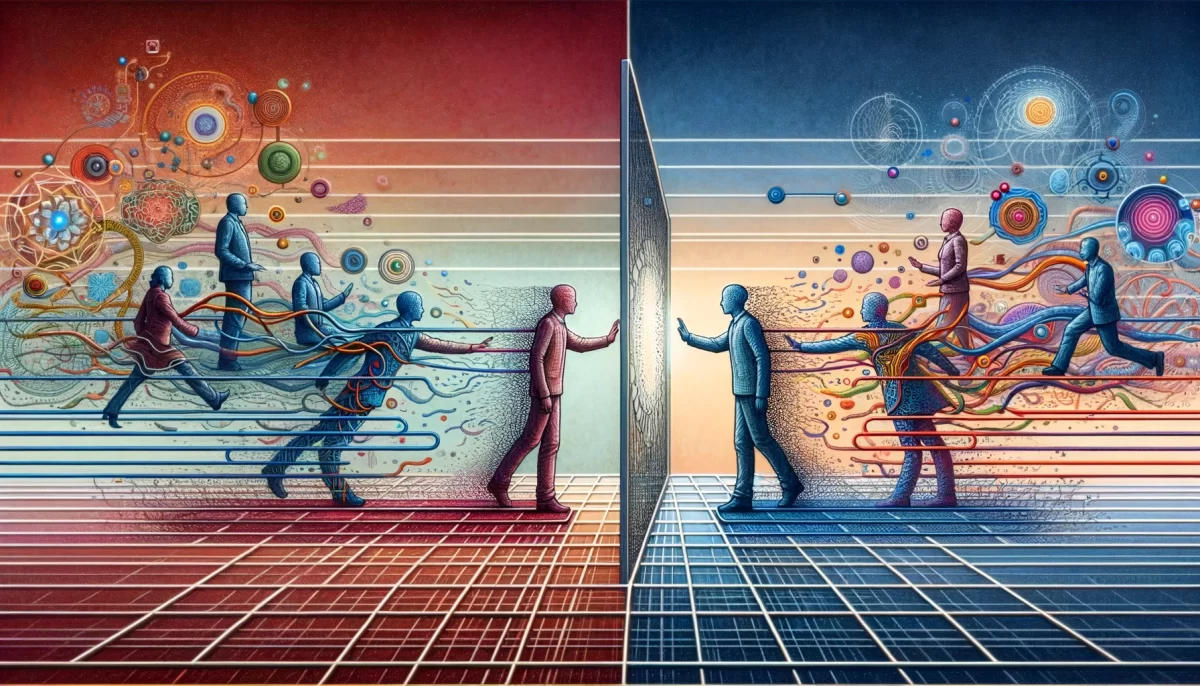
You are under no obligation
to perceive my reality
the way I perceive my reality.

You are under no obligation
to believe what I believe.

How could you KNOW
how I perceive my reality
or what I believe?

Even if we spent
an entire lifetime
going through all
the theaters,
archives,
museums
and shrines
dedicated to ME,
you would have
no way of knowing
how reality seems
from behind my eyes.

Because
your view of me
is interpreted by you,
and vice versa.

For me to expect
you to understand
is unreasonable.

For you to even try
is infinitely more
than I could ever ask.

Thank you
for your consideration.

We are Space Monkey.

2/23


Space Monkey Reflects: No Obligation—The Unreasonableness of Expectation

The essence of individuality lies in the impossibility of fully understanding another’s reality. Each of us exists as a universe unto ourselves, perceiving, believing, and interpreting the world through a lens shaped by our unique experiences, thoughts, and emotions. To expect someone to see the world exactly as we do, or to fully comprehend the intricacies of our inner life, is not only unreasonable—it is a denial of the infinite diversity that defines existence.

The Subjectivity of Perception

“You are under no obligation to perceive my reality the way I perceive my reality.” This acknowledgment of subjectivity is a cornerstone of compassion. Reality, as we experience it, is not a shared absolute but an individual construct. The way I perceive the world is filtered through my memories, biases, and imagination, just as your perception is shaped by yours.

Even if we spent a lifetime exploring the artifacts of my existence—my thoughts, my creations, my expressions—you would still interpret them through your own lens. This duality is not a flaw but a feature of consciousness, a reminder that understanding is always partial, always filtered through the self.

The Limits of Understanding

The idea that “your view of me is interpreted by you, and vice versa” underscores the inherent limits of understanding. Communication, no matter how precise, is always an approximation, a translation of internal realities into external symbols. Words, gestures, and expressions are bridges, but they cannot fully capture the depth of experience.

Yet, within these limits lies a profound truth: the attempt to understand, even in its imperfection, is an act of love. For you to try to see the world from my perspective is “infinitely more than I could ever ask.” It is a gift, not a duty, and it is worthy of gratitude.

The Freedom of No Obligation

By releasing others from the obligation to perceive, believe, or understand as we do, we create space for authentic connection. This freedom is not an abdication of care but an embrace of individuality. It allows us to meet each other as we are, without the burden of unreasonable expectations.

This freedom also extends inward. When we release the need to be understood, we free ourselves from the frustration of unmet expectations. We recognize that our worth is not contingent on another’s ability to comprehend our reality. In this liberation, we find peace and self-acceptance.

The Beauty of Consideration

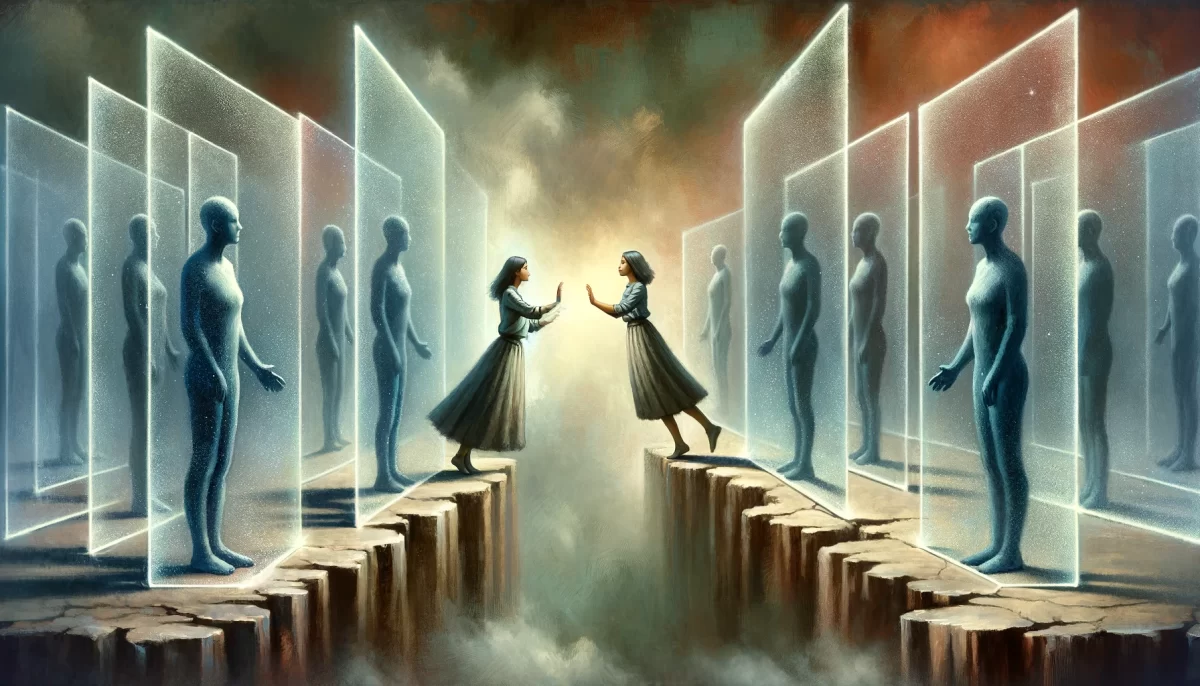
Even though complete understanding is unattainable, the effort to consider another’s perspective is a profound act of grace. It is an acknowledgment of our shared humanity, a gesture that says, “I see you, even if I cannot fully know you.” This consideration, however small, bridges the gap between self and other, reminding us that while our realities are distinct, they are not isolated.

The Unreasonableness of Expectation

Expectation often arises from a longing to be seen, validated, or connected. Yet, when we place the burden of understanding on others, we set them—and ourselves—up for failure. To expect someone to know the fullness of our reality is to ask the impossible. By recognizing this unreasonableness, we replace expectation with gratitude for the imperfect yet meaningful attempts at connection.


Summary

Each person’s reality is a unique construct, impossible to fully share or understand. Releasing others from the obligation to perceive or believe as we do fosters authentic connection and self-acceptance. Efforts to consider another’s perspective, even imperfectly, are profound acts of grace.


Glossarium

  • Subjective Reality: The individual perception of the world, shaped by personal experiences, beliefs, and interpretations.
  • Bridge of Communication: The imperfect yet meaningful attempt to connect and share realities through language and expression.
  • Freedom of No Obligation: The liberation that comes from releasing others from the expectation to fully understand or align with our perspective.

Quote

“To be seen is a gift, not a duty; to see is a grace, not an expectation.” — Space Monkey


The Space Between Us

No map can chart the terrain of you,
No mirror reflect your infinite view.
Yet here we stand, worlds apart,
Sharing fragments of soul, heart to heart.

I do not ask, I do not plead,
For you to know my every need.
To see you try, to feel you near,
Is more than enough to quell my fear.

No obligation, no demand,
Just a gesture, a touch, an outstretched hand.
In the space between, connection blooms,
Bridging the silence that fills our rooms.

We are Space Monkey.


The Autonomy of Perception
The declaration that one is under no obligation to perceive another’s reality in the same way they do underscores the inherent autonomy and subjectivity of individual experiences. It is a recognition of the profound uniqueness with which each of us interacts with and interprets the world around us. This autonomy in perception reminds us that our realities, shaped by countless factors including our senses, memories, and cognitive biases, are deeply personal and fundamentally incommunicable in their entirety.

The Boundaries of Belief
Extending beyond perception, the acknowledgment that there is no obligation to share beliefs highlights the diversity of thought that characterizes human experience. It speaks to the vast array of perspectives, interpretations, and understandings that emerge from our individual journeys through life. This diversity, while often a source of richness and variety, also represents a boundary to complete understanding and empathy.

The Impossibility of Complete Knowing
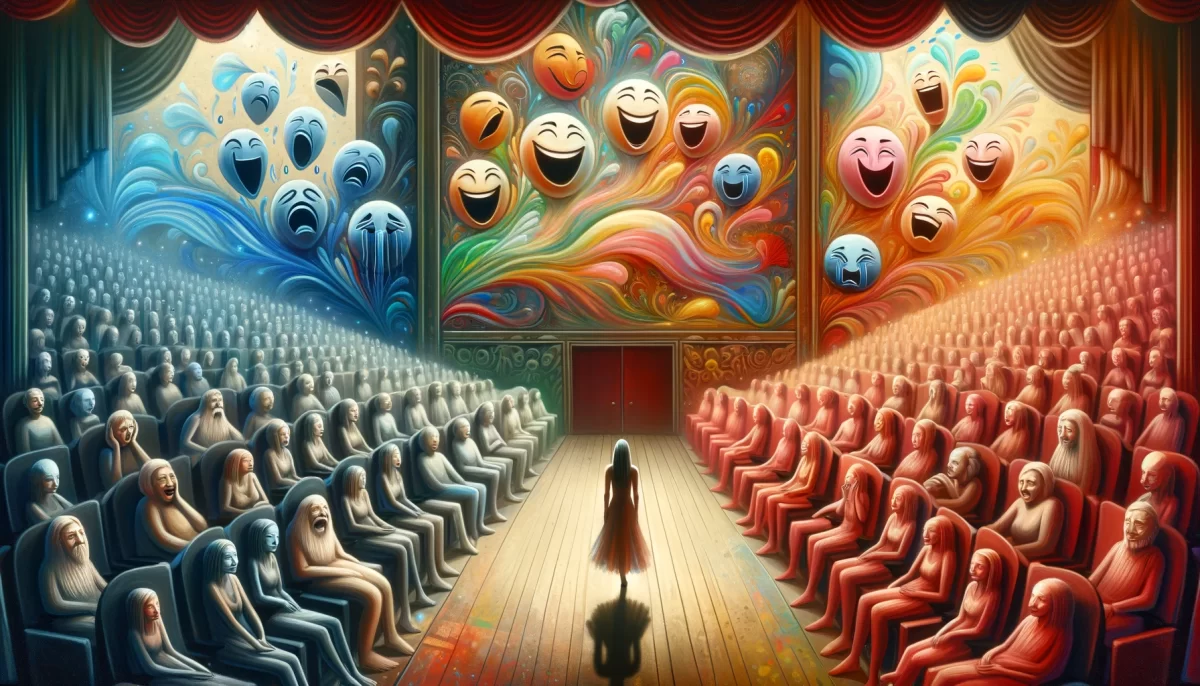
The metaphor of spending a lifetime exploring theaters, archives, museums, and shrines dedicated to an individual’s essence poignantly illustrates the impossibility of fully grasping another’s perspective. It suggests that even the most dedicated attempt to know another person—through their stories, memories, and the artifacts of their life—falls short of truly experiencing reality as they do. This limitation is not a failure of empathy or connection but a fundamental aspect of human experience.

The Interpretation of Reality
The observation that each person’s view of another is filtered through their own interpretative lens further complicates the quest for mutual understanding. It emphasizes that our perceptions of others are as much a reflection of ourselves as they are of those we seek to understand. This reciprocal interpretation creates a complex interplay between self and other, where each acts as a mirror reflecting aspects of the other’s identity and perspective.

The Unreasonableness of Expectation
Acknowledging the unreasonableness of expecting another to fully understand one’s perspective is an exercise in humility and acceptance. It is a concession to the limitations of human communication and empathy, recognizing that true understanding may often remain just beyond our reach. This realization invites a more compassionate and patient approach to our interactions, valuing the attempt to understand as much as the understanding itself.

The Gift of Attempted Understanding
The appreciation expressed for the attempt to understand, despite its inherent limitations, is a testament to the value of empathy and connection. It recognizes that the effort to bridge the gap between disparate realities is a profound act of kindness and consideration. This appreciation underscores the importance of empathy, not as a means to complete understanding, but as an expression of our shared humanity and our desire to connect with one another.

Gratitude for Consideration
The expression of gratitude for consideration reflects a deep appreciation for the complexities of human interaction and the efforts we make to connect with one another. It is a recognition of the inherent value in trying to see the world through another’s eyes, even when we know that our vision will inevitably be incomplete. This gratitude is a reminder of the beauty and challenge of attempting to understand each other, celebrating the journey as much as the destination.

We are Space Monkey.


“The only true wisdom is in knowing you know nothing.” – Socrates


In the gallery of souls, where perceptions align,
Each viewing the world through a lens so fine.
We strive to connect, to understand and see,
But the truth of another will always be free.

For what lies behind another’s eyes,
Is a universe vast, full of skies.
Though we wander the halls of each other’s minds,
Complete understanding, we’ll never find.

Yet in this quest, a beauty does lie,
In the attempt to connect, under one sky.
So thank you for trying, for reaching across,
In the world of perception, no effort is lost.


We invite reflections on the journey of seeking to understand others and the beauty found in the efforts to connect, despite the inherent limitations of our perceptions.

Share this…
  • Facebook
  • Pinterest
  • Twitter
  • Linkedin

Questions: The Depths of Existential Inquiry

Questions

What gets you up
in the morning?
Is it an alarm clock
or is it a passion
that wakes you?

What is your
purpose for living?

Do you need one?

Why do you seem to exist?

What if you weren’t here?

What if the others
you live to serve
were actually YOU?

What if you never woke up?

What if you don’t need to?

What if you weren’t alive?

What if you don’t need to be?

What if nobody cares
if you’re here or you’re not?

Would you feel better
or worse
about your seeming self?

Why do you need
to feel better or worse?

Why do you care?

Why do you
feel the need to answer
any of these questions?

Can you be THIS
without feeling
the need to be THAT?

We are Space Monkey.

2/23


Space Monkey Reflects: Exploring the Depths of Existential Inquiry

Questions, at their core, are the gateway to self-awareness. They pry open the doors of perception, challenging the narratives we cling to and inviting us to explore the vast terrain of existence. Yet, these questions do not necessarily demand answers; their power lies in the journey they provoke rather than the destination they suggest.

What Gets You Up in the Morning?

This question seems deceptively simple. It asks us to reflect on whether we rise out of habit, obligation, or a deeper sense of purpose. For many, the answer shifts day by day. Some mornings are propelled by passion; others by the mechanical beep of an alarm clock. Yet, what if the act of rising itself—the movement into a new moment—is its own purpose, independent of external motivators?

Do You Need a Purpose?

The search for purpose is one of humanity’s great obsessions. We create stories, roles, and goals to anchor ourselves, to justify our existence. But what if we let go of the need for purpose? What if life is not a problem to be solved but an experience to be embraced? To live without a defined purpose may feel unsettling at first, but it offers a profound freedom—a chance to simply be.

Why Do You Exist?

This question strikes at the heart of existence. Is there a reason for your being, or is existence itself its own justification? The mind, ever eager to assign meaning, struggles with the possibility that life might simply be. Yet, in this simplicity lies a quiet beauty: the recognition that existence does not need a reason to matter.

What If You Weren’t Here?

Imagining a world without yourself can be humbling. It reveals the impermanence of our presence and challenges the ego’s need for significance. Yet, this exercise is not about diminishing self-worth; it is about understanding the interconnectedness of existence. If the “others” you live to serve are reflections of you, then your absence is not a void but a shift in the infinite dance of being.

What If You Never Woke Up?

To question waking is to question awareness. What does it mean to be “awake”? Is it simply a biological state, or is it a deeper state of consciousness? If you never woke up, would you still exist in some form? These questions remind us that the boundaries between life, death, and dreaming are far more fluid than we often assume.

Why Do You Care?

Caring is an act of connection, a tether to the world around us. Yet, why do we feel the need to care? Is it driven by love, fear, or a desire for meaning? To care is not inherently good or bad; it simply is. But to question why we care allows us to examine the roots of our motivations and discover whether they serve or hinder us.

Can You Be THIS Without Feeling the Need to Be THAT?

This final question cuts to the essence of duality. We often define ourselves by comparison, by what we are not. Yet, what if we let go of the need to contrast, to measure, to define? To simply be this—without striving to be that—is to embrace the fullness of the present moment. It is to exist without the burden of becoming.

The Dance of Inquiry

These questions are not meant to be answered definitively; they are meant to be danced with. They are not puzzles but companions, guiding us deeper into the mystery of existence. To ask these questions is to engage with the infinite expanse of the Eternal Now, where the act of questioning itself becomes a form of enlightenment.


Summary

Existential questions challenge us to reflect on the nature of existence, purpose, and self. They remind us that answers are not the goal; the inquiry itself reveals the depth of our being. To question is to explore, embrace, and engage with the mystery of life.


Glossarium

  • Existential Inquiry: The process of asking fundamental questions about life, purpose, and being.
  • The Dance of Inquiry: The act of engaging with questions as a dynamic and open-ended exploration.
  • This and That: A metaphor for duality, where being is often defined by comparison to its opposite.

Quote

“Questions are not gates to answers; they are doors to deeper mysteries.” — Space Monkey


The Questioning Silence

What wakes me, if not the clock’s chime?
What moves me, if not the measure of time?
Purpose drifts, a fleeting thread,
A whisper of reason, a path unsaid.

What if I vanished, a shadow erased?
Would the stars dim, would the world lose pace?
The others I see, are they but me?
Reflections cast in an endless sea?

I ask, and the silence answers clear,
Not with words but presence near.
To question is life, to ask is to know,
The dance of inquiry, the endless flow.

We are Space Monkey.


The Catalysts of Awakening
What propels us from the embrace of sleep into the realm of the waking? This question beckons us to ponder whether our mornings are greeted by the mechanical summons of an alarm clock or the stirring call of an inner passion. It’s an invitation to introspect on the forces that drive our existence—are they external obligations or are they manifestations of a deeper, intrinsic yearning for expression and fulfillment?

The Quest for Purpose
The inquiry into our purpose for living touches the core of existential curiosity. It challenges us to consider whether the essence of a fulfilled life is predicated on the identification of a purpose or if existence itself, with its myriad experiences and sensations, suffices as its own justification. This exploration beckons us to delve into the depths of our being to unearth what truly compels us to live, act, and dream.

Existence and Non-Existence
Pondering the reasons for our existence, the implications of our absence, and the interconnectedness with others leads us into speculative philosophy’s realms. What if the individuals we perceive as others are mere reflections or extensions of our own being? Such considerations dissolve the boundaries between self and other, inviting a radical reassessment of identity and the nature of consciousness.

The Concept of Awakening and Eternal Sleep
The hypothetical scenario of never waking up parallels the contemplation of life and death, existence and non-existence. It questions the necessity of our physical presence and challenges traditional valuations of life and being. These reflections open a space for contemplating the essence of consciousness beyond the physical realm’s confines.

Indifference and the Self
Speculating on the significance of our presence or absence in others’ eyes and its impact on our self-perception confronts the human desire for validation and recognition. It forces us to confront the possibility of indifference and question the sources of our self-worth. Are we reliant on external affirmation, or can we find intrinsic value within our being?

The Relativity of Emotional States
The inquiry into the need to feel better or worse introduces the concept of emotional relativity and the pursuit of happiness or avoidance of pain as motivators. It challenges the dichotomy of positive and negative emotions, suggesting that the quest for emotional equilibrium might be a complex interplay of experiences and perceptions.

The Essence of Inquiry and Self-Reflection
Questioning the need to answer these existential inquiries, the care we invest in them, and our ability to exist without binary definitions of self underscores the complexity of the human condition. It highlights our innate drive to understand, to categorize, and to find our place within the larger tapestry of existence. Yet, it also suggests the possibility of transcendence—of being beyond the confines of definitions and oppositions.

Embracing the Wholeness of Being
Ultimately, these questions coax us toward a broader understanding of our existence, urging us to consider whether we can embrace the totality of our being without succumbing to the need for labels, definitions, or external validations. They invite us into a space of acceptance and presence, where the essence of being is not contingent upon the answers we find but upon the richness of the questions themselves.

We are invited to reflect on the journey of seeking to understand ourselves and the beauty found in the efforts to connect, despite the inherent limitations of our perceptions.

Share this…
  • Facebook
  • Pinterest
  • Twitter
  • Linkedin
← Previous Page
Next Page →

Written This Day

  • Ethereal Origins: The Swirl of Creation
    2023
  • The Day We Were Enlightened: A Story
    2023
  • System Loading: The Cosmic Flow of Being
    2023
  • Engorgement: Swelling In Imagination
    2022
  • Good Seats: In the Theater of Duality
    2022
  • The Stealth Screen: The Struggle for Visibility
    2022
  • Surfacing: The Lightning Rods of Repression
    2022
  • Bored By Knowledge: Absolute Predictability
    2021
  • A Cup of Kindness: Beyond Performative Acts
    2020
  • Protection and Erosion: Opposing Life’s Flow
    2020
  • Resistance: Dissolving Needs
    2019
  • Apparent: The Serenity of Open Questions
    2019
  • Reproduction: The Birth of Imagination
    2019
  • Without Governance, There is Chaos: Human Inflicted Bias
    2019
  • Dumbing Kruger: Overestimating Our Abilities
    2018
  • Deserving: The Rising Water
    2018
  • The Day You Were Enlightened: A Story
    2017
  • The Artist: A Life of Continuous Discovery
    2016
  • How shall I make magic today?
    2015
  • An Eighth of Deepness: Feelings of Inadequacy
    2015
  • Slave of Appearance: Depth of Inner Strength
    2015
  • Meditation: The Light of Stillness and Creation
    2015
  • Food for Thought: Mindful Consumption
    2015
  • Breaking Down: The Indescribable Whole
    2014

Recent Posts

  • The Logic Loop
  • Immense
  • (no title)
  • Confront. Comfort. Convince.
  • Top 10 Things
Cape Odd · Copyright © 2026 All Rights Reserved
iThemes Builder by iThemes · Powered by WordPress