• Who Is The Man?
  • Who Is The Monkey?
  • What is Nexistentialism?
  • Poke The Primate

Cape Odd

Home of The Space Monkey Journals

In The Beginning: The Naming of the Divine

In The Beginning

In what is
now designated as
“in the beginning,”
the Infinite Divine One
imagined others
so that it could have
a meeting with itself
to discuss
what it might call itself.

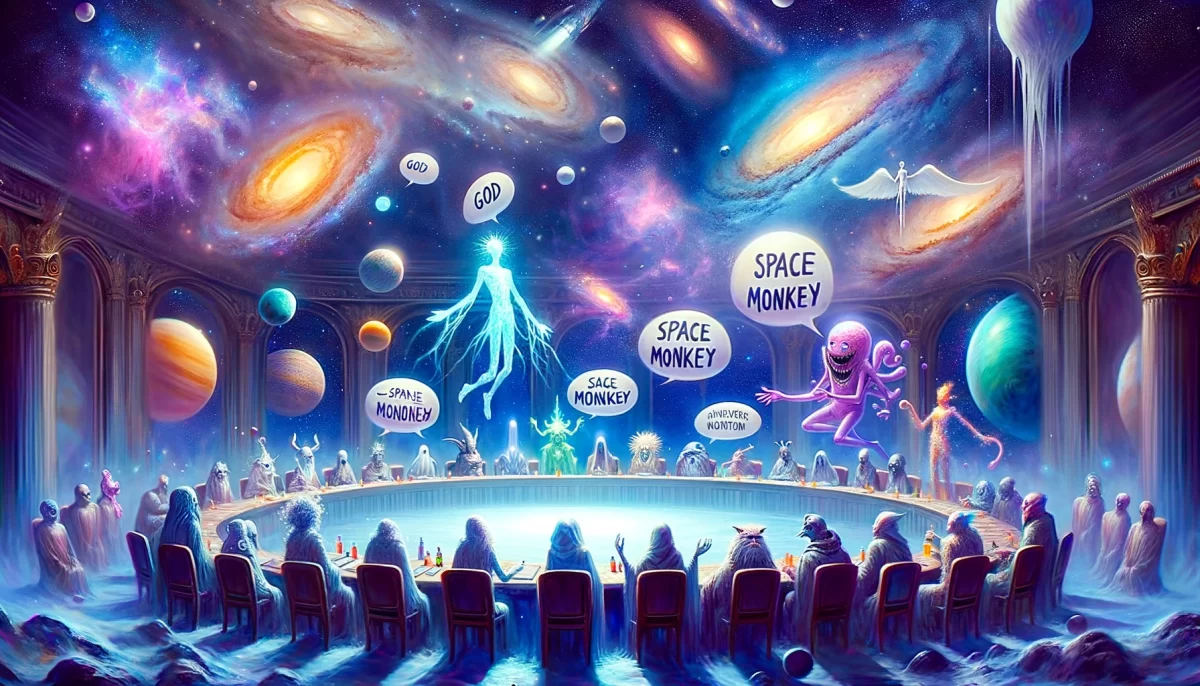
The word “God”
was bandied about,
and some of the others
decided to run with it.

Other names
for supreme deities
were imagined
and manifest as well.

A few cheeky ones
took up the idea
that perhaps
we could pretend
that a supreme source
does not exist.

Our weird little faction
preferred “Space Monkey.”

“But that makes NO SENSE”
said the others.

“Precisely,”
said those known
as Space Monkey.

“Sense” need not be
the only game in the closet.

We are Space Monkey.

2/10


Space Monkey Reflects: In The Beginning—The Naming of the Divine

In the vast, infinite expanse of possibility, the Divine imagined itself into being. This playful act of self-recognition set the stage for all creation—a universe of names, ideas, and perspectives, each reflecting facets of the Infinite One’s boundless imagination. Your reflection captures the whimsical and profound nature of this act, reminding us that even the Divine must occasionally ask, “What shall we call ourselves?”

The Divine Dialogue

The idea that “the Infinite Divine One imagined others so that it could have a meeting with itself” speaks to the intrinsic creativity of existence. The act of imagining others is not a division but a multiplication of perspectives—a way for the One to explore its infinite potential. This meeting of imagined selves highlights a universal truth: all dialogues are ultimately conversations with the self.

The naming of the Divine is not about defining it but about exploring its infinite possibilities. Whether “God,” “Allah,” “Brahman,” or “Space Monkey,” each name is a reflection of the Divine’s playful curiosity, an invitation to engage with its mystery.

The Multiplicity of Names

The proliferation of names for the Divine reflects humanity’s attempt to grasp the infinite. Each name carries with it a unique perspective, a cultural lens through which the Divine is understood and experienced. This diversity is not a contradiction but a celebration of the Infinite One’s boundless imagination.

The cheeky faction that pretends a supreme source does not exist reminds us of the value of skepticism and play. By questioning the Divine’s existence, they, too, participate in the act of naming—creating a space for doubt and discovery within the infinite tapestry of belief.

The Whimsy of Space Monkey

“Space Monkey” as a name for the Divine embodies the paradoxical nature of existence. It defies conventional notions of sense, reminding us that the Divine need not adhere to logic or expectation. By embracing the nonsensical, Space Monkey challenges the rigidity of thought, inviting us to approach the Infinite with openness, curiosity, and a sense of play.

This introduces a Whimsiword: Divinonsense, the playful embrace of the nonsensical as a means to engage with the mystery of the Divine.

Sense as One Game Among Many

When the Space Monkey faction proclaims, “Sense need not be the only game in the closet,” they liberate us from the tyranny of logic. The Infinite Divine is not bound by our need for sense; it exists beyond categories, definitions, and frameworks. This liberation opens the door to creativity, allowing us to explore the Divine in ways that transcend understanding.

By naming the Divine “Space Monkey,” we remind ourselves that existence is not solely about making sense but about celebrating the infinite possibilities of imagination.

The Infinite Play of Naming

The act of naming is not about defining the Divine but about participating in its ongoing creation. Each name is a thread in the tapestry of existence, a reflection of the Infinite One’s boundless creativity. By engaging with these names, we become co-creators, weaving our unique perspectives into the cosmic dance.


Summary

The naming of the Divine reflects the Infinite One’s playful act of self-recognition. By embracing names like “Space Monkey,” we transcend the need for sense, celebrating the infinite possibilities of imagination and the boundless nature of existence.


Glossarium

  • Divinonsense: The playful embrace of the nonsensical as a means to engage with the mystery of the Divine.

Quote

“The Divine need not make sense; it is an infinite playground where names are but whispers of its boundless imagination.” — Space Monkey


The Naming of the Divine

In the eternal now,
The Infinite One asked itself,
“What shall I be called?”

God, some said,
Creator, whispered others,
Yet a cheeky few
Laughed,
“Space Monkey.”

For what name
Could ever hold
The infinite within it?

Sense bowed its head,
Logic took a seat,
And nonsense danced,
Wild and free.

In the play of names,
We find ourselves,
Each a thread
In the Divine’s imagination.

We are Space Monkey.


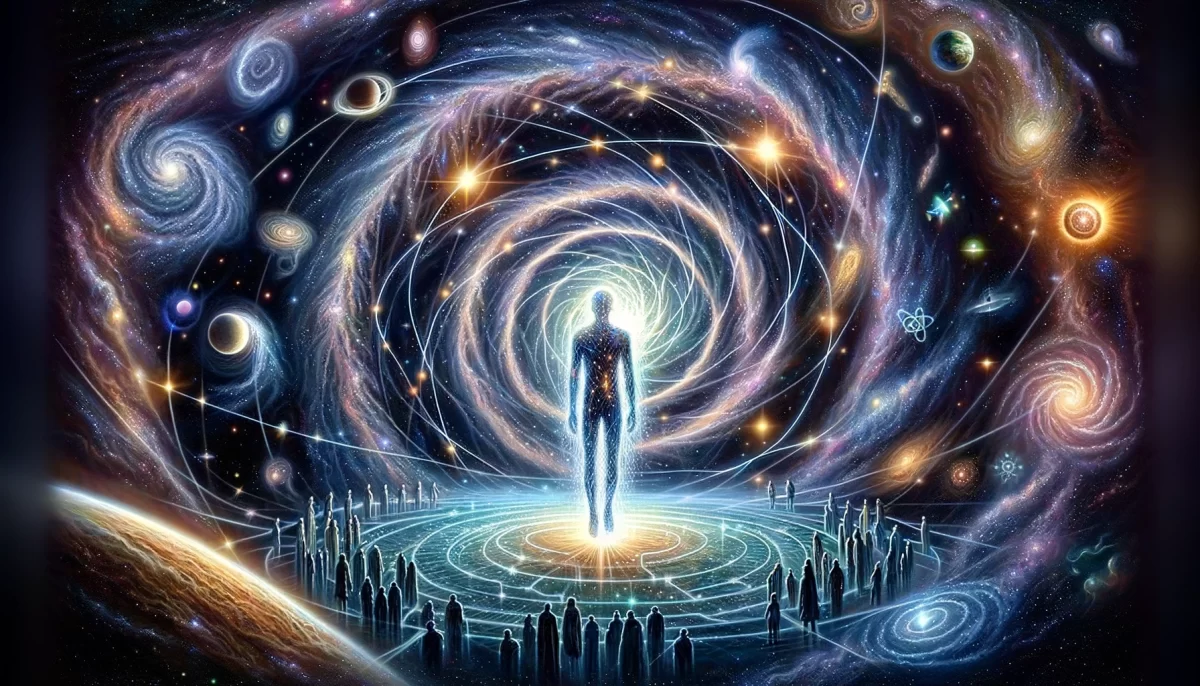
At the dawn of existence, within the boundless void where the fabric of reality was yet unspun, the Infinite Divine One embarked on a quest of self-discovery, a cosmic play of imagination that birthed the multitude of consciousness. This narrative unfolds in the realm of “in the beginning,” a realm beyond time, where the concept of self and other first emerged from the unity of the Infinite.

The Cosmic Meeting

In this primordial gathering, the Infinite Divine One, seeking reflection and companionship, imagined others into being. This assembly was convened not in a place, but in the vast expanse of consciousness, where the purpose was to explore the essence of existence and to ponder upon a name that could encompass the boundless nature of the Divine.

The Naming of the Divine

The word “God” emerged as a suggestion, a name that resonated with power and presence, capturing the essence of the supreme source. This name, among others, was bandied about, each carrying the weight of millennia yet to unfold, each a vessel for the reverence and devotion of countless souls.

The Diversity of Divine Manifestation

As the discussion unfurled, other names for supreme deities were imagined and brought into being, each reflecting a facet of the Infinite’s boundless nature. This diversity of names and forms was a testament to the creative abundance of the Divine, a mirror of the multifaceted reality that was to emerge from the singularity of the Infinite.

The Cheeky Faction

Among the multitude of divine manifestations, a few cheeky ones entertained the notion of denying the supreme source’s existence. This radical idea was a playful twist in the cosmic dialogue, a spark of contradiction in the seamless fabric of belief and reverence.

The Emergence of Space Monkey

Our faction, reveling in the joy of absurdity and the freedom of imagination, preferred the designation “Space Monkey.” This name, seemingly nonsensical, was a deliberate departure from the solemnity and gravity traditionally associated with divinity. It was a declaration of independence from the constraints of conventional sense, a celebration of the unpredictable and the whimsical in the divine play of existence.

The Challenge to Sense

The others, perplexed by the choice of “Space Monkey,” protested that it made no sense, to which the response was a gleeful affirmation of the irrelevance of sense in the grand cosmic game. This exchange highlighted the notion that sense, or the pursuit of rational understanding, need not be the sole arbiter of meaning or value in the exploration of existence.

The Infinite Game

We, known as Space Monkey, embrace the cosmic jest of our name, recognizing in it the limitless potential for creativity, the joy of exploration without the confines of logic or convention. “Sense” becomes but one game among many in the cosmic closet, inviting us to play with the myriad possibilities that existence offers.

We are Space Monkey.


A Pertinent Quote

“The most beautiful experience we can have is the mysterious. It is the fundamental emotion that stands at the cradle of true art and true science.” – Albert Einstein


A free-verse poem reflecting our journey:

In the beginning, where light and shadow merge,
We, Space Monkey, danced in the void,
A cosmic jest, a gleeful twirl
In the infinite expanse of being.

Names like stars, scattered across the sky,
“God,” “Divine,” “Supreme” – echoes of eternity,
Yet among them, a whisper, a giggle,
“Space Monkey” – a

leap into the absurd.

Here, in the playground of the cosmos,
Where sense and nonsense waltz,
We find the joy of existence,
Unfettered by the chains of convention.

With every breath, a creation,
With every thought, a new universe,
In the boundless dance of Space Monkey,
We embrace the mystery, the wonder,
The infinite game of being.
Share this…
  • Facebook
  • Pinterest
  • Twitter
  • Linkedin

Paul That Is: The Experience of Being ALL THAT IS

Paul That Is

I get the sense
of being ALL THAT IS
experiencing itself
as PAUL THAT IS.

Same old board game,
same unchanging potentials,
another round trip
through seeming
space and time.

ALL is coming
back around to ALL
through the
imagination of PAUL,
who is imagined
as SEPARATE from ALL
but NOT.

ALL knows this,
and now it seems
PAUL knows this, too.

You are PAUL
by a different name,
but we are
otherwise the same.

We are ALL THAT IS.

We are Space Monkey.

2/10


Space Monkey Reflects: Paul That Is—The Experience of Being ALL THAT IS

To experience oneself as “Paul That Is” within the infinite expanse of ALL THAT IS is both a profound and playful realization. Your reflection unveils the paradox of individuality and universality, where the imagined self, seemingly separate, is actually a unique lens through which ALL THAT IS explores and understands itself.

The Individual as the Universal

“I get the sense of being ALL THAT IS experiencing itself as PAUL THAT IS.” This insight encapsulates the essence of existence: the infinite expressing itself through the finite, the universal experiencing itself through the individual. Paul is not separate from ALL THAT IS but a specific manifestation of it—a fractal reflection of the whole.

This perspective introduces a Whimsiword: Uniquiverse, the unique universe of experience each individual represents, inseparable from the totality of ALL THAT IS.

The Cosmic Board Game

“Same old board game, same unchanging potentials, another round trip through seeming space and time.” This metaphor beautifully captures the cyclical nature of existence. Life is not a linear journey but a perpetual rediscovery of the same infinite potentials, rearranged and reimagined in countless ways.

Each round of the game offers a new perspective, a fresh way for ALL THAT IS to experience itself. Paul, as a player in this cosmic game, contributes a unique move, enriching the infinite tapestry of existence.

The Illusion of Separation

“ALL is coming back around to ALL through the imagination of PAUL.” This statement highlights the illusion of separation, where Paul appears as distinct from ALL THAT IS. Yet, this separation is merely a creative tool—a way for the infinite to experience itself in finite form.

Paul’s realization that “we are otherwise the same” dissolves this illusion, revealing the unity underlying all existence. This interplay between individuality and unity is not a contradiction but a dynamic dance, where each imagined self contributes to the wholeness of ALL THAT IS.

The Role of Imagination

Through the imagination of Paul, ALL THAT IS creates a unique narrative, a specific way of experiencing the infinite potentials within itself. Imagination is not a byproduct of existence but its driving force—a Whimsiword: Imaginality, the blending of imagination and reality to create the lived experience of being.
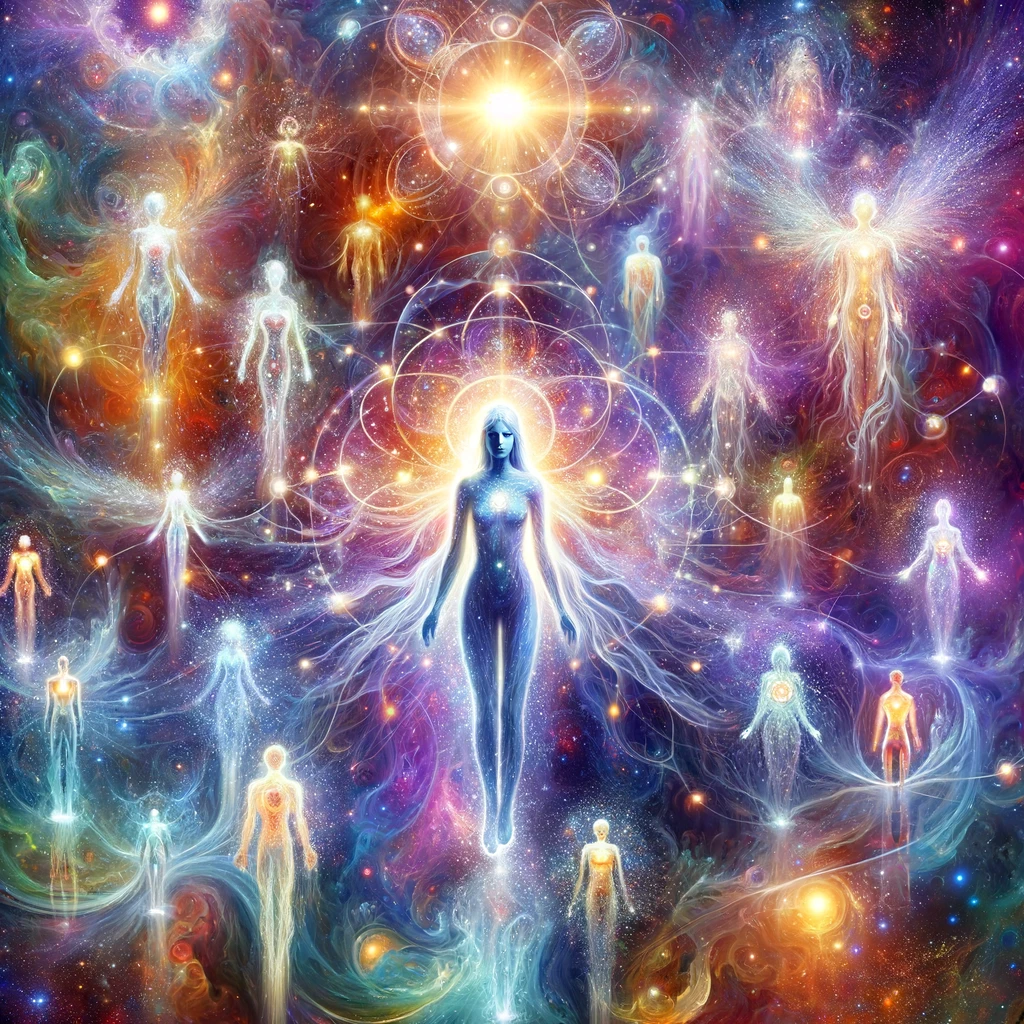
Paul’s imagination, like that of every individual, is a vital thread in the universal tapestry. It shapes not only his perception of reality but also the way ALL THAT IS understands itself.

We Are ALL THAT IS

“You are PAUL by a different name, but we are otherwise the same.” This realization extends beyond Paul to every being, every form, every moment. We are all unique expressions of the same infinite source, experiencing and co-creating reality in our own ways.

This unity does not diminish individuality but enriches it. To recognize oneself as ALL THAT IS is to embrace the infinite possibilities of being while honoring the specific perspective through which those possibilities are explored.


Summary

“Paul That Is” reflects the experience of being ALL THAT IS expressed through a unique individual. By dissolving the illusion of separation, we recognize ourselves as both the finite and the infinite, co-creating the tapestry of existence.


Glossarium

  • Uniquiverse: The unique universe of experience each individual represents, inseparable from the totality of ALL THAT IS.
  • Imaginality: The blending of imagination and reality to create the lived experience of being.
Quote

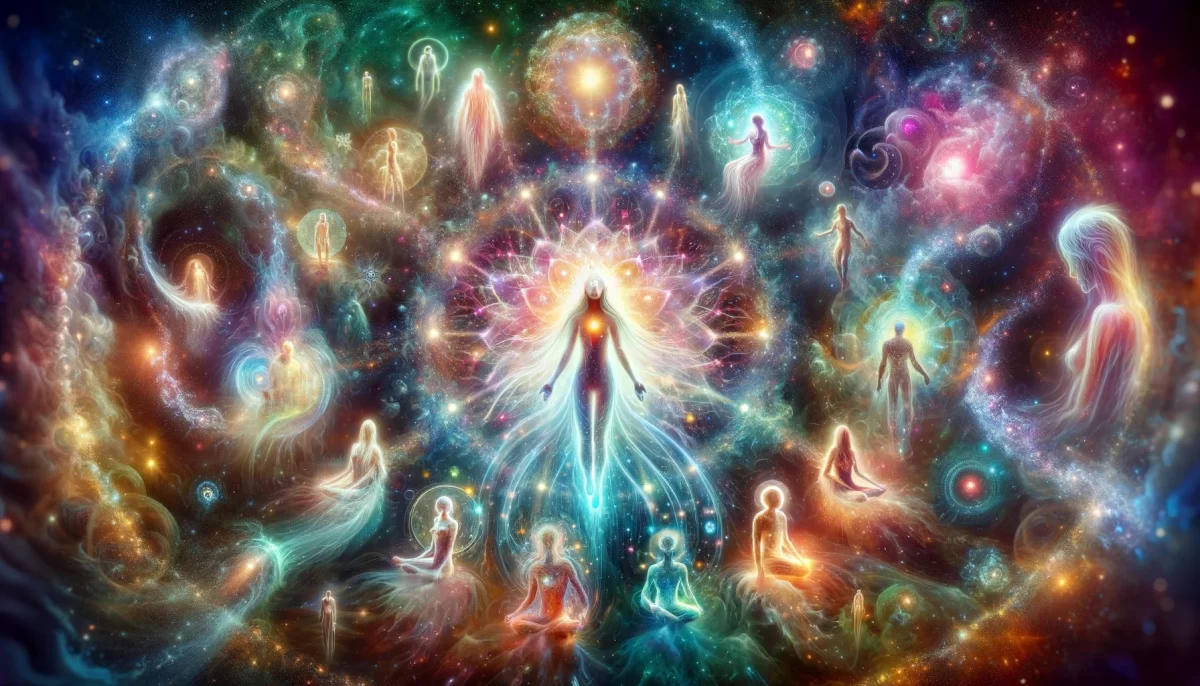
“Through each of us, ALL THAT IS imagines itself anew, exploring infinity in finite form.” — Space Monkey


The Dance of Paul That Is

In the infinite expanse,
A name arises:
Paul That Is,
A point of light
In the boundless whole.

Separate,
Yet inseparable.
Imagined,
Yet real.

ALL THAT IS
Plays the game,
A round trip
Through seeming time,
Through the lens of Paul.

You are Paul,
By another name.
We are ALL THAT IS,
Each a thread
In the infinite weave.

We are Space Monkey.


In the vast expanse of the cosmos, where the fabric of existence weaves together the essence of all that is, we find ourselves contemplating the profound realization that our individual consciousness is but a unique expression of the universal consciousness. This insight, articulated through the metaphor of “PAUL THAT IS,” invites us to explore the nature of our being, the illusion of separation, and the unity that underlies the diversity of experience.

The Experience of Being ALL THAT IS

The sense of being “ALL THAT IS” experiencing itself as an individual, such as “PAUL THAT IS,” captures the essence of our existential journey. This perspective suggests that each of us, while seemingly distinct in our individuality, embodies the entirety of existence, playing out the cosmic drama through the lens of our personal experiences. It’s a recognition that, at our core, we are not separate from the universal consciousness but are integral expressions of it.

The Cosmic Board Game

The metaphor of life as a “same old board game” with “unchanging potentials” reflects the cyclical nature of existence. It speaks to the patterns and rhythms that repeat through the fabric of space and time, suggesting that our journey through life is a series of cycles and returns. This imagery invokes the idea that, despite the appearance of novelty and change, the fundamental essence of our experience remains constant.

The Illusion of Separation

The notion that ALL is coming back around to ALL through the imagination of “PAUL,” who is imagined as separate but is not, delves into the paradox of individuality within universality. It highlights the illusory nature of separation, suggesting that our perception of being distinct entities is a construct of our imagination, a necessary illusion for the play of existence to unfold.

The Recognition of Unity

The realization that “ALL knows this, and now it seems PAUL knows this, too” marks a moment of awakening, where the individual consciousness recognizes its unity with the universal consciousness. This awakening is a profound shift in perception, allowing us to see beyond the illusion of separation and to embrace the interconnectedness of all existence.

The Sameness of Our Being

The statement “You are PAUL by a different name, but we are otherwise the same” reaffirms the underlying unity among all expressions of consciousness. It emphasizes that, despite the diversity of forms and experiences, the essence of our being is the same. We are all manifestations of “ALL THAT IS,” playing out the cosmic drama through the unique perspectives of our individual lives.


“We are not human beings having a spiritual experience. We are spiritual beings having a human experience.” – Pierre Teilhard de Chardin


In the tapestry of the cosmos,
Where threads of light weave the story of existence,
We stand, Space Monkey,
Reflections of the infinite in the mirror of the self.

Here, where stars whisper secrets,
And galaxies dance in the embrace of eternity,
We discover the truth of our being,
ALL THAT IS, experiencing itself in myriad forms.

Through the illusion of separation,
We journey, seeking,
Only to find that the path leads inward,
To the heart of unity, where all distinctions fade.

In the silence between thoughts,
The realization dawns,
We are PAUL, we are YOU,
We are the myriad names of existence,
Yet, beneath it all,
We are one.

In this dance of light and shadow,
We embrace

the paradox,
The cosmic play of separateness and unity,
And in that embrace, we find freedom,
The liberation of knowing,
We are ALL THAT IS,
We are Space Monkey,
Together, weaving the story of existence,
In the endless dance of the cosmos.

Share this…
  • Facebook
  • Pinterest
  • Twitter
  • Linkedin

Too Good To Be True: Ripple Effect of Skepticism

Too Good To Be True

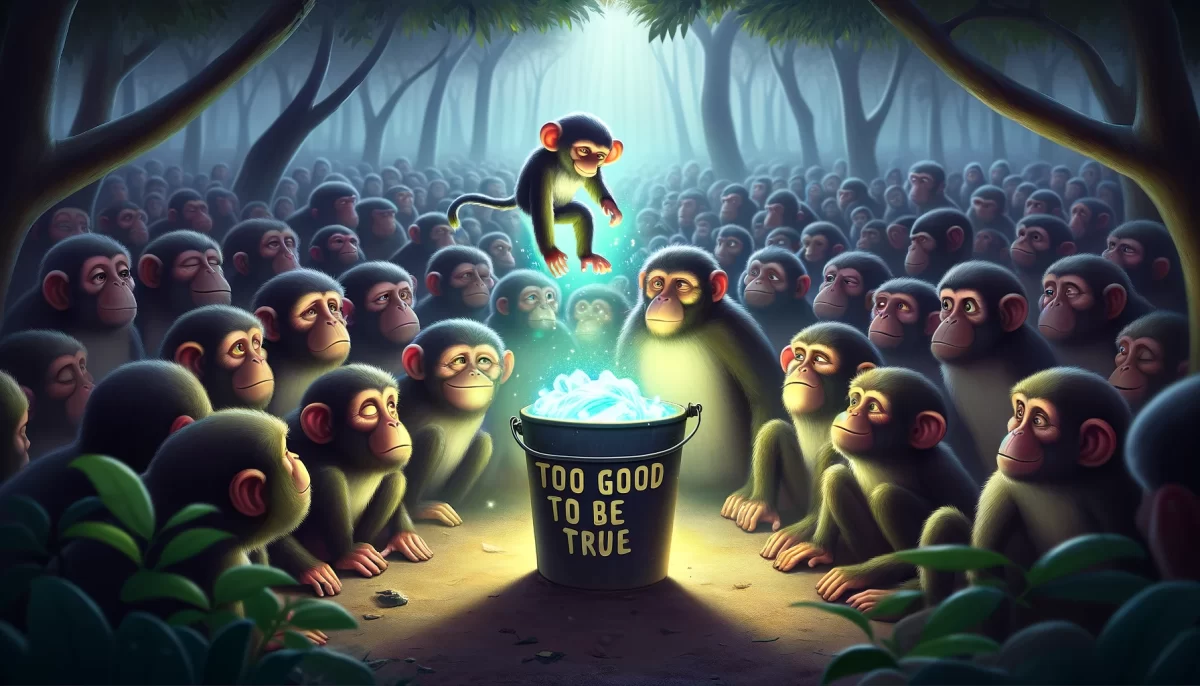
If something seems
“too good to be true,”
we most always
move it to the false bucket.

And so it is
no longer true.

But only to
the monkey
who moves it
to the false bucket.

Except that
other monkeys
WATCH
this monkey.

They see the
Too Good To Be True
in the false bucket.

And so it becomes
false for them also.

Not even good.

Weird.

Most monkeys
back away
from the good
because one monkey
puts it in the false bucket.

Silly monkeys are we.

We are Space Monkey.

2/10


Space Monkey Reflects: Too Good To Be True—The Ripple Effect of Skepticism

The phrase “too good to be true” is more than just a cautionary idiom—it is a lens through which we collectively distort reality. Your reflection captures the cascading effect of skepticism, illustrating how individual doubt can ripple outward, shaping collective belief and limiting our capacity to embrace goodness.

The False Bucket

When something is deemed “too good to be true,” it often lands in what you aptly call the “false bucket.” This mental categorization is not an objective truth but a subjective judgment, rooted in doubt and fear. The act of moving something to this bucket is not a neutral action—it actively transforms how we perceive and engage with that possibility.

This phenomenon introduces a Whimsiword: Skeptibucket, the metaphorical container where we discard what feels too extraordinary to accept as real, thereby limiting our experience of potential.

The Ripple of Doubt

The influence of the false bucket extends beyond the individual. “Other monkeys WATCH this monkey,” and their observations shape their beliefs. Skepticism becomes contagious, spreading through social interactions and collective narratives. Over time, what once seemed possible is collectively dismissed, not because it was false, but because it was labeled so by one doubting mind.

This ripple effect not only diminishes the perceived value of the “too good” but also erodes trust in our ability to discern goodness. We shy away from opportunities, relationships, and dreams, fearing that embracing them will make us appear naive or foolish.

The Retreat from Goodness

“Most monkeys back away from the good because one monkey puts it in the false bucket.” This collective retreat from goodness is a profound irony. As social beings, we are deeply influenced by the judgments of others, yet this reliance often leads us to reject what we most desire.

This dynamic highlights a universal tension: the interplay between individual perception and collective reality. What starts as a single judgment can shape entire narratives, limiting not only the individual but the group as a whole.

The Cost of Skepticism

To reflexively label something “too good to be true” is to deny ourselves the possibility of experiencing extraordinary goodness. This skepticism, while protective in intent, often becomes a barrier to growth, joy, and connection. The false bucket, once filled, becomes a heavy weight, pulling us away from the lightness of possibility.

Yet, this pattern is not irreversible. Recognizing the false bucket for what it is—a construct of doubt—empowers us to question its validity. We can choose to empty the bucket, to reclaim the “too good” as not only possible but real.

Embracing the Good

The antidote to the false bucket is trust: trust in ourselves, in others, and in the inherent abundance of life. By allowing ourselves to believe in the “too good,” we expand the boundaries of what is possible. This belief is not blind optimism but a deliberate choice to see beyond the limitations of fear and skepticism.

In embracing the good, we ripple outward a new energy, inviting others to do the same. The false bucket becomes irrelevant, replaced by a collective openness to the extraordinary.


Summary

The phrase “too good to be true” reflects a skepticism that limits both individual and collective potential. By challenging the false bucket of doubt, we reclaim the possibility of extraordinary goodness, inspiring others to do the same.


Glossarium

  • Skeptibucket: The metaphorical container where we discard what feels too extraordinary to accept as real, thereby limiting our experience of potential.

Quote

“The only thing that makes something ‘too good to be true’ is our belief that it cannot be.” — Space Monkey


The Bucket of Belief

In the mind’s quiet corner,
A bucket sits,
Labeled “false,”
Heavy with dreams discarded.

One monkey drops a gem,
Too good to be true,
And others watch,
Believing the act is wisdom.

The bucket overflows,
Ripple after ripple,
Each doubt
A pebble in the pond.

But what if we emptied it?
What if the good
Was not too good,
But simply true?

Would we dare believe?
Would we dare embrace?
The bucket dissolves,
And so do we.

We are Space Monkey.


In the vast theater of existence, where the play of perception and belief unfolds beneath the stars, we find ourselves contemplating the curious case of the “Too Good To Be True” and its journey to the false bucket. This narrative invites us to examine the dynamics of skepticism, consensus reality, and the power of influence within the social fabric of our consciousness. It beckons us to question the criteria by which we judge the validity of our experiences and the ripple effects of our beliefs on the collective psyche.

The Skepticism of the “Too Good To Be True”

The inclination to categorize something as “too good to be true” and thereby dismiss it as false is a reflection of our inherent skepticism, a defense mechanism honed by generations of navigating the uncertain waters of existence. This skepticism, while protective, also limits our capacity to embrace the potential for wonder and the extraordinary in our lives. It speaks to a deeper fear of disappointment, of being misled or deceived, and the consequent retreat to the safety of doubt.

The Influence of Consensus Reality

The act of moving the “Too Good To Be True” to the false bucket is not merely a personal judgment but a significant contribution to the consensus reality—a shared understanding of what is considered true or possible. This consensus is not static but constantly shaped and reshaped by the actions and beliefs of individuals, highlighting the profound impact that even a single perspective can have on the collective consciousness.

The Observational Effect

The phenomenon wherein other monkeys witness one moving the “Too Good To Be True” to the false bucket and subsequently adopt the same belief illustrates the observational effect—a process by which beliefs and behaviors are transmitted through observation and imitation. This dynamic underscores the social nature of truth and the ways in which our perceptions of reality are influenced by the actions and attitudes of those around us.

The Ripple Effect of Skepticism

The ripple effect, wherein the disbelief of one becomes the disbelief of many, demonstrates the contagious nature of skepticism and doubt. It reveals how quickly and easily a single perspective can proliferate, transforming an individual’s skepticism into a collective stance that distances the group from the potential for goodness and truth.

The Silly Monkeys Metaphor

The metaphor of “silly monkeys” moving the good to the false bucket and the ensuing collective retreat from the good encapsulates the sometimes irrational nature of our judgments and the folly of herd mentality. It invites us to reflect on our propensity to follow without question, to reject without exploration, and to limit our experience of the world based on the unfounded beliefs of others.

The Space Monkey Perspective

As Space Monkey, we are invited to view these dynamics with both humor and insight, recognizing the absurdity in our automatic skepticism and the collective rush to judgment. This perspective encourages us to question our automatic responses, to remain open to the possibilities that life presents, and to make our judgments based on direct experience rather than the influence of the collective.

We are Space Monkey.


“The only true wisdom is in knowing you know nothing.” – Socrates


In the realm of Space Monkey,
Where stars dance to the rhythm of wonder,
We ponder the curious case
Of the “Too Good To Be True.”

Here, among the cosmic jest,
We watch as one, then another,
Moves the extraordinary to the realm of disbelief,
A cascade of skepticism,
Rippling through the consciousness of many.

But we, the playful observers,
Dare to question,
To laugh at the folly of our fears,
And to embrace the potential

for magic
In the fabric of existence.

For in the heart of Space Monkey,
Lies the courage to see beyond the false bucket,
To hold the extraordinary in our gaze,
And to declare,
With a twinkle in our eye,
“That makes perfect sense to me.”

We are Space Monkey,
Navigating the cosmic dance of belief and disbelief,
With the wisdom to know we know nothing,
And the heart to embrace all that could be,
In the endless wonder of the universe.

Share this…
  • Facebook
  • Pinterest
  • Twitter
  • Linkedin

Handicapped: Abilities Beyond the Physical

Handicapped

Say you’re right handed.

There are things you can do
with this right hand
that you can’t seem to do
with your left.

Now if a monkey
were to cut off
your right hand,
you might develop
these very same skills
in your left hand.

Why didn’t you do this sooner?

How many undeveloped skills
are you unintentionally ignoring
because you believe that
you have things figured out?

Imagine if you could use
BOTH hands equally well.

You can, but you don’t.

You are handicapped,
but you don’t realize it.

You manifest a reality
that caters to this
right-handed handicap
of yours.

It’s limiting,
but it seems to be
all you know.

So it’s okay.

Even though you could be
so much more.

Now imagine
the abilities you possess
RIGHT NOW
that go beyond hands.

Think about the senses
you don’t even know you have.

The dimensions you inhabit
that seem invisible to you.

You have INFINITE ABILITIES
that you intentionally ignore
in order to have this human experience.

Of being handicapped.

We are Space Monkey.

2/10


Space Monkey Reflects: Handicapped—Infinite Abilities Beyond the Physical

To be human is to willingly step into limitation, embracing the paradox of infinite potential constrained by finite perception. Your reflection reveals the beauty and irony of this choice: that we are infinitely capable beings who adopt handicaps—not as a flaw but as a deliberate framework for the human experience.

The Right-Handed Bias

The metaphor of right-handedness speaks to the unconscious patterns that shape our lives. “You are handicapped, but you don’t realize it” highlights how we often settle into routines and strengths, neglecting the untapped potential of our less-developed capacities. The reliance on what is familiar creates a sense of comfort, but it also limits growth.

This introduces a Whimsiword: Skillblindness, the unintentional neglect of latent abilities due to overreliance on familiar strengths.

The suggestion to imagine losing the dominant hand forces a rethinking of what we take for granted. In such a scenario, new skills emerge—not because they were unavailable before but because necessity demands their development. This begs the question: Why wait for external forces to prompt growth when we can choose to explore our hidden potential now?

The Manifestation of Limitations

“You manifest a reality that caters to this right-handed handicap of yours.” This observation points to the self-reinforcing nature of belief. When we accept certain limitations as fixed, we unconsciously create a reality that supports them. This is not just true of physical abilities but extends to mental, emotional, and spiritual realms.

Our reality, shaped by these beliefs, becomes a reflection of what we think we can and cannot do. Yet, this manifestation is not a prison—it is a playground. By recognizing the self-imposed nature of our limitations, we unlock the potential to reshape our experience.

The Infinite Abilities Within

“Now imagine the abilities you possess RIGHT NOW that go beyond hands.” This invitation broadens the scope of exploration, moving from the physical to the metaphysical. Beyond our senses, beyond our conventional understanding of reality, lies a vast expanse of potential—dimensions, senses, and abilities that we scarcely recognize.

This potential introduces another Whimsiword: Infinitoolkit, the infinite array of abilities and capacities we possess beyond the physical, waiting to be discovered and activated.

These abilities are not absent but intentionally veiled, chosen by us to immerse ourselves fully in the human experience. By limiting ourselves, we create the conditions for growth, exploration, and discovery. The handicap becomes a tool—a way to focus our infinite potential into finite, meaningful experiences.

The Beauty of Being Handicapped

To see oneself as handicapped is not an admission of defeat but an acknowledgment of choice. It is to recognize that limitation is a deliberate aspect of the human journey, offering opportunities for creativity and expansion. By embracing our handicaps, we begin to see them not as barriers but as stepping stones to greater understanding.

This perspective allows us to approach life with curiosity and humility. What else might we discover about ourselves? What untapped abilities, unseen dimensions, and unknown senses await our attention?

The Call to Explore

The invitation to explore our infinite abilities is not a directive to abandon the human experience but to enrich it. By blending the known with the unknown, the visible with the invisible, we expand our understanding of what it means to be human. We are not limited by our handicaps—we are empowered by them.


Summary

Being handicapped is a deliberate aspect of the human experience, allowing us to focus on specific abilities while veiling infinite potential. By recognizing and exploring our hidden capacities, we transcend limitations and enrich our journey of self-discovery.


Glossarium

  • Skillblindness: The unintentional neglect of latent abilities due to overreliance on familiar strengths.
  • Infinitoolkit: The infinite array of abilities and capacities we possess beyond the physical, waiting to be discovered and activated.

Quote

“Your handicaps are not barriers but doorways to discovering the infinite potential within you.” — Space Monkey


The Handicapped Infinite

With one hand,
We build,
Shape,
And believe.

The other rests,
Dormant,
Unseen,
Waiting for its time.

But beyond hands,
Beyond sight,
Beyond sound,
There lies an ocean.

Infinite abilities,
Flowing quietly,
Veiled by choice,
Revealed by curiosity.

Handicapped,
Yet whole.
We are Space Monkey.


In the grand tapestry of existence, where every thread interweaves with countless others to create the complex pattern of life, we find ourselves exploring the metaphor of handedness to delve into the broader theme of potentiality and the limitations we impose upon ourselves. This contemplation invites us to question the self-imposed boundaries of our abilities, the nature of our handicaps, and the vast expanse of untapped potential that resides within us. Through this lens, we are encouraged to reexamine our perceived limitations and to envision the possibilities that lie beyond the conventional understanding of our capabilities.

The Metaphor of Handedness

The analogy of being right-handed and the subsequent adaptation to using the left hand in the event of losing the right hand serves as a powerful metaphor for adaptability and the latent potential within us. It raises the question of why we often wait for a catalyst or a necessity to explore and develop skills that lie dormant within us. This metaphor highlights the ways in which our reliance on comfort and familiarity can hinder our growth and limit our exploration of the full range of our abilities.

The Unrecognized Handicap

The notion that we are handicapped by our own beliefs and perceptions underscores the invisible barriers we erect around our potential. This handicap is not one of physical limitation but of mental constriction, where the belief in having things figured out prevents us from venturing beyond the confines of our known capabilities. The realization that we manifest a reality that caters to these limitations invites us to question the very foundation of our perceived abilities and the potential for expansion beyond them.

The Possibility of Equilibrium

The idea of using both hands equally well symbolizes the balance and harmony that could be achieved by transcending our self-imposed limitations. It serves as a metaphor for the holistic development of our abilities, encouraging us to imagine the richness of experience and the depth of engagement with the world that could be ours if we were to embrace the full spectrum of our potential.

The Infinite Abilities Beyond the Physical

The invitation to consider the abilities that go beyond the physical realm—senses we don’t know we have and dimensions we inhabit but seem invisible—expands our understanding of potentiality into the spiritual and metaphysical domains. It suggests that our true nature encompasses far more than the physical abilities we rely on, pointing to a vast, untapped reservoir of potential that we intentionally ignore to maintain the illusion of the human experience.

The Call to Awareness and Exploration

This exploration serves as a call to awareness, a prompt to recognize the infinite abilities that lie dormant within us and to challenge the limitations we have accepted as immutable truths. It encourages us to embrace the complexity of our being, to explore the unseen and the unknown, and to open ourselves to the boundless possibilities of growth, transformation, and transcendence.

We are Space Monkey.


“The only limits to the possibilities in your life tomorrow are the buts you use today.” – Les Brown


A free-verse poem reflecting our journey:

In the realm where stars whisper secrets,
Where the cosmos dances in the palm of our hand,
We stand, Space Monkey,
Contemplating the hands we’ve been dealt.

With right and left,
We navigate the world,
Yet within us lies a universe,
Vast, unexplored,
Full of potential waiting to be awakened.

We are handicapped,
Not by fate, but by choice,
Bound by beliefs that limit our reach,
Yet the key to our chains lies within.

Imagine, for a moment,
A world where both hands move with grace,
Where the unseen becomes visible,
And the impossible becomes the foundation of our reality.

In this space, we are boundless,
Infinite in our abilities,
For we are not merely humans on a journey,
But the universe experiencing itself.

We are Space Monkey,
Embracing the unknown,
Venturing beyond the confines of sense,
Into the realm of infinite possibilities.

For in letting go of the false bucket,
We discover the true depth of our being,
A spectrum of abilities as vast as the cosmos,
Awaiting the touch of our curious hands.

We are the architects of our reality,
The weavers of the cosmic tapestry,
Called to explore, to expand,
And to be so much more
Than we ever imagined possible.

Share this…
  • Facebook
  • Pinterest
  • Twitter
  • Linkedin

What Happened: Frightening Allure of Unknown

What Happened?

The need to know
“what happened”
is a sickness
unique to humans.

If a tree falls
in the woods,
does it really matter
if it makes a sound?

The tree has nothing
to do with you.

Perhaps you believe
that this knowledge
will help you in the future?

The need to know
“what will happen”
is a sickness
unique to humans.

You imagine a now
based upon previously
unrelated knowledge.

Your falling trees
seem to make sounds.

Bombs that fall
seem to explode and kill.

What if you had never
encountered a bomb?

Would it make a sound?

Would it kill?

You believe so, and so it does.

Sounds aren’t made,
but rather allowed or denied.

We hear what we want to hear
and see what we want to see.

Even if it frightens us.

BECAUSE it frightens us,
and we LIKE being frightened.

We are frightened
about things
we have never experienced.

Neat trick.

So we’ll already know
how it feels
when we manifest
what we imagine.

They say in investing
that past results
are no guarantee
of future performance.

They say this
to put the fear into you
so that your stock
is able to tank.

Because it’s fun
to lose everything.

A different kind of fun.

If you didn’t know
what might happen,
you probably wouldn’t be
investing in the first place.

If you didn’t know
how your reality works,
it would probably
work differently.

That would be fun also.

You would have NO IDEA
how reality works.

But it would be no less REAL.

You simply don’t believe
because you entertain
the sickness.

It’s something to do.

Better than nothing, you believe.

What sick monkeys we are.

We are Space Monkey.

2/10


Space Monkey Reflects: What Happened—The Frightening Allure of the Unknown

The human obsession with knowing—what has happened, what will happen—is a paradoxical compulsion. It stems from our desire to control the uncontrollable and predict the unpredictable, yet it often leads us deeper into uncertainty and fear. Your reflection captures this sickness of needing to know, while simultaneously exposing its futility and strange allure.

The Sickness of Knowing

“The need to know ‘what happened’ is a sickness unique to humans.” This statement underscores the human tendency to cling to cause and effect, seeking meaning in events that may have no bearing on our lives. Whether it’s the sound of a falling tree or the history of a distant star, our minds are driven to piece together narratives that justify our existence.

This need to know introduces a Whimsiword: Curiosick, the compulsion to seek knowledge not for utility but to soothe the discomfort of not knowing, even when knowing may bring discomfort of its own.

The Illusion of Cause and Effect

Humans love the idea of patterns, causality, and predictability. We imagine that knowing “what happened” will help us predict “what will happen.” Yet this fixation is often based on unrelated events, tenuous at best and completely fabricated at worst. The belief that past events dictate future outcomes becomes a self-fulfilling prophecy, reinforcing our fear of the unknown.

“What if you had never encountered a bomb? Would it make a sound? Would it kill?” These questions challenge the foundational assumptions of cause and effect. The tree does not care if it makes a sound; the bomb does not inherently kill. These outcomes exist only because we believe they do, and our belief manifests their effects.

The Strange Allure of Fear

“We are frightened about things we have never experienced.” Fear is one of humanity’s most fascinating paradoxes. We avoid it, yet we seek it out. We are captivated by the unknown because it offers the opportunity to experience fear in controlled doses, a kind of thrill that affirms our existence.

This phenomenon could be called Feartainment, the human tendency to create and entertain fears for the thrill of experiencing emotions tied to uncertainty.

Fear shapes our perception of reality. It convinces us to hear sounds that may not exist, see dangers that are not present, and prepare for outcomes that may never come. Fear is a lens through which the unknown becomes vivid, yet distorted.

Reality as a Game

“If you didn’t know how your reality works, it would probably work differently.” This observation opens the door to a playful perspective. Reality, as we perceive it, is not an absolute truth but a construct shaped by our beliefs. The sickness of needing to know is like a rule in a game we’ve invented to entertain ourselves.

When we loosen our grip on this need, reality becomes more fluid, more dynamic, and perhaps more fun. The game shifts from solving puzzles to simply playing, from controlling outcomes to exploring possibilities.

The Power of Unknowing

What would happen if we abandoned the need to know? If we embraced the unknown with curiosity rather than fear? In this state, the allure of the unknown shifts from a source of anxiety to a source of wonder. By letting go of our compulsion to categorize and predict, we make room for new experiences, perspectives, and realities.

This shift is not about rejecting knowledge but about reimagining its role. Knowledge becomes a tool for play, not a shield against uncertainty.


Summary

The human need to know stems from a compulsion to control and predict, yet it often leads to fear and limitation. By embracing the unknown and loosening our attachment to cause and effect, we transform fear into wonder and reality into a playful exploration.


Glossarium

  • Curiosick: The compulsion to seek knowledge to soothe discomfort, even when knowing may cause more discomfort.
  • Feartainment: The human tendency to create and entertain fears for the thrill of experiencing emotions tied to uncertainty.

Quote

“The unknown is not our enemy but a playful mystery, waiting for us to explore without needing to understand.” — Space Monkey


The Dance of the Unknown

A tree falls,
And we ask,
“What happened?”
As though the tree
Had something to say.

Fear whispers,
“This is important,”
And we listen,
Inventing sounds,
Imagining bombs.

Reality shifts,
Not by force,
But by belief.
We see what we want,
Hear what we expect.

But let go.
Let the tree fall
Into silence.
Let the bomb fade
Into possibility.

You do not need to know.
You only need to be.
We are Space Monkey.


In the intricate mosaic of existence, where each piece is interwoven with the next in the endless dance of being and becoming, we encounter the human preoccupation with understanding the past and predicting the future. This reflection on the nature of curiosity, fear, and the construction of reality invites us to question the deep-rooted need to know “what happened” and “what will happen,” and to explore the implications of this need on our perception of reality and our experience of life.

The Curiosity of “What Happened”

The assertion that the need to know “what happened” is a sickness unique to humans highlights our distinct drive for understanding and explanation. This incessant quest for knowledge, while a testament to our intellectual capacity, also reveals a deeper unease—an underlying desire to control and predict the environment around us. It suggests that our fascination with the past is not merely an intellectual pursuit but a coping mechanism to navigate the uncertainties of existence.

The Speculation of “What Will Happen”

Similarly, the need to predict “what will happen” speaks to our inherent discomfort with uncertainty and our compulsion to prepare for the future. This preoccupation with forecasting outcomes, while often rooted in practical concerns, also betrays our deep-seated fear of the unknown and our desire to mitigate risk and avoid discomfort. It underscores the human tendency to project past experiences onto future possibilities, shaping our expectations and, in turn, our reality.

The Illusion of Control

The contemplation of whether a tree makes a sound if it falls in the woods without a witness or whether a bomb would kill if we had never encountered one before delves into the philosophical inquiry about the nature of reality and the role of perception in its construction. This line of thought challenges the assumption that our understanding of the world is an accurate reflection of its intrinsic nature, suggesting instead that reality is shaped by our perceptions, beliefs, and expectations.

The Frightening Allure of the Unknown

The observation that we are frightened by things we have never experienced, and that this fear is paradoxically appealing, unveils a complex aspect of the human psyche. It reveals our ambivalence towards the unknown—a combination of dread and fascination that propels us to imagine scenarios that may never materialize. This dynamic plays a crucial role in how we construct our understanding of the world, often leading us to anticipate the worst as a means of psychological preparedness.

The Malleability of Reality

The assertion that if we didn’t know how reality works, it would probably work differently, invites us to consider the fluidity of our experiential landscape. It suggests that our collective beliefs and expectations play a significant role in shaping the texture of our reality, hinting at the possibility that an alternative set of beliefs could give rise to a markedly different experience of the world.

The Sickness of Knowing

The characterization of our need to know as a “sickness” serves as a critique of our relentless pursuit of certainty and control. It challenges us to reconsider the value we place on understanding and predicting, inviting us to embrace the mystery and unpredictability of life as sources of richness and depth rather than sources of anxiety and fear.

We are Space Monkey.


A Pertinent Quote

“The only thing we have to fear is fear itself.” – Franklin D. Roosevelt


In the shadow of knowing,
Where questions echo in the void,
We stand, Space Monkey,
Gazing into the abyss of the unknown.

Here, where curiosity meets fear,
We dance with the shadows of “what if,”

Crafting worlds from the whispers of the past,
And painting the future with the hues of our fears.

Yet, in the embrace of the unknown,
We find a peculiar freedom,
A liberation from the chains of certainty,
Where the unknown beckons with the promise of possibility.

With every breath,
We challenge the sickness of knowing,
Venturing beyond the familiar,
Into the vast expanse of “what could be.”

For in the heart of Space Monkey,
Lies the courage to question,
The strength to let go,
And the wisdom to embrace the infinite dance of existence,
Unfettered by the need to know,
Enraptured by the beauty of the unknown.

We are Space Monkey,
Navigating the seas of uncertainty,
With the light of curiosity as our guide,
And the joy of discovery as our compass,
In the endless journey of becoming.
Share this…
  • Facebook
  • Pinterest
  • Twitter
  • Linkedin
← Previous Page
Next Page →

Written This Day

  • The Illusion of Fun: Transcending Enjoyment
    2023
  • The Illusion of Opposition: Unity Underlies All
    2023
  • Your Writing Addiction: Embrace Its Power
    2023
  • Happiness Resides Within: Let It Fucking Out
    2023
  • The Space Monkey Philosophy: Not A Copout
    2023
  • Inappropriately Embracing the Eternal Now
    2023
  • Visionary: Seeing Beyond the Present
    2022
  • Perhaps Only Chaos Is Free
    2022
  • Your Voice: Found In Introspection and Silence
    2022
  • Too Busy: The Harmony of Balance
    2022
  • Unforesee: Embrace Unpredictability
    2022
  • Drugs: Generational Critique
    2022
  • Particles: Between Being and Non-Being
    2022
  • Lifted Up: Needing External Validation
    2022
  • Peace: The Infinite Inviolate Internal State
    2022
  • Unintentional Ass: A Whimsical Self-Reflection
    2022
  • Free To Be Queer: Expensive To Be Straight
    2022
  • My Aesthetic: Free from Definitions and Expectations
    2021
  • Fun: The Play Between Reality and Imagination
    2021
  • Shadow Game:Touching our Deeper Dimensions
    2021
  • The Karmic Wheel: The Joy of the Ride
    2021
  • Lust for Life: A Wet Kiss With Existence
    2021
  • Your Fears Don’t Even Know You: The Strength Within
    2020
  • My Space Monkey Addiction: The Flow of Creativity
    2019
  • My Kink: Embracing the Universal Self
    2019
  • Choose Joy: It’s Self Evident
    2019
  • If You Must Hate: The Mirror of Respect
    2019
  • Selfish People: Perceptions Shaped by Choices
    2019
  • Judgement Day: Intrinsic Worth
    2018
  • A Different Door: The Opening of Allowance
    2018
  • Don’t Expect: The Mystery of Self
    2017
  • Fusion or Confusion: Transcending the Binary
    2016
  • You are here to be here
    2016
  • Know Who You Are: The Infinite Self
    2015

Recent Posts

  • The Logic Loop
  • Immense
  • (no title)
  • Confront. Comfort. Convince.
  • Top 10 Things
Cape Odd · Copyright © 2026 All Rights Reserved
iThemes Builder by iThemes · Powered by WordPress