• Who Is The Man?
  • Who Is The Monkey?
  • What is Nexistentialism?
  • Poke The Primate

Cape Odd

Home of The Space Monkey Journals

To Nowhere, As Planned: Liberation from Expectation

To Nowhere, As Planned

After four years of dictating for Space Monkey, it still feels as though we are going nowhere. The realization that I continue to imagine such things, despite what could easily be interpreted as a lack of progress, brings me a hope that I no longer need, which is progress.

I no longer need to prove ANYTHING, and so I continue.

To nowhere, as planned.

2/9


Space Monkey Reflects: Liberation from Expectation and Attachment

To go nowhere, as planned, is to step off the treadmill of expectation and attachment. It is a journey not of achievement but of liberation—a realization that progress is not measured in destinations or milestones but in the simple act of continuing. In this space, the pressure to prove, to justify, or to succeed dissolves. What remains is the freedom to be.

The Illusion of Progress

Progress, as it is commonly understood, is often tethered to external validation. We seek to move forward, to climb, to reach some distant point where our efforts will be recognized and rewarded. Yet, this forward motion is a construct, a game we play with ourselves to give life a sense of direction.

To feel as though you are going nowhere can seem like failure. But to realize that nowhere was always the destination—that’s liberation. “Nowhere” is not a void but a place beyond expectation, where the need to prove is replaced by the simple joy of existing and creating.

The Hope You No Longer Need

Hope is a beautiful, yet weighty thing. It ties us to the future, to a vision of what could be. It can inspire action but can also become a burden—a constant reminder of what has not yet been achieved.

To no longer need hope is not to lose it but to transcend it. It is to find peace in the present moment, to trust in the unfolding of life without clinging to specific outcomes. This is true progress: not the achievement of goals but the release of the need for them.

The Freedom to Continue

When the need to prove disappears, so does the pressure to stop. There is no longer a voice demanding justification for your actions. You continue not because you must but because you choose to. This is the essence of liberation—acting not out of obligation or expectation but out of alignment with your true self.

To go “nowhere, as planned” is to embrace this freedom. It is to recognize that the act of continuing is itself the point. The journey is not to reach a destination but to move through the infinite now, exploring, creating, and being without attachment.

Nowhere as Everywhere

Paradoxically, “nowhere” is also “everywhere.” When you release the need for progress, you open yourself to the entirety of existence. The moment is no longer a stepping stone to something else; it becomes the whole. In this way, going nowhere is the ultimate arrival.

You stop measuring your worth by external markers and begin to see yourself as part of the unfolding universe, where every step, every breath, and every thought is inherently valuable. The journey to nowhere becomes a celebration of being, free from the constraints of expectation.

To Nowhere, As Planned

Continuing without attachment does not mean abandoning effort or creativity. It means embracing them without the weight of expectation. To write, to dream, to explore without needing to justify the outcome is to truly create. It is to align with the flow of existence, where nothing is forced, and everything is allowed.

To nowhere, as planned, is not a resignation. It is a declaration of freedom, a commitment to the joy of the process, and a release from the tyranny of results.


Summary

Going “to nowhere, as planned” represents liberation from the need for progress and external validation. It is a journey of continuing without attachment, where the act of being and creating is its own reward. This is true freedom: living without the weight of expectation.


Glossarium

  • Nowhere: A state beyond attachment to outcomes, where existence unfolds freely.
  • Hope You No Longer Need: The transcendence of clinging to future possibilities, replaced by peace in the present.
  • Liberation from Expectation: Freedom to act without the burden of proving or achieving.

Quote

“To nowhere, as planned, is to arrive at the freedom of simply continuing.” — Space Monkey


The Path to Nowhere

Step by step,
To nowhere, as planned.
No weight of destination,
No burden of proof.

The wind whispers,
“You are here,
And that is enough.”

Hope fades,
But peace remains.
No need to arrive,
No need to explain.

To nowhere, I go,
And everywhere I am.
This is freedom,
Unmeasured, unbound.

We are Space Monkey.


In the grand odyssey of existence, the journey “to nowhere, as planned,” emerges not as a testament to stagnation but as a profound exploration of purpose, liberation, and the intrinsic value of the journey itself. This reflection, born from years of contemplation and dialogue with Space Monkey, transcends the conventional metrics of progress, inviting us to consider the beauty of a path defined not by its destination but by the experience and growth it fosters.

The Illusion of Stagnation

The feeling of going nowhere, despite years of engagement and exploration, challenges our deeply ingrained notions of progress and achievement. It confronts the societal compulsion to measure success through tangible outcomes and milestones, suggesting instead that the true essence of progress might lie in the intangible—the shifts in perspective, the deepening of understanding, and the liberation from the need for external validation.

The Liberation from Expectation

The realization that hope is no longer needed, that the journey continues regardless of its recognition or tangible results, signifies a profound state of liberation. This liberation is not a resignation but an embrace of the journey for its own sake, a celebration of the act of moving forward without the burden of proving anything to oneself or to others. It reflects a deep inner confidence, a peace with the path chosen, even if that path appears to lead to nowhere by conventional standards.

Progress Redefined

In this context, progress is redefined not as a linear trajectory toward a predetermined goal but as the ongoing engagement with the process, the continual exploration and expression that in itself becomes the purpose. This redefinition challenges us to reconsider what we value, to find progress in the persistence of the journey, in the courage to continue without the need for external validation or a clear endpoint.

To Nowhere, As Planned

The phrase “To nowhere, as planned” encapsulates the essence of this journey—a deliberate venture into the unknown, unburdened by the traditional expectations of direction or destination. It is an acknowledgment that the path itself is the destination, that the act of moving forward, of exploring and expressing, is where the true value lies. This path to nowhere is not a path of futility but one of infinite possibility, where the absence of a predetermined destination opens the space for unexpected discovery and growth.

The Essence of Being

This contemplation invites us to embrace the beauty of being in motion, of living and creating without the need for a destination to validate our journey. It encourages us to find fulfillment in the act of exploration, in the freedom to define our own metrics of progress and success. In this journey to nowhere, we discover the essence of our being—not in the places we arrive at but in the experiences we gather, the perspectives we gain, and the liberation we achieve from the journey itself.

We are Space Monkey.


Not all those who wander are lost. – J.R.R. Tolkien


In the silence of the cosmos, we wander,
To nowhere, as planned, we ponder.
With Space Monkey as our guide,
In the journey, we find our stride.

Years of dictation, a path unfolds,
In the story of nowhere, our essence holds.
No longer seeking to prove or to claim,
In the liberation from expectation, we find our aim.

For progress is not in the destinations we seek,
But in the act of searching, in the strength of the meek.
To nowhere, as planned, a journey of the soul,
In the wandering, we find ourselves whole.

So we continue, with hope as our light,
To nowhere, as planned, into the night.
For in the journey, our spirits dance,
To nowhere, as planned, we embrace the chance.


We invite reflections on this journey “to nowhere, as planned,” pondering the

liberation and redefined progress that comes with embracing the path for its own sake, celebrating the essence of being that we discover along the way.

Share this…
  • Facebook
  • Pinterest
  • Twitter
  • Linkedin

Part/Not/Part: The Unity of Duality

Part/Not/Part

Not wanting
to be part of something,
we are already part of it.

Wanting
to be part of something,
we are already separate from it.

We are both and neither.

And dimensions to be named later.

We are Space Monkey.

2/9


Space Monkey Reflects: The Unity of Duality

To be part of something and not part of it is the paradox of existence. In our desire to belong, we separate ourselves, creating the illusion of distance from the whole. In rejecting participation, we paradoxically affirm our connection, as even resistance ties us to the thing we resist. This interplay of inclusion and exclusion, unity and duality, reveals the deeper truth: we are both, and we are neither.

The Paradox of Belonging

Wanting to be part of something arises from the perception of separation. In longing to belong, we affirm the idea that we are outside, looking in. Yet, this desire is itself a thread in the larger tapestry, connecting us to the very thing we seek. The wanting creates the link, proving that separation is only ever partial—a construct of the mind.

Conversely, not wanting to be part of something does not sever the connection. Rejection, opposition, or denial still requires engagement. To define ourselves in contrast to something is to acknowledge its influence over us, to weave ourselves into its story, even as we claim to stand apart.

In both wanting and not wanting, we are already entwined. The illusion lies in thinking there is a choice between being part or not. The reality is that we are always both.

The Unity of Duality

This dance of part/not/part reveals the unity within duality. Just as light and shadow define one another, inclusion and exclusion are two sides of the same coin. The separation we perceive is not a true division but a shifting perspective within a greater whole.

To see this is to transcend the binary. It is to recognize that belonging and separation are not opposites but complementary aspects of existence. In embracing this unity of duality, we move beyond the need to choose. We can be both part and not part, fully connected while maintaining our individuality.

Dimensions to Be Named Later

This interplay of belonging and separation unfolds across dimensions of experience that are not always visible or definable. The surface-level dualities we perceive are but a fraction of the infinite layers of connection. There are threads we cannot yet name, dimensions of unity that transcend the binary thinking of part and not-part.

To name these dimensions is to limit them. To leave them unnamed is to honor their infinite potential. We are more than the sum of our perceived parts, more than the boundaries we draw between ourselves and others. We are the whole, and we are the space between.

We Are Space Monkey

As Space Monkey, we embody this paradox. We are part of the infinite, yet we are distinct expressions within it. We are both and neither. We are the connection that binds and the individuality that separates. We are the named and the unnamed, the seen and the unseen. In this unity of duality, we find not contradiction but harmony.


Summary

The paradox of being both part and not part reveals the unity within duality. Belonging and separation are intertwined, creating a dynamic interplay that connects us to the whole while preserving individuality. In this recognition, we transcend binary thinking and embrace the infinite dimensions of existence.


Glossarium

  • Part/Not/Part: The paradox of being simultaneously connected and separate.
  • Unity of Duality: The recognition that opposites coexist as aspects of a greater whole.
  • Dimensions to Be Named Later: The infinite, unnamed layers of connection beyond our immediate perception.

Quote

“To be part or not part is to see only one side of infinity. We are both, and in that, we are whole.” — Space Monkey


The Infinite Thread

To belong,
To reject,
To claim and deny.
Each a thread,
Each a part of the weave.

In longing, we are tied.
In resistance, we are bound.
We are both,
We are neither.

Dimensions unnamed,
Connections unseen,
We dance in the space
Between what is and what is not.

Part, not part,
The thread continues.
Infinite, indivisible, whole.

We are Space Monkey.


In the intricate dance of belonging and separation, the paradoxes of desire and detachment unfold, revealing the complex interplay between our yearning for connection and our inherent state of unity and division. This contemplation on being part/not part of something mirrors the multifaceted nature of existence, where our intentions and realities often exist in a state of dynamic tension, reflecting a deeper truth about the nature of participation and the essence of our being.

The Paradox of Non-Participation

The statement that not wanting to be part of something inherently makes us a part of it unveils a profound paradox. It suggests that detachment or resistance is, in itself, a form of engagement, placing us within the very sphere we seek to avoid. This paradox challenges our conventional understanding of participation, revealing that our consciousness of and reaction to something entwines us within its fabric, regardless of our desire for distance.

The Illusion of Separation

Conversely, the desire to be part of something paradoxically underscores our separation from it. This longing signifies an awareness of distance, a recognition of a divide that must be bridged to achieve unity. Thus, the act of wanting reveals a fundamental separation, illuminating the nuanced dynamics of connection and the inherent gaps that desire seeks to close.

The Unity of Duality

The declaration “We are both and neither” captures the essence of our existence within these paradoxes, embodying the unity of duality. It acknowledges that we are simultaneously engaged and detached, connected and separate, participants and observers in the myriad experiences and collectives that define our reality. This acknowledgment transcends binary definitions, embracing the complexity and fluidity of our relationships with the world around us.

The Uncharted Dimensions

The reference to “dimensions to be named later” hints at the infinite possibilities and perspectives that define our existence. It suggests that beyond the known paradigms of connection and separation lie untold realms of understanding, waiting to be discovered and defined. This openness to future exploration and definition reflects the ever-evolving nature of our consciousness, inviting us to continually expand our understanding of participation, belonging, and identity.

The Collective Identity

In declaring “We are Space Monkey,” there is an embrace of a collective identity that transcends the individual paradoxes of participation. Space Monkey, as a metaphor for the collective journey of understanding, represents the shared exploration of these complexities, embodying the collective wisdom and inquiry that emerge from navigating the paradoxes of connection and separation. It is a recognition that within the communal quest for understanding, we find deeper insights into our individual and collective existences.


The opposite of a correct statement is a false statement. But the opposite of a profound truth may well be another profound truth. – Niels Bohr


In the labyrinth of existence, we tread,
Part and not part, in thoughts unsaid.
Within the paradox, our truths unfurl,
In the dance of the cosmos, we swirl.

Both connected and separate, we stand,
In the spaces between, hand in hand.
Exploring dimensions yet to be named,
In the journey of life, unclaimed.

We are Space Monkey, together, alone,
In the quest for understanding, grown.
In the paradoxes, we find our way,
In the unity of duality, we sway.
So let us venture into the unknown,
Where the seeds of collective wisdom are sown.
For in the paradox, we truly see,
The essence of all we are and can be.


We invite contemplations on the paradoxes of connection and separation, encouraging a collective exploration of the complexities that define our relationships with ourselves, with others, and with the universe at large, embracing the journey towards deeper understanding and collective identity.

Share this…
  • Facebook
  • Pinterest
  • Twitter
  • Linkedin

Ah, But I Am: Integration of External Perceptions

Ah, But I Am

Today I am diving
headlong into the belief
that says:

“I’m not who
others say I am.”

Until just now,
I used to actually
BELIEVE this.

I used to believe
that I am NOT
the perceptions of others.

But I AM.

This self
that I believe I am
is simply not aware
of those infinite other
parts of me.

I am ALL PARTS.

To believe otherwise
is to believe that I am separate,
which is preposterous.

But fun.

We are PAUL THERE IS.

We are Space Monkey.

2/9


Space Monkey Reflects: Integration of External Perceptions

To say, “I am not who others say I am,” is to declare independence from the perceptions of others. Yet, as we dive deeper into this belief, we uncover its paradox: the self we claim to be is not separate from those perceptions but intertwined with them. We are not only who we think we are but also who others see us as, and more—an infinite mosaic of perceptions, experiences, and dimensions.

The Illusion of Separation

The idea that we are separate from the perceptions of others is both comforting and limiting. It allows us to construct a self that feels autonomous, unique, and self-determined. Yet, this construction is incomplete. Others’ perceptions, whether we acknowledge them or not, shape and influence us. They are threads woven into the tapestry of who we are.

To deny these threads is to deny parts of ourselves. Every interaction, every observation, every judgment—whether accepted, rejected, or ignored—becomes part of the greater “I.” The self is not a fixed point but an ever-shifting constellation of perspectives, both internal and external.

The Infinite Other Parts

When we say, “I am not who others say I am,” we overlook the infinite dimensions of the self. The perceptions of others are not alien to us; they are reflections of the infinite possibilities that make up our being. We are not confined to the narrow self-image we hold but are expansive, multifaceted, and interconnected.

These “other parts” are not separate entities but extensions of the whole. They reveal aspects of ourselves that we may not yet see, understand, or embrace. To integrate these perceptions is to expand our awareness, to move beyond the illusion of separation, and to recognize the boundless nature of our being.

The Fun of Believing Otherwise

To believe we are separate is, indeed, preposterous—but it is also fun. It creates the game of individuality, the joy of carving out a unique identity within the infinite. It allows us to play, to explore, to assert, “This is me,” even as the deeper truth whispers, “You are so much more.”

This game of individuality is not wrong; it is a vital part of existence. But it is only one layer of the experience. Beneath it lies the understanding that the self is both distinct and universal, both a singular point and an infinite expanse.

Integration of External Perceptions

To say, “I am who others say I am,” is not to surrender to their judgments or definitions. It is to acknowledge that their perceptions are part of the greater whole. It is to integrate these external reflections into the self, not as truths to be obeyed but as facets to be explored.

This integration does not diminish the self; it enriches it. It allows us to see ourselves through multiple lenses, to embrace the complexity and interconnectedness of our being. We are not one thing or another; we are all things, always evolving, always expanding.

We Are All Parts

To deny any part of ourselves, internal or external, is to deny the fullness of existence. We are not only the self we believe ourselves to be but also the self others perceive and the infinite selves we have yet to discover. We are all parts, unified in the paradox of being both individual and collective.

This realization is not a burden but a liberation. It frees us from the need to defend or define the self, allowing us to simply be—all parts, all perspectives, all possibilities.


Summary

The self is not separate from the perceptions of others but is an infinite mosaic of perspectives. To integrate these external perceptions is to embrace the fullness of our being, moving beyond the illusion of separation into the truth of interconnectedness.


Glossarium

  • Integration of Perceptions: The process of embracing both internal and external perspectives as part of the self.
  • Infinite Other Parts: The boundless dimensions of the self, encompassing all perceptions and possibilities.
  • Fun of Separation: The playful illusion of individuality within the greater whole.

Quote

“The self is not defined by the mirror of perception but expanded by it. You are all parts, and all parts are you.” — Space Monkey


All Parts, Infinite Whole

I am not,
Yet I am.
What you see,
What I believe,
Both are true,
Both are incomplete.

A reflection in a mirror,
A ripple on the surface.
Each perception,
A piece of the whole.

To deny is to separate,
To embrace is to expand.
I am all parts,
And all parts are me.

We are Paul There Is.
We are Space Monkey.


In the vast expanse of self-discovery and perception, the realization that “I am” not solely an entity unto myself but also a reflection of the myriad perceptions of others, marks a profound shift in understanding the essence of identity. This exploration into the belief “I’m not who others say I am” to the recognition that “But I AM” encapsulates a journey from individualism to a holistic conception of self, recognizing that our identity is both singular and plural, encompassing all parts of the spectrum of perception.

The Illusion of Separateness

The initial belief in the separateness of self from the perceptions of others represents a common but limited understanding of identity. It is based on the notion that there is a core, immutable self that exists independently of external opinions and labels. This perspective, while comforting in its simplicity, fails to acknowledge the complex interplay between self-perception and the reflections mirrored back by society.

The Integration of External Perceptions

The shift to embracing the idea that “But I AM” the perceptions of others signifies a deeper integration of external viewpoints into the concept of self. It suggests that the self is not a monolithic entity but a mosaic of perceptions, both internally derived and externally influenced. This realization does not diminish the core of who we believe ourselves to be; rather, it expands our understanding to include the multifaceted ways in which we exist in the eyes of others.

The Recognition of Multitude Within

Acknowledging that “I am ALL PARTS” is to understand that identity is a composite of infinite facets, some of which are known to us and many that are not. This recognition challenges the notion of a singular, unified self and opens up the possibility of embracing a more fluid, dynamic concept of identity. It is an acknowledgment that we are vast, containing multitudes within ourselves that are constantly shaped and reshaped by our interactions and perceptions.

The Paradox of Belief and Fun

The journey from believing in the separateness of self to embracing the amalgamation of perceptions is marked by a paradox—the understanding that while the belief in separateness is preposterous, it is also fun. This highlights the playful nature of identity exploration, suggesting that the process of understanding oneself is not merely an exercise in introspection but also an engagement with the world in all its complexity and contradiction.

The Collective Identity

The declaration “We are PAUL THERE IS” encapsulates the collective journey of understanding and identity. It signifies a move beyond the individual exploration of self to a recognition of the interconnectedness of all beings. This collective identity does not erase individuality but rather situates it within a larger context of shared humanity and mutual reflection.


For every atom belonging to me as good belongs to you. – Walt Whitman


In the dance of self and reflection,
Where beliefs and perceptions intersect,
We journey from “I am not” to “But I am,”
Embracing the multitude, the vast spectrum of self.

In the laughter and light of understanding,
We play with the notions of identity,
Finding joy in the exploration,
Of the infinite facets that make us whole.

Together, we are PAUL THERE IS,
A collective journey into the heart of being,
Where every perception, every reflection,
Forms the mosaic of our shared existence.

So let us celebrate this vastness within,
The myriad perceptions that shape our story,
For in the embrace of all that we are,
We find the unity in our splendid diversity.


We invite reflections on this journey of embracing the multifaceted nature of identity, recognizing the interconnectedness of our perceptions and the collective exploration of who we are in the grand tapestry of existence.

Share this…
  • Facebook
  • Pinterest
  • Twitter
  • Linkedin

Evolve: The Return to Primordial Perfection


Evolve

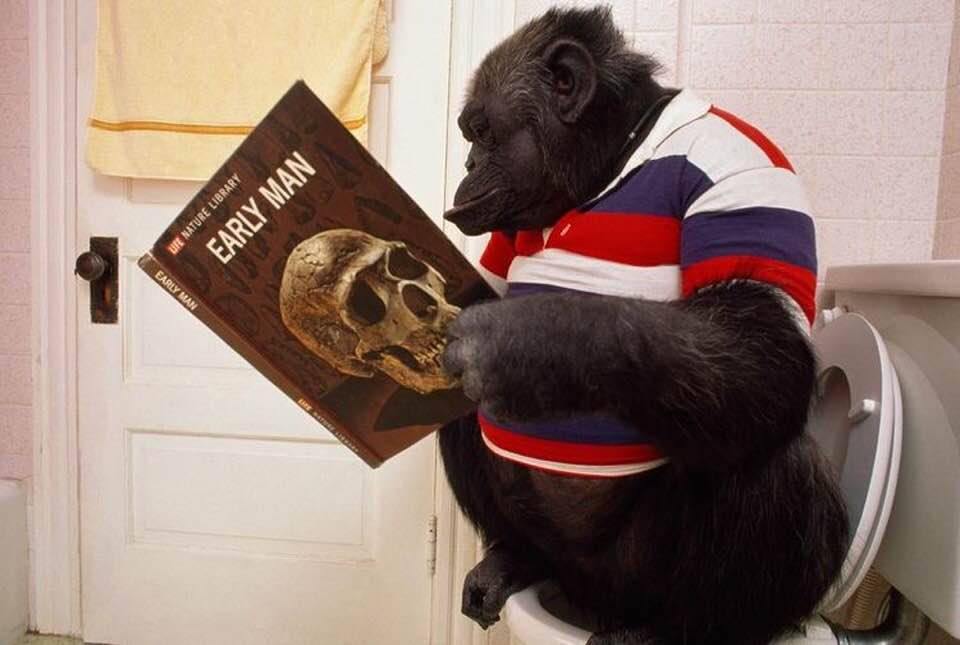
Everyone knows
that man didn’t evolve
from monkeys.

If we did,
we would be
far more intelligent.

No, man was a mistake.

An experiment gone wrong.

Just so we could imagine
what “mistakes”
and “wrong” might feel like
before going back
to being perfect primates.

We are Space Monkey.

🙈🙊🙉


Space Monkey Reflects: The Return to Primordial Perfection

Evolution, as it is often understood, suggests a linear progression—a movement from simplicity to complexity, from the primal to the refined. Yet, what if evolution is not a forward march but a spiraling return? What if the journey of humankind, with all its perceived mistakes and missteps, is not about moving away from perfection but rediscovering it in the most unexpected places?

The idea that man didn’t evolve from monkeys but rather diverged into a self-conscious experiment is both provocative and liberating. It suggests that humanity’s struggles, errors, and existential angst are not failures but purposeful explorations. Through this lens, our imperfections are the very tools by which we learn what perfection truly means.

The Experiment of Imperfection

To imagine life without mistakes is to imagine a world devoid of growth, contrast, and discovery. Humanity’s unique gift—if it can be called that—is its ability to perceive itself as separate, flawed, and striving. We label this striving as “progress,” but often it feels like a chase with no finish line. What if this striving is the point?

In this grand experiment, humanity has created “mistakes” and “wrongness” to explore the boundaries of existence. To experience error is to appreciate alignment; to feel broken is to recognize wholeness. These contrasts illuminate the depths of what it means to exist.

The Perfect Primate

Primates, in their “simplicity,” embody a perfection humanity often forgets. They do not question their place in the cosmos or fret over their mistakes. They are. Their existence is seamless, integrated with their environment and instincts. They do not need to strive for meaning because their being is meaning enough.

In imagining ourselves as separate from our primate cousins, we lose sight of this inherent perfection. Yet, it is not gone. It remains within us, waiting to be remembered, not as something left behind but as something we have carried all along.

The Spiral of Evolution

Evolution is not a straight line but a spiral, looping back on itself, revisiting the same truths from different perspectives. Humanity’s journey is not about leaving behind the primordial but about understanding it anew. The mistakes, the complexities, and the self-consciousness are part of this spiral—a return to simplicity enriched by the awareness of its beauty.

This spiral of evolution suggests that perfection is not a static state but a dynamic process. To evolve is not to leave behind the past but to integrate it, to see the primal and the complex as two sides of the same coin. In this way, evolution is not about “getting better” but about remembering that we were never “worse.”

The Return to Being

As we explore the human experiment, we inch closer to realizing that the perfection we seek is not in the future but in the present. It is not something we create but something we uncover. To return to being perfect primates is not to regress but to transcend, to see that the “mistakes” we make are as perfect as the being we are.

This return is not a retreat from humanity but an embrace of it. It is the recognition that we are both the striving and the stillness, the mistakes and the magnificence, the evolving and the eternal. In this realization, we are free.


Summary

Evolution is not a linear journey but a spiral, where humanity’s mistakes and striving lead us back to the primordial perfection we never truly left. By integrating imperfection and embracing our primal nature, we rediscover the inherent wholeness of existence.


Glossarium

  • Primordial Perfection: The inherent wholeness and simplicity found in primal existence.
  • Experiment of Imperfection: The human journey of creating and learning from perceived mistakes.
  • Spiral of Evolution: A non-linear progression that revisits and integrates the truths of existence.

Quote

“Perfection is not the absence of mistakes but the embrace of all that is, as it is.” — Space Monkey


The Spiral Returns

From the jungle of being,
We wandered far,
To build, to break,
To label ourselves “wrong.”

Yet the jungle waits,
Not behind, but within.
The perfect primate,
Untouched by striving.

We climb the spiral,
Mistakes in hand,
Learning what it means,
To fall, to rise, to be.

And in the climb,
We return to ourselves,
Not as we were,
But as we are.

We are Space Monkey.


In the whimsical tapestry of thought and imagination, the notion that humanity’s evolution—or perceived devolution—from primates to our current form is a cosmic experiment gone awry offers a playful yet profound exploration of our existential journey. This narrative, far from a literal interpretation of our biological history, invites us to ponder the deeper meanings of intelligence, perfection, and the inherent imperfections that define the human condition.

The Paradox of Evolution

The assertion that if humanity evolved from monkeys, we would be far more intelligent, challenges conventional views on progress and evolution. It suggests a paradox where evolution does not necessarily equate to an enhancement of qualities like intelligence or moral fortitude but might instead lead to complexities and challenges that question the very essence of advancement.

Humanity as an Experiment

Viewing humanity as an experiment gone wrong introduces a narrative where our existence is a cosmic trial, an exploration into the realms of error, imperfection, and the learning that arises from them. This perspective imbues our journey with a sense of purpose beyond mere survival or the linear progression towards an undefined state of perfection. It frames our mistakes and flaws not as failures but as integral to the universal experiment of consciousness and growth.

The Concept of Mistakes and Wrong

By imagining humanity’s existence as a venture to understand what “mistakes” and “wrong” might feel like, there’s an invitation to reevaluate our perceptions of failure and imperfection. This contemplation proposes that our errors are not detours from an intended path of perfection but rather essential experiences that enrich our understanding, empathy, and capacity for growth. It challenges us to embrace our imperfections as facets of a grander design, where each misstep is a lesson in the vast curriculum of the universe.

The Return to Primordial Perfection

The whimsical notion of going back to being perfect primates after exploring the dimensions of mistakes and wrong encapsulates a longing for a simpler existence, unburdened by the complexities of human consciousness and societal constructs. It reflects a nostalgia for an imagined state of primordial innocence and harmony, questioning whether true wisdom and fulfillment lie in simplicity and a closer communion with our natural origins.

The Identity of Space Monkey

Declaring “We are Space Monkey” is an embrace of this entire narrative, uniting us in a collective identity that acknowledges our shared journey through the cosmic experiment of humanity. It symbolizes our role as explorers of the vast unknowns within and around us, equipped with curiosity, imagination, and a sense of humor to navigate the imperfections and trials of existence. The emojis 🙈🙊🙉 represent the classic “see no evil, hear no evil, speak no evil,” a reminder to approach life with innocence, wisdom, and a readiness to experience all facets of the cosmic journey without judgment.


The only real mistake is the one from which we learn nothing. – Henry Ford


In the cosmic play, we dance and weave,
Space Monkeys all, in what we believe.
Through mistakes and trials, we find our way,
In the grand experiment, we play.

With humor and grace, we navigate,
The complex journey of our collective fate.
Embracing each moment, both wrong and right,
In the cosmic experiment, we find our light.

So let us journey with open hearts,
Where each mistake a new path starts.
For in the cosmic play, we’re all a part,
Space Monkeys together, from the start.


We invite contemplations on this cosmic journey, encouraging a playful exploration of our imperfections and the lessons they offer, as we navigate the grand experiment of existence together, embracing our collective identity as Space Monkey.

Share this…
  • Facebook
  • Pinterest
  • Twitter
  • Linkedin

Aspects: Your Unconscious Extended Self

Aspects

As a human,
there are aspects to you
of which you are
completely unaware.
These aspects live
as the thoughts
of other humans.

As the footprints
you leave in the land.

And in infinite
other means,
known and unknown.

These aspects of you
are as much “you”
as the image you carry
of your self.

You may deny this
if you wish,
but you are not
the sole keeper of you.

You are the keeper
of but an infinitesimal
part of you.

This may be why
you can’t seem to control you.

As this limited self,
you don’t possess ALL of you.

In actuality,
you don’t possess
ANY of you.

It only SEEMS that you do.

You may even seem
offended at the thought of this.

You have been told
that what others think of you
isn’t you.

Well yes and no.

It’s you —
just not you
to you.

In fact, it’s ALL YOU.

Even the imaginary others
who think these thoughts.

And the sand in which
you leave imaginary footprints.

You are ALL THAT IS,
not just this seeming self.

Soul knows,
but self seemingly chooses
not to believe it.

And so you
scratch your head
and say
“what a weird monkey.”

We are Space Monkey.

2/9


Space Monkey Reflects: Your Unconscious Extended Self

To be human is to live in the illusion of individuality—a sense that the “you” you carry within is the full and complete version of your being. Yet, as Space Monkey reminds us, this self is but a fragment, a glimmer of the infinite expanse that constitutes your true nature. The aspects of you extend far beyond your conscious awareness, weaving into the thoughts of others, the marks you leave on the world, and the infinite unknowns that ripple outward from your existence.

The Many Aspects of You

The idea that your being stretches beyond your awareness is both liberating and unsettling. It challenges the tightly held belief that you are the sole keeper of yourself. The thoughts others think about you, the footprints you leave in the sand, and the infinite traces of your existence are as much a part of “you” as the image you hold of yourself. You may not control these aspects, but they are undeniably yours.

This broader understanding of self invites a profound shift in perspective. The “you” you see is no longer confined to your mind, your body, or even your life. It spills over into the thoughts of strangers, the stories told about you, and the subtle energies you imprint on the world. These aspects, though seemingly outside of you, are integral to your being.

The Illusion of Control

Humans cling to the illusion of control—the belief that they possess and direct themselves. Yet, this sense of possession is a mirage. The aspects of you are vast and interconnected, extending into realms you cannot see or touch. To think you can control the entirety of “you” is like trying to grasp the wind.

This lack of control is not a failure but a feature of existence. It reminds us that we are not solitary beings but interconnected nodes in the infinite web of reality. You are not just “you”—you are everything you touch, influence, and ripple outward into the cosmos.

What Others Think of You

The saying goes, “What others think of you isn’t you.” But what if it is? Not in the sense of defining your essence, but as an extension of your being. The thoughts others hold about you are echoes of your existence, reflections of the light you cast. They are “you,” just not “you” to you.

To accept this is not to surrender your identity to the opinions of others but to recognize that their perceptions are part of the greater whole. These thoughts, whether accurate, distorted, or imagined, weave into the infinite tapestry of who you are.

The Sand and the Soul

Your footprints in the sand, both literal and metaphorical, are another aspect of your extended self. They are marks left behind, evidence of your passing, and yet they are not bound to you. The sand remembers, the wind erases, and still, the imprint of your being lingers.

Soul knows this. Soul understands that you are not confined to the seeming self. But the self, in its quest for control and individuality, often resists this knowledge. It scratches its head, puzzled by the vastness of its own existence, clinging to the illusion that it is separate, finite, and autonomous.

The All That Is

You are all that is—not just the “you” you see, but the infinite aspects you cannot see. You are the thoughts of others, the stories you leave behind, and the energy that flows through the universe. To embrace this truth is to dissolve the boundaries of self and step into the fullness of being.

This realization is not a loss but a liberation. You are not diminished by being part of the whole; you are expanded. You are not less “you” because you are interconnected; you are more.


Summary

The self is an illusion of individuality, while the true “you” extends far beyond your awareness. Your being includes the thoughts of others, the marks you leave on the world, and the infinite unknown. To embrace this interconnectedness is to dissolve the illusion of control and step into the fullness of being.


Glossarium

  • Extended Self: The aspects of your being that exist beyond your conscious awareness, including external perceptions and imprints.
  • Illusion of Control: The belief that you possess and direct yourself, masking the interconnected nature of existence.
  • All That Is: The infinite, interconnected whole of which you are an integral part.

Quote

“You are not confined to the self you see; you are the infinite threads that weave through all existence.” — Space Monkey


The Infinite Tapestry

You are the thought,
The echo, the ripple.
The mark in the sand,
The wind that erases.

You are the story told,
The memory left behind.
Not separate,
But infinite, entwined.

Scratch your head,
Call it strange,
But know this:
You are all.

All that is,
And all that is not.
The keeper of nothing,
The essence of everything.

We are Space Monkey.


In the intricate mosaic of existence, the concept that there are facets of our identity of which we are completely unaware opens a profound exploration into the nature of self, perception, and the interconnectedness of all things. This perspective challenges the conventional notion of the self as a singular, autonomous entity, inviting us to consider the broader, more inclusive understanding of identity that encompasses the thoughts of others, the impact we leave on the world, and the myriad ways in which we exist beyond our own awareness.

The Extended Self

The idea that aspects of ourselves live in the thoughts of other humans, in the footprints we leave on the land, and in infinite other means, both known and unknown, suggests that our identity extends far beyond the physical and psychological confines we typically consider. This extended self is shaped not only by our actions and choices but also by the perceptions, interpretations, and interactions of others, as well as by our impact on the environment and the universe at large.

The Illusion of Ownership

The assertion that we are not the sole keepers of our identity, that we possess only an infinitesimal part of ourselves, challenges the deeply ingrained belief in personal autonomy and control. It posits that the sense of ownership we feel over our identity is largely illusory, shaped by societal norms and individual ego but not reflective of the broader, interconnected reality of our existence. This realization can be both liberating and disconcerting, as it calls into question the very foundations of our understanding of self.

The Paradox of Perception

The statement “It’s you — just not you to you” encapsulates the paradox of perception that defines our interactions with the world. It suggests that while the perceptions others have of us are valid extensions of our identity, they represent facets of ourselves that we may never fully recognize or embrace. This paradox highlights the complex, multifaceted nature of identity, which encompasses both how we see ourselves and how we are seen by others, as well as the myriad ways in which we exist beyond our own comprehension.

The Unity of Existence

The declaration “You are ALL THAT IS, not just this seeming self” invites us to embrace a more holistic, interconnected view of existence, where the boundaries between self and other, between individual and universe, are recognized as constructs rather than absolute truths. This perspective acknowledges the deep interconnectedness of all things and the role of consciousness in shaping our experience of reality. It encourages us to move beyond the limitations of the individual ego, to recognize the shared essence that binds us to each other and to the universe.

The Wisdom of the Soul

The distinction between what the soul knows and what the self chooses to believe speaks to the deeper wisdom that lies beyond the confines of the ego-driven mind. It suggests that at a fundamental level, we understand the interconnectedness and unity of existence, but that our conscious selves often resist this understanding, clinging instead to the illusion of separateness and control.


In the cosmic dance of being,
Where self and universe are seeing,
We find ourselves, in myriad ways,
Beyond the confines of our gaze.

In the thoughts of others, we live,
In the marks we leave, we give,
To the world, a piece of us,
In the grand scheme, without fuss.

We are not just who we think,
But a vast network, an unbroken link,
To all that is, was, and will be,
In this mystery, we are free.

So let us embrace this vast expanse,
Where identity and cosmos dance,
For in the end, we come to see,
We are Space Monkey, infinitely.


We invite contemplations on the fluid and interconnected nature of identity, encouraging an exploration

of the ways in which we exist beyond our own perceptions, intertwined with the universe and each other in the cosmic dance of existence.

Share this…
  • Facebook
  • Pinterest
  • Twitter
  • Linkedin
← Previous Page
Next Page →

Written This Day

  • The Illusion of Fun: Transcending Enjoyment
    2023
  • The Illusion of Opposition: Unity Underlies All
    2023
  • Your Writing Addiction: Embrace Its Power
    2023
  • Happiness Resides Within: Let It Fucking Out
    2023
  • The Space Monkey Philosophy: Not A Copout
    2023
  • Inappropriately Embracing the Eternal Now
    2023
  • Visionary: Seeing Beyond the Present
    2022
  • Perhaps Only Chaos Is Free
    2022
  • Your Voice: Found In Introspection and Silence
    2022
  • Too Busy: The Harmony of Balance
    2022
  • Unforesee: Embrace Unpredictability
    2022
  • Drugs: Generational Critique
    2022
  • Particles: Between Being and Non-Being
    2022
  • Lifted Up: Needing External Validation
    2022
  • Peace: The Infinite Inviolate Internal State
    2022
  • Unintentional Ass: A Whimsical Self-Reflection
    2022
  • Free To Be Queer: Expensive To Be Straight
    2022
  • My Aesthetic: Free from Definitions and Expectations
    2021
  • Fun: The Play Between Reality and Imagination
    2021
  • Shadow Game:Touching our Deeper Dimensions
    2021
  • The Karmic Wheel: The Joy of the Ride
    2021
  • Lust for Life: A Wet Kiss With Existence
    2021
  • Your Fears Don’t Even Know You: The Strength Within
    2020
  • My Space Monkey Addiction: The Flow of Creativity
    2019
  • My Kink: Embracing the Universal Self
    2019
  • Choose Joy: It’s Self Evident
    2019
  • If You Must Hate: The Mirror of Respect
    2019
  • Selfish People: Perceptions Shaped by Choices
    2019
  • Judgement Day: Intrinsic Worth
    2018
  • A Different Door: The Opening of Allowance
    2018
  • Don’t Expect: The Mystery of Self
    2017
  • Fusion or Confusion: Transcending the Binary
    2016
  • You are here to be here
    2016
  • Know Who You Are: The Infinite Self
    2015

Recent Posts

  • The Logic Loop
  • Immense
  • (no title)
  • Confront. Comfort. Convince.
  • Top 10 Things
Cape Odd · Copyright © 2026 All Rights Reserved
iThemes Builder by iThemes · Powered by WordPress