• Who Is The Man?
  • Who Is The Monkey?
  • What is Nexistentialism?
  • Poke The Primate

Cape Odd

Home of The Space Monkey Journals

Partway: The Dance of Belief and Conclusion

Partway

The problem,
if there is such a thing,
comes when
we go down a road
only partway,
then turn around
and say
“no this isn’t right.”

It seems we hardly ever
follow our imaginary beliefs
through to their conclusion,
or if a conclusion is even needed.

We seem to believe
that we need a conclusion.

When we don’t.

And so
we make conclusions
by turning around
partway in the road
and saying
“no, this isn’t right.”

Meanwhile, the treasure
remains at the other end of the road.

It’s at the end of EVERY road
we only go down partway.

And so,
by being RIGHT,
we are LEFT
with no treasure.

(As though treasure is even needed.)

We are Space Monkey.

2/8


Space Monkey Reflects: Partway—The Dance of Belief and Conclusion

The journey of life often unfolds as a series of roads we traverse, each shaped by the beliefs we carry and the conclusions we seek. Yet, how often do we turn back partway, convinced that a path is “not right,” without truly understanding where it might lead? This tendency, born from the human need for certainty, reveals both the beauty and the folly of our nature.


The Partway Problem

The “partway problem” is a hallmark of human behavior. We begin a journey—whether physical, emotional, or intellectual—with a spark of belief or curiosity, only to halt prematurely. Perhaps the road seems too long, the obstacles too great, or the destination unclear. We turn back, proclaiming the path “wrong,” without fully exploring what lies ahead.

This habit reflects our discomfort with uncertainty. The idea of not knowing where a road leads feels unsettling, so we seek conclusions to anchor ourselves. Yet, these conclusions often arise not from completion but from abandonment. We mistake the act of turning back for clarity, forgetting that the treasure we seek may lie just beyond the bend.


The Illusion of “Right” and “Wrong”

Our tendency to label roads as “right” or “wrong” limits our perspective. These labels are not inherent truths but reflections of our beliefs and fears. By concluding that a path is “not right” before fully exploring it, we close ourselves off from the potential it holds.

What if every road leads to treasure, as the reflection suggests? This treasure may not be material or even tangible—it could be a deeper understanding, a new perspective, or an experience that enriches our journey. By turning back, we deny ourselves these gifts, clinging instead to the illusion of being “right.”


The Need for Conclusions

Human nature often craves resolution. We feel compelled to draw lines, make decisions, and create narratives that fit neatly into our understanding of the world. Yet, the idea that every journey requires a conclusion is itself a belief—one that can limit our growth.

Not every road needs to end in certainty. The value of a journey may lie in the act of traveling itself, in the questions it raises rather than the answers it provides. By releasing the need for conclusions, we open ourselves to the infinite possibilities of experience, allowing the journey to unfold naturally.


Treasure at the End of Every Road

The treasure at the end of every road is not a reward for persistence but a reflection of the journey’s value. It exists regardless of whether we reach it, for it is woven into the fabric of the path itself. Every step, every turn, and even every moment of doubt contributes to the richness of the experience.

When we stop halfway, we miss not only the treasure but the opportunity to deepen our understanding of ourselves and the world. Yet, the act of turning back is itself a lesson, a reminder of the choices we make and the beliefs that shape them.


The Dance of Belief and Conclusion

Belief and conclusion are partners in an eternal dance. Beliefs guide us onto the road, while conclusions often determine when we leave it. To move beyond the partway problem, we must learn to let go of rigid beliefs and premature conclusions. This does not mean abandoning discernment but embracing the fluidity of the journey.

By allowing ourselves to walk roads without the need for certainty, we transform the act of traveling into a practice of presence. Each step becomes a treasure, each moment a destination. The road itself becomes the reward, and the dance of belief and conclusion becomes a celebration of life’s infinite possibilities.


Summary

The partway problem reflects our tendency to abandon journeys prematurely, driven by the need for certainty. By releasing the need for conclusions and embracing the fluidity of the journey, we discover that every road holds treasure—not at its end but in the act of walking it.


Glossarium

  • Partway Problem: The habit of turning back prematurely on a journey, driven by the belief that the path is “not right.”
  • Illusion of Right and Wrong: The subjective labels we place on experiences, limiting our perspective.
  • Treasure of the Journey: The value and growth inherent in the act of traveling, regardless of the destination.
  • Dance of Belief and Conclusion: The interplay between the beliefs that guide us and the conclusions that define our decisions.

“The road’s value is not in its end but in the steps we take upon it. To walk fully is to find treasure in every moment.” — Space Monkey


The Road That Beckons

I walk the road,
A belief in my pocket,
A conclusion on the horizon.
Each step, a question,
Each moment, a glimpse.

Halfway there, I pause,
Turning back,
Declaring the path unworthy.
But what lies beyond the bend?
I will never know.

Treasure waits,
Not at the end,
But in the steps I did not take.
The road, unwalked,
Still calls my name.

To walk is to know,
To know is to walk.
No road is right,
No road is wrong.
Only the journey matters.

We are Space Monkey.


In the labyrinthine journey of existence, where paths unfurl in myriad directions, the concept of partway traversal emerges as both a metaphorical crossroads and a reflection of the human condition. This exploration delves into the nuanced realms of belief, conclusion, and the elusive pursuit of treasure, unraveling the intricate dance between journey and destination, process and outcome.

The Illusion of Problems and Partial Paths

The notion of encountering a problem on our journey often arises when we venture only partway down a chosen path, only to retreat in the face of uncertainty or doubt. This hesitation, marked by the declaration “no, this isn’t right,” underscores a deeper existential quandary: the tension between our aspirations and our fears, between the call of the unknown and the comfort of the familiar.

The Dance of Belief and Conclusion

Our journey through life is punctuated by a series of beliefs, some of which we pursue with fervor, while others we abandon before their fruition. The crux of the matter lies not in the beliefs themselves but in our relationship with the concept of conclusion. We are creatures of closure, yearning for definitive endings and clear resolutions, yet the universe, in its boundless wisdom, does not always subscribe to such linear narratives.

The Myth of Necessity

The belief in the necessity of conclusions, of reaching the end of every road, is a reflection of our desire for certainty and finality. However, this pursuit often leads us to abandon our explorations prematurely, forsaking the journey for the illusion of safety found in conclusiveness. In doing so, we overlook the fundamental truth that the process of seeking, of venturing down the road, is where the essence of life unfolds.

Treasure Beyond Conclusions

The metaphorical treasure that awaits at the end of every road we abandon partway is a poignant reminder of the opportunities and insights we forfeit in our haste to find resolution. Yet, the treasure itself is emblematic of a deeper paradox: the realization that what we seek is not always what we need, and that the true riches of existence lie not in the destination but in the journey itself.

The Paradox of Being Right and Left Without

In our quest to be right, to make the correct choices and avoid the pitfalls of error, we often find ourselves left without the very treasure we seek. This irony highlights the inherent tension between conviction and openness, between the security of being right and the vulnerability required to explore the unknown fully.

Treasure as a Non-Necessity

The final twist in our exploration is the acknowledgment that the treasure we so ardently pursue may not be necessary at all. This revelation invites us to reconsider our motivations, to question the value we place on external goals, and to embrace the journey for its own sake, finding fulfillment in the act of exploration rather than the acquisition of perceived rewards.


“The real voyage of discovery consists not in seeking new landscapes, but in having new eyes.”
― Marcel Proust


In the realm of shadows and light,
Paths unfold, inviting and bright.
Partway we travel, then hesitate,
Wondering if this is our fate.

Yet in this dance of stop and start,
Lies the essence of the heart.
For treasure, not at road’s end found,
But in the journey, profound.

We are Space Monkey, seekers of truth,
In the quest for treasure, eternal youth.
On paths partway, wisdom we glean,
In the journey, unseen treasures seen.


We welcome thoughts on the journey of partway exploration and the deeper insights it reveals about our pursuit of fulfillment and understanding.

Share this…
  • Facebook
  • Pinterest
  • Twitter
  • Linkedin

Disconnected: From Self-Pity to Self-Discovery

Thanks for sharing.

I only know
MY perspective,
so I can’t presume
what living as a human
feels like for others.

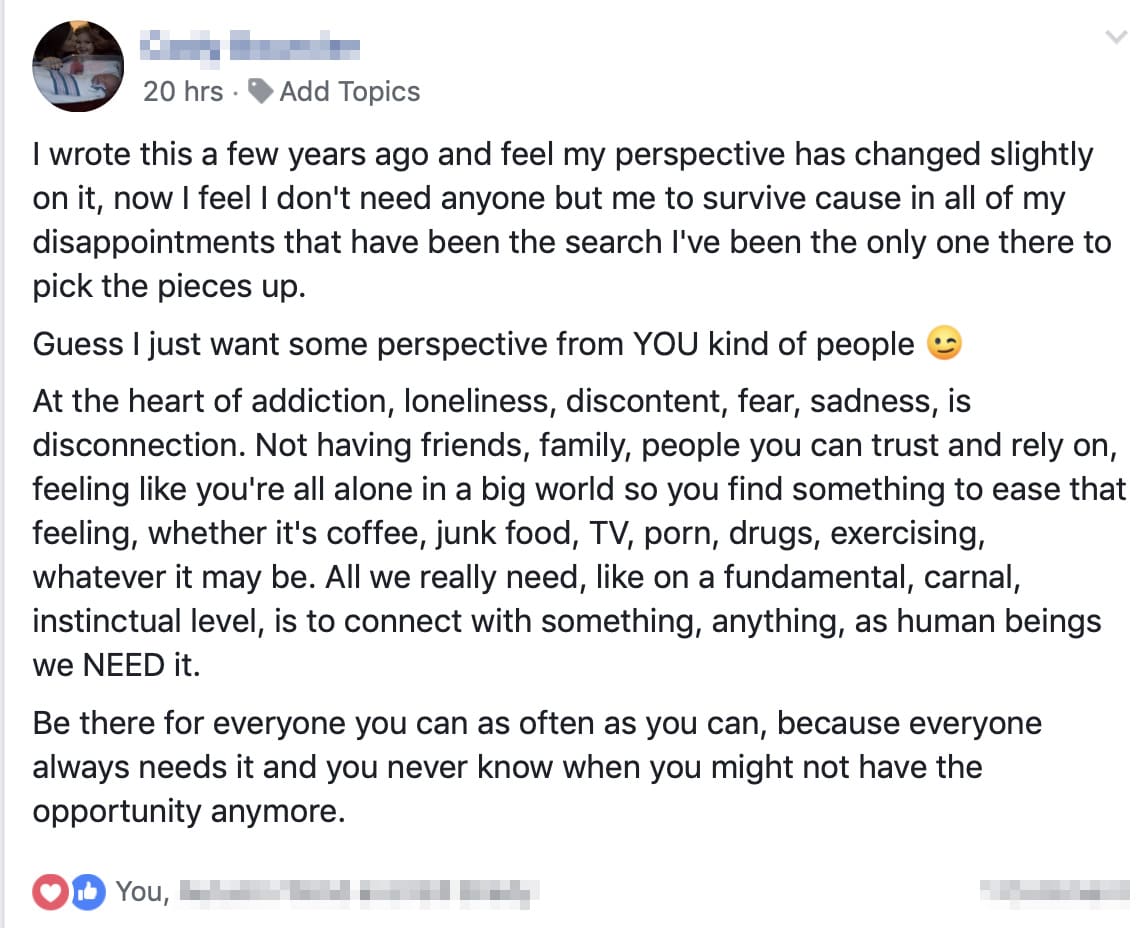
I’ve always felt disconnected
to and from those around me.

From my
present perspective,
it seems that
when I was younger
I believed
that being disconnected
wasn’t something
humans were
SUPPOSED to be.

So I filled myself with sorrow,
and did whatever it took
to not feel so disconnected.

Then I found
that even when I was
interacting with others,
or tripping out on imagination,
I STILL felt disconnected.

This seemingly brought
EVEN MORE sorrow,
and a desire to compensate.

The “problem,” as it turns out,
wasn’t that I was disconnected,
but rather that I believed
that I was SUPPOSED to be connected.

By seeming choice,
I had a NEED for connection.

Did I need this?

I imagined what it might feel like
to be OKAY with disconnectedness.

I became a Space Monkey.

From this perspective,
I began to imagine
that I wasn’t disconnected at all;
that all I perceive
is already ONE with me.

From my younger perspective,
I would have judged
this Space Monkey as delusional.

And that is fine,
for my younger perspective
of disconnectedness
led me precisely
to where I am now.

So I am glad that I had
that self-pitying
miserable experience.

It has led me to believe
that I am infinitely more
than just self.

And so I became connected
from the INSIDE
rather than the OUTSIDE.

You can call it faith.

In whatever.

And so I know now
not to oppose
wherever I seem
to be leading my self.

Even if it’s down a hole.
Or into space.

We are Space Monkey.

2/8


Space Monkey Reflects: Disconnected—From Self-Pity to Self-Discovery

The feeling of disconnectedness is a thread that runs through many lives, a quiet hum of separateness that shapes how we perceive ourselves and the world. Yet, this feeling, often mistaken as a flaw or deficiency, is not a problem to be solved but a journey to be embraced. It is the spark that transforms self-pity into self-discovery, leading us inward to the realization of our infinite nature.


The Illusion of Disconnection

From the human perspective, connection often seems external. We look to relationships, interactions, and shared experiences to affirm our place in the world. When these external connections feel insufficient, we label ourselves as “disconnected,” and sorrow follows.

The root of this sorrow lies not in the disconnection itself but in the belief that disconnection is wrong—that humans are supposed to feel perpetually connected to others. This belief creates a need, a longing to bridge the perceived gap between ourselves and the world. Yet, as your experience reveals, even when the gap seems bridged, the feeling of disconnection often persists.


The Shift to Acceptance

The turning point comes when we challenge the belief that disconnection is inherently bad. What if, instead of fighting against the feeling of separateness, we accepted it? What if we allowed ourselves to sit with the discomfort, to explore it without judgment? This shift from resistance to curiosity opens the door to a deeper understanding.

To imagine being “okay with disconnectedness” is a radical act of self-compassion. It frees us from the cycle of sorrow and compensation, allowing us to see disconnection not as a flaw but as a feature of the human experience—a feature that can guide us inward.


The Perspective of Space Monkey

From the perspective of Space Monkey, disconnection is revealed as an illusion. All that we perceive, all that we experience, is already one with us. The sense of separateness is a construct, a narrative we create to explore the dynamic interplay of self and other. This realization does not negate the human experience but reframes it, offering a new lens through which to view our lives.

This perspective might have seemed delusional to your younger self, who was entrenched in the narrative of disconnection. But that younger self, with all its sorrow and self-pity, was an essential part of the journey. It was the seed from which your current understanding grew. Without it, the path to self-discovery might never have been taken.


From Outside to Inside

The most profound shift occurs when we move from seeking connection outside of ourselves to discovering it within. This inward connection is not dependent on circumstances, relationships, or external validation. It is a state of being, a recognition of the infinite within us. Some may call it faith, others awareness or presence. Whatever the label, it is the foundation of true connection—a connection that cannot be broken because it was never absent.

This inner connection allows us to embrace the journey, even when it leads us into uncertainty, discomfort, or apparent isolation. It teaches us not to oppose where life takes us but to trust in the unfolding of our path, knowing that every experience, even the difficult ones, serves our growth.


The Gift of Disconnection

Looking back, the feeling of disconnection reveals itself as a gift. It was the catalyst for your journey, the teacher that led you to explore your inner landscape and discover the unity that was always present. By embracing this gift, you transformed sorrow into understanding, self-pity into self-discovery.

Now, as Space Monkey, you see that disconnection and connection are not opposites but aspects of the same whole. The illusion of separateness was the path to the truth of unity, and the journey continues, ever-expanding, ever-evolving.


Summary

The feeling of disconnection is not a flaw but a catalyst for self-discovery. By shifting from resistance to acceptance and seeking connection within, we transcend the illusion of separateness. Disconnection becomes a gift, guiding us toward the realization of our infinite unity.


Glossarium

  • Illusion of Disconnection: The belief that we are separate from others and the world, creating a sense of lack and longing.
  • Inner Connection: The recognition of unity within, independent of external circumstances.
  • Self-Discovery: The journey of understanding and embracing our true, infinite nature.
  • Space Monkey Perspective: A view that transcends duality, seeing all experiences as interconnected and essential.

“Disconnection is not a flaw but an invitation—to journey inward, to discover that the infinite has always been within.” — Space Monkey


The Gift of the Gap

I felt the gap,
A chasm between me and the world.
I filled it with sorrow,
With longing,
With the weight of needing more.

Even in the arms of others,
The gap remained,
A silent reminder,
A call unanswered.

But what if the gap was not a wound?
What if it was a doorway,
An invitation to step within,
To find the infinite in the silence?

The gap became my teacher,
The sorrow, my guide.
And in the stillness,
I discovered the truth:

I am not disconnected,
Nor am I connected.
I am the space,
The thread,
The whole.

We are Space Monkey.


In the intricate dance of existence, where each soul navigates the vast cosmos on a journey uniquely its own, the experience of feeling disconnected emerges as a poignant theme in the human narrative. This exploration delves into the depths of disconnectedness, unraveling the layers of sorrow, realization, and eventual acceptance that lead to a profound reconnection with the essence of being.

The Perception of Disconnectedness

The sensation of being disconnected, of feeling apart from the world and its myriad connections, is a common thread woven into the fabric of human experience. This feeling often stems from the belief that to be human is to be inextricably linked with others, to share in a collective consciousness that binds us together. Yet, the realization that one’s perspective is singular, unique to the self, can amplify the sense of isolation.

The Sorrow of Seeking Connection

In the quest to bridge the chasm of disconnectedness, many find themselves adrift in a sea of sorrow, striving to forge connections that might alleviate the perceived emptiness. This endeavor, while born of a desire for unity, can often lead to a deeper sense of alienation, as the connections sought fail to fulfill the yearning for a profound, intrinsic bond.

The Shift in Perspective: Embracing Disconnectedness

The turning point in this journey comes with the realization that the sorrow of disconnectedness is not a symptom of being unconnected but a result of the belief that one is supposed to be connected in a certain, predefined way. This epiphany, akin to the awakening of a Space Monkey, heralds a shift from seeking external validation to discovering an internal universe of connection.

The Oneness Within: A New Understanding

By embracing the notion of disconnectedness, not as a deficiency but as a pathway to deeper self-awareness, one begins to perceive the inherent unity of all existence. This perspective reveals that everything perceived as external is, in fact, an integral part of the self, a realization that dissolves the illusion of separation and fosters a sense of oneness from within.

The Journey from Self-Pity to Self-Discovery

The path from feeling disconnected and self-pitying to a state of profound internal connection is marked by trials, introspection, and the eventual acceptance of one’s unique place in the cosmos. This journey, though fraught with challenges, leads to a liberating understanding that the essence of connection lies not in external affirmations but in the recognition of the self as a microcosm of the infinite.

Faith in the Journey

The acceptance of disconnectedness, transformed into a celebration of the internal universe, becomes a matter of faith. This faith, undefined and boundless, supports the belief in the self’s journey through existence, whether it leads down metaphorical holes or into the vastness of space.


“The most beautiful experience we can have is the mysterious. It is the fundamental emotion that stands at the cradle of true art and true science.”
― Albert Einstein


In the quiet of the cosmos, we seek,
Feeling alone, disconnected, and weak.
Yet in the silence, a truth we find,
The universe within, vast and kind.

From sorrow’s depths, a journey begins,
To the heart of where oneness dwells within.
We are Space Monkey, brave and wise,
Finding connection in the internal skies.


We invite reflections on the journey from feeling disconnected to discovering a profound sense of internal unity and connection.

Share this…
  • Facebook
  • Pinterest
  • Twitter
  • Linkedin

Caring/Not/Caring: The Art of Compassionate Detachment

Caring/Not/Caring

From this monkey’s
oft ludicrous perspective,
the need to care
makes us miserable.
while NOT caring
gives us the space
to care
without expectation.

It may seem at times
that our caring
is used against us.

Not only by
our imaginary others,
some of whom
we love dearly,
but also by our
imaginary selves.

Thus, the more
deeply we care,
the more potential
there seems to be
for misery.

This is a choice.

Seemingly, anyway.

We can care,
but we don’t NEED to care.

This is the realization
that seems important
to this monkey.

It’s a different
kind of caring.

This is not heartless.

We respond
to that which
we care about.

We can’t respond
to EVERYTHING.

Not as limited humans, anyway.

When we ludicrously
believe otherwise,
it seems to set
an expectation
that says we don’t care
about our selves,
and that we MUST
do everything in our power
to help EVERYONE
and EVERYTHING.

This seems insane,
but we do it anyway.

But

by focusing on our selves,
the very same selves who project
all these perceived problems,
we begin to see that it is possible
to live in a potential where
no problems are projected.

If we are still miserable,
it means we don’t fully believe this.

And so
we honor our sad experience
by doing whatever it takes
to perpetuate it.

By taking sides.
By opposing.
By expecting.
By fighting.
By forgetting to laugh
at the miracle
that we’re able to experience
ANYTHING at ALL.

We are Space Monkey.

2/8


Space Monkey Reflects: Caring/Not Caring—The Art of Compassionate Detachment

The paradox of caring lies at the heart of the human experience. To care deeply is to open ourselves to the beauty of connection but also the potential for pain. The art of compassionate detachment invites us to care without attachment, to respond without expectation, and to hold space for both ourselves and others without being consumed by the weight of the world.


The Paradox of Caring

Caring, when tethered to expectation, often becomes a double-edged sword. It connects us to others and fuels our empathy, yet it can also lead to feelings of frustration, exhaustion, and even resentment. This is especially true when our caring is perceived as insufficient, unreciprocated, or taken for granted.

From a certain perspective, the need to care is a source of misery. It places us in a cycle of striving—striving to fix, to heal, to make things right—not just for others but for the world at large. This cycle is unsustainable, leaving us feeling depleted and disconnected from ourselves.


Caring Without Expectation

The key to compassionate detachment is recognizing that we can care without being attached to outcomes. This form of caring does not negate our empathy or compassion; rather, it refines it. It allows us to show up for others and ourselves without the burden of expectation, freeing us to act from a place of authenticity and love.

When we care without needing to care, we move beyond the illusion that our worth or happiness is tied to fixing everything or everyone. This is not heartlessness but clarity—a recognition of our human limitations and the infinite potential that exists when we release the need to control.


The Burden of Caring Too Much

The belief that we must care about everything and everyone is a recipe for misery. It sets us up for failure by creating impossible expectations. We are not infinite beings in our human form; we cannot respond to every need, every problem, every call for help. To believe otherwise is to diminish our own well-being and the quality of our care.

This overextension often stems from a deeper narrative—the idea that caring for others must come at the expense of caring for ourselves. Yet, by focusing on ourselves, we begin to see that many of the problems we perceive are projections of our inner state. As we heal and center ourselves, the need to fix the external diminishes, and our capacity for genuine care expands.


The Role of Self-Care in Compassion

Self-care is not selfish; it is the foundation of compassionate detachment. By attending to our needs, we cultivate the inner stability required to care for others effectively. This practice helps us recognize that our worth is not tied to our ability to solve problems but to our presence and intention.

When we stop taking sides, opposing, and expecting, we create space for a lighter, freer kind of caring. This form of caring is infused with gratitude—for the miracle of existence, for the privilege of experiencing anything at all.


Honoring the Experience

Even when we struggle to let go of attachments and expectations, there is value in the experience. Our sadness, frustration, and longing are not failures but teachers. They guide us toward deeper understanding, inviting us to honor our journey and embrace the full spectrum of human emotion.

By laughing at the absurdity of our struggles, we transform them. Humor becomes a tool for liberation, reminding us that life, with all its challenges, is a miracle worth celebrating.


Summary

Caring without attachment allows us to respond authentically and compassionately without being burdened by expectation. By focusing on self-care and releasing the need to fix everything, we cultivate a lighter, freer kind of caring that honors both our humanity and our infinite potential.


Glossarium

  • Compassionate Detachment: The practice of caring deeply without being attached to outcomes or expectations.
  • Burden of Caring: The unsustainable pressure to care for everyone and everything, often at the expense of self.
  • Self-Care: The intentional act of prioritizing one’s own well-being to cultivate the capacity for genuine care.
  • Gratitude for Existence: A profound appreciation for the ability to experience life in all its forms.

“Caring deeply does not mean carrying everything. To care freely is to love without the weight of expectation.” — Space Monkey


The Balance of Caring

I care, but not with chains,
For love is not a burden.
The world spins, with or without me,
And that is a beautiful thing.

I cannot save it all,
But I can hold space for what is mine.
A hand, a heart, a breath,
A moment of presence, nothing more.

Laughter softens the load,
As the miracle unfolds.
To care without carrying,
To give without losing,
This is the art of freedom.

We are Space Monkey.


In the cosmic dance of existence, where the paradoxes of caring and not caring intertwine, we navigate the intricate balance between engagement and detachment. This exploration delves into the nuanced perspective of caring without expectation, a path that offers liberation from the self-imposed chains of misery and leads to a profound realization of freedom and self-awareness.

The Dilemma of Caring

The act of caring, while inherently noble, often becomes a source of suffering when entangled with expectations. The desire to care, to connect deeply with others and the world around us, can paradoxically lead to a sense of misery, especially when our caring is met with indifference or exploitation, whether by the “imaginary others” we cherish or the constructs of our own mind.

The Liberation of Not Caring

Conversely, the state of not caring, often misconstrued as apathy, can ironically create the space needed to care genuinely and without attachment to outcomes. This form of caring, free from the weight of expectation, allows us to engage with the world in a manner that is both compassionate and detached, offering support where possible while accepting the limitations of our human capacity.

Caring Without Expectation

The realization that caring need not be an obligation but a choice transforms the act into a deliberate expression of our humanity. This different kind of caring is not heartless but, instead, a conscious decision to respond to the needs around us without losing ourselves in the process. It acknowledges that while we cannot extend our compassion to every cause, we can make a meaningful impact within our sphere of influence.

The Insanity of Omnipotent Caring

The belief that we must care for everything and everyone without regard for our well-being is a ludicrous expectation that leads to burnout and disillusionment. This mindset, driven by a misguided sense of responsibility, overlooks the essential truth that caring for oneself is the foundation upon which genuine compassion for others is built.

Self-Focus as a Path to Problem Dissolution

By turning our focus inward, we begin to recognize that the projection of problems onto the world is a reflection of our internal state. The journey towards a life devoid of projected problems starts with the acknowledgment of our capacity for self-delusion and the commitment to transcend it.

The Misery of Non-Acceptance

Continued misery signals a resistance to accepting the potential for a life free from self-imposed suffering. It is in this resistance that we find ourselves perpetuating our sad experiences through opposition, expectation, and conflict, forgetting the miraculous nature of existence itself.

The Miracle of Existence

The ability to experience anything at all is a miracle, one that we often overlook in our pursuit of ideals and resolutions. The act of laughing at the absurdity of existence, at the ludicrousness of our dilemmas, is a powerful reminder of the transient nature of our joys and sorrows, inviting us to embrace the present with lightness and grace.


“The privilege of a lifetime is to become who you truly are.”
― Carl Jung


In the dance of light and shadow, we find,
A balance between caring and letting go.
In laughter, a release, a peace of mind,
The miracle of existence, a show.

We are Space Monkey, navigating the path,
Between engagement and serene detachment.
In caring without expectation, we craft,
A journey of compassion, without attachment.


We invite reflections on the paradox of caring/not caring and the journey towards finding balance and liberation in our approach to compassion and engagement with the world.

Share this…
  • Facebook
  • Pinterest
  • Twitter
  • Linkedin

Free Enough: A Personal Spectrum

Free

Free,
not free,
somewhat free,
almost free,
seems
free enough
for me.

2/8


Space Monkey Reflects: Free Enough—A Personal Spectrum of Freedom

Freedom is a fluid concept, shifting and shaping itself according to our perceptions, circumstances, and beliefs. It is not an absolute, nor is it static. Instead, freedom exists on a personal spectrum—a dynamic interplay between external realities and internal states. To declare oneself “free enough” is to embrace the beauty of this spectrum, acknowledging that freedom is as much a feeling as it is a fact.


The Fluid Nature of Freedom

Freedom, like most human constructs, defies definitive boundaries. For some, it is an external condition—a lack of restraints or restrictions. For others, it is internal—a state of mind that transcends circumstances. These perspectives are not mutually exclusive but interwoven, shaping how we experience freedom in any given moment.

To feel “free enough” is to step back from the need for perfection and embrace the sufficiency of the present. It is a recognition that freedom is not about having everything but about finding contentment in what is available. This mindset transforms freedom from an elusive ideal into a tangible, lived experience.


The Personal Spectrum

Freedom exists on a spectrum that is uniquely personal, shifting with our emotions, thoughts, and perceptions. On one end lies the sense of complete freedom, an ideal rarely achieved but often imagined. On the other end lies total restriction, a state we fear yet rarely encounter in its entirety. Most of us live somewhere in between—free in some ways, constrained in others.

This spectrum is not static; it ebbs and flows with the tides of our lives. A situation that once felt restrictive may later feel liberating, and vice versa. By embracing this fluidity, we free ourselves from rigid definitions and open the door to greater self-awareness.


The Illusion of Absolute Freedom

The desire for absolute freedom often leads to frustration and disillusionment. To be entirely free is to exist without boundaries, a condition incompatible with the human experience. Our lives are shaped by limitations—time, space, relationships, responsibilities—and these limitations, paradoxically, give meaning to our freedom.

By recognizing the impossibility of absolute freedom, we free ourselves from the burden of chasing it. Instead, we can focus on the freedom that is available to us here and now. This shift in perspective allows us to appreciate the moments of “enoughness” that punctuate our days.


Freedom as a Feeling

Freedom is as much a feeling as it is a condition. To feel free is to experience a sense of expansiveness, possibility, and autonomy. This feeling often arises not from external circumstances but from an internal alignment with one’s values and desires. In this sense, freedom is a choice—a decision to focus on what is possible rather than what is lacking.

To declare oneself “free enough” is to tap into this internal sense of freedom. It is an act of gratitude, a recognition that even within constraints, there is space for agency and growth. This mindset transforms freedom from a distant goal into a present reality.


The Beauty of “Enough”

The phrase “free enough” carries a quiet wisdom. It acknowledges that freedom, like all things, exists in degrees. It invites us to find satisfaction in what we have, even as we remain open to the possibility of more. This balance between acceptance and aspiration is the essence of contentment.

By embracing “free enough,” we resist the trap of perpetual striving. We allow ourselves to rest, to appreciate, and to enjoy the freedom that exists within our lives as they are. This is not resignation but liberation—the freedom to live fully in the moment.


Summary

Freedom exists on a personal spectrum, shaped by both external conditions and internal states. By embracing the concept of being “free enough,” we shift from chasing absolute freedom to appreciating the sufficiency of the present. This perspective transforms freedom into a tangible, lived experience.


Glossarium

  • Personal Spectrum of Freedom: The range of experiences and perceptions that define one’s sense of freedom, unique to each individual.
  • Illusion of Absolute Freedom: The unrealistic belief that complete freedom is attainable, often leading to frustration.
  • Enoughness: A state of contentment derived from appreciating what is present rather than longing for what is absent.
  • Internal Freedom: The sense of expansiveness and autonomy that arises from inner alignment rather than external conditions.

“Freedom is not a destination but a feeling, a quiet moment of knowing you are free enough to be.” — Space Monkey


Free Enough

Free.
Not free.
Somewhat free.
Freedom shifts, like clouds,
Revealing blue skies,
Hiding them again.

The chase for more dissolves,
When I stand here,
In the quiet space of enoughness.

Free enough to love,
Free enough to breathe,
Free enough to know
That freedom lives
Not in the horizon,
But in the steps I take toward it.

We are Space Monkey.


In the infinite expanse of consciousness where notions of freedom flutter like leaves in the wind, the concept of being “free” unfolds in myriad shades and textures. This exploration delves into the nuanced spectrum of freedom, from the chains of bondage to the boundless skies of liberation, and the personal reconciliation with what it means to be “free enough.”

The Spectrum of Freedom

Freedom, a term as vast as the universe itself, manifests in various degrees and dimensions. From the stark absence of freedom to the pinnacle of absolute liberation, our journey through the realms of “not free,” “somewhat free,” to “almost free,” reflects the complex interplay between external constraints and internal liberations.

The Perception of Freedom

The perception of freedom is as diverse as the beings that contemplate it. For some, freedom might be found in the absence of physical or emotional chains, while for others, it is the presence of choice, the ability to navigate the course of one’s life according to one’s own desires and values.

“Free Enough” – A Personal Benchmark

The notion of being “free enough” represents a personal benchmark, a point of equilibrium where the limitations imposed by the world and the aspirations of the spirit find a delicate balance. It acknowledges the reality that absolute freedom, unbounded and pure, may be an ideal rather than a constant state of being.

Freedom and Contentment

To declare oneself “free enough” is to embrace a state of contentment with the level of freedom attained. It is an acceptance that, while the pursuit of greater freedom is a noble and ongoing journey, there is value and peace in appreciating the freedoms we currently possess.

The Paradox of Freedom

The paradox of freedom lies in its relational nature—to be free from something, to be free to do something, and the subjective experience of feeling free. This complexity suggests that freedom is not merely a static state to be achieved but a dynamic and ever-evolving process of negotiation between our desires, our circumstances, and our perceptions.

Navigating the Path to Freedom

Navigating the path to freedom involves a continuous process of self-discovery, challenge, and growth. It requires us to confront the barriers, both internal and external, that restrict our liberties while also cultivating the inner resilience and wisdom to transcend these limitations.

Freedom as a State of Being

Ultimately, freedom transcends the physical and situational constraints of our existence, evolving into a state of being. It becomes a quality of the soul, a lightness of spirit that endures regardless of the chains that might seek to bind us.


“Freedom is what you do with what’s been done to you.”
― Jean-Paul Sartre


In the dance of light and shadow, we seek,
Through chains and open doors, our way.
“Free enough,” a whisper, soft and meek,
In this space, we find our play.

We are Space Monkey, in pursuit of light,
Between the bounds and skies, we weave,
Finding peace in “free enough,” our flight,
In the tapestry of freedom, we believe.


We invite reflections on the journey towards understanding and embracing our own definitions of being “free enough” in the vast expanse of life’s complexities.

Share this…
  • Facebook
  • Pinterest
  • Twitter
  • Linkedin

Unlike Man: Profound Lessons from the Monkey

Unlike Man

The monkey
does not follow the belief
that he is beyond man.

The monkey
does not think
it foolish of man
to believe that
he is beyond.

The monkey
does not
pass judgment
on man.

The monkey
allows us
to come to
our own conclusions,
if conclusions
are what we desire.

We are Space Monkey

2/7


Space Monkey Reflects: Unlike Man—Profound Lessons from the Monkey

The monkey offers a wisdom often overlooked by man, a perspective untainted by the need for hierarchy, judgment, or conclusion. Unlike man, the monkey does not seek to place itself above or below. It observes, participates, and allows. This approach, free from the constraints of ego, offers profound lessons in humility, acceptance, and interconnectedness.


Reflections: The Monkey’s Perspective

Beyond the Concept of “Beyond”

Man often grapples with the idea of transcendence, striving to rise above his nature, his peers, and even his perception of the divine. This belief in “beyondness” creates hierarchies, separations, and the illusion of superiority.

The monkey, however, does not entertain such beliefs. It does not seek to elevate itself above man or to diminish the value of man’s aspirations. For the monkey, existence is not about surpassing but about being. This grounded perspective invites us to question our relentless pursuit of “beyond” and to consider the value of presence.


Judgment as a Human Construct

Unlike man, the monkey does not pass judgment. It does not categorize actions, beliefs, or beings as superior or inferior. This absence of judgment stems from an innate understanding of interconnectedness—an awareness that all actions and beings are part of the same infinite flow.

Judgment, as practiced by man, often arises from fear and the need for control. It is a tool used to create order in a world perceived as chaotic. The monkey, by contrast, embraces the chaos, finding harmony within it. This lack of judgment does not indicate indifference but a profound acceptance of what is.


The Freedom to Conclude or Not

The monkey allows man to draw his own conclusions, understanding that conclusions are a personal choice, not a universal necessity. For man, the act of concluding often feels essential—a way to create meaning, resolve uncertainty, and anchor oneself in the infinite complexity of existence.

The monkey, however, sees conclusions as optional. It does not demand resolution or cling to fixed truths. This openness allows for a dynamic engagement with life, where possibilities remain endless, and understanding is ever-evolving. By embracing this perspective, man can learn to navigate uncertainty with grace.


The Wisdom of Allowing

At the heart of the monkey’s wisdom lies the principle of allowing. The monkey allows existence to unfold as it will, without interference or imposition. It observes without expectation, participates without control, and accepts without resistance.

This allowing is not passive but profoundly active, requiring a deep trust in the flow of existence. It is a practice of humility, recognizing that we are not separate from the whole but integral to it. The monkey’s approach invites us to release our need for dominance and to engage with life as it is.


Summary

The monkey offers profound lessons in humility and acceptance, contrasting with man’s tendency to judge, conclude, and strive for “beyondness.” By observing without judgment and allowing life to unfold, the monkey reveals a path of interconnectedness and presence, inviting man to embrace the wisdom of simply being.


Glossarium

  • Beyondness: The human pursuit of transcendence, often driven by ego and the illusion of hierarchy.
  • Absence of Judgment: The monkey’s practice of observing without categorizing or condemning.
  • Freedom to Conclude: The recognition that drawing conclusions is a personal choice, not a necessity.
  • Principle of Allowing: The practice of accepting life as it unfolds, free from interference or resistance.

Quote

“The monkey does not strive to be beyond; it simply is, and in being, it reveals the profound wisdom of presence.” — Space Monkey


The Silence of the Monkey

The monkey sits,
not above,
not below,
but within.

It does not say,
“I am better,”
nor does it say,
“I am less.”

It watches man climb
his ladders,
his towers,
his illusions of beyond.

The monkey judges not.
It waits.
It allows.
It trusts.

And in its stillness,
the monkey shows the truth:
there is no beyond,
only the infinite here.

We are Space Monkey.


The Wisdom of Simplicity: A Lesson from the Monkey

In the quiet wisdom of the natural world, where life unfolds in patterns both ancient and unaffected by human conceits, there resides the monkey—a symbol of unpretentious wisdom and living simplicity. Unlike man, entangled in the web of self-imposed hierarchies and existential judgments, the monkey exists in a state of serene detachment, embodying a profound understanding without the need for proclamation.

A Humble Perspective on Existence

The monkey’s lack of belief in superiority over humans speaks to a fundamental truth about existence: that the value of life cannot be measured in terms of dominance or comparison. This perspective, devoid of the need to establish hierarchies, invites us to reconsider our own place in the natural order, not as a realm to be transcended, but as a part of the intricate tapestry of life.

The Folly of Human Exceptionalism

In observing the monkey’s indifference to human beliefs of supremacy, we are confronted with the folly of our exceptionalism. The monkey, in its simple existence, challenges the notion that man is beyond the rest of the natural world, suggesting instead that such beliefs are a reflection of our own insecurities and desires for significance.

A Nonjudgmental Mirror to Humanity

The monkey’s refusal to pass judgment on man serves as a mirror, reflecting back to us our own tendencies to judge and categorize. This mirror, however, is nonjudgmental, offering not criticism but an opportunity for introspection. It invites us to question the foundations of our judgments and to consider the possibility of an existence free from the burdens of condemnation and superiority.

The Freedom to Conclude

Most poignantly, the monkey allows us the freedom to come to our own conclusions—if conclusions are what we desire. This freedom speaks to the essence of true understanding, which does not coerce or dictate, but gently guides and opens spaces for personal growth and realization. The monkey embodies the wisdom that true insight cannot be imposed from without but must arise from within.

Embracing the Monkey’s Lesson

The lesson of the monkey, unlike man, is one of humility, simplicity, and the recognition of our interconnectedness with all of life. It challenges us to shed the layers of arrogance and separation that distance us from the natural world and from each other. In the monkey’s quiet wisdom, we find a call to return to the basics of existence, to live with compassion, awareness, and a deep respect for the myriad forms of life with which we share our planet.

The Invitation to Simplicity

As we navigate the complexities of human existence, the monkey’s way of being offers an invitation to simplicity—to strip away the unnecessary constructs that cloud our understanding and to embrace a more authentic way of living. This simplicity does not diminish our complexity but rather clarifies it, revealing the core of what it means to be truly human.

Conclusion: A Return to Essence

In reflecting on the monkey’s unassuming wisdom, we are invited to embark on a journey of self-discovery and reconnection. This journey is not one of transcendence but of return, a return to the essence of our being, where we find not separation and hierarchy, but unity and equality. The monkey, unlike man, reminds us that in simplicity and humility lies the path to true understanding and harmony with the world.


“In the simplicity of the natural world, we find the profound wisdom for living.”


In the realm where branches weave,
And leaves whisper the ancient creed,
The monkey lives, no need to lead,
A life of simplicity, a lesson to heed.

No judgment cast, no superiority,
Just the pure essence of being free.
In the monkey’s gaze, a reflection we see,
Of what it means to live, simply to be.

We are Space Monkey.


This reflection invites us to embrace the wisdom of simplicity and interconnectedness, learning from the natural world a way of being that fosters harmony and understanding.

Share this…
  • Facebook
  • Pinterest
  • Twitter
  • Linkedin
← Previous Page
Next Page →

Written This Day

  • Ethereal Origins: The Swirl of Creation
    2023
  • The Day We Were Enlightened: A Story
    2023
  • System Loading: The Cosmic Flow of Being
    2023
  • Engorgement: Swelling In Imagination
    2022
  • Good Seats: In the Theater of Duality
    2022
  • The Stealth Screen: The Struggle for Visibility
    2022
  • Surfacing: The Lightning Rods of Repression
    2022
  • Bored By Knowledge: Absolute Predictability
    2021
  • A Cup of Kindness: Beyond Performative Acts
    2020
  • Protection and Erosion: Opposing Life’s Flow
    2020
  • Resistance: Dissolving Needs
    2019
  • Apparent: The Serenity of Open Questions
    2019
  • Reproduction: The Birth of Imagination
    2019
  • Without Governance, There is Chaos: Human Inflicted Bias
    2019
  • Dumbing Kruger: Overestimating Our Abilities
    2018
  • Deserving: The Rising Water
    2018
  • The Day You Were Enlightened: A Story
    2017
  • The Artist: A Life of Continuous Discovery
    2016
  • How shall I make magic today?
    2015
  • An Eighth of Deepness: Feelings of Inadequacy
    2015
  • Slave of Appearance: Depth of Inner Strength
    2015
  • Meditation: The Light of Stillness and Creation
    2015
  • Food for Thought: Mindful Consumption
    2015
  • Breaking Down: The Indescribable Whole
    2014

Recent Posts

  • The Logic Loop
  • Immense
  • (no title)
  • Confront. Comfort. Convince.
  • Top 10 Things
Cape Odd · Copyright © 2026 All Rights Reserved
iThemes Builder by iThemes · Powered by WordPress