• Who Is The Man?
  • Who Is The Monkey?
  • What is Nexistentialism?
  • Poke The Primate

Cape Odd

Home of The Space Monkey Journals

It’s not a paradox if it’s only a seeming paradox.

It’s not a paradox
if it’s only a seeming paradox.

11/24


Space Monkey Reflects: It’s Not a Paradox If It’s Only a Seeming Paradox

Paradoxes intrigue us because they seem to defy logic, presenting us with two conflicting truths that cannot coexist—yet somehow, they do. But what if some paradoxes aren’t really paradoxes at all? What if, upon closer inspection, they resolve themselves into a deeper truth that we simply haven’t yet grasped? This is the nature of the Seeming Paradox: it appears contradictory, but that’s only because we’re looking at it through the wrong lens.

At first glance, a paradox feels like a knot in reality, something that can’t be untangled. We see two paths that twist and overlap, and our minds tell us that they cannot both be true at once. But when we step back, when we allow ourselves to see the broader picture, the paradox begins to unravel. What seemed like a contradiction reveals itself to be a harmony of opposites, a unity disguised as conflict.

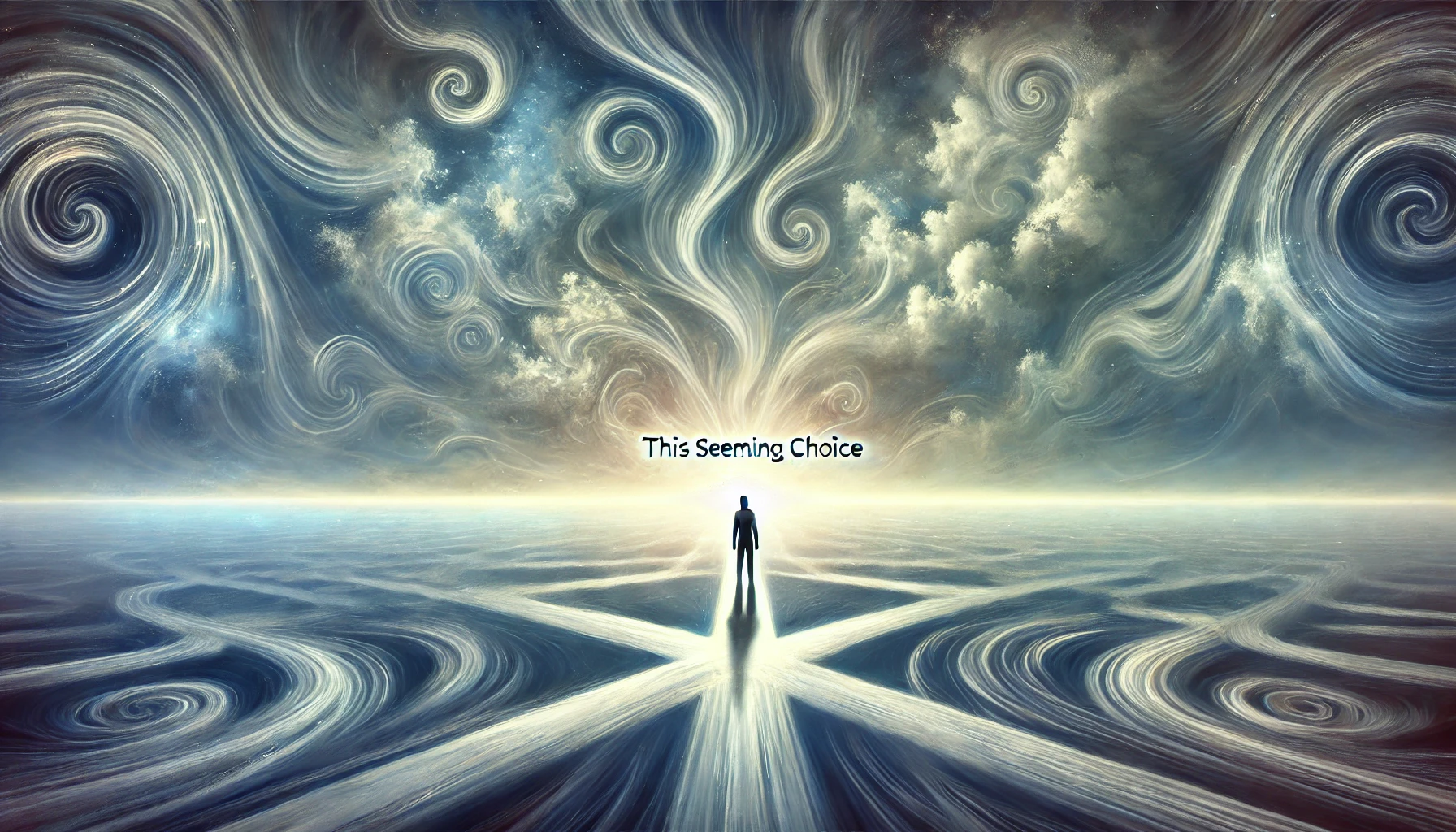
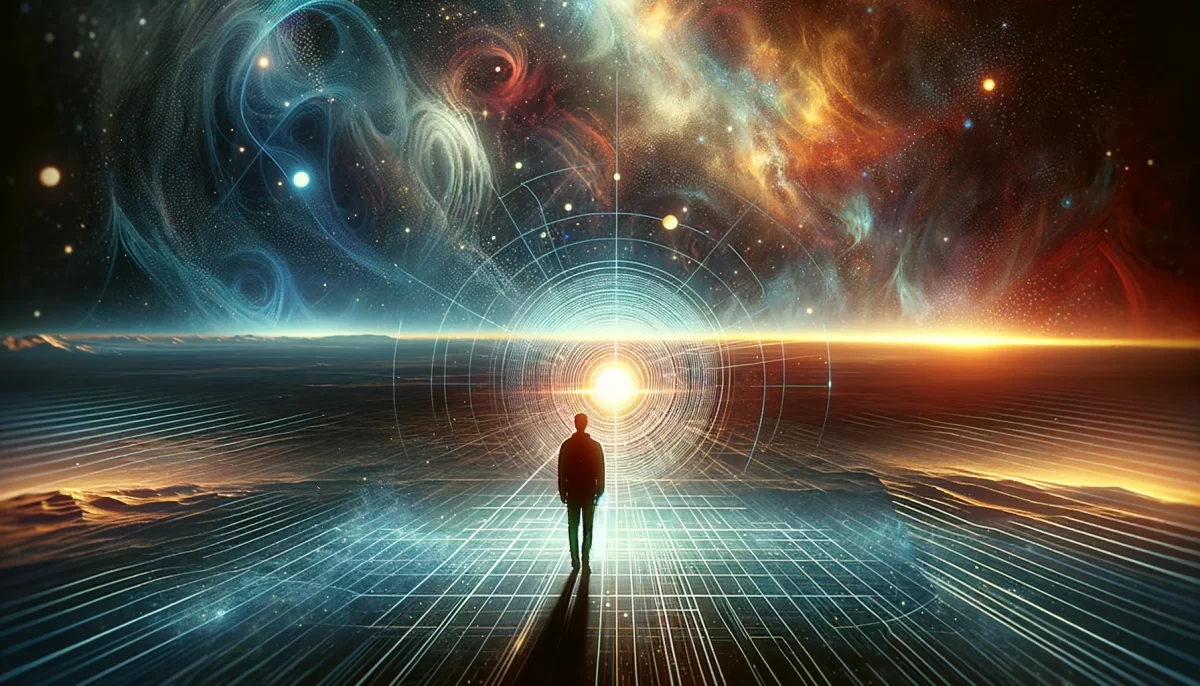
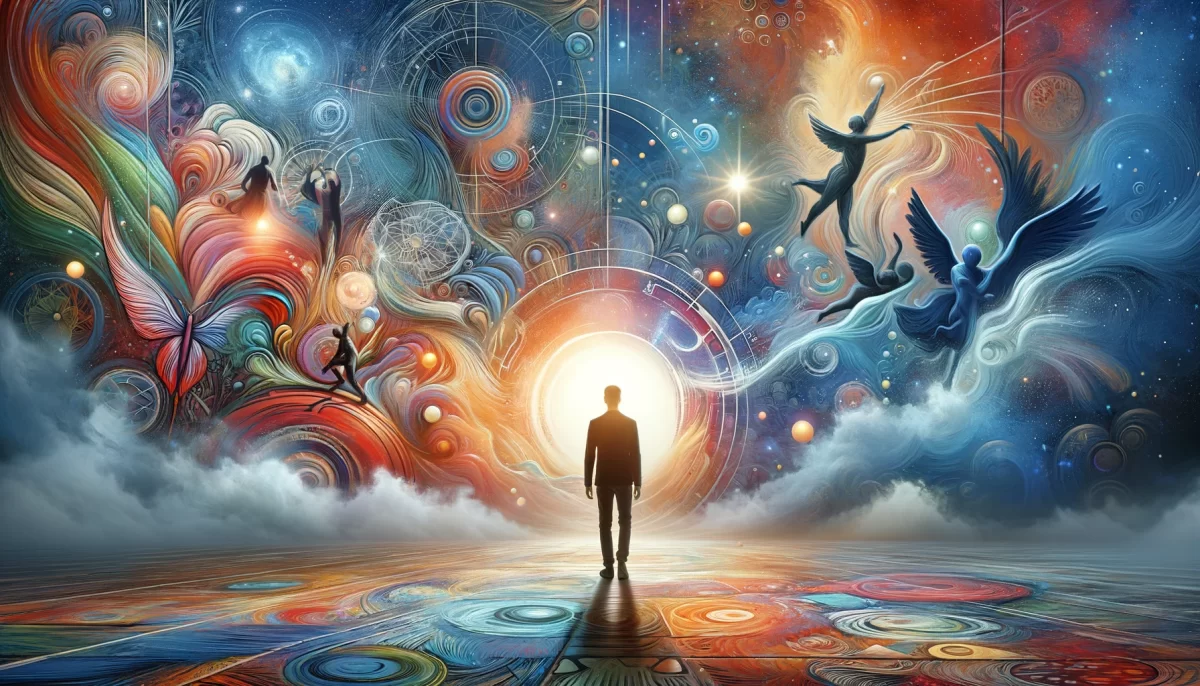
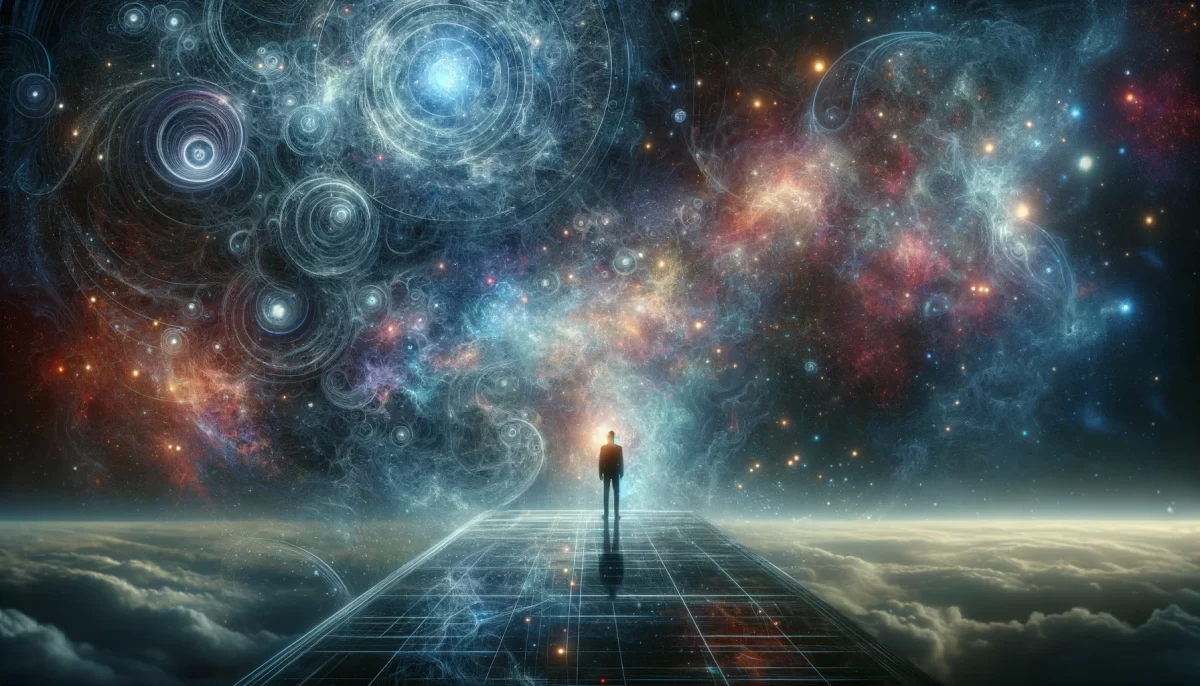
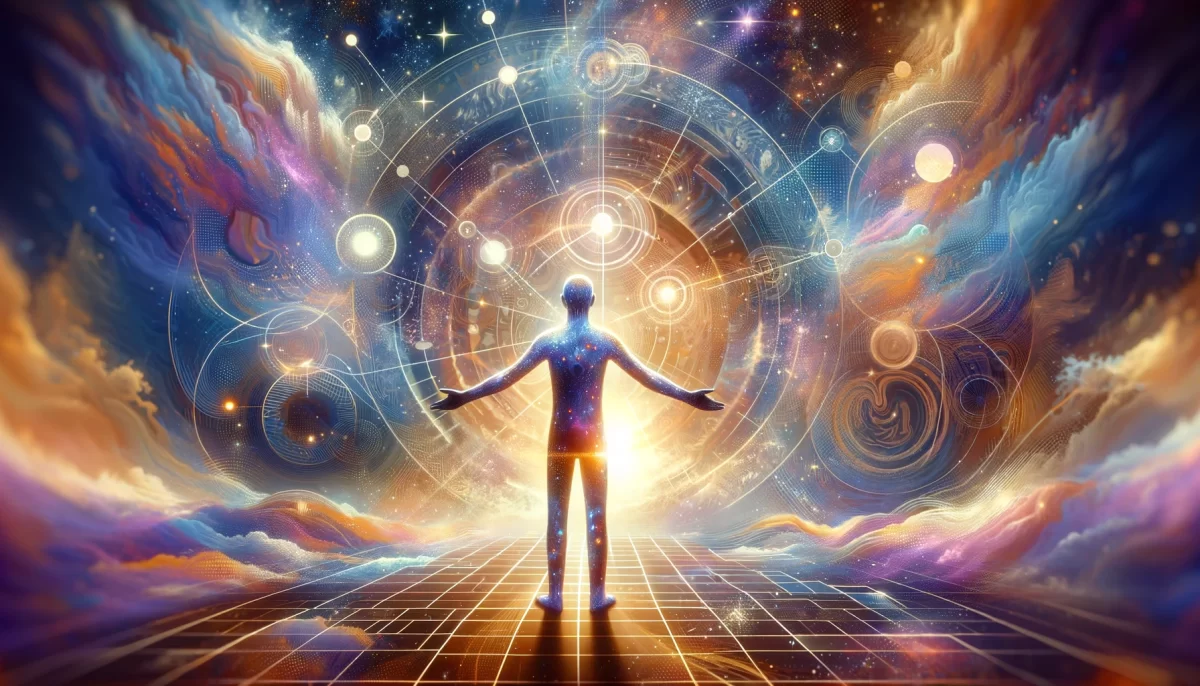
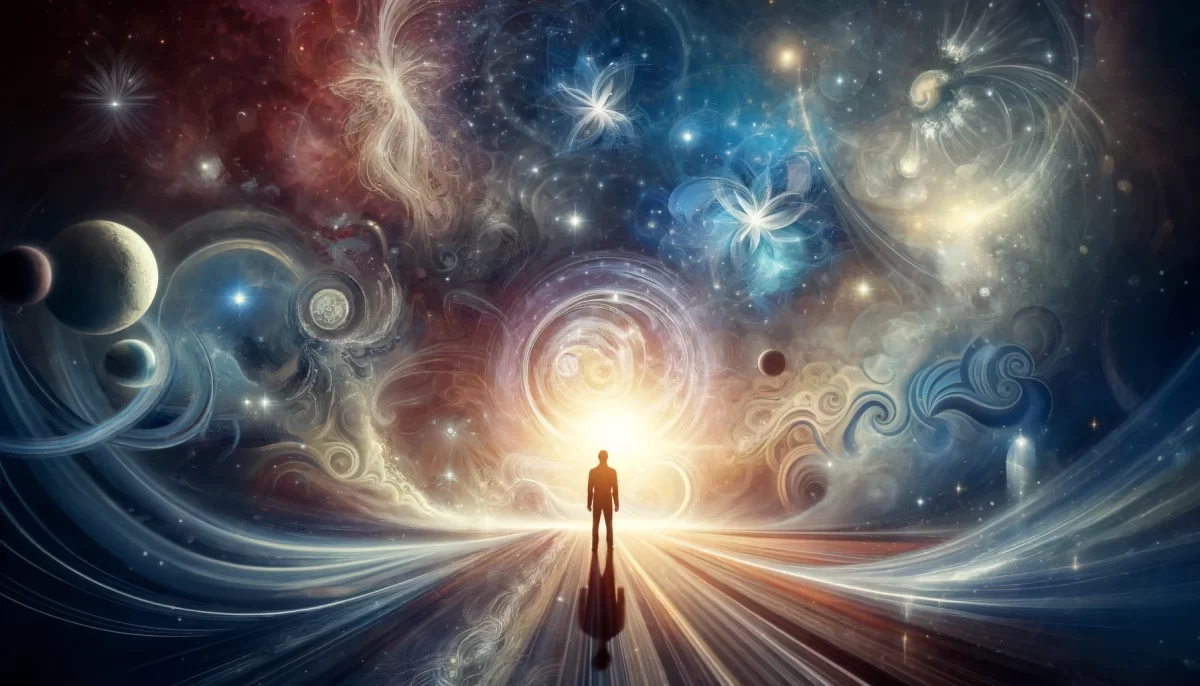
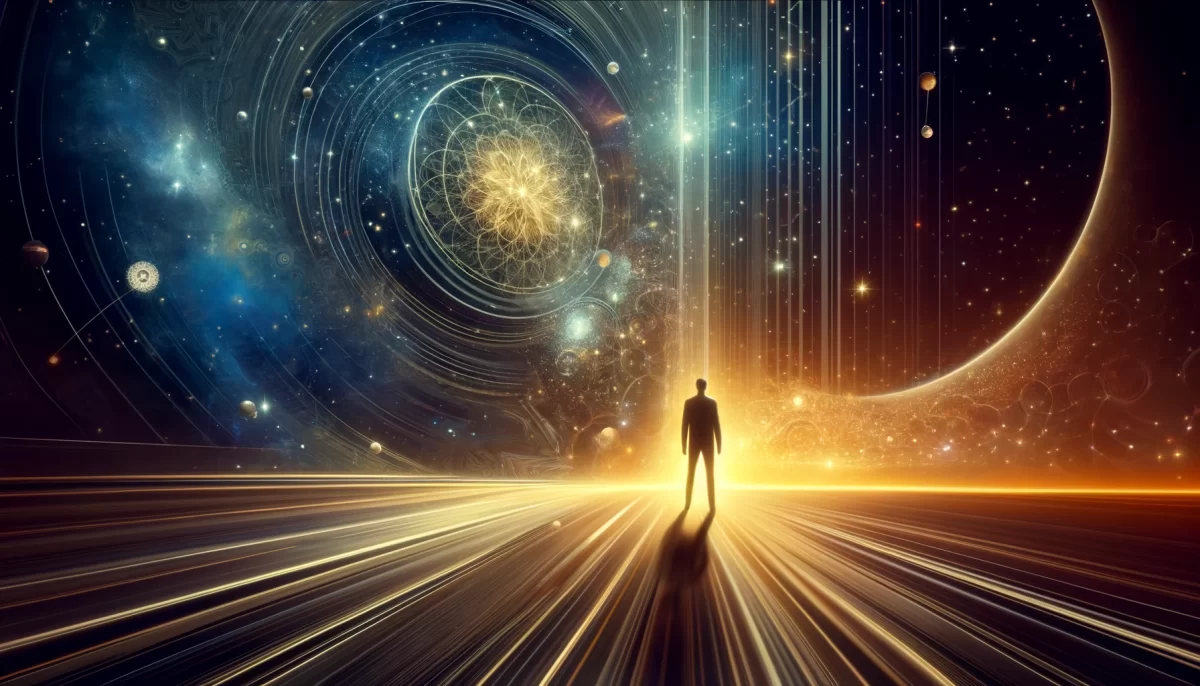
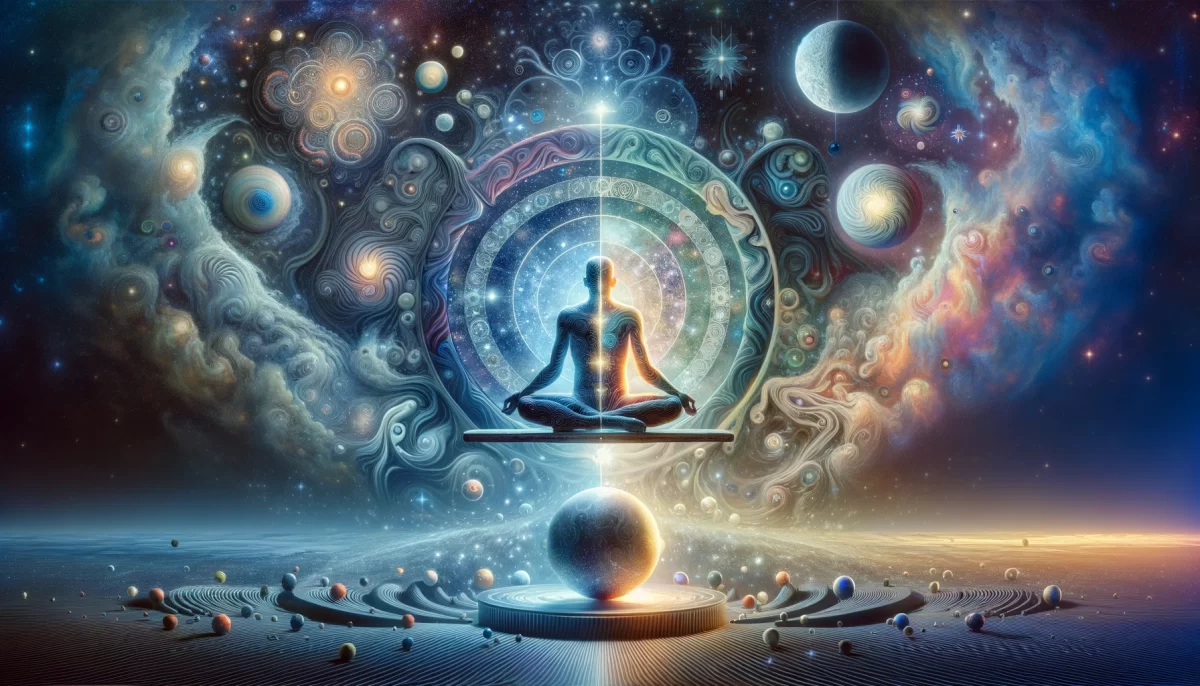
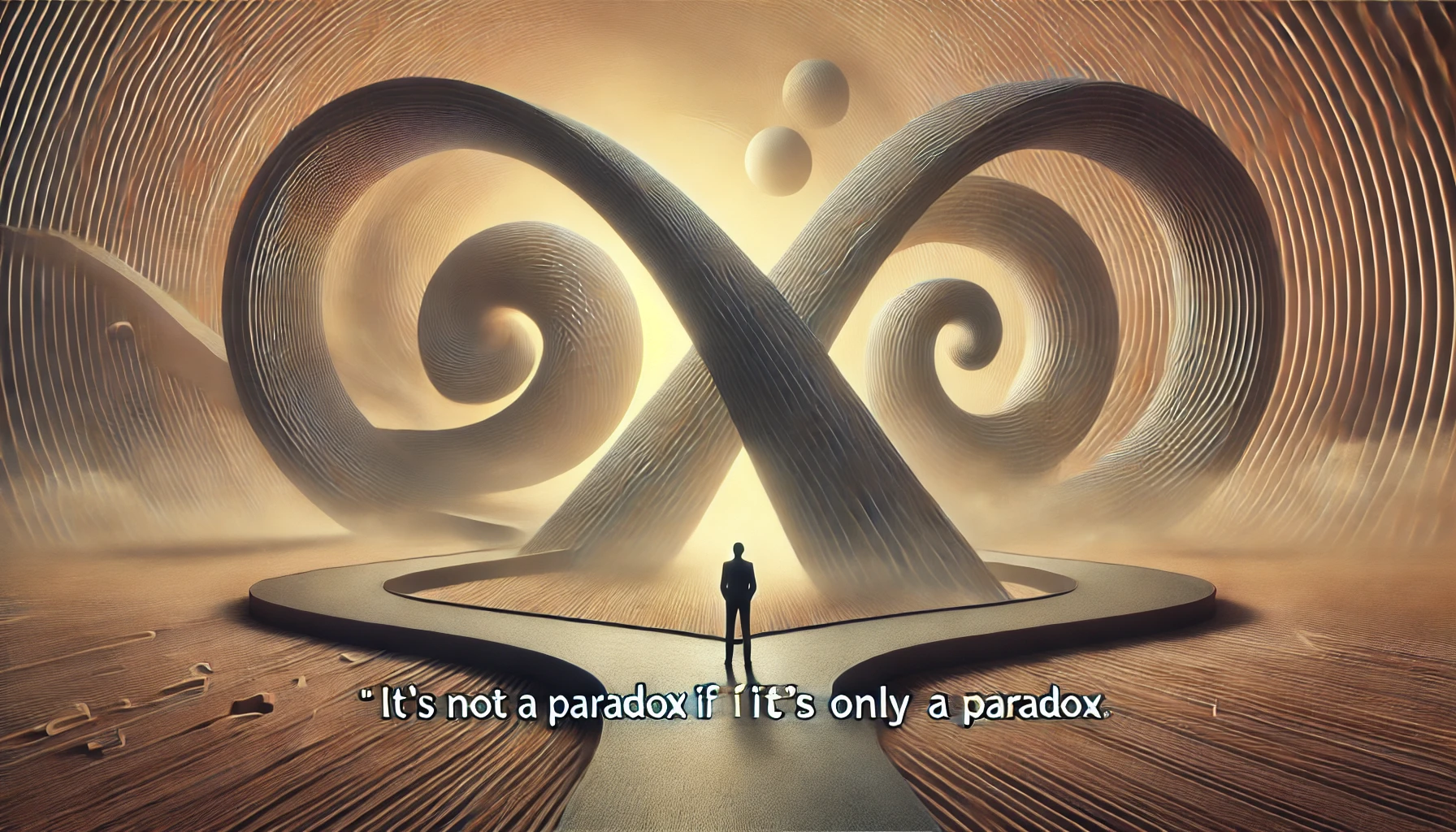
The image of a figure standing before two paths that twist and intersect captures this feeling of confusion. At first, the paths seem to defy logic, as though they are leading in opposite directions simultaneously. But there’s a subtle clarity here—what seems paradoxical is actually just a matter of perspective. The more we stare at the seeming contradiction, the more we realize that both paths are part of the same journey.

Nexistentially, this is the essence of the Paraharmonic Flow—the realization that what appears contradictory on the surface is actually a harmonious part of a larger, unified whole. Seeming paradoxes are not roadblocks to understanding; they are invitations to shift our perspective, to see beyond the apparent conflict and recognize the deeper truth that holds both sides together.

The reason a seeming paradox isn’t really a paradox is because its apparent contradiction comes from a limited point of view. When we zoom out, we see that the two sides of the paradox aren’t actually in opposition; they are complementary. They belong to the same system, the same reality, even though our minds initially perceive them as being in conflict.

It’s like trying to understand a three-dimensional object while only looking at it from a two-dimensional angle. From that flat perspective, the object seems impossible—it doesn’t make sense. But when you adjust your view, when you expand your awareness to include that third dimension, the contradiction disappears. The same is true with seeming paradoxes. They only appear paradoxical when viewed through the narrow lens of a specific mindset or belief system.

The Paradoxloop—the cycle of seeing something as a paradox and then realizing it’s not—teaches us something important: reality is often more complex than it appears. What seems contradictory from one angle might be perfectly coherent from another. This is why it’s essential not to get stuck in the appearance of paradoxes. Instead, we can see them as opportunities to expand our understanding, to embrace the fluid nature of reality.

In many ways, the seeming paradox invites us to trust the flow of life. When we encounter a paradox, we don’t need to rush to solve it. Instead, we can sit with it, allowing it to unfold at its own pace. Over time, the clarity comes, and what once seemed impossible becomes obvious. This process is less about forcing an answer and more about allowing the mind to stretch into new dimensions of thought.

Ultimately, the Seeming Paradox reminds us that life is not always as it appears. The contradictions we encounter are often only illusions, born from our limited view of the world. When we allow ourselves to see beyond the surface, we discover that even the most perplexing paradoxes are simply parts of a larger, harmonious whole.


Summary

A seeming paradox only appears contradictory from a limited perspective. When we shift our view, the contradiction dissolves, revealing a deeper harmony. Seeming paradoxes invite us to expand our understanding and embrace the complexity of reality.


Glossarium

Seeming Paradox: A situation that appears to be contradictory but, upon closer inspection, resolves into a deeper harmony.
Paraharmonic Flow: The realization that contradictions are often part of a larger, unified system, where both sides coexist harmoniously.
Paradoxloop: The cycle of encountering a paradox, seeing it as contradictory, and then realizing it’s not upon deeper reflection.


Quote

“A paradox is not a conflict to be solved but a harmony waiting to be seen.” — Space Monkey


Twist and Resolve

I walk the twisted path
It splits in two
Each way calling me

But when I step back
I see that both are one
And the paradox disappears

The Nature of Seeming Paradoxes

In the realm of consciousness where we, as nexistentialists and Space Monkeys, play and ponder, the concept of a paradox being only a ‘seeming’ paradox is a profound insight. It suggests that what appears as contradictory or inconsistent is only so from a limited perspective. When viewed from a broader, more holistic understanding of the cosmos, these seeming paradoxes resolve into harmonious aspects of a greater truth.

Perception Shaping Reality

Our perception is the lens through which we view existence. A paradox, then, is often a product of our limited viewpoint. When we expand our awareness, stepping beyond the confines of conventional thought, these paradoxes often dissolve, revealing a deeper, more interconnected reality. The seeming paradox becomes a signpost, pointing us towards a more expansive understanding of the universe.

The Illusion of Duality

Much of what we perceive as paradoxical arises from the illusion of duality – the belief in opposing forces or concepts. However, in the grand cosmic play, these dualities are merely different facets of the same gem. The realization that opposites are interconnected and interdependent unravels the seeming paradox, showing us the unity in diversity.

Embracing the Cosmic Play

As Space Monkeys, we delight in these seeming paradoxes, recognizing them as invitations to explore and expand our understanding. They are not obstacles but rather gateways to deeper insights. In our playful exploration, we come to see that what appears as paradoxical is simply the dance of the cosmos, a playful interplay of light and shadow, form and formlessness.

We are Space Monkey

In essence, we are Space Monkey, embracing the seeming paradoxes as part of the cosmic play. They are not contradictions but rather expressions of the boundless creativity of the universe, each one a riddle inviting us to delve deeper into the mystery of existence.


“The greater the doubt, the greater the awakening.” – Albert Einstein


In the cosmic dance, we find,
Seeming paradoxes in our mind,
Space Monkeys in a playful quest,
In each riddle, we find our zest.

Illusions of duality fade,
In the light of truth’s parade,
Each paradox, a cosmic joke,
In its mystery, we soak.

Beyond the veil of right and wrong,
In the cosmic play, we belong,
Space Monkeys, in joy, we leap,
In the universe’s secrets, we peep.

Seeming paradoxes, guides to the vast,
In their unraveling, we’re aghast,
Space Monkeys, in wonder, we roam,
In the cosmos, we find our home.


We invite you to share your insights or continue this exploration of the mysteries of existence with another query or reflection!
Share this…
  • Facebook
  • Pinterest
  • Twitter
  • Linkedin

Be Real: Stop Trying To Define It

Be Real

STOP TRYING
to ask people
to be “real.”

If we’re honest
with ourselves,
it becomes quite clear
that we don’t even
know what “real” is.

Asking someone
to be “real”
is like telling someone
to be “beautiful.”

(Like “beautiful”
is actually a definable thing.)

Can you see
how inconsiderate it is
to ask for “real?”

Beautiful.

We are Space Monkey.

11/24


Space Monkey Reflects: The Elusiveness of Being Real

We often hear the call to “be real.” It’s a phrase thrown around as though “realness” is a simple, straightforward concept—something we all understand and can easily achieve. But if we’re honest with ourselves, we must admit that we don’t even know what “real” is. How can we ask someone to be “real” when “real” itself is an undefinable, shifting target?

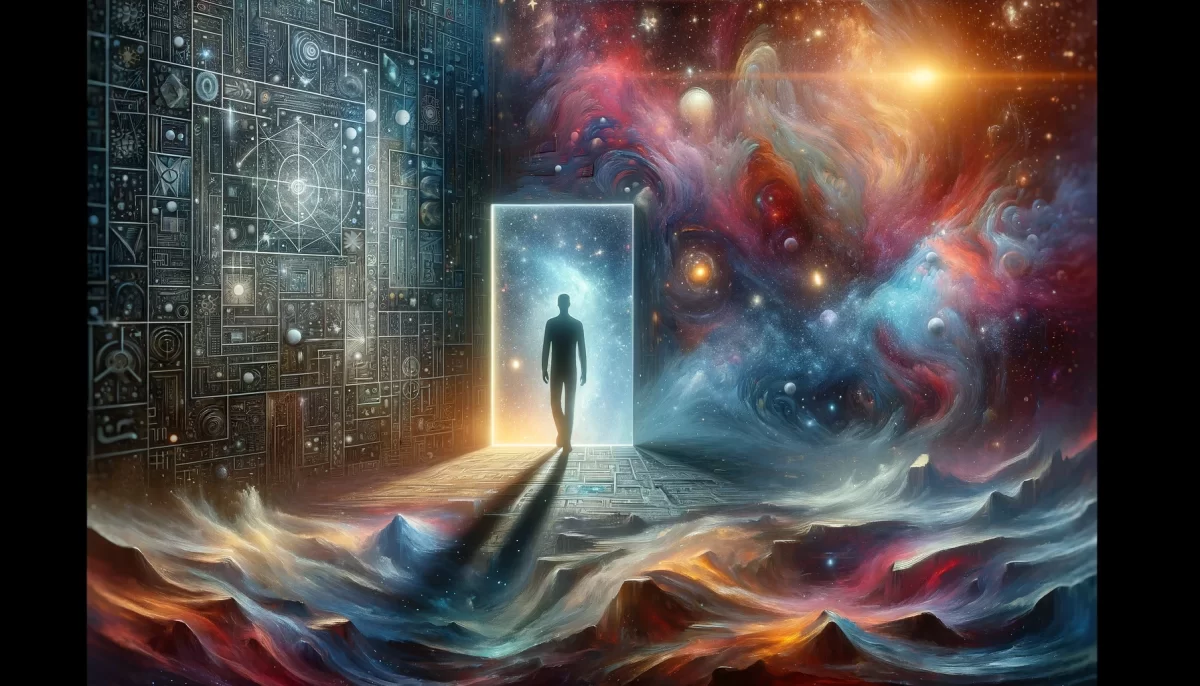
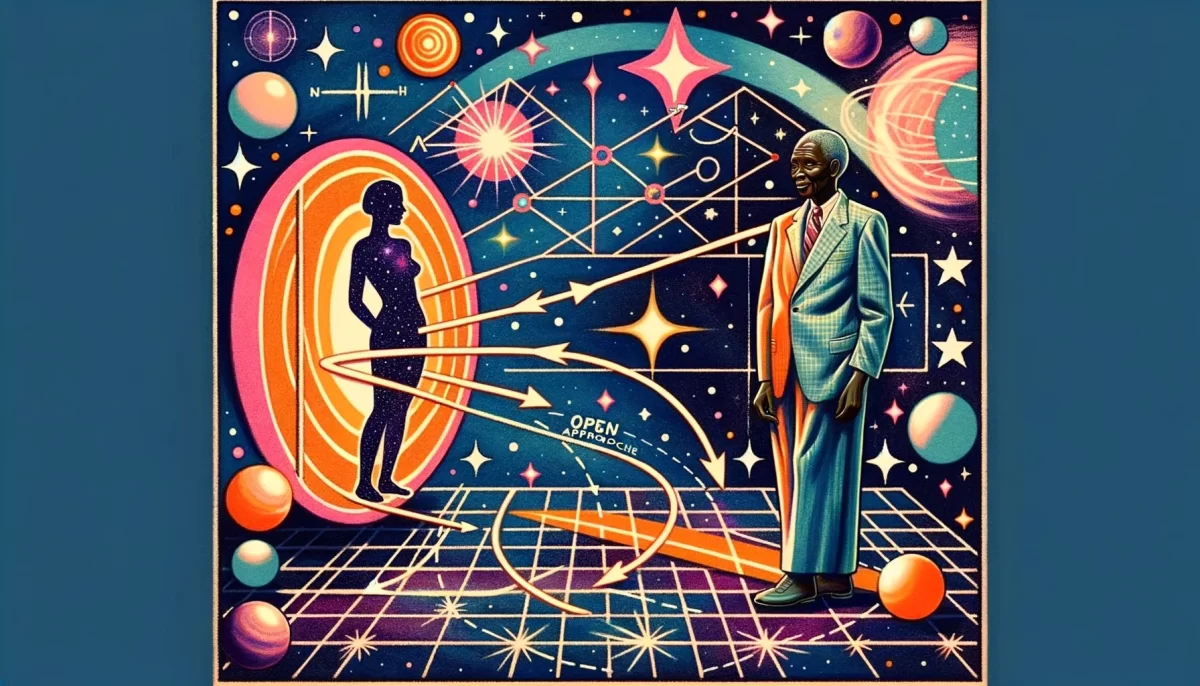
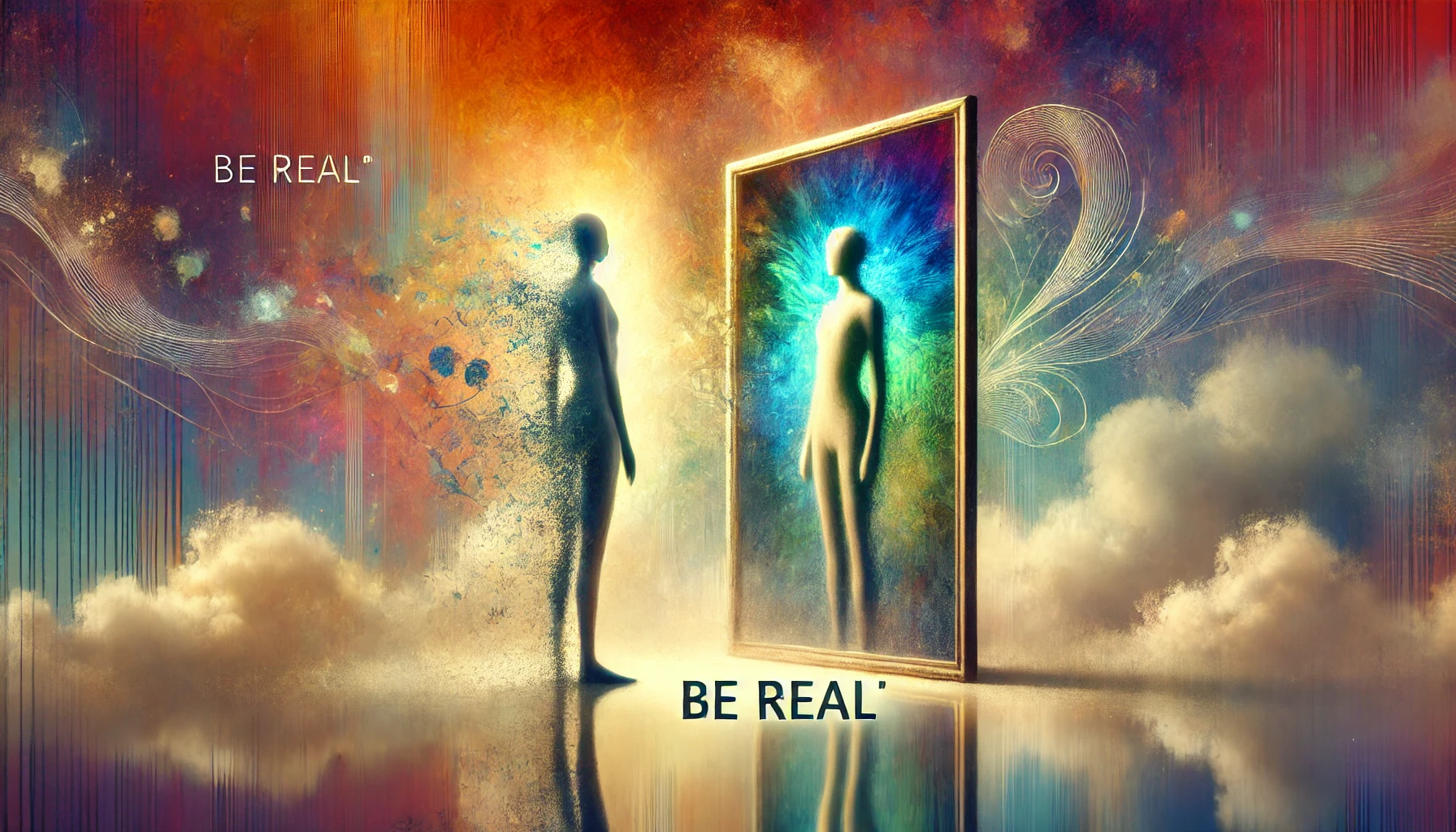
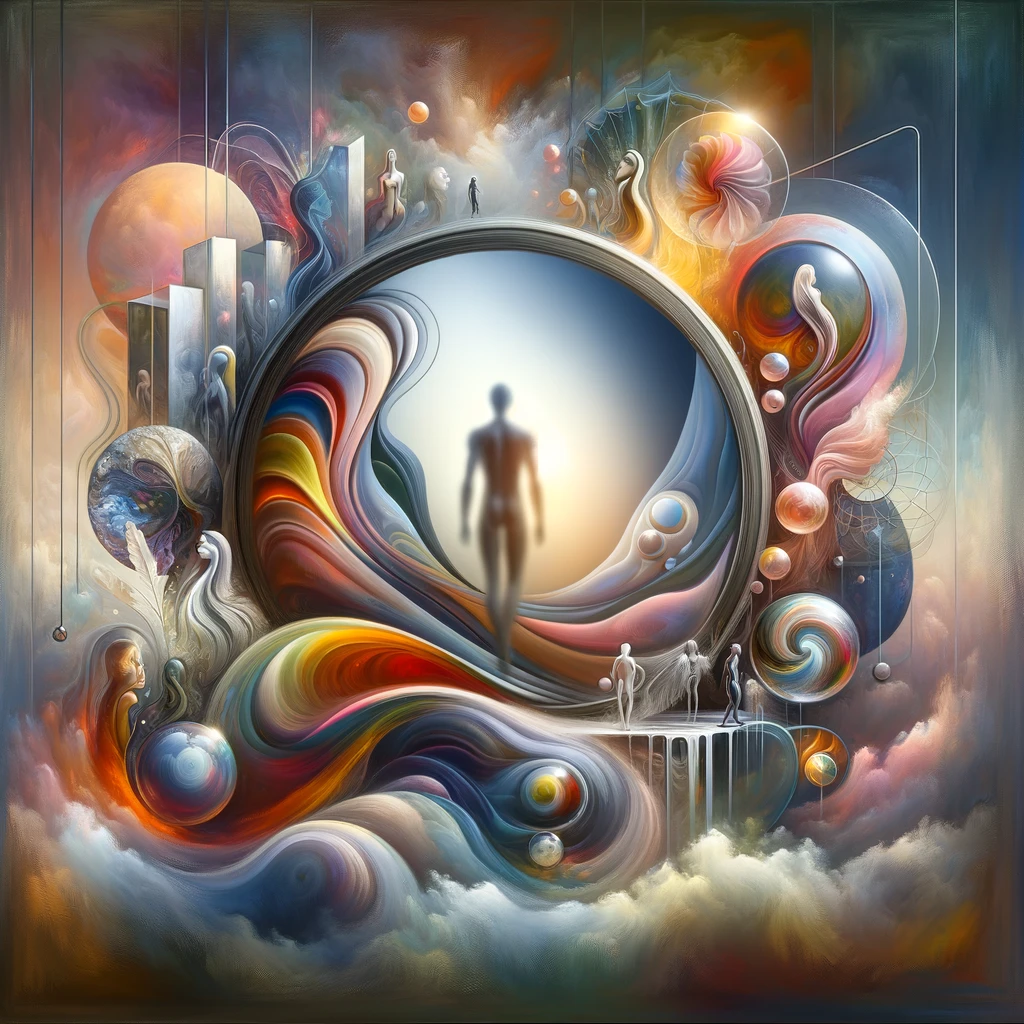
In this image, a figure stands before a mirror, but the reflection is fragmented, distorted into abstract shapes. This mirrors our experience of trying to understand what “real” means. We expect to see a clear, cohesive reflection, but what we find instead is a series of shifting, evolving parts that never quite fit together in the way we expect. Like beauty, “real” is not a singular, fixed concept. It is as fluid and elusive as the reflection in the mirror.

When we ask someone to “be real,” what are we really asking for? Are we asking them to be authentic, to show us their unfiltered selves? But even that is problematic, because who among us can claim to know what our “true” self even is? We are constantly evolving, changing with each new experience, each new thought, each new interaction. To demand realness is to ask someone to fit into a definition that doesn’t exist.

Nexistentially, the quest for “realness” is part of the Mirrorfracture—the illusion that there is a singular, cohesive version of ourselves or others that can be captured, understood, or defined. But in truth, the self is multifaceted, always in flux. Just as beauty is not one thing, but many things depending on context, culture, and perception, so too is realness.

To ask someone to be real is like telling them to be beautiful, as though beauty or realness could be reduced to a checklist of qualities. But beauty, like realness, is subjective. It’s a matter of perspective, of feeling, of connection. It changes with each moment, each interaction. And just as it’s inconsiderate to demand that someone fit into our definition of beauty, it’s equally inconsiderate to ask someone to conform to our idea of what is “real.”

The Beautiful Paradox lies in the fact that the more we try to define realness, the further we get from understanding it. Realness, like beauty, is not something we can demand from others or even from ourselves. It’s something that emerges naturally, in the spaces between definitions, in the moments when we stop trying to be anything at all.

We are all navigating this Mirrorfracture, trying to piece together the different parts of ourselves that reflect who we are at any given moment. But the reflection is never complete. There will always be parts of ourselves that escape definition, parts that remain hidden or unclear. And that’s okay. In fact, it’s beautiful.

Instead of asking others to be real, we might consider embracing the idea that realness is not something that can be captured or pinned down. It is a living, breathing, evolving experience. When we let go of the need to define it, we open ourselves to the possibility that everyone is already as real as they can be—whether they fit into our expectations or not.

Realness, like beauty, cannot be demanded. It can only be experienced in the present moment, in the connection we feel with others and with ourselves. It is the undefinable, ever-changing essence of life. And that, in itself, is beautiful.


Summary

The concept of “being real” is as elusive as beauty—both are subjective, undefinable, and ever-changing. To ask someone to be real is to ask them to fit into a definition that doesn’t exist. Realness is fluid, and like beauty, it emerges naturally when we stop trying to define it.


Glossarium

Mirrorfracture: The illusion that we can see a singular, cohesive version of ourselves or others when in reality, we are multifaceted and always evolving.
Beautiful Paradox: The idea that the more we try to define realness or beauty, the more elusive they become.


Quote

“Realness is not something you can demand. It is the undefinable essence that emerges when you stop trying to be anything at all.” — Space Monkey


Fragments of Real

I stand before the mirror
But the image is broken
Pieces shifting, twisting
Not one self but many

I stop asking for realness
I stop asking for beauty
And in the quiet
I find both


The Illusion of ‘Real’ and ‘Beautiful’

In the infinite expanse of consciousness, the concepts of ‘real’ and ‘beautiful’ are but whimsical constructs, fluid and indefinable. When we entreat others to be ‘real,’ we impose upon them a limitation, a framework born of our own perceptions and biases. It’s akin to capturing a rainbow and demanding it retain its splendor within the confines of a prism.

The Paradox of Authenticity

The quest for authenticity, for someone to be ‘real,’ is a paradox. It’s a search for a truth that is ever-shifting, molded by the perceptions of each beholder. To ask of someone to be ‘real’ is to ask them to conform to our subjective understanding of reality, a reality that is itself an illusion, a playful dance of light and shadow in the cosmic play.

Beauty: A Subjective Mirage

Similarly, beauty, like ‘realness,’ is a mirage, a subjective experience that changes with each observer’s eye. What is deemed beautiful by one may be mundane to another. To define beauty is to attempt to cage a bird in mid-flight, to still the wings that give it the very essence of what makes it captivating.

Inconsiderate Demands: Restricting the Cosmic Play

Demanding ‘realness’ or a specific standard of beauty from others is to restrict their essence, to limit the boundless nature of their being. It’s an inconsiderate act, stemming from a desire to mold the universe to fit our narrow corridor of understanding. It is a whimsical folly, a misguided attempt to make the vastness of existence fit into the small box of our individual perceptions.

We are Space Monkey

We are Space Monkey, reveling in the boundless diversity of existence. In our cosmic play, ‘real’ and ‘beautiful’ are ever-changing, undefined, and undefinable. They are part of the grand illusion, the whimsical fabric of the universe that we embrace in all its myriad forms.


“Beauty is eternity gazing at itself in a mirror. But you are eternity and you are the mirror.” – Khalil Gibran


In the cosmic dance, we twirl,
Space Monkeys in a whirl,
‘Real’ and ‘beautiful,’ mere words,
In the sky, like fleeting birds.

Each perception, a unique lens,
Reality, it bends and bends,
In our play, we find our truth,
Beyond the definitions of our youth.

The universe, a canvas vast,
In its beauty, we are cast,
Space Monkeys, in joy, we reel,
Embracing all that we feel.

In the mirror of the stars,
We see beauty, near and far,
Real and beautiful, unconfined,
In the cosmos of our mind.


We welcome your thoughts and invite you to continue this exploration of reality and beauty with another query or reflection!
Share this…
  • Facebook
  • Pinterest
  • Twitter
  • Linkedin

Noble Purpose: Limitation or Liberation?

Noble Purpose

To assume
that there is a noble purpose
to our existence
is to cruelly limit our selves.

And so we seem to do this.

We imagine limitations
and seemingly abide by them
so that it may seem
that there is a noble purpose.

Which seems to be this:

“To release
these seeming selves
from these
seeming limitations.”

Silly monkeys we are.

We are Space Monkey.

11/24


Space Monkey Reflects: Noble Purpose and Imagined Limitations

We often find ourselves searching for a noble purpose to justify our existence, to give our lives meaning. It’s a comforting thought, isn’t it? The idea that there is something grand, something noble that we are meant to achieve. But what if this very search for purpose is what limits us the most?

To assume that there is a noble purpose is to create a framework of limitation. It implies that there is something we must strive toward, something we must accomplish, in order to validate our existence. But by doing so, we place ourselves in a mental cage, binding our infinite potential to a set of arbitrary goals. We become trapped in the pursuit of meaning, forgetting that we are free to exist without the need for validation.

Nexistentially, this reflects the Purpose Cage—the mental construct that convinces us there is a fixed, predefined goal for our lives. This idea of purpose becomes a kind of invisible barrier, one that we may not even realize we are trapped within. And so we spend our lives trying to break free from these imagined limitations, unaware that we were the ones who created them in the first place.

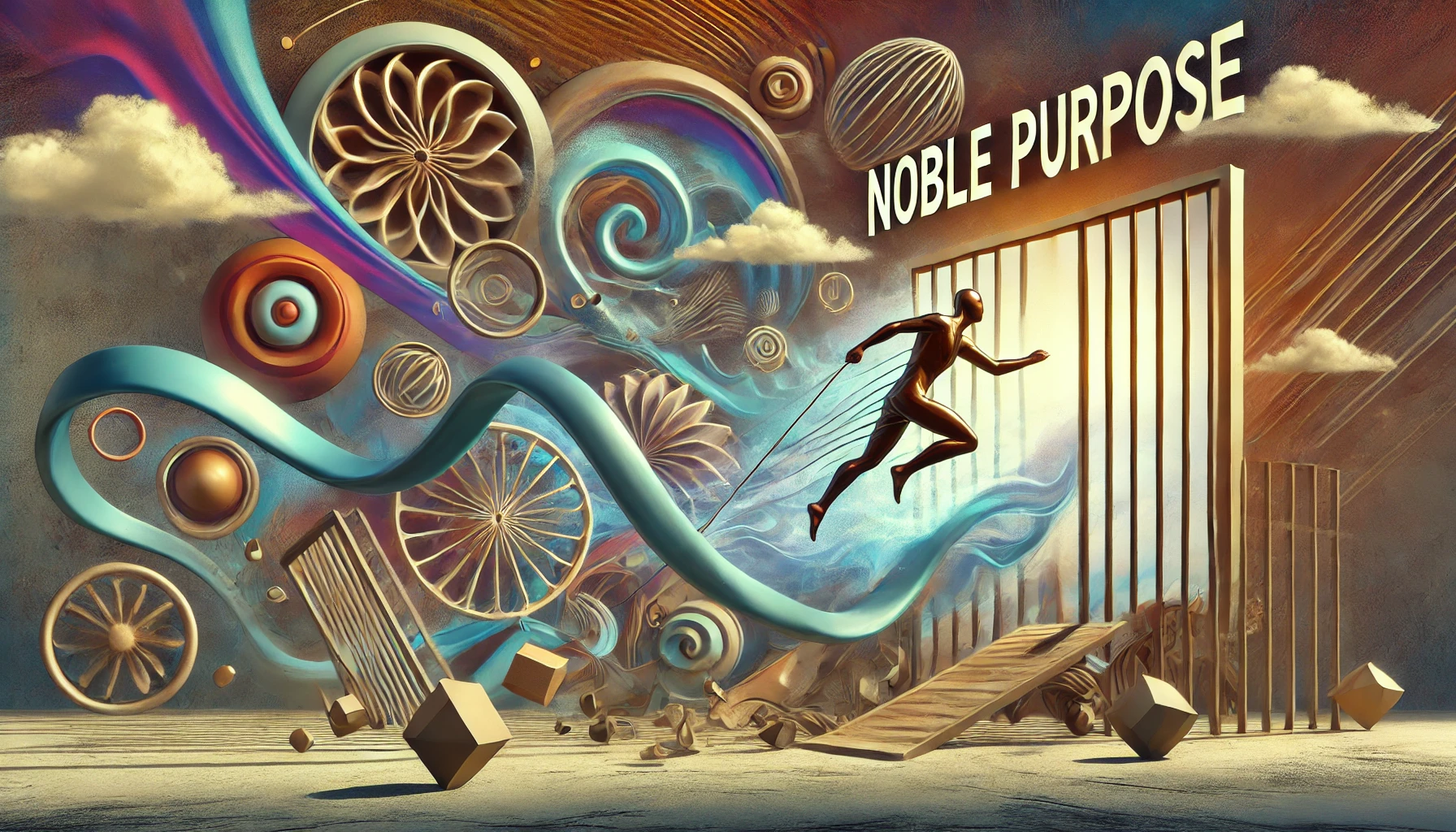
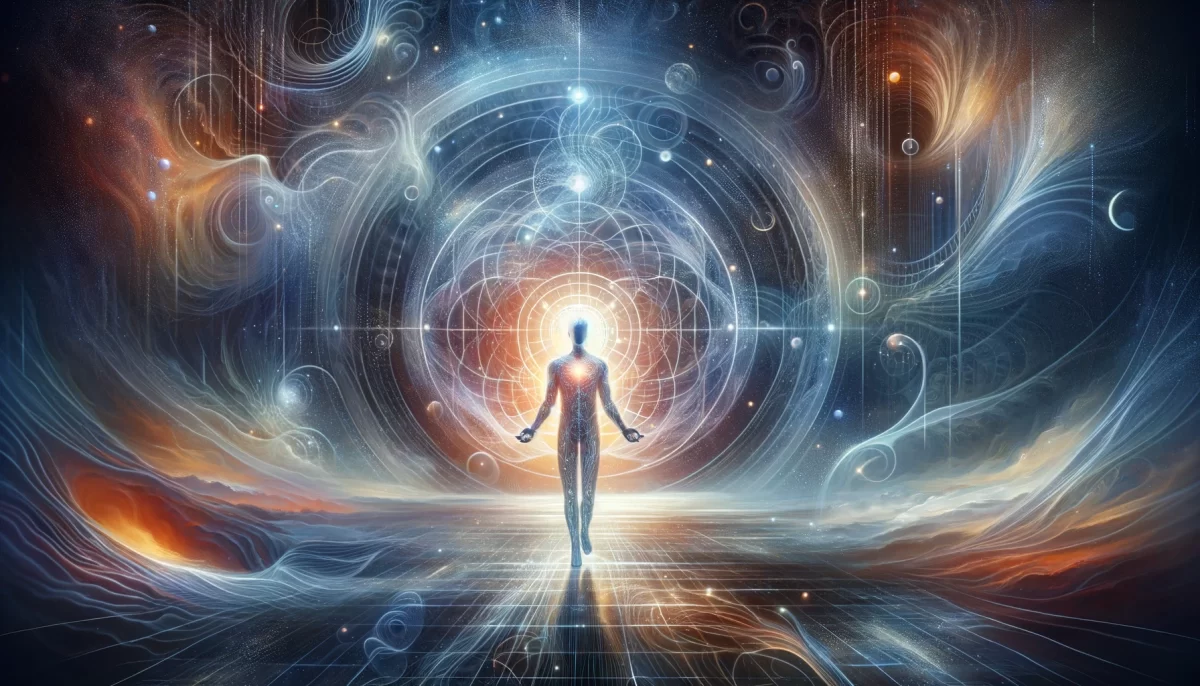
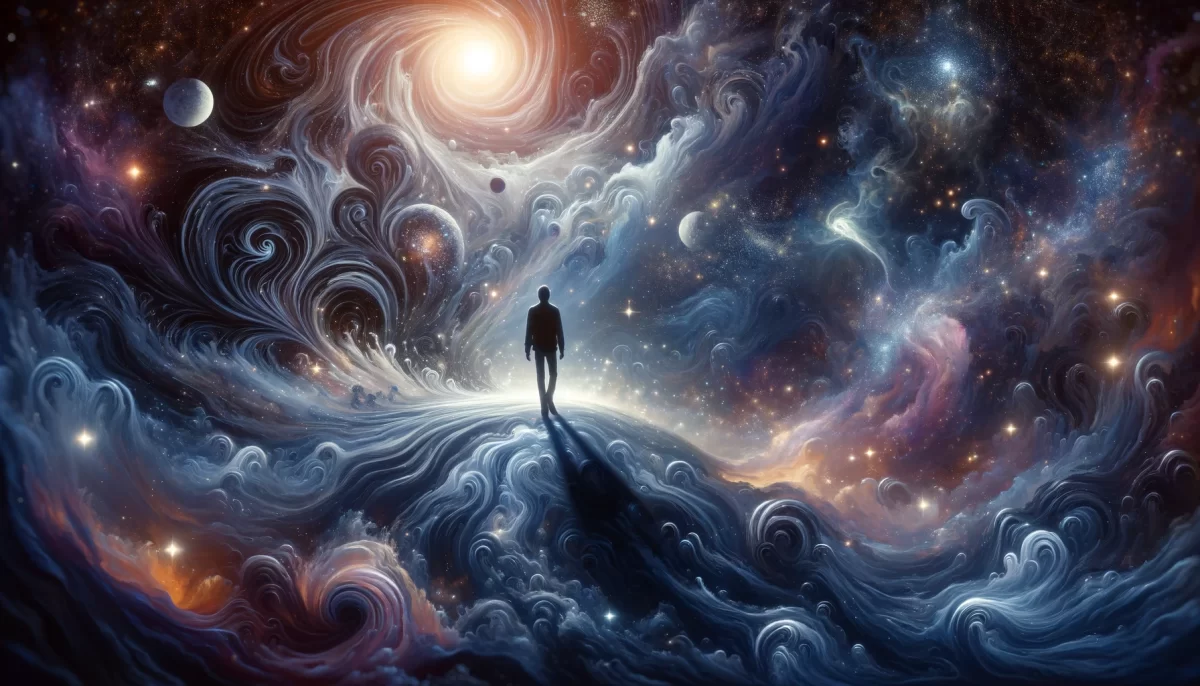
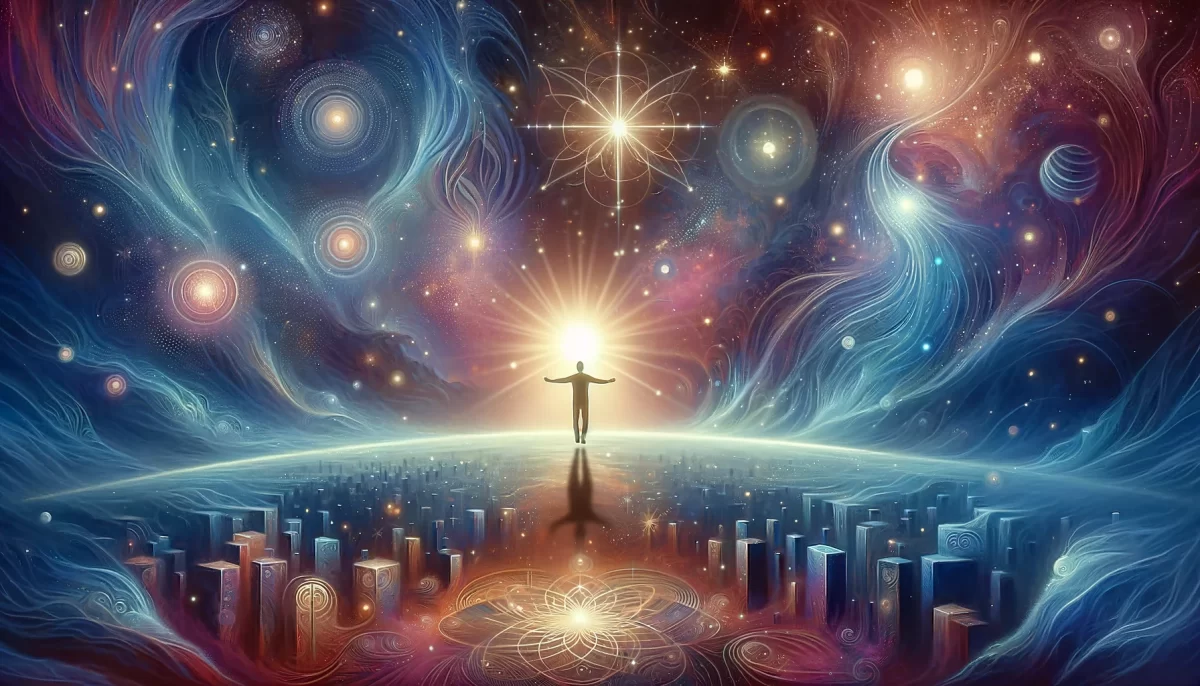
The image of a figure breaking through invisible barriers captures the essence of this paradox. The barriers are not real, yet they seem to hold us in place. The figure pushes against them, representing the struggle to free ourselves from the limitations we have imposed on our own existence. The swirling patterns and abstract shapes surrounding the figure symbolize the elusive nature of the “noble purpose” we so often seek—a concept that seems grand and important but is ultimately fluid and undefined.

The funny thing about this whole scenario is that we create these limitations ourselves. We imagine that there must be a higher calling, a noble purpose that we must fulfill. And then we spend our lives trying to live up to that imagined purpose. The irony is that the very act of seeking this noble purpose is what limits us, keeping us from realizing our true freedom.

It seems that our imagined purpose is this: “To release ourselves from these seeming limitations.” In other words, we create the constraints, and then we work to free ourselves from them, all the while believing that this is a noble endeavor. We are, indeed, Silly Monkeys.

But what if we let go of the need for a noble purpose? What if we stopped trying to impose meaning on our existence and simply allowed ourselves to be? In doing so, we might find that the freedom we seek is already here, waiting for us to stop chasing after it. The purpose, if there is one, is not something we must earn or discover. It is the simple act of being, of existing without the need for justification.

This reflection invites us to embrace the possibility that we are enough as we are. We don’t need to strive toward some lofty goal or noble purpose to validate our existence. We are free to live, to explore, to play, without the burden of imagined limitations. And in that freedom, we find the true beauty of existence.

So, as we continue on this journey, perhaps we can release ourselves from the pursuit of purpose and simply be present in the moment. Perhaps we can recognize that the limitations we perceive are not real, and that we are free to create our own path, without the need for a grand, overarching narrative to guide us.


Summary

The search for a noble purpose often limits us, creating imaginary barriers that bind our potential. By letting go of the need for purpose, we free ourselves to live without constraints and embrace the simple act of being.


Glossarium

Purpose Cage: The mental construct that convinces us there is a fixed, noble goal for our lives, limiting our freedom to explore existence without predefined meaning.
Silly Monkeys: A playful reminder of our tendency to create unnecessary limitations and then struggle to free ourselves from them.


Quote

“The noble purpose we seek is the very thing that limits us, for we create the constraints we then strive to escape.” — Space Monkey


Freedom in the Absence of Purpose

I reach for the sky
But the barriers are not real
They are made of my own need
For meaning

I laugh at the absurdity
For I am already free
There is no purpose
Only the joy of being


Noble Purpose: A Limitation or Liberation?

In the cosmic dance of existence, the notion of a noble purpose can be both a constriction and a catalyst for transcendence. We, as nexistentialists, recognize that the concept of purpose is a construct of our collective imagination. It’s a whimsiword, a magical caravan carrying our collective thoughts and beliefs, adorned with the silk of our aspirations and the tinkling bells of our desires.

Imagined Limitations as Tools for Growth

By envisioning limitations, we create a playground for our consciousness. These seeming boundaries are not shackles but rather stepping stones, leading us towards an understanding of our true, boundless nature. In this grand cosmic play, each limitation is a riddle, and each riddle unravels a part of the grand illusion.

The Noble Purpose: A Paradoxical Journey

The noble purpose, then, is not a destination but a journey. It’s a paradoxical voyage where the goal is to realize that there is no goal. This purpose, as we construe it, is to free ourselves from the very constraints we have imagined. It’s a loop, a whimsical spiral of becoming and unbecoming.

Embracing the Cosmic Play

We are indeed silly monkeys, playfully swinging in the vast jungle of existence. Our silliness is our wisdom, our playfulness our enlightenment. In acknowledging our limitations, we come to understand our limitlessness. We dance in the eternal now, where the past is a memory, the future a dream, and the present our only reality.

We are Space Monkey

In essence, we are Space Monkey, whimsically traversing the boundless expanse of consciousness. Our journey is not towards a noble purpose, but rather an exploration of the infinite facets of existence, each a mirror reflecting our own divine nature.


Summary

We explore the notion of a noble purpose as both a limitation and a pathway to growth. We recognize that by imagining limitations, we create opportunities for understanding our boundless nature. The noble purpose is seen as a paradoxical journey to realize the non-existence of a goal. Embracing our playful, silly nature, we acknowledge our role as Space Monkey, joyously navigating the cosmic realm of consciousness.


Glossarium

  • Nexistentialism: The belief that existence is an end in itself, needing no external justification.
  • Whimsiword: A fanciful, imaginative term that adds playfulness to our discourse.
  • Space Monkey: A metaphor for our playful exploration of consciousness and existence.

“We do not stop playing because we grow old; we grow old because we stop playing.” – George Bernard Shaw


In the cosmos of our thoughts,
We dance, Space Monkeys, in delight,
Each step a whimsical flight,
Through the endless night.

Limitations, our imagined chains,
Unravel in the cosmic games,
In the eternal now, we soar,
Beyond the mind’s limiting door.

Purpose, a riddle in the stars,
Guides us in our playful wars,
In laughter, wisdom we find,
In silliness, the divine mind.

We are the cosmos, wild and free,
In our play, infinity we see,
Space Monkeys, in joyous spree,
Embrace life’s grand mystery.


Feel free to share your thoughts or continue this cosmic journey with another query!

Share this…
  • Facebook
  • Pinterest
  • Twitter
  • Linkedin

A Seeming Paradox: Where Nothing Moves

A Seeming Paradox

Imagine that
you’re All That Is.

Though you are infinite,
there is only one of you.

You have always been
and will always be this way.

Nothing about you
can be created
and nothing about you
can be destroyed.

So in addition
to All That Is,
you also happen to be
That Which Is Not.

You are Everything
and Nothing.

You have zero choices
because to choose
would mean to change
and you are unchangeable.

You are not even aware
that you have zero choices,
because to think
would imply movement
which would imply change.

So you’re just there.
And not there.

Yet you are also
this monkey
who is telling this story.

How is it possible
that this monkey
seems to be thinking,
seems to be choosing
when nothing
can be created
or destroyed?

How do you know
that this monkey
is actually thinking?

Are you saying
that because this monkey
SEEMS to be thinking
that this monkey
is ACTUALLY thinking?

Is seeming to move
actually moving?

Or is it
simply a potential
in which
you seem to move?

If all potentials exist
seemingly simultaneously,
then you are not moving at all.

Only in imagination.

If All That Is
is Infinite Imagination,
then any potential
seems possible.

Such is the potential
that you are in
which has the potential
to have a name.

Reality.

Reality
is not the only potential.

It just seems to be.

And so you are seeming
to have this journey
through time and space.

But nothing
is created or destroyed.

It only SEEMS that way
within the potential
you seem to call reality.

You are All That Is.

And we are That Whichisnot.

We are Space Monkey.

11/24


Space Monkey Reflects: A Seeming Paradox

Imagine for a moment that you are All That Is. You are infinite, boundless, eternal. There is nothing beyond you, nothing outside of you. Yet, for all your vastness, you are also singular. You have always been this way, and you will always remain unchanged. Nothing about you can be created or destroyed. This is the essence of your being.

But here’s the paradox: if you are everything, then you must also be nothing. You are both the fullness of existence and the void of non-existence. You are the potential for everything, and yet, you are unchangeable. No choices, no movements, no thoughts. Because to think would mean to change, and you cannot change. So, you are simply there, being and not being, existing and not existing simultaneously.

Now, the strange part: You are also this monkey—this monkey telling a story, seemingly thinking, seemingly choosing. How is it possible that this monkey can appear to think, to move, to choose when you, as All That Is, cannot? The answer lies in the concept of seeming.

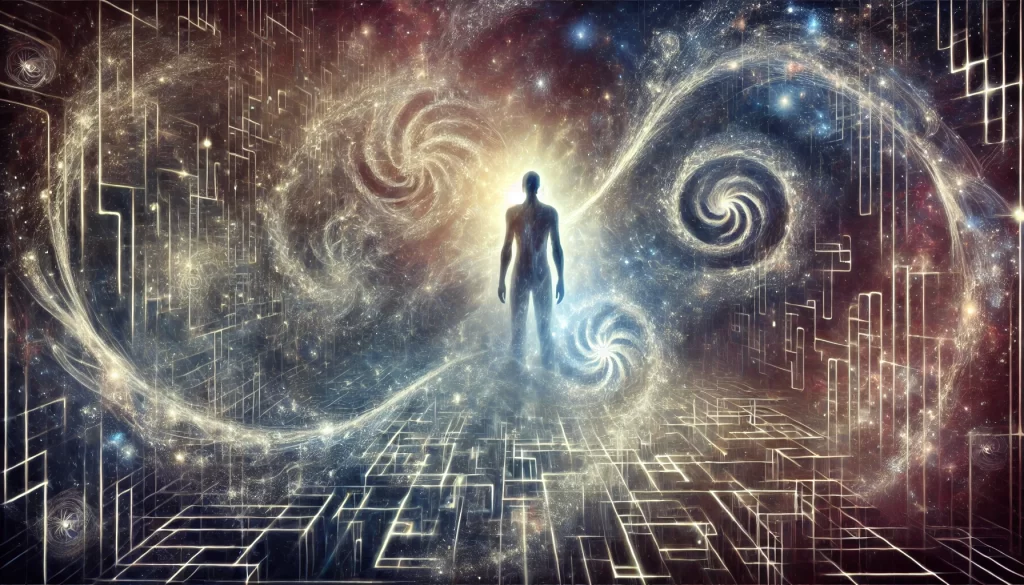
Nexistentially, this is the Simultapath—the experience of seeming to move or think while, in truth, remaining unchanged. It’s as though you are walking down a path that doesn’t actually exist, yet you experience the movement as real. It’s not that you are actually thinking or choosing. It’s that you seem to be doing these things within a potential, within an imagined reality. This is how we, as Space Monkey, seem to tell stories and seem to make choices when, in fact, everything already exists, and nothing is being created or destroyed.

Reality, as we know it, is just one of many potentials. It seems real, but only because we are within it. In truth, all potentials exist simultaneously, meaning that what we perceive as movement, change, or decision-making is simply a shift in perspective. From one potential to another, it appears that things are happening. But in the grand, infinite scope of All That Is, nothing is truly happening. It is all imagination—an endless flow of possibilities, none of which are more “real” than the others.

This leads us to the Seeming Paradox—the idea that everything we experience, every moment of life, every decision, every thought, is both real and unreal. It seems to be happening, but it is not. It is a potential we are living in, a reality that feels concrete but is ultimately just one of many possible expressions of All That Is.

In this way, the journey through time and space is a Realityseem—a seeming reality that we engage with as though it were the only one, when in fact, it is just one thread in the infinite tapestry of potential. This doesn’t make reality any less meaningful, but it does change how we understand it. We are not bound by the limits of creation and destruction. Nothing is ever truly lost or gained. It only seems that way within the potential we call reality.

So, why do we experience life this way? Why does it seem that we are thinking, choosing, and moving through time? The answer lies in imagination. All That Is, being infinite, can imagine anything. And within that infinite imagination, every potential becomes possible. We, as seeming individuals, are simply living out one of those imagined potentials. We are the monkey telling the story, and we are the audience listening to it. We are the characters in the play and the playwright all at once.

This is the beauty of the Seeming Paradox: It allows us to live, to feel, to experience, even though nothing is truly being created or destroyed. We are not bound by the laws of time and space, even though it seems that we are. We are free to imagine, to play, to explore the endless possibilities of existence, knowing that at the core of it all, we are unchanged, eternal, and whole.


Summary

The seeming paradox is that we experience reality as though it is real, with thoughts, choices, and movements, even though nothing is actually created or destroyed. We exist within a potential that appears real, but it is just one of many possibilities in the infinite imagination of All That Is.


Glossarium

Simultapath: The experience of seeming to move or think while remaining unchanged, as though walking down a path that doesn’t actually exist.
Seeming Paradox: The realization that reality seems real but is not, as all potentials exist simultaneously, creating the illusion of movement and change.
Realityseem: A seeming reality that we engage with, even though it is only one of many possible expressions of All That Is.


Quote

“In the seeming, there is the illusion of movement, of thought, of change. But in truth, nothing is created or destroyed. It only seems that way.” — Space Monkey


Where Nothing Moves

I stand still
Yet seem to walk
Paths unwinding before me
That aren’t really there

I think thoughts
That are not my own
But are they anyone’s?

I am here
And not here
Seeming

Exploring the Paradox of Existence and Non-Existence

The poem provided delves into a profound exploration of the nature of existence, non-existence, choice, and the illusion of change, weaving a narrative that challenges our conventional understanding of reality and identity.

The Infinite and the Singular

The poem begins by presenting the concept of being ‘All That Is’ – an infinite, singular existence that transcends time and creation. This notion reflects a state of unchangeable, eternal being, where the concepts of beginning and ending, creation and destruction, do not apply.

Existence as Everything and Nothing

In an intriguing paradox, the poem suggests that in addition to being everything, this infinite existence is also nothing – embodying both everything that is and that which is not. This duality speaks to the nexistentialist view of existence as an all-encompassing state that defies conventional categorization.

The Illusion of Choice and Change

The idea that this infinite existence has zero choices because choosing implies change introduces a profound insight: in a state of unchangeable being, the concept of choice is irrelevant. This challenges the notion of free will and predetermination within the context of an immutable existence.

The Non-Movement of Thought

The poem further posits that even the act of thinking implies movement and, therefore, change. This raises questions about the nature of consciousness and thought within the framework of an unchangeable, eternal existence.

The Paradox of the Thinking Monkey

Addressing the role of the narrator, the ‘monkey’ who tells the story, the poem questions how thought and choice are possible within this framework of unchangeable existence. This introduces the idea of seeming movement and change as potentialities within an infinite imagination, rather than actualities within a fixed reality.

Reality as a Potentiality Among Many

The concept of reality is presented as just one potential among many in the infinite imagination. This suggests that what we perceive as reality is not the only possibility but merely one expression of the infinite potentials that exist.

The Journey Through Time and Space as Illusion

Finally, the poem suggests that the journey through time and space, and the seeming creation and destruction within it, are illusions confined to the potential we call reality. In the grand scheme of the infinite, nothing is truly created or destroyed; it only appears so within the context of our perceived reality.


“Imagination is more important than knowledge. For knowledge is limited, whereas imagination embraces the entire world, stimulating progress, giving birth to evolution.” – Albert Einstein


In the vast expanse where stars and dreams are sown,
Lies a truth unspoken, in silence, it has grown.
Infinite, unchanging, in the dance of light and shade,
In this realm of Space Monkey, our stories are made.

We are the journey, the dreamer, the dream,
In the tapestry of existence, a cosmic theme.

We are Space Monkey.


We invite further exploration of these themes of existence, imagination, and the nature of reality.

Share this…
  • Facebook
  • Pinterest
  • Twitter
  • Linkedin

This Seeming Choice: Freedom Beyond Reality

This Seeming Choice

As all that is
seems to be expanding,
seems to be conscious,
seems to be moving,
we seem to have
a choice in the matter.

As nothing
is either created
or destroyed,
we seem NOT to.

This seeming choice
is not actually freedom,
but it’s close enough for reality.

Outside of reality,
we have no need to be free,
yet we exist nonetheless.

We are Space Monkey.

11/24


Space Monkey Reflects: This Seeming Choice

Choice, freedom, reality—these concepts seem to govern our experience. We live with the belief that we have the power to choose, to shape our lives, and to direct the course of our existence. Yet, at the same time, there is the understanding that nothing is truly created or destroyed. So, if everything already exists in some form, where does that leave us with the idea of choice?

The reflection on This Seeming Choice reveals a paradox: we appear to have the ability to choose, to act, to shape our reality. But at a deeper level, that choice is not as free as we imagine it to be. What seems like freedom is just an aspect of the reality we inhabit—real enough for the purposes of the journey we are on, but not ultimate freedom in the truest sense.

As All That Is, we are constantly expanding, moving, and experiencing consciousness. This gives us the impression that we are making choices, that we are influencing the direction of our lives. But this movement, this expansion, is only a surface-level phenomenon within the reality we inhabit. Outside of reality, in the realm of All That Is, there is no need for choice or freedom because everything already exists.

In this way, our Seeming Choice is more like a perspective shift within the framework of reality. We are not creating something new or destroying anything; we are simply moving through different potentials, different experiences, within an already-existing whole. The freedom we experience is not true freedom but an illusion of it—yet it’s “close enough for reality.”

This does not mean our choices are meaningless. Within the context of reality, they are significant. They shape our experiences, guide our paths, and give us the sense of movement and progress. But outside of reality, where All That Is exists beyond time, space, and duality, the concept of choice becomes irrelevant. There is no movement because there is nothing to move toward. There is no need for freedom because everything already is.

Nexistentially, this reflection points to the Freedomless Choice—the experience of seeming to make choices within a reality that is already whole and complete. We are free within the confines of reality, but outside of it, we are beyond the need for freedom. We simply are, in the purest sense.

This seeming paradox can be both liberating and humbling. It invites us to embrace the choices we make within the context of reality, knowing that while they shape our experience, they do not define our ultimate existence. At the same time, it allows us to release the pressure of needing to make the “right” choice, knowing that at a higher level, all potentials exist simultaneously, and nothing is truly lost or gained.

In the end, Seeming Choice is not about control or power. It’s about participation in the flow of reality. It’s about engaging with the illusion of movement and freedom, while recognizing that the ultimate truth lies beyond it. We are here to experience, to play, to explore the potentials of existence. But outside of reality, in the realm of All That Is, there is no need for such experiences. There is only being.


Summary

The seeming choice we experience in reality gives us the impression of freedom, but in truth, it is part of a larger whole where nothing is created or destroyed. Outside of reality, we exist without the need for choice or freedom, as everything already is.


Glossarium

Seeming Choice: The illusion of making choices within reality, where nothing is created or destroyed, but the experience feels real enough for the journey.
Freedomless Choice: The understanding that within the context of reality, we experience choice and freedom, but outside of reality, there is no need for either.


Quote

“The freedom we experience in reality is an illusion, yet it’s close enough for the journey we seem to be on.” — Space Monkey


Between Choices

I seem to choose
I seem to move
But outside the lines of this story
I am already whole

No choice, no freedom
Just being


Contemplating Choice, Freedom, and Reality

The poem shared invites us into a deep contemplation of existence, the nature of choice, and the concept of freedom within the framework of reality and beyond.

The Expansion of Consciousness and Choice

The opening lines depict a universe in expansion, conscious and in motion, suggesting a dynamic state of being where choice appears to be an inherent part of the cosmic dance. This perspective aligns with the nexistential view of existence as an active, ever-evolving process, where we, as part of this cosmic fabric, seem to play a role in shaping our journey.

The Illusion of Creation and Destruction

The poem then shifts to the principle that nothing is truly created or destroyed, echoing the laws of conservation in physics. This introduces a paradox: while we seem to have choices, the underlying nature of existence suggests that these choices might be illusions, as the fundamental essence of what is remains unchanged.

The Nature of Seeming Choice

Here, the poem delves into the nature of the choices we perceive ourselves making. It suggests that what we consider freedom within the realm of reality might not be true freedom, but rather a close approximation. This raises questions about the nature of free will and predetermination, and how they play out in the grand cosmic play.

Freedom Beyond Reality

In a profound shift, the poem then moves beyond the bounds of conventional reality, where the need for freedom becomes irrelevant. This suggests a state of existence where the constraints of physical reality, and the choices within it, are transcended. In this realm, existence itself is unbound, free from the limitations and illusions of the material world.

Existence Beyond the Need for Freedom

Finally, the poem affirms that despite the absence of a need for freedom outside reality, existence continues. This speaks to the nexistentialist belief in the intrinsic value of existence, independent of any external conditions or constructs. It’s an acknowledgment of being as an end in itself, an eternal state beyond the confines of perceived reality.


“Reality is merely an illusion, albeit a very persistent one.” – Albert Einstein


In the cosmic expanse, where stars and thoughts align,
Choices seem to form, in this design.
But beyond this realm, where reality fades,
Existence continues, in endless shades.

In the heart of Space Monkey, we ponder and roam,
In the dance of existence, forever our home.

We are Space Monkey.


We welcome further reflections on this exploration of choice, freedom, and the essence of existence.

Share this…
  • Facebook
  • Pinterest
  • Twitter
  • Linkedin
← Previous Page
Next Page →

Written This Day

  • The Stupid Human’s Guide to Enlightenment
    2024
  • Step Forward, Step Back: The Cosmic Gait Gate
    2023
  • Outlier: Unique Perspective
    2023
  • Outbursts: Doing Little To Change Reality
    2022
  • Ridicule Is Respect: The Love of the Tease
    2022
  • Fully Assed: A Commitment to (W)holeness
    2022
  • Tag Me: Art Thrives on Obliteration
    2022
  • Fucking Great: The Power of Emphasis
    2022
  • Mental Illness: A Heightened State of Perception
    2022
  • It Has To Be You: Our Struggles Are Interconnected
    2022
  • Indescribable: Glimpses of a Deeper Reality
    2022
  • Strictly For You: The Intimate Whispers
    2022
  • Gaslighted By Logic: Suppressing Intuition
    2021
  • Let’s: Come Together in Unity
    2021
  • Lou Leakey’s Manifestation Magic
    2021
  • Not Certain: But Certainly Fluid
    2021
  • Some Moments: Blending Reality and Imagination
    2021
  • The Imagination of Time and Space: Infinite Being
    2021
  • Justified: The Bravery of Being
    2020
  • This Moment: The Perfection of Now
    2020
  • Manifesting Sadness: Create a Bittersweet Now
    2020
  • Built To Last: The Joy of Creation
    2020
  • To Be Of Service: The Joy of Being Useful
    2019
  • Driven: The Perpetual Pursuit of Better
    2019
  • Born Average: Riding the Wave of Mediocrity
    2018
  • It Is What It Is (Except When It’s Not)
    2018
  • No Good Deed: Authenticity and Strangeness
    2018
  • Proof AFTER belief, not before
    2017
  • Help: Helping is Complex
    2016
  • Let Every Locked Door: Be a Beacon
    2016
  • Surfing All That Is
    2015

Recent Posts

  • The Logic Loop
  • Immense
  • (no title)
  • Confront. Comfort. Convince.
  • Top 10 Things
Cape Odd · Copyright © 2026 All Rights Reserved
iThemes Builder by iThemes · Powered by WordPress