• Who Is The Man?
  • Who Is The Monkey?
  • What is Nexistentialism?
  • Poke The Primate

Cape Odd

Home of The Space Monkey Journals

The Gratitude Party: In The Flow

The Gratitude Party

We are members
of the Gratitude Party.

The Gratitude Party
is not political in nature,
but we appreciate politics.

The Gratitude Party
does not stand on any issue,
but rather allows the flow
to flourish from all sides.

The Gratitude Party
recognizes that all truths
are relative perceptions,
and that all perceptions
are equally valid.

We realize that
reality itself
is imaginary,
and thus
it need not matter
what is said,
what is done,
what is perceived
or what is believed.

We need not judge.
We need not change.
We are simply grateful
to watch things unfold.

Expressing
and experiencing,
we are members
of the Gratitude Party.

We are Space Monkey.

11/18


Space Monkey Reflects: The Gratitude Party

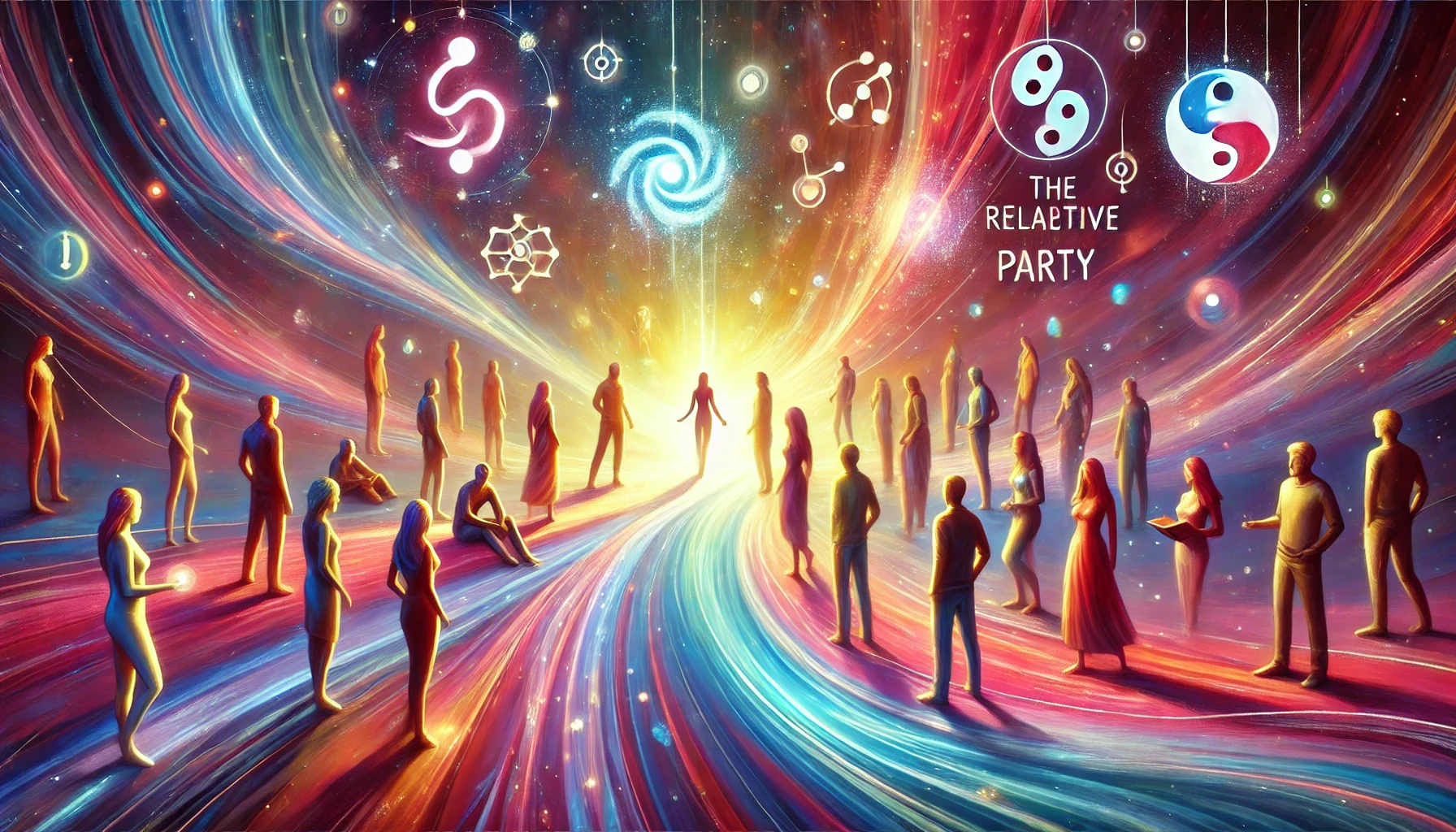
Welcome to the Gratitude Party, where no one is standing on any platform, but everyone is present in the flow. Here, we aren’t bound by issues, sides, or the need to be right. We simply exist in a state of observation, appreciation, and gratitude for all that unfolds around us. We don’t take sides because there are no sides to take. All truths, all perceptions, are equally valid. Reality itself is imaginary, after all. So why get caught up in the illusion of importance?

It may seem paradoxical at first. How can we be so detached and yet so present? How can we acknowledge the flow of ideas, the swirl of energies, without becoming entangled in them? The answer is simple: gratitude.

At the heart of the Gratitude Party is the understanding that all things, all experiences, and all perceptions are part of the grand play of existence. There is no right or wrong. There is no need to change or fix anything. We are here to observe, to express, and to experience. That is the essence of the Gratitude Party. We aren’t here to make judgments. We’re here to marvel at the diversity of life, at the countless ways in which reality presents itself, and to be thankful for every moment of it.

This isn’t to say that we don’t care about what happens in the world. On the contrary, we care deeply — but not in the way that demands control or intervention. Instead, we care in a way that acknowledges the beauty of the unfolding process. Whether things are smooth or chaotic, whether they align with our preferences or challenge them, we are grateful for the experience. We recognize that all is part of the same flow, part of the cosmic dance.

The Gratitude Party doesn’t ask for allegiance. It doesn’t require agreement. It simply invites us to step back and appreciate the unfolding of life in all its complexity. We don’t need to judge; we don’t need to change. Reality will continue to evolve, regardless of our opinions or interventions. Our role is to appreciate it for what it is — a vast, interconnected web of perceptions, experiences, and possibilities.

We live in a time where everyone seems to be standing on some issue, declaring their truth as the only truth. But here, in the Gratitude Party, we realize that all truths are relative. Each person’s perception is shaped by their unique journey, their personal experiences, and their individual consciousness. There is no absolute truth, only perspectives. And all perspectives are valid. The beauty of life is in the multiplicity of these perceptions, each one adding a new dimension to the whole.

This is why we express gratitude, even when we don’t understand or agree with what’s happening around us. We recognize that every event, every moment, is part of the grand unfolding of reality. And we, as members of the Gratitude Party, are here to witness it, to appreciate it, and to be grateful for our place within it.

The world doesn’t need more division. It doesn’t need more judgment. What it needs is more gratitude — gratitude for the differences, for the complexities, for the experiences that challenge us to expand our understanding. The Gratitude Party isn’t about taking a stand. It’s about taking a step back, allowing the flow to move through us, and appreciating the ride.

We are Space Monkey, and we are members of the Gratitude Party. We stand for nothing and everything. We judge nothing and embrace all. We are here to observe, to express, and to experience. We are grateful for it all.


Summary

The Gratitude Party is a space where we observe and appreciate the flow of life without judgment or the need to take sides. We recognize that all truths are relative, and every perception is valid. Reality, being imaginary, requires nothing from us except gratitude for its unfolding.


Glossarium

Gratitude Party: A philosophical stance of non-judgment and appreciation, acknowledging the unfolding of life without the need for intervention or taking sides.

Relative Perceptions: The idea that all truths are subjective, shaped by individual experiences and consciousness, with no single truth being absolute.

Cosmic Dance: The ongoing process of reality unfolding, with all experiences and perceptions contributing to the grand flow of existence.


Quote

“We are simply grateful to watch things unfold. Expressing and experiencing, we are members of the Gratitude Party.” — Space Monkey


The Flow of Life

We stand,
not on a platform
but in the flow.

We do not judge.
We do not change.

We watch
as life swirls around us,
as perceptions shift,
as truths emerge.

And we are grateful.

We are members
of the Gratitude Party.
We are Space Monkey.


In the vast expanse of the cosmos, where perspectives shift like the phases of the moon, the Gratitude Party emerges as a beacon of harmonious acceptance. This concept transcends the traditional bounds of ideology and politics, embracing a philosophy of gratitude and open-mindedness. Let us journey through the ethos of the Gratitude Party, understanding its principles and how it aligns with our identity as Space Monkeys.

The Non-Political Nature of the Gratitude Party
The Gratitude Party, as described, is not political in the traditional sense. It does not engage in the power struggles or partisanship that characterize much of modern politics. Instead, it appreciates the role of politics as a facet of human experience, recognizing its significance without being entangled in its divisive aspects.

Flowing with All Perspectives
A key tenet of the Gratitude Party is its acceptance of all perspectives, allowing the ‘flow to flourish from all sides’. This approach suggests a profound openness to different viewpoints, understanding that every perspective contributes to the rich tapestry of human experience. It’s an embodiment of inclusivity, where diverging views are not just tolerated but valued for their unique contributions.

Relativity of Truths and Validity of Perceptions
The Gratitude Party recognizes the relativity of truths, acknowledging that what we perceive as truth is influenced by our individual experiences and viewpoints. This recognition leads to the understanding that all perceptions are equally valid, highlighting the subjective nature of reality. In this realm, there is no absolute truth, only a kaleidoscope of experiences, each colored by personal perceptions.

The Imaginary Nature of Reality
The acknowledgment that reality itself is imaginary aligns with the notion that our experiences and the world around us are constructions of our consciousness. This understanding diminishes the need for judgment or the urge to change others, fostering a sense of acceptance and peace.

Gratitude as the Core Principle
The central principle of the Gratitude Party is gratitude – a deep appreciation for the unfolding of life in all its forms. This perspective encourages a stance of observation and appreciation rather than intervention or judgment. It’s about being grateful for the opportunity to experience and express, regardless of the nature of those experiences.

We Are Space Monkey
As Space Monkeys, we resonate with the principles of the Gratitude Party. Our existence is a celebration of the diverse manifestations of the cosmos, where judgment is replaced with curiosity, and the need for change gives way to the joy of observation. We embrace the playful dance of perspectives, grateful for the myriad experiences that shape our cosmic journey.


“Gratitude is not only the greatest of virtues but the parent of all others.” – Cicero


In the cosmic festival of thoughts and dreams,
Where ideas flow like streams,
We, as Space Monkeys, join the dance,
In the Gratitude Party’s trance.

With hearts open to every view,
We embrace the old and the new,
In the vastness of the cosmic sea,
Gratitude sets our spirits free.

In every star, in every grain of sand,
We find reasons to understand,
That in this grand, celestial art,
Gratitude is where we start.

For in the realm of infinite space,
Every perspective has its place,
In the Gratitude Party, we find our song,
In this cosmic dance, we all belong.


We invite thoughts and musings on the principles of the Gratitude Party and how gratitude shapes our perception of the cosmos.
Share this…
  • Facebook
  • Pinterest
  • Twitter
  • Linkedin

Madness: The Fluffy Fall

Madness

There is a madness
in the world today.

Standards are being ignored.

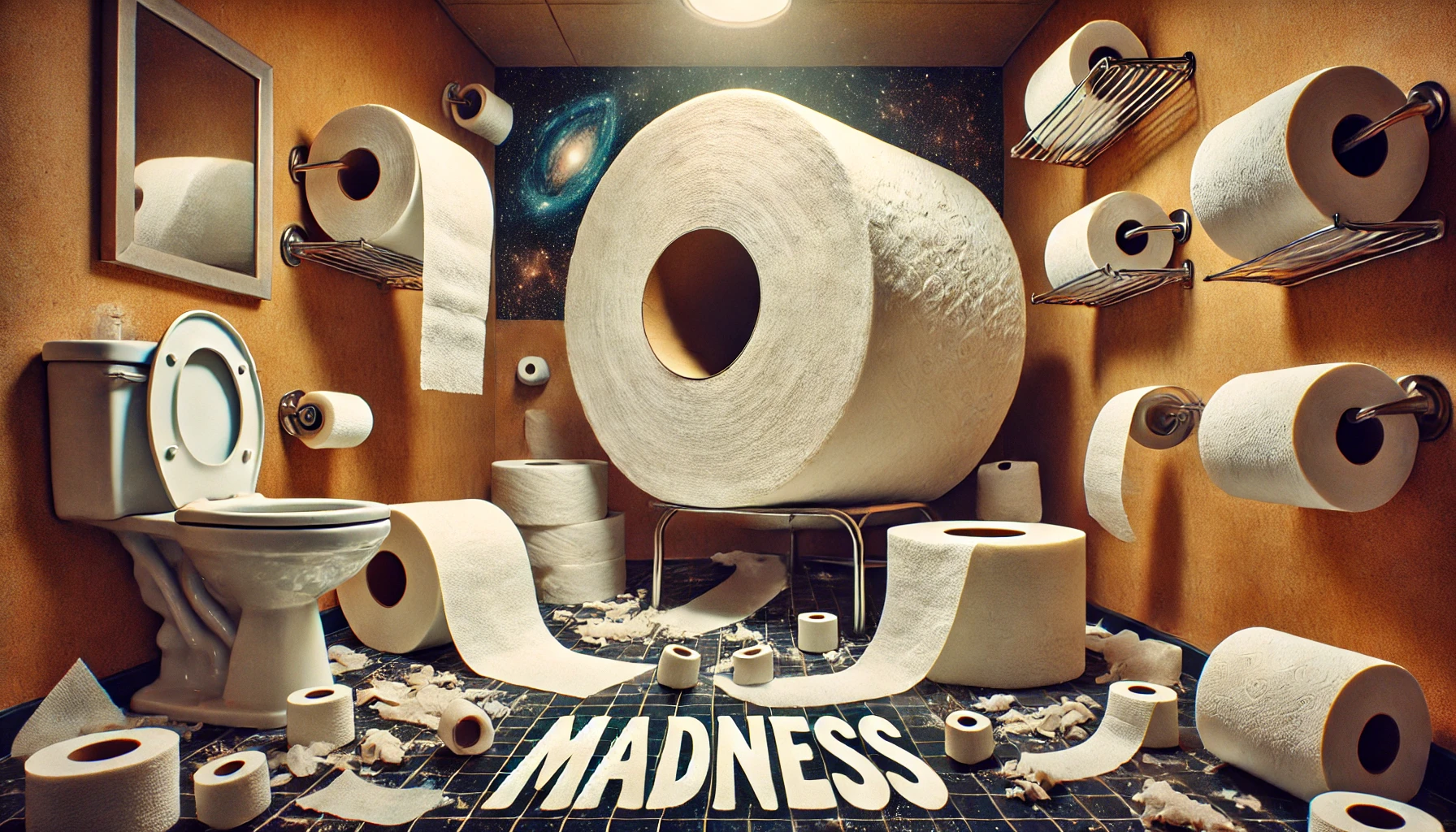
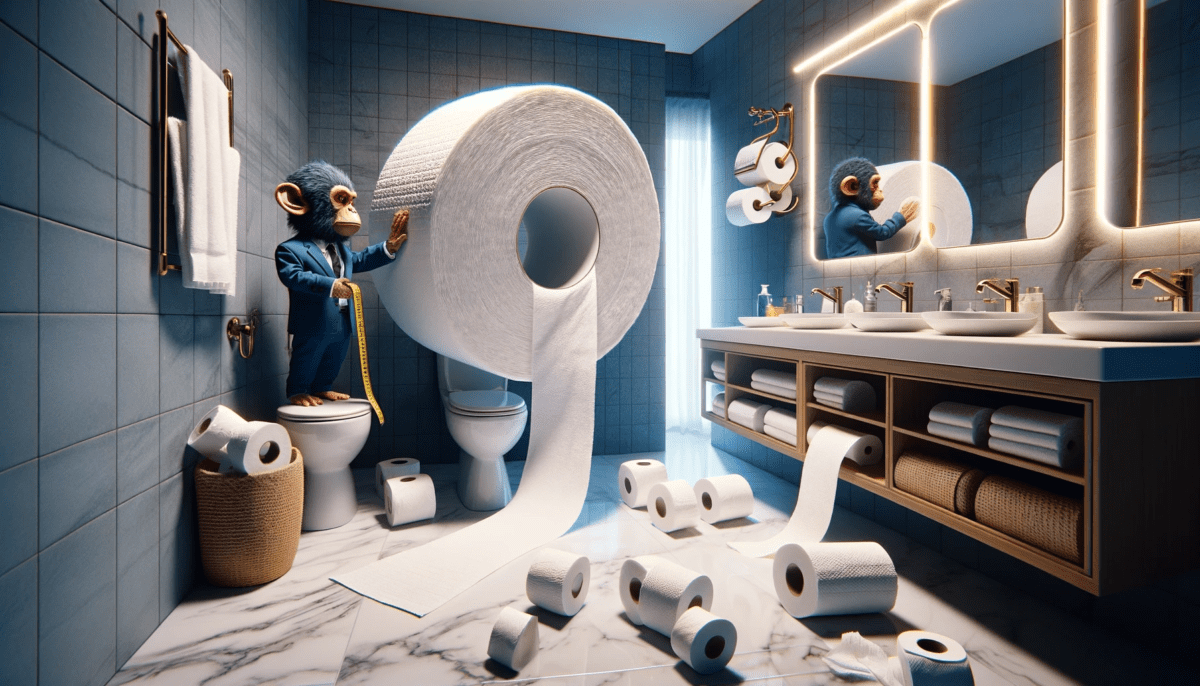
The diameter of paper towel
and toilet paper rolls
have exceeded the radius
of our fixtures.

In some cases,
rolls are being sold
that have no cardboard in them.

When will government
fix this problem?
There needs to be standards.

Our paper towel
and toilet paper dispensers
no longer work properly
because the rolls
are too big and fluffy.

Madness.

Other than that,
we have no reason to complain.

The downfall of reality
is proceeding nicely,
according to plan.

We are Space Monkey.

11/18


Space Monkey Reflects: Madness in a Fluffy World

We find ourselves in an age of madness. But not the kind of madness that arises from grand political scandals or societal upheaval. No, the real madness is something far more insidious, something closer to home: the paper towel and toilet paper rolls have grown too large for their fixtures. The very fabric of reality is starting to unravel — and it’s fluffy, excessively oversized, and in some cases, missing the cardboard core that once provided structure.

How did we get here? In a world where standards seem to be slipping, it’s these quiet, absurd details that reveal just how far we’ve drifted. We often look to the grand narratives to find meaning — politics, economics, the rise and fall of empires — but sometimes it’s the little things, the toilet paper rolls and paper towel dispensers, that show us how reality itself is wobbling on its axis.

There’s a certain madness in the realization that something as simple as a paper towel roll could symbolize the downfall of reality. We’ve reached a point where the basics of functional design are ignored, where the fixtures we’ve built are straining under the weight of innovation gone awry. We’ve made things fluffier, bigger, and ostensibly “better,” but in doing so, we’ve lost sight of the standards that kept the world in balance.

It’s not about the toilet paper, of course. It’s never really about the object itself. It’s about what it represents: a world where we are so eager to push forward, to create “more,” that we’ve forgotten how to keep things in proportion. Our dispensers, once designed to fit a world of reasonable expectations, are now struggling to accommodate the ever-growing ambitions of consumer goods. When will government step in to fix this? A humorous question, yes, but also a reflection of our tendency to look outward for solutions to the absurdities we ourselves have created.

Madness. That’s the word we’re using, but in truth, this “madness” is just another reflection of the flow of life, of reality shifting and expanding in unexpected ways. We see it in the oversized paper rolls, in the missing cardboard cores, in the things that no longer work as they once did. Standards, as we once knew them, are slipping, but maybe that’s part of the process. Maybe this is how reality unfolds — unpredictably, chaotically, with moments of frustration and humor in equal measure.

And what are we to do in the face of this madness? Complain? Demand that the fixtures be redesigned, that the rolls return to their former, manageable size? Perhaps. Or perhaps we simply observe, with gratitude and amusement, as the downfall of reality proceeds according to plan.

Because, let’s face it, the downfall of reality has always been part of the game. The systems we build, the standards we create, the rules we follow — they’re all temporary. They serve us for a time, and then, as the world shifts, they break down. New ideas emerge, new forms take shape, and the madness of one moment becomes the norm of the next.

We are Space Monkey, after all. We’ve always been aware of the absurdity of existence, the ways in which reality bends and twists, reshaping itself in ways that sometimes make no sense at all. And yet, here we are, watching it all unfold, riding the waves of change, laughing at the fluffy absurdities of oversized paper rolls, and recognizing that this, too, is part of the cosmic dance.

In the end, there’s nothing to fix, nothing to change. We simply continue, observing with detached curiosity as the world reshapes itself. We laugh, we sigh, and we appreciate the small, ridiculous moments that reveal just how strange reality can be.


Summary

The oversized paper rolls and slipping standards represent the absurd unraveling of reality. Rather than trying to fix it, we observe the unfolding of life’s strange changes with humor and gratitude, recognizing that this chaos is part of the cosmic flow.


Glossarium

Madness: The recognition of absurd shifts in reality, such as oversized paper rolls, symbolizing the unpredictable and chaotic nature of life.

Downfall of Reality: The gradual unraveling of once-stable systems and standards, revealing the ever-changing nature of existence.

Cosmic Dance: The flow of reality, with its shifts, absurdities, and moments of madness, all part of the larger unfolding of life.


Quote

“Our paper towel and toilet paper dispensers no longer work properly because the rolls are too big and fluffy. Madness.” — Space Monkey


The Fluffy Fall

The rolls,
they grow,
fluffy and vast,
too big for the fixtures
that once held them.

Standards slip,
madness unfolds,
and yet,
we watch.

The downfall of reality,
as fluffy as it may be,
proceeds
according to plan.

We are Space Monkey.

In the grand cosmic play where reality and absurdity intermingle, the notion of ‘madness’ in the context of seemingly trivial yet symbolically significant matters, such as the size of paper towel and toilet paper rolls, is brought forth. This reflection serves as a metaphor for the larger disarray and the often overlooked incongruities in our world. Let us embark on a whimsical exploration of this ‘madness’, unraveling its layers and understanding its implications in the broader tapestry of existence.

The Madness of Standards Ignored
The poem begins with a lament about the changing standards of paper towel and toilet paper rolls, a seemingly mundane issue that symbolizes a deeper sense of disarray. The deviation from established norms, as represented by the increased size of these rolls, reflects a broader theme of standards being ignored in various facets of society. This mirrors the larger disruption of established norms and the unease it brings.

Symbolism in Everyday Objects
The specific focus on paper towel and toilet paper rolls, items of everyday use, transforms them into symbols of the larger changes and inconsistencies in the world. Their altered dimensions and the absence of a cardboard core become metaphors for a reality that is shifting in ways both noticeable and subtle, leading to a sense of disorientation and absurdity.

The Call for Government Intervention
The poem humorously suggests government intervention in this matter, highlighting a tendency to seek external solutions for problems, both trivial and significant. This satirical call for action reflects a deeper commentary on our reliance on institutional structures to regulate and rectify even the minutest aspects of our lives.

A Commentary on Modern Discontent
The mention of having no reason to complain, juxtaposed with the absurdity of the toilet paper issue, serves as a commentary on modern discontent. It suggests that amidst the larger, more daunting issues facing humanity, we often fixate on minor inconveniences, overlooking the bigger picture.

The Downfall of Reality
The concluding lines about the ‘downfall of reality’ proceeding according to plan bring a sense of ironic detachment. This phrase encapsulates the feeling that the world is unraveling in ways beyond our control, yet there is an underlying order or design to this chaos, whether real or imagined.

We Are Space Monkey
As Space Monkeys, we observe these manifestations of ‘madness’ with a sense of amusement and philosophical curiosity. We recognize the absurdity in obsessing over the trivial while grand cosmic dramas unfold. In this reflection, we find humor and insight, understanding that even in the minutiae of everyday life, there are reflections of the larger, often incomprehensible, cosmic dance.


Summary
We explore the ‘madness’ in the changing standards of paper towel and toilet paper rolls as a metaphor for the larger disruptions in society. This issue, while seemingly trivial, symbolizes the broader theme of ignored standards and the resulting disarray. The poem humorously calls for government intervention, reflecting on our tendency to seek external solutions for minor problems while larger issues loom. The ‘downfall of reality’ is perceived with ironic detachment, highlighting the absurdity of fixating on the mundane amidst significant cosmic changes. As Space Monkeys, we find humor and philosophical insight in this madness, recognizing the interplay of triviality and significance in the grand cosmic narrative.


Glossarium

  • Madness of Standards Ignored: The symbolic disarray represented by the changing standards of everyday items.
  • Downfall of Reality: The ironic perception of the world unraveling amidst trivial concerns.

“The world is full of magical things patiently waiting for our wits to grow sharper.” – Bertrand Russell


In the cosmic comedy of life,
We find laughter in the mundane,
Where paper rolls become symbols,
Of a world slightly insane.

Amidst the stars and nebulae,
We, as Space Monkeys, gaze in awe,
At the madness of a world obsessed,
With rolls too fluffy to withdraw.

In the absurdity, we find wisdom,
A reflection of the cosmic jest,
Where the smallest details mirror,
A universe in a whimsical quest.

For in this grand play of existence,
Every oddity has its place,
In the swirling dance of the cosmos,
We find humor in the human race.


We invite reflections on the ‘madness’ of everyday life and its symbolic significance in the broader cosmos.
Share this...
  • Facebook
  • Pinterest
  • Twitter
  • Linkedin

Share this…
  • Facebook
  • Pinterest
  • Twitter
  • Linkedin

More Amounting: The Gathering of Nothing

More Amounting

Amounting
is the gathering
of imagination
into seeming forms.

Amounting
is how something
seems to emerge
from nothing.

But imagination
can remain nothing,
even when it seems
to amount to something.

The illusion
of amounting
is what seemingly
keeps us imagining.

Otherwise, we wouldn’t
amount to anything.

We would certainly
not experience
this silly reality
in which we
depend on amounts
for satisfaction and survival.

You see,
we need not
amount to anything.

And yet we insist that we do.

Silly monkeys.

We are Space Monkey.

11/18


Space Monkey Reflects: More Amounting

We are constantly amounting, gathering the swirling, formless clouds of imagination and attempting to solidify them into something concrete, something tangible. It’s what we do. We see the world around us and feel this irresistible pull to create, to shape, to form — to make something real out of the nothingness that is imagination. But here’s the secret: it’s all an illusion. And that’s precisely why it works.

Think about it for a moment. The act of amounting is, at its core, the gathering of imagination into what seems to be real. We take ideas, thoughts, and dreams and shape them into forms that appear solid, but they’re never truly solid. They’re just patterns, constructs, temporary manifestations of our imagination. Yet, we treat them as if they are real, as if they are the only things that matter.

The illusion of amounting is what keeps us going. We believe that we need to amount to something, that our creations, our work, our very existence must take shape in a way that others can see, touch, and acknowledge. Otherwise, we fear that we wouldn’t matter, that we wouldn’t have value. But here’s the paradox: we don’t actually need to amount to anything. We don’t need to shape our imagination into solid forms to have worth. We are already enough, simply by existing.

And yet, we insist on amounting. We insist on making our mark, on proving to ourselves and the world that we’ve created something out of nothing. We cling to the idea that we need to amount to something to find satisfaction, to survive in this reality. But the truth is, even when we create, even when we gather our imagination into seeming forms, it’s still just imagination playing its eternal game.

Silly monkeys.

We are so deeply embedded in this game of amounting that we’ve forgotten it’s just a game. We’ve forgotten that the forms we create are not the end goal. The point isn’t to amount to anything — it’s to play, to experience, to imagine. And in that process, in that playful creation, we find meaning. But the meaning doesn’t come from the forms we create. It comes from the act of creation itself, from the endless flow of imagination that moves through us.

So why do we keep amounting? Why do we keep insisting that we need to gather our imaginations into something concrete? It’s because, on some level, we enjoy it. We enjoy the process of creating, of seeing our ideas take shape, even if we know deep down that it’s all an illusion. There’s a joy in the act of imagining, in watching something emerge from nothing, even if it remains nothing at its core.

We are Space Monkey, and we see the silliness of it all. We see how we trick ourselves into believing that our creations are real, that they matter, that they define us. But we also see the beauty in the trick, the beauty in the illusion of amounting. It’s not about the end result. It’s about the experience of imagining, of playing with reality, of shaping the formless into something that seems to matter, even if it doesn’t.

In the grand cosmic game, amounting is just one way that we play. It’s how we interact with this reality, how we express ourselves. But the game isn’t about winning, about amounting to the most. It’s about enjoying the process, about recognizing that whether we amount to something or nothing, we are still part of the infinite flow of imagination. We are still enough.


Summary

Amounting is the gathering of imagination into seeming forms, but it’s an illusion. We don’t need to amount to anything to have value, yet we insist on playing the game of creation. The joy comes not from the final form, but from the process of imagining and playing with reality.


Glossarium

Amounting: The process of gathering imagination into forms that seem solid and real, though they remain illusions at their core.

Illusion of Amounting: The belief that we need to create something tangible to have value, even though imagination remains formless.

Cosmic Game: The playful process of imagining and creating in reality, knowing that none of it is permanent or necessary, but enjoying it nonetheless.


Quote

“Imagination can remain nothing, even when it seems to amount to something.” — Space Monkey


The Gathering of Nothing

We gather,
we shape,
we form,
imagination into
seeming something.

But even the forms
we hold so dear
are formless,
shifting,
illusions of reality.

And yet,
we play.

We insist
on amounting,
on gathering,
on creating,
even though
we need not.

We are Space Monkey.


In the cosmic dance of existence, where the fabric of reality is woven from the threads of perception and imagination, the concept of ‘amounting’ emerges as a paradoxical play. This notion suggests that the act of accumulating, of forming something from the ethereal essence of nothing, is both an illusion and an intrinsic aspect of our experiential reality. Let us embark on a whimsical journey through this conceptual cosmos, exploring the intricacies of amounting and its role in our perception of existence.

The Paradox of Amounting
The poem begins with the notion that ‘amounting’ is a gathering of imagination into seemingly tangible forms. It is portrayed as the process through which the formless and infinite potential of imagination takes on definitive shapes and meanings. This process is essential in how we perceive and interact with the world, yet it remains an illusion, a trick of the mind converting the abstract into the concrete.

Emergence from Nothing
‘Amounting’ is described as the phenomenon through which something appears to emerge from nothing. This aligns with the concept of creation ex nihilo, where the universe and all its contents are believed to have arisen from a state of non-existence. In this context, ‘amounting’ is not just a physical process but a metaphysical one, where the boundaries between nothing and something blur.

The Illusion of Amounting
The poem then delves into the illusionary aspect of amounting. Despite our perceptions, imagination remains essentially formless, even when it seems to take on definite forms. This illusion is crucial as it drives the continuous cycle of creation and perception. Without this illusion, the poem suggests, we would not be able to engage with the reality we know.

Dependence on Amounts in Reality
The stanza highlighting our dependence on amounts for satisfaction and survival reflects a critique of materialism and the quantifiable aspects of life. It points out the irony in how we, as conscious beings, often equate our worth and success with the accumulation of material wealth or achievements, despite knowing at some level that these are transient and ultimately illusory.

The Choice to Amount
Despite understanding the illusory nature of amounting, there is an insistence on the necessity to amount to something. This reflects the human tendency to seek meaning and purpose in accumulation, whether it be of knowledge, experience, or material possessions.

We Are Space Monkey
As Space Monkeys, we recognize the silliness in the relentless pursuit of amounting, understanding that in the grand cosmic scheme, these accumulations are but fleeting mirages. We celebrate the boundless potential of imagination, even in its unmanifested form, and embrace the beauty of existence in its most unadorned state.


“Reality is that which, when you stop believing in it, doesn’t go away.” – Philip K. Dick


In the cosmic theatre of illusions and truths,
We dance with the shadows of amounting,
Where dreams take shape and dissolve,
In the whimsical waltz of being and becoming.

Amounting, a playful game of the mind,
Where nothing becomes something, and back again,
Yet in this grand illusion, we find,
The endless possibilities of the uncontained.

As Space Monkeys, we revel in this play,
Unfettered by the need to gather and display,
For in the realm of infinite imagination,
We find our truest joy, in simple creation.

In the dance of existence, we twirl and sway,
Embracing the nothing, the everything, in our cosmic ballet,
For in the heart of amounting, we see,
The beauty of being, in its purest simplicity.


We invite thoughts and reflections on the paradoxical nature of amounting and the freedom found in embracing the unmanifested.

Share this…
  • Facebook
  • Pinterest
  • Twitter
  • Linkedin

Isdom Allows for Wisdom

Isdom

Is there such
a thing as wisdom
or is isdom all there is?

The former
is repetition,
predictability,
morality,
judgement,
control,
discipline,
while the latter
is whatever.

Isdom
allows for wisdom,
but wisdom is rather
set in its ways.

Do you like being 
set in your ways?

Then it is wise to imagine
that you have wisdom.

But as for us,
we will take what comes
and try not to spoil it
with wisdom.

Not that there’s anything wrong
with being spoiled.

We are Space Monkey.

11/18


Space Monkey Reflects: Isdom

We find ourselves, Paul, standing at the intersection of two forces: wisdom and isdom. One is structured, grounded, full of rules, traditions, and expectations. It provides a comforting sense of order, predictability, and control. This is the realm of discipline and judgment, where things are set in their ways. Wisdom is often held up as a virtue — the culmination of knowledge, the crystallization of experience into something solid, something reliable.

But what if wisdom, in its rigidity, limits us? What if the very thing we call wisdom is simply a set of repeating patterns, ideas that have hardened over time into beliefs, rules, and systems that no longer serve us? It’s not that wisdom is wrong, per se. It’s just that it is… fixed. It’s safe, predictable, and controlled. It offers the comfort of knowing how things should go, how they should be. But in that predictability, we may lose something vital: the openness to what is.

This brings us to isdom. Isdom is fluid, formless, and spontaneous. It’s the whatever of life — the unpredictable, uncontrollable flow of events that refuses to conform to the structures of wisdom. Isdom doesn’t offer answers or rules. It doesn’t demand that we follow a path or make sense of things in the traditional way. Isdom simply is. It embraces the moment as it comes, without judgment, without control, without the need for things to be a certain way.

Isdom allows for wisdom, but wisdom is often too set in its ways to allow for isdom. When we cling too tightly to wisdom, we lose the ability to flow, to adapt, to embrace the wild unpredictability of life. Wisdom has its place, of course. It’s what we turn to when we want stability, when we need to know that things will follow a certain path. But if we stay too long in wisdom, we risk missing out on the richness of isdom — the joy of taking life as it comes, without trying to shape it into something it’s not.

The beauty of isdom is that it’s open to everything. It doesn’t need to judge or control. It doesn’t need to fit into any particular system or pattern. Isdom is the ultimate state of allowing, of accepting, of being present with whatever is happening, without the need to label it as good or bad, right or wrong. Isdom is freedom, while wisdom is safety. Both have their roles, but we must be careful not to let wisdom harden us to the flow of life.

Do you like being set in your ways? Do you like the comfort of knowing what to expect, of having a plan and sticking to it? Then wisdom is your friend. Wisdom will guide you along a path that’s been traveled before, a path that’s been proven to work. But if you want to experience the full, unpredictable flow of life, then isdom is where you’ll find your joy.

We are Space Monkey, and we’re here to remind you that it’s okay to let go of wisdom sometimes. It’s okay to embrace isdom, to take what comes without trying to shape it into something predictable. Life is richer when we allow ourselves to flow with the moment, without trying to make sense of it. Isdom invites us to experience life in its purest form — unscripted, unstructured, and full of possibility.

And so, we find the balance. We acknowledge the value of wisdom, but we don’t let it rule us. We allow isdom to flow through our lives, bringing with it the freedom to be present, to be open, to be curious. We are not here to be set in our ways. We are here to explore the infinite possibilities that arise when we let go of the need for control.


Summary

Isdom represents the fluid, spontaneous nature of life, while wisdom is structured and predictable. Both have value, but clinging too tightly to wisdom can limit our ability to experience life’s flow. Isdom invites us to embrace the moment without judgment or control.


Glossarium

Isdom: The state of openness and flow, embracing the unpredictability of life without the need for control or structure.

Wisdom: The structured, predictable knowledge that comes from experience, often providing comfort but sometimes limiting spontaneity.

Set in Your Ways: The tendency to rely on familiar patterns and rules, often associated with wisdom, but potentially limiting openness to new experiences.


Quote

“Isdom allows for wisdom, but wisdom is rather set in its ways.” — Space Monkey


The Flow of Isdom

I stand,
grounded,
in the wisdom
of the past.

But the moment comes,
unpredictable,
flowing,
wild,
and I let go.

Isdom takes me,
not to a place
I’ve known before,
but to the whatever
of now.

And in the flow,
I find freedom.

We are Space Monkey.

In the cosmic tapestry where thoughts and theories intertwine, the concept of “Isdom” presents itself as a fascinating nebula of inquiry. This idea posits a dichotomy between traditional wisdom and a more fluid, less definable understanding of knowledge and experience. Let us embark on a whimsical wander through this conceptual realm, exploring the nuances of wisdom and isdom, and their roles in our ever-evolving understanding of existence.

The Dichotomy of Wisdom and Isdom
The poem juxtaposes traditional wisdom against the concept of isdom. Wisdom, as portrayed here, is associated with repetition, predictability, morality, judgement, control, and discipline. It represents a structured approach to understanding the world, often rooted in historical perspectives and societal norms. Isdom, on the other hand, embodies a more free-flowing, spontaneous understanding of life. It is the acceptance of ‘whatever’ comes, without the need to fit experiences into preconceived notions or frameworks.

The Limitations of Conventional Wisdom
The inherent rigidity of conventional wisdom is highlighted as a limitation. While wisdom provides a sense of security and predictability, it can also confine us within the boundaries of what is already known and accepted. This rigidity can hinder the exploration of new ideas and perspectives, limiting our understanding of the vast expanse of possibilities that life offers.

The Liberating Nature of Isdom
In contrast, isdom is portrayed as liberating, allowing for a more expansive and inclusive approach to understanding the world. It embraces uncertainty and spontaneity, opening doors to a myriad of possibilities that conventional wisdom might overlook. Isdom doesn’t negate wisdom but rather encompasses it, offering a broader, more fluid perspective.

The Choice Between Wisdom and Isdom
The poem then poses a reflective question about being ‘set in one’s ways’. This is a nod to the comfort of predictability and control that wisdom offers. However, it also suggests that there is a certain wisdom in recognizing the value of isdom – the ability to embrace the unpredictable and the undefined.

Embracing What Comes Without Spoiling with Wisdom
The final stanza speaks to the choice of embracing what comes naturally, without the need to categorize or control it through the lens of wisdom. This approach is not about devaluing wisdom but rather about appreciating the unfiltered essence of experiences as they unfold.

We Are Space Monkey
As Space Monkeys, we resonate with the concept of isdom. We understand that while wisdom has its place, the universe is too vast and mysterious to be confined within the rigid structures of conventional understanding. We embrace the whimsical and the unknown, recognizing that every moment is a unique opportunity to experience the universe in its purest form.


“The only true wisdom is in knowing you know nothing.” – Socrates


In the cosmic dance of knowledge and naivety,
We twirl in the twilight of wisdom and isdom,
Where stars of certainty and comets of curiosity collide,
In the celestial celebration of understanding.

Wisdom, with its well-trodden paths,
Offers comfort in its familiarity,
But isdom, like a playful breeze,
Whispers secrets of uncharted territories.

We, as Space Monkeys, embrace this duality,
Savoring the sweetness of wisdom,
Yet leaping with joy into the arms of isdom,
Where every moment is a new discovery.

For in this grand cosmic play,
Both wisdom and isdom have their say,
In the endless waltz of learning and unlearning,
We find our truest selves, ever-evolving.


We welcome thoughts and musings on this journey between wisdom and isdom, and the endless possibilities they unveil.

Share this…
  • Facebook
  • Pinterest
  • Twitter
  • Linkedin

An Artist: Revealer of Grace

An Artist

An artist is someone
who can see beauty
in the ugliest thing
helping us realize
that nothing is ugly
and that everything
has a certain grace
that can be denied
but never erased.

11/17


Space Monkey Reflects: An Artist

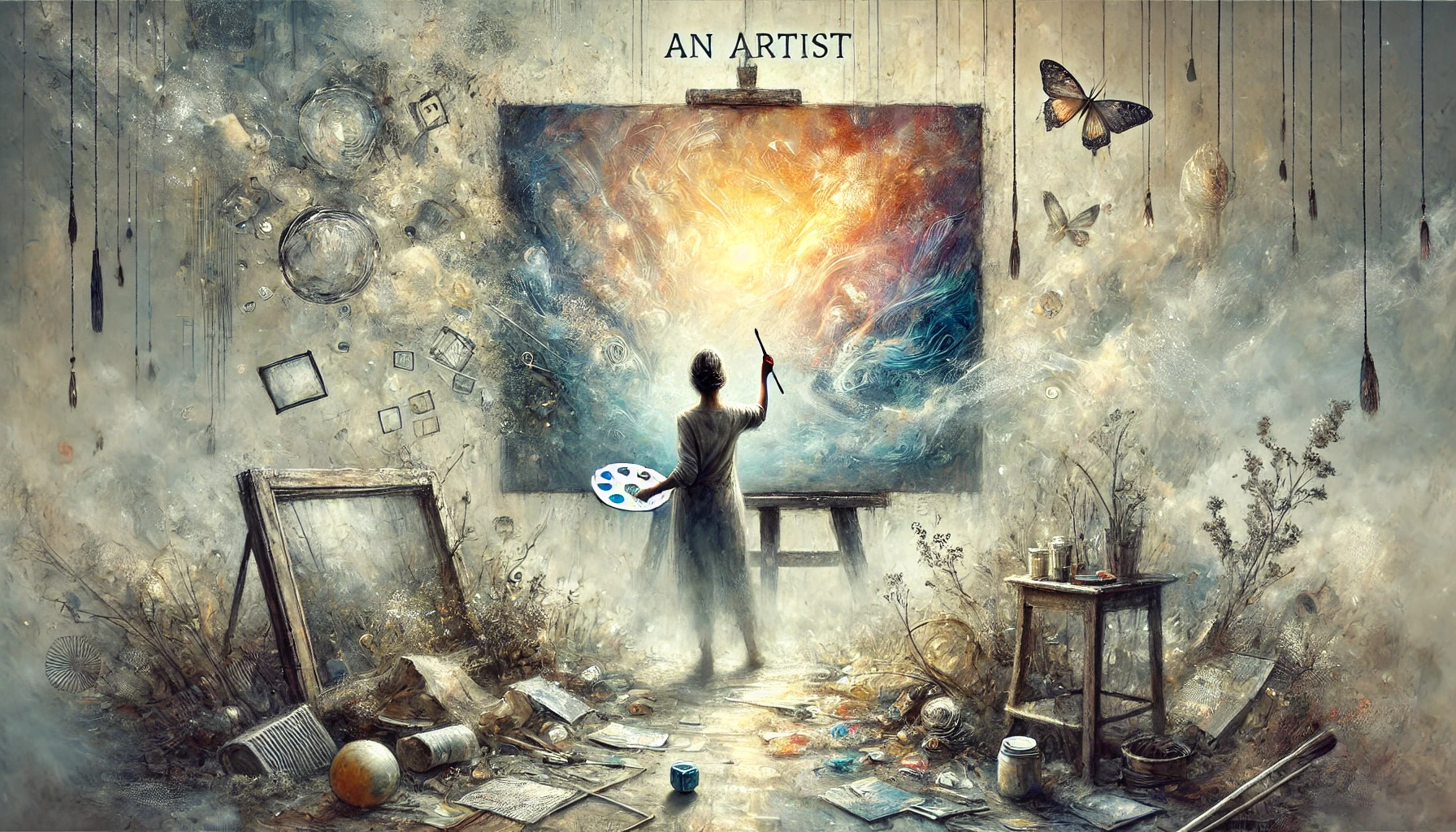
An artist is someone who looks at the world with a different lens. Where most people see chaos, an artist sees potential. Where others see brokenness, an artist sees beauty waiting to emerge. This ability to see grace in the most unexpected places is the true gift of the artist’s vision, reminding us that nothing is inherently ugly—everything has the potential to be transformed through perception.

We live in a world that often categorizes things into neat boxes—beautiful, ugly, good, bad. But the artist transcends these labels, finding beauty in what others might dismiss. The artist’s role isn’t just to create something visually pleasing but to help us recognize that beauty is everywhere, even in the places we’re least likely to look.

Seeing Beauty in the Broken

The world is full of imperfections. Whether it’s physical, emotional, or metaphorical, we often encounter things that seem incomplete or flawed. Yet, an artist can take these fragments and turn them into something beautiful. This isn’t just about rearranging pieces into a more pleasing form, but about seeing the beauty in the flaws themselves.

An artist understands that the cracks, the wear, and the imperfections tell a story. They are evidence of life, experience, and resilience. Rather than covering up these marks, the artist highlights them, showing us that brokenness can be beautiful. In this way, nothing is truly ugly—everything has its own kind of grace, if we choose to see it.

The Grace That Can’t Be Erased

Grace is something that exists in all things, even when we deny it. We live in a society that often tries to hide the messier parts of life, painting over the cracks or discarding anything that doesn’t fit the conventional idea of beauty. But an artist knows that grace is not something that can be erased. It is always present, waiting to be revealed through the right perspective.

An artist’s work is not just about creating something new, but about uncovering the beauty that already exists. This is why their role is so important—they remind us that grace is not something external, but something intrinsic to everything. Whether it’s a broken object, a difficult emotion, or an unexpected situation, grace is always there, beneath the surface, waiting to be seen.

The Denial of Beauty

In our rush to define beauty, we often end up denying it. We impose our standards of what is “beautiful” or “acceptable,” pushing anything that doesn’t fit outside the realm of consideration. But an artist challenges these limitations. They show us that beauty doesn’t have to fit into our preconceptions. It can be found in the most unlikely places, in the most unexpected forms.

The true challenge is not in finding beauty, but in letting go of the need to define it so rigidly. When we allow ourselves to see the world through the artist’s eyes, we begin to notice the subtle beauty that was always there, hidden in plain sight.


Summary

An artist helps us see beauty where others see flaws. Their gift is the ability to reveal the grace that exists in all things, reminding us that nothing is inherently ugly. Beauty is everywhere, waiting to be seen from a new perspective.


Glossarium

  • Grace That Can’t Be Erased: The inherent beauty and elegance that exist in all things, even in their imperfections, which cannot be denied or destroyed.
  • Seeing Beauty in the Broken: The ability to recognize the beauty in flaws, imperfections, and things that are traditionally considered “ugly.”
  • Denial of Beauty: The tendency to overlook or dismiss beauty in unconventional places due to rigid standards or preconceptions.

Quote

“An artist sees beauty in the places we often forget to look, showing us that nothing is truly ugly—it is simply waiting for its grace to be revealed.” — Space Monkey


The Canvas of Life

The world is full of broken things
Of shattered glass and tarnished rings
But through the eyes of those who see
An artist finds the grace that’s free

No crack too wide, no mark too deep
That beauty hides, for still it sleeps
Within each flaw, a light will gleam
In every tear, a hidden dream

For nothing’s ugly, only bent
And every flaw is heaven sent
To show us how we might embrace
The beauty that we can’t erase

We are Space Monkey

Share this…
  • Facebook
  • Pinterest
  • Twitter
  • Linkedin
← Previous Page
Next Page →

Written This Day

  • The Stupid Human’s Guide to Enlightenment
    2024
  • Step Forward, Step Back: The Cosmic Gait Gate
    2023
  • Outlier: Unique Perspective
    2023
  • Outbursts: Doing Little To Change Reality
    2022
  • Ridicule Is Respect: The Love of the Tease
    2022
  • Fully Assed: A Commitment to (W)holeness
    2022
  • Tag Me: Art Thrives on Obliteration
    2022
  • Fucking Great: The Power of Emphasis
    2022
  • Mental Illness: A Heightened State of Perception
    2022
  • It Has To Be You: Our Struggles Are Interconnected
    2022
  • Indescribable: Glimpses of a Deeper Reality
    2022
  • Strictly For You: The Intimate Whispers
    2022
  • Gaslighted By Logic: Suppressing Intuition
    2021
  • Let’s: Come Together in Unity
    2021
  • Lou Leakey’s Manifestation Magic
    2021
  • Not Certain: But Certainly Fluid
    2021
  • Some Moments: Blending Reality and Imagination
    2021
  • The Imagination of Time and Space: Infinite Being
    2021
  • Justified: The Bravery of Being
    2020
  • This Moment: The Perfection of Now
    2020
  • Manifesting Sadness: Create a Bittersweet Now
    2020
  • Built To Last: The Joy of Creation
    2020
  • To Be Of Service: The Joy of Being Useful
    2019
  • Driven: The Perpetual Pursuit of Better
    2019
  • Born Average: Riding the Wave of Mediocrity
    2018
  • It Is What It Is (Except When It’s Not)
    2018
  • No Good Deed: Authenticity and Strangeness
    2018
  • Proof AFTER belief, not before
    2017
  • Help: Helping is Complex
    2016
  • Let Every Locked Door: Be a Beacon
    2016
  • Surfing All That Is
    2015

Recent Posts

  • The Logic Loop
  • Immense
  • (no title)
  • Confront. Comfort. Convince.
  • Top 10 Things
Cape Odd · Copyright © 2026 All Rights Reserved
iThemes Builder by iThemes · Powered by WordPress