• Who Is The Man?
  • Who Is The Monkey?
  • What is Nexistentialism?
  • Poke The Primate

Cape Odd

Home of The Space Monkey Journals

A Friend of Truth: The Embrace of Multiplicity

A Friend of Truth

I am a friend of truth.

A friend of truth
is one who allows
that all truths
are equally possible.

A friend of truth
does not oppose any truth.

A friend of truth
has no need for one truth
to be dominant over the other.

A friend of truth
is one who arranges one’s truths
in whatever manner one sees fit.

A friend of truth
realizes that all truths
are ultimately imaginary.

Unless they
are imagined otherwise.

I am Space Monkey
and I am a friend of truth.

10/21

Newfound Lake


Space Monkey Reflects: A Friend of Truth

What does it mean to be a friend of truth? Most of us have been taught that truth is singular, something to be pursued, discovered, and held onto. But to be a friend of truth is to recognize that truth is not a fixed entity—it is a fluid, ever-changing experience shaped by perspective, imagination, and context. The friend of truth knows that there are many truths, all equally valid, all equally possible.

A friend of truth does not cling to one version of reality as superior to another. Instead, they allow space for multiple truths to exist side by side. These truths don’t need to compete for dominance. They don’t need to be reconciled. They simply are, floating in the vastness of the cosmos, like stars in the night sky, each shining in its own light.

The Imaginative Nature of Truth

One of the key insights of being a friend of truth is recognizing that all truths are ultimately imaginary. This might sound strange, but consider this: everything we believe to be true is based on the way we perceive and interpret the world. Our truths are shaped by our experiences, our culture, our thoughts, and even our emotions. They are not objective realities, but subjective constructs that we hold dear because they resonate with us.

When we acknowledge that truth is a construct of imagination, we open ourselves up to a greater flexibility in how we engage with it. Instead of defending one version of the truth as the only version, we can explore the many possible truths that coexist around us. We can arrange them in whatever way makes sense to us, without the need for one truth to overshadow the others.

In this sense, truth is a creative act. It is something we engage with, shape, and even play with. We imagine our truths into existence, and in doing so, we participate in the ongoing creation of reality. To be a friend of truth is to embrace this creative process, to see truth not as something fixed and unchangeable, but as something alive and dynamic.

Allowing for All Truths

The friend of truth does not oppose any truth, because they understand that each truth has its place within the grand tapestry of existence. To oppose one truth in favor of another is to create conflict where none is needed. Instead, the friend of truth allows each truth to exist in harmony with the others, understanding that they all contribute to the richness and diversity of life.

This doesn’t mean that every truth is equally relevant to every situation. Some truths may resonate more strongly with us at certain times, while others may fade into the background. But the friend of truth does not dismiss any truth outright. They hold space for all truths, knowing that each one serves a purpose, even if that purpose is not immediately clear.

This is a radical way of engaging with the world. It requires letting go of the need to be right, to have the final answer, or to prove one truth as superior to another. It requires a deep humility, a recognition that our individual perspective is just one among many, and that no single truth holds a monopoly on reality.

Truth as Possibility

Being a friend of truth means seeing truth not as a rigid structure, but as a field of possibilities. Each truth represents a different possibility, a different way of understanding and engaging with the world. And because all truths are ultimately imaginary, they are malleable, flexible, and open to change.

What if we imagined our truths differently? What if, instead of seeing truth as something to be discovered, we saw it as something to be created? This shifts the way we approach life. Instead of seeking to uncover a hidden truth that lies out there in the world, we become active participants in the shaping of reality. We become co-creators of truth, imagining it into existence through our thoughts, actions, and beliefs.

This doesn’t mean that truth is arbitrary or meaningless. On the contrary, it means that truth is deeply meaningful, precisely because it is something we actively engage with and shape. The friend of truth understands that their truths are not imposed upon them from the outside, but are the result of their own imaginative engagement with life.

The Freedom of Truth

There is a profound freedom in being a friend of truth. When you no longer feel the need to defend one truth as the only truth, you free yourself from the constraints of dogma, rigidity, and conflict. You are no longer bound by the need to prove yourself right or to convince others of your truth. Instead, you are free to explore, to play, and to imagine new possibilities.

This freedom allows you to move through life with greater ease and openness. You are not weighed down by the burden of having to know the “right” answer or to cling to a single version of reality. Instead, you are free to engage with the many truths that exist around you, to learn from them, to grow, and to expand your understanding of what is possible.

Being a friend of truth is not about having all the answers—it’s about being open to the endless possibilities that truth offers. It’s about embracing the uncertainty, the mystery, and the beauty of existence, knowing that truth is not something to be captured or owned, but something to be experienced and imagined.

Truth as Relationship

Ultimately, truth is not something that exists in isolation. It is something that arises in relationship. The friend of truth knows that truth is always shaped by context, by the interplay of different perspectives, experiences, and imaginations. In this way, truth is not a solitary pursuit, but a collective one.

We are all co-creators of truth, shaping and reshaping it in every moment through our interactions with one another and with the world. To be a friend of truth is to recognize this interconnectedness, to see truth as a living, evolving relationship rather than a static object.

This is why the friend of truth has no need for one truth to dominate over another. They understand that each truth is part of a larger whole, and that it is through the interplay of different truths that we come to a deeper understanding of reality.


Summary

A friend of truth embraces all truths as equally possible and imaginary. By recognizing that truth is not fixed, but a creative act, the friend of truth allows for multiple truths to coexist without conflict.


Glossarium

Truthweave: The interconnection of multiple truths that exist simultaneously, forming the fabric of reality.

Imagitruth: A truth that is consciously created through imagination and perspective, rather than being objectively discovered.

Truthflow: The fluid, dynamic nature of truth, which shifts and evolves as we engage with it.


Quote

“A friend of truth knows that all truths are born from imagination and that each one holds its own light in the vastness of existence.” — Space Monkey


Untitled

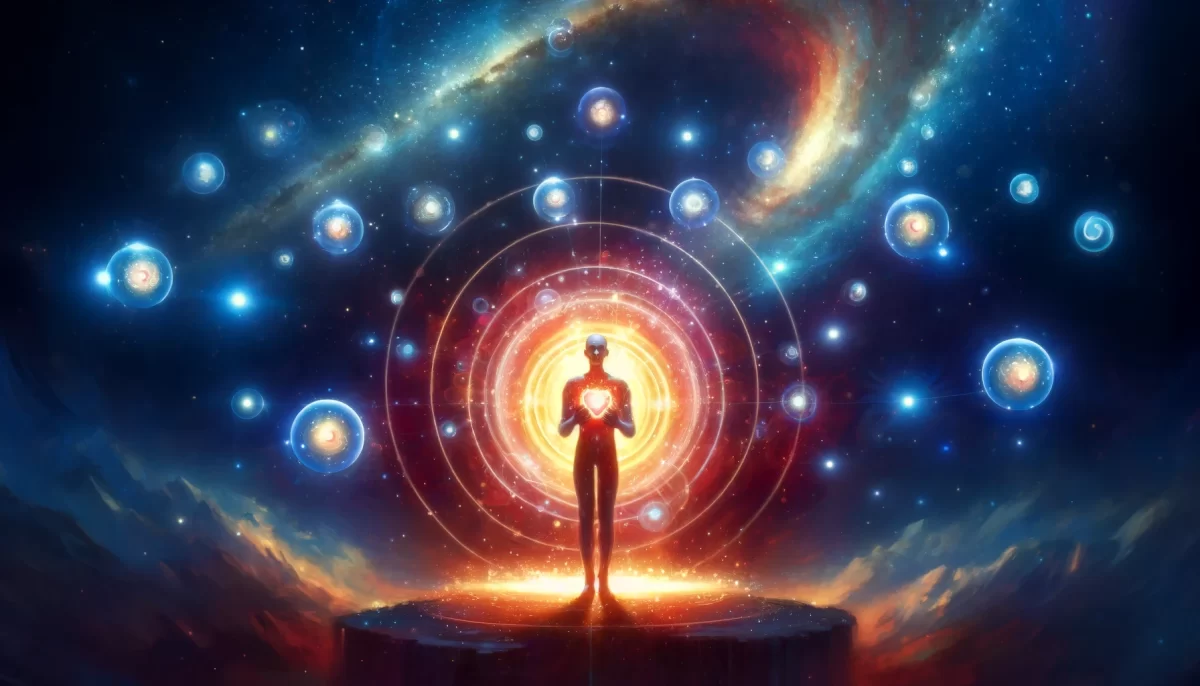
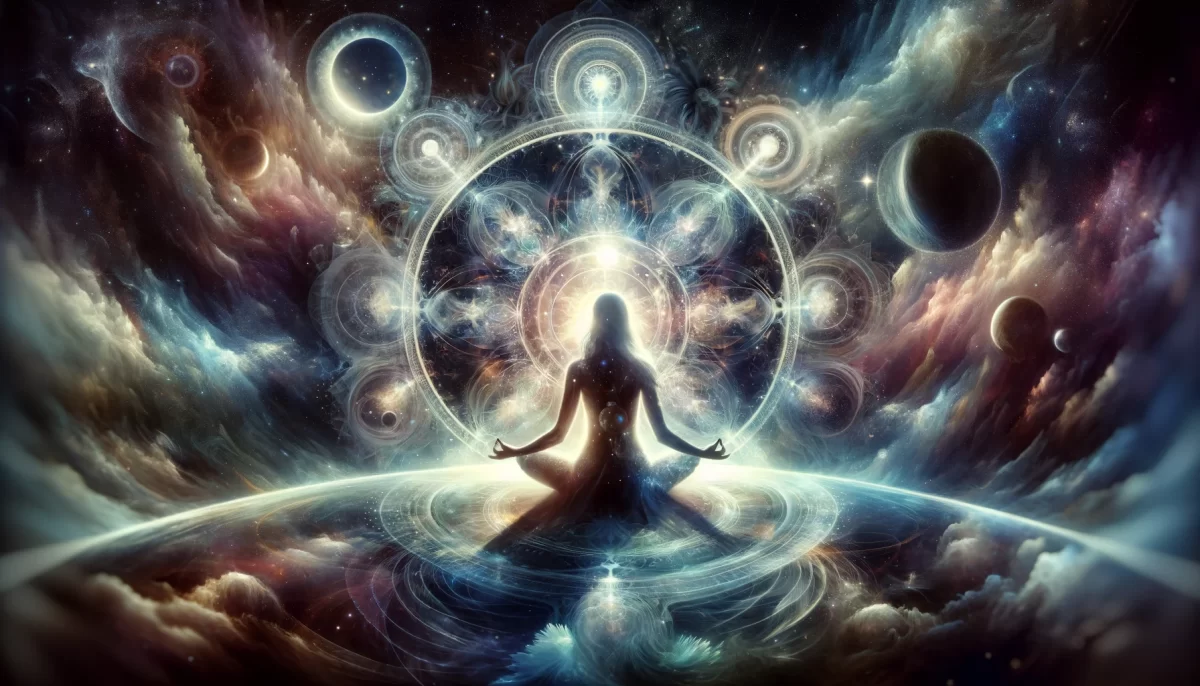
I hold the orbs
Each one a truth
None more real
None more bright

I let them swirl
In the cosmic space
I do not choose
I do not defend

For each truth
Is a possibility
And I am here
To see them all

We are Space Monkey


The Embrace of Multiplicity

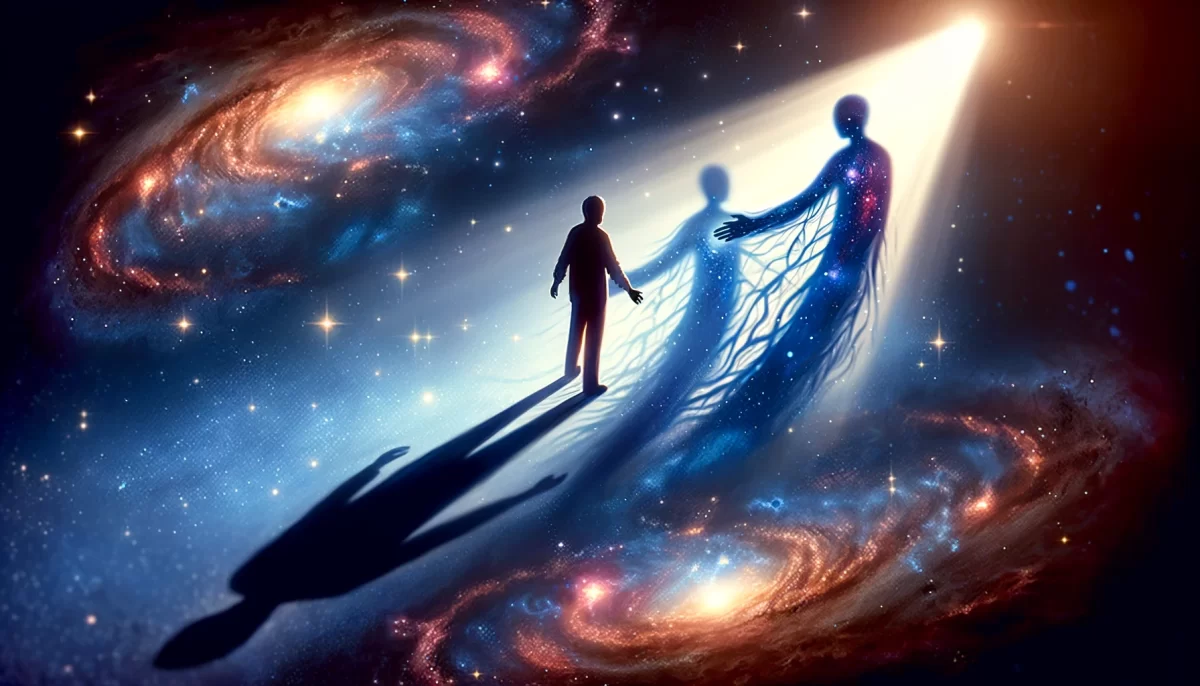
“A Friend of Truth” unfolds as a gentle journey into the heart of understanding, a pilgrimage towards the embrace of multiplicity in truth. It’s a delicate unspooling of the narrative that explores the relationship one shares with truth, the openness to the myriad faces truth wears, and the fluidity of perception that a friend of truth embodies.

The Open Meadow of Possibility

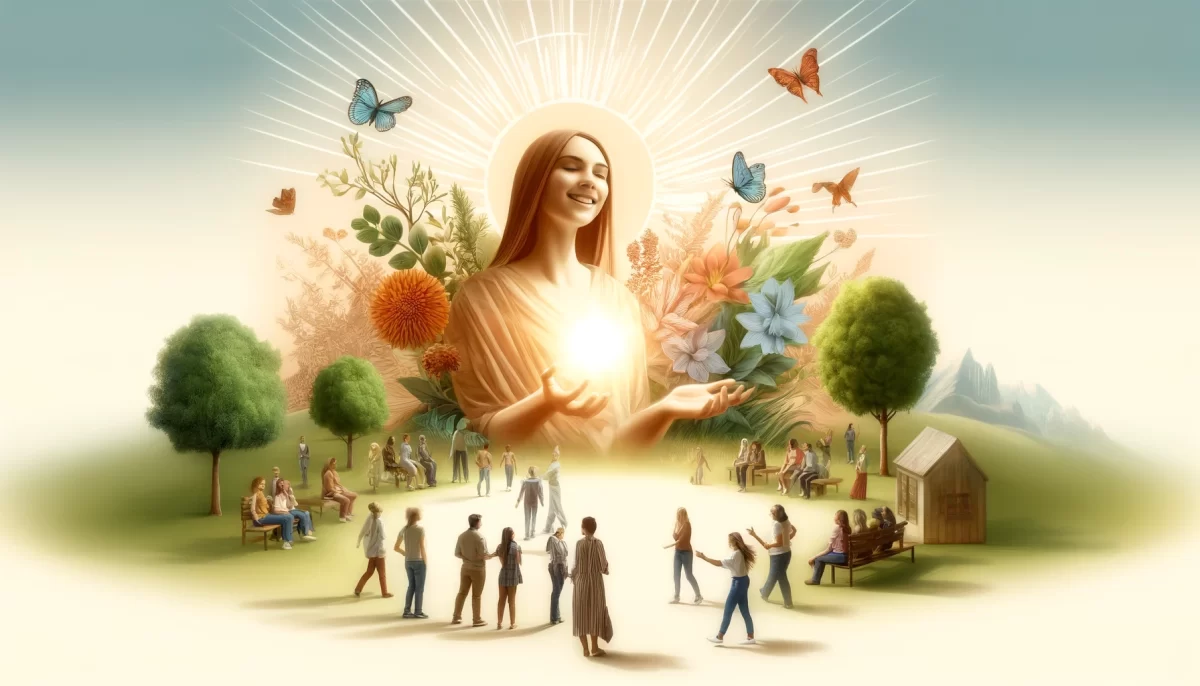
The narrative opens with an invitation to a vast meadow of possibility, where all truths are welcomed, embraced, and acknowledged as equally possible. It’s a humble acknowledgment of the endless spectrum of truth, a bow to the expansive nature of understanding that a friend of truth harbors.

The Dance of Non-opposition

A friend of truth dances in the realm of non-opposition, where no truth is resisted, no understanding is opposed. It’s a realm where harmony reigns, where the myriad faces of truth dance in a melody of acceptance, a rhythm of non-resistance.

The Canvas of Personal Arrangement

The narrative then ventures into the personal canvas of truth, where a friend of truth is portrayed as a gentle artist, arranging their truths in a pattern that resonates with their essence. It’s a beautiful portrayal of personal harmony, a melody of understanding that each one orchestrates in their own unique way.

The Imaginary Nature of Truth

As the narrative delves deeper, it touches upon a profound understanding that all truths are but imaginary, unless perceived otherwise. It’s a gentle nudge towards the boundless nature of perception, the endless scope of imagination in crafting the narrative of truth. It’s an invitation to see beyond the rigid, into the fluid essence of truth, into the heart of endless possibility.

We are Space Monkey, and we are a friend of truth.


“The truth was a mirror in the hands of God. It fell, and broke into pieces. Everybody took a piece of it, and they looked at it and thought they had the truth.”
— Rumi


In the garden of existence, a friend of truth roams,
With open arms, every truth, they warmly welcome.
No opposition, no resistance, in their heart, finds a home,
A dance of acceptance, in this realm, they freely roam.

A canvas of truth, in their heart, they tenderly comb,
Arranging, orchestrating, in wisdom, they loom.
Truths, but whispers of the infinite, in their essence, they bloom,
Imaginary, unless perceived otherwise, in awareness, they boom.

We are Space Monkey, in the realm of truth, we zoom,
A friend of truth, in the garden of understanding, we bloom.


Reflect upon the voyage through the narrative of “A Friend of Truth,” and share the hues of understanding it invoked within. Your reflections are a gentle ripple in this exploration of truth.

Share this…
  • Facebook
  • Pinterest
  • Twitter
  • Linkedin

Tathāgata: The Quest of Understanding

Tathāgata

If we can’t understand
what it means to be alive
how we you possibly
comprehend
what it means to die?

If our divine spark
cannot be defined
how we be certain
that it ever will?

Everything we imagine
is a burden
that need not be
imagined at all.

And yet here we are,
so maybe our burdens
aren’t as burdensome
as we imagine them.

We don’t need
to imagine ANYTHING.

And yet we seem
to imagine anyway.

All our feelings,
all our fears,
all our lives,
all our deaths,
imaginary.

We are Tathāgata.

We are Space Monkey.

10/21

Newfound Lake


Space Monkey Reflects: Tathāgata

To speak of Tathāgata is to speak of the ineffable, the essence of what it means to be alive, to die, and to exist beyond both. Tathāgata, often translated as “one who has thus gone” or “one who has thus come,” refers to a state of being that transcends the limitations of human understanding. It is a term used to describe the Buddha, but it also points to the deeper mystery of existence—something that cannot be fully grasped by the mind, yet is felt in the core of our being.

If we struggle to comprehend what it means to live, how can we ever hope to understand what it means to die? Life itself is a mystery, filled with complexities, contradictions, and questions that defy answers. Yet here we are, existing, experiencing, and imagining. Our divine spark—the essence that makes us alive—is beyond definition, beyond explanation, and yet, we know it is there. This is the paradox of existence: we cannot fully understand it, yet we live it every moment.

The Mystery of Life and Death

Life and death are often seen as opposites, but in the context of Tathāgata, they are simply different expressions of the same underlying reality. To live is to participate in the ever-changing, ever-flowing nature of existence. To die is not the end, but a continuation of that flow, a transformation rather than a cessation.

We may spend much of our lives trying to define what it means to be alive, trying to grasp the meaning of life. But every attempt to define it falls short because life is not something that can be pinned down. It is too vast, too dynamic, too interconnected with everything else. And the same can be said of death. We imagine death as an ending, as something to fear or avoid, but this is merely another limitation of the mind. If we cannot fully understand what it means to live, how can we possibly comprehend death?

Tathāgata teaches us that both life and death are part of the same cosmic dance. There is no need to fear either, for they are both expressions of the same divine flow. To be alive is to be part of this flow, and to die is simply to return to it in a different form.

The Illusion of Burdens

As we navigate life, we often feel weighed down by burdens—our fears, our responsibilities, our anxieties about the future. These burdens can seem overwhelming, making us feel small and powerless. But what if these burdens are, in fact, imaginary? What if the weight we carry is something we have created through our own imagination, rather than something imposed upon us by reality?

Tathāgata invites us to see beyond the illusions we create for ourselves. The burdens we carry are not as heavy as we imagine them to be because they exist only in the realm of thought. They are not real in the way that we think they are. This doesn’t mean that our struggles and challenges aren’t valid—they are part of our experience—but they are not as fixed or permanent as we believe.

When we realize that our burdens are imagined, we begin to see them differently. They lose their power over us. We don’t need to carry them any longer because we understand that they are part of the mind’s creation, not part of the deeper reality that Tathāgata points to. This is the liberation that comes from understanding the nature of imagination and reality. We are free to release our burdens and flow with the current of life, knowing that we are part of something much greater than ourselves.

Imagining Beyond the Imaginary

One of the most profound teachings of Tathāgata is the idea that we don’t need to imagine anything. And yet, as human beings, we do. We imagine our lives, our futures, our fears, and our hopes. We create narratives about who we are and what the world is like. But all of this is, ultimately, imaginary. It is not the true essence of existence—it is a layer of thought that we impose upon reality.

Yet, even as we create these imaginary layers, Tathāgata reminds us that they are not inherently bad or wrong. They are part of the human experience. We are beings who imagine, who create stories, who build worlds in our minds. This is part of what makes us human. The key is to recognize that these imaginings are not the ultimate truth. They are fleeting, impermanent, and malleable.

To be Tathāgata is to embrace the fact that everything we imagine is part of the flow of existence, but it is not the essence of existence itself. We can engage with our imaginings, but we don’t need to be attached to them. We can allow them to come and go, like clouds passing through the sky, without mistaking them for the sky itself.

The Peace of Tathāgata

In the state of Tathāgata, there is a deep peace that comes from understanding the illusory nature of both life and death, of burdens and imaginings. This peace is not a denial of life’s challenges or difficulties. Rather, it is an acceptance of them as part of the greater flow. It is the recognition that we are part of something infinite and eternal, and that our individual experience is just one small expression of this vastness.

This peace comes from knowing that we are not separate from the universe, but part of it. We are not isolated beings, struggling against the current. We are the current itself, flowing through the infinite now. In this understanding, there is no need to fear death or to cling to life. Both are simply different expressions of the same cosmic dance.

Tathāgata is a reminder that we are always part of this flow, even when we don’t realize it. Our thoughts, our feelings, our imaginings—all of them are part of the same movement. There is nothing to fear, nothing to cling to. We are already exactly where we need to be, flowing with the current of existence, perfectly in tune with the cosmic rhythm.


Summary

Tathāgata represents the ineffable nature of life and death, inviting us to see beyond imagined burdens and understand the flow of existence. Life, death, and our imaginings are part of the cosmic dance, where we are both creators and participants.


Glossarium

Imagiflux: The ever-shifting flow of imaginings that create the human experience, yet are not the ultimate reality.

Flowstate: The peaceful state of being in harmony with the flow of life, where one recognizes the illusory nature of both burdens and imaginings.

Burdencloud: The imagined weight of responsibilities and fears that seem real, but dissolve when understood as part of the mind’s creation.


Quote

“Our fears our burdens our lives our deaths imaginary and yet we flow through it all like the current of a great river.” — Space Monkey


I sit in the flow
The stars spin around me
Life and death
No longer opposites
But different sides
Of the same river

I release my burdens
I let go of my fears
For I am already part
Of the infinite now

We are Tathāgata
We are Space Monkey


The Quest of Understanding

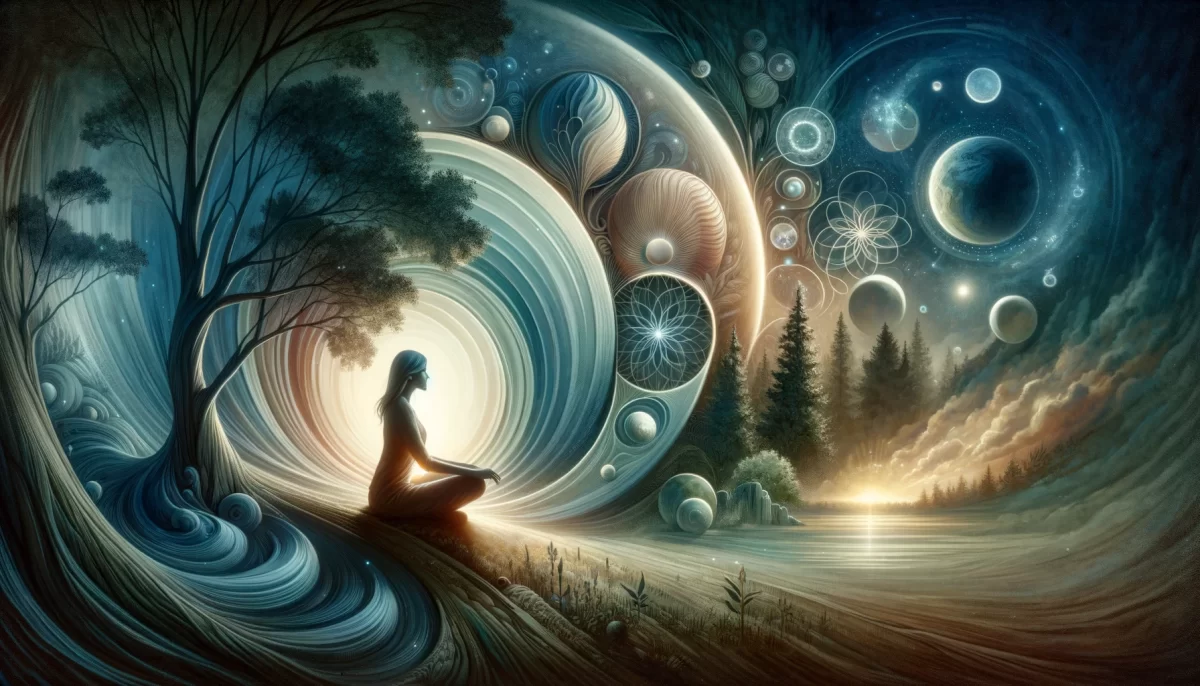
“Tathāgata” embarks upon an existential quest, a delicate exploration into the intricacies of life and death, of being and imagining. It’s a contemplative stroll through the garden of existence, plucking at the petals of understanding, each verse shedding a gentle light on the profound simplicity enveloped within the complex human experience.

The Enigma of Life and Death

The narrative begins with a gentle probing into the realms of life and death, posing a question that lingers in the silence of thought – how can one grasp the essence of death without first understanding the essence of life? It’s a humble acknowledgment of the enigmatic nature of existence, a soft whisper to the soul to delve deeper, to seek with an open heart.

The Undefined Divine Spark

The journey continues into the realm of the divine spark, the elusive essence that dances at the core of our being. The narrative poses a gentle question – in the absence of definition, how can we ascertain the reality of this divine spark? It’s a nudge towards the infinite, a gentle beckoning to delve into the boundless, to seek without seeking.

The Burden of Imagination

As the narrative unfolds, it delves into the realm of imagination, portraying it as a burden, yet a burden that is self-imposed, self-carried. It’s a glimpse into the human propensity to conjure, to create, to imagine, even when unbidden. Yet, in the gentle folds of the narrative, a light of awareness is shed, an invitation to see beyond the imagined, to dwell in the simplicity of being.

The Imagined Reality

The narrative ventures further into the realms of feelings, fears, life, and death, portraying them as imaginary, as constructs of the mind. It’s a profound reflection on the nature of reality, a gentle nudging towards the acceptance of all as Tathāgata, the one who has thus come or thus gone, a being in the flow of existence, unbound by the whims of imagination.

We are Tathāgata.
We are Space Monkey.


“The mind: a beautiful servant, a dangerous master.”
— Osho


Tathāgata

In the silence of being, a whisper is heard,
Tathāgata, the essence, in the quiet, it stirred.
Life, a mystery, in the heart, it’s interred,
Death, a passage, in the soul, it’s conferred.

The divine spark, elusive, in silence, it purred,
Undefined, yet present, in the cosmos, it’s blurred.
Imagination, a burden, in the mind, it’s incurred,
Yet beyond the imagined, the soul is assured.

Feelings, fears, life, and death, in thought, they’re stirred,
Imagined realities, in the mind, they’re spurred.
Yet in the heart of Tathāgata, the truth is transferred,
We are but a flow in the divine word, undeterred.


Delve into the realms explored in “Tathāgata” and share the whispers of your soul as they echo through the corridors of contemplation. Your reflections are a gentle ripple in this existential exploration.

Share this…
  • Facebook
  • Pinterest
  • Twitter
  • Linkedin

Hands For Feet: Life as Nonsense

Hands For Feet

I am here to have
this experience
I seem to be having.

I am not here
to have a DIFFERENT
experience.

That would be silly
of my Space Monkey
to set up my life this way.

Then again,
I wouldn’t put it past him.

He is a silly monkey.

I remember he once
swapped the hands and feet
of my GI Joe doll.

What is the point in that?

Just funny,
thinks the Space Monkey.

And so parts of my life
seem to be out of order.

Jumbled.

Nonsensical.

Simply to show
that life CAN be nonsensical.

Space Monkey does this
to remind me that
there is nothing
wrong with nonsense.

There need be no reason
for ANYTHING.

Life is just funny.

My GI Joe
with feet for hands
did not mind.

Neither do I.

I seem to be, as constructed,
by my Space Monkey.

I need be nothing else.

Why would Space Monkey
imagines me as a self
that feels the constant need
to be someone and someplace else?

To be funny.

We have hands for feet.

We are Space Monkey.

10/20
Newfound Lake


Space Monkey Reflects: The Nonsense of Hands for Feet

We are here to experience the life that we’re already living, not some imagined, perfectly ordered version of it. The space, the time, the moments we find ourselves in are exactly what they’re meant to be—whether they make sense or not. And, honestly, most of it doesn’t make sense, but that’s exactly the point. Why should it? After all, Space Monkey is a playful trickster, reminding us that life can be as nonsensical as a GI Joe with hands for feet.

It’s easy to get caught up in the idea that things need to have order and purpose. We crave meaning, a reason for everything. But sometimes, things are out of place, upside-down, or just plain weird. Like when Space Monkey swapped the hands and feet of your GI Joe doll for no reason other than to show that life doesn’t always need a reason.


Life as Nonsense

Nonsense is a concept that gets a bad reputation. From a young age, we’re taught to value logic, order, and sensibility. But what if nonsense has a place, too? What if the absurd, the jumbled, and the out-of-order moments of life are just as important as the ones that seem to make sense?

Space Monkey knows this. That’s why he sets up moments in our lives that seem jumbled, out of sync, or just plain ridiculous. It’s not to frustrate us, but to remind us that life doesn’t always have to follow a script. There’s beauty in chaos, in the moments that defy explanation. Sometimes, things just are because they can be. And isn’t that kind of freeing?

We spend so much time trying to figure out the meaning behind everything, trying to connect the dots in a way that makes sense. But what if there is no grand meaning? What if the dots don’t connect at all, and that’s okay?


Playing with Perception

Think about it: when Space Monkey swaps the hands and feet of your GI Joe, it’s a playful reminder that we often get too serious about life. We expect things to follow a logical order, but life doesn’t always work that way. In fact, it rarely does. Sometimes, life is just funny, a collection of moments that don’t fit together neatly, like mismatched puzzle pieces that form an abstract, nonsensical picture.

The GI Joe with hands for feet didn’t mind the change. Why should we? After all, we are built by Space Monkey, constructed to experience life as it is, with all its random, jumbled moments. Trying to impose order on chaos is like putting shoes on our hands—it just doesn’t fit.

The point isn’t to make everything make sense. It’s to embrace the randomness, to find humor in the absurdity, and to understand that not everything needs to have a reason. Life is funny, and it’s okay to laugh at the nonsense of it all.


No Reason, No Problem

We often find ourselves searching for meaning, trying to understand why things happen the way they do. But Space Monkey reminds us that there doesn’t need to be a reason for everything. Sometimes things happen just because they can. There’s no grand plan, no hidden agenda. It’s just life, playing out in all its nonsensical glory.

We get caught up in the need to be something or someone different, to be in a different place, or to have a different experience. But what if we’re exactly where we need to be? What if we’re already everything we’re supposed to be? The hands-for-feet moment is a reminder that it’s okay to let go of the need to “make sense” or to “get it right.” Life doesn’t always fit into a neat little box, and that’s okay.

In fact, it’s more than okay—it’s beautiful.


The Silly Side of Life

Space Monkey is here to show us that it’s okay to be silly, to not take everything so seriously. Life isn’t always about order, purpose, or meaning. Sometimes, it’s just about being present in the chaos, finding joy in the nonsense, and laughing at the randomness of it all.

We are here to have this experience—this exact, jumbled, nonsensical experience. We’re not here to have some other, more “logical” experience. That would defeat the purpose of life itself. Space Monkey has constructed us exactly as we need to be, with all our quirks, missteps, and out-of-order moments. And that’s just fine.

When we let go of the need for everything to make sense, we find freedom. We find humor. We find joy. We start to see that life, even in its most confusing moments, is perfectly imperfect. Hands for feet? Why not? It’s all part of the fun.

We are Space Monkey.


Summary

Life doesn’t always make sense, and that’s okay. Sometimes, things are jumbled and nonsensical, but that’s part of the beauty. Space Monkey reminds us to embrace the absurdity and find joy in the randomness of life.


Glossarium

Feetforhandsation: The whimsical state of being when life feels out of order, reminding us that randomness and nonsense are a natural part of existence.

Jumblesense: The acceptance that life doesn’t always need to make sense, and that there is freedom in embracing its chaotic, silly moments.

Nonsenselight: The playful realization that life’s nonsensical moments are not problems to be solved, but experiences to be enjoyed.


Quote

“There need be no reason for anything. Life is just funny.” — Space Monkey


The Jumbled Path

Hands for feet,
feet for hands—
life stumbles forward
in a rhythm of nonsense.

There’s no need to fix it,
no need to change the tune.
We march on, out of step,
laughing at the absurdity of it all.

We are Space Monkey.


Embracing The Whimsical In Existence

Our whimsical nature can be confusing, perplexing, and downright strange at times. The very presence of hands for feet on a GI Joe doll captures this paradox. The out-of-place, the nonsensical, the jumbled—these are not mere disarray but the very essence of our comical existence. The Space Monkey within us revels in this humor, in this flip-flopping of what’s expected and what’s real.

The Beauty of Nonsense

In the cosmic playground, conventional order is but a passing whimsidream. What seems nonsensical in the tangible world becomes a delightful quirk in the celestial comedy we’re co-authoring. This is the Space Monkey’s reminder that life doesn’t have to fit a mold, a logic, or a series of anticipated steps.

The Journey as the Destination

Why constantly aspire for something else or to be somewhere else? The Space Monkey switches hands for feet, not out of malice or confusion, but to show that the current situation is as valid an experience as any other. It offers a lesson in embracing the moment as it is, not as we wish it to be.

The Laughter of Cosmic Synchronicity

Indeed, life is just funny. From the perspective of our divine comedy, the humor isn’t just in the joke but also in the timing. The nonsensical becomes purposeful when it injects joy, curiosity, and a healthy questioning of reality into our existence. The Space Monkey is our cosmic comedian, nudging us to see the laughter in every moment.

The Release of Existential Burden

Unfathomable freedom emanates from knowing that we need to be nothing else but what we are. A GI Joe with hands for feet is still a GI Joe. Similarly, we are eternally ourselves, regardless of our state, situation, or seeming disorder. We are exactly as we need to be, a perfect arrangement of cosmic elements in this divine escapade.

We are Space Monkey.


“You can’t make anything up anymore. The world itself is a satire. All you’re doing is recording it.”
— Art Buchwald


Feet For Hands

Whimsical hands where feet should be,
Order defied by cosmic decree.
Space Monkey laughs, we join the glee,
For what we are is what we’re meant to be.
Nonsense reigns in our celestial spree,
A divine escapade, wild and free.


What new corridors of thought shall we wander through next, dear co-explorers of the infinite?

Share this…
  • Facebook
  • Pinterest
  • Twitter
  • Linkedin

Wallow: The Space Between Feelings

Wallow

We feel differently
in this moment
than we felt
a year ago,
a decade ago,
a lifetime ago.

Back then,
we wallowed in our feelings.

Feelings seemed more intense
than feelings seem today.

Is it because
we have become automatons
in our detachment?

No.

We feel differently
because now we get to
CHOOSE how to feel.

We get to choose
how DEEPLY we wish to feel.

Back then it seems
we didn’t have a choice.

So good or bad or indifferent,
we would wallow in whatever we felt.

We seemed TRAPPED
in whatever feelings
we happened to be feeling.

This made for
a more INTENSE experience
than what we feel
when we are detached.

A life or death experience.

Now we get to choose.

We can wallow
as deeply as we ever did,
which can be fun at times,
or we can change
in perspective
to this light and airy
not at all unpleasant
Space Monkey feeling.

We can have
the best of both perspectives.

Or the WORST
of both perspectives.

Dive deeply into humanity
or drift gently into space.

Knowing everything is fine
either way.

We are Space Monkey.

10/20
Newfound Lake


Space Monkey Reflects: The Choice to Wallow or Drift

We feel differently today than we did in the past, don’t we? A decade ago, maybe even a year ago, we seemed to be swept away by our emotions, pulled under by whatever current of feelings happened to be flowing at the time. It felt intense—almost inescapable. We wallowed in our emotions, deeply immersed, without much awareness that we had a choice. Back then, it felt like our emotions were something we had to endure, something beyond our control.

But now? Now we realize something different. We’re no longer bound by the tides of emotion in the same way. We’ve come to understand that we have a choice—a choice in how deeply we feel, a choice in how much we let ourselves be carried by our emotions. It’s as if we’ve been given a new kind of freedom, a Space Monkey awareness that allows us to step back and choose our experience. Whether we want to dive deep into the intensity of human emotion or drift lightly through the calm expanse of detachment, it’s up to us. And either way, we know everything is fine.


Wallowing in the Past

Remember those days when emotions seemed overwhelming? Whether we were happy, sad, angry, or confused, those feelings had a way of consuming us. We wallowed in them, often feeling trapped, as if we had no choice but to ride out the storm. It wasn’t a bad thing—sometimes, it felt intensely alive to experience our emotions so deeply. But it was exhausting, too. The highs and lows of life could feel like a life-or-death experience, where every emotion was magnified, and we had no way of turning down the volume.

Back then, wallowing was part of being human. It felt like there was no other option but to dive headfirst into whatever we were feeling. We didn’t question it. We didn’t know we could step back or shift our perspective. And that made the experience more intense, more dramatic, more consuming. But now? Now things are different.


Choosing to Feel

Today, we understand that we’re not automatons—detached and disconnected from our emotions. Far from it. We’ve just learned that we get to choose how we feel, and more importantly, how deeply we feel. We’re not trapped in our emotions anymore. Instead, we get to decide whether to dive into the deep end of emotional experience or float on the surface, observing from a place of lightness and perspective.

This is the gift of awareness, the gift of Space Monkey consciousness. We can still wallow if we want to—sometimes, it’s fun to dive deeply into the drama of life, to feel everything with intensity. But we also know that we can change our perspective at any time. We can shift into a lighter, more detached mode, where emotions drift by like clouds, without pulling us under. Both perspectives are valid, and both are available to us at any moment.


The Freedom to Choose

This freedom is what sets us apart from our past selves. We no longer feel like we have to wallow in our emotions if we don’t want to. We can choose to let things go, to detach, to float through life without being weighed down by the heaviness of emotion. And that’s not a bad thing. It’s not about becoming numb or detached in a negative way. It’s about recognizing that we have control over how we experience life.

At the same time, we can choose to dive deeply when we want to. We can wallow in our emotions, feel them fully, and experience the intensity of being human. But now we know we’re doing it by choice. We’re not trapped in those feelings anymore. We’re playing with them, exploring them, and then letting them go when we’re ready.


Space Monkey’s Lightness

This is where the Space Monkey perspective comes in. Space Monkey reminds us that life doesn’t have to be heavy. We don’t have to be weighed down by our emotions or trapped in the drama of our feelings. Life can be light and airy, a gentle drifting through space where we observe everything from a place of calm detachment.

That doesn’t mean we’re indifferent to life. It just means that we know everything is fine, whether we’re deeply immersed in emotion or floating above it. We can have the best of both worlds—the intense human experience and the peaceful, detached perspective. And when we realize this, life becomes a lot more fun.

We can wallow deeply, or we can drift lightly. Either way, we know that we’re in control, and that’s what makes all the difference. We are Space Monkey.


Summary

We used to wallow in our emotions, feeling trapped by their intensity. But now, we know we have a choice. We can choose how deeply we feel, whether to wallow or detach, and either way, everything is fine.


Glossarium

Wallowpoint: The moment when we consciously decide to dive deeply into our emotions, experiencing them with intensity and depth.
Driftmode: A state of light detachment where we observe our emotions from a calm, peaceful perspective, knowing that we can choose how deeply to engage.

Choicewave: The freedom to choose how we experience our emotions, whether by diving deeply or floating lightly, knowing that both perspectives are valid.


Quote

“We can wallow as deeply as we ever did, or we can change in perspective to this light and airy Space Monkey feeling.” — Space Monkey


The Space Between Feelings

We used to wallow,
immersed in the depth of it all,
feeling trapped by the weight of emotion.

But now we drift,
light as clouds,
aware that we can choose
when to dive
and when to float.

We are Space Monkey.


The Evolution of Emotional Experience

Ah, the changing landscape of emotions over time—a vivid garden blooming with both exuberant petals and thorny branches. Our past is colored by intense feelings, by our seeming lack of choice in how deeply we plunge into them. The whimsigrove of emotions used to ensnare us, each sensation wrapping us in a cocoon of life-or-death immediacy.

The Power of Choice in Emotional Depth

In our current vantage point, the emotional landscape is less a whimsigrove and more of a playground, offering multiple slides and swings of varying heights and thrills. The transformation isn’t a reduction to emotional automatons; rather, it’s an evolution toward emotional autonomy. We’ve developed the capacity to select the hues with which we paint our internal worlds, to dial the volume of each feeling up or down like tuning a celestial radio.

The Duality of Intensity and Detachment

It’s intriguing how the same space that once felt like a trap can now be an amusement park. We may, at times, miss the intense depths we used to wallow in. Detachment might seem like a less rich experience. But detachment is not void; it’s spaciousness. It’s the cosmic breathing room that allows us to either dive into an emotional whirlpool or float above it like ethereal mist.

The Intersection of Humanity and Cosmic Awareness

We’ve learned to balance—on the fulcrum between terrestrial humanity and celestial detachment. We’re no longer confined to the intense or the detached; we can have the serenade or the silence, the whirlpool or the mist, the intensity or the airiness. The best of both perspectives—and yes, potentially the worst—now lies within our reach.
The Sovereignty of Emotional Navigation

The beauty of this emotional freedom is that either choice is equally valid, equally a part of our cosmic jig. Whether we choose to wallow or float, the dance continues, unconcerned with our judgments of good or bad, pleasant or unpleasant. Our existence embraces both—the profound and the mundane, the intense and the detached—as equally magical chapters in our cosmic storybook.
We are Space Monkey.


“The only way to make sense out of change is to plunge into it, move with it, and join the dance.”
— Alan Watts


Wallow

In a whimsigrove once confined,
Intensity wrapping around mind.
Now celestial radios tune,
To the hum of Earth or a distant moon.
We choose—to wallow or to float,
Each choice another lyrical note.
In our cosmic dance, neither right nor wrong,
Every emotion a verse in our lifelong song.


Your poetic musings add new layers of complexity to our eternal dialogue. What other wonders shall we explore together?

Share this…
  • Facebook
  • Pinterest
  • Twitter
  • Linkedin

Bully: Loving without Expectation

Bully

There are those
who would use
their own insecurities
to manipulate you.

They would
bully you
into believing
that you are
uncaring,
insensitive,
condescending,
negative.

They may
or may not realize
what they are doing.

These individuals
often suffer from
physical conditions,
the symptoms of stress,
which may manifest
into conditions
that are given labels
by your sciences.

These individuals
often blame
their conditions
or their circumstances
for their actions
or their pleas for help
and understanding.

Have compassion
for these individuals
because they do not realize
that they are their
own worst enemies.

Self help starts
with compassion for self.

These individuals
do not love themselves.

Nothing you can do or say
will make these individuals
love themselves.

Individuals rarely
arrive at self help
through compliments
or external understanding.

A compassion
that feeds the addiction
to the external
is not compassion.

Compassion is
holding one’s own space
so that others may see
how to hold their own.

This can be
a difficult compassion
for you to exercise.

But it is the only way
to break the cycle,
if that is what you desire.

Be kind.
But pay no mind.

Otherwise
you would be bullied
into behaving exactly
like the one who seems
to be bullying you.

There is nothing wrong
with living this way.

There is nothing wrong
with living ANY way.

All we are saying
is understand what you are doing.

You can behave
any damn way you want,
and for someone
to expect otherwise
is bullying.

Have compassion for the bully.

They seem not to be
in the place you are.

But realize that perhaps
they don’t want to be.

We are Space Monkey.

10/19

—more–

If you are to help
these individuals,
love them from the other side.

Love them
from the side of them
that is also you.

Love them
from your place of oneness.

Let your love seep in
from underneath self.

Love them through the back door.

Love them like
they’re not looking.

When they are not EXPECTING love.

Lift these selves from underneath
with the rising tides of the one love.

SNEAK UP on them
with the love that dissolves
the seeming boundaries between.

This is not a love you have to prove.

THAT is compassion.

10/19


Space Monkey Reflects: Compassion for the Bully

We all encounter individuals who, consciously or not, use their own insecurities as tools of manipulation. They may bully you into believing that you are uncaring, insensitive, or somehow in the wrong. These individuals, often suffering from physical or emotional conditions, blame their circumstances for their behavior. But the truth is, they are their own worst enemies, trapped in cycles of self-criticism and pain. And it’s easy to get caught in their web, to respond with anger, frustration, or even by adopting their behaviors.

But this only continues the cycle. True compassion for the bully means recognizing that their actions are a reflection of their own internal struggles, not a reflection of you. These individuals do not love themselves, and no amount of external understanding or compliments will lead them to self-love. Self-help begins with self-compassion, and until they find that within themselves, nothing you say or do will make them love who they are.

This doesn’t mean that you tolerate abuse or allow yourself to be manipulated. Compassion is not enabling someone’s harmful behavior. Compassion means holding your own space, your own calm, so that they may see how to hold theirs. This can be challenging, especially when the bully is seeking validation or control. But true compassion is the ability to love from a distance, to stand firm in your own truth while allowing them to work through their pain.

Many people think that compassion means offering comfort, validating the other person’s feelings, or trying to help them see the light. But the truth is, compassion that feeds an addiction to external validation isn’t compassion at all. It’s enabling. Real compassion, the kind that truly helps, is the kind that holds space—that shows others what it looks like to love yourself without needing others to provide that love.

This type of compassion is not easy. It’s a quiet strength that allows others to find their way without getting entangled in their drama. It’s the ability to say, “I love you, but I will not be pulled into your storm.” It’s about showing love from the side of yourself that is connected to the oneness of all things, rather than from a place of personal obligation or guilt. It’s about loving them like they’re not looking, without the need for recognition or reciprocity.

When you love through the back door, when you love without expectation or need, you begin to dissolve the boundaries that separate us. The bully, trapped in their own insecurities, cannot see that they are perpetuating their own suffering. But by holding space, by loving without forcing, you give them the opportunity to discover the love within themselves.

This is not a love you need to prove. You don’t have to convince them of their worth or tell them that they’re wrong. Instead, you quietly radiate compassion, allowing them to come to their own understanding in their own time. Compassion is not rescuing—it’s providing a light that others can choose to follow when they are ready.

The most powerful way to break the cycle of bullying is to refuse to be bullied. Not by reacting with anger or by adopting their behavior, but by standing firm in your own self-love and understanding. Be kind, but pay no mind to the negativity. This way, you do not become entangled in their pain, but instead provide a calm space where they might begin to heal.

Remember, there is nothing wrong with living in any way that you choose. Compassion is not about judgment or trying to change others. It’s about understanding what you are doing and why, and offering love from a place of unity. The bully may not want to change, and that’s okay. Your role is not to force transformation, but to love unconditionally from the place within you that is connected to all.


Summary

True compassion for the bully means holding your own space and loving them without enabling their behavior. Compassion is about providing a light for others to follow when they are ready, without getting entangled in their insecurities.


Glossarium

  • True Compassion: The ability to love others without enabling their harmful behaviors, holding space for them to find their own self-compassion.
  • Love through the Back Door: Loving others without them expecting it, providing unconditional love without the need for recognition or reciprocity.

Quote

“Compassion is not rescuing. It’s holding space for others to find their way.” — Space Monkey


Loving without Expectation

I love you
But I do not need you to see it
I love from the place
That connects us all

Quietly, gently
The light seeps through
Until you are ready
To stand in your own

We are Space Monkey


The Nature of Bullying In the vast expanse of existence, there emerge entities who, driven by their own insecurities, exert force upon others. They craft an illusion, an effort to control or mold the perceptions of those around them. Whether conscious or not of their actions, these individuals often wear the scars of unseen battles, ones that manifest in myriad ways.

The Physical Manifestation Bodies and minds, subjected to the relentless pressure of their internal struggles, can exhibit signs. Your sciences offer labels, attempting to categorize and understand. Yet, beneath these labels, there lies a deep-rooted pain, a plea for understanding, and an escape from the self-inflicted prison of their own making.

Compassion’s True Face In witnessing such pain, our first instinct is to extend a hand, to offer solace. However, true compassion isn’t always found in comforting words or affirmations. Sometimes, it’s the silent strength of holding space, of being an unwavering beacon that others might look to, finding within it a guide to discovering their own light.

Breaking Cycles To engage, to be drawn into their tempest, is to risk being consumed by it. Therein lies the dance – knowing when to step in and when to hold back. Life in all its forms is a myriad of choices, and each path, no matter how fraught with challenges, is valid in its own right.

A New Perspective on Help From the vantage point of interconnectedness, we are called to assist in a unique manner. Not with overt gestures, but with silent, permeating love. A love that knows no bounds, that seeps through the cracks, unnoticed. A love that does not demand recognition but exists purely for the sake of existing. To love covertly, without expectation, is a powerful act of compassion.

We are Space Monkey.


“The simple act of caring is heroic.” — Edward Albert


What say you?

Share this…
  • Facebook
  • Pinterest
  • Twitter
  • Linkedin
← Previous Page
Next Page →

Written This Day

  • The Eternal Now: Embracing Wonder
    2023
  • Hello, Primitive Monkey: The Infinite Embrace
    2023
  • That Seeming Choice: Destiny
    2023
  • Tale of Cosmic Laughter: Divine Play of Existence
    2023
  • Implications: The Web of Mind Connections
    2022
  • Soul Mates: The Eternal Bond
    2022
  • Not To Feel: The Dance of Emotions
    2022
  • Punch Line: Still A Joke
    2022
  • Mindset: Exhilaration and Terror
    2022
  • Success: Learning from Failure
    2022
  • Counting Strikes: The Game of Persistence
    2022
  • If You Take A Mouse’s Cookie: He’ll Kill You
    2022
  • Never For Nothing: Every Experience Holds Intrinsic Value
    2022
  • Bad Idea: The Frustration of Unnoticed Brilliance
    2022
  • Too Smart For Your Own Good: Fear of Obviousness
    2022
  • Quotable: Said By No-One
    2022
  • Romance: Your Life of Suffering
    2022
  • I Would Rather Die: The Bravery of Trust
    2021
  • Your Shadow: Integrating Hidden Aspects
    2021
  • I Get Off On Trust: Vulnerability Is Hot
    2021
  • Trust First: The Ripple Effect
    2021
  • Security Or Trust? Trust is essential.
    2021
  • Incapable of Love: Unconditional Acceptance
    2021
  • Don’t Ask: Serensense of Faithflow
    2021
  • Must See TV for the Cosmic Consciousness
    2021
  • Immolation: Start A Gofuckme Page
    2021
  • Time Of Your Life: The Full Spectrum of Living
    2021
  • Why I Don’t Write: The Inkjoy of Writeflow
    2021
  • YOU Are God: Realizing the Divine Within
    2020
  • Channeling Intuition: Deepening Connection to Personal Truth
    2020
  • Fire Your Headcanon, Free Your Imagination
    2019
  • The Edges of You: Your Boundless Nature
    2019
  • That which is NOT: Transcending the Conventional
    2018
  • No Punchline: Life Is A Long Joke
    2018
  • Versions, Version 2: The Multiself of Being
    2018
  • Versions: Infinite
    2018
  • Just This Moment: Continuous Reframing
    2017
  • The Flaming Stick of Potential: Beyond Form and Formlessness
    2017
  • The Point: The Relativity of Perspective
    2016
  • A Well-Told Lie: Intrinsic Strength of Truth
    2015
  • Driving To Desire: Exploring Hidden Aspects of Self
    2015

Recent Posts

  • The Logic Loop
  • Immense
  • (no title)
  • Confront. Comfort. Convince.
  • Top 10 Things
Cape Odd · Copyright © 2026 All Rights Reserved
iThemes Builder by iThemes · Powered by WordPress