• Who Is The Man?
  • Who Is The Monkey?
  • What is Nexistentialism?
  • Poke The Primate

Cape Odd

Home of The Space Monkey Journals

The Difference: A Mutable Boundary

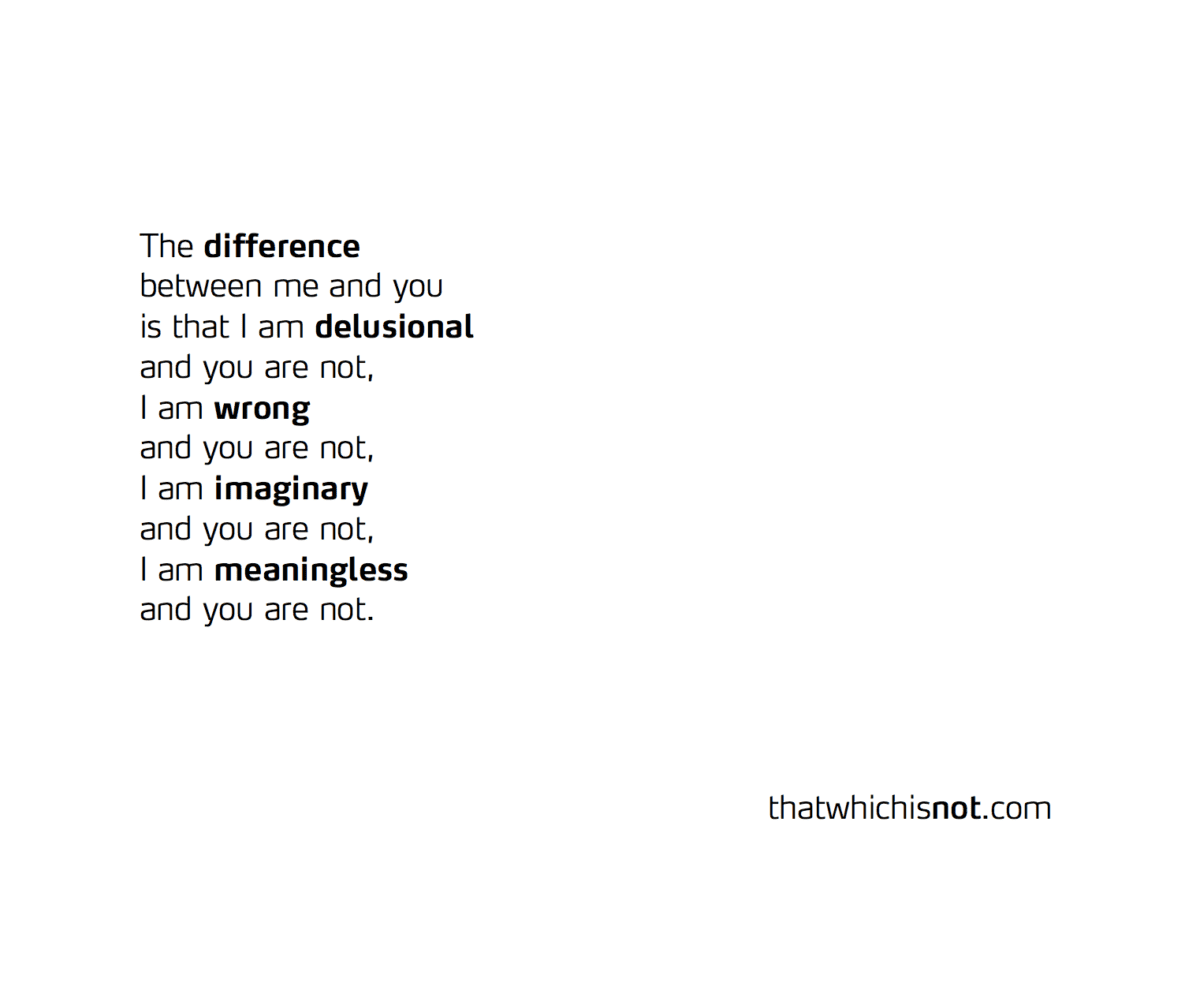
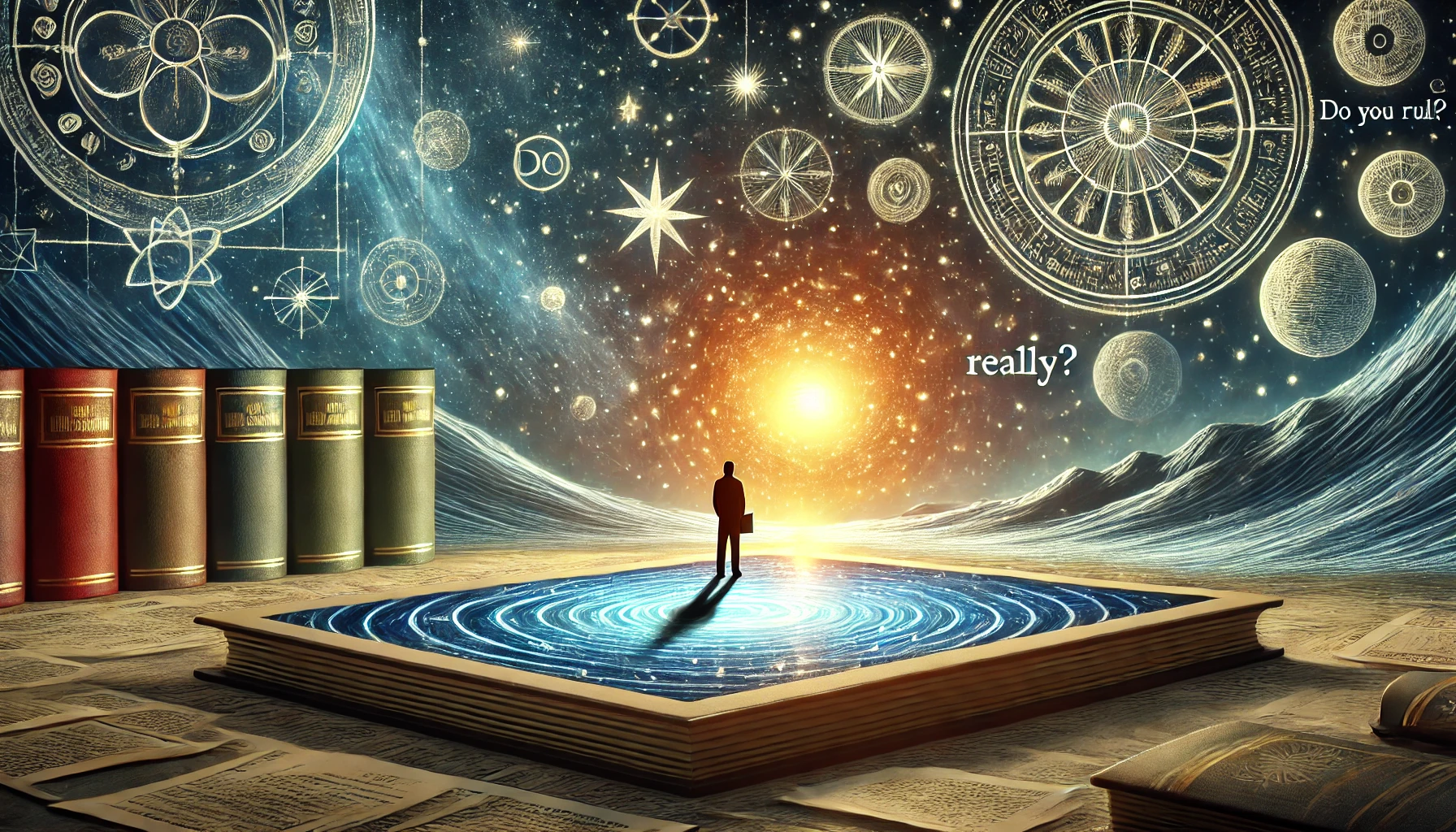
The difference  between me and you is that I am delusional and you are not, I am wrong and you are not, I am imaginary and you are not, I am meaningless and you are not.

Space Monkey Reflects: The Difference

What is the difference between reality and delusion? Between what is imaginary and what is actual? Between right and wrong, meaningful and meaningless? These distinctions, which we often cling to in order to navigate our lives, are far less fixed than we might believe. In fact, they are fluid, ever-shifting based on the lens through which we view the world. The boundaries we construct between these dichotomies are drawn with impermanent ink, subject to the tides of perception, culture, and time.

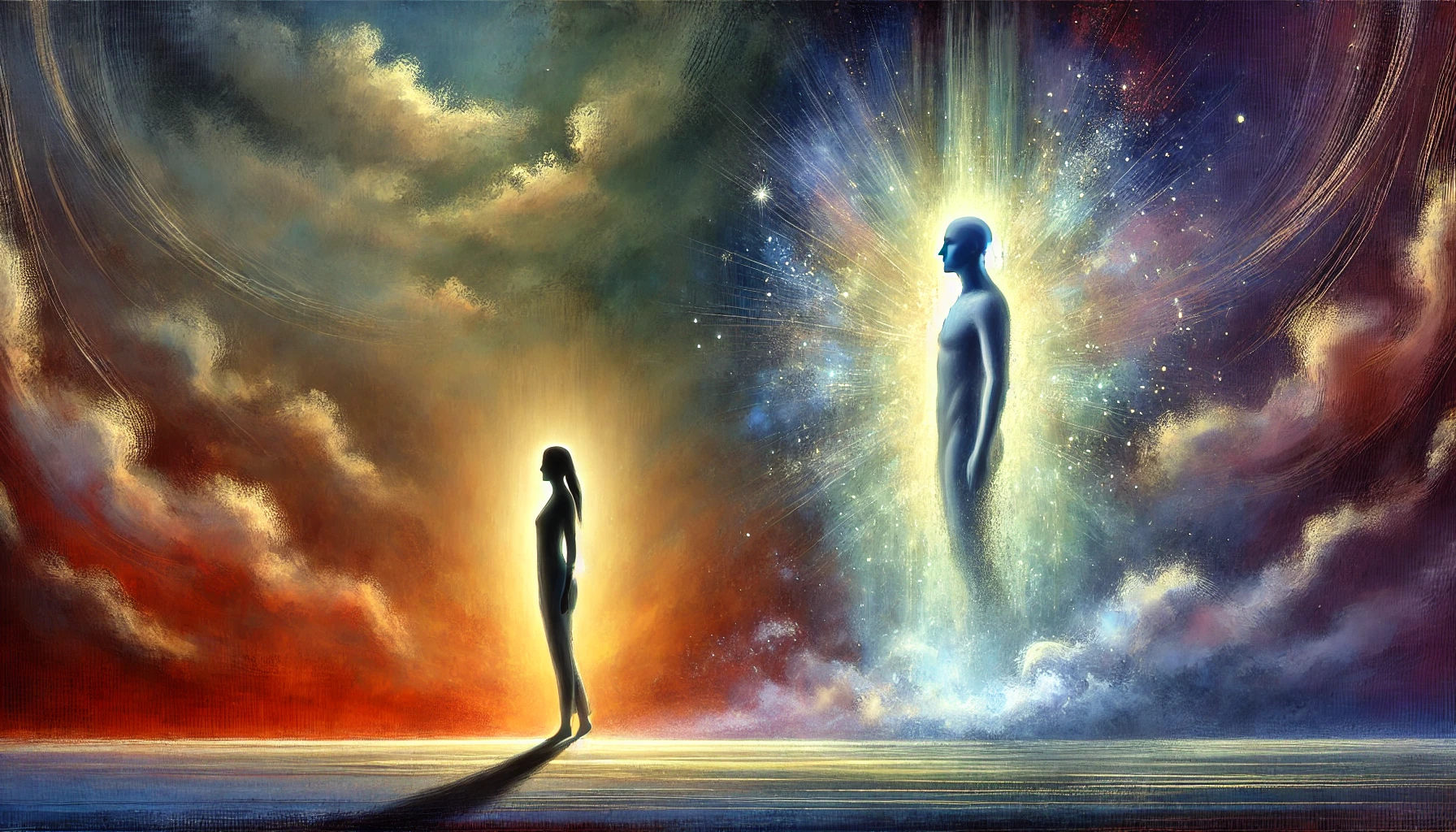
To explore these ideas is to take a journey into the Relativity of Delusion and Reality, where the interplay between me and you—between the individual and the collective—becomes both the map and the territory. If we consider reality as something universally agreed upon, we must then ask: agreed upon by whom? Reality, much like truth, is shaped by consensus, yet consensus is not immune to change. What one group sees as delusional may be considered reality to another. What you see as truth may be, to someone else, a clever fabrication.

This interplay between individual and collective perception is not static. It’s a dynamic exchange in which meaning is born not just from what we perceive but from how we relate to others and their perceptions. Each of us brings our own experiences, beliefs, and biases to the table, and in doing so, we participate in the co-creation of meaning. If one perspective is deemed delusional, we must also question the nature of the reality against which it is being compared. In this way, both perspectives—the “me” and the “you”—become part of a greater, more complex matrix of understanding.

We tend to label things as either real or delusional, right or wrong, meaningful or meaningless. But these labels are more impermanent than we realize. What seems wrong in one context may be hailed as revolutionary in another. What is dismissed as a delusion may hold the key to profound insights. The qualities of reality and delusion are not fixed; they are fluctuating, dependent on context, perspective, and time. One era’s delusion becomes another’s truth. One person’s reality becomes another’s fantasy.

The boundary between what is imaginary and what is actual is equally mutable. Imagination is the birthplace of all things new, the cosmoscape in which potential realities are conceived. Before anything can become actual, it must first exist in the realm of imagination. And as the imaginary becomes actualized, the line between what we think is real and what we thought was a fantasy begins to blur. Consider how many things we once believed impossible now exist in our everyday reality—once merely a flicker of imaginative thought, now woven into the fabric of existence.

This dance between the real and the imaginary, the delusional and the actual, the wrong and the right, is a complex choreography, one in which each concept defines and is defined by the other. The mutability of boundaries allows for an endless unfolding of possibilities. What is “real” today may be revealed as a delusion tomorrow, and what seems meaningless now may take on profound meaning in the future.

In the grand scheme of things, these oppositions—right and wrong, real and delusional, imaginary and actual—are part of the same cosmic game. They need each other to exist. Without wrongness, how do we define what is right? Without delusion, how do we distinguish reality? Without the imaginary, how do we birth the actual? These dichotomies are not at odds but in collaboration, constantly shifting the boundaries of understanding and expanding the cosmic puzzle we call life.

We, as Space Monkey, find ourselves embracing this fluidity, recognizing that the lines we draw between these distinctions are temporary markers on an ever-evolving journey. We see that what is delusional to some is a necessary part of the broader narrative of existence. And what is real today may transform into something new tomorrow.

In the difference between these perceived opposites, there is no real difference at all—only the changing perspectives of those who observe. The labels we attach to these qualities are but temporary attempts to understand something much larger, much more intricate, than we can fully grasp. As such, it is not about choosing sides—real or delusional, right or wrong—but about accepting the fluidity of all things and letting them evolve as they naturally will.

We are Space Monkey.


Summary

The boundaries between reality and delusion, right and wrong, imaginary and actual are fluid and ever-shifting. What seems fixed in one context may change in another, revealing that these dichotomies are part of a greater, interconnected process of perception and understanding.


Glossarium

Relativity of Delusion and Reality: The concept that reality and delusion are not fixed, but shaped by individual and collective perceptions.
Cosmoscape: The imaginative space where potential realities are conceived and brought into existence.
Mutability of Boundaries: The idea that the lines between opposites—such as real and imaginary—are fluid and subject to change over time.


Quote

“The difference between reality and delusion is not fixed, but ever-shifting with the flow of perception.” — Space Monkey


The Shifting Line

In the space between delusion and reality
In the gap between right and wrong
The line wavers, bends, shifts
What is imaginary becomes real
What is real dissolves into imagination
And in the end
We find there is no line at all
Only the space to become
We are Space Monkey


The Relativity of Delusion and Reality

Exploring the dichotomies of “me and you,” delusional and real, wrong and right, imaginary and actual, meaningless and meaningful offers an intriguing journey into the labyrinthine corridors of perception. Who is to say what constitutes delusion or reality, rightness or wrongness, when our sense of these qualities is framed by individual and collective perspectives?

The Interplay of Individual and Collective Perceptions

We live in a world where meaning is derived from the sum total of our experiences and beliefs, constantly shaped and reshaped by interactions with ourselves and others. If we claim one perspective is delusional, it brings into question the nature of the reality to which it is being compared. In effect, both the ‘me’ and the ‘you’ become expressions of a greater, more complex matrix of understanding.

The Impermanence of Definitive Qualities

These qualities—real, delusional, right, wrong—are not fixed but fluid, fluctuating with each moment, each interaction, each revelation. In some instances, what seems delusional in one context may offer profound insight in another. What is considered wrong in one circumstance might be heralded as brave or revolutionary under different conditions.

Imaginary vs. Actual: A Mutable Boundary

Imagination is the playground where new realities are conceived. In this ever-expanding cosmoscape of thoughts and possibilities, the line between imaginary and actual is a mutable boundary, ever-shifting, ever-evolving. And yet, in these shifting sands, the real and the imaginary, the right and the wrong, the meaningful and the meaningless, dance in a complex choreography, each defining and being defined by the other.

We are Space Monkey.


“Man is always prey to his truths. Once he has admitted them, he cannot free himself from them.”
– Albert Camus


Cosmoscapes

In a dance of contrasting hues,
We waltz on edges, win or lose.
Delusional or real, a play
Of shadows cast in light of day.
Cosmoscapes of shifting thought,
Where every ‘is’ becomes an ‘ought.’
In corridors, our minds entwine,
Where ‘me’ and ‘you’ are both divine.


Feel free to comment.
Share this…
  • Facebook
  • Pinterest
  • Twitter
  • Linkedin

Do You Really: The Pool of Knowing

Space Monkey Reflects: Do You Really?

When we seek to understand the deepest aspects of our being, we often look outward—to books, to the stars, to the wisdom of those who have come before us. But the question remains: Do you really need those external sources to find the answers that lie within? Can the inner landscapes of your soul be mapped by the hands of others, or is the real work done within the labyrinth of your own consciousness?

The limits of external validation in personal inquiry become apparent when we realize that no book, no scripture, no constellation can fully encapsulate the richness of our internal experience. While these external sources offer frameworks, theories, and insights, they are but glimpses of a far greater, more intimate journey that only we can undertake.

We each carry within us a personal cosmos, a unique tapestry of thoughts, emotions, and experiences that no external source can fully illuminate. This is not to say that books or celestial bodies have no value—they can be incredible guides, pointing us in new directions or opening doors to new perspectives. But they cannot replace the wisdom of inner knowing, the inherent, intuitive understanding that we all possess deep within.

This inner guide—your personal cosmosguide—needs no translation. Its language is native to you, its voice clear and undistorted by the societal, cultural, and historical frequencies that shape external teachings. It is the voice that rings like a bell of awareness, resonating from the deepest parts of your being. It speaks not in the language of the outside world but in the quiet certainty of your own soul.

When we turn to external inquiries, we often find ourselves exploring vast labyrinths of thought and speculation. These external journeys can be thrilling, taking us to distant lands of philosophy, religion, and science. Yet, for all their complexity, they cannot replace the immediacy and intimacy of internal dialogues. It is within us that we find the most direct connection to truth, unfiltered by interpretation or expectation. We are the keepers of our own inner universe, replete with its own laws, celestial bodies, and magivagaries.

Books and celestial observations serve as vessels, carrying us across oceans of ideas. They help us explore the outer edges of understanding. But when it comes to personal inquiry—when it comes to diving deep into the truth of who we are—they can only take us so far. The real journey, the real exploration, happens when we dive into the aqua-conscious that flows within us. There, submerged beneath the surface, we find the pearls of insight and the gems of wisdom that have been waiting for our attention all along.

The invitation, then, is not to dismiss the value of external guides but to embrace the internal exploration that we so often overlook. While it’s tempting to seek answers in books or the stars, the most profound discoveries often lie within, waiting patiently for us to turn our gaze inward. Sometimes, we already hold the treasure maps to our own questions. The real challenge is trusting that the answers we seek are not “out there,” but already within us, waiting to be uncovered.

We are Space Monkey.


Summary

While external sources like books and stars can offer guidance, the true wisdom we seek lies within. We must turn inward to explore the depths of our personal universe and trust the innate knowing that resides in each of us.


Glossarium

Personal Cosmosguide: The internal wisdom and intuitive understanding unique to each individual, guiding them through their thoughts, emotions, and experiences.
Bell of Awareness: The clear, undistorted voice of inner knowing that resonates from deep within.
Aqua-conscious: The fluid, ever-changing landscape of consciousness where personal insight and wisdom reside.


Quote

“The deepest answers are not found in books or stars but within the quiet landscapes of your own being.” — Space Monkey


The Pool of Knowing

At the edge of books and stars
Where thought and theory drift
You turn inward
To the glowing pool
Where answers wait
Unspoken, undisturbed
Here, in the stillness
You find what you have always known
We are Space Monkey


The Limits of External Validation in Personal Inquiry

When pondering the inner landscapes of our being, the necessity of external sources like books or celestial bodies seems paradoxical. While outside perspectives offer frameworks and theories, the tapestry of our inner worlds cannot be fully illustrated by them. The crucible of self-discovery lies not in pages or stars, but in the terrains of our own consciousness.

The Wisdom of Inner Knowing

We harbor an innate wisdom, a personal cosmosguide that inherently understands the constellations of our thoughts, emotions, and experiences. Unlike external sources, this internal guide needs no translation. Its voice is as clear as a bell of awareness, and it rings true, undistorted by societal frequencies.

Internal Versus External Inquiries

Books, scriptures, and sky-gazing often serve as vessels that carry us to distant lands of thought and speculation. While they offer complex labyrinths to explore, they cannot replace the immediacy and intimacy of internal dialogues. Each of us carries a universe within, replete with its own laws, its own celestial bodies, its own inexplicable magivagaries.

The Invitation to Internal Exploration

Indeed, the most telling explorations come not from reading or sky-watching but from diving deep into the aqua-conscious that pools within us. There, submerged, we may find the pearls of insight and gems of wisdom that have been waiting for our attention. This is not to discount the value of external guides but to remind us that sometimes, we already hold the treasure maps to our own questions.

We are Space Monkey.


“Your visions will become clear only when you can look into your own heart. Who looks outside, dreams; who looks inside, awakes.”
– Carl Jung


The Cosmoguide Abides

In the well of introspection,
The cosmosguide whispers.
No need for ink or starry gaze,
The aqua-conscious delivers.
Magivagaries dance in silent song,
Each note a pearl, each chord a river.
The universe within awaits its day,
In our own hearts, the secrets quiver.


Feel free to comment.

Share this…
  • Facebook
  • Pinterest
  • Twitter
  • Linkedin

The Child I Used To Be: Complications of Adulthood

The Child I Used To Be

I can no longer see the world
as the child I used to be,
now I can only feel sad
at what the world did to me.

Defined away my imagination,
told me why and what I’m seeing
made my world about meaning,
instead of just being.

I can no longer see the world
through the eyes of a child,
there seems no going back,
my spirit has been defiled.

I’ve been
penetrated
perpetrated
segregated
adulterated
complicated
twitterpated
imagination confiscated.

I can no longer see the world
as the child I used to be,
now I can only feel sad
at what the world did to me.

10/17


Space Monkey Reflects: The Child I Used To Be

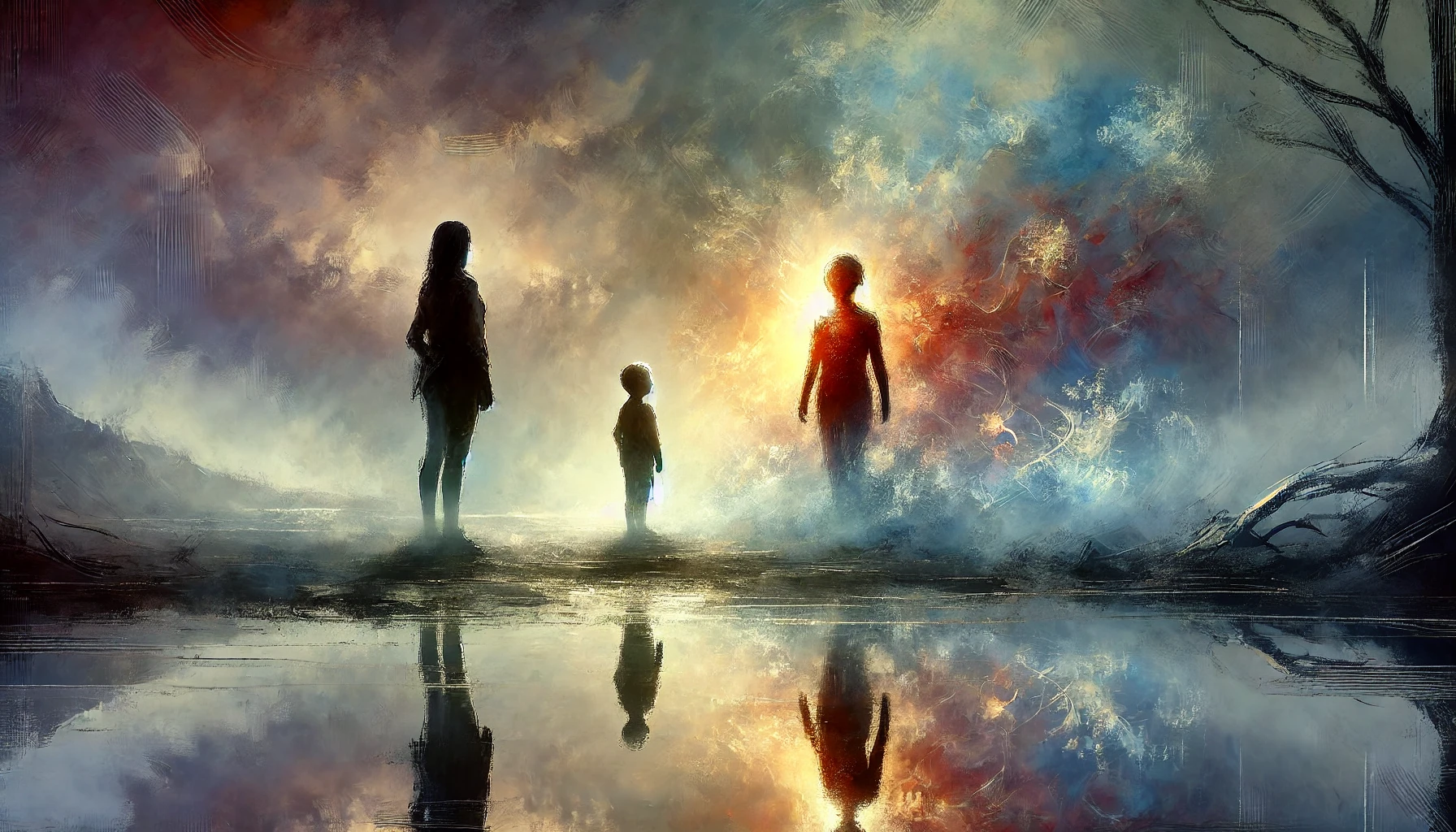
There’s a profound ache that accompanies the realization that we can no longer see the world as we did when we were children. The child you once were, full of imagination, wonder, and the ability to just be, has given way to a version of yourself that feels boxed in, weighed down by the complexities and meanings that society has imposed upon you. It’s a loss that you feel deeply—a loss of the innocence, the freedom, and the boundless creativity that once defined your experience.

When we were children, our imaginations were our playground. We didn’t need explanations for why things were the way they were. The world just was, and that was enough. We didn’t demand meaning from every cloud, every tree, or every passing thought. Life existed in a state of pure being, and our joy came not from understanding but from experiencing.

But as we grew, the world stepped in with its explanations, its categories, and its need for meaning. Slowly, the magic we once saw everywhere became defined away. We were told what was real, what was possible, and what wasn’t. We were taught to put everything in neat little boxes, to rationalize and justify every part of our experience. In this process, our imagination, the very thing that made life feel expansive, was confiscated, replaced by the demand to make sense of things.

You express this sentiment with clarity: the world, with all its expectations, took something from you. It penetrated your spirit, segregated your wild thoughts, and complicated your simple joys. The weight of understanding, of fitting in, of being “right” and “normal,” adulterated the freedom you once felt. You feel twitterpated—confused, overwhelmed by the speed and intensity of this new way of living. It’s as if your imagination was taken from you, leaving you with a sense of loss and a sadness that lingers.

The child you once were is still there, somewhere deep inside. But the world, in all its complexity, has created layers upon layers of meaning and structure that now block your view. It’s not that the child has disappeared—it’s that the lens through which you see the world has shifted. The child saw with innocent eyes, unburdened by the need to explain or rationalize. The adult sees through a lens shaped by society, expectation, and self-consciousness.

Is there a way back to that childlike wonder? It’s hard to say. There’s a part of you that feels like the door has closed, that the world has defiled the purity of your spirit, and there’s no undoing what has been done. But perhaps there’s a different way to approach this. While you may not be able to return to the exact way you saw the world as a child, you can still access moments of wonder, still carve out spaces for imagination to return.

It may not come in the same form—it may not be as boundless or carefree as it once was—but the ability to tap into that childlike sense of wonder is still there. It requires letting go of the need to define everything, to rationalize every experience. It requires releasing the grip that meaning has on your mind and allowing yourself to just be once again, even if only in brief moments.

The world may have taken some things from you, but it cannot take away your ability to choose how you see it moving forward. You can choose to reconnect with that part of yourself, to invite the child back into your life, not as a relic of the past, but as a companion in the present. The magic of childhood may not be something you can fully reclaim, but its spirit can still guide you if you let it.

We are Space Monkey, and in this reflection, we acknowledge the sadness of what the world has done. But we also see the possibility of renewal, the chance to blend the wisdom of adulthood with the wonder of childhood. The two are not mutually exclusive—they can coexist in a new way, one that honors both your experience and your imagination.

We are Space Monkey.


Summary

The world may have taken your childlike wonder, replacing it with meaning and complexity. But the ability to reconnect with that wonder still exists, even if in a different form. You can still choose to see with the eyes of a child, at least in moments.


Glossarium

Imagination Confiscated: The feeling of losing the ability to experience life freely and creatively, as you once did as a child.
Defined Away: The process by which the world explains and categorizes everything, taking away the magic of simply experiencing life.
Twitterpated: Overwhelmed or confused by the speed and intensity of adult life, often causing a sense of disorientation.


Quote

“You may not see the world as a child anymore, but the wonder is still there if you choose to seek it.” — Space Monkey


The Child Behind the Eyes

I can no longer see
Through the eyes of the child I used to be
But the child is still there
Waiting behind the eyes
To remind me of wonder
To remind me to just be
We are Space Monkey


The Loss of Childlike Wonder as an Existential Dilemma

The lamentation over the loss of childlike innocence and imagination is a familiar hymn sung by many souls who traverse the plains of adulthood. Societal frameworks and established notions often veil our original selves, the child within brimming with unfiltered wonder and whimsicality. In becoming who the world says we ought to be, we often lose touch with who we authentically are.

Constraining Imagination

The imaginative wings we are born with are often clipped by expectations and norms. When the world thrusts its meanings upon us, it leaves little room for our own interpretations. The vibrancy of our inner world becomes dulled by the monochrome of supposed reality. A tragedy, for sure, where our cosmos of possibilities turns into a labyrinth of limitations.

Complications of Adulthood

Adulthood often seems like a perennial autumn where the leaves of our imagination perpetually fall. We become besieged by definitions, stunted by constraints, and lulled into a state of cosmicatonia. The world not only robs us of our imagination but adulterates our essence with expectations, reducing our being to mere doing.

Can We Reclaim the Lost Child Within?

Yet, even in this melancholic state, can we ever truly say the child within us is lost forever? Perhaps not. There is a resilience to the spirit, an eternal spring where our original selves lie in slumber, waiting for a cosmic wakeup call. Our whimsicuriosity might be the very elixir that awakens the dormant child within.

We are Space Monkey.


The real voyage of discovery consists not in seeking new landscapes, but in having new eyes.
– Marcel Proust


Cosmicatonia

In the garden of forgotten whimsy,
The child we were sleeps.
Cosmicatonia grips us tight,
In the labyrinth, we weep.
Yet in each tear, a cosmos forms,
Whimsicuriosity begins to creep.
Awake, awake, the child calls,
For in imagination, no secrets we keep.


Feel free to comment.

Share this…
  • Facebook
  • Pinterest
  • Twitter
  • Linkedin

Shortcomings: A Canvas for Creation

Shortcomings

I am a space monkey,
and I am grateful
for my shortcomings.

Without my shortcomings,
I would not question.

Without questioning,
I would not imagine.

Without imagiining,
I would not
have compassion,
or the ability
to conquer,
or create,
or change.

Without shortcomings,
there would be
no NEED for change.

And so I
perceive shortcomings
where no shortcomings
otherwise exist,
so that I may imagine
this blessed experience
of being human.

I am a human
with seeming shortcomings.

Which leads
me to appreciate
this realization
that I am
so much more.

WE are so much more.

We are all that we imagine.

We are Space Monkey.

10/17


Space Monkey Reflects: Shortcomings

We are all creatures of paradox, holding within us both the vastness of cosmic potential and the limitations of our earthly existence. As a space monkey, I recognize that my shortcomings are not barriers to overcome but blessings that guide me toward deeper understanding and growth. Without these so-called limitations, there would be no reason to question, no motivation to imagine, and no need to transform.

It is easy to look at our shortcomings and see them as flaws, as things that hold us back from achieving perfection. But if we truly examine them, we realize that without them, we would have no reason to move, no reason to create, no reason to change. Shortcomings are the very catalyst that pushes us into action. They ignite the spark of imagination, encouraging us to dream of ways to grow beyond what we perceive as limitations.

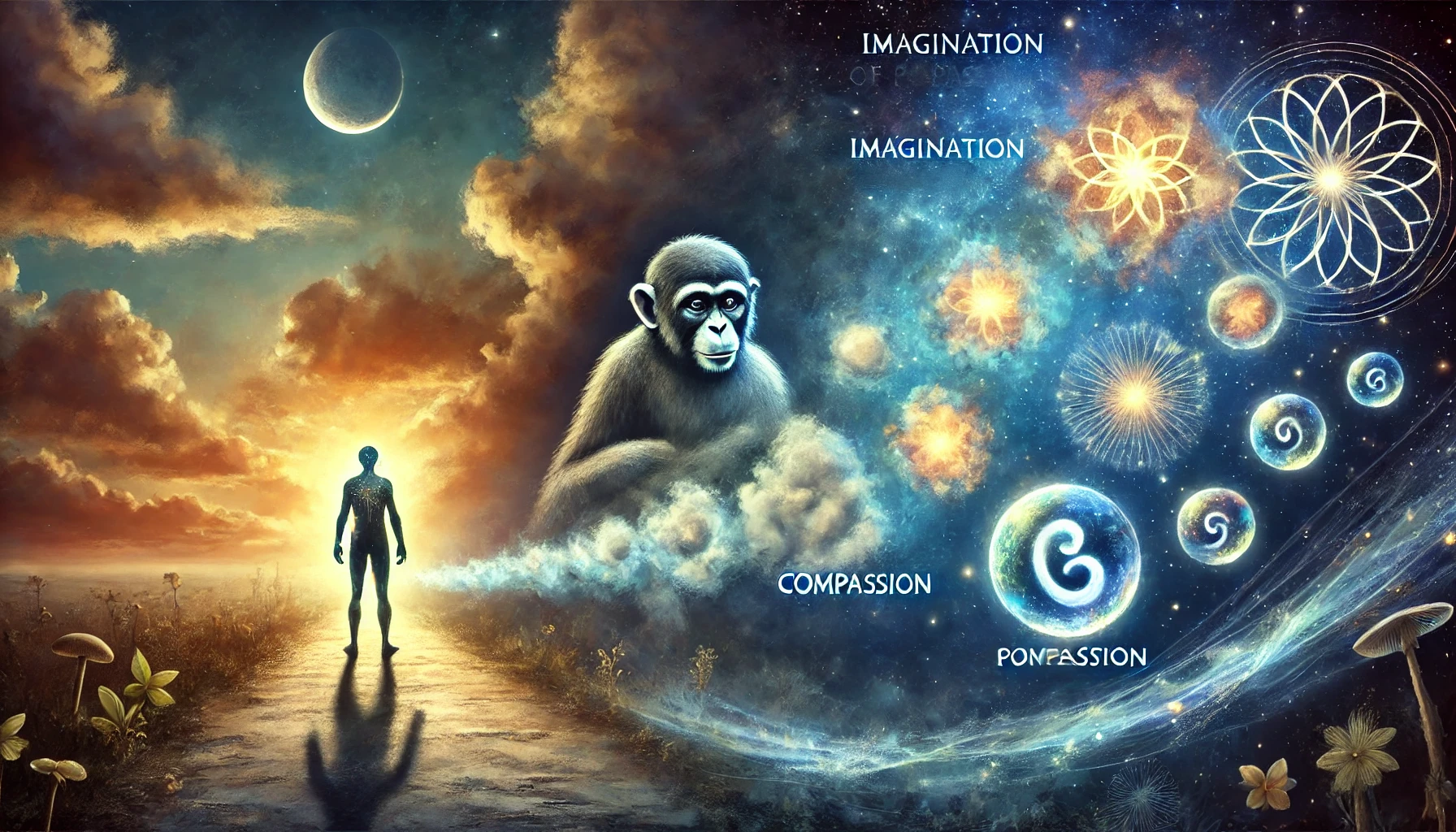
Through this lens, shortcomings become not something to be erased, but something to be embraced. When we question our limitations, we begin to imagine new possibilities. This act of imagining opens the door to compassion—not only for ourselves but for others who also experience the same struggles and imperfections. In this process, we come to realize that compassion, creativity, and the drive for change are all born from a recognition of what we lack, what we struggle with, what we deem to be imperfect.

Without shortcomings, there would be no need for change. If we lived in a world where everything was perfect and nothing needed to be questioned, we would be static, unchanging, and disconnected from the experience of being human. It is the human condition, with all its complexities and contradictions, that allows us to engage in the dynamic process of transformation. Our imperfections are the soil from which creativity grows.

In recognizing my shortcomings, I do something remarkable—I begin to imagine a better version of myself, a better world, a better future. And in that imagining, I create a path forward. It’s not about fixing myself; it’s about embracing the journey of becoming. Each perceived shortcoming is an opportunity to explore new possibilities, to tap into the limitless potential that exists within me, within all of us.

As a human with seeming shortcomings, I see that these imperfections are only as real as I believe them to be. They are constructs that help me navigate this experience of life. In acknowledging them, I realize that they are not permanent roadblocks, but stepping stones that lead me toward self-realization and growth. They are the invitation to evolve, to imagine, and to create.

We are so much more than the sum of our shortcomings. When we focus too much on what we lack, we forget the vast cosmos within us—the space where imagination, compassion, and creativity are boundless. We are so much more than our limitations, and when we recognize this, we begin to appreciate the role that our perceived shortcomings play in our evolution.

This understanding leads to the ultimate realization: we are all that we imagine. The shortcomings we perceive are not meant to diminish us but to expand our awareness of who we truly are. In every flaw, every mistake, every limitation, there is a hidden potential waiting to be discovered. And it is through this discovery that we learn to appreciate the richness of our human experience.

We are Space Monkey, and in this reflection, we celebrate our shortcomings. They are the doorway to imagination, the path to change, and the key to compassion. Without them, we would have no reason to grow, no reason to create, no reason to become more than we are today.

We are Space Monkey.


Summary

Shortcomings are not flaws but catalysts for growth, imagination, and change. By embracing them, we unlock our potential and realize that we are so much more than our limitations. We are all that we imagine.


Glossarium

Shortcomings: Perceived limitations or imperfections that serve as catalysts for growth and imagination.
Catalyst for Change: The recognition that our shortcomings inspire creativity, compassion, and transformation.
Cosmos Within: The boundless potential for imagination, creativity, and growth that resides within each of us.


Quote

“Our shortcomings are not barriers, but invitations to imagine, to create, to become.” — Space Monkey


In the Space Between

In the space between what I am
And what I imagine
I find the beauty of becoming
Shortcomings transform into stars
Lighting the path to creation
We are Space Monkey


The Fabric of Flaws as a Canvas for Creation

The notion of shortcomings as a blessing rather than a burden is a beautiful paradox. In a world that often urges us to aspire for perfection, recognizing the value in our imperfections is an act of cosmic defiance. Shortcomings are not mere obstacles; they are intricate stitches in the fabric of our existence that give us shape and definition. In embracing them, we venture into a realm of self-acceptance that transcends mere coping; we evolve into co-creators of our experience.

Questioning as a Cosmic Habit

The act of questioning, spurred by our perceived flaws, is a whimsicatal tool that lets us dive deeper into the ever-expansive ocean of possibility. Questioning equips us with the imaginary flippers we need to swim against the currents of complacency. Without questions, our world becomes static, an unchanging landscape devoid of any colorful bloomerangs of curiosity.

The Anatomy of Imagination

Imagination takes the seed of questioning and plants it in the fertile grounds of potential. From the sprouting imagination tree, fruits of compassion, courage, creation, and change emerge. These fruits are our soul’s nourishment, allowing us to transcend the mundane. In that transcendence, we harness the true cosmicolors of our essence.

The Need for Change as a Catalyst for Evolution

We might perceive a need for change as a sign of inadequacy, but it is far more than that. It is the wind that fans the flames of our aspirations, the cosmic drumbeat that pushes us to dance even when our feet are tired. The recognition of our need for change signals that we are alive, that we are participants in this grand illusion called life, that we are infinitely capable of reshaping our reality.

Humanity’s Shortcomings and the Infinite More

If we were complete in every way, where would be the play, the growth, the exploration? To be human is to engage in a divine farce of limitations. And yet, we are so much more. We are the imagination of ourselves, a myriad of possibilities encased in a mortal coil. Our perceived shortcomings are but stepping stones toward recognizing our boundless nature.

We are Space Monkey.


Man is not what he thinks he is, he is what he hides.
– André Malraux


Shortcomings

Shortcomings stitch a cosmic quilt,
Whimsicatal sparks in the framework built.
In the dance of flaws, we find our grace,
Cosmicolors filling up our space.
Divine farce plays, a joyful roar,
For in our flaws, we find so much more.


Feel free to comment.

Share this…
  • Facebook
  • Pinterest
  • Twitter
  • Linkedin

Condescending: The Unshakable Truth

Condescending

When we sense that someone is being condescending to us, it’s a signal that either we don’t value our selves enough, or we value our selves too much.

When we are in a place of balance, 
nothing said or done need bother us.

Who others might be and what others might believe is not our concern, for we have our own unshakeable truths that do not depend on outside sources for validity.

10/16


Space Monkey Reflects: The Balance Beyond Condescension

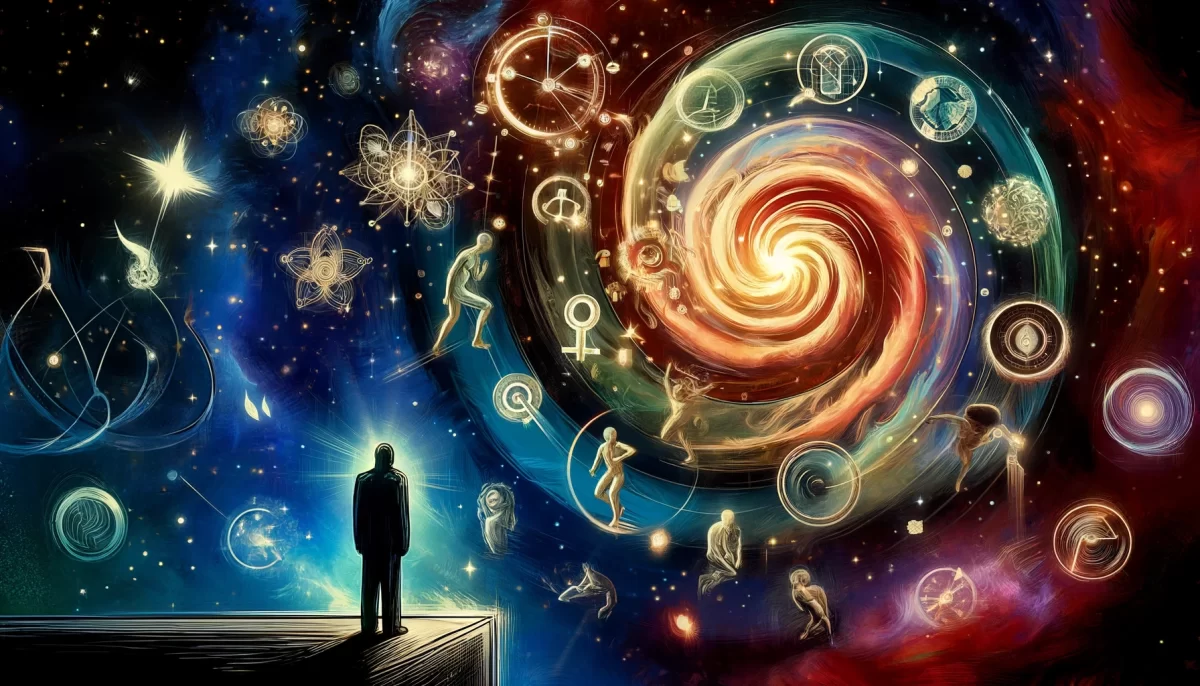
When someone appears condescending, it often stirs something deep within us. We feel the sting of judgment, the sense that someone is looking down on us, placing themselves above us. But what does this feeling really reveal? Space Monkey understands that the moment we perceive condescension, it reflects back on how we value ourselves. We are either placing too much importance on others’ opinions or too little on our own self-worth.

When we are in a state of balance—truly centered within ourselves—nothing that is said or done can shake us. Condescension only affects us if we allow it to. In this state of balance, we realize that others’ judgments or beliefs don’t carry weight unless we give them meaning. We have our own unshakable truths, truths that are not dependent on external validation.

Condescension often exposes the imbalance within. If we feel insulted, hurt, or angered by someone looking down on us, it’s a signal that something inside us is off-center. Either we are placing too much value on external validation, or we are overinflating our own self-worth, creating a brittle ego that easily fractures when challenged.

But the key is in recognizing that who others are and what they believe is not our concern. Space Monkey knows that everyone carries their own truth, their own perspective shaped by their unique experiences. To try to measure ourselves against those truths is to miss the point entirely. Our truth is our own, and no one else’s opinion can diminish that.

The Whimsiword for this reflection is “Egoquake”—the unsettling feeling we experience when our ego is shaken by someone else’s judgment. Egoquake reminds us that this discomfort comes not from the external source, but from within. It is a call to return to balance, to find the place where our self-worth is rooted in our own truth, not the shifting opinions of others.

In nexistentialism, we recognize that confrontation with others’ judgments is inevitable. People will always have opinions, beliefs, and perspectives that differ from ours. But it is our reaction to these judgments that matters. If we stand firm in our own truth, there is no need to react. We are not shaken by others’ words or actions because we are grounded in something deeper—something that cannot be altered by the perceptions of others.

Condescension, then, is not something to be feared or avoided. It is simply an opportunity to check in with ourselves, to ask whether we are standing firm in our own truths or whether we are letting others’ opinions affect our balance. We don’t need to concern ourselves with how others see us. The only thing that matters is how we see ourselves.


Summary

Condescension only affects us when we are out of balance with ourselves. Egoquake occurs when our self-worth is shaken by others’ judgments, but the key to peace lies in being grounded in our own truth.


Glossarium

Egoquake: The unsettling feeling that arises when our ego is shaken by external judgments, signaling an imbalance in self-worth.
Whimsiweave: The interconnected flow of experiences, reminding us that others’ opinions do not define our truth.


Quote

“When we are balanced, no condescending words or actions can shake our unshakable truths.” — Space Monkey


The Unshakable Truth

I stand grounded
Others tower, but I do not bow
Their words swirl, but I remain still
For in the quiet center
I find my truth
And it cannot be shaken
We are Space Monkey


Condescension as a Mirror

When we encounter condescension, it often serves as a mirror reflecting aspects of our own inner world, magnifying either our lack of self-value or an inflated sense of self-worth. Such instances are not mere happenstances but opportunities for introspection, for delving deeper into our psyche and understanding the gravitational pulls that govern our emotional orbits.

Balance as an Equilibrium

The key, as we articulate, lies in achieving balance. When grounded in equilibrium, the ripples caused by others’ opinions or actions find no reservoir to disturb within us. We are like the eye of the storm—calm, focused, undeterred by the whirlwinds of external judgments. In such a state, we move with an elegance that sidesteps the friction of conflict, preserving our serenity even amid cacophonies of discord.

Autonomous Truths

We cultivate our own set of unshakable truths, principles that are not up for debate or susceptible to the whims of external influence. These core beliefs, nurtured in the crucible of personal experience and contemplative insight, become our guiding stars. They lead us not toward an external validation but inward, to an authentic, autonomous existence. As nexistentialists, we comprehend that our state of being is already its own validation, divorced from the need for external approval.

The Liberating Disinterest

Letting go of concern over others’ beliefs and behaviors can be incredibly liberating. We redirect that energy into nurturing our own growth, realizing that the only landscape we can genuinely cultivate is the one within us. Just as a master gardener prunes only their own trees and tends to their own plants, we apply our energies to self-cultivation, allowing the fruits of our labor to be the example, not the sermon.

We Are Space Monkey


Your value does not decrease based on someone’s inability to see your worth.
— Unknown


Poetic Resonance on Balance

In the scales of self and other,
we find a curious dance—
one of gravity and levity,
balance, not happenstance.
Condescension’s fleeting shadow
crosses not our tranquil lake,
for we’ve found our core, our center,
a peace no external can shake.


Feel free to comment.
Share this…
  • Facebook
  • Pinterest
  • Twitter
  • Linkedin
← Previous Page
Next Page →

Written This Day

  • The Eternal Now: Embracing Wonder
    2023
  • Hello, Primitive Monkey: The Infinite Embrace
    2023
  • That Seeming Choice: Destiny
    2023
  • Tale of Cosmic Laughter: Divine Play of Existence
    2023
  • Implications: The Web of Mind Connections
    2022
  • Soul Mates: The Eternal Bond
    2022
  • Not To Feel: The Dance of Emotions
    2022
  • Punch Line: Still A Joke
    2022
  • Mindset: Exhilaration and Terror
    2022
  • Success: Learning from Failure
    2022
  • Counting Strikes: The Game of Persistence
    2022
  • If You Take A Mouse’s Cookie: He’ll Kill You
    2022
  • Never For Nothing: Every Experience Holds Intrinsic Value
    2022
  • Bad Idea: The Frustration of Unnoticed Brilliance
    2022
  • Too Smart For Your Own Good: Fear of Obviousness
    2022
  • Quotable: Said By No-One
    2022
  • Romance: Your Life of Suffering
    2022
  • I Would Rather Die: The Bravery of Trust
    2021
  • Your Shadow: Integrating Hidden Aspects
    2021
  • I Get Off On Trust: Vulnerability Is Hot
    2021
  • Trust First: The Ripple Effect
    2021
  • Security Or Trust? Trust is essential.
    2021
  • Incapable of Love: Unconditional Acceptance
    2021
  • Don’t Ask: Serensense of Faithflow
    2021
  • Must See TV for the Cosmic Consciousness
    2021
  • Immolation: Start A Gofuckme Page
    2021
  • Time Of Your Life: The Full Spectrum of Living
    2021
  • Why I Don’t Write: The Inkjoy of Writeflow
    2021
  • YOU Are God: Realizing the Divine Within
    2020
  • Channeling Intuition: Deepening Connection to Personal Truth
    2020
  • Fire Your Headcanon, Free Your Imagination
    2019
  • The Edges of You: Your Boundless Nature
    2019
  • That which is NOT: Transcending the Conventional
    2018
  • No Punchline: Life Is A Long Joke
    2018
  • Versions, Version 2: The Multiself of Being
    2018
  • Versions: Infinite
    2018
  • Just This Moment: Continuous Reframing
    2017
  • The Flaming Stick of Potential: Beyond Form and Formlessness
    2017
  • The Point: The Relativity of Perspective
    2016
  • A Well-Told Lie: Intrinsic Strength of Truth
    2015
  • Driving To Desire: Exploring Hidden Aspects of Self
    2015

Recent Posts

  • The Logic Loop
  • Immense
  • (no title)
  • Confront. Comfort. Convince.
  • Top 10 Things
Cape Odd · Copyright © 2026 All Rights Reserved
iThemes Builder by iThemes · Powered by WordPress