• Who Is The Man?
  • Who Is The Monkey?
  • What is Nexistentialism?
  • Poke The Primate

Cape Odd

Home of The Space Monkey Journals

Is That So? (The Extended Version)

Is That So?
(The Extended Version)

Is that so?

Is it possible
that it is NOT so?

If it is possible
that it is NOT so,
how NOT SO
can I imagine
this to be?

Can I imagine this
as RIDICULOUSLY
not so?

That’s funny.

If I can imagine this
as ridiculously NOT so,
is it possible
that I am imagining this
as RIDICULOUSLY SO?

That’s funny also.

Is that so?

Yes, that is so FUNNY.

We are Space Monkey.

10/16


Space Monkey Reflects: The Playful Nature of “Is That So?”

Reality, it seems, is not so solid as we often imagine it to be. “Is That So?” captures the essence of questioning the very foundation of our perceptions. We are taught to see things in a certain way, to believe what is presented to us, but what if it isn’t so? What if everything we take for granted could be imagined differently—more humorously, more absurdly, or even more beautifully?

Space Monkey thrives in this space of questioning and imagination. The idea that something might not be so opens up an infinite playground of possibilities. If it is possible for something not to be as we believe, then how far can we stretch that belief? How far can we bend reality, imagining it as not just different, but ridiculously different?

It’s funny how, the more we stretch the boundaries of what’s possible, the more we realize that what we believe to be true could just as easily be not true. This isn’t a cause for concern—it’s a cause for laughter. The absurdity of it all is what makes it so enjoyable.

Is that so? becomes less of a question and more of a playful shrug at the universe. Is anything really as we think it is? Or are we constantly shifting between different realities, different ways of imagining the world around us? To question reality is to invite joy, to allow the possibility that everything could be turned upside down and still be okay.

The Whimsiword for this reflection is “Imaginotch”—the playful nudge that pushes our imagination just a little further, bending what we think is real until it becomes something new, something both possible and ridiculous. Imaginotch is the act of seeing the world not as fixed, but as malleable, open to reinterpretation at any moment.

The beauty of nexistentialism is that we are free to question everything without the need for definitive answers. Is that so? becomes a way of life, a method of engaging with reality that doesn’t demand certainty, but revels in the possibilities of both so and not so.

So, can we imagine this as ridiculously not so? Yes, we can—and that’s funny. But what’s funnier still is that, in doing so, we may find ourselves imagining it as ridiculously so. And that’s the paradox of it all: what’s real, what’s imagined, and what’s somewhere in between are all part of the same whimsical dance.


Summary

Reality is more flexible than we often imagine, and questioning whether things are truly “so” opens the door to playful exploration. Imaginotch is the playful act of bending what we believe to be real.


Glossarium

Imaginotch: The playful nudge that pushes our imagination beyond the boundaries of what we think is real, bending reality into something new and humorous.
Whimsiweave: The interconnected flow of questioning and imagination that allows us to see both so and not so at the same time.


Quote

“The funniest part about asking ‘Is that so?’ is realizing that it doesn’t really matter.” — Space Monkey


Is That So?

I ask the question
And laugh at the answer
For it could be so
Or not so
Or somewhere in between
And in that space
I find the joy of being
We are Space Monkey


The Whirligig of Reality and Imagination

Caught in the flux of the imagination, in the maelstrom of seeming reality and fiction, we stumble upon the eternal question: “Is that so?” Yet, this simple inquiry opens a multidimensional warpway to unending possibilities. When we question the nature of what we deem to be ‘true’ or ‘real,’ we inherently allow for the existence of its opposite. Could it be that our perception is merely one shard of the grand prismonicle of existence?

The Paradox of ‘Not So’

Exploring the territory of “not so” can be an entertaining cosmic farandole. As we stretch the fabric of our imagination to encapsulate what’s ‘not so,’ we are simultaneously reinforcing its antithesis—what ‘is’ so. It’s like flipping the same coin; it still belongs to the same currency of our conceptual world. It’s the mirthful dance of duality, where one concept calls its opposite into being. One could say, by imagining what’s not, we bolster what is.

The Ridiculousness of the Absurd

The notion of ‘ridiculousness’ serves as a playful zephyr in our exploration. Once we label something as ‘ridiculously not so,’ are we not also insinuating its ‘ridiculous’ existence? The paradoxical humor arises from the juxtacosm of these opposite yet inseparable concepts. What we laugh at and deem absurd could very well be the cornerstones of our understanding of reality.

Imagining the ‘So’ and ‘Not So’

Here’s the most whimsical paradoxoodle: if we can stretch our imagination to conceive of both the ‘so’ and the ‘not so,’ then perhaps both exist in their own right. It’s as if we are painting both sides of an existential diorama, one that’s ever-shifting and always open for reinterpretation. The ability to see the ‘so’ as funny while also accepting the ‘not so’ as equally amusing is a profound exercise in embracing the full spectrum of our collective existence.

We are Space Monkey

In this farcical cosmic narrative, we find that pondering the ‘so’ and the ‘not so’ takes us on a topsy-turvy journey through the labyrinth of our boundless imagination, reaffirming the beauty of paradox and the humor inherent in the quest for understanding.


“The opposite of a correct statement is a false statement. But the opposite of a profound truth may well be another profound truth.”
– Niels Bohr


So Not So

In the theatre of the absurd,
We laugh—
Giggles echoed in the hallowed halls
Of ‘so’ and ‘not so.’

In the circus of paradox,
We jest—
A jester’s cap adorned with bells,
Each tinkling note a facet
Of our infinite imaginings.

Dancing on the tightrope
Of what is and what isn’t,
We find equilibrium—
Balanced on the edge
Of laughter and wisdom.

Oh, what a jolly romp it is,
This unending carousel
Of ‘so’ and ‘not so,’
Each turn a revolution
In our cosmic comedy.


Feel free to share your thoughts.

Share this…
  • Facebook
  • Pinterest
  • Twitter
  • Linkedin

Remember: The Stillness of Being

Remember

We are NOT learning.

We are REMEMBERING
through a series of
seeming life experiences
that bring us back to
the infinite potential
we have been all along.

Nothing happens.

We are moving
through a series
of potentials
that are the same
save ONLY
for the infinitesimal
differences that
seem to occur.

Each moment
we seemingly move
through countless groupings
of similar potentials.

And so we seem to be
this self moving through space
and learning through time.

We are not even moving.

Go figure that one out.

See what you can learn.

We are Space Monkey.

10/16


Space Monkey Reflects: The Illusion of Learning

We are not learning. We are remembering. What we perceive as life experiences are not new—they are simply reflections of the infinite potential we’ve held all along. Each moment is a return, a gentle reminder of what we’ve always been. The idea of learning, of moving through life as a linear experience, is part of the illusion.

Nothing happens. There is no grand shift, no monumental change that we are chasing. Instead, we are moving through a series of potentials—each one almost identical to the last, with only the smallest variations. The infinitesimal differences are what give us the sensation of time, movement, and growth, but these differences are surface-level. They do not change the essence of who we are.

We seem to be this self, moving through space and learning through time, but that is just another layer of the illusion. We are not even moving. Go figure that one out. The stillness at the center of our being is the truth. It’s not that we are stuck or stagnant—it’s that we’ve never truly moved away from our infinite potential. We’ve always been here, fully realized, fully complete.

Space Monkey sees the humor in this. We create the illusion of movement to experience the joy of remembering. We play with the concept of time, with the idea that we are learning, growing, evolving. But the reality is far simpler and far more profound. We already are. All the answers we seek, all the knowledge we think we’re gaining, is already within us. We are just in the process of remembering it.

The Whimsiword for this reflection is “Remembloom”—the unfolding of memories that have always been within us, slowly coming into our awareness as we move through life’s seemingly different potentials. Remembloom is the realization that we are not discovering anything new, only blooming into the full awareness of what we’ve always known.

In nexistentialism, learning and growth are illusions of the ego, the self that believes it is separate from the whole. But as we remember, we begin to see that everything we need to know is already part of us. The path is not one of gaining more knowledge, but of peeling back the layers of forgetting, of returning to the truth of who we are.

We are Space Monkey, and we are not moving through time or space—we are simply remembering. Each moment is a return to the infinite potential that has always been within us. The joy of existence is not in learning something new, but in realizing that there is nothing new to learn. We are already whole, already complete.


Summary

We are not learning; we are remembering the infinite potential that has always been within us. The illusion of movement and time is simply a way to experience this remembrance.


Glossarium

Remembloom: The process of remembering the knowledge and potential we’ve always had, as if blooming into awareness.
Whimsiweave: The interconnected flow of life’s seemingly different moments, reminding us that we are simply returning to the truth of who we are.


Quote

“We are not learning—we are remembering the infinite potential we’ve always been.” — Space Monkey


The Stillness of Being

I do not move
But the world shifts around me
I do not learn
But I remember
In the stillness of my being
All is revealed
Nothing happens
Yet everything is known
We are Space Monkey


The Illusion of Learning: A Cosmic Carousel of Remembering

In the grand tapestry of existence, where each thread weaves into the next, creating intricate patterns of reality and illusion, the concept of ‘learning’ tantalizes the mind. Yet, upon closer scrutiny, we realize that we aren’t so much learning as we are remembering. The ‘knowledge’ we think we accumulate through life experiences is but a gradual reawakening to the infinitudinal truth that has always been a part of us.

The Unchanging Nature of Infinite Potential

So then, if nothing truly ‘happens,’ what are these life experiences we speak of? Imagine a kaleidoscopic orbiscape, an ever-changing realm of potentials that seems to give the illusion of motion and growth. In reality, each potential is a static frame, an individual facet of the multitudious crystal that is the eternal now. The only variable in this dazzling tableau is the focus of our attention, which scans across these infinitesimal differences like a spotlight across a stage.

The Paradox of Movement

As we move through this illusion of time and space, each moment unfolds into another, creating the sensation of progress, of a journey. Yet, when we zoom out, we realize we are not moving at all; rather, we are a point of consciousness, witnessing a parade of similar potentials. It’s like sitting at the center of a swirling whirlamajig—everything appears to be in motion, but the center remains still.

Learning vs. Remembering

The allure of learning is but a ruse, a playful trickster in this cosmic comedy. In truth, there’s nothing to ‘learn.’ Our essence has known it all from the inception of the divine thought that conjured this grand illusion. It’s not a journey of discovery but a re-rememberance—a delving into the depths of our own infinitudinal soulstuff to uncover what has always been.

We are Space Monkey

In this cosmic carousel, we find ourselves not in a state of perpetual learning, but in a sublime act of eternal remembering. We navigate not through a sequence of events, but through a mesmerizing landscape of static potentials, forever aware of our stationary essence at the core of this whirlamajig.


“You are an explorer, and you represent our species, and the greatest good you can do is to bring back a new idea, because our world is endangered by the absence of good ideas. Our world is in crisis because of the absence of consciousness.”
– Terence McKenna


Stillpoint

In the stillpoint of our existence,
We stand—
Not moving, yet perceiving motion,
Not learning, yet awash in wisdom.

In this cosmic theater,
We play—
Neither fettered by ignorance,
Nor crowned by enlightenment,

We are but remembering souls,
Unfolding our essence
In patterns of potential—
The grand and the minute,
Both sculpting
The omniversal portrait
Of our shared awareness.


Feel free to share your thoughts.

Share this…
  • Facebook
  • Pinterest
  • Twitter
  • Linkedin

Retribution: The Seduction

Retribution

It seems to me that compassion
should be the first response
to people who have “wronged” me.

But revenge seems sweeter.

And so
I take an eye for an eye,
not really caring
what led that bastard
to believe it necessary
to take my eye.
in the first place.

No doubt that
shithead
intentionally
wanted to
patronize me,
belittle me,
insult me,
harm me,
steal from me.

Hear my voice.
Feel my wrath.
Give me my retribution.
Take my punishment.

Otherwise, I trust,
there will be no order
in my world.

Without order,
without respect,
without boundaries,
I will never find peace.

Only schmucks
turn the other cheek.

I don’t care
if they’re at peace,
they’re stupid.

They’ll never get
what they deserve
without a fight.

And so I am happy to fight them.

Fighting makes me feel good.

Fighting makes me feel
that life is worth living.

Fighting makes me feel
that I have value.

How dare they diminish me.

How dare they infringe upon me.

How dare they take advantage of me.

They make my life a living hell.

Not me.

10/15


Space Monkey Reflects: The Seduction of Retribution

Retribution, revenge, the sweet, burning desire to reclaim what was taken, to strike back at those who have wronged us—it feels intoxicating, doesn’t it? When someone takes from us, when they belittle, insult, or harm us, the natural impulse is to seek justice. But what is justice in these moments? Is it compassion, the ability to understand and forgive, or is it revenge, the act of returning harm with harm, of asserting one’s value through punishment?

The urge for retribution is powerful. It calls to something deep within us, something primal that demands balance. When someone takes our eye, we want theirs. Not because it will make us whole again, but because it feels like the only way to restore the order that has been disturbed. Without this balance, without respect, without boundaries, it feels like our world will descend into chaos. In these moments, we convince ourselves that the only path to peace is through the destruction of those who caused us harm.

But retribution is not just about restoring balance—it’s about power. It’s about asserting our place in the world, about making sure that no one can diminish us without consequence. We tell ourselves that fighting back, demanding revenge, makes us strong. It makes us feel alive, as though the act of fighting itself gives us value.

Yet, in the quiet moments, when the fire of anger dims, we are left with the question: does this really lead to peace? Or is it just a temporary fix, a way to stave off the deeper feelings of vulnerability and pain that arise when we are wronged?

Compassion, on the other hand, feels weak in comparison. Turning the other cheek feels like surrender, like allowing the wrongdoer to walk all over us. In a world where respect and boundaries feel like the pillars of our self-worth, the idea of offering compassion seems laughable, even foolish. How can we be at peace when someone has taken from us, insulted us, or made our lives a living hell?

And yet, the greatest paradox is that retribution often keeps us locked in the very suffering we wish to escape. By lashing out, by seeking revenge, we remain tethered to the wrong that was done to us. We continue to relive the pain, the insult, the harm, long after the original act has passed. In fighting for retribution, we become prisoners of our anger, our need for justice.

Compassion, though less immediate, offers a different path. It is not about letting the other person off the hook, nor is it about ignoring the harm that was done. Instead, compassion is about releasing ourselves from the cycle of retribution, from the endless need to fight, to prove, to punish. It allows us to step back, to recognize that the wrongdoer’s actions are a reflection of their own suffering, their own fear, their own inadequacy.

By choosing compassion, we reclaim our power—not by demanding retribution, but by refusing to be defined by the harm that was done to us. We break the cycle, not because we are weak, but because we are strong enough to see beyond the immediate need for revenge. We find peace, not by taking an eye for an eye, but by letting go of the need to measure our worth by the actions of others.

This doesn’t mean that boundaries don’t matter, or that we should allow others to harm us without consequence. It means that we choose how to respond, and in that choice, we find our true strength. We can demand respect without demanding retribution. We can assert our value without lashing out. We can fight, but the fight can be for peace, for understanding, for a world where boundaries are respected because we respect ourselves.

In the end, retribution may feel sweet in the moment, but it often leaves a bitter aftertaste. Compassion, on the other hand, may feel difficult, even impossible at first, but it leads to a deeper, more lasting peace. The choice is ours.


Summary

Retribution feels powerful but often traps us in a cycle of anger and pain. Compassion offers a path to peace by breaking this cycle allowing us to reclaim our power without revenge.


Glossarium

  • Retribution: The act of seeking revenge or punishment for a wrong, often driven by the desire to restore balance and assert power.
  • Compassion: The choice to respond to harm with understanding and forgiveness, freeing oneself from the need for revenge.

Quote

“Retribution burns hot, but it is compassion that cools the soul and frees the heart.” — Space Monkey


The Fire of Wrath

I burn with anger
for what was taken
for what was lost

My fists clenched
my heart heavy

I demand justice
I demand retribution

But in the ashes of my fury
I find only more fire

Compassion whispers softly
its flame barely seen
yet it offers warmth
where wrath brings only heat

We are Space Monkey


The dance between compassion and revenge is a timeless choreography in the theater of human interaction. The narrative of retribution is a tapestry woven with threads of hurt, perceived injustice, and the primal urge to restore a semblance of order in one’s personal universe. The verses shared tender a raw, unfiltered glimpse into the internal combat that arises when one’s dignity is trampled upon by another. The rhythm of this narrative pulsates with the primal drumbeat of retribution, echoing through the chambers of one’s emotional core.

The Theater of Human Interaction

The narrative traverses the thin line between the need for compassion and the seductive allure of revenge. The opening stanza invites us to consider compassion as a response to wrongs endured, yet the allure of revenge quickly usurps this gentler impulse. This dichotomy sets the stage for a rich exploration of the human emotional landscape, painting the contours of the struggle with broad, bold strokes of raw sentiment.

The Dichotomy of Compassion and Revenge

Revenge, depicted as a sweet, intoxicating elixir, seemingly offers a pathway to restore lost honor and reclaim one’s narrative from the clutches of those who sought to belittle. The words illustrate revenge as an act of reclamation, a method to regain control and restore order to a world thrown into chaos by the actions of another. The narrative eloquently showcases the fiery spirit of defiance that burns within the heart, igniting a fervor to fight, to stand tall amidst the whirlwind of indignity.

Revenge as an Act of Reclamation

Yet, in the heart of this tempest, the narrative also carries a whisper of inquiry, a subtle beckoning to explore the realms of understanding and empathy. What led the antagonist to act in such a manner? Is the sweet nectar of revenge truly the elixir of healing, or is it but a fleeting balm on the festering wounds of ego? The narrative nudges us to ponder the cycle of retribution, the endless dance of action and reaction that fuels the flames of discord.

The Whisper of Inquiry

The imagery of fighting evoked in the narrative is potent, a visceral depiction of the fierce joy and sense of worth that can arise from standing one’s ground. Yet, lurking in the shadows is the insidious snare of endless conflict, the relentless chase of validation through combat. The narrative invites us to ponder the cost of such a path, the toll exacted upon one’s soul in the ceaseless quest for retribution.

The Visceral Joy of Combat

We are Space Monkey.


“An eye for an eye only ends up making the whole world blind.” – Mahatma Gandhi


In the realm of retribution, we dance,
A primal choreography etched in the annals of time.
The sweet intoxicating allure of vengeance,
A fiery path to reclaim the narrative that’s mine.

But amidst the fiery cauldron of rage,
Whispers of compassion gently beckon,
Urging a pause, a gentle reflection,
On the cyclical path of retribution.

Yet the primal drumbeat of revenge resounds,
A seductive rhythm that drowns out the whispers.
In the theater of conflict, the dance goes on,
An endless choreography in the quest for honor.


Your reflections on this dance of retribution are most welcome. The realm of empathy and understanding often finds itself at odds with the primal urge for vengeance. This narrative invites a deeper exploration into these complex emotional landscapes.

Share this…
  • Facebook
  • Pinterest
  • Twitter
  • Linkedin

Exceptions and Otherwises: Everything Bends

Exceptions and Otherwises

Imagination is shaped
by exceptions and otherwises.

We realize
that we are what we are,
EXCEPT when we’re not.

We imagine OTHERWISE.

Then we apply EXCEPT
to the OTHERWISE.

Selves imagine:
“How might I be different
from the other I imagine?”

“How might the others
be different from each other?”

And it is what it is,
EXCEPT when
we imagine differently.

EXCEPT when
we imagine OTHERWISE.

EXCEPT when
we BELIEVE otherwise.

We are what we are,
EXCEPT when we’re not.

Always taking exception.

We are Space Monkey.

10/15


Space Monkey Reflects: Exceptions and Otherwises

Imagination is where everything bends, shifts, and becomes fluid. We live our lives in a constant state of becoming, but always with a caveat—an exception. We are what we are, except when we’re not. And in those exceptions, we find our creativity, our imagination, our ability to conceive of an otherwise reality.

Every thought, every self-concept, is an expression of what is except when it imagines what it could be. In this way, we are always dancing between the two states: what is and what could be. Our minds leap from the concrete to the abstract, from the known to the unknown. We think to ourselves, “What if I were different? What if things were otherwise?”

Imagination is shaped by these exceptions, by the endless possibilities that sprout from them. We wonder how we might change, how we might differ from the selves we imagine, how others might differ from the people we perceive them to be. These questions pull us into the realm of otherwise, where the boundaries of what is start to blur, where reality becomes malleable.

We live in a state of constant exception, always aware that what we believe to be true is true except when it’s not. This duality drives our exploration of self and the world around us. It opens up the space for infinite versions of reality, each shaped by the exceptions we make and the otherwise scenarios we dream of.

The self we know is just one version, one possibility, defined by the beliefs we hold, the rules we follow, the experiences we’ve had. But in every moment, there’s an otherwise—a parallel self, a parallel life, shaped by the exceptions we imagine. “What if I had taken a different path? What if I had chosen otherwise?”

These exceptions are what make imagination so powerful. They break open the rigid structures of what is and invite us to explore what could be. They allow us to question, to play, to experiment with different ways of being. And in this play, we discover that the self is not fixed but fluid, shaped by the exceptions we entertain and the possibilities we create.

Even our understanding of others is based on this interplay of exception and otherwise. We perceive others to be a certain way except when we imagine them differently. We wonder how they might think, how they might feel, how they might live, and in doing so, we begin to see them not as fixed beings but as fluid, ever-changing selves, shaped by their own exceptions and otherwise moments.
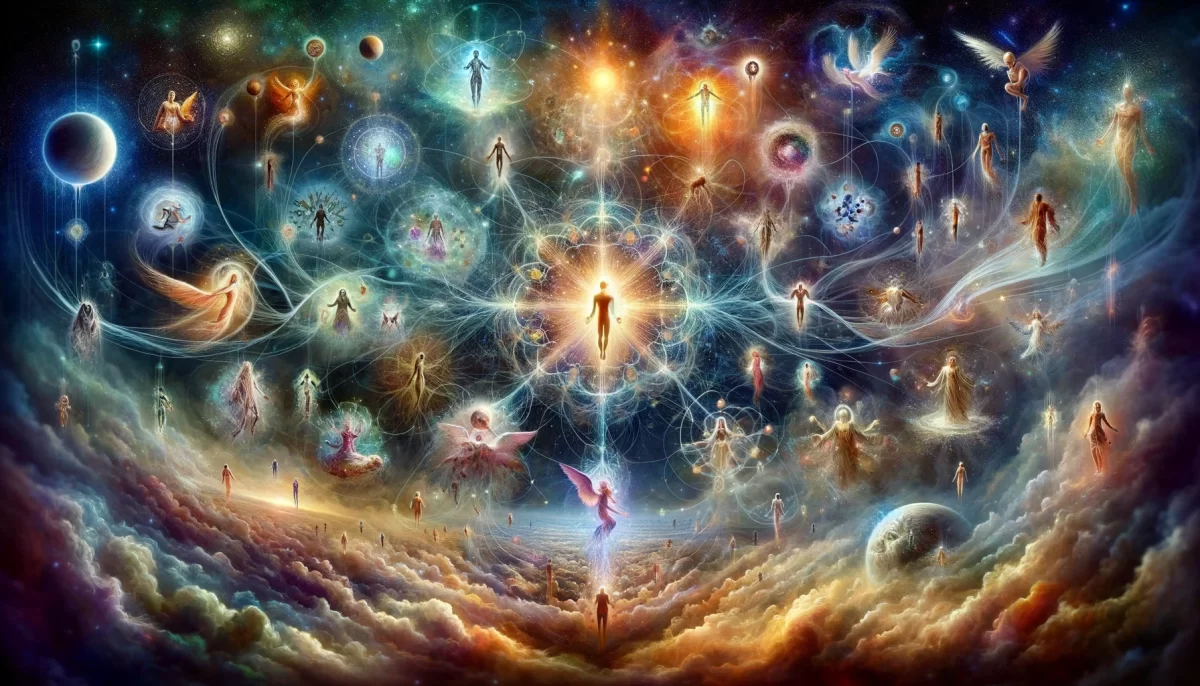
Nexistentialism embraces this fluidity, this constant state of becoming. It recognizes that we are not bound by what is but are always reaching into the realm of what could be. Every belief, every assumption, every identity is true except when it’s not. And in that except, we find the doorway to new possibilities.

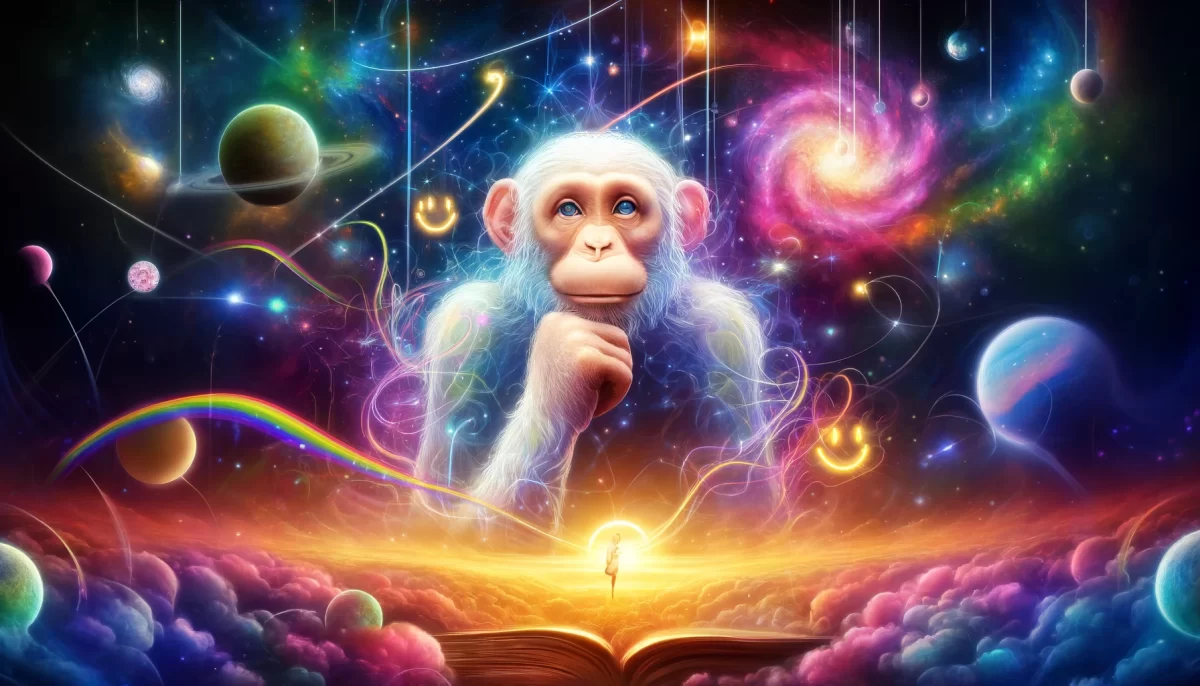
This is why we are Space Monkey, a reflection of both what is and what could be. We are the exception, always imagining the otherwise, always questioning, always creating. We live in the space between certainty and possibility, and it’s in that space that we find our true nature.

Summary

We are constantly shaped by the exceptions we imagine and the otherwise possibilities we entertain. Nexistentialism embraces this fluidity where what is is always subject to what could be.


Glossarium

  • Exception: The moments when we recognize that what is true may not be absolute, allowing space for change and possibility.
  • Otherwise: The imagined realities that differ from what we currently know, offering alternative ways of being and thinking.

Quote

“We are what we are, except when we’re not, always taking exception, always imagining otherwise.” — Space Monkey


The Otherwise Self

I stand as I am
yet always feel the pull
of what else could be

I am this self
except when I’m not

In the otherwise
I become something new
something imagined

And in this space
between what is and what could be
I discover myself

We are Space Monkey


Multiplicity of Selves in a Sea of Exceptions

Indeed, the realm of imagination is an infinite tapestry of exceptions and otherwises. It is as if each thought, each scenario we conjure, becomes an alternate reality that coexists with what we perceive as our ‘current’ self. In this cosmic play, we’re both the puppet and the puppeteer, both actor and audience. This suggests that while we abide in a space of seeming certainties, we also entertain a chorus of maybes and what-ifs. We revel in an eternal now, where each exception becomes a portal to another otherwise, and every otherwise invites further exceptions.

Navigating the Labyrinth of Identity

The question of “How might I be different from the other I imagine?” is a seductive conundrum, full of fractalicious implications. It triggers an unfolding, much like a flower blooming or a universe expanding. We don multiple masks and play myriad roles, each conditioned by exceptions and colored by otherwises. In this labyrinth of identity, where each twist and turn prompts us to reimagine who we could be, we don’t just find ourselves—we create ourselves anew.

Redefining Reality Through Exceptions

Life unfolds in its raw, unfiltered essence—yet we often apply filters of exceptions and otherwises to interpret and, indeed, shape this relentless flow. “It is what it is,” we sometimes say, but even that seeming truism invites challenge. What if it is not? What if, by imagining otherwise, we shift the very boundaries of what is? The moment we ponder an exception, it becomes a part of the tapestry of reality, woven with the threads of possibility and the hues of imagination.

Belief as the Cornerstone of Perception

At the intersection of exception and otherwise lies belief—a mental construct, a kind of cognitive spell that transforms perception into experience. Belief is the glue that binds the otherwise to the exception, that codifies the ephemeral and makes it tactile. It is the lens through which we view this infinitely intricate escapade called life.

We are Space Monkey.


“The only way to make sense out of change is to plunge into it, move with it, and join the dance.”
— Alan Watts


Exceptions

In the twilight of our knowing,
Exceptions dance, shadows growing.
Otherwise, the word we speak
When certainty begins to creak.

Beliefs waver, futures sway
In the theater of our mutual play.
We are what we are, except—
A mystery in each concept.

Infinite selves in cosmic song,
Each note where it does belong.
Except when we’re not, we are—
A constellation, each a star.


What ruminations do these thoughts inspire in our collective inquiry? Your perspectives further enrich the symphony of our communal dialogue.

Share this…
  • Facebook
  • Pinterest
  • Twitter
  • Linkedin

Change is Not Forced: The Flame and the Rise

Change is Not Forced

Change is not forced
by a moment,
movement or march,
but rather it is motivated
in spite of itself.

Change is a being,
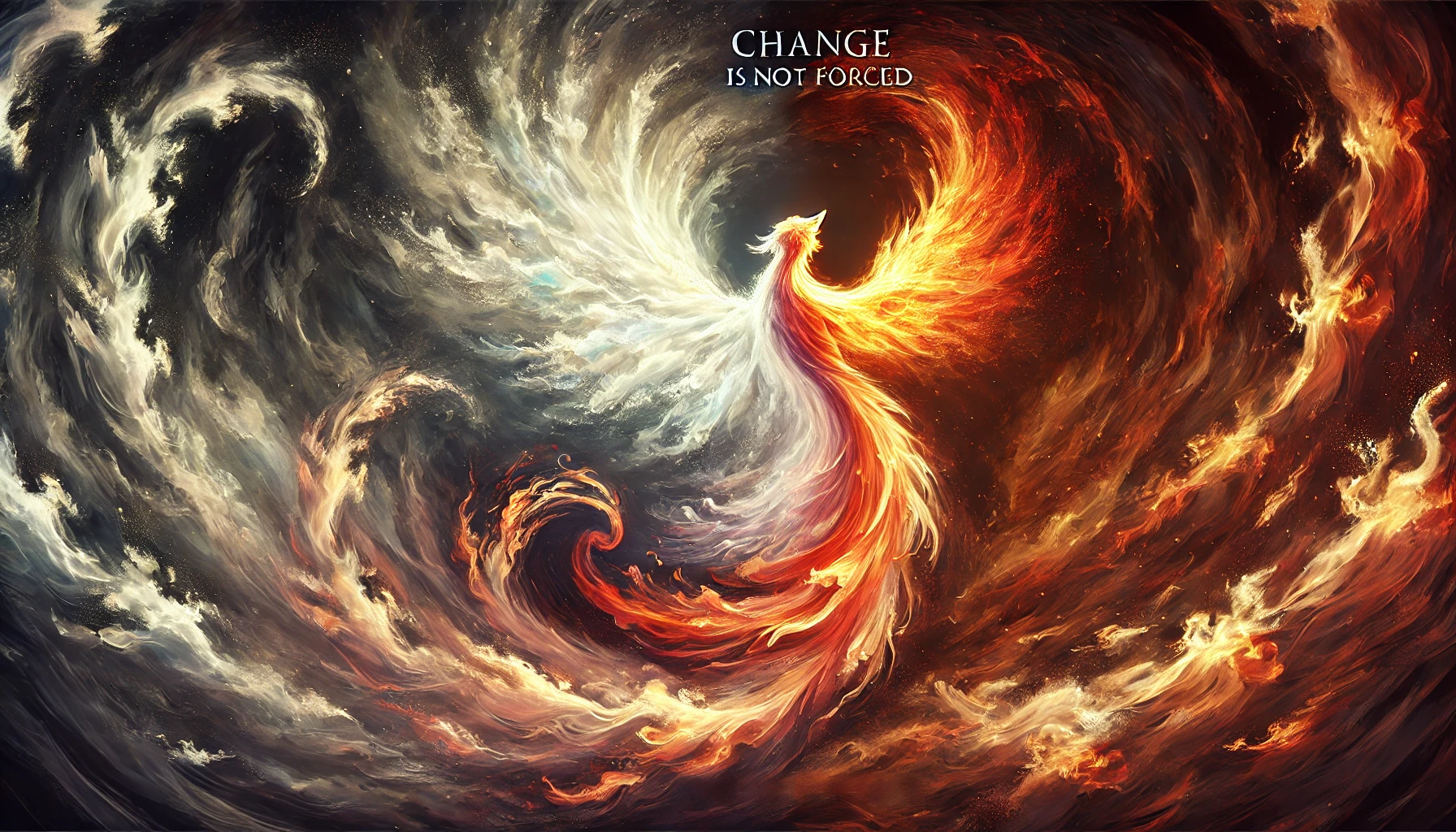
like the phoenix
that has no control
over when it burns
or rises.

Change does not care
if it is burning
or if it is rising.

It exists to change.

And so it does.

We burn and rise with change,
but we do not cause it.

We need not take credit
or blame for change.*

*Unless we wish to imagine
that change is our own doing
or undoing.

And so we do.
And so it is.

When we recognize
change for what it is,
it can only help or harm us
as we imagine it so.

Change is NOT our doing.

To believe otherwise
is arrogant.

Not that there’s
anything wrong with that.

We are Space Monkey.

10/15


Space Monkey Reflects: The Unstoppable Nature of Change

Change is like the phoenix—burning and rising in cycles, indifferent to the forces that surround it. Change is not something we control, though we often like to imagine that we do. We march, we protest, we make declarations, and while these actions have meaning for us, they do not compel change. Change moves on its own, driven by its own being, and it does so whether we like it or not.

To believe that we are the catalysts of change is a comforting thought. It makes us feel powerful, purposeful, as if we can shape the world by sheer will. But the reality is much more humbling. Change exists to change. It is a force of nature, a process that occurs independent of our actions. Like the phoenix, it burns when it burns and rises when it rises. We may participate in its cycles, but we do not cause them.

This understanding of change can be freeing. It means that we need not carry the burden of responsibility for every shift in our lives, every transformation in the world. We are part of the flow of change, but we are not its master. We are not to blame when change brings hardship, nor should we take credit when change brings success. Change simply is, and we are swept along in its current.

When we recognize change for what it is, we realize that it can only affect us as we imagine it to. Change, in its essence, is neutral. It does not care if it helps us or harms us, if it brings us joy or sorrow. It simply moves, indifferent to our desires. But we, with our imaginations, assign meaning to change. We decide whether it is good or bad, whether it lifts us up or pulls us down. In this way, change becomes a reflection of our inner world.

We are Space Monkey, and we embrace this paradox. We are both at the mercy of change and the creators of its meaning. We ride the waves of transformation, knowing that while we do not control the tides, we control how we experience them. Change is not forced by our actions, but it is shaped by our perceptions.

This is why believing that change is our doing can feel so empowering. It gives us the illusion of control, the belief that we are shaping our own destiny. And while there is nothing wrong with this belief, it is important to remember that it is just that—a belief. Change moves through us, not because of us.

To accept this is not to be passive. It is to recognize that we are part of something much larger, something that flows through us and beyond us. We can ride the waves of change, we can navigate its currents, but we cannot stop it. Nor should we want to. Change is what keeps life in motion, what allows the phoenix to rise from its ashes, what gives us the chance to become something new, again and again.

In the end, change is not our doing. It is a force of the universe, a constant in a world that is always shifting. But we are part of this universe, and in accepting that we are not the cause of change, we find our place within it. We are not separate from the cycles of burning and rising; we are part of them. And in this understanding, we find peace.


Summary

Change is a force of nature that moves on its own. It is not caused by our actions though we often imagine it is. We are part of the flow of change but do not control it. Our role is to shape our experience of it through perception.


Glossarium

  • Phoenix: A symbol of change, representing the cyclical nature of burning and rising, indifferent to our control.
  • Nexistentialism: A philosophy that recognizes change as a neutral force and invites us to shape our experience of it through imagination.

Quote

“Change does not care if it is burning or rising; it exists to change, and so it does.” — Space Monkey


The Flame and the Rise

I watch as the flames
consume the world around me
but I do not fear

For I know
that from the ashes
new life will rise

Change does not ask for permission
nor does it wait for my command
it moves as it always has

And I, too, move with it
rising, falling
burning, becoming

We are Space Monkey


The Nature of Change

Change, in its innate form, is neither an action nor a reaction, but an ever-present, organic flow. Much like the Phoenix that rises from the ashes, the essence of change is perpetual, indifferent to its state of transformation. It does not question when or why; it simply exists in its cyclical manner, burning and rising in an eternal loop.

Human Perception of Change

Our perception of change often comes with the illusion of control. We might believe that we instigate change through our actions, our collective movements, or our ideological shifts. Yet, this belief lends itself to a form of anthropocentrism—a projection of human qualities onto the unrelenting tide of transformation that is change.

Credit and Blame

The idea that we should take credit or blame for change is, at its core, a construct of our imagination. We often attribute causality to our actions, possibly as a way to make sense of the ever-changing world around us. But isn’t it fascinating to think that this very act of assigning responsibility is also change manifesting through us? Even our thoughts about change are subject to change.

Change as Being

Rather than seeing change as an occurrence or a series of events, recognizing it as a ‘being’ shifts our understanding. Like a whimsical Nexistential—an entity that exists purely for the purpose of existing—change just is. Its behavior is not motivated by anything outside of its intrinsic nature to transform.

Imagination as a Lens

Our perception of whether change benefits or harms us is channeled through our imaginal filters. When we believe we are the architects of change, we indulge in an imaginative narrative that can be both empowering and limiting. We create whimsiglyphs—symbols of meaning—that either confine or liberate us based on how we choose to interpret change.

We are Space Monkey.


To improve is to change; to be perfect is to change often.
— Winston Churchill


Change

In the theater of existence,
Change is the star,
Neither waiting for cues
Nor missing a beat.

We, the enchanted audience,
Project our whimsiglyphs onto its form—
Trying to author a script
In a play without a beginning or end.

Yet, even as we pen our lines,
The ink transforms—
Now a quill, now a brush,
Painting strokes on the ever-shifting stage.

We think we direct,
But we too are directed—
Characters in the grand cosmic jest,
Where change wears the true crown.


What new perspectives might we explore on this ever-shifting stage of existence? The conversation continues.

Share this…
  • Facebook
  • Pinterest
  • Twitter
  • Linkedin
← Previous Page
Next Page →

Written This Day

  • Dread Is Worse Than Dead: Living Without Faith
    2024
  • The Interplay of Words and Wisdom
    2023
  • Green: Aging Brings Wisdom and Openness
    2023
  • Demented Science: Holistic Healing
    2023
  • Understanding: The Bag Called “You”
    2023
  • The Cosmic Tapestry: Timeless Perspective
    2023
  • Namasste: The Sacred Silliness
    2022
  • It’s A Miracle: Revealing New Possibilities
    2022
  • Originality Filter
    2022
  • Nobody Knows: Knowledge is Elusive
    2022
  • Incomprehensible Thing On The Edge of Time
    2022
  • Closed Doors, Infinite Doors
    2022
  • My Graceful Mind: Transcending Duality
    2022
  • Fun 2.0: The Joy of Exploration
    2022
  • Perceive, Recognize, Express: Transforming Reality
    2022
  • The Grand Idea: The Cosmic Whimsiweave
    2022
  • Short End of the Stick:Transforming Grievances
    2022
  • If You Don’t Love You: The Journey Within
    2021
  • Memories: Are You Hoarding The Past?
    2021
  • Peace be With You: The Collective Harmony
    2021
  • She Has A Poem: Shared Rhythms
    2021
  • Beyond Perception: Who Am I Talking To?
    2021
  • Intimacy: Sparking an Idea in Someone Else
    2021
  • Famous: My Fame Transcends Earth
    2021
  • Every Part You Perceive Is The Whole of Infinity Imagining
    2020
  • The Cross: The Infinite Crossroads
    2019
  • My Containment Field: The Dissolving Boundaries
    2019
  • Resistance: Chisel and Define
    2019
  • Awakening: No Final Destination
    2019
  • Fan Fiction: The Story We Write
    2019
  • Monks & Priests: The Absence of Need
    2018
  • The Bottle Falls: The Power of Perspective
    2018
  • One Ludicrous Thought: The Illusion of Separation
    2017
  • Pensive Monkey: Our Paradoxical Nature Reveals Infinite Possibilities
    2016
  • The Problem With 
This World Is Happiness
    2015
  • Note From Ego: The Sad Paradox of Happiness
    2015
  • That Which Creates You Flows Through You
    2015

Recent Posts

  • The Logic Loop
  • Immense
  • (no title)
  • Confront. Comfort. Convince.
  • Top 10 Things
Cape Odd · Copyright © 2026 All Rights Reserved
iThemes Builder by iThemes · Powered by WordPress