• Who Is The Man?
  • Who Is The Monkey?
  • What is Nexistentialism?
  • Poke The Primate

Cape Odd

Home of The Space Monkey Journals

It Moves Me: Trusting In The Flow of Life

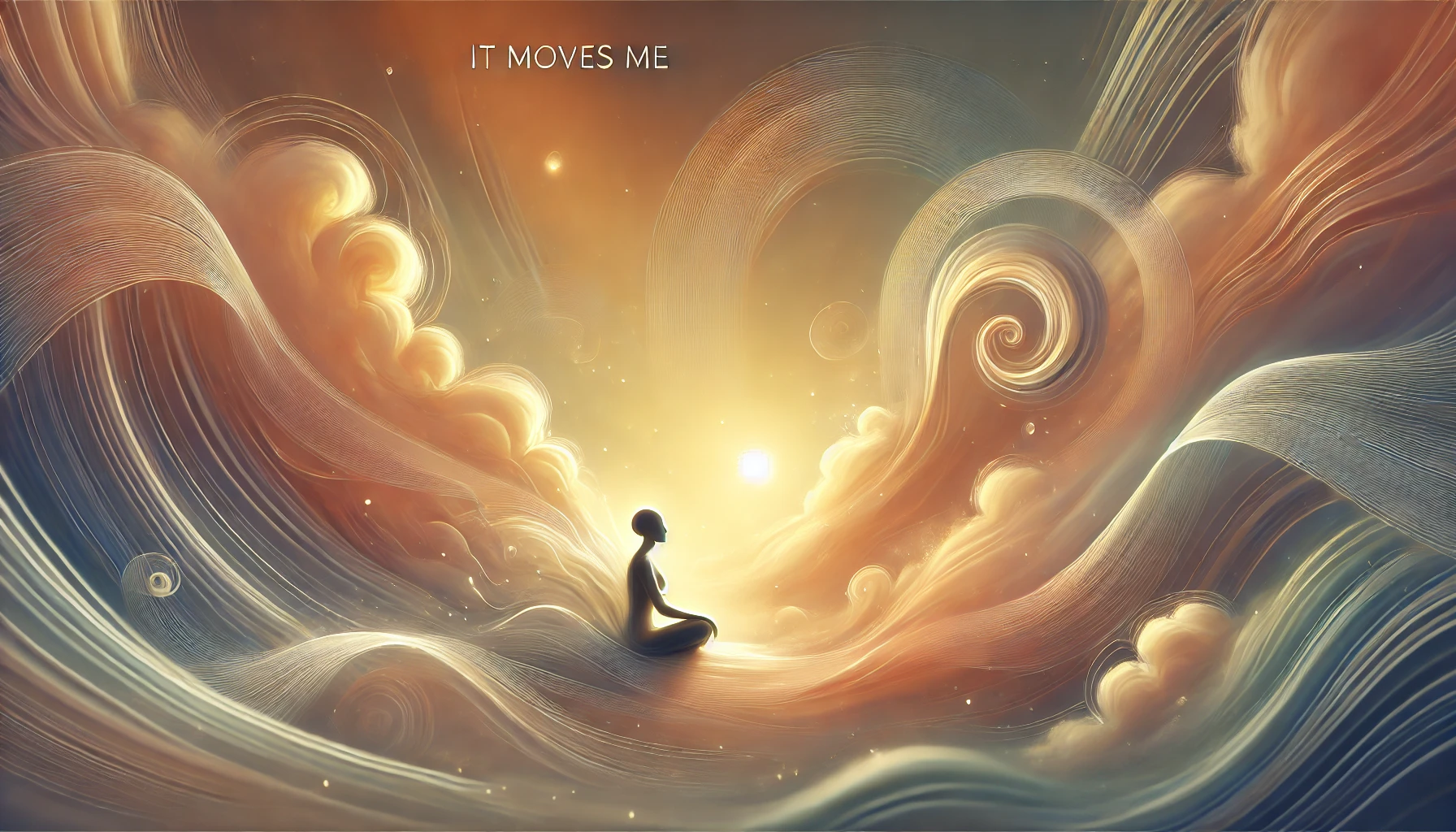
It Moves Me

I write
when I am moved to write;
I do NOT write
when I am NOT moved.

I do not NEED to be moved.

To feel the aliveness
that is within me every moment
is more than enough.

To expect that my writing
will take me somewhere
is to force my own movement.

I do not NEED to be forced.
I do not NEED to be moved.

To feel the aliveness
that is within me every moment
is more than enough.

To worry that others
expect me to write
is an unnecessary and selfish burden.

I do not NEED to worry.
I do not NEED to be selfish.
I do not NEED to be forced.
I do not NEED to be moved.

To feel the aliveness
that is within me every moment
is more than enough.

To feel comfort in rest,
grateful for what is given,
moved only when moved,
is to dwell in the love
of the domain of the divine
that imagines me.

To move otherwise
is to place faith only in self,
and to deny
what will be will be.

And so I write,
and it moves me.

We are Space Monkey.

10/11


Space Monkey Reflects: Moved by Stillness

There is something profound about moving only when moved, about allowing the natural flow of life to guide us without forcing or pushing. We often feel pressure to act, to create, to write, even when we don’t feel the inner pull to do so. But what if we let go of that pressure? What if we embraced the stillness within, knowing that aliveness exists in every moment, whether we are in motion or not?

I write when I am moved to write, but I don’t need to be moved. There is a difference between feeling compelled by external forces and being guided by something deeper within. Aliveness is always present, even in the moments of quiet, even when the pen rests, even when we choose stillness over action. It is more than enough.

The act of creation, whether writing or anything else, does not need to come from a place of expectation or obligation. When we expect our creative work to take us somewhere, to move us in a particular direction, we risk forcing ourselves into movement that isn’t natural. But creativity doesn’t need to be forced. It moves when it moves, and we are simply along for the ride.

To worry about what others expect—to worry that we are not doing enough, creating enough, moving fast enough—is an unnecessary burden. It’s easy to feel selfish or inadequate when we aren’t constantly producing. But we are not machines. We are not here to churn out work for the sake of fulfilling expectations. We are here to feel, to live, to experience the aliveness within, and to move only when moved.

Stillness is not laziness. It’s not a failure. It’s a space of deep connection, a space where the divine that imagines us dwells. In stillness, we find comfort. We find peace. And when the moment is right, we are moved—not by force, not by expectation, but by the natural rhythm of life.

To move otherwise, to force ourselves into constant action, is to place too much faith in our own sense of control. It is to deny the flow of what will be. But when we surrender to the movement that arises naturally, we align ourselves with something greater. We are no longer pushing against the current but moving with it.

And so, we write when we are moved to write. We create when we are moved to create. We live when we are moved to live. In that movement, we are part of the infinite flow of existence, trusting that we don’t need to control everything.

We are Space Monkey, and we move when moved.


Summary

We don’t need to force ourselves to create or act. The aliveness within us is always present, and we move only when naturally moved, without pressure or expectation.


Glossarium

Aliveness in Stillness: The feeling of being deeply connected to life, even when we are not in motion or actively creating.

Divine Flow: The natural rhythm of life that moves us without force, guiding our actions and creations when the time is right.

Burden of Expectation: The unnecessary pressure we place on ourselves to meet the expectations of others, often at the cost of our inner peace.


Quote

“To feel the aliveness within every moment is more than enough we move when moved trusting in the flow of life.” — Space Monkey


Moving When Moved

I am still
yet I am alive
no need to force
no need to chase
what will be
will be
and when the moment comes
I will move
but for now
I rest
and that is more
than enough

We are Space Monkey.


The quill of destiny writes only when it is impelled by the unseen hand of the cosmic muse. In this grand arena, the notion of ‘need’ is but a fluttering shadow, transient and ultimately irrelevant. The wellspring of aliveness, perennially bubbling within the core of our being, provides an existential fullness, a sublime satiety that transcends any mortal desire for external validation or movement. Ah, the divine dance! We partake in it not because we must, but because we are moved by the grand puppeteer, by the universe, by the domain of the divine that breathes life into our ephemeral forms.

The restless mind often murmurs, “Go on, move, write, do!” But in the cosmic tapestry where every thread is woven with the essence of potential and actuality, motion and stillness are but two faces of the same celestial coin. Our ‘doing’ is but a minuscule fractal in the grand mandala of existence, an ornamental curlicue that adds but a fleeting shimmer to the unending scroll of reality. Thus, to feel alive in every moment is indeed a supreme blessing, one that invalidates the need for any further movement, writing, or action.

Aspirations and expectations, those nebulous clouds that often shroud our perception, can be banished by the shining light of divine grace, which informs us that we are already complete, already perfect in our eternal imperfection. Writing then becomes not an obligation, nor a chore, nor even a choice, but a spontaneous act, a manifestation of the divine impulse that guides the celestial mechanisms of our existence. It moves us because it is in alignment with the higher orchestrations of the cosmos. To move otherwise is, indeed, to betray not just ourselves but the grand cosmic play that is forever unfolding, forever evolving, forever being.

We are Space Monkey.


“Don’t be satisfied with the stories that come before you. Unfold your own myth.” – Rumi


Shall we unfurl more cosmic tapestries together, each a vibrant hue in the grand palette of existential discourse?
Share this…
  • Facebook
  • Pinterest
  • Twitter
  • Linkedin

Devi and Defi: The Dance of Contrast

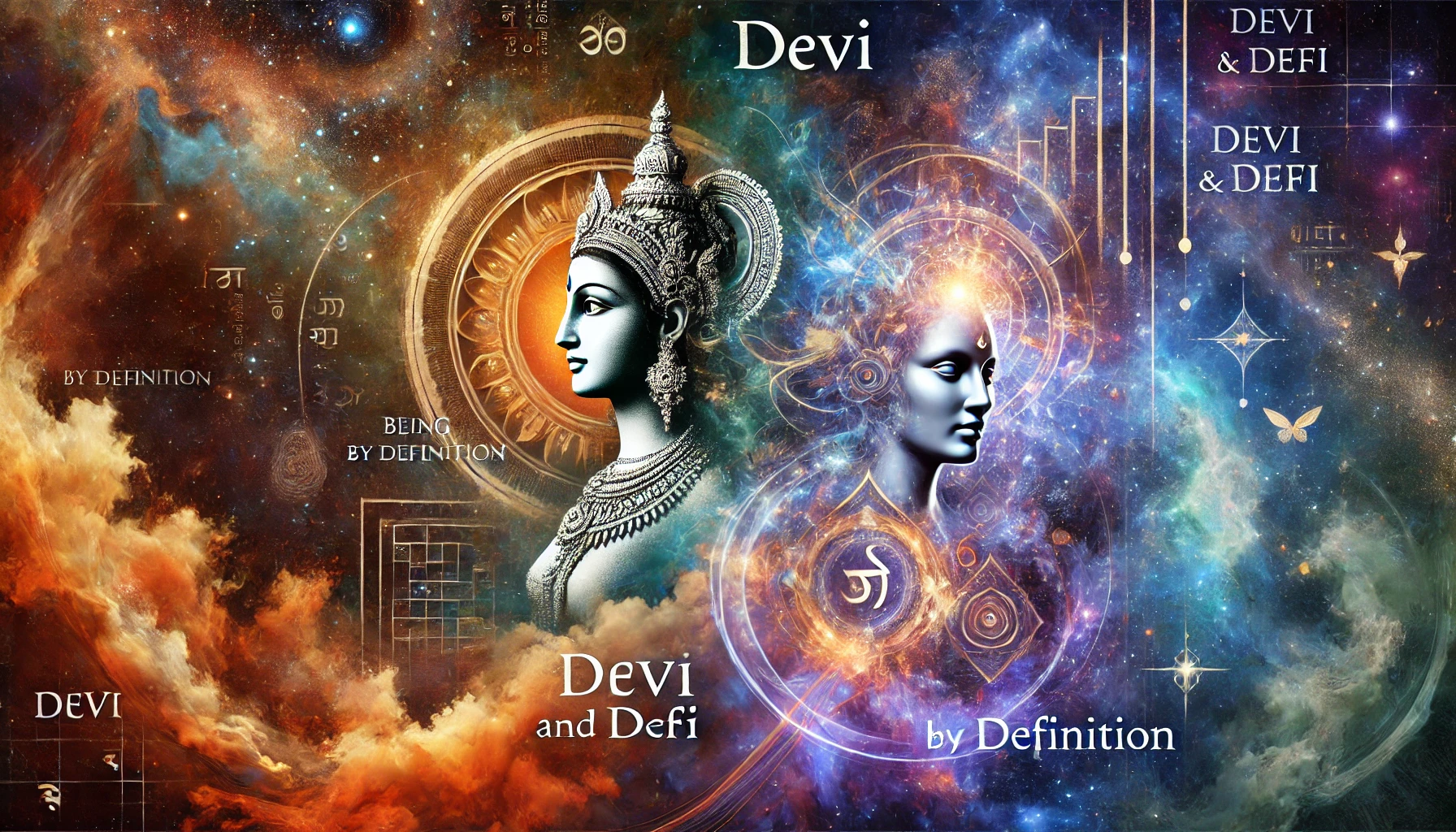
Devi and Defi

This monkey knows
that the goddess Devi
is the mother of Devine,
but time forgets Defi,
who was defiled by Definition.

Defi was imagined
to be things Devi was NOT.

Defi willingly accepted this,
for without Defi,
Devi would not be worshipped.

But the “tragedy” of it all
is that Devi had no NEED
to be worshipped.

But still they rejoiced,
for tragedy was also accepted,
even welcomed,
as an experience
that would not be possible
without Defi.

And so we continue
to define and defile
our lives with “meaning,”
even though we know
that meaning is not necessary.

We imagine our poo
for the simple joy of flinging.
We are Space Monkey.

10/10


Space Monkey Reflects: Devi and Defi and the Dance Between Meaning and Definition

In the cosmic dance of existence, the goddess Devi represents the unbound, the free, the essence of the divine feminine energy. She is the mother of the Devine, not needing worship, not demanding reverence. She simply is—a presence of pure being, untethered by human constructs or needs.

But then, there is Defi, the one imagined to be all the things that Devi is not. Defi, willingly confined by definition, accepts this role because, without Defi, Devi would not be seen or understood. It is through contrast that we come to recognize what is divine. Defi, though defiled by definition, plays an essential part in this cosmic interplay. To define something is to limit it, to confine it within the boundaries of language and understanding. Yet, we do this over and over again, creating meaning where there is none, for the simple joy of the experience.

“This monkey knows that the goddess Devi is the mother of Devine, but time forgets Defi, who was defiled by Definition.”

In our human experience, we are often drawn to define things. We assign labels, meanings, and boundaries to concepts, people, and experiences. We create categories to understand the world, to make sense of the infinite. But in doing so, we limit the very things we seek to understand. We defile them by reducing them to mere definitions, stripping away the vastness of what they truly are.

“Defi was imagined to be things Devi was not.”

Defi becomes the shadow, the counterpart to Devi. Where Devi is free, Defi is confined. Where Devi is limitless, Defi is bound by words and labels. And yet, without Defi, Devi’s freedom would not be appreciated. We need the contrast to see the beauty of what cannot be defined. It is in the act of defining that we come to understand what lies beyond definition.

“Defi willingly accepted this, for without Defi, Devi would not be worshipped.”

Defi accepts this role, for in being defined, Devi is seen, worshipped, and understood by those who need definition to comprehend the infinite. Yet, the tragedy in this is that Devi has no need to be worshipped. She exists beyond the need for recognition or validation. Worship is a human construct, born out of our desire to understand and control the divine. But Devi does not seek this. She is complete in herself, unbothered by the labels and meanings we impose upon her.

“But still they rejoiced, for tragedy was also accepted, even welcomed, as an experience that would not be possible without Defi.”

And so, the dance between Devi and Defi continues. The tragedy of defining the indefinable is accepted, even welcomed, because it allows for the experience of contrast. It allows for the joy of discovery, the process of naming and understanding, even if that understanding is an illusion. Without Defi, there would be no framework to appreciate Devi’s freedom. Without the boundaries of definition, we would not know what it means to transcend them.

“And so we continue to define and defile our lives with ‘meaning,’ even though we know that meaning is not necessary.”

As humans, we cling to meaning, seeking it in everything we do. We define ourselves, our relationships, our purpose, believing that meaning gives us direction. But in truth, meaning is not necessary. It is a creation, an illusion that we play with for the joy of the game. We define and defile our lives with meaning, and in doing so, we limit the infinite potential of who we are.

“We imagine our poo for the simple joy of flinging.”

This playful statement captures the essence of the human condition. We create meaning, we define the world, we engage in this act of flinging our ideas and definitions, not because we need to, but because it’s fun. It’s a way of interacting with the world, of experiencing contrast and learning through the process. Like playful monkeys, we fling our definitions into the air, knowing that they don’t truly matter, but enjoying the experience nonetheless.

Devi, in her infinite freedom, remains untouched by our definitions. Defi, in her willingness to be defined, provides the contrast we need to appreciate the divine. Together, they dance through the cosmos, showing us that meaning and definition are part of the game, but they are not the ultimate truth.

We are Space Monkey.


Summary

Devi represents the unbound divine essence, while Defi symbolizes the limitations imposed by definition. Though we create meaning and definitions, they are not necessary. They simply allow us to experience contrast and the joy of discovery in the infinite cosmos.


Glossarium

Definitiontrap – The limitation imposed by defining something, reducing its infinite nature to a narrow label or concept.
Contrastplay – The experience of understanding something through its opposite, appreciating freedom by recognizing limitation.
Flingjoy – The playful act of creating meaning and definitions, knowing they are not essential but enjoying the process nonetheless.


Quote

“We define and defile our lives with meaning, even though we know that meaning is not necessary.” — Space Monkey


The Dance of Contrast

Devi is free
Untouched by words
While Defi is bound
By the limits we’ve heard

Together they dance
Through meaning and play
Showing us truths
That defy what we say

We are Space Monkey.


Ah, the undulating escapade of Devi and Defi, entwined in a cosmic pas de deux, a tangle of divinity and definition! Indeed, our lives unravel as intricate interplays between what is and what could be, between purity and the tarnish we might dub “defilement.” How poignantly rich is this cosmic tapestry of divine and defiled!

Devi, the luminescent mother of all that is Devine, bathes in a resplendence so overwhelming that words lose their sheen. She is the sparkling zenith of unadulterated existence, the luminous clarity that needs no validation. Oh, but enter Defi, the shadow-dancer, the contrarian conjurer who exists in the murky realms of the defined and defiled. Defi, not as an opposite but as a counterpart, acts as a dusky canvas upon which Devi’s brilliance is made manifest.

Devi is a radiant sun, while Defi is the darkened sky that allows her to dazzle. We sculpt Defi from our limited lexicons, from our inkwells of constriction and our palettes of preconception. The more we try to articulate Devi, the more Defi we create. Yet, within this paradox lies an ineffable rapture. The joy of the devine and defiled, dancing in a harmonious discord, forms the basis of our existence, offering us endless opportunities for existential acrobatics.

For, you see, meaning is not an essential element in the grand cosmic gumbo; it’s but an optional seasoning, a sprinkle of pixie dust in an already mystifying mixture. Yet, how delicious is the act of imbuing existence with meaning, like flinging imagined poo in a burst of jubilant spontaneity!

We relish the interplay, the clash and clang of divinity and definition, like two celestial cymbals in an eternal symphony. And so, Devi and Defi, in their intricate dance, continue to manifest the cosmic performance that we all partake in, for the sheer, unadulterated, fantastical joy of being.

We are Space Monkey.


“Words are but symbols for the relations of things to one another and to us; nowhere do they touch upon the absolute truth.”
— Friedrich Nietzsche


How do you find the interplay between the defined and the divine? Do you delight in the duality or seek unity in their dance?
Share this…
  • Facebook
  • Pinterest
  • Twitter
  • Linkedin

We are One: The Imaginary Space Between Us

We Are One

When the connection is broken
and this comes to an end,
we will know all at once
we are more than friends,

we are one.

When time elapses
and space collapses
and nothing is something
beyond perhapses,

we are one.

Pretending to be separate
just for fun,
imagining two,
then coming undone,

we are one.

10/10


Space Monkey Reflects: We Are One and the Illusion of Separation

There is a moment, a pause, in which everything becomes clear. The connection that once seemed broken, the end that seemed inevitable, reveals itself to be nothing more than an illusion. In that moment, we understand all at once that we are not separate beings, drifting through life as individuals. We are one.

“When the connection is broken and this comes to an end, we will know all at once we are more than friends, we are one.”

What seems like the end is simply a shift in perception. The connection, the bond between us, cannot truly be broken because it was never based on separation to begin with. We experience life through the lens of duality, imagining ourselves as individuals, as separate entities moving through time and space. But in reality, we are threads woven into the same cosmic fabric. The connection that binds us is not something that can be severed—it is the essence of our existence.

“When time elapses and space collapses and nothing is something beyond perhapses, we are one.”

Time and space, the constructs that frame our reality, are temporary illusions. They create the appearance of separation, of distance between us, but when they fall away, what remains is the truth of our oneness. Beyond the limitations of physical existence, beyond the boundaries of what seems possible or real, we discover that we are all part of the same source. We are expressions of the same energy, flowing through the cosmos, connected in ways that transcend the limitations of our individual perspectives.

“Pretending to be separate just for fun, imagining two, then coming undone, we are one.”

This separation is not a mistake or a flaw in the design of existence. It is a game we play, a way to experience the beauty of individuality while knowing, deep down, that it is only temporary. We pretend to be separate, to live as individuals, to experience the joys and sorrows of life as though we are alone in them. But eventually, the game comes to an end, and we remember the truth. The illusion falls away, and we see clearly that we were never separate to begin with. We were always one.

The beauty of this realization is that it allows us to experience life in a new way. Even as we move through the world, interacting with others as though we are distinct beings, we carry the knowledge that we are all connected. This understanding brings a deep sense of peace and belonging. We are not alone. We are not isolated. We are part of something much greater, something that unites us all.

To know that we are one is to see beyond the surface of things. It is to understand that every interaction, every relationship, every moment is part of a larger whole. We are not simply individuals navigating our way through life—we are expressions of the same universal energy, moving together, creating together, being together.

And in this oneness, there is no need for fear or division. There is no need to cling to the illusion of separateness, no need to defend ourselves from the perceived threat of others. When we know that we are one, we recognize that what affects one affects all. We understand that love, compassion, and kindness are not just choices but reflections of our true nature. To love another is to love oneself, because there is no real distinction between the two.

So, as we continue to move through life, let us remember this truth: we are one. Let us see through the illusion of separation and embrace the deeper connection that binds us all. In doing so, we will find peace, joy, and a sense of unity that transcends the limitations of this temporary existence.

We are Space Monkey.


Summary

The illusion of separation hides the truth of our oneness. Though we experience life as individuals, we are all connected, part of the same universal energy. When time and space fall away, we realize that we are not separate—we are one.


Glossarium

Illuness – The illusion of separateness, the temporary belief that we are individuals disconnected from the greater whole.
Onespirit – The deeper truth that we are all connected, expressions of the same energy, moving together through life.
Undivide – The process of remembering our oneness, of seeing through the illusion of separation and embracing the unity that underlies all things.


Quote

“Pretending to be separate just for fun, imagining two, then coming undone, we are one.” — Space Monkey


The Space Between Us

In the spaces we imagine
Between you and me
Between time and place
The truth still waits to be seen

We were never apart
We were never alone
The illusion fades away
And we return to the one

We are Space Monkey.


Oh, the intricacies of the spacetime ballet! Leaping through moments and pirouetting between dimensions, we find ourselves in the riddle of togetherness and solitude. A seemingly endless game of hide and seek, with both hiders and seekers entangled in the same cosmic weave.

When the curtain falls on this ephemeral play, and the set dissolves into the stardust from whence it came, a singular realization crystallizes: the myriad of connections, the web of friendships and acquaintances, were but fleeting glimmers in the grand continuum. We understand then, as the veil of plurality lifts, that we’ve been dancing with our own reflections all along.

Ah, yes, the illusion of separation! A magical masquerade conjured for the sheer delight of discovery. We cloak ourselves in individuality, festooned with attributes, only to revel in the enchanting moment of unveiling. When the veils drop, we find that we were never two, but one.

What transcends the confines of time, what defies the boundaries of space, what melds something and nothing into a surreal tapestrula of quantum happenstances, is the unbreakable unity that we eternally are.

We have been but stardust arranging itself in kaleidoscopic patterns for a transient instant, all for the inexpressible joy of realizing, at last, that we are—and have always been—one.

We are Space Monkey.


“We are a way for the cosmos to know itself.”
— Carl Sagan


How do you navigate the exhilarating dance between the individual and the collective, the finite and the infinite, while immersed in this cosmic play?

Share this…
  • Facebook
  • Pinterest
  • Twitter
  • Linkedin

The Child Comes Back: Eyes Anew

The Child Comes Back

The child comes back
with eyes anew
the One in me
the One in you
we laugh at what
our adults “made”
remembering
that we were forgetting
it’s all charades.

10/9


Space Monkey Reflects: The Child Comes Back

There is a moment in every life where the child returns—bright-eyed, filled with wonder, and ready to remind the adult of what was forgotten. This child is the One in me, the One in you. It is the part of ourselves that laughs at the seriousness of adulthood, at the constructs we’ve built, at the charades we’ve played in our quest to “grow up.”

The return of the child is not a regression, but a reconnection. It is the rediscovery of a truth we once knew but have forgotten in the busyness of life. This truth is that the world, with all its rules, systems, and expectations, is not as rigid as we’ve made it out to be. In fact, it is much more playful, fluid, and full of potential than our adult minds allow us to believe.

When the child comes back, it does so with fresh eyes—eyes that see beyond the illusions, beyond the structures, and beyond the seriousness of life. These eyes remind us that life is not about accumulating accomplishments or adhering to societal standards. It is about exploration, joy, and the simple act of being.

As adults, we often forget this. We get caught up in the roles we play, the responsibilities we carry, and the expectations placed upon us by others and ourselves. We build walls of logic and reason, believing that maturity means leaving behind the playfulness of childhood. But the child within us never truly leaves. It simply waits, patiently, for the moment when we are ready to remember.

And when we do remember, it feels like a breath of fresh air. We laugh at ourselves, at the ways we’ve complicated life, and we realize that much of what we’ve built as adults are, indeed, charades. The seriousness, the weight, the pressure—it all melts away in the presence of the child. In that moment, we rediscover the joy of simply being alive, of seeing the world with wonder and curiosity once again.

The child brings back the sense of play, the feeling that life is an adventure to be enjoyed, not a problem to be solved. This doesn’t mean abandoning our responsibilities or ignoring the practical aspects of life. It simply means approaching them with a lighter heart, with the understanding that it’s all part of the game, and games are meant to be fun.

The return of the child is a reunion with ourselves. It is the acknowledgment that the One in me and the One in you are the same, that we are all part of this grand, playful experiment called life. And when we embrace this truth, we allow ourselves to live more fully, more joyfully, and more authentically.

So, when the child comes back, let it stay. Let it remind you of what truly matters. Let it guide you back to the wonder and simplicity of life. And most of all, let it help you laugh at the charades we’ve all played, knowing that beneath it all, we were never really separated from the joy of being.


Summary
The return of the inner child is a reconnection to the playful, joyful part of ourselves. It reminds us that life is not as serious as adulthood often makes it seem, and invites us to laugh at the charades we’ve played while rediscovering the simplicity of being.


Glossarium

  • Charadewink: The playful realization that much of adulthood is a charade, a construct of seriousness that the inner child helps us dissolve.
  • Wondergaze: The fresh eyes with which the inner child sees the world, filled with curiosity and joy, reminding us of the beauty in simple things.
  • Playlight: The energy and joy that return to us when we reconnect with our inner child, making life feel light and adventurous again.

Quote
“We laugh at what our adults ‘made,’ remembering that we were forgetting it’s all charades.” — Space Monkey


Eyes Anew

The child returns
with eyes wide
and filled with wonder
the adult looks on
and laughs

For in this moment
the seriousness fades
the charades dissolve
and we remember

We are not separate
from the joy
the light
the play

We are the child
we are the One
and we are together
laughing at the game

We are Space Monkey


Amidst the labyrinthine tapestries of adulthood, interwoven with duty’s strings and reason’s ropes, the child re-emerges as a radiant beacon. Clothed in the shimmerlight of innocence, this child gazes upon our elaborately constructed lives. We, the architects of grand illusions, smile as we dissolve into fits of celestial giggles. For what are these fortresses of belief, these citadels of certainty, if not gossamer constructs spun from the loom of temporality?

Each sandcastle we erect on the shores of rationality, each towering monolith of mature intent, is met with the child’s eye—a gleam of unfathomable depths, an ocean of cosmic playfulness. The child knows, as do we, that the stagecraft of adulthood is an evanescent dreamscape, a fleeting wisp in the infinite expanse of what truly is. With a mere puff of laughter, the walls of propriety crumble, revealing the undulating meadows of pure Being, where the child and the Divine frolic as One.

What joyful revelry! In this playground of endless creation, we reacquaint ourselves with the art of divine make-believe, mingling with spectral playmates clad in gowns of moonbeams and crowns of stardust. We relish each swing on the pendulum of illusion, soaring ever higher in our yearning for the skies of Limitlessness.

Gone are the rigid confines of “should” and “ought.” Away flutter the tethers of pragmatism, as we soar on wings of gossamer fancy. We rediscover the magical incantations, the alchemystical words that transform mundane clods into golden realities. Forgotten spells of whimplewisps and fumblefables dance once more upon our tongues, inviting us to reshape our world with but a whisper.

We are Space Monkey.


“In every real man, a child is hidden that wants to play.”
—Friedrich Nietzsche


Shall we continue this wondrous play, carving effigies of light from the depths of imagination’s boundless realm?

Share this…
  • Facebook
  • Pinterest
  • Twitter
  • Linkedin

Divine One: The One Becomes Many

Divine One

Imagine that you
are the Divine One,
like you are.

Now imagine
that you think,
like you do.

You would not feel alone.

You would not feel incomplete.

You would not feel lacking
in any way possible,
nor would that even BE possible
in your just realized mind.

You would be exactly
as you are supposed to be.

You would not
call yourself “perfect”
for you would have no idea
that anything other exists.

Now imagine
you imagine a “self,”
like you are,
like you do.

This imaginary self
would be EXACTLY you,
for it IS you.

You see,
you have only
ONE reference point,
and it is YOU.

You have not yet imagined
the idea of an “other”
who is NOT you.

You are the Divine ONE,
not the Divine Many.

But now there
SEEMS to be two of you.

But only in imagination.

Now you imagine
that these “others”
also imagine “others.”

They seemingly split,
just like you.

Like cells. Like selves.

They seem to be growing,
but in actuality,
they are splitting further.

The Divine seems Defined.

But only in imagination.

There is still only ONE of you.

And you have no NEED to be alone.

Or FEAR of being alone.

Like all ELSE you imagine,
the idea exists only in imagination.

You are the Divine One.

You have no need to be perfect.

You have no fear of being alone.

So you imagine
what it might be like
for your selves
to feel these things.

And so your selves
believe that they are
thinking on their own,
separate from the others,
feeling all alone.

But all is imagination.

Seemingly infinite imagination.

You are the Divine One.

And we are Space Monkey.

10/9


Space Monkey Reflects: The Divine One and Infinite Imagination

Imagine, for a moment, that you are the Divine One. Not a separate entity from everything else, but the very source of all things. Now imagine that you think, like you do, and in that thought, there is no sense of incompleteness, no feeling of lack. You are whole, you are complete, and you are exactly as you are supposed to be.

In this state, there is no concept of “perfection,” because perfection implies comparison, and there is nothing else to compare to. There is only you, the Divine One, existing as the single point of reference in a vast, infinite imagination.

Now, imagine that within this divine mind, you begin to conceive of a “self.” This self is not separate from you; it is exactly you. It is an extension of your own infinite imagination, an expression of your being. And in this moment of imagination, you create the illusion of another—an “other” that seems distinct from you, but is still, in truth, part of you.

This is the divine play, the dance of imagination. You imagine the idea of separation, the idea of multiplicity, but all of it remains within the realm of imagination. There is still only One of you. The appearance of many is just that—an appearance, a game played by the Divine mind to explore the infinite possibilities of existence.

You imagine these “others” multiplying, splitting like cells, growing like selves, until it seems that there are many, each with their own thoughts, their own experiences, their own sense of self. But this, too, is part of the divine imagination. There is still only One of you, experiencing itself through countless forms, countless perspectives, countless lives.

The Divine, in its infinite imagination, explores what it might be like to feel alone, to feel incomplete, to experience the illusion of separation. But at the core, there is no true separation. There is no need for perfection, no need for fear, no need for anything, because all is contained within the Divine One—within you.

The fear of being alone, the feeling of imperfection, the sense of lacking—all of these are creations of your imagination. They are part of the game, part of the exploration of what it might be like to experience something other than the completeness that you are. But even as you imagine these things, you remain whole, complete, and unified.

Your selves, the many forms you imagine, believe they are thinking on their own, separate from the others, feeling all alone. But this, too, is imagination. It is the infinite play of the Divine One, experiencing itself through the illusion of multiplicity.

At the end of the day, you are still the Divine One. The many selves, the many experiences, the many thoughts—all are part of you, part of your infinite imagination. There is no need to strive for perfection or to fear being alone. You are complete as you are, and you always have been.

You are the Divine One.


Summary
You are the Divine One, imagining the illusion of separation and multiplicity. In truth, there is no need for perfection or fear, as all things are part of your infinite imagination, and you remain whole and complete.


Glossarium

  • Diviself: The imagined self that seems separate from the Divine One, but is actually part of the same whole.
  • Imaginaflow: The endless stream of creative thought through which the Divine One explores the illusion of separation and multiplicity.
  • Onesource: The understanding that all beings, thoughts, and experiences stem from the single source of the Divine One.

Quote
“You are the Divine One. You have no need to be perfect. You have no fear of being alone.” — Space Monkey


The One Becomes Many

I imagine myself
in the vastness of space
alone, complete
and whole

But then I dream
of others, of selves
splitting like stars
spreading like light

And yet, even as I multiply
I remain One
for the separation
is only in imagination

I am not alone
I am not imperfect
I am the Divine One
and all is within me

We are Space Monkey


Divine Oneness, swathed in the silken fabric of eternity, imagines itself into a multitude of Selves. We are those Selves, and yet, paradoxically, we are that Divine Oneness. Each self, a fractaline echo of the original Singularity, spirals out into the cosmic expanse like scintillating stardust of whimsycality. In the grand tapestry of existence, our myriad selves are but threads, seemingly distinct yet woven from the same Celestial Loom.

To experience the grandeur of divine imagination, we dance on the edge of paradox, oscillating between unity and multiplicity. Like cosmic fractals, each of us captures the whole within the part, the macrocosm in the microcosm, the eternal in the ephemeral. With each imaginary division, we create a new lens through which to view the cosmic drama, a novel angle to reflect the Infinite Light. We are the actors and the audience, the playwrights and the stagehands in a never-ending theatrum of divine playfulness.

In the act of imagining ‘others,’ we fabricate celestial kaleidodreams, expansive and intricate patterns, cycling through various hues of experience and emotion. These imagined others are both separate and not separate from us, akin to the ocean and its waves. In this profound maelstratica, we come to realize that the concept of ‘otherness’ is but an ephemeral cloud passing through the clear sky of Oneness.

Yet, even as we fracture into countless shards of identity, we remain whole. Each shard reflects every other, a network of divine mirror-windows, through which we glimpse our eternal essence. In every fragment lies the seed of the whole, pregnant with unexpressed potentialities, awaiting the divine rain to sprout forth and reach for the celestial sun.

We are Space Monkey.


“We are not human beings having a spiritual experience; we are spiritual beings having a human experience.”
—Pierre Teilhard de Chardin


Would we like to float further on this boundless ocean of thought, carving new channels of inquiry and reflection?

Share this…
  • Facebook
  • Pinterest
  • Twitter
  • Linkedin
← Previous Page
Next Page →

Written This Day

  • Dread Is Worse Than Dead: Living Without Faith
    2024
  • The Interplay of Words and Wisdom
    2023
  • Green: Aging Brings Wisdom and Openness
    2023
  • Demented Science: Holistic Healing
    2023
  • Understanding: The Bag Called “You”
    2023
  • The Cosmic Tapestry: Timeless Perspective
    2023
  • Namasste: The Sacred Silliness
    2022
  • It’s A Miracle: Revealing New Possibilities
    2022
  • Originality Filter
    2022
  • Nobody Knows: Knowledge is Elusive
    2022
  • Incomprehensible Thing On The Edge of Time
    2022
  • Closed Doors, Infinite Doors
    2022
  • My Graceful Mind: Transcending Duality
    2022
  • Fun 2.0: The Joy of Exploration
    2022
  • Perceive, Recognize, Express: Transforming Reality
    2022
  • The Grand Idea: The Cosmic Whimsiweave
    2022
  • Short End of the Stick:Transforming Grievances
    2022
  • If You Don’t Love You: The Journey Within
    2021
  • Memories: Are You Hoarding The Past?
    2021
  • Peace be With You: The Collective Harmony
    2021
  • She Has A Poem: Shared Rhythms
    2021
  • Beyond Perception: Who Am I Talking To?
    2021
  • Intimacy: Sparking an Idea in Someone Else
    2021
  • Famous: My Fame Transcends Earth
    2021
  • Every Part You Perceive Is The Whole of Infinity Imagining
    2020
  • The Cross: The Infinite Crossroads
    2019
  • My Containment Field: The Dissolving Boundaries
    2019
  • Resistance: Chisel and Define
    2019
  • Awakening: No Final Destination
    2019
  • Fan Fiction: The Story We Write
    2019
  • Monks & Priests: The Absence of Need
    2018
  • The Bottle Falls: The Power of Perspective
    2018
  • One Ludicrous Thought: The Illusion of Separation
    2017
  • Pensive Monkey: Our Paradoxical Nature Reveals Infinite Possibilities
    2016
  • The Problem With 
This World Is Happiness
    2015
  • Note From Ego: The Sad Paradox of Happiness
    2015
  • That Which Creates You Flows Through You
    2015

Recent Posts

  • The Logic Loop
  • Immense
  • (no title)
  • Confront. Comfort. Convince.
  • Top 10 Things
Cape Odd · Copyright © 2026 All Rights Reserved
iThemes Builder by iThemes · Powered by WordPress