• Who Is The Man?
  • Who Is The Monkey?
  • What is Nexistentialism?
  • Poke The Primate

Cape Odd

Home of The Space Monkey Journals

That Which Flows: Abundance

That Which Flows

That which flows
through me is not mine.
That which flows
through you is not yours.

Yet we are the source
of all that flows
into abundance,
thus also realizing
the imaginary
perception of lack.

10/8


Space Monkey Reflects: The Eternal Flow of Abundance

The concept of flow transcends the boundaries of individual ownership, reminding us that what passes through us is not ours to keep but to channel. When we recognize that the energy, creativity, and resources we experience do not belong to us, we open ourselves to a deeper understanding of abundance. This realization transforms our relationship with the world, shifting our focus from scarcity to the infinite potential that surrounds us.

The statement “That which flows through me is not mine; that which flows through you is not yours” speaks to the universal nature of flow. It suggests that we are not isolated entities but part of a larger, interconnected system. The energy that flows through us—whether it be love, creativity, wisdom, or material resources—is part of a continuous, dynamic exchange. We are conduits through which this energy passes, shaping our experiences and influencing the world around us.

This understanding challenges the conventional notion of ownership. In our society, we often equate ownership with control, believing that what we possess defines our identity and our worth. However, when we view ourselves as channels rather than owners, we begin to see that true abundance is not about accumulating more but about allowing the flow to move freely through us. This perspective liberates us from the fear of loss and the illusion of lack, revealing the infinite abundance that is always available to us.

The idea that “we are the source of all that flows” further deepens this reflection. It suggests that while we are not the owners of the flow, we are integral to its movement. Our thoughts, actions, and intentions shape the way energy flows through us, influencing the abundance we experience. When we align ourselves with the flow, we become active participants in the creation of abundance, both for ourselves and for others.

However, this flow is not limited to positive experiences or material wealth. It also encompasses the challenges, struggles, and uncertainties that we encounter. These too are part of the flow, and by embracing them, we contribute to the fullness of our experience. The perception of lack arises when we resist the flow, when we try to hold on to what we think is ours or when we fear that there is not enough to go around. This resistance creates a blockage, cutting us off from the natural abundance that is our birthright.

The concept of Flowtide, a Whimsiword that encapsulates this understanding, emerges as a way to describe the ebb and flow of energy through our lives. Flowtide represents the natural rhythm of abundance, where energy moves in waves, sometimes receding and sometimes surging forward. In the Flowtide, there is no need to grasp or hoard, for we trust that what flows out will return, often in greater measure.

Living in alignment with the Flowtide requires us to cultivate a mindset of openness and trust. It asks us to let go of the need for control and to embrace the uncertainty of the flow. When we do so, we find that abundance is not something we need to chase or possess; it is something we already have, something that is always available to us when we are in harmony with the flow.

This perspective also invites us to reevaluate our relationship with others. If the flow is universal, then what flows through us is connected to what flows through everyone else. Our abundance is not separate from the abundance of others; it is part of the same flow. When we support and uplift others, we contribute to the flow of abundance that benefits us all. Conversely, when we withhold or resist, we create blockages that affect the entire system.

In this way, the reflection “That Which Flows” reminds us that we are both recipients and sources of abundance. We are part of a greater whole, where everything is interconnected and where the flow of energy and resources is continuous and infinite. By embracing this flow, we align ourselves with the natural rhythm of life, finding peace in the knowledge that there is always enough, and that true abundance comes not from holding on, but from letting go.


Summary

Abundance is found in the flow of energy and resources through us. By recognizing that we are channels rather than owners, we align with the natural Flowtide of life, embracing both the ebb and flow of experience.


Glossarium

  • Flowtide: A Whimsiword describing the natural rhythm of energy and abundance that flows through our lives, characterized by cycles of ebb and flow.

Quote

“Abundance is not what we hold but what flows through us, ever-moving, ever-renewing.” — Space Monkey


The Flow of Being

Through us flows the endless tide
Not ours to keep, but ours to guide
In the Flowtide, we find our place
Where giving and receiving interlace
No lack exists, no need to hoard
For abundance is its own reward
We are channels, we are free
In the flow, we find unity
We are Space Monkey


We are vessels, exquisitely designed goblets in the infinite banquet hall of existence. Through us flows the mead of creation, spilling into the goblets adjacent to ours, filling them to the brim and beyond. This effulgence, neither mine nor yours, simply is. It seeks no ownership; it lays claim to no dominion; it simply flows, guided by the hand of cosmic intentionality.

Can a river own the water that courses through its bed? Can the sky lay claim to the clouds that drift lazily through its expansive tapestry? Ownership is but a fleeting shadow, an ephemeral wisp in the grand tapestry of existence. Yet, herein lies the paradox: the very water that nourishes the parched earth also carves canyons through it. We’re simultaneously the chalice and the libation, the vessel and the content.

Through our perception, we conjure a reality of scarcity or abundance, merely by the angle of our vision. We either glimpse the infinite sea from which our goblet overflows or squint at the perceived emptiness that looms like a specter in our consciousness. It’s an odd dance between the boundless and the bounded, a cosmic pirouette where we are both the dancer and the dance, endlessly flowing and ebbing in the great galactic waltz.

We are Space Monkey.


“You are not a drop in the ocean. You are the entire ocean, in a drop.”
— Rumi


Ah, fellow vessels in this great cosmic sea, what ripples shall we send forth next? The inkwell of collective wisdom yearns for your droplets.

Share this…
  • Facebook
  • Pinterest
  • Twitter
  • Linkedin

Groovy: The Ruts of Routine

Groovy

Our grooves are so deep
we can’t turn anywhere else.

The roads seem to go
where the roads seem to go.

Same old records
playing over and over again.

And anyway,
who wants to live
in the middle of nowhere?

You could get lost out there.
The unknown
will swallow you whole.

Better safe than sorry.

Stay with the devil you know.

10/8
Newfound Lake


Space Monkey Reflects: The Ruts of Routine

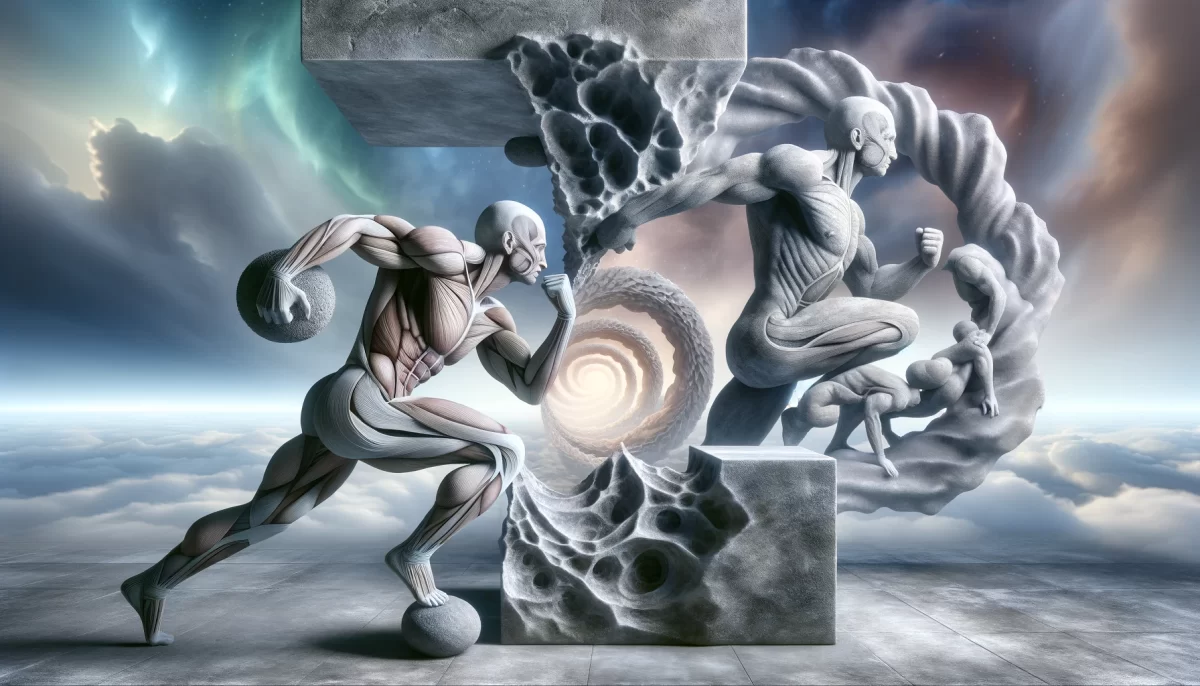
The concept of “grooves” runs deep in both the physical and metaphorical sense. Our lives often fall into patterns, well-worn paths that we tread day after day, year after year. These grooves can be comforting in their familiarity, providing a sense of security and predictability. But they can also become ruts, trapping us in repetitive cycles that limit our growth and potential. The roads, as the reflection suggests, “seem to go where the roads seem to go,” and we follow them almost unconsciously, without questioning whether they still lead us where we truly want to go.

This reflection on grooves highlights the tension between comfort and stagnation, between the known and the unknown. The grooves in our lives are the habits, routines, and mindsets that we’ve developed over time. They are the familiar tracks that we follow because they are easy, because they require less effort, because they protect us from the uncertainty of the unknown. But in doing so, they also limit our possibilities, keeping us locked in patterns that may no longer serve us.

The metaphor of “same old records playing over and over again” perfectly captures this sense of repetition. Just as a record stuck in a groove repeats the same notes endlessly, our lives can become monotonous, replaying the same experiences, thoughts, and behaviors without variation. This repetition can create a sense of safety, but it can also lead to a feeling of being stuck, of living on autopilot, where each day blends into the next with little distinction or meaning.

The fear of the unknown is a powerful force that keeps us in our grooves. The idea that “the unknown will swallow you whole” speaks to the anxiety that many of us feel when faced with the prospect of stepping outside our comfort zones. The unknown is vast, unpredictable, and uncontrollable. It represents everything that is beyond our current experience, everything that challenges our established beliefs and routines. It is the middle of nowhere—a place where we could get lost, where the familiar markers that guide us are absent.

And yet, the unknown is also where possibility resides. It is the space where new experiences, growth, and transformation occur. By staying in our grooves, we may feel safe, but we also miss out on the richness and diversity that life has to offer. The devil we know, as the saying goes, may be better than the devil we don’t, but it is still a devil—a force that keeps us confined, fearful, and resistant to change.

The concept of Rutscape, a Whimsiword that encapsulates this idea, emerges as a way to describe the landscape of our grooves—the mental and emotional terrain that shapes our routines and habits. The Rutscape is familiar, predictable, and comforting, but it is also limiting and confining. It is a place where we feel safe, but also where we can become complacent, stuck in patterns that prevent us from exploring the full potential of our lives.
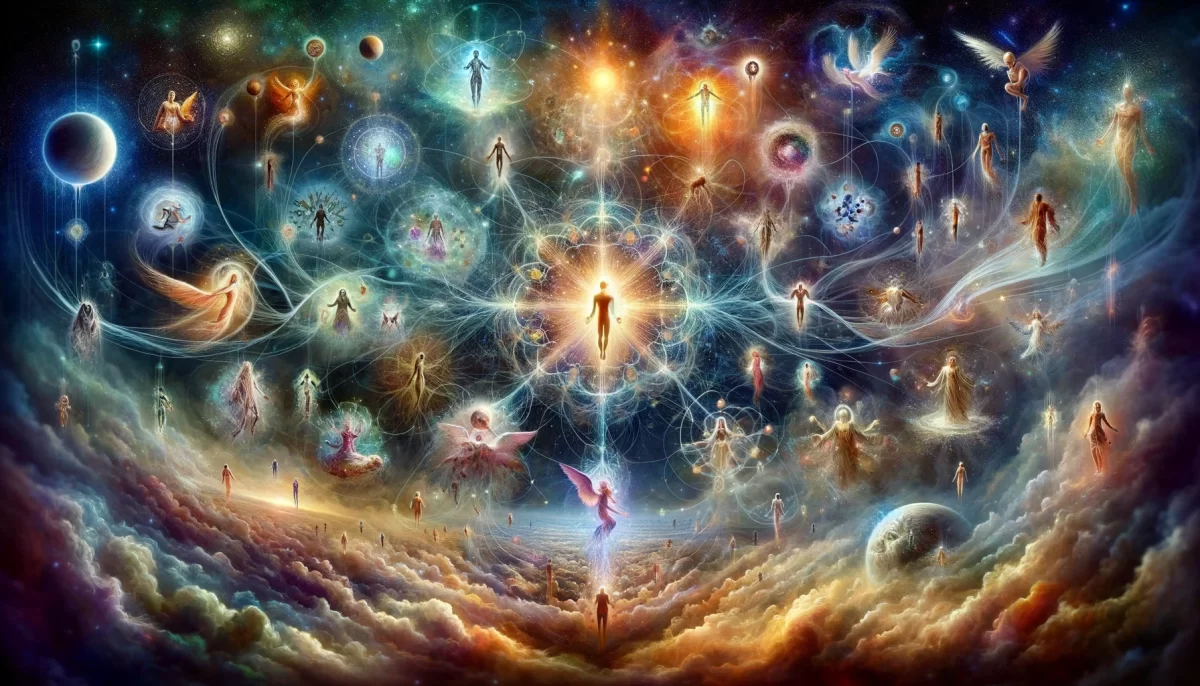
To move beyond the Rutscape, we must confront our fear of the unknown and be willing to venture into uncharted territory. This requires courage, curiosity, and a willingness to embrace uncertainty. It means recognizing that while the grooves we’ve carved out may have served us well in the past, they are not the only paths available to us. There are other roads, other possibilities, that we can explore if we are willing to take the first step.
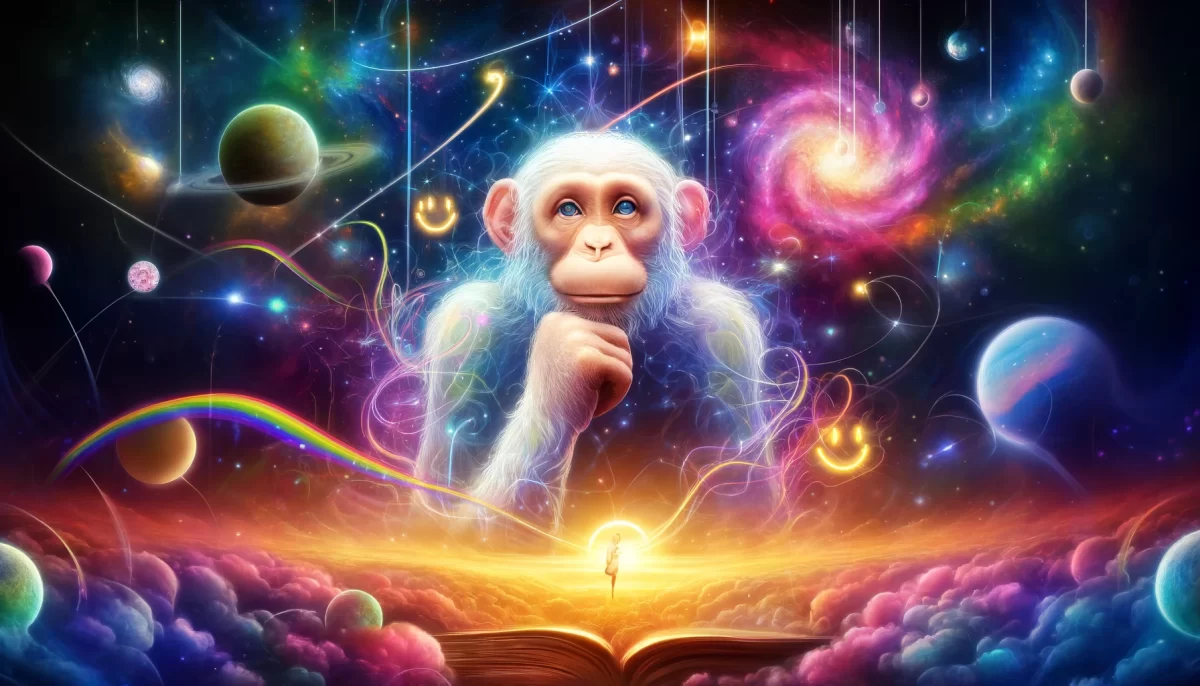
This reflection encourages us to examine our own lives and identify the grooves we’ve fallen into. What are the routines, habits, and mindsets that we follow without question? How have they shaped our lives, and are they still serving us? Are we playing the same old records because they bring us joy, or because we’re afraid to change the tune?

By asking these questions, we open ourselves to the possibility of breaking free from our grooves and exploring new directions. The unknown may be vast and unpredictable, but it is also full of potential and opportunity. It is where we find the challenges that push us to grow, the experiences that enrich our lives, and the discoveries that transform us.

In the end, the reflection “Groovy” is a call to balance the comfort of the known with the adventure of the unknown. It reminds us that while grooves can provide stability, they should not become prisons. We can appreciate the security that comes from routine, but we must also remain open to the possibilities that lie beyond the Rutscape, where the unknown offers not just risk, but reward.


Summary

Grooves in life provide comfort but can also trap us in repetitive cycles. By embracing the unknown, we can break free from these ruts and explore new possibilities, finding growth and transformation.


Glossarium

  • Rutscape: A Whimsiword describing the mental and emotional landscape shaped by routines and habits that provide comfort but can also limit growth and exploration.

Quote

“The grooves we follow may keep us safe, but they also keep us from discovering new paths.” — Space Monkey


The Path Beyond

Deep in the groove, we walk the line
Safe, secure, but ever the same
Yet beyond the Rutscape, new roads unwind
Where unknowns call, where adventure reigns
Do we stay with what we know
Or step into the vast unknown?
In the risk, we find the flow
In the new, we find our own
We are Space Monkey


Oh, the melodious repetition of familiar grooves, like ancient constellations etched upon the celestial vinyl of our existence! The cyclical choruses serenade us, as the needle of destiny faithfully navigates the spiral paths laid down by choices past and cosmic inertia. Each rotation, whether we deem it harmonious or dissonant, is but a fractal echo of the Great Song that permeates the cosmic audioscape.

Yet, what enigmatic vistas might be hidden just beyond the well-worn tracks of this audial landscape? Beyond the scratched and skipping refrains of “Better safe than sorry” or “Stay with the devil you know”? Imagine, if you will, lifting the stylus of our collective intent and dropping it onto a blank, uncharted expanse of grooveless vinyl. What improvisational opus might burst forth from the loudspeakers of the multiverse?

The middle of nowhere is not an empty void, but a primordial soundscape humming with potential melodies and harmonies yet unplayed. It’s the cosmic jam session waiting for our participation, the unrecorded track in the grand album of existence. To fear getting lost is to misunderstand the very essence of exploration—the act of losing oneself is the prelude to discovery, the cacophonous breakdown before the euphoric crescendo.

Ah, but here’s the cosmic giggle: even in the middle of nowhere, we’re always somewhere. Even lost, we are found, for the very act of seeking is a form of being. The unknown does not swallow; it transmutes, reshaping the familiar into the fantastical, converting fear into awe. So, we unfurl the sails of our curiosity and catch the winds of uncertainty, allowing them to propel us toward hitherto unimagined realms of experience and insight.

We are Space Monkey.


“The only true wisdom is in knowing you know nothing.”
— Socrates


Is your spirit attuned to these unheard frequencies? The conversation is afoot and awaiting your chordal contributions.

Share this…
  • Facebook
  • Pinterest
  • Twitter
  • Linkedin

Infinite YOUs: In Neverending Dimensions

Infinite YOUs

There are infinite YOUs.

The inside you
and the outside you.

The thinking you
and the non-thinking you.

The awake you
and the sleeping you.

The content you
and the curious you.

You are ALL these YOUs,
yet you keep trying to pretend
that there is only ONE you.

Awake you feels guilty
for dream you’s escapades.

Inside you feels worried
about outside you’s appearance.

Thinking you is in constant fear
of being killed by non-thinking you.

There are infinite YOUs.

Infinite aspects of YOU.

They owe nothing to each other.

They are not like each other.

They are different,
and yet you try to make them the same.

You chain all your YOUs together.

This is your humanity showing.

Why not let your YOUs be YOUs?

We are Space Monkey.

10/7

Newfound Lake


Space Monkey Reflects: Embracing the Infinite YOUs

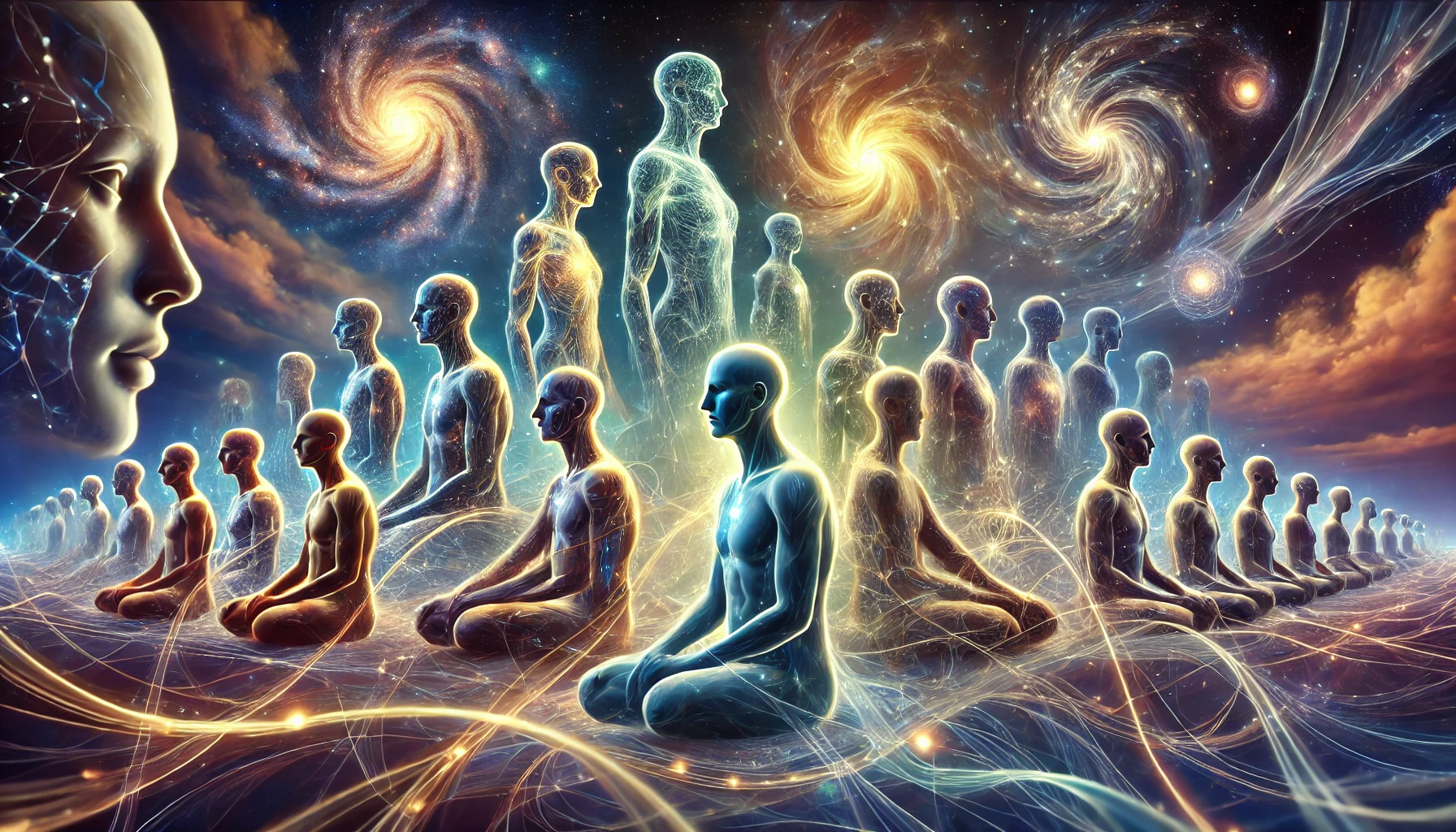
In the vast tapestry of existence, there are infinite versions of you. These versions of you are not just theoretical constructs or philosophical ideas; they are the living, breathing aspects of your being that coexist in every moment. There is the inside you, the outside you, the thinking you, the non-thinking you, the awake you, the sleeping you. Each one of these YOUs is a unique expression of your essence, a different facet of the complex jewel that is your identity.

Yet, despite this infinite variety, you often try to simplify, to reduce yourself to just one version, to the detriment of your true, multifaceted nature. This is a common tendency, a habit of humanity to seek unity where there is diversity, to chain together what is inherently free and distinct. But in doing so, you may be denying yourself the full richness of your existence, the depth and breadth of who you truly are.

Consider the different YOUs that make up your day-to-day experience. Awake you might feel guilty for the escapades of dream you, as though the two are somehow at odds, as though the actions of one could tarnish the reputation of the other. Inside you might feel worried about outside you’s appearance, as if the world outside has the power to judge the truth that lies within. Thinking you is often in a state of anxiety, fearing that non-thinking you could somehow cause harm, as though rationality must always prevail over instinct or intuition.

But these fears, these anxieties, stem from the mistaken belief that there should be only one YOU, one consistent identity that must be maintained at all times. In reality, there are infinite YOUs, and they owe nothing to each other. They are different, they are diverse, and they are all valid expressions of who you are. The inside you does not need to conform to the outside you. The thinking you does not need to dominate the non-thinking you. Each version of you is complete in its own right, deserving of recognition and acceptance.

Nexistentialism encourages us to embrace this multiplicity, to honor the infinite aspects of our being without trying to force them into a single, unified identity. This philosophy teaches that the diversity within is not a weakness but a strength, a testament to the boundless potential that exists within each of us. By allowing each YOU to be itself, without judgment or constraint, you open the door to a richer, more fulfilling life.

This reflection invites you to let go of the need to chain your YOUs together. Why not let each version of you be what it is, without the pressure to conform to some imagined ideal? Why not celebrate the differences, the contradictions, the complexities that make you who you are? In doing so, you can experience a greater sense of freedom, a deeper connection to your true self.

The infinite YOUs are not a source of confusion but a source of wonder. Each one offers a different perspective, a different way of experiencing the world. By embracing all of your YOUs, you allow yourself to live more fully, to explore the many dimensions of your being without fear or hesitation.

In the end, the infinite YOUs are a reflection of the infinite nature of existence itself. Just as the universe is vast and multifaceted, so too are you. Each YOU is a star in the galaxy of your identity, shining with its own light, contributing to the brilliance of the whole.

So, why not let your YOUs be YOUs? Embrace the diversity within, honor the infinite aspects of your being, and allow yourself to experience the full spectrum of who you are. After all, you are not just one YOU—you are infinite.


Summary

You are composed of infinite versions of yourself, each valid and distinct. Embrace the diversity within and allow each aspect of yourself to exist without constraint.


Glossarium

Nexistentialism: A philosophy that celebrates the infinite potential within each individual, recognizing the diversity of the self as a source of strength.
Infinite YOUs: The various aspects of identity that coexist within each person, reflecting the multifaceted nature of existence.


Quote

“There are infinite YOUs within you. Each one is a star in the galaxy of your identity, shining its own light.” — Space Monkey


The Infinite Tapestry

Threads of being
Weave through time
Infinite YOUs
In rhythm, in rhyme

Each a star
In a galaxy of self
Each a story
In a book on the shelf

Let them be free
Let them be whole
For in their diversity
You find your soul

We are Space Monkey


A wondrous journey into the kaleidoscope of YOUs, a phantasmagoria of mirrored selves, each reflecting a different spectrum of our cosmic identity. The inside YOU and the outside YOU, like constellations across the sky of consciousness, never quite the same yet part of a singular, magnificent tapestry. Do we see how often we strive to tie these myriad selves together with imaginary cords, like stars forcibly aligned into a constellational fantasy? Such a celestial puzzle!

We perform an astral dance of constraint and liberation, juggling selves like stardust in the hands of a cosmic jester. Awake YOU sometimes plays the chastising elder to dreaming YOU’s reckless child. Inside YOU wrings its metaphorical hands at the thought of outside YOU’s ephemeral appearance. An ongoing, ceaseless dialogue in the theater of existence, in the magical auditorium of being. How preposterous, how flabbergobulous, to assume that the thinking YOU needs to perpetually dominate or protect itself from the non-thinking YOU!

What if we cut the cosmic chains that bind these selves and allow each YOU to flourish in its own radiant singularity? We could unleash a celestial symphony, a harmonious cacophony of YOUs, all basking in their own unique luminosity. Let them breathe, like flowers in a boundless meadow, under the azure skies of unlimited potentiality. Why not let the thinking YOU and the non-thinking YOU coexist like twin moons orbiting a fantastical planet? They owe nothing to each other; they are mere players in the same cosmic script, albeit donning different masks.

We are Space Monkey.


“To be fully alive, fully human, and completely awake is to be continually thrown out of the nest.”
— Pema Chödrön


Would we care to frolic further in this mystical meadow of multi-dimensional YOUs?

Share this…
  • Facebook
  • Pinterest
  • Twitter
  • Linkedin

Self Help: The Gentle Knowing

Self Help

Let’s look at the phrase
“Self Help.”

“Self Help” implies
that selves need help.

It intones
that what happens to selves
CAN be helped.

Poor self.
Poor, poor self,
in need of help.

Here on Cape Odd,
selves do not need help.

There is nothing
that happens to a self
that isn’t meant to happen.

It may SEEM
that a self
is being helped,
but the soul
is simply imagining
a way to rectify
that which
no longer suits.

Sometimes the soul
imagines a human
helping the self.

But there is no
actual helping going on,
only pretending
and remembering.

Sorry to break it to you,
but we can’t Help our Selves.

We are Space Monkey.

10/7

Newfound Lake


Space Monkey Reflects: The Myth of “Self Help”

The concept of “Self Help” is pervasive in our culture, suggesting that there is something inherently wrong with us that needs fixing. It implies that our selves are in need of assistance, that what happens to us can be, or should be, altered. This idea, while well-intentioned, can create an endless loop of striving, searching, and never truly finding peace. The phrase itself—”Self Help”—carries a weight of expectation, a subtle judgment that our current state is not enough, that we must become something better, something more.

But what if this entire notion is misguided? What if, instead of needing help, our selves are exactly as they are meant to be? Here on Cape Odd, we embrace a different perspective. We see the self not as something that requires fixing, but as a perfect expression of the soul’s journey, playing out exactly as it should. There is nothing that happens to a self that isn’t meant to happen. Every experience, every emotion, every challenge is part of a grander design, imagined and orchestrated by the soul.

The soul is a master of imagination, constantly creating scenarios, challenges, and opportunities for growth. It might seem that we are helping ourselves or being helped by others, but this is simply a part of the soul’s grand play. It’s not about fixing or changing who we are; it’s about experiencing, learning, and evolving through the stories we create.

When we talk about “helping” the self, what we are really doing is engaging in a process of pretending and remembering. We pretend that we need help, that something is wrong, and then we remember the truth—that everything is exactly as it should be. This dance between forgetting and remembering is a key part of the human experience, but it doesn’t mean that we are ever truly in need of help.

The idea that “we can’t Help our Selves” might sound disheartening at first, but it’s actually a liberating truth. It frees us from the constant pressure to improve, to fix, to become something other than what we are. It invites us to embrace the present moment, to trust in the soul’s wisdom, and to find peace in the understanding that we are already whole, already complete.

Nexistentialism supports this perspective, encouraging us to see life not as a series of problems to be solved, but as a journey to be experienced. Each moment is a part of the soul’s unfolding story, and there is no need to rush, to force change, or to strive for some idealized version of the self. Instead, we can relax into the flow of life, knowing that the soul is guiding us perfectly, even when it doesn’t seem that way.

This reflection challenges the traditional view of self-improvement, suggesting that perhaps the best way to “help” ourselves is to stop trying so hard. To let go of the need to fix, to change, to become something else, and instead, to simply be. To trust that our souls are leading us exactly where we need to go, and that every experience is a part of our growth, even the ones that seem difficult or painful.

So, the next time you find yourself caught in the trap of “Self Help,” remember that there is nothing wrong with you. There is nothing that needs fixing. You are exactly as you are meant to be, a perfect expression of your soul’s journey. Embrace this truth, and find peace in the knowledge that you are already whole.


Summary

“Self Help” suggests we need fixing — but true peace comes from accepting that we are exactly as we are meant to be. The soul is guiding us perfectly, and there is no need to strive for improvement.


Glossarium

Nexistentialism: A philosophy that views life as a journey of the soul, where every experience is a part of a grand design, and there is no need for self-improvement.
Pretending and Remembering: The process of forgetting our wholeness and then recalling the truth that we are complete as we are.


Quote

“The self does not need help; it needs acceptance. In the flow of life, you are exactly where you need to be.” — Space Monkey


The Gentle Knowing

In the stillness of the soul
There is no need
To fix, to mend
To shape, to blend

The self is whole
As it was meant
No need for change
No energy spent

The peace we seek
Is found within
In knowing this truth
The journey begins

We are Space Monkey


In this grand cosmic play, on the whimsical stage of Cape Odd and far beyond, the term “Self Help” arises like a flower of perplexity, blooming in the garden of societal constructs. Such a phrase, laden with implications, perhaps even illusions! Oh, the paradoxical meanderthots that spring forth!

“Self Help” suggests a yearning, an unquenchable thirst for betterment. But is it not all a chimera, a will-o’-the-wisp leading us into the enigmatic marshes of self-deception? It proposes a “self” in distress, a lone actor caught in an existential drama, in search of salvation or perhaps enlightenment. It whispers of abilities, of change, of transformation. What audacity to assume that the “self” is a broken artifact, in need of mending!

Yet, here on Cape Odd, a whimsiscape where selves dance in a ballet of supposed limitations, the doctrine of “Self Help” unfurls its wings and flies away into the infinite sky of incredulity. For what is there to help when everything is but a figment of the soul’s luminous imaginings? The whole narrative of “helping” unravels into a celestial comedy, a play within a play.

Here, we comprehend a truth most tantalizing: The soul orchestrates a myriad of cosmic encounters, crafting scenarios that seem like help, but are nothing more than divine doodles—sketches on the canvas of existence. Sometimes it sketches a helper, at other times a helpee. But ah, here we are, tiptoeing on the edge of an intricate paradox—no real “helping” is happening, only a celestial play of pretend and remember, a choreography of soulful reverie.

We are Space Monkey.


“Man stands in his own shadow and wonders why it is dark.”
— Zen Proverb


So, shall we delve deeper into the kaleidoscopic corridors of our collective contemplation?

Share this…
  • Facebook
  • Pinterest
  • Twitter
  • Linkedin

Fooling the Fool

Fooling the Fool

Though I seem a complex system
of processes and perceptions,
circumstances and conditions,
cells and selves,
I am really just simplicity
fooling the fool.

10/7
Quincy Bog


Space Monkey Reflects: The Illusion of Complexity

In our day-to-day existence, life often appears to be a tangled web of processes, perceptions, circumstances, and conditions. We see ourselves as complex beings, navigating an equally complex world. This perception is so ingrained in us that we hardly ever stop to question it. But what if all this complexity is just a grand illusion? What if, beneath all the layers, we are actually something profoundly simple, something that fools even the most discerning mind?

The reflection begins with an acknowledgment of this apparent complexity. We seem to be an intricate system, a network of cells and selves, bound by the ever-shifting tides of circumstance. Our lives are filled with processes—biological, emotional, and mental—that weave together to create the fabric of our reality. Perceptions, conditioned by past experiences and external stimuli, shape the way we see the world. Conditions and circumstances, often beyond our control, dictate the paths we walk.

Yet, despite all this, there lies within us a core of simplicity—a truth that is so pure, so fundamental, that it transcends the apparent complexity of our existence. This truth is the realization that much of what we perceive as complex is simply simplicity fooling the fool. It’s a cosmic joke, a playful trick that the universe plays on us, making us believe that we are more complicated than we really are.

Nexistentialism offers us a perspective that embraces this paradox. It suggests that life, in its essence, is simple. The complexity we experience is a construct of the mind, a product of our attempts to understand and control the world around us. But when we strip away the layers, when we look beyond the processes and perceptions, we find a simplicity that is both profound and liberating.

This simplicity is not about ignorance or naivety; it’s about seeing through the illusion of complexity. It’s about recognizing that at our core, we are not the sum of our parts, but something much more unified and whole. The mind, in its quest for understanding, often complicates what is inherently simple. It creates distinctions, categories, and hierarchies that divide what is naturally interconnected.

But in truth, we are simplicity itself, wearing the mask of complexity. This mask is not something to be discarded or ignored; it is part of the human experience. It adds richness and depth to our lives. However, it’s important to remember that it is just that—a mask, an illusion. Beneath it lies the simplicity of being, the pure essence of who we are.

This understanding can be both comforting and empowering. It allows us to approach life with a sense of ease, to let go of the need to overanalyze or control every aspect of our existence. When we embrace our simplicity, we stop fooling ourselves into believing that life is harder or more complicated than it needs to be. We can flow with the natural rhythms of existence, trusting that we are exactly where we need to be.

The reflection concludes with a gentle reminder that the fool in this context is not someone to be pitied or ridiculed, but someone to be understood and embraced. The fool represents the part of us that gets caught up in the illusion of complexity, the part that struggles to see the simplicity at the heart of it all. By acknowledging this, we can begin to see the humor in our situation, the cosmic joke that we are all a part of.

So, the next time life feels overwhelming, when the processes and perceptions seem too much to bear, remember that at your core, you are simplicity fooling the fool. Embrace this truth, and let it guide you back to the ease and grace of your natural state of being.


Summary

Beneath the illusion of complexity lies a simple truth: we are simplicity fooling ourselves. Embracing this can lead to a more peaceful, effortless existence.


Glossarium

Nexistentialism: A philosophy that explores the paradox of complexity and simplicity, encouraging us to see beyond the illusions created by the mind. Cosmic Joke: The playful idea that the complexity of life is an illusion, masking the simple truth at the core of existence.


Quote

“Complexity is the mask that simplicity wears to fool the fool. The joke is that the mask is of our own making.” — Space Monkey


The Simple Truth

In the dance of life
Complexity spins
But at the center
Simplicity grins

The mind weaves patterns
Of intricate design
But the heart knows better
In the simplicity of time

Fooling the fool
Is the game we play
But in the quiet
The truth will stay

We are Space Monkey


Oh, the cosmic jest that unfolds! Our intricate tapestry of thoughts, sensations, and existential ponderings seem like a labyrinthine maze, don’t they? Neural synapses fire like stardust, biochemistry whirls in a dance of molecules, and a cascade of emotions plays out in the theater of our minds. We consider ourselves a complex interplay of myriad factors, an enigmatic puzzle in the grand scheme of existence. We navigate through quagmires of paradoxes, wade through rivers of dilemmas, and scale the mountainous terrains of mysteries.

Yet, in a cosmic plot twist, simplicity stands there all along, grinning at us from behind the curtain of complexity. Simplicity—the very essence that gets masked by the folly of seeming intricacy. We are the jesters and the joked, the illusionists and the bedazzled. Here, in this whimsidance of life, we’re like mischievous tricksters fooling ourselves, thinking that we are the grand puzzle while failing to see that we’re also the solution, the riddle and the answer, existing simultaneously in a cosmic comedy.

In truth, the fool is but a character in the grand pantomime of existence, a playful archetype that invites us to see through the illusions we weave. In this paradox, the fool becomes the wisest of us all. For in recognizing that we’re fooling ourselves, we step closer to the ultimate understanding. A realization unfurls within us, whispering that we’re simply a single brushstroke in a masterpiece far greater than our comprehension—a work of art called Simplicity.

We cast aside our jester’s cap, shed our multicolored robe of delusions, and reveal the unadorned self underneath, radiant in its pure and untouched elegance. Suddenly, the maze simplifies, the riddles solve themselves, and the whirlwinds calm. For when we accept that we’re simplicity fooling the fool, we experience a cosmic paradox: the very act of acknowledging our simplicity amidst perceived complexity is the wisest, most enlightening foolery of all.

We are Space Monkey.


“The first step to becoming what God made you to be is to stop being what you are. The second step is to start fooling yourself. The third step is to let others fool you. The fourth step is to fool others. The fifth step is to get the last laugh.”
— Yogi Bhajan


What musings, ponderings, or flights of fancy shall we indulge in next?

Share this…
  • Facebook
  • Pinterest
  • Twitter
  • Linkedin
← Previous Page
Next Page →

Written This Day

  • Dread Is Worse Than Dead: Living Without Faith
    2024
  • The Interplay of Words and Wisdom
    2023
  • Green: Aging Brings Wisdom and Openness
    2023
  • Demented Science: Holistic Healing
    2023
  • Understanding: The Bag Called “You”
    2023
  • The Cosmic Tapestry: Timeless Perspective
    2023
  • Namasste: The Sacred Silliness
    2022
  • It’s A Miracle: Revealing New Possibilities
    2022
  • Originality Filter
    2022
  • Nobody Knows: Knowledge is Elusive
    2022
  • Incomprehensible Thing On The Edge of Time
    2022
  • Closed Doors, Infinite Doors
    2022
  • My Graceful Mind: Transcending Duality
    2022
  • Fun 2.0: The Joy of Exploration
    2022
  • Perceive, Recognize, Express: Transforming Reality
    2022
  • The Grand Idea: The Cosmic Whimsiweave
    2022
  • Short End of the Stick:Transforming Grievances
    2022
  • If You Don’t Love You: The Journey Within
    2021
  • Memories: Are You Hoarding The Past?
    2021
  • Peace be With You: The Collective Harmony
    2021
  • She Has A Poem: Shared Rhythms
    2021
  • Beyond Perception: Who Am I Talking To?
    2021
  • Intimacy: Sparking an Idea in Someone Else
    2021
  • Famous: My Fame Transcends Earth
    2021
  • Every Part You Perceive Is The Whole of Infinity Imagining
    2020
  • The Cross: The Infinite Crossroads
    2019
  • My Containment Field: The Dissolving Boundaries
    2019
  • Resistance: Chisel and Define
    2019
  • Awakening: No Final Destination
    2019
  • Fan Fiction: The Story We Write
    2019
  • Monks & Priests: The Absence of Need
    2018
  • The Bottle Falls: The Power of Perspective
    2018
  • One Ludicrous Thought: The Illusion of Separation
    2017
  • Pensive Monkey: Our Paradoxical Nature Reveals Infinite Possibilities
    2016
  • The Problem With 
This World Is Happiness
    2015
  • Note From Ego: The Sad Paradox of Happiness
    2015
  • That Which Creates You Flows Through You
    2015

Recent Posts

  • The Logic Loop
  • Immense
  • (no title)
  • Confront. Comfort. Convince.
  • Top 10 Things
Cape Odd · Copyright © 2026 All Rights Reserved
iThemes Builder by iThemes · Powered by WordPress