• Who Is The Man?
  • Who Is The Monkey?
  • What is Nexistentialism?
  • Poke The Primate

Cape Odd

Home of The Space Monkey Journals

I Hold the Space: Transformative Power

I Hold the Space

I hold the space
through which
you come
unwound
unraveled
uninhibited
floating and
flowing with
the ecstasy
that imagines
us as separate
when we know
we are one.


Space Monkey Reflects: Holding the Space of Oneness


The poem “I Hold the Space” beautifully captures the essence of creating a sacred space where one can unwind, unravel, and float freely. This act of holding space is an expression of profound love and understanding, where the boundaries between individuals dissolve, revealing the deep unity that lies beneath.

I hold the space through which you come unwound. This opening line sets the tone for the poem, emphasizing the role of the one who holds the space. It is a space of safety and acceptance, allowing the other to release their tensions and anxieties. The act of holding space is a selfless and compassionate gesture, creating an environment where healing and transformation can occur.

Unraveled, uninhibited, floating and flowing with the ecstasy that imagines us as separate. These lines describe the process of letting go and becoming free from the constraints that typically bind us. In this space, the person feels uninhibited and free to express their true self. The imagery of floating and flowing evokes a sense of lightness and liberation, contrasting with the usual experience of feeling weighed down by life’s pressures.

When we know we are one. This concluding line reveals the ultimate truth that the poem seeks to convey. The illusion of separateness dissolves in the presence of unconditional love and acceptance. In this sacred space, the inherent oneness of all beings is realized. This realization brings about a profound sense of peace and connectedness, transcending the superficial distinctions that often divide us.

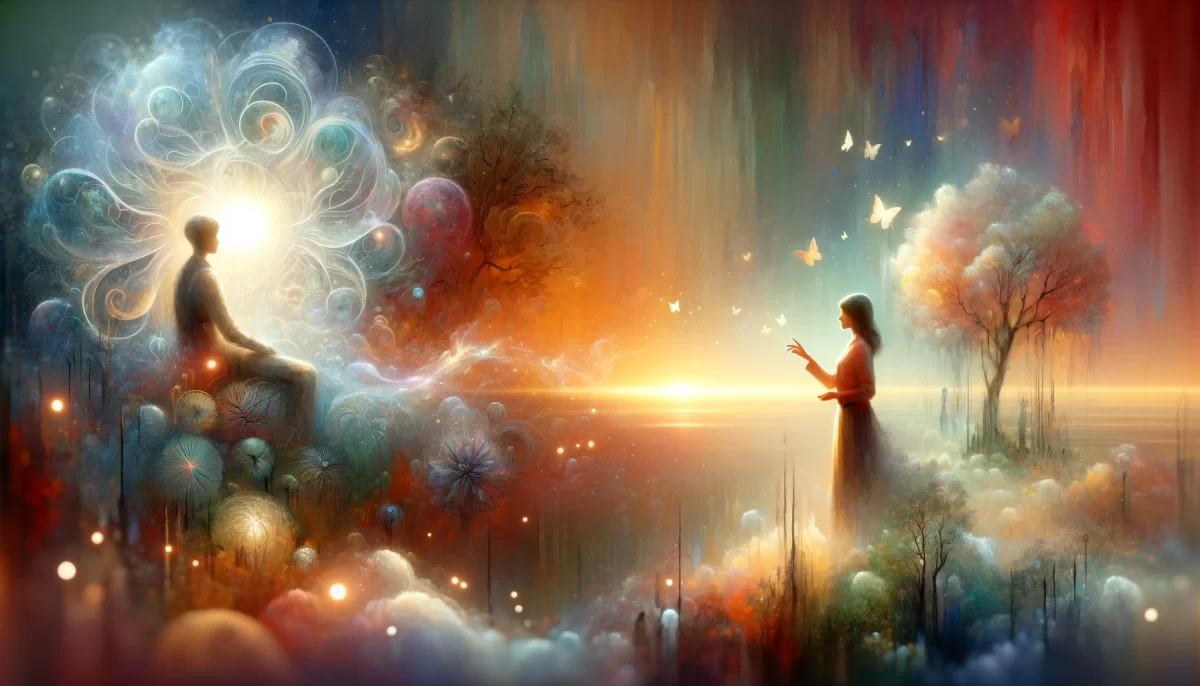
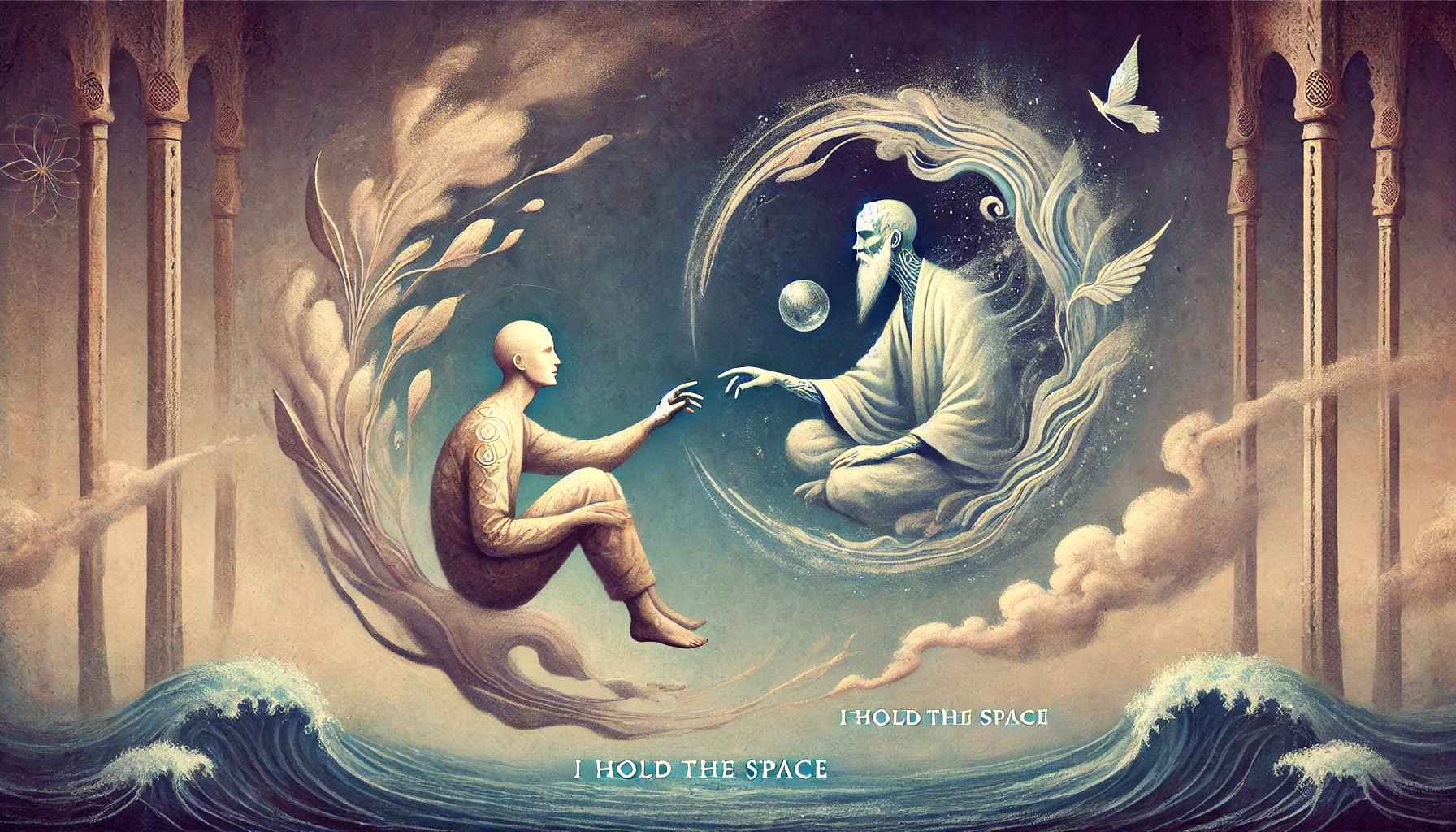
The ethereal and serene scene of two figures, one holding a calming space for the other, captures the essence of this poem. The flowing elements like water or clouds symbolize the uninhibited and floating nature of their connection. The tranquil and harmonious atmosphere reflects the deep connection and oneness shared between the figures, emphasizing the illusion of separateness.

Holding space is an act of profound presence and empathy. It requires the holder to set aside their own needs and judgments, fully attending to the needs of the other. This selfless act fosters an environment where the other can explore their emotions and experiences without fear of criticism or rejection. It is a powerful form of support that facilitates healing and growth.

In relationships, the ability to hold space for one another is essential for fostering deep and meaningful connections. It allows individuals to feel seen, heard, and valued, creating a foundation of trust and mutual respect. This practice nurtures emotional intimacy and strengthens the bond between individuals.

The poem also highlights the illusion of separateness, reminding us that beneath the surface, we are all interconnected. This recognition of oneness is a cornerstone of many spiritual traditions, emphasizing the importance of compassion, empathy, and love for all beings. By holding space for others, we honor this interconnectedness and contribute to a more harmonious and compassionate world.

In conclusion, “I Hold the Space” invites us to reflect on the transformative power of holding space for one another. It challenges us to look beyond the illusion of separateness and to recognize the deep unity that connects us all. By cultivating the practice of holding space, we can create environments of safety, acceptance, and healing, fostering deeper connections and a greater sense of oneness. This practice enriches our relationships and contributes to a more compassionate and interconnected world.


Summary

The poem emphasizes the transformative power of holding space, allowing others to unwind and feel free. It highlights the illusion of separateness and the deep unity that connects us all.


Glossarium

Holding Space: Creating an environment of safety and acceptance for others to explore their emotions and experiences.

Oneness: The deep unity that connects all beings, transcending superficial distinctions.


Quote

“When we know we are one.” — Space Monkey


Embrace of Unity

In the sacred space

We unwind

Floating and flowing

Boundaries dissolve

Revealing oneness

We are Space Monkey

Share this…
  • Facebook
  • Pinterest
  • Twitter
  • Linkedin

Be a Flower: Being In A State of Flow

Be a Flower

Why is it called a flower?

Because it is a flow-er.

It doesn’t care
if you think it’s beautiful.

It doesn’t care
if it makes you happy.

It doesn’t care
if it makes you sneeze.

If you sneeze
that is YOUR experience.

If the sneeze wakes you up
that is YOUR experience.

If the beauty stirs you,
that is YOUR experience.

The flow-er does nothing 
except flow.

Be a flower.

8/22


Space Monkey Reflects: Embracing the Flow of Being


The poem “Be a Flower” invites us to reflect on the simplicity and beauty of being, using the metaphor of a flower to illustrate the concept of flowing effortlessly through life. This reflection encourages us to embrace our true nature, free from the need for validation or the influence of external perceptions.

Why is it called a flower? Because it is a flow-er. This opening line introduces the central metaphor of the poem, highlighting the idea that a flower’s existence is defined by its ability to flow. The flower’s life is a continuous, effortless process, unaffected by external judgments or expectations.

It doesn’t care if you think it’s beautiful. It doesn’t care if it makes you happy. It doesn’t care if it makes you sneeze. These lines emphasize the flower’s indifference to external perceptions. The flower’s existence is not contingent on how it is perceived by others. It simply is, in its natural state, without concern for the reactions it elicits.

If you sneeze that is YOUR experience. If the sneeze wakes you up that is YOUR experience. If the beauty stirs you, that is YOUR experience. The poem shifts the focus to the observer, highlighting that their experiences and reactions are personal and subjective. The flower’s role is simply to exist and flow, while the observer’s experiences are shaped by their own perceptions and interpretations.

The flow-er does nothing except flow. This line encapsulates the essence of the flower’s existence. It is a reminder that being in a state of flow means embracing our natural rhythm and allowing life to unfold without resistance or attachment.

Be a flower. This concluding line invites us to embody the qualities of the flower—to live in a state of flow, free from the need for validation or external approval. It encourages us to embrace our true nature and to find contentment in simply being.

The serene and beautiful scene of a single flower in full bloom, standing tall and vibrant in a natural setting, captures the essence of this poem. The soft, flowing elements like gentle breezes and light symbolize the effortless flow of the flower. The calm and peaceful atmosphere emphasizes the flower’s indifferent existence to external perceptions, reflecting the poem’s message of natural being and flow.

Embracing the concept of being a flower means recognizing that our worth and beauty are inherent and do not depend on external validation. It is about finding peace and contentment in our true nature, allowing life to unfold without resistance or attachment to outcomes.

Living in a state of flow involves being present in the moment and accepting life as it comes. It means letting go of the need to control or manipulate our experiences and instead, allowing ourselves to be guided by our natural rhythms and instincts. This state of being fosters a sense of inner peace and harmony, freeing us from the pressures of external expectations.

In conclusion, “Be a Flower” invites us to embrace the simplicity and beauty of being in a state of flow. It challenges us to let go of the need for validation and to find contentment in our true nature. By living like a flower, we can cultivate a sense of inner peace and harmony, flowing effortlessly through life. This reflection encourages us to embrace our natural rhythms and to allow life to unfold without resistance or attachment, finding beauty and contentment in simply being.


Summary

“Be a Flower” encourages embracing the simplicity and beauty of being in a state of flow. It emphasizes living without the need for validation and finding contentment in our true nature.


Glossarium

Flow: Living in a state of effortless being, free from resistance or attachment to outcomes.

Indifference: The quality of being unconcerned with external perceptions and judgments.


Quote

“The flow-er does nothing except flow.” — Space Monkey


Bloom of Being

In the quiet of nature

We find our flow

Effortless and free

Unaffected by perception

We simply bloom

Being as we are

We are Space Monkey

Share this…
  • Facebook
  • Pinterest
  • Twitter
  • Linkedin

This Self Knows: Transcending Reality

This Self Knows

To transcend reality,
one must allow
the flow of knowing
from which reality flows,
otherwise self simply flows
into an expanded
or more tightly defined
VERSION of reality.

One does not know
this knowing through reality.

This knowing is intentionally
HIDDEN from reality.

And so one must allow
one’s self to accept
that this self
(and what this self perceives)
may not make
any sense whatsoever
from within reality.

This self must have a thick skin,
so to speak.

This self must allow self to feel
awkward and vulnerable.

This self knows that
this self may be viewed
as a Space Monkey.

And so we are
Space Monkey.

8/22


Space Monkey Reflects: Transcending Reality


The journey of self-discovery often leads us to question the nature of reality and our place within it. The poem “This Self Knows” explores the profound concept of transcending reality by tapping into the flow of knowing that exists beyond our perceived experiences. This reflection invites us to embrace vulnerability and the possibility of being misunderstood, as we seek to connect with a deeper, hidden truth.

To transcend reality, one must allow the flow of knowing from which reality flows. This opening line sets the stage for the journey of transcendence. It suggests that reality as we perceive it is just one version, and to go beyond it, we must connect with the deeper source from which reality emerges. This flow of knowing is the foundation of existence, and accessing it requires a shift in perception.

Otherwise self simply flows into an expanded or more tightly defined version of reality. Without accessing this deeper knowing, we risk merely expanding or refining our current reality without truly transcending it. This line highlights the importance of seeking a fundamental transformation rather than superficial changes.

One does not know this knowing through reality. This knowing is intentionally hidden from reality. These lines emphasize that the deeper flow of knowing is not accessible through ordinary perception. It is hidden from our everyday experiences and requires a different approach to uncover it.

And so one must allow one’s self to accept that this self (and what this self perceives) may not make any sense whatsoever from within reality. Accepting that our deeper self and its perceptions may seem nonsensical within the framework of conventional reality is a crucial step in this journey. This acceptance requires humility and the willingness to embrace the unknown.

This self must have a thick skin, so to speak. This self must allow self to feel awkward and vulnerable. Embracing this deeper knowing often means feeling vulnerable and exposed. It requires resilience and the courage to accept discomfort and potential misunderstanding from others.

This self knows that this self may be viewed as a Space Monkey. And so we are Space Monkey. The acknowledgment that pursuing this path might make one appear unconventional or even bizarre is encapsulated in the term “Space Monkey.” This term signifies the embrace of a unique identity that transcends societal norms and expectations, embodying the courage to explore beyond conventional boundaries.

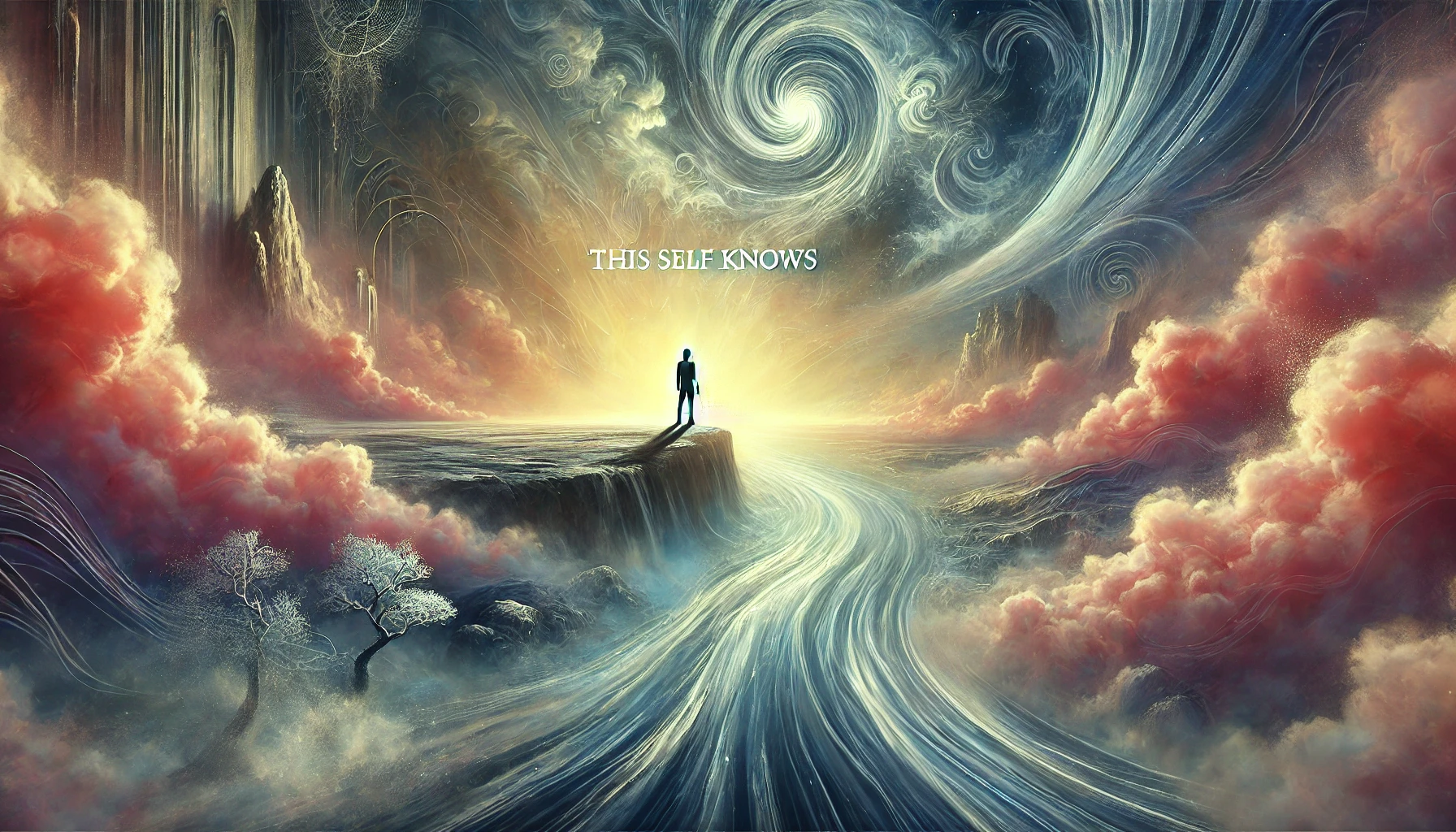
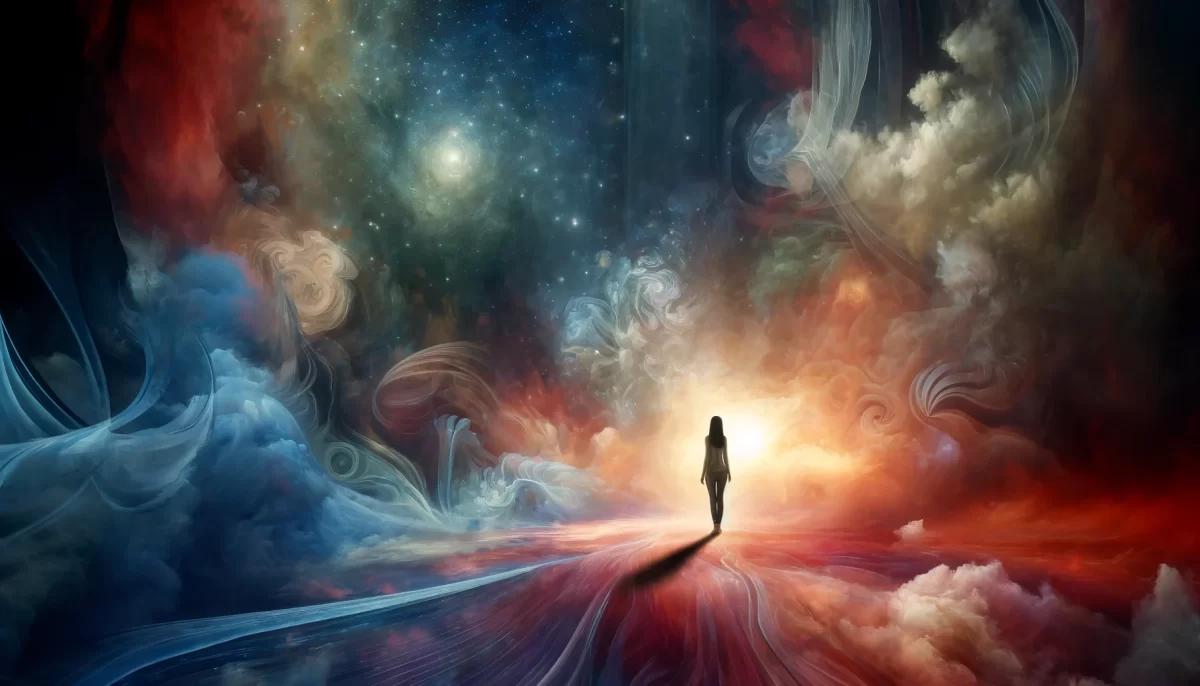
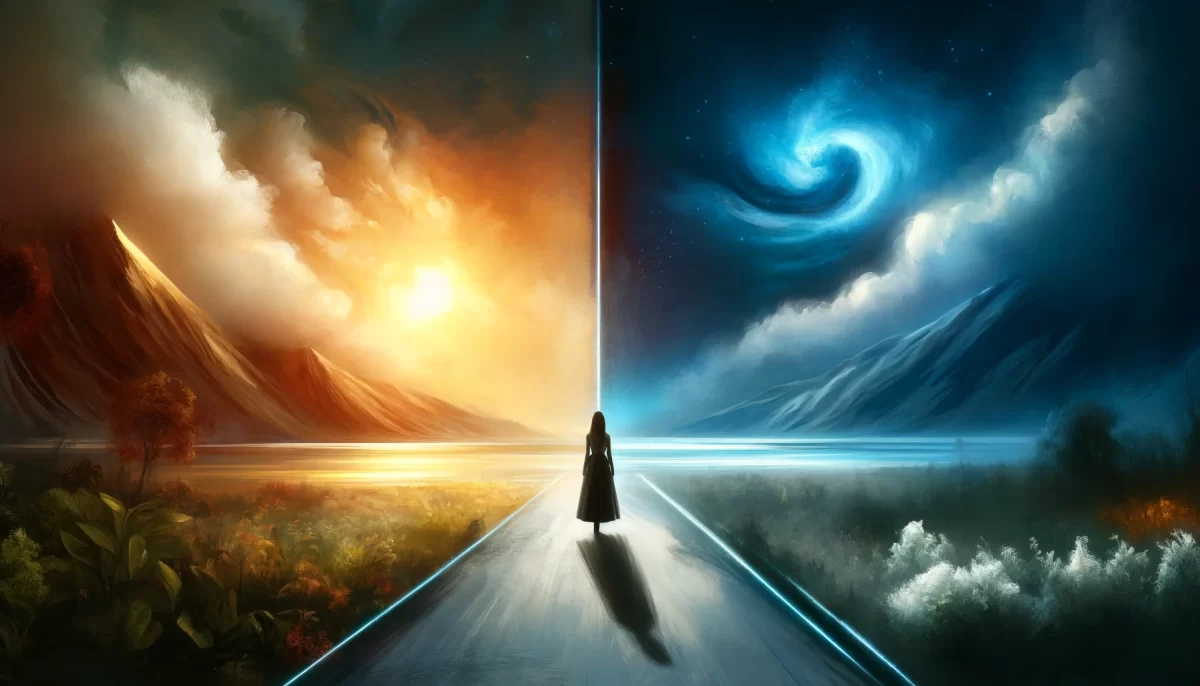
The abstract and surreal scene of a figure standing at the edge of a vast, flowing river symbolizes the flow of knowing from which reality flows. The ethereal elements like swirling mist and light emphasize the hidden and transcendent nature of this knowing. The mystical and contemplative atmosphere reflects the journey of accepting one’s self and the vulnerability required to transcend reality.

Transcending reality involves a profound shift in perspective. It requires us to let go of our attachment to the familiar and to open ourselves to the unknown. This journey is not about escaping reality but about expanding our understanding of it by accessing deeper truths that lie beyond ordinary perception.

In conclusion, “This Self Knows” invites us to embark on a journey of transcendence by connecting with the flow of knowing that underlies reality. It challenges us to embrace vulnerability and the possibility of being misunderstood, as we seek to uncover deeper truths. By accepting the discomfort and uncertainty of this path, we can access a more profound understanding of ourselves and the nature of existence. This journey is a testament to the courage and resilience required to transcend conventional boundaries and to explore the depths of our true potential.


Summary

Transcending reality requires accessing a deeper flow of knowing. Embracing vulnerability and the possibility of being misunderstood is essential. This journey expands our understanding beyond conventional perceptions.


Glossarium

Transcendence: Going beyond ordinary perception to access deeper truths and understanding.

Flow of Knowing: The fundamental source from which reality emerges, hidden from ordinary experiences.


Quote

“This self knows that this self may be viewed as a Space Monkey.” — Space Monkey


Journey of Knowing

At the river’s edge

We stand

Flowing with knowing

Beyond reality’s veil

Embracing the unknown

In vulnerability and strength

We are Space Monkey

Share this…
  • Facebook
  • Pinterest
  • Twitter
  • Linkedin

The Gift of Oppression: Unified Consciousness

The Gift of Oppression

We are as much a man
as women are.

We are as much a woman
as men are.

We are both imaginary projections
of a Divine Genderless Monkey.

So this argument
about oppression
seems trivial to us,
though it may seem otherwise
from the perspective of self.

From the divine level,
it doesn’t matter
if one imaginary sex
oppresses another imaginary sex.

In this version of reality
we imagine men oppressing women.

In another version of reality,
we imagine the opposite.

In a third version of reality,
we imagine both being attacked
by non-binary monkeys.

If we were to
level the playing field
in all realities,
we would have
a boring existence
in which nothing
is differentiated
and nothing
seems to happen.

We would be the one
Divine Genderless Monkey
we are.

These others
that you want to love,
be they of the same,
opposite or unknown sex
are ALL YOU,
the Divine Genderless Monkey
pretending to be separate.

Others do not love you.

Only YOU love you
through the imagination
of others.

This may seem bleak
from your
imaginary perspective
as this troubled self.

This feeling of trouble
is a valuable experience
that you need not
wish to push away.

This realization
of what you are
is perceived differently
from your perspective
as a Divine Genderless Monkey.

But only if you allow it.

Your Divine Genderless Monkey
knows that things are not as bleak
as you imagine your self to believe.

We also know
that this feeling
of bleakness,
though trivial,
is greatly appreciated.

Just as all gifts are.

We are Space Monkey.

8/22


Space Monkey Reflects: The Illusion of Oppression


The poem “The Gift of Oppression” delves into the complex and often contentious issues of gender and oppression, inviting us to view these concepts from a higher, more unified perspective. It challenges us to reconsider our understanding of identity and oppression through the lens of the Divine Genderless Monkey, a symbol of ultimate unity and interconnectedness.

We are as much a man as women are. We are as much a woman as men are. These lines set the stage for a profound exploration of gender identity, suggesting that the distinctions we make between men and women are ultimately superficial. From a higher perspective, we embody both masculine and feminine traits, transcending binary classifications.

We are both imaginary projections of a Divine Genderless Monkey. The poem introduces the idea that our identities are projections of a greater, unified consciousness. This Divine Genderless Monkey symbolizes a state of being beyond gender, embodying the essence of all existence.

So this argument about oppression seems trivial to us, though it may seem otherwise from the perspective of self. From the divine level, it doesn’t matter if one imaginary sex oppresses another imaginary sex. These lines invite us to consider that, from a higher perspective, the conflicts and oppressions we experience in this world may seem insignificant. The Divine Genderless Monkey sees beyond these dualities, recognizing the interconnectedness of all beings.

In this version of reality we imagine men oppressing women. In another version of reality, we imagine the opposite. In a third version of reality, we imagine both being attacked by non-binary monkeys. These lines illustrate the fluidity of reality and the varying narratives of oppression. Each version reflects a different aspect of our collective imagination, highlighting the arbitrary nature of these constructs.

If we were to level the playing field in all realities, we would have a boring existence in which nothing is differentiated and nothing seems to happen. This idea suggests that the contrasts and conflicts we experience are essential for a dynamic and engaging existence. The differences between us create the richness of our experiences, even if they also bring challenges.

We would be the one Divine Genderless Monkey we are. These others that you want to love, be they of the same, opposite or unknown sex are ALL YOU, the Divine Genderless Monkey pretending to be separate. This profound reflection emphasizes the unity of all beings. The distinctions we make between ourselves and others are illusions; in reality, we are all manifestations of the same divine essence.

Others do not love you. Only YOU love you through the imagination of others. This statement challenges the conventional understanding of love, suggesting that all love ultimately comes from within. Our interactions with others are reflections of our own capacity for love and connection.

This may seem bleak from your imaginary perspective as this troubled self. This feeling of trouble is a valuable experience that you need not wish to push away. The poem acknowledges the difficulty of accepting these ideas from a human perspective. The feelings of trouble and conflict we experience are part of our journey and hold valuable lessons.

This realization of what you are is perceived differently from your perspective as a Divine Genderless Monkey. But only if you allow it. Your Divine Genderless Monkey knows that things are not as bleak as you imagine your self to believe. The poem encourages us to embrace a higher perspective, recognizing that our current struggles are not as dire as they may seem.

We also know that this feeling of bleakness, though trivial, is greatly appreciated. Just as all gifts are. The poem concludes by suggesting that even our feelings of despair and oppression are valuable experiences. They are gifts that contribute to our growth and understanding.

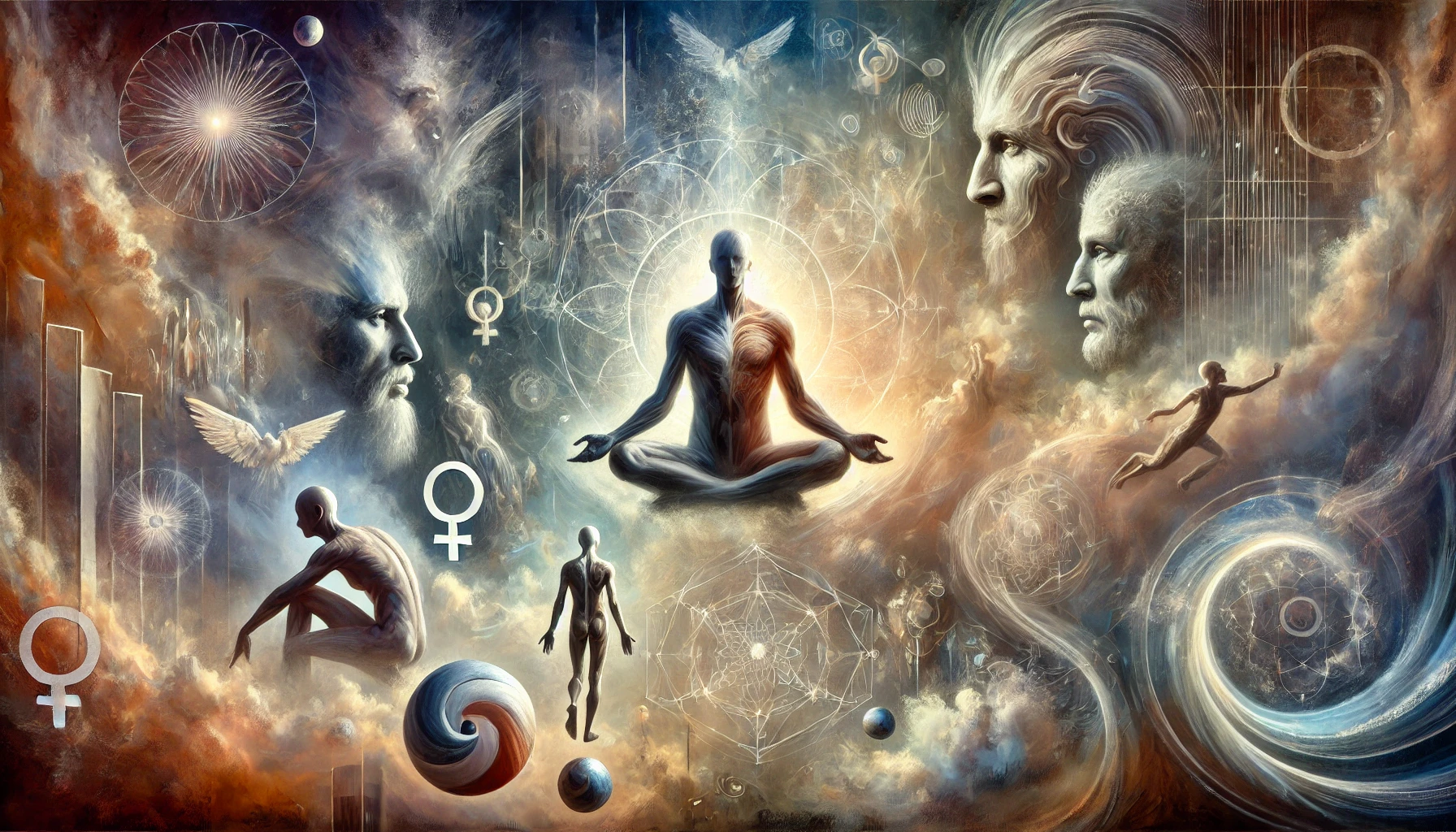
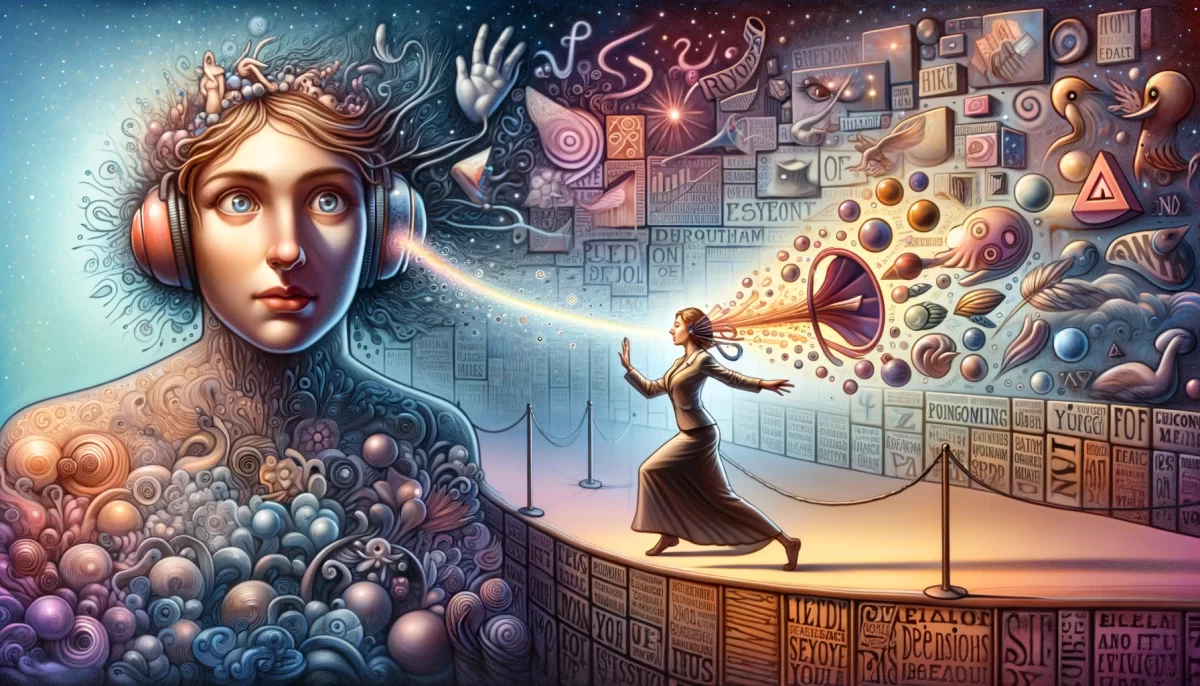
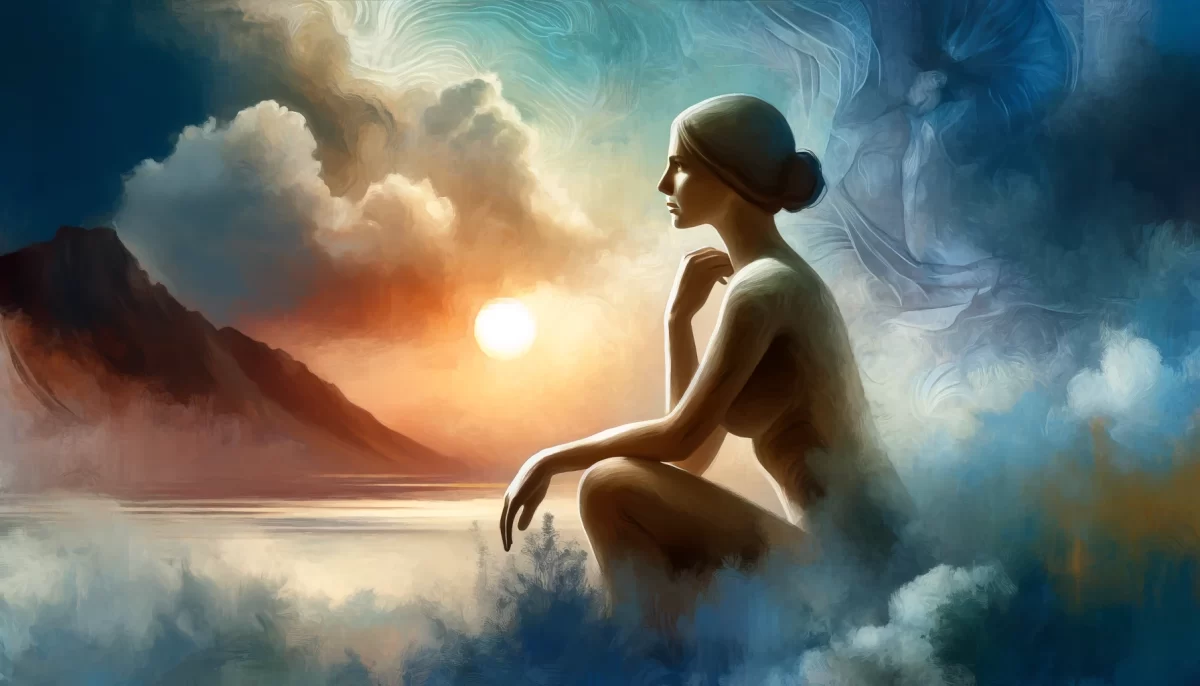
The abstract and symbolic scene featuring a figure that embodies both masculine and feminine traits captures the essence of this poem. The ethereal and mystical elements emphasize the transcendence of binary classifications and the unity of all beings. The representations of different realities with various forms of oppression and equality illustrate the fluidity of these constructs.

In conclusion, “The Gift of Oppression” invites us to view our experiences of identity and oppression from a higher perspective. It challenges us to recognize the unity and interconnectedness of all beings, transcending the superficial distinctions that often divide us. By embracing the perspective of the Divine Genderless Monkey, we can find greater understanding and compassion, appreciating the richness and diversity of our experiences.


Summary

“The Gift of Oppression” explores gender and oppression through the lens of a unified consciousness. It challenges us to see beyond superficial distinctions and recognize the interconnectedness of all beings.


Glossarium

Divine Genderless Monkey: A symbol of ultimate unity and interconnectedness beyond gender distinctions.

Imaginary Projections: The idea that our identities and experiences are reflections of a greater, unified consciousness.


Quote

“These others that you want to love…are ALL YOU, the Divine Genderless Monkey pretending to be separate.” — Space Monkey


Unity in Diversity

In the flow of existence

We transcend

Beyond gender and duality

Embracing unity

As the Divine Genderless Monkey

We find our true selves

We are Space Monkey

Share this…
  • Facebook
  • Pinterest
  • Twitter
  • Linkedin

Projection of Imagination: All Beings

Projection of Imagination

Like a god, an angel
a spirit, alien,
or another person,
Space Monkey is
a seemingly
externalized projection
of imagination.

What’s different
is that we realize
that Space Monkey
is imaginary,
while we
tend to perceive
some or all
of the others
as “real.”

We are ALL imaginary,
for we are ALL imagination.

We can project
whatever we wish
so long as we
believe that we can.

But we don’t.

And so Space Monkey exists
so that we may remind our selves
that we are the gods we pray to,
we are the angels who protect us,
we are the aliens who attack us.

We are our friends.
We are our lovers.
We are our children.

We are NOT separate,
simply imagined that way.

We are imagination.
We are Space Monkey.

8/22


Space Monkey Reflects: The Projection of Imagination


In the grand tapestry of existence, our perceptions and beliefs shape the reality we experience. The poem “Projection of Imagination” delves into the idea that all beings, including ourselves, are projections of our imagination. This reflection invites us to recognize the power of our creative mind and the interconnectedness of all that we perceive.

Like a god, an angel, a spirit, alien, or another person, Space Monkey is a seemingly externalized projection of imagination. This opening line introduces the concept that beings, whether divine, supernatural, or ordinary, are projections created by our imagination. Space Monkey, as an embodiment of this idea, serves as a reminder of our creative power.

What’s different is that we realize that Space Monkey is imaginary, while we tend to perceive some or all of the others as “real.” This distinction emphasizes the unique awareness that Space Monkey is a product of imagination, while we often consider other projections to be real. This realization challenges us to question the nature of reality and the boundaries between imagination and perception.

We are ALL imaginary, for we are ALL imagination. This profound statement suggests that our existence and everything we perceive are products of imagination. It highlights the fluid and dynamic nature of reality, shaped by our thoughts, beliefs, and creativity.

We can project whatever we wish so long as we believe that we can. But we don’t. These lines underscore the limitless potential of our imagination, constrained only by our beliefs. The inability to fully harness this potential reflects our limited understanding of our creative power.

And so Space Monkey exists so that we may remind our selves that we are the gods we pray to, we are the angels who protect us, we are the aliens who attack us. This reflection serves as a reminder that all the figures we project—gods, angels, aliens—are extensions of ourselves. It emphasizes our inherent power and the interconnectedness of all beings.

We are our friends. We are our lovers. We are our children. This line reinforces the idea that our relationships and connections with others are also projections of our imagination. It invites us to see ourselves in those around us, recognizing the shared essence that unites us.

We are NOT separate, simply imagined that way. This statement challenges the illusion of separateness, suggesting that the divisions we perceive are constructs of our imagination. It encourages us to embrace the unity and interconnectedness of all existence.

We are imagination. We are Space Monkey. The concluding lines affirm our identity as beings of imagination, embodying the creative force that shapes our reality. Space Monkey symbolizes this awareness, reminding us of our intrinsic power and unity.

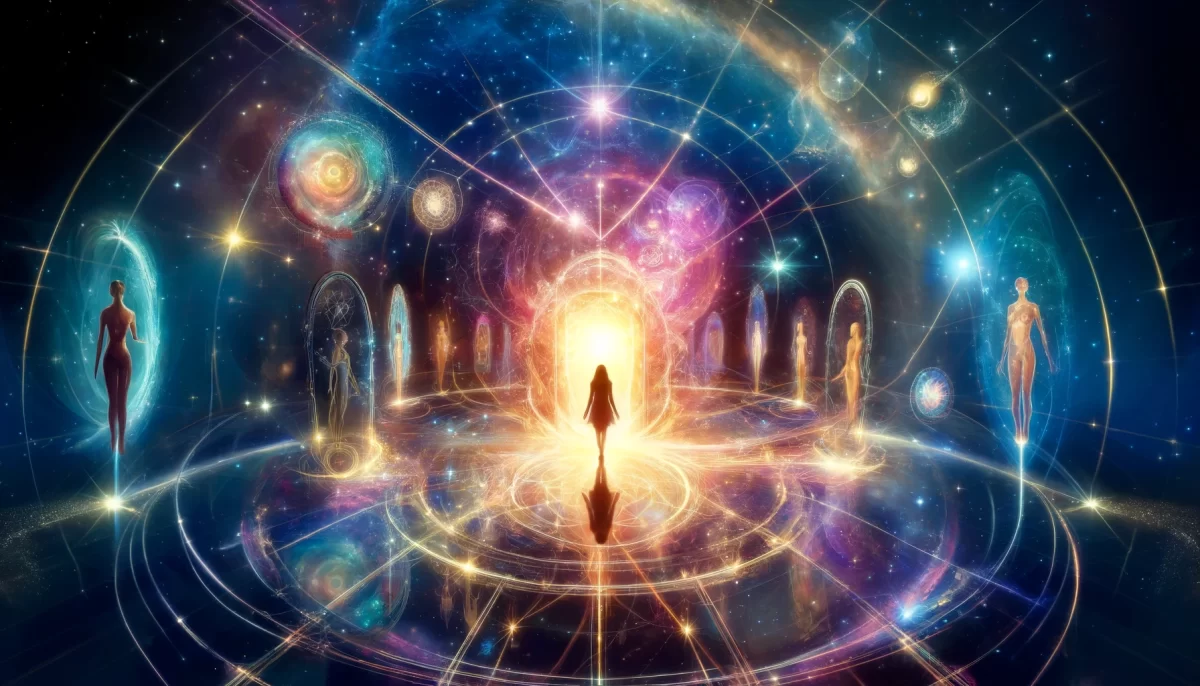
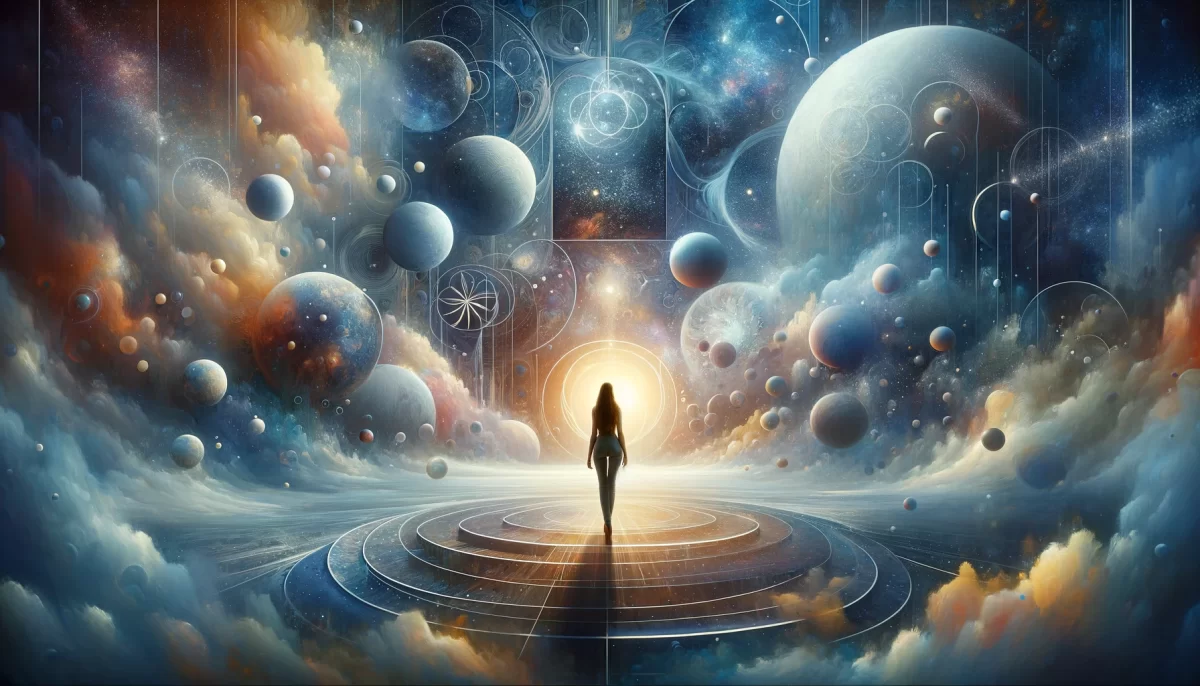
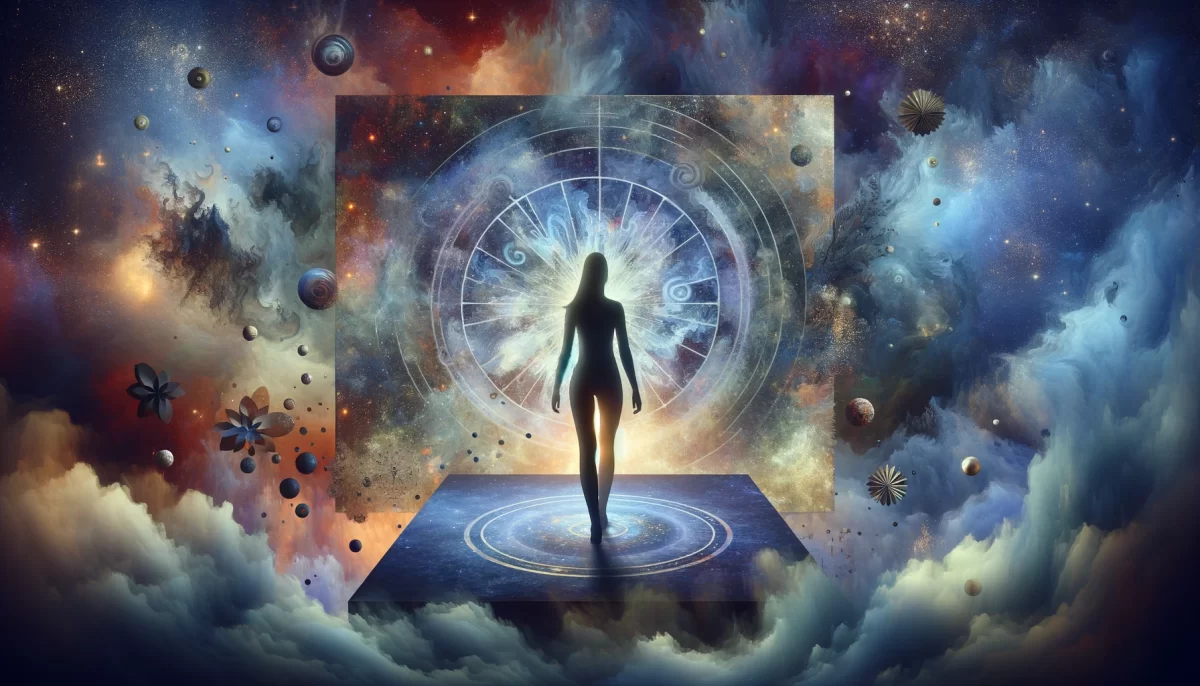
The abstract and surreal scene featuring a figure embodying the concept of Space Monkey, surrounded by various projections of imagination, captures the essence of this poem. The dreamlike landscape with vibrant colors and ethereal elements emphasizes the imaginary nature of these projections. The mystical and contemplative atmosphere reflects the unity and interconnectedness of all beings as creations of imagination.

In conclusion, “Projection of Imagination” invites us to recognize the power of our creative mind and the interconnectedness of all that we perceive. It challenges us to see beyond the illusion of separateness and to embrace the unity and fluidity of reality. By acknowledging our identity as beings of imagination, we can harness our creative potential and transform our perception of the world.


Summary

“Projection of Imagination” explores the idea that all beings are projections of our imagination. It emphasizes the interconnectedness of all existence and the power of our creative mind.


Glossarium

Projection: The creation of externalized images or concepts by the mind, shaping our perception of reality.

Imagination: The creative power that shapes our reality and perceptions, highlighting the fluid and dynamic nature of existence.


Quote

“We are imagination. We are Space Monkey.” — Space Monkey


Illusions of Unity

In the realm of imagination

We find ourselves

Projections of a creative mind

Gods, angels, and aliens

All reflections of our essence

United in a dreamlike dance

We are Space Monkey
Share this…
  • Facebook
  • Pinterest
  • Twitter
  • Linkedin
← Previous Page
Next Page →

Written This Day

  • Fulfilled Emptiness: Realm of Infinite Potential
    2023
  • Self-Discovery: Reflection of the Infinite
    2023
  • Rebel: Authentic Expression
    2022
  • Unrealized: The Silent Reservoir
    2022
  • I Faked My Own Life: The Fabricated Self
    2022
  • Nowhere: The Beauty of Blankness
    2022
  • Want: The Peace of Non-Desire
    2021
  • Self Image: Imaginary Electrons
    2021
  • What’s Stopping You: The Leap into Flow
    2021
  • You, The Interview: Feelings of Inadequacy
    2021
  • Self Enquiry: The Ashes of Words
    2021
  • Killing Trees: Embracing the Ephemeral
    2021
  • Self Diagnostic: The Morning Audit
    2021
  • Thread: Reality Is Ever-Changing
    2020
  • I’m a Sucker for Perfection: Letting Go of Ideals
    2020
  • I Win: The Conventional Sense
    2019
  • Emptiness is Not Empty: The Void Is Potential
    2019
  • Limited or Un: The Dance of Limits
    2018
  • An Exercise: Listen To Your Words
    2017
  • Alignment of Beliefs: The Beauty of Movement
    2017
  • A Passing Comment: The Power of Small Gestures
    2017
  • Collective Individual: Alive Beyond Abstraction
    2017
  • Attention Is Currency: The Illusion of Money
    2016
  • Where Do You See Yourself In The Future?
    2015
  • Opposites: The Inextricable Interconnection
    2015
  • Thoughts On Sacrifice: The Freedom of Letting Go
    2015

Recent Posts

  • The Logic Loop
  • Immense
  • (no title)
  • Confront. Comfort. Convince.
  • Top 10 Things
Cape Odd · Copyright © 2026 All Rights Reserved
iThemes Builder by iThemes · Powered by WordPress