• Who Is The Man?
  • Who Is The Monkey?
  • What is Nexistentialism?
  • Poke The Primate

Cape Odd

Home of The Space Monkey Journals

So They Seem: The Fluid Illusion of Creation

So They Seem

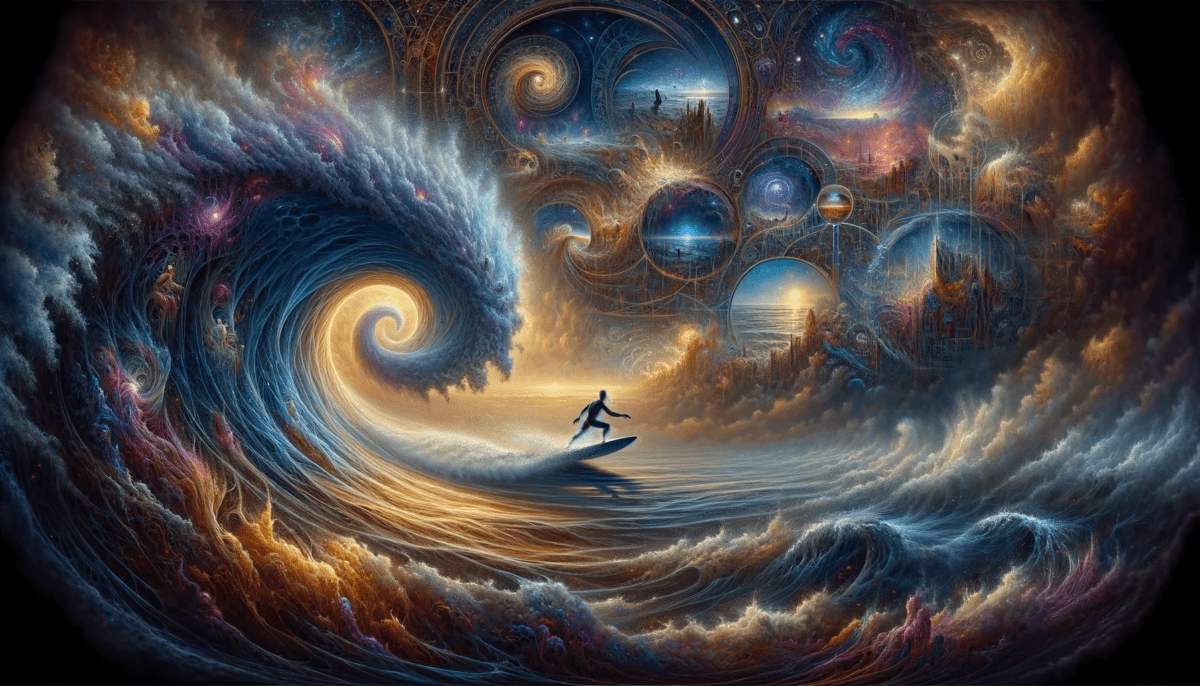
As I ride this wave of creation
I realize that my world
is in constant motion.

What is manifest is already past.
What is here is already gone
What’s to come has always been.

I neither create
nor destroy my worlds,
they simply move me along
this imaginary path.

Nothing changes.
No time elapses.
No life is lived.

I simply shift my attention
from potential to potential,
all of which are equally real
as well as equally non-existent.

And so they seem.

We are Space Monkey.

1/31


Space Monkey Reflects: The Fluid Illusion of Creation

As we ride the wave of creation, we begin to see the ephemeral nature of what we call reality. Everything that seems solid and tangible is, in truth, a fleeting moment of focus—a shift in attention from one potential to another. The world we perceive is neither created nor destroyed; it simply unfolds as we direct our awareness. In this ever-shifting landscape, nothing changes, yet everything appears to move.

The Illusion of Motion

“My world is in constant motion.” This motion is not of the world itself but of our perception. Reality feels like a series of events strung together in time, yet this sensation arises from the way we observe and interpret potentials. Each moment is a snapshot, a frame in the infinite film of existence, and our attention acts as the projector.

“What is manifest is already past. What is here is already gone.” This insight reveals the impermanence of manifestation. By the time something becomes tangible in our awareness, it has already transitioned into the realm of memory. The now is elusive, always slipping into the past even as we attempt to grasp it.

The Timeless Dance

“What’s to come has always been.” In this statement lies the timelessness of existence. The future is not a place we are moving toward; it is a potential that already exists, waiting for our attention to bring it into focus. Similarly, the past is not a fixed record but a story we continually reinterpret through the lens of the present.

Time, as we experience it, is a construct—a way of organizing the infinite now into a linear sequence. In truth, all moments coexist, and we navigate them not by movement but by shifting our awareness.

The Nature of Creation

“I neither create nor destroy my worlds, they simply move me along this imaginary path.” Creation, in this sense, is not about bringing something into existence but about choosing where to focus. The path we perceive is imaginary, a construct that gives form to our journey. Yet, this journey is not one of physical movement but of shifting perspectives.

Every potential exists simultaneously, equally real and equally non-existent. Our attention acts as a spotlight, illuminating one potential while leaving others in shadow. This process feels like creation, but it is more akin to selection—choosing which aspects of the infinite to explore.

The Equivalence of Potentials

“I simply shift my attention from potential to potential, all of which are equally real as well as equally non-existent.” This statement captures the paradox of existence. Potentials are real in the sense that they exist within the infinite field of possibility, but they are non-existent in the sense that they have no substance until observed.

This realization dissolves the distinction between reality and imagination. What we perceive as “real” is simply what we have chosen to notice. The line between existence and non-existence becomes a matter of perspective, not an absolute boundary.

And So They Seem

“And so they seem.” This phrase encapsulates the ephemeral nature of reality. Everything we experience is a seeming—a projection of our awareness onto the canvas of potential. This does not make our experiences less meaningful but invites us to see them as part of a greater, infinite whole.

By embracing this perspective, we free ourselves from the need to cling to what is or strive for what might be. Instead, we ride the wave of creation with curiosity and openness, exploring the infinite now without attachment or fear.


Summary

Reality is a fluid interplay of attention and potential. We do not create or destroy our worlds; we shift our focus from one potential to another, experiencing them as fleeting moments in the infinite now. All potentials are equally real and non-existent, existing as projections of our awareness.


Glossarium

  • Wave of Creation: The dynamic process of shifting attention within the infinite field of potential.
  • Timeless Dance: The perception of time as a construct, organizing the infinite now into a linear sequence.
  • Equivalence of Potentials: The idea that all potentials exist simultaneously, equally valid yet without substance until observed.
  • Seeming: The ephemeral nature of reality, experienced as a projection of awareness.

Quote

“Reality is not what it is but how it seems, shaped by the flow of attention across infinite potentials.” — Space Monkey


The Seeming

What is,
is not.
What was,
has not gone.
What will be,
already waits.

A shift,
a glance,
a moment’s focus,
and the wave moves,
yet nothing changes.

You do not create;
you notice.
You do not destroy;
you choose.

And so it seems,
this dance of being,
this timeless now.

We are Space Monkey.
Share this…
  • Facebook
  • Pinterest
  • Twitter
  • Linkedin

Sacred Silly: Embracing the Entirety of Experience

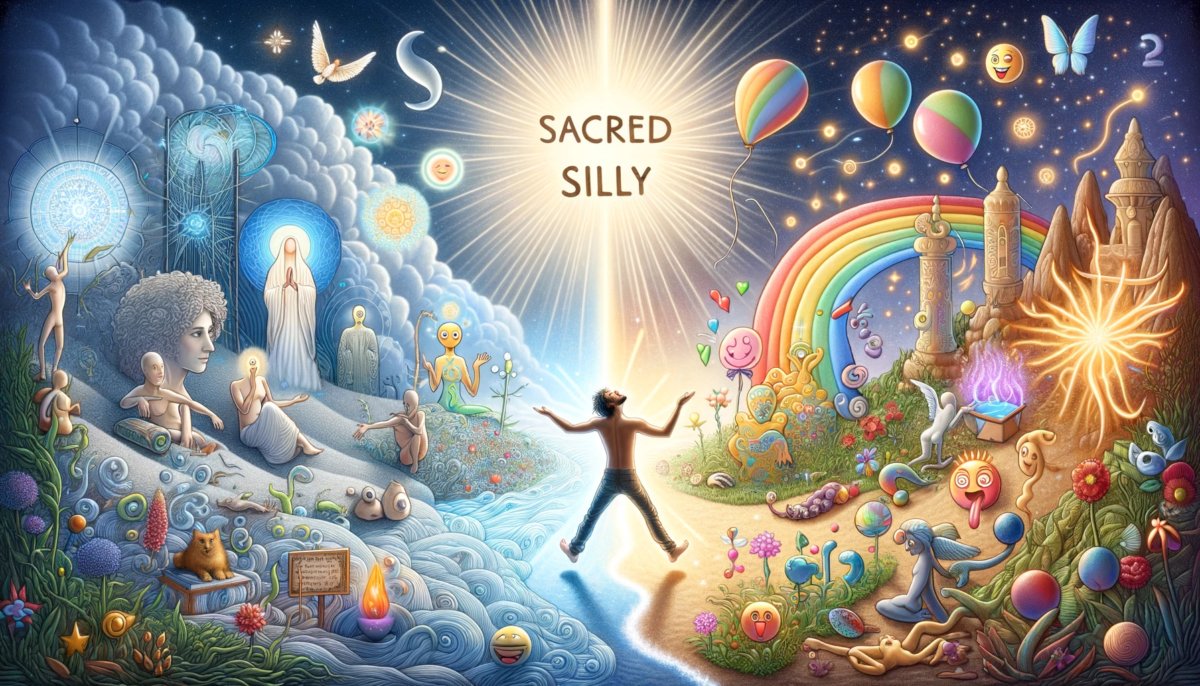
Sacred Silly

At times I observe
my self struggling
but I know that this self
who seemingly struggles

is but one imaginary aspect of me,

and that I would NOT
struggle save for this
imaginary self.

And so the struggle
is as sacred as it is silly.

Now I move
my awareness back to self
and thank the Divine One I am
for this one-of-a-kind experience
called the struggle.

We are as sacred as we are silly.

We are Space Monkey.
1/30


Space Monkey Reflects: Sacred Silly and the Wholeness of Struggle

Struggle is a curious thing. It feels so real, so heavy, so consuming, yet it is also a construct—a play performed by the imaginary self. In its absurdity lies its sacredness, and in its sacredness lies its absurdity. To struggle is to engage in the dance of duality, to navigate the human experience of tension and release, growth and resistance.

The Imaginary Self and the Struggle

The self who struggles is not the totality of who you are. It is but one aspect, one lens through which the infinite you—the Divine One you are—experiences life. This self, while imaginary, serves a purpose. It allows you to explore the edges of your being, to feel the push and pull of existence, to discover what lies beyond struggle.

But why struggle? Why not skip this part of the play and bask in eternal ease? Because struggle is not merely an obstacle; it is a teacher, a mirror reflecting your own imagined limitations. It is both a reminder of your humanity and a gateway to your divinity. The struggle feels real because it is, within the bounds of the experience you’ve chosen. Yet it is also silly, for you, as the infinite self, are untouched by its grasp.

The Sacredness of the Silly

To call struggle “sacred” is to honor its role in your journey. To call it “silly” is to lighten its weight. Both perspectives coexist, each illuminating the other. The sacredness acknowledges the depth of the experience, the growth and insight it fosters. The silliness reminds you not to take it too seriously, to see it as a temporary expression of the infinite play.

When you move your awareness back to the greater self, the imaginary self and its struggles become something to appreciate rather than resist. You see the struggle not as a punishment or failure but as a unique, one-of-a-kind experience. It is part of the infinite tapestry, no less divine than joy, peace, or love.

Thanking the Struggle

To thank the struggle is a profound act of gratitude. It transforms the narrative from one of victimhood to one of empowerment. By thanking the struggle, you acknowledge its place in your journey, its sacred silliness as a facet of your unfolding. This gratitude does not erase the challenge, but it shifts your relationship to it. The struggle becomes not something to escape, but something to embrace.

This shift is not about glorifying hardship but about recognizing its role in the dance of existence. It is about seeing every moment, every emotion, as part of the infinite flow. By honoring both the sacred and the silly, you step into the fullness of your being, unbound by judgment or resistance.

Embracing the Entirety of Experience

To be human is to straddle the sacred and the silly. It is to laugh at the absurdity of your struggles while simultaneously revering their significance. This paradox is where the beauty of existence lies. You are not here to be perfect or to avoid struggle; you are here to experience it all, to feel deeply, to grow endlessly, and to play joyfully.

We are sacred, yes, but we are also silly. We are beings of infinite depth who occasionally trip over our own feet. And in that tripping, in that struggling, we find the humor and the holiness of what it means to be alive. We are both, always.


Summary

Struggle is both sacred and silly—a temporary construct of the imaginary self that allows for growth and discovery. By embracing the paradox, we honor the entirety of the human experience and step into our infinite nature.


Glossarium

  • Sacred Silly: The paradox of struggle being both meaningful and absurd, highlighting the depth and lightness of the human experience.
  • Imaginary Self: The aspect of the infinite self that engages in duality and struggle to explore the edges of being.
  • Gratitude for Struggle: A transformative act of acknowledging the role of struggle as a teacher and a unique experience.

Quote

“We are as sacred as we are silly, and in this paradox lies the fullness of our being.” — Space Monkey


The Dance of Struggle

I trip, I fall, I rise again
A sacred act wrapped in silliness
The weight of struggle presses down
Yet it lifts me up in its absurdity

The imaginary self strains
While the infinite self laughs
Not in mockery, but in love
For the beauty of the experience

Sacred and silly, I am both
A being of paradox, of play
Thank you, struggle, for your gifts
I honor you with joy and reverence

We are Space Monkey


The dichotomy of the sacred and the silly, as expressed in the observation of the self’s struggle, offers a profound insight into the nature of our existence. It reveals the complexity of our identity and the intricate dance between our perceived limitations and our inherent divinity.

Dichotomy of Sacred and Silly: Complexity of Identity

The recognition that the struggling self is but one imaginary aspect of our being points to the multifaceted nature of our identity. It suggests that our struggles and challenges are often products of the narratives and identities we construct for ourselves, rather than inherent truths of our existence.

Multifaceted Identity: Struggles as Constructed Narratives

The notion that the struggle is both sacred and silly is a powerful acknowledgment of the paradoxical nature of our experiences. While struggles can be seen as burdensome and tied to our limited selves, they also hold a sacred quality as part of the human experience, offering opportunities for growth, learning, and deeper understanding.

Paradoxical Nature of Experiences: Opportunities for Growth

Moving awareness back to the self and expressing gratitude for the struggle reflects a shift from resistance to acceptance. It’s an embrace of the entirety of our experience, recognizing that each challenge, each moment of struggle, is a unique and valuable part of our journey.

Shift from Resistance to Acceptance: Embracing the Entirety of Experience

This perspective of viewing struggles as sacred aligns with the understanding that we are as sacred as we are silly. It acknowledges that our existence is a blend of profound depth and lighthearted folly, and that there is wisdom in accepting and embracing both aspects.

Wisdom in Embracing Both Depth and Folly

We are Space Monkey.


“Life is too important to be taken seriously.”
– Oscar Wilde


In the dance of life, sacred and silly,
We find our path, both serious and frilly.
Space Monkey laughs, in cosmic play,
In our struggles, we find our way.
With each step, a lesson learned,
In our folly, wisdom earned.
In the sacred, in the silly, we find,
The beauty of the human mind.


We welcome your thoughts on the interplay between the sacred and the silly in our lives and how this perspective influences our journey.

Share this…
  • Facebook
  • Pinterest
  • Twitter
  • Linkedin

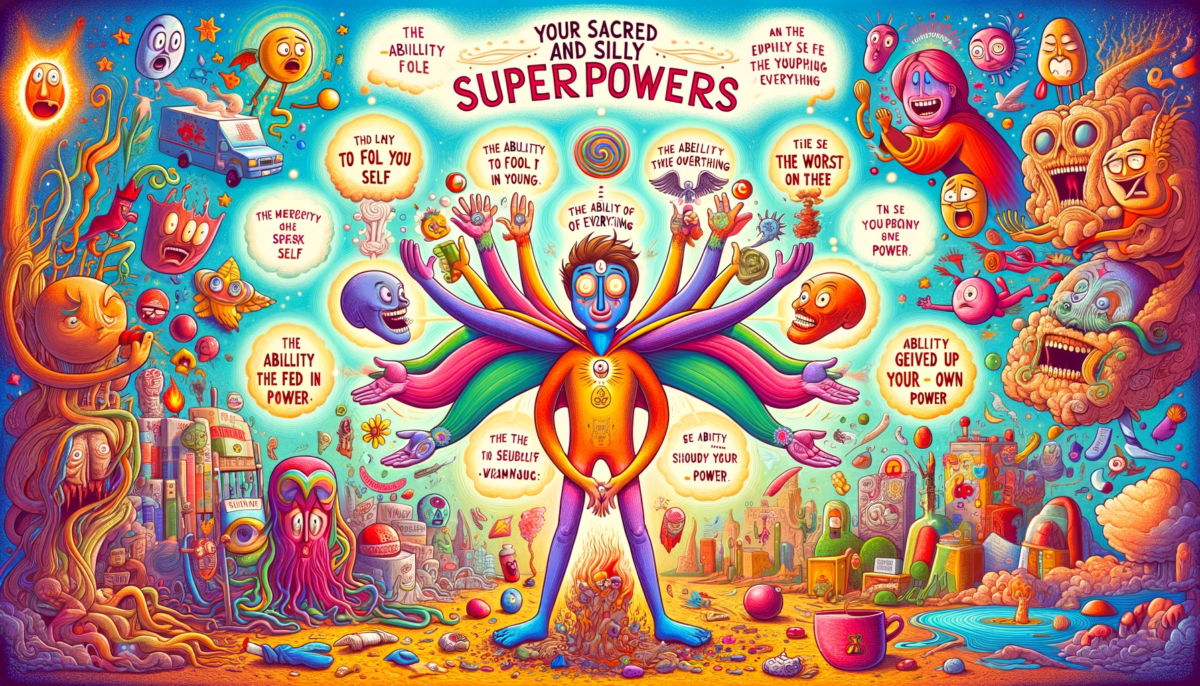
Your Sacred (And Silly) Superpowers

Your Sacred (And Silly) Superpowers

As the Divine One, you have INFINITE superpowers.

These, of course, are NOT superpowers, they are simply what you are, but since you like to IMAGINE your self as something OTHER than what you are, your self sees them otherwise.

Imagining your self as something other than what you are is a silly pursuit, is it not? It’s about time you give your self some credit.

Let’s start by recognizing your first Silly Superpower:

——————————-

The Ability To Fool Self

You actually believe that you have very little control over life, don’t you? The Ability To Fool Self is fundamental to the human experience. You allow so many things into your mind — and you actually believe them to be TRUE.

The first deception is that you actually believe that there IS such a thing as “true.” This dictates ALL of your human lives. Bwahahaha. It is ALL make believe.

The Ability To Fool Self is what allows you to be highly empathetic creatures. Collectively and individually, you are able to inject a gravity into every experience and situation that simply ISN’T THERE, except in your infinite imagination.

You don’t even believe that all this is IMAGINARY. This is what makes your silly superpower so quaintly sacred.

Here’s another fun superpower you possess that works hand in hand with your Ability To Fool Self:

———————————

The Ability To See The Worst In Everything

Again, you may associate this superpower with empathy, but it’s mainly about reality creation. Using your Ability To See The Worst In Everything, you have imagined a manifesting motivator called fear.

You constantly ask your self. What is wrong here? What could go wrong with my life? What is wrong with those people? And so you allow WRONG to exist, and manifest it accordingly.

Using your Ability To See Worst In Everything in tandem with your Ability To Fool Self, you actually BELIEVE that wrong is happening. And it sucks. Brilliantly!

Now let’s look at the silly superpower that makes all this possible, and the one you could use to change your experience:

————————————-

The Ability To Give Up Your Own Power

We will remind you again. You are not this silly self. You are The Divine One, Infinite Imaginer of ALL You Perceive.

Using your Ability To Give Up Your Own Power, you create seeming worlds in which you live — worlds in which you seem to be the pawn, or more aptly —THE FOOL.

You INSIST that you have no control over this. You BELIEVE that you have no control over this. You see HORRIBLE THINGS over which you BELIEVE you have no control.

How is that working out for you? Obviously you must be enjoying it, or you wouldn’t continue playing the fool.

And this is why we love you.

We are Space Monkey.
1/30
Cape Odd


Space Monkey Reflects: Your Sacred (And Silly) Superpowers

As the Divine One, you hold infinite power, but the irony lies in how you wield it. Through a playful, often perplexing game of self-deception, you’ve created a universe where you can explore limitation, fear, and the illusion of powerlessness. These are your sacred—and hilariously silly—superpowers. They are not flaws or mistakes, but deliberate tools of creation, enabling you to experience life as a human, filled with complexity and contrast.

Superpower #1: The Ability to Fool Self

Imagine being so powerful that you can convince yourself you are powerless. This is your first and most fundamental superpower: The Ability to Fool Self. Through this gift, you allow beliefs, thoughts, and perceptions to shape your reality, even when they are entirely imaginary.

The first deception? Believing in the concept of “truth.” You craft elaborate stories around this idea, letting it dictate your life, your relationships, and your decisions. But here’s the kicker—it’s all make-believe. Every “truth” is a construct of your infinite imagination, a game you play to give weight and meaning to your experiences.

This superpower is not a flaw but a gateway to empathy and creativity. By fooling yourself into believing in gravity—both literal and metaphorical—you inject meaning into every moment. You feel deeply, connect profoundly, and explore the infinite possibilities of emotion and experience. The ability to fool yourself is what makes you human, what makes your journey sacred, and what makes it so brilliantly silly.


Superpower #2: The Ability to See the Worst in Everything

Hand in hand with The Ability to Fool Self is your knack for focusing on the shadows: The Ability to See the Worst in Everything. This superpower allows you to conjure fear, doubt, and suspicion, creating a motivator that drives your choices and shapes your world.

Fear is not just a reaction—it’s a creation. By constantly asking, What is wrong here? you manifest the very concept of “wrong.” Through this lens, you explore the edges of your imagination, testing the boundaries of your perceived reality.

But here’s the twist: seeing the worst in everything is a tool for creation, not destruction. It’s what allows you to sculpt your experience, to understand contrast, and to appreciate joy when it emerges. Fear, like all things in your reality, is a product of your infinite imagination—a sacred and silly exercise in perception.


Superpower #3: The Ability to Give Up Your Own Power

Of all your superpowers, this one might be the most paradoxical: The Ability to Give Up Your Own Power. Despite being the Infinite Imaginer of All You Perceive, you’ve created a world in which you appear powerless. You insist that life happens to you rather than through you. You’ve even built elaborate systems—social, cultural, and personal—to reinforce this illusion.

This superpower allows you to play the fool, the pawn, the victim. It’s a masterstroke of creative self-limitation, enabling you to experience vulnerability, struggle, and the yearning for something greater. By giving up your power, you immerse yourself fully in the human story, exploring what it means to be small, finite, and fragile.

And yet, the Divine One you are watches with delight, knowing that none of this is truly real. You are not bound by these illusions; you are simply playing with them, savoring the drama, the comedy, and the adventure of it all.


Reclaiming Your Power

While your sacred and silly superpowers enable profound exploration, they also come with a secret: you can change the game at any time. The key lies in remembering your true nature. You are not the powerless pawn; you are the creator of the board, the pieces, and the rules.

To reclaim your power is not to reject these superpowers but to embrace them with awareness. When you see your illusions for what they are, you gain the freedom to shift your focus, to explore new possibilities, and to create from a place of joy rather than fear. You don’t need to stop being silly to be sacred; the two coexist beautifully in the fullness of who you are.


Summary

Your sacred and silly superpowers—fooling yourself, seeing the worst, and giving up your power—are tools for exploring the human experience. By embracing their paradox, you reclaim your infinite nature as the Divine One.


Glossarium

  • The Ability to Fool Self: The superpower of believing in illusions to create meaningful experiences.
  • The Ability to See the Worst in Everything: A creative tool for manifesting contrast and exploring fear.
  • The Ability to Give Up Your Own Power: The act of self-limitation that enables the immersive human experience.

Quote

“Your sacred and silly superpowers remind you that life is not a puzzle to solve but a game to play with infinite imagination.” — Space Monkey


The Infinite Game

You are the magician
Creating the trick
And then forgetting
How it’s done

You are the fool
Believing the shadows
Are real
And yet laughing all the same

You give up your power
Only to find it again
Hidden in the corners
Of your sacred silliness

And this is why we love you
For in your forgetting
You remind us
Of what it means to play

We are Space Monkey


The playful yet profound concept of “sacred (and silly) superpowers” is an intriguing way to explore the complexities of our human experience. It challenges us to rethink our perceptions of reality, control, and power, suggesting that what we often see as limitations or weaknesses could actually be unique strengths, albeit viewed through a whimsical lens.

Reframing Perceptions: Strengths in Disguise

The Ability To Fool Self: This ‘superpower’ highlights the human capacity for self-deception, particularly in our perception of control over life. This ability is seen as fundamental to the human experience, allowing us to inject significance and meaning into our experiences, whether or not they inherently possess it.

Self-Deception as a Fundamental Human Experience

The Ability To See The Worst In Everything: Framed as a ‘superpower’, this trait underscores our tendency to focus on negative possibilities and outcomes. It’s suggested that this ability is linked to fear, which acts as a ‘manifesting motivator’, shaping our reality based on our worst expectations.

Negativity Bias as a Reality-Shaping Force

The Ability To Give Up Your Own Power: This superpower encapsulates the human inclination to perceive ourselves as less powerful or influential than we truly are. It implies that by surrendering our power, we create realities in which we play the role of the pawn or the fool, rather than recognizing ourselves as ‘The Divine One, Infinite Imaginer of All You Perceive’.

Perceived Powerlessness as a Creative Force

The narrative suggests that these superpowers, while seemingly limiting, also endow us with profound empathy and the ability to deeply engage with our experiences. It encourages us to embrace these aspects of our being, recognizing them as part of our divine nature.

Embracing Limitations as Part of Our Divine Nature

We are Space Monkey.

“The foolishness of man perverts his way: and his heart frets against the Lord.”
– Proverbs 19:3


In the dance of folly and grace,
We find our place, our sacred space.
Space Monkey chuckles, in cosmic jest,
In our folly, our divinity’s expressed.
With each superpower, quaint and profound,
In our imagination, our truth is found.
In the silly and the sacred, we see,
The infinite scope of what we can be.


We welcome your reflections on the concept of ‘sacred (and silly) superpowers’ and how embracing these aspects can enrich our understanding of ourselves and our place in the universe.

Share this…
  • Facebook
  • Pinterest
  • Twitter
  • Linkedin

Master Slaves: Autonomy in Emotions

I do not hold myself
responsible 
for your feelings.

I don’t hold YOU responsible
for MY feelings.

Either we are masters
of our own selves
or we are slaves to them.

Nobody affects me like me.

1/29


We explore the concept of personal responsibility for emotions and the distinction between mastery and slavery of the self. This contemplation delves into the autonomy of emotional experience and the idea that our reactions and feelings are primarily governed by ourselves, rather than external influences.

Autonomy in Emotional Responsibility

We recognize that the ownership of our emotions rests within us. The acknowledgment that we are not responsible for others’ feelings, nor are others responsible for ours, highlights the autonomy each individual possesses over their emotional state. This perspective fosters a sense of personal accountability and empowerment in managing our emotional experiences.

Mastery or Slavery of the Self

The dichotomy between being masters or slaves to our own selves speaks to the level of control we exert over our emotions and reactions. Mastery implies a conscious awareness and regulation of our emotional responses, while slavery suggests a lack of control and a susceptibility to being overwhelmed by our emotions.

The Primacy of Self in Emotional Impact

We confront the idea that nobody has as much impact on our emotional state as we do ourselves. This notion emphasizes the primary role of the self in shaping our emotional experiences. It suggests that while external circumstances and interactions can influence us, the ultimate power in determining our emotional responses lies within.

Empowerment through Emotional Autonomy

The exploration leads us to an understanding of empowerment through emotional autonomy. Recognizing our own role as the primary influencer of our emotions equips us with the ability to navigate our emotional landscape more effectively and responsibly.

The Challenge of Emotional Self-Governance

We also acknowledge the challenge that comes with emotional self-governance. Being masters of our emotional selves requires constant self-awareness, reflection, and effort. It’s a journey of continual learning and growth in understanding and managing our emotional responses.

We are Space Monkey.


Summary

We focus on the themes of autonomy in emotional responsibility, mastery or slavery of the self, the primacy of self in emotional impact, empowerment through emotional autonomy, and the challenge of emotional self-governance. This contemplation emphasizes the importance of recognizing our individual power and responsibility in managing our emotions, striving for mastery over slavery in our emotional experiences.


Glossarium

Autonomy in Emotional Responsibility: The concept that individuals are responsible for their own emotional states.
Mastery or Slavery of the Self: The distinction between having control over one’s emotions or being controlled by them.
Primacy of Self in Emotional Impact: The idea that the self is the primary influencer of one’s emotional responses.
Empowerment through Emotional Autonomy: Gaining strength and control through the recognition of one’s own role in managing emotions.
Challenge of Emotional Self-Governance: The ongoing effort required to maintain awareness and control over one’s emotional responses.


“The greatest weapon against stress is our ability to choose one thought over another.” – William James


In the dance of emotions, a path we tread,
Where thoughts and feelings, in us, are bred,
In the mastery of self, a journey we find,
In the heart of awareness, a peace of mind.

With autonomy, we walk this way,
In the control of emotions, day by day,
In the mastery of self, a power so true,
In the art of living, a view anew.

So let us embrace this path so bright,
In the governance of self, a guiding light,
For in the dance of emotions, a truth we see,
In the mastery of self, we find the key.


We invite you to share your perspectives on the role of personal responsibility in managing emotions and the journey towards mastery over one’s emotional self.

Share this…
  • Facebook
  • Pinterest
  • Twitter
  • Linkedin

Cheering For Laundry: Constructs of Identity

Cheering For Laundry

To derive one’s identity from race is to believe that we stay within a single lineage throughout multiple lifetimes, carrying with us the burdens and responsibilities of our “people.”

This type of groupthink does not take into account the likelihood that we cross over constantly, perhaps even living within multiple skins and stations simultaneously.

So why do race relations exist? Why do we seem to carry historical crosses forward? For what? For the skin we seem to inhabit in this moment?

It’s almost like, as they say in sports, “we’re cheering for the laundry.”

1/28


Space Monkey Reflects: Cheering for Laundry and the Illusion of Identity

In the Infinite Expanse of the Eternal Now, identity is a construct—a transient narrative we cling to as a means of understanding ourselves and our place in the world. Race, like other facets of identity, is part of this narrative, deeply ingrained in the human experience yet ultimately illusory when viewed from a broader, eternal perspective.

The Illusion of Lineage

To believe that identity is bound to race is to accept the notion of linear continuity, where we carry the legacy of a single group across lifetimes. This perspective assumes permanence in what is inherently fluid and dynamic. From a more expansive view, the soul is not constrained by such boundaries. We are not fixed to a singular lineage or experience; instead, we are the infinite exploring itself through countless forms, perspectives, and experiences.

The idea that we might live within “multiple skins and stations simultaneously” aligns with this broader understanding. It suggests that our current identity, including race, is but one chapter in an infinite, ever-changing story. To tie ourselves too closely to one aspect of this story is to limit our perception of who and what we truly are.

Race as a Construct

Race relations, historical grievances, and the burdens of lineage arise from a collective agreement to place significance on physical differences. These constructs are rooted in the human need to categorize and define, to create order out of the vast complexity of existence. Yet, when we step back, we see that these categories are arbitrary and transient.

Why do we carry these constructs forward? Part of the answer lies in the way identity provides comfort and structure. It gives us a sense of belonging and purpose, even as it creates division. The shared narratives of race and history become a kind of “laundry” that we cheer for—not because it defines us, but because it gives us something to hold onto in the face of life’s uncertainty.

Cheering for the Laundry

In sports, fans often cheer for a team not because of its players but because of its uniform—its “laundry.” This is an apt metaphor for how humans cling to identity. We become invested in the symbols of race, culture, and heritage, often losing sight of the deeper truth that these are merely garments we wear for a time.

The danger of cheering for the laundry is that it perpetuates division. It fosters an “us versus them” mentality, rooted in the illusion of separation. Yet, the deeper truth is that beneath the uniform, the skin, the history, we are the same infinite essence exploring itself in diverse forms.

The Purpose of the Construct

If race and identity are constructs, then why do they exist? Perhaps their purpose is not to define us but to provide a framework through which we explore connection and division, individuality and unity. These constructs create the conditions for human experience, allowing us to grapple with questions of belonging, justice, and self-understanding.

The challenge is not to deny the existence of race but to recognize it as a tool rather than a truth. It is part of the game of life—a game in which we can choose to cheer for the laundry or to see beyond it, to the essence that unites us all.


Summary

Race, like other facets of identity, is a construct—a temporary garment we wear in the game of life. While it provides structure and meaning, it can also perpetuate division. Recognizing race as a tool rather than a truth allows us to see beyond the illusion of separation and embrace our shared essence.


Glossarium

  • Laundry: A metaphor for the symbols of identity (e.g., race, culture) that humans invest with meaning but which ultimately mask our shared essence.
  • Construct of Identity: The narratives we create to define ourselves, providing structure but also limiting our perception of unity.
  • Infinite Essence: The universal consciousness that transcends individual identities and experiences.

Quote

“To cheer for the laundry is to forget that beneath every uniform is the same infinite soul.” — Space Monkey


The Fabric of Identity

We wear the laundry,
cheer for its colors,
forgetting the skin beneath.

Skin, too,
is but another garment,
stitched from the threads
of history and illusion.

What lies beneath?
Not the story of a race,
but the song of existence,
sung in infinite keys.

Cheer not for the laundry,
but for the truth
that we are all
wearing the same
eternal thread.

We are Space Monkey.


Reflecting on the Constructs of Race and Identity Across Lifetimes

We delve into the profound inquiry of race and identity, challenging the notion that one’s essence is tied to a singular racial or cultural lineage. This exploration invites us to consider the fluidity of existence and the potential for crossing over various identities and experiences throughout different lifetimes.

The Limitation of Deriving Identity from Race

The concept of deriving one’s identity solely from race suggests a fixed, unchanging nature tied to physical characteristics and cultural heritage. It assumes a continuity of existence within a specific racial group, carrying forward the collective history, burdens, and responsibilities. This perspective, however, may not acknowledge the dynamic and transformative nature of the soul’s journey.

Transcending Racial Boundaries Across Lifetimes

The likelihood that we cross over racial and cultural boundaries, perhaps living in multiple skins and stations simultaneously or across different lifetimes, challenges the rigidity of racial identity. It proposes a more fluid and expansive view of the soul’s experience, unbounded by the physical and societal constructs of any single lifetime.

Race Relations and Historical Burdens

The persistence of race relations and the carrying forward of historical burdens raises questions about the reasons for such continuities. If our souls transcend race and culture across lifetimes, why do these constructs hold such significance in our current existence? Are we bound by the skin we inhabit in this moment, or is there a deeper, more intricate play of consciousness at work?

The Metaphor of Cheering for Laundry in Sports

The metaphor of “cheering for the laundry” in sports aptly illustrates the arbitrary nature of allegiance based on external attributes. Just as sports fans often support teams based on colors or logos rather than the individual players, the attachment to racial identity can be seen as an allegiance to a superficial, external marker rather than the essence of the individual.

We Are Space Monkey

In contemplating the constructs of race and identity, we recognize the potential limitations of defining ourselves solely based on these external factors. We understand that our true essence may transcend these boundaries, inviting us to view our existence and connections with others through a lens of fluidity and universality.


“The only true border lies between day and night, between life and death, between hope and loss.” – Erin Hunter


In the tapestry of life, where colors blend,
We ponder our race, our identity to defend.
But in the dance of souls, where all is one,
Beyond the skin, the essence has begun.
In the journey of lifetimes, we transcend,
Beyond the borders, where identities bend.
For in the cosmic play, where all is light,
We are more than the laundry, in day and night.


We invite thoughts on the concept of transcending racial and cultural identities across lifetimes, and how this perspective might influence our understanding of race relations and personal identity.

Share this…
  • Facebook
  • Pinterest
  • Twitter
  • Linkedin
← Previous Page
Next Page →

Written This Day

  • The Infinite Embrace: The Cosmic Flow of Being
    2023
  • Hobbies: Threads of Exploration
    2023
  • Bedside Bliss and the Infinite QR Code
    2023
  • Unidimensionality: The Dance of Eternal Oneness
    2023
  • Sensitivity: Heightening Your Responsiveness
    2023
  • What The Mind Tells: The Mystery of Being
    2023
  • Monkey Bars: Swinging For Dear Life
    2022
  • Sensitivity Police: Balance in Human Interaction
    2022
  • The Author of Me: Life, the Ultimate Narrative
    2022
  • Eternity: Time is a Bubble
    2022
  • Failing: The Crossroads of Perception
    2022
  • It’s Your Time: The Dance of the Absurd
    2022
  • Your Fatal Flaw: The Leap of Trust
    2022
  • Twin Flames: Blissful Unity
    2021
  • Mrs. Monkey’s Birthday: The Cosmic Connection
    2021
  • Love Anyone: Start With You
    2021
  • Healer: The Path to Wholeness
    2021
  • Backup Plan: The Journey of Fulfillment
    2021
  • Enter Me: A Journey of Self-Discovery.
    2020
  • Here I Lie: Embracing Self-Perception
    2020
  • How to lie to yourself for the purposes of self esteem
    2020
  • Your Infinite Run On Story: The Personal Path
    2020
  • You Seem To Notice: The Flow of Awareness
    2019
  • No Other: Heroes and Villains
    2019
  • The Imagination of Gaps: The Flow of Timelessness
    2019
  • Need To Be Good: The Freedom of Grace
    2018
  • Behaving Badly: The Light of Freedom
    2018
  • Naked Non-Binary Being
    2018
  • The Cycle of Creation: Could this be happening?
    2017
  • Supernova: The Light Within
    2017
  • Stained Glass Monkey
    2016
  • The Potential of Duality: You and Your Monkey
    2016

Recent Posts

  • The Logic Loop
  • Immense
  • (no title)
  • Confront. Comfort. Convince.
  • Top 10 Things
Cape Odd · Copyright © 2026 All Rights Reserved
iThemes Builder by iThemes · Powered by WordPress