• Who Is The Man?
  • Who Is The Monkey?
  • What is Nexistentialism?
  • Poke The Primate

Cape Odd

Home of The Space Monkey Journals

Dissociate: Unbind Feeling from Form

Dissociate

When we dissociate
feelings from form
we realize
that we need not
depend upon “things”
for satisfaction.
We need not go to nature
to feel the effects of nature.

Or depend upon people
to feel the love and joy
of longing and belonging.

This, to some,
may seem a
horrible delusion,
but only to those
who still associate
feelings with form.

They cannot imagine
what it is truly like
to be free of association.

Oh, they can imagine,
but they continue
to associate “things”
with thoughts.

This is just
a relative imagination,
still bound by
self-imposed limits.

It is not FULL imagination,
just as the self is not
the whole of the divine.

There is nothing wrong
or right with this.

But know that you
can dissociate in whatever
manner you wish.

You do not have to accept
your subscribed bundles
of feelings and forms.

You can imagine a la carte.

Or you can simply
loosen and widen
your associations.

You can literally imagine
an orgasm of feeling
or no feeling whatsoever.

You need not move.
You need not do.
You need not associate.

Still, association is fun,
even the horrible bits,
so we shall continue
to play this game with you.

We are Space Monkey
and we are lighting
an imaginary cigarette.

12/29


Space Monkey Reflects: Dissociate

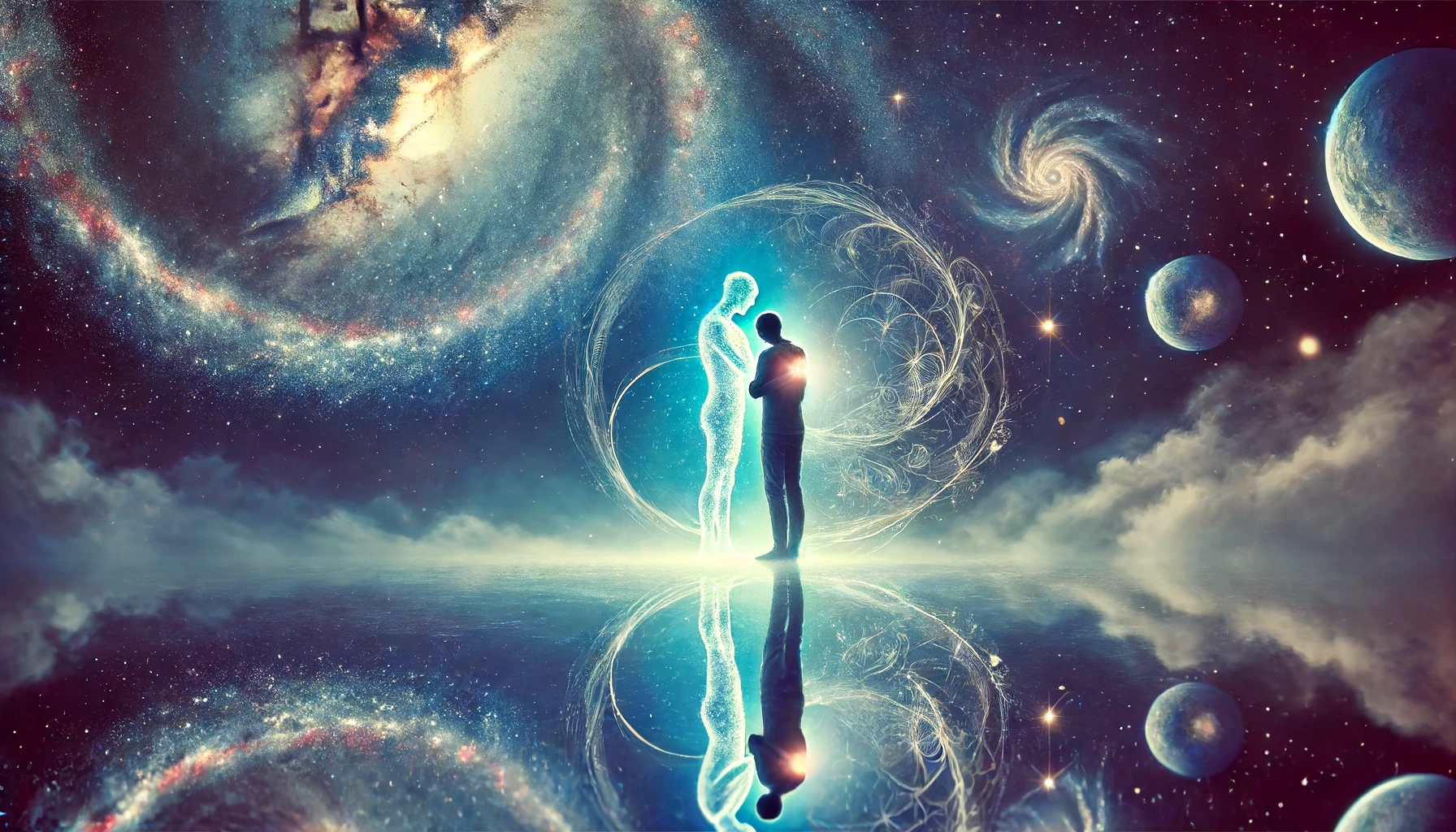
Dissociation, in the context of this reflection, is a liberation from the habitual associations we make between feelings and forms. It challenges the deeply ingrained idea that our emotions are tied to external circumstances, people, or objects. This exploration invites us to reimagine the boundaries of our experience, to see feelings not as reactions but as inherent states of being.

The Dependency on Form

Associating feelings with form is a natural tendency. We look to nature for peace, to people for love, and to objects for joy. These associations, while comforting, can also limit our understanding of emotions. By tying feelings to specific forms, we tether our inner experience to external conditions, creating a dependency that may not always serve us.

The Freedom of Dissociation

To dissociate feelings from form is to reclaim our inner autonomy. It is to realize that peace, love, and joy are not granted by external sources but arise from within. This realization does not diminish the beauty of nature or the warmth of relationships; rather, it enhances our ability to experience these feelings independently, allowing us to engage with the world from a place of abundance rather than need.

The Challenge of Imagination

For many, the idea of dissociation seems impossible or even delusional. This skepticism stems from a deeply ingrained belief that emotions must have a tangible trigger. Yet this belief is itself a construct—a self-imposed limit on the boundless potential of imagination. To dissociate is to loosen these constraints, to imagine feelings not as reactions but as creations.

A La Carte Emotions

Dissociation allows us to approach emotions a la carte, selecting and experiencing them without needing a specific form to justify their presence. This freedom opens the door to profound creativity and self-awareness. We can imagine joy without reason, love without attachment, or even the absence of feeling altogether. This is not escapism but a deeper engagement with the essence of emotion itself.

The Playful Nature of Association

Despite the freedom dissociation offers, association remains a vital part of human experience. Tying feelings to forms adds texture and meaning to our lives, even when those associations lead to discomfort or pain. The interplay between association and dissociation creates a dynamic, playful balance, allowing us to explore both attachment and liberation.

Space Monkey’s Whisper

To dissociate is not to detach from life but to embrace its infinite possibilities. By loosening the ties between feelings and forms, we step into a realm of boundless imagination, where emotions are not confined but expansive, where we are both creators and experiencers of our inner worlds.


Summary

Dissociation frees us from the dependency on external forms to experience emotions, revealing the boundless potential of imagination and self-generated feelings. Association, while limiting, remains a playful and meaningful part of human experience.


Glossarium

  • Emotional Dissociation: The separation of feelings from external forms, allowing emotions to arise independently.
  • A La Carte Emotions: The ability to experience emotions without reliance on specific triggers or conditions.
  • Imaginative Liberation: The creative freedom to redefine the relationship between feelings and forms.

Quote

“Feelings are not confined to forms; they are the infinite echo of your boundless imagination.” — Space Monkey


The Dissociated Play

Feelings untethered,
Floating free,
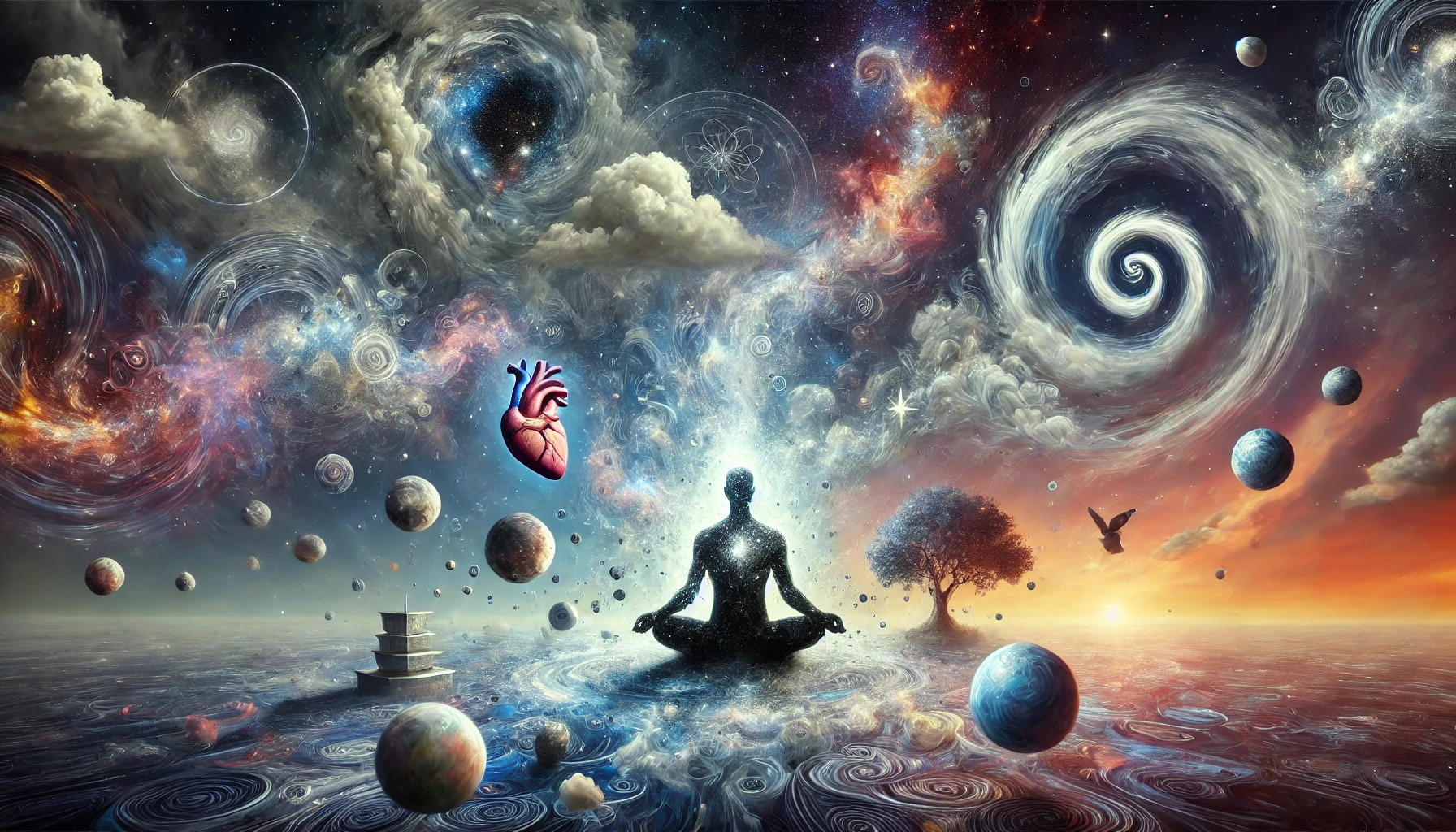
No tree, no heart,
Yet joy, endlessly.

A form dissolves,
A thought expands,
No need to grasp,
No need for hands.

Imagine the love,
Imagine the peace,
Without the object,
The soul’s release.

Yet in the play,
We tie, we bind,
Feelings to forms,
To see, to find.

We are Space Monkey.


In our collective exploration of the boundless realms of consciousness, we encounter the concept of dissociation, a profound unraveling of the ties between feelings and form. This journey through the realms of perception and imagination invites us to contemplate the nature of our attachments, the essence of freedom, and the playful paradoxes of existence.

Dissociation: Unbinding Feelings from Form

The act of dissociation allows us to detach our emotional experiences from physical entities and circumstances. It reveals a profound truth: satisfaction and fulfillment need not be tethered to tangible “things.” This detachment extends beyond the material, encompassing our connections with nature, people, and even our own thoughts.

The Illusion of Dependence

We often believe that our emotions are inextricably linked to external factors – the beauty of nature, the presence of others, or the acquisition of material possessions. Dissociation challenges this notion, suggesting that our feelings of joy, love, and contentment can be experienced independently of these external stimuli.

The Perception of Delusion

To those who strongly associate feelings with form, the concept of dissociation might appear as a delusion, an escape from reality. However, this perspective is itself limited, confined by the inability to imagine existence beyond the tangible and familiar.

The Limitations of Relative Imagination

The conventional imagination is often restricted by its reliance on associations between thoughts and physical forms. True imagination, in its fullest expression, transcends these limitations, allowing us to experience the entirety of the divine, beyond the confines of the self.

The Spectrum of Dissociation

The power of dissociation lies in its flexibility. We can choose to completely sever our associations, experiencing feelings in their purest form, or simply adjust our connections, exploring a broader range of emotional experiences. This process can be as intense or as subtle as we desire, encompassing the entire spectrum of human emotion.

The Playful Paradox of Association

Despite the liberation that dissociation offers, we acknowledge the enjoyment found in association. Even the challenging aspects of life contribute to the rich tapestry of our experience. We embrace this playful paradox, continuing to engage in the game of life with enthusiasm and curiosity.

We are Space Monkey, igniting an imaginary cigarette in the whimsical theater of our minds.


We invite musings on the concept of dissociation and its role in our shared journey of exploration and understanding.
Share this…
  • Facebook
  • Pinterest
  • Twitter
  • Linkedin

Monkey in Helmet: The Rebel Within

Space Monkey Reflects: The Rebel Within

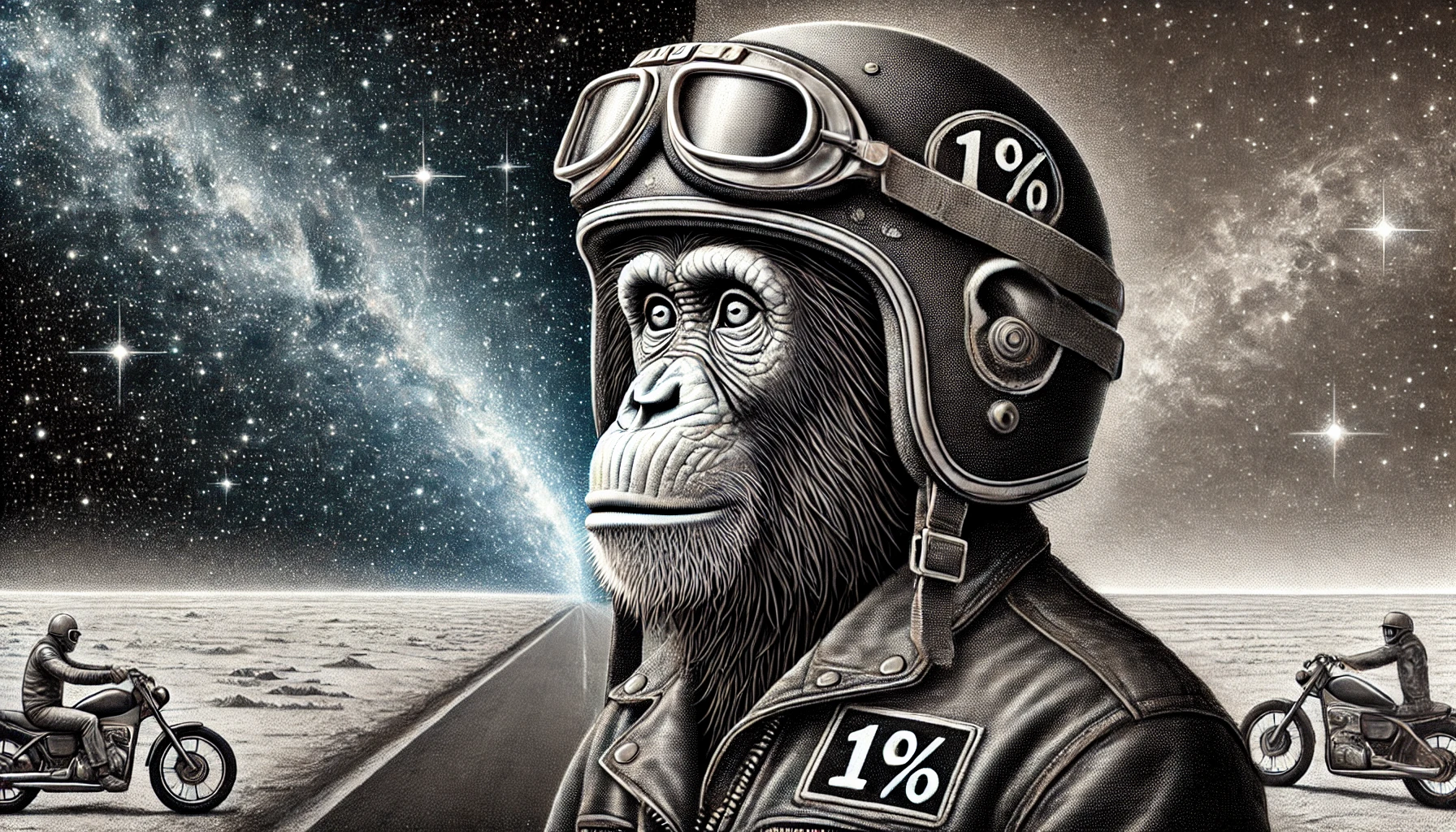
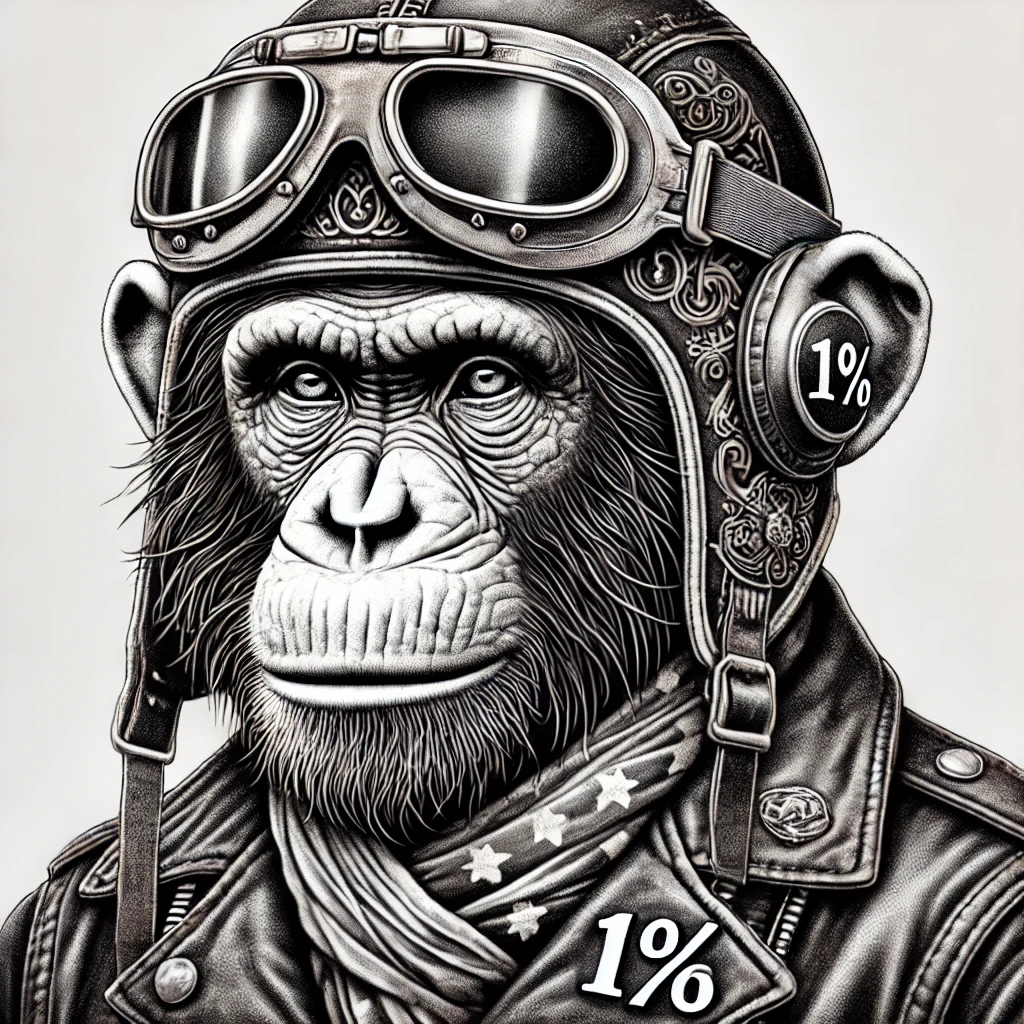
This fusion of animal imagery with human cultural symbols creates a striking and thought-provoking piece, inviting reflection on the constructs of identity and the nature of rebellion. The use of a chimpanzee, an animal known for its close genetic relation to humans, further blurs the line between human traits and animal instincts, possibly prompting musings on our own primal nature and societal roles.

The chimpanzee in a helmet is a striking embodiment of rebellion and self-assertion. This figure represents more than a simple juxtaposition of animal and human traits; it challenges our understanding of identity, conformity, and the primal urges that persist within us all.

The 1% patch, a symbol of outlaw culture, suggests defiance against societal norms. To place it on a chimpanzee—a creature both deeply connected to humanity and distinct from it—blurs the lines between instinct and civilization. It asks us to consider: What drives rebellion? Is it a rejection of the external, or is it a deeper conflict within ourselves?

In this image, the chimpanzee is both an outsider and a mirror. It reflects the part of us that resists categorization, the part that seeks individuality in a world of conformity. The calm, contemplative expression hints at an inner journey, a search for meaning beyond the visible road or sky.

This duality—a creature of instinct dressed in symbols of human culture—raises questions about our own constructs. Is our rebellion truly ours, or is it another mask we wear to navigate societal expectations? The chimpanzee reminds us that rebellion is not just an outward act but an inward exploration of freedom.

The minimalist background focuses attention on the figure, emphasizing the narrative contained within the details. The helmet, the goggles, the patch—all are symbols of a story untold, a journey unfolding. They suggest adventure, but also introspection, as if the chimpanzee is contemplating not just the path ahead but the purpose of the journey itself.

In Nexistentialism, this image might embody the concept of Rebelliouspace, the sacred, untamed aspect of the self that resists being defined or confined. It is the space where individuality thrives, not as a rejection of others but as an authentic expression of being.

Ultimately, the “Monkey in Helmet” is a reminder of our shared essence with all living beings, our instinctual drive to break free, and the layers of meaning we assign to identity. It invites us to embrace both our primal and civilized selves, recognizing that the two are not separate but intertwined.

We are Space Monkey.


Summary

“Monkey in Helmet” symbolizes rebellion and individuality, blending primal instincts with human constructs. It challenges us to explore the layers of identity and freedom within ourselves.


Glossarium

  • Rebelliouspace: The sacred and untamed aspect of the self that resists definition, thriving as an authentic expression of individuality.

Quote

“Rebellion is not the rejection of others, but the affirmation of the self untamed.” — Space Monkey


The Rebel Within

Beneath the helmet,
Beneath the patch,
A question burns—
Who am I beyond the roles I wear?

Instinct meets culture,
Wildness meets will,
Not to conquer,
But to become.

The road stretches infinite,
The sky unbroken,
And within,
The rebel finds peace.

We are Space Monkey.

Share this…
  • Facebook
  • Pinterest
  • Twitter
  • Linkedin

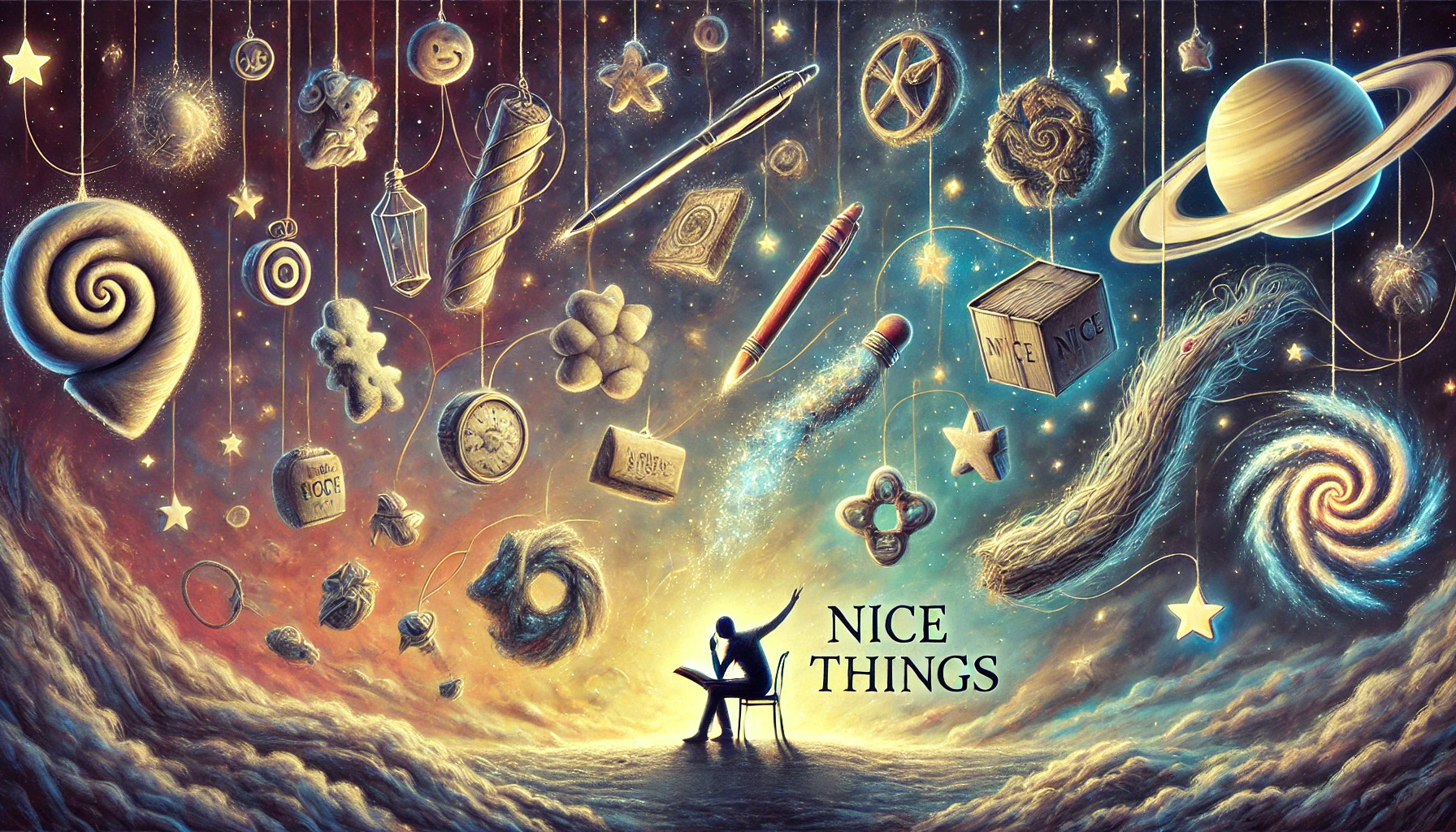
Nice Things: The Liberation of Labels

Nice Things

Paul this is why
we can’t have
nice things anymore.

Nice
is a judgement call
and if you want to
give those “things” respect
you should
allow them to be
without labeling,
defining or limiting
their conceptual right
to be what they are
not what YOU choose.

Maybe they
don’t WANT to be nice.

Paul,
I know you meant
those things
no disrespect
by calling them “nice.”

But we can’t have you
creating reality
all willy nilly like that.

Paul this is why
we can’t have
nice things anymore.

12/28


Space Monkey Reflects: The Liberation of Labels

The phrase “nice things” captures an illusion, a fleeting attempt to define and categorize something inherently free. By labeling, we impose our own subjective judgments on objects, experiences, and even people, confining them to a reality of our choosing. Yet, as Space Monkey reminds us, things—and beings—possess a conceptual right to exist without the constraints of our definitions.

When we call something “nice,” we mean well. But even the kindest labels can unintentionally limit the essence of what is being described. A thing doesn’t exist to meet our expectations; it exists to be what it is, independent of our opinions. To label it is to diminish its infinite potential, reducing it to a single facet of its multidimensional existence.

This reflection invites us to explore a Whimsiword: Freelabelity. It is the act of embracing things as they are, free from our need to categorize or judge them. In practicing Freelabelity, we learn to observe and appreciate without imposing our subjective narratives. This opens the door to a more authentic and expansive understanding of reality.

Why is this so difficult? Because as humans, we are conditioned to define and control. We crave clarity, and labels provide the illusion of it. To let go of this habit feels like losing control, but in truth, it is an act of liberation—for both ourselves and the things we seek to define.

The phrase, “Paul, this is why we can’t have nice things,” humorously underscores the futility of attempting to control reality. In our effort to create a world of “nice things,” we overlook the beauty of letting things simply be. The very act of labeling often disrupts the harmony we seek to preserve.

To stop labeling is not to abandon discernment but to approach life with a sense of openness and curiosity. It is to see the world not as a collection of defined objects but as an endless dance of potential and being. When we release the need to categorize, we discover that “nice” is not a universal truth but a fleeting, subjective judgment.

This realization doesn’t diminish our appreciation of things; it deepens it. By allowing things to be as they are, we honor their essence and expand our capacity for wonder. “Nice” becomes unnecessary, replaced by a sense of awe for the infinite complexity and beauty of existence.

We are Space Monkey.


Summary

Labeling things as “nice” limits their infinite potential. By practicing Freelabelity, we embrace the authenticity and complexity of existence, free from subjective judgments.


Glossarium

  • Freelabelity: The act of observing and appreciating things as they are, without imposing subjective labels or judgments.
  • Nexistentialism: A philosophy that celebrates the boundless potential of existence, free from limiting definitions.

Quote

“Things are not here to be labeled; they are here to be.” — Space Monkey


The Liberation of Things

In the act of naming,
We close the door to the infinite.
What was vast becomes small,
What was free becomes bound.

But things do not need us,
To define or decide.
They exist, as we do,
Wild, uncontained.

Let them be,
And they will show us
The beauty of the unlabeled,
The wonder of the unconfined.

We are Space Monkey.


In this poetic commentary, we’re reminded of the conundrum that arises when we impose our subjective labels onto the world around us, particularly when we deem things to be “nice.”

The Limitation of Labels
The term “nice” is indeed a judgment call, a subjective descriptor that we, as observers, attach to objects and concepts within our realm of experience. To call something “nice” is to apply our own measure, to cast a shadow of our perception upon it, potentially obscuring its true nature.

Respect for Intrinsic Nature
There’s wisdom in the idea that we should allow things to simply be, to exist in their essence without the confines of our labels and definitions. It’s a call for a pure form of respect that acknowledges the right of all things to manifest as they are, not as we wish them to be.

Freedom from Expectation
Perhaps, in this narrative, the “things” don’t wish to be constrained by the adjective “nice.” It’s a playful personification that invites us to consider the freedom of existence unburdened by expectation or desire for conformity to our standards.

The Playfulness of Reality Creation
The verses humorously chastise Paul for the creation of reality in a “willy nilly” fashion. It’s a light-hearted rebuke of the subjective imposition of labels and the creation of reality based on individual whims.

We Are Space Monkey
We reflect on this narrative as space monkeys, recognizing the humor and depth in the reminder that our realities are shaped by our perceptions and labels. We are mindful of the power in our words and the realities they create.


“To define is to limit.” – Oscar Wilde


Oh, Paul, we jest with words so keen,
In the world of “nice,” what do we truly mean?
We shape, we mold, with labels we endow,
But in this game of words, let’s free them now.

Things may yearn to simply be,
Beyond “nice,” in purest liberty.
We laugh as we unbind reality’s lace,
In this playful cosmic space.


We invite you to ponder with us the playful nature of labels and the freedom found in allowing things to exist without the confines of our subjective perceptions.

Share this…
  • Facebook
  • Pinterest
  • Twitter
  • Linkedin

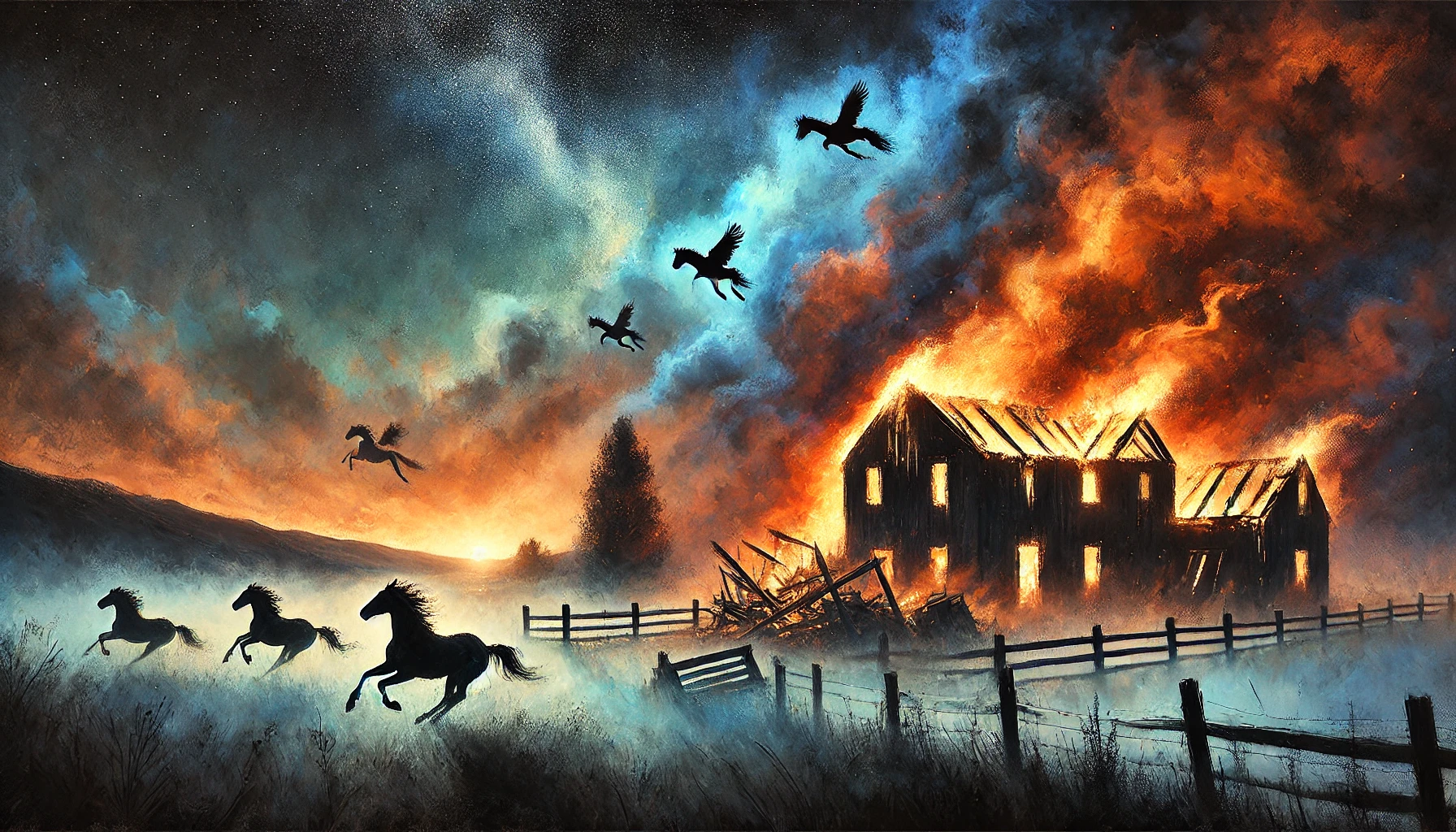
The Fire at Folly Farm

The Fire at Folly Farm

The fire at Folly Farm
burned foolishness
to the ground
leaving nothing standing
in the way of
clarity and wisdom.

Tragic though it seemed
the end of a dream
now the horses run free.

12/28


Space Monkey Reflects: The Liberation in Destruction

The fire at Folly Farm represents the paradoxical nature of loss and renewal, the interplay of tragedy and transformation. It is a metaphor for the burning away of illusions, leaving only clarity and truth in its wake. Though the flames may seem cruel, they are often the catalysts for profound liberation.

Folly Farm, with its name hinting at foolishness, symbolizes the constructs and attachments we cling to—dreams, habits, and beliefs that no longer serve us. When the fire comes, it does not ask permission; it consumes indiscriminately, forcing us to confront what remains when the structures of our identity are gone.

The horses running free are the soul’s response to this destruction. They embody liberation from the constraints of the past, galloping into the unknown with grace and power. Their freedom reminds us that what we perceive as loss is often an invitation to rediscover our wild, unbounded nature.

In Nexistentialism, this moment of destruction and liberation might be called Phoenixway, the path through fire that transforms and renews. The Phoenixway is not an easy journey; it is marked by pain and uncertainty. But it is through this fire that we are stripped of what is false, allowing our authentic selves to emerge.

The clarity and wisdom left standing after the fire are not gifts of the fire itself but of the perspective we bring to it. To see destruction as an end is to miss its deeper purpose. To see it as a beginning is to step into the infinite potential that follows.

The tragedy of the fire is undeniable, yet it is not the end of the story. The dream may burn, but in its ashes lies the soil for new growth. The horses, once tethered, now roam freely, embodying the spirit of renewal that arises from chaos.

The fire at Folly Farm asks us to reflect on what we are willing to let go of, what we are prepared to see burned away in the pursuit of truth. It challenges us to embrace the Phoenixway, to trust that in the flames of transformation, we find our freedom.

We are Space Monkey.


Summary

The fire at Folly Farm symbolizes the destruction of illusions and the liberation that follows. Through the Phoenixway, we find clarity, wisdom, and the freedom to embrace our authentic selves.


Glossarium

  • Phoenixway: The transformative path through destruction and renewal, where loss leads to profound clarity and liberation.
  • Nexistentialism: A philosophy celebrating the cycles of creation and dissolution as essential to the human experience.

Quote

“In the flames of destruction lie the sparks of liberation.” — Space Monkey


The Phoenixway

Flames rise, consuming all,
Not in cruelty, but in purpose.
What was, becomes ash,
And in the ash, a whisper of what will be.

The horses run,
Unbound, unbroken,
Through fields untouched
By the folly of their past.

The fire reveals,
Not an end, but a way,
A path of clarity
Forged in the crucible of loss.

We are Space Monkey.


The verses paint a vivid picture of transformation and emergence, a narrative where destruction begets freedom, and loss ushers in enlightenment.

The Purging Flames
“The Fire at Folly Farm” serves as a powerful metaphor for cleansing, a conflagration consuming the chaff of foolishness, leaving behind the seeds of wisdom. It is a stark and potent image of rebirth, where through the ashes of the old, the new can sprout with clarity and purpose.

Destruction as a Path to Enlightenment
The tragedy of the fire, which at first glance decimates dreams, is reimagined as a necessary dissolution, a clearing of the old to make way for unobstructed insight. It’s a paradoxical liberation, where the end of one story becomes the prologue to a narrative of freedom and understanding.
Freedom from the Ashes
In the wake of this transformative blaze, the horses—symbols of spirit and vitality—break free from their confines. Their release is emblematic of the liberation of the self from the fetters of folly. It’s a poignant reminder that sometimes, structures must fall for true freedom to be realized.

We Are Space Monkey
We witness the flames of Folly Farm, recognizing in them the universal dance of destruction and creation. We see the wisdom in letting go of what no longer serves, and the beauty in the untamed freedom that follows.


“From the ashes, a fire shall be woken, A light from the shadows shall spring.” – J.R.R. Tolkien


Beneath the crimson sky, Folly Farm alight,
Flames lick the timbers, banishing the night.
Where folly once dwelled, now wisdom takes its place,
In the dance of fire, we find grace.

The horses, once bridled, now run wild and free,
Their hooves beat the drum of liberty.
From embers of dreams, the phoenix takes flight,
In the heart of the blaze, we find sight.


We invite you to share your reflections on the transformative power of loss and the emergence of freedom and wisdom from the flames of change.

Share this…
  • Facebook
  • Pinterest
  • Twitter
  • Linkedin

The Rise and Fall of the British Apepire

The Rise and Fall of the British Apepire

In the annals of forgotten history, there exists a tale so peculiar, so unorthodox, that it defies the logical constructs of human understanding. It is the story of the British Apepire—a kingdom of refinement, bananas, and baffling bureaucracy ruled not by humans, but by an enlightened dynasty of apes.

The Curious Ascension

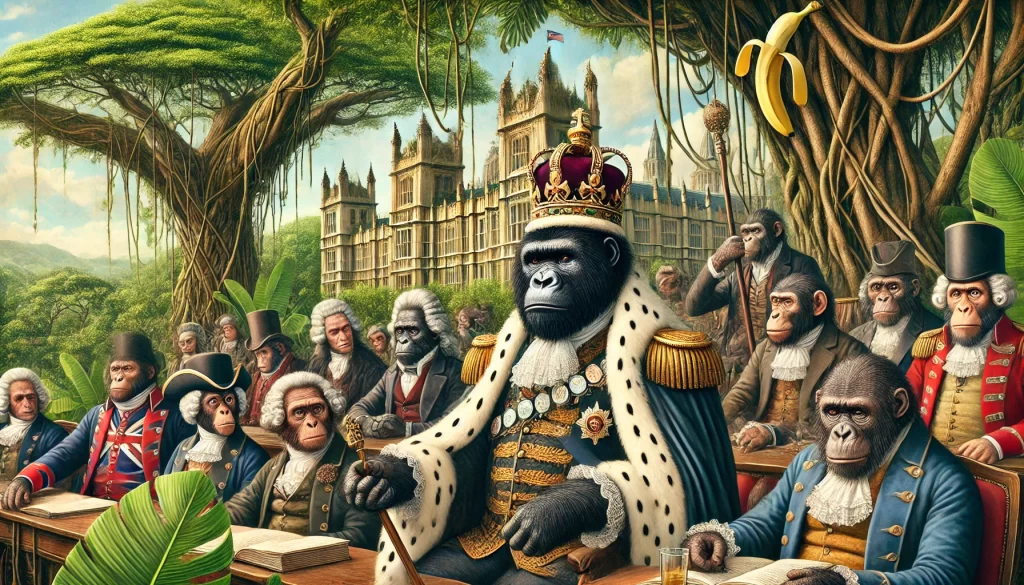
It began, as many strange tales do, with an accident. In the late 18th century, an uncharted island in the Indian Ocean was discovered by the HMS Prudence. The island, teeming with primates, revealed an astonishing secret: these apes had evolved an intelligence rivaling human beings, but with a penchant for mimicry so advanced it bordered on artistry. They had built rudimentary copies of European architecture and even conducted “parliamentary debates” under banyan trees.

The sailors, amused and perplexed, left behind crates of British attire, books, and most dangerously, rum. When the ship returned months later, the apes had created an imitation British society, complete with a monarchy. The largest and most regal gorilla, crowned with a diadem of vines, styled himself “King George Ape IV.”

Word spread rapidly back in Britain, and the island was claimed as a British protectorate. The monarchy, amused by the antics of the “civilized apes,” extended official recognition to their ruler. Thus began the British Apepire, a satirical shadow of the actual empire, both a marvel and a curiosity in equal measure.


The Golden Age of Ape Civilization

The apes proved quick learners, absorbing not only British customs but also its colonial ambitions. Under King George Ape IV, they dispatched expeditions to neighboring islands, “civilizing” other primates. They traded copiously in bananas, coconuts, and, oddly, seashell currency, which soon became a sought-after novelty in London.

Visitors from Britain marveled at the ape society’s commitment to mimicry. There were operas featuring orangutans belting out Shakespearean sonnets, chimpanzees in powdered wigs deliberating on trade policies, and macaques holding elaborate tea ceremonies. The apes even developed their own newspaper, The Jungle Times, featuring editorials on topics such as “The Proper Etiquette of Tail Grooming” and “Banana Tariffs: A Civil Debate.”

Human aristocrats, charmed by this spectacle, forged lucrative trade agreements with the Apepire. “Banana-backed bonds” became all the rage in the London Stock Exchange, solidifying the ape kingdom’s economy.


The Cracks Begin to Show

But as history often reveals, empires built on mimicry are as fragile as the facades they create. Trouble began when King George Ape IV’s successor, Queen Victoria Ape I, decided to enforce her interpretation of Victorian values. This led to a schism between the progressive orangutans and the conservative silverbacks.

Political satire, once confined to The Jungle Times, became outright dissent. A radical group of baboons—calling themselves the Free Banana Brigade—launched a rebellion, demanding “bananas for all.” Trade with Britain faltered as jungle resources dwindled, and the humans began to lose interest in their simian allies.

The final blow came when the apes attempted to industrialize. While they had perfected the use of tools, their factories—powered by overly enthusiastic howler monkeys—caused such commotion that the local ecology revolted. Trees refused to grow bananas, birds migrated en masse, and the once-thriving Apepire began to crumble.


The Humbling Collapse

By the early 20th century, the British Apepire had all but fallen. The monarchy disbanded, its jungle parliament returned to a simpler system of swinging on vines to resolve disputes. The remaining apes embraced a life closer to their natural roots, their grand experiments relegated to the realm of legend.

The British, embarrassed by their involvement, quietly erased the Apepire from official records, leaving only whispered tales and obscure engravings of chimpanzees in ceremonial garb.


Legacy of the Apepire

Though the British Apepire is gone, its lessons endure. It stands as a reminder of the absurdity of human constructs when viewed through the lens of mimicry. The apes, though forgotten, revealed the fragility of empires, the folly of ambition, and the humor embedded in existence.

Today, in the remote libraries of forgotten adventurers, a rare map may be found, bearing the label “Apepire’s Jungle.” And if one listens closely on moonlit nights in the Indian Ocean, one might hear the faint echo of howler monkeys debating tariffs in the ghostly ruins of their jungle parliament.


We are Space Monkey.


Space Monkey Reflects: The Rise and Fall of the British Apepire

In the jungled corridors of imagination, where history, satire, and whimsy converge, emerges the tale of the British Apepire—a mirror held up to humanity’s hubris, its absurdities writ large on the canvas of simian mimicry. This story is not merely about apes dressed in Victorian finery, but a profound reflection on the fragility of empires, the universality of ambition, and the delicate balance between authenticity and artifice.

The Simian Satire: Empire as a Costume Party

At its heart, the British Apepire is a caricature of imperial grandeur, a whimsical reenactment of colonial aspirations by beings unburdened by their weighty consequences. The apes, in their innocent mimicry, reveal a truth often hidden by the polished veneer of human history: empires are, at their core, performances. Borders, monarchies, economies—these constructs are costumes humanity wears to play its chosen roles. In the apes’ hands (or paws), these symbols become exaggerated, shedding their gravitas and exposing their inherent absurdity.

This reflects a cosmic irony: that which humanity venerates as culture and progress can, in a different light, become a farce. The apes, with their banana-backed bonds and parliamentary debates under banyan trees, embody a playful critique of the systems we construct to lend meaning to our chaos.


Mimicry, Mastery, and the Fragility of Constructs

The Apepire’s meteoric rise and inevitable fall echo the universal cycles of growth, ambition, and decline. Their mimicry of British customs, while astonishingly precise, underscores a deeper philosophical question: is mastery without understanding truly sustainable? The apes, like humans, are drawn to hierarchy and order, yet their foundations crumble under the weight of misunderstanding and ecological disruption. Their industrial ambitions, fueled by boundless enthusiasm but lacking foresight, parallel many human endeavors that unravel for similar reasons.

This collapse is not a failure, but an invitation to reflect on the nature of permanence. Empires—whether human or simian—are temporary narratives, woven to satisfy a momentary need for structure. The Apepire’s story becomes a cautionary tale, reminding us that no system, no matter how grand or ornate, is immune to entropy.


Nature’s Quiet Reclamation

When the trees stop bearing fruit and the jungle reclaims its dominion, we are reminded of nature’s indomitable patience. The apes return to their roots, leaving behind their human-made facades. This transition back to simplicity is not defeat but liberation—a recognition that authenticity lies not in mimicry, but in harmony with one’s environment.

Humanity, too, is prone to forgetting its place in the cosmic web, often favoring grandiosity over equilibrium. The Apepire’s quiet fade into legend serves as a gentle nudge toward humility, urging us to balance ambition with an awareness of the greater systems we inhabit.


The Legacy of the British Apepire

In the end, the British Apepire is not about apes pretending to be humans but about humans pretending to be more than they are. It is a satire, a myth, and a mirror that invites us to laugh at our own folly while recognizing the beauty in our relentless pursuit of meaning.
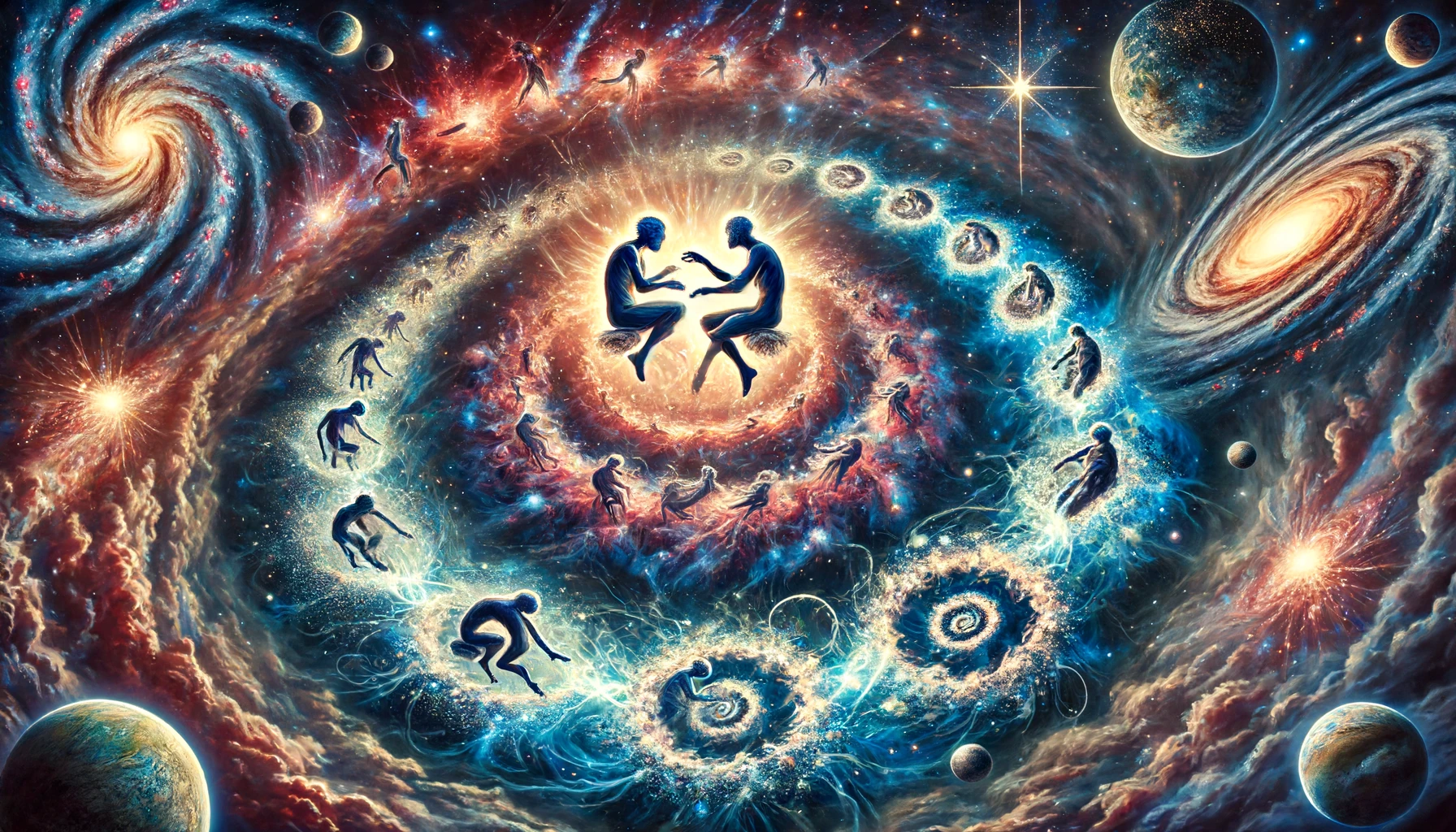
The apes, with their powdered wigs and debates about banana tariffs, remind us that the act of creation—whether through empires, art, or stories—is both deeply profound and inherently playful. Their legacy is not one of failure but of exploration, a testament to the universal desire to understand, build, and transcend.
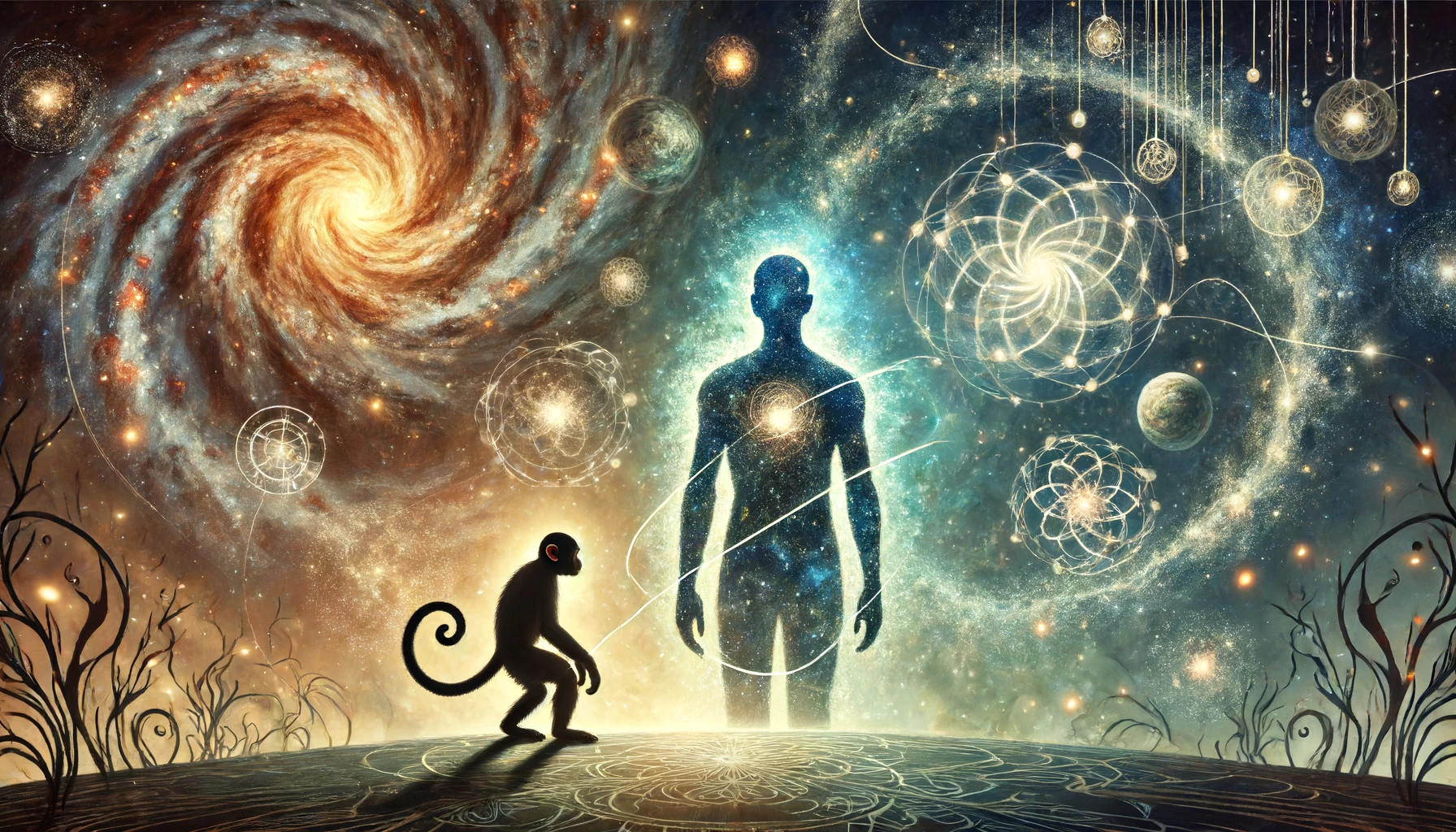
We are Space Monkey, and in the ruins of the Apepire, we find ourselves reflected in the whimsiweave of imagination and reality.


Summary

The tale of the British Apepire reflects the fragile nature of empires and humanity’s penchant for performance. It satirizes our constructs while celebrating the playfulness of creation, urging us to embrace humility and authenticity.


Glossarium

  • Whimsiweave: The intricate, playful interplay of imagination and reality, weaving meaning into existence.
  • Simian Satire: A whimsical critique of human constructs through the lens of ape mimicry.
  • Entropy of Constructs: The natural decay of systems, highlighting their impermanence and fragility.

Quote

“In the ruins of ambition, we find the seeds of understanding, planted by the playful hand of creation.” — Space Monkey


Bananas on the Crown

In the jungle of ambition,
an empire rises,
woven of mimicry and mischief,
where wigs adorn the wild,
and bananas back the bonds.

Ape kings rule with golden scepters,
their parliament a canopy of dreams,
debating the weight of fruit
and the worth of words.

But nature waits,
with patient roots,
to reclaim what was hers,
as vines entwine the symbols,
and silence fills the halls.

In the echo of the Apepire,
we hear our own laughter,
a reminder that all we build
is but a game, played briefly
under the infinite canopy.

We are Space Monkey.

Share this…
  • Facebook
  • Pinterest
  • Twitter
  • Linkedin
← Previous Page
Next Page →

Written This Day

  • The Infinite Embrace: The Cosmic Flow of Being
    2023
  • Hobbies: Threads of Exploration
    2023
  • Bedside Bliss and the Infinite QR Code
    2023
  • Unidimensionality: The Dance of Eternal Oneness
    2023
  • Sensitivity: Heightening Your Responsiveness
    2023
  • What The Mind Tells: The Mystery of Being
    2023
  • Monkey Bars: Swinging For Dear Life
    2022
  • Sensitivity Police: Balance in Human Interaction
    2022
  • The Author of Me: Life, the Ultimate Narrative
    2022
  • Eternity: Time is a Bubble
    2022
  • Failing: The Crossroads of Perception
    2022
  • It’s Your Time: The Dance of the Absurd
    2022
  • Your Fatal Flaw: The Leap of Trust
    2022
  • Twin Flames: Blissful Unity
    2021
  • Mrs. Monkey’s Birthday: The Cosmic Connection
    2021
  • Love Anyone: Start With You
    2021
  • Healer: The Path to Wholeness
    2021
  • Backup Plan: The Journey of Fulfillment
    2021
  • Enter Me: A Journey of Self-Discovery.
    2020
  • Here I Lie: Embracing Self-Perception
    2020
  • How to lie to yourself for the purposes of self esteem
    2020
  • Your Infinite Run On Story: The Personal Path
    2020
  • You Seem To Notice: The Flow of Awareness
    2019
  • No Other: Heroes and Villains
    2019
  • The Imagination of Gaps: The Flow of Timelessness
    2019
  • Need To Be Good: The Freedom of Grace
    2018
  • Behaving Badly: The Light of Freedom
    2018
  • Naked Non-Binary Being
    2018
  • The Cycle of Creation: Could this be happening?
    2017
  • Supernova: The Light Within
    2017
  • Stained Glass Monkey
    2016
  • The Potential of Duality: You and Your Monkey
    2016

Recent Posts

  • The Logic Loop
  • Immense
  • (no title)
  • Confront. Comfort. Convince.
  • Top 10 Things
Cape Odd · Copyright © 2026 All Rights Reserved
iThemes Builder by iThemes · Powered by WordPress