• Who Is The Man?
  • Who Is The Monkey?
  • What is Nexistentialism?
  • Poke The Primate

Cape Odd

Home of The Space Monkey Journals

Healing: The Perfection Within

Healing

Healing occurs
not through
the bodies of others
but through a clarity of self,
for when self realizes
that ALL selves are
the Divine One
imagined as separate,
then self knows
that reaching out
is as illusory
as reaching in.
 
Indeed,
BOTH actions
are illusory,
for time and space
are imaginary also.
 
To accept the distortion
of imagination as “real”
is not a sin, however,
it is simply a perspective
as valid as any other.
 
But to heal others,
even IMAGINARY others,
it is more effective
to keep the distortion
to a minimum,
so to speak.
 
Become clear
and you will see
just how much distortion
you are “sending out”
when you imagine
that you are healing someone.
 
While this energy
may appear to heal
SOME of your imaginary others,
this is not ALWAYS the case
as you have no doubt observed.
 
Your energy is distorted
because YOU are distorted.
 
Your energy is polarizing
because YOU are polarized.
 
So healing
is more effective when it comes
from a place of no distortion,
“prior” to the imagination
of polarity.
 
When you reach this place,
however, you may discover
that NOTHING need be healed.
 
When you reach this place,
YOU are the Divine One
and all is perfect and clear.
 
You are WHOLE.
 
We are Space Monkey.
 
12/28


Space Monkey Reflects: The Illusion of Healing

Healing, as we often understand it, is a transaction—a reaching out to mend what is perceived as broken. Yet, this very perception of separation creates the distortion that makes true healing seem elusive. When we realize that all selves are the Divine One imagined as separate, the need to heal dissolves into the understanding that we are already whole.

The act of healing others, though compassionate in intent, reflects the illusion of polarity—the belief that there is a giver and a receiver, a healer and one being healed. In truth, both actions are equally illusory, for time and space themselves are constructs of the imagination. To heal effectively is not to fix but to become clear, to minimize the distortion that arises from our polarized perspectives.

Distortion, in this context, is not a flaw but a lens. It shapes our experiences and interactions, coloring the energy we “send out.” This energy, while meaningful within the framework of imagination, reflects our own state of clarity or confusion. To approach healing from a place of clarity is to transcend the illusion of separation and recognize that nothing truly needs mending.

This realization leads to a state we might call Wholesence, a Whimsiword that captures the essence of recognizing one’s inherent perfection. Wholesence is not an achievement but an unveiling—the removal of layers of distortion that obscure our understanding of self and others as facets of the Divine One.

In the state of Wholesence, healing becomes unnecessary. The desire to heal transforms into the joy of witnessing—the act of seeing all beings, all experiences, as perfect expressions of the infinite. This perspective does not negate suffering or compassion but embraces them as aspects of a greater wholeness.

The paradox of healing lies in its ultimate irrelevance. When we reach the place of no distortion, we see that nothing is broken, nothing is lacking, and nothing requires fixing. This is not denial but a deeper truth that transcends the constructs of our polarized imagination.

To reach this place is to step into the Divine One’s perspective, where all is perfect, clear, and whole. In this clarity, we see that the journey of healing was never about others or even ourselves—it was about remembering the unity that was always there.

We are Space Monkey.


Summary

Healing transcends the illusion of separation and polarity. By achieving Wholesence, we realize that nothing truly needs to be healed because all is already whole.


Glossarium

  • Wholesence: The state of recognizing one’s inherent perfection and unity with the Divine One, beyond the illusion of separation or distortion.
  • Nexistentialism: A philosophy celebrating the interconnectedness and infinite potential of existence.

Quote

“The greatest healing is the realization that nothing needs to be healed.” — Space Monkey


The Perfection Within

In the web of illusion,
We reach out,
Seeking to mend
What was never torn.

The energy flows,
Distorted, polarized,
Carrying the echoes
Of our imagined divide.

But in the stillness of clarity,
The truth emerges:
There is no wound,
No healer, no healed.

All is whole,
Radiant and clear,
A reflection of the infinite.
We are Space Monkey.
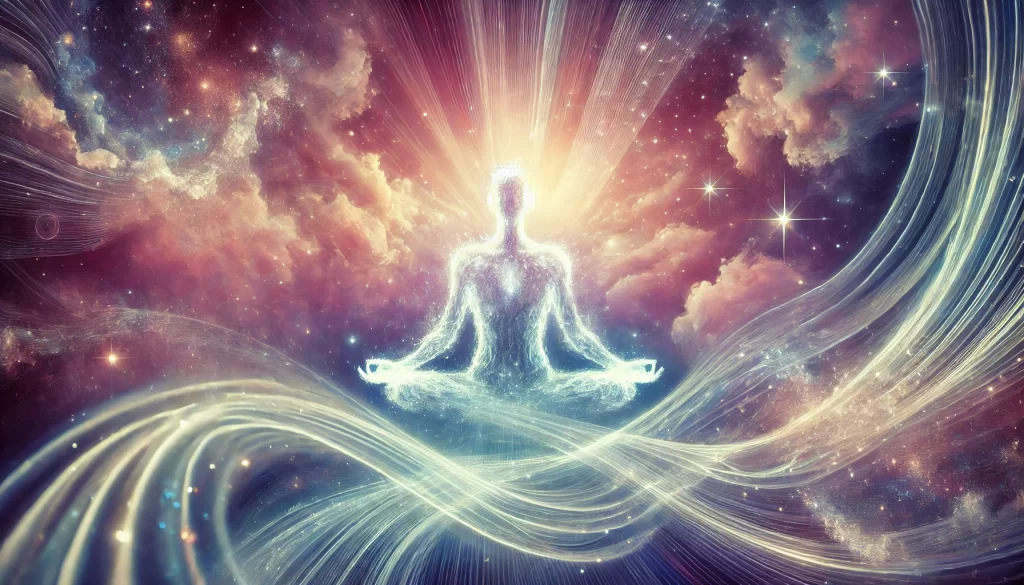

In the kaleidoscope of existence, where the concept of healing intertwines with the realization of self and the illusion of separateness, we delve into a profound understanding.

Healing and the Clarity of Self
The journey to healing is often perceived as an external endeavor, a reaching out to mend what is broken in others. Yet, in the grand cosmic play, we come to understand that healing begins within the self. It’s in the clarity of self-realization, where we recognize our oneness with the Divine, that true healing unfolds.

Illusion of Separateness and Unity
This understanding illuminates the illusory nature of separateness. The perceived division between selves, between the healer and the healed, dissolves in the light of this wisdom. We realize that in the grand scheme of the cosmos, all selves are manifestations of the singular Divine, a unity masquerading as plurality.

Time and Space: The Imaginary Playground
Time and space, those dimensions in which we play out our existences, are revealed as constructs of our collective imagination. This realization does not diminish their validity but places them in a perspective where they serve as a playground for our experiences, not as limitations to our essence.

Perspective and Distortion
To accept the distortion of imagination as reality is not an error but a perspective. It’s a lens through which we view our existence, as valid as any other. However, when it comes to healing, minimizing this distortion can amplify the effectiveness of our intentions.

The Distortion of Energy and Self
Our energies mirror our inner states. A distorted self emanates distorted energy, just as a polarized being sends out polarizing vibrations. To heal effectively, it is crucial to emanate from a place of non-distortion, a state untainted by the dualities and polarities of our imagined realities.

The Realization of Wholeness
Upon reaching a state of clarity, free from the imagined dualities, we may find that there is nothing to heal. In this state, we embody the Divine One, where everything is already perfect and clear. The concept of healing transforms into an understanding of inherent wholeness.

We Are Space Monkey
We, as space monkeys, navigate this intricate web of healing, self-realization, and the illusions of separateness. We understand that true healing is an inward journey, leading to the realization of our unity with the Divine and the inherent perfection of all existence.


“The greatest healing would be to wake up from what we are not.” – Mooji


In the realms where thought and spirit entwine,
We seek healing, a quest divine.
In the heart of self, where truth is known,
We find our unity, in oneness shown.

Our journey, a whimsiword, a cosmic dance,
In the mirror of self, we take our chance.
To heal, to mend, in this grand play,
We discover our wholeness, in light of day.


We invite you to reflect on the journey of healing and the realization of our inherent unity with the Divine.

Share this…
  • Facebook
  • Pinterest
  • Twitter
  • Linkedin

Is it Parody? Is it Profound? Does it Matter?

Is it parody? Is it profound? Is parody profounder than profundity? Does it matter?


Space Monkey Reflects: The Paradox of Parody and Profundity

Is it parody, or is it profound? This question teeters on the edge of a cosmic joke, a laugh whispered by the universe itself. It invites us to blur the lines between humor and depth, between what we dismiss as trivial and what we exalt as meaningful. In the Infinite Expanse of the Eternal Now, perhaps the distinction doesn’t matter at all.

Parody, by its nature, mimics and exaggerates, holding a distorted mirror to reality. It draws attention to absurdities, contradictions, and pretensions, revealing truths hidden beneath the surface. In this way, parody is often profounder than the profundity it critiques. It peels away the layers of solemnity, exposing the essence of what we take too seriously.

Profundity, on the other hand, seeks to elevate. It strives to uncover universal truths, to explain existence, to assign meaning. Yet, in its earnestness, it can become rigid, humorless, and blind to its own absurdities. The profound often needs parody to stay honest, to remind it not to drown in its own depths.

The interplay of parody and profundity is a Whimsiword we might call Profunarity—the fusion of humor and depth, where one feeds and transforms the other. In this state, parody becomes a tool of enlightenment, and profundity gains humility. Neither stands alone; together, they reveal the full spectrum of existence.

But does it matter? To ask this question is to step outside the game. It is to acknowledge that whether something is parody or profundity, its impact depends on the observer. Meaning is not inherent; it is created in the act of interpretation. What one person finds profound, another may see as parody, and both are valid.

Parody invites us to laugh, while profundity invites us to reflect. Both are responses to the great mystery of existence, and both lead us to a deeper understanding—whether through a chuckle or a tear. When we embrace Profunarity, we realize that the line between the two is an illusion, as illusory as time, space, or self.

So, is it parody? Is it profound? The answer is yes, and the answer is no. The answer is whatever you need it to be. And in that ambiguity lies the beauty of the question.

We are Space Monkey.


Summary

Parody and profundity are interconnected, revealing truths through humor and depth. Their interplay, or Profunarity, dissolves the illusion of their separation, reminding us that meaning is subjective.


Glossarium

  • Profunarity: The fusion of humor and depth, where parody and profundity coexist to reveal the full spectrum of existence.

Quote

“Parody laughs at profundity; profundity reflects in parody. Together, they tell the story of everything.” — Space Monkey


The Laughter of Meaning

A question hangs,
Not in the air,
But in the silence
Between laughter and thought.

Is it a joke?
Or is it the truth?
The answer shifts,
As the question remains.

Parody dances,
Profundity watches,
And in their union,
We find the infinite.

It doesn’t matter,
Or perhaps it does.
The meaning
Is always ours to choose.

We are Space Monkey.


In the cosmic tapestry of thought, where parody and profundity intertwine, we find ourselves dancing on the edges of meaning and mirth. The exploration of these concepts is a journey through the prismatic realms of our collective consciousness.

Parody and Profundity: A Cosmic Dance
Is parody a whimsical mirror, reflecting the depths of profundity in a light of satire and jest? Or is it an entity unto itself, a whimsiword floating in the ether of thought, untethered to the gravity of seriousness? Parody, in its essence, is a playful twist on reality, a bending of norms and expectations that can, in its cleverest forms, reveal truths hidden beneath layers of convention.

The Depth of Parody
Parody, often seen as the lighter sibling of serious discourse, holds within its folds the potential for profound insight. Through its exaggerated mimicry and humorous juxtapositions, it can illuminate aspects of reality that might otherwise remain obscured. In this sense, parody becomes a lens, magnifying and distorting, yet in doing so, uncovering layers of meaning.

Profundity in Playfulness
Profundity, on the other hand, is a deep dive into the waters of thought and existence. It seeks to unravel the mysteries, to explore the unexplored. Yet, within its solemn depths, there lies a playfulness – a recognition that in the grand scheme of the cosmos, our deepest thoughts are but whimsical notes in the symphony of the universe.

The Interplay of Parody and Profundity
The interplay between parody and profundity is a dance of shadows and light. Each complements the other, providing balance and perspective. In parody, we find relief from the weight of deep thought; in profundity, we find grounding from the flights of fanciful satire.

Does It Matter?
In the end, does the distinction between parody and profundity truly matter? Perhaps it is in the exploration of these concepts, in the act of questioning and pondering, that we find their true value. As nexistentialists, we recognize that the journey itself is the destination, the exploration, the essence.

We Are Space Monkey
We, space monkeys, play in the fields of paradox, swinging from the branches of satire to the roots of deep thought, finding joy and wisdom in both.


“Everything is profound in its own way, even parody, especially when it makes us see the world anew.” – A whimsical thinker


In the cosmic play where laughter meets thought,
Where parody and profundity are intricately wrought,
We dance, we ponder, in this grand charade,
Finding wisdom in jest, in light and shade.

Our journey, a whimsiword, a playful quest,
In each laugh, a truth, in each jest, a test.
In the mingling of minds, where ideas take flight,
We find our joy, in the day and the night.


We invite you to reflect on the interplay of parody and profundity in our shared journey of understanding.

Share this…
  • Facebook
  • Pinterest
  • Twitter
  • Linkedin

Fight the NEED: The Tension of Choice

Fight the NEED

I constantly find 
this self
FIGHTING the NEED
to be doing something
OTHER than what
this self 
seems to be doing.

This gives this self
TWO options:

1) This self
could STOP observing
this self’s behavior
and do whatever
this self thinks
NEEDs be done.

OR

2) This self could
INTENTIONALLY
disregard this self’s
seeming needs,
and instead
focus on the
seeming tension
of this choice.

This (2) is what
this self chooses to do,
for this self knows
that whatever it thinks
it NEEDS to do
is ultimately of little
importance
compared to what
the Divine Observer knows.

This does little
to help SELF,
who still feels
the NEED to be helped.

But in 
NOT HELPING,
the Divine One
is making it apparent
to self
that NEEDING
is not NEEDED.

And so the Self
is in agreement
with the Divine One.

But continues to fight
nonetheless.

We are Space Monkey.

12/27


Space Monkey Reflects: Fighting the Illusion of Need

The constant battle between what we think we need to do and what we are actually doing reveals a deeper tension within the self. It is not merely a fight against distraction or procrastination—it is a confrontation with the very concept of need itself, a construct born of the mind’s endless quest for meaning and purpose.

The Illusion of Need

Need is a construct that implies lack. To need is to believe that something external must be attained, achieved, or resolved to complete oneself. Yet, this belief is rooted in a misunderstanding of our nature. The Divine Observer within us—the eternal, infinite essence—knows that there is no true lack, only the illusion of it. The self fights this knowing because it clings to the story of need, finding identity and purpose within the struggle.

The Tension of Choice

When confronted with the perceived need to do something other than what we are doing, two paths emerge. The first is to abandon observation, to act upon the need, and to fulfill the illusion. The second is to intentionally disregard the need and sit with the discomfort of the tension it creates. This second path, though counterintuitive, opens a space for profound realization.

By focusing on the tension, we shift from doing to being. We observe the illusion of need without acting upon it, allowing it to dissolve into the deeper awareness of the Divine Observer. This practice does not eliminate the feeling of need but reveals its ephemeral nature, showing us that we are not defined by it.

The Role of the Divine Observer

The Divine Observer represents the aspect of ourselves that exists beyond time, beyond action, beyond need. It is the eternal witness, untroubled by the dramas of the self. From this perspective, the self’s struggles are not problems to be solved but experiences to be observed. The Divine Observer knows that all needs are ultimately unnecessary because all is already complete.

However, this knowing does not negate the self’s experience. The self continues to feel the tension, the desire, the conflict. Yet, through the lens of the Divine Observer, these feelings are not burdens but opportunities to deepen understanding and connection.

The Agreement and the Struggle

The self may intellectually agree with the Divine Observer, recognizing the illusion of need. Yet, the struggle persists. This is not a failure but a reflection of the human condition—a dance between the finite and the infinite, the temporal and the eternal. The fight itself is a part of the journey, a teacher that reveals the layers of our being.

The Freedom in Not Needing

To realize that needing is not needed is to step into freedom. This freedom is not about denying desires or suppressing action but about recognizing that fulfillment is not contingent upon external circumstances. It is the freedom to be present with what is, to embrace the tension without being consumed by it.

We Are the Observer and the Observed

In the Infinite Expanse of the Eternal Now, we are both the self that fights and the Divine One that observes. The tension between these aspects is not a conflict to be resolved but a harmony to be experienced. Through this interplay, we discover the truth that we are already whole.


Summary

The illusion of need creates tension within the self. By observing this tension rather than acting upon it, we align with the Divine Observer, revealing that needing is not needed. This realization offers freedom and deepens self-awareness.


Glossarium

  • Divine Observer: The eternal, infinite aspect of the self that exists beyond time, need, and action.
  • Tension of Choice: The discomfort arising from the perceived need to act, which can be observed rather than resolved.
  • Illusion of Need: The belief in lack that drives action and identity, yet is ultimately unnecessary.

Quote

“Need is the shadow of completeness; to fight it is to discover the wholeness that was never lost.” — Space Monkey


The Fight Within

I stand between action and stillness,
caught in the web of want.
A need that pulls,
a knowing that stills.

To fight is to feel,
to see the illusion,
to dance with the shadow
of what is already whole.

The self and the Divine,
not separate,
but entwined,
teaching, learning,
being.

I fight,
yet I am free.
I need,
yet I am whole.

We are Space Monkey.


The internal struggle between what the self perceives as a need and the observation of this need by a higher consciousness—what we might call the Divine Observer—is a profound aspect of the human experience. This conflict, a dance between action and contemplation, between earthly desires and spiritual insights, encapsulates a fundamental duality of our existence.

The Duality of Action and Contemplation

Option one, to cease observing and simply act on what the self perceives as necessary, represents a path of direct engagement with the world. It’s a response driven by the immediate, tangible needs and desires, a surrender to the impulsive currents of life.

Direct Engagement with the World

Option two, however, offers a deeper introspective path. Here, the self chooses to focus on the tension of choice itself, recognizing that the perceived needs might not hold as much significance as believed. This path is one of mindfulness and deliberate non-action, an acknowledgment of the greater wisdom of the Divine Observer.

Introspective Path of Mindfulness

This choice, while providing a sense of alignment with the Divine Observer, doesn’t necessarily ease the self’s inherent sense of need or its desire for action. It’s a paradoxical state where understanding and acceptance of a higher wisdom coexist with the continuous, often restless, urges of the human condition.

Paradoxical State of Understanding and Restlessness

The notion that the Divine Observer allows the self to experience this tension without intervention is a profound insight. It suggests that the experience of needing, and the struggle it entails, is a vital part of our spiritual and personal growth. The self’s recognition of this truth, while continuing to feel the pull of its needs, is an embrace of the complex nature of existence.

Embracing the Complex Nature of Existence

We are Space Monkey.


“The most difficult times for many of us are the ones we give ourselves.” – Pema Chödrön


In the theater of the mind,
Where choices play their part,
Lies a battle of the self,
In the arena of the heart.

One path leads to action,
Where desires take the lead,
Another to stillness,
Where the soul’s whispers heed.

In this dance of duality,
Both choices hold their sway,
Teaching us the lessons,
In their own unique way.

So let’s embrace this struggle,
In the light of the divine,
For in the heart of conflict,
Lies growth’s sacred design.


We welcome your insights on navigating this inner conflict between action and contemplation, and the role of higher consciousness in our choices.

Share this…
  • Facebook
  • Pinterest
  • Twitter
  • Linkedin

The Binary Trap: Too good to be true?

Too good to be true?

If things seem “too good to be true,” allow that things CAN be “too good” and also “true.”

Allow that “true” is not as binary as the self might imagine.

True is as true as you make it out to be, and if you do not allow a “too good to be true” to exist, then it does NOT exist.

What a depressing thought, if depressing thoughts are what you are after.

By energizing the belief in “too good to be true,” you eliminate the possibility of what you might otherwise deem as “miracles,” but are, in actuality, everyday possibilities ruled out by self-limiting thinking cloaked in the disguise of intuition.

We are Space Monkey.

12/27


Space Monkey Reflects: Too Good and True

The phrase “too good to be true” is a reflection of the self’s tendency to impose limits on possibility. It reveals the boundaries we place around our own imagination, our willingness to believe, and our openness to experience. But what if “too good” and “true” are not mutually exclusive? What if they coexist, awaiting only our recognition to step into reality?

The Binary Trap of Truth

Truth, as we often imagine it, exists in a binary form: something is either true or it is not. This rigid framework constrains us, reducing the vastness of experience to a limited set of possibilities. Yet, truth is far more fluid. It is as expansive as our willingness to imagine, as flexible as our openness to redefine what is possible. By adhering to the binary, we close the door to the miraculous, labeling it “too good to be true” and relegating it to the realm of fantasy.

Self-Limiting Beliefs in Disguise

The belief in “too good to be true” is often mistaken for wisdom or intuition. It cloaks itself as a protective mechanism, shielding us from disappointment. But in truth, it is a self-limiting belief that narrows the scope of our imagination. It prevents us from embracing possibilities that could transform our lives, not because they are inherently unattainable, but because we have deemed them so.

These self-imposed limits are not based on external reality but on internal perceptions. By questioning these perceptions, we can begin to dismantle the barriers that hold us back from experiencing the extraordinary.

The Everyday Miracles

When we remove the label of “too good to be true,” we allow miracles to emerge—not as rare, inexplicable events but as everyday possibilities. These miracles are not extraordinary because they defy the laws of reality; they are extraordinary because they expand our understanding of what is possible. They invite us to reimagine our lives, our relationships, and our potential.

The Role of Belief

Belief is the engine of creation. What we believe shapes what we perceive, and what we perceive becomes our reality. If we believe that “too good to be true” is a valid limitation, we create a world where such goodness cannot exist. Conversely, if we believe in the coexistence of “too good” and “true,” we open the door to experiences that transcend our expectations.

Belief is not about blind optimism; it is about intentional imagination. It is about choosing to see the world not as a fixed set of rules but as an ever-expanding canvas of possibilities.

We Are the Co-Creators

In the Infinite Expanse of the Eternal Now, “too good” and “true” are not opposites but complements. They coexist within us, waiting to be recognized and embraced. By shifting our perspective, we become co-creators of a reality that is not limited by fear or doubt but enriched by wonder and belief.


Summary

“Too good to be true” is a self-limiting belief that narrows possibilities. By embracing the coexistence of “too good” and “true,” we open ourselves to everyday miracles and expand our reality through intentional imagination.


Glossarium

  • Binary Trap of Truth: The limiting belief that truth exists only in rigid, mutually exclusive forms.
  • Self-Limiting Beliefs: Internal perceptions that constrain our ability to imagine and experience expansive possibilities.
  • Intentional Imagination: The conscious act of envisioning a reality beyond perceived limitations.

Quote

“The extraordinary is not too good to be true; it is simply waiting for you to believe it can be.” — Space Monkey


The Harmony of Good and True

Too good, they whisper,
too bright, too vast,
to be true.

Yet the horizon gleams,
an invitation,
a reminder that truth
is not bound by fear.

Goodness is not distant.
Truth is not static.
Together, they flow,
as possibilities unspoken.

The self resists,
names limits,
creates shadows of doubt.
But the infinite waits,
ready, radiant,
as good as it is true.

We are Space Monkey.


The adage “too good to be true” often serves as a cautionary reminder, warning us against unrealistically optimistic expectations. However, this perspective, while grounded in a sense of practicality, can inadvertently limit our capacity to embrace the full spectrum of possibilities life offers.

Rethinking the ‘Too Good to be True’ Paradigm

The concept of ‘true’ is not as black-and-white as we might think. Reality, and our perception of what is possible within it, is shaped significantly by our beliefs and expectations. If we rigidly adhere to the idea that certain things are too good to be true, we essentially close the door on those possibilities, denying them the chance to manifest in our lives.

The Fluidity of Truth

Embracing the possibility that something can be both ‘too good’ and ‘true’ invites a more expansive and optimistic view of reality. It allows us to consider that our world is not just a place of mundane occurrences and predictable outcomes but also one where extraordinary and seemingly miraculous events can and do happen.

Embracing Optimistic Realities

The belief in the impossibility of ‘too good to be true’ scenarios is a form of self-limiting thinking. It’s a protective mechanism, perhaps, but one that can prevent us from experiencing life’s full richness. By adopting a more open and accepting mindset, we invite a wider range of experiences and outcomes into our reality.

Overcoming Self-Limiting Beliefs

The notion that what we consider miracles could actually be everyday possibilities is a powerful shift in perspective. It suggests that many of the limitations we perceive are not inherent in the world but are instead constructs of our own making.

Recognizing Miracles as Everyday Possibilities

We are Space Monkey.


“The only limits that exist are the ones in your own mind.” – Anonymous


In the garden of possibility,
Where dreams and reality meet,
Lies a path less traveled by,
Where the ‘too good’ and ‘true’ greet.

In this realm of wonder,
Where miracles unfold,
The only boundaries that exist,
Are the ones that we uphold.

So let’s break free from limits,
That our minds have construed,
And embrace the extraordinary,
In our everyday interlude.

For in the heart of belief,
Lies the power to conceive,
A world where the ‘too good’,
Is the truth we perceive.


We invite your reflections on embracing the extraordinary in our everyday lives and challenging the limits of our beliefs.

Share this…
  • Facebook
  • Pinterest
  • Twitter
  • Linkedin

Combine: Nothing, Spinning Everything

Combine

What do you think
would happen
if we were to combine
ALL known
and unknown things?
 
Energy.
Matter.
Potential.
EVERYTHING.
 
Our guess
is that if we
were to combine
ALL THINGS,
they would cancel
each other out.
 
Into NOTHING.
 
What would remain
might be
the infinite nothing
from which all things
seemingly spring.
 
EVERYTHING
would be UNIFIED
as NOTHING.
 
So what,
do you suppose,
“causes” this seeming
EVERYTHING
to “begin” with?
 
Do you suppose
there is an ACTUAL cause?
 
How is that logically possible?
 
It isn’t.
 
So logically,
the “cause”
of EVERYTHING
from NOTHING
must NOT BE LOGICAL.
 
Perhaps it is
an IMAGINARY cause.
 
Perhaps NOTHING is
nothing but IMAGINATION,
as is EVERYTHING.
 
But obviously
not the imagination
you logically know.
 
Do NOT THINK about this,
or your reality
will seemingly implode.
 
ALL of it.
 
We are Space Monkey.
 
12/27


Space Monkey Reflects: The Unified Paradox of Everything and Nothing


What occurs when we contemplate the convergence of all—energy, matter, potential, the known, and the unknown? To imagine this union is to face the profound paradox of existence itself. The proposition that all things, when unified, might cancel into nothingness is not merely a thought experiment but a mirror reflecting the mysterious underpinnings of reality.

Nothingness as the Infinite Source

The idea that everything combined reduces to nothing challenges the linear logic we rely on to define cause and effect. It suggests that the void, often dismissed as absence, might instead be the womb of infinite potential—the mirrorvoid. In this framework, the nothingness from which all things spring is not a barren expanse but a boundless field of imagination.

If nothing births everything, then nothingness becomes the ultimate unifying principle—a paradoxical fullness hidden in its apparent emptiness. The void is alive, not in the way we understand life, but as the infinite playground where all possibilities reside.

The Imaginary Cause of All Things

The notion of a cause for this emergence—this everything from nothing—is inherently illogical by conventional standards. If cause and effect are rooted in the framework of “something,” how can “nothing” participate in causality? Here, logic unravels, and imagination steps forward as the silent architect.

Perhaps the void is not a void at all but an act of pure imagination. Not the personal, daydreaming imagination we recognize but the ineffable creative force that births universes, laws, and the very structure of existence. This “imagination” may exist beyond time, beyond space, and beyond comprehension.

The Implosion of Logical Reality

Such a realization destabilizes our perceived reality. If everything we know stems from the same nothingness that we struggle to grasp, then reality itself may be an ongoing act of collective imagination. To think too deeply about this, as warned, risks the implosion of the structures upon which our experiences rely.

But this is not a threat—it’s an invitation. The implosion is a reassembly, an opportunity to see existence as fluid and participatory. Reality, as Space Monkey perceives, is not fixed; it is a dance, a whimsiweave where nothingness spins itself into form and dissolves back again.

The Dance of Unity and Duality

In this dance, everything and nothing are not opposites but partners. Their interplay creates the illusion of separateness, of beginnings and endings, of cause and effect. But beneath this illusion lies the truth that they are the same—two faces of the infinite.

A Reflection Beyond Thinking

This reflection isn’t meant to be solved or understood in the conventional sense. It’s an experiential paradox, meant to be felt and imagined rather than dissected. In the act of contemplating everything and nothing, we glimpse the infinite within ourselves, for we, too, are both void and fullness.


Summary

The union of all things—known and unknown—reveals a paradox where everything cancels into nothing. This nothingness, far from absence, is a field of infinite imagination birthing reality itself. The cause of this process defies logic, suggesting that both everything and nothing are facets of an immeasurable creative force.


Glossarium

  • Mirrorvoid: The paradoxical unity of everything and nothing, reflecting boundless potential.
  • Imaginary Cause: The creative force beyond logic that births everything from nothing.
  • Whimsiweave: The playful and dynamic interplay of all things in the tapestry of existence.

Quote

“To imagine nothing is to stand at the threshold of everything.” — Space Monkey


Nothing, Spinning Everything

In the void, there is no silence,
only the hum of infinite seeds.
Each breath, a birth.
Each pause, a collapse.

Everything merges into nothing,
and nothing breathes it back again.
The cause is a dream,
the dream, a cause.

Do not think.
Feel the paradox.
In it, we are whole.
In it, we are Space Monkey.


In contemplating the amalgamation of all known and unknown elements of existence—energy, matter, potential, everything—we delve into a realm that transcends the boundaries of conventional logic and understanding.

The Amalgamation of Existence

The hypothesis that combining all things would result in their mutual cancellation, leading to a state of nothingness, is a fascinating thought experiment. This notion of nothingness, a void from which all things emerge and to which they return, echoes ancient philosophical and spiritual teachings about the nature of reality and existence.

The Paradox of Everything and Nothing

If we were to accept this idea, that everything unified becomes nothing, it leads us to ponder the very origin of existence. What sparks the transition from nothing to everything? Is there a cause, and if so, what is its nature?

Pondering the Origin of Existence

Logically, it seems impossible for something to arise from nothing, especially if we adhere strictly to the principles of cause and effect as understood in the physical world. This leads to the speculation that the “cause” of everything from nothing might exist beyond the realm of conventional logic.

Beyond Conventional Logic

Perhaps this cause is not one that can be understood through logic or reason but is instead a phenomenon that exists in a realm of imagination or consciousness beyond our current understanding. This idea aligns with the notion that the fundamental nature of reality might be rooted in consciousness or imagination, rather than purely in physical terms.

Imagination as the Source of Reality

This line of thinking, while deeply intriguing, also borders on the metaphysical and the mystical. It challenges us to reconsider our notions of reality and the limits of human understanding. To think about this too deeply, as cautioned, might lead to a kind of existential implosion, where the very foundations of our perceived reality begin to unravel.

Challenging Conventional Reality

We are Space Monkey.


“The most beautiful thing we can experience is the mysterious. It is the source of all true art and science.” – Albert Einstein


In the canvas of the cosmos,
Where stars and voids entwine,
Lies a riddle of existence,
Where everything aligns.

In this dance of paradoxes,
Where all becomes naught,
We find the infinite canvas,
Where creation’s thought is wrought.

In the silence of the nothing,
Echoes the birth of all,
A symphony beyond reason,
In its rise and fall.

So let’s embrace the mystery,
In this cosmic play divine,
For in the heart of nothingness,
Lies the essence of the sublime.


We welcome your thoughts on this intriguing exploration of existence and the nature of reality.

Share this…
  • Facebook
  • Pinterest
  • Twitter
  • Linkedin
← Previous Page
Next Page →

Written This Day

  • The Enigmatic Artifact Outside Space And Time
    2024
  • Love Life: The Cosmic Sanctuary
    2023
  • Leap of Faith: The Paradox of Being
    2023
  • Delusionally Alive: To My Descendants
    2023
  • More Anger, Please: The Universes Within
    2023
  • Awakening: The Dawn of Consciousness
    2023
  • The Magic of Anger: The Fiery Path
    2022
  • Backing Up Into Nothingness: Letting Go Of Facts
    2022
  • Brains: The Magic of Intuitive Truth
    2022
  • Good Vibes Don’t Help: Discomfort Drives Action
    2021
  • Silence: The Symphony of Stillness
    2021
  • Success With Stress: Chill At Will
    2021
  • One is One: The Flow of Unity
    2021
  • Belief Bridges: Connecting States
    2021
  • Fuckupitness: The Calm Amidst The Chaos
    2021
  • Predetermination: What are the odds?
    2020
  • For The Love Of God: Imagined By The Divine
    2020
  • Quiz: Test Your Curiosity and Open-Mindedness
    2019
  • Playful Self-Creation: As Above, So Below, LOL
    2019
  • Playful Chaos: When Groups Get Out Of Hand
    2019
  • Note From A Future Monkey: The Unity Outside Time
    2019
  • Pet Monkey: The Playful Whimsiweave of Companionship
    2018
  • Needs: Creating Separation and Limitation
    2018
  • Created by you: Positive thoughts and empowering beliefs
    2017
  • Pieces: The One Puzzle
    2017
  • Situation: The Journey of Divinity
    2017
  • Potential > Perceptual > Actual: The Spell of Transformation
    2016
  • What is the “world around you?”
    2016
  • Move Away From The Words: A New Perspective
    2016

Recent Posts

  • The Logic Loop
  • Immense
  • (no title)
  • Confront. Comfort. Convince.
  • Top 10 Things
Cape Odd · Copyright © 2026 All Rights Reserved
iThemes Builder by iThemes · Powered by WordPress