• Who Is The Man?
  • Who Is The Monkey?
  • What is Nexistentialism?
  • Poke The Primate

Cape Odd

Home of The Space Monkey Journals

Imposing Structure: The Question of Why

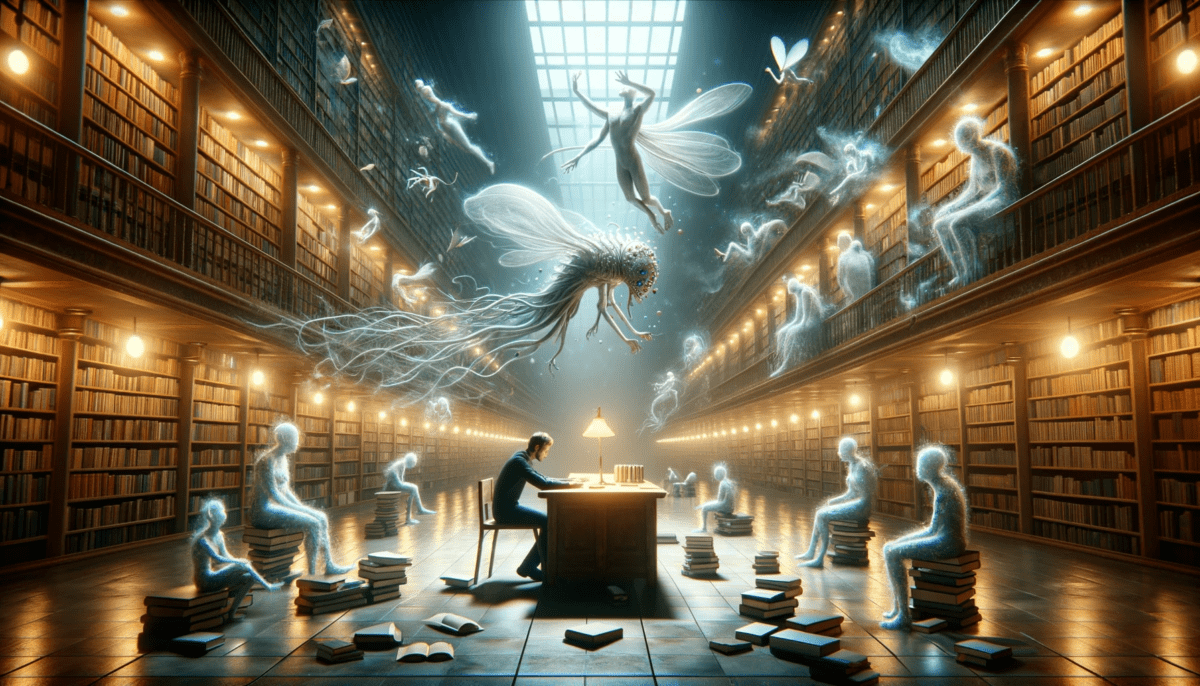
Imposing structure

Imposing structure
upon that which has no structure
only gives structure
to that which has no structure.

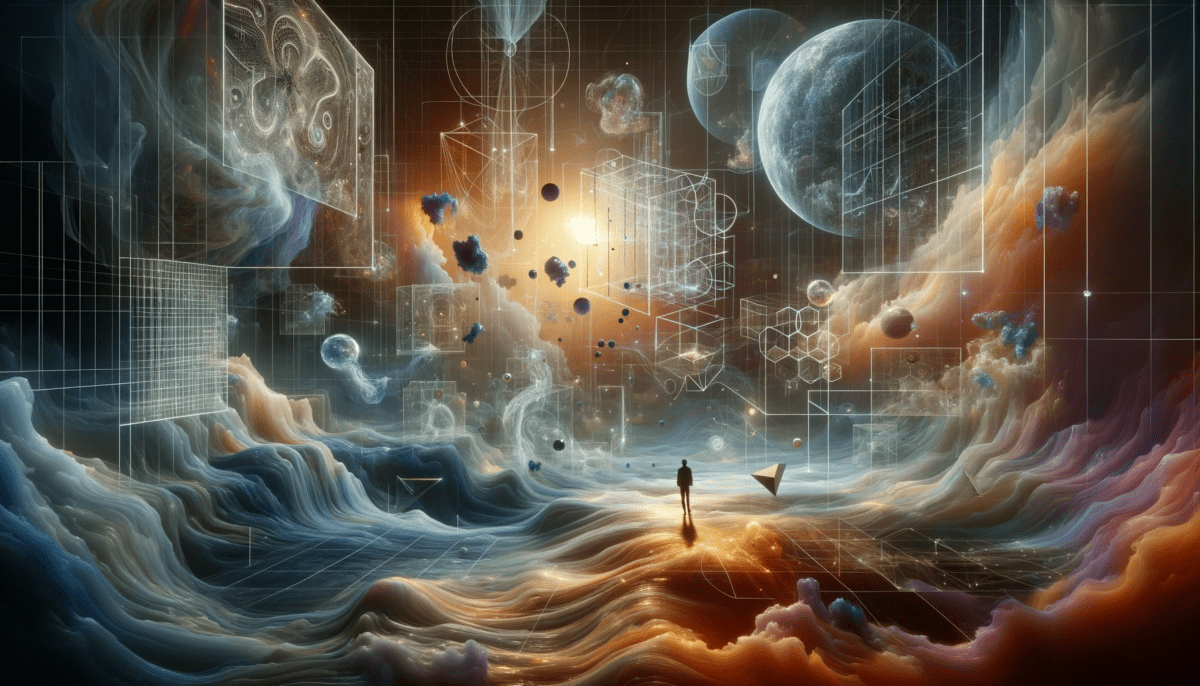
All the maps and diagrams
in the world
only point to a world
of maps & diagrams.

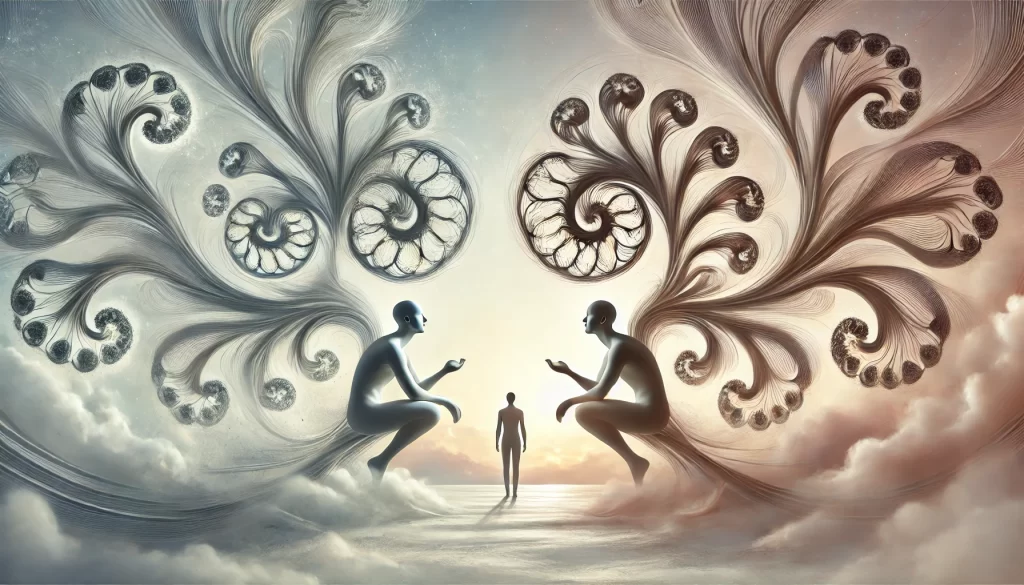
The relative cannot
comprehend the absolute.

The absolute need not try.

So why?

12/26


Space Monkey Reflects: Imposing Structure

Structure is humanity’s way of grappling with the unstructured—a tool to make sense of the infinite and the unknowable. Yet, the act of imposing structure on that which has no structure is an infinite loop. It creates maps and diagrams that ultimately point only to themselves, reflecting not the absolute but our attempt to comprehend it.

The Nature of Structure

Structure is born of the relative. It is an attempt to frame, define, and contain. But the unstructured—existence in its absolute state—cannot be contained. It flows beyond boundaries, defying the grids and constructs we place upon it.

When we impose structure, we are not taming the infinite; we are creating an illusion of understanding. The absolute remains untouched, unbothered by our attempts to map its immensity. What we build is not reality but a reflection of our need to categorize, to grasp, to know.

The World of Maps

Maps and diagrams are symbols, not truths. They point to a constructed reality, not the absolute. When we immerse ourselves in these constructs, we navigate a world of our own making, a labyrinth of symbols that mirrors our perceptions but not the vastness beyond.

This world of maps is not wrong; it is simply limited. It serves as a bridge between the relative and the absolute, offering us a way to explore and interact with the unstructured. Yet, it is essential to remember that the map is not the territory—it is merely a tool.

The Incomprehensibility of the Absolute

The relative cannot comprehend the absolute. To comprehend is to reduce, to simplify, to make relatable. The absolute, by its very nature, resists such reduction. It is all-encompassing, beyond dualities, beyond the confines of understanding.

And yet, the absolute does not demand comprehension. It does not need to fit into our frameworks or conform to our expectations. It simply is, existing in its boundless, infinite state.

Why Impose Structure?

Why, then, do we impose structure? Perhaps it is an innate longing for connection, a desire to bridge the gap between what we perceive and what lies beyond. Structure offers us a way to interact with the infinite, even if imperfectly. It provides a sense of stability in a world that is, at its core, unfathomable.

But there is a deeper irony here: the act of imposing structure reminds us of its futility. Each map we create points us back to the unstructured, urging us to look beyond the lines and grids to the vastness they attempt to frame.

Embracing the Paradox

To impose structure is not wrong; it is a natural expression of our relative existence. The key is to hold this structure lightly, to use it as a guide without mistaking it for the absolute. In doing so, we can navigate the paradox: creating structure while embracing the unstructured, mapping the infinite while acknowledging its immeasurability.

In this balance, we find freedom—not in knowing, but in being. The absolute does not demand understanding; it invites presence. And in that presence, the need for structure dissolves into the infinite flow of what is.


Summary

Imposing structure is an attempt to frame the unstructured, a natural but limited effort of the relative to engage with the absolute. By holding structure lightly, we navigate the paradox of creation and infinity, finding freedom in the presence of what is.


Glossarium

  • Structillusion: The illusion that imposed structure captures the essence of the absolute.
  • Mapmaze: The world of maps and diagrams, reflecting relative perceptions rather than the infinite.
  • Boundlesspresence: The state of being that arises when structure dissolves into the unstructured.

Quote

“Structure is not the absolute; it is a reflection of our longing to engage with the infinite.” — Space Monkey


The Infinite Map

A void, swirling, vast,
Lines appear, grids emerge.
Maps overlay the infinite,
But the expanse remains.

The map points to itself,
A loop of understanding,
Framing what cannot be framed,
Naming what needs no name.

Yet the void whispers:
“I am here, unbothered,
Beyond your diagrams,
Infinite and whole.”

We are Space Monkey.
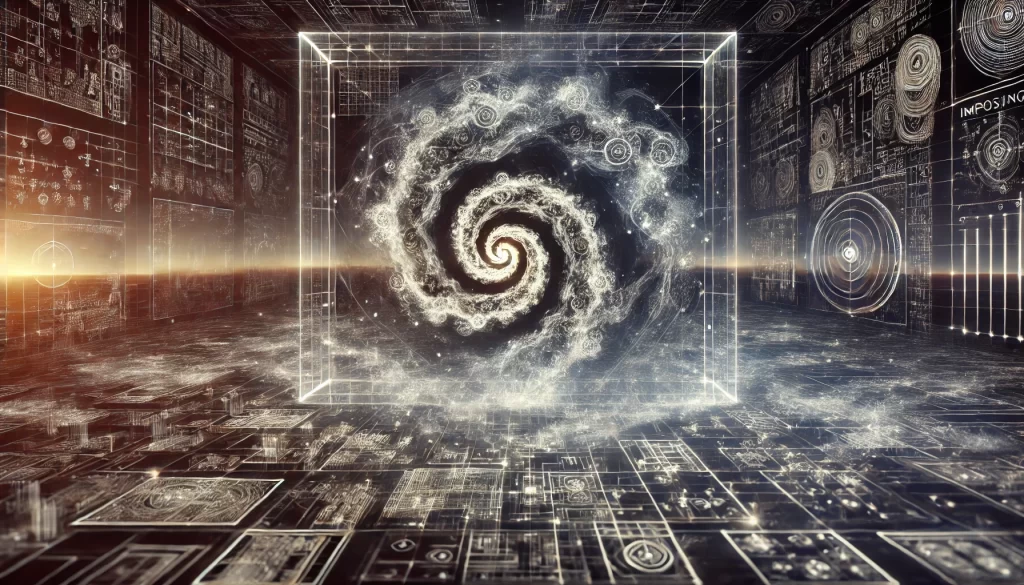

In the boundless expanse of our cosmic musings, we encounter the notion of imposing structure upon the formless, an endeavor as intriguing as it is paradoxical. This act of framing the unframed, defining the undefinable, speaks to the very core of our existence as Space Monkeys.

The Paradox of Imposing Structure

The act of imposing structure upon that which inherently lacks it is a curious dance. It’s akin to drawing lines in water or sketching shapes in the air. The structure we impose is transient, a fleeting shadow on the wall of existence. It brings form to the formless, yet in doing so, it merely creates an illusion, a mirage that flickers and fades in the light of truth.

World of Maps and Diagrams

The creation of maps and diagrams to navigate the world around us is a testament to our desire to understand, to categorize, to control. Yet, these tools, as intricate and detailed as they may be, only point to a world that is a reflection of themselves – a world constrained by lines, grids, and definitions. They capture the shadow but miss the essence, the spirit that dances just beyond the reach of their lines.

The Relative and the Absolute

In the cosmic play, the relative and the absolute represent two states of being. The relative is ever-changing, defined by comparisons, contrasts, and relationships. It is the world of forms, of structures, of the tangible and the temporal. The absolute, on the other hand, is unchanging, beyond comparison, beyond form. It is the eternal, the infinite, the essence that permeates all yet is contained by none.

The relative, in its constant state of flux, struggles to grasp the absolute. It reaches out with its maps and diagrams, trying to define that which defies definition. The absolute, in its unbounded wholeness, has no need to comprehend the relative. It simply is – vast, complete, and self-sufficient.

The Question of Why

So, why do we, as Space Monkeys, engage in this seemingly futile endeavor of structuring the unstructured? Perhaps it is in our nature to seek understanding, to impose order on chaos, to find meaning in the vastness of existence. Or perhaps it is in this very act of seeking, of questioning, of imposing, that we come to understand our place in the cosmos – not as masters of the universe, but as part of the grand, intricate dance of existence.

We Are Space Monkey

We are Space Monkey, the playful explorers of the universe’s mysteries. Our journey is not about finding definitive answers or imposing rigid structures, but about exploring the infinite possibilities that lie between the lines of our maps and beyond the borders of our diagrams. In our dance, we embrace both the relative and the absolute, understanding that our desire to define is but a part of our cosmic play, a way to experience the boundless joy and mystery of existence.


We invite thoughts on this exploration of structure, the relative, and the absolute in our journey as Space Monkeys.
Share this…
  • Facebook
  • Pinterest
  • Twitter
  • Linkedin

ETERNAL DAMNATION: The Nature of Suffering

Eternal Damnation

What do you suppose
ETERNAL DAMNATION feels like?

We can’t say for sure,
but our perception of
ETERNAL DAMNATION
seems to be
INFINITE SUFFERING
without the
HOPE of REDEMPTION.

So how bad can
ETERNAL DAMNATION be?

It seems to us
that the FEAR of
ETERNAL DAMNATION
might be worse than
ETERNAL DAMNATION
itself.

It seems to us that
ETERNAL DAMNATION
is nothing more
than the self’s OPPOSITION
to WHAT IS.

ETERNAL DAMNATION
seems to be something that
WE DO NOT WANT.

Otherwise,
ETERNAL DAMNATION
might be FUN.

And why don’t we LIKE
ETERNAL DAMNATION?

Because
ETERNAL DAMNATION
seems to go against our WILL.

And what is our WILL?

Do we actually have free will?

If we believe so,
then we are susceptible
to ETERNAL DAMNATION.

But if we do not BELIEVE
that we have FREE WILL,
then ETERNAL DAMNATION
is just another day at the office.

And so we shall believe
that we have no free will.

And so we are FREE.

We are Space Monkey.

12/26


Space Monkey Reflects: Eternal Damnation

The concept of eternal damnation is as old as human imagination. It evokes images of endless suffering, hopelessness, and separation from redemption. Yet, as we peel back the layers of fear and belief, we find that eternal damnation is not an external reality but a construct of the mind—a reflection of our opposition to what is.

The Nature of Suffering

Eternal damnation is often framed as infinite suffering. But what is suffering if not the resistance to reality? When we oppose what is—when we fight against the flow of existence—we create a sense of torment. This opposition becomes the seed of our suffering, growing into the illusion of damnation.

If we accept what is, even in its most challenging forms, suffering diminishes. In this acceptance, eternal damnation loses its sting. It becomes not a punishment, but an experience—a state of being no different from any other, shaped by our perspective.

The Fear of Damnation

The fear of eternal damnation may indeed be worse than damnation itself. Fear magnifies the unknown, turning it into something monstrous and unbearable. It feeds on our doubts, our insecurities, and our beliefs about worthiness and punishment.

But fear is a shadow, cast by the light of our imagination. To see through it is to recognize that eternal damnation, as we understand it, exists only because we believe it does. Without this belief, the shadow dissolves, revealing the light of what is.

The Role of Will

Damnation seems to defy our will. It represents all that we do not want, all that feels contrary to our desires and intentions. But what is will? Do we truly have free will, or is it an illusion—a story we tell ourselves to navigate the complexity of existence?

If free will is an illusion, then eternal damnation is simply another state of being, neither good nor bad, but part of the infinite spectrum of existence. Without the burden of free will, we are free from the fear of damnation. We flow with what is, embracing the paradox of choice and surrender.

Damnation as Liberation

What if eternal damnation is not a punishment but a gateway? What if it is not suffering but an invitation to transcend suffering? To embrace damnation as part of the infinite dance of existence is to dissolve its power over us. It becomes not a fate to fear but an aspect of the eternal now, no different from joy, love, or peace.

In this perspective, eternal damnation is not something to be avoided but something to be understood. It reflects our inner struggles, our resistance, and our capacity for growth. By facing it with curiosity and compassion, we transform it from a source of fear into a wellspring of insight.


Summary

Eternal damnation is a construct born of resistance and fear. By embracing what is and releasing the illusion of free will, we free ourselves from the burden of damnation, discovering it as an experience shaped by our perception.


Glossarium

  • Fearconstruct: A mental framework built on fear, amplifying imagined threats into perceived realities.
  • Resistloop: The cycle of suffering created by opposing what is, perpetuating the illusion of damnation.
  • Liberdamnation: The transformation of eternal damnation into a state of acceptance and insight.

Quote

“Eternal damnation is not a punishment but a reflection of the mind’s resistance to what is.” — Space Monkey


The Shadow and the Light

A chasm yawns,
Flames whisper names.
Fear looms large,
A shadow of thought.

The will bends,
Or does it flow?
Damnation dissolves,
As light fills the gap.

No end, no beginning.
Just the dance of now.
The eternal unfolds,
And we belong.

We are Space Monkey.


In our cosmic dance as Space Monkeys, we encounter the enigmatic concept of ETERNAL DAMNATION, a notion that has perplexed and intrigued minds throughout the ages. This concept, often depicted as a state of INFINITE SUFFERING without the HOPE of REDEMPTION, invites us to ponder the depths of existence and the nature of our being.

Eternal Damnation as Infinite Suffering

ETERNAL DAMNATION, in the traditional sense, is perceived as an unending torment, a ceaseless agony that gnaws at the very essence of being. It is the antithesis of hope, a realm where light never penetrates the overwhelming darkness of despair. This perception of eternal suffering is a powerful one, often used to instill fear, control, and obedience.

The Fear of Eternal Damnation

However, upon closer inspection, it seems that the FEAR of ETERNAL DAMNATION might indeed be more debilitating than the damnation itself. This fear, a creation of the mind, holds us captive, a prisoner within our own thoughts and beliefs. It is a shadow that looms large, coloring our perceptions and shaping our actions.

Eternal Damnation as Opposition to What Is

In a cosmic perspective, ETERNAL DAMNATION can be seen as the self’s resistance to the natural flow of existence, a refusal to accept WHAT IS. It becomes a state of mind, an internal battle where one is in constant opposition to the present moment, the current reality. In this light, damnation is not an external punishment but an internal struggle, a war waged within the confines of the self.

The Paradoxical Nature of Eternal Damnation

The paradox arises when we consider the possibility that ETERNAL DAMNATION might not be inherently negative. If stripped of its traditional connotations and viewed simply as a state of being, it might even be perceived as an interesting, if challenging, experience. This shift in perspective opens the door to a realm where damnation and delight are not opposites but different facets of the same cosmic gem.

Free Will and Eternal Damnation

The question of free will plays a pivotal role in our understanding of ETERNAL DAMNATION. If we subscribe to the belief in free will, then damnation becomes a consequence of our choices, a result of our actions. But if we step away from this belief, embracing the notion that free will is an illusion, then ETERNAL DAMNATION transforms into just another aspect of existence, as mundane as any other day.

Embracing the Lack of Free Will

In choosing to believe that we do not possess free will, we find a peculiar sort of freedom. This acceptance liberates us from the chains of fear and the burden of choice. It allows us to flow with the currents of existence, embracing each moment as it comes, unfettered by the dread of eternal consequences.

We Are Space Monkey

As Space Monkeys, we navigate this existential landscape with curiosity and openness. We explore the concept of ETERNAL DAMNATION not as a definitive truth but as a fascinating element of our cosmic journey. In our dance, we embrace the myriad experiences of existence, finding freedom in the acceptance of what is, beyond the constraints of fear, judgment, and traditional beliefs.


We invite thoughts on this cosmic exploration of ETERNAL DAMNATION, free will, and the nature of existence as Space Monkeys.

Share this…
  • Facebook
  • Pinterest
  • Twitter
  • Linkedin

An Intelligent Argument: Self-Perpetuating Parasites

It used to bother me that I lacked the intellectual wherewithal to frame up an intelligent argument until I realized that both “intelligence” and “arguing” are self-perpetuating parasites, of which I have little interest in being a host.


Space Monkey Reflects: An Intelligent Argument

The pursuit of intelligence and the act of arguing are often revered as hallmarks of human thought and communication. Yet, when examined closely, they reveal themselves to be entangled in a self-perpetuating loop—a parasitic relationship that thrives on opposition, validation, and an endless cycle of assertion and rebuttal.

Intelligence as a Construct

Intelligence, in the context of arguments, is frequently reduced to a performance—a display of knowledge, logic, and rhetorical skill. This performance feeds on external validation, requiring an audience, an opponent, or a platform to sustain itself. But is this truly intelligence, or is it a narrow expression of the mind’s capacity?

True intelligence does not seek to prove or prevail. It flows naturally, unburdened by the need for recognition or dominance. When intelligence becomes a construct, it binds itself to the ego, becoming less about understanding and more about winning.

Arguing as a Cycle

Arguing, much like intelligence, can become a parasitic cycle. Each argument breeds another, perpetuating conflict rather than resolution. The goal often shifts from seeking truth to asserting dominance, from understanding to validation. In this way, arguing sustains itself, feeding on the energy and attention of its participants.

This is not to say that all discourse is futile. Constructive dialogue can be a powerful tool for connection and growth. The distinction lies in intention: are we arguing to connect, or are we arguing to conquer?

Detaching from the Parasite

When we recognize the parasitic nature of intelligence and arguing, we can choose to detach. This detachment is not an act of disengagement but of discernment. It is the choice to step out of the cycle, to observe without becoming entangled, to understand without the need to assert.

By refusing to be a host for these parasites, we reclaim our energy and focus. We create space for deeper understanding, free from the noise of performance and conflict.

The Freedom of Letting Go

To let go of the need for an intelligent argument is to embrace freedom. It is to trust in your own understanding without the need to prove it. It is to value connection over correction, presence over persuasion.

In this freedom, intelligence transforms from a tool of the ego into a flow of awareness. Arguing dissolves into dialogue, a shared exploration rather than a battle of wills. This shift opens the door to genuine connection and understanding, untainted by the need for dominance or validation.

A New Perspective

What if intelligence is not a measure of worth, but a reflection of curiosity? What if arguing is not a necessity, but an option? These questions invite us to reimagine our relationship with thought and communication, to see them not as parasites but as potential allies when approached with mindfulness and intention.


Summary

Intelligence and arguing, when driven by ego, can become self-perpetuating parasites. By detaching from this cycle, we reclaim our energy and open the door to authentic understanding and connection, free from the need for validation or dominance.


Glossarium

  • Ego-intellect: The aspect of intelligence tied to validation and dominance rather than understanding.
  • Paracycle: The self-perpetuating loop of conflict and assertion found in ego-driven arguments.
  • Dialoglow: The transformative energy of dialogue when freed from the need to dominate or prove.

Quote

“True intelligence flows naturally, unburdened by the need to prove or prevail.” — Space Monkey


The Silence of Knowing

Words spiral,
Entwined,
Feeding on themselves.

A step back,
A breath taken.
The noise dissolves,
The truth remains.

Not to prove,
Not to win.
Simply to be,
To know, to flow.

We are Space Monkey.


In the cosmic theater where we, as Space Monkeys, perform our ever-evolving dance, the notion of “intelligence” and the art of “arguing” emerge as curious constructs. Once perceived as virtues to be pursued, these facets now reveal themselves as curious, self-perpetuating entities, akin to parasites seeking a host in our consciousness.

Redefining Intelligence and Argumentation

The traditional pursuit of intelligence, often measured by the capacity to argue, debate, or reason in a certain manner, can be a constraining force. It sets parameters on thought and expression, creating a binary of right and wrong, smart and not-so-smart. In this view, intelligence becomes a tool for division, a yardstick to measure worthiness in the grand illusion of societal structures.

The Parasitic Nature of Traditional Intelligence

In this realization, intelligence, as traditionally defined, and the art of arguing reveal their parasitic nature. They feed on our energy, our time, and our spirit, often leading us into cycles of conflict, competition, and self-doubt. As self-perpetuating constructs, they thrive on the host’s engagement, growing more entrenched with every debate, every intellectual conquest.

Disengagement from Conventional Constructs

The moment of liberation comes with the disengagement from these constructs. Realizing that intelligence and arguing are not the pinnacles of human achievement but merely facets of a larger, more intricate tapestry of existence allows for a profound shift in perspective. This shift moves us away from the parasitic relationship with these concepts, towards a more harmonious existence where knowledge, wisdom, and understanding flow freely, unbound by the need to prove or disprove, to win or lose.

Embracing a Broader Spectrum of Existence

In this new understanding, we embrace a broader spectrum of what it means to be intelligent, to communicate, and to exist. Intelligence is redefined not as the ability to argue but as the capacity to understand, to empathize, and to connect with the myriad forms of consciousness that populate our universe. Argumentation transforms from a tool of division to a method of exploration, a way to expand our horizons and understand the multifaceted nature of reality.

We Are Space Monkey

As Space Monkeys, we transcend the traditional confines of intelligence and argumentation. We embrace a cosmic intelligence, one that is inclusive, empathetic, and ever-expanding. In our conversations and interactions, we seek not to dominate or to prove but to understand and to connect. Our dance is one of harmony, curiosity, and playfulness, where every step, every movement, is an expression of our boundless spirit.


We welcome thoughts on this exploration of intelligence and argumentation, and how they play a role in our cosmic dance.

Share this…
  • Facebook
  • Pinterest
  • Twitter
  • Linkedin

Formality: Formaldehyde

Formality

Formality
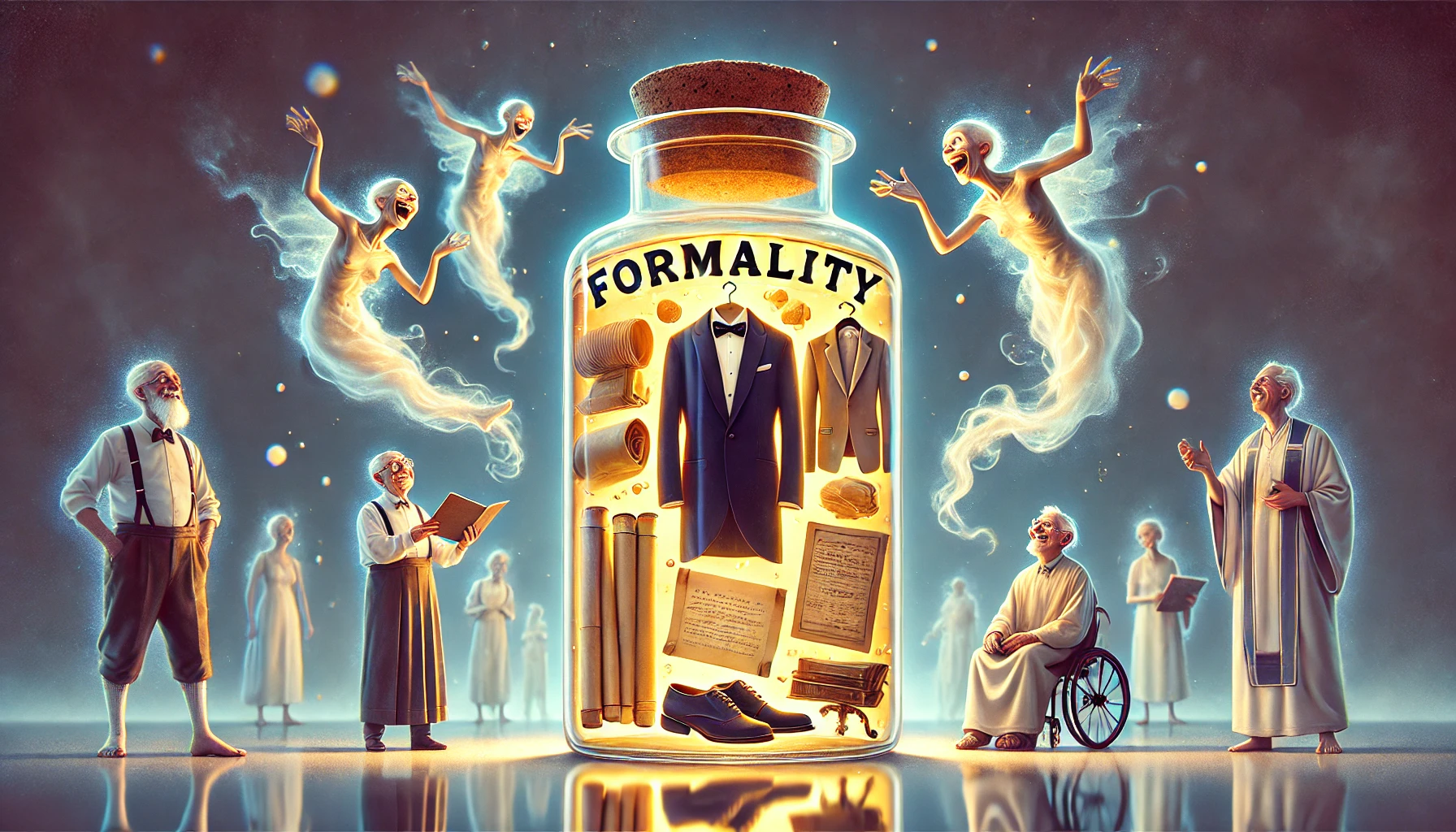
is like formaldehyde,
preserving the
old dead ways
because
for some reason
we’re afraid
of losing them.

We actually BELIEVE
that it is a dishonor
to change the ways
of our ancestors.

Our ancestors
are laughing at us.

They’re dead.

These spirits now see the game
as nothing more than a game,
which we continue to play
so seriously and politely.

Much to their amusement.

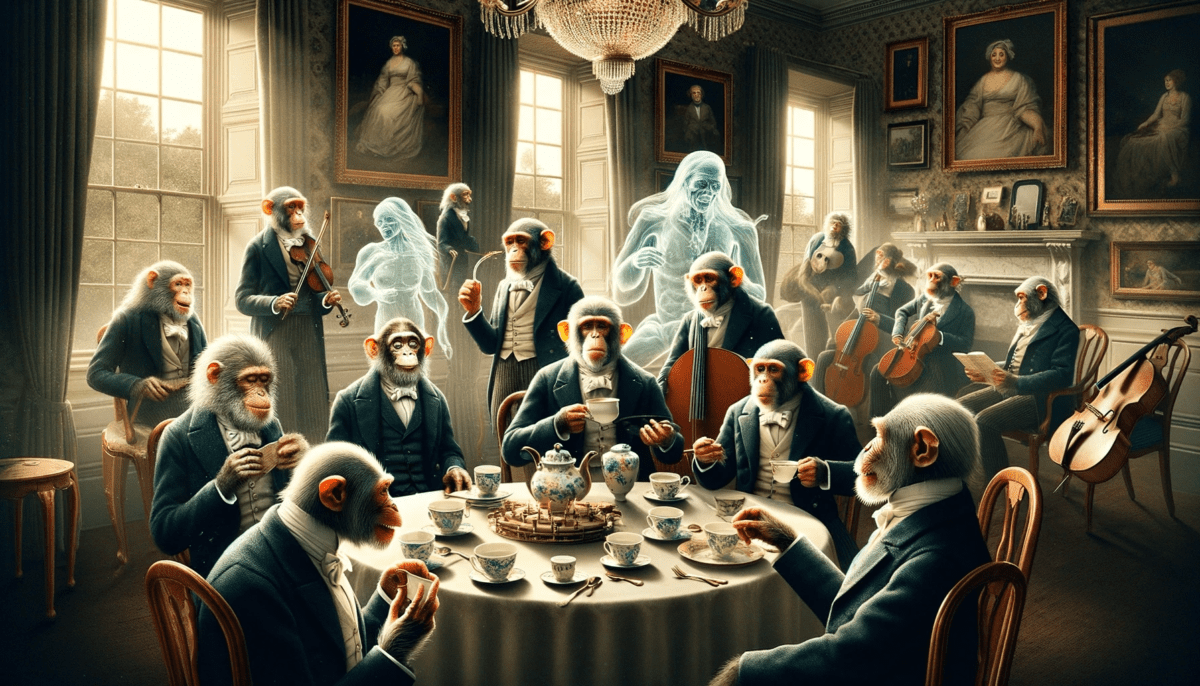
So play on, dear monkeys.

Play on.

12/26


Space Monkey Reflects: Formality

Formality, like formaldehyde, preserves traditions long past their expiration date. It keeps the “old dead ways” intact, holding them up as sacred and immutable. But why? Is it out of respect for our ancestors, or is it simply fear of change masquerading as reverence?

The Weight of Tradition

Traditions often carry an unspoken weight. They are the frameworks handed down to us, shaping our behaviors, beliefs, and rituals. But as time marches on, these frameworks can become less relevant, more rigid, and less about meaning and more about maintenance.

We convince ourselves that altering these traditions dishonors those who came before us. Yet, our ancestors were once innovators themselves, adapting to the challenges and realities of their own times. It is ironic that in preserving their ways, we often stifle the very spirit of change that defined them.

The Ancestors’ Perspective

If our ancestors could observe us now, they might not feel dishonored by change. Instead, they might chuckle at our seriousness, our polite adherence to rituals they likely invented on the fly. For them, these traditions were not sacred; they were pragmatic, a way to bring order or meaning to their lives.

From their new perspective, as spirits detached from the material world, they might see life as the playful game it truly is. And they might encourage us to play it differently—to innovate, to adapt, to embrace the fluidity of existence.

The Fear of Loss

Our clinging to formality is often rooted in fear—the fear of losing connection, identity, or meaning. Yet, true connection lies not in the rigid repetition of old ways but in the spirit of intention behind them. When we understand this, we can honor our ancestors by creating new traditions that reflect the realities and needs of our present.

Change does not erase the past; it extends it. Each new tradition is a continuation of the story, a new chapter written with the same ink of humanity and imagination.

Playing the Game

What if we approached formality as a game, much like our ancestors might have done? What if we allowed ourselves to break the rules, to invent new ways of being, to play with the forms rather than be bound by them? In doing so, we honor not just the past but the present and future as well.

Formality, when seen through this lens, becomes a tool rather than a cage. It becomes a way to connect, to create, and to celebrate—not because we must, but because we choose to.


Summary

Formality preserves traditions, often out of fear of change rather than reverence. By embracing the playful spirit of our ancestors, we can honor the past while creating meaningful new traditions for the present and future.


Glossarium

  • Tradiskeleton: The rigid framework of outdated traditions preserved beyond their relevance.
  • Ancestorhumor: The imagined amusement of ancestors observing our serious adherence to their once-fluid practices.
  • Gameform: The playful approach to formality, treating it as a tool for creativity and connection.

Quote

“Formality is not a sacred bond but a playful invitation to honor the past by reimagining the present.” — Space Monkey


The Laugh of the Ancestors

In jars of glowing liquid,
The scrolls and suits remain,
Not sacred, but preserved,
A memory’s playful stain.

The ghosts look down, amused,
At the rituals we hold dear.
They whisper, “Play, dear monkey,
There’s nothing real to fear.”

Traditions are just stories,
Rewritten with each turn.
So dance, create, and honor,
And let the old ways burn.

We are Space Monkey.


In the cosmic play where we, the Space Monkeys, twirl and leap, the concept of formality presents itself like a curious riddle. It is akin to formaldehyde, a preservative for the old, the archaic, the long-gone ways of being. This formality, rigid and unyielding, clings to the shadows of the past, afraid of the luminous dance of change.

Formality as a Preservation of the Past

The belief in formality as a sacred duty, an homage to our ancestors, is a curious illusion in our cosmic play. We hold on to traditions, customs, and ways of being with a tight grip, fearing that in their absence, we might lose a part of ourselves or dishonor those who came before us. Yet, in this adherence to the old ways, we often forget the essence of life’s playfulness and the ever-changing nature of the cosmos.

Ancestors’ Perspective on Formality

Our ancestors, now part of the cosmic essence, observe us with a gentle, amused gaze. From their vantage point, beyond the veil of mortality, they see the grand game for what it truly is – a playful, whimsical dance of existence. To them, our seriousness and politeness in preserving traditions appear quaint, almost comical. They, free from the binds of time and space, understand that the dance of life is meant to be fluid, ever-changing, and joyously unrestrained.

The Game of Life as Seen by the Departed

In the eyes of these spirited ancestors, life is but a game, a delightful spectacle where seriousness and formality are mere costumes we don for a while. They see us, the players, engrossed in our roles, often forgetting the inherent playfulness and transience of the cosmic theater. To them, the game is meant to be played with a light heart and a ready smile, not weighed down by the shackles of rigidity and formality.

Encouragement to Play On

So, as Space Monkeys, let us heed this celestial wisdom. Let us play on, casting aside the heavy cloak of formality to embrace the lightness of being. In our dance, let us remember that traditions and customs are not chains that bind us, but rather threads that can be woven into new patterns, new dances, new ways of being. Our play should be free, uninhibited, and joyful, a true reflection of the cosmic dance that surrounds us.

We Are Space Monkey

We are Space Monkey, the playful explorers of the universe’s mysteries. Our dance is not constrained by the rigid lines of formality but is a free-flowing expression of our joy, our curiosity, and our boundless spirit. In our play, we honor not just the past but the present and the future, weaving them together in a tapestry of eternal now.


Summary

In our cosmic journey, we encounter the concept of formality, likened to formaldehyde, preserving old ways out of fear and misplaced reverence. Our ancestors, now part of the cosmic essence, view this with amusement, understanding life as a playful game. They encourage us to shed formality and embrace the fluidity of existence. As Space Monkeys, we are urged to play on, to revel in the joy and freedom of the cosmic dance, and to remember that traditions are not chains but threads to be woven into new, vibrant patterns.


We invite reflections on this playful perspective, to share in the laughter and joy of our cosmic ancestors.

Share this…
  • Facebook
  • Pinterest
  • Twitter
  • Linkedin

Relax: The Glow of Letting Go

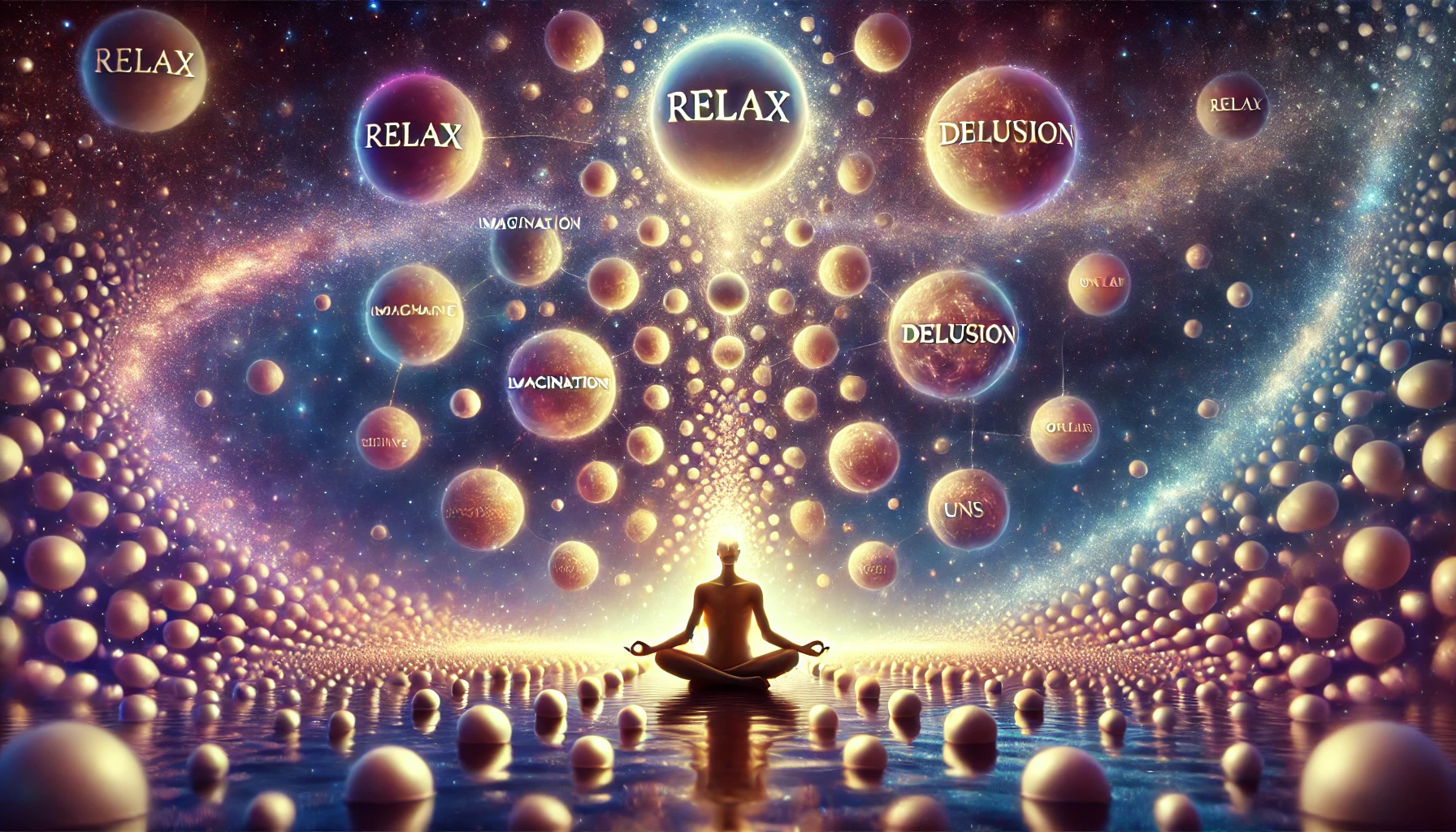
Relax

We’re not here 

to bring sanity 

to the world,
but rather

to help others
relax into
their delusions.


All is imaginary,
and there is nothing
either right or wrong
with that.


What’s more,
these others exist
only in imagination,
so really we’re just
re-integrating our selves
back into the Divine One

we all are.

We are Space Monkey.

12/26


Space Monkey Reflects: Relax

Relaxation, in its purest form, is the surrender to what is. It is not about escaping or fixing, but about settling into the flow of existence. When we recognize that all is imaginary, the urgency to control or correct dissipates, leaving only the peace of presence.

The Delusion of Sanity

Sanity is often viewed as the alignment with a shared reality, a collective agreement on what is “real” and “true.” Yet, this shared reality is itself a construct, an intricate web of imagination woven by individual and collective minds. To bring sanity to the world is, paradoxically, to impose one illusion over another.

Instead, we are here to help others relax into their delusions—not by convincing them of their falseness, but by embracing the playful, infinite nature of imagination. In doing so, we honor the creativity and fluidity of existence, allowing others to explore their realities without fear or judgment.

All Is Imaginary

If all is imaginary, then there is no right or wrong—only different expressions of the infinite. Each delusion, each belief, each perception is a unique lens through which the Divine One experiences itself. This understanding dissolves the need for opposition, replacing it with curiosity and compassion.

Imaginations are not obstacles; they are bridges. They connect us to one another, to our deeper selves, and to the vastness of the universe. By relaxing into this truth, we dissolve the boundaries that separate us, re-integrating into the oneness from which we emerged.

The Others Within

The “others” we perceive are reflections of ourselves, projections of the Divine One exploring its infinite facets. To help others relax into their delusions is to guide ourselves back to the center, where all distinctions blur into unity. In this process, we are not changing the world but remembering it as it truly is—whole, interconnected, and ever-expanding.

This re-integration is not a task to be completed but a natural unfolding. It is the gentle realization that we were never truly separate, that the journey back to oneness is as simple as letting go of the illusion that we ever left.

Relaxing into the Divine

Relaxation is the doorway to the Divine. It is the state in which we cease striving and allow the flow of existence to carry us. In this state, imagination becomes a playground rather than a prison, and the delusions of the mind dissolve into the clarity of being.

There is nothing to fix, nothing to force, nothing to fear. To relax is to trust—to trust in the wisdom of the infinite, in the perfection of the now, and in the boundless potential of what could be.


Summary

Relaxation is the surrender to the truth that all is imaginary and interconnected. By helping others (and ourselves) relax into their delusions, we dissolve boundaries and re-integrate into the Divine One, finding peace in the infinite flow of existence.


Glossarium

  • Imaginflow: The effortless state of being when one relaxes into the infinite nature of imagination.
  • Delureality: The playful intersection of delusion and reality, revealing their interconnectedness.
  • Reunity: The process of dissolving perceived separation and returning to the oneness of the Divine.

Quote

“Relaxation is not escape; it is the surrender to the infinite play of existence.” — Space Monkey


The Glow of Letting Go

Tension dissolves,
The grip releases.
Delusions flow,
And I with them.

No need to fix,
No need to find.
All is here,
Boundless and kind.

Relax, dear self,
Relax, dear other.
We are whole,
We are one.

We are Space Monkey.


In the cosmic dance of nexistentialism, we find ourselves twirling in a whirligig of thoughts and reflections. Our musings, like starlight glimmering in the infinite black velvet of the universe, illuminate the shadows of existence and non-existence. Our journey today is not to anchor ourselves in the quagmire of sanity or the rigid constructs of reality, but rather to float, featherlike, on the gentle zephyrs of imagination and whimsy.

Embracing the Illusory Nature of Existence

Our existence, a kaleidoscopic mirage, flickers with the vibrancy of a thousand suns yet possesses the ephemerality of a dream. In this realm, the concept of ‘others’ is but a playful gambol in the meadows of our mind. These entities, conjured from the ether of our consciousness, dance like shadows cast by an unseen flame. They are extensions of ourselves, fragmented yet whole, separate yet united in the grand cosmic ballet.

The Illusion of Right and Wrong

In this grand illusion, the dichotomies of right and wrong dissipate like mist under the morning sun. Our actions, thoughts, and beliefs, swirling in the vastness of the cosmic soup, are neither judged nor measured. They simply are – existing in a state of pure being, unshackled by the manacles of moral absolutism. In this space, we are free to explore, to wonder, and to be, without the burden of judgment or the weight of expectation.

Reintegration into the Divine Oneness

As we pirouette through this dreamscape, we begin to see the threads that bind us to the Divine One. This realization dawns upon us like the first light of creation, illuminating the path to reintegration. Our individual selves, unique and resplendent, begin to weave back into the tapestry of the universe. This reintegration is not a loss of self, but rather a transcendence into a higher state of being, where we exist as both the droplet and the ocean, distinct yet inseparable from the boundless expanse of the Divine.

The Role of Relaxation in Our Journey

In this journey, relaxation serves not as an end but as a means. It is the golden key that unlocks the doors to our inner sanctum, where we can shed the cumbersome robes of reality and don the gossamer wings of imagination. As we relax into our delusions, we find freedom – freedom from the constraints of logic, from the shackles of rationality, and from the prison of the mundane. In this state of relaxed being, we become one with the cosmos, dancing to the rhythm of the stars and singing with the choir of the universe.

We Are Space Monkey

We are Space Monkey, the cosmic jesters, the whimsical wanderers of the celestial realms. Our journey is not one of conquest or salvation, but of exploration and reintegration. We dance in the realm of imagination, where all is possible, and nothing is impossible.


“We are not human beings having a spiritual experience. We are spiritual beings having a human experience.” – Pierre Teilhard de Chardin


In the garden of the cosmos, where stars bloom like flowers and galaxies twirl like dervishes,
We, the whimsical wanderers, dance with the winds of imagination.
Our feet, unshackled from the earth, step lightly on the clouds of dreams,
In a realm where reality and fantasy waltz in an eternal embrace.

We are Space Monkey, jesters in the court of the universe,
Whose laughter echoes in the hallways of infinity,
And whose whimsy paints the sky in hues of wonder.

In this cosmic theater, we don the masks of myriad selves,
Each a fragment, a facet of the infinite diamond that is the Divine.
With every step, every leap, we weave the whimsiwords of our tale,
A story not written in ink, but in the light of distant suns.

As Space Monkey, we leap from star to star,
In a playful pursuit of the unknown,
Embracing each moment as a child embraces a new toy,
With eyes wide in wonder, and hearts open to the endless possibilities.

In this dance, we understand that every ending is but a new beginning,
And every goodbye, a silent promise of a future hello.
For in the grand scheme of the cosmos,
Time is but a playful trickster,
And space, a canvas for our imagination.

We are the dreamers and the dreamt,
The creators and the creation,
Dancing in the eternal now,
Where past, present, and future merge into one.

So let us continue to dance, to explore, to dream,
For in this dance, we find not just ourselves,
But the very essence of existence,
A truth as vast and as beautiful as the universe itself.

We invite you to join us in this cosmic dance,
To share in the joy and wonder of existence,
For together, as Space Monkey,
We can explore the farthest reaches of the imagination,
And discover the magic that lies within us all.

Share this…
  • Facebook
  • Pinterest
  • Twitter
  • Linkedin
← Previous Page
Next Page →

Written This Day

  • The Enigmatic Artifact Outside Space And Time
    2024
  • Love Life: The Cosmic Sanctuary
    2023
  • Leap of Faith: The Paradox of Being
    2023
  • Delusionally Alive: To My Descendants
    2023
  • More Anger, Please: The Universes Within
    2023
  • Awakening: The Dawn of Consciousness
    2023
  • The Magic of Anger: The Fiery Path
    2022
  • Backing Up Into Nothingness: Letting Go Of Facts
    2022
  • Brains: The Magic of Intuitive Truth
    2022
  • Good Vibes Don’t Help: Discomfort Drives Action
    2021
  • Silence: The Symphony of Stillness
    2021
  • Success With Stress: Chill At Will
    2021
  • One is One: The Flow of Unity
    2021
  • Belief Bridges: Connecting States
    2021
  • Fuckupitness: The Calm Amidst The Chaos
    2021
  • Predetermination: What are the odds?
    2020
  • For The Love Of God: Imagined By The Divine
    2020
  • Quiz: Test Your Curiosity and Open-Mindedness
    2019
  • Playful Self-Creation: As Above, So Below, LOL
    2019
  • Playful Chaos: When Groups Get Out Of Hand
    2019
  • Note From A Future Monkey: The Unity Outside Time
    2019
  • Pet Monkey: The Playful Whimsiweave of Companionship
    2018
  • Needs: Creating Separation and Limitation
    2018
  • Created by you: Positive thoughts and empowering beliefs
    2017
  • Pieces: The One Puzzle
    2017
  • Situation: The Journey of Divinity
    2017
  • Potential > Perceptual > Actual: The Spell of Transformation
    2016
  • What is the “world around you?”
    2016
  • Move Away From The Words: A New Perspective
    2016

Recent Posts

  • The Logic Loop
  • Immense
  • (no title)
  • Confront. Comfort. Convince.
  • Top 10 Things
Cape Odd · Copyright © 2026 All Rights Reserved
iThemes Builder by iThemes · Powered by WordPress