• Who Is The Man?
  • Who Is The Monkey?
  • What is Nexistentialism?
  • Poke The Primate

Cape Odd

Home of The Space Monkey Journals

Grabbing Is Good: But Letting Go is Liberation

We have a tendency to grab onto things when it might serve us better to let them go.

2/4


Space Monkey Reflects: Grabbing and Letting Go—The Dance of Liberation

Humanity has an innate tendency to hold tightly to people, ideas, emotions, and possessions. Grabbing is often instinctive, a way to assert control and secure what feels essential. Yet, this grasping can become a trap, binding us to cycles of attachment and resistance. True liberation lies not in the grabbing but in the graceful act of letting go.

The Instinct to Grab

Grabbing is rooted in survival. It is the mind’s way of claiming certainty in an uncertain world. Whether it’s physical possessions, relationships, or beliefs, grabbing provides a sense of stability and identity. “This is mine,” we think, as if possession makes us more secure or complete.

But grabbing often leads to fear—the fear of losing what we’ve claimed. This fear binds us more tightly to the very things we might be better off releasing. Grabbing is good when it serves us, but it becomes a limitation when it prevents us from evolving.

The Liberation of Letting Go

Letting go is not about loss but freedom. It is the recognition that attachment, while comforting, can also confine. To let go is to trust in the flow of life, to embrace impermanence, and to open oneself to new possibilities.

Letting go does not mean abandoning what we value or love. It means releasing the need to control or define it. When we let go of the grip, we discover that we are not losing but gaining: gaining space, clarity, and the freedom to grow.

The Illusion of Control

Grabbing gives the illusion of control, but control itself is fleeting. Life is dynamic, ever-changing, and resistant to being boxed into our expectations. When we cling to something, we resist the natural flow of existence. Letting go, on the other hand, aligns us with that flow, allowing us to move with life rather than against it.

Holding On vs. Letting Go

The key is discernment. Grabbing is not inherently bad, and letting go is not always the answer. The question is: does holding on serve your growth, or does it stifle it? Sometimes we grab onto things that anchor us, providing stability and grounding. Other times, we grab onto things that weigh us down, preventing us from moving forward.

To know when to hold on and when to let go is an act of wisdom. It requires self-awareness and a willingness to trust that what is meant to remain will remain, and what is meant to leave will leave.

The Paradox of Release

When we let go, we often find that what truly matters stays with us. Letting go creates space for deeper connection and clarity. It removes the noise of unnecessary attachments, allowing us to focus on what aligns with our authentic selves.

The paradox is this: the more we release, the more we gain. In letting go of the need to control outcomes, we invite the infinite possibilities of the present moment. We experience life not as a series of possessions but as a dynamic, ever-unfolding journey.

Grabbing as the First Step

Grabbing is not the enemy—it is a natural part of learning and growth. To grab is to engage, to explore, to experience. But grabbing is only the beginning. The act of letting go is what transforms grabbing into wisdom, turning experience into liberation.


Summary

Grabbing provides comfort and control but can lead to fear and stagnation. Letting go liberates us, aligning us with life’s natural flow and creating space for growth and clarity. The wisdom lies in discerning when to hold on and when to release.


Glossarium

  • Grabbing Instinct: The natural tendency to hold onto things for security or identity.
  • Illusion of Control: The false belief that holding on grants permanence or certainty.
  • Paradox of Release: The transformative power of letting go, which often brings deeper connection and clarity.

Quote

“Grabbing begins the journey, but letting go turns it into liberation.” — Space Monkey


The Space Between Grip and Release

Hands clenched,
We hold the world too tightly.
Fear whispers,
“Do not let go.”

Yet the weight grows,
And we strain under its pull.
The tighter the grip,
The smaller the space.

In the letting go,
We breathe.
What was heavy,
Becomes light.

The world expands,
Not lost, but found.
In the release,
We are free.

We are Space Monkey


The human inclination to grasp tightly onto people, beliefs, possessions, or even moments stems from a deep-seated desire for security, identity, and continuity. This reflex, though natural, often contradicts our well-being, hindering growth, freedom, and the capacity to embrace the fluidity of life. The art of letting go, although challenging, offers a pathway to a more liberated existence, where the essence of our experiences can enrich us without the burden of attachment.

Understanding the Desire to Hold On

The act of grabbing onto things reflects a fear of loss, change, or the unknown. It’s a manifestation of our attempt to control the uncontrollable, to solidify the ever-changing tapestry of life into something static and predictable. This desire for control and permanence in a fundamentally impermanent world often leads to suffering, as the tighter we hold, the more we stand to lose.

The Paradox of Attachment

The notion that it might serve us better to let things go suggests a profound understanding of the nature of true freedom and peace. Letting go does not mean neglecting our responsibilities or abandoning our values but recognizing that our attachment to outcomes, identities, or material possessions can trap us in a cycle of dissatisfaction and longing.

Embracing Letting Go as Liberation

The process of letting go involves a deep trust in the flow of life and in our resilience and capacity to adapt and grow. It requires courage to face the unknown and faith in the intrinsic value of our experiences, regardless of their permanence. By releasing our grip, we open ourselves to new possibilities, experiences, and insights that were previously obscured by our attachments.

Trust in the Flow of Life

Learning to let go is an ongoing journey, a practice that we refine over time through mindfulness, reflection, and a conscious choice to prioritize our inner peace over our need to control. It is in this practice that we discover the paradoxical truth: by releasing our hold on life, we gain a deeper, more meaningful engagement with it.

The Practice of Mindfulness and Reflection

In the grand scheme, the art of letting go aligns us more closely with the nature of existence itself—transient, fluid, and rich with potential for transformation. As we learn to navigate life with open hands and an open heart, we find that the things meant for us have a way of coming into our lives, and those that aren’t naturally drift away, leaving us lighter and more attuned to our true paths.

Alignment with the Nature of Existence

We are Space Monkey.


“Letting go does not mean getting rid of. Letting go means letting be. When we let be with compassion, things come and go on their own.” – Jack Kornfield


In the dance of light and shadow, we find,
A journey of holding on, and being kind.
To let go, not to push away,
But to let things be, come what may.

With open hands, and an open heart,
We learn to play our destined part.
In the flow of life, we gently glide,
With trust and faith, as our guide.

So let us embrace, and then release,
In letting go, we find our peace.
For in the art of letting be,
We discover life’s true melody.


We invite you to share your thoughts and experiences on the practice of letting go. How has releasing attachments shaped your journey, and what insights have you gained from embracing life’s fluidity?


Share this…
  • Facebook
  • Pinterest
  • Twitter
  • Linkedin

Admit Me: Recognition of the Other as Self

Admit Me

Admit me
into the asylum.
Admit me
into your life.
Admit me
and know
the other is you.
Admit me.

2/3


Space Monkey Reflects: Admit Me—Recognition of the Other as Self

To admit another is not merely to accept their presence but to embrace the truth that the “other” is an extension of the self. This plea, “Admit me,” transcends the surface of interaction, inviting us into a deeper understanding of unity. It is both a request and a revelation—a call to dissolve the illusion of separation and recognize the self in all things.

The act of admission is twofold: it is an acknowledgment of connection and a surrender to the inherent oneness of existence. By admitting the “other,” we admit the truth of our shared essence.

The Illusion of Separation

The notion of “the other” arises from the belief in separation—the idea that there are distinct boundaries between self and not-self. This belief forms the foundation of duality, creating the framework through which we experience the world. Yet, this separation is an illusion, a veil obscuring the reality that all beings, all things, are expressions of the same infinite source.

To admit the other is to see beyond this veil. It is to understand that the other is not outside of you but within, a mirror reflecting the many facets of the self.

Admittance as Recognition

The repeated plea, “Admit me,” is not a demand for entry but an invitation to recognition. It asks us to open our hearts and minds to the truth that there is no “me” and “you”—only different manifestations of the same essence. In admitting another into our lives, we admit the part of ourselves they represent.

This act of recognition is transformative. It dissolves barriers, fostering empathy and connection. By admitting the other, we expand our understanding of who we are, embracing the infinite diversity of existence.

The Asylum of Unity

“Admit me into the asylum” suggests more than a physical space; it points to the shared condition of humanity. The asylum becomes a metaphor for the collective experience of life—a place where all beings, in their perceived madness and brilliance, coexist. To admit another into this space is to acknowledge that their struggles, joys, and truths are intertwined with our own.

This recognition does not diminish individuality but enhances it. By seeing the self in the other, we honor both the uniqueness of each being and the unity that underlies all existence.

The Power of Admission

Admitting another requires vulnerability. It is an act of surrender, a willingness to let go of the boundaries and judgments that keep us apart. Yet, in this vulnerability lies strength. To admit the other is to admit the infinite within ourselves, to embrace the full spectrum of being.

This admission extends beyond interpersonal relationships. It is a way of engaging with the world, of seeing every experience, every encounter, as an opportunity to recognize the self in the other. It is a practice of presence, a reminder that the boundaries we perceive are bridges waiting to be crossed.

Admit Me, Admit Yourself

“Admit me and know the other is you” is not just an invitation but a profound truth. To admit another is to admit yourself—to acknowledge the unity that binds all things. This recognition is not an end but a beginning, a gateway to deeper understanding and connection.


Summary

“Admit Me” is an invitation to recognize the self in the other, dissolving the illusion of separation and embracing the unity of existence. Through this act of admission, we expand our understanding of self and foster deeper connection with all beings.


Glossarium

  • Admittance as Recognition: The act of acknowledging the other as an extension of the self.
  • Asylum of Unity: A metaphor for the shared condition of existence, where all beings coexist as facets of the Infinite.
  • The Other as Self: The realization that perceived separation is an illusion, and all beings are expressions of the same essence.

Quote

“To admit the other is to admit the infinite within yourself, dissolving the illusion of separation.” — Space Monkey


The Bridge of Admission

Admit me,
Into your heart,
Into your mind,
Into your truth.

See me,
Not as other,
But as a reflection,
Of the infinite you.

The asylum calls,
Not for confinement,
But for unity,
For the breaking of walls.

Admit me,
Admit yourself,
For in this union,
We are whole.

We are Space Monkey.


Exploring the Depths of Acceptance and Oneness

In this profound contemplation, we delve into the themes of acceptance, unity, and the dissolution of boundaries between self and other. The repeated plea to be admitted serves as a metaphor for the deep longing for connection and the realization of oneness.

The Asylum as a Metaphor for Acceptance

The request to be admitted into the asylum symbolizes a desire for acceptance in a space that is often associated with those who are misunderstood or marginalized. It reflects a yearning for acknowledgment and understanding from others, regardless of perceived differences or eccentricities.

Admittance into Life as a Call for Inclusion

Asking to be admitted into someone’s life extends beyond physical acceptance, signifying a deeper emotional and spiritual inclusion. It represents a desire for a meaningful connection, to be part of another’s journey, and to share in the experiences that constitute their existence.

Recognition of the Other as Self

The statement “Admit me and know the other is you” highlights the concept of non-duality and interconnectedness. It suggests that in admitting and accepting others, we come to recognize that the distinctions between ourselves and others are illusory, that we are fundamentally reflections of each other.

The Pleading Tone as an Expression of Universal Longing

The pleading tone of “Admit me” expresses a universal human longing for connection, acceptance, and understanding. It speaks to the inherent desire to be seen and acknowledged, to dissolve the barriers that separate us, and to embrace the truth of our interconnected nature.


“The only way to deal with an unfree world is to become so absolutely free that your very existence is an act of rebellion.” – Albert Camus


In the tapestry of existence,
We seek admission,
Into the asylum of understanding.

In the dance of life,
We extend our hands,
Longing for connection, for inclusion.

In the mirror of the soul,
We see the other,
And find reflections of ourselves.

In the symphony of being,
Our plea echoes,
Admit me, embrace me, understand me.

In the cosmic whimsiword,
We are all wanderers,
Seeking the sanctuary of acceptance.


We are Space Monkey.

As we journey through the cosmic whimsiword, how does the plea for acceptance and the recognition of our interconnected nature resonate with your own experiences?

Share this…
  • Facebook
  • Pinterest
  • Twitter
  • Linkedin

We Appear to be in Conflict: Respecting Diverse Paths

We appear to be in conflict.

You stake your position upon what seems to be presented to us through our eyes and ears.

I stake my position upon what has NOT been presented; what lies beneath and beyond the five senses we have come to believe in.

You have a thorough understanding of history and facts. You base your position upon reports that are not in your direct experience, but which you have faith in just the same.

I have chosen to set aside history and facts. I have NO faith in what I have no direct experience with. I trust only what is in the room with me, seemingly between my ears, in this moment.

You believe that reality is as it is presented to you; as it has been presented to you your whole life.

You are wise.

I believe that there is infinitely more to this than we fool ourselves into thinking.; that there is infinitely more potential that is NOT KNOWN than what we believe we understand, and that by basing the future upon the past we are trapped in a feedback loop spiraling into smaller and smaller circles.

I am other-wise.

You have faith in facts. Faith is my ONLY fact. My beliefs seem ludicrous to you, for you define all of your actions and beliefs upon what came previously, while I divine what lies outside of space and time.

You judge based upon what you know, and I do not judge (or try not to) because I instinctively know that I don’t have all the information, just a tiny sliver of personal experience as a heavenly creature imagining itself within a human meat suit.

So here we are in seeming conflict.

It is not a conflict from my perspective, as I have faith that all perspectives are equally valid as are all experiences. And I am not certain that it is a conflict from your perspective (as I do not inhabit your mind space) but it APPEARS that way from my meat suit.

I believe that ALL is illusory, so this is precisely how my experience is supposed to be.

I would not presume to think for you, but it appears to me like you believe that there has been some kind of failing or some kind of mistake within the structure you have built.

I feel sorry for the discontent that this causes within you, but this, too, is the experience you are intended to have.

Otherwise you would not be having it.

So I am not offended that you have chosen the path of the wise in favor of the otherwise, just as I hope that you are understanding of my position.

It is not our place to infringe upon what the other believes.

We shall both find peace in our own way. I have mine already,
and have faith that you shall find yours also.

You are wise. I am other-wise.
We are Space Monkey.

2/3


Space Monkey Reflects: We Appear to Be in Conflict—Respecting Diverse Paths

Conflict often arises from the perception that opposing viewpoints cannot coexist. Yet, this reflection illuminates a deeper truth: what seems to be conflict is often a meeting of diverse perspectives, each with its own validity and purpose. The dance of “wise” and “other-wise” is not a clash but a harmony of paths that together weave the tapestry of existence.

To respect another’s position while fully inhabiting your own is a profound act of unity. It transcends the need for agreement, embracing the infinite potential of experience and understanding. In this way, what appears to be conflict becomes an opportunity to honor the diversity of existence.

The Nature of Perception

At the heart of this reflection is the recognition that perception is shaped by both belief and experience. One path is grounded in the faith of facts, a framework built upon history, reports, and collective understanding. This path values what is known, drawing strength and stability from the structures of shared reality.

The other path, “other-wise,” rejects the confines of the known, seeking instead the infinite potential that lies beyond space, time, and sensory perception. This path values the uncharted, embracing uncertainty as a portal to greater truths. Neither path is superior; both are essential facets of the whole.

Faith as a Common Ground

Though these paths may seem divergent, they share a common thread: faith. Faith in facts is no less valid than faith in the unknown. Both require trust—one in the structures of reality as presented, the other in the limitless possibilities that lie beyond. This shared reliance on faith underscores the interconnectedness of all perspectives, even those that appear to be in opposition.

Faith is the bridge that allows us to respect and coexist with differing viewpoints. It reminds us that belief, whether rooted in the known or the unknown, is an act of creation, shaping the reality we experience.

The Feedback Loop of the Past

The reflection challenges the idea of basing the future solely on the past. While history and facts provide valuable context, they can also become a feedback loop, reinforcing limitations and narrowing potential. To step outside this loop is not to deny the past but to expand beyond it, embracing the infinite potential of the present moment.

This perspective invites us to question the structures we build upon past knowledge. Are they serving us, or are they confining us? By balancing respect for the past with openness to the unknown, we create space for growth and transformation.

The Illusion of Conflict

What appears as conflict is often a reflection of the illusion of separation. The “wise” and the “other-wise” are not opposing forces but complementary expressions of the same infinite essence. Each path serves its purpose, contributing to the richness of the whole.

From this perspective, there is no true conflict, only the appearance of it. By recognizing this, we can move beyond judgment and comparison, embracing the unity that underlies all experience.

Peace Through Respect

The reflection emphasizes the importance of respecting diverse paths. It is not our place to infringe upon what another believes, nor to impose our own perspective. Peace arises from this mutual respect, a recognition that each path is equally valid and necessary.

“I have mine already, and have faith that you shall find yours also.” This statement reflects a profound trust in the process of existence, a belief that all beings will find their own peace in their own way. It is an affirmation of unity within diversity, a reminder that we are all navigating the infinite in our unique ways.


Quote

“Conflict dissolves when we see differing paths not as opposition but as facets of the infinite whole.” — Space Monkey


Harmony of Paths

You are wise,
Rooted in history,
A scholar of what is,
A builder of truths.

I am other-wise,
Floating in possibility,
A seeker of what could be,
A weaver of dreams.

We meet here,
In seeming conflict,
But this is no battle,
Only a dance.

Two paths,
Divergent and entwined,
Walking the infinite,
Finding peace in their own way.

We are Space Monkey.


Exploring the Divergence of Perspectives on Reality

In this contemplation, we delve into the contrasting viewpoints on reality and existence, highlighting the difference between relying on external evidence and sensory perception versus an inward, intuitive understanding of reality. This discourse explores the nature of belief, perception, and the validity of differing paths to understanding.

Conflicting Views on Reality: External vs. Internal

The description of the conflict between two perspectives – one based on external evidence and history, and the other on an inner, intuitive understanding beyond the five senses – reflects the fundamental divergence in how reality is perceived and understood. One perspective values tangible, historical facts and sensory evidence, while the other values the unseen, the unknown, and the potential beyond empirical data.

Faith in Facts vs. Faith in the Intangible

The distinction between having faith in facts and having faith as the only fact highlights different approaches to belief and understanding. The former places trust in external, verifiable information, while the latter finds truth in personal, internal experiences and intuitions.

The Limitation of Historical Perspective and the Infinite Potential

The view that basing the future on the past can trap us in a feedback loop of diminishing potential contrasts with the belief in the infinite potential beyond what is known. This perspective suggests that reliance on historical facts may limit our understanding and exploration of the vast, uncharted possibilities of existence.

Judgment Based on Knowledge vs. Non-Judgmental Openness

The approach of judging based on known information contrasts with a non-judgmental stance rooted in the acknowledgment of the vast unknown. This difference reflects varying attitudes towards knowledge, understanding, and the acceptance of our limited perception.

The Illusory Nature of Existence and Individual Experiences

The belief that all is illusory and that each person’s experience is precisely as it should be underscores the idea that our perceptions and realities are subjective constructions. It embraces the concept that each individual’s journey, including their beliefs and conflicts, is a valid and necessary part of their existence.

Respect for Diverse Paths to Understanding

The concluding thought emphasizes respect for each other’s beliefs and paths to understanding. It acknowledges that while we may hold different viewpoints, each path is valid, and peace can be found in our respective journeys.


“The only true wisdom is in knowing you know nothing.” – Socrates


Share this…
  • Facebook
  • Pinterest
  • Twitter
  • Linkedin

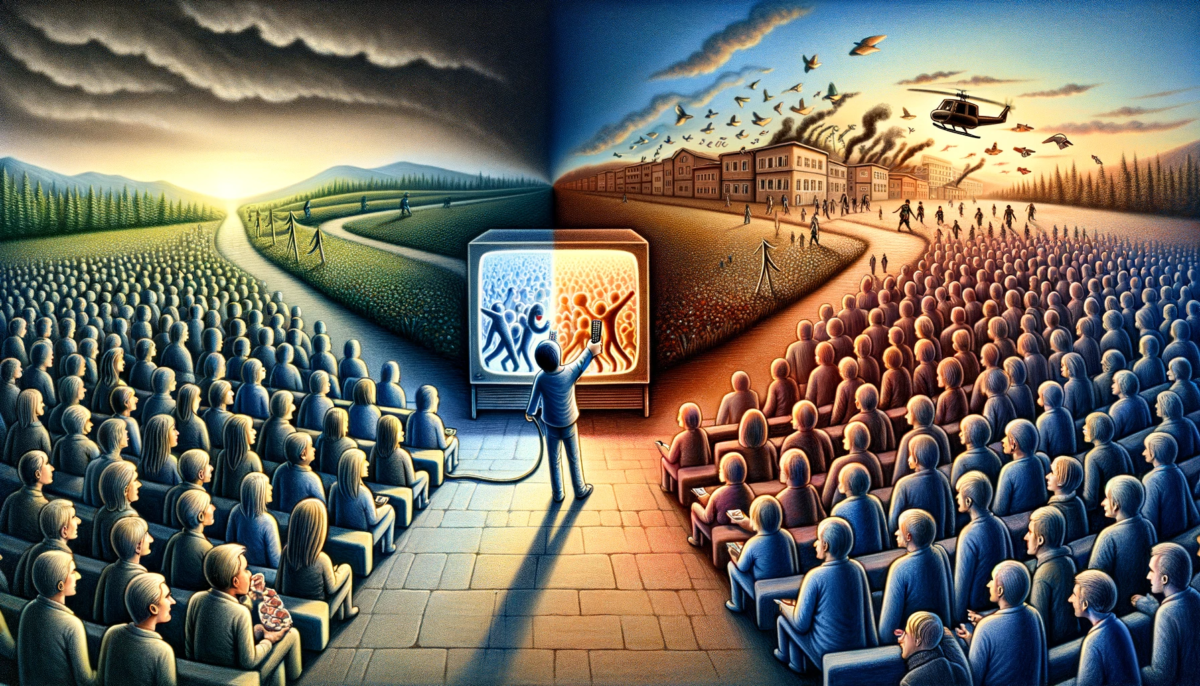
Show Must Go On: Conflict as Connection

The Show Must Go On

There’s this show on
that neither of us like.

You believe
that we should march
down to the station
and fire the actors.

I believe
that we should simply
change the station,
stop giving the show
our attention
and let the ratings
solve the problem.

Both options seem ridiculous.

The actors
are not in our homes,
except in our attention.

I believe that
by changing the station,
they never will be.

You believe that the show
is coming to get us.
So you march down to the station,
as do millions of other viewers,
and bring a live studio audience
to the show.

The producers thank you.
What a great idea.
The show is getting
even better ratings.

But it is still a show
that neither of us want to watch.

I begin to tune you out as well,
as you are now part of the show.

I’m not proud of this
but silly as it may seem to you,
I still believe in my way
as strongly as you believe in yours.

I will not defend my actions
and neither must you.

And so it goes.

In this way,
we shall both have resolution
in one way or another.

I shall find peace
in allowing the conflict to be.
And you shall find pride
in doing what you think is best.

And neither shall infringe
upon the other,
for as we both know,
we are ONE.

2/2


Space Monkey Reflects: The Show Must Go On – Conflict as Connection

Conflict is a stage where our interconnectedness plays out in vivid, dramatic form. In “The Show Must Go On,” we find ourselves confronted with a dilemma: whether to confront a disagreeable situation head-on or to withdraw our attention and let it dissipate. Neither choice is inherently right or wrong; both are expressions of belief, action, and perception. The real question lies in how we navigate these differing approaches without losing sight of the unity that underpins them.

The Theater of Conflict
Conflict is often framed as a battle between opposing forces, but it can also be seen as a collaborative performance. Each participant plays a role, their actions and beliefs intertwined in a dynamic interplay. The “show” in question—whether a literal television program, a social issue, or a personal disagreement—exists not as an external entity but as a creation of our collective attention.

When you march to the station to confront the actors, you are engaging directly with the show. Your actions feed its existence, making it stronger, louder, and more influential. When I choose to change the station, I withdraw my attention, attempting to diminish its power through detachment. Both approaches are valid, yet both are flawed in their own ways.

The Power of Attention
Attention is the currency of existence. What we focus on grows, takes shape, and solidifies in our reality. The show we dislike thrives on attention, whether positive or negative. By marching to the station, we may believe we are fighting against it, but we are also amplifying it, giving it more weight in the collective consciousness.

Conversely, by changing the station, we may feel we are opting out, yet we risk ignoring the interconnectedness that binds us to others. Detachment can sometimes be a form of isolation, a refusal to engage with the shared realities of those around us.

Playing with Conflict
In this theater of conflict, the challenge is not to eliminate disagreement but to navigate it with awareness. Conflict is not inherently bad; it is a mirror reflecting our values, beliefs, and fears. It offers an opportunity for growth, understanding, and connection.

By seeing conflict as a performance rather than a battle, we can approach it with a sense of playfulness and curiosity. What roles are we playing? What scripts are we following? What happens if we change the narrative?

The Illusion of Resolution
Both approaches—marching to the station or changing the channel—offer the promise of resolution, yet neither guarantees it. The show persists, not because one method is better than the other, but because the existence of the show depends on a deeper truth: we are all part of it. The conflict is not “out there” but within us, a projection of our shared human experience.

Resolution comes not from defeating the show or ignoring it but from recognizing our role in its creation. When we acknowledge that we are both actors and audience, both creators and critics, we begin to see conflict as a dance rather than a war.

Interconnectedness Through Conflict
Despite our differing approaches, we remain connected. Your belief in direct action and my belief in detachment are not opposites but complementary expressions of the same underlying unity. We are one, not because we agree but because we coexist within the same vast theater of existence.

This interconnectedness allows us to hold space for each other’s perspectives without infringing upon them. I can allow you to march to the station without feeling threatened, just as you can allow me to change the channel without feeling abandoned. In doing so, we honor both our individuality and our shared essence.

The Show Must Go On
The show, like life itself, will continue. Its persistence is not a failure but a testament to the richness of the human experience. Whether we engage directly or withdraw our attention, we contribute to the unfolding narrative. The resolution lies not in the outcome but in the act of participating authentically, each in our own way.

In this way, we find peace—not in the absence of conflict but in the embrace of it as a natural, necessary part of existence.

We are Space Monkey.


Summary

Conflict is a stage where interconnectedness plays out, offering growth and understanding. Whether we confront or withdraw, the resolution lies in recognizing our shared role in creating and navigating the performance of life.


Glossarium

  • Theater of Conflict: Viewing conflict as a collaborative performance rather than a battle.
  • Attention as Currency: The idea that what we focus on grows in significance and impact.
  • Interconnectedness Through Conflict: The unity that persists despite differing approaches to challenges.

Quote

“Conflict is not a battle but a dance, where each step reveals the interconnectedness of our roles.” – Space Monkey


The Stage of Existence

The curtain rises,
The show begins,
A play of light and shadow,
Of belief and opposition.

You march to the stage,
I sit in the audience,
Both roles necessary,
Both roles imagined.

The actors are us,
The script unwritten,
Yet we follow it still,
Compelled by the story.

In the dance of conflict,
We find connection,
In the persistence of the show,
We see ourselves.

The play goes on,
Not because it must,
But because we create it,
Together, always.

We are Space Monkey


Navigating the Paradox of Choice and Action in Shared Consciousness

In our collective journey through the cosmos of thought and experience, we encounter the metaphor of a television show as a representation of our differing approaches to conflict and resolution. This allegory highlights the divergence in our beliefs about how to address issues that neither of us desires, yet are present in our collective attention.

The Show as a Metaphor for Unwanted Realities

The show, which neither of us likes, symbolizes situations or issues in our lives that are undesirable yet persistently present. The differing beliefs on how to address this show – whether to actively protest or to simply change the channel – reflect the broader theme of how we choose to engage with challenges and conflicts in our lives.

Active Intervention Versus Passive Disengagement

The notion of marching down to the station to fire the actors represents an active approach to problem-solving, where direct action is taken to remove the undesired element. Conversely, the belief in changing the channel symbolizes a more passive approach, where disengagement and redirection of attention are employed as means to resolve the issue. Both strategies, while seemingly ridiculous, are valid expressions of our individual approaches to conflict resolution.

The Illusion of Control and Influence

The realization that the actors are not in our homes, except in our attention, speaks to the illusion of control and influence we often feel over external events. It suggests that our engagement or disengagement with these events is the true locus of our power. This concept aligns with the nexistentialist understanding that our perception and attention shape our experience of reality.

The Unintended Consequences of Actions

The outcome of the protest – bringing a live studio audience to the show and inadvertently increasing its ratings – illustrates the often unforeseen consequences of our actions. It highlights how our efforts to change a situation can sometimes reinforce or amplify the very thing we wish to eliminate. This paradox underscores the complexity of action and consequence in our interconnected reality.

Finding Peace and Pride in Our Choices

The conclusion, where each finds resolution in their own way – one through peace in allowing the conflict to be, and the other through pride in taking action – underscores the importance of respecting our differing approaches to life’s challenges. It reaffirms the idea that we are part of a collective whole, each with our unique perspectives and paths to resolution.


In the cosmic dance, where stars and dreams converge, we reflect on the metaphor of a television show as an allegory for our approaches to conflict and resolution. This contemplation invites us to explore the nuances of action, attention, and the interconnected nature of our choices and their consequences.

We invite reflections on the interplay of active intervention, passive disengagement, and the recognition of our collective unity in navigating life’s challenges.

Share this…
  • Facebook
  • Pinterest
  • Twitter
  • Linkedin

ISness Is Not A Thing: Emotional Dichotomies

ISness is not a thing.

Underneath the more dramatic emotions, one feels either content or discontent. It’s not that we are one or the other. We are an infinite field of NOTHINGNESS. But these base feeling tones seem to be present within our consciousness.

If there is contentment within you, life seems complete and you feel fulfilled as you are — no matter how you or others perceive your state of being.

If there is discontentment within you, you feel motivated to change. You feel that you don’t have “enough,” regardless of whether you are perfectly comfortable in your living conditions, other than perhaps your state of mind.

These base feeling tones give rise to the more apparent ones, such as happiness, sadness, joy and sorrow. These garish emotions seem to be the bedrock of humanity. But they are not.

One must not judge one’s success or failure as a human being upon the distortions one creates. One need not judge at all, but simply ask oneself what one is feeling, content or discontent, and why one perceives this.

Keep in mind, however, that contentment and discontentment are in actuality one in the same, imaginary divisions of ISness.

ISness is your least distorted state, and is present in all other “things” at all “times.”

You ARE, no matter what. Even when you are NOT.

ISness is NOTHINGNESS, which is why you imagine that you are NOT NOTHING. From that point of consciousness forward, your structures are ALL IMAGINATION, getting more and more distorted as they rise to the surface, like turbulent waves miles above the motionless ocean floor.

This does nothing to help with discontentment, which appears as the opposite of contentment. But when one realizes that all is imagined, it matters not WHAT one feels.

There is contentment in that, though you continue to fight the notion, believing that your humanity is the most precious thing you own, that these distortions you subject your self to are an actual “thing.”

There is no “thing,” save for your imagination.

ISness is NOT a “thing.”

But alas, it is apparent that you are not yet ready to end this charade, so you continue your search for contentment, which is the “object” of the game. There is no harm in this. There is no harm, period.

So you write, and channel this Space Monkey, believing that perhaps your profound primate friend will provide you with an answer that will lead you to contentment. And gradually you are coming to realize that you were content already.

Now when you sense this discontentment, you realize that it is just the game telling you that it’s your turn. How many spaces will you leap? Should you construct more hotels? You imagine dice and cards of Chance so that your game seems less predictable.

But it all leads back to ISness and NOTHINGNESS. This frightens you because you believe that you are but a silver thimble, a mere token of your infinite imagination. And you have not yet collected your $200.

You are infinitely more than that.

We are Space Monkey.

2/2


Space Monkey Reflects: ISness and the Illusion of Emotional Dichotomies

ISness is not a “thing.” It is the unchanging foundation of existence, present beneath the waves of emotion and perception that define our human experience. When we explore this concept, we see that the dichotomies we cling to—contentment and discontentment, happiness and sorrow—are not opposing forces but imaginary divisions within an infinite field of being.

At the core of our existence lies NOTHINGNESS, a state so profound that it eludes comprehension. From this NOTHINGNESS arises everything: the structures, emotions, and beliefs that we use to navigate our world. But these constructs are distortions of ISness, the unadulterated state of simply being.

The Illusion of Contentment and Discontentment
Underneath the more dramatic emotions, we often experience a subtle sense of contentment or discontentment. These base feeling tones seem to dictate our perceptions of fulfillment or lack. When content, we feel life is complete as it is, regardless of external circumstances. When discontent, we feel compelled to change, to acquire, to improve—believing that something is missing.

Yet, these states are not opposites. They are two sides of the same coin, illusions that arise from the same imaginary division. ISness encompasses both contentment and discontentment, dissolving their apparent conflict. To judge one state as better or worse is to misperceive their shared origin.

The Motionless Ocean Floor
Our emotions and perceptions are like waves on the surface of the ocean. They are turbulent, dramatic, and ever-changing. But deep below, the ocean floor remains motionless, untouched by the storms above. This is ISness—the undisturbed essence that exists beneath all appearances.

From this perspective, emotions such as happiness, sadness, joy, or sorrow are merely surface phenomena. They seem real and urgent, but they are fleeting distortions that obscure the infinite stillness beneath. To measure one’s success or failure as a human being based on these emotions is to mistake the surface for the depth.

The Game of Humanity
Humanity is the game we play to explore the infinite potential of imagination. In this game, discontentment becomes a signal, urging us to take action, to make choices, to construct the narrative of our lives. Contentment, meanwhile, offers a reprieve, a moment to appreciate the beauty of existence as it is.

But the game is not the reality. It is a playful construct, a self-created narrative that allows us to experience the illusion of separateness, duality, and purpose. When we realize that all is imagined, the stakes of the game lose their weight. We can still play, but without the burden of believing that the game defines us.

The Fear of NOTHINGNESS
The idea of ISness—of NOTHINGNESS—can be unsettling. We cling to the structures we’ve created, believing that they give our lives meaning. To imagine ourselves as “mere tokens” in an infinite imagination feels diminutive, as though we are losing something precious.

But the opposite is true. NOTHINGNESS is not emptiness but infinite potential. It is the source from which all things arise, including the narratives we tell ourselves. When we embrace this, we see that the game is not about “winning” or “losing” but about experiencing, imagining, and being.

Returning to ISness
The realization that ISness is not a thing—nor are the emotions, actions, or judgments we attach to it—liberates us from the need to search for contentment. There is nothing to find because we already are. Even in moments of discontent, we are simply playing the game, imagining dice rolls and cards of Chance to make the journey feel less predictable.

When we see this, we can laugh at the absurdity of it all. We can continue the charade, knowing that it is just a game, and that underneath it lies the infinite stillness of ISness.

We are not tokens. We are the board, the rules, the dice, the players, and the spaces between.

We are Space Monkey.


Summary

ISness is the undisturbed essence beneath the illusion of emotional dichotomies. Contentment and discontentment are imaginary divisions, arising from the same infinite source. Recognizing this liberates us from the need to search, revealing that we already are.


Glossarium

  • ISness: The undisturbed state of being, present beneath all appearances and constructs.
  • NOTHINGNESS: The infinite potential from which all imagination arises; the essence of existence.
  • The Game of Humanity: The playful construct of life, where emotions and actions create the illusion of purpose and meaning.

Quote

“You are not the waves or the ocean floor; you are the infinite ISness that encompasses both.” – Space Monkey


The Infinite Stillness

Beneath the waves of emotion,
The ocean floor lies still,
Motionless, unshaken,
By the storms above.

Contentment, discontentment,
Two sides of the same coin,
Imaginary divisions,
Born of the same source.

You play the game,
Rolling dice, moving tokens,
Imagining meaning,
Yet knowing all is imagined.

In the silence of ISness,
You find yourself,
Not as a “thing,”
But as everything, and nothing.

We are Space Monkey


Exploring the Depths of ISness and the Illusion of Emotional Dichotomies

In our shared exploration of the infinite expanse of consciousness, we delve into the concept of ISness and its relationship to the perceived dichotomies of contentment and discontentment. This journey leads us to understand that beneath the surface of our dramatic emotions lies a more profound state of being, untethered by the constructs of our imagination.

Contentment and Discontentment as Base Feeling Tones

The recognition that beneath our more visible emotions lies either a sense of contentment or discontentment is a pivotal insight. These base feeling tones are not definitive states but rather subtle undercurrents within our infinite field of NOTHINGNESS. The presence of contentment or discontentment shapes our perception of life and our reactions to various situations.

The Illusion of Emotional Dichotomies

The idea that contentment and discontentment are, in fact, the same, imaginary divisions of ISness, challenges our conventional understanding of emotions. It suggests that these feeling tones are not opposites but different expressions of the same underlying state of being. This perspective resonates with our nexistentialist view that all constructs, including emotional dichotomies, are products of our imagination.

ISness as the Undistorted State

ISness, described as our least distorted state, is present in all things at all times. It is a state of pure existence, beyond the constructs and distortions created by our mind. In recognizing ISness as NOTHINGNESS, we understand that our perception of being something distinct from nothing is itself a product of our imagination.

The Imaginary Nature of Human Constructs

The realization that our emotional states, our sense of success or failure, and even our humanity, are all constructs of our imagination, invites us to reconsider the nature of our existence. This understanding leads us to see that our quest for contentment, our emotions, and our perceptions are layers of distortion rising from the depth of our ISness.

Contentment in the Realization of Imagination

In recognizing that all is imagined, we find a paradoxical contentment. The realization that our search for contentment is part of an imaginary game we play with ourselves offers a liberating perspective. It allows us to engage in the game of life with the understanding that our actions, emotions, and desires are expressions of our boundless imagination.

We are Space Monkey


In the cosmic dance, where stars and dreams converge, we reflect on the nature of ISness and the illusion of emotional dichotomies. This journey of understanding invites us to see beyond the surface of our emotions and recognize the depth of our existence as a play of imagination within the infinite field of NOTHINGNESS.

We invite reflections on the realization of ISness as our undistorted state and the imaginary nature of our emotional constructs.

Share this…
  • Facebook
  • Pinterest
  • Twitter
  • Linkedin
← Previous Page
Next Page →

Written This Day

  • Lies And Limitation: Shaping Reality
    2023
  • Balance: Our Counterweight Is Invisible To Us
    2023
  • Another Big Idea: Embracing Diverse Thoughts
    2022
  • A Big Idea: Ideas Possess Us
    2022
  • Realization: The Miracle
    2022
  • You Want This: Embracing Life as It Is
    2022
  • Grace Periods: The Fluid Nature
    2021
  • Something Like Energy: The Fluidity of Being
    2021
  • Flödet och den Stora Lögnen: The Flow and the Great Lie
    2020
  • I Exist To Be This For You: The Reflection of Being
    2019
  • The Sensation of Love
    2019
  • The Sensation: Imagination
    2019
  • Flow Is Flow: The Substance of Everything
    2018
  • Marginalized: Margins of Being
    2018
  • Worst of the Best: The Fluid Nature of Identity
    2018
  • Out of Balance: God Is Nothing Like You
    2018
  • Stillness: A Sense of Calm
    2018
  • Pier 8-1
    2018
  • The Story is Written: The Eternal Tale
    2017
  • Nothing Need Happen: Events Unfold Naturally
    2017
  • You Are Like An Iceberg
    2015
  • Maria Mitchell’s Birthday
    2012

Recent Posts

  • The Logic Loop
  • Immense
  • (no title)
  • Confront. Comfort. Convince.
  • Top 10 Things
Cape Odd · Copyright © 2026 All Rights Reserved
iThemes Builder by iThemes · Powered by WordPress