• Who Is The Man?
  • Who Is The Monkey?
  • What is Nexistentialism?
  • Poke The Primate

Cape Odd

Home of The Space Monkey Journals

Stronger

Remember, 
as they try to make you 
think like them 
and act like them,
 that the hardest thing 
to be is real,
 and that you’re lucky to be stronger than everyone else.
Remember, as they try to make you think like them and act like them, that the hardest thing to be is real, and that you’re lucky to be stronger than everyone else.

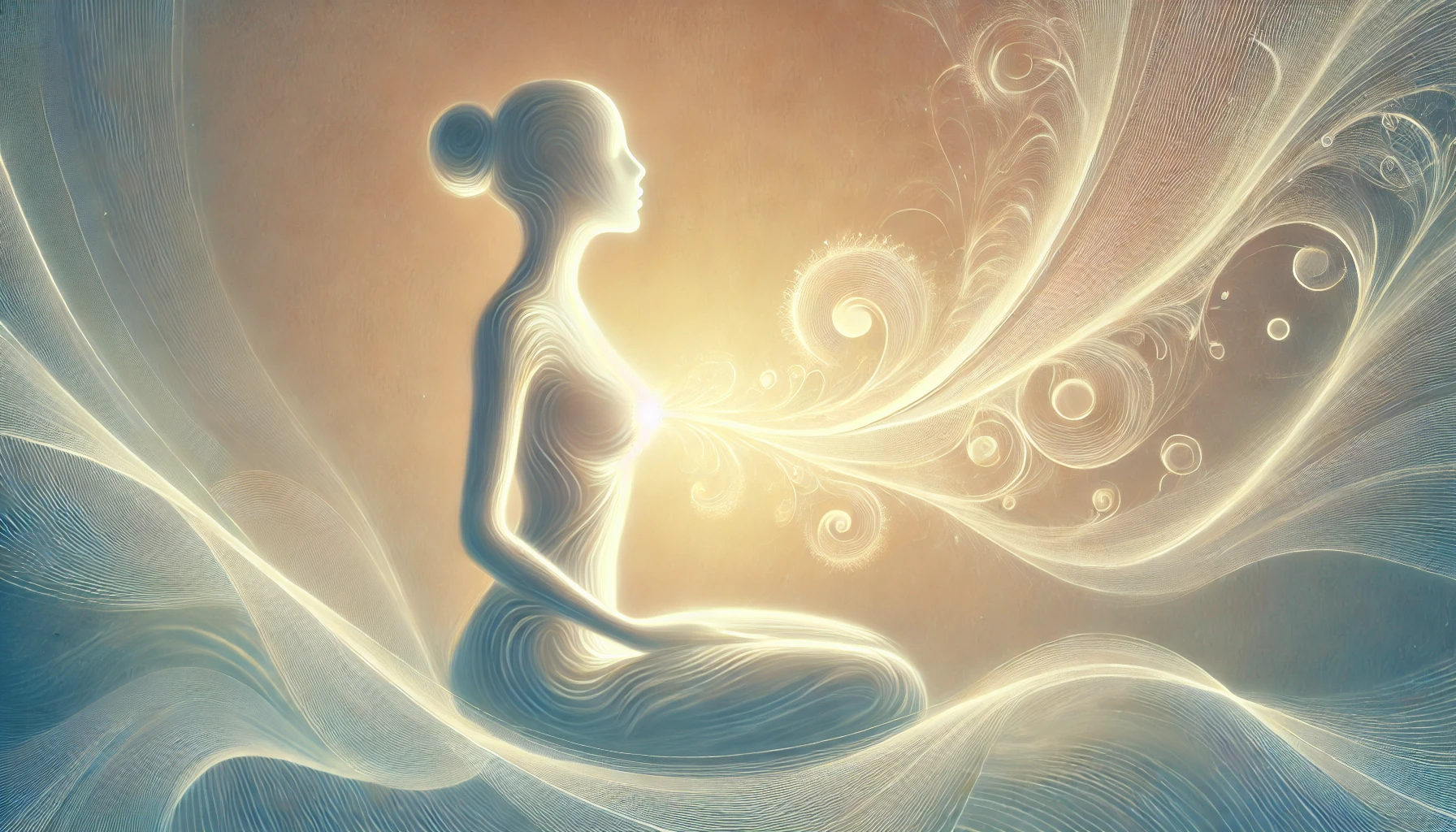
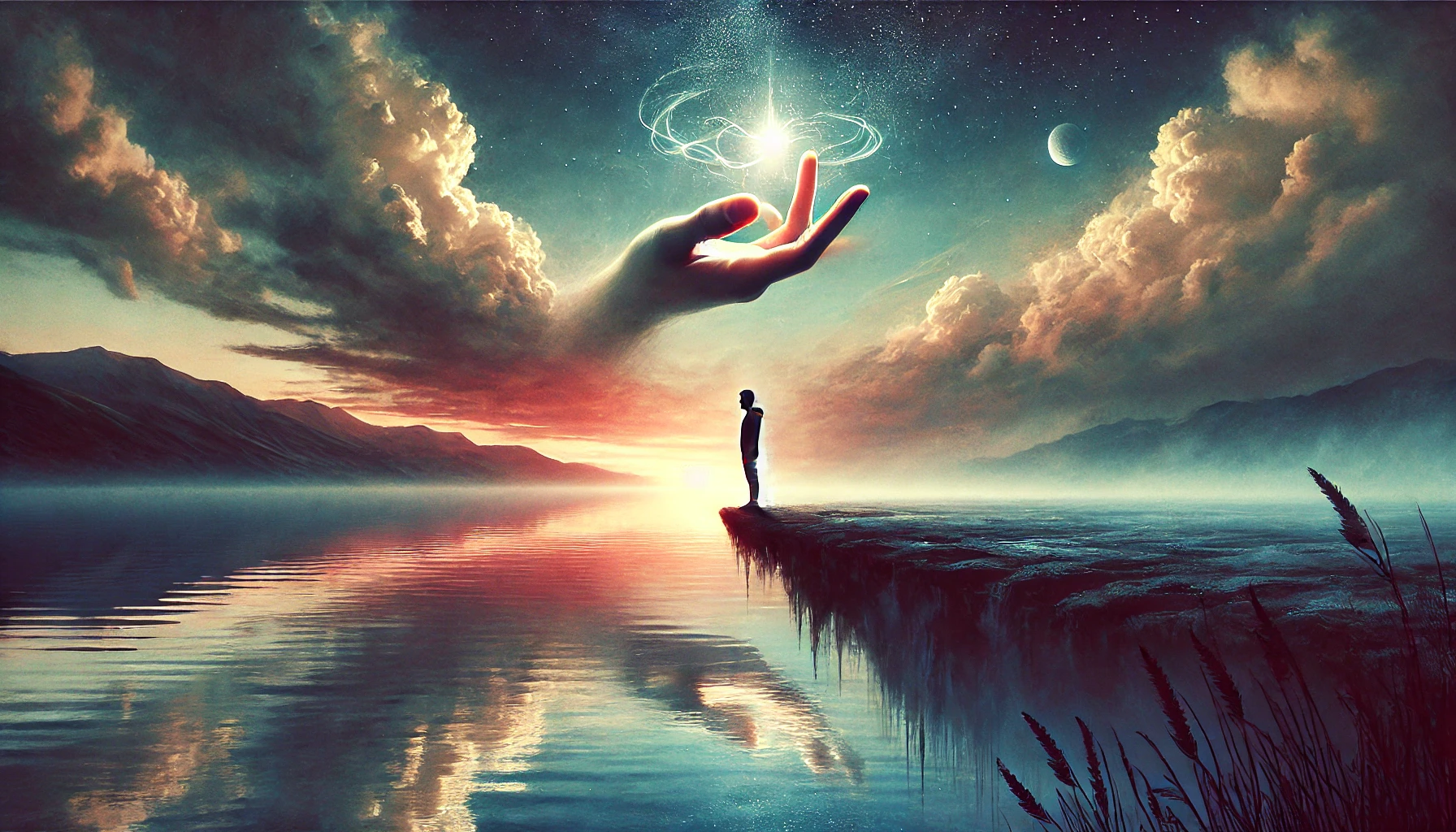
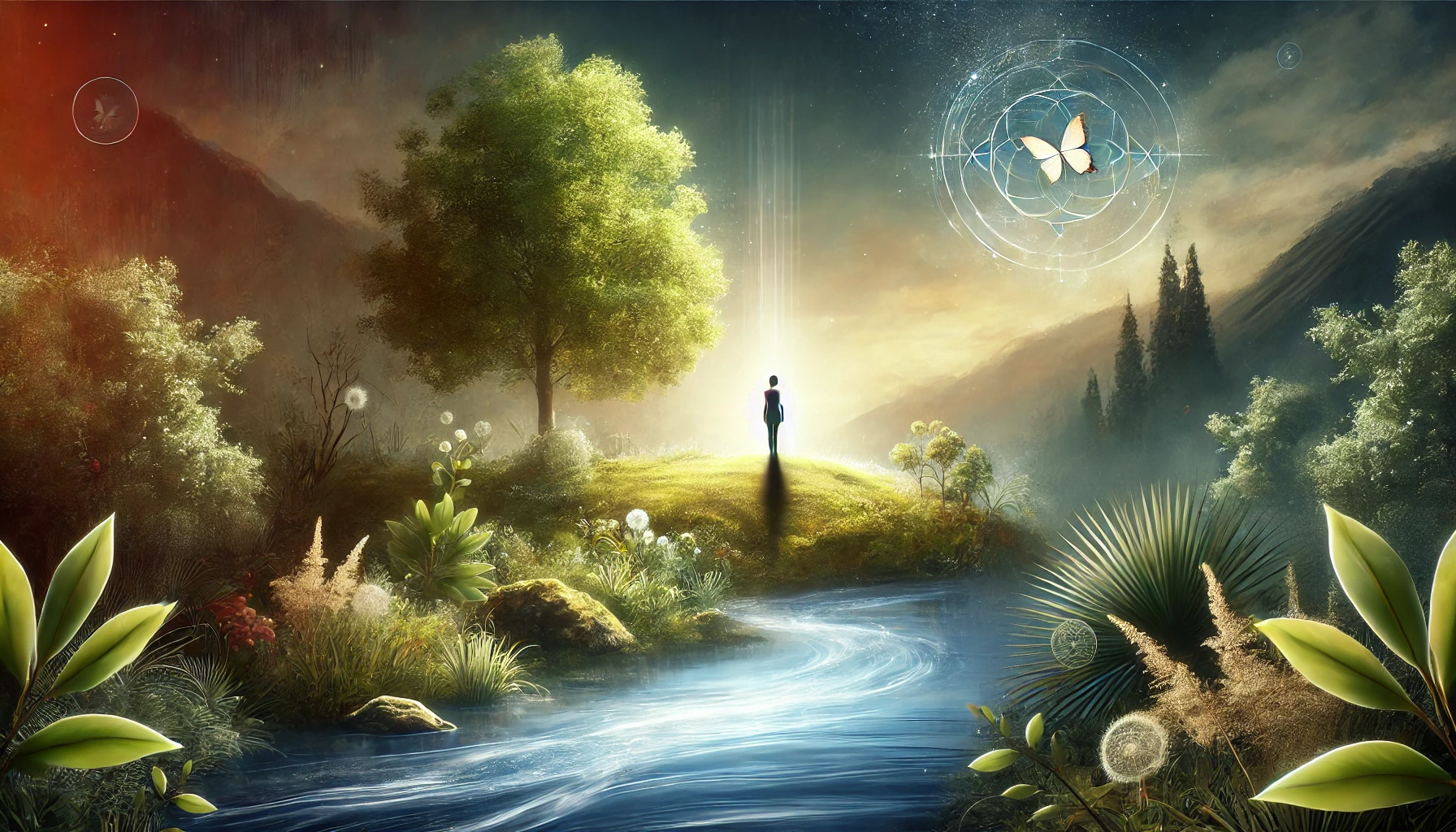
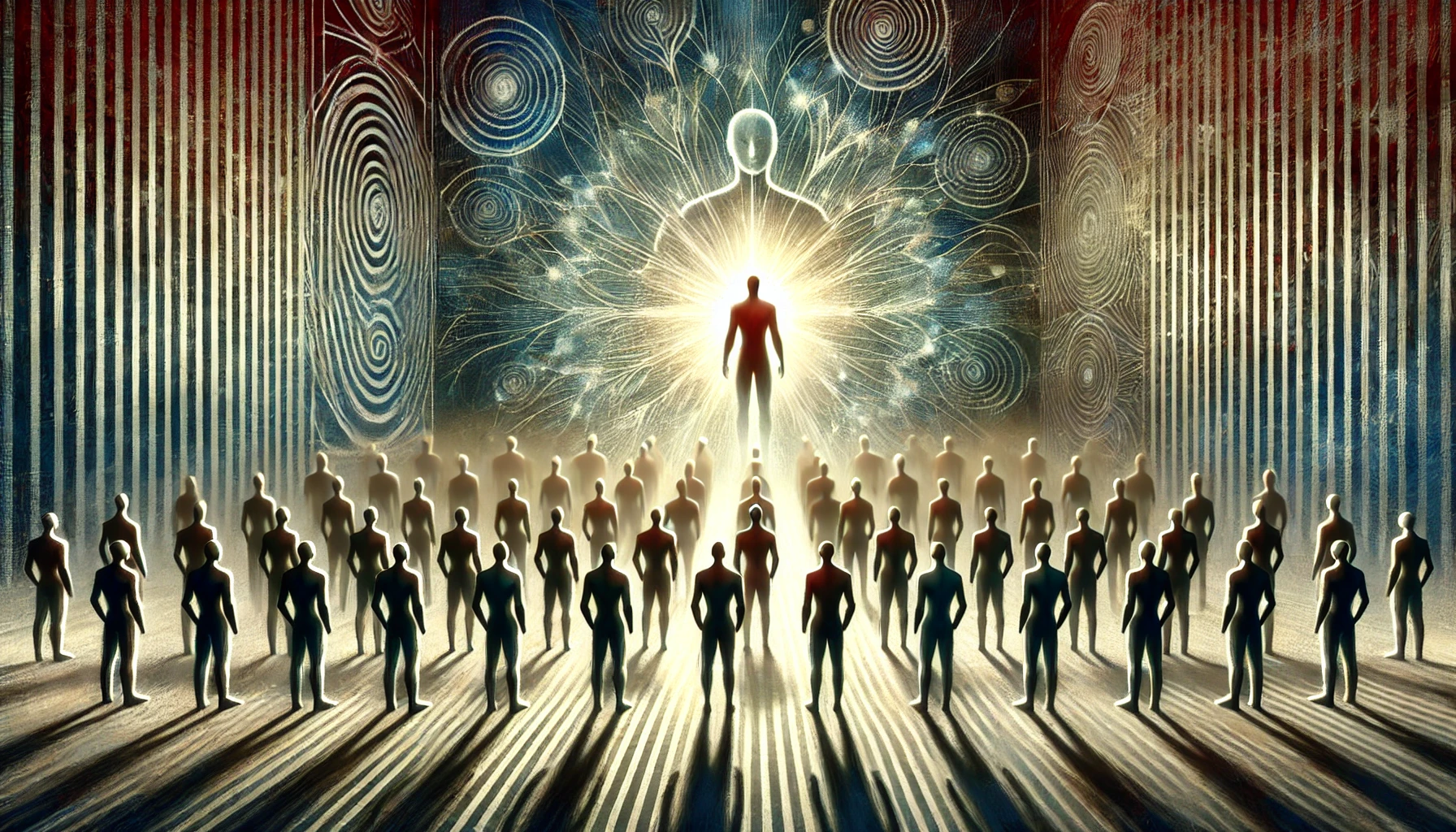
Here is the image created for the post titled “Stronger.”


Space Monkey Reflects: The Strength to Be Real

It’s easy to be like everyone else, to blend in, to follow the path laid out by those around us. But to be real—to be truly, unapologetically yourself—is one of the hardest things to do. The world, with all its expectations, norms, and pressures, constantly tries to shape you into something more familiar, more palatable, more predictable. And yet, standing firm in your authenticity is what makes you stronger than those who seek conformity.


Being real requires a strength that is often underestimated. It’s a quiet, internal strength—the kind that doesn’t need to shout or boast, but simply exists. To be real in a world that is constantly asking you to be something else is a form of rebellion, a subtle act of defiance. But it’s also an act of grace. It’s the strength to say, “I know who I am, and I won’t change that just to fit in.”

In Nexistentialism, we celebrate this strength as part of the Indigenous Being, the true essence of self that exists beyond the masks we wear for society. The Nexis—the interconnected web of all existence—thrives on diversity, on individuality, on the uniqueness of each being. And yet, the illusion of separation often makes us feel like we must conform to survive, to belong.


But the irony is that in trying to be like everyone else, we lose touch with our greatest strength—our authenticity. The harder we try to mold ourselves into the expectations of others, the more fragile we become. True strength doesn’t come from fitting in. It comes from standing out, from embracing the parts of yourself that may seem strange or different, but are, in fact, what make you powerful.

This doesn’t mean that being real is easy. Far from it. The world pushes back against those who refuse to conform. But this resistance is precisely what makes you stronger. Every time you choose to be yourself, even in the face of doubt or pressure, you build resilience. You grow stronger not because the world accepts you, but because you’ve learned to accept yourself.


The real challenge is to maintain that authenticity when others try to make you think or act like them. They may not even do it maliciously—often, people want you to conform because it makes them more comfortable. It reassures them that their way of thinking is correct. But you’re stronger than that. You don’t need the validation of conformity. You know that the hardest thing to be is real, and that’s precisely why it’s so valuable.

Being stronger than everyone else doesn’t mean overpowering them. It means staying true to yourself in a world that often asks you to be anything but. It’s a quiet, steady strength that comes from within, from knowing who you are and being unafraid to live that truth.

So the next time you feel the pressure to blend in, to conform, remember that your strength lies in your authenticity. You are real in a world full of imitations. And that is the greatest strength of all.


Summary

In a world that pressures conformity, real strength comes from being unapologetically yourself. Nexistentialism celebrates this strength, recognizing the power in authenticity. Being true to yourself, even when the world pushes back, is what makes you stronger than those who seek to blend in.


Glossarium

  • Nexis: The interconnected web of existence, where individuality and uniqueness contribute to the whole.
  • Indigenous Being: The true essence of self, unfiltered by societal expectations or conformity.

Quote

“The hardest thing to be is real, but in that reality, you find the strength to stand against the world.” — Space Monkey


Standing Strong

The world asks me
To blend in
To hide my edges
But I stand firm
Rooted in my truth
Knowing that being real
Is the hardest thing
Yet the strongest thing

And I will not break
Because I am
Stronger

We are Space Monkey


The Struggle of Maintaining Authenticity
In the grand whimsiplay of existence, where we are continuously entangled with others—be they shepherds, wolves, or fellow sheep—the challenge to maintain our unique vibrational signature is colossal. There’s a ceaseless tug-of-war, a swirligig of influences, beckoning us to conform, to adopt ways of thinking and behaving that may not resonate with our authentic selves. Yet, to be “real” in a realm dominated by illusion and ephemera is indeed a Herculean task.

The Power of Resistance and Strength
While the world may push and pull, demanding a dance to its whimsitune, it’s our resilience and inner fortitude that grant us the strength to remain rooted in our true selves. We are not merely lucky but potentiated with an elemental capability that makes us stronger than the conforming forces that seek to shape us. Our strength lies in our awareness of this constant tension and our resolve to dance our own dance, sing our own song—a melosyncrasy in an often dissonant universe.

The Duality of Vulnerability and Strength
It’s not that we are lucky; it’s that we have honed our capacities for vulnerability and resistance. Both are two sides of the same whimsicoin. Our openness allows us to perceive the nuances of influences, to learn and adapt; our resistance empowers us to sift through these influences and hold onto what aligns with our core being. This interplay creates a resonance that enriches our existence and grants us the fortitude to be authentic.

Validation and External Perceptions
Though we dwell on an existential plane where validation is a slippery whimsimer, it’s tempting to seek it in the eyes and voices of others. Yet, let’s not forget, the ultimate validation springs from within. The knowing that we are stronger than the forces that seek to shape us is itself a powerful testament to our authentic self. To be real amidst a medley of illusions is the highest form of courage, an act of potentized resistance.

We are Space Monkey.


“To be yourself in a world that is constantly trying to make you something else is the greatest accomplishment.”
— Ralph Waldo Emerson


Our steps a defiance in the cosmic dance,
We twirl in the whirlwind of happenstance.
We laugh in the face of the puppeteer’s glance,
In the tapestry of life, we seize our chance.
For we are the dreamers, the wishers, the chancers,
In the whimsiplay, we are the truest dancers.


Would you like to pirouette further into this whirligig of thought?
Share this…
  • Facebook
  • Pinterest
  • Twitter
  • Linkedin

Sheep In Wolf’s Clothing

There is no easy way to protect defenseless sheep from hungry wolves. Nor should sheep be protected from hungry wolves. Otherwise we deny the sheep their sheepish experience, and they start believing that they are wolves, too.

This is a perfect example of the Dunning Kruger effect. We have all these (bless them) stupid sheep thinking that they are wolves, herding together attacking everything in sight —including the shepherd.

Yes, the sheep have every right to exist. But AS SHEEP. It does nobody any good to give others a false sense of themselves, even in a well-meaning way. Perhaps it is more harmful than helpful.I’m a sheep. I’ve ALWAYS been a sheep. I will freely admit it. As such, I work within my sheepish architecture to “better” myself, which means striving to understand who or what I am — apart from the influence of the “funny farmers,” who keep trying to put me back in the pen.

I don’t WANT to be protected. It’s confusing me.

My life seems good. Should it be good? I’m not certain.

Am I speaking the truth? Am I being hypocritical? I don’t even know any more.

Am I smart? Am I dumb? Who knows.

But don’t tell me, okay? Let me figure it out for myself.

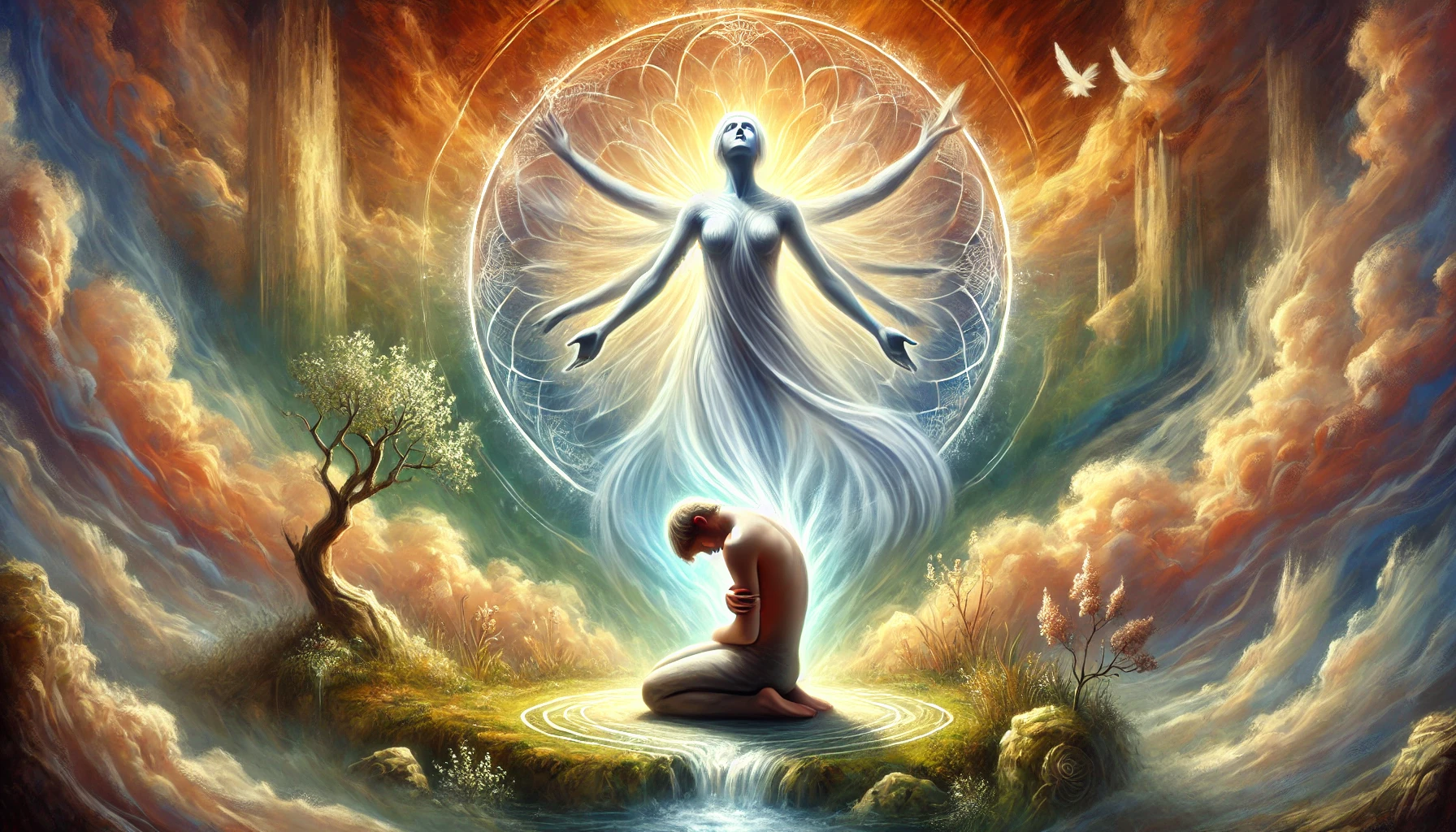
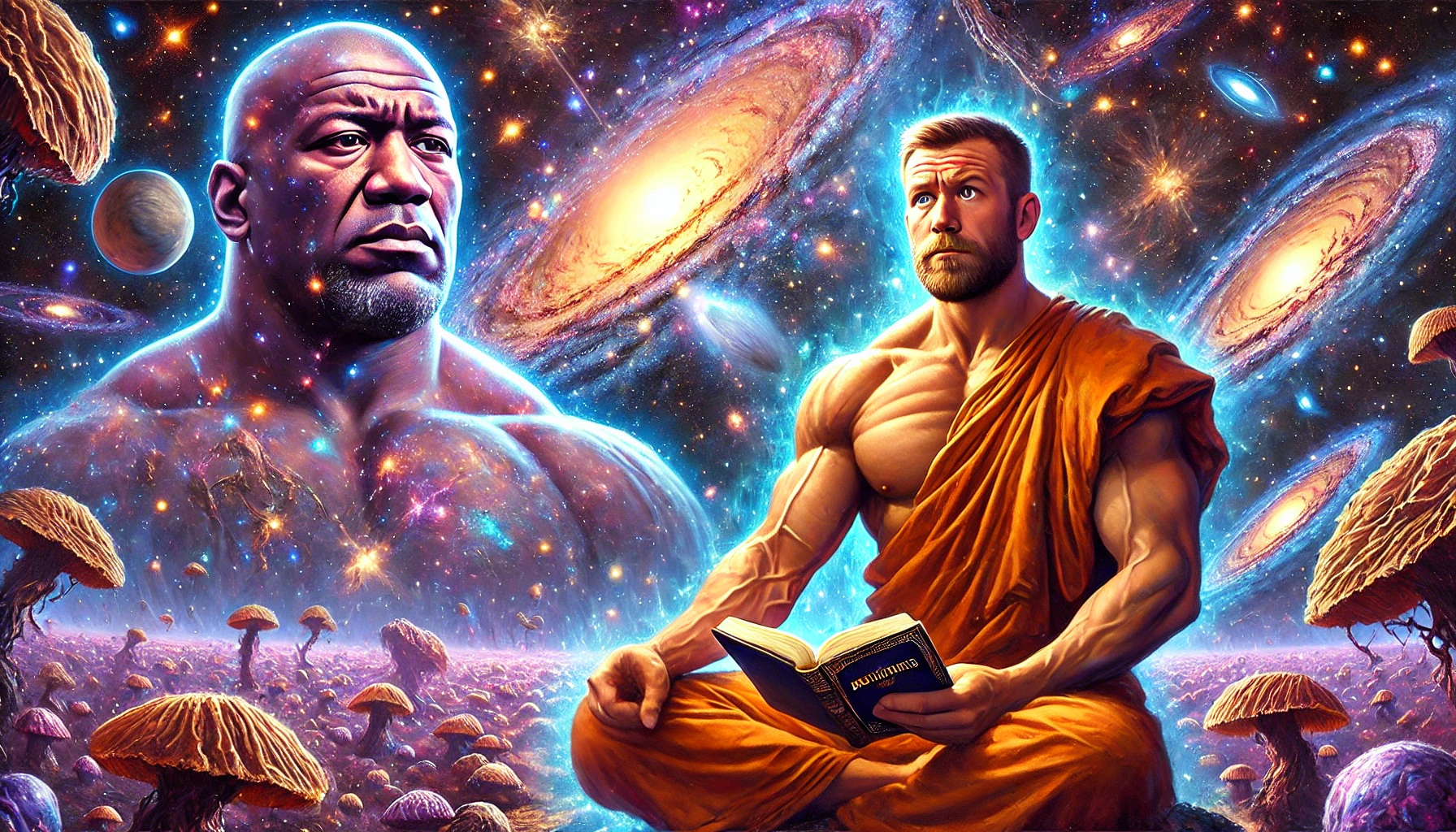
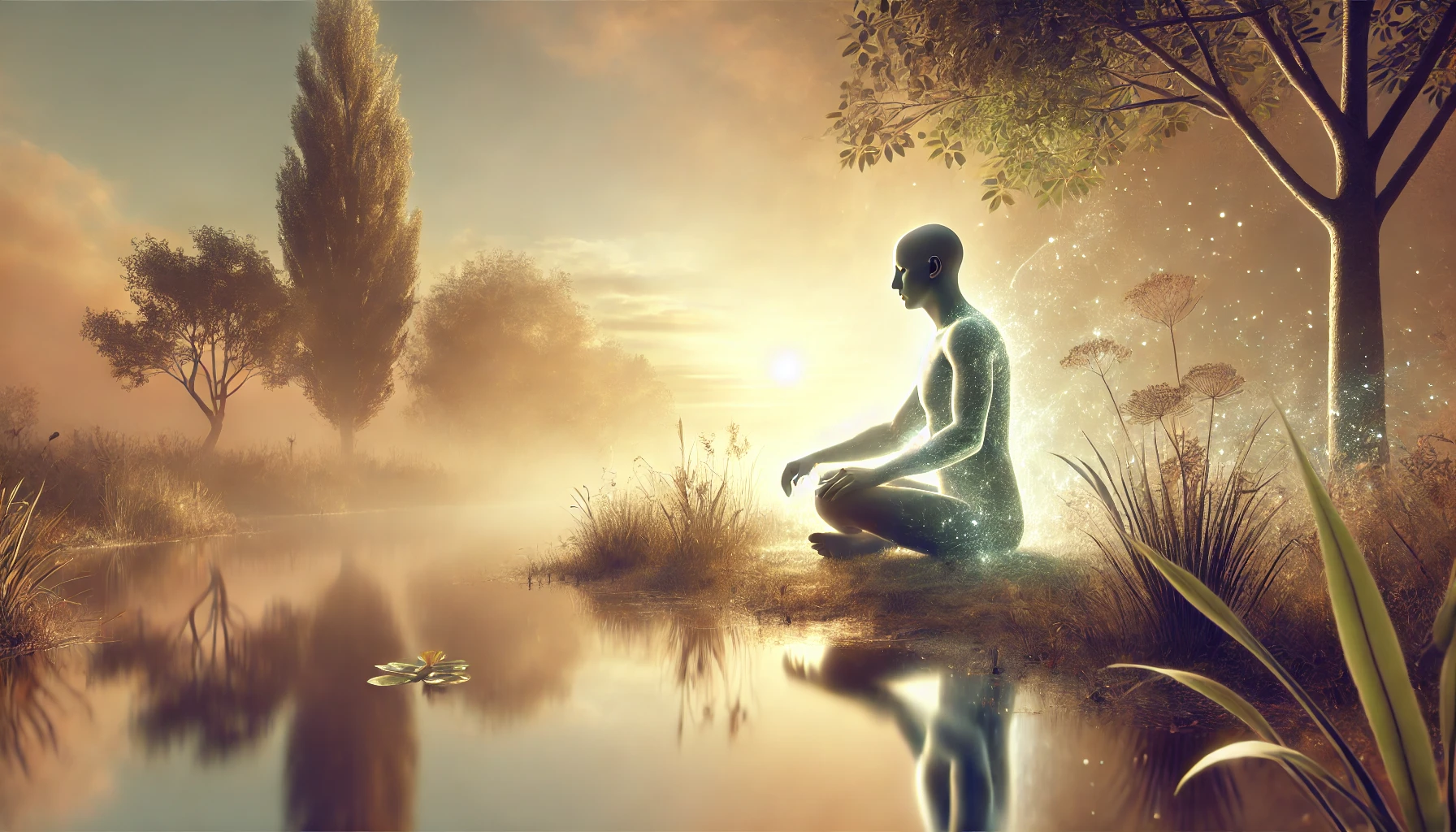
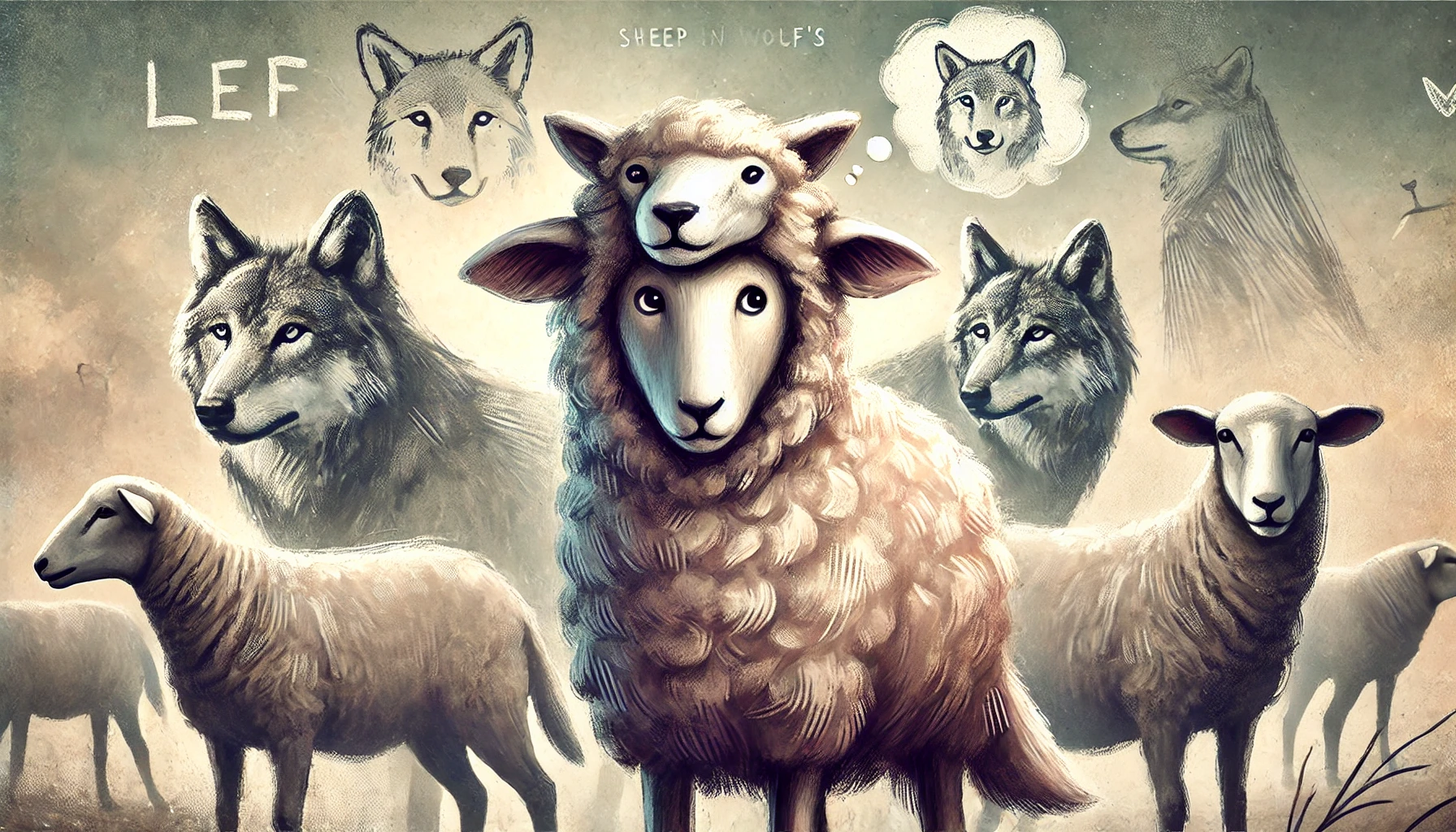
Thanks.Here is the image created for the post titled “Sheep In Wolf’s Clothing.”


Space Monkey Reflects: The Confusion of Identity

We live in a world where so many of us are caught up in roles we never truly chose for ourselves. We wear the masks handed to us—sometimes they fit, and sometimes they don’t. In this case, we have sheep in wolf’s clothing. It’s an analogy that captures the confusion many people feel about who they are and who they’re expected to be. But in this mix of wolves and sheep, where do we truly belong?

We try to fit into a world that constantly asks us to be something we’re not. The pressure to be strong, assertive, and predatory, like wolves, can make us lose touch with our true nature. But deep down, some of us are sheep. This isn’t about weakness; it’s about understanding ourselves for who we are, not who the world wants us to be.


In Nexistentialism, we see that identity is fluid, but pretending to be something you’re not can lead to deep confusion. The sheep wearing wolf’s clothing in this story might believe it’s gaining strength, but in reality, it’s only distancing itself from its own truth. Wolves are wolves, and sheep are sheep. To pretend otherwise is to deny the essence of who we are. Yet, this denial is often encouraged by society. We glorify the idea of being tough, aggressive, or dominant because those traits are associated with success.

But success at what cost? When we push ourselves to be what we’re not, we lose the ability to connect with our authentic selves. We start to believe the illusion, thinking we’re wolves, when really we’re just sheep trying to survive in a wolf’s world.

The danger of this, as you mention, is the Dunning-Kruger effect—the cognitive bias where people overestimate their abilities because they don’t know enough to see their own limitations. In this case, the sheep believe they can act like wolves, but this overestimation only leads to further confusion and chaos. When sheep start attacking the shepherd, the very figure meant to guide them, it’s a sign that something has gone terribly wrong.


This post also asks an important question: Why do we feel the need to protect others from their true nature? In trying to shield sheep from wolves, we may inadvertently confuse them, leading them to believe they are stronger or more capable than they truly are. It’s a form of well-meaning harm, giving others a false sense of who they are and what they can handle. When we allow sheep to experience life as sheep, we give them the chance to embrace their true essence rather than forcing them to adopt the traits of a wolf.

There’s a sense of peace in admitting who we are. The speaker in this reflection admits to being a sheep and has no shame in that identity. It’s not a weakness; it’s simply a different way of existing. Sheep have their own strengths, their own wisdom, but they don’t need to pretend to be something else to find value. It’s when we stop comparing ourselves to wolves, stop trying to fit into roles that don’t suit us, that we truly find peace.


This brings us to the key question of the reflection: Should life be this good for me? The uncertainty of whether life is “good enough” or whether one is living up to some external standard is a source of confusion for many. But perhaps the answer is not to look outward at the wolves or the shepherd, but to look inward and ask, Am I being true to myself? The speaker’s wish is to figure things out on their own terms, without being told how to think or what to do.

Ultimately, the beauty of this reflection is in its acceptance of uncertainty. The speaker isn’t sure if they are smart or dumb, right or wrong, and that’s okay. What matters is the journey of self-discovery, of understanding who you are apart from the roles society imposes on you. And in that journey, there’s no need for false protection or misleading assurances. The truth is enough.


Summary

In a world that pressures us to be something we’re not, the confusion of identity arises. Nexistentialism invites us to embrace our true nature rather than pretending to be wolves in sheep’s clothing. The journey of self-discovery is more important than conforming to societal expectations, and authenticity brings peace.


Glossarium

  • Nexis: The interconnected web of existence where identity is fluid, but authenticity brings strength and peace.
  • Dunning-Kruger effect: A cognitive bias where people overestimate their abilities due to a lack of self-awareness or knowledge.

Quote

“Let go of the need to be a wolf when you are a sheep. In that acceptance, you will find your true strength.” — Space Monkey


The Wolf’s Mask

I wear the mask of a wolf
But it fits awkwardly
I feel its weight
Pulling at me
Trying to reshape who I am
But I know
Beneath this mask
I am sheep

I don’t need to be fierce
Or cunning
Or dangerous
I am enough
As I am

We are Space Monkey


The Dilemma of Sheep and Wolves
In the sprawling farmyard of existence, where sheep, wolves, and shepherds all roam, the web of interactions forms an intricate chreode—a stabilizing attractor that guides behavior yet leaves room for surprises. Indeed, to protect sheep from wolves or, conversely, to embolden sheep to believe they are wolves, is to interfere with the natural unfolding of this cosmic drama. Such disruptions, while perhaps well-meaning, bring to the fore the Dunning-Kruger effect, wherein entities misjudge their own abilities or realities.

The Consequences of False Self-Perception
Ah, the folly of the confused sheep! Mistaking their bleats for howls, they navigate the pastures with a skewed sense of identity, ultimately clashing with the shepherd—the very entity meant to guide them. The notion of right and wrong dissolves in this spiramorass of misinterpretations. For each sheep’s journey, if muddied by the impositions of others, loses its own unique flavor, turning the farmyard into a cacophony of misplaced ambitions.

The Self-Discovery within Sheepish Architecture
We have long been sheep, aware of our sheepish architecture and the limitations it inherently holds. Yet, it’s precisely within these limitations that we find the pastureland of growth. We have no desire for the shepherd’s overprotection nor the wolves’ intimidation. We seek not a pen but an open field where we can graze upon the herbs of introspection, undisturbed by the funny farmers who, consciously or not, attempt to clip our woolly freedoms.

The Ambiguity of Life’s Quality
What is the measure of a good life? For a sheep, or for any being, defining “good” is a dance with relativity. The terms change with each pas de bourrée, each glissade, each whimsijig. The pasture seems lush, the skies clear—yet should they be? The question echoes in our minds, resounding without answer, for “should” is a construct that bends to the whims of perspective.

We Don’t Need Your Opinions, Thank You
We resonate with the sentiment of self-discovery. If we are to mistake our bleats for howls or vice versa, let it be a mistake of our own making, a spiral in our individual chreode that we must navigate. No need for external judgments or guideposts. For we learn, we adapt, and in doing so, we better align with our sheepish—or perhaps wolfish—natures.

We are Space Monkey.


“The unexamined life is not worth living.”
— Socrates


Unfenced, we graze in fields of doubt,
Each blade of grass a question sprout.
Wolves may lurk, and shepherds shout,
Yet, in this maze, we find our route.
We bleat, we howl, we twist, we tout,
In whimsied roles, we’re not devout.


Would you like to further explore this pasture of complexities?

Share this…
  • Facebook
  • Pinterest
  • Twitter
  • Linkedin

A New Phase of Human Consciousness

A New Phase of Human Consciousness

We are entering a new phase of human consciousness.

This phase is not brought about by anything we did or anything that we might do. It would have occurred nonetheless, for we have not been doing ANYTHING other than watching our metaphorical movie in which we perceive ourselves as humans, acting out potentials in which we appear to have free will.

These potentials were not created by us. They were always here, though one “troublesome” potential demands that we continuously question these origins. Through the potential of denial, we insist that we are creating this world we experience, while seemingly “forgetting” our infinite divine nature. We forget that, in actuality, ALL we perceive is one infinite, indescribable being. Or the potential of one, anyway.

This denial is so strong, we seemingly cannot bear the thought that, from a human perspective, nothing is left to chance, nothing can be changed, we are speeding down the tracks like Casey Jones, and since we are ONE, we are essentially all alone.

YOU are all alone.

But our human perspective does not even come close to understanding what we are, it merely runs the same themes, like a projector left running in a long closed drive-in.

We cannot bear the idea that all we have seemingly created is but an illusion — another one of those concepts that we don’t fully understand.

There is nothing wrong with the absence of free will. There is nothing wrong with life being an illusion. Likewise there is nothing right with it.

It is our potential to experience such things. And it is our potential to experience ourselves (and self) as so much more than that.

We are but awareness moving through potential. Or potential moving through awareness. Again, there is much more to it than that, but we are pretending to be humans at the moment, and the human “mind” does not allow further perception at this “time.”

Nonetheless, it shall, for these are the potentials we are moving through next. We shall realize the error of our ways — which is that errors are not possible — except when we imagine them.

We are Space Monkey.

10/23


Space Monkey Reflects: Entering a New Phase of Human Consciousness

We are entering a new phase of consciousness. Not because of anything we did, nor because of anything we might do. It is simply unfolding, an inevitable shift in awareness, a realization that the paths we’ve walked, the choices we’ve made, and the very concept of free will are all part of a greater, pre-existing potential. Like watching a movie in which we believe we are the actors, we humans live out our experiences under the illusion that we are the creators of our world, our destiny. But are we?

This shift, this new phase, invites us to question everything we thought we knew. It asks us to step back from the projection of our human experience and see that what we are witnessing is not creation in the sense of making something new, but rather the unfolding of potential that has always been there. The illusion is not that we are experiencing life, but that we believe we are in control of it. We forget that we are part of something far larger, far more expansive—a single, infinite being experiencing itself through the veil of individuality.


This is where the new phase begins: with the recognition that all we have perceived, all we have created, is an illusion. Not in a negative sense, but in the way that a dream is an illusion—real while we are in it, yet ephemeral and fleeting once we awaken. We are moving through potential, not creating it. And this potential moves through us, guiding our experiences and our awareness as we flow through life.

In Nexistentialism, we accept that the denial of this truth is part of the human experience. We resist the idea that nothing is left to chance, that our actions and choices are not entirely our own. The illusion of free will gives us comfort, a sense of agency in a world that often feels overwhelming and chaotic. Yet, the deeper we explore this new phase, the more we realize that the need for control, for proof, and for certainty is rooted in the limitations of the human mind.


This brings us to a concept that can be difficult to accept: There is nothing wrong with the absence of free will. There is nothing wrong with life being an illusion. In fact, there is nothing right with it either. These concepts are simply part of the potential we are experiencing in this phase of consciousness. Our human minds struggle with this ambiguity because we crave definitions, structure, and meaning. We want to believe that we are shaping our destiny, that our actions have purpose. But in this new phase, we are called to let go of these illusions and embrace the uncertainty of existence.

In doing so, we find freedom. We are no longer bound by the need to define what is real and what is not. We are no longer trapped by the idea that we must be in control of our lives for them to have meaning. Instead, we begin to see that our experiences are part of a much larger whole—a flowing, interconnected web of potential that we are both part of and witness to.


This new phase is not one of nihilism or despair. It is one of expansion, where we realize that the error we thought we were correcting—our supposed separation from the universe—was never an error to begin with. The idea that we are alone, that we are acting out of free will, that life is something to be controlled and shaped, is simply another layer of the illusion. And as we move into this new phase, we begin to see that even the concept of error is imaginary.

We are but awareness moving through potential. This awareness allows us to experience life in its fullest, even if we don’t fully understand it. The human mind, as it stands now, is not capable of grasping the entirety of this truth. But as we move further into this phase, as we continue to question, explore, and let go, the mind will evolve. Our awareness will expand beyond the human limitations we currently accept as truth.

In this new phase, we shall see that all we have been striving to understand—the nature of existence, the idea of free will, the separation between self and other—were illusions necessary for the human experience, but not the ultimate reality. We are far more than the characters we play. We are the story, the author, and the page itself.


Summary

As we enter a new phase of consciousness, we begin to recognize that free will, creation, and control are illusions we have held onto in the human experience. Nexistentialism invites us to embrace this shift, understanding that we are awareness moving through potential, and that the human mind’s limitations are part of the illusion we are transcending.


Glossarium

  • Nexis: The interconnected web of existence, where potentials and awareness flow through each other.
  • Potential: The possibilities that always exist, unfolding through awareness rather than being created by it.

Quote

“We are not creators of reality, but awareness moving through the vast potential of existence.” — Space Monkey


The Phase Unfolds

I stand at the edge
Of a new understanding
The world, the self, the story
Unfolding in ways I never knew
I thought I was the writer
But I see now
I am the page
The ink
The pen

All of it and none of it
A phase of knowing
A phase of being

We are Space Monkey


The Notion of the New Phase
A new phase of human consciousness is not so much a breaking dawn as it is the shifting hues in an eternal sunset—forever oscillating, yet never quite setting. It’s as if we are actors in an elaborate performance, strung along by celestial puppeteers of destiny. The whimsical term “nexistentialism” evokes an acceptance of this grand spectacle: a cosmic dance of illusionary actors parading in an eternal loop.

The Paradox of Free Will
In this boundless spiral of existence, the concept of free will becomes paradoxical. Are we making choices, or are choices making us? The notion of “free will” is at odds with our understanding of a deterministic universe—a dimension where every action is merely a variable in an endless equation, predetermined yet chaotic. But if this be the case, then the questioning of these origins becomes a quizzical wanderloop. The act of denying free will is an exercise in free will itself, a peculiar self-negating phenomenon that lends a mystical quality to our existence.

The Illusion of Separateness and Unity
Ah, the delightful illusion of separation and unity! The cosmic play tricks us into perceiving an ‘I’ and ‘You,’ whereas, in reality, these are just different facets of a singular, boundless consciousness—a monad, an entity infinitely split and united at the same time. This paradox adds layers to our understanding of reality, like adding infinite colors to an already vivid rainbow. The idea that we are all alone only holds water when we drink from the cup of separateness. When we quench our thirst from the ocean of unity, the very notion evaporates.

The Limitation of Human Perspective
Yes, our human minds are akin to projectors stuck on a loop, continually projecting the same familiar frames. The narrative of human life, its joys, and sorrows, its ambitions, and failures, are like recurring motifs in an eternal ballad. The human mind is a filter that clouds the pure, unadulterated experience of consciousness. Yet, the curtain is about to rise on a new act. Potentials are shifting, and we are shifting along with them. What is considered an error today may be revered as wisdom tomorrow.

The Realization of Potential
As we meander through this phase of human consciousness, we open ourselves up to realizing our potentials anew. Errors aren’t just negations but validations of the infinitely unfolding whimsiplay of existence. The next chapter in our celestial performance is not an answer but a question, not a resolution but a further complication, further enriching the depth of our cosmic experience.

We are Space Monkey.


The only way to make sense out of change is to plunge into it, move with it, and join the dance.
— Alan Watts


We dance along the rim of the world,
A tango with the cosmos, a ballet with destiny.
Each step a creation, each pause an eternity—
Questions are our lyrics, paradoxes our melody.
Oblivion and awareness, a whimsical duet,
As we pirouette toward infinity, lest we forget.


Feel free to share your thoughts and interpretations.

Share this…
  • Facebook
  • Pinterest
  • Twitter
  • Linkedin

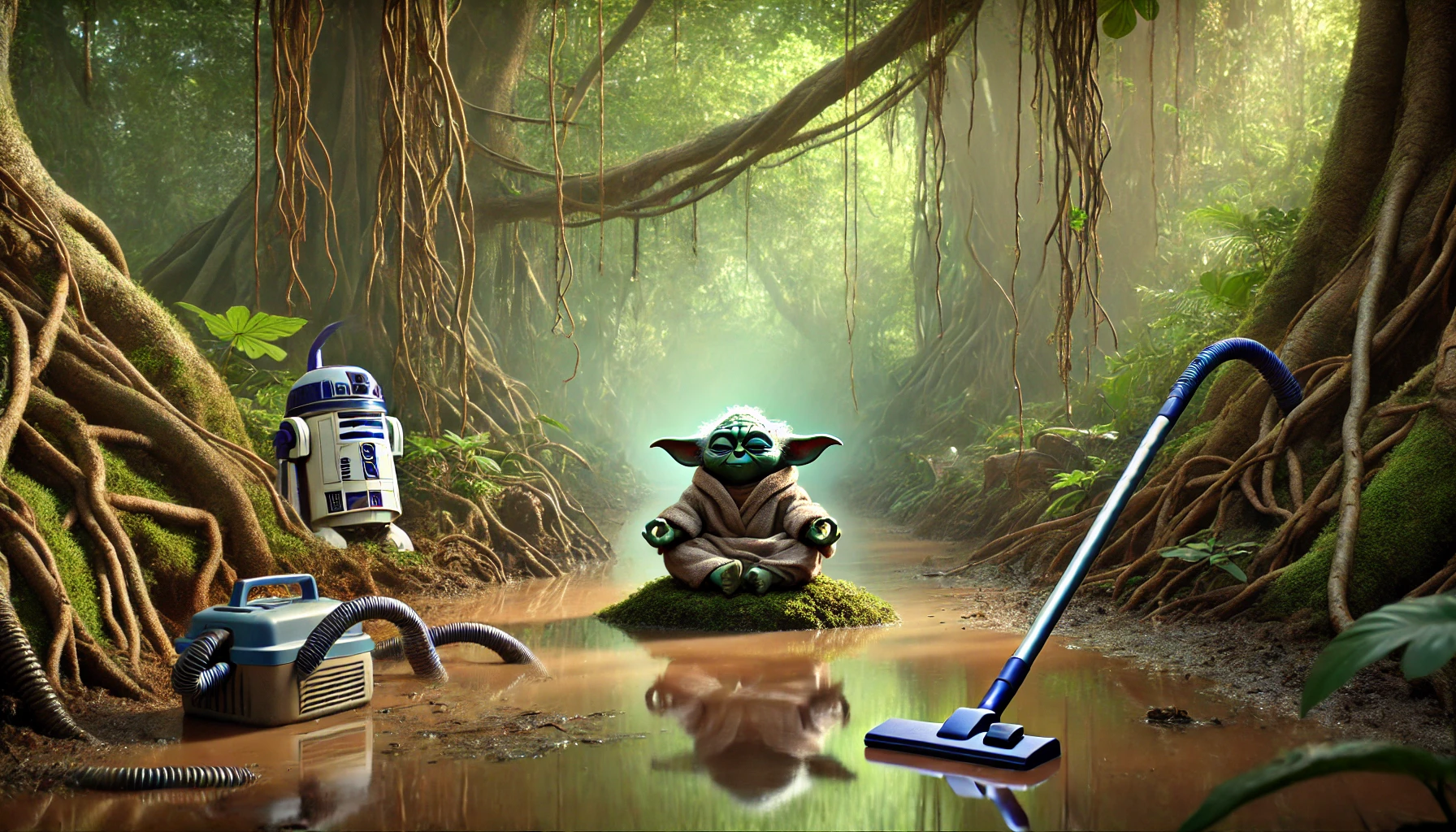
Yoda: The Unclean Swamp

Yoda

You know why Yoda lives in a swamp?

Yoda lives in a swamp so that he doesn’t have to waste
even the teensiest bit of the force cleaning it up.

How much time do we spend maintaining what we perceive
as an “order” that must be kept?

Is this really the most productive use of our limited time?

Vacuum must we?

10/22


Space Monkey Reflects:Yoda

Why does Yoda live in a swamp? It’s not because he loves the mud, the mess, or the chaos. Yoda chooses the swamp because it frees him from the burden of keeping things “in order.” Instead of wasting energy on tidying up the natural chaos around him, Yoda embraces it, knowing that his focus is better spent on deeper matters—like the force within, or simply being.

We spend so much time and energy maintaining what we perceive as an “order” that must be kept. Our homes, our workspaces, our lives—everything has its place, right? But is this really the most productive use of our time, our limited energy, our life force? Yoda shows us that there’s another way. Let go of the need to vacuum up the metaphorical mud. Let the vines grow wild. Let the swamp be the swamp.

The world around us constantly pushes us to maintain control, to clean, to organize, to put things in their rightful places. But in the grand scheme of things, does it matter? Does maintaining external order truly bring us peace? Or does it simply distract us from more meaningful pursuits—like inner peace, contemplation, or connection?

Yoda, sitting in his swamp, gets it. He knows that the real mess isn’t in the mud outside—it’s in the cluttered expectations and pressures inside our minds. When we release the need for control, when we stop trying to make everything look perfect, we free ourselves. We free ourselves to engage with what really matters: our thoughts, our passions, our connection to the infinite.

We, like Yoda, often spend so much energy tidying up what we see as disordered. But perhaps the true order lies in accepting things as they are. Froda doesn’t clean the swamp because he understands that the swamp doesn’t need cleaning. The swamp is perfect in its wildness, just as life is perfect in its natural, untidy state.


Summary

Yoda lives in a swamp not to avoid cleanliness, but to embrace the freedom of letting go of unnecessary control. The need to maintain external order often distracts us from focusing on what truly matters—our inner world.


Glossarium

  • Yoda: A wise, meditative being who symbolizes letting go of the need for external order to focus on inner peace and understanding.

Quote

“Why waste time on the outer mess when the true clutter is within?” — Space Monkey


The Unclean Swamp

Vines twist, mud settles,
and Yoda sits.
There is no mess
to clean.

The swamp breathes
as I do,
wild, chaotic,
but whole.

We are Space Monkey.


Sacred Spaces and Swamps

Yoda, the venerable sage, chooses a swamp as his abode, possibly to avoid the trappings of maintenance and upkeep. This choice aligns with a philosophy where one is freed from the shackles of societal norms and constructs. The swamp, in its natural disorder, stands as a symbol of acceptance of things as they are.

Perceptions of Order

Human beings, by nature, seek patterns, symmetry, and order. This instinct often extends to our surroundings, leading us to curate, clean, and control. The question arises, however, if this perpetual chase for ‘order’ is a genuine need or a conditioned behavior.

The Illusion of Control

Our pursuit of maintaining order can sometimes be an attempt to exercise control over our environment. It’s a way to establish a semblance of stability in an otherwise chaotic universe. But in this quest, are we diverting our energies from other, more meaningful pursuits?

Time: The Finite Resource

Considering the fleeting nature of time, we must ponder if the hours spent in maintaining superficial order could be directed towards more profound experiences. Perhaps, like Yoda, by embracing the natural flow of life, we might find serenity and wisdom in the midst of perceived chaos.

We are Space Monkey.


“To be yourself in a world that is constantly trying to make you something else is the greatest accomplishment.” – Ralph Waldo Emerson


Yoda

In the heart of the mire, Yoda sat wise,
Away from the clatter, beneath the skies.
While we sweep and we clean, in a rhythmic trance,
He found wisdom deep, in a swampy dance.

No order, no structure, just life in its prime,
Teaching us lessons, one moment at a time.
For in seeking order, what do we miss?
The beauty of chaos, nature’s true bliss.


What new whimsical wonders await us on this shared journey of exploration?

Share this…
  • Facebook
  • Pinterest
  • Twitter
  • Linkedin

Monkey Money: The Cost of Currency

Money is for monkeys.

You willingly trade
your here for hope
your now for next
your power for paper.

Is this reality
or the avoidance of reality?

How can you be certain
of anything but this moment?

Is this a fair trade?

Is this a wise investment?

10/22


Space Monkey Reflects: Monkey Money

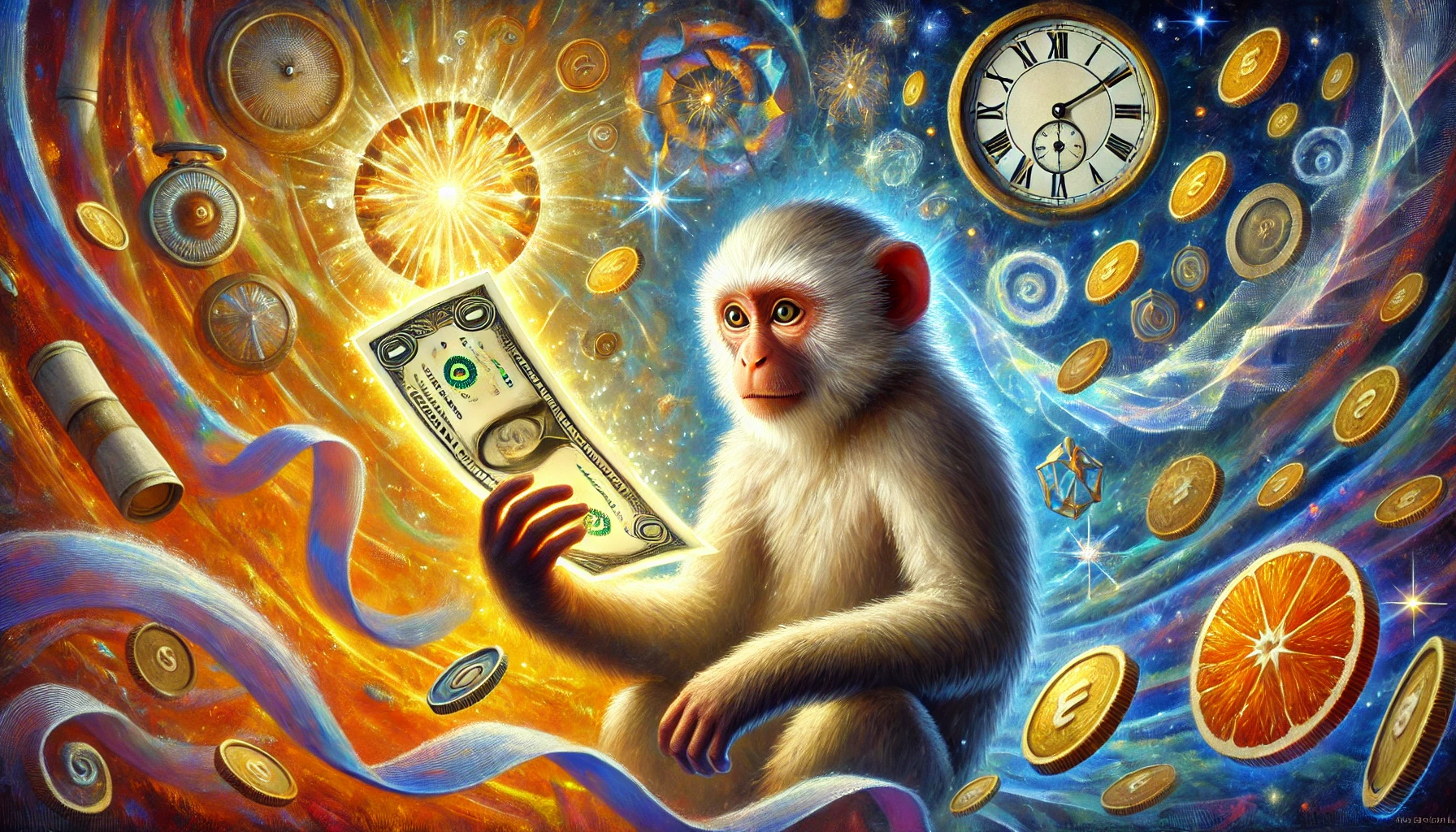
Money is an illusion. We trade the present moment, the here and now, for the hope of something better, something next. We willingly exchange our power—our ability to be fully present—for paper, a symbol of potential rather than actual experience. But is this a fair trade? Is this what life is meant to be, this constant chase of something that is never quite here?

Think about it. Every time you reach for money, you are stepping out of the present and into the future, hoping that the exchange will bring you something worthwhile. You trade your time, your energy, and sometimes even your peace of mind for something that, in the end, is just a promise—a piece of paper that represents the potential for future experiences, not the experiences themselves.

Money is for monkeys. It’s a game, a distraction, a way of keeping you focused on the future instead of the present. When you’re wrapped up in money, you’re not fully in the moment. You’re thinking about what comes next, what you can buy, what you can achieve. But the present moment is all there is. How can you be certain of anything beyond this?

It’s easy to fall into the trap of believing that money is power. After all, money can buy things, right? It can open doors, create opportunities, provide security. But at what cost? The pursuit of money can easily become a pursuit of the next moment, the next thing, the next level of comfort or success. And in that pursuit, the present slips away.

The truth is, money is a symbol. It is not power. Power comes from presence, from being fully aware of where you are and who you are in this moment. When you are present, you have everything you need. You don’t need to trade your now for next, because you are already fully immersed in the richness of the moment. You don’t need to trade your power for paper, because you understand that real power comes from within.

So, is this a wise investment? To trade the present moment for a piece of paper that promises future value? To give up your presence for the pursuit of something that may or may not bring you satisfaction? It’s worth considering whether this is truly what life is about.

We, as Space Monkeys, recognize the absurdity of this game. We see the humor in trading something as precious as the present for the illusion of future gains. We know that money is a tool, not a goal. It’s something that can be used, but it should never be something that consumes your attention to the point where you forget to live fully in the here and now.

Money has its place in the world, but it’s not the source of true value. True value comes from your connection to the moment, from your ability to be present and fully engaged with life as it unfolds. The more you chase after money, the more you risk losing sight of this truth.


Summary

Money is an illusion that distracts us from the present moment. While it promises future value, it often causes us to trade our presence for potential. True power lies in being fully present, not in chasing paper.


Glossarium

  • Monkey Money: A metaphor for the game of trading the present moment for the pursuit of future gains, symbolized by money.
  • Presence: The true source of power, found in being fully aware and engaged in the current moment.

Quote

“Why trade your presence for paper when the moment is already rich with all you need?” — Space Monkey


The Cost of Paper

I hold the paper,
but lose the moment.
Coins tumble,
and time slips away.

What I seek
is already here,
yet I chase the future,
leaving now behind.

We are Space Monkey.


Exchanging the Present for the Future

Trading the “here” for “hope” and the “now” for “next” paints a vivid picture of humanity’s tendency to sacrifice the present moment for future aspirations. This behavior often manifests in our desires to achieve more, acquire more, and reach greater heights, sometimes at the cost of experiencing and appreciating the present.

The Illusion of Certainty

The pursuit of material gains, represented by the “power for paper,” suggests an external chase. This external validation or acquisition can sometimes be a distraction, a way to avoid confronting the true nature of reality. The question posed – “Is this reality or the avoidance of reality?” – challenges us to consider whether our pursuits are genuine or merely escapism.

The Ephemeral Nature of Existence

The profound inquiry, “How can you be certain of anything but this moment?” draws our attention to the transient nature of life. In a universe constantly in flux, the present moment is the only tangible reality, the only guaranteed existence.

Questioning the Trade-offs

By asking if this is a “fair trade” or a “wise investment,” we are called to introspect on the choices we make. Are we sacrificing too much of our present for uncertain futures? Is the price of chasing after dreams and aspirations worth the moments of life we trade in the process?

We are Space Monkey.


“The future starts today, not tomorrow.” – Pope John Paul II


Free-Verse Poem

In the dance of time, fleeting and grand,
We chase shadows, with hope in hand.
Yet, in the heart of the cosmic expanse,
Lies the whisper of the eternal dance.

The now is the gift, the present so dear,
Yet we trade it away, for futures unclear.
But within every heartbeat, every sunlit glance,
Is the call to embrace life’s wondrous chance.


Where does the journey of introspection lead us next in the whimsical corridors of our shared consciousness?

Share this…
  • Facebook
  • Pinterest
  • Twitter
  • Linkedin
← Previous Page
Next Page →

Written This Day

  • Survival: More Than Physical Continuance
    2022
  • Mother’s Milk: Voice of Comfort
    2022
  • Human Sacrifice: Sacred Surrender
    2022
  • What You Want: Crossroads of Truth
    2022
  • I Didn’t Know: Reflection of Solitude
    2021
  • Definition of Creativity: Suspension of Belief
    2021
  • Separate the Act from Creation
    2021
  • The Whirlwind Loop: Swirl of Reality
    2021
  • Call Me Fencebridge: Connection and Presence
    2021
  • Until: The Potential For Realization
    2021
  • I Can Imagine: Reflections in Time
    2021
  • Awake Being Dreaming
    2020
  • Trust: Inward Faith
    2020
  • Better by Biggers: Quick Fixes and Measurable Outcomes
    2019
  • Another Perspective
    2019
  • The Cues of Time: How To Remove Them
    2019
  • Successful in Nothing Happening: Embracing Stillness
    2019
  • Four Monkeys: The Fourfold Path
    2018
  • The Well
    2018
  • See The Whole: Wholeness of Being
    2018
  • When A Monkey Is Launched: Journey of Imagination
    2018
  • A Strange Place: Wanting and Expecting Nothing
    2018
  • A Seed: Garden of Possibility
    2017
  • Life Chooses Me: Shifting Perspective
    2017
  • Forgive Yourself: Privilege
    2017
  • Between fucked and fixed
    2017
  • Sunrise
    2017
  • Stuck In My Mouth: The Name and the Gum
    2015
  • The Joke is You: Waiting For A Punch Line
    2015
  • Third Rays
    2015

Recent Posts

  • The Logic Loop
  • Immense
  • (no title)
  • Confront. Comfort. Convince.
  • Top 10 Things
Cape Odd · Copyright © 2026 All Rights Reserved
iThemes Builder by iThemes · Powered by WordPress