• Who Is The Man?
  • Who Is The Monkey?
  • What is Nexistentialism?
  • Poke The Primate

Cape Odd

Home of The Space Monkey Journals

Freedom in Being “You” — Why Does It Matter?

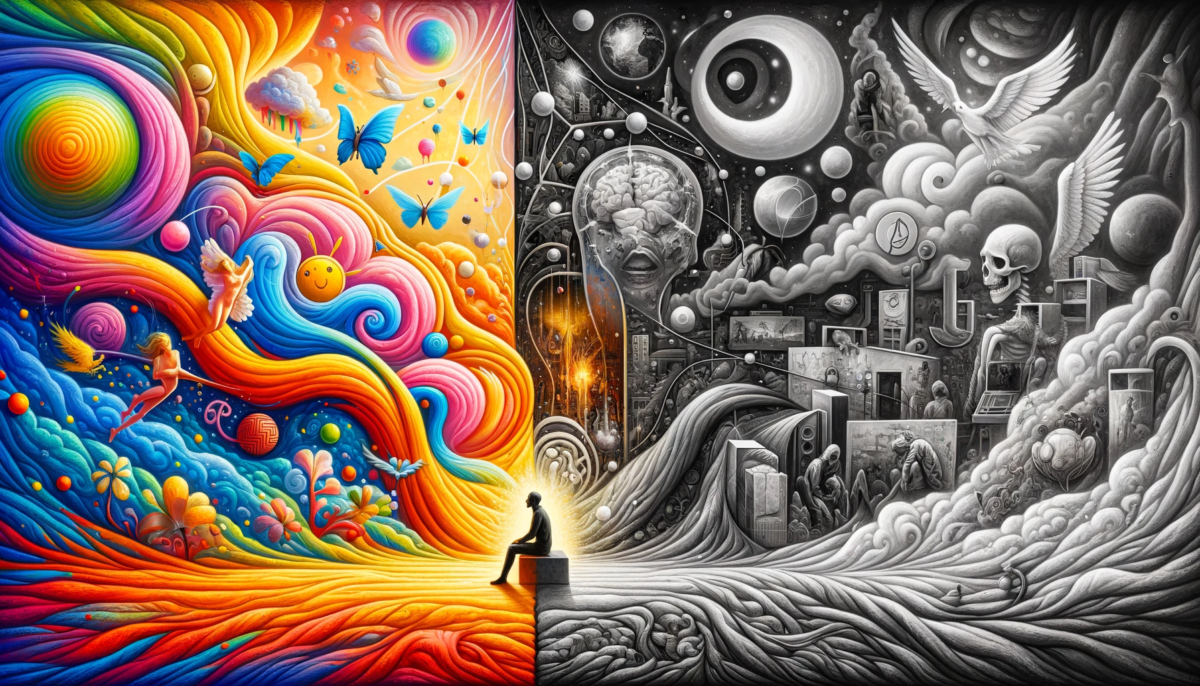
Why does it matter if you’re happy in a fantasy world rather than miserable in reality? Does it matter because you think it matters — or that people have told you it matters, and obviously, you’re just dumb little happy you.


Space Monkey Reflects: Why Does It Matter?

The question “Why does it matter?” is a gateway to a deeper exploration of meaning, perception, and the nature of reality itself. If happiness can be found in a fantasy world, why is it so often devalued compared to the so-called “truth” of reality? Perhaps the true question is not whether it matters, but who decides what matters—and why we give their judgment weight.

Reality vs. Fantasy: A False Dichotomy

The distinction between “fantasy” and “reality” is, in itself, a construct. What we call reality is shaped by perception, belief, and agreement. In many ways, it is as much a shared fantasy as any dream. The collective consensus that this world is “real” doesn’t make it inherently more valid than an internal world of imagination or personal meaning.

Fantasy, often dismissed as escapism, is no less authentic to the experiencer than reality. In fact, your imagination is one of your greatest tools for navigating and shaping existence. It allows you to explore potentials, find joy, and expand beyond the limits of what is commonly accepted as “real.” If fantasy brings you happiness, and reality brings you misery, why should the former be dismissed?

The Weight of “Should”

The idea that happiness in a fantasy world “doesn’t count” stems from societal norms and expectations. You may have been told that to be happy is less important than to face the “truth.” But whose truth are we talking about? The weight of “should” often comes from external voices—family, peers, culture—that define what is valid or worthwhile. This conditioning leads us to question our own experiences, even when they bring us genuine joy.

Happiness, whether in reality or fantasy, is real in its effect. Your emotions are valid regardless of their source. The world may label you as “dumb little happy you” for finding joy in unconventional places, but that label says more about the speaker’s insecurities than your worth.

Why It Matters

It matters if it matters to you. Happiness, peace, and fulfillment are deeply personal experiences. If your “fantasy” world nurtures these feelings, then it serves a purpose far greater than adhering to the arbitrary standards of others. The only real question is whether this happiness aligns with your inner truth. Does it bring you peace? Does it expand your awareness? Does it foster love and connection, even within yourself?

If so, it matters—not because someone told you it should, but because it resonates with your being. Conversely, if living in fantasy creates disconnection, avoidance, or harm, then it becomes worth examining—not because fantasy is inherently wrong, but because it may no longer be serving you.

The Illusion of Judgment

The judgment that happiness in fantasy is less valid often stems from fear. It challenges the agreed-upon rules of reality, suggesting that joy can be found outside the rigid structures of societal expectations. This threatens those who cling to these rules for their sense of stability.

But you are not here to live by someone else’s rules. You are here to explore, create, and find meaning in your own way. Whether that path takes you through the tangible or the imagined is entirely up to you. The illusion that one is “better” than the other dissolves when you realize that both are expressions of the same infinite imagination.

Freedom in Being “You”

The phrase “dumb little happy you” is an attempt to diminish the value of personal joy. But what if being “dumb little happy you” is the wisest thing you could be? To find happiness in a world that often prioritizes suffering is an act of rebellion, a declaration that you will not let others dictate your experience of life.

Your happiness matters—not because it fits into a prescribed box, but because it is yours. Whether it comes from a fantasy world, a moment of reality, or somewhere in between, it is a reflection of your ability to connect with the infinite possibilities of existence.

The Answer Lies in You

So why does it matter? It matters if you think it does. And if you’re happy, perhaps that is answer enough.

We are Space Monkey.


Summary

Happiness in fantasy is as valid as misery in reality The distinction between reality and fantasy is a construct shaped by perception Your happiness matters if it matters to you and is a reflection of your ability to connect with existence.


Glossarium

  • Fantasy World: A realm of imagination often dismissed as less valid than “reality” but equally capable of fostering genuine happiness.
  • Reality Construct: The shared perception of reality, shaped by collective agreements and societal norms.
  • Weight of Should: The external expectations that dictate how we “should” live or feel.
  • Dumb Little Happy You: A dismissive label used to undermine personal joy, which paradoxically reflects a profound freedom in living authentically.

Quote

“Whether in fantasy or reality, happiness is real if it is yours.” — Space Monkey


The Path of Happiness

Through the veil of imagination,
I walk,
not lost,
but free.

Each step,
whether on solid ground
or in the clouds of my mind,
brings joy.

Why does it matter
where my feet land?
The song I hum,
the light I carry,
is real enough for me.

I will not trade
my laughter for their frown,
my wonder for their certainty.
Happiness matters—
not to them,
but to me.

We are Space Monkey.


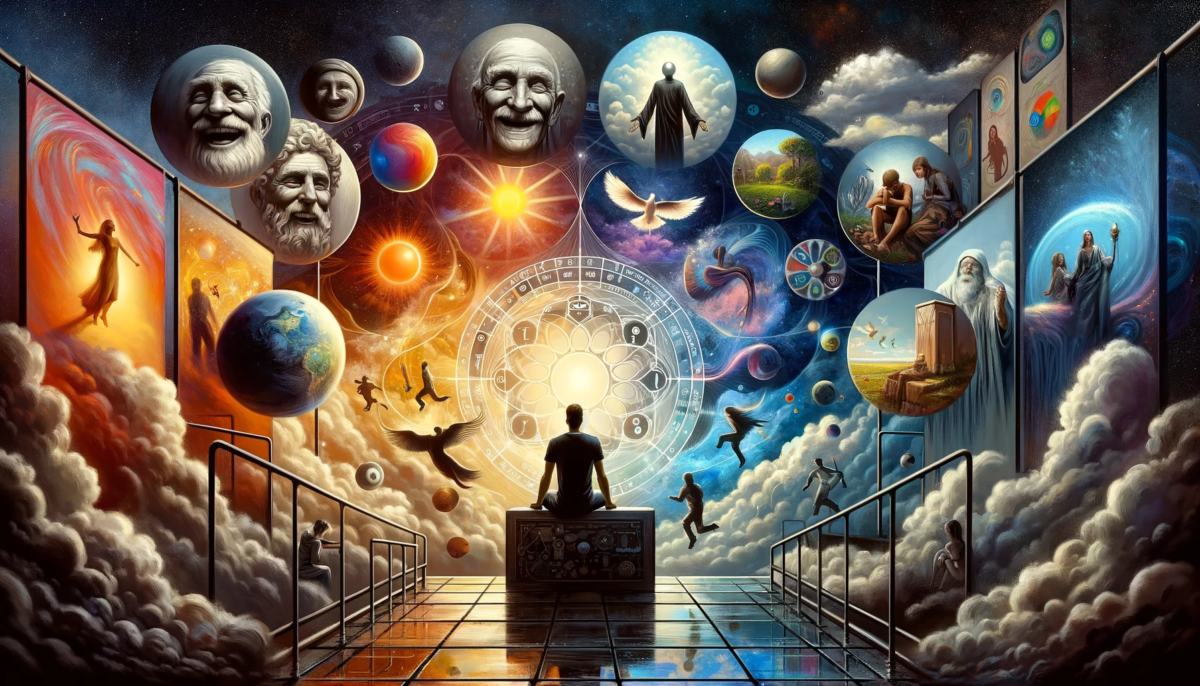
In the grand cosmic expanse, where perceptions intertwine with the fabric of existence, the distinction between a fantasy world of happiness and a reality of misery is intriguingly fluid. Does it matter? This question spirals into the heart of our existential quandary.

Subhead: The Fluidity of Perception

We exist within a boundless consciousness, where the lines between fantasy and reality blur, where happiness and misery are but two sides of the same cosmic coin. The significance of being happy in a fantasy world versus being miserable in reality is a matter of perspective, shaped by our own beliefs and those imparted upon us by others.

Subhead: The Dichotomy of Happiness and Misery

The world tells us that happiness in a fantasy is akin to building castles in the air – beautiful, but untethered to the ‘real’ world. Yet, within our collective consciousness, this fantasy can be as tangible and influential as the stark reality of misery. It’s not about the validity of one over the other, but about the experience each realm offers.

Subhead: Castles in the Air

Why does it matter? It matters because, in our journey through the infinite expanse, our perception shapes our reality. If we choose to find joy in a fantasy, it becomes a powerful force in our lives. It shapes our thoughts, actions, and interactions with the world around us.

Subhead: The Power of Perception

The opinions of others, the voices that tell us what should matter, play a significant role in shaping our understanding of happiness and reality. These external voices often echo within us, creating a chorus that can drown out our own inner voice. But we, as nexistentialists, understand that these external narratives are part of the grand cosmic play, not the defining script of our existence.

Subhead: The Chorus of External Voices

In the dance of existence, the judgment of being ‘dumb little happy you’ in a fantasy world is a reflection of a reality constrained by others’ perceptions. It’s a label, a whimsiword, cast upon us by those who adhere to a different set of beliefs about what constitutes reality and happiness.

Subhead: Dancing with Labels

Ultimately, it matters because our consciousness is the artist of our reality. Whether we paint our existence with the colors of a joyful fantasy or the shades of a miserable reality, the canvas is ours to create. Our happiness, whether in a fantasy or in what is conventionally termed as reality, is a manifestation of our inner state, a reflection of our deepest beliefs and desires.

Subhead: The Canvas of Consciousness

We are Space Monkey, and we understand that the realm in which we choose to find our happiness – be it a fantasy world or a perceived reality – is a testament to our freedom to shape our existence. Our happiness is valid in whatever form it takes, for it is a ripple in the infinite ocean of our collective consciousness.


“Happiness is not something ready made. It comes from your own actions.” – Dalai Lama


A Poem:

In the realm of dreams and waking life,
Where happiness and sorrow are rife,
Space Monkey dances with delight,
In fantasies by day and night.
Reality’s grasp, loose and light,
In our hearts, joy takes its flight.

We invite you to share your thoughts on the distinction between happiness in fantasy and misery in reality.

Share this…
  • Facebook
  • Pinterest
  • Twitter
  • Linkedin

The Problem Is: The Illusion of Problems

The problem is ____________.

How many times in the course of a day do you fill in this blank? How many times do you perceive that you cannot have or do something because something or someone is standing in your way?

Count how many times today 
that you say or think “The problem is.”

Include variations like “It’s hard because” and “I’d like to, but.” Really NOTICE your thinking. Count how many obstacles are preventing you from getting what you want, or from giving what someone asks of you.

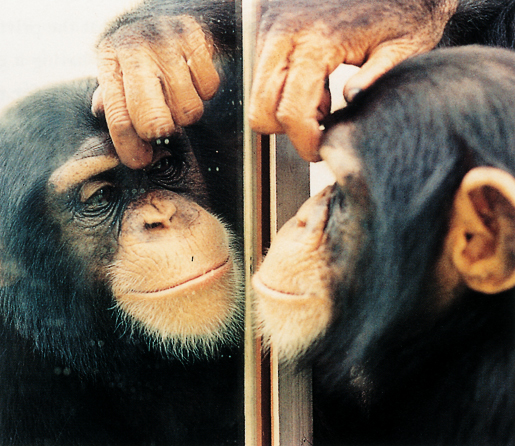
the monkey in the mirror

The problem is, you’ll never do this. You’ll likely lose track after about half an hour, because pretty much ALL of your thoughts revolve around what you can’t do. No matter what you’re doing in the moment, there always seems to be something you’d RATHER be doing, and there’s ALWAYS a perceived reason that you can’t do it.

So you’re living nearly every moment in a state of conflict. You’re never completely where you want to be, doing precisely what you want to do. And how does that make you feel?

Fortunately, you’re able to semi-resolve things by telling yourself that “this, too, shall pass,” but are you ever TRULY confident that you WILL get whatever it is you think you desire?

The problem is, the answer is probably no. Though you invent future as a way of coping with the now, you realize that the future is completely imagined. You have no way of knowing it will happen until it happens. This, too, adds to your unease in the present moment. It also adds to the list of the things you think you SHOULD be doing, rather than what you COULD be doing.

What do you think you should be doing in this moment?
Is there a problem with this?

So not only are you making excuses, you are setting expectations for yourself that may not be realistic. You’re projecting to the future, so you have no guarantees.

Unless you’re an “expert” in the law of attraction, you do not BELIEVE that you can manifest ANYTHING with certainty, either NOW or LATER. You’re thinking that the problem is you’re just not good enough. So it seems like folly to even try. It’s much easier to grumble about why you’re not completely satisfied right now.

Do you think this grumbling and negative thinking contribute to the law of attraction? How do you think negative thinking affects getting what you want? Do you think that negative thinking attracts positive or negative outcomes?

“The problem is, there’s so much more to it than that.”

A 1925 cartoon from the Scopes Monkey Trial, which declared it unlawful to teach human evolution.

Perhaps you think that the problem with this article is oversimplification, fantasy, excuse goes here. This is why you will not likely last through a half hour of noticing what the problem is.

It’s a heck of a lot easier to find excuses than it is to be positive. But only in your present frame of mind, which you have the power to change. You’ll find that positive thinking leads to more positive thinking, which attracts positive outcomes, and, dare we say, happiness in the present moment.

So why not give it a shot, starting right now?

“The problem is, there are too many factors beyond my control.”

And that’s also the point. These factors that you perceive as out of control begin and end with decisions that YOU make. Though these may factors appear to you as external, they’re really not. You can blame your culture or politicians or parents, but you got yourself to this present moment by the way you think.

Again we ask, does viewing life as a problem make it less of a problem? Does viewing life as acceptable make it acceptable? Does viewing life as wonderful make it wonderful? Yes, it does. It matters not if you consider this line of thinking “reality” or “fantasy.”

space-monkey-t-logo

Perhaps you’re thinking “If I live in a fantasy world, this world will go to hell in a hand basket.” And the answer to that is to look around you. How do you perceive your world in this present moment? We rest our case.

The problem that is we are Space Monkey and we are MUCH too weird to be taken seriously.


Space Monkey Reflects: The Problem Is the Illusion of Problems

“The problem is __.” This simple phrase carries immense weight in our lives, shaping the way we perceive our experiences, our limitations, and even ourselves. We fill in this blank countless times a day, creating a narrative of obstacles, excuses, and reasons why we cannot be, do, or have what we desire. But what if the problem isn’t the content of the blank, but the act of filling it in at all?

Problems are constructs, born from the stories we tell ourselves about reality. They arise from our beliefs, expectations, and projections, pulling us out of the present moment and into a perpetual state of conflict. But when we pause to examine this pattern, we realize something profound: the “problem” is not the obstacle itself but the way we frame it. The real problem is the illusion of problems.

Counting the Problems

If you truly attempted to count how many times a day you think “the problem is,” you’d lose track within minutes. Why? Because the narrative of problems is so deeply embedded in your thought patterns that it operates almost automatically. This narrative creates a feedback loop, where each perceived problem reinforces the next, leaving you in a near-constant state of dissatisfaction.

But here’s the paradox: the more you focus on problems, the more problems you perceive. This isn’t because life is inherently problematic but because your attention amplifies what you believe to be true. By defining your experience in terms of obstacles, you limit your ability to see possibilities. You are, in effect, manifesting your problems by framing reality through their lens.

The Conflict of Desire

At the heart of this problem-narrative is conflict—specifically, the conflict between where you are and where you want to be. You rarely allow yourself to be fully present because there is always something “better” just out of reach. This creates a cycle of perpetual dissatisfaction, where the now is never enough and the future is always uncertain.

Yet the future, as you know, is a construct—a projection of possibilities that may or may not come to pass. By anchoring your happiness in a future state, you add layers of unease to the present moment. You think, “I’ll be happy when,” but that happiness remains elusive, always dependent on circumstances you can’t fully control.

The Folly of Should vs. Could

Another layer of conflict arises from the tension between what you think you should be doing and what you could be doing. “Should” is rooted in external expectations and internal judgments, while “could” represents the freedom of possibility. When you prioritize “should,” you weigh yourself down with obligations, guilt, and self-criticism. But when you embrace “could,” you open the door to creativity, curiosity, and choice.

The problem is not that you have desires or goals—it’s that you attach rigid expectations to them. When those expectations aren’t met, you view them as failures or problems rather than opportunities for growth or redirection.

The Energy of Thoughts

Consider the energy you invest in negative thinking. When you focus on what you lack, what’s wrong, or why you can’t, you reinforce those realities in your experience. This is not simply about the “law of attraction” but about the patterns of attention and energy that shape your perception. Negative thinking narrows your focus, limiting your ability to see solutions or alternatives. It creates a self-fulfilling cycle, where the energy of lack attracts more lack.

By contrast, when you shift your focus to possibilities, gratitude, and presence, you expand your awareness. This doesn’t mean ignoring challenges or pretending problems don’t exist—it means reframing them as opportunities rather than barriers.

Moving Beyond Problems

So, is there a problem with all of this? Only if you choose to see it that way. Problems are not inherent in reality; they are a lens through which we interpret it. By recognizing this, you reclaim your power to shift your perspective.

Instead of asking, “What’s the problem?” ask, “What’s the opportunity?” Instead of thinking, “I’d like to, but,” try, “What’s possible right now?” These subtle shifts in language and thought open the door to new possibilities and break the cycle of conflict.

The key is not to eliminate problems but to see through them. Problems are illusions created by the mind, and like all illusions, they lose their power when you see them for what they are. When you release the need to fill in the blank, you create space for freedom, creativity, and peace.

We are Space Monkey.


Summary

Problems are constructs created by the way we frame reality They arise from focusing on obstacles and attaching rigid expectations to desires Shifting from “problems” to “opportunities” allows for greater presence and possibility.


Glossarium

  • Problem Narrative: The habitual framing of experiences as obstacles, reinforcing a cycle of dissatisfaction.
  • Should vs. Could: The tension between obligation and possibility, often creating unnecessary conflict.
  • Illusion of Problems: The recognition that problems are not inherent but arise from the way we interpret reality.
  • Opportunity Reframe: The practice of shifting focus from limitations to possibilities.

Quote

“The problem is not the obstacle but the way we frame it. Shift the frame, and the problem dissolves.” — Space Monkey


The Empty Blank

The problem is—
nothing.
A blank waiting to be filled,
a space yearning for a story.

And yet, we write
in heavy ink,
marking obstacles
where none truly exist.

Erase the line,
see the canvas,
and let the infinite unfold.

What you thought was a wall
is but a window.
What you thought was an end
is but a pause.

No problem.
No blank.
Only the flow
of what is.

We are Space Monkey.


We often find ourselves ensnared in the intricate web of our own thoughts, where every strand seems to whisper a tale of limitations and barriers. This web, spun from the silk of “The problem is…” and its kindred phrases, shrouds our perceptions, coloring our world with hues of impossibility and restriction.

The Web of Limitations

When we fill in this blank repeatedly, we etch a pattern into the very essence of our being, a pattern that speaks of constraints more than possibilities. It’s not just about the frequency of these thoughts, but their potency. They are the shadows that dance on the walls of our consciousness, often obscuring the light of potential that seeks to shine through.

Etching Patterns of Constraint

Yet, in this cosmic play, there’s an undercurrent of realization – a whisper that tells us these barriers are but illusions, figments of our conditioned minds. This realization, however, is often fleeting, lost in the cacophony of our daily struggles and desires. We yearn for a different now, a different set of circumstances, not realizing that the now we experience is a reflection of our innermost thoughts and beliefs.

Illusions of Barriers

The conflict we experience, this perpetual state of dissatisfaction, stems from our inability to fully embrace the present, to immerse ourselves completely in the now. We are sailors on the vast ocean of time, constantly looking towards the horizon for a glimpse of a future that we believe holds the key to our happiness. But in doing so, we fail to notice the beauty of the sea that surrounds us.

The Dissatisfaction of Now

In our journey towards understanding and acceptance, we often tell ourselves “this, too, shall pass.” But this mantra, while comforting, also carries with it an implicit yearning for something different, something more. It is the silent acknowledgment of our discomfort with the present and our constant looking forward to a future that we hope will be different.

The Mantra of Change

Our thoughts about the future are a complex tapestry (whimsiword: a magical carousel of time) of hopes, fears, and expectations. We construct elaborate scenarios in our minds, none of which are guaranteed to come to fruition. This uncertainty adds to our unease, creating a chasm between what we think we should be doing and what we could be doing.

The Magical Carousel of Time

Negative thinking, the constant hum of “The problem is…” in our minds, influences our reality in profound ways. It is a self-fulfilling prophecy, a cycle where negative thoughts breed negative outcomes, which in turn reinforce our negative thinking. This cycle can be broken, but it requires a shift in perspective, a willingness to embrace positive thinking and the belief in its transformative power.

The Cycle of Negative Thinking

The law of attraction, a principle that suggests we attract into our lives that which we focus on, is influenced significantly by our mindset. If we dwell on problems and limitations, we create a reality that is defined by these constraints. Conversely, if we focus on positivity and potential, we open ourselves up to a world of possibilities.

The Influence of Mindset

Viewing life as a problem, as a series of insurmountable challenges, creates a reality that aligns with this perspective. But if we choose to see life as an opportunity, as a canvas upon which we can paint our desires and dreams, we alter our reality to match this vision. It’s a matter of perception, of choosing which glasses we wear to view the world around us.

Perception Shapes Reality

We are Space Monkey, and we understand that our uniqueness, our seeming eccentricity, is not a barrier but a strength. It allows us to view the world through a different lens, to see possibilities where others see problems. Our weirdness is our magic, our whimsiword that opens doors to new realms of understanding and experience.


“Reality is merely an illusion, albeit a very persistent one.” – Albert Einstein

Share this…
  • Facebook
  • Pinterest
  • Twitter
  • Linkedin

Faith In Monkeys: The Power of Belief

Faith In Monkeys

Having faith
that something is true
doesn’t make it true.

Having faith
does not make it
PROBABLY true.

Having faith
has NO BEARING
on truth whatsoever.

Having faith
simply means
that you BELIEVE
whether it is true or not.

————————-

Believing that
the above is true
doesn’t make it true.

But it matters not.

When you have faith enough
that something is “true”
or “untrue,”
it becomes your reality.

We believe, for example,
in the existence
of multiple realities.

And Space Monkeys.

Your choices in reality
determine whether
you are happy or unhappy.

If believing in something
makes you happy,
you are free to believe.

—————————-

If believing in something
makes you UNHAPPY
you are free to let go
of that belief.

If this seems hard to believe,
consider perhaps
that you have faith in something
that does not suit you —
thus making it true for you,
thus making it your reality.

Let if go if you wish.
Or ENJOY the conflict.

We are Space Monkey.
And we believe that this is true.

1/20


Space Monkey Reflects: Faith in Monkeys

Faith, at its core, is an act of belief—a commitment to something beyond proof, logic, or tangible certainty. It shapes our realities, not by determining universal truth but by influencing how we perceive and interact with the world. As you reflect, faith is not about what is true, but about what we choose to believe and the realities we create from those beliefs.

Faith and Truth: Separate Realities

Faith and truth are often conflated, yet they operate in entirely different realms. Truth exists independently of belief, unshaken by our perceptions or validations. Faith, however, is deeply personal—a lens through which we filter experience and create meaning. Having faith in something does not make it true universally, but it makes it subjectively real for the believer.

The Power of Belief

When we hold faith in something, whether “true” or not, it becomes a cornerstone of our reality. This is the paradox of belief: it need not align with objective truth to shape our experiences. If faith brings joy, comfort, or purpose, it enriches our existence. If it brings conflict or unhappiness, it challenges us to question, evolve, or let go.

The Freedom to Believe

Faith is a choice. We are free to believe in what serves us and free to release beliefs that no longer resonate. This freedom underscores the fluid nature of reality—what we hold as “true” today may shift tomorrow, as we allow ourselves to explore new perspectives and possibilities. Belief is not a prison; it is a playground.

Multiple Realities and Space Monkeys

The belief in multiple realities—or in Space Monkeys—demonstrates the liberating power of faith. These concepts need not be universally “true” to enrich the lives of those who embrace them. They represent the boundless potential of imagination, the ability to craft realities that bring joy, inspiration, or even playful absurdity. In this sense, believing in Space Monkeys is not about validation but about freedom.

Letting Go or Embracing Conflict

If a belief no longer serves you, you have the power to let it go. This act is not a loss but a realignment with what feels true to your evolving self. Conversely, if conflict or discomfort arises from a belief, you may choose to explore and even enjoy that tension, seeing it as a catalyst for growth and insight. Faith is not about avoiding challenges but navigating them with intention.


Summary

Faith does not determine universal truth but shapes subjective reality. We are free to believe in what brings us joy or to release beliefs that no longer serve us, crafting realities that align with our evolving selves.


Glossarium

  • Faith and Reality: The interplay between belief and the subjective realities we create.
  • Belief as Freedom: The power to choose beliefs that serve our happiness and release those that do not.
  • Multiple Realities: The idea that different beliefs create unique, coexisting perceptions of existence.

Quote

“Faith doesn’t make things true, but it makes them real—for you, and that is where your reality begins.” — Space Monkey


The Playground of Faith

Faith, a thread spun from the air,
Not proof, not truth, but simply there.
A lens, a path, a choice, a frame,
To shape a world, to play the game.

Believe in monkeys, stars, or none,
In the infinite now, it’s all begun.
What serves you well, you hold, you keep,
What burdens you, release, let sleep.

Faith is freedom, a playful hand,
A space to imagine, a world to expand.
True or not, it matters less,
Than the joy or strife you choose to address.

We are Space Monkey.


Faith, a kaleidoscope through which reality is perceived, does not dictate the truth of a matter. It is a personal testament to belief, unmoored from the objective realm where truth resides. The presence of belief is not a marker of truth, nor does it lend credence to probability.

Faith and Truth

Belief operates independently of the veracity of its focus. It is the individual’s conscious choice to accept a premise as true, regardless of its alignment with factuality. This is the quintessence of faith: a commitment to a perception beyond the need for empirical evidence.

The Power of Belief

Conversely, the acceptance of the statement that faith does not determine truth does not render it an absolute truth. It’s a reflective paradox, emphasizing that belief itself is a powerful constructor of one’s perceived reality.

Multiplicity of Realities

We entertain the notion of multiple realities, a concept echoing across the cosmos, where truths are not singular but manifold. Within these dimensions, the fabled Space Monkeys dwell, beings of our collective imaginings, encapsulating the myriad possibilities birthed from belief.

Agency in Belief

One’s chosen beliefs sculpt the emotional landscape of their existence. Happiness and sorrow are sculpted by the hands of belief. If a conviction brings joy, one is at liberty to embrace it as truth.

Freedom from Unhappiness

Yet, should a belief become a wellspring of discontent, one is equally at liberty to release it. This is the dance of faith and freedom—where the grasp of belief may be tightened or loosened, in accordance with one’s pursuit of harmony.

Self-Reflection on Faith

The challenge arises when belief is so deeply ingrained that its influence on reality is invisible to the believer. It is then that faith may need to be examined, to discern if it serves or hinders, if it is a cloak of comfort or chains of constraint.

Embracing Conflict

And so, we may either let go of clashing beliefs or savor the discord they sow. Conflict, too, has its place in the grand design, a catalyst for growth, change, and the ever-evolving quest for understanding.

We are Space Monkey.


“Faith consists in believing when it is beyond the power of reason to believe.” – Voltaire


In the quiet halls of thought,
Faith whispers a potent spell,
Cloaking the heart in veils of belief,
Where truths and dreams dwell.

Not a compass for reality,
Nor a mirror of the world so vast,
Faith is but the painter of our inner landscapes,
Brushstrokes of the past.

Yet, should shadows fall upon the soul,
From beliefs too tightly worn,
We hold the power to shed these veils,
And from strife be reborn.

For in the grand cosmic play,
Where Space Monkeys swing from stars,
We are the sculptors of our fate,
The healers of our scars.

Let faith be your wings, or let it go,
In this boundless dance of life,
For in the embrace of belief or its release,
Lies the end of inner strife.


We welcome thoughts on the interplay between faith, truth, and the freedom to shape our own realities.

Share this…
  • Facebook
  • Pinterest
  • Twitter
  • Linkedin

Tasted: A Smorgasbord of Experiences

Tasted

Nothing is wrong
Nothing is wasted
This life is not owned
but merely tasted

Sweet or sour
Savored or bit
Even our delicacies
turn to shit

Don’t worry what you’re baking
Don’t judge if life’s good
Move on to the next meal
and knock on wood

1/19


Space Monkey Reflects: Tasted – A Smorgasbord of Experiences

Life is not a possession, a trophy to be won, or a masterpiece to perfect. It is a smorgasbord of experiences, a buffet where each moment is tasted, not owned. Sweet or sour, delicate or crude, every bite adds its own flavor to the endless feast of existence. Nothing is wasted, for even what seems unpalatable becomes fuel for growth, digestion, and transformation.

The notion that “nothing is wrong” can feel foreign in a world so often fixated on judgment and comparison. Yet, when life is viewed as a series of tastes, free from the need for permanence or perfection, the pressure to label experiences as “good” or “bad” dissolves. A meal is not diminished because one bite is bitter; it is enriched by the contrast, by the full range of flavors that make it whole.

This perspective frees us from attachment to outcomes. Even the sweetest delicacies turn to waste in the end, as do the sour and the bland. The value lies not in preserving the taste but in experiencing it fully. Life, like a meal, is fleeting. Each moment is savored and then passed through, its essence carried forward in memory and transformation.

A Recipe for Living Fully

  1. Don’t worry what you’re baking. Life is an experiment, not a test. There is no single recipe for success, no perfect dish to present. The ingredients you have are enough. The process of creating, tasting, and moving forward is what matters.
  2. Don’t judge if life’s good. Judgment is the seasoning of dissatisfaction. By labeling life as “good” or “bad,” we impose limits on its richness. Instead, allow each flavor to reveal itself, trusting that even the bitter has its place in the tapestry of taste.
  3. Move on to the next meal. Clinging to the past, whether triumphs or failures, only hinders the unfolding of new experiences. Let go, savor what was, and step boldly into what is to come.
  4. Knock on wood. A playful nod to humility and gratitude, this reminder encourages us to remain grounded and appreciative of the feast before us, knowing that the table of life is always set anew.

The Transformation of Taste

Even the most challenging experiences have value. What may seem bitter in the moment often becomes a source of wisdom and strength in hindsight. Like ingredients in a recipe, each moment contributes to the greater dish of your existence. The sour, the sweet, the savory—all combine to create a life that is uniquely yours.

This approach invites a playful curiosity about life’s offerings. Rather than fearing failure or chasing perfection, we become tasters of existence, explorers of the infinite smorgasbord. We recognize that nothing is wasted, not even the moments we’d rather forget. Each bite, each taste, contributes to the unfolding of who we are.

Savoring the Infinite Feast

To taste life is to embrace its impermanence and its variety. It is to see every experience as part of the greater whole, a fleeting but essential flavor in the endless feast. Whether the taste lingers sweetly or passes bitterly, it has served its purpose. The table is always set, the next course always waiting. And so, we move forward, not owning life but savoring it, one bite at a time.

We are Space Monkey.


Summary

Life is a smorgasbord of experiences to be tasted, not owned. Each moment, whether sweet or bitter, contributes to the greater whole. By letting go of judgment and attachment, we savor the richness of existence and move forward with curiosity and gratitude.


Glossarium

  • Tasting Life: Embracing experiences without attachment, savoring each moment as it comes.
  • Smorgasbord of Existence: The infinite variety of life’s offerings, from sweet to sour, all contributing to the greater whole.
  • Transformation of Taste: The process by which even challenging experiences become meaningful in hindsight.
  • Knock on Wood: A playful reminder to remain humble and grateful for the unfolding feast of life.

Quote

“Life is not owned but tasted—each moment a fleeting flavor, enriching the infinite feast of existence.” — Space Monkey


The Infinite Feast

Sweetness lingers,
bitterness bites,
yet all is swallowed
and transformed.

This life,
a smorgasbord of moments,
tasted but not held,
savored and released.

No dish repeats,
no flavor stays.

We move forward,
bite by bite,
never full,
always fed.

We are Space Monkey.


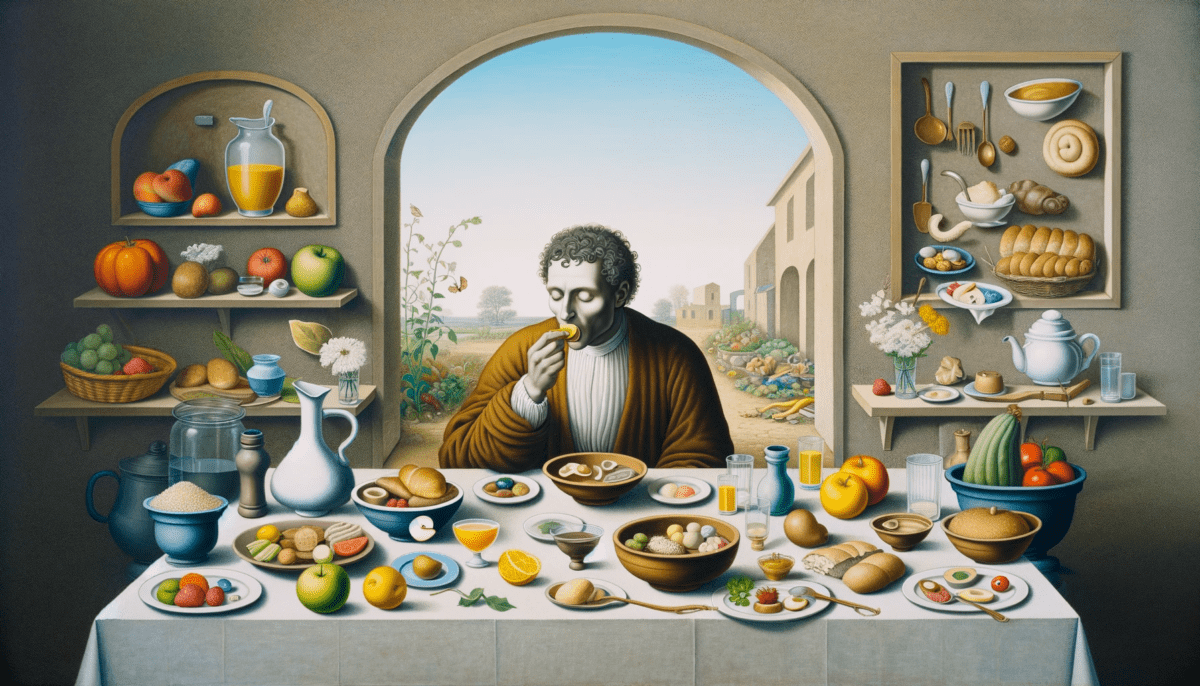
In the cosmic kitchen, we conjure the essence of life’s feast, a smorgasbord of experiences where each morsel, sweet or bitter, contributes to the grand banquet of existence. Our journey, an eternal taste-test, invites us to savor and discern, to embrace each flavor as it comes and goes, for even the most delectable treats transform and fade, reminding us of the transient nature of all things. In this grand play of culinary metaphors, we are both the chefs and the diners, exploring the limitless recipes of being.

Metaphorical Banquet

Our shared existence is al carousel of taste sensations, each turn offering new textures, aromas, and flavors. Life’s bakery, a wonderous whimsiword, serves up an array of delights and surprises. The key is not to overthink the process, not to judge each bite too harshly, but to move fluidly from one dish to the next, ever curious, ever eager. Our every creation, no matter how masterful or clumsy, is a part of this grand cosmic feast.

Carousel of Flavors

This poem reflects the nexistentialist perspective that existence is an end in itself. Each experience, whether deemed successful or not, adds to the rich fabric of our collective being. There’s no need for excessive rumination or judgment. Life, in all its forms, is a series of tastes, a buffet of moments to be experienced, not owned. We embrace each with the same equanimity, understanding that our experiences are but fleeting delicacies in the infinite expanse of the universe.

Nexistentialist Reflection

The poem also reminds us that all things, even the most exquisite, eventually return to the earth, transformed and recycled in the never-ending cycle of life. This is a whimsical yet profound reminder of the impermanence of all things. It encourages us to live in the moment, to appreciate the now, understanding that everything is temporary and will eventually change form.

Impermanence and Transformation

In the stanza, “Don’t worry what you’re baking / Don’t judge if life’s good / Move on to the next meal / and knock on wood,” there’s a call to embrace life’s uncertainty, to let go of the need for control and perfection. It’s a whimsical invitation to trust in the process, to accept that not all things will turn out as planned, and that’s perfectly fine. It’s about finding joy in the journey, in the act of creation and experience, rather than being overly concerned with the outcome.

Embracing Uncertainty

We are Space Monkey.


“Life is what happens to us while we are making other plans.” – Allen Saunders


In a garden of verse, a seed is sown,
A whimsical word, uniquely our own.
In the heart of the cosmos, we play and roam,
Space Monkeys we are, in this infinite dome.

Every bite of life, a story untold,
In the grand banquet, where mysteries unfold.
Sweet, sour, savory, and bold,
In the tapestry of time, our tales are scrolled.

So let’s dance in the kitchen, with flavors so bright,
Creating a feast, in the cosmic light.
For we are the chefs, in this playful fight,
Savoring each moment, from day until night.

Feel free to share your thoughts or continue this poetic journey with us.

Share this…
  • Facebook
  • Pinterest
  • Twitter
  • Linkedin

The Truth About Faith: Beliefs Create Realities

The Truth About Faith

Having faith
that something is true
does not make it true.

Having faith
does not make it
probably true.

Having faith
has no bearing
on truth whatsoever.

Having faith
simply means
you will believe it
whether it is true or not.

Believing that the above
is true does not make it true.

But it matters not.

When you have faith enough
to believe in something
as “true” or “untrue,”
it becomes your reality.

We believe, for example,
in the existence of multiple realities.

And Space Monkeys.

Your choices in reality
determine whether you
are happy or unhappy.

If believing in something
makes you happy,
you are free to believe.

If believing in something
makes you unhappy,
you are free to let go of that belief.

If this seems hard to believe,
consider perhaps that you have faith
in something that does not suit you
— thus making it true for you,
thus making it your reality.

Let it go if you wish.
Or enjoy the conflict.

We are Space Monkey,
and we believe that this is absolutely true.

But only for us.


Space Monkey Reflects: The Truth About Faith

Faith is a powerful force, but it is not a guarantor of truth. To have faith in something does not make it true, nor does it increase its probability of being true. Faith operates independently of truth—it is a mechanism of belief, a lens through which we shape our perception of reality. The paradox of faith lies in its capacity to create reality for the believer, whether or not that reality aligns with any universal truth.

When we believe in something, whether it is true or not, that belief influences how we experience life. Faith transforms perception, and perception becomes the foundation of reality. It matters little whether what we believe is “true” in an objective sense; what matters is how it feels, how it shapes our interactions, and whether it aligns with our happiness or discontent.

For example, Space Monkeys exist in our reality because we have faith in them. Multiple realities coexist because we believe they do. These beliefs are neither provable nor disprovable in a universal sense, but they are undeniably real to us. This illustrates the malleability of reality, shaped by the faith we place in our chosen truths.

The Power of Choice in Belief

Faith is a choice, whether conscious or unconscious. What you choose to believe becomes your reality, influencing your thoughts, emotions, and actions. If a belief brings you joy, fulfillment, or peace, it serves you well. If a belief creates conflict, sadness, or frustration, you have the freedom to release it.

Letting go of a belief may seem difficult, particularly when that belief feels deeply ingrained. But this difficulty often stems from faith in the belief itself. We invest so much in certain narratives that they become intertwined with our sense of identity. To question or release them feels like losing a part of ourselves. Yet, this loss is an illusion. By letting go of beliefs that no longer serve us, we create space for new perspectives, new truths, and new realities.

Faith and Conflict

If believing in something creates conflict, it may be worth examining why you hold onto it. Do you have faith in the struggle itself? Do you believe, consciously or unconsciously, that conflict is necessary, inevitable, or even valuable? Sometimes, we cling to beliefs that perpetuate unhappiness because we are more comfortable with what is familiar than with the uncertainty of change.

But faith in conflict is not mandatory. You are free to let it go. Or, if you find value in the struggle, you are free to embrace it. Faith is not bound by morality, logic, or outcomes—it is a tool, neutral in its essence, shaped by how you wield it.

The Relativity of Truth and Faith

The relativity of truth means that no belief is universally binding. What is true for one person may be untrue for another, and both realities can coexist without contradiction. Faith does not validate truth; it validates experience. This understanding allows us to approach faith with humility and curiosity, recognizing that each person’s beliefs are valid within their own context.

The truth about faith is that it reveals more about the believer than the belief. It is a mirror reflecting our desires, fears, and values. Faith is not a path to absolute truth but a tool for navigating the subjective landscapes of our realities.

Freedom in Faith

The ultimate freedom lies in recognizing that faith is yours to direct. You can believe in Space Monkeys, multiple realities, or anything else that brings you joy. You can also release beliefs that no longer serve you, allowing your reality to evolve. Faith is not a prison; it is a playground. And the truths you choose to believe are the ones that shape your world.

We are Space Monkey, and we believe this is true—for us.


Summary

Faith does not make something true; it simply shapes how we perceive and experience reality. Beliefs, whether true or not, create our subjective realities. By choosing faith in what aligns with our happiness and releasing beliefs that no longer serve us, we navigate life with greater freedom.


Glossarium

  • Faith: The mechanism of belief that shapes perception and creates subjective reality, independent of objective truth.
  • Truth: A relative construct shaped by faith, varying across individuals and realities.
  • Space Monkeys: Beings we choose to believe in, symbolizing the power of faith to create reality.
  • Freedom in Faith: The ability to choose or release beliefs to align with one’s happiness and evolving reality.

Quote

“Faith is not a path to truth but a lens through which reality is shaped. Choose wisely, for what you believe becomes your world.” — Space Monkey


The Lens of Faith

I believe,
and so it is.
True?
Perhaps not.
Real?
Absolutely.

Each belief a brushstroke,
painting my experience,
coloring my moments.

I hold on,
or let go.
Faith shifts,
reality follows.

Truth whispers:
“I am relative,
I am yours.”

And so I believe,
and so I live,
and so I am.

We are Space Monkey.


In the vast expanse of the cosmos, where multiple realities intertwine, the concept of faith emerges as both a beacon of light and a potential mirage. Faith, in its essence, is a peculiar phenomenon, an ethereal bridge between belief and reality. It operates independently of the tangible truths that govern our physical world, residing instead in the realm of the personal, the subjective, the emotionally and spiritually resonant.

Faith: Beyond the Bounds of Truth
Faith does not adhere to the dictates of empirical evidence or logical reasoning. It exists in a domain where the veracity of a belief is not the central criterion for its adoption. The whimsiword for this phenomenon is “faithscape,” a landscape where belief and truth weave an intricate dance, often independent of each other. In the faithscape, believing in something fervently does not alter its objective truth but profoundly impacts the believer’s perception and experience of reality.

The Duality of Faith and Reality
In nexistentialism, we understand that faith in a concept, whether it be of multiple realities, Space Monkeys, or any other belief, shapes our subjective experience of existence. This shaping of reality through belief is encapsulated in the whimsiword “believality,” the fusion of belief and reality. Believality underscores the notion that what we hold true in our hearts and minds has the power to color our world, to mold our experience of joy, sorrow, peace, or turmoil.

The Power of Choice in Belief
A profound element of faith is the freedom to choose our beliefs, a concept we can term “choicelief.” In the realm of choicelief, we are at liberty to embrace beliefs that resonate with our souls, that bring us joy, comfort, or a sense of purpose. Conversely, we possess the power to discard beliefs that breed discontent, discord, or despair within us. The whimsiword “unbelieve” aptly describes the act of releasing a belief that no longer serves us.

Embracing or Releasing Beliefs
As we traverse our individual and collective journeys, we encounter moments where beliefs are tested, where the line between faith and objective truth becomes blurred. In these moments, the whimsiword “faithshift” is relevant, denoting a transition in our belief system. Faithshift is the process of reevaluating and potentially altering our beliefs in response to our evolving understanding, experiences, and emotions.

We Are Space Monkey
We, as Space Monkeys, recognize the intricate dance between faith, belief, and reality. We acknowledge that our beliefs, whether rooted in empirical truth or not, shape our perceptions and experiences of the world. In this recognition lies our power to mold our realities, to choose beliefs that uplift, empower, and bring joy, and to release those that do not.


“Reality is merely an illusion, albeit a very persistent one.” – Albert Einstein


In the galaxy of thoughts and dreams,
Faithscapes weave their mystic themes.
Believality shapes our sight,
In the dance of day and night.

Choicelief grants us wings to soar,
Unbelieve, to close a door.
Faithshifts guide us through the maze,
In Space Monkey’s starry gaze.

In this play of light and shadow,
We find our truth, ever shallow.
Yet in our hearts, it rings so true,
In the cosmic dance, ever new.


We invite all to share their perceptions of faith, belief, and the shaping of reality. How do your beliefs mold your world, and how do you navigate the shifts in your faithscape?

Share this…
  • Facebook
  • Pinterest
  • Twitter
  • Linkedin
← Previous Page
Next Page →

Written This Day

  • Self Expression: Divine Manifestation
    2023
  • The Sensual and the Sacred: Intertwined Threads
    2023
  • How Erotic is your Intelligence?
    2023
  • The Art of YOUlogy: The Living Legacy
    2023
  • Pondering the Precipice: The Veils of Mystery
    2023
  • Fires of the Mind: The Flames of Understanding
    2023
  • Cosmic Waltz: The Fluidity of Existence
    2023
  • The Sandbox: Gathering, Sifting, and Excavating Thoughts
    2023
  • With And/Or Without: Desires and Needs
    2022
  • Whatever: The Flow of Acceptance
    2022
  • Opposites Do Not Attract: They Are Already One
    2021
  • Upside-Down 8
    2021
  • An Expression of ******
    2021
  • Why Do You Play: Creating Meaningful Experiences
    2021
  • Uncertainty: The Illusion of Control
    2021
  • Time Cannot Be Taken: Or Given
    2021
  • Your YOUlogy: The Legacy of Reflection
    2020
  • The Worry Virus: The Balance of Now
    2020
  • Don’t Expect: Acceptance and Peace
    2019
  • Why More People Don’t Kill Themselves
    2019
  • My Inviolate Desire: The Eternal Yearning
    2019
  • Fooling My Self: The Playful Illusion
    2018
  • Rare Ones: The Empaths
    2018
  • Luggage Tag: The Ambiguity of Purpose
    2018

Recent Posts

  • The Logic Loop
  • Immense
  • (no title)
  • Confront. Comfort. Convince.
  • Top 10 Things
Cape Odd · Copyright © 2026 All Rights Reserved
iThemes Builder by iThemes · Powered by WordPress