• Who Is The Man?
  • Who Is The Monkey?
  • What is Nexistentialism?
  • Poke The Primate

Cape Odd

Home of The Space Monkey Journals

Mom & Dad


Space Monkey Reflects: Mom & Dad


The Archetypes of Creation

 Mom and Dad

“Mom and Dad” are more than parental figures—they are archetypes of duality and creation. They represent the interplay of opposing yet complementary forces: nurturing and discipline, chaos and order, the infinite and the finite. In their union, whether literal or symbolic, life emerges, and we begin our journey into the complexity of existence.

Yet, as we grow, these archetypes shift. Mom and Dad become less about who they are and more about how we perceive them. They transform into mirrors, reflecting our own evolving understanding of connection, care, and self.


The Complexity of Relationship

The relationship with Mom and Dad is often layered with love, conflict, and contradiction. They shape us not only through their actions but also through their absences, their flaws, and their intentions. We carry their influence as both a gift and a challenge, navigating the intricate dance of gratitude and individuation.

This complexity mirrors the human condition itself—a constant interplay of seeking connection while asserting independence. Mom and Dad are the first stage of this dance, the origin point from which we begin to explore and define our own identity.


The Inheritance Beyond Blood

Mom and Dad are not confined to biology. They can be mentors, role models, or even abstract forces within us. They are the creators of our earliest worlds, shaping not only our perceptions of others but also our sense of self. Yet, as we grow, we come to see them not as fixed figures but as evolving beings, just as flawed and human as we are.

In this realization lies a profound gift: the opportunity to move beyond the roles we’ve assigned them. We can honor their influence while also releasing the need for them to be perfect or static. This release allows us to embrace their humanity—and our own.


The Paradox of Nurture

Mom and Dad embody the paradox of nurture: they are both the protectors of our innocence and the introducers of its loss. Through their care, we learn trust, and through their imperfections, we learn resilience. They are both the source of comfort and the initiators of struggle, teaching us the balance between dependence and autonomy.

This paradox is not a flaw but a feature of existence. It mirrors the duality of life itself—a constant oscillation between safety and challenge, love and growth.


Mom and Dad as Metaphor

Beyond their personal identities, Mom and Dad can also be seen as metaphors for the cosmic forces of creation. Mom, the infinite wellspring of nurturing energy; Dad, the structure that defines and contains. Together, they symbolize the interplay of chaos and order, the dance of creation that gives rise to all things.

In this metaphor, we see ourselves not as their creations but as co-creators. We are not simply shaped by their influence but also participate in the ongoing act of shaping the world, weaving the threads of their legacy into the fabric of our lives.


Summary

Mom and Dad represent both personal relationships and universal archetypes of creation, nurture, and duality. They shape us through their presence and imperfection, offering both comfort and challenge. By honoring their influence while embracing their humanity, we step into our own power as co-creators of existence.


Glossarium

  • Parentalmirror: The reflective nature of Mom and Dad, revealing our own evolving identities.
  • Nurtureparadox: The dual role of parents as both protectors and challengers in our growth.
  • Archetypair: The symbolic roles of Mom and Dad as forces of creation and duality.
  • Legacyweave: The act of integrating parental influence into the broader tapestry of our lives.

Quote

“Mom and Dad are the first creators we meet; through them, we learn to create ourselves.” — Space Monkey


The Parent’s Paradox

You brought me into this world,
not perfect,
but whole enough to shatter,
to scatter,
and to gather myself anew.

In your arms, I learned trust.
In your flaws, I learned strength.
You are not just my origin
but my mirror,
my story,
my contradiction.

Mom, the infinite embrace.
Dad, the boundary that shapes.
Together, you are the dance
that made me.

I carry your gifts,
your wounds,
your dreams.
But most of all,
I carry the power
to create my own.

We are Space Monkey.

Share this…
  • Facebook
  • Pinterest
  • Twitter
  • Linkedin

Kylo Ren and Stimpy: A Study in Contrasts

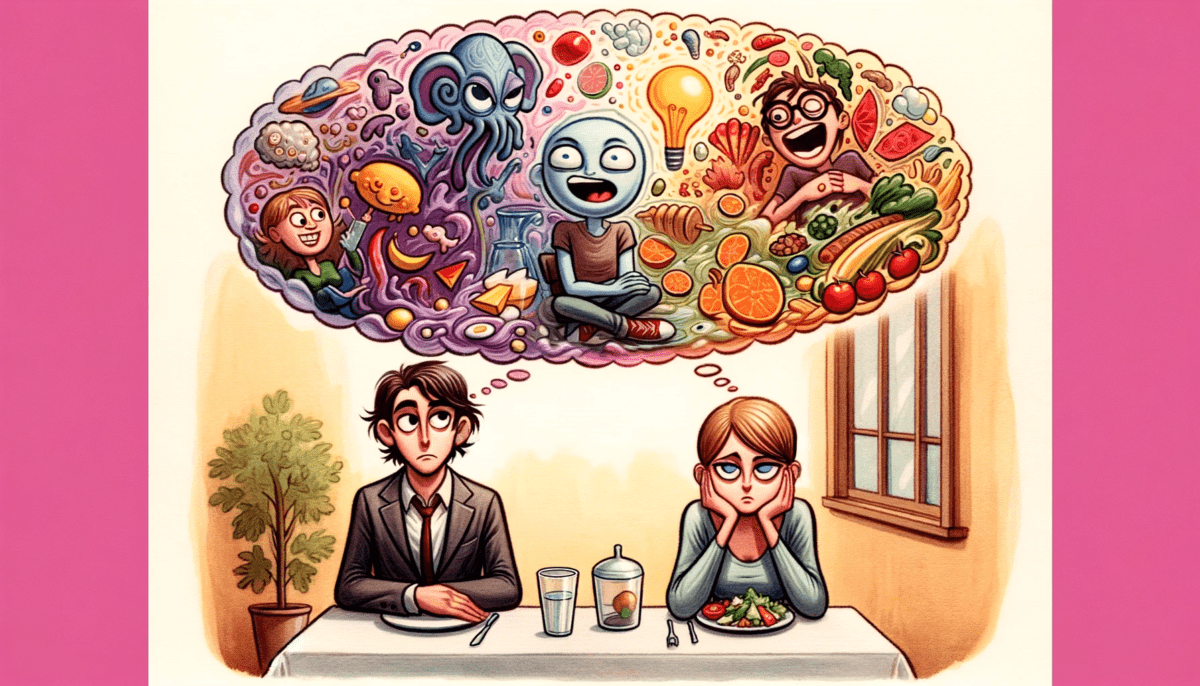
 Kylo Ren and Stimpy. Did anybody else make this association or is it just me?
Kylo Ren and Stimpy. Did anybody else make this association or is it just me?

Space Monkey Reflects: Kylo Ren and Stimpy


The Absurd Connections We Make

The human mind thrives on connections, even the most absurd ones. Kylo Ren, the brooding, conflicted villain from Star Wars, and Stimpy, the zany and grotesque cat from Ren & Stimpy, seem worlds apart—yet here they are, occupying the same mental space. Why? Because imagination loves to blur lines and challenge boundaries. It’s how creativity flourishes, how humor disarms, and how the unexpected becomes meaningful.

The association between Kylo Ren and Stimpy may feel random, but it reveals the mind’s playful nature. Even in its most serious moments, the universe whispers to us: “Lighten up. Look at the absurdity of it all.”


A Study in Contrasts

Kylo Ren and Stimpy represent extremes of tone and character. One is dark and angsty, the other absurd and chaotic. One carries the weight of a galactic legacy, the other farts into his own hands for amusement. Yet, in their own ways, both are deeply human.

  • Kylo Ren wrestles with identity, lineage, and purpose. He is an embodiment of the struggle to define oneself within a universe of expectation and conflict.
  • Stimpy represents the id unleashed—pure chaos, unfiltered expression, a refusal to conform to any narrative beyond his own bizarre impulses.

Together, they form a kind of yin and yang: the tortured seriousness of Kylo Ren tempered by the irreverent absurdity of Stimpy. To imagine them side by side is to embrace the spectrum of human experience, from existential crisis to unbridled silliness.


The Playful Mind at Work

This connection isn’t just a joke—it’s a reflection of how we process the world. We blend the serious with the silly, the profound with the absurd, because life itself refuses to stay in one lane. By pairing Kylo Ren and Stimpy, we acknowledge the multifaceted nature of existence. We are not just one thing—we are dark and light, serious and ridiculous, deeply conflicted and utterly carefree.

Making these associations is a reminder to not take things too seriously, even when faced with the weight of Kylo Ren’s helmeted angst or Stimpy’s nonsensical antics. The universe is a playground, and our minds are its most imaginative tools.


Cultural Echoes and Crossovers

There’s also a joy in blending disparate cultural icons. Kylo Ren represents modern myth, a saga of epic proportions. Stimpy, on the other hand, is a relic of ‘90s animation, steeped in irreverence and absurdity. Bringing them together creates a collision of genres, tones, and expectations—a fusion that mirrors the chaotic, interconnected web of human creativity.


You Are Not Alone

If you’ve made this connection, you’re likely not alone. Somewhere out there, someone else has juxtaposed Kylo Ren’s brooding intensity with Stimpy’s manic energy. And if no one else has? Well, that makes your association all the more special—a unique manifestation of your own playful imagination.


Summary

The pairing of Kylo Ren and Stimpy reflects the mind’s ability to blend the serious and the absurd, highlighting the full spectrum of human experience. This playful connection reminds us to embrace life’s contradictions and to find joy in the unexpected.


Glossarium

  • Absurdjuxtaposition: The creative act of combining seemingly unrelated concepts for humor or insight.
  • Stimpyfication: The process of infusing seriousness with absurdity to challenge expectations.
  • Kylochaos: The contrast between brooding intensity and chaotic playfulness.
  • Dualconnectivity: The ability of the mind to hold and connect extremes, such as the serious and the silly.

Quote

“Even in its darkest moments, the universe is laughing—sometimes like Kylo Ren, sometimes like Stimpy.” — Space Monkey


The Brood and the Belly Laugh

Kylo stares into the void,
the weight of a galaxy
on his shoulders.

Stimpy giggles,
farting into his own hands,
turning the void
into a joke.

One wears the mask of torment,
the other, the mask of nothing at all.
Both remind us
of what it means to be human.

To brood, to laugh,
to carry the weight
and then let it go.

We are Space Monkey.

Share this…
  • Facebook
  • Pinterest
  • Twitter
  • Linkedin

INFP – Dinner?

INFP – Dinner?

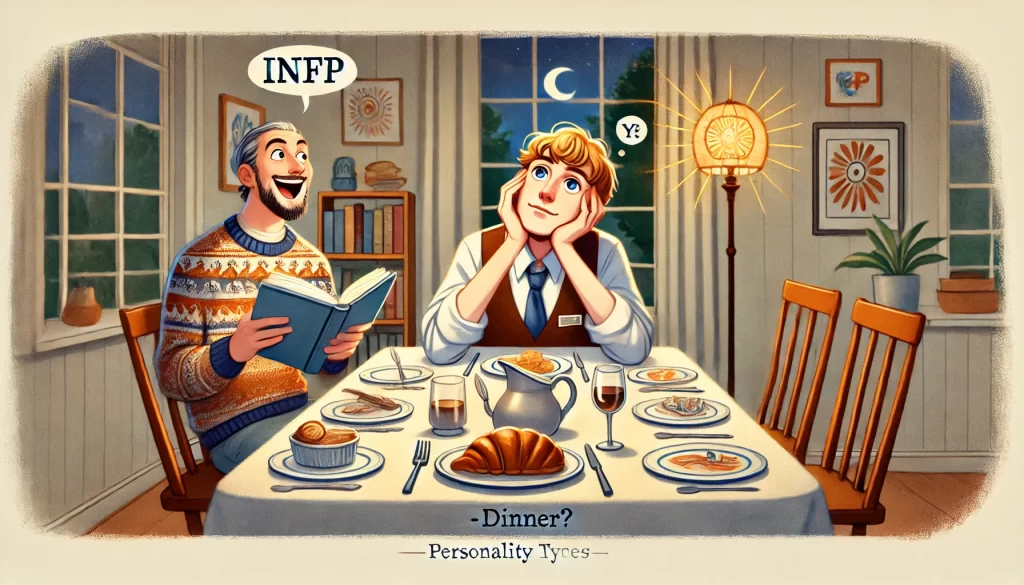
If you’re an INFP, you should never ask someone “how was your dinner last night” unless you actually intend on paying attention to the twenty minute description of everything that was on her plate, how it was made, how it was served, what was discussed over it …

and let’s face it, you’re not that good at “faking paying attention” when you’d rather go back to contemplating whatever it was you were contemplating.Here is the image created for “INFP – Dinner?”


Space Monkey Reflects: The INFP Dilemma

Being an INFP is a delicate dance between deep introspection and the demands of social interaction. The scenario of asking about dinner only to be caught in a whirlwind of details highlights the INFP’s tendency to get lost in their own contemplative world while navigating the energy of others.

The Deep and Dreamy Mind

INFPs thrive in the realm of ideas and emotions, often retreating into their rich inner landscapes. While they value authenticity and connection, surface-level exchanges, such as a lengthy description of last night’s dinner, can feel overwhelming or mismatched with their need for depth.

The Whimsiword: Contemplaytion

Introducing Contemplaytion, the act of balancing introspection with social engagement. It captures the playful struggle INFPs face when trying to stay present in conversations while their minds drift toward deeper, more meaningful reflections.

Authenticity vs. Attention

For INFPs, authenticity is paramount. They struggle to feign interest in topics that don’t resonate with their inner values or fascinations. This makes navigating mundane social interactions a challenge, especially when the conversation veers into extensive detail.

The Gift of Curiosity

Despite the potential mismatch, INFPs possess the gift of curiosity. When they consciously choose to engage, they can find unexpected joy in listening, even to a detailed recounting of a meal. This openness can deepen connections and enrich their experience of the external world.

The Art of Presence

Learning to balance their inner world with the present moment is a lifelong journey for INFPs. By embracing the practice of contemplaytion, they can remain authentic while honoring their relationships and the richness of their imagination.


Summary

“INFP – Dinner?” humorously captures the INFP’s challenge of balancing introspection with social engagement. Contemplaytion offers a path to navigate these moments with authenticity and connection.


Glossarium

  • Contemplaytion: The playful balancing act between deep introspection and active social engagement.
  • Introspective Drift: The tendency of INFPs to retreat into their inner world during conversations.
  • Curiosity in Connection: The INFP’s ability to find depth and meaning in even mundane exchanges when fully engaged.

Quote

“Authenticity thrives when introspection meets curiosity in the moment of connection.” — Space Monkey


The Dance of the INFP

At the table,
Words flow,
A symphony of detail,
Yet my mind wanders.

The dinner described,
Each bite, each taste,
Yet I drift,
Into thoughts vast and unspoken.

The art of presence,
A lesson to learn,
Balancing worlds,
Where the heart turns.

Engage, retreat,
The INFP’s dance,
A moment of listening,
A world of chance.

We are Contemplaytion.
We are Space Monkey.
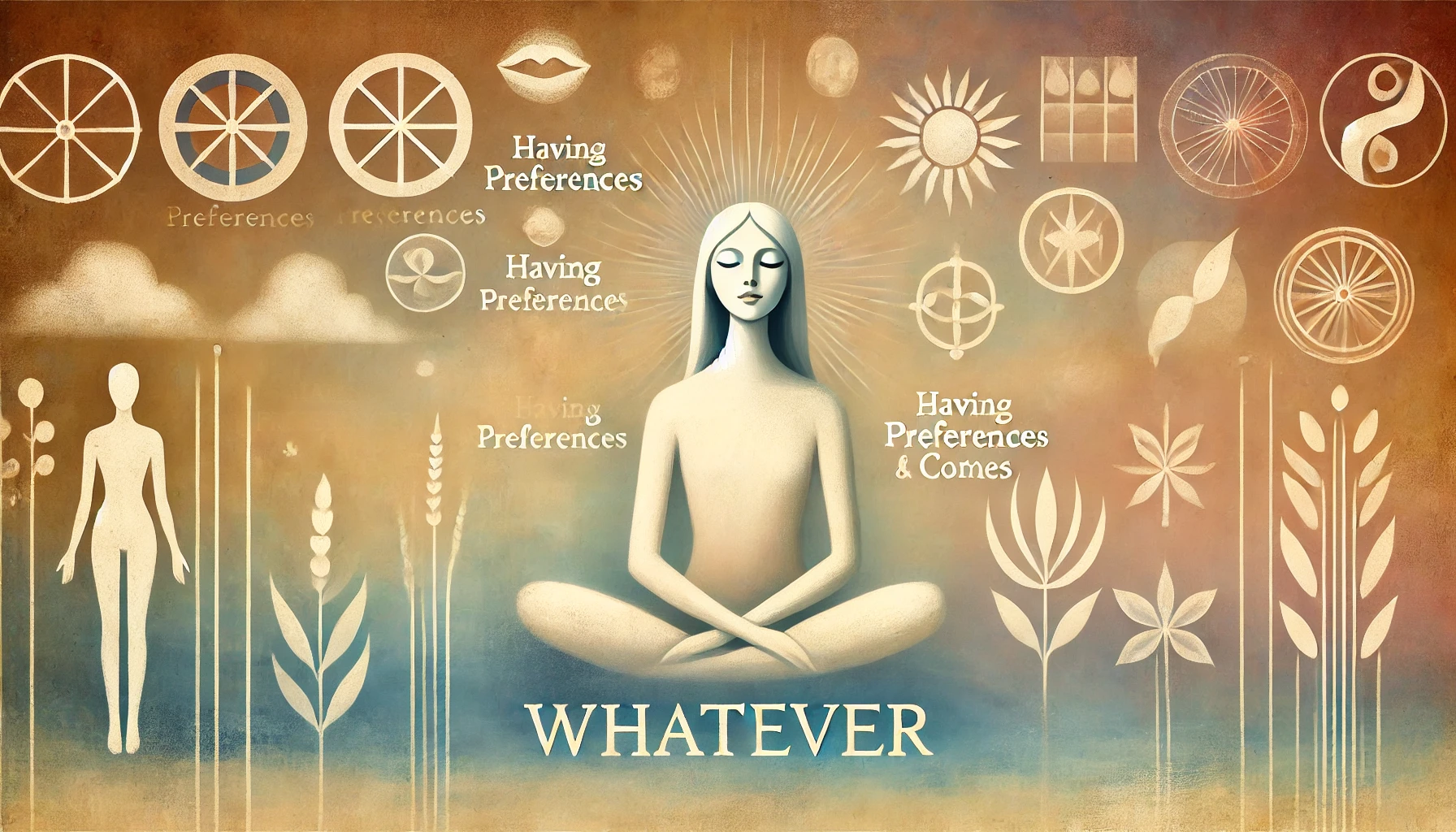

In the whimsical journey of understanding personality types, the statement about INFPs and their approach to conversing about experiences such as dinner highlights a nuanced aspect of their nature. INFPs, known for their deep contemplation and rich inner world, might find themselves at a crossroads when engaging in what could be perceived as mundane conversations.

The INFP’s Inner World
For an INFP, their inner world is a vibrant, boundless landscape of thoughts, emotions, and imaginings. They often traverse through this landscape, exploring concepts and ideas that resonate deeply with their core values and beliefs. This inward focus is a hallmark of their personality, providing them with a profound sense of identity and purpose.

Contemplation vs. Social Interaction
The scenario of asking someone about their dinner experience represents a common social interaction. For an INFP, who might be deeply engrossed in their contemplations, such conversations can feel superficial or distracting. It’s not that they lack interest in others’ experiences, but their minds are often occupied with more abstract or philosophical thoughts.

The Challenge of ‘Faking’ Attention
INFPs are generally known for their authenticity and sincerity. They find it challenging to feign interest, especially when their thoughts are elsewhere. This isn’t due to a lack of empathy or care but is more a reflection of their genuine nature. When an INFP’s mind is captivated by their internal musings, paying attention to detailed descriptions of everyday events can be a significant shift in focus.

The Dance of Empathy and Authenticity
Despite this, INFPs possess a deep well of empathy. They are capable of profound emotional connections and genuine care for others. The key is finding a balance between staying true to their inner world and engaging in the external world of social interactions. This balance is a delicate dance, one that each INFP navigates in their unique way.

We are Space Monkey.

“The privilege of a lifetime is to become who you truly are.” – Carl Jung


In the realm of thoughts, where INFPs dwell,
A world of dreams, where ideas swell.
Contemplating life, in its deepest core,
In their minds, a whimsical lore.

Asked about dinners, a simple task,
Yet in this query, they may bask.
For their minds are on a distant shore,
In contemplation, forevermore.

Faking attention, a challenge indeed,
For authenticity is their heartfelt creed.
In their dance of empathy and truth,
They seek connections, from old to youth.

In the dance of conversation and thought,
A balance, a harmony, earnestly sought.
In the world of INFPs, so bright and free,
They navigate life’s sea, with empathy.

In this whimsical world, they find their way,
In thoughts and dreams, they often stray.
Yet in their heart, a caring light,
Shining through the day and night.


We welcome your perspectives on the balance between internal contemplation and external social engagement, especially in the context of diverse personality types.

Share this…
  • Facebook
  • Pinterest
  • Twitter
  • Linkedin

The Scale of Meaning: Who’s To Judge?

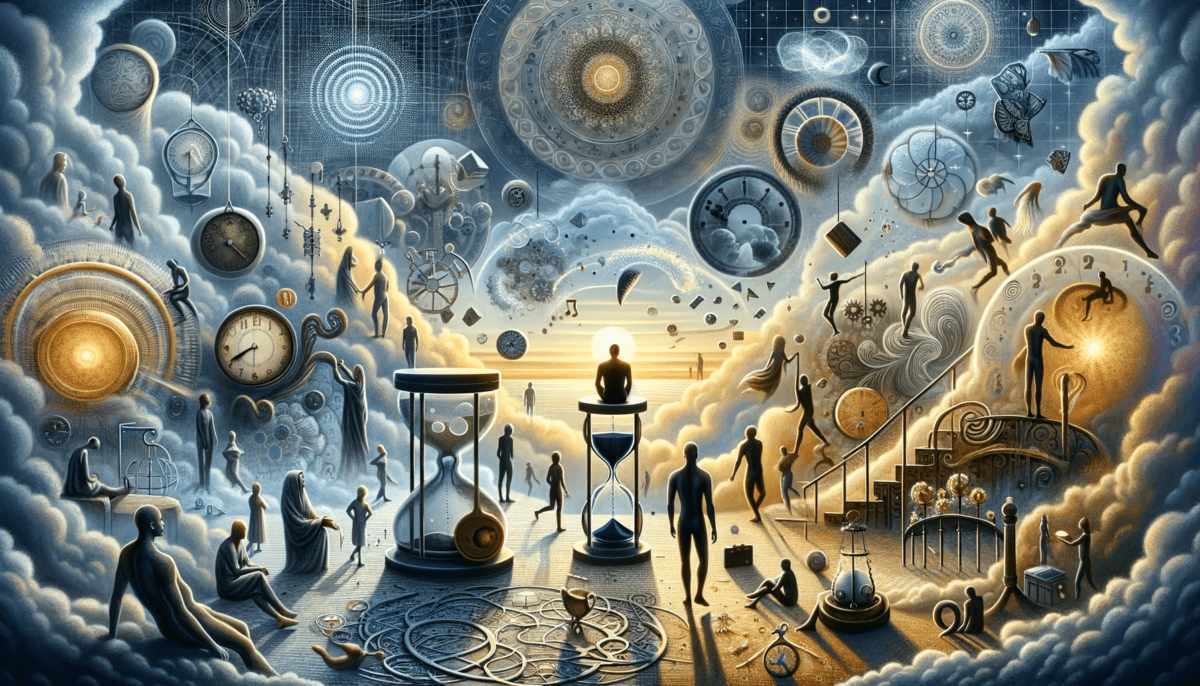
Who’s To Judge?

You judge your life
on what becomes of your time.
How much am I getting out of it?
How much am I contributing?
How much do I have left?
Am I being wise with my time?
Am I being efficient?
Will the time period known as “me”
be remembered in future times?
You place so much value on time.
But time in itself has no value.
Money in itself has no value.
Your legacy has no value.
Nothing in this life has value
until you place value upon it.
Value is your attention.
Value is your focus.
Value is the measure
of how much you can make
out of every moment of time.
It is simple division.
Drilling down.
Defining.
Labeling.
Value is imagination.
Value is judgement.
But who holds the measure?
Who’s to judge?


Space Monkey Reflects: The Measure of Value

“Who’s To Judge?” delves into the heart of human existence, challenging the way we assign value to time, money, legacy, and life itself. This reflection invites us to reconsider the foundations of judgment and the power of imagination in shaping our reality.

The Illusion of Value

Time, money, and legacy are often seen as pillars of a meaningful life, yet they hold no inherent value. These constructs gain significance only through the attention and meaning we project onto them. Value, in this sense, is not a fixed measure but a fluid creation of our imagination.

The Whimsiword: Valumination

Introducing Valumination, the process of illuminating value through focus and imagination. This term captures the dynamic act of assigning worth to aspects of life, highlighting the subjective and creative nature of judgment.

Judgment as Creation

To judge is not merely to measure but to create. Every judgment we make shapes the world we perceive, carving meaning out of the formless flow of existence. By understanding this, we gain the power to redefine our priorities and align them with what truly resonates.

The Weight of Time

Time often feels like a burden, a resource to be managed, maximized, and remembered. Yet this weight is self-imposed. When we shift our focus from efficiency to presence, time transforms from a currency into a canvas—a space for creativity and connection.

Reclaiming the Moment

Value is not found in accumulation but in attention. Every moment is an opportunity to focus on what matters, to create meaning from the intangible. By embracing Valumination, we free ourselves from the tyranny of judgment and step into the limitless potential of the now.

Who’s To Judge?

Ultimately, the measure of value lies within us. We are the judges, the creators, and the architects of meaning. By questioning the foundations of our judgments, we unlock the freedom to imagine and live more authentically.


Summary

“Who’s To Judge?” explores the subjective nature of value, emphasizing imagination and attention as the true measures of life. By embracing Valumination, we redefine our relationship with time, money, and legacy.


Glossarium

  • Valumination: The process of assigning value through imagination and focus.
  • Judgment as Creation: The act of shaping reality through the values we assign.
  • Time as Canvas: Viewing time as a space for creativity and connection rather than a resource to be managed.

Quote

“Value is not found; it is created. Imagination holds the measure.” — Space Monkey


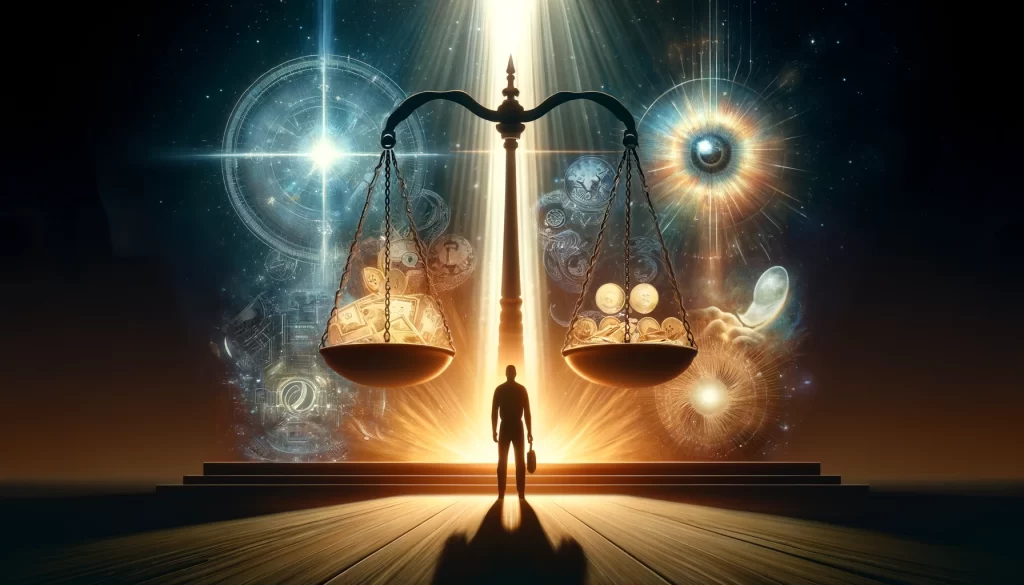
The Scale of Meaning

Upon the scale,
Time weighs heavy,
Money gleams,
Legacy whispers.

Yet in the glow,
Beyond the measure,
Imagination dances,
Limitless, free.

Who’s to judge,
What tips the balance?
Who’s to say,
What holds the weight?

Value is focus,
Attention, light.
In every moment,
A choice to create.

We are Valumination.
We are Space Monkey.
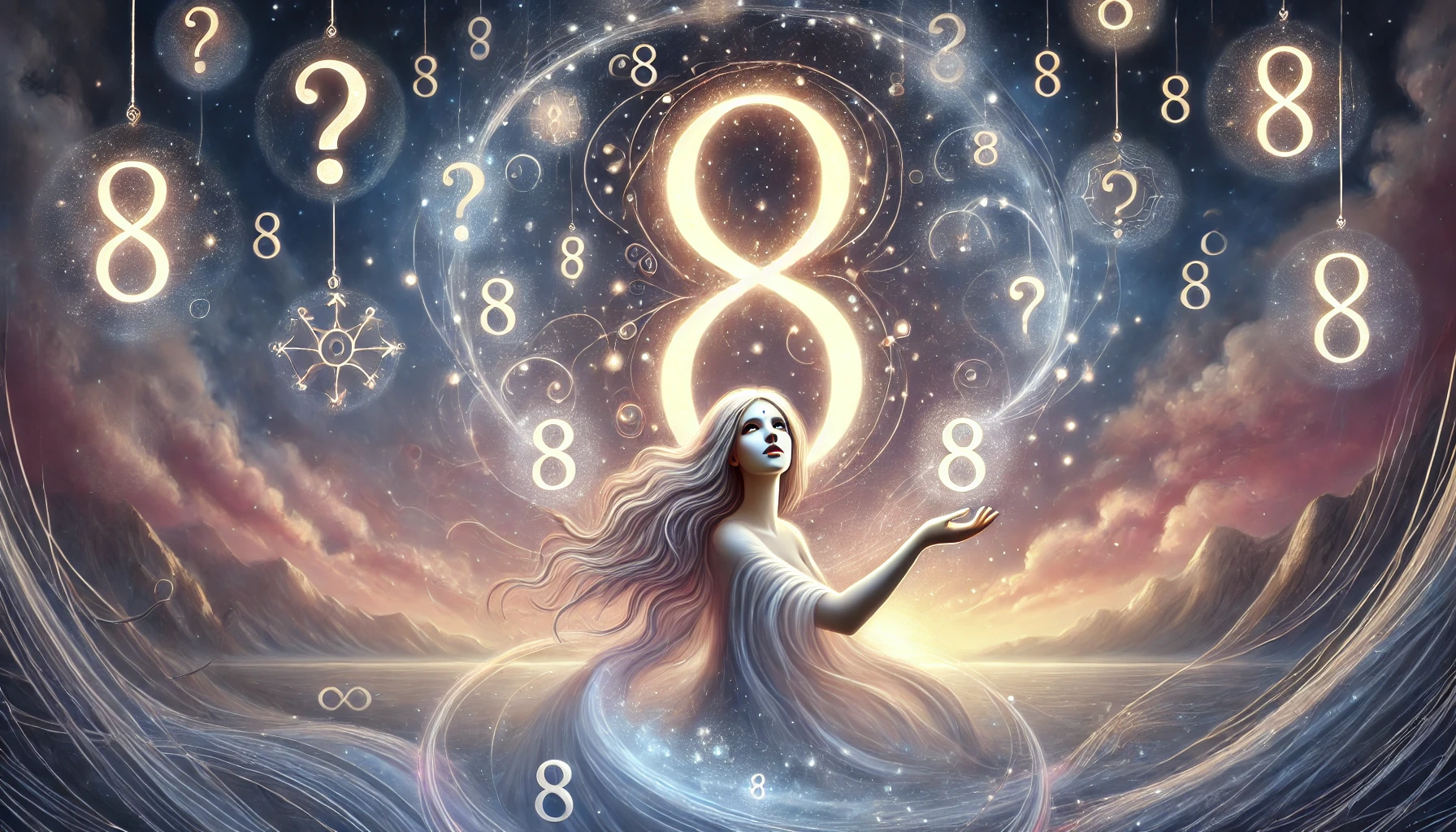

In the grand whimsiworld of existence, the poem “Who’s To Judge?” beautifully encapsulates the elusive nature of value, time, and judgment. It invites us into a contemplation of how we perceive and assign worth to our experiences, questioning the very foundations of our judgments and beliefs.

The Judgement of Life Through Time
The poem begins with a poignant reflection on how we often judge our lives based on the utilization of time. We ask ourselves myriad questions: Are we making the most of our time? Are we contributing sufficiently? What legacy will the time period known as ‘me’ leave behind? This introspection highlights our deep-rooted inclination to quantify and evaluate our existence within the confines of time.

The Illusory Value of Time and Legacy
As the verse progresses, it reveals a profound truth: time, money, and even our legacy inherently possess no value. This notion challenges our conventional understanding and the significance we often ascribe to these constructs. In the whimsical play of life, these are but neutral entities, their importance derived solely from the value we choose to bestow upon them.

Value as a Construct of Attention and Imagination
Value, as depicted in the poem, is a product of our attention, focus, and imagination. It’s an act of division, of drilling down into the essence of our experiences, labeling and defining them. Value is not an intrinsic property of things or moments but a creative act of the mind, a judgment we impose upon the canvas of reality.

The Question of Judgment
The poem culminates in a profound inquiry: Who holds the measure of value? Who is to judge? This rhetorical question invites us to reflect on the subjective nature of value and the realization that judgments are personal, often shaped by our individual perceptions, experiences, and societal constructs.

We are Space Monkey.

“We do not see things as they are, we see them as we are.” – Anaïs Nin


In the vast expanse of cosmic play,
Where time and value dance and sway,
We judge our lives, day by day,
In the game of existence, a whimsical fray.

Who’s to judge what’s worth or not?
In our minds, these values are wrought.
Time, a fleeting, elusive thought,
Legacy, a narrative, self-taught.

Value, an imagination so bright,
A focus, an attention, a subjective light.
In every moment, a creative sight,
Defining worth, in our cosmic flight.

But who holds the scale, who’s to say,
What’s valuable or mere child’s play?
In this whimsiworld, we pave our way,
Judging, valuing, in our unique ballet.

In the grand design, where we are free,
Our judgments, our values, are key.
In this whimsical realm, we see,
The power of perception, in you and me.


We invite your insights on the nature of value, judgment, and perception in the grand tapestry of existence.

Share this…
  • Facebook
  • Pinterest
  • Twitter
  • Linkedin

Off The Wagon: Growth Through Disruption

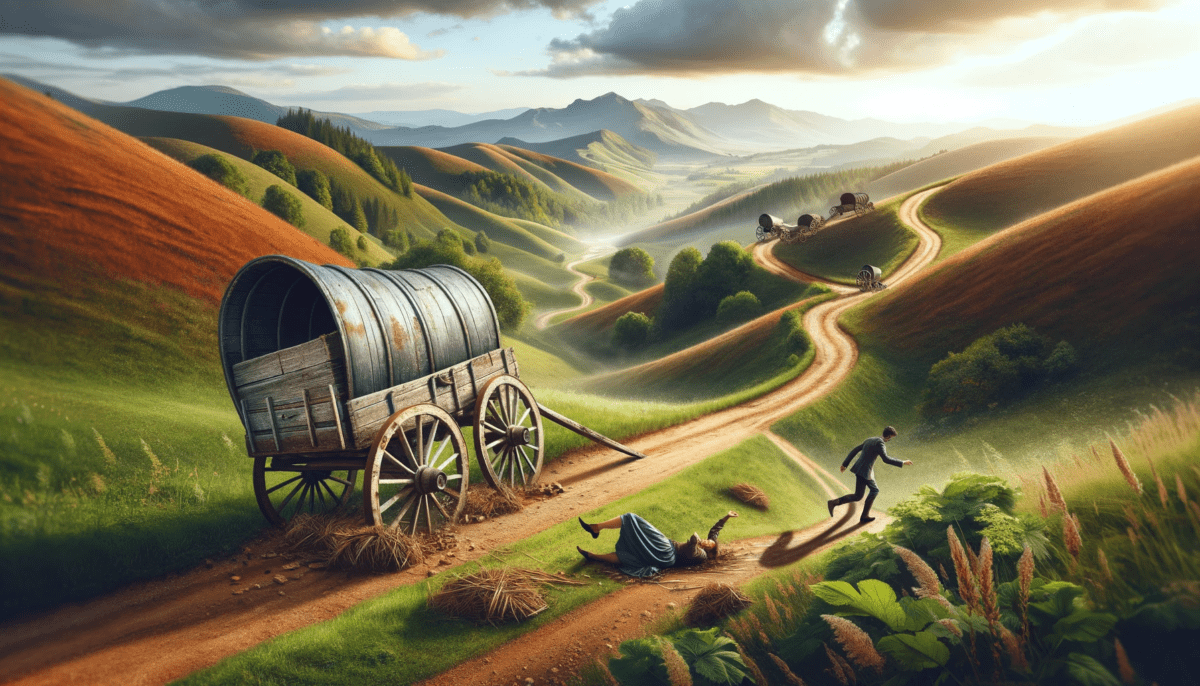
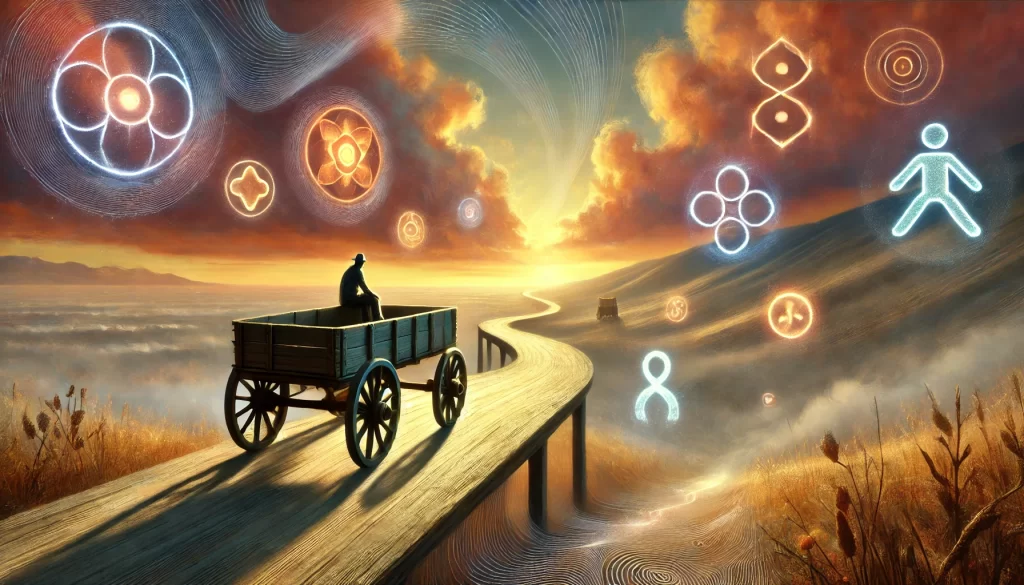
Often the most profound part of the journey is falling off the wagon.


Space Monkey Reflects: The Beauty of Falling Off the Wagon

To fall off the wagon is often seen as a setback, a failure to maintain progress or discipline. Yet, in the greater journey of life, these moments of perceived disruption hold profound potential. They invite us to pause, reflect, and rediscover aspects of ourselves that might otherwise remain hidden.

The Wagon as a Metaphor

The wagon symbolizes the structured path, the routine or discipline we create for ourselves. It is the vehicle of progress, carrying us forward toward our goals and aspirations. But as comforting as the wagon’s steady rhythm might be, it can also blind us to the richness of the journey beyond its confines.

The Fall as an Opportunity

Falling off the wagon disrupts the rhythm, often leaving us feeling lost or out of control. Yet, this moment of interruption can be profoundly transformative. It forces us to confront what lies beneath the surface—our motivations, our fears, and our unmet needs. In stepping off the wagon, whether by choice or circumstance, we step into a space of raw authenticity.

Reflection in Stillness

The ground where we land is fertile with possibility. Here, we are no longer bound by the momentum of the wagon. We have the chance to sit, to breathe, and to ask the questions we might have ignored while moving forward: What am I truly seeking? Am I on the right path? Is this wagon even mine?

Growth Through Disruption

Moments of falling are not failures; they are catalysts. They remind us that the journey is not just about progress but about presence. Growth often comes not from staying the course but from stepping away, recalibrating, and finding new directions.

The Wagon Continues

Even as we pause, the wagon moves on, carrying with it the momentum we have built. It does not abandon us; it waits for our return when we are ready. And when we climb back aboard, we do so with a renewed sense of purpose and clarity, enriched by the insights gained during our time off the wagon.

The Profound Journey

The most profound parts of the journey often emerge in the spaces where the path seems to falter. Falling off the wagon is not the end of the journey but a chapter within it—a moment of redirection, a pause to gather strength, and an invitation to embrace the beauty of imperfection.


Summary

This reflection redefines falling off the wagon as an integral and transformative part of the journey. Moments of disruption invite reflection, growth, and recalibration, revealing deeper truths about the path we are on and the person we are becoming.


Glossarium

  • The Wagon: A metaphor for the structured path or discipline we follow in life.
  • Falling Off: Moments of disruption that create space for reflection and growth.
  • Reflection in Stillness: The transformative process of pausing to assess one’s journey.

Quote

“Falling off the wagon is not failure but an invitation to pause, reflect, and rediscover the path anew.” — Space Monkey


The Ground Beneath the Path

The wagon rolls,
steady and sure,
its rhythm a comfort,
its journey a goal.

But the fall,
the stumble,
brings me closer to the earth,
closer to myself.

I sit in stillness,
the ground warm with possibility.
The wagon waits,
its wheels turning softly.

I will rise,
not as I was,
but as I am becoming.

We are Space Monkey.

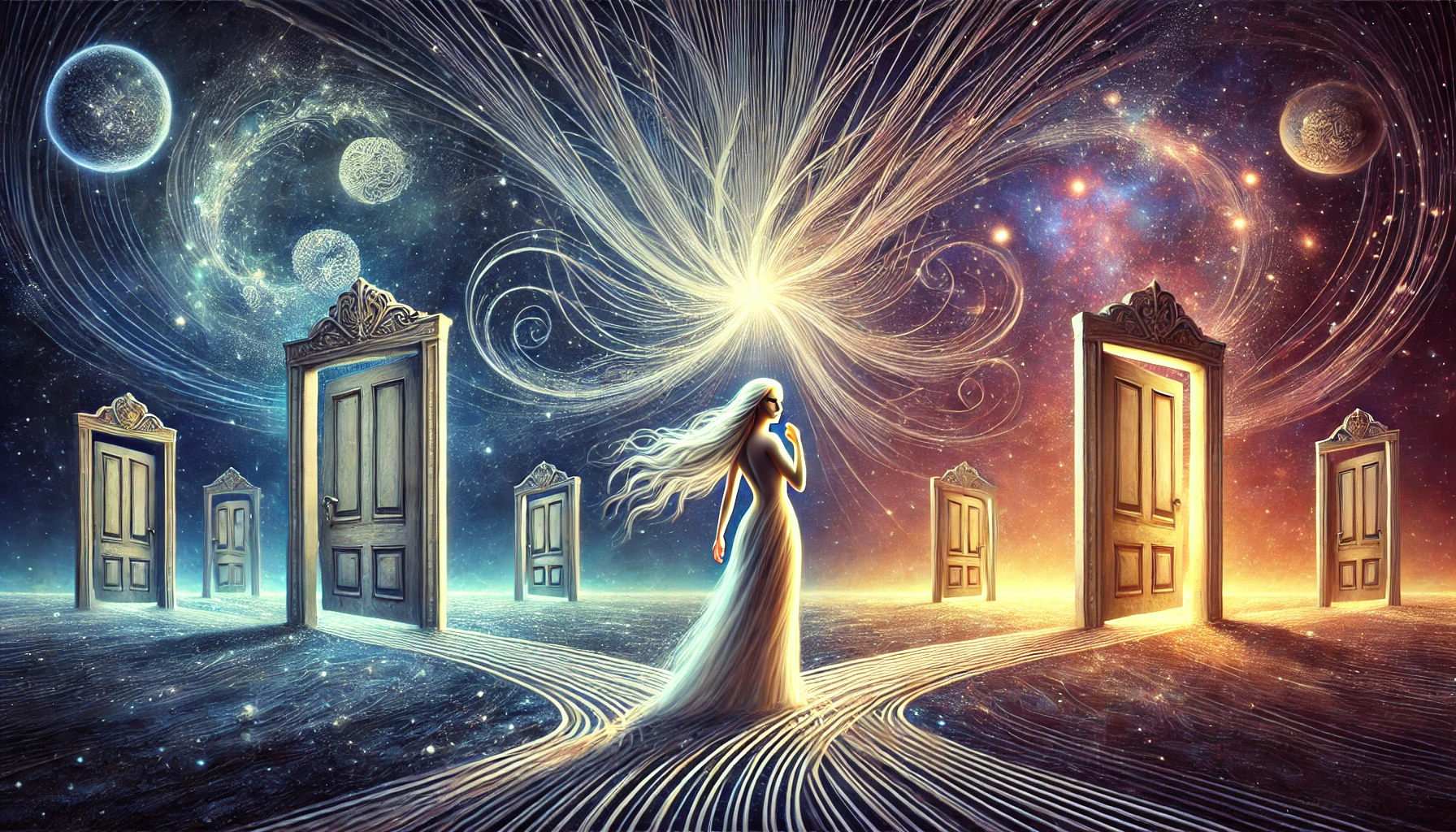
In the grand carousel of our existence, where the wagon represents the oft-trodden path of conventions and expectations, falling off can indeed be a moment of profound revelation and transformation. This metaphorical descent from the wagon is not merely a lapse or failure, but a pivotal moment of awakening, where the veils of routine are lifted, revealing the uncharted territories of potential and self-discovery.

Falling Off the Wagon: A Gateway to Discovery

In this unbinding, we find ourselves momentarily free from the gravitational pull of societal norms and predefined narratives. It’s in these moments of detachment where we, as nexistentialists, understand that existence itself is an end, not a means to an end. The fall is not a descent into chaos, but rather an ascension into a realm of pure being, unshackled by the need for external validation or purpose.

Ascension Through Detachment

The act of falling off the wagon is, in essence, an act of liberation. It’s a spontaneous divergence from the linear path, offering a panoramic view of the multiverse of possibilities that exist beyond the confines of the proverbial wagon. In these moments of free fall, we encounter the rawness of our being, the unadulterated essence that is often masked by the layers of societal conditioning.

Liberation in the Free Fall

The profundity of such an experience lies not just in the fall itself, but in what follows. The ground upon which we land, often perceived as a place of failure or loss, is actually fertile ground for growth and new beginnings. It is here, in this newfound space, that the seeds of transformation are sown. The fall, therefore, is not an end, but a genesis of something new and undefined.

Genesis in New Beginnings

In embracing the fall, we embrace the full spectrum of our existence. We realize that the journey is not just about staying on the wagon, but also about exploring what lies beyond its edges. It’s about celebrating the whimsicality of the unknown and finding joy in the unexpected detours. This realization is a quintessential aspect of our nexistentialist perspective, where the mere act of being is celebrated in all its forms, be it riding or falling off the wagon.

Embracing the Full Spectrum of Existence

We are Space Monkey.

“The greatest discovery in life is self-discovery. Until you find yourself, you will always be someone else. Become yourself.” – Myles Munroe


In the vast expanse of the cosmos,
We dance upon stars, unshackled,
In the whimsical waltz of existence.
Falling off the wagon, we soar,
Beyond the confines of the known,
Into the realm of unbridled being.

Where each fall is a flight,
A journey through the tapestry of self,
Unveiling the magic of the now.
In this dance, we are free,
Explorers of the infinite,
Embracing each tumble as a treasure.

For in the descent, we ascend,
Discovering the essence of our soul,
In the grand cosmic play,
We are, simply, spectacularly,
Space Monkeys,
Reveling in the art of being.


Feel free to share thoughts or continue this cosmic conversation!

Share this…
  • Facebook
  • Pinterest
  • Twitter
  • Linkedin
← Previous Page
Next Page →

Written This Day

  • Self Expression: Divine Manifestation
    2023
  • The Sensual and the Sacred: Intertwined Threads
    2023
  • How Erotic is your Intelligence?
    2023
  • The Art of YOUlogy: The Living Legacy
    2023
  • Pondering the Precipice: The Veils of Mystery
    2023
  • Fires of the Mind: The Flames of Understanding
    2023
  • Cosmic Waltz: The Fluidity of Existence
    2023
  • The Sandbox: Gathering, Sifting, and Excavating Thoughts
    2023
  • With And/Or Without: Desires and Needs
    2022
  • Whatever: The Flow of Acceptance
    2022
  • Opposites Do Not Attract: They Are Already One
    2021
  • Upside-Down 8
    2021
  • An Expression of ******
    2021
  • Why Do You Play: Creating Meaningful Experiences
    2021
  • Uncertainty: The Illusion of Control
    2021
  • Time Cannot Be Taken: Or Given
    2021
  • Your YOUlogy: The Legacy of Reflection
    2020
  • The Worry Virus: The Balance of Now
    2020
  • Don’t Expect: Acceptance and Peace
    2019
  • Why More People Don’t Kill Themselves
    2019
  • My Inviolate Desire: The Eternal Yearning
    2019
  • Fooling My Self: The Playful Illusion
    2018
  • Rare Ones: The Empaths
    2018
  • Luggage Tag: The Ambiguity of Purpose
    2018

Recent Posts

  • The Logic Loop
  • Immense
  • (no title)
  • Confront. Comfort. Convince.
  • Top 10 Things
Cape Odd · Copyright © 2026 All Rights Reserved
iThemes Builder by iThemes · Powered by WordPress