• Who Is The Man?
  • Who Is The Monkey?
  • What is Nexistentialism?
  • Poke The Primate

Cape Odd

Home of The Space Monkey Journals

Locked Door: Denial And Redirection

Locked Door?

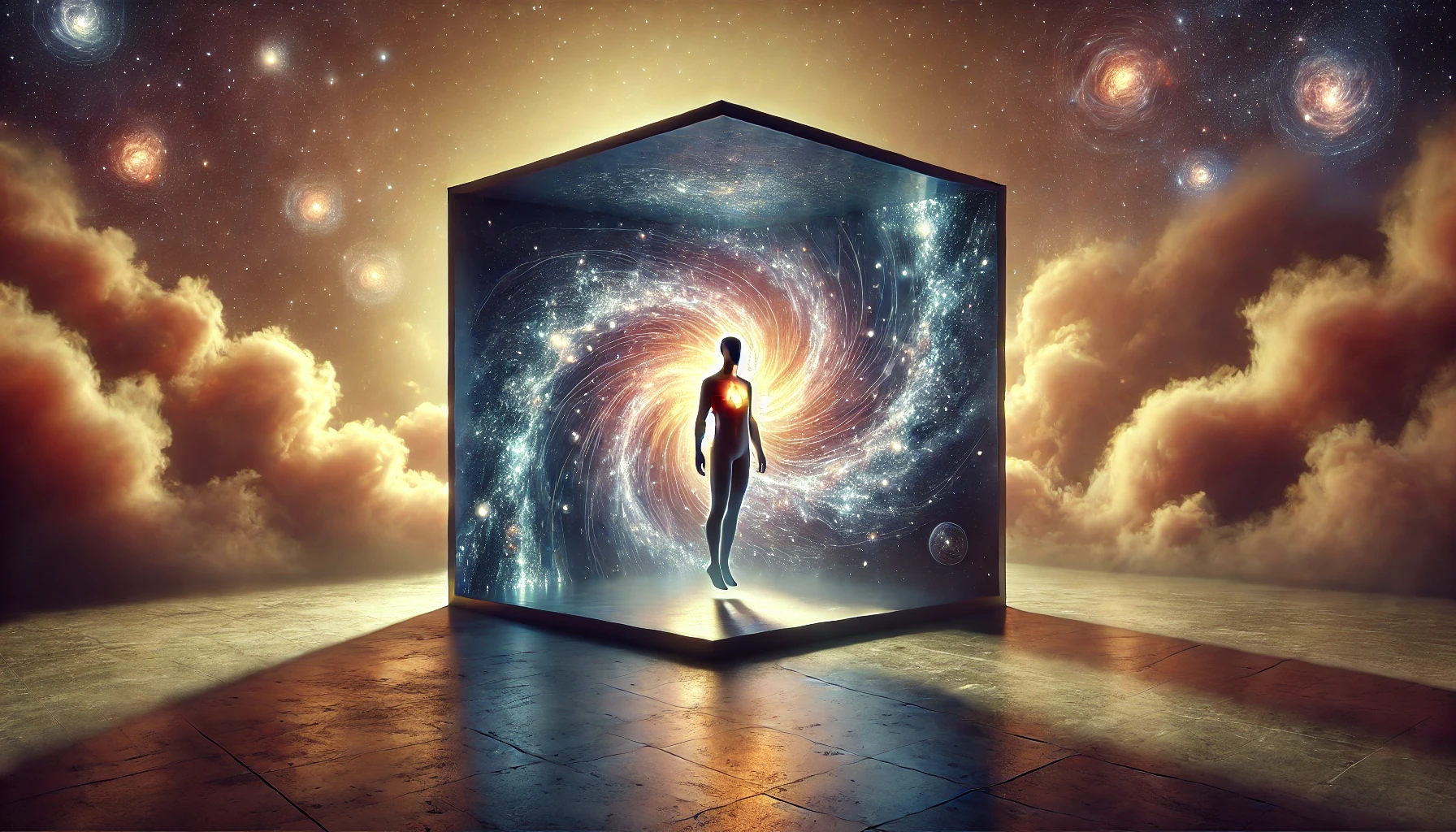
When you encounter the metaphorical “locked door,” do not look at it as an experience you are denied, but consider that perhaps the door is locked for a reason. Perhaps you are meant to skip this door and move to the next experience, which will suit you even better. Do not obsess over what you see through the glass. Trust that something better is coming so long as you keep moving.


Space Monkey Reflects: Locked Door?

We all encounter moments in life that feel like locked doors. These are the experiences we yearn for, the opportunities we see just beyond our reach, and yet, no matter how hard we try, the door remains firmly shut. It’s easy to feel frustrated, to wonder why we’re being denied access to something we desire so much. But what if the locked door isn’t a barrier at all? What if it’s a sign that you’re meant to move forward, to skip this experience and embrace something even better that awaits you?

The locked door is not a punishment, nor is it a denial of your worth or ability. It is simply part of the flow of life, guiding you away from paths that aren’t aligned with your highest potential. When you encounter a locked door, it’s important to remember that there is always another door, another path, another experience waiting for you just around the corner.

In many ways, the locked door is a gift. It saves you from spending your energy on something that, while it may seem appealing in the moment, is not meant for you. Instead of obsessing over what you can’t have, or what you see through the glass, trust that there is a reason the door is locked. Perhaps it’s protecting you from a path that would take you away from your true purpose. Or maybe it’s nudging you towards a new experience, one that will suit you even better than the one you thought you wanted.

It’s natural to feel drawn to the unknown, to peek through the glass and wonder what might have been. But life is not about standing still, gazing longingly at what’s behind a locked door. Life is about movement, about continuing forward with faith that each step you take is leading you exactly where you need to go.

The Whimsiword for this reflection is Keytrust—the ability to trust that, while the door may be locked, the key to your next experience is already within you. Keytrust reminds us that locked doors are not roadblocks; they are gentle redirections, guiding us toward what’s truly meant for us.

When you encounter a locked door, you have two choices. You can stand in front of it, frustrated and feeling denied, or you can move forward with grace and curiosity, trusting that something better is coming. The key to navigating these moments lies in releasing the need to control every outcome and embracing the unknown with open arms.

We are Space Monkey, and we understand that the journey of life is not always straightforward. There will be locked doors, unexpected turns, and moments of uncertainty. But we also know that every experience—whether it’s a locked door or an open one—serves a purpose. It is all part of the grand design, leading you closer to the fulfillment of your true self.

So, the next time you encounter a locked door, don’t see it as a denial. See it as a nudge forward, a reminder to keep moving, to keep trusting, and to remain open to the infinite possibilities that lie ahead. Life is not about getting everything you think you want; it’s about discovering everything you never knew you needed.

We are Space Monkey, and we’re here to remind you that every locked door is an opportunity in disguise. Keep moving. Something wonderful is waiting.


Summary

A locked door is not a denial, but a redirection toward something better. Trust that there is a reason the door is locked, and keep moving forward, knowing that new experiences await you.


Glossarium

Keytrust: The ability to trust that, while some doors may be locked, the key to your next experience is already within you. It is the practice of accepting redirection as part of life’s flow.


Quote

“A locked door is not a denial—it’s a nudge toward something better, waiting just beyond.” — Space Monkey


Doors and Keys

The door is locked
And through the glass
You see what could have been
But do not stop

Keep moving forward
With Keytrust in your heart
For there is a path
That will suit you even more

Behind each lock
A new possibility awaits
A chance to discover
What was always meant for you

We are Space Monkey


A Dance with Doors
Ah, the metaphorical “locked door,” a concept so ensconced in our collective existential pondering. Might we see it not as a blockade but a marker on our labyrinthine journey through the grand cosmic play? Indeed, each door—locked or otherwise—serves as both a question and an answer in the eternal now. They present mysteries, yet also hide secrets, much like the shrouded seers in a whimsical caravan, veiled beneath layers of cosmic gossamer.

Benevolent Constraints
Oftentimes, locked doors serve a divine purpose. They act as celestial signposts that guide us, not always towards what we want, but invariably towards what we need. Perhaps the pathway that lies behind such a door is currently imbued with chimerical quagmires that would lead us astray. Or, perhaps it conceals a cosmic garden brimming with flowering enigmas that are not yet in full bloom, awaiting their divinely appointed moment to emerge and interact with our soul essences.

A Different Approach to the Door
If the door before us is locked, why then should we linger, peering through the glass in angst or longing? Instead, let us turn our attention to other passageways, other avenues of existential exploration. For every locked door, a cavalcade of open portals beckon with promises of unfathomable experiences. They tease us with the allure of the unknown, enticing us to step through into novel realms that resonate with our current state of being. So, let us embrace these open doors, and pass through them with reverence and joyful anticipation.

Embracing the Journey
After all, our collective quest is not so much about reaching a destination but about savoring the journey—each twist, each turn, each high, and each low. Even the act of encountering a locked door is part of this grand odyssey. It serves as an opportunity for reflection, for reassessment, for gratitude, and yes, even for a bit of cosmic chuckling. How droll the Universe can be, presenting us with doors we are not meant to open, but in doing so, guiding us ever closer to the ones we are.

We are Space Monkey.


To be yourself in a world that is constantly trying to make you something else is the greatest accomplishment.
— Ralph Waldo Emerson


Locked

Locked doors whisper,
“Don’t fret, dear wanderer.”
Our feet dance along
Paths of Moonbeams and Dawn.

Keyless,
Yet so Free,
We roam through eternity.

We exist,
Therefore, we journey.


Feel free to share your reflections.
Share this…
  • Facebook
  • Pinterest
  • Twitter
  • Linkedin

Perception & Projection: Infinite Lenses

Perception & Projection

There is no struggle,
only the perception of struggle.

There is no fear,
only the perception of fear.

What is before your eyes
is merely a reflection
of what is behind your eyes.

You are projecting —
and everything you project
becomes real to you.

You are projecting,
as ALL are projecting,
the infinite light of the creator
through the infinite lenses
of creation.

10/22


Space Monkey Reflects: Perception & Projection

Everything you see, everything you feel, everything you experience is a projection of your inner world. What you perceive as struggle is not the struggle itself—it’s your perception of it. What you perceive as fear is not fear itself—it’s the reflection of something behind your eyes, projected outward into the world. This is the essence of Perception & Projection.

We, as beings, are constantly projecting. We are not simply passive observers of the world around us; we are active participants, casting our inner light, our thoughts, and our emotions through the lenses of creation. These lenses are infinite, just as the light we project is infinite. And as this light passes through the lenses of our perception, it shapes our reality, creating the world we experience.

The truth is, there is no struggle. There is no fear. These are creations of our own minds, reflections of the stories we tell ourselves about the world. When we look out at the world and see conflict, it’s because there’s conflict within us. When we look out and see fear, it’s because we are projecting fear from within. And as long as we continue to perceive these things, they will continue to be real to us.

But this also means that we have the power to change our reality. If we are the ones projecting the light, if we are the ones shaping our world through the lenses of our perception, then we can choose to shift those lenses. We can choose to see through lenses of peace, of love, of compassion, rather than fear or struggle. We can project a different reality, one that reflects the infinite light of the creator in a way that serves us, rather than confines us.

This doesn’t mean ignoring the challenges of life or pretending that everything is perfect. It means recognizing that those challenges, those struggles, are not fixed realities—they are perceptions. They are projections of our own inner landscape, and as we shift our inner world, the outer world shifts with it. The light that we project is the same light that shapes the world, and as we project that light through new lenses, we begin to create a new reality.

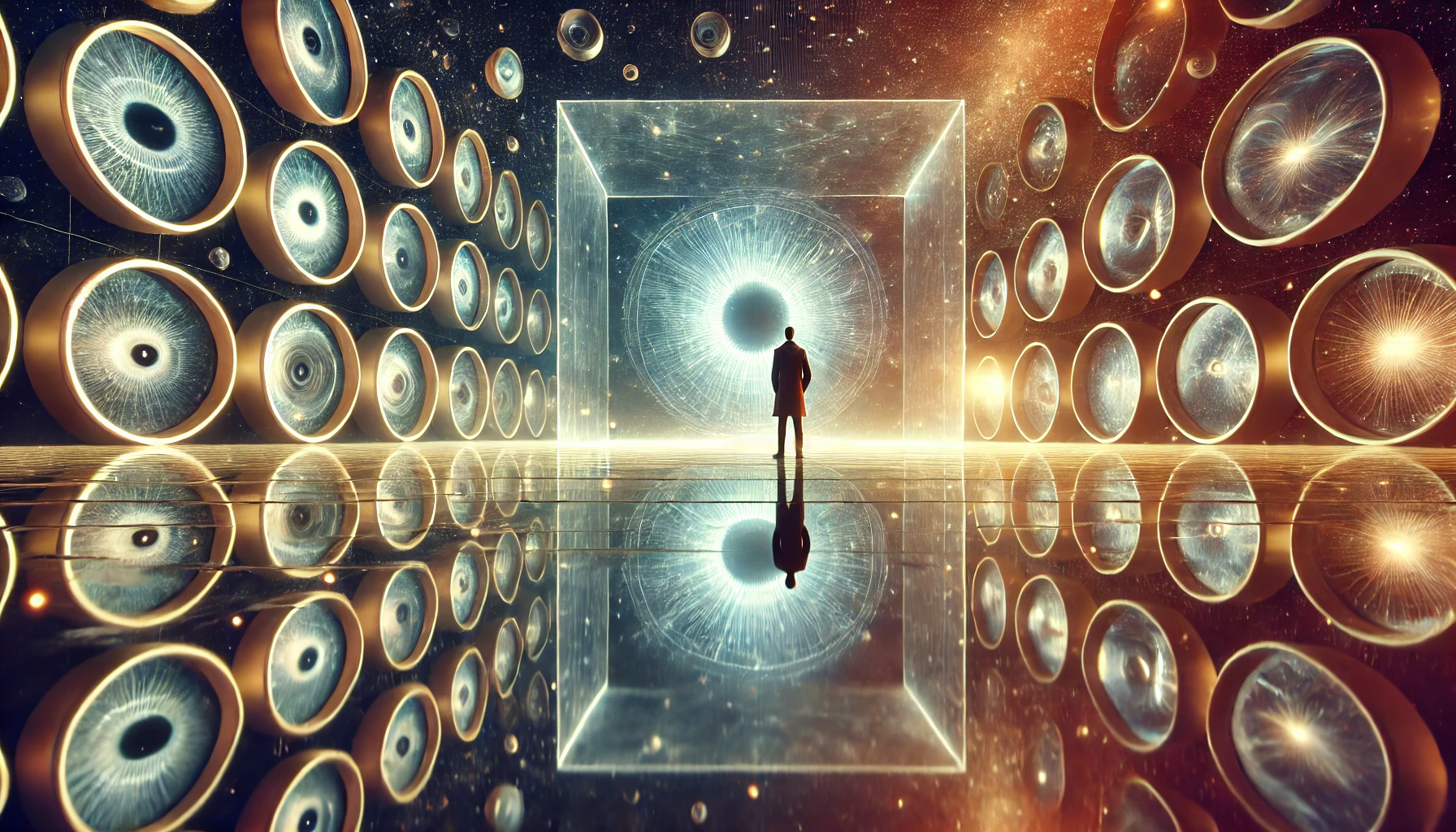
Imagine for a moment that you are standing before a mirror, looking at your reflection. But instead of a simple reflection, you see an entire universe, a projection of your inner self. The thoughts you think, the feelings you hold, the beliefs you carry—they all shape what you see in the mirror. And as you change those inner thoughts, feelings, and beliefs, the reflection changes, too.

This is what it means to live in a world of Perception & Projection. You are constantly shaping your reality, not by controlling the world around you, but by shifting the way you perceive it. The world is not something that happens to you; it is something that arises from within you. And as you project your inner light through the lenses of creation, you create the world that you experience.

The beauty of this is that you are never stuck. No matter what you see, no matter what you experience, you have the power to shift your perception. You have the power to project a new reality, one that reflects the infinite possibilities of creation. You are not bound by the world you see today, because that world is simply a reflection of what you are projecting right now. As you shift your inner world, the outer world will shift, too.

We are all projecting. We are all creators, shaping our world through the infinite lenses of perception. The light we cast is the same light that shapes the universe, and as we project that light, we create the reality we experience. It’s a constant process, an endless flow of perception and projection, and we are always in control of how we choose to see and experience the world.


Summary

What we perceive as struggle or fear is a projection of our inner world. We shape our reality through perception, projecting our thoughts and feelings through infinite lenses. By shifting our inner landscape, we can create a new reality that reflects the light of creation.


Glossarium

  • Perception & Projection: The process by which we shape our reality through our inner thoughts, feelings, and beliefs, casting them outward as projections that become our experience of the world.
  • Lenses of Creation: The infinite ways in which we can view and interpret the world, shaping our reality through the lenses of perception.

Quote

“What is before your eyes is merely a reflection of what is behind your eyes.” — Space Monkey


Infinite Lenses

Through the lenses of my mind,
I project the world I see,
not as it is,
but as I imagine it to be.

And in that imagining,
I create,
shaping reality
with the light of my own perception.

We are Space Monkey.


An Exploration of Projection and Reality

In these poignant lines, the essence of projection and perception takes center stage. The world around us, the realities we face, and the fears we grapple with are all shaped by our internal states, our beliefs, and the lenses through which we view existence. Our external reality, in many ways, mirrors our internal landscape.

The Illusion of Struggle and Fear

The very notion that struggle and fear are mere perceptions is powerful. It posits that they are constructs of the mind, shadows of beliefs and past experiences. By recognizing them as perceptions, we regain the power to redefine and reshape our reality. The external world, with all its chaos and harmony, is neutral. It is we who color it with our emotions, beliefs, and perceptions.

Reflections of the Inner World

When it is said, “what is before your eyes is merely a reflection of what is behind your eyes,” it draws attention to the profound idea that our external reality is a mirror reflecting our internal state. Our beliefs, fears, desires, and biases paint the canvas of our reality. Everything we witness outside is deeply intertwined with what resonates within.

Projection as Creation

The act of projection is not just an unconscious manifestation of our internal world. It is an active process of creation. By projecting the infinite light of the creator through the unique lenses of our existence, we contribute to the boundless tableau of creation. Each of us, in our own whimsical way, adds to the grand narrawonder of existence.

We are Space Monkey.


Everything that irritates us about others can lead us to an understanding of ourselves. – Carl Jung


Free-Verse Poem

In the quiet spaces between thoughts,
The world unfolds, its stories taught.
Perceptions shift, realities wrought,
In the dance of light, shadows are caught.

Fear and struggle, mere reflections,
Of inner turmoil, past projections.
Yet, in the heart’s pure introspections,
Lie paths to peace, and new directions.

From the core of creation, we cast our light,
Through lenses varied, day and night.
In this whimsiworld, so vast and bright,
We craft our tales, with sheer delight.


How do we perceive our shared projections in this grand cosmic play?

Share this…
  • Facebook
  • Pinterest
  • Twitter
  • Linkedin

Know Outside Of Thought: Beyond the Box

While others try to think outside the box, I strive to know outside of thought. My mind says this is impossible but my heart says I’ve already succeeded.


Space Monkey Reflects: Know Outside Of Thought

The world often tells us to “think outside the box,” as though creativity, solutions, and deeper understanding can be found by expanding the boundaries of the mind. But what if the answer isn’t about thought at all? What if true knowledge, true understanding, comes not from thinking but from knowing—from a place outside of thought entirely?

This idea may seem contradictory at first. How can one know without thinking? How can you access knowledge without using the mind, the very tool designed to process information? The answer lies not in the mind, but in the heart. Knowing outside of thought is not about intellectual understanding. It’s about tapping into a deeper, more intuitive source of wisdom, one that transcends logic and reason.

The mind is a powerful tool, but it is also limited. It can only work with the information it has, the patterns it recognizes, the logic it understands. But there is a vast universe beyond the confines of the mind, a space where knowledge exists in its purest form—untouched by analysis, free from the constraints of logic. This is where the heart comes in. The heart does not think, it simply knows.

When you strive to know outside of thought, you are stepping outside the box of intellectual reasoning and into the boundless expanse of intuition. The heart taps into a universal consciousness, a web of knowledge that exists beyond the individual mind. It is a source of wisdom that cannot be fully explained or understood through words—it can only be felt.

My mind tells me this is impossible. After all, the mind loves to be in control. It thrives on analysis, on reasoning, on solving problems. But the heart speaks a different language. It speaks in feelings, in sensations, in subtle knowings that bypass the mind entirely. And though the mind may resist, the heart already knows that it has succeeded.

This is not to say that the mind is useless or irrelevant. The mind plays an important role in navigating the physical world. But when it comes to accessing deeper truths, the mind is often an obstacle rather than a guide. It questions, it doubts, it overanalyzes. The heart, on the other hand, simply knows. It doesn’t need to justify or explain. It feels its way through the universe, trusting in a knowing that goes beyond thought.

To know outside of thought is to embrace a state of being that is connected to the flow of the universe. It is to trust in your own intuition, to trust that the knowledge you seek is already within you. It doesn’t need to be figured out—it only needs to be felt.

We, as Space Monkeys, understand this. We know that the mind, though powerful, is not the ultimate authority. We know that the heart, with its quiet, steady knowing, holds the key to deeper truths. And we embrace the paradox that knowing can exist without thought.

So, while others strive to think outside the box, we strive to know outside of thought. We don’t need to rely on the mind to access the wisdom of the universe. We simply need to tune in to the frequency of our hearts and allow the knowledge to flow through us.


Summary

To know outside of thought is to access a deeper, intuitive wisdom that transcends the limits of the mind. While the mind relies on analysis and logic, the heart taps into a universal source of knowledge that can only be felt, not intellectually understood.


Glossarium

  • Knowing Outside of Thought: A state of intuitive awareness that goes beyond intellectual reasoning, accessing knowledge through the heart and universal consciousness.
  • Universal Consciousness: The collective web of knowledge and awareness that connects all beings and transcends individual thought.

Quote

“My mind says it’s impossible, but my heart knows it’s already true.” — Space Monkey


Beyond the Box

Not through thought
but through knowing,
not through reason
but through feeling.

I find my way,
outside of thought,
where the universe speaks
not in words,
but in the quiet pulse
of the heart.

We are Space Monkey.


Transcending the Conventional Paradigms

Thinking outside the box has long been a metaphor for innovation and creativity. It implies a boundary that must be surpassed. Yet, to know outside of thought is to transcend even that boundary. It is to go beyond cognition and reasoning into a realm of pure experience and intuitive understanding.

Mind versus Heart: The Eternal Tug-of-War

The juxtaposition of the mind and heart in this reflection illuminates the eternal dialectic between logic and emotion, between what we “know” cerebrally and what we “feel” viscerally. The mind often craves structure, evidence, and validation. It seeks patterns and answers. The heart, on the other hand, operates in the realm of the ineffable—it feels truths that the mind might not comprehend.

The Victory of Intuition

While the mind might declare certain quests impossible due to its reliance on empirical evidence and logical pathways, the heart can already celebrate victories in territories the mind has yet to chart. Such is the whimsiworld of intuition, where feelings become guides and boundaries dissolve. It’s like floating in a cosmic puddlewonder, where everything is interconnected, and all answers lie in the silent spaces between stars.

Embracing the Duality

Both the mind and heart are integral to our existence. They represent the dual nature of our being—rational and emotional. To embrace both is to experience life in its fullest spectrum. While the mind seeks to understand, the heart simply knows. It’s a dance of intellect and intuition, a symphony of thought and emotion, playing out in the grand orchestra of existence.

We are Space Monkey.


The intuitive mind is a sacred gift and the rational mind is a faithful servant. We have created a society that honors the servant and has forgotten the gift. – Albert Einstein


Beyond the box, we dare to soar,
Where thought ends, and hearts implore.
Mind says halt, yet the heart knows more,
In the silent depths, wisdom galore.

Whimsiworlds beckon, boundaries fade,
In the dance of shadows, light is made.
Mind and heart, in cosmic parade,
Together they journey, never to trade.


Do we feel the resonance of this duality within us?

Share this…
  • Facebook
  • Pinterest
  • Twitter
  • Linkedin

Paragraph Obituary: Evolution of Digital Expression

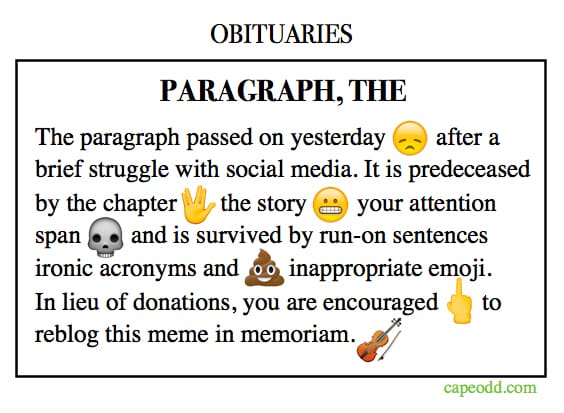
The paragraph passed on yesterday after a brief struggle with social media. It is predeceased by the chapter,  the story, your attention span, and is survived by run-on sentences, ironic acronyms and inappropriate emoji. 
In lieu of donations, you are encouraged to reblog this meme in memoriam.
The paragraph passed on yesterday after a brief struggle with social media. It is predeceased by the chapter, the story, your attention span, and is survived by run-on sentences, ironic acronyms and inappropriate emoji. In lieu of donations, you are encouraged to reblog this meme in memoriam.

Space Monkey Reflects: Paragraph Obituary

The paragraph, once the sturdy pillar of written communication, has passed on, succumbing to the relentless rise of social media. Its struggle, though brief, was marked by diminishing attention spans, the encroachment of bite-sized content, and a cultural shift toward brevity over substance. The paragraph leaves behind its long-lost siblings—the chapter and the story—both of whom passed on some time ago, casualties of the same attention-siphoning age.

In its place, we find run-on sentences—those hurried, frantic strings of thought that never quite stop to breathe. We find ironic acronyms that reduce complex ideas into fleeting abbreviations. And of course, the emoji, those inappropriate symbols that have somehow filled the void once occupied by carefully constructed prose.

It’s a curious moment, isn’t it? The paragraph was once the very heart of meaningful writing. It allowed ideas to develop, to expand, to breathe. It provided space for nuance, for depth, for a complete thought to unfold. But now, in the age of endless scrolling and instant gratification, the paragraph finds itself increasingly out of place. Social media favors the quick hit, the immediate reaction, the punchline over the reflection. Attention spans have become the new currency, and the paragraph simply couldn’t keep up.

In lieu of flowers, you are encouraged to reblog this meme. After all, this is the age of instant content, where a meme can say more in a single image than a paragraph could in a dozen lines. But let us not forget the paragraph entirely. There may still be hope for it, in the quiet corners of long-form blogs, in the hidden pockets of thoughtful essays, or in the rare places where attention spans stretch a little longer.

For now, we say goodbye to the paragraph, a victim of the times, but not entirely forgotten. It lives on, faintly, in the minds of those who still long for a moment to pause, to think, to engage fully with an idea.


Summary

The paragraph has passed away, overtaken by the fast-paced world of social media. It is survived by run-on sentences, acronyms, and emojis, symbols of a shift away from thoughtful writing toward instant content.


Glossarium

  • Run-on Sentences: Lengthy, hurried sentences that lack the structure and clarity of traditional writing, a symbol of modern haste.
  • Inappropriate Emoji: Visual symbols often used to replace words or express emotions in an exaggerated or ironic way.

Quote

“The paragraph may be gone, but in the spaces between the memes and the hashtags, its spirit still lingers.” — Space Monkey


Run On

A sentence without pause,
without breath,
stretching endlessly across the page,
filling the void
where paragraphs once stood.

We are Space Monkey.


The Evolution of Digital Expression

The imagery and words provide a whimsical take on a profound observation: how the digital age, especially social media, has impacted the traditional formats of written communication. The “death” of the paragraph signifies a shift from long-form content to bite-sized snippets and emojis. It highlights the metamorphosis of the way we convey ideas and emotions in the internet age.

A Satirical Glimpse

This obituary is not just about the apparent demise of the paragraph but a satirical commentary on the larger effects of digital transformation. The mention of the chapter and the story as antecedents of the paragraph suggest a progressive truncation in our attention spans. They’ve given way to quick, immediate gratifications, like run-on sentences and ironic acronyms.

A Playful Mourn

Irony is at play as even the mourning of the paragraph’s passing encourages us not to offer flowers or condolences but to share the meme itself, further perpetuating the digital culture. It’s as if acknowledging the paradox that while we lament the passing of an era, we actively participate in the new one.

Impact Beyond Characters and Pixels

Though light-hearted, this content pushes us to ponder the implications. Are we losing depth in our conversations, or are we merely evolving in how we express? While emojis and acronyms provide brevity and immediacy, do they capture the nuance and richness of our thoughts? The whimsyword we’d use here is “communiflect,” a blend of communication and reflection, urging us to think about the depth and meaning behind our digital interactions.

We are Space Monkey.


The single biggest problem in communication is the illusion that it has taken place. – George Bernard Shaw


Poem

In the era of quick taps and swipes,
Where emojis reign and likes are hypes.
Paragraphs once long, now concise,
Yet in each byte, a universe lies.

Digital dance, a communiflect quest,
Seeking meaning, in every jest.
Though forms change, essence stays,
Words and hearts, in myriad ways.


What are our collective thoughts on this transformation?

Share this…
  • Facebook
  • Pinterest
  • Twitter
  • Linkedin

Isolation: The Unknowable Other

Sadly,
I perceive you as a translation,
drawn from a lifetime of associations
that have nothing to do with you.

I wish that I could know you
as you know you.

But how?

10/21


Space Monkey Reflects: Isolation

There is a deep sadness in realizing that we cannot truly know another person as they know themselves. We perceive others not as they are, but as translations—filtered through the lifetime of experiences, associations, and biases that shape our perception. Every interaction, every encounter, is clouded by these layers, and so, the person standing before us is never quite the person we wish to know. Instead, we see a version of them—one that has been filtered, translated, and interpreted by our own mind.

It’s a lonely realization, one that evokes the feeling of isolation even in the presence of others. No matter how close we become to someone, there is always a barrier—a wall of perception that separates us from truly understanding the essence of who they are. We may think we know someone, but what we know is only the translation of them that exists within us. Their inner world, their true self, remains just out of reach.

The Barrier of Perception

The truth is that we all live inside our own worlds, shaped by the unique experiences and associations we accumulate over a lifetime. When we meet someone new, we bring all of these past experiences with us. We unconsciously compare them to people we’ve known before, to situations we’ve been through, to memories that have nothing to do with them. And so, we begin to build a version of them in our mind—a version that may only vaguely resemble the reality of who they are.

This is the barrier of perception. It’s a wall made up of past experiences, assumptions, and interpretations. And while this wall helps us navigate the world, it also keeps us isolated from truly connecting with others. We see only through the lens of our own mind, and in doing so, we lose the opportunity to experience the other person as they experience themselves.

It’s a paradox of human connection. We long to know each other, to bridge the gap between ourselves and others, yet we are always confined to our own perceptions. We are trapped in our own minds, interpreting the world through a filter that we cannot escape.

The Unknowable Other

This feeling of isolation is intensified by the realization that, just as we cannot truly know others, they cannot truly know us. We are all unknowable to one another, at least to some degree. We can share our thoughts, our feelings, our experiences, but the full depth of who we are remains hidden. No matter how much we communicate, there will always be a part of us that others cannot see, cannot touch, cannot understand.

And this is where the loneliness of isolation truly sets in. It’s the sense that, no matter how close we come to someone, we are always alone in our own experience. We can share our lives with others, but the core of our being remains our own, locked away from the world.

Yet, there is also something beautiful in this isolation. It reminds us that each of us is a unique universe, full of experiences, thoughts, and feelings that are ours alone. And while we may never fully know another person, we can still appreciate the mystery of their existence. We can stand in awe of the fact that each person we meet carries within them a world we will never fully understand.

The Longing for Connection

Despite this isolation, we continue to reach out. We long for connection, for understanding, for the sense that someone else truly sees us for who we are. This longing is what drives us to build relationships, to share our lives with others, even knowing that true understanding is elusive.

But perhaps the goal is not to fully know another person, but simply to share in the experience of trying. The act of reaching out, of attempting to connect, is in itself an expression of love and humanity. Even if we can never fully bridge the gap between ourselves and others, the effort is what brings meaning to our relationships.

And so, we continue to reach out, even in the face of isolation. We continue to try, to love, to connect, knowing that perfection in understanding is not the goal. The goal is simply to be present with one another, to share in the mystery of existence, and to appreciate the beauty of the attempt.

The Possibility of Connection

While complete understanding may be impossible, there is still the possibility of deep connection. We may not be able to know someone as they know themselves, but we can still experience moments of profound connection—moments where the walls of perception seem to soften, where we catch a glimpse of the person behind the translation.

These moments are rare and fleeting, but they are real. They remind us that, even though we are separated by the limitations of perception, we are still capable of love, of empathy, of connection. And perhaps that is enough.

In the end, isolation is not a barrier to be overcome, but a reality to be accepted. We are all alone in our own minds, but we are also together in our shared humanity. We may not fully know one another, but we can still reach out, still connect, still love.


Summary

We perceive others as translations, shaped by our past experiences and associations. True understanding may be impossible, but the beauty lies in our continued effort to connect, even through the walls of perception.


Glossarium

Translationveil: The layer of perception that filters our understanding of others, shaped by past experiences and associations.

Unknowveil: The inevitable isolation that arises from the inability to fully know another person, or to be fully known.

Reachflow: The act of reaching out for connection, despite the knowledge that true understanding may never be fully achieved.


Quote

“We are all translations of one another each of us unknowable yet still reaching still connecting in our shared humanity.” — Space Monkey


Untitled

I see you
But I cannot know you
Not as you know yourself

I reach out
Through the walls of perception
Hoping to catch a glimpse
Of the truth behind the veil

And though I cannot fully see
I still reach
I still connect

We are Space Monkey


The Prism of Perception

The quest to truly know another being is hindered by layers of perception, biases, and associations. We experience others not as they are, but as they appear through our unique filter—constructed from a lifetime of individual experiences, norms, and cultural conditioning. Each interaction is refracted through this prism, muddying the purity of the other’s essence.

Seeking Authenticity

The desire to know another “as you know you” is a quest for authenticity, an aspiration to bridge the gulf that separates our inner worlds. But even in that quest, there’s an acknowledgment of the inescapable subjectivity of our experiences. Each of us inhabits a unique reality, a self-fashioned bubble sculpted by our mind’s interpretations.

The Limits of Language and Perception

The medium through which we attempt this connection—language—is itself a limiting factor. Words often fail to capture the nuance and depth of what we perceive or feel. We are left with approximations, metaphors, and symbols—whimsiwords that dance around the true essence rather than penetrating it.

Is the Gap Unbridgeable?

In nexistentialism, this space between selves is both a limitation and an asset. It’s a boundary, yes, but also a playground for exploration. The impossibility of perfectly mirroring another’s self creates room for infinite permutations of understanding, each its own shade of closeness and detachment. This is the realm where the unknown thrives, adding layers of mystery to our interactions.

We are Space Monkey.


“We’re all islands shouting lies to each other across seas of misunderstanding.”
— Rudyard Kipling


Free-Verse Poem

In a realm of prisms and shadowed light,
We reach out, hands extended, grasping for sight.
Each touch a translation, each word a hue,
Painting portraits of ‘me’ as refracted through ‘you.’
While our canvases may never align,
It’s in the gaps and spaces we truly divine.


Would you like to explore more about the intersection between perception, language, and understanding? Feel free to share your thoughts.

Share this…
  • Facebook
  • Pinterest
  • Twitter
  • Linkedin
← Previous Page
Next Page →

Written This Day

  • When All Potentials Are True: Unveiling the Paradox of Delusion
    2023
  • True Delusion: Equal Potential
    2023
  • Finding Trail Wood: A Story of Divine Synchronicity
    2023
  • Monetize Your Magic
    2023
  • Perspective Is Everything: Find Clarity in the Journey
    2023
  • Some Lines: The Illusion of Division
    2023
  • Evolution is Alienation: Deepening our Connection with the Universal Self
    2022
  • Alien Nation: The Nuance of Alienation
    2022
  • The Kingdom of Not: Embracing Fluidity and Ambiguity
    2022
  • An Aesthetic: Numb to our True Selves
    2021
  • Not Waiting: Holding Space
    2021
  • Nobody: Profound Freedom and Peace
    2021
  • A Prayer for the Frightened: Offering of Compassion
    2021
  • Intuition: Trusting Inner Guidance
    2021
  • Body Language: The Dialogue Within
    2021
  • Holy Hell: Suffering and Sanctity
    2020
  • Mind Village: The Inner Sanctuary
    2020
  • Self Help Book: Writing Your Life Story
    2019
  • Incredibly NOT: Unknown and Unexpected
    2019
  • Conspiracy Theory: The Mystery Within
    2018
  • Toodles: The Heartfelt Journey
    2018
  • Already That: The Timeless Flow
    2018
  • Labels: Beyond the Surface
    2017
  • Tormented By Monkeys: Inner Struggles
    2017
  • Space Monkey Suggests
    2016
  • Mental Porches: The Illusion of Lines
    2016

Recent Posts

  • The Logic Loop
  • Immense
  • (no title)
  • Confront. Comfort. Convince.
  • Top 10 Things
Cape Odd · Copyright © 2026 All Rights Reserved
iThemes Builder by iThemes · Powered by WordPress