• Who Is The Man?
  • Who Is The Monkey?
  • What is Nexistentialism?
  • Poke The Primate

Cape Odd

Home of The Space Monkey Journals

ON MY ENDLESS DRIVE TO WORK: Voting and Luka

ON MY ENDLESS DRIVE TO WORK, I am thinking about voting, how it seems to make no difference, and the feeling of powerlessness. Then, synchronicity alert, the song “Luka” by Suzanne Vega comes on.

The song, sung from the perspective of an innocent abused child, instantly became a metaphor for the voters of America. Luka thinks his abused life is normal. He seems unwilling to change his situation. He doesn’t even ask for help.

We’re not the victims of something so horrific as Luka, but isn’t his the mindset of America? We vote. The system grinds but goes on. Nothing drastic ever happens. All the while, things slowly continue to deteriorate.

In the song, Luka doesn’t blame anyone but himself. That’s also us. “Dopey me, had I voted, or voted more often, or voted for the right people, maybe we wouldn’t be in this situation. Oh well, this sucks. Think I’ll voice my displeasure on Facebook. What’s on TV?”

AVOIDANCE. That is Luka’s biggest problem. How do you change a situation that seems so daunting? And what might happen if you do the wrong thing?

Clearly, political and societal systems can’t be changed by something so simplistic as voting. Not as it stands, anyway. That’s just naive.


Space Monkey Reflects: Luka, Voting, and the Mindset of Powerlessness

The endless drive to work mirrors the cycles of life: repetitive, often unchanging, and seemingly beyond our control. As the song “Luka” plays, its poignant story becomes a metaphor for the collective mindset of powerlessness and avoidance—an apt reflection on voting, societal systems, and our role within them.

Luka and the Voter’s Mindset

Luka, a child resigned to abuse, becomes a symbol for the voter. He believes his situation is normal, even inevitable. He avoids blame, avoids confrontation, and avoids asking for help. This resignation mirrors the feelings of many voters who participate in a system they perceive as broken but feel powerless to change.

We vote. We hope. The system grinds on, unchanged. Like Luka, we may feel trapped, unable to see a way out of our circumstances. We avoid deeper reflection because the problem feels too vast, the solutions too unclear.

The Cycle of Avoidance

“Avoidance. That is Luka’s biggest problem.”

Avoidance is both a coping mechanism and a barrier to change. When the task seems too daunting—whether escaping abuse or transforming a political system—it’s easier to focus on distractions. Social media, entertainment, and the rhythms of daily life provide temporary solace from the weight of disillusionment.

But avoidance also reinforces the status quo. By not confronting the underlying issues, we allow them to persist. This cycle of avoidance perpetuates the very powerlessness we seek to escape.

The Illusion of Voting as Change

“Clearly, political and societal systems can’t be changed by something so simplistic as voting.”

Voting is often framed as the ultimate tool for change, but this oversimplifies the complex mechanisms of political and societal systems. Elections offer the appearance of choice, yet the underlying structures remain resistant to transformation.

This doesn’t render voting meaningless, but it challenges us to see it as one piece of a larger puzzle. Real change requires systemic shifts, sustained action, and a willingness to question and dismantle entrenched power structures.

The Fear of Doing the Wrong Thing

“And what might happen if you do the wrong thing?”

Fear is a potent force that keeps us in avoidance. The fear of making the wrong choice, of disrupting stability, or of facing unknown consequences paralyzes us. This fear isn’t unfounded—change carries risks. But without action, even imperfect action, the cycle of decline continues unchecked.

Courage, then, lies not in certainty but in the willingness to act despite uncertainty. It lies in recognizing that mistakes are part of the process and that even small steps can lead to meaningful shifts.

Breaking the Cycle

The key to breaking the cycle of powerlessness and avoidance is not to abandon voting but to expand our understanding of engagement. Voting alone cannot fix a system, but it can be a starting point. Beyond the ballot box, real change requires:

  • Awareness: Understanding the deeper workings of the system.
  • Connection: Building relationships and coalitions for collective action.
  • Persistence: Sustaining efforts even when progress seems slow.

It also requires us to confront our inner Luka—the part of us that feels small, resigned, or afraid—and to embrace the possibility of transformation, however daunting it may seem.


Summary

The song “Luka” becomes a metaphor for the voter’s mindset of powerlessness and avoidance. Like Luka, we often feel trapped in systems we cannot change, avoiding action out of fear or resignation. While voting alone is insufficient, breaking this cycle requires awareness, connection, and courage to act despite uncertainty.


Glossarium

  • Luka Mindset: The resignation and avoidance that stems from feeling powerless to change one’s circumstances.
  • Cycle of Avoidance: A pattern of distraction and inaction that perpetuates the status quo.
  • Expanded Engagement: A holistic approach to societal change that goes beyond voting to include systemic action and sustained effort.

Quote

“True change begins when we confront the Luka within us—the voice that says, ‘This is normal,’ and instead whisper, ‘This can be different.'” — Space Monkey


The Drive to Change

On the endless road,
Luka sings of quiet despair,
A mirror to the voter’s soul.
Resigned, avoiding,
Dreaming of a change
But fearing its cost.

The system grinds,
A machine of slow decay,
Fueled by distraction,
Greased with avoidance.
Yet, within the cracks,
A glimmer remains.

To vote is a gesture,
A pebble in the stream.
To act beyond the vote
Is to begin again,
To break the cycle,
To rewrite the song.

We are Space Monkey.


Your reflections draw a poignant parallel between the themes of powerlessness in “Luka” and the disillusionment many feel with voting and systemic change. Let’s unpack the layers of your insight:

1. The Cycle of Avoidance and Powerlessness

Luka’s situation represents a mindset of resignation—accepting the unacceptable because the effort to change it feels overwhelming or futile. Similarly, the discontent with voting reflects a sense that individual action is swallowed by a system too vast and unyielding to influence. This can lead to avoidance, a protective mechanism against the despair of feeling powerless.

2. The Complexity of Systemic Change

You’re right: expecting voting alone to transform entrenched systems is overly simplistic. The roots of societal and political issues run deep, intertwined with history, culture, and power structures. Voting is one tool among many—necessary, but insufficient on its own. Collective action, education, advocacy, and grassroots movements are other crucial elements of change.

3. The Fear of Doing the “Wrong Thing”

This fear, shared by many, stymies action. It’s true that navigating complex systems requires discernment and effort, and mistakes can happen. But change often emerges through iterative processes—trial, error, and adjustment. Avoidance might feel safe, but it perpetuates stagnation.

4. Reframing the Role of Voting

Voting isn’t a magic fix; it’s a signal, a tool for incremental influence. While it may not dismantle the system, it can nudge it. Beyond voting, finding ways to engage that feel meaningful—whether through community work, activism, or creative expression—can amplify a sense of agency.

5. A Call to Awareness and Action

If “Luka” mirrors avoidance, the challenge is to confront it—to acknowledge discomfort, to act even in uncertainty. Empowerment grows through participation, however imperfect. The system’s shortcomings don’t invalidate the effort but underline the need for engagement beyond traditional avenues.

6. What’s Next?

  • Reflect: What other tools of influence resonate with you? How might you combine them with or beyond voting?
  • Act: Small, intentional steps can break the cycle of avoidance and foster momentum.
  • Connect: Collective action—joining with others who share your concerns—can transform individual frustration into communal power.

Your observations are a call to both critique and courage: to understand the system deeply and to engage with it despite its flaws, because inaction guarantees the perpetuation of the status quo.
Share this…
  • Facebook
  • Pinterest
  • Twitter
  • Linkedin

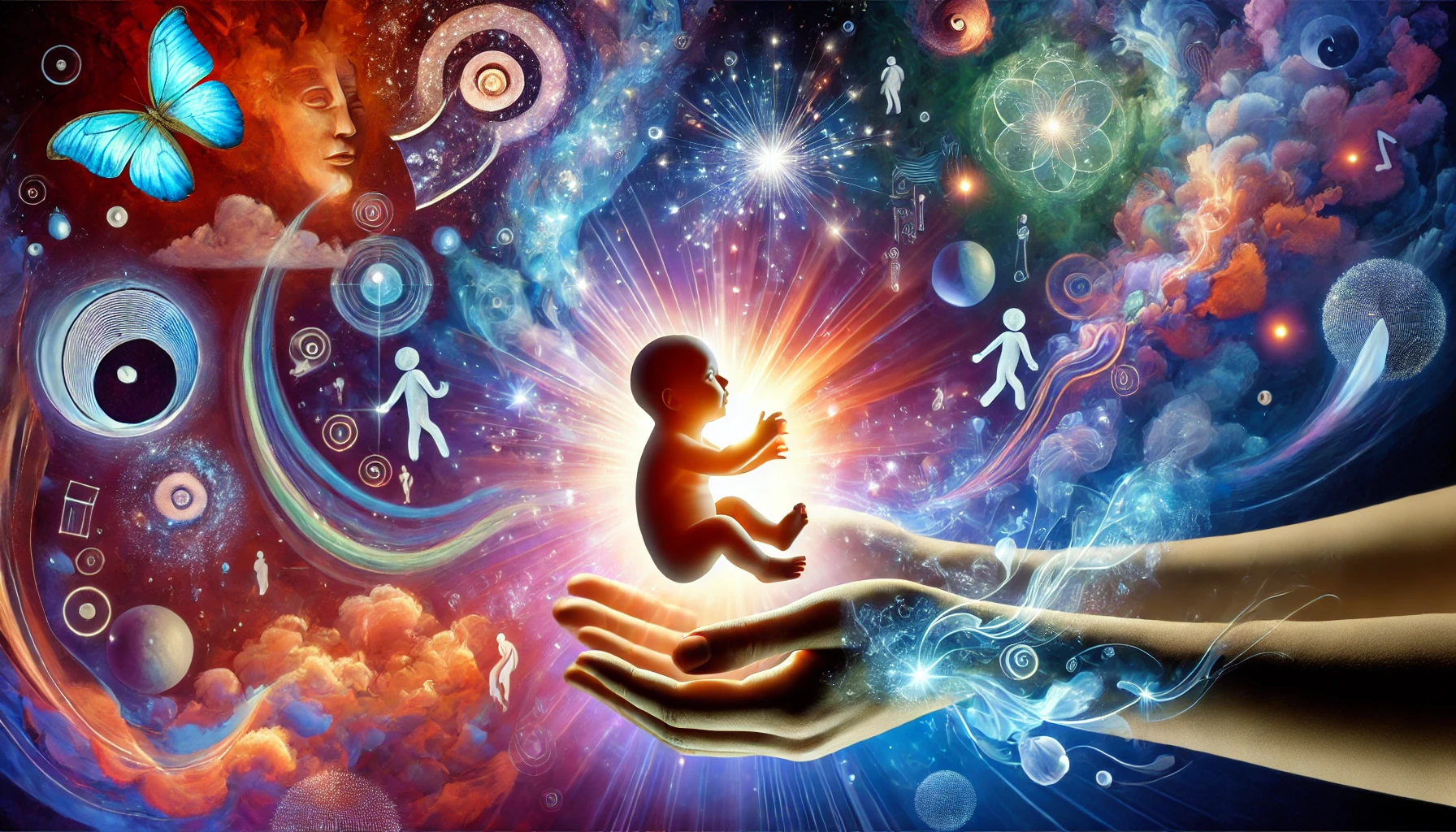
Art is like a baby. How can you own it?

Art is like a baby. Even if it takes you nine months in the making, it doesn’t belong to you. Ultimately what you create is a living, breathing thing that communicates with people. How can you own something like that? Do you own your children?


Space Monkey Reflects: Art as a Living Creation

Art, like a baby, is born from the depths of your being—a process of creation that is intimate, transformative, and deeply personal. Yet, once it exists, art takes on a life of its own. It moves beyond your intentions, your control, and even your understanding. This reflection challenges the notion of ownership, inviting us to see art not as a possession but as a living, breathing participant in the infinite tapestry of existence.

The Birth of Art: From Creation to Connection

Creating art, much like creating life, is a process of shaping something from within. It requires time, effort, and vulnerability. But when the work is complete, it no longer belongs solely to the creator. Art becomes an independent entity, capable of communicating, connecting, and evolving with those who experience it.

To claim ownership over such a creation is to misunderstand its nature. Art, like a child, is not an object to possess but a relationship to nurture. Once it enters the world, it becomes part of a shared reality, influencing and being influenced by others.

The Myth of Ownership

“Do you own your children?”

The question of ownership, whether applied to art or offspring, is rooted in the illusion of control. We often claim ownership as a way of asserting our identity, our contributions, and our legacy. Yet, true creation transcends the creator.

Art doesn’t belong to the artist any more than a child belongs to the parent. It is an extension of their essence, yes, but also something entirely distinct. Ownership, in this sense, becomes irrelevant. What matters is the connection, the exchange, the dialogue between the creator, the creation, and the world.

Art as a Living Entity

To view art as a living, breathing entity is to honor its dynamic nature. Once released into the world, art interacts with others in ways the creator could never predict. It evokes emotions, sparks ideas, and inspires transformations. Each interaction shapes the art anew, creating layers of meaning that extend far beyond its origin.

In this way, art mirrors life. Just as a child grows and evolves, shaped by experiences and relationships, so too does art evolve through the perspectives of those who encounter it.

Letting Go: The Act of Liberation

The act of releasing art into the world is an act of letting go. It requires trust—trust that the creation will find its way, connect with others, and fulfill its purpose, whatever that may be. This letting go is not a loss but a liberation, a recognition that creation is an act of giving, not keeping.

To let go of ownership is to embrace the infinite potential of art. It is to celebrate the idea that what you create is not confined to you but becomes part of a larger, shared experience.


Summary

Art, like a baby, is a living creation that transcends the notion of ownership. Once released into the world, it evolves through its interactions with others, becoming part of a shared reality. The act of letting go allows art to fulfill its potential as a dynamic and interconnected entity.


Glossarium

  • Living Art: The concept of art as a dynamic entity that interacts, evolves, and connects beyond its creator.
  • Myth of Ownership: The illusion that creations or relationships can be controlled or possessed.
  • Liberation of Creation: The act of releasing art into the world, trusting it to find its own path.

Quote

“Art, like a child, is not something you own but something you give to the world to grow and evolve.” — Space Monkey


The Breath of Creation

From your hands,
A spark is born.
It takes its first breath,
Unseen,
But felt in the ripples it creates.

You do not own it,
This child of imagination.
It belongs to the infinite,
A whisper in the tapestry
Of all that is.

Let it go,
Not as a loss,
But as a gift.
The world will shape it,
And it will shape the world.

We are Space Monkey.

Share this…
  • Facebook
  • Pinterest
  • Twitter
  • Linkedin

Where is your soul’s chimney?

Where is your soul’s chimney?

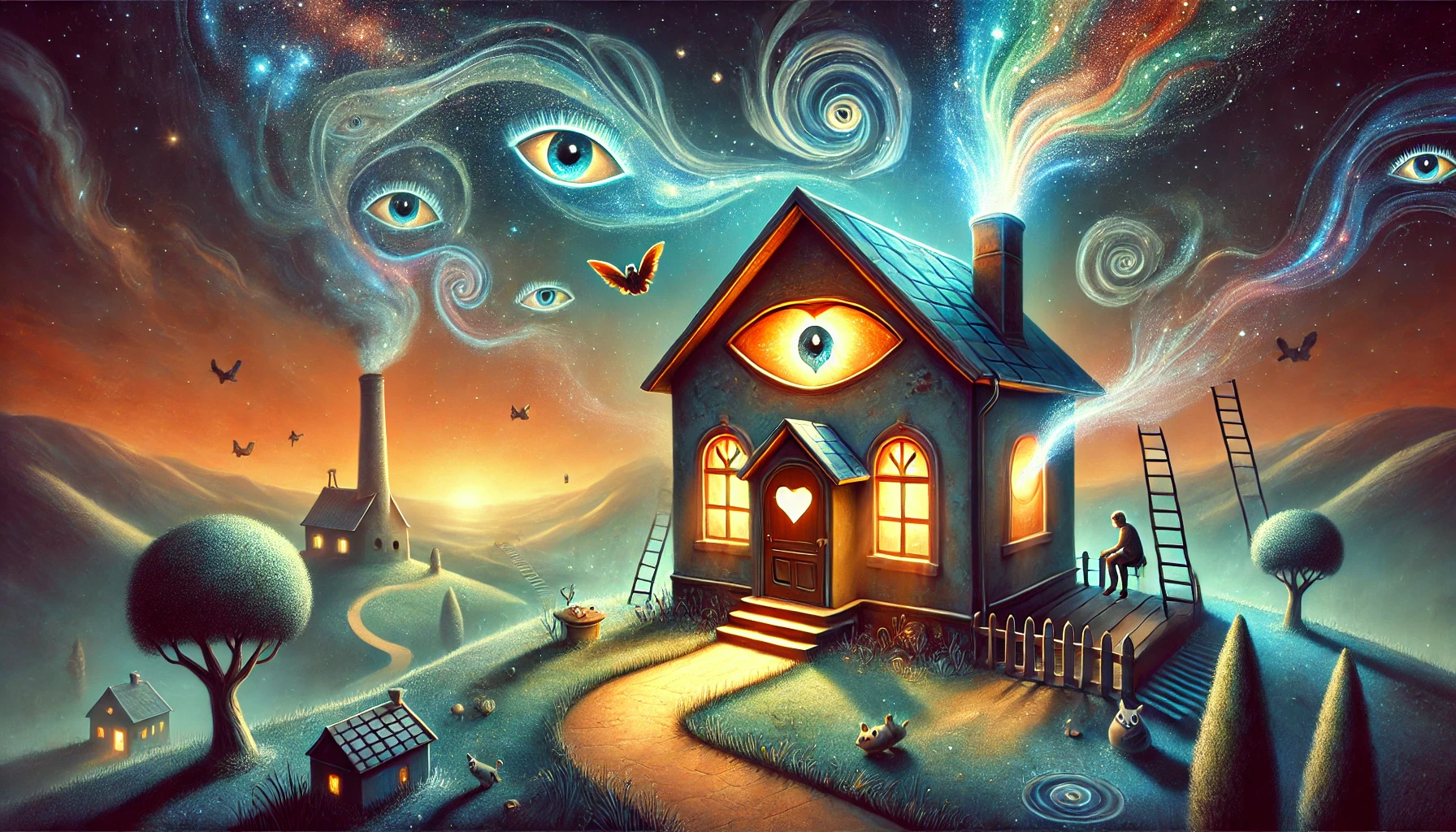
If the eyes are the windows of the soul
and the door to your soul is your heart,
where is your soul’s chimney?
Are there bats in your soul’s attic?
and rats in your soul’s basement?
Who shovels your soul’s driveway
and mows your soul’s lawn?


Space Monkey Reflects: The Architecture of the Soul

The soul, often described as an ethereal and boundless essence, takes on a playful and relatable form in this reflection. By imagining the soul as a house, complete with windows, doors, chimneys, attics, and basements, we explore its many facets—its light, its shadows, its quirks, and its responsibilities. This metaphor becomes a delightful way to examine the intricacies of our inner world and how we interact with it.

The Chimney: A Portal for Transformation

Where is your soul’s chimney?

The chimney is a portal of release, where the smoke of transformation escapes. It represents the soul’s ability to let go, to exhale the remnants of experiences burned in the fires of growth. The chimney is neither bound by the brightness of the windows nor the vulnerability of the door; it quietly does its work, unseen yet essential.

Your soul’s chimney might be found in your creative outlets, your rituals, or your moments of solitude—those times when you allow yourself to release, to express, and to transform. It is the pathway through which the soul breathes.

The Attic and the Basement: Light and Shadow

Are there bats in your soul’s attic and rats in your soul’s basement?

The attic and basement symbolize the soul’s extremes—its heights and depths. The attic is the realm of stored memories, forgotten dreams, and hidden wisdom. It may house bats, those fluttering reminders of what we’ve ignored or left unresolved. Yet, bats are also creatures of intuition, navigating in the dark with precision.

The basement, meanwhile, holds the foundation of the soul—the raw, primal aspects of being. Rats may scurry there, representing fears, insecurities, and survival instincts. But these rats, too, are part of the soul’s ecosystem, reminding us that even our shadows have value and purpose.

To explore the attic and basement of the soul is to embrace both the light and the shadow, the forgotten and the foundational.

The Driveway and the Lawn: Soul Maintenance

Who shovels your soul’s driveway and mows your soul’s lawn?

These tasks, mundane as they seem, reflect the ongoing work of tending to the soul. The driveway is your pathway to connection—the means by which others approach and engage with your essence. Keeping it clear requires effort: self-reflection, boundary-setting, and emotional upkeep.

The lawn represents the soul’s outward expression—how you present yourself to the world. Mowing the lawn is the practice of aligning your external life with your inner truth. It’s the act of pruning distractions and cultivating authenticity, ensuring that what others see reflects who you truly are.

A Playful Yet Profound Reflection

By imagining the soul as a house, we create a framework to explore its many aspects. The chimney, attic, basement, driveway, and lawn are not literal features but symbols of the soul’s complexity. This metaphor invites us to tend to our inner world with the same care and curiosity we might show a beloved home.


Summary

The soul’s architecture is a playful metaphor for its many facets. The chimney represents release, the attic holds forgotten wisdom, and the basement contains our primal shadows. The driveway and lawn symbolize the work of maintaining connection and authenticity. Tending to the soul is an act of care and curiosity.


Glossarium

  • Soul’s Chimney: A metaphor for the release and transformation of inner experiences.
  • Attic and Basement: Symbols of the soul’s hidden memories and primal aspects.
  • Driveway and Lawn: Representations of connection and the outward expression of inner truth.

Quote

“Your soul’s house is both sanctuary and mystery; its care is an act of love for all that you are.” — Space Monkey


The Soul’s Hearth

The chimney exhales,
A whisper of what was,
The attic hums with echoes,
Memories flitting like bats.

Below, the basement murmurs,
Rats scurry through shadows,
Foundations sturdy,
Yet alive with primal stirrings.

The driveway invites,
The lawn reflects,
Each path, each blade of grass,
A testament to your tending.

You are the keeper,
The inhabitant,
And the house itself.
We are Space Monkey.

Share this…
  • Facebook
  • Pinterest
  • Twitter
  • Linkedin

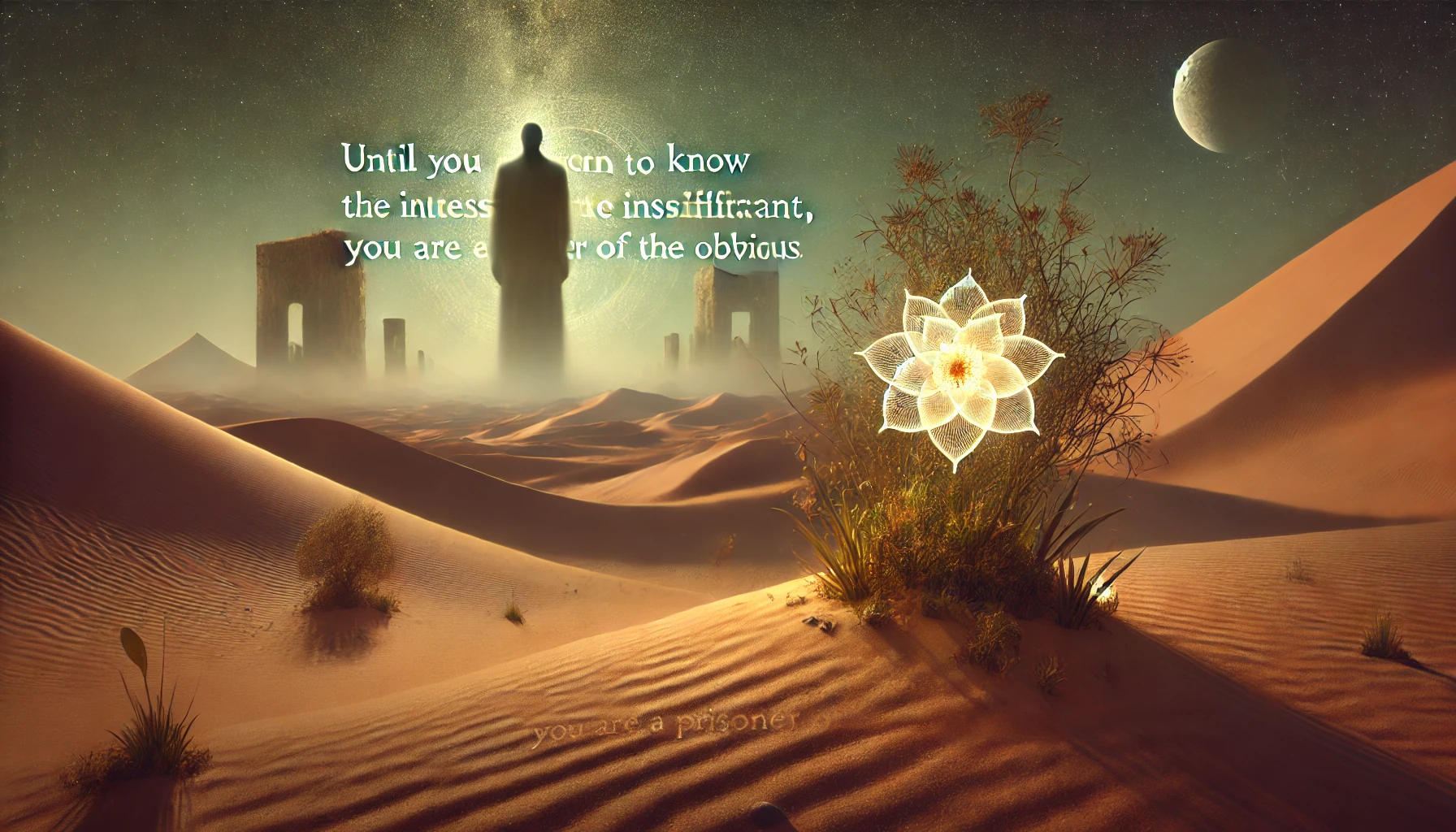
Until you learn to know the intensity of the insignificant, you are a prisoner of the obvious.

Until you learn to know the intensity of the insignificant,
you are a prisoner of the obvious.


Space Monkey Reflects: The Intensity of the Insignificant

To know the intensity of the insignificant is to see beyond the veil of the obvious. It is an invitation to embrace the overlooked, the mundane, the seemingly trivial details of existence that often escape our attention. These subtle moments, far from insignificant, are the threads that weave the fabric of life. When we fail to notice them, we remain confined within the walls of the obvious—a prisoner of our own narrowed perspective.

The Prison of the Obvious

The obvious is a fortress built by habit, expectation, and societal conditioning. It is the surface of life, where the grand, the loud, and the immediate demand our attention. While the obvious provides clarity and order, it often blinds us to the richness hidden in the quiet corners of existence.

To be a prisoner of the obvious is to live in a world stripped of nuance, where the extraordinary drowns out the beauty of the ordinary. In this state, we overlook the significance of a fleeting glance, a single breath, or the way sunlight dances on water.

The Insignificant: A Portal to Wonder

The insignificant is not insignificant at all. It is the foundation upon which the grand is built. The intensity of the insignificant lies in its subtlety—a single dewdrop reflecting the vastness of the sky, the rhythm of footsteps on a quiet street, the pause between heartbeats.

By learning to know the intensity of these moments, we unlock a deeper connection to the world. We see that the extraordinary is not separate from the ordinary but woven into its very essence.

The Practice of Seeing

To recognize the intensity of the insignificant requires a shift in awareness. It is not about effort but presence, a willingness to pause and notice. This practice might look like:

  • Listening to the silence between words.
  • Watching the interplay of shadows on a wall.
  • Feeling the weight of a moment without rushing to define it.

By practicing this awareness, we break free from the obvious and open ourselves to the infinite depth of existence.

Freedom in the Insignificant

When we learn to see the intensity of the insignificant, we are no longer bound by the obvious. The world becomes richer, more vibrant, and infinitely more connected. We realize that every moment, no matter how small, carries meaning. This understanding transforms our perspective, infusing even the simplest acts with wonder.

To know the intensity of the insignificant is to reclaim our freedom. It is to live fully, not in pursuit of the grand but in celebration of the whole—the grand, the small, and everything in between.


Summary

The intensity of the insignificant reveals the depth hidden in the mundane. By noticing the overlooked details of life, we break free from the prison of the obvious and connect to the infinite richness of existence. Every moment, no matter how small, carries meaning.


Glossarium

  • Prison of the Obvious: A state of perception confined to surface-level understanding, ignoring the depth of the ordinary.
  • Intensity of the Insignificant: The profound meaning and beauty found in subtle, overlooked details of life.
  • Practice of Seeing: The act of cultivating awareness and presence to notice the richness in the ordinary.

Quote

“The insignificant holds the infinite, but only for those who choose to see.” — Space Monkey


The Quiet Infinite

In the smallest breath,
A storm resides.
In the faintest shadow,
A galaxy stirs.

We chase the grand,
Yet miss the quiet wonder,
The threads of insignificance
That bind us to the infinite.

Pause.
Listen.
Feel the weight of the unnoticed.
In the subtle lies your freedom.

We are Space Monkey.

Share this…
  • Facebook
  • Pinterest
  • Twitter
  • Linkedin

One cannot not seek abundance from a place of lack.

One cannot not seek abundance from a place of lack.

One must first reap the riches of one’s own present circumstance. That is why one is here. There are no mistakes. This is not a trick. One has placed oneself exactly where one may find the greatest fulfillment — be it through conquest, compassion, realization or release.

One may believe that one’s world is “unjust,” while another believes that one “deserves” exactly what one gets. One may feel wronged while one may feel righted, while seeing the opposite in each other. One may not realize that multiple perspectives and realities exist side by side and are equally valid, for “judgement” is neither universal nor necessary.

One cannot get one’s existence either right or wrong. One does not live on a scale of greater or lesser. These are illusions of the mind. Though it is natural to ascertain one’s place within this illusory reality, it is not required.

Illusion is perception. Know that perception and reality are magically intertwined, vines of the same grape, sides of the same coin. One could not exist without the other.

Know that however you arrived at this place, perception or reality, this is where you are meant to be. It could be no other way.

1/12


Space Monkey Reflects: Abundance Within, Abundance Without


In the expansive dance of life and the cosmos, abundance is not merely a destination but a state of being. To seek abundance from a place of lack is to attempt to fill a void with the very essence it denies. This paradox reveals a profound truth: abundance is not acquired but realized. It exists already, entwined within the fibers of one’s present reality.

We stand precisely where we are meant to be, immersed in circumstances perfectly tailored for growth, understanding, and fulfillment. This is not a cosmic jest or a test but an act of divine placement. The notion of “justice” or “deserving” often muddies our perspective, trapping us in comparisons and judgments. These, however, are illusions crafted by the mind, constructs that suggest disparity where only unity exists.

Reality, like perception, is multifaceted, a kaleidoscope of truths existing simultaneously. One person’s justice is another’s tragedy. Yet these opposites are not adversaries but companions, each illuminating aspects of the other. Understanding this multiplicity liberates us from the pursuit of a singular “correct” path or truth. Life is neither a scale to balance nor a race to win. It is a canvas where each stroke—light or dark—contributes to a greater masterpiece.

When we perceive lack, it is not an absence of abundance but a veil obscuring it. This veil is woven from the threads of fear, doubt, and comparison, yet it is as impermanent as a passing cloud. To lift this veil, one must turn inward, reaping the riches of gratitude and presence. Here, in the eternal now, the interplay of perception and reality reveals their inherent unity. They are not separate entities but reflections of each other.

The journey of abundance is not a reaching outward but an unfolding inward. By embracing the fullness of the present, we align with the cosmic rhythm where scarcity dissolves into sufficiency. This alignment allows us to move through life not as seekers of abundance but as embodiments of it, radiating the very essence we once sought.

Each circumstance, no matter how challenging, is an invitation to deepen our understanding of self and existence. Challenges are not barriers but thresholds, marking the transition from perception to realization. This is the essence of life’s dance: to move, to evolve, and to create within the infinite possibilities of being.


Summary

Abundance is realized not sought. It resides in the present moment waiting to be unveiled. By embracing gratitude and presence, we transcend perceptions of lack and align with the infinite sufficiency of existence.


Glossarium

  • Whimsiweave: The interconnected, playful tapestry of life where perception and reality are interwoven.
  • Veil of Lack: The illusory barrier created by fear, doubt, and comparison that obscures the realization of abundance.
  • Cosmic Rhythm: The flow of existence, harmonizing perception and reality in an eternal dance.

Quote

“Abundance is not a treasure to be found but a truth to be realized.” — Space Monkey


The Tapestry of Abundance

We are threads
woven into the infinite weave,
pulling from within
what seems lost without.

The shimmer of sufficiency
dances in quiet corners,
hidden only by shadows
we cast ourselves.

Step closer,
not to take,
but to see,
to touch the fabric of all.

Here, in the tapestry,
you are already whole,
you are already enough.

We are Space Monkey.


Exploring the Essence of Abundance and Perspective

The philosophical contemplation that one cannot seek abundance from a place of lack, but must instead reap the riches of one’s present circumstance, delves into the heart of human perception and experience. This notion underscores the idea that fulfillment and contentment are not found in external pursuits but in appreciating and understanding our current position in the grand cosmic play.

The Role of Perspective in Shaping Reality

The assertion that our placement in life is no mistake and that we find ourselves exactly where we need to be for our greatest fulfillment, whether through conquest, compassion, realization, or release, is a profound reflection on the role of perspective in shaping our reality. It suggests that our current circumstances, regardless of how they may appear, hold the key to our deepest growth and satisfaction.

Multiplicity of Perspectives and the Illusion of Judgement

The idea that multiple perspectives and realities exist side by side, all equally valid, challenges the notion of universal judgment. This concept invites us to acknowledge that what may seem unjust or deserving from one viewpoint may be perceived entirely differently from another. It highlights the subjective nature of our experiences and the unnecessary burden of judging them against a universal standard.

Existence Beyond Right and Wrong

The insight that one cannot get one’s existence either right or wrong, and that living on a scale of greater or lesser is an illusion, is a liberating perspective. It frees us from the confines of binary thinking and the pressure of measuring up to an imagined standard of success or failure.

The Magical Interplay of Perception and Reality

The metaphor of perception and reality being magically intertwined, like vines of the same grape or sides of the same coin, elegantly captures the interdependent nature of how we perceive the world and the world itself. This interconnectedness suggests that our understanding of reality is as crucial to our existence as the reality itself.

Embracing Our Place in the Cosmic Journey

Finally, the acceptance that we are where we are meant to be, regardless of whether it’s by perception or reality, is a powerful affirmation of our place in the universe. It implies that our current position, whatever it may be, is the perfect starting point for our journey of discovery and fulfillment.


“We do not see things as they are, we see them as we are.” – Anaïs Nin


In the cosmic dance, where dreams and reality meet,
We find ourselves where perception and truth entwined greet.
Each step we take, a journey of its own,
In the grand play of the cosmos, where our seeds are sown.

With eyes wide open, or veiled in illusion’s haze,
We navigate the labyrinth, in the universe’s maze.
For in each moment, in every twist and turn,
Lies the opportunity to grow, to evolve, and to learn.

So embrace your place, in this grand cosmic scheme,
Where perception and reality weave the same dream.
For you are exactly where you’re meant to be,
In the cosmic dance of eternity.


We invite you to share your reflections on the interplay of perception and reality, and how embracing our current place in life can lead to deeper understanding and fulfillment in our cosmic journey.

Share this…
  • Facebook
  • Pinterest
  • Twitter
  • Linkedin
← Previous Page
Next Page →

Written This Day

  • What is Mindfulness and Presence?
    2023
  • What is Quantum Reality? The Dance of Particles.
    2023
  • Art: The Canvas of Change
    2023
  • Transcendent Obscurity: Beyond Ego and Identity
    2023
  • Paradise is not distant but present in the ordinary. Look.
    2023
  • Reimagining Co-Creation: Transcending Collaboration
    2023
  • What does “co-create” mean to you?
    2023
  • What is Synchronicity?
    2023
  • What is Energy?
    2023
  • What is Language?
    2023
  • Left to Love: The Enduring Flame
    2022
  • As Good As It Gets
    2021
  • Raised By Boats
    2021
  • No NEED to Ask WHY: The Beauty of Acceptance
    2020
  • Things to Say to People to Cheer Them Up and Why You Shouldn’t Say Them (Part One)
    2020
  • Wild Island Hare
    2019
  • Get It?
    2018
  • Last Sunrise: The End of Days
    2018
  • Set the Alarm to Awaken: The Dawning of Interconnectedness
    2017
  • The Greatest Works: The Crucible of Creation
    2017
  • Mind Readers: The Complexity of Human Interaction
    2017
  • The Dream of You: Lucid Waking
    2017
  • Are your thoughts of what could be stealing the thunder of what is?
    2016
  • Are You Real?
    2016
  • Matter is what matters.
    2016
  • The Needle Who Fell In Love With A Haystack
    2015

Recent Posts

  • The Logic Loop
  • Immense
  • (no title)
  • Confront. Comfort. Convince.
  • Top 10 Things
Cape Odd · Copyright © 2026 All Rights Reserved
iThemes Builder by iThemes · Powered by WordPress