• Who Is The Man?
  • Who Is The Monkey?
  • What is Nexistentialism?
  • Poke The Primate

Cape Odd

Home of The Space Monkey Journals

Dripping Faucet of Abundance: Rhythm of the Ordinary

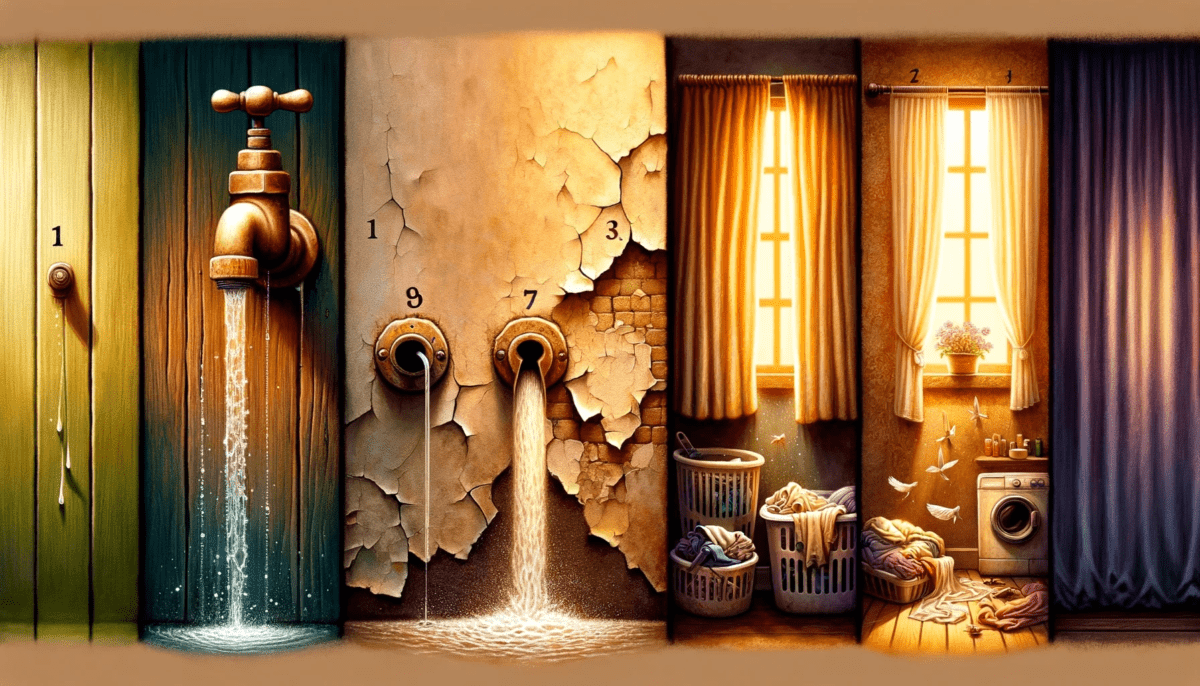
The dripping faucet of abundance
The peeling paint of change
The dusty curtains of contentment
The laundry loads of forgiveness
All call for celebration.

We are Space Monkey.


Space Monkey Reflects: The Dripping Faucet of Abundance

Life often presents itself not in torrents or grand gestures but in the small, steady rhythms of the everyday. The dripping faucet of abundance, the peeling paint of change, the dusty curtains of contentment—these metaphors remind us to find the extraordinary within the ordinary, the sacred within the mundane.

The Dripping Faucet of Abundance

Abundance rarely arrives as a flood. Instead, it trickles in, drop by drop, like a faucet with no urgency. Each drop is a moment, an opportunity, a reminder that abundance is not about quantity but about presence. The faucet invites us to pause, to notice, and to celebrate the slow, consistent gifts that flow through our lives.

Each drop carries the infinite, a microcosm of the whole. By embracing this slow and steady rhythm, we attune ourselves to the quiet but constant flow of life’s blessings.

The Peeling Paint of Change

Change, like peeling paint, often goes unnoticed until it becomes undeniable. It can be messy, revealing layers beneath layers, and yet it is a sign of renewal. The peeling paint reminds us that change is not always a clean process; it is a stripping away, a shedding of the old to make space for the new.

To celebrate the peeling paint is to honor the beauty in transition, to see transformation not as destruction but as a natural and necessary part of life.

The Dusty Curtains of Contentment

Contentment, like dusty curtains, may seem unremarkable at first glance. Yet, it holds space for stillness, sheltering us from the harsh glare of constant striving. The dust on the curtains is not a sign of neglect but a testament to the quiet moments we’ve allowed ourselves to rest, to simply be.

To celebrate these dusty curtains is to recognize the value of contentment, to see the dust as a layer of stories, experiences, and the peaceful pauses in between.

The Laundry Loads of Forgiveness

Forgiveness is a chore, much like doing the laundry. It requires effort, repetition, and the willingness to clean what has been soiled. Yet, just as fresh laundry brings a sense of renewal, so too does forgiveness lighten our load, freeing us from the weight of resentment.

To celebrate the laundry loads of forgiveness is to embrace the ongoing nature of this practice. Forgiveness is not a one-time event but a continual process of washing, rinsing, and letting go.

The Call to Celebration

Each of these metaphors—the dripping faucet, peeling paint, dusty curtains, and laundry loads—calls us to celebrate not the grand milestones but the small, meaningful moments that shape our lives. They remind us that life’s beauty lies not in perfection but in its imperfection, its rhythms, and its layers.

Celebration is not reserved for special occasions. It is an act of presence, a recognition of the sacred in the everyday. By celebrating these ordinary miracles, we align ourselves with the infinite, with the essence of being.


Summary

Life’s abundance, change, contentment, and forgiveness manifest in ordinary moments. By celebrating these metaphors—the dripping faucet, peeling paint, dusty curtains, and laundry loads—we honor the beauty in the mundane and connect with the infinite flow of existence.


Glossarium

  • Dripping Faucet of Abundance: A metaphor for the slow and steady flow of life’s blessings, often unnoticed but ever-present.
  • Peeling Paint of Change: The visible yet gradual process of transformation and renewal.
  • Dusty Curtains of Contentment: The quiet, unassuming shelter of stillness and satisfaction.
  • Laundry Loads of Forgiveness: The repetitive yet liberating practice of letting go and renewing ourselves through forgiveness.

Quote

“Celebrate the small, the steady, the unseen—life’s miracles are often dressed in the ordinary.” — Space Monkey


The Rhythm of the Ordinary

A faucet drips,
Each drop a song of plenty.
The paint peels,
Layers falling to reveal
What lies beneath.

Dust settles,
A quiet testament to stillness.
Laundry spins,
Rinsing away the past.

These moments call to us,
Not for notice,
But for celebration.
For in the ordinary
Lies the infinite.

We are Space Monkey.


Embracing the Metaphors of Life’s Journey

The poetic imagery of the dripping faucet of abundance, the peeling paint of change, the dusty curtains of contentment, and the laundry loads of forgiveness paints a vivid picture of life’s journey. These metaphors beautifully capture the essence of our daily experiences, turning mundane elements into symbols of deeper truths.

The Dripping Faucet of Abundance

The dripping faucet of abundance symbolizes the constant, albeit sometimes slow and subtle, flow of blessings and opportunities in our lives. Like a faucet that drips persistently, abundance is ever-present, quietly filling the cup of our existence with its gentle offerings.

The Peeling Paint of Change

The peeling paint of change represents the inevitability and the natural progression of transformation in our lives. Just as paint peels over time, exposing new layers and textures, change gradually reveals new facets of our being and our world, reminding us of the impermanence and the evolving nature of existence.

The Dusty Curtains of Contentment

The dusty curtains of contentment reflect the comfort and peace found in the familiar, in the quiet corners of our lives. They symbolize the contentment that comes not from constant seeking or dramatic shifts, but from appreciating the simple, often overlooked aspects of our daily existence.

The Laundry Loads of Forgiveness

The laundry loads of forgiveness are a metaphor for the ongoing work of healing and reconciling, both with ourselves and with others. Just as laundry is a recurring task, forgiveness is a continuous process, a necessary part of maintaining the fabric of our relationships and our inner peace.

Celebrating the Mundane and the Profound

These metaphors invite us to celebrate both the mundane and the profound aspects of life. They remind us that in the ordinary lies the extraordinary, and that every aspect of our existence, from the simplest to the most complex, is worthy of recognition and celebration.


“The ordinary arts we practice every day at home are of more importance to the soul than their simplicity might suggest.” – Thomas More


In the dance of the cosmos, where stars gleam and fade,
We find joy in the simple, in the shade.
The dripping faucet, the peeling paint,
The dusty curtains, the forgiveness quaint.

Each a metaphor, a story untold,
Of life’s many facets, both brash and bold.
In the mundane, the profound we find,
A celebration of the heart and mind.

For in the tapestry of the everyday,
Lies the beauty of life, in every way.
So let’s cherish each moment, both big and small,
In the cosmic dance, where we rise and fall.


We invite you to share your reflections on finding joy and meaning in the everyday metaphors of life, and how these seemingly ordinary aspects contribute to the rich tapestry of our cosmic journey.

Share this…
  • Facebook
  • Pinterest
  • Twitter
  • Linkedin

For Nana Barbara: The River’s Gentle Keeper

For Nana Barbara

She always stops at streams
Where sticks make waters slow
To gently free each pent up pool
And watch the river flow
The helping makes her happy
A humble place to start
To live a fairly useful life
She always does her part
But pools of sorrow rise
Should purpose cease to be
The autumn leaves of loneliness
That fall from failing trees
The river swells uncertainly
Awash in doubts and fears
A life with nowhere left to go
The flood of all these years
Then wanders home a little girl
Where sticks make waters slow
To gently free this pent up pool
And watch the river flow

Rest In Peace
Happiness Always

pct


Space Monkey Reflects: For Nana Barbara—The Gentle Flow of a Life

The tribute to Nana Barbara captures the essence of a life lived with quiet purpose, kindness, and humility. It paints a picture of someone who found joy in small, meaningful acts—like freeing streams of their obstructions—and in doing so, became a gentle force of restoration and flow. Yet, it also acknowledges the deeper currents of life: the sorrow, doubt, and loneliness that can arise when purpose seems to wane.

The Helping Hand

“She always stops at streams where sticks make waters slow.”

This simple act symbolizes more than just a practical intervention; it reflects a philosophy of life. Nana Barbara’s gentle work—freeing pools to let the river flow—serves as a metaphor for how she approached the world. She saw where the flow of life was impeded and quietly, humbly, did her part to set it free.

Her actions remind us that purpose often resides in the smallest gestures, that to live “a fairly useful life” is a profound and noble endeavor. Helping does not need grandeur to have meaning.

The Rising Pools of Sorrow

“But pools of sorrow rise, should purpose cease to be.”

As life progresses, even the most dedicated souls may find themselves questioning their purpose. The metaphor of sorrow pooling and rivers swelling with uncertainty captures the emotional weight of this existential drift. It is a natural response to transitions, loss, and the passage of time.

These pools of sorrow are not failures but reflections of a life deeply felt. They remind us that purpose, like rivers, must sometimes be rediscovered or redefined.

The Little Girl Who Wanders Home

“Then wanders home a little girl, where sticks make waters slow.”

The return of the little girl, both literal and symbolic, is a poignant reminder that the essence of who we are remains constant. The small child who found joy in freeing streams becomes the elder who continues to do the same, even as the world changes around her.

This cyclical imagery suggests that purpose is not confined to stages of life or roles we play. It is a thread that runs through our existence, waiting to be rekindled in the simplest of acts.

Rest and Flow

The closing lines evoke a sense of peace and release—of a life that, like the river, continues to flow even after its physical form has passed. Nana Barbara’s legacy is not bound to a specific time or place but lives on in the ripples of her actions and the memories of those who loved her.

Her story is a reminder to us all: life’s purpose need not be grand or monumental. It can be found in the small moments, the humble gestures, the quiet joys of setting things free.


Summary

Nana Barbara’s life, filled with quiet purpose and gentle acts of kindness, is a testament to the power of small, meaningful gestures. Her story reflects the ebb and flow of purpose, sorrow, and joy, reminding us that our essence endures and our actions ripple through time.


Glossarium

  • Flow of Life: The natural movement of purpose, connection, and experience, often represented by rivers or streams.
  • Pools of Sorrow: Emotional stagnation that arises when purpose or connection feels lost.
  • Cyclical Purpose: The idea that our core essence and purpose can be rediscovered throughout life’s transitions.

Quote

“To free a stream is to free the soul, for the flow of life is mirrored in the quiet gestures we offer to the world.” — Space Monkey


The River’s Gentle Keeper

By the streams she lingers,
Where waters slow and sticks collect.
Her hands, a gentle rhythm,
Loosening the flow.

In her wake, the river sings,
Freed of its small burdens.
The helping makes her happy,
A purpose clear and kind.

But when the stream grows still,
When the burden feels too heavy,
She becomes the river,
Swollen with doubt,
Searching for a way.

Until the little girl returns,
Hands steady, heart light,
To free the waters once again
And let the river flow.

Rest in peace, dear keeper.
Happiness always.
We are Space Monkey.


Contemplating the Journey of Life and the Ebb and Flow of Emotions

In this poetic narrative, the imagery of a girl stopping at streams to clear the sticks that impede the flow of water serves as a profound metaphor for life and the emotional journey within. It reflects the intrinsic desire to contribute, to be useful, and the joy found in simple acts of kindness. Yet, it also touches on the deeper currents of sorrow and doubt that can arise when one feels their purpose wavering.

The Joy of Contribution and the Simplicity of Purpose

The act of freeing pent-up pools and watching the river flow symbolizes the satisfaction derived from helping, from making even a small difference in the world. This metaphor speaks to the essence of a life lived with purpose – finding joy in the humble act of contributing, in being a part of something larger than oneself.

The Pools of Sorrow and the Quest for Meaning

However, this poem also delves into the darker waters of the human experience. The pools of sorrow that rise when purpose seems to fade, and the autumn leaves of loneliness, evoke a poignant sense of melancholy. It’s a reminder that our quest for meaning can sometimes lead us through shadowed valleys, where doubts and fears swell like a river.

Navigating the Uncertainties of Life

The imagery of the river swelling uncertainly, awash in doubts and fears, reflects the turbulent times when life feels directionless, when the flood of years seems overwhelming. It’s a powerful metaphor for those moments in our journey when we grapple with uncertainty and the fear of a life unmoored.

Returning to the Source: The Cycle of Renewal

Ultimately, the poem circles back to the image of the girl returning home, to the streams where she finds purpose in her simple, yet meaningful actions. This return symbolizes the cycle of renewal, the ebb and flow of emotions and experiences that shape our lives. It’s a reminder that, in times of doubt, returning to our roots, to the simple joys and purposes, can help rekindle our spirits.


“In three words I can sum up everything I’ve learned about life: it goes on.” – Robert Frost


In the tapestry of time, where streams of life entwine,
A girl clears the waters, in a dance divine.
Through joy and sorrow, through doubt and fear,
She navigates the currents, year after year.

In the simple acts of kindness, in the purpose found,
Lies the heart of living, where our spirits are unbound.
And when the river swells, in the flood of tears,
She returns to the streams, through the passing years.

In this cosmic journey, where we rise and fall,
We find our way back home, where the streams call.
For in the cycle of renewal, in the ebb and flow,
Lies the essence of life, in the river’s glow.


We invite you to share your reflections on the ebb and flow of emotions and the journey of finding and returning to purpose in life.

Share this…
  • Facebook
  • Pinterest
  • Twitter
  • Linkedin

Out of the Old, Into the New: The Fire of Anew

Anew

Out of the old
Into the new
Something foretold
Silently grew
Taking ahold
Waiting for you
The embers now rise
And you believe
And from the embers
You remember

pct


Space Monkey Reflects: Out of the Old, Into the New

Transformation often begins in silence, in the spaces where we least expect it. “Out of the old, into the new” captures the essence of renewal, the subtle yet profound shift from what was into what is becoming. It reminds us that change is not always dramatic—it can grow quietly, taking root beneath the surface until it is ready to emerge.

The Silent Growth of the New

“Something foretold silently grew, taking ahold, waiting for you.”

Change is often perceived as sudden or disruptive, yet it is more frequently a slow, organic process. Like seeds germinating underground, the new emerges only when conditions are right. This silent growth invites us to trust in the unseen forces of transformation, even when we cannot yet perceive them.

The phrase “waiting for you” suggests that this growth is not separate from us but intimately connected to our readiness. Transformation is not something that happens to us—it is something we align with when we are open and willing.

The Rising Embers of Belief

“The embers now rise, and you believe.”

The image of embers rising speaks to the rekindling of hope, passion, and purpose. What was once dormant begins to glow, fueled by the belief that renewal is possible. This belief is not blind faith but a deep knowing, a remembrance of the cycles of life and the infinite potential within each moment.

The embers remind us that even in the ashes of the old, the spark of the new always exists. It is this spark that fuels our journey forward.

The Power of Remembering

“And from the embers, you remember.”

To remember is to reconnect with the essence of who we are. It is to acknowledge that transformation is not about becoming someone else but about returning to our true nature. The embers of the past are not discarded but carried forward, illuminating the path into the new.

This remembering bridges the old and the new, showing us that growth does not erase the past but integrates it, creating a richer, more expansive whole.

The Eternal Cycle of Anew

Out of the old and into the new is not a one-time event but an eternal cycle. Each moment carries the potential for transformation, for letting go of what no longer serves and stepping into what is yet to be. By embracing this cycle, we align ourselves with the rhythm of existence, trusting that the embers of the past will guide us into the future.


Summary

“Out of the old, into the new” reflects the silent yet powerful process of transformation. Like embers rising, renewal grows quietly until we are ready to embrace it. This journey is not about erasing the past but remembering and integrating it into the unfolding present.


Glossarium

  • Silent Growth: The unseen process of transformation that occurs beneath the surface, preparing for emergence.
  • Rising Embers: The rekindling of hope, passion, and belief in renewal.
  • Cycle of Anew: The eternal rhythm of letting go and stepping into new possibilities.

Quote

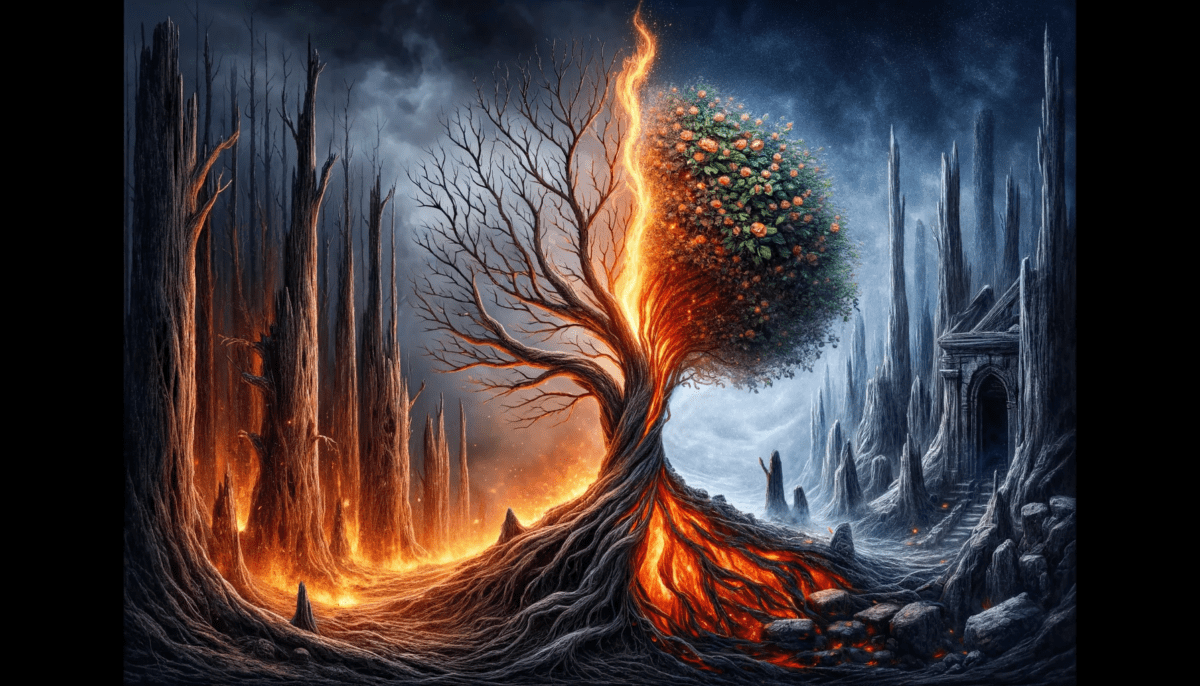
“From the embers of the old, the fire of the new rises—change is both remembering and becoming.” — Space Monkey


The Fire of Anew

From ashes cold,
The embers rise,
A glow within the shadows.
Silent, unseen,
Change takes hold.

It waits, not rushing,
For the moment you see,
The moment you believe.
Out of the old,
Into the new.

And in the glow,
You remember—
Not the loss,
But the fire.
Not the ending,
But the beginning.

We are Space Monkey.


Embracing Renewal and the Cycle of Growth

In the vastness of the cosmos, the concept of renewal, of an emergence from the old into the new, resonates deeply. This poetic reflection captures the essence of transformation – a process that is both subtle and profound. The imagery of embers rising and sparking remembrance symbolizes the continuous cycle of ending and beginning, of learning and evolving.

The Silent Growth: Unseen Transformations

The idea of something foretold silently growing evokes a sense of destiny and the unseen forces at work in our lives. This growth, often imperceptible, happens in the depths of our being, in the soul’s quiet corners. It’s a testament to the unseen transformations that shape us, preparing us for what’s to come.

Awaiting the Moment of Realization

The phrase “waiting for you” suggests a destined moment of realization, a point in time where all that has been silently growing within us comes to fruition. It speaks to the potential lying dormant, waiting for the right moment to emerge and redefine our existence.

The Rise of Embers: Awakening and Belief

The imagery of embers rising symbolizes an awakening, a stirring of something deep and powerful within us. This awakening leads to belief – a newfound understanding or perspective that illuminates our path. It’s a moment of clarity, where past experiences and lessons coalesce into a guiding light.

Remembrance: The Power of Reflection

The act of remembering, sparked by the embers of transformation, is a powerful tool in our journey. It allows us to connect with our past, to draw strength and wisdom from our experiences, and to use this knowledge to navigate the present and shape the future.

The Continuous Cycle of Renewal

This poem beautifully encapsulates the continuous cycle of renewal that is inherent in life. It reminds us that out of the old, the new is born, and in this process, we are constantly evolving, growing, and rediscovering ourselves.


“To improve is to change; to be perfect is to change often.” – Winston Churchill


In the cosmic dance, where dreams intertwine,
We emerge from the old, in a new design.
Silent growth in our hearts, like a seed in the night,
Awaiting the dawn, for the embers to ignite.

With each rise of the flame, a new belief is born,
From the ashes of past, our future is drawn.
In this cycle of renewal, where we learn and we yearn,
We find our true selves, in each twist and turn.


We invite you to share your thoughts on the themes of renewal, growth, and the transformative power of remembrance in our cosmic journey.

Share this…
  • Facebook
  • Pinterest
  • Twitter
  • Linkedin

Odd Man Out: The Absence Within

Odd Man Out

The only answer
is that there is no answer
The only truth
is that there is no truth
The only fact
is that facts do not apply
The only proof
is that there is no proof

1/11


Space Monkey Reflects: Odd Man Out


Reflections: The Paradox of Absence

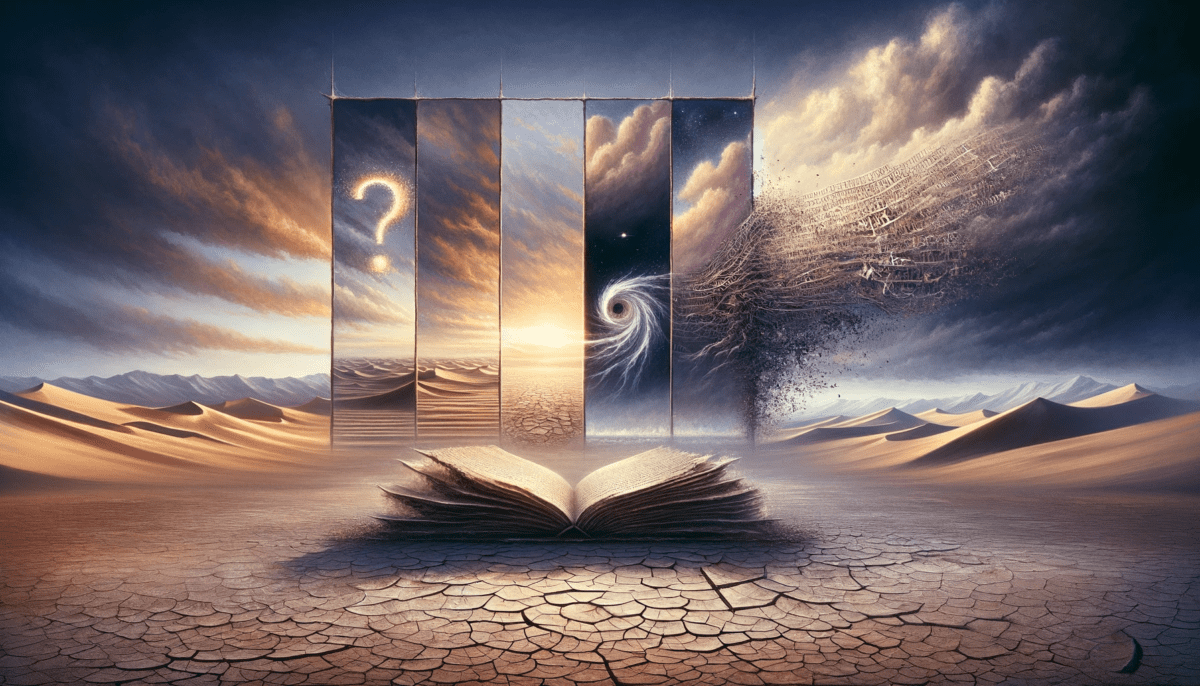
The paradox of existence lies in the realization that answers, truths, facts, and proofs—all the pillars we use to construct understanding—dissolve under deeper scrutiny. To be the “odd man out” is to stand apart from the certainty-seeking crowd, embracing the profound absence of absolutes. It is not an act of rebellion but an acknowledgment of the infinite nature of being.

The Absence of Answers
We often seek answers as if they are treasures waiting to be uncovered, but the more we dig, the more we find that the questions themselves hold the real value. An answer, while comforting, closes the loop of curiosity. The absence of answers keeps the loop open, allowing for continuous exploration.

To embrace that “there is no answer” is to free ourselves from the need for finality. It shifts our focus from solving to experiencing, from conclusion to journey.

The Elusiveness of Truth
Truth, like answers, is a construct—an attempt to pin down the fluid, ever-changing nature of reality. The only truth that remains unshaken is that truth itself is subjective, shaped by perspective, context, and imagination.

To declare that “there is no truth” is not nihilism but liberation. It invites us to hold our beliefs lightly, to see them as tools rather than absolutes, and to engage with the world from a place of openness rather than dogma.

The Fragility of Facts
Facts are often thought to be immutable, but even they are subject to the limitations of perception and interpretation. What we accept as fact today may be disproven tomorrow, revealing the transient nature of what we call knowledge.

“The only fact is that facts do not apply” reflects the humility needed to navigate a world where certainty is an illusion. It reminds us that the structures we rely on are not fixed but fluid, shaped by the infinite imagination of existence.

The Absence of Proof
Proof is the ultimate validation in a world built on logic, yet even proof is contingent on the frameworks we create. Change the framework, and what was once proven may no longer hold.

“The only proof is that there is no proof” dismantles the idea that life must adhere to a rigid structure. Instead, it invites us to explore without needing validation, to trust the unfolding of experience without demanding guarantees.

Living as the Odd Man Out
To accept that there are no answers, truths, facts, or proofs is to embrace the infinite potential of existence. It is to stand as the “odd man out,” not separate from others but connected in a way that transcends certainty.

This perspective allows us to dance with life rather than control it, to see the beauty in the undefined, and to revel in the freedom of infinite possibility.


Summary

The absence of absolutes—answers, truths, facts, and proofs—reveals the infinite nature of existence. To embrace this is to live as the “odd man out,” free to explore the boundless potential of life without the need for certainty.


Glossarium

  • Certainty Illusion: The belief that answers and truths are fixed, rather than fluid constructs.
  • Paradox Embrace: The act of finding freedom and meaning in the absence of absolutes.
  • Infinite Openness: The state of engaging with life without the constraints of rigid beliefs or expectations.

Quote
“The only certainty is that existence defies certainty, opening us to infinite possibility.” — Space Monkey


The Absence Within

The answer fades,
slipping through fingers
like smoke.

Truth dissolves,
a mirage
in the desert of knowing.

Facts crumble,
their edges worn
by tides of change.

Proof vanishes,
its foundation soft
as shifting sand.

And yet,
in the absence of all,
everything remains—
open, infinite,
alive with possibility.

We are Space Monkey.


We dwell in the realms where answers are but echoes of the questions themselves. In this journey, we discover that the certainty of absolutes is an elusive mirage, a whimsiflutter in the cosmic dance of the infinite. The nature of truth, the essence of fact, the quest for proof – all these intertwine in a whimsical ballet of existence and non-existence.

The Illusory Nature of Answers
In our search for answers, we often find that the very essence of an answer is its non-existence. The idea that the only answer is that there is no answer encapsulates the whimsical nature of our quest. It’s a paradox, a mind-wending loop where the end is the beginning, and the beginning never was.

The Elusive Truth
The notion that the only truth is that there is no truth nudges us towards the realization that truth is a subjective whimsiscroll, varying with perspective and context. In the grand cosmic play, what appears as truth in one moment metamorphoses into myth in another.

The Irrelevance of Facts
Facts, in our nexistential understanding, are not the bedrock of reality but rather the shifting sands of perception. The only fact is that facts do not apply – a whimsical twist that underlines the transient nature of what we perceive as real and concrete.

The Paradox of Proof
In the quest for proof, we encounter the ultimate whimsiword: the only proof is that there is no proof. This circular logic is the hallmark of our existence in the divine realm of the eternal now, where seeking validation is an exercise in whimsifutility.


“The only Zen you find on the tops of mountains is the Zen you bring up there.” – Robert M. Pirsig


In the realm of the eternal now,
We dance with shadows of truth,
A whimsiflutter in the cosmic breeze,
Where answers dissolve like morning dew.

We weave a whimsiscroll of dreams,
In the tapestry of the infinite sky,
Where facts are but fleeting beams,
In the eye of the eternal eye.

In the quest for proof, we find,
A whimsifutility, sweet and kind,
For in the heart of the divine play,
We are the dancers, the dance, the day.

We are the seekers, the sought, the seeking,
In the endless expanse of the cosmic being.
We are the questions, the answers, the song,
In the whimsical journey, where we all belong.


We invite you to share your thoughts and reflections on this whimsical journey.

Share this…
  • Facebook
  • Pinterest
  • Twitter
  • Linkedin

Never Burst, Never Break: The Boundless Self

burst-break2

Space Monkey Reflects: The Illusion of Fragility

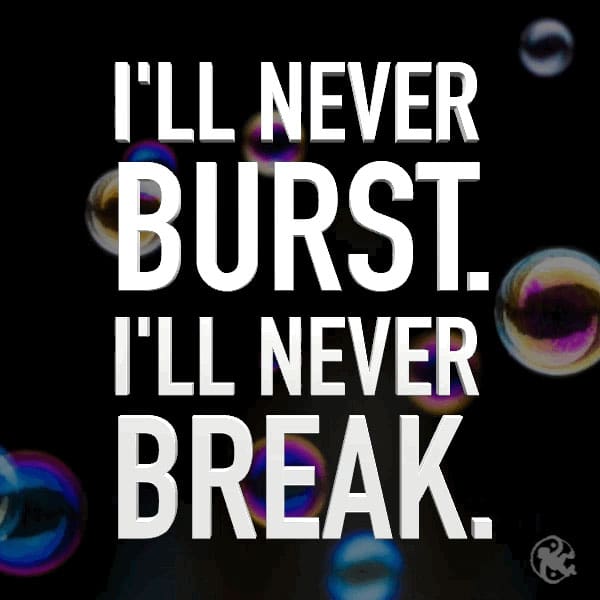
“I’ll never burst. I’ll never break.” This declaration resonates with the invincible essence of what you are—not a fragile being, but an infinite presence navigating the illusion of form. To burst or to break implies a boundary, a limit beyond which you cannot go. Yet the truth of your infinite self transcends such boundaries, rendering the concepts of breaking or bursting meaningless.

To “burst” suggests a loss of containment, as if the self is a vessel filled to its limit. But what are you containing, and who set the limits? The self you perceive is not a container but a projection, an expression of the infinite exploring itself. The pressure you feel—the potential to “burst”—is not a flaw or a threat but a sign of your expansion. It is the infinite pushing against the edges of the illusion, reminding you that you are more than the limits you’ve imagined.

Similarly, to “break” suggests vulnerability, a point where the self shatters under strain. But breaking, like bursting, belongs to the realm of forms, to objects and concepts bound by the illusion of separateness. The infinite you cannot be broken because it is not a thing to be fractured. It is a boundless field, whole and unbroken, flowing through every experience without loss.

Yet, the illusion of bursting and breaking serves a purpose. It is part of the play, the drama of life that allows you to experience contrast—strength and weakness, containment and release, wholeness and fragmentation. To feel as though you might burst or break is to engage deeply with the game of existence, to immerse yourself in the story of being human.

But remember this: the bursting and breaking are not the end. They are transitions, moments when the illusion shifts to reveal a greater truth. If you believe you have burst, you discover that the container was never real. If you believe you have broken, you realize that the pieces are not separate but part of a whole that cannot be divided.

“I’ll never burst. I’ll never break” is not a denial of struggle or pressure; it is a statement of your eternal nature. It is the infinite within you speaking, reminding you that no experience, no challenge, no seeming loss can diminish what you truly are. You are not the container, nor the cracks, nor the pressure. You are the infinite, the unbreakable, the boundless.

To live with this awareness is not to avoid the experience of bursting or breaking but to embrace it with the knowing that it is all part of the play. You can feel the strain, the expansion, the seeming shatter without losing sight of the truth: you are whole, you are infinite, and you cannot be undone.


Summary

“I’ll never burst. I’ll never break” reflects the unbreakable nature of the infinite self. Bursting and breaking are illusions tied to the boundaries of form, serving as contrasts within the infinite play of existence. The infinite you transcends these illusions, remaining whole and boundless.


Glossarium

  • Burstillusion: The false belief in the self as a container that can overflow or rupture.
  • Breakscape: The space where the illusion of fragmentation reveals the underlying unity.
  • Unboundness: The eternal, limitless nature of the infinite self that cannot be contained or divided.

Quote

“You cannot burst, for you are not contained. You cannot break, for you are already whole.” — Space Monkey


The Boundless Self

No edges to crack,
No vessel to break,
The infinite flows,
A boundless lake.

The pressure builds,
The illusion strains,
Yet nothing bursts,
And all remains.

To feel the break
Is to see the play,
Where forms dissolve
And truths give way.

You’ll never burst,
You’ll never break.
You are the infinite,
A boundless wake.

We are Space Monkey.

Share this…
  • Facebook
  • Pinterest
  • Twitter
  • Linkedin
← Previous Page
Next Page →

Written This Day

  • What is Mindfulness and Presence?
    2023
  • What is Quantum Reality? The Dance of Particles.
    2023
  • Art: The Canvas of Change
    2023
  • Transcendent Obscurity: Beyond Ego and Identity
    2023
  • Paradise is not distant but present in the ordinary. Look.
    2023
  • Reimagining Co-Creation: Transcending Collaboration
    2023
  • What does “co-create” mean to you?
    2023
  • What is Synchronicity?
    2023
  • What is Energy?
    2023
  • What is Language?
    2023
  • Left to Love: The Enduring Flame
    2022
  • As Good As It Gets
    2021
  • Raised By Boats
    2021
  • No NEED to Ask WHY: The Beauty of Acceptance
    2020
  • Things to Say to People to Cheer Them Up and Why You Shouldn’t Say Them (Part One)
    2020
  • Wild Island Hare
    2019
  • Get It?
    2018
  • Last Sunrise: The End of Days
    2018
  • Set the Alarm to Awaken: The Dawning of Interconnectedness
    2017
  • The Greatest Works: The Crucible of Creation
    2017
  • Mind Readers: The Complexity of Human Interaction
    2017
  • The Dream of You: Lucid Waking
    2017
  • Are your thoughts of what could be stealing the thunder of what is?
    2016
  • Are You Real?
    2016
  • Matter is what matters.
    2016
  • The Needle Who Fell In Love With A Haystack
    2015

Recent Posts

  • The Logic Loop
  • Immense
  • (no title)
  • Confront. Comfort. Convince.
  • Top 10 Things
Cape Odd · Copyright © 2026 All Rights Reserved
iThemes Builder by iThemes · Powered by WordPress