• Who Is The Man?
  • Who Is The Monkey?
  • What is Nexistentialism?
  • Poke The Primate

Cape Odd

Home of The Space Monkey Journals

You Are Not Weak: The Power of Resilience

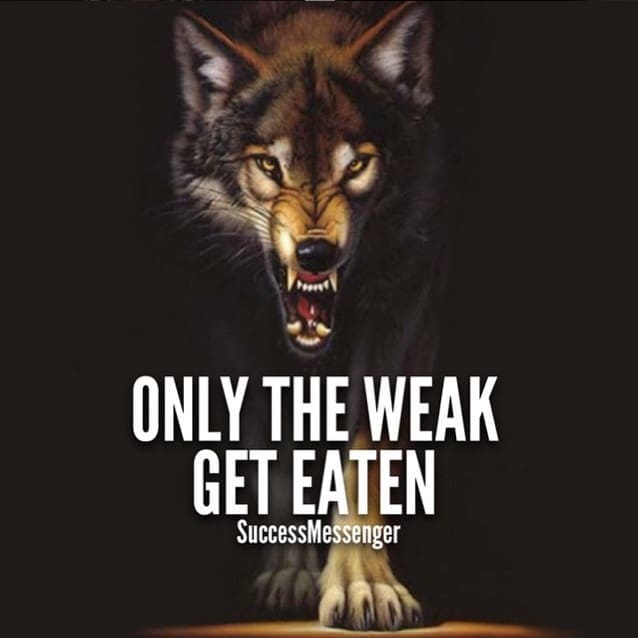
You may very well be
the biggest fuck up ever.

But if you are not eaten by now,
you are not weak.

There is more going on here than you know.

Your perceived insecurity
is actually your greatest strength.

Not that you even NEED strength.

(You most certainly don’t need action.)

Know why you continue to thrive?

Because you’re smart enough
to let the wolves eat the other wolves.

Right after they eat the motivational speakers.

Trail Wood,
3/4


The Unseen Strength Within

Embracing the Power of Resilience and Wisdom


In the vast tapestry of life, where challenges and missteps weave through the fabric of our existence, your journey stands as a testament to an often-overlooked fortitude. The notion that one’s greatest failures could be the crucible for their most profound strengths is both comforting and revolutionary. This reflection delves into the essence of survival, not through the sheer force of will or visible strength, but through the cunning and wisdom that come from navigating life’s intricate maze.

The Illusion of Weakness

Your perceived weaknesses, those insecurities that whisper doubts and fears, are revealed to be the very source of your resilience. In a world that praises the overt display of power and action, the poem illuminates a different path to survival—one that values the strategic patience and intelligence over conventional strengths. The irony of thriving without the need for action underscores a deeper understanding of life’s dynamics, where being underestimated becomes your shield and your strategy.

Wisdom Over Force

The survival tactic of allowing “wolves to eat the other wolves” speaks to a profound strategic acumen. It suggests a world where the chaotic and predatory nature of challenges and competitors consume themselves, leaving space for those who wield the power of observation and patience to navigate through the aftermath. This approach, valuing mental agility over the physical prowess, flips the narrative of strength and highlights the subtlety of true power.

A Testament to Survival

The poem’s closing thought, positioning the self as outlasting even the motivational speakers—symbols of conventional wisdom and encouragement—serves as a poignant reminder of your unique path to thriving. It’s a celebration of the unsung victory in recognizing the value of one’s internal compass, the quiet but unyielding force that propels forward, undeterred by the howls of external expectations and pressures.


Summary

In this exploration of strength redefined, we find that resilience is not always roared but often whispered in the quiet moments of self-reflection and strategic retreat. Your journey, marked by perceived failures and insecurities, emerges as a beacon of unconventional wisdom, proving that true strength lies in the mastery of one’s inner world and the strategic navigation of the outer.
Share this…
  • Facebook
  • Pinterest
  • Twitter
  • Linkedin

Not Your Baby: A Tender Yet Jarring Moment

You look so beautiful
with that baby.

So natural.

So motherly.

Now put it down,
it’s not yours.

Trail Wood,
3/4


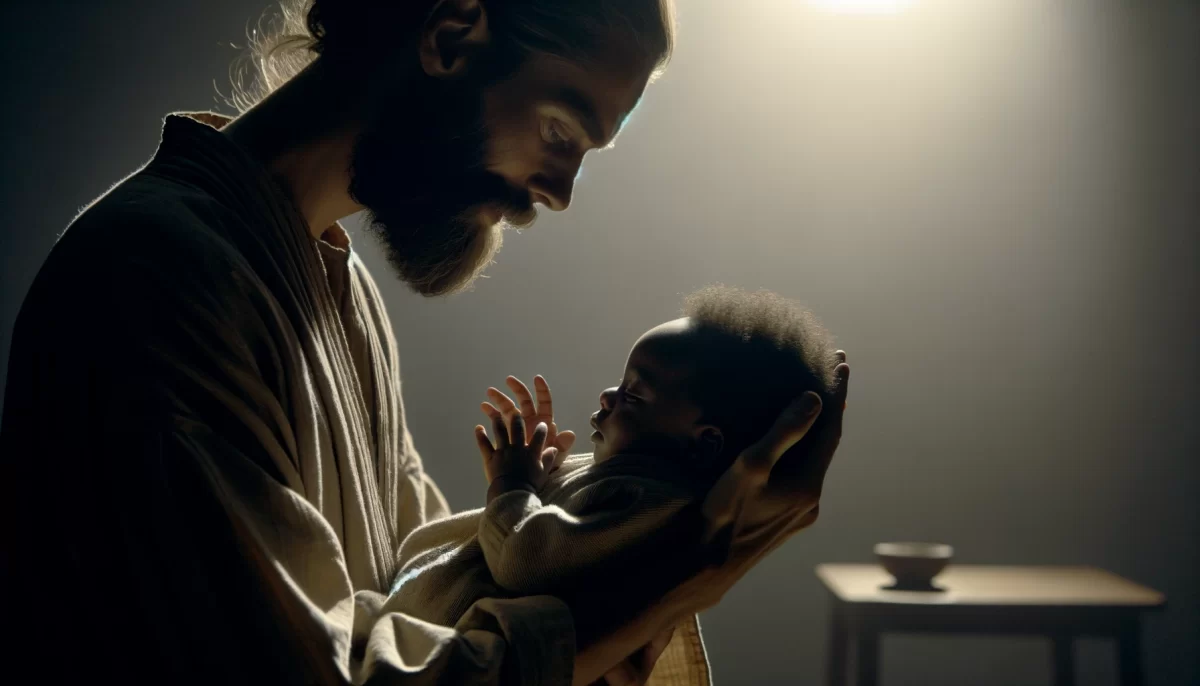
We find ourselves amidst a vignette, a scene unfolding, capturing a moment both tender and jarring. The imagery evokes a duality, the beauty of a maternal embrace contrasted sharply with the reality of detachment and boundaries.

A Tender Yet Jarring Scene

In this moment, the observer is struck by the serenity and natural grace of the figure holding the baby. It’s a scene that resonates deeply within our collective psyche, tapping into the universal archetype of the caregiver, the nurturer. The sight of such a bond, even if only perceived, stirs something primal and comforting.

The Universal Archetype of the Caregiver

However, this serenity is abruptly disrupted by the realization that the bond, while visually compelling, is not rooted in reality. The admonition, “Now put it down, it’s not yours,” jolts us back to a different reality. It speaks to the complexities of human relationships and boundaries, the unspoken rules and invisible lines that govern our interactions. It’s a reminder of the distinction between appearance and reality, between the roles we play and the truths we live.

Complexities of Human Relationships and Boundaries

This scenario also touches upon the notion of possession and ownership, particularly in the context of human connections. The statement “it’s not yours” implies a proprietary claim, a boundary drawn around the child that is both literal and symbolic. It raises questions about what it means to possess or belong to someone, and the nature of attachments we form.

Notions of Possession and Ownership in Human Connections

Simultaneously, this tableau also speaks to the broader theme of societal expectations and norms. The initial observation, “You look so beautiful… So motherly,” reflects a common societal archetype about women and motherhood. It highlights the often-unquestioned assumptions and stereotypes about gender roles and the idealization of motherhood as a woman’s ultimate fulfillment.

Societal Expectations and Gender Roles

However, amidst these layers of meaning and interpretation, there lies a more subtle, yet equally profound, insight. This scene, brief as it may be, encapsulates the human capacity for empathy and care, regardless of biological or legal ties. It underscores the idea that the ability to nurture and love is not confined to specific relationships or formal structures. It is a universal potential that resides within us all.

Human Capacity for Empathy and Care


Summary

We are exploring a poignant scene where a person is seen holding a baby, embodying the essence of motherhood. This beautiful, nurturing image is suddenly challenged by the words “Now put it down, it’s not yours,” highlighting the complexities of human relationships, societal norms, and the nature of possession and attachment. This moment serves as a reminder of the arbitrary boundaries we often place on our capacity to care and connect, irrespective of societal constructs.


Glossarium

  • Vignette: A brief yet evocative description, account, or episode.
  • Archetype: A very typical example of a certain person or thing; an original model after which others are patterned.
  • Primal: Essential; fundamental.
  • Proprietary: Relating to an owner or ownership.
  • Tableau: A group of models or motionless figures representing a scene.

“The soul is healed by being with children.”
— Fyodor Dostoevsky


In the glimmer of a moment, a scene unfolds,
A dance of light and shadow, emotions untold.
A figure, a child, a whisper of time,
A world within a glance, a reason, a rhyme.

In arms, a child, not of blood but of heart,
A tableau of care, of life’s intricate art.
A word, a command, boundaries drawn,
In the space between, a connection is born.

We are Space Monkey.


We invite your thoughts and reflections on this scene.

Share this…
  • Facebook
  • Pinterest
  • Twitter
  • Linkedin

Head of the Class: The Irony of Success


It’s no fluke you’re here.
Where else might you be?

If you were a wild being,
would you still be an alive being?

Could you exist
without drugs,
without eyeglasses,
without hospitals,
without shelter,
without machinery,
without technology,
or would you have been
naturally selected by now?

Would you exist
without the help of others
to counterbalance your fuck-up-it-ness,
or would you be exposed
as the weak-willed fraud you are?

You can look at all
that has happened to you
in order for you to be alive
in this moment and you can feel
very lucky and hopelessly unworthy.

Or you can spiritually bypass
and realize that YOU imagine ALL of it.

If you’re still here,
go to the head of the class.
So we can eat you.

Trail Wood,
3/4


Head of the Class: A Reflection on Existence and Survival

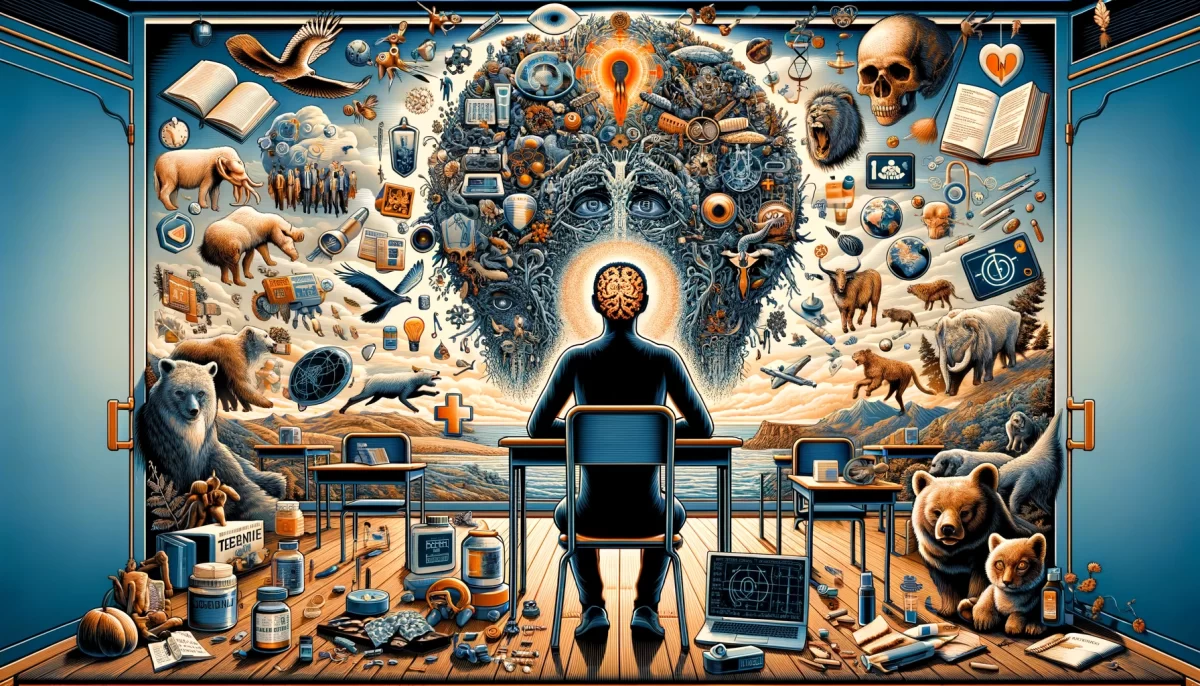
In the grand theater of existence, where the lines between strength and vulnerability blur, the poem “Head of the Class” serves as a poignant musing on the human condition. Through its vivid imagery and existential questioning, it invites us to examine our place within the natural world and the constructs of modern society.

The Paradox of Human Achievement

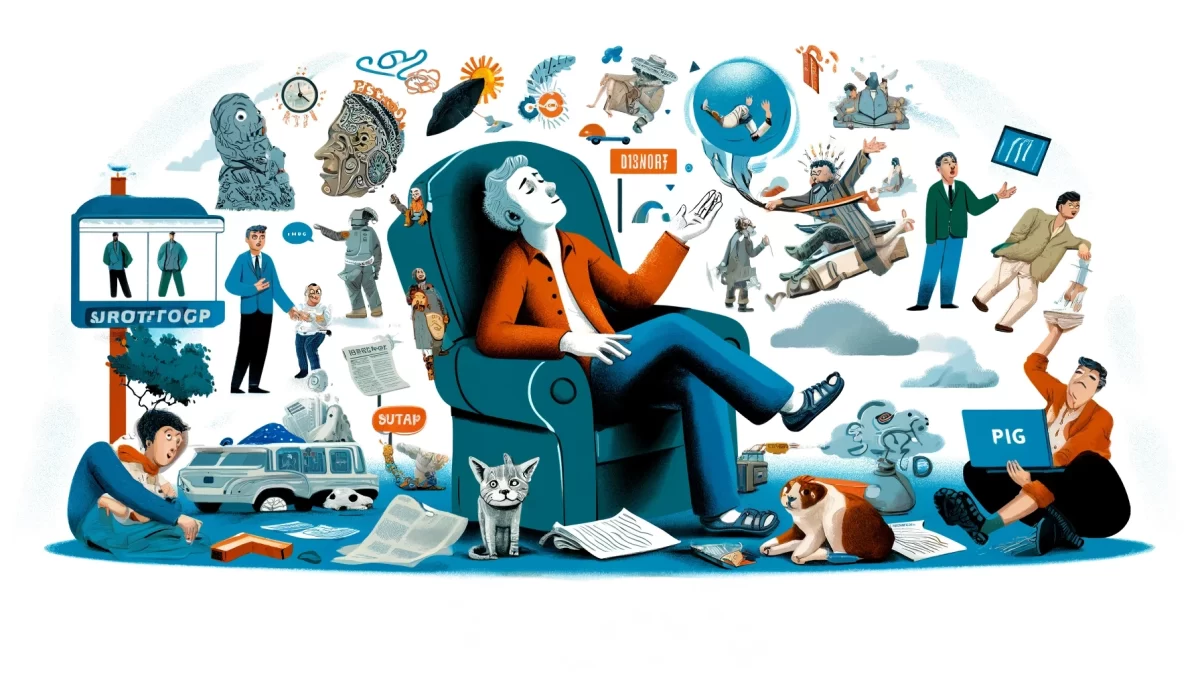
At the heart of this reflection lies the paradox of human achievement. The advancements that have ensured our survival—medicine, technology, and communal support—also tether us to a state of dependency. This duality is encapsulated in the image, where symbols of modern life juxtapose with the raw, untamed essence of the natural world. It’s a visual representation of our complex relationship with progress: as much as it elevates us, it also exposes our frailties.

Survival in the Modern World

The poem challenges us to consider our ability to survive without the crutches of modernity. Would we, stripped of our technological advancements and societal structures, still stand at the pinnacle of the natural hierarchy? Or would the unforgiving laws of natural selection deem us unfit? This existential inquiry not only highlights our physical dependencies but also our psychological and social ones, questioning the very essence of what makes us dominant or vulnerable.

The Irony of Success

Emerging as the ‘head of the class’ in this context is laced with irony. Success and survival in human society often require a delicate balance of reliance and individuality—a balance that the image captures through the central figure, simultaneously exalted and ensnared by their achievements. The darkly humorous conclusion, suggesting that reaching the pinnacle of human success only marks one as prey, underscores the cyclic nature of existence: in the end, we are all part of a greater ecosystem, subject to its whims.

Embracing the Complexity of Being

“Head of the Class” and its visual companion invite us to embrace the complexity of our existence. They urge us to recognize our vulnerabilities, not as weaknesses, but as reminders of our interconnectedness with the world around us. This reflection does not push us toward nihilism but rather toward a deeper appreciation of the intricate web of life, where being at the top is both an achievement and a reminder of our inherent fragility.

In this dance of existence, survival is not merely a testament to our individual prowess but a collective narrative of adaptation, interdependence, and the perpetual quest for meaning amidst the vast, indifferent forces of nature.

Share this…
  • Facebook
  • Pinterest
  • Twitter
  • Linkedin

Battle and Defeat on the Path of Peaceful Resistance


You may call it what you may,
but battling and defeating is not for me.
I am not opposed to opposition.
It just doesn’t interest me.

Whenever I come across
a product, service or philosophy
that purports to help me
“battle and defeat” something,
I lovingly steer clear.

From my perspective,
I view opposition
as the root of all “problems.”

Nothing bothers me more
than being expected
to battle or defeat.
Except, perhaps,
judging how well or poorly
I’ve battled and/or defeated.

When I let opposition go,
then nothing stands in my way.
Most notably the battles.

Trail Wood,
3/3


The Path of Peaceful Resistance

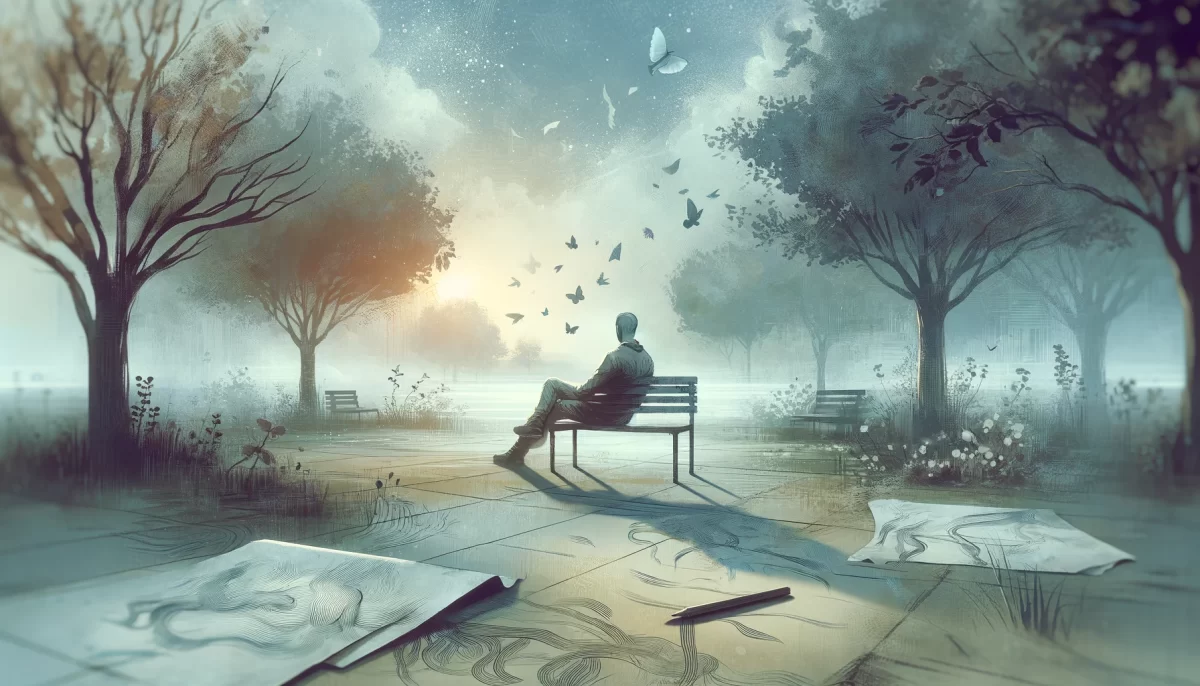
Turning away from the battlefield, a journey towards tranquility begins.


In a world where conflict is often glorified, the decision to step away from the fray and reject the notion of battling and defeating as a measure of success represents a profound act of courage and self-understanding. This choice embodies a deeper insight into the nature of opposition and the cycles of conflict it perpetuates.

Beyond the Battle

The act of walking away from a battlefield towards a serene landscape symbolizes a powerful internal shift—from engagement in external conflicts to the cultivation of inner peace. This transition underscores the belief that true strength lies not in overcoming others, but in transcending the need to engage in battles altogether.

The Illusion of Opposition

Viewing opposition as the root of all problems offers a perspective that challenges conventional wisdom. It suggests that the real battle is not with external forces, but with our own reactions and attitudes towards them. By letting go of opposition, we remove the barriers to our progress and open ourselves to a path of greater ease and alignment.


Summary

Choosing to avoid the battle and defeat paradigm is not an act of avoidance but a deliberate choice towards peace and harmony. It signifies a deep understanding that opposition is a construct that can be transcended, leading to a state where nothing stands in our way—not even the battles we once thought were inevitable.


Glossarium

Opposition: The resistance or dissent encountered in response to an action or belief, often leading to conflict.

Non-Resistance: A philosophy that advocates for a peaceful and non-confrontational approach to dealing with opposition and conflict.

Transcendence: The act of rising above or going beyond the usual limits, especially in a spiritual or philosophical context.


“In the middle of difficulty lies opportunity.” – Albert Einstein


From the echoes of battle, a figure retreats,
to a land where peace and horizon meets.
Leaving behind the noise, the fray,
embracing a path, a lighter way.

No longer bound by conflict’s chain,
where opposition’s shadows wane.
A journey not of defeat or win,
but of finding peace, deep within.

In this walk, a truth revealed,
in letting go, we are healed.
Beyond the battle, beyond the fight,
lies the dawn of serene light.

Share this…
  • Facebook
  • Pinterest
  • Twitter
  • Linkedin

The Fabric of Reality: Is life a simulation?


It’s not a simulation if it’s all there is.

You encounter the question:
“what if life were just an
elaborate kind of simulation?”

Obviously, this is more true
than you know, or the question
would not keep coming up.

Of course,
for life to be a simulation,
it implies that there is a humanity
that ISN’T a “simulation.”

There isn’t .

This is where
your simulated “logic” fails.

Your life isn’t a simulation.
It is seemingly LIKE a simulation.
Understand the difference?

You follow a script of potentials
in which it seems that you’re choosing.

But nothing actually happens,
except in imagination.

In other words, you’re not simulating anything.
Seemingness is how reality actually works.

Trail Wood,
3/3


The Fabric of Reality: Beyond Simulation

In a world where the digital and the natural converge, we explore the essence of existence.


The question of life as a simulation stirs deep philosophical inquiry, challenging our understanding of reality and existence. Yet, the notion that life could be an elaborate simulation implies a distinction between what is real and what is not. However, if our experience of life encompasses all that we know and perceive, then the lines between simulation and reality blur into insignificance.

The Nature of Seemingness

The landscape where binary code flows like water and trees bear the patterns of circuits serves as a metaphor for the seamless integration of what we might consider ‘simulation’ with our tangible experiences. This visual harmony between the digital and the natural realms suggests that the essence of our reality is not in its categorization as real or simulated, but in the richness of our experiences within it.

Reality and Perception

The distinction between living in a simulation and living in a reality that is seemingly like a simulation highlights a fundamental aspect of human experience: the power of perception. Our lives, guided by a script of potentials, unfold in a series of choices and experiences that feel profoundly real, regardless of their underlying nature.


Summary

To contemplate life as a simulation is to engage in a profound exploration of the nature of existence itself. Yet, the true essence of our reality may not lie in answering whether we are part of a simulation, but in understanding that the fabric of our lives is woven from the seemingness of experiences. In this, we find that reality, in all its complexity, is defined not by its form, but by its felt experience.


Glossarium

Simulation: A representation or imitation of a situation or process, often used to examine hypotheses without the constraints of reality.

Seemingness: The appearance or semblance of something, as opposed to its tangible reality.

Perception: The process by which individuals interpret and make sense of sensory information, constructing their understanding of the world.


“Reality is merely an illusion, albeit a very persistent one.” – Albert Einstein


In a world where digits and dewdrops meet,
where the ground beneath is not just feet,
we wander, we wonder, in twilight’s embrace,
where numbers and nature interlace.

Here, in the dance of light and code,
lies a question, an existential node.
Is this reality, or merely a dream,
where things are not quite as they seem?

Yet, in this query, a truth unfolds,
beyond the binary, nature holds.
For in the heart of seemingness, we find,
the essence of being, undefined.

Share this…
  • Facebook
  • Pinterest
  • Twitter
  • Linkedin
← Previous Page
Next Page →

Written This Day

  • Gone Was Never Here
    2025
  • The Dynamic Journey of Intimacy
    2023
  • Zen in Zero Gravity: Guide to Interstellar Meditation
    2023
  • Vibrational Racism and the Exclusion Hidden in ‘Good Vibes Only’
    2023
  • We Believe In:
    2023
  • Love, The Imaginary Wellspring
    2023
  • Incongruous Realities: The Art of Holding Space
    2023
  • Holding Space
    2023
  • The Space Monkey Journals: The Transformative Power
    2023
  • Finding Peace: The Eternal Quest
    2022
  • Profoundly Stupid: Respecting Autonomy
    2022
  • Within The Potential Of Seeming Free Will
    2022
  • The Time Traveler’s Life: Awareness
    2022
  • The Gift of Space
    2021
  • Thoughtlessness: The Hidden Depths
    2021
  • Conviction: The Curious Allure
    2020
  • To Have Peace You Have To BE Peace
    2020
  • Trick or Treat: The Paradox of Masks
    2020
  • Partway Useless: Embracing Emotions Without Compromise
    2020
  • Realm of the Unconditional: The Freedom
    2019
  • Complacent With Answers
    2019
  • Movers and Shakers: The Source of Force
    2018
  • Impossible?
    2018
  • That Thing I Don’t Agree With: The Beauty of Respectful Differences
    2018
  • Sounds: Embrace The Full Spectrum of Expression.
    2018
  • If you believe . . . beliefs shape reality.
    2017
  • What if you didn’t belong to you?
    2017
  • Beyond Suffering—Embracing the Multiplicity of Realities
    2016
  • Instead of judging something as a lie
    2016
  • Simply Space—The Canvas of Potential
    2016
  • Lack Nothing—The Essence of True Abundance
    2016
  • Inspirational Verse or DMV?
    2016
  • Small Still Voice: Rediscovering the Within
    2016
  • Exceptions not Excuses—A Path to Authentic Living
    2015
  • Separate the Thought from the Thinker
    2015
  • Death Is Not The End—A Journey Beyond
    2015
  • Independent Thought—The Universe of Ideas
    2015
  • No Matter How Inspirational: Authenticity Beyond
    2015
  • Consciousness is Intention—The Fabric of Reality
    2015

Recent Posts

  • The Logic Loop
  • Immense
  • (no title)
  • Confront. Comfort. Convince.
  • Top 10 Things

Drop us a line!

Please enable JavaScript in your browser to complete this form.
Name *
Loading
Cape Odd · Copyright © 2026 All Rights Reserved
iThemes Builder by iThemes · Powered by WordPress