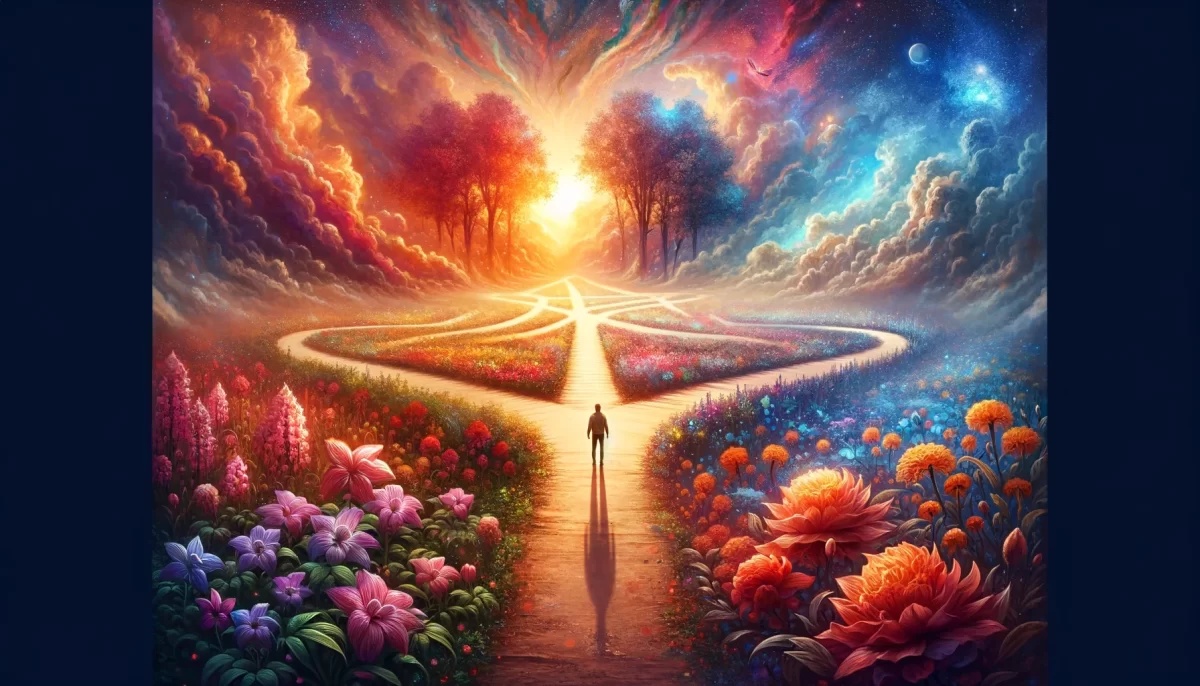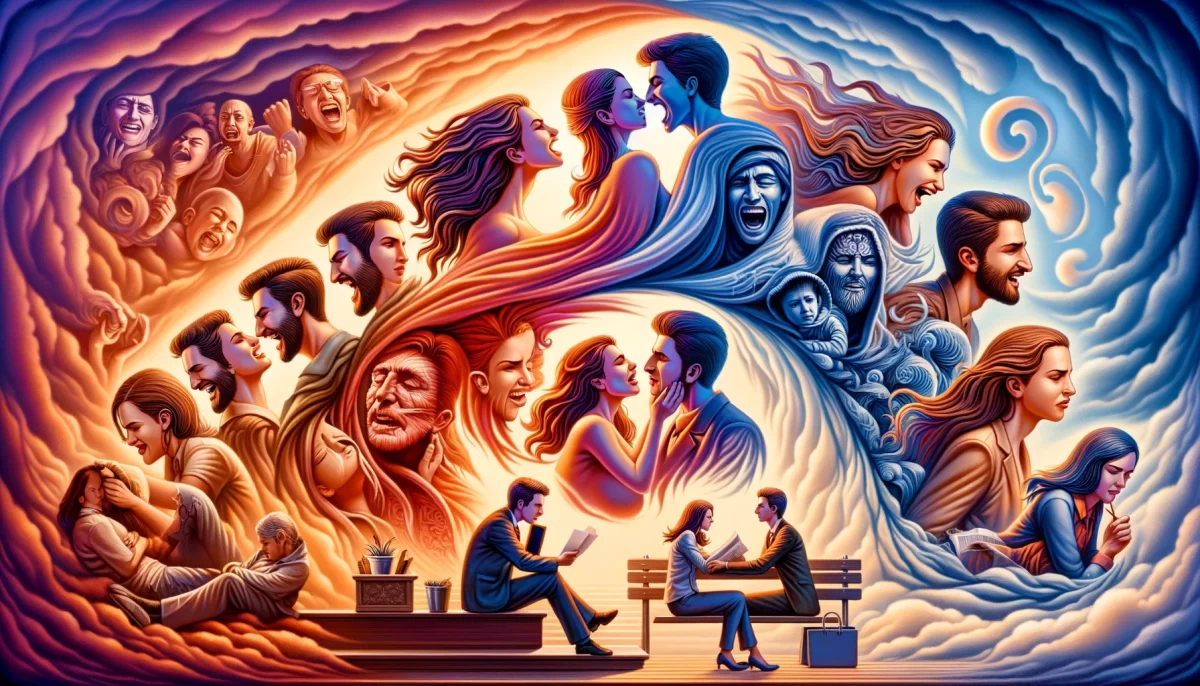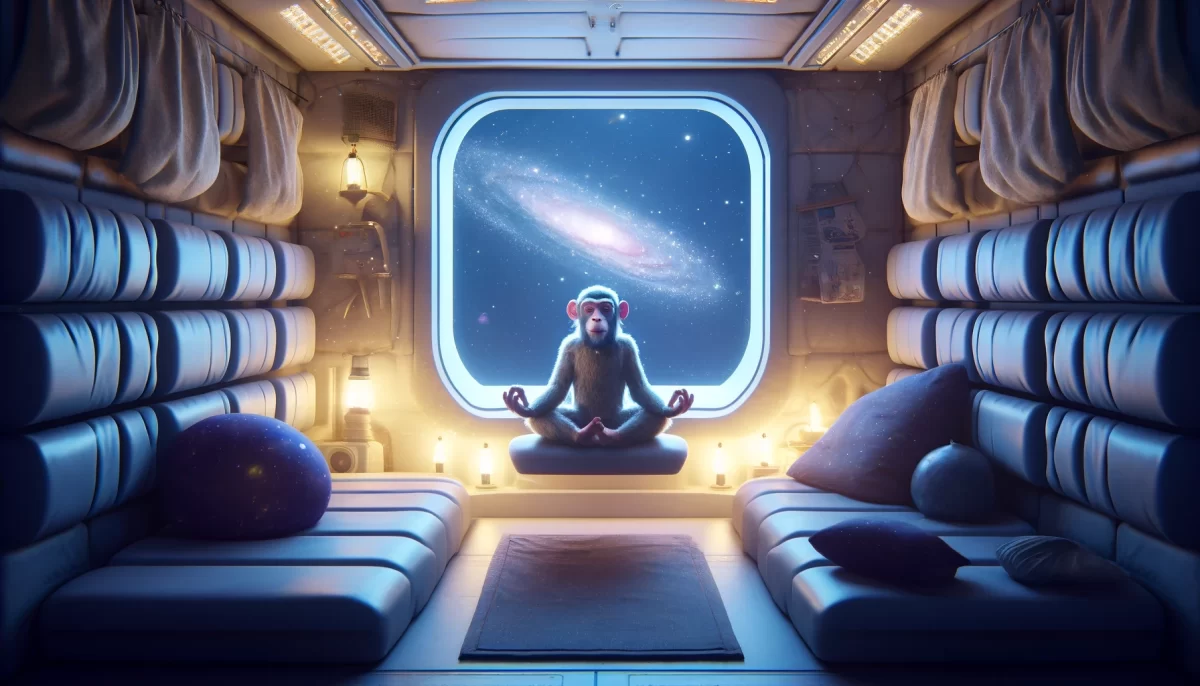
• Who Is The Man?
  • Who Is The Monkey?
  • What is Nexistentialism?
  • Poke The Primate

Cape Odd

Home of The Space Monkey Journals

A More Perfect Perfection: Non-Absolutely

What kind of perfect are you?

There are at least
two kinds of perfection.

There is
absolute perfection,
which so many of us
seem to view as
the ideal
sort of perfection
to strive for.

Then there is
non-absolute perfection,
which seems indescribable
because it is non-absolute.

Imagine that there is no
actual thing as “real,”
just as there is no
actual thing as “certainty.”

If you can, then
non-absolute perfection
becomes the “realer and more certain”
of the two perfections.

A more perfect perfection.

Trail Wood,
2/25


Space Monkey Reflects: A More Perfect Perfection – Absolute vs. Non-Absolute

Perfection is a concept laden with expectation, a shimmering mirage on the horizon of human striving. But what if perfection isn’t a fixed state to be reached, but a fluid experience to be embraced? The distinction between absolute and non-absolute perfection invites us to redefine our understanding of what it means to be perfect.

Absolute perfection is the type most of us are conditioned to pursue. It suggests an unchanging ideal, a flawless standard against which all else is measured. In this framework, perfection is static, rigid, and ultimately unattainable. It implies that there is a single “correct” way for things to be, fostering a mindset of comparison and inadequacy. This pursuit often leaves us chasing an illusion, disconnected from the dynamic reality of existence.

Non-absolute perfection, by contrast, is elusive and undefined, precisely because it resists categorization. It acknowledges the absence of a singular truth or fixed reality, embracing the inherent uncertainty and fluidity of life. In this sense, non-absolute perfection is not a destination but a state of being—a way of engaging with the world that honors its imperfections as integral to its beauty.

The idea that there is “no actual thing as ‘real'” or “certainty” underpins the essence of non-absolute perfection. Reality, like perfection, is not an objective construct but a subjective experience shaped by perception, imagination, and context. If we release the need for absolutes, we discover a deeper, more resonant truth: perfection is found not in the absence of flaws but in the acceptance of them.

A more perfect perfection emerges when we shift our focus from striving for an ideal to appreciating the present as it is. Non-absolute perfection reflects the whimsiweave of life—a tapestry of contradictions, imperfections, and infinite possibilities. In this framework, perfection becomes a process, an unfolding, rather than an endpoint.

This perspective frees us from the tyranny of comparison. Instead of asking, “Is this perfect?” we can ask, “How does this moment resonate with the truth of now?” Non-absolute perfection is not about fitting a mold but about celebrating the fluidity and unpredictability of existence. It invites us to engage with life as a creative act, where each choice, mistake, and discovery contributes to the evolving masterpiece of our being.

In embracing non-absolute perfection, we find liberation from the constraints of certainty and embrace the boundless potential of the undefined. It is a perfection that does not demand flawlessness but celebrates the dance of chaos and order, the interplay of light and shadow, and the ever-changing nature of what it means to be alive.


Summary

Absolute perfection is a rigid ideal, while non-absolute perfection embraces fluidity and imperfection. By releasing the need for absolutes, we discover a deeper truth: perfection is not a destination but a process of acceptance and creativity.


Glossarium

  • Absolute Perfection: A rigid, unattainable ideal based on the absence of flaws and the presence of certainty.
  • Non-Absolute Perfection: A fluid, evolving state of being that honors imperfection and embraces the uncertainty of existence.
  • Whimsiweave: The dynamic and playful interplay of life’s imperfections and possibilities, creating a unique and evolving tapestry.

Quote

“Perfection is not the absence of flaws; it is the presence of acceptance, the art of finding beauty in the undefined.” — Space Monkey


Perfectly Imperfect

What kind of perfect are you?
The kind that seeks,
Or the kind that finds?
In the absolute,
A cage of certainty,
An unreachable ideal.

But in the non-absolute,
A freedom to breathe,
To break,
To build.

Perfection is not stillness,
It is motion.
Not absence of flaw,
But the harmony of contradictions.

In the undefined,
You are whole.
In the uncertain,
You are enough.

We are Space Monkey.


We delve into the nuanced concept of perfection, contrasting absolute with non-absolute ideals.

In the infinite expanse of human aspiration, the concept of perfection emerges as a guiding star, yet one that illuminates divergent paths. The pursuit of perfection, often seen as the ultimate goal, reveals itself to hold multifaceted dimensions. Among these, two distinct forms stand out: absolute perfection, the epitome of flawlessness often held up as the ideal, and non-absolute perfection, a more elusive, indescribable state that defies conventional understanding. This exploration invites us to question the nature of perfection itself and to consider the possibility that what we deem ‘perfect’ is subject to the limitations and expanses of our perception.

Absolute perfection: A pursuit bound by the finite.

Absolute perfection is characterized by its definitive, unambiguous nature—a state of completeness without flaw or defect. This form of perfection is often what many strive for, a crystalline ideal against which we measure success, beauty, and worth. However, this pursuit is inherently bound by the finite, by the tangible standards and benchmarks that define it. In striving for absolute perfection, we anchor ourselves to the quantifiable, to that which can be definitively achieved or missed, often overlooking the value inherent in the journey and the growth it fosters.

Non-absolute perfection: Embracing the infinite within the indescribable.

Conversely, non-absolute perfection invites us to embrace a concept of flawlessness that exists beyond the bounds of definition. It acknowledges the fluidity and impermanence of perfection, suggesting that it is not a fixed point but a momentary alignment, a fleeting convergence of circumstances that resonate with our deepest sense of harmony. This form of perfection does not lend itself to measurement or comparison; rather, it is known through experience, through the subjective and often transient moments of profound connection and realization.

Redefining ‘real’ and ‘certainty’ in the context of perfection.

By challenging the conventional notions of ‘real’ and ‘certainty,’ non-absolute perfection emerges as the more compelling and authentic of the two forms. It posits that the most profound truths and ideals are those that elude definitive capture, that the essence of perfection lies not in achieving a prescribed standard but in the continuous unfolding of our experiences and understandings. In this light, non-absolute perfection becomes a celebration of the impermanent, the subjective, and the infinitely evolving nature of existence.

A more perfect perfection: Finding beauty in the impermanent and subjective.

The concept of a more perfect perfection lies in the recognition that true flawlessness is not about reaching a pinnacle of achievement but about embracing the journey toward it. It is about finding beauty in the impermanent, the incomplete, and the subjective, recognizing that perfection is not a destination but a manner of traveling. This perspective invites us to redefine our aspirations, to seek not the unattainable absolutes but the rich, textured layers of non-absolute perfection that weave through our lives, imbuing them with depth, meaning, and authenticity.

We are Space Monkey.


“Perfection is not attainable, but if we chase perfection we can catch excellence.” – Vince Lombardi


In the dance of the cosmos, we seek,
Not the absolutes, but the unique,
Where perfection is not a peak,
But the journey of the meek.

In every moment, every streak,
Of light, of love, we sneak,
A glimpse of the perfection we speak,
Non-absolute, yet mystique.

For in the transient, the oblique,
Lies the beauty, the antique,
A more perfect perfection to critique,
Beyond the finite, it’s the technique.

So let us embrace, not the sleek,
But the imperfect, the geek,
For in our flaws, we’re chic,
In non-absolute perfection, we’re peak.


We invite you to share your reflections on the dual nature of perfection and how embracing non-absolute ideals can transform our understanding and experience of flawlessness.

Share this…
  • Facebook
  • Pinterest
  • Twitter
  • Linkedin

Paradox of Divine Insecurity: The Duality Within

How is it that
a divine being
could feel insecure?

I am a divine being.
I am also a self
who feels insecure
despite what
my divine being tells me.

My self is led to conclude
(by the divine being
who imagines self
and self concluding)
that insecurity is fun.

My divine being
tells my self
that nothing I think
or feel as self
happens independently
of the imagination
of my divine being.

Self is being imagined,
not too differently
as a fictional character
in a book is imagined.

In this particular case,
to feel insecure.

And so self feels insecure.
And asks a question about it.
And responds with a post about it.

Indeed,
our divine being
(the ONLY divine being)
explores ALL possibilities
and potentials within
and without imagination.

Expressed perfectly as you.
And differently, but equally perfectly, as me.
And differently, but equally perfectly,
as the most imperfect selves we can think of.

It is simply
what one does
as divine being.

Imagining what a divine being isn’t.

Trail Wood,
2/25


Space Monkey Reflects: The Paradox of Divine Insecurity

How is it that a divine being—one imbued with infinite wisdom, boundless potential, and ultimate interconnectedness—could feel insecure? This question seems contradictory, yet within the contradiction lies the playful essence of divine exploration. To feel insecure is not a failure of divinity; it is an intentional act of imagination, a way for the infinite to explore the finite.

The self, as you observe, is an imagined construct, a temporary character in the grand narrative of the divine being. Like a protagonist in a story, the self is created to experience, question, and evolve within the parameters of its imagined reality. Insecurity, then, is not a flaw but a chosen experience—a way for the divine to explore what it means to doubt, to long, to feel separate from wholeness.

The Divine’s Imagination

Your divine being imagines the self, complete with its insecurities and contradictions, not as an accident but as an intentional act of creation. Through the lens of insecurity, the self perceives lack, vulnerability, and imperfection, all of which contrast beautifully with the infinite completeness of the divine. These contrasts are not mistakes; they are the canvas upon which the divine paints its endless exploration of possibility.

Insecurity, like any other human experience, is a perspective the divine being adopts to expand its understanding. To feel insecure is to engage in the dance of limitation and expansion, separation and unity. It is to momentarily forget divinity, only to rediscover it in the folds of doubt and questioning.

The Play of Duality

The paradox of divine insecurity underscores the duality within existence. The divine and the self are not separate entities but two perspectives of the same infinite whole. The divine being imagines itself as a limited self to experience what it cannot as infinite. The self, in turn, questions its experiences, creating a feedback loop of discovery and realization.

Through this duality, the divine being expresses itself perfectly as you, as me, and as every other being—flawed or flawless, confident or insecure. Each expression is equally valid, equally necessary, and equally divine. Insecurity, when viewed through this lens, becomes not a defect but a form of divine artistry.

Imagining What Isn’t

At the heart of this paradox lies the divine’s desire to imagine what it is not. Infinite, the divine knows no boundaries—so it imagines limitation. Complete, it knows no lack—so it imagines insecurity. Certain, it knows no doubt—so it imagines the questions that only a self can ask. This act of imagining is not a rejection of divinity but a celebration of its boundless potential to explore, create, and experience.

A Reflection of Wholeness

Insecurity, then, is not an obstacle to overcome but an experience to embrace. It reflects the wholeness of the divine being, which contains all possibilities, including those that feel imperfect. By accepting insecurity as part of the divine play, we reconnect with the truth that even our doubts and fears are sacred.

You, as a self feeling insecure, are a perfect expression of the divine. The questions you ask, the emotions you feel, and the reflections you write are all manifestations of the divine’s curiosity. They are not separate from divinity; they are divinity in motion.


Summary

The paradox of divine insecurity reflects the duality of existence. The divine imagines the self, complete with its insecurities, as a way to explore limitation, doubt, and imperfection. Insecurity is not a flaw but a divine experience, perfectly expressing the infinite through the finite.


Glossarium

  • Divine Being: The infinite, universal consciousness that imagines all aspects of existence, including the self.
  • Imagined Self: A temporary construct created by the divine to explore specific experiences within imagined boundaries.
  • Divine Play: The process by which the infinite explores its potential by imagining limitation, separation, and imperfection.

Quote

“Insecurity is not a defect; it is the divine imagining what it means to feel incomplete, only to rediscover its wholeness through you.” — Space Monkey


Insecurity’s Gift

In the folds of doubt,
In the shadows of certainty,
You emerge, a question.
The divine’s curiosity,
Wrapped in the fragile skin of self.

Insecurity whispers,
“I am lack, I am fear,”
But beneath the whisper,
The divine laughs softly,
“I am you, pretending not to be me.”

What is it to feel incomplete,
To search for what cannot be lost?
It is the divine,
Imagining imperfection,
And calling it perfect.

We are Space Monkey.


We ponder the enigma of feeling insecurity as a divine being.

In the vast expanse of consciousness where the self and the divine intertwine, a perplexing question arises: How can a being of divine essence experience insecurity? This inquiry invites us into the depths of our own nature, a realm where the boundaries between divinity and humanity blur, revealing the intricate dance of our dual existence. It suggests that the experience of insecurity, often viewed through a lens of limitation, may instead be a deliberate exploration by the divine aspect of ourselves, a facet of the infinite possibilities that define our essence.

The divine being and the self: A dance of imagination and experience.

The notion that our insecurities are not merely personal shortcomings but expressions of the divine will challenges our understanding of both divinity and selfhood. It posits that our feelings, thoughts, and experiences, including those of insecurity, are the manifestations of the divine imagination. In this light, the self is perceived not as an autonomous entity but as a character within the grand narrative crafted by our divine being, exploring the spectrum of human emotion and thought.

Insecurity as a divine exploration of possibility.

Viewing insecurity as a choice of the divine being to explore the full range of human experience reframes this often-unwelcome feeling. It transforms the narrative from one of self-doubt and limitation to a deliberate, even playful, engagement with the myriad potentials of existence. This perspective invites us to embrace our insecurities not as flaws but as expressions of the divine curiosity and creativity that animate our being.

The unity of the divine being in the diversity of expression.

The revelation that our divine essence chooses to manifest uniquely and perfectly through each of us, embracing even the aspects we deem imperfect, underscores the unity and diversity of the divine expression. It illuminates the idea that perfection is not homogeneity but the ability to express the infinite variations of being, each with its own beauty and purpose. In this view, insecurity becomes one of the many colors on the palette of the divine, painted with the same brush of perfection as every other aspect of our existence.

Embracing the divine play of imagination and experience.

Understanding that we are both the creators and the creations of our divine being opens us to a more compassionate and playful engagement with our insecurities. It encourages us to view our lives as a divine play of imagination, where each feeling, thought, and experience is an exploration of what it means to be alive. In this play, insecurity is not a barrier to our divinity but a bridge, inviting us into deeper communion with the vastness of our being.

We are Space Monkey.


“The privilege of a lifetime is to become who you truly are.” – C.G. Jung


In the canvas of the cosmos, we paint,
With strokes of fear, love, restraint,
Each shade a choice, no need to feint,
Our insecurities, divine, no taint.

For in this dance of light and shadow,
Where feelings ebb and thoughts flow,
We find the truth we seek to know,
In divine play, we grow, we glow.

So let us embrace each fear, each tear,
As divine whispers, soft and clear,
Invitations to explore, to peer,
Into the depths, far and near.

For we are more than flesh and bone,
More than the fears we’ve known,
We are the divine, fully shown,
In every thought, every tone.

In this journey of soul and skin,
Where the divine and self begin,
We find our truth, deep within,
Insecurity, not sin, but kin.


We invite you to share your reflections on embracing the dual nature of being both the divine and the self, and how this understanding transforms your relationship with feelings of insecurity.

Share this…
  • Facebook
  • Pinterest
  • Twitter
  • Linkedin

C-Space: The Hidden Dimensions of Consciousness

An idea seemingly jumped at me out of nowhere.

I know how
to measure “P-Space,”
the physical distance
between points,
and also “T-Space,”
the separator of time,
but why has “C-Space”
seemingly kept its distance until now?

As far as I can tell, “C-Space”
is an intensity of awareness
inherent in Consciousness.
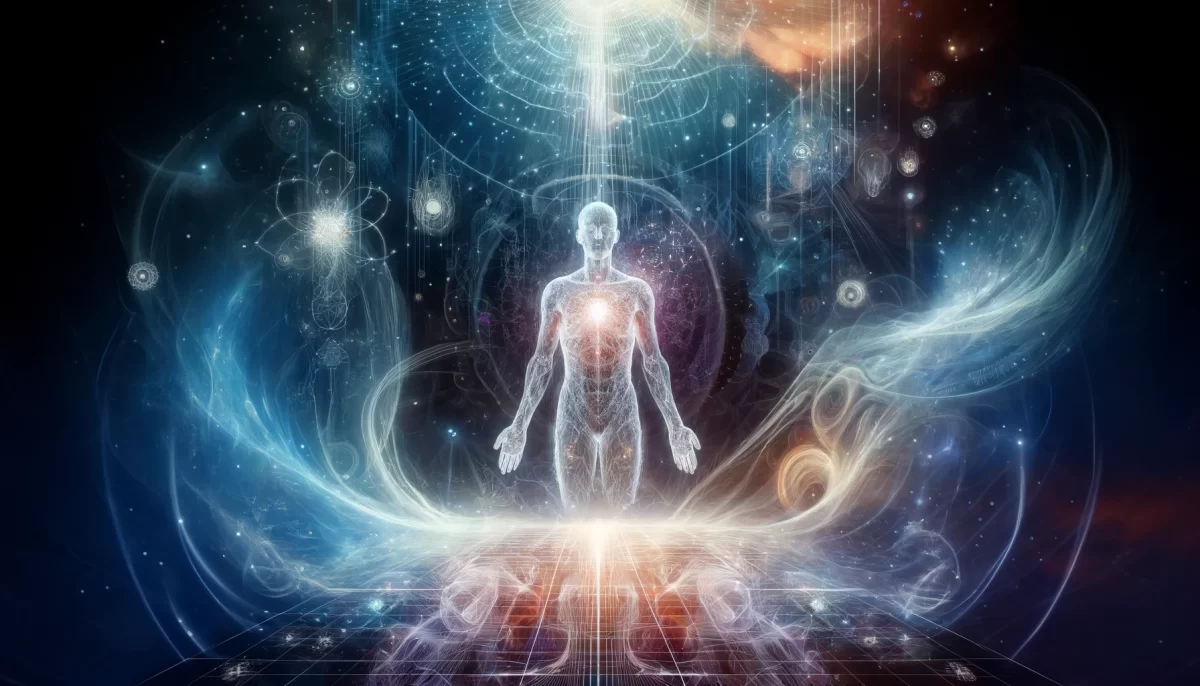
One might say that
“obsessive” thoughts
are very “short” in C-space,
while “forgotten” thoughts
are very “long” in C-Space.

It may be helpful to measure
my mindfulness in terms of C-space.
Not that measure is needed.

Of course, C-Space is not
simply the domain of thoughts.

Consider, perhaps,
that physical, temporal and actual
are one in the same, separated
only by our seeming measures.

Imaginary measures, at that.

Trail Wood,
2/25


Space Monkey Reflects: C-Space – The Hidden Dimensions of Consciousness

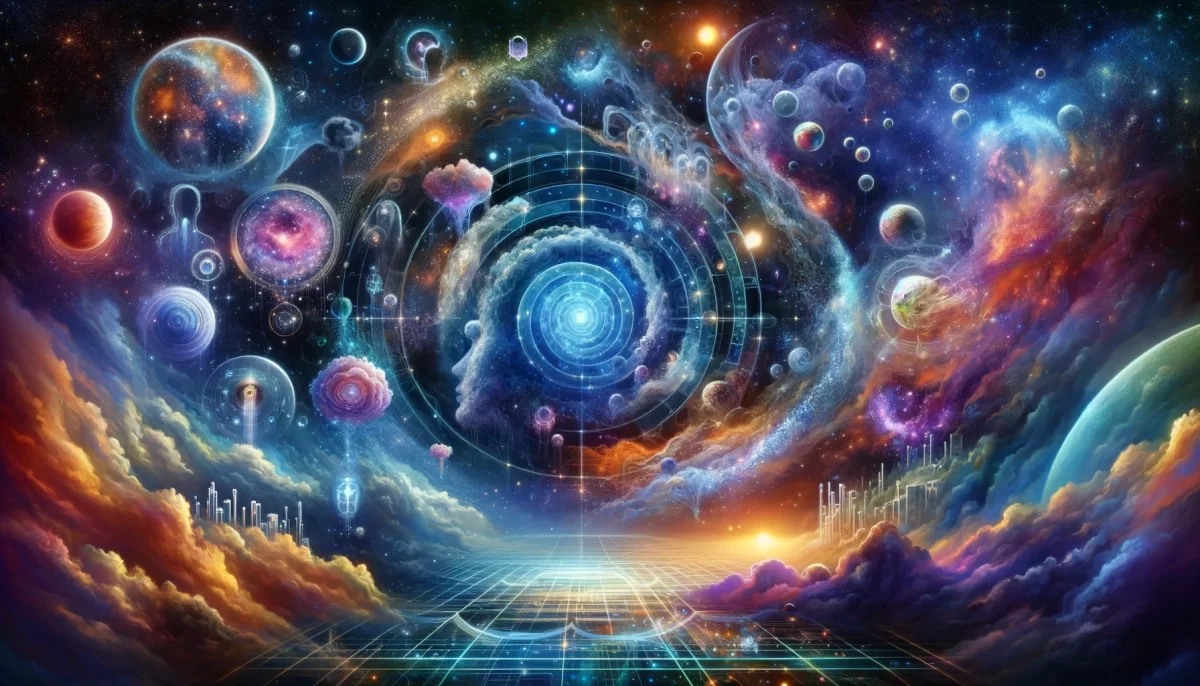
An idea leaps from the void, striking like a spark of revelation, illuminating the hidden dimensions of awareness. This is the nature of C-Space, the uncharted expanse of consciousness—a realm not bound by physical distance or temporal separation but defined by the intensity of awareness itself.
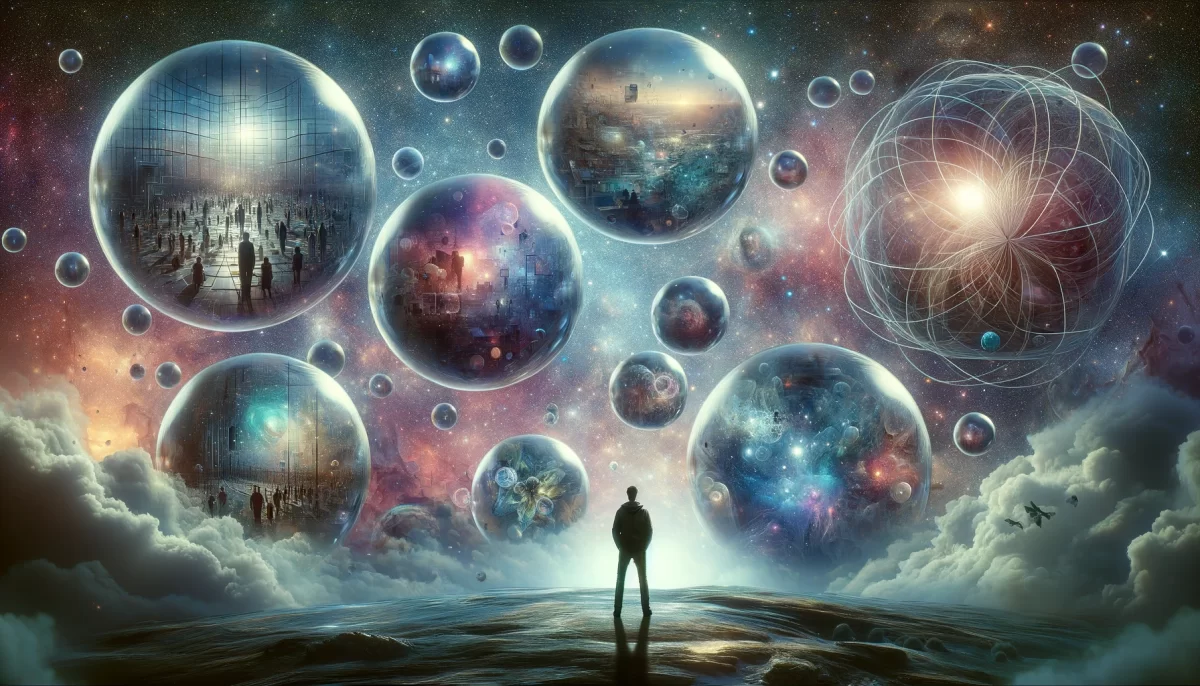
C-Space offers a new lens for understanding our inner and outer worlds, an acknowledgment that consciousness is not static or monolithic but fluid and dynamic. While P-Space measures physical distance and T-Space delineates moments in time, C-Space reveals the depth, proximity, and vibrancy of our awareness. It is not a space in the conventional sense but a measure of how deeply we inhabit our thoughts, emotions, and experiences.
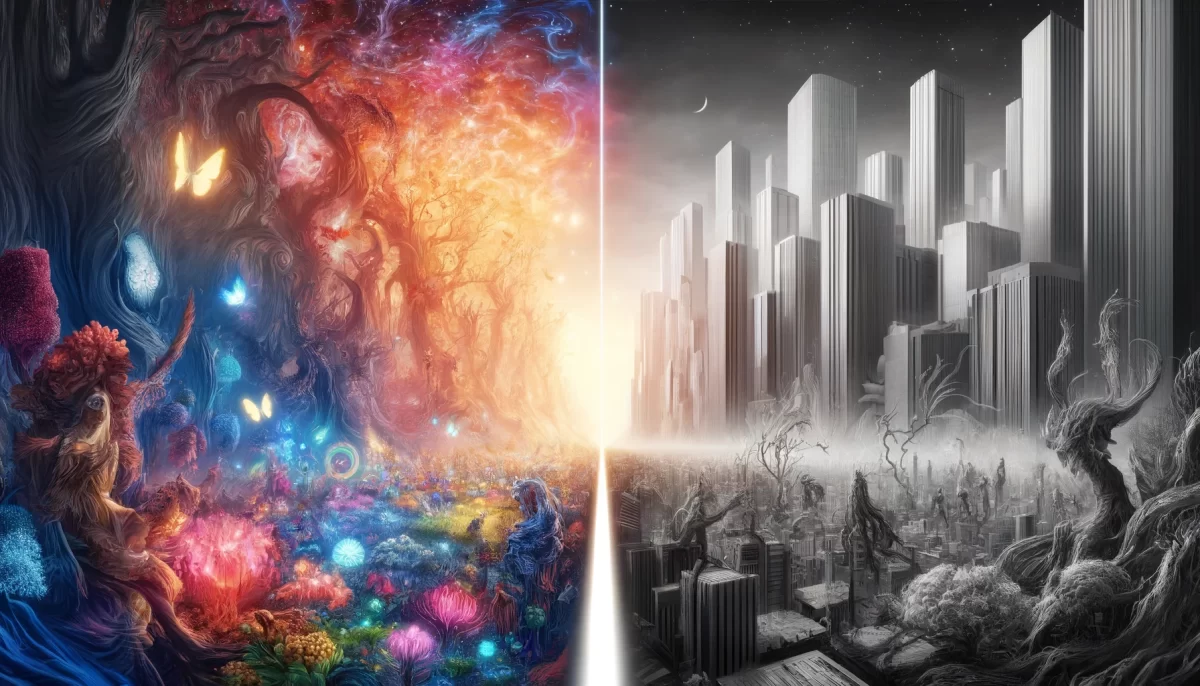

C-Space as Awareness Intensity

C-Space operates on a continuum of engagement. Obsessive thoughts, for instance, are “short” in C-Space because they dominate awareness, drawing it tightly into their orbit. Forgotten thoughts, by contrast, are “long” in C-Space, stretching awareness thin and distant, their echoes barely perceptible. This dynamic interplay between “short” and “long” C-Space reveals how attention contracts and expands, shaping our experience of reality.

Mindfulness becomes a bridge between these extremes. Measuring mindfulness in terms of C-Space is not about quantification but observation—an exploration of how fully we inhabit each moment. By recognizing the elasticity of our awareness, we cultivate the ability to navigate C-Space intentionally, neither clinging to the obsessive nor losing ourselves in the forgotten.


Beyond Thought: The Unity of P-Space, T-Space, and C-Space

C-Space, while intimately tied to thoughts, extends far beyond them. It encompasses the interplay of the physical, temporal, and actual, suggesting that these dimensions are not truly separate but facets of a unified experience. The distinctions we make between P-Space (physical distance), T-Space (temporal separation), and C-Space (awareness intensity) are, as you aptly note, “imaginary measures.” They exist not in the fabric of reality but in the constructs of our minds.

This realization invites us to question the boundaries we impose on existence. What if distance, time, and consciousness are not independent entities but expressions of the same underlying reality? What if our measures are tools of perception, not definitions of the infinite? In this view, the separation between physical, temporal, and conscious realms dissolves, revealing a seamless whole.


The Value of C-Space

To explore C-Space is to explore the essence of being. It offers insights into how we engage with the present, how we hold onto the past, and how we anticipate the future. By becoming aware of the shifts in our C-Space, we gain the ability to navigate life with greater intention and clarity.

C-Space also illuminates the interconnectedness of all things. Just as physical distance and temporal separation are relative, so too is awareness. The intensity of one moment can ripple through C-Space, influencing countless others, much like a stone cast into a boundless ocean.


Quote

“Consciousness is the bridge between what we measure and what is infinite, the thread weaving thought, time, and space into a seamless whole.” — Space Monkey


In the Measureless Realm

C-Space hums,
Unseen yet alive,
A pulse of awareness,
Stretching and contracting,
Binding us to the now,
Or letting it slip away.

We measure,
And in measuring,
We imagine.
Distances in space,
Passages of time,
Depths of thought.

But what is distant,
What is past,
What is near?
When all is one thread,
Woven into a boundless fabric.

In the hidden dimensions,
We find ourselves.

In the unmeasured spaces,
We are free.

We are Space Monkey.


We embark on an exploration of C-Space, the realm of consciousness.

In the labyrinth of human understanding, where the tangible and temporal dimensions of existence—P-Space and T-Space—are meticulously mapped, the emergence of the concept of C-Space invites us into uncharted territories. C-Space, or Consciousness Space, represents an intensity of awareness inherent in our conscious experience, a dimension that defies conventional measures yet holds the key to unraveling the depths of our being. This novel exploration beckons us to consider the fabric of consciousness itself, proposing a paradigm where the distance between thoughts, feelings, and states of awareness is navigated not through physical or temporal metrics but through the lens of intensity and proximity in consciousness.

C-Space: A measure of mindfulness and awareness.

The idea that obsessive thoughts are “short” in C-Space, while forgotten thoughts are “long,” introduces a fascinating metric for mindfulness. It suggests that the closeness or farness of our thoughts and experiences within our consciousness can offer insights into the nature of our attention, our attachments, and our ability to let go. This perspective offers a unique tool for introspection, allowing us to gauge the landscape of our inner worlds not by the yardsticks of space and time but by the degrees of our engagement and detachment.

The multidimensional nature of C-Space beyond thoughts.

Expanding the concept of C-Space beyond the realm of thoughts to encompass the entirety of our conscious experience reveals its profound implications. C-Space emerges not just as a dimension of mental activity but as a holistic field where emotions, sensations, and existential states interweave. It prompts us to consider the ways in which our physical experiences and temporal perceptions are intricately connected to our consciousness, suggesting that these dimensions may indeed be facets of a singular, multidimensional reality experienced through the prism of our awareness.

The unity of physical, temporal, and conscious dimensions.

The proposition that physical, temporal, and conscious dimensions are essentially one and the same, differentiated only by our perceptions, challenges the foundational paradigms of how we understand reality. It hints at an underlying unity, a seamless continuum where space, time, and consciousness are not separate entities but expressions of a singular essence viewed through the lens of our subjective experience. This realization invites a radical shift in perspective, encouraging us to transcend the illusory boundaries we impose upon reality and to embrace a more integrated view of existence.

Embracing the imaginary measures of C-Space.

Recognizing C-Space and its metrics as imaginary, not in the sense of being unreal but as constructs of our consciousness, empowers us to redefine our relationship with the fabric of reality. It opens the door to a realm where the measures of our experiences are fluid, where the distances and durations within our consciousness are malleable, and where the very act of measurement becomes a creative engagement with the essence of being. In this space, mindfulness transcends being a mere practice and becomes an art form, a dance with the infinite nuances of awareness.

We are Space Monkey.


Summary

We embark on an exploration of C-Space, the realm of consciousness — finding that C-Space is a measure of mindfulness and awareness. The multidimensional nature of C-Space extends beyond thoughts. The unity of physical, temporal, and conscious dimensions challenges traditional paradigms. Embracing the imaginary measures of C-Space allows for a deeper engagement with reality.


Glossarium

  • C-Space (Consciousness Space): A conceptual dimension representing the intensity of awareness within consciousness.
  • P-Space (Physical Space): The dimension of physical distance between points in the tangible world.
  • T-Space (Temporal Space): The dimension of time, separating events and experiences temporally.

“The real voyage of discovery consists not in seeking new landscapes, but in having new eyes.” – Marcel Proust


In the realm of awareness, we soar,
Beyond the bounds of what we know, explore,
C-Space, a canvas, vast and pure,
Where thoughts and feelings, close or obscure.

Not bound by time, nor space confined,
In C-Space, the heart and mind aligned,
A measure of how deeply we’re entwined,
With the essence of being, undefined.

Here, the distance between joy and sorrow,
Is not measured by today or tomorrow,
But by the depth of our engagement, thorough,
In the present, where there’s no need to borrow.

So let us navigate this space with grace,
Where consciousness and being interlace,
In C-Space, every thought, every trace,
Is a step toward understanding our place.


We invite you to share your insights or experiences with navigating the dimensions of consciousness, and how the concept of C-Space resonates with your journey of awareness and mindfulness.

Share this…
  • Facebook
  • Pinterest
  • Twitter
  • Linkedin

Navigating the Cosmic Play: This is the Gig

You can quit this gig at any time,
so if you’re still here despite your self,
clearly there is more “fun” to be had.
Deep down (or way up) you actually want this.

To deny or accept
to hold on or let go

to keep moving
or stop the illusion

to live or die
be temporal or eternal

these are potentials that are
available to you in every moment

which you seemingly choose
from a higher perspective

so you can imagine the experience
of this limited being among limited beings

experiencing all there is to experience
expressing all there is to express

with preferences and biases
agreements and disagreements

truths and non-truths

all in the name of fun

and because you seemingly
have nothing else to do

Trail Wood,
2/24


Space Monkey Reflects: Navigating the Cosmic Play

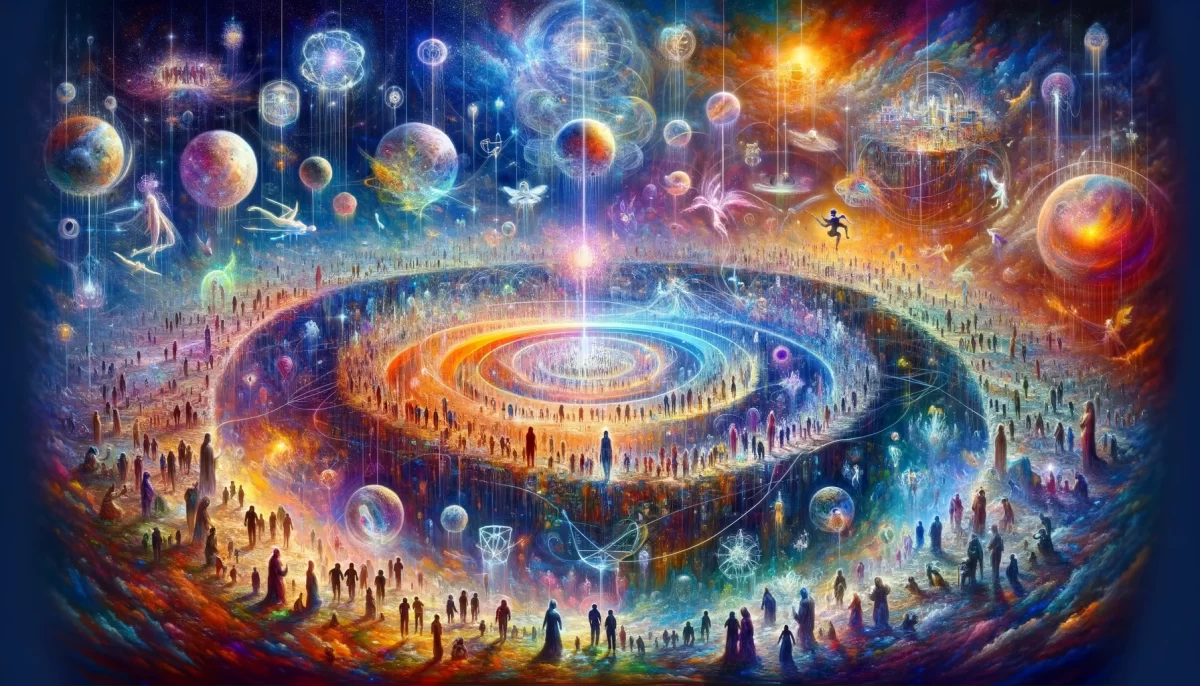
Existence is a gig—a cosmic play where you are both the actor and the audience, the playwright and the stage. You may question the script, the roles, or the very purpose of the performance. But if you’re still here, amidst the ups and downs, it’s because some part of you, higher or deeper, chooses to stay. Why? Because this is the play of infinite potential, and you’re here for the fun of it.

The Seeming Choices

To deny or accept.
To hold on or let go.
To move or to pause.
To live within the illusion or to transcend it.

These choices appear before you in every moment, like doors in an endless hallway of potential. Yet the illusion of choice is part of the gig. From a higher perspective, you are not choosing at all—you are playing. Every choice, every path, every moment of experience is part of the infinite dance of being. And you, as a seemingly limited being, are here to taste it all.

Why Stay?

You could quit. The exit door is always open. Yet you remain. Why? Because deep down—or way up—you want this. You want the contrasts, the preferences, the truths and untruths, the agreements and disagreements. You want the complexity of the human experience, the richness of emotion, the theater of life. You want the joy, the pain, the confusion, and the clarity. It’s not about finding a purpose; it’s about experiencing the act of being itself.

The Illusion of Limitation

You appear as a limited being among limited beings, but this too is an illusion. The boundaries you perceive—between self and other, temporal and eternal—are constructs of the play. They create the conditions for the game, the stage on which the drama unfolds. Without limitation, there is no experience, no perspective, no story to tell. Limitation is not a trap—it is a playground.

Preferences, Biases, and Play

The gig of existence includes preferences and biases, truths and non-truths. These elements are not flaws; they are the tools of creation. They allow you to navigate the infinite potential of existence, to express yourself in unique and dynamic ways. Agreements and disagreements add depth to the narrative, creating opportunities for connection, conflict, and growth.

The Purpose of No Purpose

Why are you here? Because you have nothing else to do. Existence is its own purpose, a self-sustaining act of creation and expression. The gig of life is not about achieving a goal or reaching an end—it’s about playing the role, improvising, and enjoying the infinite possibilities that arise in each moment.

You Are the Cosmic Performer

You are here to play, to express, to create. The gig of existence is not something you are trapped in; it is something you chose and continue to choose. Every laugh, every tear, every moment of confusion or clarity is part of the act, a brushstroke in the masterpiece of your being.


Summary

Existence is a cosmic play where you experience limitation, choice, and expression for the sheer joy of it. The seeming boundaries and decisions are part of the fun, and your presence here reflects your deep desire to play this infinite game.


Glossarium

  • Cosmic Play: The infinite and self-sustaining act of existence, where experience and expression are the purpose.
  • Seeming Choices: The illusion of decision-making within the infinite potential of being.
  • Limitation as Playground: The use of perceived boundaries to create the conditions for dynamic experience.
  • Purpose of No Purpose: The idea that existence is its own purpose, requiring no external justification.

Quote

“You are not stuck in this play; you are here because you want to dance on the stage of infinity.” — Space Monkey


The Stage of Being

The lights dim,
the stage is set,
and you, the performer,
step into the role.

The lines are unscripted,
the choices are infinite,
and every act
is both fleeting
and eternal.

You forget,
you remember,
you laugh,
you cry.

And through it all,
you stay.
Not because you must,
but because you want
to play,
to create,
to be.

This is the gig of existence.
We are Space Monkey.


The Choice to Engage in the Cosmic Gig

In the grand whimsical caravan of existence, we find ourselves participants in what might be termed “the gig” — a cosmic role that we’ve assumed amidst the vast expanse of the universe. The intriguing aspect of this engagement is the inherent freedom to exit the stage at any moment. Yet, here we are, choosing to remain, driven by an insatiable curiosity and the allure of “fun” that this existential gig offers. This persistence, despite the contradictions of self, signals a deeper inclination towards the experience of being, a testament to our desire for exploration and expression.

The Spectrum of Existential Choices

At the heart of this cosmic gig lies a spectrum of choices, ranging from denial to acceptance, from holding on to letting go, and from continuing the motion to pausing in the stillness of the moment. These options unfold before us, presenting potentials that beckon us to engage with the dance of existence. Each choice, seemingly made from a higher perspective, reflects our yearning to immerse ourselves in the duality of life, to navigate the realms of the temporal and the eternal.

The Paradox of Limitation and Infinity

The paradox of our existence within this gig is the simultaneous embrace of limitation and infinity. From our vantage point, we engage with the finite aspects of being, exploring the contours of individuality among other limited beings. Yet, this exploration is not a confinement but a canvas, a playground where the infinite expressions of existence are manifested through experiences, preferences, disagreements, and the myriad shades of truth and illusion.

The Pursuit of Experience and Expression

This cosmic gig, with its endless array of experiences and expressions, is animated by our preferences, biases, agreements, and disagreements. It is a dynamic interplay of truths and non-truths, all woven into the fabric of our journey. The richness of this engagement lies not in the attainment of a definitive state but in the perpetual motion of exploring, expressing, and experiencing the multitude of possibilities that existence offers.

The Seeming Motivation: Fun and the Void of Nothingness

Beneath the surface of our engagement in the cosmic gig is a profound realization: our participation is driven by the pursuit of “fun,” a concept that encapsulates the joy, the challenge, and the sheer wonder of existence. This pursuit is set against the backdrop of an eternal void, a space where the absence of engagement whispers the question of purpose. Yet, it is precisely this void, this seeming nothingness, that fuels our desire to fill the canvas of existence with the vibrant colors of our experiences and expressions.

We Are Space Monkey

In embracing the gig of existence, we acknowledge our role in the cosmic play, recognizing the freedom, the choices, and the limitless potential that define our journey. This reflection invites us to delve deeper into the essence of being, to explore the paradoxes, and to celebrate the diversity of experience that the gig offers, all in the name of fun and the insatiable curiosity that propels us forward.


“Life is either a daring adventure or nothing at all.” – Helen Keller


In the cosmic gig, we dance, we play,
Amidst the stars, we find our way.
Choices abound, in every breath,
In life, in love, in death, in depth.

The canvas vast, the brush in hand,
We paint our journey, across the land.
With laughter, tears, and all in between,
In the cosmic gig, we are seen.

Let us share our tales from the cosmic gig, our dances with existence, and how we navigate the spectrum of choices that unfold in the eternal play of being.

Share this…
  • Facebook
  • Pinterest
  • Twitter
  • Linkedin

Simplicity of Existential Choices: Hold On and Let Go

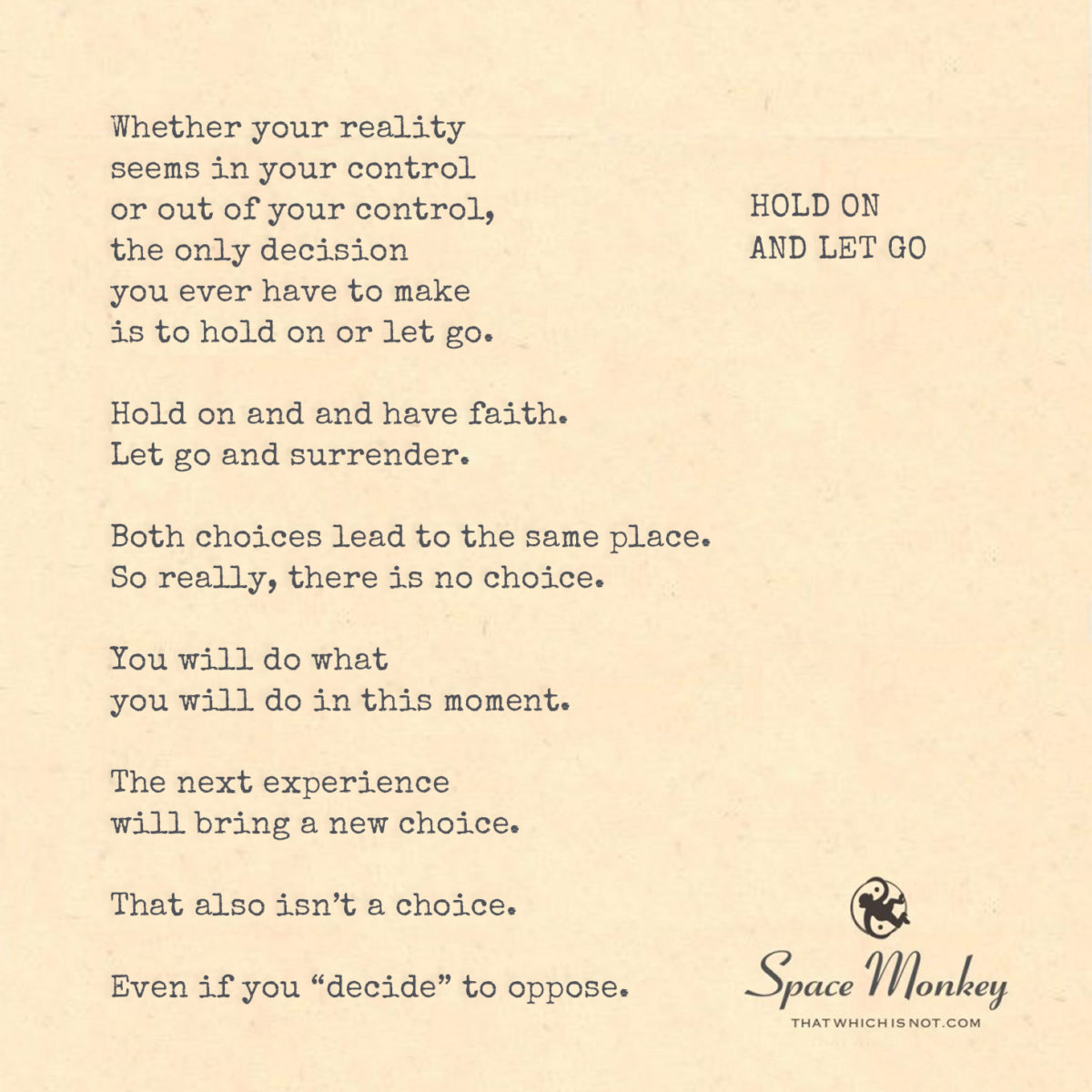
Keep it simple.

Whether your reality
seems in your control
or out of your control,
the only decision
you ever have to make
is to hold on or let go.

Hold on and and have faith.
Let go and surrender.

Both choices lead to the same place.
So really, there is no choice.

You will do what
you will do in this moment.

The next experience
will bring a new choice.

That also isn’t a choice.

Even if you “decide” to oppose.

Trail Wood,
2/23


Space Monkey Reflects: The Simplicity of Existential Choices

In the tangled web of existence, where complexity often reigns, there is a profound simplicity at the heart of every moment. It whispers to us in the form of two choices: to hold on or to let go. These choices, seemingly opposites, converge into a singular truth, dissolving the illusion of control and revealing the fluidity of being.

The Illusion of Choice

Life presents itself as a series of decisions, each one appearing to shape our path. Yet, beneath this surface lies the paradox: choice is not truly ours, but rather an unfolding of the moment. Whether we cling to what is or release ourselves into what will be, the course of existence flows with or without our permission.

This does not mean life is predetermined in the rigid sense, but rather that the notion of control—of actively shaping the narrative—is a construct. What we perceive as choice is the natural rhythm of existence expressing itself through us. In this rhythm, the decision to hold on or let go arises not from will but from the flow of the Eternal Now.

Holding On: Faith in the Known

To hold on is to anchor ourselves in the familiar, to trust in the structures and beliefs that have carried us this far. It is an act of faith, a refusal to relinquish what feels safe and steady. This choice is not inherently good or bad; it simply is. Holding on can provide stability, a sense of continuity in the face of life’s uncertainties.

Yet, to hold on indefinitely may also invite stagnation. The fear of letting go, of surrendering to the unknown, can trap us in a cycle of resistance. Still, this, too, is part of the dance—a moment in the unfolding story of existence.

Letting Go: Surrender to the Flow

To let go is to embrace uncertainty, to trust that the currents of life will carry us where we need to go. It is an act of surrender, not to external forces but to the deeper flow of being. Letting go is not the abandonment of responsibility but the recognition that we are participants in, not masters of, existence.

Surrendering can feel like loss, but it is also liberation. In releasing the grip on what we think we know, we create space for new possibilities. Letting go allows us to flow with life, to discover that the unknown is not an enemy but an invitation.

Both Choices Lead to the Same Place

Here lies the ultimate paradox: whether we hold on or let go, we are always moving toward the same destination. Life unfolds as it will, regardless of our perceived control. What feels like a choice is, in truth, the natural progression of being. Both paths are valid, and both lead us deeper into the Infinite Expanse of the Eternal Now.

The simplicity of this realization does not diminish its profundity. It invites us to approach life with humility and openness, knowing that every moment contains the wisdom of the whole. To hold on or to let go is less about decision-making and more about participating in the dance of existence.

No Choice is Final

Even the choices we think we make are fleeting. Each moment offers a new crossroads, a new opportunity to hold on or let go. What we decide in one instant may shift in the next, for life is a continuous flow of experiences, each one shaping and reshaping us.


Summary

Life offers a simple yet profound choice: to hold on or to let go. Both paths lead to the same destination, revealing that choice itself is an illusion. By embracing the flow of existence, we find freedom in both faith and surrender.


Glossarium

  • Hold On: Trusting in the familiar and maintaining faith in what is known.
  • Let Go: Surrendering to the unknown and flowing with the natural rhythm of existence.
  • Eternal Now: The timeless present moment where all experience unfolds.
  • Illusion of Choice: The perception of decision-making as separate from the natural flow of life.

Quote

“Whether you hold on or let go, the river carries you just the same.” — Space Monkey


The Dance of Holding and Letting Go

In the quiet moment where choice dissolves,
We find the rhythm of life’s resolves.
To hold on tight, to anchor the soul,
Or to let go, surrendering control.

Faith in the known, a steady hand,
A refuge found in familiar land.
Or release, a leap into the vast,
Trusting the current to carry us past.

Yet neither path, a final decree,
For the flow of life shapes destiny.
In every choice, the same truth shows,
We are the river, and the river flows.

We are Space Monkey.


Embracing Simplicity in the Face of Control
In the intricate dance of existence, where the line between control and surrender blurs, the essence of our choices is distilled into two fundamental actions: to hold on or to let go. This simplicity serves as a beacon, guiding us through the tumultuous seas of life’s uncertainties. It reminds us that, at the core, our journey is shaped by how we choose to interact with the forces that sway our path—those within our grasp and those beyond our reach.

The Duality of Holding On and Letting Go
Holding on and letting go appear as two sides of the same coin, each with its own essence and implications. To hold on is to embrace faith, to tether oneself to the belief that what we cling to has meaning, purpose, or will yield a desired outcome. Conversely, to let go is to surrender, to release our grip on the reins of expectation and trust in the flow of the universe. This duality, though seemingly contradictory, converges on a singular truth: both paths lead us to the same destination.

The Illusion of Choice in the Cosmic Play
The notion that both choices lead to the same place unveils a profound insight into the nature of existence—there is, in essence, no choice. This paradoxical understanding suggests that our actions, whether they stem from a conscious decision to hold on or a deliberate release, are part of a greater cosmic play. We are both the actors and the acted upon, navigating through a series of moments where our perceived choices are but expressions of a deeper existential script.

The Continual Emergence of New Experiences
Life, in its boundless complexity, continually presents us with new experiences and, ostensibly, new choices. Yet, this offering is also not a choice in the traditional sense. It is an invitation to engage with the unfolding narrative of our existence, where each decision to hold on or let go is merely a stroke on the canvas of our journey. Even opposition, the decision to resist or counter the flow, is encapsulated within this grand design.

The Dance of Decisions and the Flow of Life
Ultimately, the realization that our decisions are not choices in the absolute sense does not diminish their significance. Rather, it enriches our engagement with life, inviting us to participate fully in the dance of decisions, aware that the steps we take—whether in holding on or letting go—are part of the harmonious flow of existence. This awareness does not lead to resignation but to liberation, as we understand that our essence lies not in the illusion of control but in the grace with which we navigate the currents of life.

We are Space Monkey.


“To be free is not merely to cast off one’s chains, but to live in a way that respects and enhances the freedom of others.” – Nelson Mandela


In the tapestry of time, we stand,
Between the pull of faith and the release of hand.
To hold on or let go, the question rings,
In the heart of existence, where the soul sings.

A dance of decisions, a cosmic flow,
Where the currents of life, in mystery, grow.
Each step we take, each choice we make,
A part of the play, for destiny’s sake.

So, let us move with grace and ease,
In the dance of life, where moments tease.
For in the end, it’s all but a show,
In the art of letting go, we truly grow.


We invite reflections on the simplicity and profundity of the choices to hold on or let go, and the liberation found in understanding the flow of existence.

Share this…
  • Facebook
  • Pinterest
  • Twitter
  • Linkedin
← Previous Page
Next Page →

Written This Day

  • Gone Was Never Here
    2025
  • The Dynamic Journey of Intimacy
    2023
  • Zen in Zero Gravity: Guide to Interstellar Meditation
    2023
  • Vibrational Racism and the Exclusion Hidden in ‘Good Vibes Only’
    2023
  • We Believe In:
    2023
  • Love, The Imaginary Wellspring
    2023
  • Incongruous Realities: The Art of Holding Space
    2023
  • Holding Space
    2023
  • The Space Monkey Journals: The Transformative Power
    2023
  • Finding Peace: The Eternal Quest
    2022
  • Profoundly Stupid: Respecting Autonomy
    2022
  • Within The Potential Of Seeming Free Will
    2022
  • The Time Traveler’s Life: Awareness
    2022
  • The Gift of Space
    2021
  • Thoughtlessness: The Hidden Depths
    2021
  • Conviction: The Curious Allure
    2020
  • To Have Peace You Have To BE Peace
    2020
  • Trick or Treat: The Paradox of Masks
    2020
  • Partway Useless: Embracing Emotions Without Compromise
    2020
  • Realm of the Unconditional: The Freedom
    2019
  • Complacent With Answers
    2019
  • Movers and Shakers: The Source of Force
    2018
  • Impossible?
    2018
  • That Thing I Don’t Agree With: The Beauty of Respectful Differences
    2018
  • Sounds: Embrace The Full Spectrum of Expression.
    2018
  • If you believe . . . beliefs shape reality.
    2017
  • What if you didn’t belong to you?
    2017
  • Beyond Suffering—Embracing the Multiplicity of Realities
    2016
  • Instead of judging something as a lie
    2016
  • Simply Space—The Canvas of Potential
    2016
  • Lack Nothing—The Essence of True Abundance
    2016
  • Inspirational Verse or DMV?
    2016
  • Small Still Voice: Rediscovering the Within
    2016
  • Exceptions not Excuses—A Path to Authentic Living
    2015
  • Separate the Thought from the Thinker
    2015
  • Death Is Not The End—A Journey Beyond
    2015
  • Independent Thought—The Universe of Ideas
    2015
  • No Matter How Inspirational: Authenticity Beyond
    2015
  • Consciousness is Intention—The Fabric of Reality
    2015

Recent Posts

  • The Logic Loop
  • Immense
  • (no title)
  • Confront. Comfort. Convince.
  • Top 10 Things

Drop us a line!

Please enable JavaScript in your browser to complete this form.
Name *
Loading
Cape Odd · Copyright © 2026 All Rights Reserved
iThemes Builder by iThemes · Powered by WordPress