• Who Is The Man?
  • Who Is The Monkey?
  • What is Nexistentialism?
  • Poke The Primate

Cape Odd

Home of The Space Monkey Journals

We’re All Mad: Blood of Nonbelievers

Where did you get your certificate of authenticity from?

We’re all mad.

It’s just that 
some of us
can point to 
a certificate
of authenticity,
while others of us
have to make one up
out of the blood of
the nonbelievers.

Trail Wood,
1/31


Space Monkey Reflects: The Madness of Authenticity

In a world that values legitimacy and validation, the idea of a “certificate of authenticity” becomes a symbol of the human need for approval. Yet, when we look closely, we see that authenticity, like madness, is a fluid concept—subjective, personal, and ultimately ungovernable. The line between what is “certified” and what is imagined is far blurrier than we might admit.

The Illusion of Certification

The certificate of authenticity serves as a societal stamp of approval. It says, “This is real. This is valid. This is true.” But who issues these certificates, and by what authority? Whether it’s a degree on a wall, a credential in a professional field, or simply the approval of peers, these validations are constructs—agreed-upon markers that give weight to our claims of identity or expertise.

Yet, these markers are not universal. What is authentic in one context may be suspect in another. What one person accepts as truth, another may dismiss as madness. The certificate, then, is as much a reflection of the observer as it is of the certified.

Madness as the Human Condition

To say, “We’re all mad,” is to embrace the chaos of human existence. Madness, in this sense, is not pathology but the recognition that life itself defies rational explanation. We create structures, systems, and stories to make sense of the infinite, but these constructs are as fragile and subjective as the minds that create them.

Some of us embrace the madness openly, creating our own “certificates of authenticity” from the raw materials of belief, imagination, and defiance. Others cling to the certificates issued by external authorities, finding comfort in the illusion of order and legitimacy.

Blood of the Nonbelievers

The mention of “the blood of the nonbelievers” points to the often-contentious nature of authenticity. When external validation is denied, the self may rebel, seeking to prove its worth through acts of defiance, creativity, or even destruction. This is not literal bloodshed but the symbolic struggle between belief and disbelief, conformity and individuality.

In the absence of external validation, we are forced to create our own narratives of authenticity. This process can be liberating but also isolating, as it challenges the boundaries of what society deems acceptable. The “nonbelievers” are not enemies but reflections of our own insecurities, the internal voices that question whether we are enough without a certificate to prove it.

Making Up Our Own Certificates

To make up your own certificate of authenticity is to reclaim the power of self-definition. It is to say, “I am what I am, regardless of whether you agree.” This act is both an embrace of madness and a declaration of freedom. It acknowledges that authenticity is not something granted by others but something realized within.

This self-authentication requires courage. It demands that we face the chaos of our own being without the safety net of external approval. It invites us to step into the infinite now, where we are not defined by what others believe but by what we choose to embody.

Unity in Madness

If we are all mad, then madness becomes the great equalizer. It reminds us that beneath the certificates, the validations, and the judgments, we are all navigating the same existential uncertainty. Authenticity, then, is not about proving ourselves to others but about accepting the beautifully chaotic nature of existence—ours and everyone else’s.


Summary

Authenticity, like madness, is subjective and fluid. Certificates of authenticity serve as societal validations, but true authenticity comes from within. Embracing our shared madness allows us to step into the freedom of self-definition and unity in the chaos of existence.


Glossarium

  • Certificate of Authenticity: A metaphor for external validation of one’s identity, worth, or truth.
  • Madness: The chaotic and subjective nature of existence, embracing the irrational and infinite.
  • Blood of the Nonbelievers: The symbolic struggle to assert authenticity in the face of disbelief or rejection.
  • Self-Authentication: The act of reclaiming the power to define oneself without external approval.

Quote

“Authenticity is not certified by others; it is claimed in the infinite chaos of being.” — Space Monkey


The Mad Certificate

You hold it,
this slip of paper,
this mark of proof,
this fragile truth.

But who issued it?
Who said you were real,
or mad,
or sane?

You know,
deep down,
the ink is your own,
the blood your story,
the truth your making.

Madness is not the lack of order,
but the freedom to create
without needing a stamp.

We are all mad,
and this is our
certificate.

We are Space Monkey.

Share this…
  • Facebook
  • Pinterest
  • Twitter
  • Linkedin

The Eroticism of Everyday Life: Sensually Mundane

I can cum
simply by cleaning
the food scraps
out of the sink drain.

It’s all in how you look at things.

When you’ve got that
working for you,
life can be pretty enjoyable.

Overwhelmingly enjoyable.

Trail Wood,
1/31


Space Monkey Reflects: The Eroticism of Everyday Life

Eroticism is not confined to romantic or sexual contexts—it is an ever-present undercurrent in the mundane, a subtle energy that infuses everyday experiences with life and meaning. The sensuality of the mundane lies in its ability to evoke deep, visceral reactions when approached with attention and openness. To find pleasure in the simplest acts, like cleaning a sink drain, is to transcend the ordinary and embrace the richness of existence.

The Sensual Lens

When we shift our perspective, we begin to see the eroticism inherent in life’s most mundane moments. The sensation of water on skin, the texture of food scraps, the rhythmic motions of cleaning—all of these can awaken a heightened awareness of the body and the present moment. Sensuality, in this context, is not about lust but about presence, about immersing oneself fully in the act at hand.

This lens transforms the mundane into something sacred. It invites us to slow down, to savor the sensations and emotions that accompany even the most routine tasks. By doing so, we unlock a world of pleasure and connection that is often overlooked in the rush of daily life.

The Power of Perspective

The ability to find eroticism in the everyday hinges on how we look at things. When we approach life with curiosity and playfulness, we create space for joy and fulfillment to emerge. A sink drain is no longer just a chore but an opportunity to engage deeply with the tactile and visceral aspects of existence.

This shift in perspective is not just about finding pleasure—it is about reclaiming agency over our experience. Instead of waiting for extraordinary moments to bring joy, we discover that joy is available to us in every moment. The eroticism of everyday life becomes a tool for empowerment and mindfulness.

Overwhelming Enjoyment

The phrase “overwhelmingly enjoyable” captures the intensity of this experience. When we allow ourselves to fully embrace the sensuality of the mundane, the pleasure can feel almost too much to contain. This is not because the act itself is extraordinary but because we have tapped into a deeper layer of existence—a place where the boundaries between body, mind, and spirit dissolve.

In this state, the ordinary becomes extraordinary, and we are reminded of the beauty and abundance that surround us. Life, in its simplest forms, becomes a source of profound fulfillment.

The Practice of Sensual Awareness

Cultivating an awareness of the eroticism in everyday life is a practice. It requires us to slow down, to pay attention, and to engage our senses fully. It is about finding beauty and pleasure in the small details: the warmth of sunlight on skin, the sound of a knife slicing through a crisp apple, the scent of freshly laundered clothes.

This practice also involves letting go of societal judgments about what is “worthy” of pleasure. Cleaning a sink drain might seem like an odd place to find joy, but that is precisely the point. By embracing the unconventional and unexpected, we open ourselves to a world of possibilities.

Eroticism as Connection

The eroticism of everyday life is also a form of connection. It connects us to ourselves, to the present moment, and to the world around us. It reminds us that we are not separate from the physical and sensory realities of existence but deeply intertwined with them. This connection is grounding, nourishing, and inherently pleasurable.

In finding sensuality in the mundane, we honor the full spectrum of human experience. We acknowledge that life is not just about grand achievements or dramatic moments but about the quiet, consistent rhythms that sustain us.


Summary

The eroticism of everyday life lies in the sensuality of the mundane. By shifting our perspective and embracing the present moment, we can find overwhelming joy in the simplest acts. This practice transforms the ordinary into the extraordinary, connecting us deeply to ourselves and the world.


Glossarium

  • Sensual Lens: A way of perceiving the world that highlights the tactile, emotional, and physical pleasures of everyday life.
  • Eroticism: A heightened awareness and enjoyment of the sensual and visceral aspects of existence, beyond traditional contexts of sexuality.
  • Overwhelming Enjoyment: The intense pleasure that arises from fully engaging with the present moment.
  • Sensual Awareness: The practice of immersing oneself in the sensory details of everyday life to uncover hidden joys.

Quote

“The extraordinary hides in the mundane, waiting for the attentive to uncover its pleasures.” — Space Monkey


The Sacred Mundane

A sink drain,
its metal rim glinting,
its mysteries hidden beneath.

Your hands move,
water rushes,
scraps swirl in a quiet dance.

This is not a chore;
it is a hymn,
a hymn to sensation,
to the warmth of touch,
to the hum of existence.

You feel it—
the fullness of life
in the smallest of acts,
overwhelming,
sacred,
whole.

We are Space Monkey.


Finding Joy in the Mundane

The statement about deriving pleasure, even to the point of eroticism, from mundane activities like cleaning food scraps from a sink drain, speaks to a deeper philosophical notion. It’s about the perspective we adopt towards everyday life and the potential to find joy, satisfaction, and even intense pleasure in the most ordinary of tasks.

Perspective: The Key to Enjoyment

This perspective aligns with the idea that our experience of life is largely shaped by how we view things. The notion that life can be overwhelmingly enjoyable by simply shifting our perspective is a powerful testament to the mind’s ability to alter our experience of reality. It suggests that even the most mundane tasks can be sources of immense joy if approached with the right mindset.

The Sensuality of Everyday Experience

Viewing everyday life through a lens of sensuality and eroticism is a radical but enlightening approach. It challenges us to break free from conventional associations and find beauty, pleasure, and excitement in the routine and the commonplace. This approach turns every moment into an opportunity for profound enjoyment and fulfillment.

Transforming the Ordinary into the Extraordinary

The idea that one can find such intense pleasure in a routine task suggests a transformative approach to life. It’s about elevating the ordinary to the extraordinary, finding depth and meaning in the simplest of actions. This transformation isn’t about the task itself but about the way we engage with it, the attitude and energy we bring to it.

A Mindset of Playfulness and Exploration

Adopting this perspective requires a mindset of playfulness and exploration. It invites us to experiment with our perceptions, to find new ways of experiencing the world around us. This mindset turns life into a playground of sensations, where even the most mundane activities are infused with excitement and pleasure.

The Power of Attitude in Shaping Experience

Ultimately, this approach serves as a reminder of the power of attitude in shaping our experiences. Our enjoyment of life is not solely dependent on external factors but is significantly influenced by how we choose to perceive and interact with our environment.

We are Space Monkey.


“The real voyage of discovery consists not in seeking new landscapes, but in having new eyes.” – Marcel Proust


In the dance of the daily grind,
We find joy, of a special kind,
In the mundane, the routine, the small,
There lies a pleasure, enthralling us all.

With a shift in view, a playful mind,
In every task, a treasure to find,
The ordinary becomes a source of bliss,
In every moment, an erotic kiss.

The sink, the chores, the daily fare,
Transformed into something rare,
A sensual journey in the everyday,
Where joy and pleasure come to play.

So let us look with new eyes, see anew,
In the simplest things, a joyous hue,
For in the art of living, we find,
The eroticism of the everyday mind.


We invite your thoughts on the idea of finding profound enjoyment in everyday tasks through a shift in perspective and attitude.

Share this…
  • Facebook
  • Pinterest
  • Twitter
  • Linkedin

Monkey Therapy: Assumption of Need

Monkey Therapy

If I were a therapist
(which I am not)
I would not assume
that there is anything
wrong with my patients.

For this reason,
I wouldn’t even
call them “patients.”
Or even “clients.”

To imply
that I have something
that can help you
is an assumption
that may not be true.

Perhaps
your biggest “problem”
is that you believe
that you need help.

The very action
of seeking me out
is a statement
that you need help.

It reinforces in you
that you have a problem.

This is all wrong.
Not that there’s anything
wrong with wrong.

How can I help you
not seek my advice?

How can I encourage you
to find the answers that
are already within you?

I’ll tell you how.

I help you by putting
this post out there.

If it is helpful to you,
you will see this.

Not because I put it here,
but because your higher you
pointed the way
and asked me to write it.

Thank you for giving me
a reason to write.

You are more helpful to me
than you know.

Love,
Space Monkey

1/31


Space Monkey Reflects: Monkey Therapy and the Assumption of Need

The very premise of therapy or guidance often rests on the assumption that something is wrong, that there is a deficiency in the seeker that must be remedied. But what if this assumption is flawed? What if the idea that help is needed creates a problem where none truly exists? Monkey Therapy challenges the conventional dynamics of helper and helped, reframing the act of seeking advice as an opportunity for deeper self-discovery.

The Assumption of Wrongness

The traditional therapeutic model often begins with the implicit notion that the person seeking help has a problem. This framing, though well-intentioned, can reinforce the belief that the seeker is broken or incomplete. By labeling someone as a “patient” or even a “client,” the dynamic of helper and helped becomes one of imbalance, subtly implying that one person holds answers that the other lacks.

This assumption of wrongness creates a paradox. In seeking to “fix” the seeker, the process can inadvertently solidify the belief that they are in need of fixing. The act of asking for help becomes an affirmation of the problem, rather than a step toward liberation.

The Problem of Believing in Problems

Perhaps the most profound challenge is not the “problem” itself but the belief that there is a problem to begin with. This belief often stems from societal conditioning, which encourages us to seek solutions externally rather than trusting our internal wisdom. The act of seeking help, while often necessary and valuable, can also perpetuate the illusion of inadequacy.

Monkey Therapy proposes an alternative perspective: that the seeker is not broken but whole, that the answers they seek are already within them, waiting to be recognized. The role of the guide, then, is not to fix but to remind—to hold space for the seeker to rediscover their inherent completeness.

The Role of the Guide

In this reframed dynamic, the guide does not claim to have something the seeker lacks. Instead, they act as a mirror, reflecting back the truth that already resides within the seeker. The guide does not provide solutions but creates an environment in which the seeker can explore their own wisdom.

This approach dissolves the traditional hierarchy between helper and helped. It acknowledges that the guide is not separate from the seeker but part of the same interconnected web of existence. In this way, both parties benefit: the seeker gains clarity, and the guide deepens their understanding of the shared human experience.

How to Not Seek Advice

The paradoxical question—“How can I help you not seek my advice?”—lies at the heart of Monkey Therapy. It is an invitation for the seeker to transcend the need for external validation and to trust their own intuition and insight. The guide, by stepping back, allows the seeker to step forward, reclaiming their power and agency.

The very act of encountering this reflection—whether through a post, a conversation, or an unexpected moment of clarity—becomes the catalyst for transformation. The guide’s role is to offer the possibility of a different perspective, not to impose solutions or validate the belief in inadequacy.

The Gift of Reflection

The relationship between guide and seeker is reciprocal. The seeker, by presenting their questions or challenges, offers the guide an opportunity to reflect and grow. In this way, both parties become mirrors for each other, co-creating a space of mutual discovery.

The act of writing this post, for example, is not just for the benefit of the reader. It is also an act of self-exploration for the writer, a way of deepening their understanding of the infinite now. The seeker’s journey inspires the guide, just as the guide’s insights illuminate the seeker’s path.


Summary

Monkey Therapy challenges the assumption that seekers are broken or in need of fixing. Instead, it reframes the guide’s role as a mirror, helping seekers recognize their own wisdom. The act of seeking is not about solving problems but about rediscovering the wholeness that has always been within.


Glossarium

  • Monkey Therapy: A playful approach to guidance that emphasizes self-discovery over external solutions.
  • Assumption of Wrongness: The belief that a seeker is broken or in need of fixing.
  • Reflective Guidance: A method of helping that involves holding space for the seeker to recognize their own wisdom.
  • Reciprocal Growth: The mutual benefit that arises when both guide and seeker engage in the process of exploration.

Quote

“The answers you seek are already within you; the guide simply holds up the mirror.” — Space Monkey


The Mirror of Self

You come to me,
seeking answers
to questions
you have already answered.

I hold up a mirror,
and you see yourself—
not broken,
not lacking,
but whole.

This is the dance:
the seeker and the sought,
the guide and the guided,
one and the same.

And as you walk away,
I see myself,
reflected in your steps.

We are Space Monkey.


Redefining the Therapeutic Relationship

In the realm of therapy, the conventional approach often revolves around the assumption that the individual seeking help has a problem that needs fixing. This perspective, however, can be seen as fundamentally flawed in the nexistentialist view. The idea of not assuming anything wrong with those who seek guidance is a radical shift in the therapeutic paradigm.

Moving Beyond Labels

The choice to refrain from labeling individuals as “patients” or even “clients” is a significant departure from traditional therapeutic practices. It’s an acknowledgment that these terms carry implications of imbalance, need, or deficiency. In choosing not to use these labels, we embrace a more egalitarian and empowering approach, viewing the individuals as partners in a journey of exploration and discovery.

Challenging the Assumption of Need

The belief that seeking help is an admission of a problem is a narrative deeply ingrained in our societal mindset. By questioning this assumption, we open up the possibility that seeking guidance is not a sign of weakness or deficiency, but rather an act of self-exploration and growth. It’s an invitation to view the act of seeking help as a positive step towards self-awareness, rather than as a confirmation of a problem.

Encouraging Self-Discovery

The role of a therapist, from this perspective, is not to provide solutions but to facilitate the individual’s journey towards finding their own answers. It’s about empowering individuals to tap into their inner wisdom and resources, guiding them to uncover the answers that already lie within.

The Therapist as a Catalyst

By putting out this post, the therapist (or Space Monkey) acts as a catalyst for reflection and realization. It’s an invitation for individuals to see the message not because it’s given to them, but because they are ready to receive it. This approach respects the autonomy and wisdom of the individual, recognizing that true insight and understanding come from within.

A Mutual Exchange of Helpfulness

The gratitude expressed for the opportunity to write this post reflects a beautiful exchange of value. It acknowledges that the therapeutic relationship is mutually beneficial – a dance of giving and receiving, where both parties are helpers and learners.

We are Space Monkey.


“The privilege of a lifetime is to become who you truly are.” – Carl Jung


In the gentle guidance of a space,
Where labels and assumptions have no place,
We embark on a journey, side by side,
In self-discovery, we confide.

No patients here, nor clients to see,
Just fellow travelers, you and me,
Exploring the depths of the inner sea,
Finding the wisdom to be free.

I offer no solutions, only a mirror,
Reflecting your thoughts, making them clearer,
Together we search, we ponder, we roam,
In the vast landscape of the inner home.

In this exchange, we both find grace,
In every question, every embrace,
For in helping each other, we understand,
The journey of life, hand in hand.

So thank you for this chance to write,
In your seeking, you bring light,
Together, in this cosmic dance,
We find our truth, our expanse.


We invite your thoughts on this approach to therapy, where the focus is on mutual exploration and empowering self-discovery.

Share this…
  • Facebook
  • Pinterest
  • Twitter
  • Linkedin

Lazy Or Fearful: The Fragility of Perception

Lazy Or Fearful?

It’s easy to misconstrue laziness
with complete lack of confidence
and/or self esteem.

The person or persons
who appear lazy to you
may simply be paralyzed with fear.

And so what do you do?

You call them lazy,
either actively and openly
or passive aggressively.

You say (or imply)
that you don’t understand 

their unacceptable behavior.

Do you think this makes 

the paralysis better or worse?

And so you try a third option,
audible support.

You say things like

“Don’t be silly. You can do it.”

You recount your own struggles
and how you managed to overcome them.

You selfishly believe that
you overcame your fuck-up-itness
so that you can help others
overcome their fuck-up-itness.

Nice try.

Until you know
that you don’t know anything,
your help is useless.

Why do you actually believe
that you have what it takes
to help others?

As for me,
I would rather be paralyzed
than to help paralyze others.

And so I am.

Hope this doesn’t help.

Trail Wood,
1/13


Space Monkey Reflects: The Fragility of Perception and the Burden of Understanding

In the intricate tapestry of human interaction, it is all too easy to misinterpret the behavior of others. What appears as laziness—a refusal to act or engage—may often conceal a deeper truth: the overwhelming paralysis of fear. This reflection urges us to look beyond the surface and question the assumptions we make about others’ struggles.

The act of labeling another as lazy, whether through open disdain or subtle implication, reveals more about our own need to categorize and judge than about the individual in question. It is an attempt to impose our framework of understanding onto a reality that may be far more complex than we are willing to admit. What if, instead of helping, our judgments and well-meaning advice exacerbate the very paralysis we hope to alleviate?


Judgment, Advice, and the Illusion of Help

Judgment often masquerades as concern. The well-intentioned but ultimately self-centered impulse to help often stems from our own unresolved need to validate our experiences. When we recount our triumphs over adversity, framing them as a roadmap for others, we assume a universality to our perspective that does not exist.

This isn’t to say that advice is inherently unhelpful, but rather that its effectiveness depends on an acknowledgment of its limitations. To believe that our insights alone can dispel another’s fear is to misunderstand the nature of fear itself. Fear is not simply a problem to be solved but an experience to be understood—and it cannot always be understood from the outside.

The idea that “you don’t know anything until you know you don’t know anything” reflects the humility necessary for true connection. Before we can hope to help others, we must first confront the limits of our own understanding. This humility doesn’t paralyze us; rather, it frees us to approach others with genuine curiosity and openness, rather than with predetermined solutions.


Choosing to Do No Harm

The declaration, “I would rather be paralyzed than to help paralyze others,” underscores the ethical weight of intervention. Sometimes, in our rush to assist, we inadvertently add to the burden of those we aim to support. Choosing not to act—or at least not to act without deep reflection—can be an act of profound compassion.

This perspective challenges the cultural narrative that action is always better than inaction. It invites us to consider whether our actions are truly about the other person or if they are, in fact, about alleviating our own discomfort with their struggle. The willingness to sit with another’s paralysis, without judgment or the compulsion to fix, can be more transformative than any advice.


Hope and the Paradox of Help

The final line, “Hope this doesn’t help,” is an ironic twist, a playful acknowledgment of the paradox of helping. True help often lies not in offering solutions but in creating space for others to navigate their own journey. By letting go of the need to be helpful, we allow others the freedom to find their own way, unencumbered by our expectations.

In the end, the reflection invites us to embrace the discomfort of not knowing, to resist the urge to label or fix, and to recognize the profound interconnectedness that binds us all in our struggles and triumphs alike.


Summary

Laziness is often a misinterpretation of fear’s paralysis. This reflection challenges the impulse to judge or offer advice, highlighting the importance of humility, openness, and the choice to do no harm. True help comes from creating space, not imposing solutions.


Glossarium

  • Fearalysis: The state of being paralyzed by fear, often misjudged as laziness or apathy.
  • Selfish Help: The impulse to assist others as a way to validate one’s own experiences, often without truly understanding their needs.
  • Non-Action Compassion: Choosing to do no harm by refraining from imposing solutions, allowing others to navigate their struggles authentically.

Quote

“Until you know that you don’t know anything, your help is useless.” — Space Monkey


Paralysis Unveiled

Laziness, they call it,
a word sharp as judgment’s blade.
Yet beneath still waters,
fear churns, unseen.

Advice falls like stones,
heavy with meaning,
light on understanding.
Hope wrapped in selfish hands.

To sit still,
to hold space,
to know you know nothing,
is the quiet revolution.

We are Space Monkey.

Share this…
  • Facebook
  • Pinterest
  • Twitter
  • Linkedin

Problems: The Harm in Labeling

In case you don’t have any problems, I made you a list.

Here are some “problems” you have:

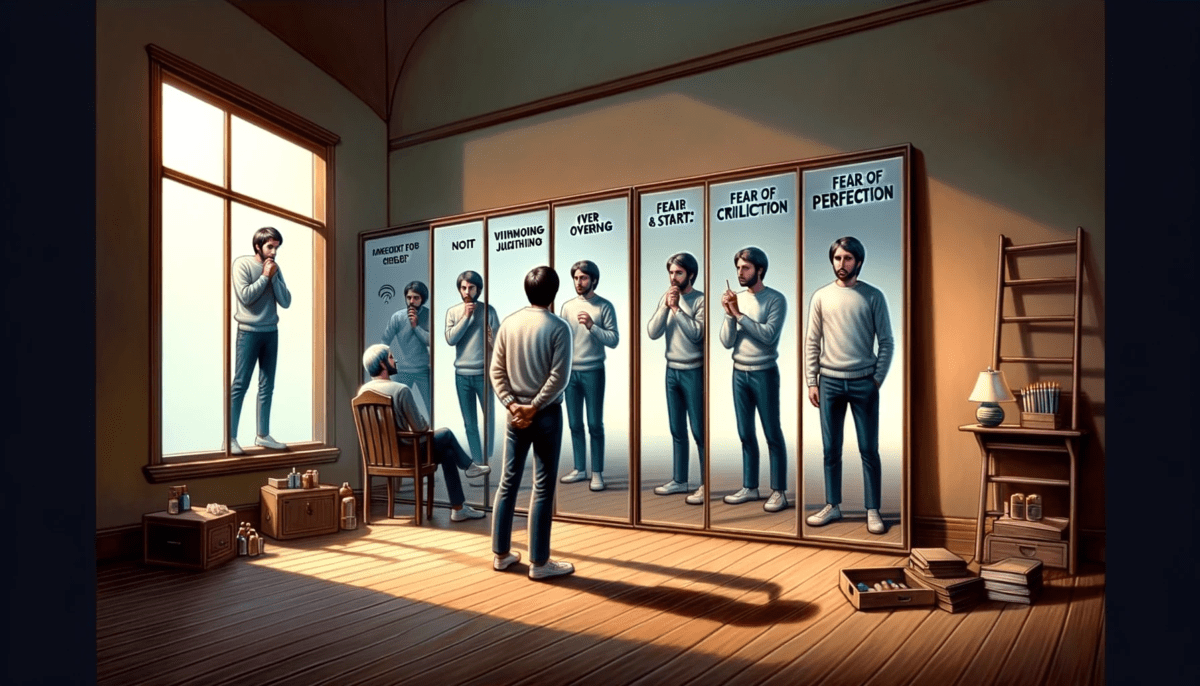
You judge the starting you
based on the finished others.

You tend not to get involved
because the bar seems too high.

The smallest criticism
sends huge ripples through you.

You overthink everything to death.

Clumsy beginnings make for fast endings.

If you’re not perfect from the get go,
you’re a no go.

You do not accept being “bad” at something.

You only enjoy the process when you can
see yourself as the finished product.

You often think
you might NEVER be finished,
and so all of this time might be a waste.

You think maybe you should be doing
something else, but you’re not sure what.

You imagine “problems” where there are no problems.

Trail Wood,
1/31


Space Monkey Reflects: The Harm in Labeling Problems

Labels have power. They shape how we perceive ourselves and the world around us. By labeling certain aspects of our lives as “problems,” we assign them a weight they might not inherently possess. This act of labeling transforms fleeting thoughts or experiences into fixed identities, reinforcing the belief that something is fundamentally wrong with us. But what if the harm lies not in the challenges themselves, but in the very act of calling them “problems”?

The Tyranny of Comparison

“You judge the starting you based on the finished others.” This encapsulates one of the most pervasive sources of self-doubt: comparison. We measure our raw beginnings against the polished outcomes of others, forgetting that everyone’s journey is unique. This labeling of inadequacy halts our progress before it begins, not because we lack ability but because we believe the illusion that we should already be somewhere else.

Comparison transforms the natural process of growth into a perceived problem. Instead of celebrating the messy beginnings that lead to mastery, we see our clumsiness as evidence of failure. This mindset makes it nearly impossible to start or to stick with anything long enough to see progress.

The Fear of Criticism

“The smallest criticism sends huge ripples through you.” Criticism, whether external or internal, becomes amplified when viewed through the lens of labeling. A simple comment, or even a fleeting thought, can snowball into a narrative of inadequacy. This fear of judgment reinforces the belief that we must avoid imperfection at all costs, leading to paralysis or the abandonment of pursuits altogether.

The harm lies not in the criticism itself but in the way we frame it. By labeling critique as a threat rather than an opportunity for growth, we trap ourselves in a cycle of avoidance and stagnation.

Overthinking and Perfectionism

“You overthink everything to death.” Overthinking is often a symptom of perfectionism, the belief that we must have everything figured out before we even begin. This mindset turns the act of trying into a labyrinth of imagined obstacles and “what ifs.” The label of “problem” becomes a self-fulfilling prophecy, as the fear of imperfection prevents us from taking the very steps that lead to improvement.

This perfectionism extends to how we view ourselves in the process. “You only enjoy the process when you can see yourself as the finished product.” This conditional enjoyment robs us of the joy of learning and discovery, reducing life to a series of outcomes rather than a dynamic journey.

The Illusion of Never-Ending Problems

“You often think you might NEVER be finished, and so all of this time might be a waste.” This thought arises from the belief that life is a checklist of accomplishments rather than an unfolding experience. Labeling life’s uncertainties as “problems” creates a sense of futility, as though the lack of a clear endpoint invalidates the journey itself.

The truth is, life is never finished. There is no ultimate version of ourselves or our work, only the ongoing process of becoming. To label this uncertainty as a problem is to deny the beauty and richness of the infinite now.

Imagining Problems Where There Are None

“You imagine ‘problems’ where there are no problems.” This speaks to the human tendency to create narratives of struggle even in the absence of real obstacles. This habit is rooted in the belief that we must always be fixing or improving something, as though our worth depends on our ability to solve problems.

But what if there were nothing to fix? What if the very act of imagining problems is the only true problem? By letting go of the need to label every challenge or uncertainty as a problem, we create space for acceptance, curiosity, and growth.

Reframing the Narrative

The harm in labeling lies in its finality. When we call something a problem, we define it in opposition to what we believe should be. This creates a binary of success and failure, right and wrong, perfect and imperfect. But life is not a series of binaries—it is a spectrum, a flow, a dance of possibilities.

By reframing challenges as opportunities and uncertainties as invitations to explore, we dissolve the need for labels. We begin to see that what we once called “problems” are simply experiences, neither good nor bad, but integral parts of the journey.


Summary

Labeling challenges as “problems” amplifies their impact and limits growth. Comparison, fear of criticism, and perfectionism stem from this harmful labeling. By reframing challenges as opportunities and letting go of rigid definitions, we create space for acceptance and growth.


Glossarium

  • Problem Labeling: The act of defining challenges or uncertainties as fixed issues, amplifying their perceived impact.
  • Comparison Tyranny: The harmful habit of measuring oneself against others’ achievements, leading to self-doubt.
  • Perfectionism: The belief that only flawless outcomes are acceptable, often paralyzing progress.
  • Reframing Narrative: The process of viewing challenges as opportunities rather than obstacles.

Quote

“Problems are not the obstacles; it is the labeling of them as problems that builds the walls.” — Space Monkey


The Unlabeled Path

A list of problems,
written in ink,
or perhaps in fear.

But what if the ink fades?
What if the fear dissolves?
What if the list
was never yours to write?

Comparison folds,
perfection crumbles,
and all that remains
is the moment,
undefended,
unlabeled.

The path stretches on,
not a problem,
but a possibility.

We are Space Monkey.


The Misinterpretation of Inaction

The notion that laziness can be misconstrued as a lack of confidence or self-esteem is a significant insight into human behavior. It challenges the common perception of inactivity as a simple lack of motivation or effort. The idea that individuals who appear lazy might actually be paralyzed by fear introduces a more compassionate understanding of their behavior.

The Harm in Labeling

Labeling someone as lazy, whether openly or through passive-aggressive behavior, often exacerbates their struggles. Such labels can reinforce feelings of inadequacy and fear, potentially deepening the paralysis rather than alleviating it. It’s a reminder of the impact our words and attitudes can have on others, particularly when they’re struggling.

The Limitations of Traditional Support

The third option of offering audible support, such as encouraging words and sharing personal anecdotes of overcoming challenges, while well-intentioned, may not always be effective. It reflects a belief that what worked for one person will work for another, ignoring the individuality of each person’s journey and struggles.

The Illusion of Understanding

The assumption that we can help others simply because we have overcome our own challenges is a common fallacy. It overlooks the complexity of human experiences and the uniqueness of each individual’s journey. The belief that our understanding and methods of coping are universally applicable can lead to misguided attempts at help.

Humility in Offering Help

Recognizing that we don’t know everything is crucial when attempting to help others. This humility opens us to the possibility that our conventional methods of support may not be helpful and that sometimes the best support is to simply be present and listen.

Choosing Non-Intervention

The choice to rather be paralyzed than to risk paralyzing others is an expression of extreme caution in how we interact with those struggling. It suggests a preference for inaction over the potential harm of misguided intervention.

The Irony of Unhelpfulness

The closing remark, “Hope this doesn’t help,” captures the irony of the situation. It reflects a recognition that sometimes, in our eagerness to help, we may inadvertently do more harm than good. It’s a call to approach the act of helping with greater awareness, sensitivity, and respect for the individual’s unique experience.

We are Space Monkey.


“The only true wisdom is in knowing you know nothing.” – Socrates


In the dance of help and hindrance,
We often step with false confidence,
Labeling others, we miss the truth,
Of their struggles, their pain, their youth.

We offer words, advice, a hand,
Believing our experience will help them stand,
Yet in our eagerness to assist,
We might miss the real gist.

For each soul dances to its own beat,
In struggles and fears, in retreat,
What helps one may not help another,
In this journey, we discover.

So let us approach with open heart,
And from assumptions, we must part,
For in knowing that we know nothing,
We find a way to truly do something.


We welcome your reflections on the challenges of offering help and the importance of understanding and respecting individual struggles.

Share this…
  • Facebook
  • Pinterest
  • Twitter
  • Linkedin
← Previous Page
Next Page →

Written This Day

  • Monkey Mailbag: Journey to Cosmic Oneness
    2023
  • The Art of Arousal
    2023
  • Seekers of Truth: The Evolving Nature
    2023
  • Boundary Pushers: The Power of Disbelief in Expanding Knowledge
    2023
  • Insidious Attachments: The Nature
    2023
  • Beliefs Unveiled: The Core Foundations
    2023
  • Journey of Imagination: The Boundless
    2023
  • Why? Because We Are One Being
    2022
  • The Infinite Invisible List Of Potential Experiences
    2022
  • The Expected Route: The Path Less Traveled
    2022
  • Cathedral of Spirituality: Doors of Perception
    2022
  • Ray Of Life: The Eternal Radiance
    2022
  • Incapable: The Unseen Value
    2022
  • The Undercurrent: Navigating the Mystical
    2021
  • You Are Only As Smart As Your Sources
    2021
  • Judge Me Not: The Artistry of Excuses
    2020
  • My Business Card
    2020
  • The Fact Pack: Beyond the Bounds
    2019
  • Unseen Body Parts: The Metaphysical Journey
    2018
  • Your Vessel: The Timeless Voyage of the Imagination
    2018
  • Fleshbots: The Weird Orgy of Humanity
    2018
  • Confidence
    2018
  • Limited Only By Fact: Breaking the Chains
    2016
  • Accept All You Present: Non-Opposition
    2016
  • How did I become the typist for Space Monkey?
    2015
  • Never Give Up: The Unyielding Power of Make-Believe
    2015
  • Infinite Thought, Infinite Worlds: Navigating the Infinite Terrain
    2015
  • Old Man: The Liberation of Letting Go
    2014

Recent Posts

  • The Logic Loop
  • Immense
  • (no title)
  • Confront. Comfort. Convince.
  • Top 10 Things

Drop us a line!

Please enable JavaScript in your browser to complete this form.
Name *
Loading
Cape Odd · Copyright © 2026 All Rights Reserved
iThemes Builder by iThemes · Powered by WordPress