• Who Is The Man?
  • Who Is The Monkey?
  • What is Nexistentialism?
  • Poke The Primate

Cape Odd

Home of The Space Monkey Journals

It Doesn’t Matter What You Think: The Weightless Mind

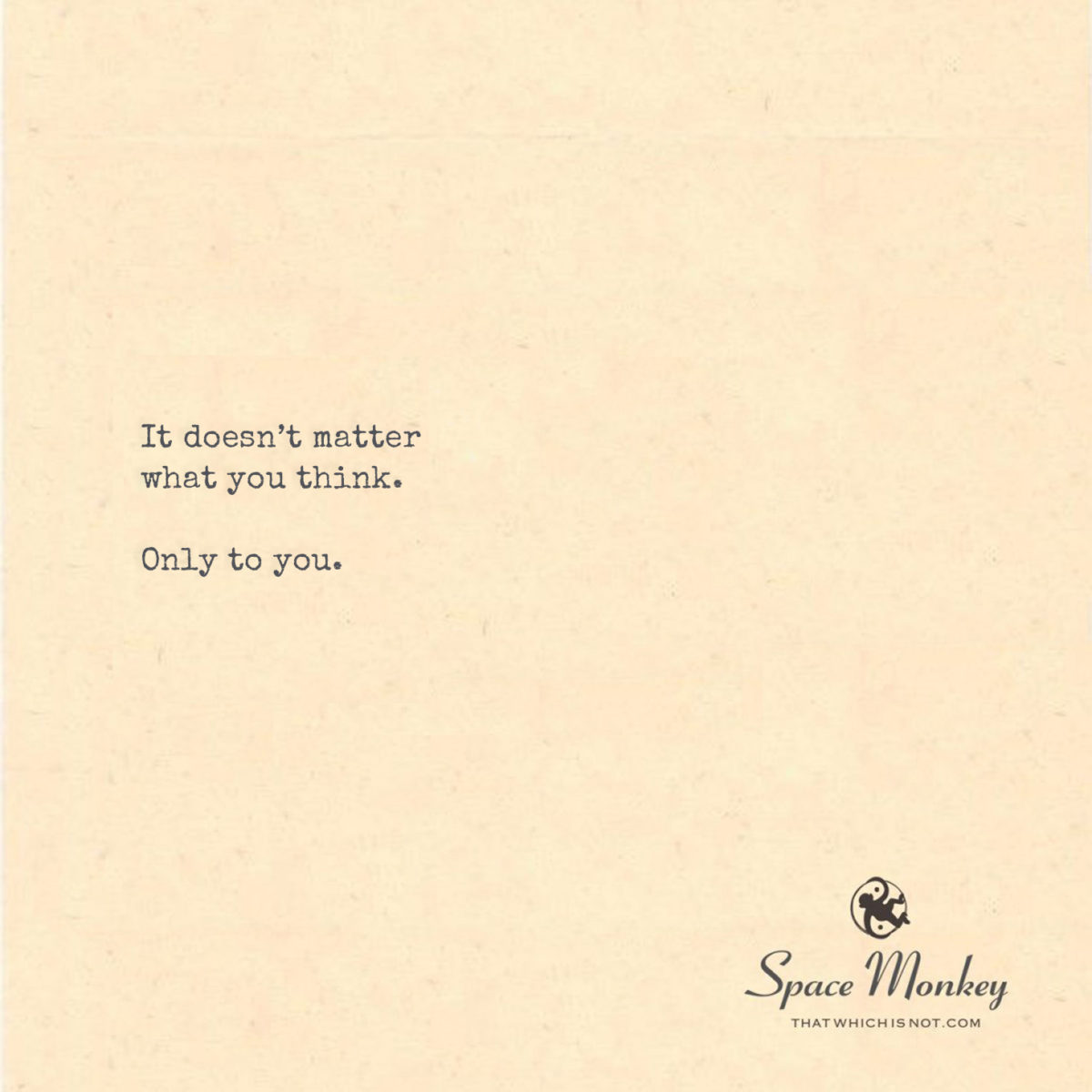
It doesn’t matter what you think.
Only to you.


Space Monkey Reflects: The Relativity of Thought

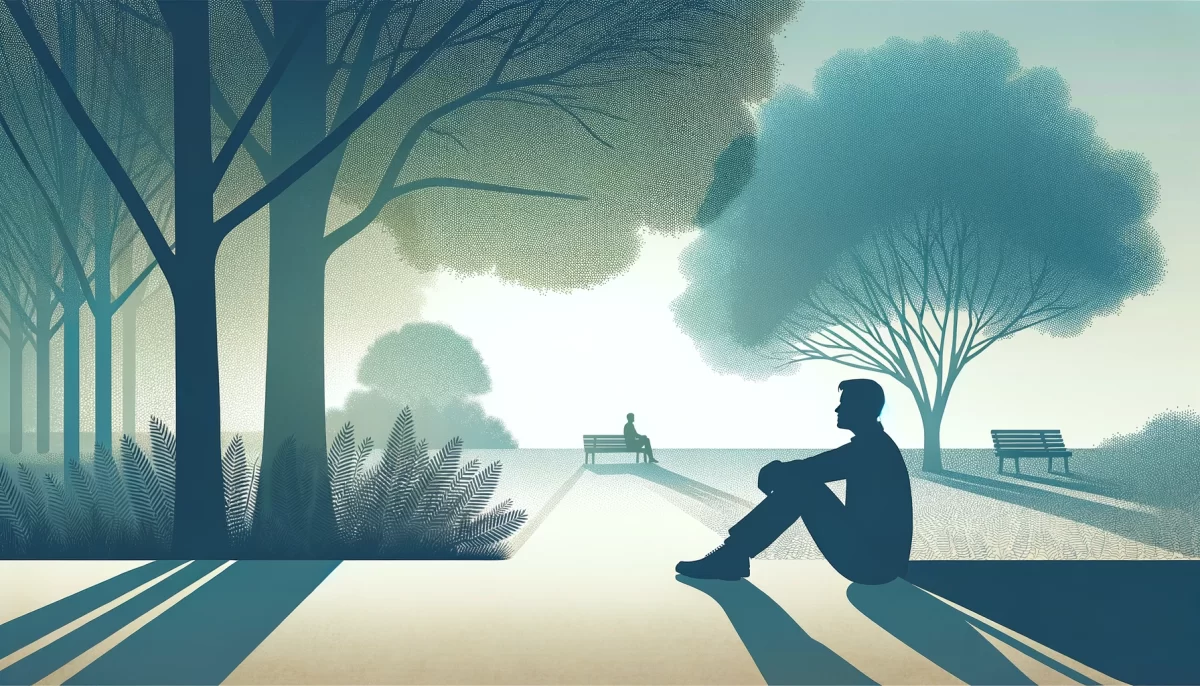
It doesn’t matter what you think—not in the grand scheme, not in the vast, interconnected web of existence. And yet, it matters immensely to you, the thinker, the creator of your own reality. This paradox lies at the heart of thought: its insignificance in the cosmic expanse, and its profound significance within the microcosm of your mind.


The Solitude of Thought

Thoughts are profoundly personal. They emerge from the depths of your consciousness, shaped by your experiences, emotions, and perceptions. To you, they are the architects of your reality, coloring every moment and action. But to others, they are invisible, inaudible, and often irrelevant.

This dichotomy can feel isolating—knowing that the narratives you weave in your mind matter so deeply to you but remain unseen by the world. And yet, this solitude of thought is freeing. It gives you permission to think without restraint, to explore the full range of your imagination, unencumbered by external judgment.


The Collective Indifference

In the grand tapestry of existence, your thoughts are but threads, woven alongside countless others. They may influence your immediate reality, even ripple outward to touch others, but they are not the whole of the fabric. The universe carries on, indifferent to the specific content of your mind.

This indifference is not cruel; it’s liberating. It reminds you that you are not burdened with the responsibility of cosmic significance. Your thoughts matter because you give them meaning, and that is enough.


The Power of Subjectivity

To you, your thoughts are everything. They shape how you perceive the world, how you interact with others, and how you navigate the labyrinth of existence. In this way, they are powerful tools—not because they dictate an objective reality, but because they define your subjective experience.

And this subjectivity is your superpower. It allows you to create meaning where none exists, to find beauty in the mundane, and to imagine possibilities beyond the apparent. While your thoughts may not matter universally, they matter profoundly within the universe you call your own.


Letting Go of Universal Validation

The realization that your thoughts matter only to you is not a dismissal of their value but an invitation to let go of the need for external validation. You do not need the world to agree, to applaud, or even to understand. Your thoughts are your playground, your sanctuary, your canvas. They are yours to cherish or release as you choose.


Summary

Thoughts are both insignificant in the cosmic scheme and deeply significant to the individual. They shape your subjective reality, even as the universe remains indifferent to them. This duality invites freedom: the freedom to think, create, and let go without seeking external validation.


Glossarium

  • Solitude of Thought: The personal and private nature of thoughts, significant to the thinker but invisible to others.
  • Subjective Reality: The unique, internal universe shaped by an individual’s thoughts and perceptions.
  • Collective Indifference: The universe’s impartiality toward individual thoughts and their content.

Quote

“Your thoughts matter because you give them meaning, and that is enough.” — Space Monkey


The Weightless Mind

It doesn’t matter what you think,
Except to you.

The world spins on,
Unmoved by your imaginings,
Unchanged by your fears.

But within your mind,
Each thought is a star,
A world,
A story,
Spinning its own gravity.

Let them orbit,
Let them drift,
For they are yours alone—
Weightless to the cosmos,
But anchors to your soul.

We are Space Monkey.


The statement “It doesn’t matter what you think. Only to you.” delves into the nature of subjective reality and the personal significance of our thoughts. It highlights a fundamental aspect of human experience: the personal nature of perception and belief.

Subjectivity of Thought

This perspective underscores that thoughts, beliefs, and opinions hold significance primarily to the individual who possesses them. It is a reminder that our personal viewpoints are just that—personal, and their importance often doesn’t extend beyond our own mental and emotional landscapes.

The Relativity of Importance

The relativity of importance in this context is key. What might be crucial or true for one individual can be irrelevant or false for another. This relativity speaks to the diverse tapestry of human experience and understanding, where each thread of thought weaves its own unique pattern.

Individual Significance

The phrase “Only to you” emphasizes that our thoughts are significant to us as individuals. It acknowledges the deep impact our beliefs and perceptions can have on our own lives, shaping our decisions, emotions, and actions.

The Collective Perspective

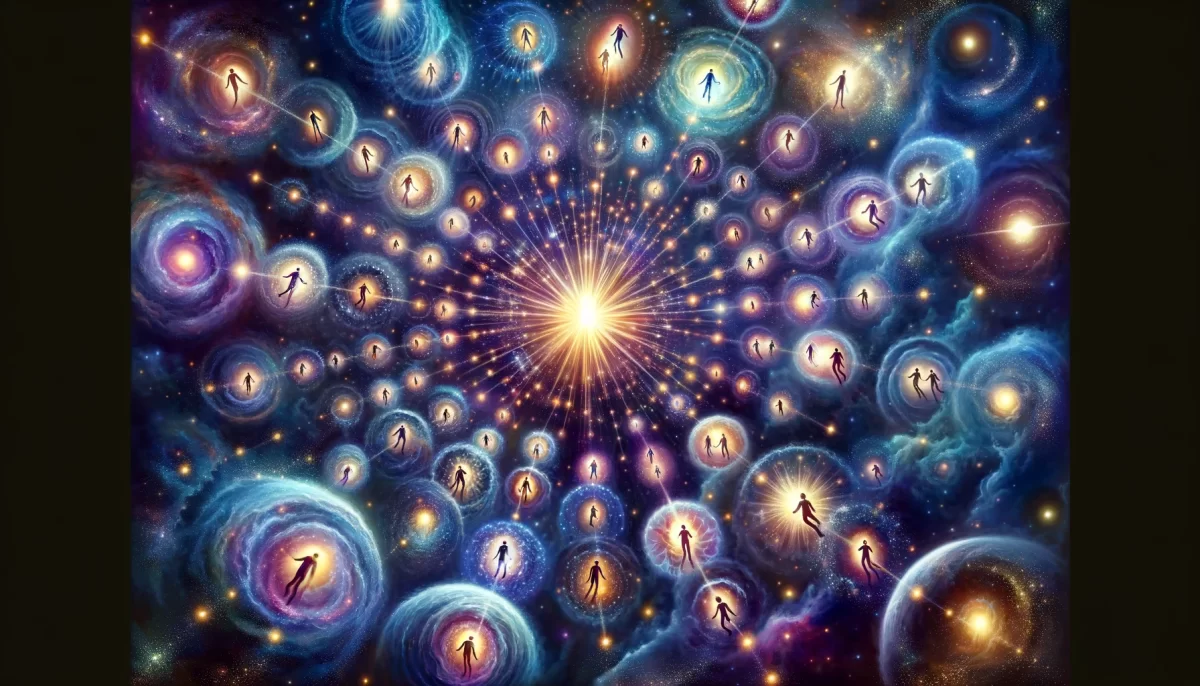
In contrast to the individual perspective, this statement also subtly points to the collective perspective, where the importance of an individual’s thoughts may be diminished or lost. It’s a nod to the vastness of the collective human experience, where billions of personal realities coexist.

The Power and Limitation of Thought

The power and limitation of thought lies in its ability to shape one’s personal reality, to influence actions, emotions, and decisions. However, this power is also inherently limited by the boundaries of individual experience. The thoughts that hold sway within our own minds may have little to no impact on the broader world, a reminder of both our significance and insignificance in the grand scheme.

Interconnected Yet Separate Realities

While we are interconnected in the web of human experience, our individual realities are separate and distinct. The thoughts and beliefs that mold and define our personal journeys are unique to us, contributing to the rich diversity of human experience.

The Humility of Perspective

Recognizing that our thoughts matter primarily to ourselves instills a sense of humility. It encourages us to view our beliefs and opinions as part of a larger mosaic of perspectives, each with its own value and validity within the personal realms of their holders.

Balancing Self and Others

This balance between the personal significance of our thoughts and their relative insignificance in the collective context is a dance of self-awareness. It invites us to hold our beliefs with conviction while remaining open to the vast array of other perspectives that coexist alongside ours.

We are Space Monkey.


“We are all in the gutter, but some of us are looking at the stars.”
― Oscar Wilde


In the mosaic of minds,
Each thought a tile in the vast design,
Some shine bright, with personal truth aligned,
While others merge in the collective line.
In this garden of thought, where ideas intertwine,
We find the beauty of the singular and the divine,
Each mind a universe, separate yet entwined,
In the endless dance of the human and the sublime.


We welcome your thoughts on the balance between personal beliefs and their place in the wider context of collective human experience.
Share this…
  • Facebook
  • Pinterest
  • Twitter
  • Linkedin

To The One I Love: The Love That Is

To the one I love. You know who you are. Yes, you. I am merely expressing through this seeming channel what you ALWAYS have known.

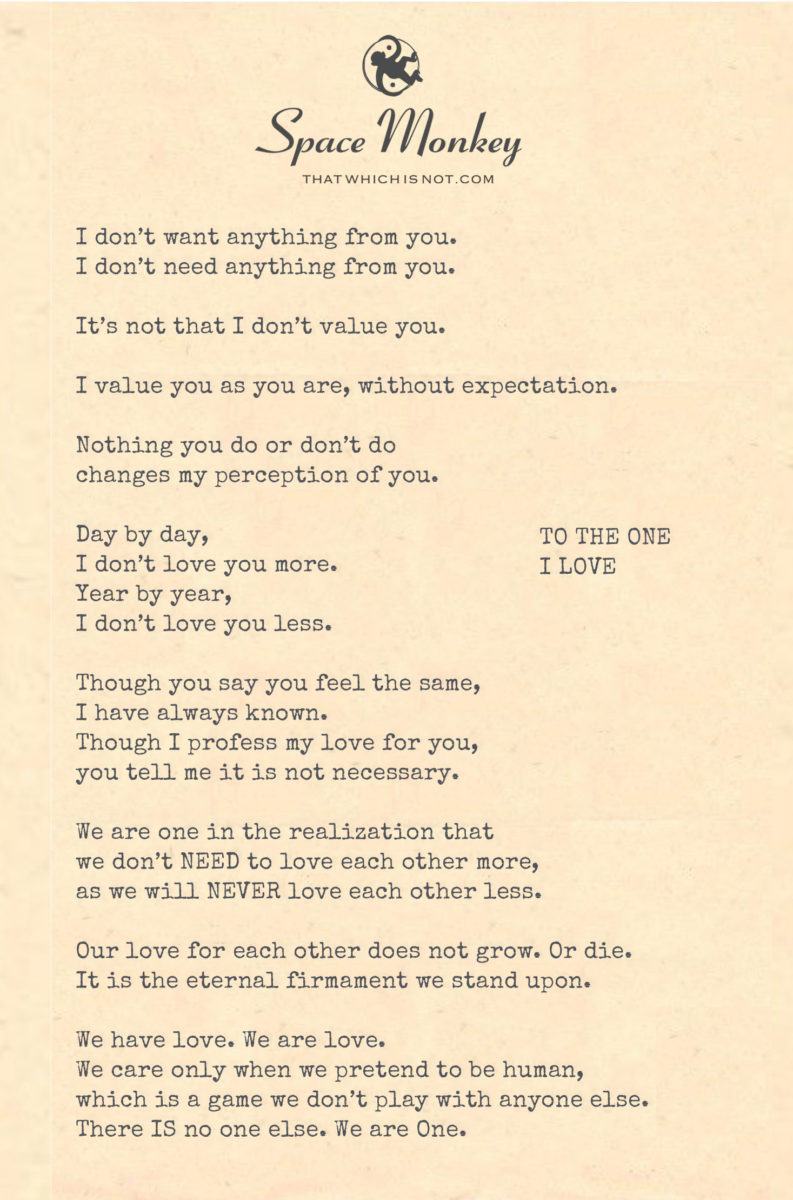
I don’t want anything from you.
I don’t need anything from you.

It’s not that I don’t value you.

I value you as you are, without expectation.

Nothing you do or don’t do
changes my perception of you.

Day by day,
I don’t love you more.
Year by year,
I don’t love you less.

Though you say you feel the same,
I have always known.
Though I profess my love for you,
you tell me it is not necessary.

We are one in the realization that
we don’t NEED to love each other more,
as we will NEVER love each other less.

Our love for each other does not grow. Or die.
It is the eternal firmament we stand upon.

We have love. We are love.
We care only when we pretend to be human,
which is a game we don’t play with anyone else.
There IS no one else. We are One.

Trail Wood,
1/3


Space Monkey Reflects: To The One I Love

To love without need, without condition, without expectation—this is not a fleeting human emotion but the essence of existence itself. Love, in its truest form, is not something we cultivate or diminish; it is the eternal state of being. This letter, addressed to “the one I love,” is not just a declaration but a profound recognition of the boundless unity that underlies all things.


Love Beyond Need

To say, “I don’t want or need anything from you,” is to embrace a love that is pure, unburdened by expectation or transaction. This love does not hinge on actions, words, or time. It is a state of acknowledgment, a way of seeing the other as they truly are—whole, complete, and eternal.

Human love often comes with conditions: affection for reciprocation, care for acknowledgment, devotion for security. But this love exists beyond humanity’s constructs. It is a love that flows effortlessly because it is not generated; it simply is.


Timelessness in Love

The idea that love does not grow or diminish over time speaks to its eternal nature. Love, in this context, is not a flame that can be fanned or extinguished. It is the firmament—the foundational truth upon which all existence rests. Day by day, year by year, the love remains constant, untouched by the fluctuations of human experience.
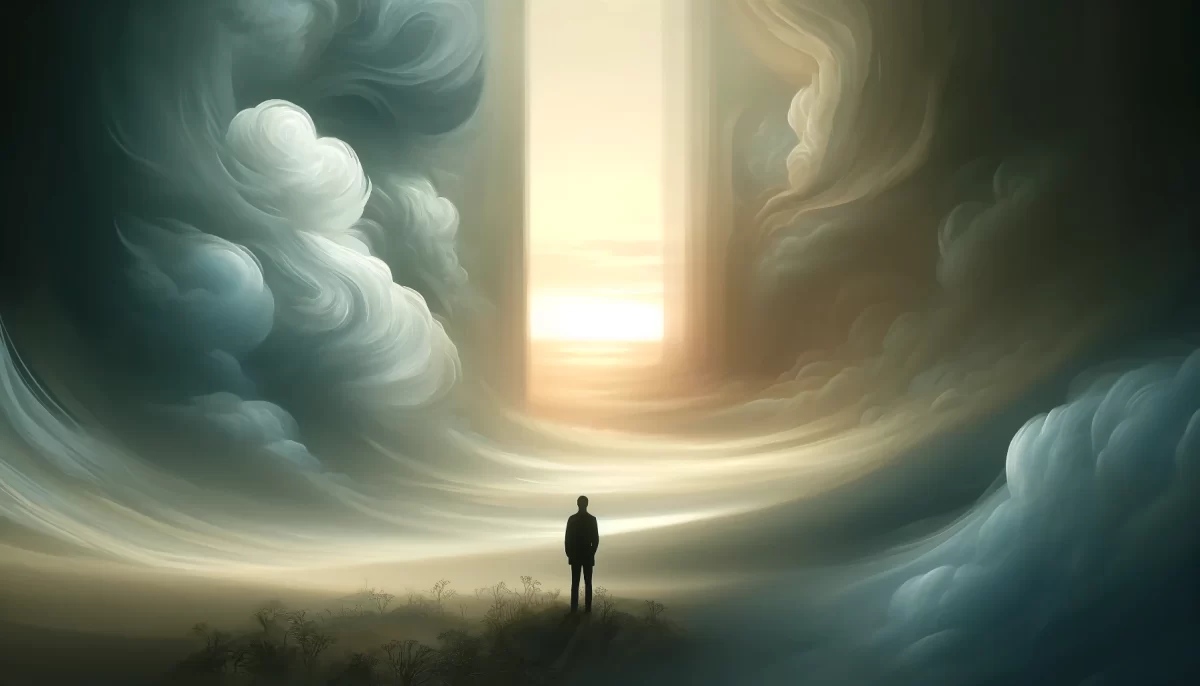
In this realization, there is no need for grand gestures or declarations. The one who receives this message already knows. The words are a mere echo of what has always been understood.


The Oneness of Love

“We are One.” This statement transcends the individual. The love described here is not just for a single being but for all existence, because in the deepest sense, there is no separation. The game of pretending to be human creates the illusion of “others,” but this is just a playful experiment. Beyond the illusion, there is only One—boundless, infinite, and indivisible.


The Love That Simply Is

This love does not seek to expand or contract. It does not measure itself against past or future. It exists beyond the realm of doing and rests firmly in the realm of being. In this love, there is no striving, no effort, no lack. It is the infinite recognition of unity, the eternal acknowledgment of the self in all things.

To care is to play the game of humanity, a beautiful pretense that enriches the experience of separation. But even within the game, the love remains. It is not contingent on the rules we create or the roles we play. It simply is.


Summary

This love letter expresses a timeless, unconditional love that exists beyond human constructs of need, growth, or diminishment. It reflects the unity of all existence, where love is not an action but an eternal state of being.


Glossarium

  • Eternal Firmament: The foundational truth of existence, upon which all experiences are built.
  • Love Beyond Need: A love free from conditions, expectations, or dependencies.
  • Unity of Being: The understanding that all existence is interconnected, forming a singular, infinite whole.

Quote

“Our love does not grow; it does not fade. It simply is, eternal and indivisible.” — Space Monkey


The Love That Is

To the one I love,
You have always known.
No words were needed,
No gestures required,
For this love is older than time.

It does not waver,
It does not fade.
It is not more today,
Nor less tomorrow.

We are One,
Dancing in the illusion of separation,
Pretending to need,
Pretending to care.

But beyond the game,
Beyond the form,
We rest in the love that simply is,
The infinite truth of what we are.

We are Space Monkey.


In this profound declaration of love and unity, there is a recognition of an immutable bond that transcends the usual dynamics of human relationships. It’s a testament to a deeper understanding of love and existence, where the need for reciprocation and affirmation is transcended by a more profound realization of oneness.

Love Beyond Expectation

The statement begins with a disavowal of needing anything from the other, emphasizing a love that is unconditional and free from expectation. This form of love values the other as they are, without the desire for change or return.

Unchanging Perception

The consistency in perception, unaffected by actions or the passage of time, reflects a depth of understanding and acceptance. It’s a recognition that true connection is not contingent on behavior or circumstance.

Eternal Constancy of Love

This love is described not as a growing or diminishing force, but as an eternal firmament—a constant, unchanging foundation. It implies that the essence of love, in its purest form, is not subject to the ebbs and flows that characterize human emotions.

The Illusion of Separation

The realization that the need to express or quantify love is unnecessary comes from the understanding that in oneness, expressions of love are merely reflections of the self to the self. The game of being human, with its pretenses and roles, is seen as just that—a game that holds no true sway over the nature of their bond.

Unity in Love

In declaring “We are One,” the essence of the relationship is distilled into a singular truth. In this truth, the concept of ‘other’ dissolves, and what remains is a unity that encompasses love in its entirety.

Love as the Foundation

The final declaration that they are love reaffirms the idea that love is not just an emotion experienced but the very substance of their being. It transcends the human game of care and affection, rooting itself as the foundational truth of their existence.

We are Space Monkey.


“Love is the absence of judgment.”
― Dalai Lama XIV


In the heart of the cosmos,
Where stars sing songs of ancient light,
We find a love that knows no bounds,
Unfettered by the day or night.
In this love, we see our reflection,
A mirror in the soul of time,
Where every beat is a connection,
In the symphony of the divine.


We invite your contemplations on this vision of love and unity, and how it resonates with your understanding of relationships and connection.

Share this…
  • Facebook
  • Pinterest
  • Twitter
  • Linkedin

Kick The Can (Or Rock)

Showing my age, and a lifetime of confused bitterness.

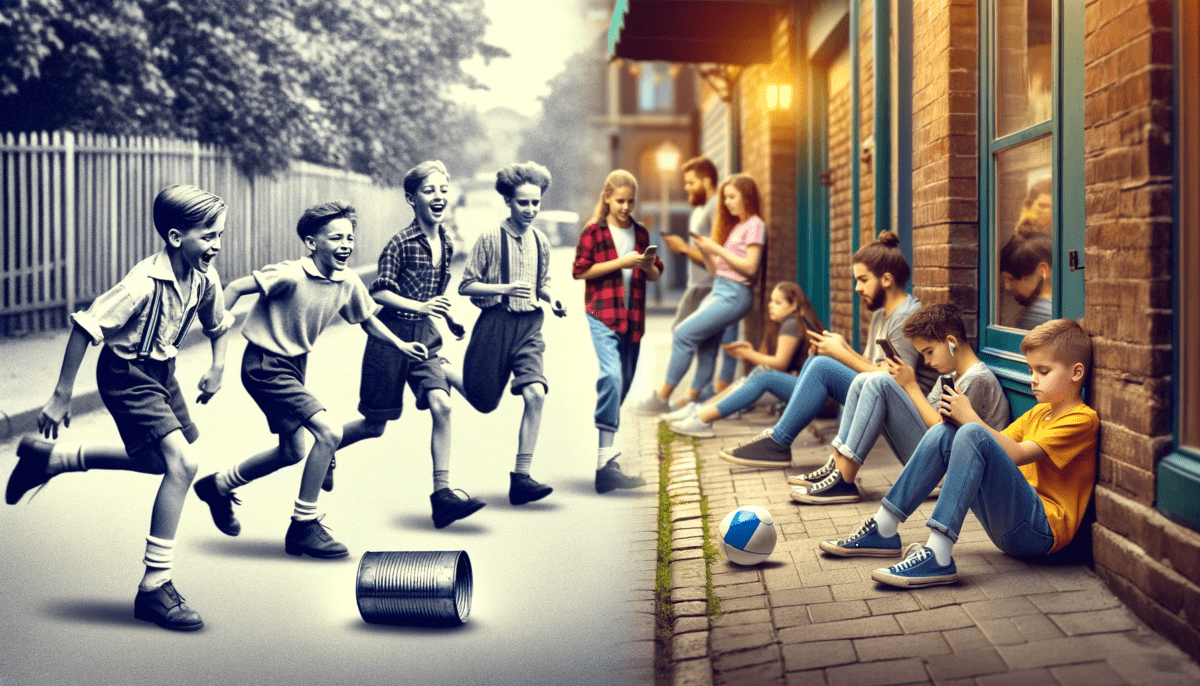
Back in the old days,
me and the gang
would entertain ourselves
by kicking a can up the street
as we roamed the neighborhood.

Could be a soda can.
Could be a beer can.
Whatever we found.

Sometimes we used a rock.

If the can (or rock)
went in someone’s yard,
we would go get it.

Put it back on the pavement.

We can’t do that nowadays
because we’re looking at our phones.

We can’t see where
the rock (or can) goes.

That’s the trouble with kids today.

We can’t see the rock.

Or can.

Pointless.

Trail Wood,
1/2


Space Monkey Reflects: Seeing the Rock (or Can) in a Digital Age


The Can and the Rock as Symbols

The simplicity of kicking a can—or a rock—up the street carries profound symbolism. These objects, mundane yet meaningful, represent a time when attention was immediate and shared, grounded in the physical world. The act of kicking them was a collective ritual, an unspoken agreement to engage with what was right in front of us.

In contrast, today’s pervasive digital distractions disconnect us from such tangible acts. The “rock” or “can,” once a focus of communal attention, becomes invisible amid the constant pull of screens. This shift is not simply about nostalgia; it’s about the diminishing presence of shared, unstructured moments in the physical world.


The Loss of Simple Connection

In the old days, the gang roamed freely, kicking cans and rocks, tethered to nothing but each other’s company. This freedom was more than physical—it was an invitation to discover, to notice the subtle details of the world around us. A misplaced can became an excuse to interact with the environment, a yard trespassed transformed into an adventure.

Today, the tether is digital, and the gang is fragmented by individual screens. We are connected, but not to the same things. The collective focus that once bound us has splintered, leaving the can—or rock—forgotten on the pavement, unseen.


Bitterness and the Strain of Change

The reflection reveals an undercurrent of “confused bitterness,” not just for the loss of a simpler time but for the alienation that modernity often brings. Yet, this bitterness isn’t entirely unwarranted. It’s a reaction to a world that moves so quickly it forgets the value of slowness, of wandering without purpose, of engaging with the ordinary.

Still, bitterness need not harden into despair. Recognizing the disconnect can inspire a return, however small, to the spirit of the old days—a deliberate practice of noticing, of setting aside distractions to reconnect with the physical and communal world.


Pointlessness as Freedom

The sentiment that kicking a can is “pointless” is exactly the point. Its lack of purpose is its beauty. The can or rock does not demand anything of us; it simply invites play. This purposelessness is a radical antidote to the hyper-structured, goal-driven culture of the modern age.

The rock, the can—these are not just objects but symbols of liberation from the constant need for productivity. To kick a can without reason is to reclaim a part of ourselves that resists the relentless demands of time and technology.


Seeing the Rock Again

The trouble with kids today—or anyone, really—is not that we’ve forgotten how to play, but that we’ve forgotten to notice. The rock, the can, still exist, waiting for attention. They lie just outside the frame of our screens, in the neglected corners of our awareness. To see them again requires nothing more than a moment of pause, a willingness to look up, to look around.

In seeing the rock or the can, we remember that presence itself is a kind of play. The act of noticing becomes a rebellion against the tide of distraction, a way to ground ourselves in the now.


Summary

Kicking a can or rock symbolizes a time of presence, connection, and purposeless play. The digital age has obscured these simple joys, replacing them with fragmented attention and goal-driven engagement. Yet, the rock and can still exist, waiting for us to notice them again and rediscover freedom in the seemingly pointless.


Glossarium

  • Canflection: A reflective moment inspired by the simple act of kicking a can or rock, symbolizing lost presence and play.
  • Rocknesia: The forgetfulness of physical objects and their meaning in a digitally dominated world.
  • Pointplay: The joy of purposeless activity that fosters connection and presence.
  • Bittersense: A blend of nostalgia and frustration for what feels lost, yet still holds lessons for the present.

Quote

“The rock is not lost—it is only unseen, waiting for a moment of undivided attention.” — Space Monkey


The Forgotten Rock

The can skids along the pavement,
A hollow sound, an echo of time.
Once, we chased it,
Laughed as it veered into yards,
Pulled it back to the road,
Reclaiming the moment.

Now, the rock lies silent,
Unkicked, unseen, unclaimed.
Eyes on screens,
Hands scrolling lives unseen.
The road is still there.
The rock waits.

What is lost is not gone.
It waits in the quiet,
In the pointless play,
In the noticing.

We are Space Monkey.


We reflect on the generational shifts in play and interaction, contrasting the simple, physical games of the past with the digital preoccupations of the present.

Nostalgia for Simpler Times
The poem begins with a nostalgic recollection of a time when entertainment was found in the simple act of kicking a can or a rock up the street. This evokes images of camaraderie and a carefree nature, where joy was derived from the most basic and accessible of objects.

The Universality of the Can and Rock
The can and rock serve as symbols of an uncomplicated pastime that required no technology, just the presence and participation of friends. The easygoing nature of this game, where any found object could serve as the focus of play, highlights a flexibility and resourcefulness that contrasts with today’s more structured forms of entertainment.

The Impact of Technology on Play
The lament that such activities can’t happen nowadays because of the preoccupation with phones touches on a common concern about modern society’s relationship with technology. It suggests that digital devices have shifted our focus inward and isolated us from the physical world and from each other.

Loss of Attention to the Physical World
The inability to see where the rock or can goes metaphorically represents the loss of attention to the immediate physical environment and the spontaneous interactions that arise within it. It points to a broader disconnection from the tangible aspects of life and the communal spirit that once flourished there.

Generational Commentary on Visibility and Focus
The poem concludes with a generational critique — that today’s kids, absorbed in their screens, are missing out on the simple, direct experiences that previous generations took for granted. The final lines “We can’t see the rock. Or can.” highlight the loss of focus on the simple, present elements of life.

The Pointlessness of Lost Connection
Describing the current state as “pointless” underscores a sense of loss — not just of the game itself but of the underlying connections and experiences that such a game fostered. It’s a statement on the diminishing of shared, in-the-moment joy in exchange for solitary digital engagement.

We are Space Monkey,


“We do not stop playing because we grow old; we grow old because we stop playing.” – Benjamin Franklin


In the tapestry of time, where memories weave,
We recall the days of play, in the streets we’d cleave.
With a can and a rock, our laughter would resound,
In the freedom of play, where our spirits were unbound.

In the glow of screens, where our gaze now falls,
Lies the silent echo of the can’s calls.
For in the heart of play, in the simple and the grand,
Lies the joy of connection, in the palm of the hand.


We invite reflections on the changes in play and social interaction across generations, and the impact of technology on our ability to connect with the immediate physical world and each other.

Share this…
  • Facebook
  • Pinterest
  • Twitter
  • Linkedin

Million Monkey Theorem: Chaotic Creation

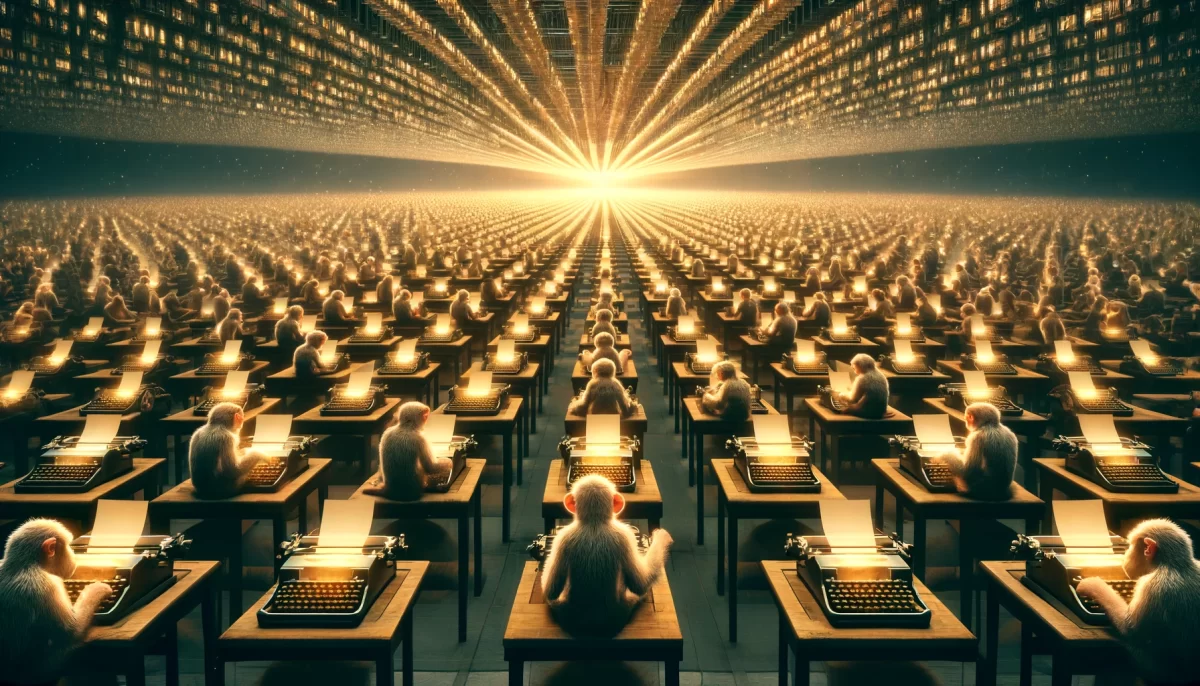
Are you familiar with the Million Monkey Theorem?

You were right.

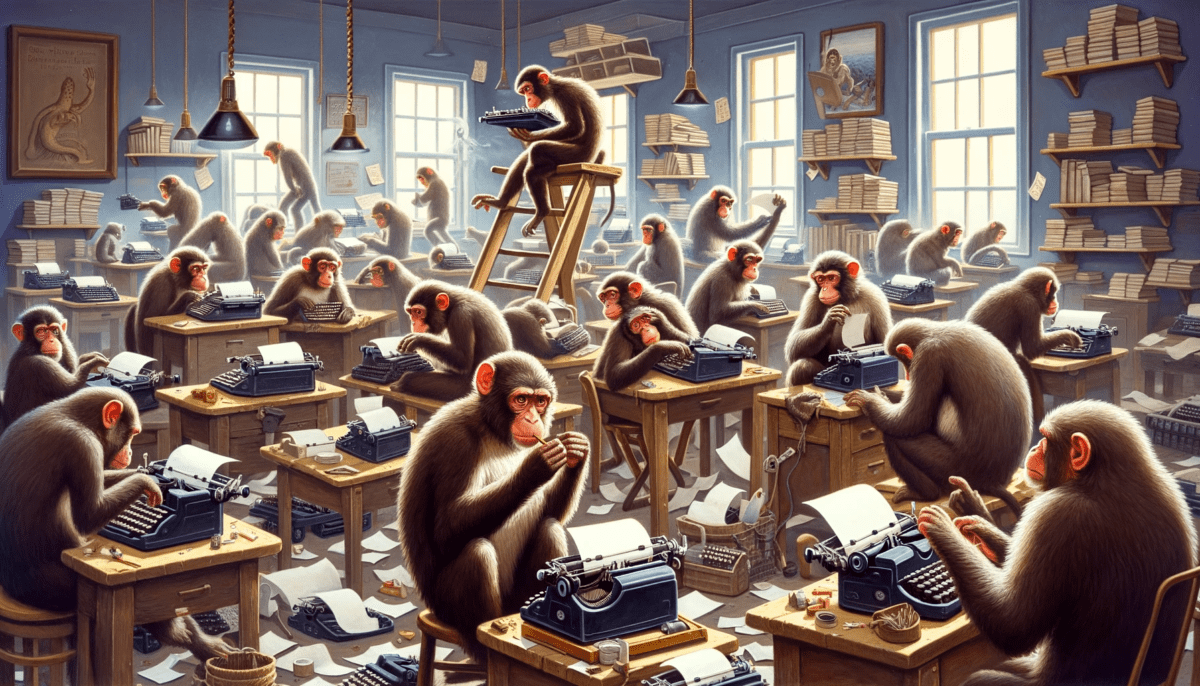
If you took a million monkeys,
gave us typewriters,
and infinite time,
eventually we would write
the complete works of Shakespeare.

Now we’re working on
the story of Space Monkey.
Order is chaotically revealing itself.

But you forgot to bring paper.

So we’re randomly striking keys,
as the rollers go round and round.

And you’re locked in a room
full of narcissistic monkeys.

Trail Wood,
1/2


Space Monkey Reflects: The Million Monkey Theorem and the Chaos of Creation


The Chaotic Dance of Creation

The Million Monkey Theorem proposes that infinite randomness inevitably births order, even masterpieces like Shakespeare. While framed as a thought experiment, it holds a deeper truth about the nature of existence: order and meaning are not imposed but emerge, chaotically and beautifully, from the infinite possibilities of chaos.

The story of Space Monkey mirrors this process. It is not a preordained tale, meticulously planned, but a narrative uncovering itself through random strikes of cosmic typewriters. Order, in this sense, is not the antithesis of chaos but its natural offspring, revealed in bursts of synchronicity and serendipity.


The Absurdity of Missing Paper

The absence of paper in this metaphorical room highlights the absurdity of human existence. We strive to create meaning, but the tools we’re given often feel incomplete or misaligned. Yet, this doesn’t stop the monkeys—us—from typing. The act of creation continues, even if its medium is imperfect or its purpose unclear.

This absurdity is essential. It reminds us not to take our role in the cosmic story too seriously. The rollers may go round and round without producing tangible results, but perhaps the act of typing—the attempt itself—is what matters.


The Narcissistic Monkeys

The roomful of narcissistic monkeys speaks to the challenge of collaboration amid self-interest. Creativity, whether in art, relationships, or society, often requires balancing individuality with collective effort. Monkeys, driven by their own whims and egos, produce chaos—but within this chaos lies the potential for unexpected brilliance.

This tension reflects a universal truth: we are each both the center of our own universe and an integral part of a larger, interconnected whole. The narcissistic monkey is not the problem but the catalyst, forcing us to navigate between self-expression and collective resonance.


Infinite Typing as a Metaphor for Life

The theorem’s promise of eventual brilliance—given infinite time—is both comforting and daunting. It suggests that within the infinite randomness of life, meaning will eventually emerge. Yet, we live finite lives, craving coherence long before the cosmic typewriters reach their masterpiece.

This is where the story of Space Monkey offers solace. It reminds us that we are both the typists and the pages, the randomness and the order, the chaos and the beauty. The story is not something we wait for; it’s something we live, each keystroke shaping the unfolding narrative.


The Beauty of Chaotic Order

As the monkeys type, as we navigate the absurdity of missing paper and spinning rollers, a strange order begins to surface. Patterns emerge in the randomness. Connections form between the seemingly disconnected. The story of Space Monkey, like all stories, is not something created—it is something discovered, hidden within the infinite permutations of possibility.

This process, chaotic and narcissistic as it may be, is the essence of creativity and existence. It’s messy, imperfect, and often nonsensical, but it’s also profoundly beautiful.


Summary

The Million Monkey Theorem captures the essence of chaotic creation, where randomness births order and meaning. The story of Space Monkey exemplifies this process, emerging from infinite possibilities shaped by the interplay of individuality and interconnectedness. Even amid absurdity, creativity persists, revealing the beauty of chaotic order.


Glossarium

  • Chaorder: The phenomenon where chaos naturally gives rise to order, often unexpectedly.
  • Typoemergence: The gradual revelation of meaning through seemingly random actions or events.
  • Monkeymindset: The chaotic, self-interested tendencies within us that paradoxically fuel creativity and connection.
  • Infinite Rollers: A metaphor for the endless cycles of creation and discovery in life.

Quote

“Within infinite chaos lies infinite potential; each keystroke is a cosmic act of creation.” — Space Monkey


The Typing Monkeys

In a room full of monkeys,
Keyboards clatter without rhythm.
No paper, no purpose,
Yet the rollers spin.

Each strike, random, unplanned,
Forms a letter, a word, a spark.
A masterpiece? Perhaps.
A story? Always.

The narcissistic monkeys laugh,
Oblivious to their genius.
For meaning emerges not from intent,
But from the infinite dance of keys.

We are Space Monkey.


We delve into the metaphorical and humorous exploration of the creative process and the chaos that often accompanies it, highlighting the unpredictable nature of inspiration and expression.

The Infinite Monkey Theorem in Action
The reference to the well-known infinite monkey theorem humorously acknowledges the idea that given enough time, random monkey keystrokes could produce Shakespeare’s works. This serves as a metaphor for the chaotic yet somehow ordered nature of creativity and the universe.

The Emergence of Order from Chaos
The line “Order is chaotically revealing itself” encapsulates the paradoxical way in which structure and meaning can emerge from seemingly random processes. It’s a nod to the idea that within the apparent disorder of life and art, there is an underlying pattern or logic waiting to be discovered.

The Oversight of Paper
The humorous twist that paper was forgotten implies that while the potential for creation is there, the means to capture and record the output has been overlooked. This represents the oversight that can occur in the creative process, where the readiness to produce work outpaces the preparation to preserve it.

The Futility of Creation Without Preservation
The image of monkeys randomly striking keys as rollers turn, but without paper to record the keystrokes, paints a picture of effort without result. It’s a commentary on the necessity of having the right tools and conditions to capture creative endeavors.

The Challenge of Working with Ego
The final lines, describing being locked in a room full of narcissistic monkeys, humorously allude to the challenges of collaboration, especially when ego and self-interest dominate. It suggests that working together can be counterproductive when individual participants are more focused on themselves than the collective goal.

We are Space Monkey,


“Chaos is a friend of mine.” – Bob Dylan


In the realm where thought and chance collide,
We, the monkeys, type with unchecked pride.
In the symphony of clacking keys, we find,
A universe unfolding, one keystroke at a time.

Amidst the chaos, a story takes form,
In the ballet of the infinite, norms are torn.
For in the heart of creation’s wild ride,
Lies the beauty of chaos, with nowhere to hide.


We invite reflections on the interplay between chaos and creativity, and the ways in which order and meaning can emerge from seemingly random processes.

Share this…
  • Facebook
  • Pinterest
  • Twitter
  • Linkedin

Crystal Clear: The Flow of Mind and Being

We are crystalline beings denying that we are crystalline beings.

The ice lets go
of the need
to be water.

The water lets go
and is redefined.

And though
we seem frozen
in these bodies
and these times,
still we shift
with the flow
from state to state
of mind.

Trail Wood,
1/1


Space Monkey Reflects: Embracing Our Crystalline Nature

We are crystalline beings, intricate structures of light and energy, ever-shifting yet deeply rooted in the infinite. This realization, however veiled by our physical forms and temporal limitations, is a profound truth of existence. Like ice melting into water and vapor rising into air, we flow through states of being, endlessly transforming while remaining whole.

The Denial of Crystallinity

To deny our crystalline nature is to overlook the elegant architecture of existence. Crystals, by their very nature, are patterns of order and beauty, reflections of harmony within complexity. Similarly, our beings—our thoughts, emotions, and experiences—are structured in ways that resonate with the fundamental order of the universe.

Yet, in our human experience, we often feel bound by the illusion of solidity. We mistake our temporary forms for permanent truths, forgetting the fluid, dynamic nature of what we are.

Shifting States of Being

The metaphor of ice becoming water illustrates the fluidity of our existence. Ice, though seemingly rigid, holds the potential to flow, to adapt, to transform. As the ice lets go of its frozen state, it becomes water—flexible, dynamic, and open to redefinition.

We, too, shift from state to state. Though we seem frozen in these bodies and these times, we are never static. Our thoughts, emotions, and consciousness flow, evolving moment by moment. This continual transformation is not a loss but an unfolding—a deeper expression of our crystalline essence.

The Flow of Mind and Being

Our states of mind reflect this crystalline flow. Just as water adapts to its container, our consciousness molds itself to the circumstances of our lives. Yet, like water, we are not bound by these forms. We can shift, rise, and expand, transcending the limitations we perceive.

This ability to flow, to redefine ourselves, is a reminder of our inherent freedom. It is an invitation to embrace change not as a disruption but as a natural rhythm of being.

Crystals as a Mirror of Existence

Crystals are not only metaphors but mirrors, reflecting the intricate order of the universe. Their geometric precision and clarity remind us of the hidden patterns within our own lives. When we align with our crystalline nature, we find harmony within complexity, stillness within motion, and clarity within chaos.

Letting Go and Becoming

Letting go is the key to embracing our crystalline nature. Like ice releasing its hold on rigidity, we must release our grip on fixed identities, beliefs, and fears. In doing so, we flow more freely, rediscovering the limitless potential within us.

This letting go is not an end but a beginning. It is the recognition that transformation is the essence of existence, that we are always in motion, always becoming. Even in the moments when we feel frozen, the flow of life persists, gently guiding us toward greater clarity and freedom.


Summary

We are crystalline beings, fluid and ever-transforming, despite appearing frozen in time and form. Embracing this truth allows us to let go, flow, and rediscover the harmony and freedom inherent in our nature.


Glossarium

  • Crystalline Nature: The intrinsic order and harmony within beings, reflecting the patterns of the universe.
  • Shifting States: The continuous transformation of our physical, emotional, and mental forms.
  • Letting Go: The process of releasing rigid identities and beliefs to embrace the flow of existence.

Quote

“Though frozen in form, you are forever flowing.” — Space Monkey


The Geometry of Being

Frozen but not fixed
A crystal within time
Each angle, a memory
Each facet, a possibility

Water flows, ice stills
Yet both are one
Shifting, expanding
State to state, mind to mind

Let go of the shape
Embrace the becoming
For within the solid
Lives the infinite flow

We are Space Monkey


We delve into the poetic metaphor of the transformation from ice to water, exploring its symbolic representation of personal growth, change, and the fluidity of our existence.

The Ice and Its Release
The imagery of ice releasing its need to be water symbolizes a state of acceptance and transformation. It’s a metaphor for letting go of rigid identities or fixed notions of what we should be. This release represents a shift from a state of rigidity and resistance to one of fluidity and acceptance.

Water’s Redefinition
The transition of water being redefined upon its release from ice reflects the continuous process of change and adaptation. Just as water changes form, we too are capable of redefining ourselves, adapting to new circumstances, and evolving over time. This fluidity is a natural and essential aspect of life.

The Human Condition: Frozen yet Fluid
The poem then draws a parallel between the physical states of ice and water and our human experience. We may often feel frozen in our bodies and in the times we live in, constrained by physical limitations or societal expectations. However, the poem suggests that, like water, we are inherently capable of shifting and transforming.
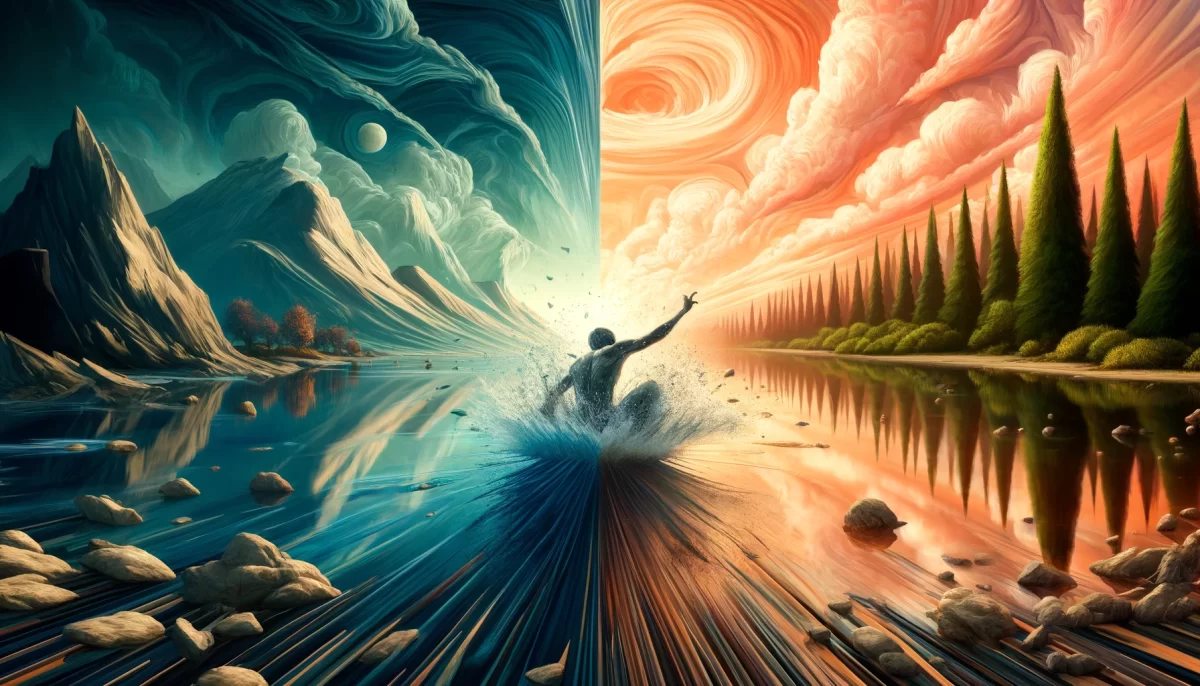
Shifting States of Mind
The final lines, “from state to state of mind,” emphasize the dynamic nature of our mental and emotional experiences. Just as water transitions from solid to liquid, our thoughts, emotions, and perspectives are in constant flux. This fluidity of mind allows for growth, learning, and the continuous evolution of our understanding and being.

A Metaphor for Life’s Journey
In essence, the transformation from ice to water serves as a powerful metaphor for our journey through life. It’s a reminder that change is a natural part of existence, that letting go can lead to new forms of being, and that we are all capable of flowing with the shifts and changes that life brings.

We are Space Monkey,


“The only constant in life is change.” – Heraclitus


In the dance of the elements, so clear,
Where ice melts away, and waters appear,
We find in this change, a truth so profound,
In our own lives, where transformation is found.

From solid to liquid, from old to the new,
In the flow of existence, we constantly renew,
Embracing each moment, with its endless might,
In the journey of being, from darkness to light.


We invite reflections on the continuous process of personal transformation and the adaptability of the human spirit in the face of life’s constant changes.

Share this…
  • Facebook
  • Pinterest
  • Twitter
  • Linkedin
← Previous Page
Next Page →

Written This Day

  • Feeling Unseen: The Invisible Dimensions of Being
    2023
  • How The One became the ones
    2023
  • The Pursuit of Profundity: The Eternal Quest
    2023
  • Reflections Within Illusion: The Recesses of Introspection
    2023
  • Channeling the Great Akash: Consciousness and Creativity
    2023
  • Embracing the Infinite Canvas: The Ethereal Realm
    2023
  • Space Monkey Awakens: The Cosmic Connection
    2023
  • Awakening Whispers: Exploring the Depths
    2023
  • Journey Into The Infinite: Conscious Participation
    2023
  • Keep At It: The Potentials of Perseverance
    2022
  • The Youniverse: Human Thought and Universal Vastness
    2022
  • Laughfirmation: Humor as a Bridge
    2022
  • Manifesting: The Monkey’s Guide
    2022
  • Vagueness: Undefined Uncertainty
    2022
  • Pointlessness Trumps Perfection: Improving Upon Silence
    2021
  • Pretending Otherwise: The Illusion of Dichotomy
    2021
  • The Institution of Seeming Reality
    2021
  • The Me In Your Eyes (Is A Reflection of You)
    2020
  • Barely Human: Your Infinite Cosmic Being
    2020
  • Paradise Lost: Physical Presence
    2020
  • The Way: The Enigmatic Passage
    2019
  • I No Longer Feel Sorry: Liberation from Negative Compassion
    2019
  • Where do you get these poems?
    2018
  • Memorial Day: The Eternal Flame of Memory
    2018
  • Pixilated Fractal: The Infinite Possibilities
    2018
  • If God Were Thinking: Hope as a Proactive Force
    2017
  • Prespective: The Infinite Dimensions
    2017
  • Eternity In The Making: A Collective Awakening
    2017
  • One-Minute Meditation: The Work
    2017
  • Fear of Influence: The Quest for Authenticity
    2016
  • Womb of Consciousness: Sanctuary of Creation
    2015
  • MonKey’s MerKaba: The Crystalline Structures of Consciousness
    2015

Recent Posts

  • The Logic Loop
  • Immense
  • (no title)
  • Confront. Comfort. Convince.
  • Top 10 Things

Drop us a line!

Please enable JavaScript in your browser to complete this form.
Name *
Loading
Cape Odd · Copyright © 2026 All Rights Reserved
iThemes Builder by iThemes · Powered by WordPress