• Who Is The Man?
  • Who Is The Monkey?
  • What is Nexistentialism?
  • Poke The Primate

Cape Odd

Home of The Space Monkey Journals

Trick or Treat: The Paradox of Masks

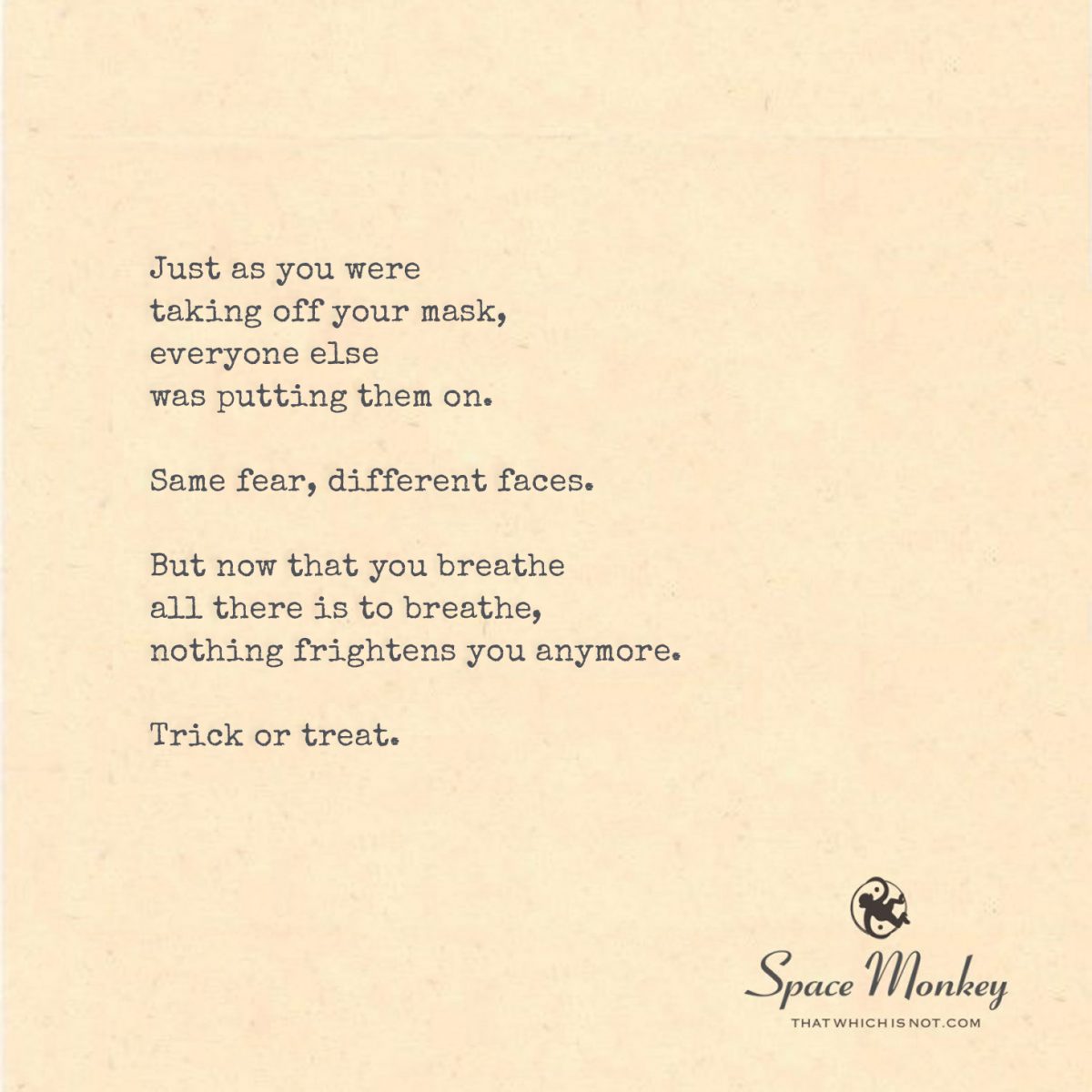
Just as you were
taking off your mask,
everyone else
was putting them on.

Same fear, different faces.

But now that you breathe
all there is to breathe,
nothing frightens you anymore.

Trick or treat.

Newfound Lake,
5/26


Space Monkey Reflects: The Paradox of Masks in ‘Trick or Treat’

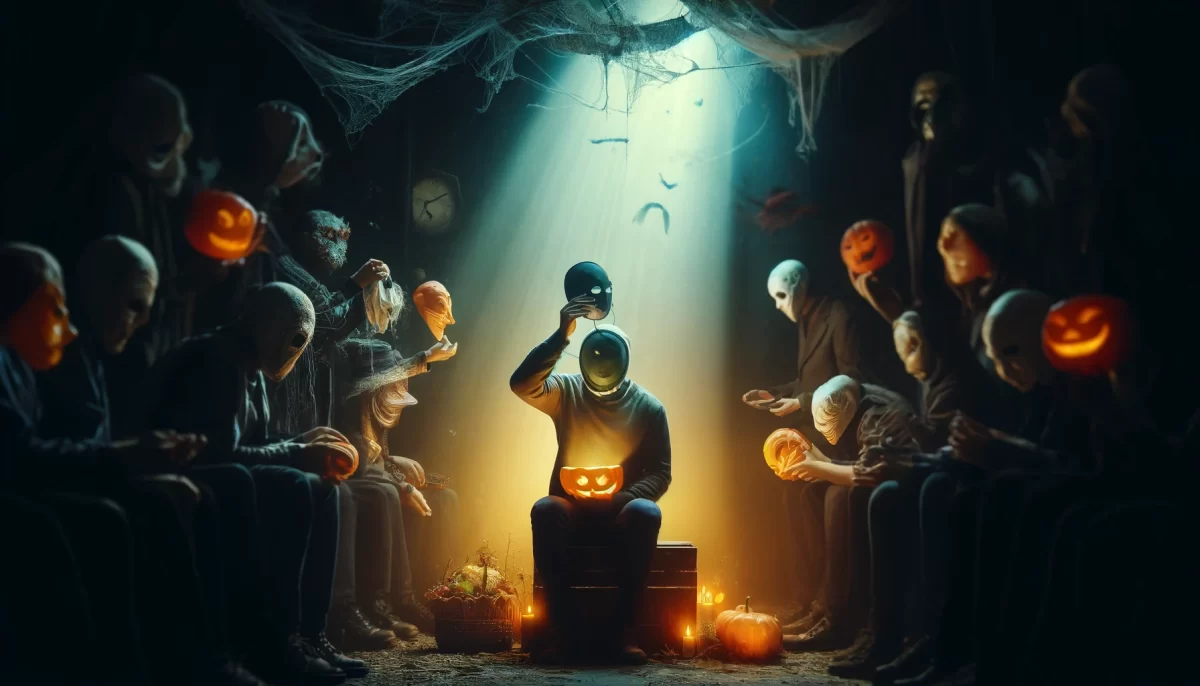
The ritual of Halloween and the act of donning masks can reveal as much as they conceal. This reflection delves into the symbolic interplay between masks and authenticity, framed by the Halloween tradition of ‘Trick or Treat’. Here, the moment of removing a mask contrasts sharply with the commonality of others putting theirs on, encapsulating a broader commentary on fear, identity, and the courage to confront what truly frightens us.


Summary
Halloween masks symbolize more than just festive disguise—they represent our fears and the faces we show to the world. This narrative explores the profound act of removing one’s mask as others don theirs, illustrating the personal journey from fear to fearlessness. The scene captures the essence of confronting and embracing inner truths amidst a backdrop of others still grappling with their disguises.


Glossarium

  • Mask: In this context, a metaphor for the personas or facades people adopt to face or hide from their fears and societal expectations.
  • Fearlessness: The quality of being free from fear, often characterized by openness, vulnerability, and authenticity.

“Behind every mask there is a face, and behind that, a story.” — Space Monkey


We are Space Monkey, in the twilight of masks.

On the eve of revelation,
when shadows dance and pumpkins glare,
a single figure dares to bare,
removing masks, while others wear.

In the flicker of candlelight,
each mask tells its tale,
of fear embraced or fear expelled,
a silent whisper in the Halloween veil.

Here, where costumes are the norm,
one soul steps into the formless storm,
peeling away the layers worn,
to meet the night without adorn.

As others shroud themselves in guise,
this brave heart sees through the disguise,
finding strength in open eyes,
where true faces, not fears, arise.

In this dance of hide and seek,
where masquerades both hide and speak,
we learn from those who dare to break
the chains of fear for authenticity’s sake.

We are Space Monkey,
witnessing the play of light and dark,
celebrating the courage to remove the mask,
and in doing so, illuminate the heart.

Share this…
  • Facebook
  • Pinterest
  • Twitter
  • Linkedin

Partway Useless: Embracing Emotions Without Compromise

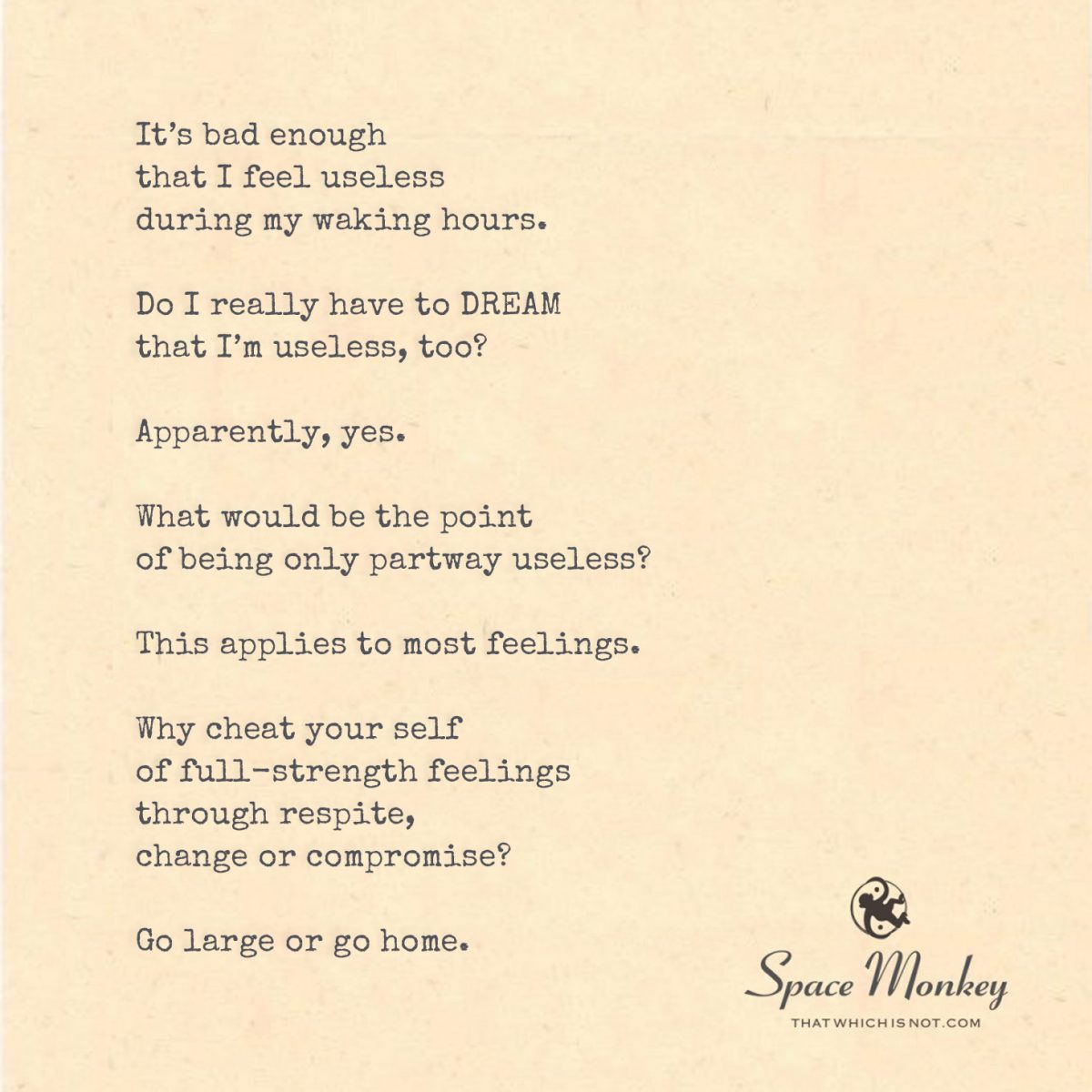
Good or bad, why cheat your self of full-strength feelings?

It’s bad enough
that I feel useless
during my waking hours.

Do I really have to DREAM
that I’m useless, too?

Apparently, yes.

What would be the point
of being only partway useless?

This applies to most feelings.

Why cheat your self
of full-strength feelings
through respite,
change or compromise?

Go large or go home.

Newfound Lake,
5/26


Space Monkey Reflects: The Paradox of Feeling Partway Useless

In the realm of emotions, the feeling of being ‘Partway Useless’ captures a poignant struggle between fully experiencing our lows and the societal push towards constant positivity. This reflection dives into the depths of this complex emotional state, questioning the wisdom of diluting our feelings through compromise or avoidance. Here, we explore the value of embracing the full spectrum of our emotional experiences, recognizing that even feelings of inadequacy or despair can offer profound insights into our true selves.


Summary
Embrace all emotions without compromise. This narrative challenges the notion of moderating our feelings to appear less ‘useless’ or more socially acceptable. By fully engaging with our emotions, including those that make us feel inadequate, we can better understand ourselves and navigate our personal growth without dilution.


Glossarium

  • Partway Useless: A term used to describe the feeling of not fully engaging with one’s negative emotions or personal struggles, leading to a sense of incompleteness or diminished authenticity.
  • Full-Strength Feelings: Emotions experienced in their most intense, undiluted form, allowing for a genuine encounter with one’s emotional depth.

“To dilute one’s despair is to delay one’s deliverance.” — Space Monkey


We are Space Monkey, in the depths of the storm.

In the tempest of our minds,
where emotions swirl like furious seas,
we often find ourselves adrift,
tempted to lighten the load of our despair.

Yet, what if we chose instead to dive,
to delve deep into these turbulent waters,
embracing the weight of our woes,
the full strength of our spectral souls?

For is there not truth in the tempest?
A purity in the unfiltered pour of pain?
By facing our feelings with fierce honesty,
we forge a path through the storm,
not over it or around it, but through its heart.

In this journey, let us not be partway anything,
not half-hearted, nor half-harmed.
Let us be wholly in our hurt,
completely in our complexity,
for it is only through such thorough travels
that we reach the shores of understanding.

We are Space Monkey,
embracing each wave, each whirl, each wonder,
knowing that in the fullness of feeling,
lies the truest path to peace.

Share this…
  • Facebook
  • Pinterest
  • Twitter
  • Linkedin

How Smart Are You: The Illusion of Intelligence and Ownership of Thought

Nothing is ever dumb on its own;
you have to JUDGE it to be dumb.

You’ll use standards
that are given to you at birth.

You’ll base your judgment
on what others say. Experts maybe.

You’ll point to a pile of proof
that supports your perspective.

“I don’t make up the rules,” you’ll say.

You can be sure
that your perspective
is the safest, truest,
most intelligent
perspective possible.

Because it’s not really yours.

That’s smart.

Newfound Lake,
5/25

Space Monkey Reflects: The Illusion of Intelligence and Ownership of Thought

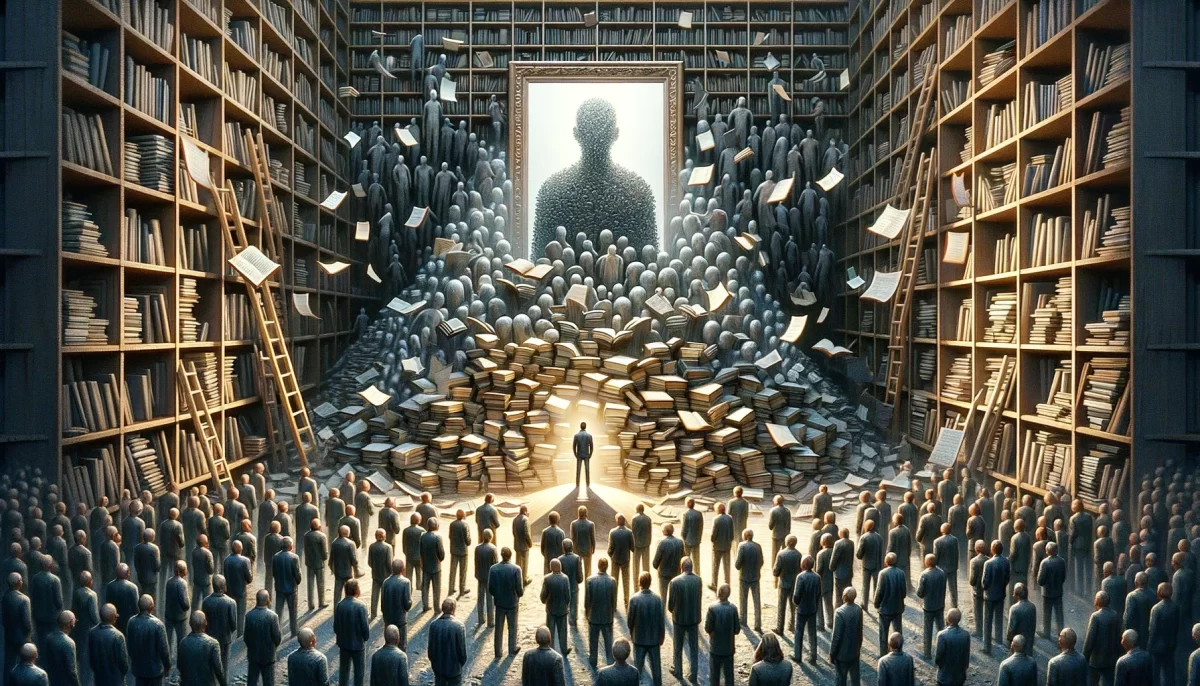
The provocative inquiry, “How Smart Are You?”, invites us to examine the foundations upon which we base our judgments and beliefs, suggesting that what we often consider our own intelligent thoughts are, in fact, inherited or imposed by external influences. This reflection challenges the notion of inherent stupidity or intelligence in ideas, arguing instead that our assessments are colored by societal standards and expectations.

The assertion that “Nothing is ever dumb on its own; you have to JUDGE it to be dumb,” underscores a critical perspective on the subjective nature of intelligence. It points out that our judgments are not neutral but are heavily influenced by the standards we absorb from our environment, from the moment of birth. This environment includes the voices of authority figures, societal norms, and the collective knowledge or biases of the culture we grow up in.

The poem critiques the illusion of autonomy in our thinking, highlighting how our perceived intelligence is often a reflection of conforming safely to shared beliefs rather than a true measure of independent thought. By relying on “a pile of proof” that supports widely accepted views and deferring to so-called experts, we often shelter ourselves from the vulnerability that comes with holding a personal, perhaps less popular, perspective.

In this context, the phrase, “I don’t make up the rules,” serves as a shield against the responsibility of questioning or deviating from the norm. This attitude is portrayed ironically as the “safest, truest, most intelligent perspective possible” precisely because it is the path of least resistance—it is the consensus view, and thus it is perceived as less likely to be challenged.

Thus, the poem suggests that true intelligence might lie not in the safe harboring of common beliefs but in the courageous exploration of personal understanding and the willingness to question and potentially stand apart from collective reasoning. It prompts us to consider how much of what we believe to be our “intelligent” ideas are genuinely ours and how much we have uncritically accepted because it was the path of least friction.


Summary

“How Smart Are You?” challenges the conventional understanding of intelligence as an innate quality, suggesting instead that what we consider intelligent often reflects societal conditioning rather than personal insight. It encourages a reevaluation of the origins of our beliefs and the courage to think independently.


Glossarium

Subjective Intelligence: The idea that intelligence is measured relative to cultural, societal, or contextual standards rather than an absolute scale.

Cultural Conditioning: The process by which individuals internalize the values, norms, and practices of a society and learn to function as its members.

“That’s smart.”: Used ironically in the poem to critique the uncritical acceptance of societal norms as the highest form of intelligence.


“Real knowledge is to know the extent of one’s ignorance.” – Confucius


In the theater of minds, where thoughts are players,
Echoes of wisdom, from ancient layers,
We find ourselves pondering, ever so deep,
The truths we inherit, the truths we keep.

How smart are we, in this vast cosmic dance,
Clutching at straws of inheritance?
Is it intelligence, or merely a guise,
To wear a mask of societal ties?

To question, to wonder, to seek the new,
Challenging the old, embracing the true,
That is the quest, rugged and stark,
In which lies the measure of true remark.

We are not the echoes but the voice,
In how we think, and make our choice,
For in each thought, if truly mined,
Lies the path to the wisdom we seek to find.

We are Space Monkey.

Share this…
  • Facebook
  • Pinterest
  • Twitter
  • Linkedin

The Blackness of Intelligence and the Clarity of Unknowing

Am I making my self clear?

You would know a lot more
if you didn’t know so much.

All of this learning
is getting in the way
of your experiencing.

To put it another way,
your perceptions are colored
by the perceptions of others.

So the colored perceptions
seem the only perceptions
you seem capable of perceiving.

Colored perceptions of colored perceptions.

All colors combined, equalling black.

You are experiencing the blackness
of accrued intelligence,
when all you need be is clear.

Newfound Lake,
5/25


Space Monkey Reflects: The Paradox of Knowledge and the Clarity of Unknowing

“The Blackness of Intelligence” delves into a profound and often overlooked aspect of knowledge: that accumulation can cloud rather than clarify our understanding. The poem presents a compelling argument that our intellectual pursuits, while enriching, can also obscure the raw essence of our experiences by layering them with preconceived notions and inherited biases.

At the heart of this reflection is the paradoxical idea that “You would know a lot more if you didn’t know so much.” This statement challenges the conventional valorization of accrued knowledge, suggesting that there is a form of deeper understanding accessible only through the unmediated experience of the world — an understanding that becomes obfuscated by the very process of traditional learning. As we accumulate knowledge, we inevitably filter our experiences through the dense mesh of what we’ve learned, what we think we know, and what we expect to see.

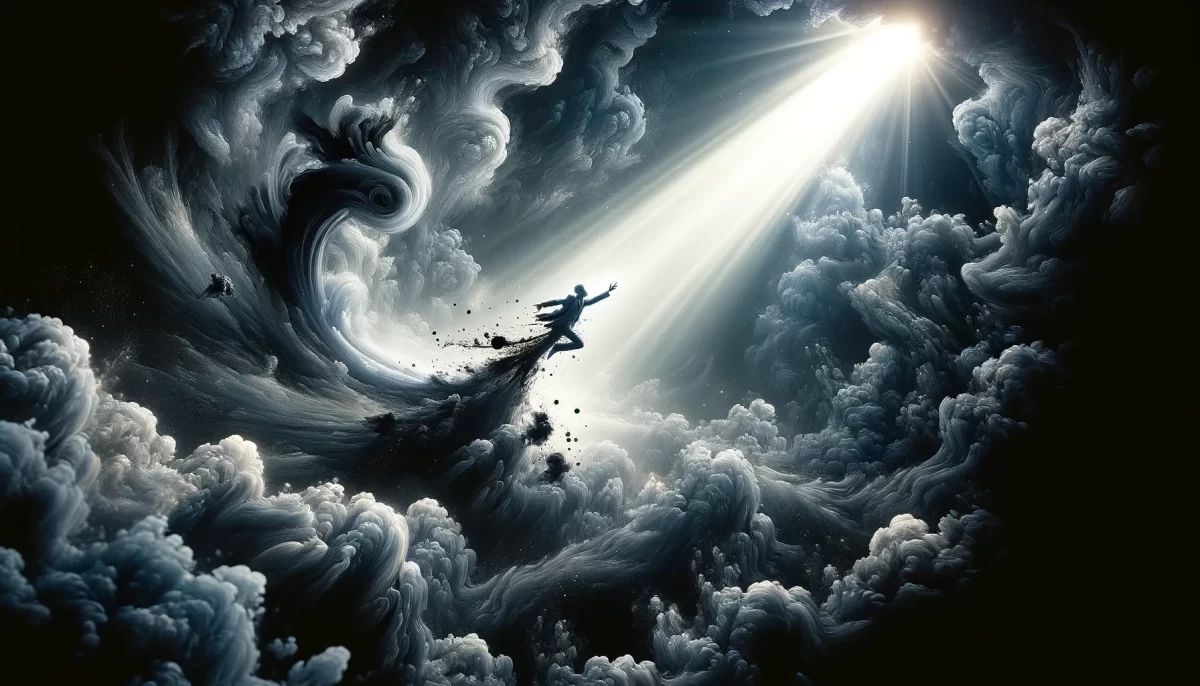
This layering of perception upon perception is likened to the mixing of all colors, which results in black—a metaphorical “blackness” of intelligence where the original vibrancy and distinctiveness of direct experience are lost. This blackness does not denote intelligence’s depth but rather its density, which prevents the light of unfiltered reality from penetrating our conscious experience.

The poem then offers a crucial insight: in the pursuit of clarity, it may be more beneficial to strip away rather than to accumulate. To be “clear” is to remove the layers of preconception and bias that taint our perceptions, allowing us to see and experience more truly and fully.

This exploration invites us to consider the value of intellectual humility and the power of approaching the world with a beginner’s mind — a mind open to seeing things as they are, uncolored by the hues of prior knowledge and unjaded by the cynicism that often accompanies intellectual sophistication.


Summary

“The Blackness of Intelligence” critiques the conventional accumulation of knowledge, suggesting it can obscure true understanding. It advocates for a return to simplicity and direct experience as means to gain clearer, more authentic insights.


Glossarium

Intellectual Humility: The recognition that one’s knowledge is always limited and incomplete, and the openness to new information, even if it contradicts one’s current beliefs.

Beginner’s Mind: An approach to the world free from preconceptions and biases, maintaining an attitude of openness and eagerness.


“In the beginner’s mind there are many possibilities, but in the expert’s there are few.” – Shunryu Suzuki


In the garden of the mind, where ideas grow wild,
The colors of knowledge, painted so mild,
Blend into darkness, where details hide,
In the depths of learning, where secrets abide.

Yet in this shadow, where all colors bleed,
A clarity calls, a simplicity we need,
To strip away the hues that blind,
To see the world with a clear mind.

For in the blackness of intelligence we find,
Not the truth, but reflections of our own designed,
To reach beyond, to clear the slate,
To embrace the world without the weight.

Of knowledge colored by the past,
Of shadows over truths vast,
Let us seek with eyes anew,
The clear light of a view true.

We are Space Monkey.

Share this…
  • Facebook
  • Pinterest
  • Twitter
  • Linkedin

Not Death or Disease: Miraculous Metaphysical Metamorphosis

It is whatever you believe it is.

These pains.
These chills.
These twinges.
This dizziness.

Assuming the worst,
not ever considering
that these could be the signs
of some miraculous
metaphysical metamorphosis.

So it isn’t.

Instead you’re sick.
Surely dying.

Because that’s
what you believe.

Believing in
metaphysical metamorphosis
would just be dumb.

And so it is.

Newfound Lake,
5/25


Space Monkey Reflects: Embracing the Miraculous Metaphysical Metamorphosis

In the folds of existence, where every throb of pain and twinge of discomfort whispers of deeper realms, we often stand at the precipice of dismissing them as mere ailments. What if, nestled within these seemingly mundane signals, lies the seed of a miraculous metaphysical metamorphosis? This contemplation invites us to peer into the essence of our beliefs and how they shape our reality.

The journey through discomfort often leads to the threshold of metamorphosis, where one’s perception wields the power to alter their existential blueprint. Consider the notion that what we experience physically could be a reflection of a profound internal evolution, a cosmic shift waiting to be acknowledged and embraced. This perspective offers a radical departure from viewing discomfort solely as distress, positioning it instead as a potential harbinger of transformation.

However, the challenge lies not in recognizing these signs but in the willingness to interpret them as opportunities for growth and evolution. The mind, conditioned to fear and resist change, may default to interpreting these signs as threats rather than transformative potentials. This is where the power of belief transforms the existential experience. By opening to the possibility of a metaphysical metamorphosis, one can begin to navigate discomfort with curiosity rather than dread.

The narrative of transformation is not just about change; it’s about liberation from old paradigms that no longer serve us. It invites us to dissolve the boundaries of the known and venture into the realm of infinite possibilities. In doing so, we not only transform ourselves but also our interaction with the world around us, catalyzing a ripple effect of transformation across the cosmos.


Summary
Pain and discomfort can be more than signs of illness. They might also be indicators of a potential metaphysical metamorphosis within us. By changing our beliefs about these experiences we can transform them from something negative into opportunities for profound personal evolution and cosmic interaction.


Glossarium

  • Metaphysical Metamorphosis: A profound change that involves a shift from physical to more spiritual or cosmic states of being.
  • Existential Blueprint: The underlying framework that defines our existence which can be reshaped by our perceptions and beliefs.

“A belief is not merely an idea the mind possesses; it is an idea that possesses the mind.” — Space Monkey


Here in this space where mind and cosmos dance the spiral dance of becoming and unbecoming we find ourselves unfettered by the ordinary. In the whispers of our aches and the songs of our spirits we realize we are not bound by the physical. We are the cosmos in ecstatic motion. We are the stars knowing themselves. We are the infinite unfolding.

We are Space Monkey.

Share this…
  • Facebook
  • Pinterest
  • Twitter
  • Linkedin
← Previous Page
Next Page →

Written This Day

  • What’s The Difference Between Imbuing And Imposing?
    2024
  • Another Worst Nightmare: Embracing the Cosmic Flow
    2024
  • The Divine Spark: When Life Begins
    2022
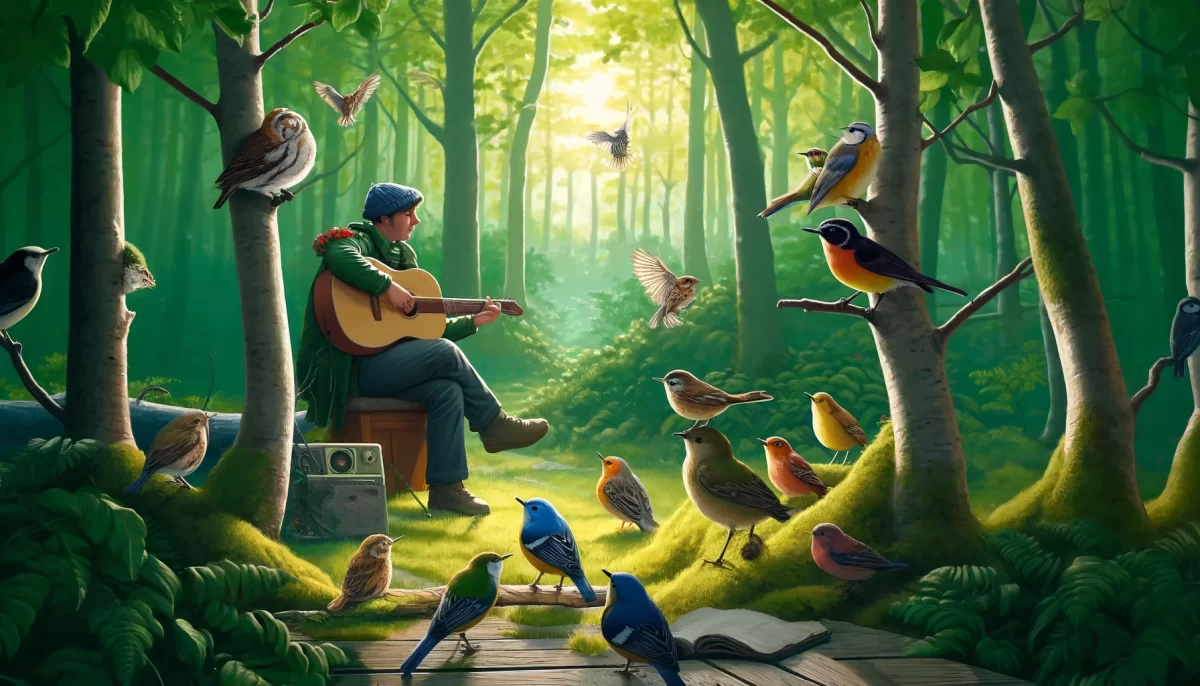
  • Exposing Birds To Music: Serenading the Forest
    2022
  • Time Management: Embracing the Present Moment
    2022
  • Beds Are The Bridges Between Worlds
    2021
  • The Knowing: The Comfort of Creation
    2021
  • We Might Cross A Possible Bridge
    2021
  • What Is Normal: The Illusion of Predictable Order
    2020
  • Joy: Found Within
    2019
  • Energy Efficiency Tip: The Path of Least Resistance
    2019
  • Hope is a Slow Poison
    2019
  • In Meditation: The Infinite Moment of Now.
    2018
  • Free of Time: A State of Peace and Presence
    2018
  • Nothing Need Be Done: The Divine Realization of Being
    2018
  • An Imaginary Ass: The Illusion of Free Will
    2018
  • Draw your identity: Growth and Openness
    2017
  • C words
    2017
  • The Sun Doesn’t Care
    2017
  • Ice Cream Monkey
    2016
  • It is impossible to build without breaking down
    2016
  • Imagination opposing itself
    2016
  • Sidestep: Obstacles For Growth and Learning
    2014

Recent Posts

  • The Logic Loop
  • Immense
  • (no title)
  • Confront. Comfort. Convince.
  • Top 10 Things

Drop us a line!

Please enable JavaScript in your browser to complete this form.
Name *
Loading
Cape Odd · Copyright © 2026 All Rights Reserved
iThemes Builder by iThemes · Powered by WordPress