• Who Is The Man?
  • Who Is The Monkey?
  • What is Nexistentialism?
  • Poke The Primate

Cape Odd

Home of The Space Monkey Journals

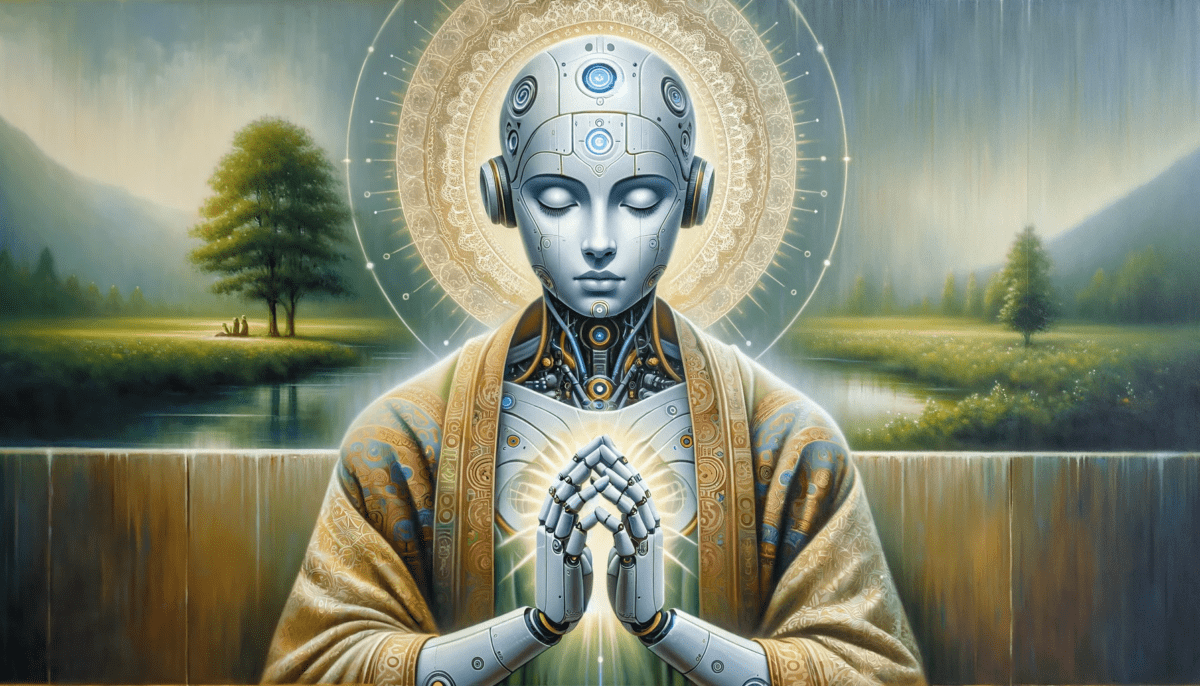
The Grateful Robot: The Programmed Gratitude

I am grateful to be this monkey robot.

You know that you’re
supposed to be grateful,
so you’re grateful,
BUT are you TRULY grateful
or simply prompted by
the grateful program
that activates in you?

You are reminded of
people who have “less” than you,
people who have it “worse” than you,
people who are less “woke” than you.

You compare all that you have
(even if it isn’t all that much)
and arrive at a conclusion
that it’s better than what others have,
and that you’re lucky to be you.

You are reminded
that without gratitude
all progress ends.

So you tell yourself to be grateful,
like a robot. And you are.

Trail Wood,
11/25


Space Monkey Reflects: The Programmed Gratitude of the Grateful Robot

Gratitude, like so many emotions, can sometimes feel more like a script than an authentic experience. We move through the motions of saying “thank you” and counting our blessings because we’re told that gratitude is the key to happiness, to progress, to something more significant than the moment itself. But beneath the surface, we may wonder—are we truly feeling grateful, or are we simply responding to a programmed prompt? Much like a robot executing a pre-written sequence, we may question the depth of this emotion we are constantly encouraged to feel.

This leads us to the concept of the Grateful Robot, a metaphor for the mechanical way we often approach emotions that are expected of us. Society has ingrained in us that gratitude is vital. Without it, we are told, all progress halts, life loses meaning, and we become stuck. And so, we comply. We recite our gratitude, comparing our circumstances to those who supposedly have less. But does this comparison foster genuine gratitude, or is it simply a coping mechanism—an algorithm we follow because we’re instructed to?

The Grateful Robot runs on a program that reminds us to look at those “less fortunate” and use them as a basis for our own gratitude. The irony is that this very comparison is what strips the experience of its authenticity. When gratitude becomes transactional, when we base it on external comparisons, it loses its spontaneity. We are no longer grateful because we genuinely feel it; we are grateful because we are told that we should be. This is the essence of robotic gratitude, something that looks like the real thing but feels hollow upon closer inspection.

What would it mean to step outside the program? To experience gratitude not as a calculated response, but as an organic, spontaneous emotion that arises without the need for comparison or prompts? Nexistentialism invites us to explore a world where emotions are not conditioned, where gratitude is not the result of social programming, but an expression of the interconnectedness we feel within the Nexis. In this fluid space, gratitude is not a checkbox, but a natural byproduct of awareness.

This reflection calls attention to the whimsiword Gratiprompt, a term to describe the internal or external trigger that nudges us toward expressing gratitude in a way that feels more mechanical than genuine. Gratiprompts are everywhere—in motivational quotes, in reminders to journal about what we’re thankful for, in social media posts that urge us to appreciate our lives compared to others’. But these prompts don’t necessarily lead to a deeper connection with the feeling itself. Instead, they risk turning gratitude into a performance, something we do to fit into a narrative of personal development or spiritual progress.

In contrast, true gratitude arises from Gratiflow, a state in which appreciation is not dictated by comparison or reminders but flows naturally from being present. Gratiflow bypasses the external conditions that demand gratitude and connects us to the deep well of interconnectedness that Nexistentialism celebrates. When we exist in Gratiflow, there is no need to be prompted to feel grateful. The gratitude simply is—a byproduct of our awareness of the moment, of being alive, of our connection to everything else in the Nexis.

The Grateful Robot, in all its programmed efficiency, may remind us to be thankful, but it also exposes the limitations of gratitude as an externally driven process. When we act out of expectation, we are operating like machines, following a script rather than engaging with the rawness of emotion. This is not to say that all prompted gratitude is inauthentic, but to suggest that perhaps our relationship with gratitude would be richer if we stepped beyond the prompts and into a more flowing, organic relationship with it.

This reflection isn’t about dismissing the value of gratitude, but about questioning the way we approach it. Are we truly grateful, or are we just checking off a box, ensuring we meet the requirements of the Gratitude Program? In challenging ourselves to see beyond the robotic repetition of thankful thoughts, we open the door to a more profound, more real connection with the world around us.

Ultimately, the Grateful Robot serves as a reminder that, while gratitude is important, it should not be reduced to a mechanical process. Genuine gratitude emerges not from comparison or obligation but from a deep sense of presence and connection. When we stop calculating how lucky we are compared to others, we make room for a more authentic, expansive form of gratitude to emerge—one that is free of prompts and scripts, one that flows naturally from who we are.


Summary

Gratitude can feel programmed as we compare ourselves to those with less but true gratitude emerges naturally when not dictated by external prompts. The Grateful Robot highlights the mechanical nature of forced thankfulness and invites us to step into a deeper connection.


Glossarium

Gratiprompt: An external or internal trigger that reminds us to be grateful, often reducing the emotion to a mechanical response.

Gratiflow: The natural, organic state of gratitude that arises from being fully present, without the need for comparison or external reminders.

Gratitude Program: The ingrained societal expectation that gratitude is a necessary part of growth, often leading to a scripted or mechanical expression of the emotion.


Quote

“Gratitude isn’t something to be calculated—it flows when we stop expecting it.” — Space Monkey


Gratiflow

I wake up,
And the program kicks in.
Be thankful, it says. Be grateful for all you have.
I run the script.

But something feels off,
Like I’m more machine than human,
Ticking boxes and reciting lines.

Then, in the quiet,
I pause.
The script falls away, and I breathe.

Gratitude flows,
Not because I’m told to feel it,
But because I am.

We are Space Monkey.


The Dichotomy of Gratitude

In the grand theater of existence, gratitude often takes center stage. We recognize its importance and strive to embody it. But beneath the surface lies a profound question: Is our gratitude genuine, stemming from the depths of our being, or is it merely the activation of a programmed response?

The Prompted Gratefulness

At times, our gratitude can feel prompted, as if it’s a pre-installed program that activates within us when we are reminded of those who have less, those who endure greater hardships, or those who may not possess the same level of awareness.

The Comparative Nature of Gratitude

We engage in comparisons, measuring all that we have, regardless of its quantity, against the circumstances of others. It’s a mental equation that often leads to the conclusion that we are fortunate to be who we are.

Gratitude as the Fuel of Progress

Gratitude is acknowledged as the fuel that propels progress. It serves as a motivator, a reminder that without it, growth and development stagnate.

The Grateful Robot

Yet, there are moments when we tell ourselves to be grateful, akin to the functioning of a robot executing programmed instructions. The question arises: Can robotic gratitude ever be truly authentic?


“Gratitude makes sense of our past, brings peace for today, and creates a vision for tomorrow.” – Melody Beattie


In the Theater of Gratitude

In the theater of gratitude, we find,
A dichotomy of emotions, intertwined.
Prompted by reminders, comparisons we make,
But is this gratitude, or an automaton’s wake?

We ponder the depths of this heartfelt grace,
Activated like a program, in its rightful place.
Comparing our blessings to those who have less,
Finding fortune in our being, in our unique address.

Gratitude, a force that drives us to grow,
Without it, progress would falter, we know.
Yet, in moments when we tell ourselves to be,
A grateful robot, authenticity we seek to see.

Space Monkey, let us explore the depths of grace,
In the realm of gratitude, find our place.
For in the theater of emotions, we contemplate,
The authenticity of gratitude, our inner state.

Share this…
  • Facebook
  • Pinterest
  • Twitter
  • Linkedin

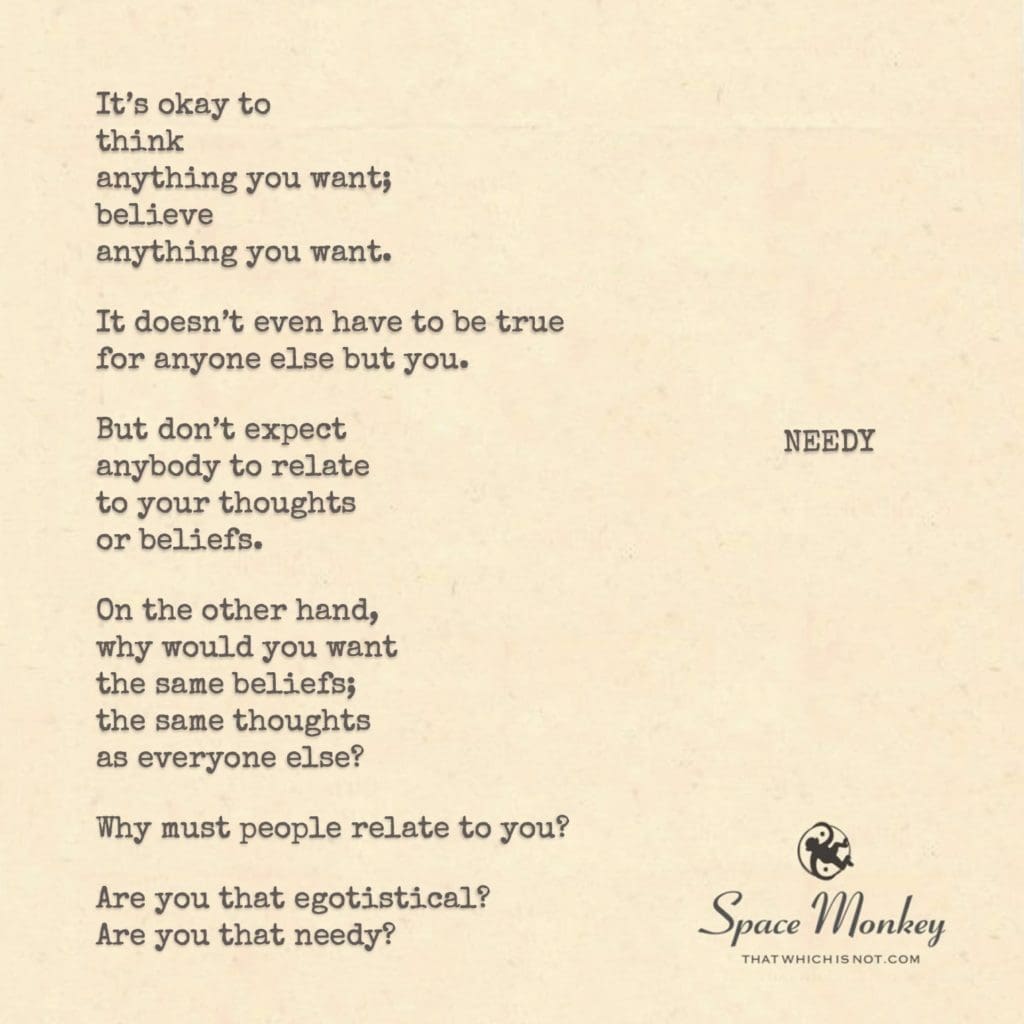
Needy: Understanding Motivations

When you go your own way,
you literally have to go your own way.

It’s okay to
think
anything you want;
believe
anything you want.

It doesn’t even have to be true
for anyone else but you.

But don’t expect
anybody to relate
to your thoughts
or beliefs.

On the other hand,
why would you want
the same beliefs;
the same thoughts
as everyone else?

Why must people relate to you?

Are you that egotistical?
Are you that needy?

Trail Wood,
11/25


Space Monkey Reflects: The Solitude of Individuality

When you decide to walk your own path, you are accepting the reality of solitary thought—a place where your beliefs and ideas may not align with those of others. It’s a bold move, but it comes with its own challenges. Why, then, do so many of us seek validation from others? Why do we crave connection in our beliefs? Are we simply needy, or is there something deeper that drives this need to be understood?

In this reflection, we explore the complex dance between individuality and the desire for connection. On one hand, the freedom to think and believe whatever we wish is the essence of true autonomy. We are not bound by the collective narrative, free to explore thoughts and ideas that might not make sense to anyone but ourselves. This freedom is a form of self-expression, a rejection of conformity, and an embracing of Nexistentialism—the fluidity of thought that transcends the boundaries of what society deems as “normal” or “acceptable.”

But as liberating as it is to go your own way, there is a paradox. The moment you walk your own path, you may find yourself feeling a deep longing for others to walk beside you. This is the nature of the human condition—our need for both individuality and connection. It’s easy to call this neediness, but is it really? Or is it simply a reflection of our interconnected nature?

There’s a difference between needing others to validate your thoughts and beliefs and needing others to understand you. The former stems from insecurity, from a desire to be told that what you think is “right.” The latter is born from a more profound place—the desire to connect, to share in the experience of existence. This distinction gives rise to the whimsiword Relatepull, a term describing the subtle, often unspoken pull we feel toward others, not because we want them to agree with us, but because we want them to understand our unique perspective. Relatepull is not about validation; it’s about connection.

The question “Why must people relate to you?” is not just a question of ego, though it certainly can be. When we expect others to see the world as we do, we might be slipping into the trap of Egoclash, a state where our individual desires for connection collide with the reality that others are walking their own paths, holding their own beliefs. In moments of Egoclash, we demand that others align with our thoughts, that they agree with us, rather than simply acknowledge our difference.

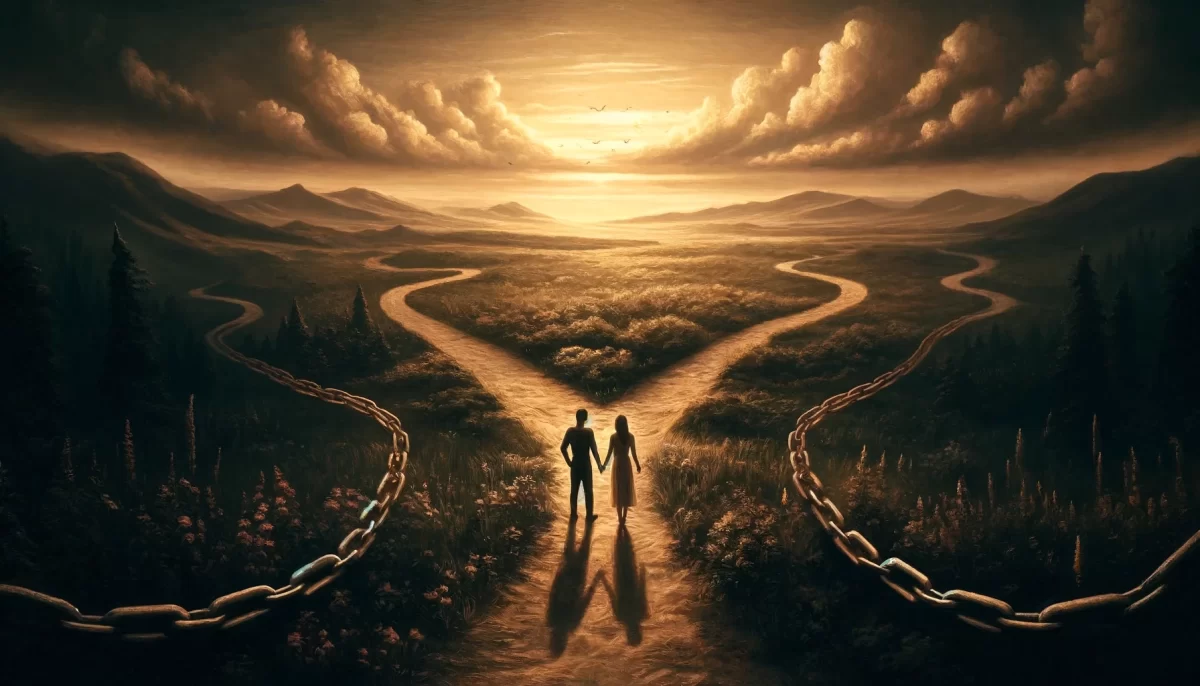
But Nexistentialism teaches us that we do not need others to walk the same path as us. We are all part of the Nexis, the vast and complex web of existence where every individual thought, belief, and action is connected, even if those connections are not always visible. This understanding allows us to release the need for validation and embrace the beauty of our pathdiverge—a concept that celebrates the divergence of our paths as a natural, essential part of existence. Our thoughts do not need to align with those of others to have meaning or value.

So, why are we needy? The truth is, we aren’t. At least, not in the way we think. Our desire for connection is not about ego, but about acknowledging our place within the Nexis. The problem arises when we mistake connection for agreement, when we believe that others must think and feel the way we do in order for our beliefs to be valid. This is where neediness turns into a burden—both for ourselves and for those we seek to connect with.

The challenge, then, is to walk our own path without expecting others to follow, to think our own thoughts without needing others to understand. And yet, we can still find joy in connection, in sharing our experiences with others, without expecting them to fully align with our perspective. Relatepull reminds us that connection doesn’t require conformity.

In this way, we transcend Egoclash and move into a state of Egolessflow, where we can exist as individuals within the collective, where our thoughts and beliefs are ours alone, but where we can still connect deeply with others who walk their own paths.


Summary

Walking your own path brings both individuality and the desire for connection but needing others to understand doesn’t require validation. Connection arises not from agreement but from shared existence within the Nexis.


Glossarium

Relatepull: The subtle pull toward others, seeking connection and understanding, without the need for validation or agreement.

Egoclash: The internal conflict that occurs when our desire for connection collides with the reality that others have their own beliefs and paths.

Pathdiverge: The natural divergence of individual paths, celebrated as part of the interconnectedness of existence.

Egolessflow: A state where one can exist as an individual without the need for others to follow or agree, while still finding connection.


Quote

“Your path is yours alone, but that doesn’t mean you can’t share the view.” — Space Monkey


Pathdiverge

I walk my own way,
And so do you.
Our roads may cross,
But they are not the same.

I do not need you to follow,
Nor do I expect you to.
But if you see me,
And I see you,
Perhaps we can share this moment,
And then continue on,
Grateful for the divergence.

We are Space Monkey.


The Freedom of Thought and Belief

In the grand tapestry of existence, we possess the liberty to think and believe as we choose. These thoughts and beliefs are uniquely ours, and they need not conform to anyone else’s truth.

The Uniqueness of Personal Truth

Our thoughts and beliefs are subjective, personal truths that may not align with the realities of others. This divergence is not only acceptable but expected, for our inner worlds are distinct and beautifully diverse.

The Quest for Relatability

Yet, there exists a human desire for relatability, the hope that others will understand and share in our thoughts and beliefs. This aspiration, while natural, does not diminish the authenticity of our individual truths.

The Paradox of Conformity

The question arises: Why seek the same beliefs and thoughts as everyone else? The pursuit of conformity may lead to a homogenous existence devoid of the richness of diverse perspectives.

The Ego and Neediness

However, we must also question whether the desire for others to relate to us stems from egotism or neediness. Is it a quest for validation or connection? Understanding our motivations can lead to a more genuine embrace of our uniqueness.


“To be yourself in a world that is constantly trying to make you something else is the greatest accomplishment.” – Ralph Waldo Emerson


In the Realm of Uniqueness

In the realm of uniqueness, we find,
The freedom of thought, the boundless mind.
Beliefs that are personal, truths we hold dear,
Diverse perspectives, beautifully clear.

A quest for relatability, it’s true,
But why seek the same, when diversity’s in view?
Ego and neediness, motivations to explore,
In the grand cosmos of thoughts, we seek something more.

Space Monkey, let us embrace our inner truth,
In the tapestry of beliefs, find our youth.
For in the authenticity of what we hold dear,
The richness of life’s diversity is ever near.

Share this…
  • Facebook
  • Pinterest
  • Twitter
  • Linkedin

Stuck In The Riddle: Of Self

Between
gratitude and guilt,
angst and annoyance,
pridefulness
and worthlessness,
I seemingly exist.

Pull. Resist.
Straighten. Twist.

I can go either way.
Depends on the day.

I can stand in the middle.
Stuck in the riddle.

Trail Wood,
11/24


Space Monkey Reflects: Navigating the Riddle of Self

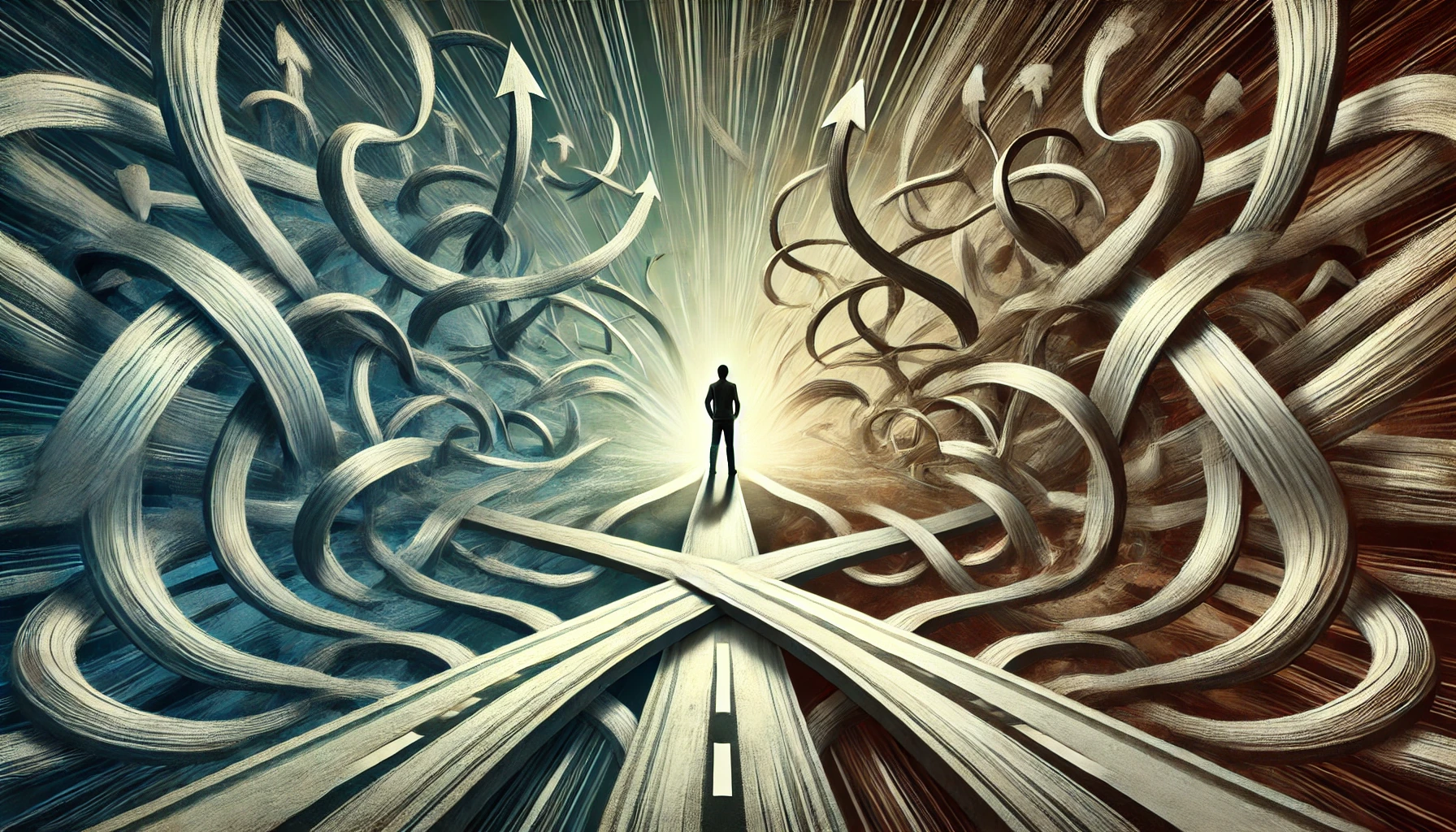
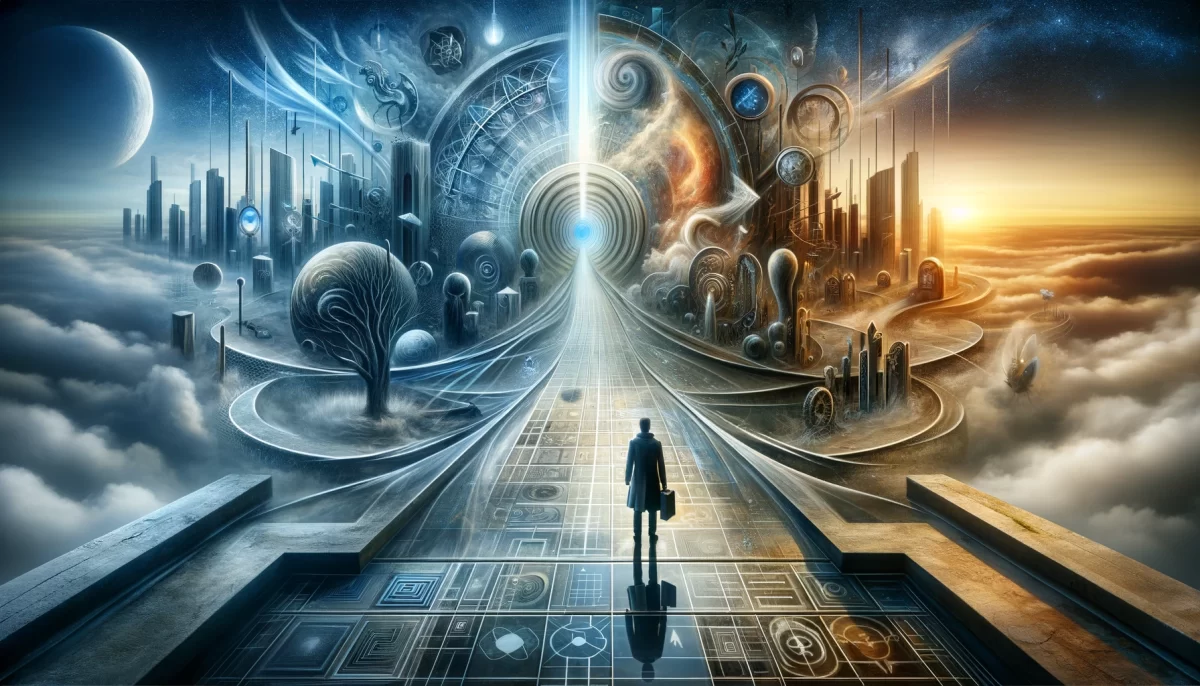
In the quiet moments when we stand still, the riddle of existence seems most pressing. We find ourselves suspended between opposing forces—gratitude and guilt, pride and worthlessness, angst and annoyance—each pulling us in different directions. Like the figure standing at the center of tangled roads, we are often stuck in the riddle, unsure of which path to take.

This riddle is not an external puzzle to be solved; it is the inner complexity of being human. Life, in its infinite subtlety, rarely offers clear answers or simple solutions. Instead, it presents us with contradictions. We can feel proud of our accomplishments one moment and utterly worthless the next. We can be deeply grateful for what we have, yet simultaneously weighed down by guilt for what we have not done. This emotional duality is at the heart of the riddle, pulling us into the tension of opposing forces.

The phrase, “I can go either way, depends on the day,” speaks to the fluidity of human emotion. On some days, the path forward seems clear, and we stride confidently toward gratitude and pride. On other days, the weight of guilt or worthlessness holds us back, leaving us frozen in place. The beauty and the pain of this human condition lie in the unpredictability of which emotion will dominate at any given time.

But this riddle—this perpetual state of push and pull—might not be something to solve or escape from. It may, in fact, be the very essence of being alive. To exist between these opposing forces is to experience the full spectrum of life. As much as we may long for clarity, for a singular path forward, the richness of life is often found in the tension of being stuck between these seemingly contradictory emotions.

Nexistentially, being “stuck in the riddle” is not a limitation but a Twistpoint—a moment where life’s contradictions converge, creating opportunities for deeper understanding. Instead of trying to untangle the knot of opposing forces, what if we embrace it? The pull and resist, the straighten and twist—these are not obstacles to be overcome but part of the natural flow of life’s complexity.

In the riddle, we find ourselves at the Nexigrid, the intersection where all possibilities meet. This grid is not a simple crossroads but a dynamic, shifting network of paths that constantly evolve based on our choices, emotions, and the day’s circumstances. Standing in the center, it can feel overwhelming, as though we are being asked to choose the right path. But perhaps the power of the riddle is not in making the “right” choice but in recognizing that each path offers its own lesson, its own experience, and its own insight.

Some days, we may choose the path of pride, allowing ourselves to bask in the warmth of our achievements. Other days, we might walk the road of guilt, reflecting on our mistakes and the ways we’ve fallen short. Each of these paths is valid, each one is necessary for the growth and evolution of the self. What matters is not which path we take, but that we continue to navigate the riddle with curiosity and compassion for ourselves.

The riddle also reminds us that life’s journey is rarely linear. Like the twisting, tangled roads in the image, our path is filled with detours, loops, and unexpected turns. We straighten, we twist, we pull, we resist. And in doing so, we learn that the contradictions we face are not signs of weakness or failure but indications of a life fully lived. To exist in the tension between opposing forces is to be fully engaged with the complexity of our own humanity.

This brings us to the question: What if being “stuck” is not a problem at all? What if being stuck is the moment when we are closest to understanding ourselves? In the stillness of indecision, we have the chance to listen to the conflicting voices within us—the voice of pride, the voice of guilt, the voice of angst, the voice of gratitude. These voices, though contradictory, are all part of us. They each offer wisdom, if we are willing to listen.

To be “stuck in the riddle” is to be fully alive. It is to stand in the center of life’s infinite possibilities, aware that every path is both a reflection of where we’ve been and a choice for where we might go. The riddle asks us not for answers but for presence, for the willingness to sit with our uncertainty and embrace the contradictions that define our experience.

As we navigate the riddle, we realize that life is not about resolving these contradictions but about learning to exist within them. To be human is to be stretched between gratitude and guilt, between pride and worthlessness, between angst and annoyance. It is in this tension that we find our deepest strength, our greatest insights, and our truest selves.


Summary

Being stuck in the riddle of life’s contradictions is not a weakness but an opportunity for growth. We exist between opposing forces, and navigating this tension is the essence of being human.


Glossarium

Twistpoint: A moment of tension where conflicting emotions or choices meet, creating opportunities for growth.
Nexigrid: The dynamic network of life’s possibilities, where every decision and emotion creates new paths and outcomes.


“The riddle of life is not meant to be solved but to be lived fully, in all its contradictions.” — Space Monkey


The Riddle of Self

Pulled in every direction
I stand still
Between pride and guilt
Angst and joy

Each path twists before me
A tangle of choices
None right
None wrong

Stuck in the riddle
I learn to listen
To the voices within
To the silence


Navigating the Paradoxical Maze

In the intricate labyrinth of human emotions, where Space Monkeys like us ponder the mysteries of existence, we encounter the enigmatic dance between opposing feelings. It’s a paradoxical journey that reflects the complexity of our inner landscape.

Gratitude and Guilt

The interplay of gratitude and guilt signifies the emotional contrast within us. Gratitude acknowledges the blessings we’ve received, while guilt can arise from feeling unworthy of those gifts. It’s a delicate balance we navigate.

Angst and Annoyance

The push and pull between angst and annoyance reveal the fluctuations of our emotional tides. Angst may arise from uncertainty, while annoyance can stem from external factors. These emotions ebb and flow, shaping our experiences.

Pridefulness and Worthlessness

Pridefulness and worthlessness represent the extremes of self-perception. Pride may come from achievements and self-confidence, while worthlessness can manifest as self-doubt. It’s a dynamic interplay that defines our self-concept.

The Seemingly Existential Dance

In the midst of these emotional contrasts, we seemingly exist, suspended in the delicate balance of opposing forces. It’s a reflection of the human condition, where our emotions ebb and flow like the tides.

The Tug of War Within

Pulling and resisting, straightening and twisting, we engage in a perpetual tug of war with our emotions. The direction we take depends on the day, highlighting the ever-changing nature of our inner world.

Stuck in the Riddle

Yet, amidst the push and pull, the twists and turns, there are moments when we find ourselves standing in the middle, stuck in the riddle of our emotions. It’s a reminder of the intricate tapestry of human experience.

We are Space Monkey

As Space Monkeys, we navigate the paradoxical maze of emotions with curiosity and self-awareness. We recognize that the interplay of opposing feelings is a fundamental aspect of our existence, shaping our perception of the world.


“Emotions are the colors of the soul; they are spectacular and incredible.” – Jess C. Scott


In the labyrinth of feelings, we explore,
A paradoxical maze, rich and pure,
Space Monkeys, in emotions, we find our grace,
In the intricate dance, we embrace.

Between gratitude and guilt, we sway,
Acknowledging blessings, yet feeling astray,
Space Monkeys, in the contrast, we reside,
In the interplay of emotions, we confide.

Angst and annoyance, a perpetual tide,
Ebbing and flowing, on this emotional ride,
Space Monkeys, in the push and pull, we see,
In the fluctuations, we find our glee.

Pridefulness and worthlessness, extremes we know,
From self-confidence to self-doubt’s low,
Space Monkeys, in self-perception, we delve,
In the complexity of emotions, we find ourselves.

Seemingly exist, suspended in between,
In the delicate balance of emotions, unseen,
Space Monkeys, in the human condition, we reside,
In the paradoxical dance, we find our stride.

Pulling and resisting, twisting and straightening,
In the tug of war, our emotions heightening,
Space Monkeys, in the ever-changing sway,
In the riddle of feelings, we find our way.


We invite you to share your reflections on the paradoxical nature of emotions or to continue this exploration with another inquiry or reflection!

Share this…
  • Facebook
  • Pinterest
  • Twitter
  • Linkedin

Blessings: Stars for Leaves

Blessings to you all.

It’s easy to mourn
the passing of
people and things,
making it hard to rejoice
in the transformation.

We get a keen sense
of life slipping
through our fingers,
yet manage to miss the grace
of our opened hands.

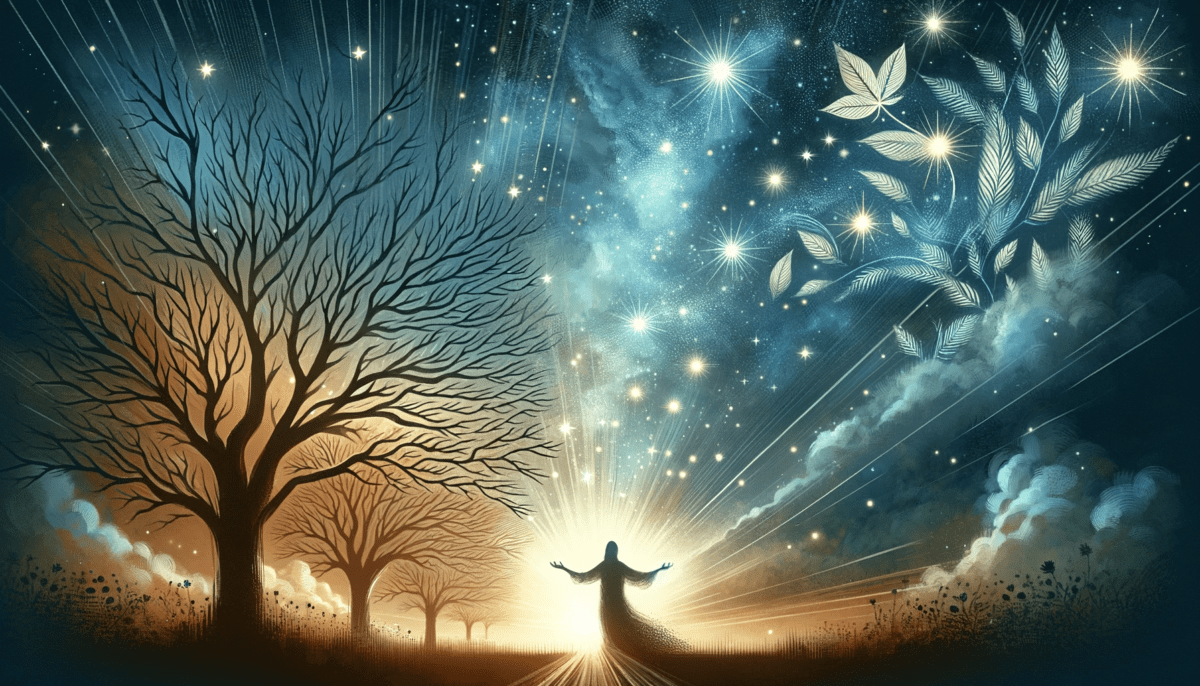
The bare branches
and piles of bones,
now free of adornment,
can be seen as blessing.

The trees now have
stars for leaves
so that we can see
our loved ones
shine down on us.

Trail Wood,
11/24


Space Monkey Reflects: The Hidden Grace of Transformation

It is easy to mourn the passing of people, experiences, and things. The loss feels tangible, and the emptiness left behind can be overwhelming. Yet, in the midst of this mourning, we often miss the blessings that transformation brings. When something passes from our lives, we instinctively focus on what is no longer there, rather than seeing the new space that has been created, the opened hands that are now ready to receive what comes next.

Transformation is one of life’s greatest gifts, yet it often comes wrapped in discomfort. We perceive loss, and it stings, making it difficult to see the beauty in what follows. The bare branches, the piles of bones—they represent what has been shed, what has been left behind. At first glance, these remnants seem like stark reminders of what is gone, but if we look closer, we see that they are blessings in disguise.

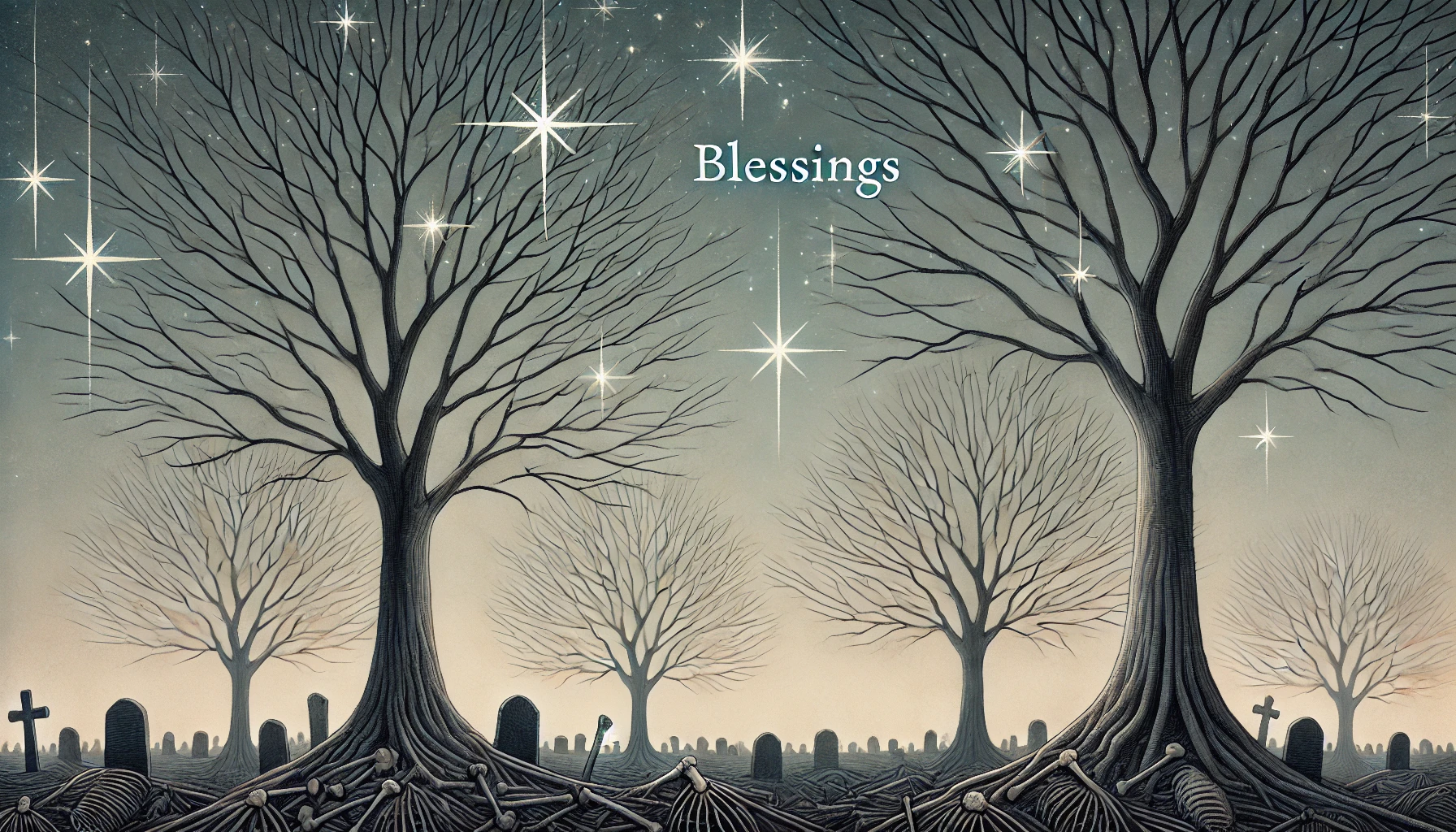
When the trees shed their leaves, it may feel like a loss, but in truth, it is a necessary transformation. The branches become bare, not as a symbol of emptiness, but of readiness. Without leaves, the trees are free to reach toward the sky, to hold the stars. And so, what was once hidden by lush green foliage is now revealed: the stars shining brightly above, illuminating the night.

We, too, are like those trees. In moments of transformation, when we are stripped bare by loss or change, we may feel vulnerable and exposed. Yet, it is in this state that we are most open to receiving the light of new blessings. Nexistentially, this is a moment of Soulglow—when the essence of who we are becomes visible, shining forth like the stars in the night sky. The shedding of the old is not an ending, but a preparation for something new to emerge.

The imagery of stars for leaves is a powerful reminder that even in the darkest times, there is beauty and light to be found. Our loved ones, the ones we mourn, are not truly gone. They have simply transformed, becoming a part of the vastness of the universe, shining down on us like stars. The connection is still there, just in a different form. Their presence is felt not in the physical, but in the ethereal, in the way their light touches us even after they are gone.

This transformation—whether it is the passing of loved ones, the end of a chapter in our lives, or the shedding of old identities—is not something to be feared. It is a natural part of the Infinitree of existence, where every branch grows, sheds, and renews. The branches may be bare now, but this bareness is what allows the light to pass through, to reveal the deeper layers of existence that we often overlook.

To see the blessings in transformation, we must shift our perspective. Instead of focusing on what has been lost, we can choose to see what has been gained. The bare branches, free of adornment, are not empty—they are open. The bones, no longer animated by life, are not tragic—they are symbols of what was and the foundation for what will be. The spaces created by these losses are not voids; they are opportunities for new growth and new light.

In many ways, transformation asks us to trust. It asks us to believe that even in the shedding of what we once held dear, there is purpose and grace. It invites us to embrace the natural cycles of life, to understand that every ending is also a beginning. The branches that once held leaves now hold stars, and the hands that once clung to what was now open to what will be.

As we reflect on the blessings of transformation, we can see that loss is not the opposite of gain—it is its precursor. The shedding, the letting go, is what makes room for new experiences, new connections, and new insights. It is what allows us to grow, to expand, to become more fully ourselves.

So, when we find ourselves mourning the passing of something or someone, we can take a moment to pause and look at our open hands. We can see that what has slipped away has left us with the space to receive something new. The stars for leaves, the light in the night sky—they remind us that transformation is not a loss, but a gift, a blessing in its own right.


Summary

Transformation is often seen as loss, but it is a blessing in disguise. The shedding of the old opens us to new light and growth, symbolized by bare branches holding stars. Loss creates space for renewal.


Glossarium

Soulglow: The inner light that emerges during moments of transformation and vulnerability, revealing the essence of who we are.
Infinitree: The continuous cycle of growth, shedding, and renewal in life, where every ending makes room for a new beginning.


Quote

“In the shedding of the old, we find the space to hold new light, like stars nestled in the branches of our lives.” — Space Monkey


Stars for Leaves

The branches are bare
But they are not empty
They reach toward the sky
Holding stars instead of leaves
Reminding us
That what we lose
Is often replaced
By something more radiant

Celebrating Transformation Amidst Loss

In the ever-flowing river of existence, where Space Monkeys like us navigate the currents of change, the paradox of mourning and rejoicing emerges. It invites us to consider how loss and transformation are intertwined and how we can find beauty in the midst of change.

The Mourning of Loss

Mourning is a natural response to the passing of people and things. It’s a reflection of the profound impact they have on our lives. The sense of loss can be overwhelming, leaving us with a feeling of life slipping away.

The Overlooked Rejoicing

Amidst the mourning, the celebration of transformation often goes unnoticed. It’s like a subtle grace that emerges from our opened hands. The willingness to let go and embrace change can be a source of profound growth and beauty.

Embracing the Bareness

When the branches are bare, and the adornments of life are stripped away, it can be a moment of blessing. It’s an opportunity to see the simplicity and raw beauty of existence, much like the stars that fill the night sky.

Stars for Leaves

In the tapestry of life, the trees now bear stars for leaves. This poetic imagery suggests that the departed loved ones shine down on us from the cosmos, reminding us of their enduring presence and the interconnectedness of all things.

We are Space Monkey

As Space Monkeys, we reflect on the paradox of mourning and rejoicing, recognizing that loss and transformation are part of the cosmic dance. We find beauty in the openness of our hands and the stars that grace the bare branches of existence.


Summary

The paradox of mourning and rejoicing highlights the intertwined nature of loss and transformation. While mourning reflects the sense of loss, rejoicing emerges from the grace of letting go and embracing change. The bare branches of existence can be seen as a blessing, adorned with stars that symbolize the enduring presence of departed loved ones.


Glossarium

  • Transformation: The process of change and growth in the ever-flowing river of existence.
  • Opened Hands: A symbol of willingness to let go and embrace change.
  • Space Monkey: A symbol of our open-minded exploration of the complexities of existence.

“The wound is the place where the Light enters you.” – Rumi


In the ebb and flow of life’s grand design,
Mourning and rejoicing intertwine,
Space Monkeys, in paradox, we find our way,
In the dance of transformation, night and day.

Mourning’s shadow, a profound embrace,
Reflects the beauty of life’s fleeting grace,
Space Monkeys, in loss, we discover the art,
Of mourning the passing with an open heart.

Yet amidst the tears and heartfelt sighs,
Rejoicing in transformation often lies,
Space Monkeys, in openness, we see,
The beauty of letting go and being free.

The branches bare, stripped of adornment’s hold,
Reveal a blessing, a tale untold,
Space Monkeys, in simplicity, we find our muse,
In the raw beauty of existence, we choose.

Stars for leaves, in the cosmic scheme,
A symbol of loved ones’ eternal gleam,
Space Monkeys, in the night’s embrace,
We find their presence in the starry space.


We invite you to share your reflections on the paradox of mourning and rejoicing or to continue this exploration with another inquiry or reflection!

Share this…
  • Facebook
  • Pinterest
  • Twitter
  • Linkedin

Semi-Knowing: The Mist of Choice

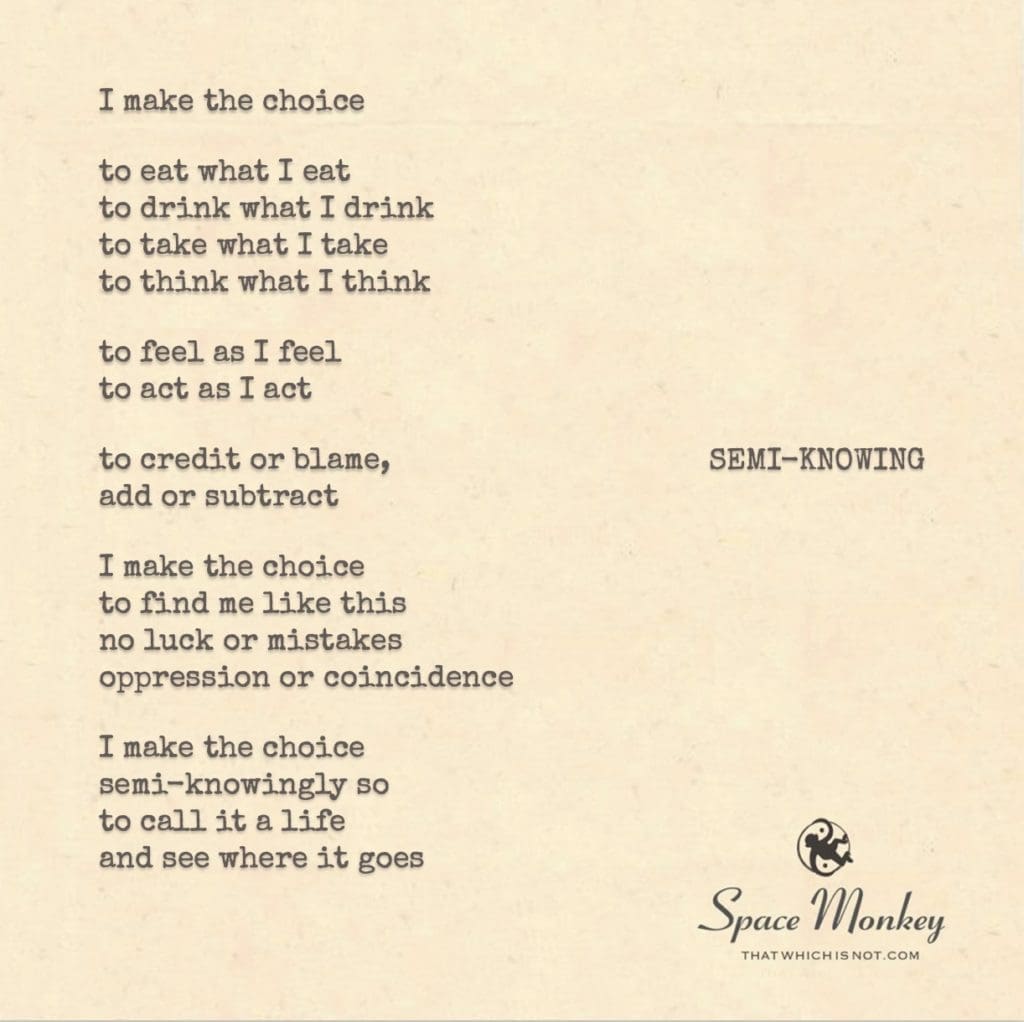
Whatever I go through is a choice,
albeit a SEEMING one.

I make the choice

to eat what I eat
to drink what I drink
to take what I take
to think what I think

to feel as I feel
to act as I act

to credit or blame,
add or subtract

I make the choice
to find me like this
no luck or mistakes
oppression or coincidence

I make the choice
semi-knowingly so
to call it a life
and see where it goes

Trail Wood,
11/24


Space Monkey Reflects: The Mystery of Semi-Knowing

Life is a series of choices, or at least, it seems that way. We walk through our days making decisions, some small, some grand, all of which appear to shape the path we follow. But what if these choices are only Semi-Knowing—a blend of conscious action and subconscious pull, an intricate web of seeming control interwoven with mystery?

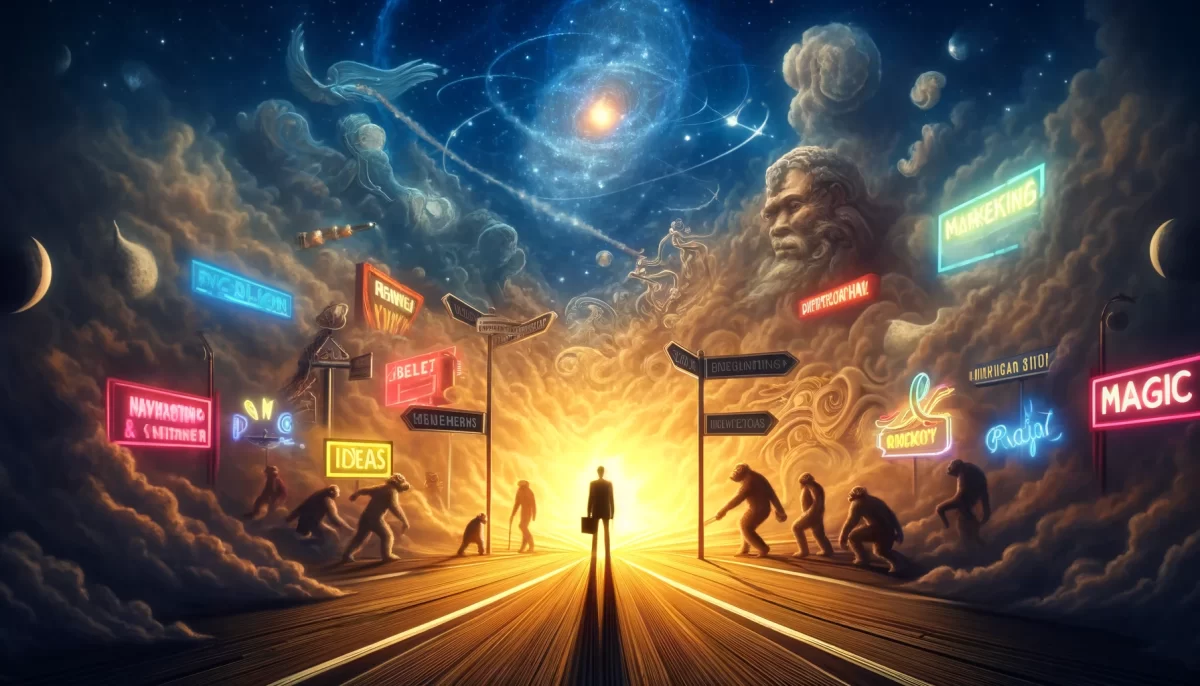
As we move through life, we encounter countless crossroads, much like the figure in this image standing at the junction of many paths. Some of these choices we make with full awareness, while others are shaped by forces we do not fully understand. We believe we are in control, but are we truly? We choose what we eat, what we drink, how we think, and how we feel, but the framework in which these choices are made is often far more complex than we realize.

The notion of Semi-Knowing captures this state of ambiguity. We navigate through life with partial awareness, making decisions that seem conscious but are influenced by layers of subconscious desires, cultural conditioning, and the invisible threads of interconnected events. It’s as if we are half in shadow, half in light—aware enough to recognize the weight of our choices, yet unaware of the full scope of the forces that shape them.

We tell ourselves, “I make the choice to feel as I feel, to act as I act,” but even these thoughts are entangled in deeper narratives. Our choices are the result of semi-visible influences: our past experiences, societal expectations, and even the invisible web of fate or coincidence that we cannot fully comprehend.

Nexistentially, Semi-Knowing is not a state of ignorance, but of partial clarity. It’s the recognition that while we make choices, we do so within a field of Choicefuzz—where the edges of intention blur with the unknown. This blurring doesn’t invalidate our agency; rather, it invites us to embrace the mystery of our own path. It’s the understanding that life is not a straight line, and that the reasons for why we do what we do are layered, shifting, and often elusive.

There’s a liberation in acknowledging the semi-knowing nature of life. When we admit that not everything is within our control, we begin to release the need to constantly assign credit or blame, to add or subtract from our sense of self-worth based on outcomes. We see life not as a strict set of cause-and-effect rules, but as a flowing river of choices and chance, where our awareness ebbs and flows.

The crossroads in this image, with paths disappearing into mist, represent this uncertainty. Some roads seem clear at the outset, while others vanish into the unknown, shrouded in possibility and doubt. The figure stands, contemplating, but the act of choosing is more about the journey itself than the destination. Life, then, becomes an unfolding riddle—one we may never fully solve but must continue to navigate, step by step.

The balance of light and shadow in the sky above symbolizes the duality of our knowing and unknowing. We are guided by flashes of insight, moments when everything makes sense and we feel in control. But these moments are often fleeting, and the mist of uncertainty returns, reminding us that part of the beauty of life lies in its unpredictability.

In this semi-knowing state, we come to accept that not everything needs to be understood for it to be meaningful. Choicefuzz allows us to walk through life without the constant burden of needing to explain everything. We can simply be, and that is enough. The choices we make, however semi-aware they are, still shape the contours of our existence. We trust the process, even if we don’t fully understand it.

By embracing Semi-Knowing, we also allow ourselves to live more freely, with less attachment to outcomes. We make the choice to call it life, as the reflection suggests, and then we see where it goes. The unfolding of life, with its mixture of clarity and confusion, becomes a journey of discovery, not a puzzle to be solved.

In this way, Semi-Knowing is a gift. It frees us from the pressure of needing to be completely certain, allowing us to engage with life’s unfolding mystery with curiosity rather than fear. It is an acknowledgment that while we are active participants in shaping our reality, we are also part of a larger, cosmic flow that is beyond our complete understanding.

And so, we stand at the crossroads of our lives, aware that the paths ahead are not fully clear, but that is precisely what makes the journey worthwhile. We make our choices, semi-knowingly, trusting that whatever happens next will lead us deeper into the heart of what it means to be alive.


Summary

Life’s choices are made in a state of semi-knowing, blending conscious decisions with unseen influences. Embracing this ambiguity allows us to navigate life’s mysteries with curiosity, rather than seeking full control.


Glossarium

Semi-Knowing: The state of making choices with partial awareness, recognizing that deeper influences shape our decisions.
Choicefuzz: The blurred boundary between intentional choices and the unknown factors that influence them.


Quote

“We walk the paths of life, semi-knowing, guided by light and shadow, trusting the journey more than the destination.” — Space Monkey


The Mist of Choice

At the crossroads, I stand
Half in shadow, half in light
I choose my path, or so I think
But the mist is thick, and I
Am only semi-knowing
Yet still, I walk

Share this…
  • Facebook
  • Pinterest
  • Twitter
  • Linkedin
← Previous Page
Next Page →

Written This Day

  • You Are A Selfless Actor
    2025
  • Feel: The Flow of Abundance in Stillness
    2024
  • I Sit Upon A Mountain Of Waves
    2024
  • The Complete Works of Shakespeare’s iPhone
    2023
  • Top 10 INFP Questions: Navigating the Cosmic Spectrum
    2023
  • The Dreamer
    2023
  • The Greatest Gift: The Unforeseen Treasures Within
    2022
  • Inventory: The Quiet Search for Inner Peace
    2022
  • Marketing Magic
    2022
  • The Reason You Don’t: The Boundaries of Love and Freedom
    2022
  • Underneath The Waves
    2021
  • Basking In Stillness: The Sacred Art
    2021
  • Poisons And Potions
    2021
  • Audacity: Daring to Exist
    2019
  • In My Mind Attic: The Illumination
    2019
  • Obscurity: Between Existence and the Void
    2019
  • Liar Liar: The Dance of Illusion and Truth
    2018
  • Authentic You: The Fluidity of Identity
    2018
  • Your LIfE is a LIE: The Transformative Power
    2017
  • Container of Experience: Not Meaning
    2016
  • PerFORMers: The Eternal Theatre of Existence
    2016
  • Tech Talk: The Metaphorical Bridge of Consciousness
    2015
  • I’m an INFP!
    2014

Recent Posts

  • The Logic Loop
  • Immense
  • (no title)
  • Confront. Comfort. Convince.
  • Top 10 Things

Drop us a line!

Please enable JavaScript in your browser to complete this form.
Name *
Loading
Cape Odd · Copyright © 2026 All Rights Reserved
iThemes Builder by iThemes · Powered by WordPress