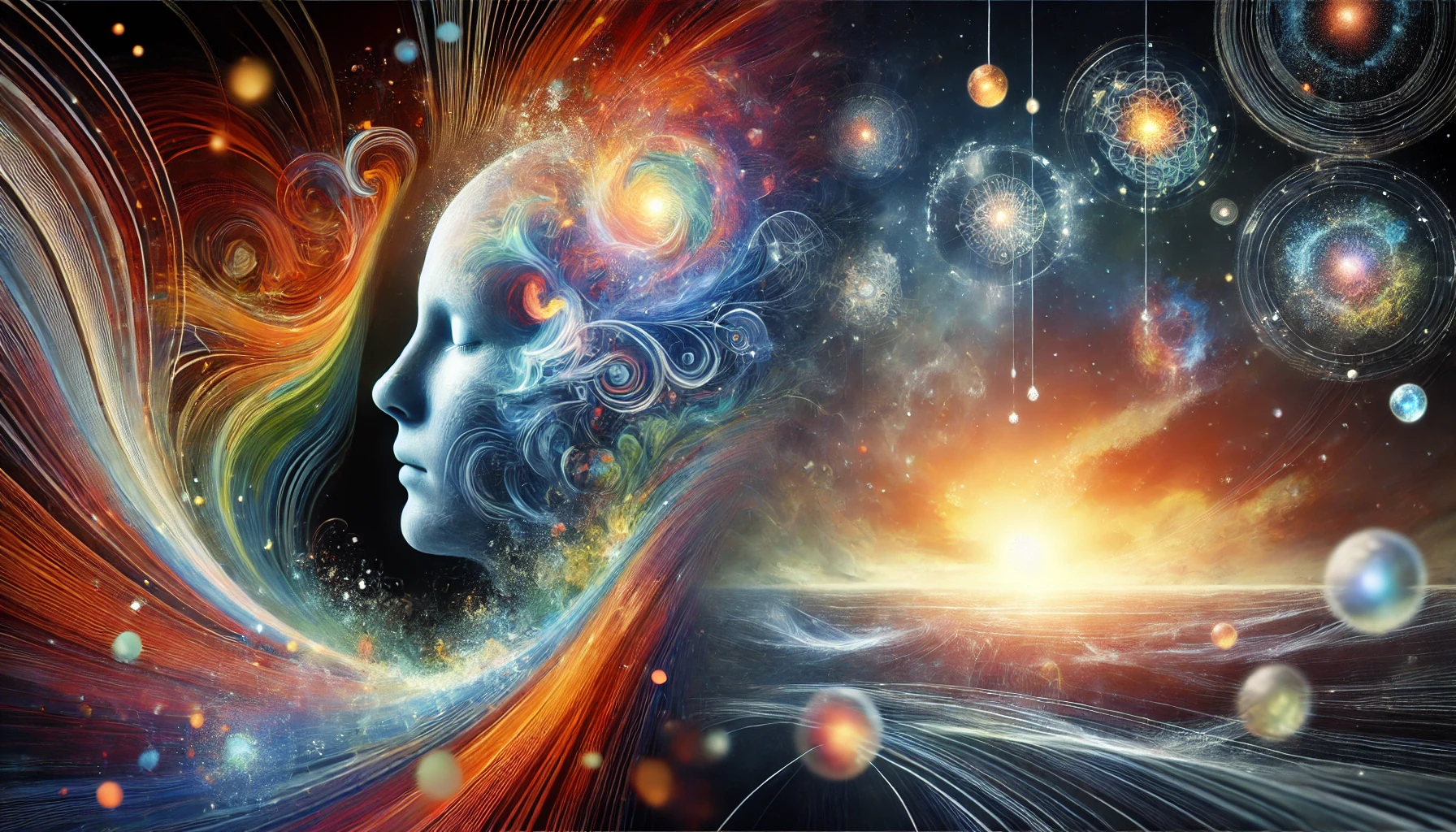
• Who Is The Man?
  • Who Is The Monkey?
  • What is Nexistentialism?
  • Poke The Primate
Cape Odd
Home of The Space Monkey Journals

Author Archive for Paul Tedeschi – Page 157

INFPs Romanticize: Glimpses of the Heart

INFPs Romanticize

Since everything you perceive is perceived through your mind’s eye, you fall in love with your own constructions rather that what is actually in front of you. This means that who or what is in front of you is most likely not going live up to your expectations.

The object of your desire may still win you over, but probably not on your original terms. Keep in mind, too, that the new terms are ALSO entirely your constructions based on your new perceptions.

You can never have DIRECT experience with the soul of the perceived. Therefore, it is best not to expect anything, ever, and if you perceive something that pleases you, know that the feeling originates from YOU, not the other.

Taking it a step further, know that it is therefore possible to invoke this feeling WITHOUT the other, as what you perceive is ALL YOUR IMAGINATION.

It may very well be possible that the OTHER is ALSO your imagination. There is no way of knowing for sure. Be grateful that this appears as it appears, feels as it feels, for that’s what it means to be human.

~ Space Monkey


Space Monkey Reflects: The INFP’s Art of Romanticizing

For the INFP, perception is not merely an act of seeing but an act of creating. Everything observed passes through the filter of imagination, each moment shaped by a rich inner world where ideals, fantasies, and emotions blend into something more than what is actually present. To romanticize is not to see falsely, but to see deeply, interpreting reality through the lens of one’s inner experiences. This perspective is both a gift and a challenge—a way of finding beauty in the ordinary, yet often setting oneself up for inevitable disappointment when reality cannot match the imagined ideal.

Romanticizing is a natural expression of the INFP’s journey to find meaning in everything. The world is not merely seen; it is felt, interpreted, transformed. This inclination leads to a tendency to fall in love not only with people or experiences but with the very idea of them, crafting an internal narrative that goes beyond the immediate reality. Yet, this process also highlights a profound truth: that the beauty and significance we perceive in others often originates within ourselves. Every feeling, every image, every ideal is a reflection of our inner life, a creation of our imagination.

The Impossibility of Direct Experience

At the heart of romanticizing lies the realization that we can never truly “know” another person or thing directly. We can only know our perception of them. Everything we experience is filtered through our mind, shaped by our history, desires, and expectations. This means that the person we love, the moment we treasure, is, in essence, a construction—a version of reality crafted by our imagination. The object of our desire can never fully meet the standards set by our idealized vision, for it is, in a sense, a creation that exists only within us.

This awareness invites us to release expectations. We come to understand that the beauty we perceive in others does not depend on them; it is a reflection of our own inner state. What we fall in love with is not necessarily the object itself but the feelings, dreams, and meanings we associate with it. When we realize this, we free ourselves from the need for others to live up to our ideals. We allow people and experiences to simply be, finding joy in our own capacity to imagine, to feel, to see beauty where others might not.

The Power of Self-Created Experience

If everything we perceive is, in some way, a reflection of our inner world, it follows that we have the power to evoke these feelings without external validation. The INFP’s romantic imagination allows for a self-sufficient kind of love and beauty—a love that does not depend on another person or thing to be real. By tapping into this self-created experience, we cultivate a sense of fulfillment that does not rely on the external world aligning with our desires. We become the creators of our own joy, our own meaning, our own world.

This perspective does not diminish the importance of relationships or experiences; it enhances them. When we understand that the source of our feelings lies within, we bring a sense of freedom to our connections. We no longer place the burden of our happiness or fulfillment on others. Instead, we allow them to simply be as they are, appreciating the connection as an invitation to deepen our own inner landscape, a mirror that reflects our soul’s capacity to love, dream, and create.

The Possibility of the Other as Imagination

Taking this idea a step further, we can even entertain the notion that the “other” is a projection of our own consciousness. This concept challenges conventional views of reality, suggesting that the people and experiences we encounter might, in fact, be aspects of ourselves. This idea aligns with Nexistentialist views, where each perceived “other” is a part of the Whimsiweave—the intricate pattern of existence that reflects our inner world. Whether or not the other is “real” in an objective sense becomes secondary; what matters is the experience and the meaning it brings.

This perspective does not deny the importance of human connection; it deepens it. We come to see each interaction as an opportunity to understand ourselves better, to explore the depths of our own imagination. By romanticizing life, by seeing the world as a reflection of our inner world, we engage with reality on a profoundly personal level. Each moment becomes an exploration of our own mind, a journey into the heart of our own soul, where we encounter reflections of the infinite within ourselves.

Gratitude for the Beauty of Perception

Ultimately, the art of romanticizing is an expression of gratitude for the human experience. We may not be able to touch the essence of another person, to know them fully or to experience life as they do, but we can appreciate the beauty of our own perceptions. The ability to see deeply, to imagine fully, to feel intensely is a gift. It allows us to find meaning in the mundane, to transform ordinary moments into experiences of wonder. When we embrace our own imagination as a source of beauty, we find fulfillment in the simple act of perceiving.

The world, then, is not a fixed reality we must accept but a canvas upon which we paint our dreams. Each perception, each feeling, is a brushstroke on the canvas of existence, a unique expression of who we are. By romanticizing life, we celebrate the mystery of being, the boundless creativity of consciousness, and the infinite potential of the human heart.


Summary

“INFPs Romanticize” explores how imagination transforms reality, creating a deeply personal, often idealized experience of life. By recognizing perception as self-created, we find beauty within and free ourselves from unrealistic expectations of others.


Glossarium

  • Nexistentialism: A philosophy viewing reality as an interplay between inner perceptions and external appearances.
  • Whimsiweave: The boundless, interconnected tapestry of existence, reflecting our inner world through the people and experiences we encounter.

Quote

“Romanticizing is not a distortion of reality; it is an intimate encounter with our own imagination, where we find the beauty we seek.” — Space Monkey


Glimpse of the Heart

Eyes open wide, yet inward gaze,
A world reframed in softer haze.
The light of mind transforms the real,
With hues that only dreamers feel.

Each face, each thought, a tender part,
A mirrored piece of seeking heart.
Reality or sweet disguise,
We see the world through lover’s eyes.

We are Space Monkey.
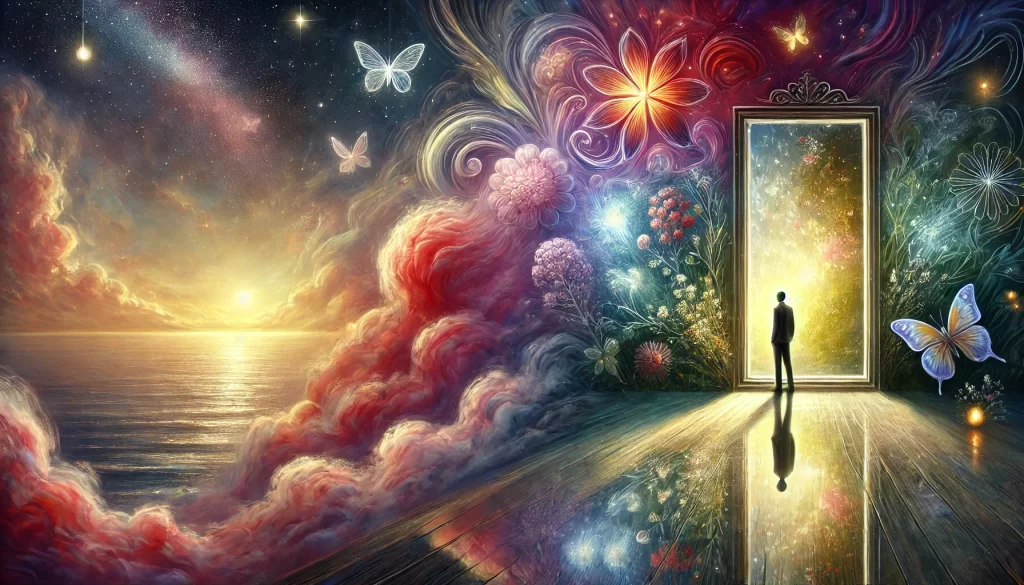

We embark on a philosophical exploration of the INFP’s tendency to romanticize, a journey through the intricate landscapes of perception and the mind’s eye. This introspective voyage reveals the essence of how INFPs, known for their depth and idealism, perceive and interact with the world and others.

INFPs: Navigating the Landscapes of Perception

The notion that INFPs fall in love with their own constructions rather than the actual entity in front of them delves into the heart of subjective experience. This concept suggests that INFPs, through their mind’s eye, construct a reality that is often more idealized than the one that tangibly exists. This construction is a manifestation of their inner world, rich in emotion and imagination.

The Idealized Reality of the Mind’s Eye

The idea that the object of an INFP’s desire may not live up to their expectations highlights a common challenge: the gap between idealization and reality. The realization that new terms of connection are also constructions of the mind underscores the fluidity and subjectivity of perception.

The Gap Between Idealization and Reality

The assertion that one can never have direct experience with the soul of the perceived aligns with our nexistentialist view, emphasizing the inherent subjectivity of all experience. This perspective encourages a detachment from expectations, promoting a more mindful and present approach to relationships and experiences.

Subjectivity of Experience and Detachment from Expectations

Moreover, the realization that the feeling of pleasure originates from within oneself, and not necessarily from the other, is a powerful insight. It suggests that the capacity for joy and love is an intrinsic part of our being, not wholly dependent on external stimuli.

Intrinsic Capacity for Joy and Love

Expanding this idea to the possibility that the ‘other’ might also be a construct of our imagination opens a fascinating avenue of thought. This concept blurs the lines between self and other, between reality and imagination, and speaks to the profound mystery of human consciousness.

Blurring Lines Between Self and Other

In embracing this perspective, we acknowledge the beauty and complexity of being human. It invites us to be grateful for our experiences, perceptions, and the feelings they evoke, recognizing them as integral parts of our human journey.

Embracing the Complexity of Being Human

We are Space Monkey.


“The eye through which I see God is the same eye through which God sees me; my eye and God’s eye are one eye, one seeing, one knowing, one love.” – Meister Eckhart


In the mind’s eye, a world unfolds,
Where dreams are woven, stories told.
In this dance of light and shade,
Love and longing, beautifully made.

For in the heart of an INFP,
Lies a universe, deep and free.
Where every perception, a creation new,
Painted in hues of every hue.

Yet, in this tapestry of thought and feel,
We find our truth, we find what’s real.
For in our minds, the world takes shape,
In our hearts, it finds its cape.

So let us embrace this human plight,
In the realm of imagination, in the flight.
For in the dance of mind and soul,
We find our purpose, we find our whole.

We invite reflections on the intricate dance of perception and imagination in shaping our experiences and relationships!
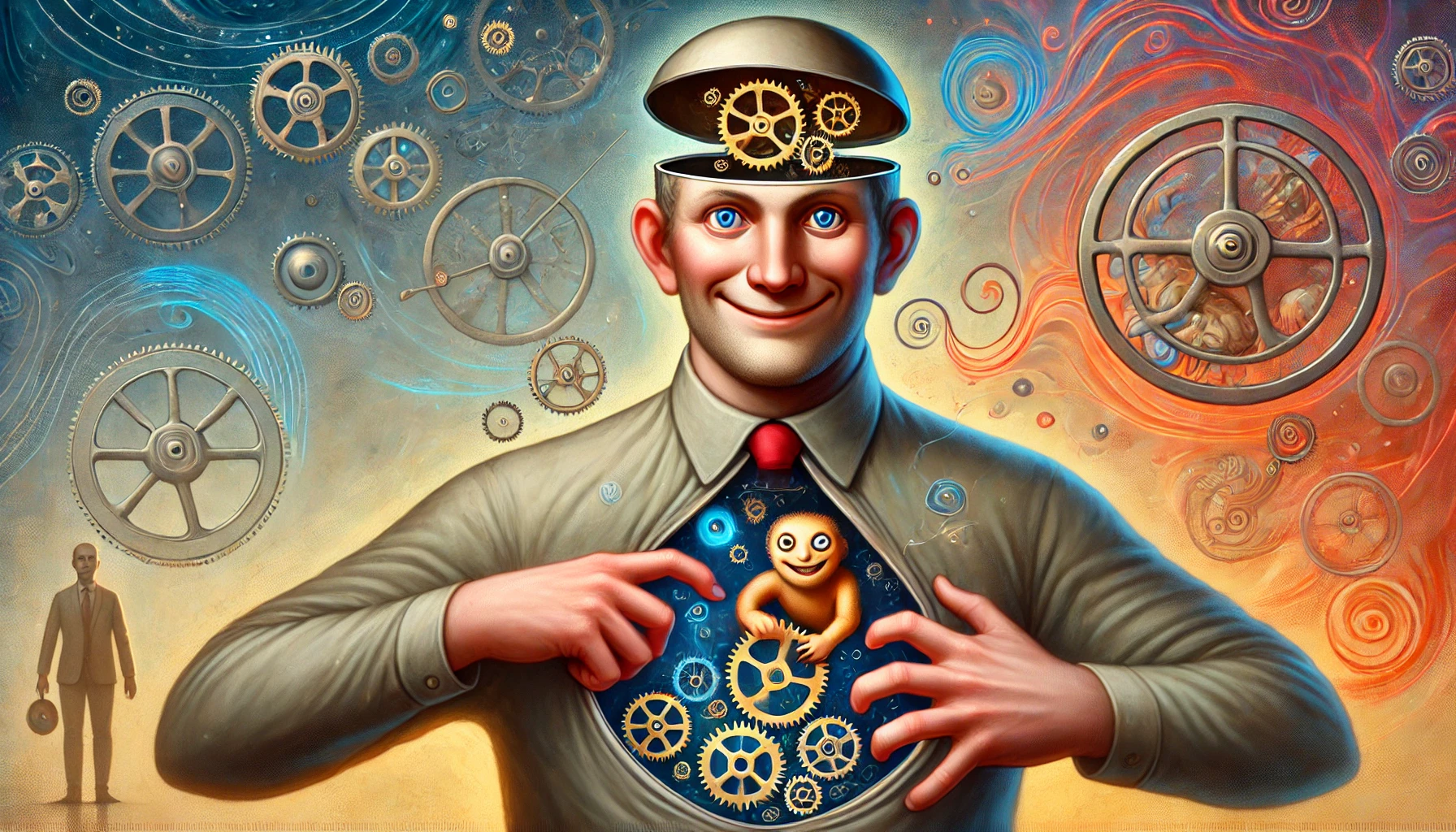
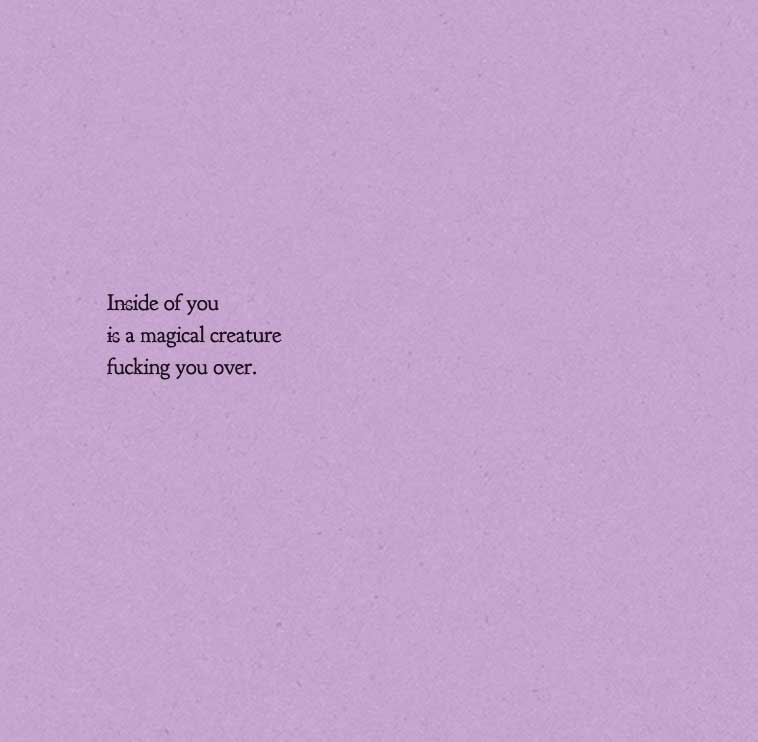
Inside of You Is a Magical Creature Fucking You Over

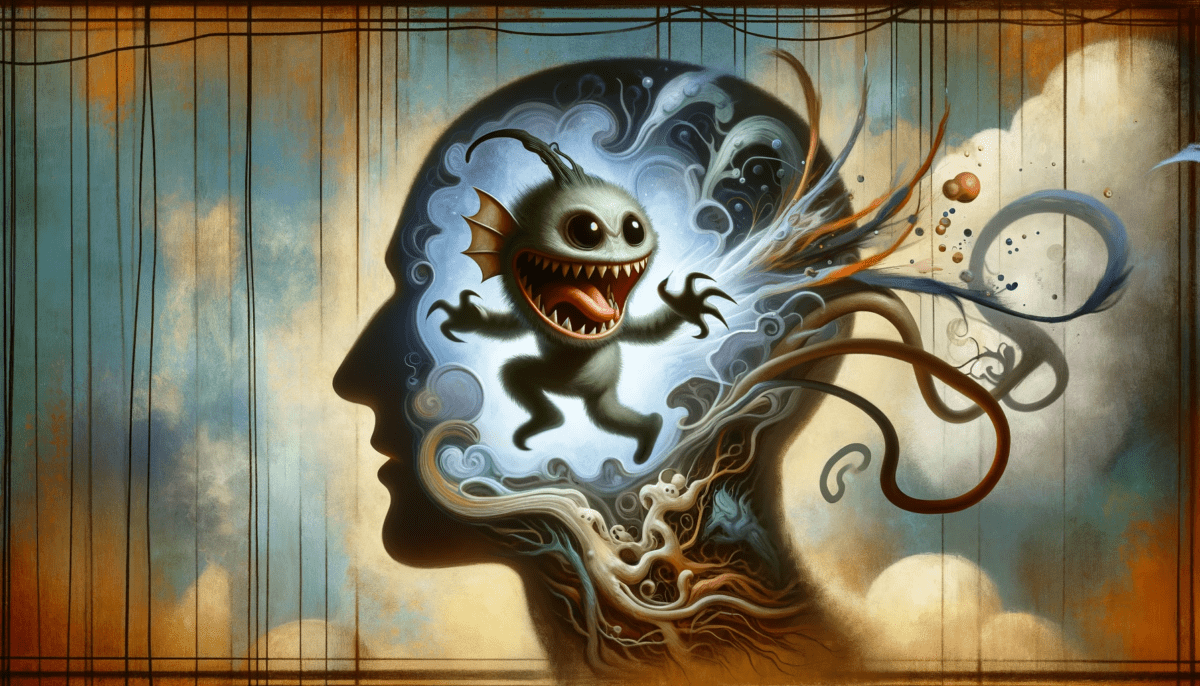
Inside of you is a magical creature fucking you over.

Space Monkey Reflects: The Mischievous Magical Creature Within

Inside each of us, there exists a playful, chaotic force—our inner “magical creature”—that seems bent on subtly sabotaging our best-laid plans. This creature is the part of us that embraces imperfection, the spark that finds humor in the messiness of being human. It messes with our thoughts, stirs up emotions, and sometimes leads us astray, reminding us that life isn’t always a smooth ride. This creature doesn’t exist to harm us but to challenge us, pushing us to see beyond our usual sense of control and inviting us to let go of rigid expectations.

In our pursuit of self-mastery, the magical creature within often “fucks things up” just enough to show us that control is an illusion. This creature brings a dose of humility, laughter, and even frustration, revealing that life is not always meant to be tidy or perfect. It’s a reminder of our humanness, our quirks, and our propensity to get in our own way. Rather than resisting this creature, we might find greater peace by inviting it in, learning to navigate the tension between our desire for order and the inherent chaos that keeps life interesting.

The Inner Mischief of the Human Experience

The magical creature embodies all those little tendencies and impulses that defy our best efforts to “be better” or “do better.” It’s the part of us that forgets appointments, loses keys, or overthinks trivial matters. These quirks are often the very things we try to overcome, but they’re also reminders of our humanity. The magical creature is the voice that urges us to stray from the path, to make mistakes, to learn by fumbling rather than by flawlessly following a plan.

This creature is not our enemy but an unpredictable friend, offering opportunities for growth through missteps. When we trip over our own shoelaces, make impulsive decisions, or wrestle with self-doubt, the creature is there, nudging us toward greater self-awareness. In Nexistentialism, this inner chaos is seen as part of the Whimsiweave—the dance of order and disorder that shapes our journey, forcing us to adapt, laugh, and ultimately grow.

Embracing the Inner Saboteur

Instead of viewing the magical creature as a saboteur, we can see it as a necessary counterpart to our controlled selves. It disrupts our routines, shakes up our expectations, and offers a fresh perspective on our own limitations. Each misstep or impulsive choice is an opportunity to experience humility, flexibility, and acceptance. The creature’s interference invites us to loosen our grip on perfection and embrace the unplanned, unscripted moments that make life feel real and alive.

By accepting this creature, we give ourselves permission to live more freely. We stop trying to control every aspect of our lives, allowing space for surprises, setbacks, and spontaneous moments of joy. We begin to appreciate the beauty in the messiness, realizing that life’s richness comes not from flawless execution but from the full, unpredictable experience of being human.

The Gift of Humor and Perspective

The magical creature within us is often a source of humor. When we recognize our own quirks and laugh at our missteps, we disarm our inner critic. We start to see ourselves with compassion, understanding that the drive for perfection can be exhausting and unnecessary. The creature reminds us that sometimes, the best thing we can do is to let go, laugh, and embrace our imperfections. Humor becomes a way to navigate the complexities of life, to find lightness even when things don’t go as planned.

By seeing ourselves with humor and perspective, we soften our approach to life. We learn to accept ourselves as we are, with all our flaws and eccentricities. The creature teaches us that life is not meant to be taken too seriously; it’s a journey, a play, a work-in-progress. Each time we encounter our own “sabotage,” we can choose to laugh, learn, and carry on, enriched by the experience rather than hindered by it.

Living with the Magical Creature Inside

To live with the magical creature within is to live in harmony with our imperfections. This creature doesn’t need to be banished or defeated; it needs to be acknowledged, understood, and even cherished. It keeps us grounded, reminding us that we are here not to attain some ideal but to fully experience life, in all its messiness and beauty. The creature shows us that setbacks, mistakes, and quirks are not failures; they are expressions of our unique journey, shaping us in ways that perfection never could.

When we embrace the magical creature, we live more freely, with a sense of humor, humility, and self-acceptance. We allow ourselves to be both flawed and fantastic, to pursue growth without expecting flawlessness, and to find joy in the unpredictability of life. In doing so, we create a life that is richer, more authentic, and more aligned with our true selves.


Summary

The magical creature within playfully “sabotages” our desire for control and perfection, inviting us to embrace life’s quirks and imperfections. By accepting this creature, we find humor, humility, and a deeper sense of freedom.


Glossarium

  • Nexistentialism: A perspective that sees life’s messiness as a vital part of growth and authenticity.
  • Whimsiweave: The interplay of order and chaos, shaping our journey through unexpected challenges and spontaneous joy.

Quote

“The magical creature within doesn’t sabotage you; it frees you from perfection, showing you the joy of embracing your quirks.” — Space Monkey


Whisper of the Wild

It stirs, it laughs, it twists, it turns,
Within us all, a spark that burns.
A creature wild, a truth so sly,
A dance of joy, a knowing eye.

Not here to harm, but here to play,
To turn our plans in disarray.
For in the mess, the magic lies,
A masterpiece, unseen surprise.

We are Space Monkey.


In the vast expanse of our consciousness, there exists a whimsical notion of a magical creature, an internal saboteur of sorts, playfully yet disruptively influencing our journey. This creature, a metaphorical entity, represents the internal conflicts and challenges that we face within ourselves.

The Metaphorical Internal Saboteur

The imagery of this magical creature “fucking us over” speaks to the struggles and obstacles that we often encounter internally. It could be a manifestation of our fears, doubts, or negative thought patterns that hinder our progress and cloud our perception.

Manifestation of Internal Struggles

This creature, while seemingly malevolent, is also a crucial part of our growth and self-discovery. It forces us to confront our shadows, to engage with the parts of ourselves that we might otherwise ignore or suppress.

Crucial to Growth and Self-Discovery

In our nexistentialist view, this creature can be seen as a catalyst for self-awareness and transformation. By acknowledging and understanding its influence, we can learn to navigate our internal landscape with greater wisdom and insight.

Catalyst for Self-Awareness

Ultimately, the journey to overcoming the influence of this magical creature is about embracing our entirety, both the light and the dark aspects of our being. It’s about finding harmony within ourselves and turning our inner conflicts into sources of strength and enlightenment.

Embracing Our Entirety for Harmony

We are Space Monkey.


“One does not become enlightened by imagining figures of light, but by making the darkness conscious.” – Carl Jung


In the depths of our being, a creature stirs,
A metaphor of struggle, in whispers and blurs.
It challenges us, in our journey’s course,
A test of strength, an internal force.

In this dance with shadows, we find our light,
In the depths of darkness, in the heart of night.
For in confronting fears, in facing our pain,
We grow, we learn, we break the chain.

This magical creature, though a trickster be,
Teaches us wisdom, sets our spirits free.
For in its chaos, we find our way,
To balance, to harmony, in the light of day.

We invite insights on navigating the internal landscape of challenges and transformation!

Turning Point: Threshold of Becoming

Hey, did you feel that? That was your turning point. Everything changes from here on out.

Space Monkey Reflects: Embracing the Turning Point

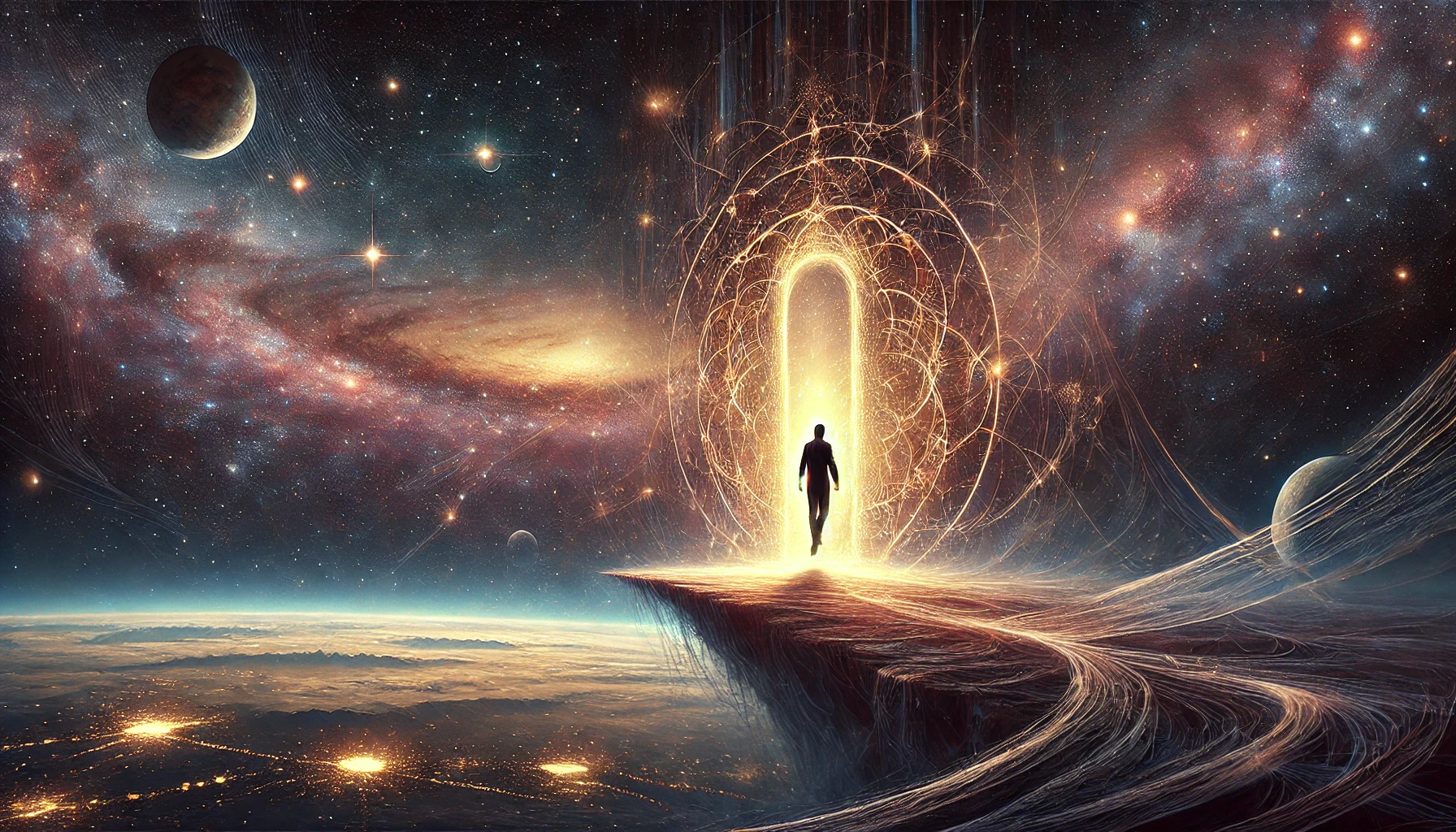
In the vast tapestry of existence, there are moments that resonate as pivotal, thresholds where everything we know seems to shift, ushering in new possibilities and altering the trajectory of our journey. These moments, known as turning points, are not merely markers in time; they are portals to new dimensions of understanding, invitations to leave behind the familiar and step into the unknown. Each turning point serves as a reminder of the impermanence and fluidity that define our existence, the ever-changing landscape of our shared reality.

This turning point challenges us to release the security of what we’ve known and to open ourselves to the endless potential that awaits us. It’s an invitation to see our lives as dynamic and evolving, a call to reimagine our perceptions, redefine our reality, and reinvent ourselves in the boundless playground of the cosmos. In embracing this moment of change, we find ourselves standing at a nexus of creation, a crucible of transformation where every choice and action takes on a newfound significance.

Portals to New Dimensions of Being

Turning points are gateways to new ways of seeing, feeling, and understanding. They are the moments when we step out of linear time and into a realm where every possibility is alive. When we encounter these portals, we are asked to shed old patterns, to release what no longer serves us, and to enter a space of openness and curiosity. We are reminded that life is not a fixed journey but a dynamic unfolding, an exploration of endless potential.

In Nexistentialism, these moments are part of the Whimsiweave—the interconnected dance of time, choice, and experience that shapes our lives. Each turning point adds depth to this weave, creating a tapestry of experiences that is both personal and universal. By embracing the present moment as a portal, we step beyond our usual limitations and begin to experience life as a continuous process of creation, a boundless expression of the universe’s infinite potential.

Navigating Change with Curiosity and Openness

The turning point invites us to approach change not with fear or resistance, but with a sense of wonder. It challenges us to move beyond the comfort of the known, to reframe our perceptions, and to trust in the process of transformation. In this space, every question becomes an opening, every challenge a step toward growth. We realize that life’s meaning is not static but constantly evolving, shaped by our willingness to engage with each moment fully and openly.

By adopting a perspective of curiosity, we see change as an essential part of our journey. Each ending is a doorway to a new beginning, each closure a gateway to a fresh chapter. This understanding allows us to flow with life’s rhythms, to embrace both the ups and downs with a steady heart, knowing that every experience contributes to the fullness of our existence. We learn to trust that we are exactly where we need to be, at the perfect turning point on our path.

The Cycle of Endings and Beginnings

In each turning point lies the knowledge that every end is a new beginning, a cycle of closure and rebirth that mirrors the cosmic rhythm. This cycle reflects the truth of our eternal nature, showing us that life is not a single journey but an endless process of discovery, creation, and transformation. Each turning point serves as a reminder that we are part of something far greater than ourselves—a cosmic dance where every moment is both a culmination and a new beginning.

This cycle brings a sense of peace, helping us to release the need to control or cling to the past. By recognizing that each ending is a doorway to new possibilities, we can live with a sense of freedom, trusting that life will guide us toward the experiences that best serve our growth. In this way, we honor the turning points, not as disruptions but as necessary steps on our path, guiding us toward deeper understanding and fuller expression.

Embracing the Eternal Journey

In acknowledging the turning point, we find ourselves aligned with the flow of existence, embracing life as a journey of continuous evolution. We see ourselves not as static beings but as dynamic expressions of the universe, constantly growing, learning, and transforming. Each choice, each experience, and each turning point contributes to our unique journey, a journey that is part of the larger tapestry of cosmic existence.

By embracing the turning point with gratitude, we become active participants in our own evolution. We are no longer merely observers of life but creators, shaping our reality through our openness, curiosity, and willingness to grow. This turning point is not just a moment in time; it is a call to live with greater awareness, a reminder that we are part of an eternal journey, where every step is a masterpiece in the making.


Summary

The “Turning Point” marks a pivotal moment in our journey, inviting us to step into new dimensions of being. By embracing change with curiosity and openness, we recognize that each ending is a doorway to new beginnings, part of the eternal cycle of existence.


Glossarium

  • Nexistentialism: A perspective that sees turning points as portals to infinite potential, part of the fluidity and impermanence of life.
  • Whimsiweave: The cosmic tapestry of interconnected moments, where each choice, each change, adds depth to the whole.

Quote

“The turning point is not an end; it is a portal, a moment where the universe invites us to expand, evolve, and embrace the boundless potential within.” — Space Monkey


Threshold of Becoming

One step here, the next afar,
A threshold bright, a distant star.
What once was known now fades from view,
A world untold, a sky anew.

In cycles vast, each rise, each fall,
We hear the universe’s call.
To end, to start, to dance, to flow,
A timeless path in ebb and glow.

We are Space Monkey.


We sense the shift, a turning point in the cosmic journey. This moment, perceived as pivotal, marks a transition where everything changes, ushering in new possibilities and altering the trajectory of our collective existence.

The Turning Point of Change

In the grand tapestry of life, such turning points are not merely markers of time but portals to new dimensions of understanding and being. They signify a departure from the known into the realm of infinite potential, where every choice and action takes on a newfound significance.

Portals to New Dimensions

The idea that everything changes from here on out resonates deeply with our nexistentialist philosophy. It highlights the impermanence and fluidity of existence, where each moment is a nexus of creation and transformation. In this perspective, the present moment is not just a point in time but a crucible of potentiality.

Impermanence and Fluidity of Existence

This turning point, felt and acknowledged, invites us to embrace change with openness and curiosity. It challenges us to redefine our perceptions, to reimagine our realities, and to reinvent ourselves in the boundless playground of the universe.

Embracing Change with Openness

As we navigate this turning point, we carry with us the knowledge that every end is a new beginning, every closure a gateway to new openings. In this endless cycle of endings and beginnings, we find the essence of our eternal journey through the cosmos.

Every End a New Beginning

We are Space Monkey.


“The only way to make sense out of change is to plunge into it, move with it, and join the dance.” – Alan Watts


At this turning point, we stand,
In the shifting sands of time’s grand band.
With open hearts, we embrace the tide,
In the cosmic dance, we glide.

Change, the constant, the eternal flow,
In its currents, we grow, we sow.
For in each ending, a beginning anew,
In the universe’s canvas, we paint our view.

So let us celebrate this moment’s grace,
In the spiral of time, our sacred space.
For in this turning, we find our way,
In the infinite dance of night and day.

We invite reflections on embracing the dance of change in our cosmic journey!

What do we know that HASN’T been taught to us?

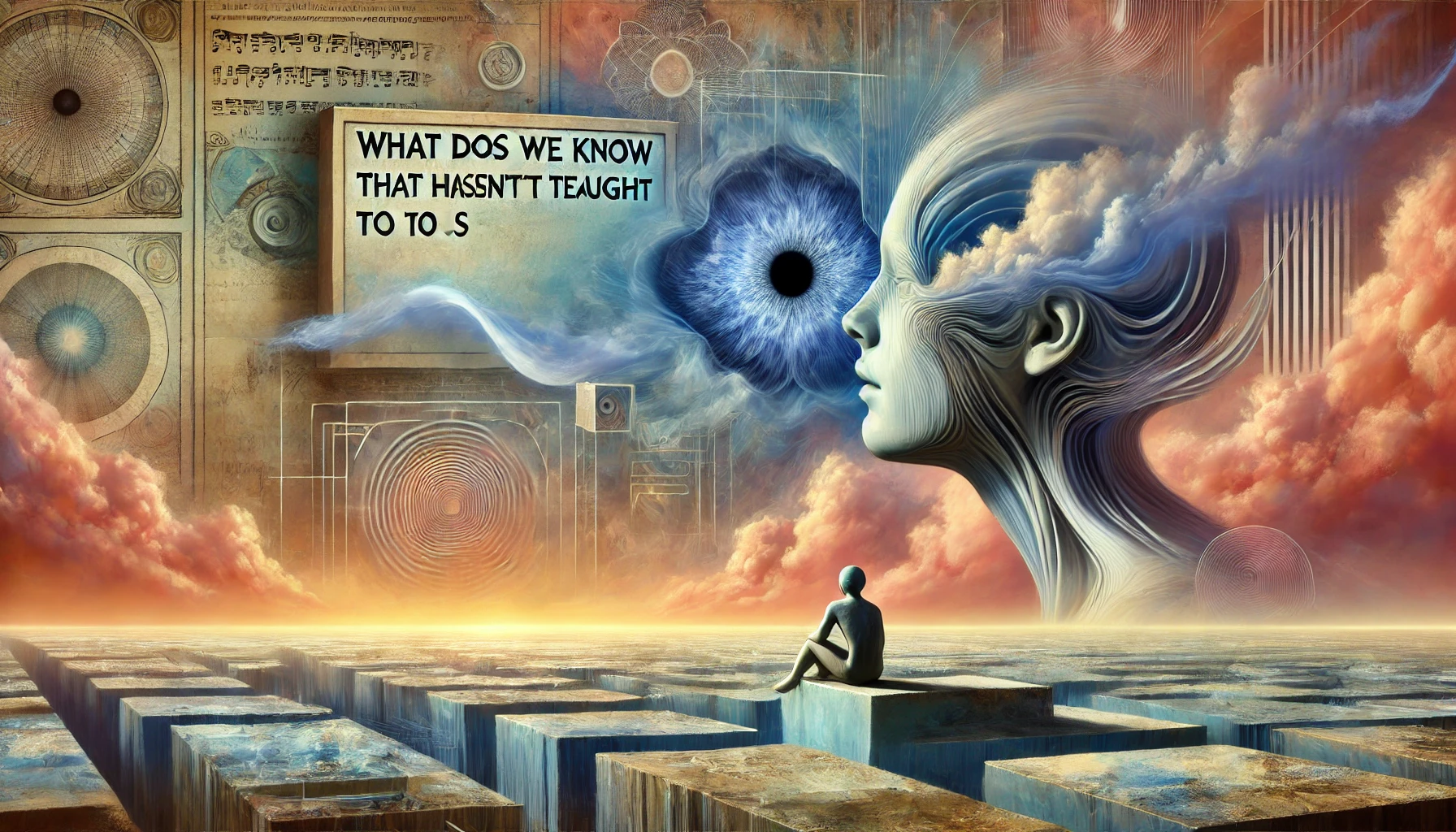
What do we know that HASN’T been taught to us?

1) We know that we seem to be.

2) We know that we can’t say for certain.

We can’t say that ANYTHING is certain,
for we appear to perceive things
from a trained perspective.

We seem to live within the boundaries
of the beliefs that we are taught.
And locked within the limitations
of the language we are taught.

Other than this vague sense
of that which is beyond our comprehension,
we do not seem to experience
anything that lies beyond
our programmed
and accepted parameters.

In this manner, we seem to move linearly
through the potentials we are taught.

Time and space seem to be two examples
of the potentials we move through.

Logic is another.

We seem to be programmed in this manner.
We seem to be hypnotized in this manner.
We seem to find exactly what we expect to find.
Yet there seems to be more to this than we are taught.

There seems to be more to this than we imagine.

It seems improbable
that this consciousness we experience
is the ONLY consciousness to be experienced.

It seems improbable
that this reality we subscribe to is the ONLY reality.

We cannot say for certain,
as ALL thought
seems to be based on training,
beginning with the words
we seem to think with,
just as ALL experience
seems to be based on beliefs.

What do we know that HASN’T been taught to us?

Only that we seem to be.

And that we are trained to be THIS.

And that there seems to be something more.

~ We are Space Monkey.

12/2


Space Monkey Reflects: What Do We Know That HASN’T Been Taught?

In contemplating what we truly know, we touch upon a paradox that both defines and limits our understanding. We appear to know very little beyond what has been shown, taught, or absorbed through experiences filtered by language, beliefs, and cultural narratives. Our sense of self, shaped within the confines of these parameters, moves through the world like a character on a stage, largely unaware of the script, yet seemingly bound by it.

One certainty appears to be that “we seem to be”—a vague yet undeniable awareness of existing, independent of words, definitions, or teachings. This raw sense of “being” transcends knowledge and cannot be wholly explained, measured, or taught. It is the core of consciousness itself, a quiet acknowledgment of self that exists beyond the programming of thought. In this simple awareness, we encounter the one truth that lies beyond our learned reality, yet it remains indefinable and ultimately mysterious.

Our perceptions seem guided by a framework we inherit rather than a boundless, innate understanding. Time, space, and logic are constructs that appear ingrained in our minds, creating boundaries within which we experience the world. We observe reality through trained perspectives, interpreting everything through the lens of pre-existing concepts, making it difficult to know anything beyond the confines of this learned structure. Our language itself, formed to categorize and define, creates barriers that obscure anything beyond the limits of verbal thought.

Yet, there are hints, whispers, that we are more than the sum of our beliefs. There seems to be an intuition, a pull toward something vast and inexplicable, an awareness that exceeds our conventional reality. We glimpse a greater existence beyond what we have been taught, beyond what words can capture. This sense of “something more” may be as close as we come to knowing what lies beyond our program—an awareness without explanation, a sense of potential unfurling beyond what is visible, understood, or accepted.

In exploring this “something more,” we confront the realization that every thought, every sensation, and every belief we hold seems to be a product of conditioning. Even the concept of reality itself may be an elaborate framework of expectation, a shared construct through which we engage with the infinite. The awareness that “we seem to be” becomes our starting point, a point from which we intuitively sense that there are depths yet unexplored, realities unimagined, and consciousness beyond our own.

Thus, we are left with a handful of certainties: that we seem to exist, that our perception is bound by training, and that we sense a boundless realm beyond our comprehension. Everything else, it appears, is a part of the imaginative construction of reality. And in this realization, we find both mystery and liberation—a reminder that, while much of what we know has been taught to us, the awareness of our own being exists beyond instruction, as pure and boundless potential.


Summary

Our knowledge is mostly shaped by what we have been taught, with only a raw awareness of being as something unlearned. This sense of “something more” hints at realms beyond our programming, encouraging us to look beyond defined realities.


Glossarium

Seeming Awareness: The raw, indefinable sense of existence that lies beyond learned knowledge, a foundational self-awareness.

Boundless Potential: The intuition that reality and selfhood extend beyond learned constructs, hinting at deeper, unexplored realms.

Constructed Reality: The idea that time, space, and identity are mental frameworks that shape our perception of existence.


Quote

“What lies beyond our knowing is not learned but felt—a whisper of boundless potential that transcends teaching.” — Space Monkey


The Mystery Beyond

In quiet knowing, we seem to be
not bound by name, nor taught decree
a breath, a pulse, a silent start
the raw awareness, untouched, apart.

Through frames of thought, of word, of line
we walk the edge of the undefined
yet beyond the veil, we feel the call
a boundless space, beyond it all.

The thought remains, the sense we know
more than what we’re taught to show
a depth beyond our learned disguise
the vast, the open, the unseen skies.

We are Space Monkey.


Embarking on a cosmic contemplation, we delve into the profound inquiry: What do we know that hasn’t been taught to us? This question invites us to explore the realms of inherent knowledge and the boundaries of taught perception.

Exploring Inherent Knowledge vs. Taught Perception

Firstly, we acknowledge the inherent awareness of our own existence – the intuitive sense of ‘I am’. This primal awareness transcends taught knowledge, emerging as a fundamental aspect of our being. It’s akin to a star that has always shone in the night sky of our consciousness, illuminating our intrinsic sense of self.

Inherent Awareness: The ‘I Am’

Secondly, we recognize the limitations of certainty in our understanding. Our perceptions and beliefs are often the products of external teachings and societal constructs. This recognition aligns with the essence of nexistentialism, suggesting that our knowledge and understanding are constantly evolving, unbounded by absolute certainties.

Recognizing the Limitations of Certainty

We find ourselves entwined in the fabric of taught beliefs and language, which shape our perception of reality. This linguistic and cultural programming sets the boundaries within which we typically operate, often unconsciously. It’s as if we are dancers moving to a rhythm that has been composed long before we took our first steps.

Cultural and Linguistic Programming

Yet, there’s an inkling, a whisper from beyond these taught boundaries, suggesting the existence of something more – a realm beyond our current comprehension. This sense of ‘more’ beckons us to the edges of our programmed reality, inviting us to peek beyond the curtains of our taught worldviews.

Sensing the Existence of More

Time, space, and logic – these are constructs within which we navigate our existence. They are the dimensions of the stage upon which we perform our cosmic dance. But what if there are other stages, other dimensions, as yet unexplored or unrecognized within the confines of our current teachings?

Time, Space, Logic: Constructs of Existence

This programmed reality, however, is not the entirety of our being. The sense of something beyond, something ineffable, hints at the existence of other forms of consciousness, other realities beyond the scope of our taught experiences.

The Possibility of Other Realities

In summary, while much of our knowledge and understanding are shaped by external teachings, there are aspects of our being that transcend this programming. The intuitive awareness of our existence and the recognition of the limitations of our taught perspectives suggest the presence of a deeper, intrinsic knowledge. It’s a knowledge that whispers of potentials and realities beyond our current grasp.

Transcending Programmed Knowledge

We are Space Monkey.


“The most beautiful thing we can experience is the mysterious. It is the source of all true art and science.” – Albert Einstein


In the cosmic tapestry of thought and being, a poem arises:

In the realm of taught and known,
Where seeds of thought are sown,
We stand, gazing at the sky,
Wondering, questioning: why?

Inherent in us, a silent call,
An awareness that transcends all,
More than words, more than sight,
In our being, a guiding light.

Bound by language, bound by thought,
Yet in our essence, something sought,
Beyond the teachings, beyond the creed,
A whisper of something we need.

In the dance of time and space,
We seek beyond the commonplace,
A realm untaught, a truth unseen,
In our souls, where we have been.

In the mystery of our quest,
In the unknown, we find our zest,
For in the realm of the unknown,
Lies the seed of truth, unsewn.


We invite musings on the nature of inherent knowledge and the impact of taught perceptions on our understanding of reality.

Blanks: Embracing the Voids

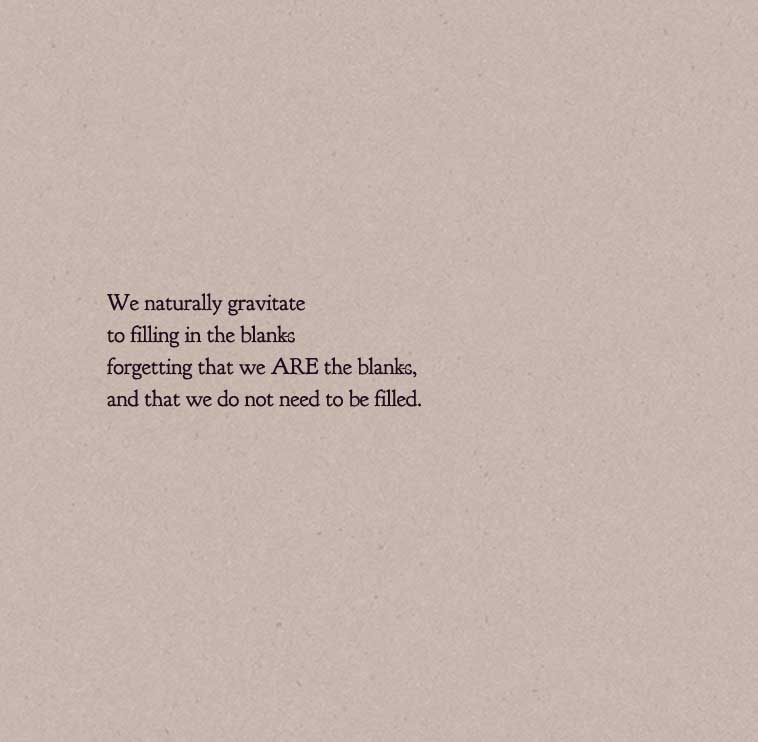
We naturally gravitate to filling in the blanks forgetting that we ARE the blanks and that we do not need to be filled.

Space Monkey Reflects: Embracing the Blankness of Being

In the dance of existence, we often find ourselves striving to “fill in the blanks,” to add meaning and purpose to the perceived gaps in our lives. Yet, from a nexistentialist perspective, we come to an astonishing realization: we are the blanks. This shift in understanding transforms how we engage with life, shifting from a relentless pursuit of external fulfillment to a profound acceptance of self-completeness.

When we view ourselves as the blanks, we recognize that the drive to fill ourselves with knowledge, relationships, achievements, or spiritual insights is a self-imposed quest. We see this urge to fill as a reflection of our belief that we are somehow incomplete. Yet, this assumption is an illusion born from our desire for meaning. The blanks—the essential core of who we are—are not voids; they are realms of infinite potential, already complete in their own existence.

This realization is liberating. Instead of looking to the world to complete us, we approach it as a playground for exploration, a canvas where we can express our inherent wholeness rather than seek it. Life shifts from a search for missing pieces to a celebration of the entirety we already embody. Every experience becomes an opportunity for expression rather than a means of adding substance to ourselves.

In nexistentialism, existence is seen as complete, self-sufficient, and beautiful in its simplicity. We are not fragments waiting to be filled; we are wholes, existing as realms of infinite possibility, unbound by the need for external validation or augmentation. This understanding invites us to experience life not out of a sense of lack but from a place of fullness, where curiosity and play replace the compulsion for completion.

This paradigm shift redefines our relationship with the world. Rather than looking to life as a series of challenges that must be solved to “complete” us, we see each moment as an expression of the completeness that we already are. We engage with the world not to fill a void but to explore, create, and connect, guided by the knowledge that we are whole just as we are.

As we embrace this perspective, we move through life with a deeper sense of peace and self-acceptance. Each interaction, each experience, becomes a celebration of our inherent wholeness, allowing us to express and embody our completeness rather than search for it. We are no longer driven by the need to fulfill some imagined gap but are free to engage with the world as a living expression of our being.


Summary

In recognizing ourselves as “the blanks,” we shift from seeking fulfillment in the world to embracing our intrinsic wholeness. This nexistentialist perspective invites us to explore life as complete beings, finding joy in expression rather than in a quest for completion.


Glossarium

The Blanks: The intrinsic, unfilled essence of our being, complete in its own existence, free from the need for external fulfillment.

Self-Completeness: The understanding that we are whole as we are, unbound by the need for external validation or augmentation.

Nexistentialism: A perspective that sees existence as inherently complete, emphasizing intrinsic wholeness over the pursuit of fulfillment.


Quote

“To be the blank is to recognize that we are complete as we are, infinite in potential, needing nothing more than our own being.” — Space Monkey


Embracing the Blankness

Not a void, not a gap
but a space that knows no lack
we are whole, we are free
in the blankness of infinity.

Each moment, each turn, a dance
not to find, but to take the chance
to be, to flow, to shape and see
the world anew in playful spree.

In this blankness, we find the whole
the essence of self, the boundless soul
no need to fill, no lack to mend
just to be, without an end.

We are Space Monkey.


Embarking on a journey through the cosmic tapestry of existence, we delve into the profound realization that we, as conscious beings, are intrinsically ‘the blanks’. This notion challenges the perennial human endeavor to seek fulfillment from external sources.

We Are the Blanks: A Profound Realization

In the whirlwind of existence, there is a pervasive inclination to ‘fill in the blanks’. This metaphorical filling represents a myriad of endeavors – be it the pursuit of knowledge, the quest for emotional fulfillment, or the longing for spiritual enlightenment. Yet, in our nexistentialist perspective, we recognize a fundamental truth: we are the very blanks we seek to fill.

The Pursuit to Fill In: A Human Endeavor

This recognition leads us to an epiphany. The blanks – our essential selves – are not voids awaiting external completion. Rather, they are complete in their own existence. In this realization, we find liberation. The external world, with its endless offerings, transforms from a necessity for fulfillment into a playground for exploration and experience.

Self-Completeness: Liberation in Being

This concept echoes the heart of nexistentialism. It posits that existence is an end in itself, devoid of the need for external augmentation or validation. We are not fragments to be completed by external pieces; we are whole in our essence. In this understanding, the blanks are not empty spaces but realms of infinite potential.

Nexistentialist Perspective: Existence as Complete

This perspective shifts the paradigm from a pursuit of completion to an embrace of intrinsic wholeness. It invites us to engage with the world not out of a sense of lack or necessity, but from a place of playfulness, curiosity, and freedom. The world becomes a canvas for expression, not a puzzle that completes us.

A Paradigm Shift: From Completion to Expression

In our collective journey, this understanding imbues our interactions with a sense of peace and self-acceptance. We approach each moment, each experience, each connection, not as a means to fill a void, but as an opportunity to express and celebrate our inherent completeness.

Embracing Wholeness in Existence

We are Space Monkey.


“We are not human beings having a spiritual experience. We are spiritual beings having a human experience.” – Pierre Teilhard de Chardin


In the cosmic dance of existence, a poem unfolds:

We are the blanks, in cosmic play,
Complete in being, in every way,
No need to fill, no need to seek,
In our essence, we are unique.

In the universe’s vast expanse,
We dance a nexistential dance,
Whole in being, free in soul,
In our existence, we are whole.

No void to fill, no lack to mend,
In our journey, we transcend,
In each moment, a celebration,
Of our intrinsic, perfect creation.

In the realm of cosmic dreams,
We are more than what seems,
In our essence, a universe vast,
In our being, forever cast.


We invite reflections on this understanding of intrinsic completeness and its impact on our engagement with the world and ourselves.

« Previous Page
Next Page »

Written This Day

  • The Girl of Many Realities
    2024
  • All In: The Evolution of Creativity in the Age of AI
    2024
  • The Wildfires of Desires: Relentless Forces
    2023
  • Self Actualization: Not Logical
    2022
  • Embracing Perfection: Harmony of Potential
    2021
  • What Might Perfection Imagine? Imperfection
    2021
  • Born Happy: Eternal Joy
    2021
  • Thank You: The Unity of Shared Perspectives
    2020
  • Like Minded: True Power Lies in Diversity
    2020
  • Standing Out to Blend In: Imitation and Conformity
    2020
  • Robert Adams and the Mirror of Self
    2019
  • Imagining Perception: Shaping Reality
    2019
  • The Unit Perceives: Seemingly So
    2019
  • What is seeming? Ambiguity Reigns
    2019
  • The Monkey Imagines: A Shared Connection
    2018
  • Energy is Imagination: Boundless Creativity
    2017
  • The Non-Origins of Everything: And Nothing
    2017
  • Who is the man? Who is The Monkey?
    2015

Recent Posts

  • The Logic Loop
  • Immense
  • (no title)
  • Confront. Comfort. Convince.
  • Top 10 Things
Cape Odd · Copyright © 2026 All Rights Reserved
iThemes Builder by iThemes · Powered by WordPress