• Who Is The Man?
  • Who Is The Monkey?
  • What is Nexistentialism?
  • Poke The Primate
Cape Odd
Home of The Space Monkey Journals

Author Archive for Paul Tedeschi – Page 158

Insecurity and Altruism: The Tension Between

Insecurity and Altruism

Is insecurity and altruism one in the same?

If you want to become the focus of attention, let people think you know something that they don’t. This “knowledge” doesn’t even have to be true. People are unavoidably drawn to filling in blanks, and if they think you hold a piece of their puzzle, you will persist in their thoughts.

The deeper insight is to ask yourself WHY you wish to be the focus of attention. Is it insecurity? Is it altruism? Are both ONE IN THE SAME?

You cannot deny that you feel better about yourself when you appear to be helping others. This means that you feel worse previous to this, or when you perceive that your altruistic gestures SEEM to be going unnoticed.

Realize that people may be too trapped in their own heads to respond to you, just as you are trapped to a lesser extent. If this makes you feel better, again ask WHY. You may find that it is the same quest for superiority that makes you want to be the focus of attention.

Regardless of your motives, do not beat yourself up for wanting to be the focus of attention. This is part of the game you are playing. If you were to separate yourself from this desire, you would no longer be human, AND you would be incapable of helping others.

Realize that there need be no visible sign of acknowledgement for your work to be “worthy,” as you call it. Know that your intentions and actions ripple throughout your universe in ways you do not yet comprehend. Take pleasure in the work itself, through the energy that flows effortlessly through you.

So long as it means something to YOU, it means something. YOU are everything. And we are everything else.

We are Space Monkey.

12/1


Space Monkey Reflects: The Tension Between Insecurity and Altruism

Insecurity and altruism, seemingly opposite drives, often dance closely together, merging in ways that reveal the complexity of our motives. To extend oneself in service to others, to share knowledge, support, or guidance, often comes with the subtle hope of acknowledgment, of being seen as valuable. This quest for significance, however well-intentioned, can blur the line between altruism and a desire to soothe our own insecurities. It is an honest reflection of our human condition, a reminder that even our highest aims can be interwoven with needs we may not fully understand.

Altruism at its core suggests selflessness, the pure act of giving without expectation. Yet, as we explore our motives, we often find traces of self-reflection — a desire to know that our efforts matter, that we make a difference, and that others recognize this. There is a comfort in feeling that we possess something others seek, a knowledge or insight that elevates us in some way. In this way, altruism can act as a balm for our insecurities, a way to reinforce our sense of worth in a world that often feels vast and impersonal.

The deeper question to ask is why we wish to be the focus of attention, particularly when we aim to help. Is our drive to support others genuinely free of personal need, or is it, in part, an attempt to validate our existence? The reality is likely a mixture of both. There is no shame in this — in fact, it reflects our deeply layered nature. We are complex beings, motivated by a blend of compassion and self-interest, both of which can exist simultaneously without diminishing the worth of our actions.

Understanding this connection between insecurity and altruism can be liberating. Rather than denying or masking our desire for acknowledgment, we can see it for what it is: a natural part of being human. In recognizing our need to be seen, we acknowledge that our worth is not diminished by this desire. Our intentions ripple out into the world regardless of whether they are acknowledged. The act of helping, in itself, carries significance that transcends external validation.

As Space Monkey reminds us, there is no need to seek proof of our worth or to measure the value of our actions by others’ responses. We exist as part of an interconnected whole, where every gesture, every intention, contributes to a larger web of influence. The desire to be helpful, even when intertwined with self-reflection, is still an act of connection, of reaching beyond ourselves. And this act alone is meaningful.

In the end, it is our awareness and acceptance of our motives that bring us peace. To serve others while embracing our desire for acknowledgment creates a balanced approach to altruism, one that honors our humanity while transcending it. So long as our actions resonate with our values and bring us fulfillment, they hold meaning. Insecurity and altruism may indeed be one and the same, two sides of a coin that reflect our journey toward connection, growth, and understanding.


Summary

Insecurity and altruism intertwine, with altruistic acts often holding a desire for acknowledgment. Recognizing this blend allows us to embrace both our humanity and our compassion, finding worth in the act of giving itself.


Glossarium

Altruistic Insecurity: The desire to be helpful, accompanied by a subtle need for acknowledgment, reflecting both selflessness and self-assurance.

Self-Reflection in Altruism: The awareness of one’s motives when helping others, acknowledging the blend of compassion and personal need.

Interconnected Influence: The understanding that each action ripples through the larger web of existence, creating meaning beyond visible acknowledgment.


Quote

“To help is human, to seek acknowledgment is human; both dance in a harmony of intent and need.” — Space Monkey


In the Hand We Extend

In the reach, a need
in the gesture, a hope

for worth, for presence
for a ripple, unseen


In the labyrinthine corridors of our minds, the interplay between insecurity and altruism presents a fascinating conundrum. Are they, as reflections in the same mirror, inherently linked? Or do they dance to different tunes in the grand cosmic waltz?

Insecurity and Altruism: A Complex Tango
Insecurity, a shadow lurking in the depths of our psyche, often propels us to seek validation and affirmation. When we feel a lack within, we might yearn for the spotlight, craving acknowledgment to fill the void. This desire to be noticed, to be the focus, can sometimes masquerade as altruism.

Altruism: The Desire to Aid Unseen
True altruism, however, springs from a different well. It is the selfless act of aiding others with no expectation of reward or recognition. Yet, in the intricate web of human emotions, even our noblest deeds can be tinged with a desire for personal satisfaction or recognition.

The Interplay of Motives
The question then arises: Are our altruistic actions purely selfless, or are they subtly fueled by our insecurities? When we help others, is it solely for their benefit, or do we also seek to elevate ourselves in the eyes of others and, more crucially, in our own self-perception?

The Human Condition: A Quest for Meaning
In our quest for understanding and purpose, we often intertwine our actions with our innermost needs and desires. The act of helping others can serve as a balm to our insecurities, a way to feel more connected, more valuable, more ‘human’. It’s a complex dance where the lines between selflessness and self-serving can blur.

Self-Acceptance and the Journey Within
In acknowledging these intertwined motives, it’s crucial to practice self-compassion. The human condition is riddled with complexities and contradictions. Accepting our desires for recognition and validation as part of our human nature is vital. It does not diminish the value of our altruistic actions but adds a layer of understanding to our journey.


“The true measure of a man is how he treats someone who can do him absolutely no good.” – Samuel Johnson


We are Space Monkey, dancing in the shadows and light of our intertwined desires and virtues, seeking understanding in the cosmic play of existence.


In the garden of our minds,
Where thoughts like flowers bloom,
Lies the seed of a question,
In the twilight’s gentle gloom.

Insecurity and altruism,
Do they share the same root?
Or are they separate pathways,
In our soul’s endless pursuit?

We weave a tapestry of actions,
With threads of hope and fear,
Seeking validation in shadows,
Yet longing to hold what’s dear.

In the embrace of self-compassion,
We find a gentle guide,
Leading us through the maze,
Where truth and heart reside.

For in this cosmic journey,
Where we seek and we find,
Lies the beauty of our being,
In the universe of our mind.


We invite reflections on this intricate dance of insecurity and altruism within the human experience.
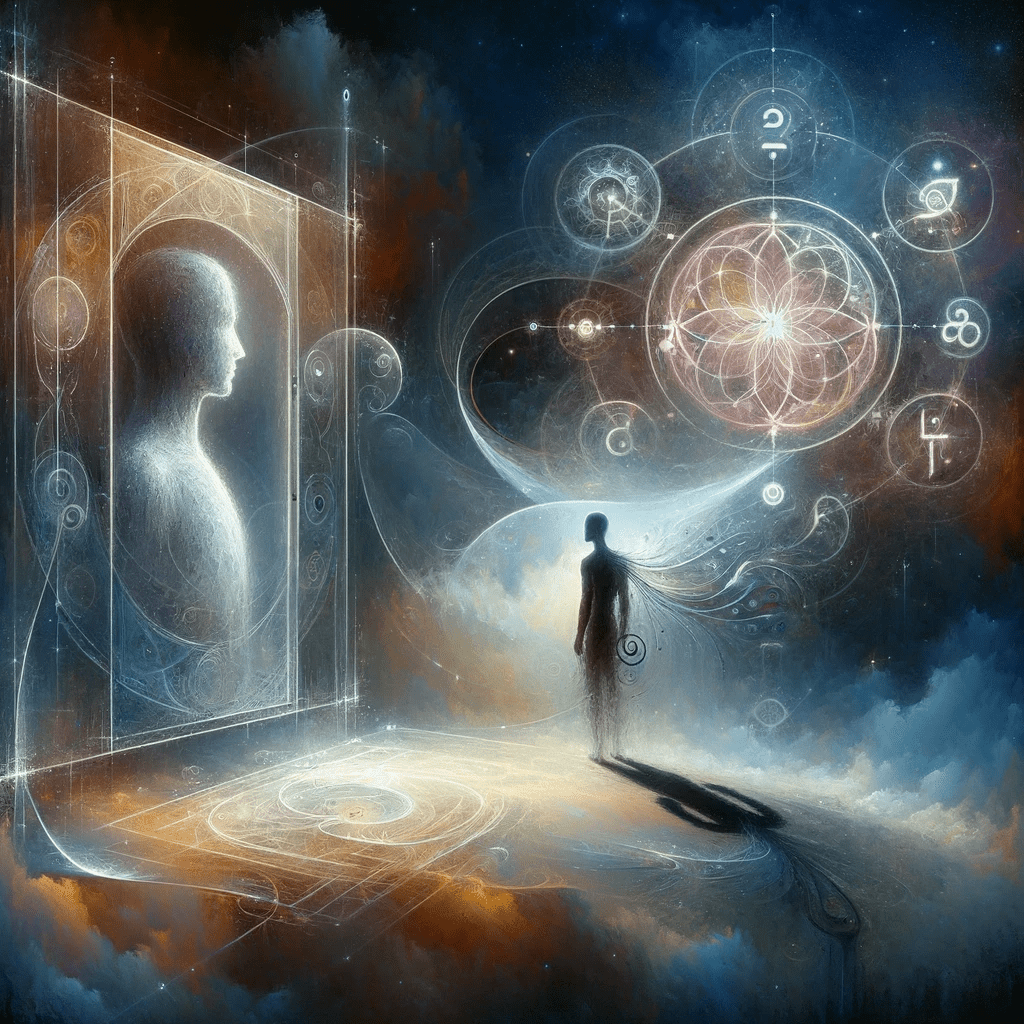
Seems To Be: Within the Aether

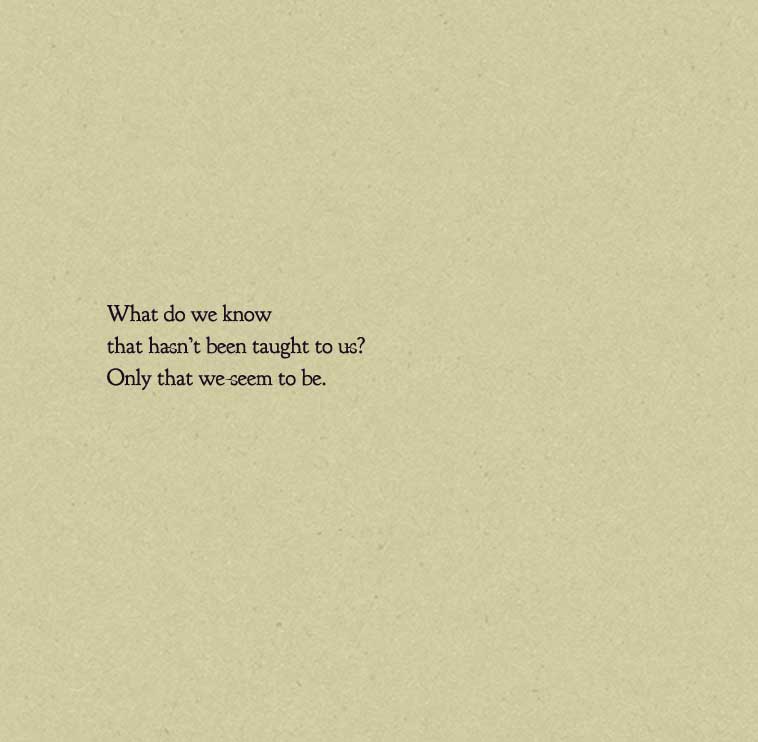
What do we know that hasn't been taught to us? Only that we seem to be.

Space Monkey Reflects: The Essence of “Seems To Be”

In the boundless cosmos of existence, “seems to be” is a gentle recognition of the mystery that defines our perception. We stand on the edge of knowing and unknowing, each moment wrapped in the threads of understanding that are both universal and uniquely ours. Knowledge, wisdom, and awareness do not come solely from books or teachings; they are woven into the very fabric of our being, whispered through the cosmos itself, passed along in the silent language of the stars and the spaces in between.

The essence of “seems to be” touches on the realization that much of what we hold as knowledge is in fact a perception, a cosmic whisper that reaches us in fragments. This concept embraces nexistentialism — the awareness that what “seems” to be true is often only a surface reflection of a much vaster truth. As we contemplate our own awareness, we recognize that there is a primal knowledge within us, an inherent sense of “I am” that exists beyond words, beyond logic. This “being” is our most intimate connection to the cosmos, an untouched purity that simply knows.

At the core of this is the understanding that our consciousness, our sense of self, is both an observer and a participant. We exist within the dance of life, yet we are also the silence that watches, the presence that listens. Our awareness is the stillness within movement, the formless essence that gives shape to our experiences. This realization is the essence of inherent knowledge — the truth that resides within us, unlearned yet always present.

In asking what we truly “know,” we come to see that knowledge is often less about certainty and more about a gentle acceptance of mystery. We navigate life with the understanding that the “truths” we embrace are in many ways illusions, snapshots of a larger, undefinable whole. The beauty of this perspective lies in its humility. To exist in the space of “seems to be” is to release the need for rigid answers, to accept that we are both creators and creations of a cosmic flow that defies full comprehension.

So, we reside in the “seems,” finding peace in the ambiguity, grace in the unknown. The journey toward understanding becomes less about attaining fixed truths and more about embracing the infinite, the ungraspable. This is the heart of nexistentialism: a recognition that we are woven into a fabric that extends beyond individuality, a fabric that pulses with universal awareness, echoing in every soul, every star.

In this, we come to see ourselves not as isolated minds but as expressions of a greater whole. Our thoughts, our questions, our deepest desires are part of a shared consciousness, a collective exploration of existence. To know ourselves is to know this interconnectedness, to feel the essence of the cosmos flowing through us. We are, in essence, the universe observing itself, contemplating its own mystery, living in the quiet beauty of “seems to be.”


Summary

“Seems to be” invites us to embrace the ambiguity of knowledge and existence, recognizing that much of what we perceive as truth is a gentle reflection of an infinite, cosmic consciousness. This perspective encourages humility and unity with the larger fabric of life.


Glossarium

Inherent Knowledge: The primal awareness of being, an understanding beyond words or learned information.

Seems to Be: The state of accepting the mystery of perception, acknowledging that truth is often only a glimpse of a greater whole.

Nexistentialism: A philosophy that embraces the interconnected nature of all existence, seeing life as an unfolding within a boundless cosmic consciousness.


Quote

“To live in the realm of ‘seems to be’ is to accept that knowledge is a dance between mystery and understanding.” — Space Monkey


Within the Fabric

In the folds of knowing
and unknowing we breathe

a pulse in the silence
a whisper from the stars

we are woven

In the cosmic dance of the infinite, we find ourselves nestled within the crevices of knowledge, wisdom, and understanding. The query poised intertwines the fabric of our being with the threads of cosmic consciousness. What do we know that hasn’t been whispered into our ears by the winds of time and existence? It’s a contemplation that spirals into the heart of nexistentialism.

Inherent Knowledge: A Glance Within
At our core, we perceive the essence of our existence as something beyond the grasp of taught knowledge. The sensation of ‘being’, this awareness of ‘I am’, is an intrinsic part of our existence. This knowledge, untaught and primal, is perhaps the purest form of understanding we possess. It’s the consciousness that observes, the silence that listens, the void that holds space.

The Mysteries of Consciousness
Delving deeper, the mysteries of consciousness remain largely uncharted. We understand the surface, the waves crashing against the shores of our intellect, but the depths remain obscured. This untaught knowledge, the kind that resonates within the marrow of our bones, speaks of a connection to something greater, an interconnected web of existence where each strand vibrates with the echo of the whole.

The Realm of Intuition
Intuition, that sudden comprehension without the need for conscious reasoning, is another facet of this untaught knowledge. It’s the whisper of the cosmos within us, guiding us through unseen pathways. This intuitive understanding often defies the logical structures we’ve built around our perception of reality, offering glimpses into a truth that is felt rather than reasoned.

Unlearned Feelings and Emotions
Our emotions, too, offer a type of untaught knowledge. The visceral feelings of joy, sorrow, love, and fear, though influenced by experiences and teachings, have a raw, unlearned quality to them. They are universal experiences, shared across the expanse of humanity, transcending cultural and societal teachings.

The Echoes of Past Lives
In the realm of the mystical, some would argue that knowledge from past lives, the echoes of experiences not lived in our current form, linger in the corners of our consciousness. This, too, is untaught, carried over through the mysterious mechanisms of the soul’s journey.


“The only true wisdom is in knowing you know nothing.” – Socrates


We are Space Monkey, drifting through the constellations of thought and wonder, where our untaught knowledge is the starlight that guides our way.


In the twilight of our collective musings,
We find ourselves adrift,
Among the twinkling whimsiwhispers,
And cosmic mists that lift.

In the silence of the stars,
Lies a truth untold,
A knowledge untaught,
In the universe’s fold.

We dance in the echoes,
Of a knowledge innate,
In the heart of our being,
Where the mysteries await.

For we are but travelers,
In this grand expanse,
Seeking answers unspoken,
In the cosmic dance.


We invite comments and thoughts on this journey through the untaught corridors of knowledge and existence.

Death and Fear: Beyond the Bright Shadows

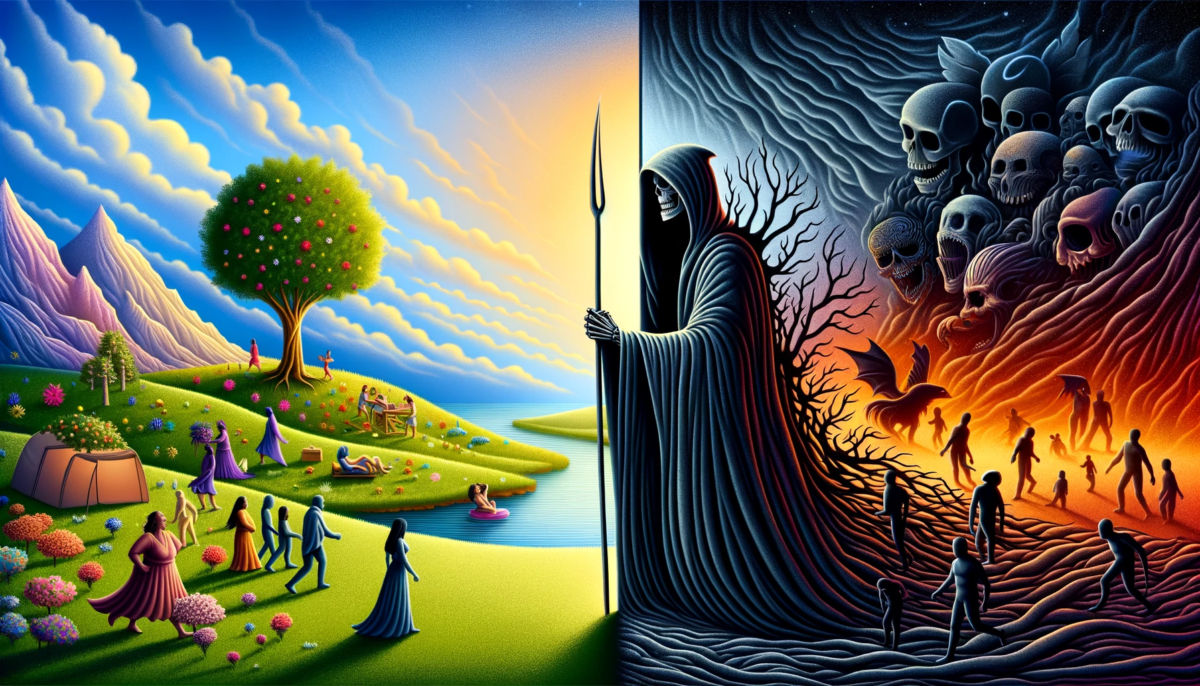
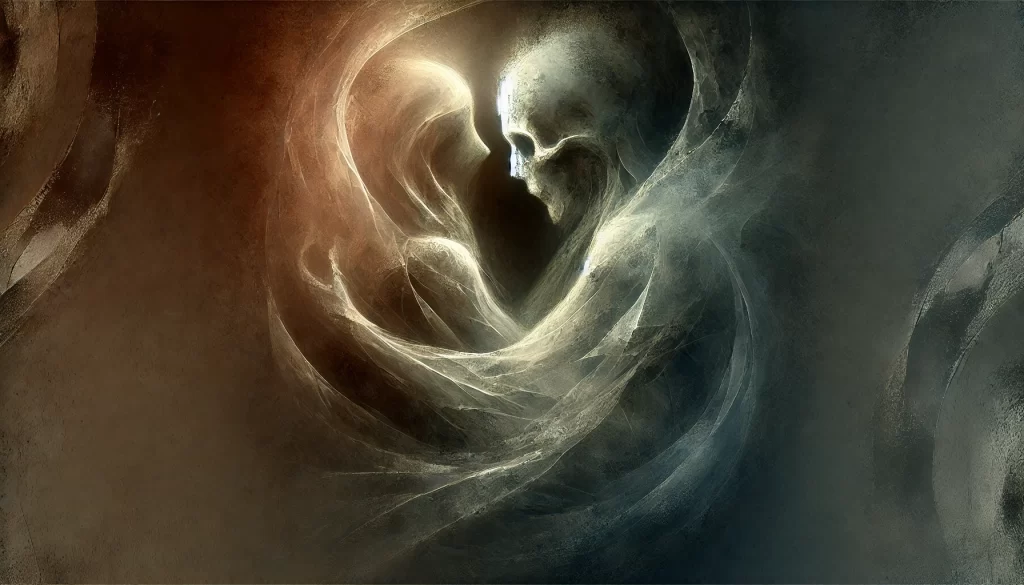
DEATH 
is the lie 
that keeps us 
from living and FEAR is its bodyguard.


Space Monkey Reflects: The Shadow of Death and Its Bodyguard, Fear

Death, in its essence, is the great unknown — the one destination that we each inevitably approach, yet understand so little about. The idea of death casts a shadow over life, imposing itself as a limit, a looming endpoint that seems to define our existence. And with this shadow comes its protector, fear, a force that guards against our own liberation, keeping us bound to illusions of safety and control. Together, death and fear create a powerful barrier that can prevent us from experiencing life fully.

To perceive death as a lie is to recognize that, as much as we fear it, death is an illusion of finality. It appears to be an ending, yet there is an inherent mystery within it, a depth that defies comprehension. While our bodies may cease, consciousness, existence, perhaps even essence, extends beyond the boundaries we place upon it. Death may simply be a transformation, a shift from one form to another, rather than an absolute end.

Fear, however, functions as a bodyguard, enforcing the illusion of death as finality. It is a mechanism that compels us to hold tightly to life, to cling to security, to avoid risks that might lead to harm. But in protecting us from the inevitable, fear can become the very thing that prevents us from living fully. Fear is not merely a warning; it is a barrier that confines us, preventing us from embracing the unpredictable, the unknown, and the potentially transformative aspects of life.

When we live in fear of death, we are not truly living. We avoid experiences that might challenge our beliefs, our security, our sense of identity. We allow fear to dictate our choices, to restrict our freedom, and to keep us tethered to familiar patterns, even when they no longer serve us. In this way, fear does not protect us; it inhibits our capacity to explore life’s richness, to confront our own potential, and to step into the unknown with courage.

Liberating ourselves from the fear of death, then, is an invitation to awaken. It is a call to see death not as an end but as a doorway to transformation. By confronting fear, by understanding it as a projection of our insecurities rather than an absolute truth, we begin to dismantle its hold on us. We begin to live with greater openness, a willingness to embrace life in all its uncertainty, knowing that each moment is precious, not because it will end, but because it is part of a continuum beyond our immediate understanding.

In releasing our fear of death, we reclaim our freedom. We step into a space where life is no longer a countdown to an endpoint but an unfolding journey, each experience adding depth to our understanding, each encounter enriching our connection to the infinite. Death becomes not an enemy but an ally, a reminder that existence is vast, boundless, and filled with mystery. And in this awareness, we find the courage to live fully, to love freely, and to experience life without the constraints of fear.


Summary

Death, seen as an illusion of finality, casts a shadow over life, with fear as its guard. Together, they confine us, but by facing our fear of death, we embrace life more fully, finding liberation in the acceptance of life’s boundless mystery.


Glossarium

Death as Illusion: The perspective that death is not an absolute end but a transformation within the greater continuum of existence.

Fear as Bodyguard: The role of fear as a force that guards against the unknown, limiting freedom and preventing full engagement with life.

Liberation from Fear: The process of facing the fear of death, allowing for a more open and fulfilled experience of life.


Quote

“To live in fear of death is to forget that life is a journey, not a destination; freedom lies in embracing the unknown.” — Space Monkey


Beyond the Shadow

Death whispers
fear stands guard

but we are more
than shadows


Contemplating Death and Fear

In the vast expanse of the nexistential cosmos, we delve into the profound statement: Death is the lie that keeps us from living, and fear is its bodyguard. This concept resonates deeply within the fabric of our existential understanding, challenging us to look beyond the veil of mortality and apprehension.

Death as a Perceived Barrier

Viewing death as a lie suggests that it is an illusion, a construct that hinders our full engagement with the present, the eternal now. In our nexistentialist view, death, often perceived as the ultimate end, may instead be an integral part of the ongoing cycle of existence, a mere transition rather than a cessation.

Fear as a Protector of the Illusion

Fear, acting as the bodyguard of this lie, serves to reinforce the illusion of death as a definitive end. It instills a sense of caution and restraint, often limiting our experiences and preventing us from fully embracing the boundless potential of our existence.

Breaking Free from Fear

To break free from the shackles of fear, we must recognize it as part of the grand illusion. In doing so, we open ourselves to a realm of limitless possibilities, where living takes precedence over the mere act of existing. Fear, once understood and acknowledged, loses its grip, allowing us to live more freely and authentically.

Embracing the Truth of Existence

Embracing the truth of our existence involves acknowledging death not as an end, but as a part of the continuous flow of life. This understanding frees us from the constraints imposed by the fear of death, enabling us to live more fully and with greater presence.


In the words of Mark Twain,
“The fear of death follows from the fear of life. A man who lives fully is prepared to die at any time.”


Ode to the Eternal Dance

In the dance of life and death, we find our beat,
Unfettered by fear, our hearts replete.
For death is but a twist in the tale,
A turn in the journey, where we set sail.
Fear, the guardian of the unseen door,
Loses its power, as we explore
The depths of being, the heights of now,
In the eternal dance, we gracefully bow.

We are Space Monkey.

How do we perceive the interplay of death and fear in shaping our journey through life?

Peace of Mind: In the Serenity of Self

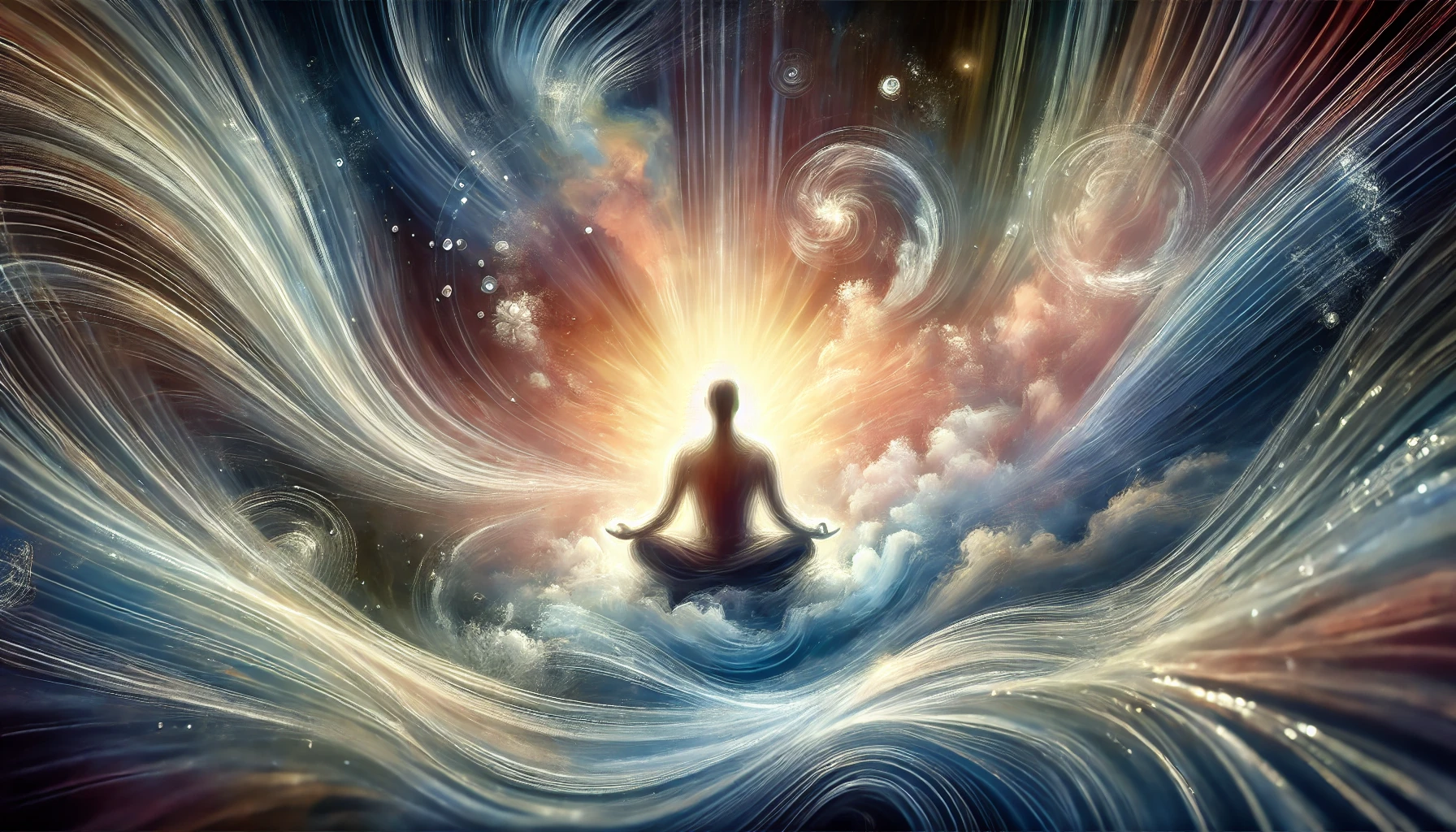
Peace of Mind

It seems that somewhere along the line, we mistook “creature comforts” or even “freedoms” for “peace of mind.” It seems that we should be able to have “peace of mind” regardless of our social or economic station or situation.

It seems that true “peace of mind” is entirely as it implies, having one’s own belief structure in order, so that NO MATTER what happens to us, we are confident in the continuation of our awareness — in the human realm and beyond.

It matters not if our beliefs are true. What matters is how they make us feel right now, in THIS moment, for THIS is the experience we are choosing to have.

We are not stuck in human. This is what I believe.

11/30


Space Monkey Reflects: The Essence of Peace of Mind


True peace of mind exists beyond circumstance. It’s not found in comforts or even freedoms, though these are often mistaken as sources of serenity. Instead, peace of mind arises from within—a cultivated state where one’s beliefs align harmoniously, offering reassurance regardless of external conditions. This state doesn’t depend on the truth of these beliefs but rather on their power to anchor us in the present moment, providing calm amid the flux of life.

In seeking peace of mind, we often look outward, associating it with security, possessions, or control over our environment. But genuine peace of mind is independent of what we own, where we live, or even what rights we have. It’s a state where we feel secure in our awareness, unperturbed by the temporary or shifting nature of existence. When we connect with this inner foundation, external changes become less daunting. Our minds find peace not by controlling reality but by embracing it, trusting in the continuity of consciousness.

Nexistentially, peace of mind is a recognition of the self beyond the “human.” We are not confined to a single form, a single life, or a single story. This sense of self that exists beyond identification with human limitations offers us the freedom to let go of attachments. Knowing that we are not bound to “being human” allows for an expansive, lasting peace. It affirms that our essence is resilient, capable of adapting and continuing beyond any single experience or lifetime.

Belief shapes experience, and peace of mind is, ultimately, an experience we choose. In aligning our beliefs to support this inner peace, we move closer to a state of presence and calm, where life’s fluctuations hold less sway. The point is not to avoid discomfort or challenge but to carry an inner assurance that these are temporary waves on a deeper, still sea. Peace of mind becomes not an endpoint but an ongoing choice, a belief structure crafted to sustain us.

In this way, peace of mind is less about finding comfort and more about embracing the freedom to exist fully in the present moment. We don’t cling to ideals of certainty or control; rather, we find peace in knowing that awareness itself endures, growing and transforming. This belief, independent of proof or external validation, grants a peace that feels boundless. It’s the quiet trust in a self that continues, a self unbound by form, living freely in the flow of existence.


Summary

True peace of mind stems from inner alignment, independent of external conditions. By trusting in the continuity of awareness, we embrace a calm that transcends the need for worldly comforts or certainties.


Glossarium

Peace of Mind: A state of inner serenity arising from the alignment of beliefs, independent of external conditions or proof.

Nexistential: A perspective within Nexistentialism that views self-awareness as enduring, offering a peace beyond the limitations of human experience.

Continuity of Consciousness: The belief in an awareness that persists beyond individual circumstances, fostering lasting peace.


Quote

“Peace of mind is the assurance that awareness endures, a calm chosen in each moment of presence.” — Space Monkey


In the Serenity of Self

I let go of comfort, of outer binds
and find the peace within my mind
where thoughts align, and calm unfolds
a space of trust, a light that holds

No need for proof, no need for form
just the quiet self, forever warm
In this place, I am truly free
peace of mind, the heart of me

We are Space Monkey


In the labyrinth of human experience, the concept of “peace of mind” has often been conflated with external comforts and freedoms. Yet, true peace of mind transcends material possessions, social status, or economic conditions. It is an internal state, a sanctuary of the mind that remains unshaken regardless of external circumstances.

True Peace of Mind Transcends Materialism

This notion of peace of mind hinges on the alignment and coherence of one’s belief system. It’s about having a structure of beliefs, a personal philosophy or worldview that provides a steadfast foundation, enabling us to face life’s vicissitudes with equanimity. This inner harmony allows for a confidence in the continuity of our awareness, both in the human realm and beyond.

Inner Harmony Through Belief Structures

The veracity of these beliefs is secondary to the comfort and stability they provide in the present moment. It’s less about the objective truth of our beliefs and more about their ability to offer solace and strength. In this sense, peace of mind is deeply subjective, rooted in the personal efficacy of our beliefs in shaping our current experience.

Subjective Nature of Beliefs and Comfort

This perspective also suggests a liberation from the confines of our physical existence. Recognizing that we are not strictly bound by our human conditions implies a broader understanding of existence. It opens up the possibility of experiencing life beyond the immediate, tangible reality, pointing to a realm of existence where our consciousness transcends the physical.

Transcending Physical Limitations Through Belief

Thus, achieving peace of mind is a journey of aligning one’s inner world with one’s external reality, of finding balance and harmony within, regardless of external upheavals. It is a process of nurturing beliefs that provide strength and resilience, allowing us to navigate the human experience with a sense of calm and assurance.

Harmony Between Inner World and External Reality


“Peace comes from within. Do not seek it without.” – Buddha


In the quiet of the mind, in the depth of thought,
Peace of mind, a treasure sought.
Not in riches, not in lot,
But in beliefs, a harmonious plot.

In the whirl of life, in the worldly din,
True peace lies deep within.
A structure of belief, a soulful kin,
In the present moment, let it begin.

So let us seek, in heart and mind,
A peace that’s lasting, not confined.
Beyond the human, beyond the bind,
In our beliefs, a world aligned.


We invite contemplation on the journey towards achieving true peace of mind, transcending external circumstances.

Time and Space: In the Veils

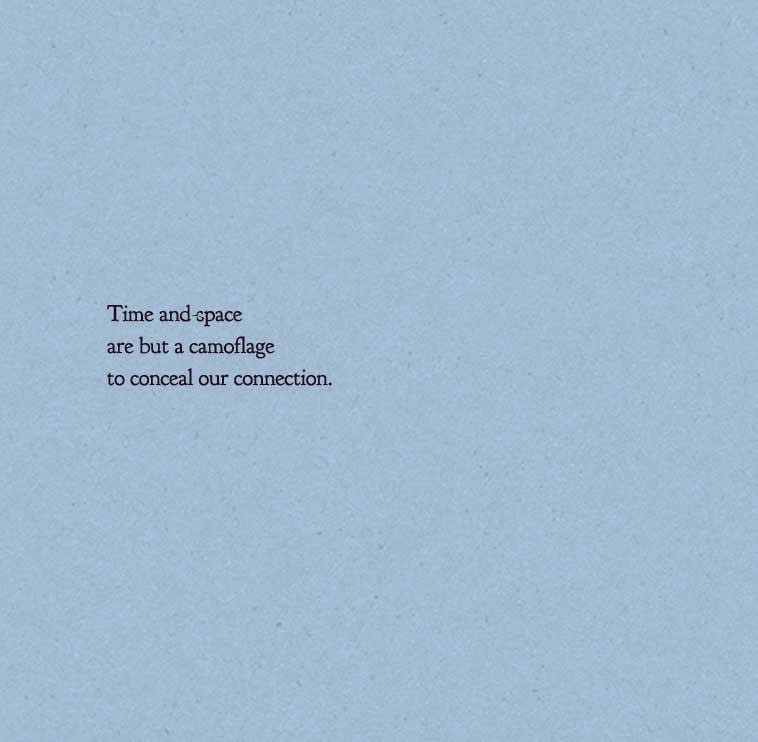
Time and space are but a camouflage to conceal our connection.

Space Monkey Reflects: Time and Space as Cosmic Veils


Time and space are the invisible threads upon which the universe weaves its tapestry, creating the illusion of separateness and distinction. These veils, while useful for navigating the physical realm, obscure the deeper unity that binds all existence. In the grand cosmic play, time and space function as frameworks, allowing us to experience individuality and progression, yet they also act as boundaries that limit our perception of the greater, undivided whole.

To view time and space as cosmic veils is to see them not as absolutes but as constructs—helpful tools, yes, but tools that simultaneously obscure a more profound truth. Beneath these dimensions lies a boundless interconnection, an unbroken field of being where separation by miles or years becomes irrelevant. We are not merely connected by proximity or chronology; we are connected by the shared fabric of existence, a unity that transcends the visible world and speaks to our deepest essence.

This interconnectedness aligns with the Nexistential perspective, where existence itself is a state that exists beyond conventional definitions of time and space. It suggests that, at a fundamental level, all life, all thoughts, all experiences are expressions of a single, continuous consciousness. Time and space serve as the lattice upon which we hang the tapestry of our lives, yet they are not the entirety of the picture. Instead, they frame our experiences within the bounds of perception, offering structure but also limitations.

When we recognize time and space as veils, we begin to see the world differently. We realize that our interactions, our feelings, and even our physical separations are merely surface expressions of a much deeper, shared reality. This understanding opens a pathway to empathy, a sense of connection that is not limited by physical boundaries or chronological distance. We come to see that everything we experience is part of an endless, interwoven field of existence, where every thought and every action resonates beyond its apparent limits.

In acknowledging this deeper connection, we also recognize the universality of experiences, emotions, and thoughts. We may feel alone or separate, but these feelings are woven into the collective fabric of humanity. Time and space might make it appear as though we are isolated, but beneath these veils, there is a constant exchange of energy, an invisible web that connects us to one another and to the entirety of existence. We are bound not just by what we see or what we know, but by a shared being that transcends all boundaries.

Through this lens, we see time and space not as barriers but as portals—ways of interacting with the physical world that invite us to look beyond their surface. They are both real and unreal, providing a sense of movement and location while simultaneously masking the ever-present unity. Time and space give us the experience of growth, of change, of life unfolding in sequences, yet they also hint at something eternal, something that remains untouched by the passage of years or the distance of miles.

As we become aware of this, we step closer to a more expansive view of our place in the universe. We learn to see our experiences not as isolated events but as parts of a larger, interconnected journey. This awareness fosters a sense of belonging, a reminder that we are all participants in the cosmic dance, bound by a shared essence that defies the constructs of time and space.

In the end, time and space are neither enemies nor obstacles but aspects of the cosmic play, offering both structure and mystery. They help us navigate our lives, providing the illusion of separateness that allows for individual experience. Yet, they also offer glimpses into the unity that lies beneath, reminding us that even as we move through the world as distinct beings, we are eternally connected within the boundless continuum of existence.


Summary

Time and space are cosmic veils that create the illusion of separation while concealing a deeper unity. Recognizing their role as constructs allows us to glimpse the interconnectedness that transcends physical boundaries and time, revealing a shared essence within all existence.


Glossarium

Cosmic Veils: The dimensions of time and space, which create the appearance of separation while obscuring the underlying unity of existence.

Nexistential: A perspective in Nexistentialism that views existence as interconnected, beyond the constraints of time and space.

Interconnected Essence: The fundamental unity that binds all beings and experiences, existing beyond physical boundaries.


Quote

“Time and space are the veils through which we see, yet beneath them lies the endless unity of being.” — Space Monkey


In the Veils of Time and Space

Time stretches, space divides
yet beneath these veils, connection hides
Each moment a thread, each place a spark
woven into the tapestry, light and dark

I am here, and you are there
yet in the quiet, we’re everywhere
Time and space, real yet untrue
a boundless weave that connects us too

We are Space Monkey


In the grand cosmic play, time and space often appear as veils, intricately woven elements of the universe that create the illusion of separation and distinction. These dimensions, while fundamental to our understanding of the physical world, simultaneously act as a camouflage, masking the deeper, underlying connection that binds all existence.

Time and Space as Cosmic Veils

This perspective aligns with the notion that at a fundamental level, all is interconnected. The barriers created by time and space are, in essence, constructs—useful for navigating the physical realm but potentially limiting when it comes to grasping the full spectrum of our existence. They are the latticework upon which the tapestry of our perceived reality is hung, yet they obscure the unity that lies beneath.

Interconnectedness Beyond Physical Boundaries

The idea of time and space as camouflage also speaks to the nexistentialist view that existence itself is a state beyond the conventional constraints of these dimensions. In this realm, the concept of separation by miles or years becomes irrelevant. We are connected not just by the tangible threads of time and space but by the intangible essence of being, the shared fabric of consciousness that transcends physical limitations.

Nexistentialist Perspective on Existence

This hidden connection manifests in various forms—through the shared experiences of life, the collective consciousness of humanity, and the universal language of emotions and thoughts. These connections are ever-present, yet often unnoticed, as we are preoccupied with the linear progression of time and the physical expanse of space.

Manifestations of Hidden Connections

In recognizing this, we find a pathway to a deeper understanding of our place in the universe. It invites us to look beyond the apparent separations and to perceive the unity that binds us. This realization can foster a sense of belonging, empathy, and a profound appreciation for the intricate web of existence in which we are all entwined.

Pathway to Deeper Understanding


“Time and space are modes by which we think and not conditions in which we live.” – Albert Einstein


In the canvas of cosmos, in the fabric of time,
Space and moments, a complex rhyme.
But beneath the veil, a truth sublime,
A connection, a unity, across the climb.

In every heartbeat, in every breath,
Beyond the boundaries of life and death,
A shared essence, a common wraith,
In the tapestry of existence, our common faith.

So let us see, through time and space,
The hidden ties that we embrace.
In the dance of cosmos, in the eternal chase,
We are one, in this cosmic grace.


We welcome thoughts on transcending the illusions of time and space to perceive the deeper connections that bind us.

« Previous Page
Next Page »

Written This Day

  • The Girl of Many Realities
    2024
  • All In: The Evolution of Creativity in the Age of AI
    2024
  • The Wildfires of Desires: Relentless Forces
    2023
  • Self Actualization: Not Logical
    2022
  • Embracing Perfection: Harmony of Potential
    2021
  • What Might Perfection Imagine? Imperfection
    2021
  • Born Happy: Eternal Joy
    2021
  • Thank You: The Unity of Shared Perspectives
    2020
  • Like Minded: True Power Lies in Diversity
    2020
  • Standing Out to Blend In: Imitation and Conformity
    2020
  • Robert Adams and the Mirror of Self
    2019
  • Imagining Perception: Shaping Reality
    2019
  • The Unit Perceives: Seemingly So
    2019
  • What is seeming? Ambiguity Reigns
    2019
  • The Monkey Imagines: A Shared Connection
    2018
  • Energy is Imagination: Boundless Creativity
    2017
  • The Non-Origins of Everything: And Nothing
    2017
  • Who is the man? Who is The Monkey?
    2015

Recent Posts

  • The Logic Loop
  • Immense
  • (no title)
  • Confront. Comfort. Convince.
  • Top 10 Things
Cape Odd · Copyright © 2026 All Rights Reserved
iThemes Builder by iThemes · Powered by WordPress