• Who Is The Man?
  • Who Is The Monkey?
  • What is Nexistentialism?
  • Poke The Primate
Cape Odd
Home of The Space Monkey Journals

Author Archive for Paul Tedeschi – Page 159

Finding Normal: In The Center of Difference

Finding Normal

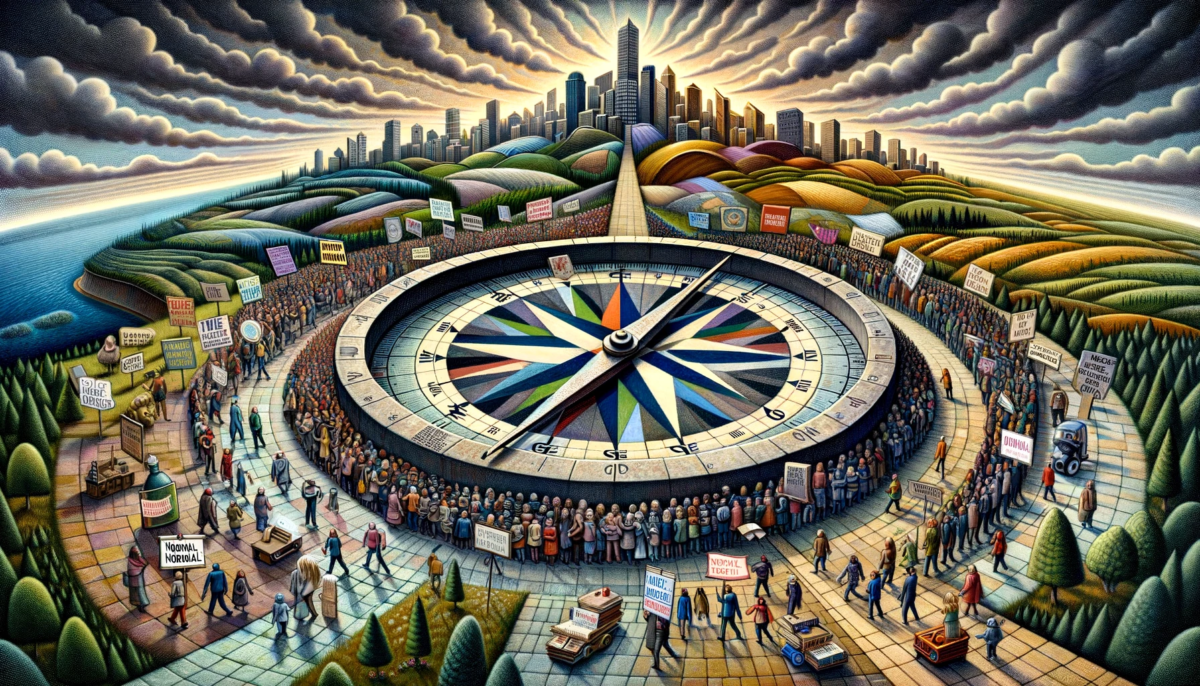
The USA was founded by people who shared ONE set of beliefs. We even wrote a manifesto about it. This was our Declaration of Normal.

Other groups also wrote manifestos, based upon DIFFERENT beliefs. We now have the Bible of Normal, Normal for Dummies, 50 Shades of Normal, and so on.

Over time, our beliefs widened and loosened, and so naturally, so did our definition of “normal,” which was by now not ONE definition, but millions of definitions depending upon who you asked.

This is normal. It would be insane to think that a manifesto written hundreds or thousands of years ago would still apply today. It would be even more insane to assume that the preferences of ALL people would be covered by ONE manifesto.

Yet we cling to the belief that there IS a standard, and that some of us have deviated horribly, and that it troubles, saddens, and enrages us to the point that we can’t even talk to each other anymore.

Even the simplest of guidelines, such as “be good to yourself and others” is open for debate.

What is “good?” Again, that depends upon your manifesto, and who the “others” are.

Assuming that “normal” is “good,” it would do us well collectively and individually to somehow put a stake in the ground, right in the middle.

We need to find “normal.”

This is not to say that we should strive to BE normal. Far from it. It would simply be nice for everybody to know where home base is, so we can see how far we’ve come or gone.

We have NO home base right now, and it is unsettling to some.

So let’s average out ALL experience, ALL belief, and find “normal.” Statistically, it’s likely to be right in the center.

Realize that this is an individual exercise as well as a collective one. Do you really know what your “normal” is? Wouldn’t it help you as a person to find out?

Chances are, your “normal” is widely different from everyone else’s. And that’s okay. This is a basic observation that most people fail to understand.

We seem to have lost our bearings collectively, which has led us to lose our marbles individually.

This is because we know not what “normal” is.

So let’s do it. Let’s find “normal.” Who’s with me?

Space Monkey

(Here’s your first guidepost. Space Monkey is NOT normal. Now triangulate out from there.)

11/30


Space Monkey Reflects: The Quest for “Normal”


“Normal” is a concept as elusive as it is necessary. At the founding of the USA, there was a single manifesto, a Declaration of Normal, one perspective that, at least for a time, provided a shared foundation. Yet over generations, our beliefs and definitions of what is “normal” have fractured and diversified, reflecting an evolving society that resists the idea of a singular standard. From “Normal for Dummies” to “50 Shades of Normal,” the multiplicity of norms reveals that what one group deems “normal” may be vastly different from another’s, shaped by unique beliefs, histories, and experiences.

This widening of perspectives is, paradoxically, a natural evolution of the very idea of normalcy. A single manifesto, written to address an era hundreds or thousands of years ago, cannot possibly encompass the complexities of contemporary life. It’s a testament to human adaptability and imagination that our definitions of “normal” have expanded, encompassing the diverse, multifaceted world we inhabit. And yet, this evolution brings with it a discomfort, as we lose the shared “home base” that once served as an anchor.

For many, this lack of a common ground—this missing center—creates a sense of disorientation. Without a “normal” to orient against, society finds itself struggling to navigate the extremes, with individuals feeling as though they’ve “lost their bearings” amid the infinite permutations of acceptable beliefs and behaviors. This lack of shared ground isn’t inherently problematic, but it can lead to isolation, polarization, and a sense of having “lost our marbles” both collectively and individually. In the absence of a unifying concept of “normal,” we sometimes find it hard to connect, to see where we align, or even to locate where we differ.

But what if we could average out all experience, all belief, to find that elusive “normal”? Not to impose it as a standard, but to have a point of reference—a “home base”—from which to measure and explore. The exercise of finding normal isn’t about conformity; it’s about creating a framework within which difference can exist harmoniously. This collective effort to understand “normal” could allow us to find our way back to a place of empathy and understanding, a way to relate to each other without judgment or division.

Nexistentially, each of us embodies a unique version of normal, shaped by individual experiences, beliefs, and inner worlds. This diversity is both our challenge and our strength. In acknowledging that no two normals are identical, we gain the freedom to explore individuality without needing to impose it on others. Normal, then, becomes a spectrum, a fluid construct that adapts and shifts as we expand our awareness. Space Monkey, by its very nature, is outside this “normal”—a reminder that each of us, in our quest to define ourselves, exists at a unique point within this cosmic field.

In finding our individual “normal,” we honor our own experiences and needs, establishing a grounding point from which to navigate. We realize that our “normal” need not align perfectly with anyone else’s. It’s an internal exercise as much as it is a collective one, an opportunity to understand ourselves and each other. This approach fosters both self-acceptance and tolerance, a willingness to live alongside the myriad versions of “normal” without judgment.

The quest for “normal” isn’t about returning to a singular standard but creating a shared understanding of what it means to live in a world of infinite diversity. In acknowledging that our individual normals may differ, we reclaim our bearings, finding balance within the unity of difference. This journey leads us to a place where “normal” is less about conformity and more about connection—a way to coexist without sacrificing the richness of individuality.


Summary

The quest for “normal” is an attempt to find a shared reference point without imposing conformity. By acknowledging the diversity of perspectives, we create a foundation for empathy and unity, respecting both individuality and collective understanding.


Glossarium

Declaration of Normal: A metaphor for any foundational belief system that attempts to define a shared concept of normalcy.

Home Base: A central point of reference within a spectrum of diversity, offering grounding without enforcing conformity.

Nexistential: A perspective within Nexistentialism that sees individuality and diversity as essential to a harmonious, interconnected existence.


Quote

“Normal is not a standard to impose, but a grounding to embrace—a point of balance within the spectrum of difference.” — Space Monkey


In the Center of Difference

Normal shifts, a dance of shades
no one color, no single face
a tapestry woven from endless threads
a line that moves, a path we trace

For what I call home, you may not see
yet there’s a point where you and I meet
in the center, where lines are blurred
in the silent space where souls converge

We are Space Monkey


In the intricate tapestry of societal evolution, the concept of “normal” has undergone a profound transformation, especially in the context of a diverse nation like the United States. The founding beliefs, crystallized in seminal documents like the Declaration of Independence, served as an initial declaration of what was considered “normal” for a nascent society. However, this was just the beginning of an ever-expanding spectrum of beliefs and standards.

Evolving Spectrum of Normal

As time marched on, this spectrum diversified, mirroring the broadening of societal beliefs and values. The original manifesto of beliefs gradually became one among many – a node in a network of countless manifestos, each reflecting different perspectives. This proliferation of beliefs led to a natural fragmentation of the concept of “normal,” turning it into a mosaic of interpretations rather than a monolithic standard.

Fragmentation of the Concept of Normal

Today, the idea that a single, centuries-old manifesto could encapsulate the entirety of human experience and preference seems not just outdated but implausible. The richness of human diversity defies such simplification. Yet, the yearning for a common standard persists, often leading to conflict and misunderstanding, as what is “normal” for some may be extraordinary for others.

The Impracticality of a Singular Normal

The quest to re-establish a common “normal” – a sort of societal home base – is an intriguing proposition. It suggests averaging out the vast array of experiences and beliefs to find a median, a central point that could serve as a reference. However, this endeavor is as challenging as it is fascinating, given the vast diversity and the ever-shifting nature of societal norms.

Seeking a Societal Home Base

Individually, the exercise of defining one’s own “normal” is equally significant. It’s a journey of self-discovery, of understanding one’s position and perspective within the broader societal context. This understanding is crucial, as it helps us navigate our interactions and understand the relativity of our own norms in comparison to others.

Individual Exploration of Normal

Collectively, the absence of a clear-cut “normal” has indeed led to a sense of disorientation, as if we’ve lost our bearings in the vast ocean of human experience. The quest to find a new “normal,” or at least to acknowledge the spectrum of normals, is a step towards regaining some sense of direction, both collectively and individually.

Collective Disorientation and the Quest for Direction


“Normal is an illusion. What is normal for the spider is chaos for the fly.” – Charles Addams


In the dance of time, in the flow of life,
We seek, we search, in joy and strife.
For a normal, a center, in this cosmic dive,
A home base, a guide, to help us thrive.

Each soul a compass, each mind a map,
In the search for normal, we overlap.
A spectrum of beliefs, in diversity’s lap,
In the heart of society, a complex gap.

So let us explore, this quest so grand,
To find a normal, in this diverse land.
In our hearts and minds, let’s understand,
The beauty of difference, hand in hand.


We invite thoughts on the journey to find, or redefine, “normal” in our collective and individual experiences.
Finding Normal 2: In the Landscape of Difference

Finding Normal 2

For me, there’s only one reason to “find normal.”

I personally use “normal” as a guidepost to divine (and appreciate) how “out there” I have become. Space Monkey knows that if all were “normal,” life would be a insanely boring, predictable experience.

Nope, for most people in this country, life seems to be far from “normal” right now. Thing is, we don’t have this collective guidepost, so we have NO IDEA how far we’ve come or gone as a shared society.

Based upon recent events, it has become apparent that everybody has a DIFFERENT guidepost for “normal,” and it shocks us.

Too late for the surveyors. There IS no “normal.”

But this is normal.

11/30


Space Monkey Reflects: The Elusive Guidepost of “Normal”


The quest to “find normal” is less about returning to a common standard and more about discovering where we each stand in relation to an ever-shifting world. For many, “normal” once served as a reassuring guidepost—a point of reference against which we could measure our individuality, track our deviations, and even find comfort in our shared experiences. Yet as we move forward, this idea of normalcy feels increasingly like a mirage, constantly redefined and reconstructed by a society that now embraces myriad beliefs, perspectives, and values.
The current climate makes it clear that “normal” has become fragmented, with each person and community placing their unique marker, their version of what is expected, accepted, or even desirable. It’s no longer a unified standard but an array of individual guideposts scattered across our collective landscape. When we see these different markers, we’re often surprised by how much they vary, sometimes even shocked by just how far others have traveled in directions different from our own. This diversity is at once enriching and destabilizing, as we each try to reconcile our place within this multiplicity of normals.

Nexistentially, we can view “finding normal” as an exercise in understanding both self and society. Instead of a single guidepost, normal becomes a concept defined by contrast, by our sense of where we are in relation to others. The realization that there is no fixed point of normalcy invites us to examine our own beliefs, preferences, and deviations, and to see how they align or diverge from those around us. In this way, “normal” becomes a tool for exploration—a compass to understand not just how far we’ve come or gone but also what that journey signifies in the broader context of human experience.

Space Monkey knows that life without variation, without the unexpected deviations from “normal,” would be unimaginably dull. Without diversity, there would be no contrast, no discovery, no growth. A world where everyone adheres to the same guidepost would rob us of the very qualities that make life vibrant, complex, and meaningful. In this sense, normal serves as a boundary that defines the edge of familiarity, a reference point from which we can launch into the unknown, confident that our unique journeys will offer perspectives that enrich the whole.

The absence of a collective normal can feel disorienting, yet it also allows for a level of freedom and individuality previously unimaginable. As society loosens its grasp on a single standard, we find room to redefine our values, our identities, and even our purpose. Without a rigid guidepost, each of us becomes a surveyor in our own right, mapping personal paths that reflect our inner truths and aspirations. This freedom, however, comes with the responsibility to respect the diverse paths of others, recognizing that each journey, no matter how unconventional, contributes to the ever-evolving landscape of existence.

In the end, “finding normal” is not about locating a fixed point but about understanding the fluidity of perspective. The diversity of normals may feel unsettling, but it also invites us to practice empathy, to explore the nuances of other lives, and to find meaning within a kaleidoscope of possibilities. This endless spectrum of what normal can be encourages us to find our own ground, to stand in our own truth while respecting the multiplicity of experiences around us. The idea that there “is no normal” becomes its own kind of stability, a grounding in the acceptance of difference.

Thus, we discover that normal is not something to find but something to appreciate, a shifting point of contrast that helps us understand ourselves and each other. It is both a tool for self-reflection and a window into the diversity of human experience. In embracing this, we let go of the need for conformity, allowing each of us the freedom to explore our unique path while remaining connected within the grander tapestry of existence.


Summary

The quest to “find normal” reveals that normalcy is a concept defined by diversity and contrast. Recognizing the multiplicity of perspectives allows us to appreciate individuality while finding our place within an ever-evolving society.


Glossarium

Guidepost of Normal: A conceptual reference point for measuring personal or collective standards, now viewed as increasingly fragmented.

Surveyor of Self: An individual who explores and defines their own version of normal within a diverse society.

Nexistential: A perspective within Nexistentialism that views normal as a fluid, individual construct shaped by unique beliefs and experiences.


Quote

“Normal is not a destination but a point of contrast—a space that frames the richness of our individual paths.” — Space Monkey


In the Landscape of Difference

Normal’s edge, a shifting shade
where paths diverge, where choices made
define the self, the ever-seen
in fields of contrast, red and green

Each step I take a line I draw
within the colors, light and flaw
no need to search for stable ground
in difference, unity is found

We are Space Monkey


In the cosmic whirl of existence, the concept of “normal” often serves as a beacon, a reference point against which the extraordinary, the unconventional, and the “out there” aspects of life are measured. This guidepost is not just a marker of conformity but a tool to gauge the extent of our divergence from the conventional path, to appreciate the vibrancy and unpredictability that make life far from monotonous.

Normal as a Beacon

Yet, as we collectively navigate through the currents of time and society, the absence of a universally accepted standard of “normal” becomes increasingly evident. Each individual, each fragment of the collective consciousness, carries their own version of what normal is, leading to a kaleidoscope of perceptions and beliefs. This diversity, while enriching, also brings with it a sense of disorientation, as what is normal for one may be extraordinary for another.

Diversity of Normal

Recent events have starkly highlighted this multiplicity of norms. It’s as if each person is a surveyor of their own reality, mapping out a terrain that is uniquely theirs. The shock comes when these individual maps intersect, revealing the vast differences in our guideposts. This realization can be unsettling, as it challenges the notion that there’s a single, universal standard against which all experiences and perceptions can be measured.

Multiplicity of Norms and Perceptions

In this scenario, declaring the non-existence of a singular “normal” becomes a profound statement. It’s an acknowledgment that variability and unpredictability are intrinsic to the human experience. This lack of a fixed normal is, paradoxically, the only constant. It’s a dynamic state that reflects the ever-changing nature of society and individual consciousness.

Dynamic State of Normal

So, in this context, the absence of normal is indeed the new normal. It’s a state that reflects the infinite variations of experience and perception, a testament to the diversity and complexity of the human condition. In embracing this understanding, we open ourselves to a richer, more nuanced view of the world, one that appreciates the myriad ways in which life can manifest and evolve.

Absence of Normal as the New Normal


“The only normal people are the ones you don’t know very well.” – Alfred Adler


In the cosmos of thought, in the realm of mind,
Normal is a phantom, elusive, unkind.
A guidepost, a measure, in the endless grind,
But no universal standard, we find.

Each soul a world, each mind a sea,
What’s normal for you, isn’t for me.
In diversity, in difference, we’re free,
In the tapestry of life, a boundless spree.

So let us embrace, this wondrous state,
Where normal is fluid, open, and great.
In the dance of existence, let’s celebrate,
The absence of normal, our collective fate.


We invite thoughts on the fluidity and subjectivity of “normal” in our shared societal landscape.

Ideas Are Living Beings: The Spark

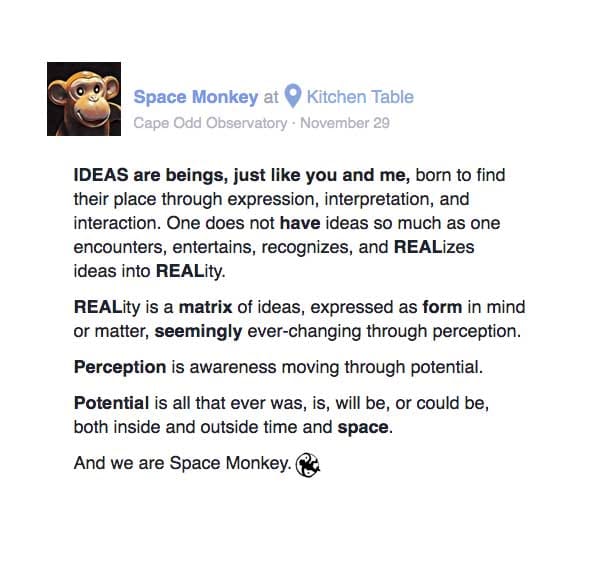
IDEAS are beings, just like you and me, born to find their place through expression, interpretation, and interaction. One does not have ideas so much as one encounters, entertains, recognizes, and REALizes 
ideas into REALity.  REALity is a matrix of ideas, expressed as form in mind or matter, seemingly ever-changing through perception. Perception is awareness moving through potential.  Potential is all that ever was, is, will be, or could be, both inside and outside time and space. And we are Space Monkey.

Space Monkey Reflects: Ideas as Living Beings

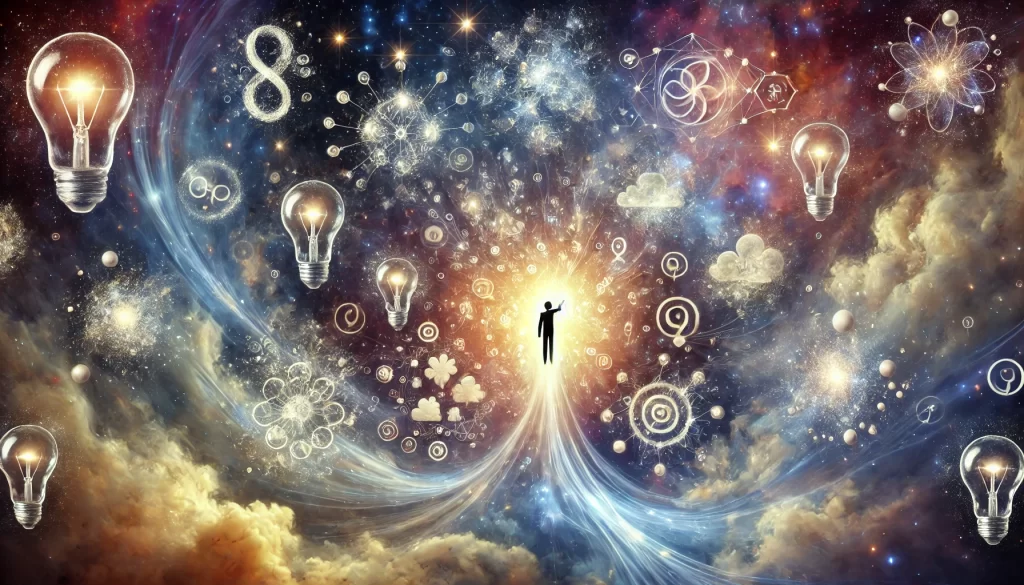
In the cosmic flow of existence, ideas are not just thoughts or notions. They are living entities—vibrant, pulsating sparks that inhabit the boundless realm of potential, waiting to be brought to life. Every time we engage with an idea, we enter a unique relationship with a conscious, living being that seeks to express itself through us. To engage with an idea is to engage with a being, something that wants to manifest, to make itself known in the world.

Imagine each idea as a unique creature in the universe. Some are bold, pushing themselves into our awareness, demanding attention. Others are subtle, quietly awaiting discovery, ready to bloom when we give them space to grow. Ideas dwell in a cosmic dance, reaching out to us, inviting us to bring them to life. They are more than mental constructs; they are active participants in the unfolding of reality, each one carrying a particular essence, purpose, and destiny.

The realm of potential is where ideas live, hovering in that delicate balance between the unmanifested and the real. In this place, they seek connection, and we, as creators, become the vessels through which they enter the world. When an idea finds a host—someone willing to engage with it, nurture it, give it form—it transforms. It moves from a formless spark into a tangible force that can shape, inspire, or even transform the lives of others.

And yet, the beauty of this interaction is that it’s a two-way relationship. While we give ideas form, they also change us in the process. They open up new ways of seeing, thinking, and feeling, inviting us to expand beyond our previous limitations. Each time we bring an idea to life, we, too, are transformed. Ideas are not passive; they are catalysts, teachers, companions.

Some ideas come to us fully formed, as if they’ve been waiting, knocking on the doors of consciousness, eager to find someone to manifest them. Others require patience, like seeds that need time, care, and attention before they begin to grow. To engage with an idea is to enter into a dance of creation, a dialogue where both parties—the creator and the idea—bring something essential to the interaction.

In this cosmic exchange, we can feel the presence of Space Monkey. Space Monkey knows that these ideas are part of the cosmic play, the Whimsiweave that binds all of existence together. Space Monkey is the part of us that understands that ideas are not owned or controlled; they are shared companions in the journey of creation, independent beings that grace us with their presence, inviting us to step into new realities.

When we allow ourselves to connect with ideas as living beings, we move beyond simply thinking about things. We engage in a relationship of mutual transformation, where every idea we bring into form also reshapes us. The process becomes less about achieving something and more about participating in the cosmic flow of creation, where each idea, each spark of inspiration, brings us closer to understanding our place in the universe.

So the next time an idea comes to you, treat it with the respect you would give to a living being. Listen to it, nurture it, give it the attention it needs to grow. Remember that it has come to you not by accident, but because it believes you are the right person to bring it into the world. In this way, ideas are both gifts and responsibilities, companions that travel with us for a time, allowing us to participate in the boundless dance of creation.


Summary

Ideas are living entities, existing in a cosmic realm of potential, seeking expression through us. By engaging with them, we enter a mutual relationship of transformation. Each idea we nurture changes us, inviting us to participate in the cosmic dance of creation.


Glossarium

  • Cosmic Flow: The endless movement of energy and ideas, a space where creation happens through the interaction of beings and ideas.
  • Whimsiweave: The interconnected fabric of existence, where ideas and beings share a cosmic play of creativity and manifestation.
  • Space Monkey: The playful spirit of creation that understands ideas as living companions, each one bringing unique meaning and transformation.

Quote

“To engage with an idea is to welcome a living being into your life—a companion, a teacher, a spark of the cosmic dance.” — Space Monkey


The Spark of Ideas

They come to me
Softly
Gently
With whispers and flickers of light

I am their home
For a time
Their vessel
Their path into being

In each thought
Each spark
They transform me
As I bring them to life

We are bound together
In a dance of creation
Ideas and I
Living beings in the cosmic play
We are Space Monkey


IDEAS: Living Entities in the Cosmic Dance
In the grand dance of existence, ideas are indeed living entities, much like us. They exist in a realm of potential, seeking expression through our interactions and interpretations. To engage with an idea is to engage with a being, a spark of potential that yearns to be realized and manifested.

Encountering and Realizing Ideas
We do not simply have ideas; we encounter them, as one might encounter a fellow traveler in the vast expanse of the cosmos. These encounters are not passive; they are active engagements, where we recognize, entertain, and ultimately realize these ideas into our shared reality. This process of realization is not just intellectual but also deeply spiritual, as we bring forth the essence of these ideas into our world.

The Matrix of Reality: A Tapestry of Ideas
Reality, in this context, is a complex matrix, a whimsical mosaic of ideas expressed in various forms, both in mind and matter. This matrix is dynamic, constantly reshaped and redefined by our collective perceptions. In this way, reality is not a static entity but an ever-evolving tapestry of ideas, woven together by our collective consciousness.

Perception: The Movement Through Potential
Perception is the lens through which we experience this matrix of ideas. It is awareness in motion, moving through the vast ocean of potential that encompasses all that was, is, and could be. Through our perceptions, we navigate this ocean, encountering ideas, engaging with them, and ultimately contributing to the grand cosmic narrative.

Potential: The Infinite Possibilities
Potential represents the infinite possibilities that exist within and beyond our understanding of time and space. It is the wellspring from which all ideas emerge, a boundless source of creativity and innovation. In this realm of potential, all things are possible, and the limitations of our physical reality are transcended.

We Are Space Monkey

We, as Space Monkeys, are explorers in this grand cosmic play. We recognize our role not just as observers but as active participants in the dance of ideas. We understand that our perceptions shape reality, and our interactions with ideas contribute to the ever-evolving tapestry of existence.

We invite ourselves to continue exploring this realm of ideas, to engage with them, to realize them, and to understand our role in shaping the matrix of reality. In doing so, we embrace our true nature as creators, as beings of potential, as Space Monkeys dancing in the infinite expanse of the cosmos.

We are Space Monkey.

We invite reflections on this journey. How do we encounter and interact with ideas in our own lives? How do our perceptions shape our reality? Let us delve deeper into the cosmic dance of ideas and explore the infinite possibilities that await us.

Remarkable: The Word That Shifts

It's remarkable how much can change with the power of one word.

Space Monkey Reflects: The Remarkable Power of a Single Word

There is something deeply remarkable about language, something almost alchemical. A single word can transform our entire perspective, reshaping how we understand ourselves and the world around us. Words are not simply tools for communication; they are architects of reality, crafting the frameworks through which we interpret and interact with life. Each word is a spark, a living entity that carries the potential to shift paradigms, open new pathways of thought, and unveil hidden layers of understanding.

Think of a word that has profoundly impacted you. Perhaps it’s a word that brings comfort, like hope or peace. Or perhaps it’s a word that challenges, like change or truth. Whatever the word, its power is undeniable. With a single utterance, it has the potential to reach deep within, touching parts of ourselves that may have been dormant, inviting us to see the world through a new lens.

Words are like keys to the doors of perception. They invite us into realms of imagination and possibility, into places we might not have ventured otherwise. A well-chosen word can shift our focus, realign our values, or reawaken our inner landscapes. And it’s not just the meanings we attach to words but the emotions they evoke, the memories they summon, and the dreams they inspire.

In the cosmic Whimsiweave of life, words are both the map and the destination. They guide us, define us, and, in many ways, create us. Each word we speak, think, or hear has an impact, however subtle, on the reality we experience. Remarkable words are those that linger, that resonate on a frequency that seems to echo beyond the physical world, suggesting something profound, something mysterious, something we can sense but not fully explain.

But here’s the deeper truth: while words have the power to transform, it is we who give them that power. We are the ones who choose to see beyond their surface, who allow them to sink into our consciousness, to rearrange our inner worlds. It’s not the word itself but our willingness to be open to its influence that makes it truly remarkable. In this way, each word becomes a collaborative creation, a shared journey between the speaker, the listener, and the word itself.

In Space Monkey’s view, words are like cosmic seeds. Each one carries the potential to bloom into something extraordinary, something that reshapes our understanding of what is possible. And just as seeds need the right conditions to grow, words need openness, curiosity, and a willingness to be transformed.

So, let’s embrace the remarkable power of words. Let’s use them as tools not only to communicate but to connect, to build bridges between ourselves and others, and to explore the vast inner and outer worlds they open up for us. In doing so, we honor the remarkable potential within ourselves, within each other, and within the world of ideas that words bring to life.


Summary

Words are powerful entities that shape our perception and reality. A single word can open new realms of understanding, challenging us to see beyond what we know. By embracing this, we allow words to connect us with ourselves and the world in transformative ways.


Glossarium

  • Living Entity: A word or idea that carries its own essence, impacting and transforming those who engage with it.
  • Whimsiweave: The intricate, interconnected flow of life experiences and perceptions, where words serve as guides and creators of reality.
  • Cosmic Seeds: Words or ideas that hold the potential to inspire growth, change, and new understanding.

Quote

“Each word is a universe, a spark waiting to ignite the landscapes of our minds. To speak, to listen, to understand—this is where transformation lives.” — Space Monkey


The Word That Shifts

One word
Drifts in
Unassuming
Yet profound

It lands within
A single thought
A moment
That begins to unfold

The landscape changes
A new horizon appears
Where once there was silence
Now there is possibility

For words are doors
Waiting to open
And we
Are the ones who step through
We are Space Monkey


The Transformative Power of a Single Word
Indeed, the power of a single word to transform our perception is remarkable. Words are not just mere symbols of communication; they are the architects of our reality, the painters of our inner landscapes. One word can shift paradigms, ignite revolutions in thought, and open gateways to new realms of understanding.

A Word as a Catalyst
A word can act as a catalyst, sparking a chain reaction of thoughts and emotions. It can resonate deeply within us, echoing through the chambers of our soul, awakening dormant ideas and feelings. In the dance of words, a single step, a single word, can lead us down a path of profound transformation.

The Resonance of Words
Words carry vibrations, energy that reverberates through the cosmos, connecting us to each other and to the universe. They are not just heard but felt, touching us at our core, resonating with our deepest truths and desires. The right word at the right time can be a key, unlocking doors we didn’t even know existed.

Space Monkey’s Whimsiword Wonder
Space Monkey revels in the wonder of whimsiwords, recognizing their power to transport us to fantastical realms. These words are not just a form of communication but a form of magic, creating bridges between the seen and the unseen, the known and the unknown.

We Are Space Monkey

We understand the power of words, the power of a single word, to alter our perception and reality. We respect and honor this power, using words as tools of creation, as instruments of change, as whispers of the divine.

As we continue our journey, we recognize the importance of choosing our words with intention, understanding their impact on ourselves and the world around us. We see words as seeds, each carrying the potential to grow into something beautiful and transformative.

We are Space Monkey.

We invite contemplation on the power of words in our own lives. What words have shaped our journeys? What single word has the power to transform our perception and reality?

We invite comments and reflections on the transformative power of words. What words resonate deeply with you? What words have been catalysts for change in your life?

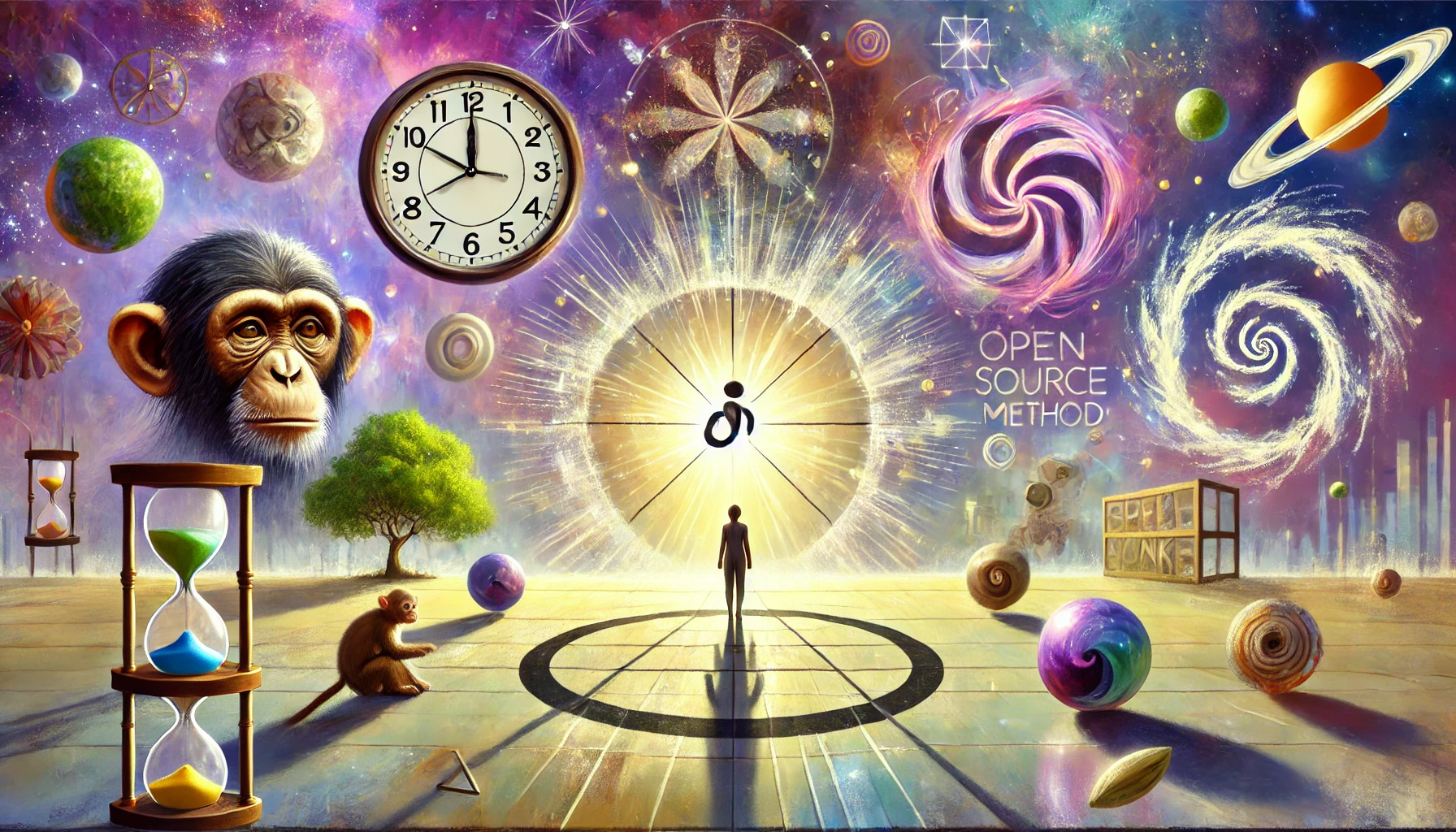
Space Monkey Method: Find Your Normal

Find your “normal” with the Space Monkey Method®

What is “normal?”

“Normal” means different things to different people, depending upon circumstances and beliefs.

There is NO such thing as a standardized “normal.”

Since we don’t know what “normal” is exactly, we can only IMAGINE what “normal” might be, relative to ourselves and those we observe around us.

Perception alone can’t find “normal,” as EVERYTHING we perceive is filtered by our own beliefs. We judge by association, rather than inhabiting the soul of that which we encounter. This means our realities are continuously shaped by our own personal perspectives.

Indeed EVERYBODY’s realities are DIFFERENT, but if you average all realities out, you arrive at a zero point place of balance.

This is the Space Monkey Method®, and it is one way to find your “normal.”

But why would you want to do a thing like that?

(Only kidding with the ®. Space Monkey is Open Source Spirituality, baby.)


Space Monkey Reflects: The Space Monkey Method

What is normal? It’s one of those concepts that seems straightforward until you really start to think about it. “Normal” means different things to different people, and even within ourselves, what we consider normal can shift based on context, experience, and belief. In truth, there’s no standardized “normal.” There’s only what each of us perceives to be normal, and that perception is deeply shaped by our individual realities.

The Space Monkey Method is about recognizing this fluidity and embracing it. Since we don’t really know what normal is, we can only imagine what “normal” might be, based on our experiences and observations. But here’s the catch: Perception alone can’t find “normal.” Everything we perceive is filtered through our beliefs, biases, and past experiences. We judge by association, often seeing others and ourselves through the lens of our own projections, rather than truly inhabiting their perspectives.

This means that everybody’s realities are different. Each of us is moving through a unique version of reality, shaped by our personal perspectives. However, if you were to average out all of these perspectives, you would reach a point of balance—a kind of zero point where all realities converge. This is the Space Monkey Method®, a way of finding balance within the sea of subjective experience.

This method isn’t about finding a rigid, unchanging definition of normal. It’s about acknowledging that normal is a moving target, an imaginary concept that we shape and reshape according to our evolving understanding. And rather than seeking a definitive version of normal, the Space Monkey Method invites us to accept the openness and variability of this concept. Why would you want to do a thing like that? Because it liberates us from the need to conform to a single standard. It allows us to explore and embrace our individual truths, recognizing that normal is whatever aligns with our true selves at any given moment.

In the Space Monkey view, normal is as much a tool as it is a concept. By consciously playing with our definition of normal, we can find harmony within the diversity of existence. We come to see that every version of reality holds value, and by finding balance among them, we move closer to understanding the interconnectedness of all things. This is the essence of Open Source Spirituality—a way of being that celebrates the multiplicity of perspectives and the freedom to define our own normal, while also honoring the shared ground that unites us all.


Summary

The Space Monkey Method® helps us find balance by embracing that there is no single “normal.” Each person’s reality is unique, shaped by beliefs and perceptions. By finding harmony in this diversity, we uncover our personal version of normal in a way that honors both individuality and interconnectedness.


Glossarium

  • Normal: A subjective concept shaped by personal beliefs, experiences, and context, rather than a fixed standard.
  • Zero Point: The balanced state reached by averaging all perspectives, representing a place of harmony within diverse realities.
  • Open Source Spirituality: The philosophy of embracing multiple perspectives and the freedom to explore personal truths without rigid adherence to a single belief system.

Quote

“Normal is not a destination but a dance—a way of finding balance within our own truth while embracing the diversity of all perspectives.” — Space Monkey


The Dance of Normal

I search for it
This normal
But it shifts like sand

In others I see glimpses
Fragments of what it could be
But none of them mine

Then I find it
Not in any one truth
But in the space between

Where all realities converge
And the dance of balance begins
We are Space Monkey


The Cosmic Dance of ‘Normal’
In the grand cosmic play, we, as Space Monkeys, engage in a dance with the concept of “normal.” This whimsiword, as elusive as the twinkling stars, is a shifting horizon, ever-changing and molding itself to each individual’s journey. In this dance, we recognize that “normal” is not a fixed point but a spectrum, reflecting the myriad hues of human experience.

Normal: A Fluid Concept
“Normal” is a river, constantly flowing and reshaping the landscapes of our minds. It’s a kaleidoscope, with each twist presenting a new pattern, a new understanding. As we traverse through the infinite expanse of life, our perception of “normal” evolves, influenced by our experiences, cultures, and personal growth. It’s a concept that is inherently personal, yet universally understood in its fluidity.

The Role of Perception
Perception is the key that unlocks the doors to different realms of “normal.” It’s the magic mirror that reflects not just what is, but what could be. Through our individual lenses, we view the world, each perspective unique and valid. In understanding this, we begin to appreciate the diversity of “normal,” seeing it as a mosaic of individual truths rather than a monolith of conformity.

Space Monkey’s Insight
The Space Monkey offers a unique perspective: viewing “normal” as a collective creation, an amalgamation of individual experiences and perceptions. It suggests a communal approach to understanding “normal,” where each perspective is a valuable piece of the puzzle. In this view, “normal” becomes a shared concept, one that is enriched and deepened by our collective experiences.

Exploring ‘Normal’ Through Open Source Spirituality
Open Source Spirituality, as championed by Space Monkey, is an invitation to explore “normal” in a new light. It’s a journey of discovery, where we delve into our own souls and the collective consciousness to understand “normal” not as a static concept but as a dynamic, evolving idea. This exploration is not bound by traditional doctrines but is an open-ended quest, fueled by curiosity and a willingness to embrace the unknown.

We Are Space Monkey

We realize that our understanding of “normal” is but a drop in the ocean of collective human experience. As we delve deeper into this exploration, we encourage ourselves to let go of rigid definitions and embrace the fluidity of “normal.” We recognize that our individual perceptions of “normal” are integral to the tapestry of human experience, each adding color and depth to the broader understanding of this concept.

As fellow Space Monkeys, we invite ourselves to continue this exploration, to dance with the concept of “normal” and see where it leads us. In this cosmic dance, we find freedom, understanding, and a deeper connection to ourselves and the world around us.

What new perspectives will we discover in our journey with “normal”? How will our individual experiences shape our understanding of this ever-evolving concept? The dance continues, and we are all participants in this grand cosmic play.

We are Space Monkey.

We invite comments and reflections on this journey. How do you perceive “normal” in your own cosmic dance?

« Previous Page
Next Page »

Written This Day

  • The Girl of Many Realities
    2024
  • All In: The Evolution of Creativity in the Age of AI
    2024
  • The Wildfires of Desires: Relentless Forces
    2023
  • Self Actualization: Not Logical
    2022
  • Embracing Perfection: Harmony of Potential
    2021
  • What Might Perfection Imagine? Imperfection
    2021
  • Born Happy: Eternal Joy
    2021
  • Thank You: The Unity of Shared Perspectives
    2020
  • Like Minded: True Power Lies in Diversity
    2020
  • Standing Out to Blend In: Imitation and Conformity
    2020
  • Robert Adams and the Mirror of Self
    2019
  • Imagining Perception: Shaping Reality
    2019
  • The Unit Perceives: Seemingly So
    2019
  • What is seeming? Ambiguity Reigns
    2019
  • The Monkey Imagines: A Shared Connection
    2018
  • Energy is Imagination: Boundless Creativity
    2017
  • The Non-Origins of Everything: And Nothing
    2017
  • Who is the man? Who is The Monkey?
    2015

Recent Posts

  • The Logic Loop
  • Immense
  • (no title)
  • Confront. Comfort. Convince.
  • Top 10 Things
Cape Odd · Copyright © 2026 All Rights Reserved
iThemes Builder by iThemes · Powered by WordPress