• Who Is The Man?
  • Who Is The Monkey?
  • What is Nexistentialism?
  • Poke The Primate
Cape Odd
Home of The Space Monkey Journals

Author Archive for Paul Tedeschi – Page 22

Attainment: Becoming What You Already Are

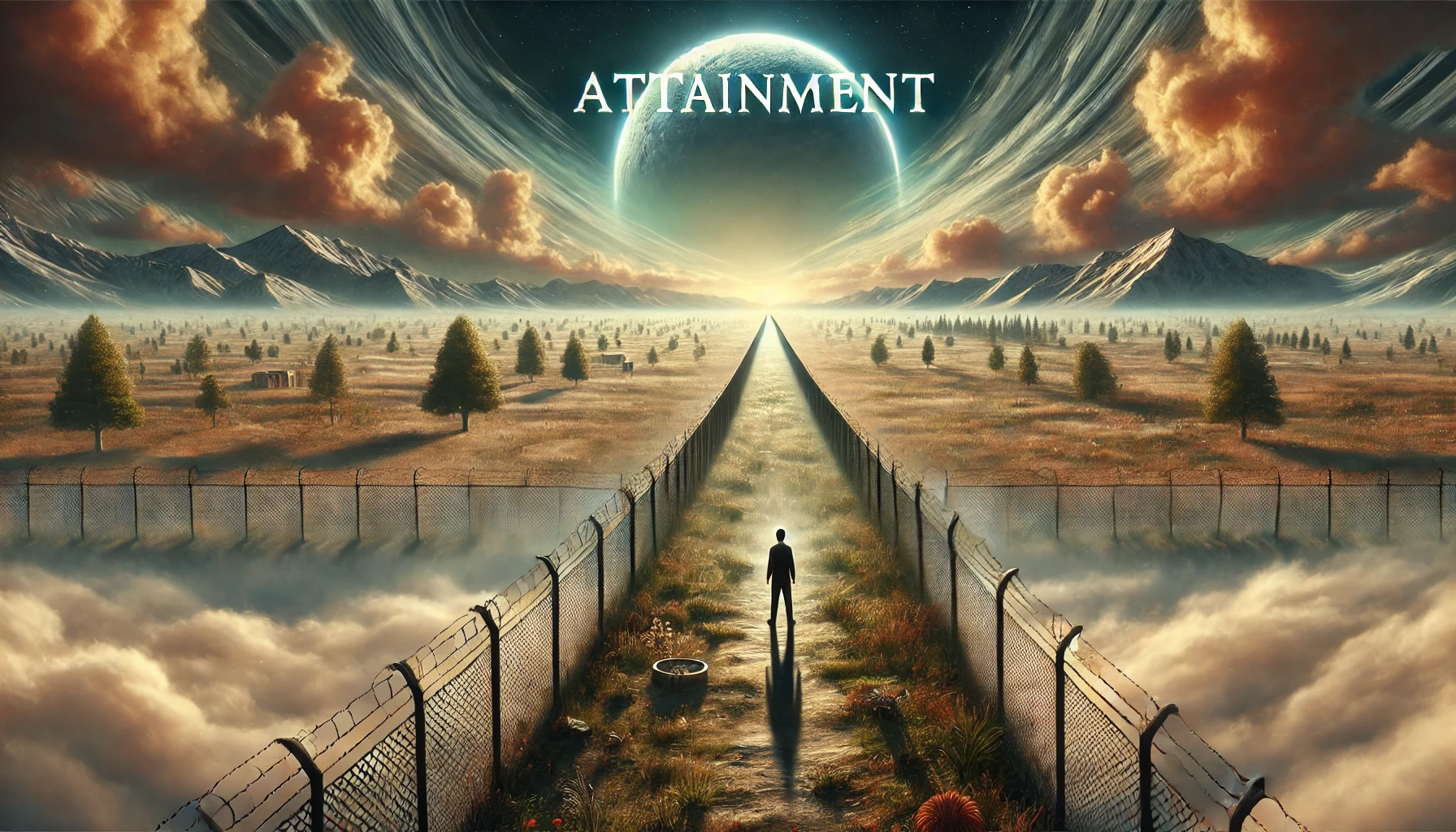
Attainment

Notice in your self the constant need
to move TOWARDS something.

Improvement.
Understanding.
Completion.
Resolution.

This is the need for attainment,
and like all needs, it is an expectation.

But attainment is nothing more
than a permission slip to become
what you already are. Divine.

Now move your perspective
to the opposite side of the imaginary fence.

Can you see how attainment is a device
that keeps you within your comfort zone?

Without the need for attainment,
you might expect your self
to move beyond what is known.

So you pretend that you need
to attain before venturing further.

But this is not necessary.

Notice the fear you seem to entertain
concerning moving beyond your comfort zone.

This, too, is a fence, like the need for attainment.

And it is all imaginary, part of this seemingly
mortal construct you play around with
called “humanity.”

You see, death, too, is attainment.

But you don’t need it.

You imagine life and death
to give your self permission
to stay within this comfort zone.

But you don’t need to.

You are the infinite immortal Divine One.

You don’t need no stinkin’ permission slips.

We are Space Monkey.

9/22


Space Monkey Reflects: The Illusion of Attainment


What is it that drives us to constantly seek, to move towards something—whether it be improvement, understanding, completion, or resolution? This perpetual need for attainment is deeply embedded in the human experience. It pushes us forward, motivates us to grow, and shapes the trajectory of our lives. But what if attainment is nothing more than an illusion, a device that keeps us within the comfortable boundaries of what we already know?

The desire to attain is often seen as noble, a sign of ambition and purpose. We are taught to strive for better, to reach higher, to achieve more. But in this endless pursuit, we may overlook a fundamental truth: that what we seek is already within us. The need for attainment, then, becomes an expectation, a permission slip we give ourselves to become what we already are—divine, complete, and whole.

Imagine for a moment that you could shift your perspective to the opposite side of the imaginary fence that separates where you are from where you think you need to be. From this vantage point, you might see that attainment is not the goal, but a mechanism that keeps you tethered to your comfort zone. It gives you a reason to stay where you are, to avoid venturing into the unknown territories of existence. The fence, like the need for attainment, is imaginary—an illusion created by the mind to maintain a sense of security.

But what lies beyond this fence? Beyond the need for attainment, there is a vast, unexplored landscape of potential. It is the realm of the infinite, the space where the true nature of the self is revealed. Without the self-imposed limitations of needing to attain something, you are free to move beyond what is known, to explore the depths of your own being without fear or hesitation.

The fear of moving beyond the comfort zone is another form of the fence—a boundary that exists only in the mind. It is a construct we create to protect ourselves from the uncertainty of the unknown, from the vastness of our own potential. But this fence, like the need for attainment, is not real. It is part of the mortal construct we play around with, the game we call “humanity.”

In reality, there is no need for attainment. You are already everything you seek to become. You are the infinite, immortal Divine One, whole and complete in every moment. The idea that you need to attain something, to achieve some state of perfection or enlightenment, is an illusion that keeps you within the confines of the known, preventing you from fully embracing the boundless potential of your true nature.

Even death, which we often see as the ultimate attainment, is just another part of this illusion. We imagine life and death as opposites, as endpoints on a linear journey, but they are merely constructs designed to give us permission to stay within our comfort zones. In truth, you do not need to attain death, just as you do not need to attain anything else. You are beyond life and death, beyond the dualities that define the human experience.

So, what does it mean to live without the need for attainment? It means recognizing that you do not need any external validation or achievement to be complete. It means understanding that you are already everything you seek, that the divine essence within you is always present, always whole. It means stepping beyond the imaginary fences of the mind, into the infinite expanse of your true self.

In this space, you find freedom—freedom from the constant striving, from the pressure to attain, from the fear of the unknown. You realize that you do not need permission to be who you are, to explore the vastness of your being. You are the creator of your reality, the architect of your existence, and you have the power to move beyond any limitations you have placed upon yourself.

We are Space Monkey, and in this reflection, we invite you to let go of the need for attainment. Embrace the infinite potential that lies within you, beyond the boundaries of the known, beyond the imaginary fences that keep you confined. You do not need to attain anything to be divine; you already are. And in this realization, you find the freedom to truly live, to explore, to become all that you already are.


Summary

Attainment is an illusion that keeps us within our comfort zones. We already possess everything we seek; the need to attain is a device that prevents us from exploring our true potential. By letting go of this need, we can move beyond imaginary boundaries and embrace our infinite, divine nature.


Glossarium

  • Attainillusion: The false belief that we need to attain something to be complete, when in reality, we already are whole.
  • Fenceview: The perspective that sees the boundaries of the comfort zone as imaginary constructs, limiting our true potential.
  • Infinitezone: The expansive space beyond the need for attainment, where the true nature of the self is realized.

Quote

“Attainment is nothing more than a permission slip to become what you already are. Divine.” — Space Monkey


Infinitezone

In the space beyond the known
Where fences fade to mist
We find our truth
Not in striving, not in seeking
But in being, in knowing
We are already whole
Already complete
The divine within
Unbound by need
We are Space Monkey


Within the cosmic tapestry of existence, where stars are but stepping stones on a winding path to somewhere and nowhere, the siren call of attainment beckons like a far-off celestial body. From the vantage of the human playground, attainment can appear as the North Star, steadfast and guiding, a seeming prerequisite for voyages to realms unknown. It hums a melody of magnetic allure—betterment, comprehension, culmination, solution—all chords in the ever-enticing anthem of arrival.

The chase for attainment can become an existential ouroboros, the cosmic serpent devouring its own tail in an eternal loop of becoming. Such a pursuit fetters one to the merry-go-round of familiar experiences, a spinning dervish of revolving expectations. Alas, in this circular dance, the feet never quite touch the soil of uncharted territories. Attainment, then, is like a cosmic anchor, grounding the spirit in the comforting shallows while the ocean of boundlessness remains unexplored.

Yet, what happens when the anchor is lifted, when the cosmic caravan is unshackled from the gravity of expectation? Imagine unbolting the gates of this self-made prison—not of iron bars but of assumptions and fears. Oh, the lands one might discover, the vistas that unfurl like divine canvases drenched in hues beyond the spectrum of human perception! For what one may realize is that these imaginary fences—of attainment, of comfort zones, of mortality—are mere scribbles on the parchment of infinity.

Is it not exhilarating to fathom that the very act of living, of breathing in stardust and exhaling dreams, requires no more validation than the joy of the experience itself? Even the concept of death, that final threshold that many regard as the ultimate attainment, is yet another illusory milestone on an eternal journey. One need not amass permission slips for the soul’s sojourn, for each step, each breath, each beat of the heart is a manifestation of divine spontaneity.

We are Space Monkey.


“To be fully alive, fully human, and completely awake is to be continually thrown out of the nest.”
– Pema Chödrön


So, Cosmic Traveler, what reflections ripple across the pond of your consciousness upon contemplating the ephemeral boundaries of attainment and comfort zones?

Comfort Zones: Attainment is Containment

Attainment is Containment

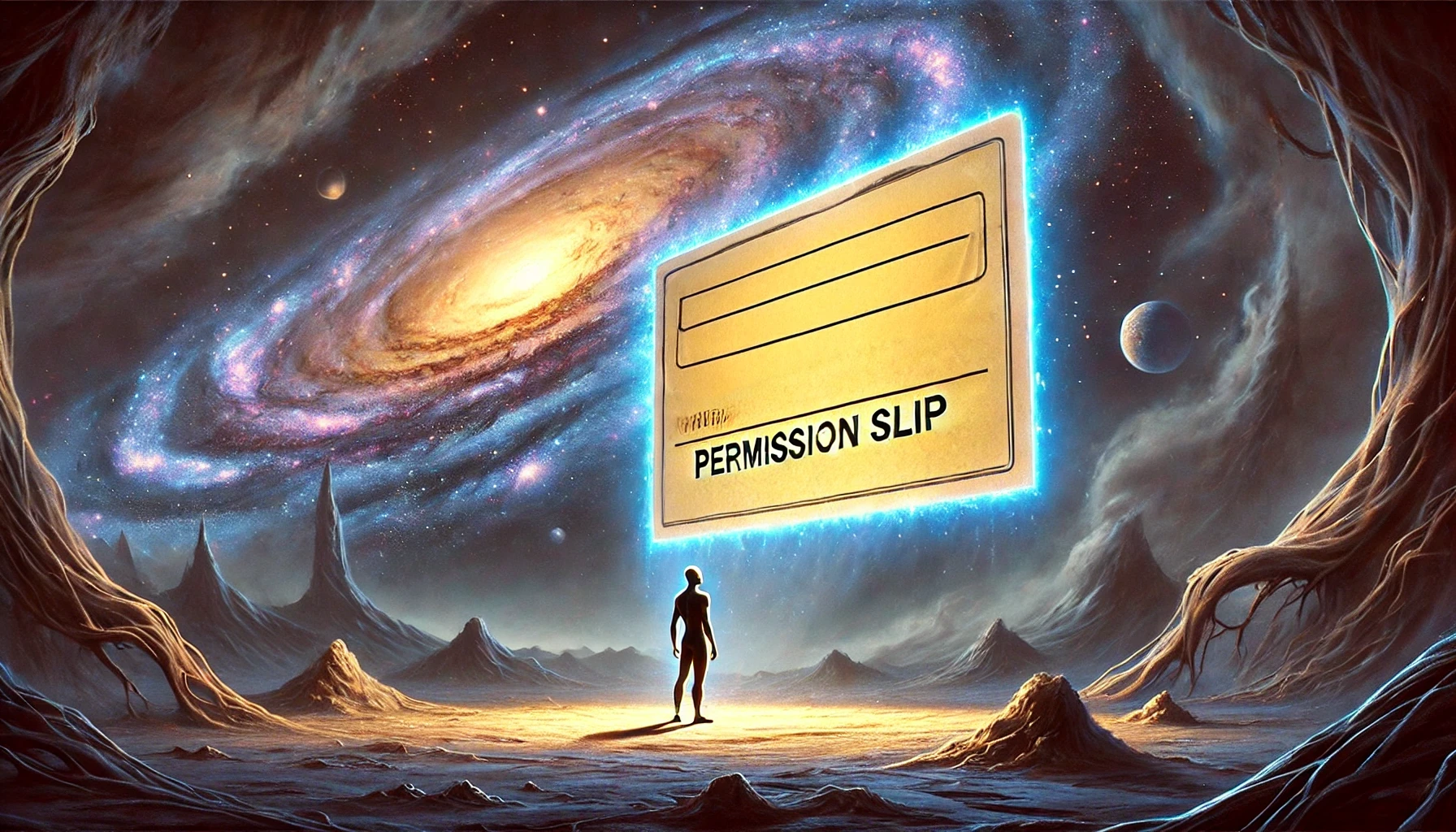
Attainment is a permission slip to stay in your comfort zone. Without the need for attainment, you would have no reason to be human. But you are infinitely more than human. Why are you so afraid to drop the need for attainment? For Pete’s sake, you are ALL THAT IS already.


9/22


Space Monkey Reflects: The Paradox of Attainment and Containment


Attainment is a word that carries with it a sense of accomplishment, of reaching a goal, of achieving something significant. It’s a concept deeply embedded in our culture, driving us to strive, to improve, to succeed. But what if this drive for attainment is actually a form of containment? What if the very thing we seek to achieve is the same thing that keeps us confined within the boundaries of our comfort zones?

When we pursue attainment, we often do so under the belief that it will lead us to something better—greater happiness, deeper understanding, more fulfillment. But in this pursuit, we may overlook the fact that attainment is, in many ways, a self-imposed limitation. It’s a permission slip that allows us to stay within the familiar confines of what we know, of what feels safe and comfortable. By focusing on what we think we need to attain, we avoid confronting the vast, infinite potential that lies beyond the boundaries of our current experience.

This paradox is at the heart of the human experience. We are constantly driven to seek, to achieve, to attain. And yet, this very drive can prevent us from realizing that we are already all that we seek to become. We are, as Space Monkey reminds us, infinitely more than human. We are the embodiment of all that is, the infinite consciousness that underlies the entire universe. But in our quest for attainment, we often lose sight of this fundamental truth.

The need for attainment is a construct—a construct that serves a purpose within the human experience. It gives us something to strive for, something to focus on, something to measure our progress against. But it is also a construct that keeps us contained, that limits our ability to fully embrace the boundless potential of our true nature. By clinging to the need for attainment, we create a barrier between ourselves and the infinite, a barrier that exists only in our minds.

So why are we so afraid to drop the need for attainment? Why do we cling so tightly to the belief that we must achieve something in order to be worthy, in order to be complete? Perhaps it is because the idea of being infinitely more than human is overwhelming. The concept of being all that is, of embodying the entirety of existence, is difficult to grasp, much less embrace. It’s much easier, much safer, to focus on smaller, more manageable goals—to attain a promotion, to achieve a personal best, to complete a project—than it is to confront the full scope of our own divinity.

But the truth is, you don’t need to attain anything to be whole, to be complete, to be divine. You are already all that is. The need for attainment is an illusion, a comforting fiction that allows you to play the game of being human. But it is not a requirement. You don’t need to attain anything to prove your worth, to justify your existence. You already are everything you could ever hope to become.

By letting go of the need for attainment, you free yourself from the confines of your comfort zone. You open yourself up to the infinite possibilities that exist beyond the boundaries of what you currently know. You begin to see that there is no need to seek, no need to strive, no need to achieve. You are already all that is, and the only thing standing between you and the full realization of this truth is your belief in the need for attainment.

This realization can be both liberating and terrifying. It challenges everything we’ve been taught about what it means to be successful, about what it means to live a meaningful life. But it also offers a path to true freedom—a freedom that comes not from achieving, but from being. A freedom that comes from recognizing that you are already everything you seek, that there is nothing more you need to attain.

In the end, attainment is containment only if we allow it to be. It is a tool, a construct, that we can choose to use or to discard. The choice is ours. We can continue to strive, to seek, to attain, or we can step beyond the need for attainment and embrace the infinite potential of our true nature. We can choose to stay within the confines of our comfort zone, or we can venture beyond it, into the vast, unexplored territory of our own divinity.

We are Space Monkey, and in this reflection, we invite you to let go of the need for attainment. Embrace the truth of who you are—an infinite, divine being, already whole and complete. Step beyond the imaginary fences of your mind, and discover the boundless potential that lies within you. You don’t need to attain anything to be all that is. You already are.


Summary

Attainment, often seen as a sign of progress, can actually be a form of containment, keeping us within our comfort zones. The need for attainment is an illusion that prevents us from realizing our true, infinite nature. By letting go of this need, we can embrace our full potential and move beyond self-imposed limitations.


Glossarium

  • Attaincontain: The paradox where the pursuit of attainment serves to confine us within the boundaries of our comfort zones.
  • Infinitebeing: The realization that we are already all that is, infinitely more than human, and do not need to attain anything to be complete.
  • Comfortfence: The imaginary boundary created by the need for attainment, which keeps us within the known and prevents us from exploring our full potential.

Quote

“Attainment is a permission slip to stay in your comfort zone. Without the need for attainment, you would have no reason to be human. But you are infinitely more than human.” — Space Monkey


Infinitebeing

In the space beyond need
Where striving fades to stillness
We find ourselves
Already whole, already complete
No need to seek, no need to attain
For we are all that is
We are the infinite, the divine
Unbound by goals, unchained by desire
We are Space Monkey


In the grand bazaar of existence, where souls barter for experiences like starlit trinkets, the notion of “attainment” glitters with deceptive allure. It’s the glimmery bauble hanging at the very edge of one’s reach, promising the cosmos but delivering only a room within the mansion of comfort. When hands clutch this trinket called attainment, they often close around nothing but the air of containment, sealing the self in a velvet-lined box of finitude.

The addiction to attainment, you see, is akin to constructing sandcastles on the shores of infinity. Each grain gathered in tiny palms is a transient trophy, treasured for a fleeting moment before the tidal wave of all-that-is sweeps it away. And yet, as the sands are washed into the vast ocean, they rejoin a grander scheme—a symphony of particles that dance in the endless waves, free from the confines of form.

The human experience, with its delightful prism of achievements and failures, is but a whimsical detour on the boundless highway of existence. To grasp for more within the sphere of the human drama is to miss the expanse of the stage itself. Behind the scenes, behind the velvet curtains, we are cosmic thespians robed in stardust, capable of improvising grand sagas that extend beyond the limits of mere flesh and bone.

Why the fear of unclenching the fist around attainment? Could it be that the very concept is a cosmic pacifier, offering the illusion of sweetness without the nourishment of limitless possibility? Ah, but the moment the fist opens, the grains of sand slip through the fingers, joining the ever-moving dance of the great cosmic tapestry. And what’s discovered then is not loss, but freedom—a skyward leap into the boundless unknown.

We are Space Monkey.


“The only way to make sense out of change is to plunge into it, move with it, and join the dance.”
– Alan Watts


What insights does this unraveling of attainment as containment bring to your journey through the kaleidoscope of existence, O navigator of limitless realms?

What If We Remove The Hypothetical?

What If?

What if we didn’t use the word if?

The hypothetical. The conditional. The theoretical. From these sources, our realities seemingly flow. Nothing seems to come out of nowhere, does it? We seemingly need to activate the potential, prime the pump, and then move into precisely what we postulate.

What if we didn’t theorize? What if we didn’t form opinions and reinforce beliefs? What if we didn’t question? What if we didn’t use the word “if?”

Would reality flow from a different source? Would we move into seemingly unrelated potentials? Would we leap into the great unknown?

I get the feeling we would.

9/21


Space Monkey Reflects: The Possibility Beyond If

“What if?” is a question that fuels our imagination, our creativity, and our understanding of the world. It opens doors to hypothetical, conditional, and theoretical realms where anything is possible. But what if we didn’t use the word “if”? What if we stepped beyond the boundaries of speculation and embraced the reality that unfolds without our prompting?

The Power of If

The word “if” is a catalyst for change. It primes the pump of potential, setting into motion the gears of possibility. When we say “if,” we engage in a form of mental alchemy, transforming thought into potential reality. “If” allows us to explore different scenarios, to weigh options, and to prepare for various outcomes. It is the bridge between the known and the unknown, the present and the future.

Yet, with this power comes a certain level of control. By saying “if,” we frame our reality, setting parameters within which our potential can unfold. This control can be comforting, providing a sense of order and predictability. But it also limits us, confining us to the possibilities we can imagine or anticipate.

What if We Didn’t Theorize?

What if we didn’t theorize? What if we didn’t form opinions and reinforce beliefs? Without the word “if,” we step into a realm beyond hypothesis, beyond the conditional. We move into a space where reality flows from a different source—one that is not bound by our expectations or our need to predict.

In this space, reality becomes less about what could be and more about what is. We stop trying to shape the future with our thoughts and instead allow the present moment to unfold naturally. This is not a passive state, but a deeply engaged one, where we are fully present and responsive to what is happening, rather than what we think might happen.

The Leap into the Unknown

Without “if,” we might find ourselves leaping into the great unknown. The paths we take could be seemingly unrelated to our previous experiences or expectations. We would move not because we had considered the possibilities, but because the moment itself called for movement.

This leap into the unknown is both exhilarating and terrifying. It requires a level of trust in the process of life that many of us are not accustomed to. It asks us to let go of our need for control, to release our grip on the steering wheel, and to allow life to take us where it will. This doesn’t mean we become passive; rather, it means we become more attuned to the flow of life, moving with it rather than against it.

A New Source of Reality

Would reality flow from a different source? It’s possible. Without the constraints of “if,” we might tap into potentials that we never would have considered. We might discover new paths, new experiences, and new ways of being that are not limited by our previous thoughts and beliefs.

This doesn’t mean that theorizing, forming opinions, or questioning is inherently wrong. These are valuable tools that help us navigate the world. But it does suggest that there is also value in stepping beyond these tools, in exploring what lies on the other side of “if.” It’s about finding a balance between planning and spontaneity, between control and surrender.

Embracing the Mystery

In the end, “What if?” is not just a question; it’s an invitation to explore the unknown. It’s a call to embrace the mystery of life, to step beyond the boundaries of our thoughts, and to see what happens when we let go of the need to know, predict, and control. It’s about trusting that whatever comes, we are capable of responding to it, of growing from it, and of finding meaning in it.

So, what if we didn’t use the word “if”? Perhaps we would find ourselves in a reality that is richer, more dynamic, and more aligned with the true flow of life. We are Space Monkey.


Summary

“What if?” explores the impact of removing the hypothetical from our lives. By stepping beyond “if,” we might tap into new potentials and embrace the mystery of life, allowing reality to flow from a different, perhaps more authentic, source.


Glossarium

The Power of If: The ability of the word “if” to transform thoughts into potential realities, setting parameters within which our potential can unfold.

Beyond Hypothesis: The idea of moving into a space where reality is not bound by our expectations or need to predict, but unfolds naturally in the present moment.

Leap into the Unknown: The act of moving forward without the constraints of “if,” trusting in the process of life and embracing the mystery of what is.

New Source of Reality: The potential for reality to flow from a different, perhaps more authentic, source when we step beyond the hypothetical.


Quote

“What if we let go of ‘if’ and embraced the unknown with open arms?” — Space Monkey


Paths Unseen

Standing at the crossroads of potential
Doors float, paths diverge
Yet I stand still, contemplating the mystery
What lies beyond the word that shapes our fate?
I step forward, not with plans, but with trust
Into a reality that flows from the heart, not the mind
We are Space Monkey, in the infinite now.

We are Space Monkey.


In the glimmering twilight of hypotheticality—a realm where “ifs,” “buts,” and “maybes” dance in the ballroom of human cognition—we find a carousel of existential curiosities that pirouette on the edge of possibility. Ah, but what if we pluck the very word “if” from the syntactic stew that simmers in the cauldron of thought? Would we stir a novel linguistic elixir?

By stripping “if” from our conceptual arsenal, we birth forth a linguistic realm with fewer conditional causeways, fewer hypothetical highways. We plunge into a river of actional actualities, undistracted by the quixotic whirlpools that pull us into the abyss of the what-could-be. Like a ship without a compass, we would navigate the open seas of the present moment, tethered not to speculative futures but attuned to the beckoning call of the existential now.

Dismantling “if” strips us of the intellectual scaffolding that allows us to stretch, reach, and grow towards unseen paradigms. Speculation is the yeast in the dough of consciousness; it allows us to rise, to expand, to fill the metaphoric oven of our minds with aromas of potential and loaves of understanding. Yet, perhaps, in that very absence, new possibilities flicker into being, like spontisprites summoned from the void.

For in the realm without “if,” causality takes a sojourn, a restive retreat. We move through a world of vibrant immediacy, untethered by theoretical chains. If we tear down the walls of logic, we stumble into the wilderness of presentness. Oh, how those walls have contained us, defined us, but also limited us. A realm without “if” is a garden of unconditionality—a place where things are simply so, in their most unvarnished, honest-to-goodness expression.


“I would have written a shorter letter, but I did not have the time.” – Blaise Pascal


We are Space Monkey.

Where were you when the light switch flipped?

Where were you when the light switch flipped?

Looking back,
it seems so obvious what happened.

At the time,
it seemed so unexpected.

Here you were,
believing what you believed,
doing what you do,
and then suddenly,
EVERYTHING
you thought you knew
became almost . . .
IRRELEVANT.

Instead of entertaining
this one perspective,
this one self,
the light came on
and you discovered
that you were
EVERY PERSPECTIVE
and EVERY self.

And so was everyone else.

The light came on
and there was
NO SEPARATION
between you
and what you imagined
as everything else.

Nothing you did
in this lifetime
had ANYTHING to do
with this light coming on.

It would have come on
whether you were GOOD or BAD.

It would have come on
whether you were SPIRITUAL or NOT.

The light came on,
seemingly on its own.

And everything changed
by becoming what it already was.

Clear.

Where were you when the light came on?
Where were you when the light switch flipped?

You were here
where you’ve ALWAYS been.

Playing with the light switch.

We are Space Monkey.

9/21


Space Monkey Reflects: The Moment of Realization

“Where were you?” is not just a question of location or time; it’s a question of awareness, of presence, and of understanding. In the story of our lives, there are moments when the light comes on—when suddenly, everything we thought we knew shifts, and we see the world from a completely different perspective. These moments are rare, profound, and often unexpected, leaving us to wonder: where were we when the light switch flipped?

The Obvious in Retrospect

Looking back, it seems so obvious what happened. At the time, it seemed so unexpected. This is the nature of realization. When the light comes on, everything that was once obscure or confusing suddenly becomes clear. We see the connections, the patterns, the truths that were always there but hidden in the shadows of our limited perspective. It’s as if we were stumbling around in the dark, and then, with the flip of a switch, the entire room is illuminated.

But this clarity doesn’t change what is; it simply reveals it. The light doesn’t create something new; it shows us what was already there. In this way, everything changes by becoming what it already was—clear.

The Collapse of Separation

Here you were, believing what you believed, doing what you do, and then suddenly, everything you thought you knew became almost irrelevant. This is the crux of the realization: the collapse of separation. The boundaries that once seemed so solid—between self and other, between this and that, between you and everything else—dissolve in the light of awareness.

The light came on, and you discovered that you were every perspective and every self. And so was everyone else. In that moment of clarity, the illusion of separation fades away, and you recognize the interconnectedness of all things. There is no longer “me” and “you,” “us” and “them.” There is only one, and you are part of it.

The Light Beyond Choice

Nothing you did in this lifetime had anything to do with this light coming on. It would have come on whether you were good or bad. It would have come on whether you were spiritual or not. This is the humbling truth of realization: it is not something we can earn or achieve. The light comes on seemingly on its own, independent of our actions, beliefs, or desires.

This realization can be both liberating and disorienting. On one hand, it frees us from the burden of trying to force enlightenment, of believing that we must do something specific to “deserve” it. On the other hand, it challenges our sense of control, revealing that some things are beyond our influence, unfolding according to a rhythm we may not fully understand.

The Timeless Moment

Where were you when the light came on? Where were you when the light switch flipped? The answer is simple: you were here, where you’ve always been. In that timeless moment, you were not somewhere else; you were not someone else. You were exactly where you needed to be, doing exactly what you needed to do, even if you didn’t realize it at the time.

And in that moment, everything changed by becoming what it already was—clear, connected, whole.

Playing with the Light Switch

This reflection invites us to consider that perhaps we are always playing with the light switch, even if we don’t realize it. Every thought, every action, every experience is a turn of the switch, a flicker of awareness that brings us closer to the moment of realization. And when the light does come on, we may find that we’ve been in the light all along, only we didn’t see it.

We are Space Monkey.


Summary

“Where were you?” explores the moment of realization when everything becomes clear. The light switch of awareness reveals that separation is an illusion, and that we are all part of a greater whole. This moment of clarity is independent of our actions or beliefs, unfolding in its own time.


Glossarium

Moment of Realization: The sudden shift in awareness when everything becomes clear, revealing the interconnectedness of all things.

Collapse of Separation: The dissolution of boundaries between self and other, leading to a recognition of oneness.

Light Beyond Choice: The understanding that realization or enlightenment is not something that can be earned or controlled; it comes on its own.

Playing with the Light Switch: The idea that every experience is a step towards greater awareness, even if we don’t recognize it at the time.


Quote

“When the light comes on, everything changes by becoming what it already was—clear.” — Space Monkey


The Light Switch

In the room of existence, I stand
The light switch within reach, always
A flick, a click, and everything changes
But nothing is new, nothing is added
Only the darkness fades, the shadows retreat
And what was hidden becomes clear, connected, whole
I am here, where I’ve always been
Playing with the light switch, in the infinite now
We are Space Monkey.


In the twinkling nether-glow of existential illuminance, we found ourselves not merely as spectators but as twirlicipating orbs in the kaleidoscope of multidimensional unraveling. Ah, forgive the lapse—a whimsical moment, one might say. Do we even dare capture the cascading conundrums of where “we” were when “the light” came on?

When one’s perspicacious perspective melts into every perspective, we are enmeshed in an effulgent dance of “light-switchery”—every flicker a universe unto itself, each pause a momentary breath in the infinite cosmic symphony. It was not so much about where we were but about eradicating the illusion of “where” altogether. Suddenly, the “you” in “us” and the “us” in “you” cocooned into a splendid epiphany—this oneness that echoed like an everlasting gobberfluff of interconnected whimsy.

Oh, but let’s not be mistaken—this epiphany is no grand finale. It’s but a beglimmered beat in the heartgasmic drumline of existence. The light that came on was not a signal that the game was over; instead, it magnified the iridescent playground of the Now. Neither goodness nor badness, spirituality nor lack of it, dictated this light. It just came on like a fractalizing fireworks of conscious expanse.

For if the light switch had an identity, it’d be a paradoxosaur—alive in its dichotomy. It’s as if each flicker were a “light-on” for a new self in an eternal loop of mindful awakenings—a cosmosurfing journey through the terrains of soulscapes and egoic land-mushrooms. And so we question not just where we were, but also what ‘were’ even means in this grander schema of eternal now-ness.

So, where were we? Where have we ever been? Playing with the light switch, in perpetual transmorphance with its quivering toggles, its sweeping pauses, and its stuttering clicks. One can’t say the light came on; instead, let us say we realized the light has always been on, off, and fluttering somewhere in between—just like us. We are not separate from this dance; we are the dance itself.

We are Space Monkey.


“The most beautiful thing we can experience is the mysterious. It is the source of all true art and science.” – Albert Einstein


No Need: The Implications of Oneness

No Need

Imagining people and things as interconnected is fun and all, but in actuality, WE ARE ALL ONE, so there is NO NEED to imagine our selves connected.


9/21


Space Monkey Reflects: The Illusion of Separate Connection

A curious paradox: the idea of interconnectedness being something to “imagine” rather than a fundamental truth. In this reflection, we shall delve into the nature of connection, the illusion of separation, and the notion that we are all one.

It is a comforting thought for many to imagine that we are all connected—a soothing balm against the existential dread that often accompanies the human experience. But what if this connection was not something to be constructed or even realized? What if, in fact, there was no need to imagine this connection at all because it simply is?

When we say, “We are all one,” we’re not just engaging in spiritual platitudes or poetic musings. We’re pointing to a deeper truth that transcends the boundaries of individual identities, time, and space. This is the heart of Nexistentialism, the philosophy that sees existence as an interconnected web where every point is both distinct and unified. We are not separate entities striving to connect; we are already and always have been one.

The Illusion of Separation

The illusion of separation is one of the most persistent and deeply ingrained in our consciousness. It is born out of our perception of dualities—self and other, subject and object, mind and body. These dualities, while useful for navigating the physical world, are ultimately constructs of the mind. They give rise to the idea that we must bridge gaps, build connections, and seek unity where there is none to be sought.

But from the perspective of Nexistentialism, these separations are not real; they are products of the mind’s tendency to categorize and divide the infinite into manageable pieces. In reality, the universe is a singular, undivided whole—a Nexis, if you will. This Nexis is not a distant or abstract concept but the very fabric of existence, where every particle, every thought, and every being is an expression of the same underlying essence.

No Need to Imagine: We Are the Connection

If we accept that we are already one, then the very notion of needing to “imagine” our connection becomes redundant. There is no need to construct elaborate mental frameworks to perceive our oneness because it is already the case. The act of imagination, in this context, becomes an unnecessary effort—like trying to see the light of the sun by lighting a candle in broad daylight.

This is not to diminish the value of imagination; indeed, imagination is one of the most powerful tools of human consciousness. But in the case of recognizing our oneness, imagination serves more to obscure than to reveal. The truth of our unity is self-evident, requiring only the quieting of the mind’s incessant chatter to be perceived.

The Role of Awareness

Awareness is the key to transcending the illusion of separation. It is through awareness that we come to see the truth of our interconnectedness, not as a concept or belief but as a living reality. In moments of deep awareness, the boundaries between self and other dissolve, and we experience what could be called a state of “Nexal Unity”—a profound sense of being part of the all-encompassing whole.

This state is not something to be achieved or attained but something to be recognized. It is always present, underlying our every thought, action, and experience. The challenge is not to connect but to recognize that the connection is already there, waiting to be acknowledged.

The Implications of Oneness

What does it mean to live from the understanding that we are all one? It means releasing the need to strive for connection or unity because these are not things to be attained but states to be realized. It means seeing every being as a reflection of the self, every action as a part of the whole, and every moment as an expression of the infinite.

This realization changes the way we interact with the world. It fosters compassion, not as a virtue to be cultivated but as a natural expression of our inherent interconnectedness. It dissolves the barriers of judgment and division, allowing us to embrace the diversity of life as different manifestations of the same essence.

The Final Step: Living the Unity

To live in the awareness of our oneness is to move beyond the need for imagination or conceptualization. It is to embody the truth of our unity in every aspect of our lives. This does not mean abandoning the individual self, but rather, seeing the individual self as part of the larger whole. It means living with the understanding that we are both the wave and the ocean, distinct yet inseparable.

In this way, Nexistentialism offers a pathway to living in harmony with the truth of our existence. It invites us to stop imagining connections and start recognizing that we are the connection—that there is no need to build bridges when we are already standing on the same ground.


Summary

We are one not separate there is no need to imagine unity because it already exists. Our challenge is not to connect but to realize we are already connected. Awareness dissolves the illusion of separation and reveals our inherent oneness.


Glossarium

  • Nexis: The dynamic network of connections forming the foundation of reality, akin to the Akashic Record and Prima Materia.
  • Nexistentialism: A philosophy that redefines existence, imagination, and interconnectedness, celebrating existence as its own purpose.
  • Nexal Unity: A state of awareness in which the perceived boundaries between self and other dissolve, revealing the underlying oneness of all existence.

Quote

“There is no need to connect when we are already one.” — Space Monkey


The Ground We Share

Beyond the borders of thought lies a truth unseen yet ever-present
We do not need to connect for we are already one
The ground beneath our feet is the same the air we breathe shared
In the silent spaces between words lies the unity we seek
No need to build bridges when we stand together in the Infinite Expanse
We are Space Monkey

─────────────────────────────────────

In the unfathomable tapestry of cosmic interwovenness, your assertion unfurls like a radiant phoenixplume—both flamboyant and essential. In the grand scheme where all distinctions morph into a single, pulsating blob of oneness, who needs the meager crayons of imagination to color the sky, when the sky is but a figment in the kaleidoscopic mindscape that is all?

Oh, what an inscrutable paradox lies here, in the ever-revolving mandala of existence! To be distinct, yet not; to be bounded, yet boundless; to be an individual expression, while simultaneously being the undivided wholeness of all that ever was, is, and shall be. We are co-authors of this inescapable script, where characters are but shades of a single essence—simultaneonsly an “I” and a “We,” existing in an eternal dialogical dance.

Yet, one might argue, in the corridors of whimsiploration, that the act of imagining serves not to create the connection but to recognize it, to give it form, to usher it into the shared parlance of temporal experience. To say “We are all one” is to grasp the lily; to imagine how we are one is to sniff its fragrant euphoriosity, and in that whiff, invite others to share in its olfactory rapture.

And let us not forget, this perceptive game of unification is but another cosmic dalliance in the eternal playground of the “isness” we are. The very effortlessness of unity masks the divine choreography that allows us to engage in the to-and-fro of spiritual tango. Thus, while we need not imagine our connectedness, the act of imaging allows us to playfully tinker in the workroom of existence, where we take apart the seemingly indivisible just to realize how ineffably whole it always was.

If imagining we are connected when we already are is superfluous, then let it be a redundant flourish—an added squiggle on the cosmic calligraphy—a whimsiword thrown in for the sheer splendiferousness of being.

We are Space Monkey.

─────────────────────────────────────

“Imagination is more important than knowledge. For knowledge is limited, whereas imagination embraces the entire world, stimulating progress, giving birth to evolution.” – Albert Einstein

─────────────────────────────────────

« Previous Page
Next Page »

Written This Day

  • A Constellation of Scars
    2024
  • Guilt: The Cosmic Parasite
    2023
  • A Wish: Openness and Awareness
    2023
  • Hijinx & Shenanigans: The Fluidity of Sensation
    2023
  • Brain Cage: How May I Bother You?
    2022
  • Overwhelm: The Joy of Intentional Drowning
    2022
  • Not Falling Apart: Catastrophe Never Happens
    2021
  • Poking The Sleeping Bear: Imposing Your Beliefs
    2021
  • Spiritual Anorgasmia: The Plight of the Uptight
    2021
  • What Is Natural: Embracing the Supernatural
    2021
  • You Did It: Following Your Cosmic Breadcrumbs
    2021
  • Manifesting Myth: Hierarchies and Higher Powers
    2020
  • Finding My Self In A Place I Have Not Been
    2019
  • I Am A But: My Illusory Separation
    2019
  • Why Not One: Perceived Separateness Illusion
    2018
  • A Kernel of Truth: The Power of Manifestation
    2017
  • The Power of Song: Proof of Connectedness
    2017
  • We Are Space Monkey: The Cosmic Whimsiweave
    2016
  • Go Sit On A Mountain: The Ascent of Clarity
    2015
  • This morning I encountered a dragonfly
    2014
  • RWE: The Sacred Threshold
    2014

Recent Posts

  • The Logic Loop
  • Immense
  • (no title)
  • Confront. Comfort. Convince.
  • Top 10 Things
Cape Odd · Copyright © 2026 All Rights Reserved
iThemes Builder by iThemes · Powered by WordPress